CRYPTO AND AI PRESENT ECONOMIC RISKS

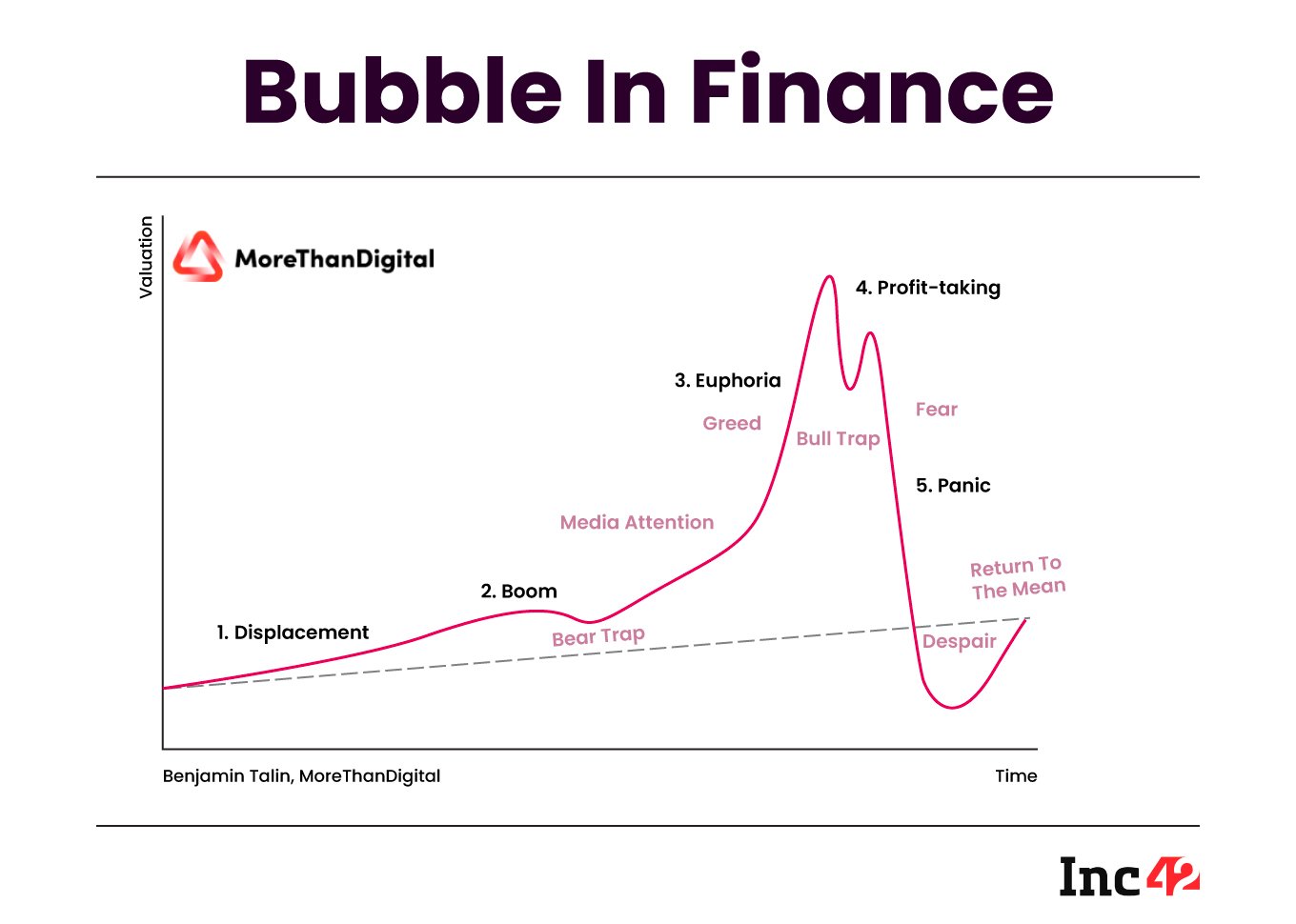
The crytpo and AI industries present serious risks to the U.S. economy. They may be economic bubbles whose bursting would have serious negative effects. Crypto is a Ponzi scheme. Both industries pose serious threats to the environment and are vulnerable to China’s control of rare earth minerals.

The crytpo and AI industries present serious risks to the U.S. economy. Crypto and AI may be economic bubbles that have the potential to burst with serious negative effects on the whole U.S. economy. Crypto is truly a Ponzi scheme. Both industries pose serious threats to the environment and are vulnerable to China’s dominance of rare earth minerals mining, processing, and subsequent use in manufacturing.

(Note: If you find a post too long to read, please just skim the bolded portions. Thanks for reading my blog!)

(Note: Please follow me and get notices of my blog posts on Bluesky at: @jalippitt.bsky.social. Thanks!)

The crytpo and AI industries present serious risks to the U.S. economy. Both have grown quickly and dramatically. Both are supported by risky financing and high levels of investor speculation. Both are industries that many people and investors do not understand well and that are largely unregulated, especially under the Trump administration. [1] (I’m not an investment advisor and claim no special knowledge, but, at best, investments in these industries are likely to be quite volatile. At worst, they have a quite high risk of loss.)

Crypto and AI may be economic bubbles. If, or perhaps when, they burst, they have the potential to have serious negative effects on the whole U.S. economy. They have features that are reminiscent of the housing and mortgage bubble of 2008 whose bursting created the Great Recession and almost brought down the whole U.S. economy (which was saved from far worse by massive government bailouts for large financial firms). Before that, there were the dot-com bubble bursting in the late 1990s and the savings and loan housing and mortgage bubble bursting in the late 1980s and early 1990s. Another historical economic bubble bursting was the 1929 stock market crash.

Crypto is truly a Ponzi scheme. There is no underlying asset. The only thing supporting the value of any cryptocurrency is someone else’s desire to buy it. Its only real value is facilitating get rich quick schemes, money laundering, and money transfers among criminals. The cryptocurrency industry is trying to transform its image from that of a scandal-ridden and crime-enabling financial technology (aka fintech) experiment into that of a mainstream financial and commercial investment and transaction vehicle. The Trump administration is doing everything it can to support this perception transformation without doing anything to actually clean up the industry – and while Trump is enriching himself, his family, and his cronies with crypto investment schemes.

The crypto industry’s nine-month stock market rally has been fueled by optimism due to Trump’s presidency and support, as well as by a shaky financial foundation built on huge amounts of borrowed money. On October 10, Trump’s statement about big tariffs on China sent the crypto stocks plummeting, 12% to 30%, reducing the value of crypto assets by $19 billion. (See previous posts on the risks of the crypto industry here and here.)

The crypto industry is dependent on lots of computer processing and massive amounts of electricity. The associated risks will be discussed more below in an examination of the AI industry, which shares these vulnerabilities.

The threats and promises of the artificial intelligence (AI) industry are widely discussed and debated. Its appropriation of copyrighted information without compensation or attribution, both to train its software as well as to answer questions posed to it, is the subject of multiple copyright infringement lawsuits. Its ability to create and disseminate misinformation and disinformation, including by amplifying it via fraudulent chatbots on social media, are widely recognized as a threat to an accurately informed public, and therefore to elections and societal cohesion, among other things. It’s also recognized as a threat to workers by automating jobs and displacing human workers. Its chatbots that serve as personal companions or mental health counselors seem to help some people and harm others. Their overall value and safety are widely debated.

Perhaps the most immediate threats of the AI industry are to our economy and the environment. The stock market values of AI-involved companies have soared based not on profits or even revenue, but on hype and hope. This includes Amazon, Google, Meta (parent of Facebook, Instagram, etc.), Microsoft, Nvidia (a computer chip maker), OpenAI, Oracle, and xAI (a Musk company). AI-related companies account for about 75% of the increase in stock market values this year, yet 95% of these companies aren’t making profits from their AI activities. The Bank of England recently warned that AI stock values may be overvalued and at risk of a sudden loss of value that could have global effects.

The building of AI-related infrastructure, including chip manufacturing and data and computing center construction, has represented 90% of capital expenditures in the U.S. A good portion of this is taxpayer subsidized, not just through federal tax breaks, but hundreds of millions of dollars in state and local tax breaks for building facilities in at least 37 states. And, as with the crypto industry, a good part of this growth is built on a shaky foundation of borrowed money.

The data and computing centers required by both AI and crypto need large amounts of electricity to run them and large amounts of water to cool the computers. The availability of both electricity and water may be a constraint and will require large investments in public infrastructure, e.g., electricity generation and distribution. For example, as you may have heard, Microsoft is planning to reopen a Three Mile Island nuclear power reactor to provide electricity for its data processing centers. (As you may remember, Three Mile Island was the site of the most serious accident in the U.S. nuclear power industry, a partial reactor meltdown in 1979.)

Another vulnerability of both the AI and crypto industries is the need for chips and other electronics whose manufacture requires rare earth minerals. China is responsible for 70% of the mining of rare earth minerals, 90% of their processing, and 93% of the manufacturing of a key product. This is why Trump’s threat of tariffs on China and a possible trade war with China dramatically affected AI and crypto stocks. If China were to deny the U.S. AI and crypto industries access to rare earth minerals or the products that use them, or even increase their prices significantly, it would be a very serious blow to the companies. This in turn would be a very serious blow to the whole U.S. economy. [2]

The Trump administration has further weakened or removed even the weak regulations and restrictions that were in place on crypto and AI. Moreover, it has been opening the door to investments in crypto and AI by pension funds, individuals’ retirement and savings accounts (e.g., 401(k)s), and banks and financial institutions. This exacerbates the negative impacts of a serious downturn in either industry.

Economic bubbles typically make a few people rich, sometimes very rich, but many people lose money, sometimes lots of money, when the bubble bursts. If the overall threat to the economy is bad enough, the government will step in and provide a bailout, usually to the larger entities that often were at least partially responsible for the bubble. However, millions of Americans could lose their jobs, and, if they or their pension plans had been lured into investing in crypto, lose significant chunks of their savings.

For lots of good news see Jess Craven’s Chop Wood Carry Water blog here and here.


[1]      Reich, R., 10/14/25, “Beware the oligarchs’ two bubbles,” Blog post (https://robertreich.substack.com/p/beware-the-oligarchs-ai-bubble)

[2]      Dayen, D., 10/14/25, “Why China can collapse the U.S. with one decree,” The American Prospect (https://prospect.org/2025/10/14/why-china-can-collapse-the-u-s-with-one-decree/)

SIGNS OF A RESURGENCE OF DEMOCRACY AND PROGRESSIVE POLICIES

An American oligarchy has battled for control of our country since its founding. Today, there are signs of a resurgence of democracy and a third progressive policy era. These signs include a resurgence of unions, campaign finance reforms at the state and local levels, and the growing public and private protests and pushback against the Trump administration. We, the American people, must stand up for democracy. We can defeat the oligarchy.

(Note: If you find a post too long to read, please just skim the bolded portions. Thanks for reading my blog!)

(Note: Please follow me and get notices of my blog posts on Bluesky at: @jalippitt.bsky.social. Thanks!)

An American oligarchy based on wealth and privilege, with race and religion lurking behind them, has battled for control of our country since its founding. Two progressive eras have pushed back against oligarchy, heralded a resurgence of democracy, and made progress toward the founding principles of America. These efforts relegated and regulated the oligarchy to the back seat, putting we the people back in control of America. (See this previous post for more details.)

Today, there are signs of a resurgence of democracy and a third progressive policy era. After 45 years of dramatically increasing income and wealth inequality, shrinkage of the middle class, and workers’ wages not keeping up with inflation or increases in productivity, many Americans are ready to throw the oligarchy out. They recognize that:

  • Unrestrained capitalism is not good for consumers, workers, communities, or our planet.
  • Huge corporations tend to engage in monopolistic behaviors.
  • Oligarchs are anti-democratic and are focused on feathering their own nests.

One sign of surging democracy and progressive politics is the resurgence of unions. Collective bargaining by unionized workers levels the balance of power between oligarch business owners and workers. Unions improve workers’ compensation and working conditions. Evidence of the union resurgence includes:

  • The number of union elections has more than doubled since 2021.
  • Workers have won 70% of those elections, the highest win rate in 15 years.
  • Petitions for union elections increased by 27% in 2024.
  • Public support for unions is at 70%, the highest level since the 1960s.
  • 60 million non-union workers (40% of the workforce) report they would vote to join a union if they got the chance.

Another sign of surging democracy and progressive politics is the passing of campaign finance reforms in multiple states and municipalities. Although reforms to enhance disclosure of campaign donations are very important, and election reforms to make it easier to register and vote are important, the most impactful reforms are ones that provide public financial support to candidates. There are multiple ways to do this, including giving vouchers or tax credits to voters to use to support the candidates of their choice. More than 14 states and 25 municipalities have enacted campaign finance reforms with some form of public financial support.

Perhaps the most effective way to level the playing field between candidates with access to big sums of money and everyday people running for elected office is a public financing system like the ones in New York City and more recently in New York State. These systems require the candidate to opt into the public financing system, which means the candidate agrees to restrictions on the size of donations and the use of one’s own funds that would otherwise be prohibited by the Supreme Court’s Citizens United decision. (As you probably know, the Supreme Court’s 2010 Citizens United decision equated the spending of money on election campaigns with speech. Therefore, freedom of speech means there can be no limits on campaign spending or donations.) [1]

In these public financing systems, small donations (generally less than $200) from constituents (i.e., residents of the candidate’s district) are matched by public funds (up to 8 to 1) for candidates who agree to limits on the size of donations and other restrictions. A candidate must qualify for public financing by garnering a certain number or dollar amount of small donations from constituents. Studies of campaign public financing systems find that they have many benefits including increased diversity of candidates (by class, race, and gender), increased civic engagement and voting, and increased focus of candidates on issues (as opposed to fundraising).

Another sign of the resurgence of support for democracy is the growing resistance to the Trump administration. Institutions from the mainstream media to colleges and universities to law firms are starting to stand up and push back. Elected officials at the state and local levels are pushing back more and more. Democrats in Congress are becoming more organized and effective in pushing back. The courts for the most part, except for the Supreme Court and certain other very right-wing judges, have been pushing back.

Various elections all around the country have also quite consistently shown that voters are standing up and voting against those who are undermining our democracy and supporting the oligarchy. We need to keep up this momentum in statewide elections in Virginia and New Jersey and state and local elections elsewhere this fall. And we need to continue to work to build a strong wave in support of democracy in the 2026 elections for Congress and other offices.

Most importantly, a growing segment of the public is standing up and pushing back. The millions of Americans who engaged in the Oct. 18 No Kings protests sent a strong, unequivocal message in support of democracy. The many, many other smaller protests that are occurring daily reinforce that message. The pushback on media executives, who were compromising freedom of speech by taking Jimmy Kimmel off the air, sent out shock waves that made those media executives change their minds. We’ll need to continue to do these things again and again to put democracy back in the driver’s seat.

Thank you for all you’re doing! Please keep up the great and important work to save our democracy! We, the American people, as citizens, consumers, and workers, must stand up for democracy. We can defeat the oligarchy, and its authoritarianism and fascism.

For lots of good news on the fight for democracy see Jess Craven’s 10/12 Chop Wood Carry Water post.


[1]      Brennan Center for Justice, retrieved from the Internet on 10/17/25, “Reform money in politics,” (https://www.brennancenter.org/issues/reform-money-politics)

THE AMERICAN STRUGGLE BETWEEN OLIGARCHY AND DEMOCRACY

An American oligarchy has battled for control of our country since its founding. In 1980, the American oligarchy re-emerged and has been undermining democracy and skewing government policy. Defenders of democracy are fighting back, including with growing protests against and resistance to King Trump and his administration. Please find and participate in an Oct. 18 No Kings protest near you.

SPECIAL NOTE: We need millions of Americans at the No Kings protests on October 18 in defense of democracy. Please support this however you can. You can find an event near you here.

(Note: If you find a post too long to read, please just skim the bolded portions. Thanks for reading my blog!)

(Note: Please follow me and get notices of my blog posts on Bluesky at: @jalippitt.bsky.social. Thanks!)

An American oligarchy based on wealth and privilege, with race and religion lurking behind them, has battled for control of our country since its founding. The southern plantation owners were the first American oligarchy. The businessmen and industrialists of the late 1800s and early 1900s, who were dubbed the Robber Barons, were the second American oligarchy.

The first American progressive era from the 1890s through 1945 pushed back against oligarchy and the Great Depression, which was caused by the greed of the oligarchs. President Franklin D. Roosevelt’s New Deal and the growth of government and government power due to World War II relegated and regulated the oligarchy to the back seat. This put democracy and we the people in the driver’s seat and in control of America.

The period after World War II, from 1945 to 1980 was the second progressive era. An unwritten post-war social compact framed American society and the economy. It was based on three pillars:

  • Corporations served all stakeholders: workers, customers, communities, and shareholders;
  • Workers had a right to unionize and receive fair wages and safe working conditions; and
  • Government provided a safety net, managed capitalism, and leveled the playing field.

The result was an economy and society where, from 1945 to 1980, the rising tide did lift all boats. Economic inequality narrowed and America moved toward its promise of equal opportunity for all. Workers’ wages increased in accordance with their increases in productivity. The middle class grew along with economic security. Each generation was better off than the previous one. Democracy was working well.

In 1980, with the election of President Reagan, the American oligarchy re-emerged. For the last 45 years, it has been undermining democracy and skewing government policy in its favor. (See this previous post for more details.) Although Republicans have been the driving force, Democrats have contributed to this shift by supporting business deregulation and unconstrained globalization. Democrats also failed to support unions and failed to reform our campaign finance system. Moreover, they have come to rely on campaign contributions from wealthy individuals and corporations.

All this has led to 45 years of dramatically growing income and wealth inequality. The middle class has shrunk, and workers’ wages have increased much less than their increases in productivity. Many Americans have lost their economic security. The public’s faith in government and democracy has declined dramatically.

However, there are signs that a third American progressive era and a resurgence of democracy may be emerging. There is increasing acknowledgement and public awareness that:

  • Wealth and income inequality have grown to unacceptable levels.
  • Huge corporations tend to engage in monopolistic behaviors such as price fixing and price gouging; decreasing quality, choice, and customer service; and poor treatment of employees in terms of compensation and safety.
  • Unrestrained capitalism is not good for consumers, workers, communities, or our planet.
  • The oligarchs have rigged our economic system in their favor so that the rising tide is lifting only their yachts.
  • Oligarchy is anti-democratic and tends to turn into authoritarianism and fascism, i.e., white, male, Christian nationalism.

Bob Kuttner, a long-time, very astute and thoughtful observer and analyst of American politics and policies, has concluded that American democracy’s efforts to balance capitalism are doomed to fail. The incentives and power of huge corporations and huge wealth are too great and will inevitably overwhelm America’s brand of democracy. He concludes that significant public ownership of key sectors of the economy, i.e., democratic socialism, is necessary to keep capitalism in check. [1]

As Bob Reich recently wrote, “Capitalism is compatible with democracy only if democracy is in the driver’s seat. … [Otherwise] It fuels despotism.” [2] This is reminiscent of the quote from Supreme Court Justice Louis Brandeis back in the 1930s: “We can have democracy in this country, or we can have great wealth concentrated in the hands of a few, but we can’t have both.”

In many sectors of our economy there’s a clear need for strong regulation or public ownership including in health care, communications (including media and the big technology platforms), utilities and energy, the transportation system, banking and finance, housing, and food and agriculture. In these areas, a publicly owned option would be more effective and efficient because it wouldn’t have to cover the costs of profits, big executive pay packages, and advertising. For example, in the health care sector, when the Affordable Care Act (ACA, aka Obama Care) was being developed, health care providers and insurance companies vehemently opposed a public option in the health care market place (basically Medicare available to everyone) because they knew it would be more effective and efficient. This is also why they oppose Medicare of All and are working feverishly to undermine Medicare with their privatized Medicare Advantage plans. We need public Medicare for seniors and a public option for everyone else to stop the rapacious, for-profit health care businesses that put profits before patients. (See previous posts here, here and here for more details.)

The growing protests against and resistance to King Trump and his administration’s actions and policies are signs of a resurgence of democracy and an emerging progressive era. The successes are many, on the streets and in the courtrooms, sometimes small but nonetheless important, and are underreported by the mainstream media. Forcing media executives to put the Jimmy Kimmel show back on the air was a huge and very visible success. (For lots of current good news see Jess Craven’s Chop Wood Carry Water blog here.)

In this vein, please find an October 18th No Kings event near you here and participate and support it in whatever way you can. We, the American public, as citizens, consumers, and workers, must stand up for democracy, otherwise, we’ll continue down the slippery slope to oligarchy, authoritarianism, and fascism. We can stop the anti-democracy slide, as we did in the Jimmy Kimmel case.

We need millions of Americans engaged in the No Kings protests and in the many, many other smaller protests that are occurring daily. Thank you for all you’re doing! Please keep up the great and important work to save our democracy!

My next post will identify additional signs of a resurgence of democracy and the beginning of a third progressive era, including a surge in unionization, campaign finance reforms, and actions and elections at the state and local levels.


[1]      Kuttner, R., 12/1/21, “Capitalism vs. liberty,” The American Prospect (https://prospect.org/politics/capitalism-vs-liberty/)

[2]      Reich, R., 9/26/25, “Why are we so polarized? Why is democracy in such peril?” Blog post (https://robertreich.substack.com/p/why-are-we-so-polarized)

STANDING UP TO TRUMP AND CORPORATE OLIGARCHS

Oligarchy Definition A small group of people having formal and informal power based on (1)wealth; (2) connections; and (3) privilege.

American oligarchs have spent 45 years and billions of dollars undermining democracy and skewing government policy in their favor. We need to stand up and make Trump and corporate CEOs understand that the long-term success of their companies and our country depend on the trust and support of us, their customers and voters. We did this in a big way with the reaction to media executives pulling the Jimmy Kimmel show off the air. We need to do it again and again.

SPECIAL NOTE: We need millions of Americans at the No Kings protests on October 18 in defense of democracy. Please support this however you can. You can find an event near you here.

(Note: If you find a post too long to read, please just skim the bolded portions. Thanks for reading my blog!)

(Note: Please follow me and get notices of my blog posts on Bluesky at: @jalippitt.bsky.social. Thanks!)

American oligarchs, i.e., wealthy individuals and their large corporations, have spent at least the last 45 years undermining democracy and skewing government policy in their favor by: (See this previous post for more details.)

  • Increasing, coordinating, refining, and hiding their spending of billions of dollars on election campaigns. They spent over $10 billion in the 2023-24 federal election cycle alone.
  • Spending billions of dollars on lobbying the federal government, currently to the tune of $4 billion a year.
  • Moving tens of thousands of people through the revolving door between jobs in their corporations and in the government agencies that regulate them.

These efforts have been very successful; their return on investment has been extraordinary. Trump and his anti-democratic, authoritarian, and fascist administration are the culmination of this work that has undermined our democracy and skewed government policies and our economy to favor the oligarchs. Examples of skewed government policies include the following.

The individual income tax rates on oligarchs’ incomes have been cut from 70% in 1980 and 92% in the 1950s to 37% today. Income taxes on income from wealth, i.e., long-term capital gains, have been cut from 28% in 1980 to 15% in 2012 but are back up to 24% today. Note that the tax rate on income from wealth (i.e., unearned income) has always been much lower than the tax rate on income from work (i.e., earned income). This benefits the oligarchs and entrenches and exacerbates wealth inequality. Furthermore, increases in wealth that aren’t cashed in aren’t taxed at all. As a result, the richest billionaires pay about 3.4% in income tax on their incomes while the average American pays 14.5%.

Corporate income tax rates have also been cut from 46% in 1980 to 21% today. Moreover, tax loopholes allow corporations many strategies to avoid taxes. In particular, multi-national corporations artificially shift profits to foreign countries with very low taxes. Corporations have also been allowed to move jobs to low-wage countries and to resist and undermine workers’ unions. Roughly one out of every three private sector workers was a union member in the 1950s; today it’s one out of every 15. [1]

Antitrust laws have basically been unenforced for the last 45 years. As a result, many sectors of the American economy are dominated by a few, large, monopolistic corporations. Reduced competition means corporations can raise prices, cut quality, and strong-arm employees. Deregulation has left consumers vulnerable to poor products and frustrating services.

All of this has led to 45 years of dramatically growing income and wealth inequality. The 50% of Americans with the least wealth now, collectively, have only 2.5% of national wealth (less than $23,000 each on average). The wealthiest 1% of Americans own 33% of national wealth (about $15 million each on average). Pay for CEOs is now 1,094% higher than in 1978, while a typical workers’ pay has only increased 26%. As a result, the CEO-to-worker pay ratio grew from 31 times a typical worker’s pay in 1978 to 281 times in 2024. [2] And CEOs now believe that their only responsibility is to maximize returns for shareholders; other stakeholders, including workers, customers, and communities, are not a matter for concern.

The oligarch’s successful assault on our democracy and public policies has resulted in many Americans losing their economic security, as well as their trust in government and democracy. Many of them don’t feel it’s worth voting because they don’t believe it’s going to make any difference. They believe government is controlled by special interests working to benefit themselves. These Americans are angry and fearful about the future. Therefore, they are willing to believe the lies that Trump tells them about bringing back their good jobs and wages. And they are willing to overlook his undermining of democracy.

We, American consumers, need to make corporate CEOs understand that the long-term success of their companies depends on the trust and support of us, their customers. We did this in a big way with the reaction to media executives pulling the Jimmy Kimmel show off the air in response to President Trump’s displeasure with him. We’ll need to do this again and again to wake up CEOs and to get them to focus on the long-term instead of pleasing the would-be dictator in the White House in the short-term.

The spinelessness of corporate CEOs in the face of Trump makes it clear that they “are poorly suited to be custodians of democracy or counterweights to presidential overreach.” [3]Capitalism is compatible with democracy only if democracy is in the driver’s seat. … [Otherwise] It fuels despotism.” [4]

We, the American public, consumers and workers, must stand up for democracy and for its regulation of corporations and capitalism. Otherwise, we’ll continue down the slippery slope to oligarchy, authoritarianism, and fascism. We can stop this slide, as we did in the Jimmy Kimmel case.

I look forward to seeing millions of Americans engaged in the No Kings protests on October 18 and in many, many other smaller protests daily. Thank you for all you’re doing! Please keep up this great and important work to save our democracy!

Find an October 18th No Kings event near you here and participate and support it in whatever way you can.

For lots of current good news see Jess Craven’s Chop Wood Carry Water blog here.


[1]      Economic Policy Institute, retrieved from the Internet 9/29/25, “State of Working America: Unions,” (https://data.epi.org/unions/union_members_historical/line/year/national/percent_union_members_historical/overall)

[2]      Gould, E., Bivens, J., & Kandra, J., 9/25/25, “CEO pay increased in 2024 and is now 281 times that of the typical worker,” Economic Policy Institute (https://www.epi.org/blog/ceo-pay-increased-in-2024-and-is-now-281-times-that-of-the-typical-worker-new-epi-landing-page-has-all-the-details/)

[3]      Edelman, L., 9/23/25, “Why corporate leaders are appeasing Trump,” The Boston Globe

[4]      Reich, R., 9/26/25, “Why are we so polarized? Why is democracy in such peril?” Blog post (https://robertreich.substack.com/p/why-are-we-so-polarized)