PUBLIC POLICIES TO REDUCE ECONOMIC INEQUALITY IN AMERICA

Economic inequality is at record breaking levels in the U.S. The American oligarchy is powerfully wielding its economic and political power. Public policies can stop and reverse the growing economic inequality. See examples below. If Democrats or others want to garner support and votes, they should support policies to reduce economic inequality and create a secure economic future for working Americans.

(Note: If you find a post too long to read, please just skim the bolded portions. Thanks for reading my blog!)

(Note: Please follow me and get notices of my blog posts on Bluesky at: @jalippitt.bsky.social. Thanks!)

Economic inequality is at record breaking levels in the U.S. America now has 916 billionaires whose combined wealth is $8 trillion (yes, trillion). Their wealth has increased by over $1 trillion in the first nine months of 2025. Since the passage of the Republican tax cut bill in 2017, it’s increased from $3 trillion to $8 trillion. For comparison, the least wealthy 167 million Americans (half the population) have combined wealth of just $3.6 trillion. In other words, the combined wealth of 167 million Americans is less than half the wealth of the 916 billionaires. The rise in billionaires’ wealth reflects the transfer of profits of economic activity away from workers and to owners and investors.

A big part of this is the increase in the value of the stocks of companies these billionaires own and in which they invest. Provisions in the 2017 Republican tax cut bill (that were continued by the GOP’s Big Ugly Bill in July 2025) give huge tax breaks to corporations. For example. Alphabet (Google’s parent) gets $17.9 billion, Amazon gets $15.7 billion, and Microsoft gets $12.5 billion.

With their great wealth, these billionaire oligarchs have great political power, especially given the laws and court decisions allowing unlimited spending in political campaigns. This basically allows them to buy our elected officials, as Elon Musk bought Trump with the over $250 billion he spent on Trump’s campaign. “Highly concentrated wealth leads naturally to concentrated political power.” [1] As Supreme Court Justice Louis Brandeis wrote almost 100 years ago, “We may have democracy, or we may have wealth concentrated in the hands of a few, but we can’t have both.”

The oligarchs have been wielding their political power very effectively for the last 45 years, and especially in the last ten years. They’ve succeeded in getting policies enacted that enrich themselves and leave American workers not just short changed, but shafted. Public policies to provide economic security for working Americans will never happen if the oligarchs retain their political and economic power. (This previous post presented policies to increase workers’ incomes and this post highlighted policies to reduce the cost of living for them.)

Therefore, the policies that allowed economic inequality to grow over the last 45 years, and to explode in the last 25 years, need to be changed. A group called Patriotic Millionaires has proposed “The Money Agenda,” a set of policies that would reduce economic inequality and “permanently stabilize the economic lives of working people, stimulate wide-spread economic growth, and ensure prosperity and stability for America’s next 250 years.”

The Money Agenda includes four pieces of legislation. Here’s a quick overview of them:

  • The Equal Tax Act
    • Increase tax rates on income from wealth (e.g., capital gains) so they are the same as the tax rates on income from work
    • Close the loophole that allows the wealthy to give away appreciated assets and dodge anyone having to pay tax on their increase in value (i.e., the stepped-up basis loophole)
  • The Anti-Oligarch Act
    • Phase 1: Stop the growth of economic inequality by putting a reasonable tax on the true income of the wealthy (e.g., including increases in wealth) and on the intergenerational transfers of wealth
    • Phase 2: Reduce economic inequality by implementing a wealth tax on the ultra-rich
  • The “Cost of Living” Tax Cut Act
    • Establish a Cost of Living Exemption of about $45,000 in order to eliminate income tax on income up to a reasonable cost of living for a single adult without children
    • Pay for the lost revenue by putting a surtax on incomes over $1 million
  • The “Cost of Living” Wage Act
    • Raise the minimum wage to a living wage for a single adult with no children, or about $21 per hour (roughly $45,000 per year for full-time work) and index it to inflation
    • Protect workers from loss of income due to automation or AI

The Economic Policy Institute recently issued a report titled “Raising taxes on the ultrarich: A necessary first step to restore faith in American democracy and the public sector.” It states that if “policymakers are unwilling to raise taxes on income derived from wealth, the tax system can never be made as fair as it needs to be.” Its recommendations echo the provisions of The Equal Tax Act and The Anti-Oligarch Act above.

It also proposes:

  • Replacing the estate tax with a progressive income tax on those receiving an inheritance.
  • Raising the top marginal income tax rate back to its pre-2017 level (i.e., from 37% to 39.6%). This would generate revenue of over $30 billion a year. (Note: In 1980, the top rate was 70% and it was over 90% in the 1950s.)
  • Returning the corporate tax rate to 35% (where it was before the 2017 Republican Tax Cut Act reduced it to 21%). This would generate over $250 billion a year in revenue.
  • Closing tax loopholes that the ultrarich and corporations use to evade taxes.
  • Strengthening the IRS’s capability to enforce tax laws. The IRS estimates that $600 billion in taxes that are owed are not paid each year. However, in recent decades it has lacked the resources to enforce the laws and collect those taxes because Republicans have underfunded it.

If Democrats, or another party such as the Working Families Party, want to garner support and votes, they should support these policies to reduce economic inequality and the economic and political power of the American oligarchy. These and related policies would also provide economic security for working Americans. Democrats should be unequivocal in embracing economic populism and stop cozying up to the oligarchy and their PACs for campaign contributions. [2] To consistently win elections, Democrats need to loudly and unequivocally promote a vision of a more economically secure future for working Americans.


[1]      Bivens, J., 11/17/25, “Raising taxes on the ultrarich,” page 5, Economic Policy Institute (https://www.epi.org/publication/raising-taxes-on-the-ultrarich-a-necessary-first-step-to-restore-faith-in-american-democracy-and-the-public-sector/)

[2]      Reich, R., 11/3/25, “What the Democrats must do. Now!” (https://robertreich.substack.com/p/what-the-democrats-must-do-now) /

WHAT EVERYDAY AMERICANS WANT FROM GOVERNMENT Part 2

Many Americans are worried about the cost of living. Government policies can reduce or control the costs of everyday expenses. If Democrats or others want to garner support and votes, they should aggressively promote such policies. Some examples are presented below.

(Note: If you find a post too long to read, please just skim the bolded portions. Thanks for reading my blog!)

(Note: Please follow me and get notices of my blog posts on Bluesky at: @jalippitt.bsky.social. Thanks!)

Many Americans are worried about the cost of living. The affordability of the cost of living has two components: 1) the amount of money people make and the benefits they get from their employer, and 2) the costs of everyday expenses from food to housing to health care to utilities. If Democrats, or another party such as the Working Families Party, want to garner support and votes, they should focus on the affordability of day-to-day life. They need to promote a vision of and policies for a more economically secure future for working Americans. This means embracing economic populism, including reducing economic inequality. [1]

This previous post discussed the first component, workers’ compensation. This post discusses ways public policies and government action can reduce, or at least control increases in, the cost of living, i.e., inflation. Over the last 45 years, the cost of everyday necessities has increased faster than workers’ wages, including for food, housing, child care, utilities, health care, and medicine.

Here’s an overview of some government policies that would reduce or control the cost of living. [2]

  • Rescind Trump’s tariffs. As even President Trump is now acknowledging, his tariffs have and will drive up consumer prices. He recently rescinded some tariffs on beef, coffee, tea, fruit and fruit juice, cocoa, spices, tomatoes and other commodities. He acknowledged that his tariffs may have contributed to higher prices at the supermarket. Since the first day that Trump announced his intention to impose tariffs, every reputable economist has stated that tariffs increase prices for consumers. (Note: Tariffs can be good policies if implemented as part of well-planned, comprehensive jobs or national security policies. However, Trump’s tariffs clearly do not meet this criterion.)
  • Enforce antitrust laws. Forty-five years of failure by the federal government to enforce antitrust laws (except for efforts to revitalize them under President Biden) have allowed the emergence of huge companies with monopolistic powers. This has harmed everyday Americans in many ways as outlined below. If Democrats or others, such as the Working Families Party, want to attract support and voters, they should unequivocally call out these huge companies and their oligarchic executives and investors for their greed and monopolistic behavior. This does mean that Democrats will have to stop cozying up to the oligarchs to get campaign donations.

Stop price gouging. Monopolistic or near monopolistic size allows companies to raise prices on consumers who have few if any options. In the short term, governments should implement windfall profits taxes and/or price controls to stop price gouging. In the longer term, governments should enforce antitrust laws and break up or impose very large fines on companies that engage in price gouging and other unfair, monopolistic business practices. This applies to a wide range of consumer goods and services from food to rent to air travel to health care to drug prices. It also applies to the big tech companies, Amazon, Meta (Facebook, Instagram, etc.), Alphabet (Google), Microsoft, and Apple.

Restore competition. By stopping mergers and acquisitions that lead to monopolistic power, and by breaking up monopolistic companies, competition could be restored to consumer markets. Without competition, prices go up and quality goes down, and consumers suffer.

Restoring competition would also reduce employers’ power over workers. Although this wouldn’t reduce costs, it would improve workers’ compensation and therefore the affordability of the cost of living. Employers’ power over workers has grown in multiple ways. The huge and monopolistic size of many employers limits the options for employees and, along with globalization, has allowed employers to undermine unions and cut workers’ compensation. Furthermore, many employers, including some fast-food chains, require employees to sign non-compete employment contracts that limit their ability to move to other employers for better jobs and better pay. President Biden took steps to ban non-compete agreements, but President Trump stopped this effort.

  • Stop privatization of public services and public goods. Privatization is often sold to the public with claims that the private sector will deliver cheaper and better services or products. This rarely turns out to be true. Once the profit incentive is introduced, prices are likely to go up and quality is likely to go down.

Nowhere is this clearer than in our health care system. The privatized system in the U.S. is the costliest system in any of the well-off countries of the world and its outcomes are among the worst. All elements of the system are putting profits before patients. Medicare is much more efficient than any of the private health insurance companies. The health care industry vehemently resisted including a public, Medicare-like option in the Affordable Care Act (ACA) because it knew the public option would deliver better care at lower prices. (See this previous post for more information on the failures of for-profit health care.)

Numerous other examples exist. Rail transportation in the rest of the world is more efficient, dependable, and convenient than the privatized system in the U.S. Internet service is cheaper and faster in Europe than in the U.S. (I’ve been criticizing privatization since way back in 2012. See this previous post and this one for more information.)

  • Stop the abuse of patents. Pharmaceutical companies abuse patent laws to keep cheaper generic versions of drugs from being introduced to the market. Classic cases of this are insulin and EpiPens. (See this previous post for more information.)
  • Enhance regulation. Regulations and enforcement of regulations need to be strengthened to protect consumers from fraud, price gouging, and unsafe food and products. Particularly where large companies have monopolistic power, strong regulation is needed. For example, millions of homeowners lost their homes in the aftermath of the 2008 financial crisis because large financial institutions were pushing fraudulent mortgages. The Consumer Financial Protection Bureau (CFPB) was created to protect consumers from financial fraud and abusive practices, such as exorbitant late and overdraft fees. The Trump administration is trying to eliminate the CFPB so big financial institutions can maximize their profits by ripping off consumers. (See this previous post for more information on the Trump administration’s weakening of regulations and the scams that are likely to be the result.)

My next post will discuss economic insecurity and inequality and the government policies that are needed to address them.


[1]      Reich, R., 11/3/25, “What the Democrats must do. Now!” (https://robertreich.substack.com/p/what-the-democrats-must-do-now) /
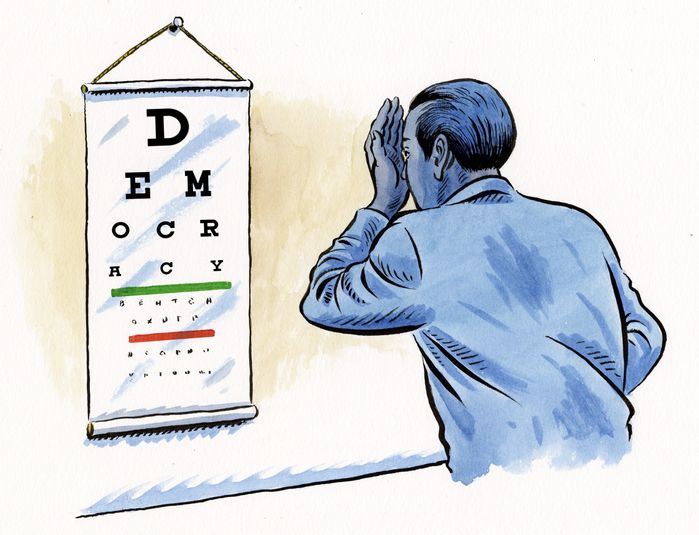
[2]      Kuttner, R., 11/12/25, “A blessing in disguise?” Today on The American Prospect (https://americanprospect.bluelena.io/index.php?action=social&chash=9a32ff36c65e8ba30915a21b7bd76506.3779&s=6009966078bda0f5 056f960a346ead8a

WHAT EVERYDAY AMERICANS WANT FROM GOVERNMENT

Many Americans are worried about being able to afford the cost of living. Government policies can increase the amount of money they make and the benefits they get, as well as reduce the cost of everyday expenses. If Democrats or others want to garner support and votes, they should unequivocally advocate for policies that would improve the affordability of day-to-day life. Some examples are presented below.

(Note: If you find a post too long to read, please just skim the bolded portions. Thanks for reading my blog!)

(Note: Please follow me and get notices of my blog posts on Bluesky at: @jalippitt.bsky.social. Thanks!)

Polls have shown for some time, and elections results on Nov. 4 underscored, that many Americans are worried about being able to afford the cost of living. This has two components: 1) the amount of money they make and the benefits they get from their employer, and 2) the cost of everyday expenses from food to housing to health care to utilities.

If Democrats, or another party such as the Working Families Party, want to garner support and votes, they should focus on the affordability of day-to-day life. They need to promote a vision of a more economically secure future for working Americans. They should embrace economic populism, including reducing economic inequality. [1]

Workers’ wages haven’t kept up with inflation over the last 45 years. The value of the federal minimum wage is 60% of what it was 45 years ago. Similarly, workers’ wages have not kept up with their increases in productivity. The result has been that investors and corporate executives have gotten rich, very rich, billionaire rich, off the big profits companies make on the backs of underpaid workers. Meanwhile, workers’ standard of living has been falling, and, for many, their economic security is gone. Government has helped, but its safety net is fragmented and full of holes. It prevents some workers, some of the time, from becoming destitute. Nonetheless, many workers are anxious, distraught, depressed, and even suicidal. Meanwhile, the government safety net is in effect subsidizing large companies that don’t pay their employees enough to live on. However, these big companies and their owners and investors don’t want to pay a fair share of the taxes needed to fund even this limited safety net.

Here’s an overview of some government policies that would increase workers’ compensation, including both wages and benefits. [2]

  1. Increase the minimum wage. Government officials and candidates at all levels, national, state, and local, should work toward increasing the minimum wage. If Democrats want to continue the winning momentum from the recent elections and want to win back one or both chambers of Congress, they should run hard on increasing the minimum wage and put questions to do so on the ballot wherever they can. (Note: An enormous body of research on the effects of higher minimum wages has shown that past minimum wage increases have meaningfully raised pay for low-wage workers without causing significant increases in unemployment. Moreover, increases in the minimum wage often lower worker turnover, a major cost savings for employers, and can attract  better workers.)
  2. Support unions and unionization. Unions built the American middle class, but Republicans have been undermining unions and the ability to unionize for 45 years. (See Story #2 in this previous post and also this previous post for more background.) Democrats weren’t actively supporting unions either and were complicit in expanding global trade and the off-shoring of jobs, which undermined unions and workers’ wages here in the U.S. Elected officials and candidates need to stand up for unions and strengthen federal laws and agencies that support and protect workers right to unionize. For example, federal laws and regulators should not allow companies to do what Starbucks has done. It has been stonewalling its workers since the first votes to unionize in December 2021. It has refused to meet with union representatives and has failed to engage in any serious bargaining. It has shut stores where workers voted to unionize. While its workers face low pay, rising health care costs, and working conditions that are not worker friendly, Starbucks’ CEO made $96 million last year.
  3. Other ways to increase workers’ incomes. The federal and state governments should take action to enforce labor laws and reduce wage theft. Wage theft occurs when employers don’t pay overtime as they’re supposed to, don’t pay workers for some of the time they spend on the job or in job-related activities, etc. It adds up to billions of dollars a year. In addition, overtime rules should be strengthened so employers can’t dodge overtime pay by claiming that low-level, low-pay workers are members of management who aren’t eligible for overtime pay.
  4. Ways to increase benefits. The federal and state governments could increase unemployment benefits, strengthen regulations on employer offered health insurance, and enhance requirements for employer-supported retirement savings programs. They could require minimum amounts of paid sick leave and vacation time.
  5. Enhance public supports and the safety net. The federal and state governments could expand food, heat, and utility cost assistance programs. They could also enhance subsidies for early education and child care, as well as implement paid family leave. They could increase support for renters and first-time home buyers, while also better regulating private owners of large rental properties and single-family homes, which are increasingly being bought up by investors. They could help alleviate the student debt crisis. Perhaps, most importantly, they could make health insurance and health care more affordable and accessible. Over half of Americans support creating a Medicare for All type universal health insurance program. These public supports and the safety net are underfunded today because wealthy individuals and corporations are not paying their fair share in taxes. More on this in my next post.

My next post will discuss policies that would tackle the cost of goods and services. It will also discuss economic inequality.


[1]      Reich, R., 11/3/25, “What the Democrats must do. Now!” (https://robertreich.substack.com/p/what-the-democrats-must-do-now) /
[2]      Dayen, D., 7/28/25, “Greg Casar is organizing to win,” The American Prospect (https://prospect.org/2025/07/28/2025-07-28-organizing-to-win-greg-casar/

EVERY REPUBLICAN WHO DOESN’T STAND UP SHARES THE BLAME

Every Republican, especially those in Congress, who does not resist the undemocratic and illegal actions and his administration shares the blame for what’s happening. The Republican Party of Trump is a dark shadow of its former self. Many past Republican leaders would be horrified.

Every Republican, especially those in Congress, who does not stand up and push back against the undemocratic, unconstitutional, and illegal actions of Trump and his administration shares the blame for what’s happening. They are enabling a Trump dictatorship or monarchy. Congressional Republicans are unilaterally surrendering their constitutional powers. The Republican Party of Donald Trump is a dark shadow of its former self. Many past Republican leaders would be horrified.

(Note: If you find a post too long to read, please just skim the bolded portions. Thanks for reading my blog!)

(Note: Please follow me and get notices of my blog posts on Bluesky at: @jalippitt.bsky.social. Thanks!)

Although President Trump and his administration get blamed (and rightly so) for the undemocratic and illegal policies and actions they’re taking, every Republican, especially those in Congress, who does not stand up and push back is also to blame. This includes Governors, state Attorneys General, state legislators, Mayors, and others, as well as former elected Republican officials. If there was a loud chorus of Republicans, including current and former elected officials, standing up and criticizing Trump and his administration, it would make a dramatic difference.

Silent and acquiescent Republicans, particularly those in Congress, are enabling the dismantling of democratic norms, processes, and institutions. Congressional Republicans are unilaterally surrendering their constitutional powers to the Trump administration. They are ceding the separation of powers, which is the Constitution’s remedy for potential executive tyranny (and the tyranny of the King of England). They are enabling a Trump dictatorship or monarchy.

Congress by its inaction and, on occasion, by its actions is: [1]

  • Surrendering the power of the purse, i.e., the appropriation of funds and the requirement that the executive branch spend money as appropriated.
  • Surrendering the power to legislate and set policy, e.g., on immigration policies and enforcement, declarations of war and use of military force, tariff and trade policies, etc.
  • Surrendering meaningful scrutiny of Trump appointees and agencies.
  • Surrendering oversight of the President and his actions, i.e., any Congress with any integrity would have impeached and convicted Trump multiple times for his unconstitutional and illegal acts.

In the current budget crisis and government shutdown, Trump is refusing to meet with Democrats to negotiate a resolution, Republican House Speaker Johnson is refusing to even have the House in session to work on budget bills or compromises, and Republican Senate Majority Leader Thune is refusing to hold any meaningful negotiations with Democrats on a resolution to reopen the government. Meanwhile, the Trump administration is trying to withhold available funds for food assistance (the Supplemental Nutrition Assistance Program [SNAP]), which puts food on the table for 41 million Americans (roughly 1 out of every 8 residents).

Even before the government shutdown, the Trump administration was illegally withholding (aka impounding) funds appropriated by Congress. Head Start programs, which provide early education and child care, as well as other supports, to low-income children under school age and their families, have been forced to cut back and now, with the shutdown, some are closing. This jeopardizes young children’s growth, development, and health, and means parents can’t go to work because they don’t have child care. Foreign aid, research grants, and emergency response funds for natural disasters are other examples of illegally withheld funding.

Meanwhile, the Trump administration is illegally using public and private funds to finance favored people and initiatives, such as paying military personnel, funding ICE, prosecuting personal enemies, deploying the National Guard and military personnel on American soil, and demolishing part of the White House and building Trump’s new ballroom. [2]

Republicans and Americans who are not standing up and calling out these undemocratic, unconstitutional, and illegal actions are unpatriotic and share the blame. These actions are hurting Americans and undermining our democracy.

The Republican Party of Donald Trump is a dark shadow of its former self. Ronald Reagan, John McCain, Bob Dole, George H. W. Bush, and many other past Republican leaders would be horrified at the behavior of today’s Republicans and Republican Party.


[1]      Nader, R., Fein, B., & Fisher, L., 10/31/25, “The spinelessness of Thune and Johnson is destroying American democracy,” Common Dreams (https://www.commondreams.org/opinion/johnson-thune-congress)

[2]      Hubbell, R., 10/27/25, “Democrats continue to stand strong,” Today’s Edition Newsletter (https://roberthubbell.substack.com/p/democrats-continue-to-stand-strong)(

A SUCCESS FOR DEMOCRACY: PUBLIC CAMPAIGN FINANCING

The campaign finance system in the U.S. is corrupt. It allows wealthy individuals and corporations to effectively buy and bribe candidates. One of the signs of resurgent democracy is the passing of campaign finance reforms in many states and municipalities. One very effective way to democratize campaign financing is a public matching funds system that amplifies the campaign contributions, and therefore the voices and power, of everyday Americans. New York City’s public financing system is credited with allowing Zohran Mamdani to run a competitive race for Mayor.

(Note: If you find a post too long to read, please just skim the bolded portions. Thanks for reading my blog!)

(Note: Please follow me and get notices of my blog posts on Bluesky at: @jalippitt.bsky.social. Thanks!)

The campaign finance system in the U.S. is corrupt. It allows wealthy individuals and corporations to effectively buy and bribe candidates. This fosters oligarchy. However, as noted in this previous post, one sign of resurgent democracy is the passing of campaign finance reforms in many states and municipalities.

Making campaign financing more democratic is quite difficult, given that the Supreme Court has equated political spending with speech, including for corporations, and ruled that free speech rights, therefore, allow unlimited campaign spending by wealthy individuals and corporations.

However, there is one very effective way to democratize campaign financing and level the playing field between candidates with access to big sums of money and everyday people running for elected office: a public financing system. More than 14 states and 25 municipalities have enacted campaign finance reforms with some form of public financial support. The most effective of these systems gives a candidate the option of participating in a public matching funds system. If they do, it requires them to agree to restrictions on the size of donations and the use of their own funds. Without voluntary opting in, these restrictions would be prohibited by the Supreme Court’s rulings. [1] Public matching funds amplify the small campaign contributions, and therefore the voices and power, of everyday Americans. [2]

New York City’s public financing system, which has been in place since 1988, is credited with allowing Zohran Mamdani to run a competitive race for Mayor. He won the Democratic primary and is favored to win Tuesday’s final election. (He’s facing disgraced former New York Governor, Andrew Cuomo, whom he beat in the primary. Cuomo, a lifelong Democratic, is running in the final election as an independent with backing from the oligarchy, including President Trump.)

Whether Mamdani wins the final election or not, this is a huge win for democracy. (See this previous post for more detail on public financing systems and their benefits for democracy.) It shows that a public financing system like New York City’s allows a serious candidate, but one who lacks access to big money, to run a competitive campaign against candidates with the backing of the big money oligarchs. It allows candidates to run and win without big money from private donors who want policy favors.

In New York City’s public financing system, small donations of up to $250 from constituents (i.e., residents of the City) are matched by public funds 8 to 1. Therefore, a $50 contribution is worth $450 to the candidate and a $250 contribution is worth $2,250. Mamdani raised over $4 million from over 40,000 contributors, making his average contribution amount under $100. He received over $13 million in public matching funds for his qualifying, private contributions.

Without these public matching funds, Mamdani probably would not have had the resources necessary to effectively reach out to enough New Yorkers to be competitive against the oligarch-funded Cuomo. As Mamdani said, “it allows … the amplification of the voice of ordinary New Yorkers, as opposed to the billionaires who have grown used to buying our elections.” [3]

The public financing of campaigns is not a new idea. It was first proposed by Teddy Roosevelt in 1907 as part of his effort to rein in the Robber Barons and their monopolistic trusts of the Gilded Age, as well as to rein in the political corruption they fostered. In 1974, after the Watergate scandal that led to the resignation of President Nixon, a public financing system was created for presidential campaigns. The Senate passed legislation creating a public financing system for congressional elections, but it was not passed by the Democratic-controlled House. In the 1990s, after the savings and loan crisis and scandals, Congress passed public financing for congressional elections, but Republican President George H. W. Bush vetoed it. Democratic President Clinton promoted public financing legislation, but Republicans blocked it with a filibuster. Some presidential candidates opted out of the presidential public financing system because they found its spending limits constraining and too low. As the cost and spending of presidential campaigns escalated, the public financing system failed to keep up. In 2008, candidate Barack Obama opted out of the system, which was essentially its death knell.

Public campaign financing systems at the state and local levels will hopefully gain enough support so that eventually such a system will again be proposed for our national elections. Without public financing, many candidates face a wrenching choice: run a race standing up for everyday people and challenging the oligarchs but that fails to be competitive due to a lack of resources, or sell out to the big donors who are looking for policies to be shaped to their benefit. In the current big donor dominated campaign finance system, multiple studies and many, many anecdotes show that broadly popular policies don’t get enacted because policies are consistently formulated to benefit the wealthy and their companies.


[1]      Brennan Center for Justice, retrieved from the Internet on 10/17/25, “Reform money in politics,” (https://www.brennancenter.org/issues/reform-money-politics)

[2]      Sirota, D., 10/22/25, “The real lesson from Zohran Mamdani’s ascent,” The Nation (https://thenationmagazine.substack.com/p/the-real-lesson-from-zohran-mamdanis)

[3]      Sirota, D., 10/22/25, see above