BLUNTING THE IMPACT OF BIG MONEY IN ELECTIONS

Big money is corrupting our elections and elected officials. There are ways to blunt its impact that can be taken now by Democratic Party officials and by state and municipal governments. Contact them and encourage them to act now to blunt the impact of big money in our political system.

(Note: If you find a post too long to read, please just skim the bolded portions. Thanks for reading my blog!)

(Note: Please follow me and get notices of my blog posts on Bluesky at: @jalippitt.bsky.social. Thanks!)

The U.S. economy is not working well for regular, working Americans. It is, however, working quite well for wealthy Americans and extremely well for the very wealthy. But for regular people, the affordability of every day life is often challenging and economic inequality is unfair. This is the result of government policies, including those for labor, taxes, health care, financial services, antitrust, corporate regulation, social services (e.g., child care and elder care), and the safety net.

The major reason that policies are so skewed to benefit the wealthy is the way we allow election campaigns to be financed. We now allow unlimited spending, unlimited contributions, and a lack of disclosure of who is contributing large sums of money. Citizens United and related Supreme Court decisions have greatly exacerbated the problem and made it difficult to tackle without a constitutional amendment – which is nowhere on the near-term horizon.

Here are three campaign finance reforms that can be done now and would dramatically reduce the influence of wealthy individuals and corporations in our elections:

  • Democrats should ban super Political Action Committee (super PAC) money and dark money (where the true donor is hidden) from their primaries. The Democratic Party sets its own rules for its primaries, so it could do this without legislation or any outside action. Eight Democratic Senators have called for such a ban. The Arizona Democratic Party has passed a resolution banning super PAC money in primaries. [1] Please see the case study of AIPAC’s spending in Democratic primaries below for an example of why this is important.
  • States and municipalities should enact campaign finance systems that use public funds to match small (e.g., less than $250) campaign contributions from residents of the election district. This previous post describes New York City’s public campaign financing system and its impact. And this post describes the role such campaign finance systems can play in supporting democracy.
  • States should remove corporations’ power to contribute to political campaigns and PACs. States, and only states, not the federal government, charter corporations. Corporations have no powers until a state grants them some and they only have those powers granted to them by their state charters. Delaware, where more corporations are chartered than any other state, does not, for example, grant private foundations the power to spend money on elections. Although the lack of power to spend money on elections has not been a feature of most corporate charters, there appears to be no reason that it couldn’t be. In Montana, an amendment to the state constitution will be presented to voters this November that would eliminate the power to spend money on elections from the powers of corporations chartered or operating in Montana. [2] It would apply to local, state, and federal elections, as well as to spending on ballot questions. [3]

The influence of PAC money in our elections is tremendous. In the sixteen years since the Supreme Court’s 2010 Citizens United decision, PAC spending has grown from roughly $150 million to over $4 billion. In addition, dark money spending has grown to hundreds of millions of dollars, if not billions. (There’s no exact figure because much of this money is unreported and intentionally hidden.) However, most of the dark money spending is done by non-profit corporations organized under Section 501(c)(4) of federal tax law, which could have their power to spend on elections eliminated. [4] (For an overview of how money is corrupting our elections and elected officials, see this previous post.)

The campaign spending by the American Israel Public Affairs Committee (AIPAC) is a case study of the impact of PAC money in Democratic primaries. AIPAC unequivocally supports Israel and demands that the politicians it gives money to do so as well. In the 2023-24 election cycle, more than 80% of the members of Congress received money from AIPAC. It spent roughly $100 million (mostly raised from big Republican donors) targeting Democrats it deemed insufficiently supportive of Israel. It spent $15 million to successfully beat incumbent U.S. Representative Jamaal Bowman (D-NY) in his Democratic primary. Bowman’s offense was that he cosponsored a resolution banning the use of U.S. funding for Israel from being used to harm Palestinian children. AIPAC also targeted Cori Bush (D-IA) for criticizing Israel’s crimes against humanity. She lost in her Democratic primary. The bottom line is that AIPAC, a single-issue lobbying and campaign donation group, using money primarily from Republican donors, has succeeded in muting, if not silencing, Democratic criticism of Israel, despite the atrocities and horrors of Israel’s war against the Palestinians. On the other hand, AIPAC has supported politicians with white supremacist views as well as ones who deny that Biden won the 2020 presidential election because of their unequivocal support for Israel. [5]

Big money has far too much influence in our elections to have a true democracy. I urge you to contact national and state Democratic Party leaders and elected officials and to ask them to ban PAC and dark money in Democratic primaries. I also urge you to contact your state legislators and statewide office holders, as well as municipal officials, and ask them to create a campaign finance system that matches small in-district contributions with public funds, as New York State and City have done. While you’re talking with them, ask your state officials to remove corporations’ power to contribute to election campaigns, including ballot question campaigns if you have those in your state.


[1]      Corbett, J., 6/17/25, “8 Senators demand Super PAC, dark money ban in Democratic primaries,” Common Dreams (https://www.commondreams.org/news/super-pac)

[2]      Reich, R., 1/24/25, “How to get rid of ‘Citizens United’,” (https://substack.com/@robertreich/p-177418904)

[3]      Moore, T., 9/15/25, “The Corporate Power Reset That Makes Citizens United Irrelevant,” (https://www.americanprogress.org/article/the-corporate-power-reset-that-makes-citizens-united-irrelevant/)

[4]      Moore, T., 9/15/25, see above

[5]      Conwright, A., Nov. 2025, “The Congressional Black Caucus’s silent partnership with AIPAC,” The Nation (https://www.thenation.com/article/society/congressional-black-caucus-aipac-gaza/)

DEMOCRATS AND ELECTIONS

Two key questions for 2026: Will we have fair and honest elections? What do the Democrats need to do to win – and win big? I encourage you to contact your state election officials, as well as national and state Democratic Party leaders and elected officials. This post provides answers and messages.

Two key questions for 2026: Will we have fair and honest elections? What do the Democrats need to do to win – and win big? I encourage you to contact your state election officials, as well as national and state Democratic Party leaders and elected officials. Answers and messages are provided below.

(Note: If you find a post too long to read, please just skim the bolded portions. Thanks for reading my blog!)

(Note: Please follow me and get notices of my blog posts on Bluesky at: @jalippitt.bsky.social. Thanks!)

The elections in 2026 are going to be very important for the future of our country and our democracy. In this post, I’ll focus on two key questions:

  • Will we have fair and honest elections in 2026? Not completely, but if state officials and the courts stand up for the Constitution, which gives the states the power to run elections, the elections should be OK. I encourage you to contact your state election officials and ask them to refuse to give the Trump Department of Justice (DOJ) your state’s voter database. (See more below.) [1] [2]
  • What do the Democrats need to do to win – and hopefully to win big, i.e., take control of both the U.S. House and Senate, as well as expand their control or power in state governments? Unequivocally embrace support for working Americans, i.e., a progressive, populist economic agenda. I urge you to contact national and state Democratic Party leaders and elected officials with this message. (See more below.) [3] [4]

Question 1: There are serious threats to the integrity of our elections because Trump and the Republicans know they won’t win if voting is fair and participation is high. The threat is NOT from voter fraud (as Trump and the Republicans like to claim), which is incredibly rare. The threat is voter suppression: keeping people from being able to register, wrongfully purging them from voting rolls, or keeping them from voting through obstacles to casting their vote, intimidation, or negative campaigning that makes them feel that their vote doesn’t matter.

Most notably, the DOJ has demanded access to at least 40 states’ voter databases. Although the Constitution clearly gives states control over election administration, the DOJ appears to be trying to claim that state voter databases are inaccurate and then to demand that states purge significant numbers of voters. If state officials refuse to purge voters as requested, the DOJ apparently plans to prosecute state officials and/or get court orders to force them to purge voters. The Trump administration has also attempted to usurp states’ constitutional power to administer elections by imposing voter ID requirements and taking control of the choice and certification of voting equipment, among other things.

The bottom line is that the DOJ will continue to make (largely unconstitutional) demands on state (and municipal) election officials. Many of them will resist and the DOJ will take them to court. Hopefully, the courts will uphold the Constitution and the states’ control of elections. Some of these cases may make it to the U.S. Supreme Court, which has a track record of supporting the Trump administration and undermining voting rights. The good news is that the Supreme Court would not have time before the 2026 elections to review all the cases that would occur in the lower courts. Nonetheless, it has done significant damage to voting rights and could do more.

There’s also gerrymandering, which selectively amplifies the influence of some voters and dilutes the influence of others. Through sophisticated analyses of detailed demographic data using powerful computers, Republicans have taken gerrymandering for partisan purposes to a whole new level over the last 15 years. Although past gerrymandering will favor Republicans in the U.S. House races in 2026, the recent, very blatant gerrymandering efforts by Trump and the Republicans have mostly fizzled due to some Republican resistance (e.g., in Indiana) and Democrats responding in-kind to neutralize Republican efforts.

Question 2: There’s an on-going debate among the upper echelons of the Democratic Party about what it needs to do to win elections: should it unequivocally stand up for working Americans and unions, and against wealthy individuals and businesses that support oligarchy? Or continue to hedge its support for working Americans and unions in order to garner big-dollar campaign contributions and support from wealthy special interests?

Recent election results and the reception that economic populism gets in polls (over many years) and in politicians’ speeches make it clear that the affordability of living and the economic inequality in the U.S. are powerful issues that motivate voters, especially working Americans. Senator Bernie Sanders and Representative Ocasio-Cortez, on their “Fighting Oligarchy” tour that loudly calls for economic populism, have gotten enthusiastic responses from large crowds – even in very Republican parts of the country. Most recently, New York City Mayor Mamdani is getting powerful, enthusiastic responses to his message of economic populism, i.e., making life affordable for everyday New Yorkers.

If the New York City and other election results aren’t enough to convince the leaders of the Democratic Party that they need to return to the Party’s roots in economic populism, perhaps polling results will convince them. An Economist/YouGov poll released on December 30, 2025, showed that 80% of Americans believe that “political institutions have been captured by the rich and powerful,” 82% believe that “elites are out of touch with the realities of everyday life,” and 74% believe that “leaders who come from ordinary backgrounds better represent people like me.” [5] Furthermore, 65% of Americans are worried about the cost of food and 61% about housing costs. Well over 50% of Americans want Medicare for All and 70% believe corporations pay too little in taxes. [6]

Mamdani, in his inauguration speech, underscored a new politics that the Democratic Party should embrace to generate enthusiasm and support and that led to his victory. It focuses on “freedom torather than “freedom from.” For most Americans, government regulation and investment in education, infrastructure, and a safety net provide freedom to live and enjoy life that is not limited by economic insecurity and other obstacles imposed by policies that favor wealthy individuals and their companies (the Democrat’s so-called donor class). However, Republicans (and some Democrats) have for 45 years been calling for shrinking the government’s role, for reducing regulations and taxes, in order to increase Americans’ freedom from constraints. [7] This primarily benefits the wealthy and their businesses.

If Democrats want to win elections, they have to be unequivocal about addressing the affordability crisis, which requires embracing economic populism and progressive remedies including increasing the minimum wage; ensuring affordable food, health care, housing, and child care; stopping monopolistic companies from ripping off consumers and employees; and requiring wealthy individuals and companies to pay their fair share in taxes. I urge you to contact national and state Democratic Party leaders and elected officials to give them this message.


[1]      Kuttner, R., 12/23/25, “Will we have free and fair elections in 2026?” The American Prospect (https://prospect.org/2025/12/23/will-we-have-free-fair-elections-2026/)

[2]      Atkins Stohr, K., 12/25/25, “Why Trump’s Justice Department is coming for your voter data – and your vote,” The Boston Globe

[3]      Sunkara, B., Sept. 2025, “Democrats keep misreading the working class,” The Nation (https://www.thenation.com/article/politics/working-class-democrats-mamdani-jeffries-schumer/)

[4]      The Nation, Nov. 2025, “People are furious with Democrats. Bernie Sanders knows why.” The Nation (https://www.thenation.com/article/politics/bernie-sanders-democratic-party-mamdani/)

[5]      Cox Richardson, H., 1/2/26, “Letters from an American blog,” (https://heathercoxrichardson.substack.com/p/january-2-2026)

[6]      Caiazzo,J., 11/13/25, “How Democrats can build a party worth believing in,” The Hill (https://thehill.com/opinion/campaign/5602181-rebuilding-democratic-party/)

[7]      Cox Richardson, H., 1/2/26, see above

GOOD NEWS TO START THE NEW YEAR

2025 was a horrible year for American democracy. However, many good things did happen; here are some of them. Let’s keep up the activism and resistance in 2026. And let’s get out to vote and get everyone we know out to vote. That will make it a much better year than 2025 was. Happy New Year!

(Note: If you find a post too long to read, please just skim the bolded portions. Thanks for reading my blog!)

(Note: Please follow me and get notices of my blog posts on Bluesky at: @jalippitt.bsky.social. Thanks!)

2025 was a horrible year for American democracy. However, there were glimmers of hope and many good things did happen. Let’s start 2026 by looking at some of the good things that happened in 2025.

Many increases in the minimum wage, put in place in 2025 or earlier, will go into effect in 2026. On January 1, 19 states will increase their minimum wage, on average from $13.90 to $14.57. (Note: The federal minimum wage is $7.25.) Over eight million workers will benefit. Three more states and D.C. will increase their minimum wage later in 2026. Furthermore, roughly 50 counties and municipalities will increase their minimum wage in 2026. [1]

Bob Reich presents his 2025 top ten biggest wins in domestic politics in a 3.5-minute video from Inequality Media. They include the growing pushback and protests against Trump and his administration from the public at the No Kings rallies and through other actions. He notes Democratic election wins for Governor in New Jersey and Virginia, for Mayor in Miami, New York, and Seattle, and for supreme court seats in Pennsylvania and Wisconsin, among others. He highlights positive actions by voters and legislators in several states in support of school meals and universal child care, in opposition to huge data centers and consumer price manipulation, and in blocking junk fees and private equity firms’ ownership of health care providers. He also celebrates the resurgence of unions and worker solidarity, including the strike by Starbucks workers.

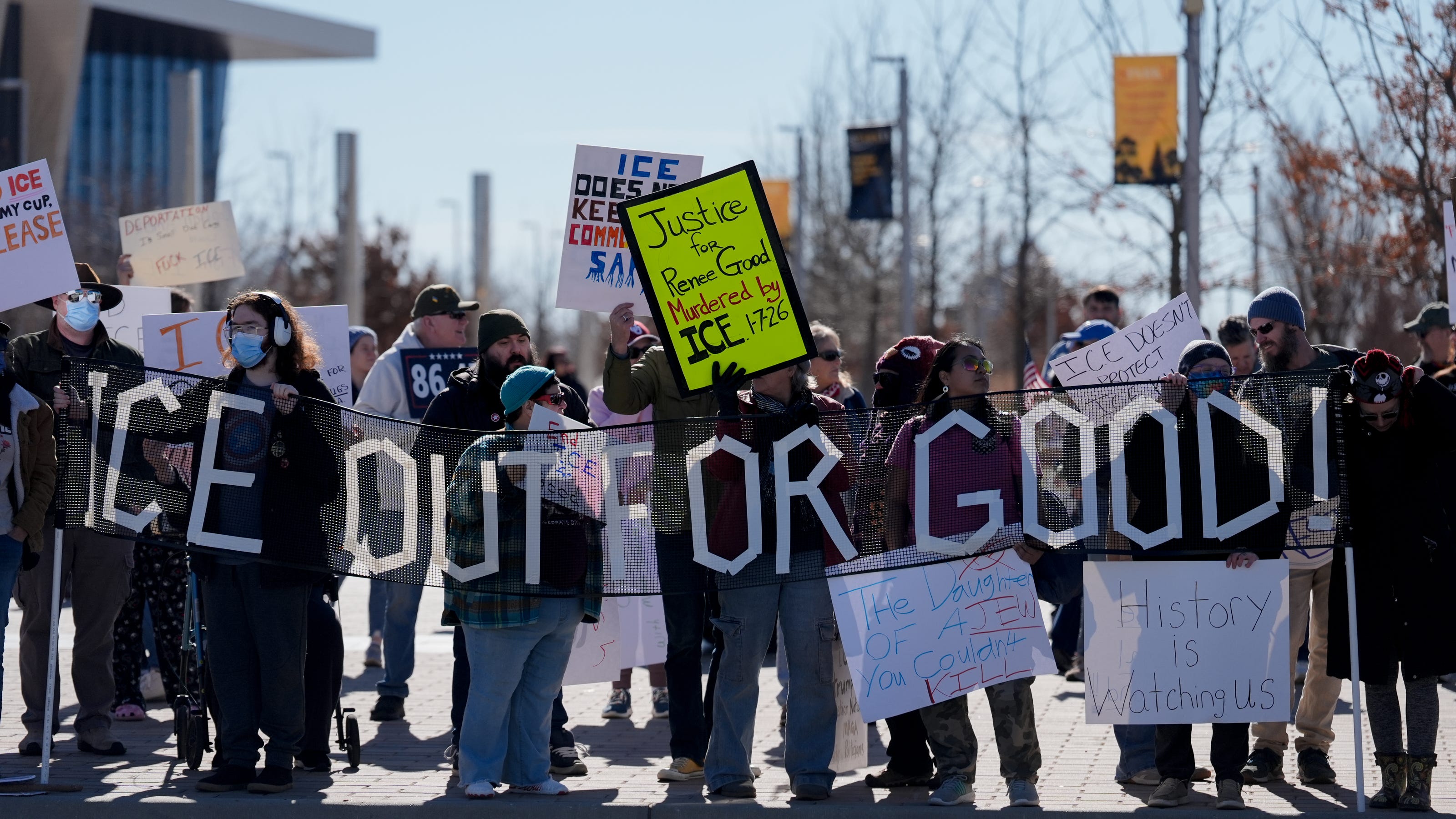
Medea Benjamin at Common Dreams identifies “10 good things that happened in 2025 in the arena of justice and peace here in the U.S. and abroad. They include the growing protests against ICE and support for immigrants, which have led to the release of a number of ICE detainees. The growing resistance to war and the use of the military by theTrump administration also make the list, along with the growing opposition to the horrors of the ongoing war on the Palestinians.

Jess Craven, in her Chop Wood, Carry Water blog, posts good news at a very granular level every Sunday. In addition to touching on many of the topics mentioned above, her 12/28 edition also highlighted the Supreme Court ruling disallowing the Trump administration’s deploying of the National Guard in Chicago, the growing resistance to ICE, and increasing opposition to the Trump administration’s military actions. She also notes the freeing of Abrego Garcia from ICE detention and Arizona’s elimination hundreds of millions of dollars of medical debt for its residents. And much more. In her 12/21 edition, she highlighted the growing production of clean energy (despite the Trump administration’s opposition), resignations at the Heritage Foundation (the source of Project 2025), the success of a discharge petition in the U.S. House requiring a vote on extending the Affordable Care Act subsidies, a judge blocking the corrupt sale of a private equity-owned nursing home chain (to escape liability for patient negligence claims), and a judge’s nullification of the Trump administration’s termination of some federal employees. And much, much more.

Let’s keep up the activism and resistance in 2026! And let’s get out to vote and get everyone we know out to vote. That will make it a much better year than 2025 was. I’m raring to go and I hope you are too!

Happy New Year!


[1]      Wilkins, B., 12/31/25, “‘A national disgrace’: 19 states to raise minimum wage but federal rate stuck at $7.25,” Common Dreams (https://www.commondreams.org/news/minimum-wage-increase-2026)