SIGNS OF A RESURGENCE OF DEMOCRACY AND PROGRESSIVE POLICIES

An American oligarchy has battled for control of our country since its founding. Today, there are signs of a resurgence of democracy and a third progressive policy era. These signs include a resurgence of unions, campaign finance reforms at the state and local levels, and the growing public and private protests and pushback against the Trump administration. We, the American people, must stand up for democracy. We can defeat the oligarchy.

(Note: If you find a post too long to read, please just skim the bolded portions. Thanks for reading my blog!)

(Note: Please follow me and get notices of my blog posts on Bluesky at: @jalippitt.bsky.social. Thanks!)

An American oligarchy based on wealth and privilege, with race and religion lurking behind them, has battled for control of our country since its founding. Two progressive eras have pushed back against oligarchy, heralded a resurgence of democracy, and made progress toward the founding principles of America. These efforts relegated and regulated the oligarchy to the back seat, putting we the people back in control of America. (See this previous post for more details.)

Today, there are signs of a resurgence of democracy and a third progressive policy era. After 45 years of dramatically increasing income and wealth inequality, shrinkage of the middle class, and workers’ wages not keeping up with inflation or increases in productivity, many Americans are ready to throw the oligarchy out. They recognize that:

  • Unrestrained capitalism is not good for consumers, workers, communities, or our planet.
  • Huge corporations tend to engage in monopolistic behaviors.
  • Oligarchs are anti-democratic and are focused on feathering their own nests.

One sign of surging democracy and progressive politics is the resurgence of unions. Collective bargaining by unionized workers levels the balance of power between oligarch business owners and workers. Unions improve workers’ compensation and working conditions. Evidence of the union resurgence includes:

  • The number of union elections has more than doubled since 2021.
  • Workers have won 70% of those elections, the highest win rate in 15 years.
  • Petitions for union elections increased by 27% in 2024.
  • Public support for unions is at 70%, the highest level since the 1960s.
  • 60 million non-union workers (40% of the workforce) report they would vote to join a union if they got the chance.

Another sign of surging democracy and progressive politics is the passing of campaign finance reforms in multiple states and municipalities. Although reforms to enhance disclosure of campaign donations are very important, and election reforms to make it easier to register and vote are important, the most impactful reforms are ones that provide public financial support to candidates. There are multiple ways to do this, including giving vouchers or tax credits to voters to use to support the candidates of their choice. More than 14 states and 25 municipalities have enacted campaign finance reforms with some form of public financial support.

Perhaps the most effective way to level the playing field between candidates with access to big sums of money and everyday people running for elected office is a public financing system like the ones in New York City and more recently in New York State. These systems require the candidate to opt into the public financing system, which means the candidate agrees to restrictions on the size of donations and the use of one’s own funds that would otherwise be prohibited by the Supreme Court’s Citizens United decision. (As you probably know, the Supreme Court’s 2010 Citizens United decision equated the spending of money on election campaigns with speech. Therefore, freedom of speech means there can be no limits on campaign spending or donations.) [1]

In these public financing systems, small donations (generally less than $200) from constituents (i.e., residents of the candidate’s district) are matched by public funds (up to 8 to 1) for candidates who agree to limits on the size of donations and other restrictions. A candidate must qualify for public financing by garnering a certain number or dollar amount of small donations from constituents. Studies of campaign public financing systems find that they have many benefits including increased diversity of candidates (by class, race, and gender), increased civic engagement and voting, and increased focus of candidates on issues (as opposed to fundraising).

Another sign of the resurgence of support for democracy is the growing resistance to the Trump administration. Institutions from the mainstream media to colleges and universities to law firms are starting to stand up and push back. Elected officials at the state and local levels are pushing back more and more. Democrats in Congress are becoming more organized and effective in pushing back. The courts for the most part, except for the Supreme Court and certain other very right-wing judges, have been pushing back.

Various elections all around the country have also quite consistently shown that voters are standing up and voting against those who are undermining our democracy and supporting the oligarchy. We need to keep up this momentum in statewide elections in Virginia and New Jersey and state and local elections elsewhere this fall. And we need to continue to work to build a strong wave in support of democracy in the 2026 elections for Congress and other offices.

Most importantly, a growing segment of the public is standing up and pushing back. The millions of Americans who engaged in the Oct. 18 No Kings protests sent a strong, unequivocal message in support of democracy. The many, many other smaller protests that are occurring daily reinforce that message. The pushback on media executives, who were compromising freedom of speech by taking Jimmy Kimmel off the air, sent out shock waves that made those media executives change their minds. We’ll need to continue to do these things again and again to put democracy back in the driver’s seat.

Thank you for all you’re doing! Please keep up the great and important work to save our democracy! We, the American people, as citizens, consumers, and workers, must stand up for democracy. We can defeat the oligarchy, and its authoritarianism and fascism.

For lots of good news on the fight for democracy see Jess Craven’s 10/12 Chop Wood Carry Water post.


[1]      Brennan Center for Justice, retrieved from the Internet on 10/17/25, “Reform money in politics,” (https://www.brennancenter.org/issues/reform-money-politics)

THE AMERICAN STRUGGLE BETWEEN OLIGARCHY AND DEMOCRACY

An American oligarchy has battled for control of our country since its founding. In 1980, the American oligarchy re-emerged and has been undermining democracy and skewing government policy. Defenders of democracy are fighting back, including with growing protests against and resistance to King Trump and his administration. Please find and participate in an Oct. 18 No Kings protest near you.

SPECIAL NOTE: We need millions of Americans at the No Kings protests on October 18 in defense of democracy. Please support this however you can. You can find an event near you here.

(Note: If you find a post too long to read, please just skim the bolded portions. Thanks for reading my blog!)

(Note: Please follow me and get notices of my blog posts on Bluesky at: @jalippitt.bsky.social. Thanks!)

An American oligarchy based on wealth and privilege, with race and religion lurking behind them, has battled for control of our country since its founding. The southern plantation owners were the first American oligarchy. The businessmen and industrialists of the late 1800s and early 1900s, who were dubbed the Robber Barons, were the second American oligarchy.

The first American progressive era from the 1890s through 1945 pushed back against oligarchy and the Great Depression, which was caused by the greed of the oligarchs. President Franklin D. Roosevelt’s New Deal and the growth of government and government power due to World War II relegated and regulated the oligarchy to the back seat. This put democracy and we the people in the driver’s seat and in control of America.

The period after World War II, from 1945 to 1980 was the second progressive era. An unwritten post-war social compact framed American society and the economy. It was based on three pillars:

  • Corporations served all stakeholders: workers, customers, communities, and shareholders;
  • Workers had a right to unionize and receive fair wages and safe working conditions; and
  • Government provided a safety net, managed capitalism, and leveled the playing field.

The result was an economy and society where, from 1945 to 1980, the rising tide did lift all boats. Economic inequality narrowed and America moved toward its promise of equal opportunity for all. Workers’ wages increased in accordance with their increases in productivity. The middle class grew along with economic security. Each generation was better off than the previous one. Democracy was working well.

In 1980, with the election of President Reagan, the American oligarchy re-emerged. For the last 45 years, it has been undermining democracy and skewing government policy in its favor. (See this previous post for more details.) Although Republicans have been the driving force, Democrats have contributed to this shift by supporting business deregulation and unconstrained globalization. Democrats also failed to support unions and failed to reform our campaign finance system. Moreover, they have come to rely on campaign contributions from wealthy individuals and corporations.

All this has led to 45 years of dramatically growing income and wealth inequality. The middle class has shrunk, and workers’ wages have increased much less than their increases in productivity. Many Americans have lost their economic security. The public’s faith in government and democracy has declined dramatically.

However, there are signs that a third American progressive era and a resurgence of democracy may be emerging. There is increasing acknowledgement and public awareness that:

  • Wealth and income inequality have grown to unacceptable levels.
  • Huge corporations tend to engage in monopolistic behaviors such as price fixing and price gouging; decreasing quality, choice, and customer service; and poor treatment of employees in terms of compensation and safety.
  • Unrestrained capitalism is not good for consumers, workers, communities, or our planet.
  • The oligarchs have rigged our economic system in their favor so that the rising tide is lifting only their yachts.
  • Oligarchy is anti-democratic and tends to turn into authoritarianism and fascism, i.e., white, male, Christian nationalism.

Bob Kuttner, a long-time, very astute and thoughtful observer and analyst of American politics and policies, has concluded that American democracy’s efforts to balance capitalism are doomed to fail. The incentives and power of huge corporations and huge wealth are too great and will inevitably overwhelm America’s brand of democracy. He concludes that significant public ownership of key sectors of the economy, i.e., democratic socialism, is necessary to keep capitalism in check. [1]

As Bob Reich recently wrote, “Capitalism is compatible with democracy only if democracy is in the driver’s seat. … [Otherwise] It fuels despotism.” [2] This is reminiscent of the quote from Supreme Court Justice Louis Brandeis back in the 1930s: “We can have democracy in this country, or we can have great wealth concentrated in the hands of a few, but we can’t have both.”

In many sectors of our economy there’s a clear need for strong regulation or public ownership including in health care, communications (including media and the big technology platforms), utilities and energy, the transportation system, banking and finance, housing, and food and agriculture. In these areas, a publicly owned option would be more effective and efficient because it wouldn’t have to cover the costs of profits, big executive pay packages, and advertising. For example, in the health care sector, when the Affordable Care Act (ACA, aka Obama Care) was being developed, health care providers and insurance companies vehemently opposed a public option in the health care market place (basically Medicare available to everyone) because they knew it would be more effective and efficient. This is also why they oppose Medicare of All and are working feverishly to undermine Medicare with their privatized Medicare Advantage plans. We need public Medicare for seniors and a public option for everyone else to stop the rapacious, for-profit health care businesses that put profits before patients. (See previous posts here, here and here for more details.)

The growing protests against and resistance to King Trump and his administration’s actions and policies are signs of a resurgence of democracy and an emerging progressive era. The successes are many, on the streets and in the courtrooms, sometimes small but nonetheless important, and are underreported by the mainstream media. Forcing media executives to put the Jimmy Kimmel show back on the air was a huge and very visible success. (For lots of current good news see Jess Craven’s Chop Wood Carry Water blog here.)

In this vein, please find an October 18th No Kings event near you here and participate and support it in whatever way you can. We, the American public, as citizens, consumers, and workers, must stand up for democracy, otherwise, we’ll continue down the slippery slope to oligarchy, authoritarianism, and fascism. We can stop the anti-democracy slide, as we did in the Jimmy Kimmel case.

We need millions of Americans engaged in the No Kings protests and in the many, many other smaller protests that are occurring daily. Thank you for all you’re doing! Please keep up the great and important work to save our democracy!

My next post will identify additional signs of a resurgence of democracy and the beginning of a third progressive era, including a surge in unionization, campaign finance reforms, and actions and elections at the state and local levels.


[1]      Kuttner, R., 12/1/21, “Capitalism vs. liberty,” The American Prospect (https://prospect.org/politics/capitalism-vs-liberty/)

[2]      Reich, R., 9/26/25, “Why are we so polarized? Why is democracy in such peril?” Blog post (https://robertreich.substack.com/p/why-are-we-so-polarized)

STANDING UP TO TRUMP AND CORPORATE OLIGARCHS

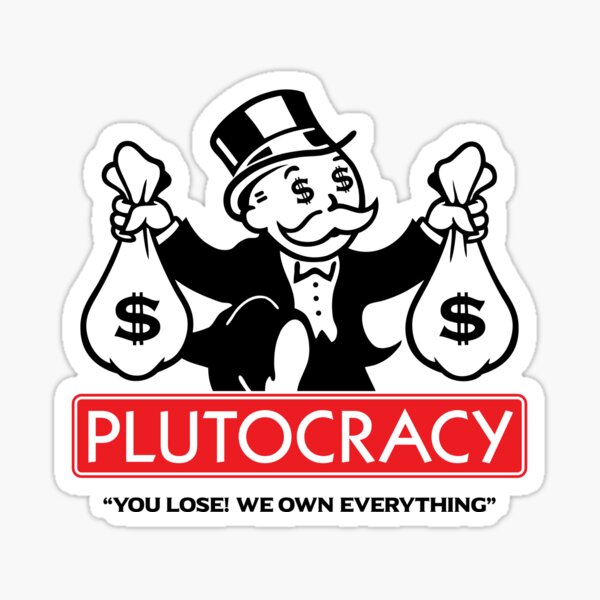
Oligarchy Definition A small group of people having formal and informal power based on (1)wealth; (2) connections; and (3) privilege.

American oligarchs have spent 45 years and billions of dollars undermining democracy and skewing government policy in their favor. We need to stand up and make Trump and corporate CEOs understand that the long-term success of their companies and our country depend on the trust and support of us, their customers and voters. We did this in a big way with the reaction to media executives pulling the Jimmy Kimmel show off the air. We need to do it again and again.

SPECIAL NOTE: We need millions of Americans at the No Kings protests on October 18 in defense of democracy. Please support this however you can. You can find an event near you here.

(Note: If you find a post too long to read, please just skim the bolded portions. Thanks for reading my blog!)

(Note: Please follow me and get notices of my blog posts on Bluesky at: @jalippitt.bsky.social. Thanks!)

American oligarchs, i.e., wealthy individuals and their large corporations, have spent at least the last 45 years undermining democracy and skewing government policy in their favor by: (See this previous post for more details.)

  • Increasing, coordinating, refining, and hiding their spending of billions of dollars on election campaigns. They spent over $10 billion in the 2023-24 federal election cycle alone.
  • Spending billions of dollars on lobbying the federal government, currently to the tune of $4 billion a year.
  • Moving tens of thousands of people through the revolving door between jobs in their corporations and in the government agencies that regulate them.

These efforts have been very successful; their return on investment has been extraordinary. Trump and his anti-democratic, authoritarian, and fascist administration are the culmination of this work that has undermined our democracy and skewed government policies and our economy to favor the oligarchs. Examples of skewed government policies include the following.

The individual income tax rates on oligarchs’ incomes have been cut from 70% in 1980 and 92% in the 1950s to 37% today. Income taxes on income from wealth, i.e., long-term capital gains, have been cut from 28% in 1980 to 15% in 2012 but are back up to 24% today. Note that the tax rate on income from wealth (i.e., unearned income) has always been much lower than the tax rate on income from work (i.e., earned income). This benefits the oligarchs and entrenches and exacerbates wealth inequality. Furthermore, increases in wealth that aren’t cashed in aren’t taxed at all. As a result, the richest billionaires pay about 3.4% in income tax on their incomes while the average American pays 14.5%.

Corporate income tax rates have also been cut from 46% in 1980 to 21% today. Moreover, tax loopholes allow corporations many strategies to avoid taxes. In particular, multi-national corporations artificially shift profits to foreign countries with very low taxes. Corporations have also been allowed to move jobs to low-wage countries and to resist and undermine workers’ unions. Roughly one out of every three private sector workers was a union member in the 1950s; today it’s one out of every 15. [1]

Antitrust laws have basically been unenforced for the last 45 years. As a result, many sectors of the American economy are dominated by a few, large, monopolistic corporations. Reduced competition means corporations can raise prices, cut quality, and strong-arm employees. Deregulation has left consumers vulnerable to poor products and frustrating services.

All of this has led to 45 years of dramatically growing income and wealth inequality. The 50% of Americans with the least wealth now, collectively, have only 2.5% of national wealth (less than $23,000 each on average). The wealthiest 1% of Americans own 33% of national wealth (about $15 million each on average). Pay for CEOs is now 1,094% higher than in 1978, while a typical workers’ pay has only increased 26%. As a result, the CEO-to-worker pay ratio grew from 31 times a typical worker’s pay in 1978 to 281 times in 2024. [2] And CEOs now believe that their only responsibility is to maximize returns for shareholders; other stakeholders, including workers, customers, and communities, are not a matter for concern.

The oligarch’s successful assault on our democracy and public policies has resulted in many Americans losing their economic security, as well as their trust in government and democracy. Many of them don’t feel it’s worth voting because they don’t believe it’s going to make any difference. They believe government is controlled by special interests working to benefit themselves. These Americans are angry and fearful about the future. Therefore, they are willing to believe the lies that Trump tells them about bringing back their good jobs and wages. And they are willing to overlook his undermining of democracy.

We, American consumers, need to make corporate CEOs understand that the long-term success of their companies depends on the trust and support of us, their customers. We did this in a big way with the reaction to media executives pulling the Jimmy Kimmel show off the air in response to President Trump’s displeasure with him. We’ll need to do this again and again to wake up CEOs and to get them to focus on the long-term instead of pleasing the would-be dictator in the White House in the short-term.

The spinelessness of corporate CEOs in the face of Trump makes it clear that they “are poorly suited to be custodians of democracy or counterweights to presidential overreach.” [3]Capitalism is compatible with democracy only if democracy is in the driver’s seat. … [Otherwise] It fuels despotism.” [4]

We, the American public, consumers and workers, must stand up for democracy and for its regulation of corporations and capitalism. Otherwise, we’ll continue down the slippery slope to oligarchy, authoritarianism, and fascism. We can stop this slide, as we did in the Jimmy Kimmel case.

I look forward to seeing millions of Americans engaged in the No Kings protests on October 18 and in many, many other smaller protests daily. Thank you for all you’re doing! Please keep up this great and important work to save our democracy!

Find an October 18th No Kings event near you here and participate and support it in whatever way you can.

For lots of current good news see Jess Craven’s Chop Wood Carry Water blog here.


[1]      Economic Policy Institute, retrieved from the Internet 9/29/25, “State of Working America: Unions,” (https://data.epi.org/unions/union_members_historical/line/year/national/percent_union_members_historical/overall)

[2]      Gould, E., Bivens, J., & Kandra, J., 9/25/25, “CEO pay increased in 2024 and is now 281 times that of the typical worker,” Economic Policy Institute (https://www.epi.org/blog/ceo-pay-increased-in-2024-and-is-now-281-times-that-of-the-typical-worker-new-epi-landing-page-has-all-the-details/)

[3]      Edelman, L., 9/23/25, “Why corporate leaders are appeasing Trump,” The Boston Globe

[4]      Reich, R., 9/26/25, “Why are we so polarized? Why is democracy in such peril?” Blog post (https://robertreich.substack.com/p/why-are-we-so-polarized)

CORPORATE OLIGARCHS HAVE BEEN UNDERMINING DEMOCRACY FOR 45 YEARS

Trump is the culmination of decades of work by wealthy individuals and CEOs (America’s oligarchs) undermining democracy & skewing government policy. This has led to high income & wealth inequality. Many Americans have lost their economic security, as well as their faith in government & democracy.

Trump is the culmination of decades of work by wealthy individuals and corporate CEOs (i.e., America’s oligarchs) undermining democracy and skewing government policies. This has led to dramatic income and wealth inequality. Many Americans have lost their economic security, as well as their faith in government and democracy.

SPECIAL NOTE: We need millions of Americans at the No Kings protests on October 18 in defense of democracy. Please support this however you can. You can find an event near you at: https://www.mobilize.us/nokings/map/?tag_ids=27849.

(Note: If you find a post too long to read, please just skim the bolded portions. Thanks for reading my blog!)

(Note: Please follow me and get notices of my blog posts on Bluesky at: @jalippitt.bsky.social. Thanks!)

I’ve been surprised at how little spine corporate Chief Executive Officers (CEOs) (supposed “leaders”) have shown in the face of Trump’s behavior and attacks. They know that unpredictability and chaos in government, as well as uncertainty, polarization, and unrest in society (in America and globally), are bad for the economy and for their businesses, at least in the long run. They know that an autocrat’s lack of respect for the rule of law, for property rights, and for freedom of speech are bad for business.

However, the CEOs of large corporations (aka corporate oligarchs) tend to be pragmatic and short-sighted. They value having political power and influence to the point that they seem to care little about politicians’ ethics or actions on issues that don’t conflict with their corporate interests. They know their large corporations are dependent on the government for many things, e.g., approvals of mergers, government contracts, tax breaks and subsidies, and licenses to operate. And they know their corporations are affected by many other things government does, e.g., writing and enforcing regulations, tax laws, and export and import policies (e.g., tariffs). [1]

President Trump has been leveraging (generally illegally) these many interrelationships between the government and corporations to pressure CEOs to do what he wants them to do, to support his policies, and to support him personally (sometimes financially). CEOs know Trump is arbitrary, unpredictable, and vindictive. They know that if he is irritated by a company or its CEO that he will use the powers of the government in a punitive fashion against them. Therefore, they capitulate.

However, Trump and his anti-democratic, autocratic, and fascist behavior and administration are the culmination of decades of work by wealthy individuals and corporate CEOs (i.e., America’s oligarchs). They have been undermining democracy and skewing government policies and our economy in their favor for at least 45 years. They have quadrupled their political spending (after adjusting for inflation) over the last 40 years. [2] In the 2023-2024 federal election cycle, $5.3 billion was spent on the presidential race and $9.5 billion was spent on congressional races. The overwhelming majority of this money came from American oligarchs. One hundred billionaires alone spent $2.6 billion. The seven highest spending individuals spent $930 million, all for Republicans, with Elon Musk leading the way with $291 million in spending, almost exclusively for the Trump campaign.

In addition to spending on election campaigns, corporations are also spending over $4 billion a year lobbying the federal government. [3] Furthermore, they engage in an extensive “revolving door” cycle of personnel (tens of thousands of them) who move between government regulatory agencies and positions in corporations the agencies regulate. [4]

All of this is in the interest of skewing government policy to favor American oligarchs, i.e., wealthy individuals and their large corporations. They have been very successful; their return on investment has been extraordinary.

My next post will provide specific examples of their successes, along with the effects and implications of them.

In the meantime, please make plans to stand up for democracy and against the oligarchs. I hope you can participate in and/or support the No Kings protests on October 18 – and the many, many other smaller protests that are occurring daily. Thank you for all you are doing! Please keep up this great and important defense of democracy!

Find a No Kings October 18th event near you here.


[1]      Edelman, L., 9/23/25, “Why corporate leaders are appeasing Trump,” The Boston Globe

[2]      Reich, R., 9/26/25, “Why are we so polarized? Why is democracy in such peril?” Blog post (https://robertreich.substack.com/p/why-are-we-so-polarized)

[3]      Open Secrets, retrieved from the Internet 9/29/25, “Lobbying data summary,” (https://www.opensecrets.org/federal-lobbying/)

[4]      Open Secrets, retrieved from the Internet 9/29/25, “Revolving door overview,” (https://www.opensecrets.org/revolving-door/)

STRONG REGULATION NEEDED TO PROTECT US FROM META AND FACEBOOK

The harm that Facebook and other social media do to children and youth, our society and politics, and people and countries around the world is well documented. Clearly, the social media companies are far more committed to maximizing profits than they are to minimizing harm.

The harm that Facebook, Meta’s other platforms, and other social media do to children and youth, our society and politics, as well as to people and countries around the world, is well documented. The evidence continues to mount as new whistleblowers emerge and share inside information. Clearly, Meta (and other social media companies) are far more committed to maximizing profits than they are to minimizing harm.

SPECIAL NOTE: Please plan to participate in the next nationwide No Kings Day protest on Sat., Oct. 18. Find an event near you at https://www.mobilize.us/nokings/map/?tag_ids=27849.

(Note: If you find a post too long to read, please just skim the bolded portions. Thanks for reading my blog!)

(Note: Please follow me and get notices of my blog posts on Bluesky at: @jalippitt.bsky.social. Thanks!)

The harm that Facebook, Meta’s other platforms, and other social media do to children and youth is well documented, as this previous post covered. However, the harm to our society and politics, as well as to people and countries around the world, goes well beyond that and is long-standing. (See previous posts from 2022 and 2020 on Facebook’s knowing spread of divisive disinformation and right-wing content.) It’s clear that Meta and other social media companies are far more interested in maximizing profits than minimizing harm, such as avoiding spreading misinformation while fostering social division and conflict that sometimes lead to violence.

Meta has been in the news recently because more whistleblowers and former employees have come forward to report (again) that Meta CEO and owner Mark Zuckerberg and other senior Meta executives have repeatedly lied about the negative effects of their platforms and their knowledge of the harms caused for children, from spreading misinformation, and from fostering social division.

Coincidentally, I just finished reading a book about Facebook, Careless People: A cautionary tale of power, greed, and lost idealism, by Sarah Wynn-Williams, who worked at Facebook from 2011 – 2018. Perhaps her most poignant revelation is that “most leaders at Facebook … severely limit [their] kids’ access to screens, let alone social media accounts. … which only underscores how well these executives understand the real damage their product inflicts on young minds.” (p. 103-104)

Wynn-Williams reports on sexual harassment in the largely male world of Facebook, which senior management ignores (to say the least). She also documents Facebook’s role in:

  • The 2016 Trump campaign when Facebook staff were embedded at the campaign, which some people credit with Trump’s winning the election. (p. 264)
  • The violence and undermining of democracy in Myanmar from 2014 – 2017 due to Facebook’s failure to monitor and moderate content. This culminated in tens of thousands of deaths, untold atrocities, and the slaughter of Muslims and particularly the Rohingya people. The U.N. report on these human rights violations devotes over twenty pages to the role Facebook played in spreading hate. (p. 357-358)
  • Working with the Chinese government on censorship and surveillance to get it to allow Facebook in China. So desperate was Zuckerberg to get into the Chinese market that he gave the Chinese government access to user data that he had refused to give to other governments and that Facebook “aggressively fought against providing to the US government, even after receiving National Security Letters demanding it in specific cases.” (p. 311) Furthermore, Wynn-Williams notes that “Facebook has said [many things] are simply impossible when Congress and its own government have asked – on content, data sharing, privacy, censorship, and encryption – and yet its leadership are handing them all to China on a silver platter.” (p. 313) Facebook was very concerned about all of this leaking because “if it leaks we [Facebook] won’t be able to keep doing what we’re doing. … [it would] highlight differences in what we say to the public vs what we do.” (p. 313) When preparing Zuckerberg for congressional testimony about Facebook’s plans for China, Wynn-Williams reports that “No one suggests telling the truth … There seems to be no compunction about misleading Congress. Presumably because the team assumes they’ll never be caught …”. (p. 319)
  • Censoring content in Russia, Indonesia, Mexico, and South Korea at the request of senior government officials, largely solely at Zuckerberg’s discretion. (p. 158-164)
  • Selling advertisers on Facebook’s capabilities to target emotionally vulnerable teens while publicly denying that it was doing so. Advertisers know that people buy more when they are feeling insecure, “and it’s seen as an asset that Facebook knows when that is and can target ads.” (p. 334) While “this sort of ad targeting is commonplace at Facebook … it pretends the opposite: ‘We have opened an investigation to understand the process failure and improve our oversight.’” A follow up statement was “a flat-out lie: ‘Facebook does not offer tools to target people based on their emotional state.’” (p. 336-337)

Wynn-Williams documents that time and again Zuckerberg and other Meta senior executives lie about and distort what Meta is doing, the harm it’s causing, and their knowledge of the harm. They lie to the media and the public, they lie in congressional testimony, and they lie internally to their own employees. They also attack government officials and human rights groups that oppose the expansion or advocate regulation of Facebook and Meta’s other platforms. (p. 206-212) She also writes that “Facebook’s leadership could be utterly indifferent to the consequences of their decisions.”, hence the book’s title Careless People. (p. 307) In 2017, one of the findings of worldwide consumer focus groups was that “The idea that Facebook cares about people’s privacy is not believable anywhere.” (p. 315)

In response to the recent murder of Charlie Kirk, Utah Governor Spencer Cox made the point that social media is designed to amplify hate and division. They do this because social media companies know that this is the most effective way to maximize profits. Social media algorithms are designed to feed you stories that alarm and upset you because that results in your spending more time on the social media platform. [1]

I encourage you to contact your Representative and Senators in Congress and ask them to support strong regulation of the social media platforms to stop them from continuing to harm our children and youth, our society, and our politics and elections.

You can find contact information for your U.S. Representative at  http://www.house.gov/representatives/find/ and for your U.S. Senators at http://www.senate.gov/general/contact_information/senators_cfm.cfm.


[1]      Hubbell, R., 9/15/25, “Leaning into resistance during troubled times,” Today’s Edition Newsletter (https://roberthubbell.substack.com/p/leaning-into-resistance-during-troubled)

CHILDREN AREN’T SAFE ON META’S VIRTUAL REALITY PLATFORMS

The harm that Meta Platforms’ Facebook and virtual reality programs do to children and youth is well documented. The evidence continues to grow as new whistleblowers come forward and share inside information. Clearly, Meta is far more committed to its profits than it is to protecting children.

The harm that Meta Platforms’ social media platforms, including Facebook and virtual reality programs, do to children and youth is well documented. The evidence continues to grow as new whistleblowers come forward and share inside information. Clearly, Meta (and other social media platforms) are far more committed to their profits than they are to protecting children.

(Note: If you find a post too long to read, please just skim the bolded portions. Thanks for reading my blog!)

(Note: Please follow me and get notices of my blog posts on Bluesky at: @jalippitt.bsky.social. Thanks!)

It’s been far too long since I wrote about Meta Platforms and its subsidiaries. Meta’s Facebook and virtual reality platforms are harming children. The harm that Facebook and other social media do to children and youth is well documented. It is equally clear that Meta and other social media companies are far more interested in maximizing profits than protecting children.

Three years ago, I wrote a blog post calling for federal legislation to protect children on social media. No legislation has been passed in those three years and no significant federal legislation regulating social media has been passed since the 1998 Children’s Online Privacy Protection Act (COPPA). A lot has changed since 1998 and new federal legislation is sorely needed. In my September 2022 blog post, I called on Congress to pass two bills to protect children on social media. (Previous posts here and here document the harms to children and beyond of Facebook and other social media platforms, as well as ways to respond.)

The Kids Online Safety and Privacy Act (KOSA) (a combined version of the two previous bills) passed the Senate with a strong, bipartisan vote (91 – 3) in July 2024. Heavy lobbying, led by Mark Zuckerberg, Chairman, Chief Executive Officer, and controlling stockholder of Meta, blocked action on it in the House. By the way, Europe has done a much better job than the U.S. of protecting everyone’s privacy and well-being on social media, including that of children.

The social media platforms’ business model is to hook kids at an early age, feed them addictive content to keep them engaged, amass extensive personal information about them and their online behavior, and then use these data to sell very targeted, personalized, and effective advertising. This is very lucrative for the social media platforms, however, the content and marketing to kids often presents toxic content that harms kids’ well-being and mental health. [1]

Advocates for children, including Fairplay, filed a request in May for the Federal Trade Commission (FTC) to investigate Meta for violating children’s safety and privacy on its virtual reality platform Horizon Worlds. Children, including ones under 13, are at risk for sexual predation, financial harm, bullying, and harassment on Horizon Worlds. Meta knows this, but it fails to protect children while it captures their data, in violation of the Children’s Online Privacy Protection Act, to sell to advertisers and to make their platform as addictive as possible. The FTC complaint was supported by a sworn statement from Kelly Stonelake, the former director of marketing for Horizon Worlds at Meta.

Meta has been in the news this week because six whistleblowers and former employees have come forward to report (again) that Meta has been covering up and ignoring the harm they know their platforms are doing to children. The focus this week was on the virtual reality platforms that Meta offers. Current and former employees revealed that Meta is suppressing internal research on child and youth safety and is also turning a blind eye to children under 13 illegally using these platforms. Furthermore, Meta’s legal and communications teams work to communicate plausible deniable for its executives on company knowledge of negative effects on children. Zuckerberg and Meta have previously lied about the harmful effects of their platforms and their knowledge of those harmful effects on children. (Meta whistleblowers previously revealed similar misbehavior in congressional testimony in 2023 (Arturo Beja) and 2021 (Frances Haugen).)

Not surprisingly, therefore, the Kids Online Safety and Privacy Act (KOSA) is again being considered in the U.S. Senate (S.1748) and there’s also a push to pass it in the House: It would:

  • Provide privacy protections for children and youth,
    • Extend to 13 to 16-year-olds the prohibition on social media platforms capturing children’s personal information without their consent and require the platforms to delete any such information they collect if requested to do so,
    • Limit individually targeted advertising (referred to as surveillance advertising),
    • Require the social media platforms to put the interests of young people first,
  • Provide families with the tools and safeguards to protect children’s well-being and mental health,
  • Require transparency from the social media platforms about the data they are capturing and the algorithms they are using for promoting content and advertising, and
  • Establish accountability for harms caused by social media.

I encourage you to contact your Representative and Senators in Congress and ask them to support strong regulation of social media platforms to prevent them from harming our children and youth. Urge them to support the Kids Online Safety Act (KOSA, Senate bill 1748) and similar legislation in the House.

You can find contact information for your U.S. Representative at  http://www.house.gov/representatives/find/ and for your U.S. Senators at http://www.senate.gov/general/contact_information/senators_cfm.cfm.

SPECIAL NOTES:


[1]      Corbett, J., 7/27/22. “ ‘Critical’ online privacy protections for children advance to Senate floor,” Common Dreams (https://www.commondreams.org/news/2022/07/27/critical-online-privacy-protections-children-advance-senate-floor-vote)

THE PERVERSION OF CAPITALISM BY TRUMP

President Trump is perverting capitalism and the free market by asserting unprecedented influence over the private sector. His actions are not a coherent economic policy. They’re all about centralizing power and control. This is what fascism and oligarchy look like.

President Trump is perverting capitalism and the free market by asserting unprecedented influence over the private sector. His actions are not a coherent economic policy and make the U.S. economy look like China’s. They’re all about centralizing power and control, while undermining the rule of law and democracy. This is what fascism and oligarchy look like.

(Note: If you find a post too long to read, please just skim the bolded portions. Thanks for reading my blog!)

(Note: Please follow me and get notices of my blog posts on Bluesky at: @jalippitt.bsky.social. Thanks!)

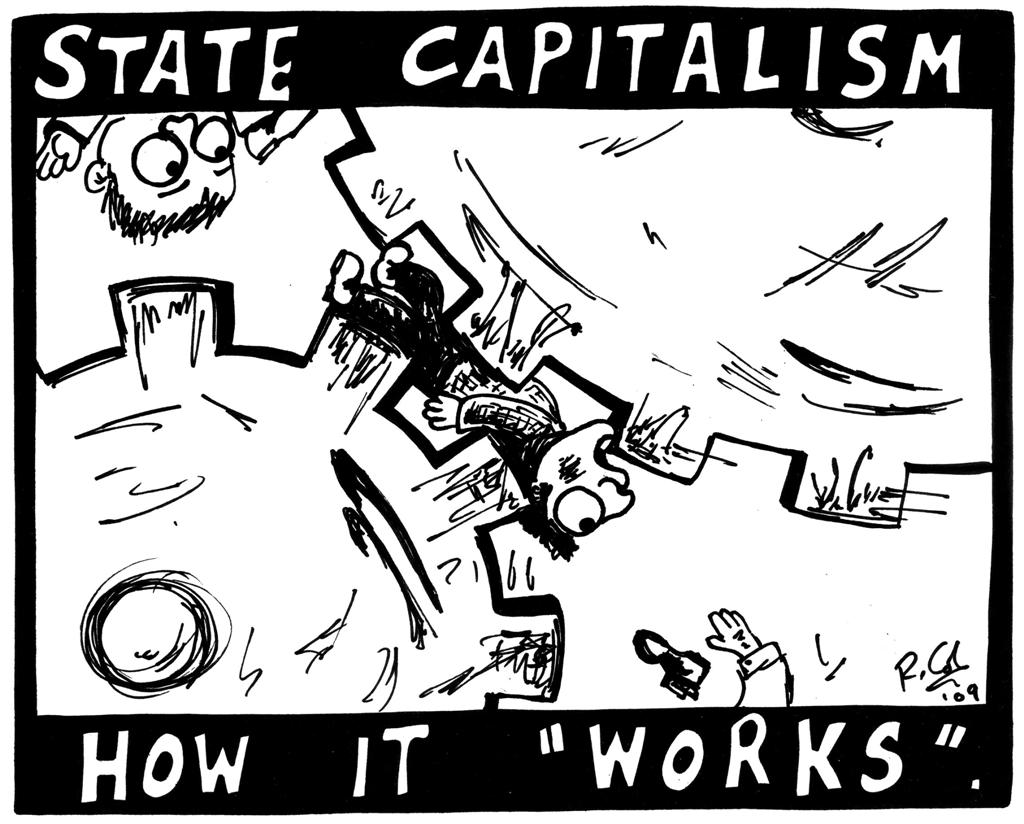
President Trump is perverting capitalism and the free market by asserting unprecedented personal influence over and taking government ownership in private sector companies. His actions do not reflect a coherent economic policy. It is the power grabbing of a tyrant and bully who wants to control others and wants them to be subservient. Trump is using largely illegal financial (e.g., import tariffs and export fees), regulatory, and court-based actions to do this. He wants to influence the decisions of other countries and American businesses, including media corporations, financial institutions, law firms, and  universities. He wants countries and companies to come to him begging for exemptions from his actions and threats. [1] This is, of course, a breeding ground for corruption and bribery.

Nothing even approaching this level of government interference in the private sector has occurred since the emergency mobilization of the private sector for World War II. This government interference in private companies, which is a type of state-controlled capitalism, has until now always been anathema to Republicans and the business community. If any president prior to Trump had attempted any of this, Republicans, business executives, and the mainstream media would be screaming about it being socialism or communism. The actions by Trump are making the U.S. economy look like that of China, where the government owns a stake in companies or has considerable influence over their decision making. [2] [3] Or like Leninist capitalism where the Communist Party controlled the state’s ownership of businesses. [4]

This alignment of an authoritarian leader and a nominally capitalist economy is classic fascism. While Republicans and business executives are supportive or mute, the Wall Street Journal simply calls it inefficient. The business executives and other wealthy investors that facilitate and participate in Trump’s actions are the American oligarchy.

Examples of Trump’s actions include:

  • Allowed Nvidia and Advanced Micro Devices, makers of artificial intelligence (AI) computer chips, to export them to China on the condition that the companies pay the United States 15% of their profits. This poses risks to the U.S. AI industry and to U.S. national security (in part due to the chips’ use by the Chinese military). These payments are, for all intents and purposes, an export fee, which is unprecedented in U.S. history. Moreover, the Constitution explicitly bans export taxes (Article I, Section 9, Clause 5). [5]
  • Demanded that Intel’s CEO resign and then negotiated 10% government ownership of the company. This makes the U.S. government one of Intel’s largest shareholders. [6]
  • Proposed that the Defense Department take a 15% ownership stake in MP Materials, which mines minerals critical for chips and electronics.
  • Allowed Nippon Steel of Japan to take over U.S. Steel on condition that Nippon pay a “golden share” of the proceeds to the government and give Trump control over elements of corporate governance.
  • Reserved the right to personally direct some the $1.5 trillion in promised investments in the U.S. to be made by America’s trading partners as part of tariff negotiations.
  • Sued media corporations and negotiated approval of media corporation mergers to get money and influence over media content.

The government ownership in and influence over the private sector asserted by Trump has nothing to do with promoting the public interest, the well-being of American workers, or protecting national security. In fact, they undermine all these principles. They’re all about centralizing power and control in Trump’s hands as part of his efforts to undermine the rule of law and democracy. [7] Moreover, who holds the ownership stakes and who exercises the related rights is unclear.

Despite Trump’s bluster about being tough on China, his actions have been quite favorable to China. He has illegally extended the deadline for the sale of Chinese ownership of TikTok if it wants to do business in the U.S. He has shut down Radio Free Asia, which countered Chinese propaganda. He’s allowed the export of artificial intelligence computer chips to China, which was a key request from China in trade negotiations.

Please contact your members of Congress and ask them to assert their oversight of these deals Trump is making. Ask them to clarify who holds the ownership stakes, who is exercising ownership rights, and where the funds received are going. Ask them to ensure that the Trump administration’s economic policies and actions further the public interest, benefit workers, promote national security, and comport with the rule of law and democratic principles.

You can find contact information for your US Representative at  http://www.house.gov/representatives/find/ and for your US Senators at http://www.senate.gov/general/contact_information/senators_cfm.cfm.


[1]      Dayen, D., 8/11/25, “Tariffs to import and fees to export,” The American Prospect (https://prospect.org/blogs-and-newsletters/tap/2025-08-11-tariffs-to-import-fees-to-export-nvidia-chips-china/)

[2]      Reich, R., 8/12/25, “Trump’s ‘state capitalism’,” Blog post (https://robertreich.substack.com/p/trumps-state-capitalism)

[3]      Cox Richardson, H., 8/11/25, Letters from an American blog post, (https://heathercoxrichardson.substack.com/p/august-11-2025)

[4]      Meyerson, H., 8/18/25, “When l’etat c’est Trump, the U.S. goes in for state capitalism,” The American Prospect (https://prospect.org/economy/2025-08-18-when-letat-cest-trump-us-goes-in-for-state-capitalism/)

[5]      Dayen, D., 8/11/25, see above

[6]      Liedtke, M., & Kurtenbach, E., 8/20/25, “US vying to own a big stake in Intel,” The Boston Globe from the Associated Press

[7]      Reich, R., 8/12/25, see above

BEWARE! SCAMS ARE COMING YOUR WAY! PART 2

Consumers beware; you’ll need to up your vigilance to avoid scams. The Trump administration is weakening consumer protections. From the cryptocurrency industry to cyber security to Social Security and health care, weak oversight and regulation will lead to consumer rip-offs and outright fraud.

Consumers beware; scams of all sorts are coming your way. The Trump administration is weakening or eliminating agencies and regulations that protect consumers. From the cryptocurrency industry to cyber security to Social Security and health care, weak oversight and regulation will lead to consumer rip-offs and outright fraud. You will need to up your level of vigilance to avoid getting scammed.

(Note: If you find a post too long to read, please just skim the bolded portions. Thanks for reading my blog!)

(Note: Please follow me and get notices of my blog posts on Bluesky at: @jalippitt.bsky.social. Thanks!)

Consumers beware; scams of all sorts are coming your way. The Trump administration is weakening or eliminating agencies and regulations that protect consumers, so it’s an open field for unscrupulous behavior by businesses and fraudsters. From the cryptocurrency industry to cyber security to Social Security and health care, weak oversight and regulation will lead to consumer rip-offs and outright fraud. (See this previous post focused on financial and other corporate scamming.)

The cryptocurrency industry is trying to transform its image from that of a scandal-ridden and crime-enabling financial technology (aka fintech) experiment into that of a mainstream financial and commercial investment and transaction vehicle. Don’t let yourself be fooled. For example, Coinbase, founded in 2012 and now the largest U.S.-based cryptocurrency exchange as well as the world’s biggest bitcoin custodian, has had over 8,000 consumer complaints filed against it with the Consumer Financial Protection Bureau (CFPB). [1]

The crypto industry spent well over $100 million in the last elections, including donations to Trump-affiliated entities, to elect pro-crypto politicians and to instill fear into others who might oppose the industry. It has also spent millions on a lobbying campaign to build bipartisan support for the Republican-led pro-crypto bills and to obtain a favorable regulatory environment.

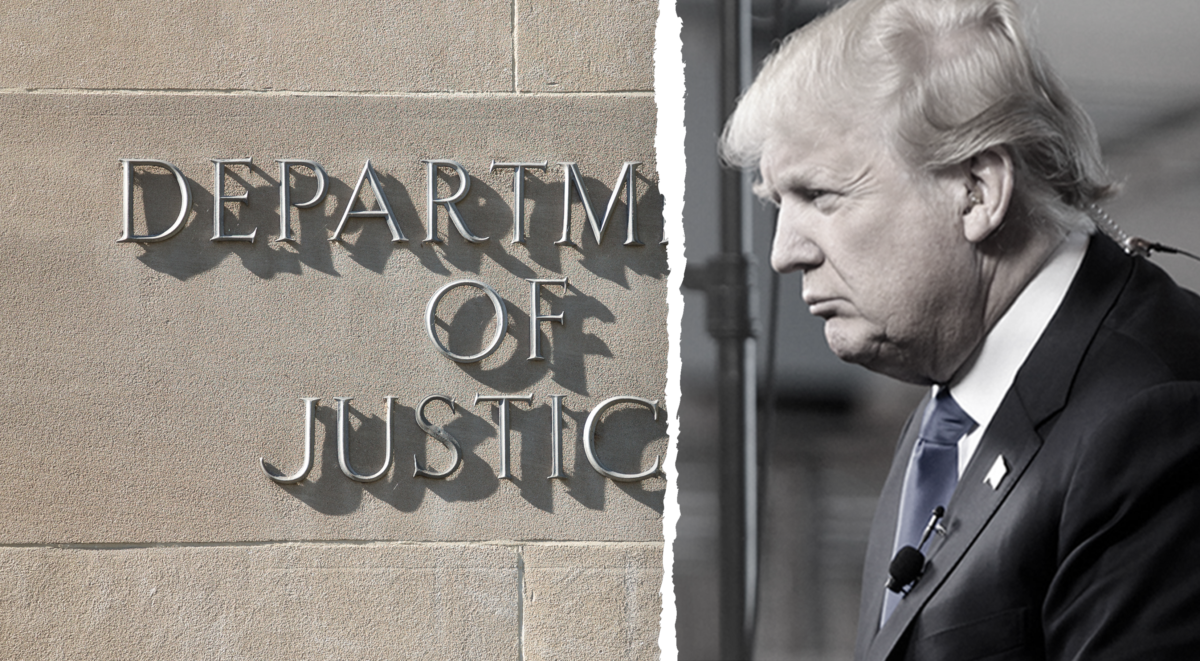
Despite the crypto industry’s record of fraud, facilitating criminal activity, and extreme volatility, the Trump administration, through an executive order, is allowing investments in it by retirement plans, corporations (including banks!), and the government itself. [2] Furthermore, the Trump administration has eliminated crypto crime units at the Securities and Exchange Commission (SEC), the Department of Justice (DOJ), and in other government agencies. It has ended numerous investigations and criminal prosecutions of crypto industry entities. These actions effectively facilitate money laundering and criminal activity. [3]

Three bills have been introduced in Congress ostensibly to regulate the industry but appear more focused on giving it legitimacy and a government seal of approval. One of the three bills, the so-called Genius Act has passed and become law. It established a regulatory framework for a piece of the crypto industry called stablecoins. This type of cryptocurrency is linked to the value of the U.S. dollar which is supposed to prevent the volatility that occurs with other cryptocurrencies. Most, but not all, Democrats opposed this bill due to concerns that it lacked strong provisions to prevent fraud and money laundering. Furthermore, it does nothing to stop President Trump, his family, and his associates from profiting from cryptocurrency activities that allow other people and entities to effectively put money in Trump’s and his affiliates’ pockets. [4]

One of the other bills, the so-called Clarity Act would create a broader crypto regulatory framework. The third bill would ban the Federal Reserve from creating its own cryptocurrency that would compete with private cryptocurrencies and presumably reduce the profitability of the private crypto industry. So, beware of anything crypto industry related that comes your way.

In a variety of other arenas, the Trump administration is also weakening consumer protections.

Having effectively eliminated the Consumer Financial Protection Bureau (CFPB), the Trump administration is now considering weakening the Consumer Product Safety Commission (CPSC) that protects consumers from dangerous non-financial products.

The Trump administration has dramatically weakened some of the federal government’s cyber security agencies. So, be ever more alert for cyber crime and cyber scams. It is taking FBI agents away from their specialties such as combating hackers (as well as terrorism, espionage, public corruption, white-collar crime, civil rights, child sex crime, etc.) to have them patrol the streets of D.C. where crime is at its lowest level in years. Moreover, a map of where FBI agents and troops have been deployed makes it very clear they are not really there to combat crime; they are there to be seen and to make a statement. [5]

The Trump administration is cutting staffing and services at the Social Security Administration, while having it send out misleading information. (See this previous post for more detail.) This will make it harder for seniors and others to receive the benefits they’re owed and to get accurate information. This will create fertile ground for scammers to step in. Be on your guard.

Similarly, cuts to the health care system and weakened oversight of privatized Medicare Advantage Plans will open the door to scammers. For example, 17% of Americans now report they are using buy now, pay later (BNPL) programs to pay for medical or dental care. [6] BNPL programs not infrequently involve terms and costs that are not well explained to consumers and, therefore, result in financial abuse.

Please contact your members of Congress and tell them you support strong regulation of the crypto industry to protect consumers and to prevent crime and money laundering. Ask them to oppose the two crypto industry bills as they are currently written. Ask them to stand up for strong consumer protections from the CFPB, CPSC, and cyber security agencies. Ask them to protect seniors and others from the undermining of Social Security and our health care system.

You can find contact information for your US Representative at http://www.house.gov/representatives/find/ and for your US Senators at http://www.senate.gov/general/contact_information/senators_cfm.cfm.

By the way, there is lots of good news. See Jess Craven’s latest good news post. It includes California Governor Newsom fighting fire with fire on the gerrymandering front, numerous judges’ decisions, protests all across the country, conservative economists opposing Trump’s nominee to run the Bureau of Labor Statistics, Ohio’s Sherrod Brown deciding to run for U.S. Senate again in 2026, and much more.


[1]      Silverman, J., 5/27/25, “Three coin monte,” The American Prospect (https://prospect.org/power/2025-05-27-three-coin-monte-crypto-regulation/)

[2]      Johnson, J., 8/7/25, “‘Disaster in the making’: Trump to open 401(k)s to crypto, private equity vultures,” Common Dreams (https://www.commondreams.org/news/trump-private-equity-401k)

[3]      Silverman, J., 5/27/25, see above

[4]      Gold, M., 7/18/25, “Here’s how Congress is wading into crypto regulation,” The Boston Globe from the New York Times

[5]      Cox Richardson, H., 8/19/25, “Letters from an American,” (https://heathercoxrichardson.substack.com/p/august-19-2025)

[6]      Corbett, J., 8/6/25, “‘Gouging’: US health insurance giants raked in over $71 billion in profits last year,” Common Dreams (https://www.commondreams.org/news/health-insurance-profits)

THERE’S GOOD NEWS AND LOTS OF IT!

Despite all the bad news, there’s lots of good news. Democrats in Congress are starting to increase their resistance. In addition to action at the national level, state level action is critically important. I don’t condone gerrymandering, but I do believe we need to fight fire with fire. For lots of good news, look at Jess Craven’s weekly good news edition of her Chop Wood, Carry Water blog.

(Note: If you find a post too long to read, please just skim the bolded portions. Thanks for reading my blog!)

Despite all the bad news the Trump administration and Republicans in Congress are generating, there’s lots of good news.

Democrats in Congress are starting to increase their resistance. (Finally!) Democrats on the Homeland Security Committee invoked a rarely used procedure that allows five members of the committee to obtain documents from the administration. Senate Democrats have formally and officially demanded the release of the Epstein files by August 15. Senator Elizabeth Warren (D-MA) has announced that she and hopefully other Democrats will refuse to cooperate with Republicans on any spending bills until Trump stops withholding previously appropriated funds. She pointed out that if Republicans allow Trump to ignore spending decisions by Congress or to rescind them after the fact, any future spending bills are a meaningless waste of time. Democrats are also demanding a thorough vetting process for fifty Trump nominations awaiting Senate confirmation rather than letting Republicans ram them through in an expedited process. [1]

Senator Cory Booker (D-NJ) strongly criticized his fellow Democrats for voting for some of Trump’s policies. Apparently as a result, Democrats held a closed-door meeting to develop a strategy for their resistance to the Trump / Republican agenda for the next two months.

In addition to action at the national level, state level action is critically important. Most notable right now is states’ threats to gerrymander congressional districts. Texas is threatening to do a very unusual and very partisan redistricting (normally this is only done when there is new Census data every ten years). Its goal would be to create five districts where Republicans would replace Democrats. Not only are Texas Democrats working to block this however they can, Democratic states are announcing that if Texas does this, they will take similar action to create new districts where Democrats would replace Republicans. I don’t condone gerrymandering, but I do believe we need to fight fire with fire. Democrats can’t afford to play by the rules when Republicans aren’t playing by the rules and are destroying our democracy.

For lots of good news across all levels, look at Jess Craven’s weekly good news edition of her Chop Wood, Carry Water (CWCW) blog. Here are some samples of the dozens of items she reported in the last two weeks.

August 3 edition examples (there’s much more!)

  • President Trump was caught on camera cheating while playing golf in Scotland.
  • Michigan’s Gov. Gretchen Whitmer announced that nearly 210,000 Michiganders will see more than $144 million in medical debt eliminated.
  • A federal judge ruled that Planned Parenthood clinics nationwide must continue to be reimbursed by Medicaid, despite a provision in the Republican / Trump budget cutting off this funding.
  • On April 30, several thousand CWCW readers contacted their U.S. Representatives urging them to sign a bipartisan letter supporting fiscal year 2026 funding for global maternal and child health, GAVI (the vaccine alliance), and global nutrition. On July 23, the House Appropriations Committee rejected Trump’s proposed cuts, continued FY 2025 funding levels, and INCREASED nutrition funding to $172.5 million. ADVOCACY MAKES A DIFFERENCE!
  • Vermont Republican Gov. Phil Scott denied a request from the Department of Defense to activate Vermont Army National Guard soldiers in support of federal immigration enforcement activities.
  • Solar and batteries make up the vast majority of new power plant installations in the U.S. — and will continue to through 2030. Trump may be able to slow the momentum, but not stop it

July 27 edition examples (there’s much more!)

Please contact your members of Congress and tell them to increase their resistance. Urge them to speak out against Trump / Republican policies and to explain to their constituents the toll these policies will take on every day Americans and our society.

You can find contact information for your US Representative at  http://www.house.gov/representatives/find/ and for your US Senators at http://www.senate.gov/general/contact_information/senators_cfm.cfm.


[1]      Hubbell, R., 7/31/25, “More signs of life among Senate Democrats,” Today’s Edition Newsletter (https://roberthubbell.substack.com/p/more-signs-of-life-among-senate-democrats)

HARMS OF THE TRUMP / REPUBLICAN BUDGET

The Trump / Republican budget just enacted will increase the federal debt, make college less affordable, harm our (and particularly women’s) health as well as our health care system, and hurt states’ finances. Please contact your members of Congress and tell them you oppose these budget cuts. Ask them to explain to their constituents the toll the budget will take on every day Americans and on our society.

(Note: If you find a post too long to read, please just skim the bolded portions. Thanks for reading my blog!)

The Trump / Republican budget just enacted will increase the federal debt, make college less affordable, harm our (and particularly women’s) health as well as our health care system overall, and hurt states’ finances (among other things). My previous post documented harm to seniors because of cuts to Medicaid, cuts to Medicare, and the weakening of Social Security. I also noted the harm to millions of non-seniors due to the cuts to Medicaid and food assistance.

The Congressional Budget Office (CBO) has just issued its final report on the budget: it will increase the deficit by $3.4 trillion over ten years and result in 10 million Americans losing health coverage from Medicaid (among other things). Low-income children and families will be among the groups hit hardest with about 37 million children losing their healthcare coverage from Medicaid or the Children’s Health Insurance Program (CHIP). The money from the huge increase in the deficit and the harmful cuts in vital programs helps pay for tax breaks for millionaires and large corporations, as well as grotesque increases in the budgets for Immigration and Customs Enforcement (ICE) and the military. [1]

THE FEDERAL GOVERNMENT’S TOTAL DEBT CEILING RAISED: While most people know that the Trump / Republican budget bill increased the annual budget deficits, few are aware that the bill also included a big, $5 trillion increase the federal government’s overall amount of allowable, accumulated debt, i.e., the debt ceiling. You may remember that Republicans threatened to shut down the federal government – and sometimes did – and created crises over the increasing of the debt ceiling when Democrats were president. Despite Republicans supposed concern about the amount of the federal debt, they were happy to increase the debt limit 27 times when Republicans Reagan and George H. W. Bush were president. But when Democrat Clinton was president, the Republicans shut down the federal government twice over increases in the federal debt, although ultimately the debt ceiling was increased eight times during the Clinton presidency. Under Republican president George W. Bush, the debt ceiling was increased eight times without Republican opposition. Under Democrat Obama, the debt ceiling was increased or suspended five times with Republicans threatening government shutdowns and creating crises over their supposed concern over the debt.

These Republican-created debt ceiling crises resulted in dramatic stock market declines and the downgrading of the federal government’s credit rating by Standard & Poor’s for the first time ever. In Republican Trump’s first term the debt ceiling was suspended three times with no Republican objections. Under Democratic President Biden, the Republicans returned to their hypocritical objection to increasing the debt ceiling and created another crisis. They also threatened, for the first time in history, to use the filibuster in the Senate to block an increase in the debt ceiling. So, the Republicans’ big increase in the debt ceiling and the annual federal budget deficit in the recent budget bill dramatically underscore the hypocrisy of their claims to be concerned about the federal budget deficit and the debt ceiling.

MAKING COLLEGE LESS AFFORDABLE: The Trump / Republican budget bill reduces and caps the total amount that students and parents can borrow to pay for college from federal sources. It raises interest costs and shuts down or weakens programs that allow loan forgiveness for low-income graduates and those in public service jobs. For new student loans, there are only two repayment plans, both of which are far more expensive than the current options. These changes will cost student borrowers about $355 billion over ten years most of it from repealing reduced loan payments for graduates in low-paying jobs. These budget savings come directly out of the pockets of student borrowers to help pay for tax cuts for the wealthy and increased funding for ICE and the military. [2]

MAKING HEALTH CARE FOR WOMEN LESS ACCESSIBLE: The Trump / Republican budget bill prohibits Medicaid funding from going to any organization that is primarily engaged in family planning services and got more than $800,000 from Medicaid in 2023. Note that federal law already prohibits federal funding from paying for almost all abortions.

The budget bill targets Planned Parenthood because of its abortion services, but it will also dramatically affect many other women’s health care services and many other providers of health care for women. While Planned Parenthood performs about 400,000 abortions a year, it also provides over 5 million tests and treatments for sexually transmitted infections, over 2 million family planning and contraception services, and over 400,000 cancer screenings and prevention services. The loss of Medicaid coverage for these services will harm many low-income women.

An example of the impact on non-Planned Parenthood providers is Maine Family Planning. It will lose about $2 million in Medicaid reimbursements (one-fourth of its total budget) for its non-abortion services to roughly 3,500 patients in rural Maine, such as cancer screenings, pregnancy testing, treatment for sexually transmitted infections, and family planning counseling and contraception services. It operates 18 clinics and for about two-thirds of its patients it is their only health care provider. [3]

HARMS TO THE HEALTH CARE SYSTEM AND STATES’ FINANCES: The Trump / Republican budget bill will harm the overall health care system by reducing the revenue it receives from Medicaid and Medicare by hundreds of millions of dollars. States simply do not have the resources to fill this gap. Higher insurance premiums and higher co-payments for services from patients will occur. States’ finances will be harmed as at least some states will use their funds to make up for some of the lost federal funding that supports low-income individuals and families. It is estimated that 51,000 preventable deaths will occur each year because of the cuts to the health care system. [4]

For example, in Massachusetts, it’s estimated that the federal budget cuts will reduce payments to MA health care providers by as much as $3.5 billion per year. About 326,000 MA residents (almost 5% of the population or 1 of every 20 people) are projected to lose their health insurance due to the budget cuts. Hospitals are projected to lose $424 million in revenue. As a result, some hospitals will close and some will stop providing services that are less profitable, such as psychiatric and obstetrical care. Emergency rooms may close. Massachusetts (and other states) will be forced to step in and subsidize critically important services, especially in rural areas. Hundreds of rural hospitals across the country are likely to close as they are more dependent on Medicaid revenue than urban / suburban hospitals. [5]

The budget’s new Medicaid work requirements will mean that millions of Medicaid recipients will lose coverage even though they are working or qualify for an exemption from the work requirements because of a disability, for example. They will lose their coverage because they are unable to assemble the necessary paperwork and to jump through all the hoops of presenting it quickly enough to avoid being cut off. By the way, the budget bill also requires them to do this twice a year rather than once a year as is currently required.

Please contact your members of Congress and tell them you oppose these budget cuts. Urge them to speak out against the Trump / Republican budget and to explain to their constituents the toll the budget will take on them and our society.

You can find contact information for your US Representative at  http://www.house.gov/representatives/find/ and for your US Senators at http://www.senate.gov/general/contact_information/senators_cfm.cfm.


[1]      Hubbell, R., 7/23/25, “Resisting while in political exile,” Today’s Edition Newsletter (https://roberthubbell.substack.com/p/resisting-while-in-political-exile)

[2]      Kuttner, R., 7/16/25, “Gutting the student loan program,” The American Prospect (https://prospect.org/blogs-and-newsletters/tap/2025-07-16-gutting-student-loan-program/)

[3]      Whittle, P., & Mulvihill, G., 7/17/25, “Trump’s new bill affects more than Planned Parenthood,” The Boston Globe from the Associated Press

[4]      Anderson, S. & Koshgarian, L., 7/9/25, “10 ways the GOP’s big ugly bill could hurt you,” Common Dreams (https://www.commondreams.org/opinion/10-harms-big-ugly-bill)

[5]      Globe Editorial, 7/17/25, “One big disaster for Massachusetts health care,” The Boston Globe

REPUBLICAN BUDGET HARMS SENIORS (AMONG MANY OTHERS)

The recently enacted Republican budget bill will harm seniors by reducing Medicaid spending, weakening Social Security, and cutting Medicare. These (and other) budget cuts are being made to help pay for large tax cuts for wealthy individuals and corporations.

The recently enacted Republican budget bill will harm seniors by reducing Medicaid spending, weakening Social Security, and cutting Medicare. These (and other) budget cuts are being made to help pay for large tax cuts for wealthy individuals and corporations.

(Note: If you find a post too long to read, please just skim the bolded portions. Thanks for reading my blog!)

The Republican budget just passed by Congress and signed by President Trump will harm seniors by reducing Medicaid spending, cutting Medicare, and weakening Social Security. Before I get into some of these details, a couple of notes on other provisions of the bill, of which there are many in the nearly 1,000-page bill’s language. As you probably know, 12 million people are projected to lose their health care due to Medicaid cuts of roughly $1 trillion (yes, trillion) over the next ten years. Medicaid provides health insurance for low-income families and seniors including long-term care for millions of seniors (see more below). Cuts to food assistance programs, primarily the Supplemental Nutrition Assistance Program (SNAP), will increase hunger for millions of families, including many new mothers and babies where malnutrition may have long-term effects on the babies’ development.

All the cuts in the budget are being made to help pay for large tax cuts for wealthy individuals and corporations. Note that the big tax cuts take effect right away, while many of the program cuts don’t go into effect until after the 2026 election. The Republicans hope that because people won’t be experiencing the program cuts before the election that it will be easier to con voters into voting for Republicans.

Most people know that the budget will increase the federal budget’s annual deficits by over $300 billion for a total of $3 trillion (yes, trillion) over the next ten years. However, few people are aware that the bill increases the federal government’s overall amount of allowable, accumulated debt, i.e., the debt ceiling, by $5 trillion. (I’ll document the Republicans’ hypocrisy on raising the debt ceiling in a future post.)

The Trump administration and Republicans are pumping out lots of disinformation about the budget bill in an attempt to keep the public from understanding the harm it will do.

For example, within hours of the passage of the bill, all of you who are seniors, tens of millions of Americans overall, received an email from the Social Security Administration stating that “The bill ensures that nearly 90% of Social Security beneficiaries will no longer pay federal income taxes on their benefitsand that “The new law includes a provision that eliminates federal income taxes on Social Security benefits for most beneficiaries.” [1]

These statements are misleading at best. Only about a quarter (25%) of seniors will see any tax benefit from the bill’s provisions – quite different from the figures used in the Social Security Administration’s email.The bill does not directly eliminate or even reduce taxes on Social Security benefits. What the bill does is temporarily increase the standard income tax deduction by $6,000 for seniors 65 and over. [2] Sixty-four percent of seniors receiving Social Security benefits ALREADY pay no tax on their Social Security payments. This percentage will increase to 88% due to the bill’s provisions. Furthermore, the people who will benefit will be those Social Security recipients who are better off and the richest will benefit the most. By the way, the increase in the income tax deduction will expire in 2028 when Trump’s term in office is ending. [3] [4]

Furthermore, the message from the Social Security Administration didn’t mention that, overall, the budget bill will weaken Social Security by reducing the revenue that flows into the Social Security system. Currently, the Social Security trust fund, built up over many years to help pay Social Security benefits, is projected to run out of money in 2033. After that, Social Security revenue would only be able to pay 77% of promised benefits. Under the Republican budget bill, the Social Security trust fund will run out of money one year earlier, in 2032, and its reduction of future Social Security revenue means that benefits after 2032 would be even lower than the currently projected 77% of the promised level. [5]

The Republican budget’s cuts to Medicaid will harm low-income seniors who qualify for Medicaid (and that they receive in addition to Medicare – which covers all seniors). In particular, it will harm the roughly eight million seniors and people with disabilities whose long-term home and community-based care services are paid for by Medicaid and the 1.5 million seniors in nursing homes. About two-thirds of all nursing home residents are covered by Medicaid. The budget’s Medicaid cuts will significantly reduce revenue for long-term care services and facilities. As a result, 25% of nursing homes are projected to close and over half are likely to have to reduce staff to remain financially viable. Therefore, finding nursing home care, let alone good quality care, will become even more difficult than it is now. [6] [7]

In addition to the direct cuts to Medicaid (government health care coverage for low-income families and seniors), the Republican budget will also force cuts to Medicare (government health care coverage for all seniors). Because of the budget’s large increases in the federal government’s annual budget deficits, the Pay-As-You-Go (PAYGO) Act of 2010 requires across-the-board budget cuts. A mandatory cut of about $50 billion a year to Medicare for each of the next ten years will be required. This cut will take place immediately (while many of the explicit program cuts in the budget are delayed until after the 2026 elections). [8]

Please contact your members of Congress and tell them you are opposed to (or even horrified by) budget cuts that will harm seniors. Tell them you are particularly upset that these cuts are being used to give wealthy individuals and corporations tax cuts. Urge them to speak out against these cuts and to explain to their constituents the toll the Republican budget is taking on seniors and others.

You can find contact information for your US Representative at  http://www.house.gov/representatives/find/ and for your US Senators at http://www.senate.gov/general/contact_information/senators_cfm.cfm.


[1]      Social Security Administration, 7/3/25, “Social Security applauds passage of legislation providing historic tax relief for seniors,” Press Release (https://www.ssa.gov/news/press/releases/2025/?utm_source=substack&utm_medium=email#2025-07-03)

[2]      Hubbell, R., 7/7/25, “Stay on task: Overwhelm the opposition,” Today’s Edition Newsletter (https://roberthubbell.substack.com/p/stay-on-task-overwhelm-the-opposition)

[3]      Edelman, L., 7/15/25, “Seniors score, gamblers get rolled in Trump’s ‘big beautiful bill’,” The Boston Globe

[4]      Siegel Bernard, T., 7/8/25, “Social Security email misleading,” The Boston Globe from the New York Times

[5]      Johnson, J., 7/4/25, “Trump Social Security chief applauds budget bill that will harm Social Security’s finances,” Common Dreams (https://www.commondreams.org/news/trump-social-security-budget-bill)

[6]      Lawson, A., 6/30/25, “The Republican nursing home apocalypse,” Common Dreams (https://www.commondreams.org/opinion/gop-nursing-homes)

[7]      National Association of Councils on Developmental Disabilities, Feb. 2025, “Medicaid facts with links to state data,” (https://nacdd.org/wp-content/uploads/2025/02/250204_NACDD-Medicaid-Fact-Sheet.pdf)

[8]      Dayen, D., 7/3/25, “Republicans are cutting Medicare. Not only Medicaid, Medicare.” The American Prospect (https://prospect.org/politics/2025-07-03-republicans-cutting-medicare-not-only-medicaid/)

PLEASE PARTICIPATE IN A “MAKE GOOD TROUBLE” PROTEST ON THURS., 7/17

I hope you’re planning to participate in a Make Good Trouble protest on Thursday, July 17. You can find an event near you here. The Trump administration continues its assaults on our democracy and on the safety and well-being of Americans. We and our elected officials need to step up our resistance and make it clear we oppose the administration’s actions.

(Note: If you find a post too long to read, please just skim the bolded portions. Thanks for reading my blog!)

(Personal note: My posting has been and will be a bit less regular this summer primarily because of multiple opportunities to spend time with our grandchildren.)

I hope you’re planning to participate in a Make Good Trouble protest on Thursday, July 17. You can find an event near you here. These protests are important follow-ups to the No Kings protests on June 14. Resistance is even more important now as the Trump administration continues its assaults on democracy and on the safety and well-being of all Americans. Please participate in a protest if you can; bring family members and friends if possible. Support the resistance however you can. Let’s make this bigger and better than the No Kings protests in June!

In addition to protests against the Trump administration, these will also be rallies in support of democracy. They will include pro-democracy messaging supporting the Constitution, equality, due process, liberty, fairness, decency, compassion, and the common good. [1]

These Make Good Trouble protests will be honoring the legacy of civil rights activist and former member of Congress John Lewis, who advocated for making good trouble and marching forward despite all odds. Lewis and his fellow civil rights marchers didn’t make it across the Edmund Pettus Bridge on Bloody Sunday (and Lewis almost got beaten to death), but they persisted and now is our time to stand up for democracy, decency, the rule of law, fairness, and justice.

These protests are not seeking to change Trump’s mind or those of his MAGA supporters in and outside of Congress. They are seeking to demonstrate to our elected officials that if they do not stand with us in resisting the Trump administration and in protecting democracy that they will lose their next elections. They also seek to convince enough people of the importance of voting for Democrats (and against Republicans) in upcoming elections to give Democrats control of Congress, along with state and local offices and legislative bodies. They also seek to make it clear to corporate executives that siding with Trump will hurt their businesses as well as to judges that the people support and want democracy; that we want government of, by, and for the people; and that we will back them when they stand up to the Trump administration’s illegal actions.

The Make Good Trouble protests and pro-democracy rallies are also a way to support one another in our resistance and underscore the importance of our actions. As John Lewis wrote: “When you see something that is not right, you must say something. You must do something. Democracy is not a state. It is an act, and each generation must do its part to help build what we called the Beloved Community, a nation and world society at peace with itself. Ordinary people with extraordinary vision can redeem the soul of America by getting in what I call good trouble, necessary trouble.” [2]

Trump’s repeated assertions of illegal and autocratic powers undermine the Constitution, civil rights, the rule of law, and the foundations of our democracy. They are a coordinated attack on our democracy and a humane and healthy society. They attack our rights to due process, to vote, to protest, and even our well-being, including access to healthcare, food, and shelter. They target immigrants, families in need, and anyone who disagrees with them or calls out their lies.

The only solution to the Trump administration’s illegal and dictatorial actions is for millions of Americans to peacefully protest to show their opposition. Thousands of protests all over the country, in cities, towns, and rural areas, by people of all ages, political persuasions, and ethnicities, are needed to clearly show the Trump administration, our elected officials (members of Congress, Governors, Mayors, members of state legislatures, etc.), corporate executives, and our judges that the Trump administration’s actions are unacceptable and broadly opposed.

We, as citizens of a democracy, need to rise up in unassailable numbers to defend our democracy against the autocracy and budding police state dictatorship of the Trump administration.

Our political leaders (if they deserve to be called leaders) should be leading the charge and stepping up their resistance, as President Trump continues his assaults on our democracy. I urge you to contact your elected officials at all levels, from members of Congress to Governors to members of state legislatures to local officials, and ask them to join a protest on Thursday and to resist every day. Ask them to do more than just speak out. Now is the time for action!

You can find contact information for your US Representative at  http://www.house.gov/representatives/find/ and for your US Senators at http://www.senate.gov/general/contact_information/senators_cfm.cfm.

P.S. We all need our weekly dose of good news, so here’s a link to a Jess Craven Chop Wood, Carry Water good news post.


[1]      Hubbell, R. B., 7/14/25, “Making good trouble,” Today’s Edition Newsletter (https://roberthubbell.substack.com/p/making-good-trouble)

[2]      Hubbell, R. B., 7/14/25, see above

EXAMPLES OF THE SOCIETAL TOLL OF TRUMP ADMINISTRATION ACTIONS

The actions of the Trump administration and Republicans in Congress are inflicting a serious toll on our society. Examples include their efforts to defund foreign aid and public broadcasting, their weakening of our cybersecurity defenses, and their efforts to eliminate the Consumer Financial Protection Bureau, not to mention all the horrible things in the budget bill.

(Note: If you find a post too long to read, please just skim the bolded portions. Thanks for reading my blog!)

The actions of the Trump administration and Republicans in Congress are taking a heavy toll on people, on our society, and on our democratic institutions. Here are some examples.(See this previous post for more examples.)

ACTION #1: Republicans in U.S. House recently passed a bill to rescind $9.4 billion of previously approved funding for foreign aid ($8.3 billion) and public broadcasting ($1.1 billion). The good news is that the Trump administration is tacitly acknowledging that it is illegal for it to cut congressionally approved funding through executive orders or actions by the so-called Department of Government Efficiency (DOGE). The vote to pass the bill was 214 to 212 and occurred only after Republican Speaker Johnson had pressured a few Republican representatives to switch their “no” votes and support the bill. [1] Republicans in both the House and the Senate have expressed concerns about this bill.

The bill would rescind funding for foreign aid programs that some of them support, such as President George W. Bush’s emergency AIDS program that has saved over 25 million lives around the globe. These cuts will ultimately harm health and result in deaths here in the U.S. as diseases spread across international borders.

It also would rescind funding that supports 1,500 public TV and radio stations, including many in rural, Republican areas where they are a vital, local resource.

ACTION #2: The Trump administration is weakening America’s cybersecurity defenses at a time when the likelihood of cyberattacks is growing. Trump fired the general who led the National Security Agency and other leaders of our cybersecurity agencies. He has cut staffing and funding for cybersecurity agencies. [2]

This makes no sense because the likelihood of cyber warfare is growing as global tensions and conflicts escalate – in Ukraine, the Middle East, and over Taiwan. U.S. adversaries Russia, Iran, China, and North Korea all have significant cyber warfare capabilities, and there are signs of cyber activity cooperation among them. Cyberattacks can be used for espionage – to steal valuable corporate or government information. Or they can be used to disrupt public infrastructure such as electric power supplies, phone and Internet services, hospitals, banks and financial services, and water supply systems. Recently, Russian hackers disabled the automatic control systems at a rural Texas municipal water plant. This was probably just a test of their capabilities or a warning about what they can do.

ACTION #3: The Trump administration, Republicans in Congress, and their wealthy backers in the financial industry are working hard to eliminate or at least emasculate the Consumer Financial Protection Bureau (CFPB). The CFPB was created in response to the financial industry corruption that caused the 2008 financial collapse and resulted in millions of Americans losing their homes due to abusive and fraudulent mortgages. Since its creation, the CFPB has returned more than $21 billion to consumers through enforcement actions on illegal behavior by financial companies. It has also saved consumers untold additional money through its regulation of the financial industry. [3] For example, it has capped exorbitant fees such as credit card late payment penalties and bank account overdraft charges.

The Trump administration and Elon Musk’s so-called Department of Government Efficiency (DOGE) have been trying to cut CFPB funding, fire its employees, and eliminate the agency. On February 14, a federal judge ordered a halt to these actions. The Trump administration responded by placing most of the CFPB staff on administrative leave and preventing them from performing their jobs.

On June 10, the head of enforcement for the CFPB resigned, writing: “It is clear that the bureau’s current leadership has no intention to enforce the law.” [4] (Russell Vought is the Acting Director of the CFPB and the Director of the White House Office of Management and Budget, as well as a key author of Project 2025.)

To benefit the wealthy executives and corporations in the financial industry, the Trump administration is persistently trying to eliminate the only independent agency protecting consumers from predatory and illegal practices of financial industry companies.

YOUR ACTION: Please contact your members of Congress and ask them to oppose these actions of the Trump administration in every way they can. Urge them to speak out against these actions and to explain to their constituents the toll Trump administration’s actions are taking on them and our society.

You can find contact information for your US Representative at  http://www.house.gov/representatives/find/ and for your US Senators at http://www.senate.gov/general/contact_information/senators_cfm.cfm.


[1]      Edmondson, C., 6/12/25, “House votes to claw back $9 billion for foreign aid and public broadcasting,” The Boston Globe from the New York Times

[2]      Klepper, D., 4/21/25, “Nations ready cybersecurity defenses,” The Boston Globe from the Associated Press

[3]      Economic Policy Institute, 6/12/25, “Trump administration attempts to close the CFPB, block agency’s work,” (https://www.epi.org/policywatch/trump-administration-closes-the-cfpb/)

[4]      Economic Policy Institute, 6/12/25, see above

ASK YOUR U.S. REPRESENTATIVE TO OPPOSE THE REPUBLICAN BUDGET

ACTION: Please contact your U.S. Representative NOW and ask them to do everything they can to stop the draconian Republican budget bill. The House will be voting soon on the bill just passed by the Senate, which has even bigger cuts to Medicaid and food assistance than the original, horrible House budget. In addition to spending cuts that will harm millions of Americans and tax cuts for wealthy individuals and corporations, it includes many other very harmful provisions.

(Note: If you find this message too long to read, please just skim the bolded portions. Thanks for reading and acting!)

The Republican budget the Senate just passed is now back in the House as it has significant differences from the bill the House originally passed. Please act NOW as the House will be voting soon. As you probably know, this budget bill makes big spending cuts in a range of government programs and services due to the need to offset some of the lost revenue from the big tax cuts for wealthy individuals and corporations. Nonetheless, the federal budget deficit will increase by over $300 billion a year. Overall, rich Americans would gain around $12,000 a year from the tax cuts, while the poorest families would lose about $1,600 on average from program cuts.

The vote in the Senate was 50 to 50, so Vice President Vance voted to break the tie and pass the bill 51 to 50. Senator Susan Collins, Republican of Maine, switch her “Yes” vote on the procedural preliminary vote to a “No” vote. Thanks to all of you who contacted her!! All Democrats and Republican Senators Tillis (NC) and Rand (KY) also voted against the budget bill. The bill includes a number of special benefits for Alaska to buy the vote of Alaska Senator Murkowski. (See this post from The American Prospect for highlights of the bill and what was done to buy Murkowski’s vote.)

Repeating what was in my previous post, here are some key things the Republicans’ proposed budget would do (among the many harmful provisions in the bill): [1] [2] [3]

  • Take health care away from roughly 12 million Americans by cutting spending on Medicaid by $930 billion over ten years. Medicaid provides health insurance for millions of low-income families, including students and families of low-paid and unemployed workers. It also covers nursing home care for millions of seniors and health care for disabled individuals. This cut, combined with cuts to the Affordable Care Act and Medicare, will reduce spending and wreak havoc throughout the whole health care system.
  • Take food assistance away from millions of low-income households, including many new mothers and their babies, as well as students and families of low-paid and unemployed workers. It would dramatically cut the Supplemental Nutrition Assistance Program (SNAP), formerly known as Food Stamps. It would also cut the Farm to School program that supports local, small farmers and provides healthy, fresh food to school lunch programs.
  • Increase the federal budget deficit by about $330 billion a year. This would add $3.3 trillion (yes, trillion) to the overall federal debt over the next ten years.
  • Extend expiring tax cuts and create new ones that will provide huge windfalls to wealthy individuals and corporations at a cost of about $4 trillion.
  • More than double the budget for the detention and deportation of immigrants by adding $150 billion to the budget of the Department of Homeland Security. It will add $45 billion to the budget for detention centers to increase or expand the existing 160 detention centers. This would mean ICE has more money for detention that the U.S. Bureau of Prisons.
  • End tax credits that have been in place since 2005 that incentivize the development of wind and solar energy. [4]
  • Increase funding for the Defense Department by about $150 billion, including for Elon Musk’s companies. This significant increase is proposed even though there’s more waste, fraud, and abuse in the Defense Department than anywhere else in the federal government. Clearly, Trump, his administration, and Musk and DOGE don’t really care about cutting waste and making government more efficient.

Please contact your U.S. Representative NOW, as they will be voting on this bill and its provisions in the next two days. Ask them to vote against this draconian budget. Let them know you oppose tax cuts for wealthy corporations and individuals, as well as cuts in programs that benefit everyday working Americans. It’s particularly galling that the cuts in programs for low-income families are being made to offset part of the cost of the tax cuts for the wealthy.

Your contacts are important even if you don’t change someone’s mind or vote. It lets your Representative know that you are watching them and paying attention to what’s going on in Congress. If they vote for the budget in upcoming votes, it will let them know that they are jeopardizing their chances of re-election, which is key to getting them to oppose Trump in these and future votes.

You can find contact information for your US Representative at  http://www.house.gov/representatives/find/

THANKS FOR ALL YOU DO! IT MAKES A DIFFERENCE!

(Note: Republican presidents (Reagan, Bush, and Trump) and Congresses have cut taxes for wealthy individuals and corporations multiple times since the 1981. These tax cuts have added over $10 trillion (yes, trillion) to the federal debt. The economic boom, jobs, increased tax revenue, and trickle down of benefits to everyday Americans they always promise have NEVER materialized. Most recently, they did not happen after the Trump and Republican tax cuts of 2017. Extending those tax cuts and adding others will not increase economic growth, will not increase tax revenue, will not create jobs, and will not trickle down to everyday Americans.)


[1]      Reich, R., 6/30/25, “The worst bill in history,” Robert Reich’s daily blog (https://robertreich.substack.com/p/the-three-myths-of-trickle-down-economics)

[2]      Mascaro, L., Freking, K., & Cappelletti, J., 6/29/25, “Trump’s tax and spending cuts bill clears key Senate vote as Republicans race to pass it by July 4,” The Boston Globe from the Associated Press

[3]      Cox Richardson, H., 6/28/25, “Letters from an American,” (https://heathercoxrichardson.substack.com/p/june-28-2025)

[4]      Reuters, 6/28/25, “Senate bill hastens end of wind, solar tax credits and imposes new tax,” U.S. News (https://www.usnews.com/news/politics/articles/2025-06-28/senate-bill-hastens-end-of-wind-solar-tax-credits-and-imposes-new-tax)

ASK YOUR SENATORS TO OPPOSE THE REPUBLICAN BUDGET

Please contact your US Senators NOW. Ask them to stop the draconian Republican budget the Senate is voting on NOW, which includes major cuts to Medicaid and food assistance. Its spending cuts will harm millions of Americans. Its tax cuts will be a windfall for wealthy individuals and corporations.

ACTION: Please contact your U.S. Senators NOW and ask them to do everything they can to stop the draconian 940-page Republican budget the Senate is voting on NOW, which includes major cuts to Medicaid and food assistance. In addition to spending cuts that will harm millions of Americans and tax cuts for wealthy individuals and corporations, it includes many other very objectionable provisions.

(Note: If you find this message too long to read, please just skim the bolded portions. Thanks for reading and acting!)

The Republican budget the Senate is voting on NOW makes big spending cuts in a range of government programs and services due to the need to reduce the increase in the federal budget deficit caused by the lost revenue from the big tax cuts for wealthy individuals and corporations. Overall, the richest Americans would gain around $12,000 a year from the tax cuts, while the poorest families would lose about $1,600 on average from program cuts. Here are some key things the Senate Republicans’ proposed budget would do: [1] [2] [3]

  • Take health care away from roughly 12 million Americans by cutting spending on Medicaid by $930 billion over ten years. Medicaid provides health insurance for millions of low-income families, including students and families of low-paid and unemployed workers. It also covers nursing home care for millions of seniors and health care for disabled individuals. This cut, combined with cuts to the Affordable Care Act and Medicare, will reduce spending and wreak havoc throughout the whole health care system.
  • Take food assistance away from millions of low-income households, including many new mothers and their babies, as well as students and families of low-paid and unemployed workers. It would dramatically cut the Supplemental Nutrition Assistance Program (SNAP), formerly known as Food Stamps. It would also cut the Farm to School program that supports local, small farmers and provides healthy, fresh food to school lunch programs.
  • Increase the federal budget deficit by about $330 billion a year. This would add $3.3 trillion (yes, trillion) to the overall federal debt over the next ten years.
  • Extend expiring tax cuts and create new ones that will provide huge windfalls to wealthy individuals and corporations at a cost of about $4 trillion.
  • More than double the budget for the detention and deportation of immigrants by adding $150 billion to the budget of the Department of Homeland Security. It will add $45 billion to the budget for detention centers to increase or expand the existing 160 detention centers. This would mean ICE has more money for detention that the U.S. Bureau of Prisons.
  • Immediately end tax credits in place since 2005 to incentivize the development of wind and solar energy. Moreover, it would implement a new tax on these projects. [4]
  • Increase funding for the Defense Department by about $150 billion, including for Elon Musk’s companies. This significant increase is proposed even though there’s more waste, fraud, and abuse in the Defense Department than anywhere else in the federal government. Clearly, Trump, his administration, and Musk and DOGE don’t really care about cutting waste and making government more efficient.

There are many other harmful provisions in the proposed Republican budget.

Please contact your U.S. Senators NOW (as they are voting on this bill and its provisions this week) and ask them to vote against this draconian budget in the upcoming votes. Let them know you oppose tax cuts for wealthy corporations and incredibly wealthy individuals –  especially when they are partially paid for by cutting programs that benefit everyday working Americans.

If your Senator is a Democrat or Republicans Tillis (NC) or Paul (KY), thank them for voting against the budget in a preliminary vote. If your Senator is one of the other Republicans, ask them to vote against the budget in upcoming votes.

Your contacts are important even if you don’t change someone’s mind or vote. It lets your Senators know that you are watching them and paying attention to what’s going on in Congress. If they voted against the budget preliminarily, it will encourage them to continue to oppose the budget. If they vote for the budget in upcoming votes, it will let them know that they are jeopardizing their chances of re-election, which is key to getting them to oppose Trump in these and future votes.

You can find contact information for your U.S. Senators at http://www.senate.gov/general/contact_information/senators_cfm.cfm.

THANKS FOR ALL YOU DO! IT MAKES A DIFFERENCE!

(Note: Republican presidents (Reagan, Bush, and Trump) and Congresses have cut taxes for wealthy individuals and corporations multiple times since the 1981. These tax cuts have added over $10 trillion (yes, trillion) to the federal debt. The economic boom, jobs, increased tax revenue, and trickle down of benefits to everyday Americans they always promise have NEVER materialized. Most recently, they did not happen after the Trump and Republican tax cut of 2017. Extending these tax cuts and adding others will not increase economic growth, will not increase tax revenue, will not create jobs, and will not trickle down to working Americans. They will, however, balloon the deficit by around $500 billion a year – unless spending is cut to make up for the loss of revenue.)


[1]      Reich, R., 6/30/25, “The worst bill in history,” Robert Reich’s daily blog (https://robertreich.substack.com/p/the-three-myths-of-trickle-down-economics)

[2]      Mascaro, L., Freking, K., & Cappelletti, J., 6/29/25, “Trump’s tax and spending cuts bill clears key Senate vote as Republicans race to pass it by July 4,” The Boston Globe from the Associated Press

[3]      Cox Richardson, H., 6/28/25, “Letters from an American,” (https://heathercoxrichardson.substack.com/p/june-28-2025)

[4]      Reuters, 6/28/25, “Senate bill hastens end of wind, solar tax credits and imposes new tax,” U.S. News (https://www.usnews.com/news/politics/articles/2025-06-28/senate-bill-hastens-end-of-wind-solar-tax-credits-and-imposes-new-tax)

PLEASE PARTICIPATE IN A NO KINGS PROTEST ON SAT., 6/14

I hope you’re planning to participate in a protest for No Kings Day on Saturday, June 14. You can find an event near you here. The Trump administration has escalated its attacks on our democracy, and we, and our political leaders, need to step up our resistance and make it clear we oppose the administration’s actions.

(Note: If you find a post too long to read, please just skim the bolded portions. Thanks for reading my blog!)

(Personal note: I took last week off as I was on an overseas vacation – our first since Covid.)

I hope you’re planning to participate in a protest for No Kings Day on Saturday, June 14. You can find an event near you here. This important day of protest has been planned for many weeks and is even more important now that the Trump administration has escalated its attacks on democracy.

The Trump administration is actively working to impose martial law. Deploying National Guard troops, let alone Marines, to the streets of Los Angeles is blatantly illegal and unconstitutional. Trump is again declaring a fake emergency to justify his exercise of autocratic powers, and, in this case, the powers of a military dictator.

The confrontational protests in LA have occurred in a small, 4-block area of a huge city. The Trump administration has intentionally inflamed the situation first by the unnecessarily aggressive actions by Immigration and Customs Enforcement (ICE) personnel (see more on this in a note at the bottom), then by sending in the National Guard, and finally by sending in Marines. The LA Police Department was fully in control of the situation and the Trump administration’s actions only made their job harder. (See Robert Hubbell’s on-the-ground testimony and video of the calm and normalcy of LA as well as his blog post.)

As Hubbell notes, the depictions and reporting by the mainstream media are misrepresentations of the situation. They play right into Trump’s hands in making the unwarranted emergency he has declared seem reasonable. Trump has declared this and other fake emergencies to justify his exercise of illegal and autocratic powers, thereby undermining the Constitution, civil rights, the rule of law, and the foundations of our democracy.

The only solution to the Trump administration’s illegal and dictatorial actions is for millions of Americans to peacefully protest to show their opposition. Thousands of protests all over the country, in cities, towns, and rural areas, by people of all ages, political persuasions, and ethnicities, are needed to clearly show the Trump administration, our political leaders (members of Congress, Governors, Mayors, members of state legislatures, etc.), and our judges that these actions are unacceptable and broadly opposed.

We, as citizens of a democracy, need to rise up in unassailable numbers to defend our democracy against the autocracy and budding military dictatorship of the Trump administration.

Our political leaders (if they deserve to be called leaders) should be leading the charge and stepping up their resistance, given that President Trump has stepped up his attacks on our democracy.

I urge you to contact your elected officials at all levels, from members of Congress to Governors to members of state legislatures to local officials, and ask them to join a protest on Saturday. Ask them to speak out in support of California Governor Newsom and LA Mayor Bass. But tell them to do more than just speak out. Now is the time for action. I’d love to see members of Congress organize and lead a march to the Pentagon to protest the use of Defense Department resources to support ICE (and also, by the way, to stage a military dictator-style parade).

You can find contact information for your US Representative at  http://www.house.gov/representatives/find/ and for your US Senators at http://www.senate.gov/general/contact_information/senators_cfm.cfm.

Note on ICE tactics: One thing our mainstream media aren’t covering at all, to my knowledge, is that if ICE was really focused on arresting and deporting undocumented immigrants with criminal records, it would be operating very differently. Our police arrest criminals all the time. Unless they catch them in the middle of a criminal act, they have warrants for their arrest – which ICE typically does not. Our police wear uniforms that identify who they work for and who they are. They don’t wear masks to hide their faces. ICE agents typically show up without identification, often wearing masks, and frequently in military dress with military weapons. Their detentions are more like kidnappings than arrests. There is no need for these tactics to make arrests.

WHAT DEMOCRATS NEED TO DO Part 2

Democrats need to be more dramatic, effective, and consistent in opposing Trump, his nominees, and the congressional Republicans’ agenda. They need to step up their resistance while promoting and committing to enact policies that would support everyday Americans.

Democrats need to be more dramatic, effective, and consistent in opposing Trump, his nominees, and the congressional Republicans’ agenda. They need to step up their resistance while promoting and committing to enact policies that would support everyday Americans.

(Note: If you find this post too long to read, please just skim the bolded portions. Thanks for reading my blog!)

(Note: Correction. In my previous post asking you to contact your U.S. Representative and ask them to oppose elements of the proposed Republican budget, I wrote that the proposed cuts to Medicaid were “$700 – $800 million.” As many of you know, that should have been $700 – $800 BILLION.)

This previous post made the case that Democrats need to be more dramatic, effective, and consistent in opposing Trump, his nominees, and the congressional Republicans’ agenda. It identified policies that Democrats should be promoting for our economy and the economic well-being of all Americans. This current post focuses on policies in the social services arena, including health care reforms, drug price reductions, enhancements to Medicare, and ensuring long-term funding for Social Security.

Here are some specific policies Democrats ought to be promoting and committing to enact in the social services arena when they are back in power:

  • Ending wasteful and dangerous privatization of health care. Here are two examples;
    • Private equity firms should be banned from the health care industry. The example of Steward Health alone should be enough to seal this case, but there are plenty of other examples as well. (See this previous post for more information.)
    • End the Medicare Advantage program, which privatizes Medicare and results in huge, often fraudulent, wasteful costs to the Medicare program. For example, in 2024, illegal overbilling by Medicare Advantage providers (i.e., big insurance corporations) was estimated to be $83 billion. Medicare Advantage is estimated to cost Medicare $140 billion more per year than if all individuals were on traditional Medicare. [1] (See this previous post for more details.)
  • Strong regulation of drug prices. President Biden took some initial steps to regulate and reduce drug prices, but President Trump is undoing them. In 2022, U.S. drug prices were two and three-quarters times (178% more than) prices in 33 other industrialized countries. This means that our federal, state, and local governments (i.e., taxpayers) and all of us pay over $200 billion a year extra, which fuels exceptionally high profits for drug makers (when compared to other sectors of our economy). [2] (See this previous post for more details.)
  • Enhance Medicare. If the Medicare Advantage program was eliminated and Medicare was allowed to negotiate prices for all drugs (see the above two bullet points), the savings would be sufficient to pay for the addition of dental, hearing, and vision benefits to Medicare, as well as to cap out-of-pocket spending by Medicare enrollees.
  • Ensure Social Security funding for the rest of this century. Currently, workers pay taxes into Social Security only on the first $176,100 they earn in a year. This means that someone making a million dollars stops paying into Social Security after February 15 and someone making ten million dollars stops paying into Social Security after the first week of January. Simply eliminating this cap would increase Social Security’s revenue by roughly $100 billion per year. This would provide about 75% of the funding needed to allow Social Security to pay out its full planned benefits for the rest of the century. The rest could be raised by taxing investment income, estates, and gifts or a variety of other strategies. [3]
    • NOTE: The Medicare and Social Security Fair Share Act in Congress would require taxpayers with over $400,000 in income in a year to pay a bit more into Medicare and Social Security. This would fully fund planned Medicare and Social Security benefits for at least the next 75 years. [4]

There are plenty of other policies that Democrats should be advancing to demonstrate that they would better serve and support workers and everyday Americans than Trump and the Republicans. Examples include housing; early education and child care; supporting workers and their unions; effective regulation of businesses for worker, consumer, and public safety; and strong enforcement of antitrust laws including the breaking up of monopolistic companies.

If any of your members of Congress are Democrats, I urge you to contact them and ask them to step up their resistance while promoting and committing to enact policies that would support everyday Americans. You can find contact information for your US Representative at  http://www.house.gov/representatives/find/ and for your US Senators at http://www.senate.gov/general/contact_information/senators_cfm.cfm.


[1]      Dayen, D., 1/27/25, “We found the $2 trillion,” The American Prospect (https://prospect.org/economy/2025-01-27-we-found-the-2-trillion-elon-musk-doge/)

[2]      Dayen, D., 1/27/25, see above.

[3]      Dayen, D., 1/27/25, see above.

[4]      Conley, J., 5/9/25, “Democrats’ bill would extend Social Security and Medicare solvency ‘as far as the eye can see’,” Common Dreams (https://www.commondreams.org/news/social-security-medicare-2671925476)

ASK YOUR REPRESENTATIVE TO OPPOSE THE REPUBLICAN BUDGET

Contact your U.S. Representative and ask them to oppose the draconian measures, including major cuts to Medicaid, in the Republican budget the House is considering. Its spending cuts will harm millions of Americans while it gives tax cuts to wealthy individuals and corporations.

ACTION: Please contact your U.S. Representative and ask them to do everything they can to stop the draconian measures, including major cuts to Medicaid, in the roughly 400-page Republican budget the House is now considering. In addition to spending cuts that will harm millions of Americans and tax cuts for wealthy individuals and corporations, it includes many other very objectionable measures.

(Note: If you find this message too long to read, please just skim the bolded portions. Thanks for reading and acting!)

Note that the big spending cuts are driven by the need to avoid exploding the federal budget deficit due to the lost revenue from the big tax cuts for the wealthy. Here are some key things the proposed budget would do:

  • Take health care away from millions of Americans by cutting spending on Medicaid by around $700 – $800 million. Medicaid provides health insurance for millions of low-income families, including students and families of low-pay and unemployed workers. It also covers nursing home care for millions of seniors.
  • Take food assistance away from millions of low-income households, including many new mothers and their babies, as well as students and families of low-pay and unemployed workers. It would dramatically cut the Supplemental Nutrition Assistance Program (SNAP), formerly known as Food Stamps. It would also cut the Farm to School program that supports local, small farmers and provides healthy, fresh food to school lunch programs.
  • Prohibit state and local governments from regulating Artificial Intelligence (AI) for ten years. State laws (often bipartisan ones) are currently regulating AI. (Note: The federal government is doing nothing to regulate AI and protect us from its abuses. Elon Musk and other AI entrepreneurs have been very supportive of Trump. They want AI unregulated and are on the current Mideast trip with Trump as the Saudi Arabian royalty is very interested in investing in AI.)

    For example, state laws currently block deepfake pornography, election disinformation, use of discriminatory algorithms (e.g., in hiring decisions), AI-enabled price fixing (e.g., rents), and abusive targeting of children. State laws also protect consumers from AI abuses, including privacy violations, deceptive marketing, price manipulation, and harmful health care decision making. Millions of residents in these states would lose protections from AI abuses if this provision passes as part of the budget bill. California and other states are also cracking down on AI companies using copyrighted material without permission, payments, or attribution. In 2025, at least 45 states’ legislatures are considering 550 AI-related bills. [1]
  • Grant the Trump administration broad authority to take away tax-exempt status from non-profit organizations it deems to be supporting terrorism. It’s already illegal for non-profits to support terrorism, so this is a ploy to allow the administration to take away the tax exemption from organizations it doesn’t like. Moreover, the language doesn’t give the non-profits any effective way to challenge the administration’s decision and action. As I imagine you know, the Trump administration is already attacking non-profits it doesn’t like (e.g., Citizens for Responsibility and Ethics in Washington (CREW) and Harvard University) and threatening to take away their tax-exempt status. [2] (Note: It’s a crime for the President to ask the IRS to target a specific taxpayer, for example, to remove its tax-exempt status.) [3]
  • Defund the Consumer Financial Protection Bureau.
  • Cut renewable energy funding.
  • Limit judges’ ability to hold the Trump administration accountable.
  • Cut student financial assistance.
  • Cut federal workers’ retirement benefits.
  • Increase funding for the Defense Department, including for Musk’s companies, when the Defense Department is where there’s more waste, fraud, and abuse than in any other government agency.

Pick a few of these harmful effects of the Republican budget (or others you know of) that are most meaningful to you and ask your Representative to oppose them and the budget overall. Also, let them know you oppose tax cuts for the wealthy, especially when they are paid for by cutting programs that benefit everyday working Americans.

Moreover, tell them you support tax increases on wealthy individuals and corporations to reduce the high levels of economic inequality in the U.S. and so the wealthy pay their fair share for all the benefits our society and economy provide them.

THANKS FOR ALL YOU DO! IT MAKES A DIFFERENCE!

You can find contact information for your US Representative at  http://www.house.gov/representatives/find/

(Note: Republican presidents and Congresses have cut taxes for wealthy individuals and corporations multiple times since President Reagan did so in the early 1980s. The economic boom, increased tax revenue, and trickle down of benefits to everyday Americans they have always promised have NEVER materialized. Most recently, they did not happen after the Trump and Republican tax cut of 2017. Extending these tax cuts and adding others will not increase economic growth, will not increase tax revenue, and will not trickle down to working Americans. They will balloon the deficit by around $500 billion a year – unless spending is cut to make up for the loss of revenue.)


[1]      Conley, J., 5/13/25, “‘Gift-wrapped favor to big tech’: GOP sneakily pushes ban on state AI regulation,” Common Dreams (https://www.commondreams.org/news/regulating-artificial-intelligence)

[2]      Johnson, J., 5/13/25, “‘We need calls now!’ Republicans slip nonprofit killer bill into tax package,” Common Dreams (https://www.commondreams.org/news/nonprofit-killer-bill)

[3]      Gleckman, H., 4/25/25, “Why Trump’s efforts to revoke tax exemptions so dangerous for democracy,” Forbes (https://www.forbes.com/sites/howardgleckman/2025/04/25/why-trumps-efforts-to-revoke-tax-exemptions-are-so-dangerous/)

WHAT DEMOCRATS NEED TO DO

Democrats should be loudly and consistently opposing Trump, his nominees, and the congressional Republicans’ agenda. But they aren’t doing so. Furthermore, dramatic ACTION is needed. Democrats also need to put forth a powerful and coherent vision and agenda for America. They should establish a shadow cabinet to critique the Trump administration, promote a Democratic agenda, and explain how it would benefit everyday working Americans. They should promote policies that provide economic security for all and that require the wealthy to pay their fair share in taxes.

(Note: If you find this post too long to read, please just skim the bolded portions. Thanks for reading my blog!)

Democrats should be loudly and consistently opposing Trump, his nominees, and the congressional Republicans’ agenda. But they aren’t doing so. Some of them supported passage of the continuing budget resolution, voted to confirm Trump nominees, and are poised to pass a bill leaving the cryptocurrency industry largely unregulated, among other things.

Speaking out against the actions and agenda of Trump and the Republicans is important but it’s not enough. Dramatic ACTION is needed. Senator Corey Booker’s (D-NJ) 25-hour filibuster was excellent – both in content and in the action itself. Senator Booker’s and Representative Hakim Jeffries’s (D-NY) 12-hour teach-in on the steps of the capitol was great – again both in content and action. The Fighting Oligarchy tour by Senator Bernie Sanders (I-VT) and Representative Alexandria Ocasio-Cortez (D-NY) is powerful in content and as action.

Democrats need to be taking more dramatic actions and using outside-the-box strategies. Perhaps they should undertake:

  • A sit-in in the House or Senate chamber to bring legislative action to a halt.
  • A march by veterans from Congress and the public to the Pentagon demanding that Secretary of Defense Hegseth resign.
  • A protest blocking access to the White House demanding the return of Abrego Garcia and others who have been illegally deported and the release of Khalil and others who have been illegally detained.

There is a war going on for the attention of the public and the mainstream media, but Democrats are fighting a machine gun with a cap gun. (By the way, the mainstream media are NOT liberal. Can you imagine the headlines if President Biden or any other Democrat did the things that Trump and his administration are doing?)

To win the attention war and the support of the public, as well as to energize voters, the Democrats need to do more. In addition to opposing Trump, they need to put forth a powerful and coherent vision and agenda for America. They should establish a shadow cabinet that is holding a press conference every day critiquing the performance of Trump cabinet members AND stating what they would do differently and how the Democratic policies and actions would benefit everyday working Americans.

Here are some policies Democrats ought to be promoting and committing to enact when they are back in power:

  • America 250: The Money Agenda put forth for America’s 250th birthday by the group Patriotic Millionaires. It calls for four pieces of legislation:
    • A Cost of Living Exemption (COLE) Act that would mean that no individual would pay federal income tax if their income was under the median cost of living for a single adult. Currently, this is about $42,000 and a single person with this income now pays about $2,500 in federal income tax. This tax cut would be paid for by increasing the income tax on those with over $1 million in income.

    • A Cost of Living Act establishing a federal minimum wage of $21 per hour, which would be about $42,000 per year for full-time work. This would provide a living wage to a single individual working full-time.

    • An Equal Tax Act that would have those with over $1 million in income pay the same tax rate on capital gains (i.e., profits from investments) as workers pay on ordinary, earned income, rather than the preferential, lower rate they now pay. In addition, it would eliminate the ability of the wealthy to pass on investments to heirs without anyone ever paying any tax on the gain in the value of the investments.
    • The Anti-Oligarch Act that would tax the investment gains and wealth of the ultra-rich.
  • A clear, concise critique of how corrupt our system of capitalism has become and how it harms everyday working Americans. (See previous posts for some details here, here, here, here, and here.) They should promote and commit to enacting when they’re in power: [1]
    • The Accountable Capitalism Act that would require any corporation with over $1 billion in revenue to 1) responsibly serve ALL stakeholders including employees, consumers, the public, and the environment; 2) have at least 40% of its Board of Directors be employees; and 3) get a vote of 75% of shareholders for any political spending over $10,000.

    • The Stop Wall Street Looting Act that would end the vulture capitalism of private equity firms. It would 1) stop the use of huge amounts of debt to acquire control of corporations; 2) make private equity owners liable for losses at firms they control and stop their abuse of bankruptcy laws; 3) prohibit exorbitant payments to private equity owners that often push firms they control into bankruptcy; and 4) prohibit private equity firms from selling the property of hospitals to real estate investment trusts, which is a common technique used to enrich themselves and push hospitals into financial distress.

    • Better management, accountability, and oversight of government contractors. Private, for-profit contractors are a growing portion of the federal budget, especially in defense and health. Multiple studies have found that government employees are more efficient than contractors, and they are more accountable and transparent. For-profit contractors are looking to maximize profit, so they charge the government as much as they can and deliver the cheapest (which generally means lowest quality) goods and services they can get away with. Therefore, strong management, oversight, and accountability measures are necessary to ensure taxpayers are getting good value for their money. (See this previous post for more details.)
  • Stopping tax cheating by wealthy individuals and corporations. President Biden provided needed funding to the IRS to increase enforcement of our tax laws and make sure that wealthy individuals and corporations pay what they owe. Such IRS funding is estimated to bring in $2.50 in revenue from tax cheats for every $1 spent. Republicans in Congress immediately began working to remove the additional enforcement funding from the IRS and the Trump administration has accelerated this defunding of the IRS. In 2022, the IRS estimated that the over $600 billion in taxes owed was not paid with the wealthiest 1% of individuals responsible for over a quarter of this amount. [2]

These are policies Democrats should be promising for our economy and the economic well-being of all Americans. My next post will highlight some polices that Democrats should promise in the social services arena including health care reforms, drug price reductions, enhancements to Medicare, and ensuring long-term funding for Social Security.

If any of your members of Congress are Democrats, I urge you to contact them and ask them to step up their resistance and to promote these policies. You can find contact information for your US Representative at  http://www.house.gov/representatives/find/ and for your US Senators at http://www.senate.gov/general/contact_information/senators_cfm.cfm.


[1]      Kuttner, R., 2/6/25, “Corrupted capitalism and dithering Democrats,” The American Prospect (https://prospect.org/politics/2025-02-06-corrupted-capitalism-dithering-democrats/)

[2]      Dayen, D., 1/27/25, “We found the $2 trillion,” The American Prospect (https://prospect.org/economy/2025-01-27-we-found-the-2-trillion-elon-musk-doge/)

RESISTANCE: PEOPLE’S PROMISE LETTER, USPS, NIH, ETC.

Trump is taking so many illegal, cruel, and objectionable actions that it’s hard to know what to focus on. Most important is to regularly raise your voice and take actions to resist, protest, and push back. For example, ask Congress to support the NIH and USPS. Sign the People’s Promise letter.

The Trump administration is taking so many illegal (many are unconstitutional), cruel, and objectionable actions that it’s hard to know what to focus on. Most important is to regularly raise your voice and take actions to resist, protest, and push back, regardless of the issue or specific action you’re focused on.

(Note: If you find a post too long to read, please just skim the bolded portions. Thanks for reading my blog!)

Contact your members of Congress regularly so they know you’re paying attention, watching them, and that you care; that you want them to take strong actions to resist, protest, and push back. Thank them when they do good things; they need to hear this and feel supported. Criticize them when they do wrong things and urge them to do the right things, vigorously.

Ask them to take visible and powerful actions as Senator Booker (D-NJ) and Representative Jeffries (D-NY) did on Sunday with their 12-hour teach-in on the steps of the Capitol. [1] They highlighted the values and moral principles of Democrats, drawing from their religious faith.

While this post focuses on some perhaps less dramatic, but nonetheless very important issues – the National Institutes of Health (NIH) and the U.S. Postal Service (USPS), as well as the People’s Promise letterwe shouldn’t lose sight of critical, on-going targets of protest including:

  • The return of Abrego Garcia and others who have been illegally shipped to prison in El Salvador,
  • The release of Ozturk, Khalil, and others who have been illegally detained,
  • The cessation of foreign aid by USAID that will cause millions of avoidable deaths worldwide and here in the U.S. (see this previous post for more detail),
  • The SAVE Act in the Senate, which would dramatically increase voter suppression (see this previous post for more detail), and
  • The slashing of staff and funding, as well as disruption, at multiple government agencies and programs including the Veterans’ Administration, Social Security, the Consumer Financial Protection Bureau, Head Start, the Labor Department, the Department of Education, the Department of Health and Human Services, the IRS, and other government agencies. These actions will jeopardize the health, safety, and well-being of tens of millions of Americans in the short-term and all three hundred million Americans in the long-term.

Feel free to mention any of these when you contact your members of Congress – or contact them multiple times and mention all of them!

ACTION #1: Please contact your US Representative and Senators and ask them to do everything they can to stop the sabotage of research supported by the National Institutes of Health (NIH), which is the largest sponsor of biomedical research in the world. The firing of thousands of workers and the blocking of funding for hundreds (probably thousands) of on-going research projects endangers our short-term and long-term health. For example, research on detection and treatment of diseases such as Alzheimer’s and cancer are being brought to a screeching halt. Drug research and development are similarly being blocked. The impact of all of this cannot be overstated. For example, from 2010 – 2019, 99.4% of new drugs approved by the Food and Drug Administration (FDA) were developed with NIH funding support.

You can find contact information for your US Representative at  http://www.house.gov/representatives/find/ and for your US Senators at http://www.senate.gov/general/contact_information/senators_cfm.cfm. (Note: Many offices only accept messages on a voice mail system. In most cases, you can call outside of regular business hours and leave a message.)

ACTION #2: Contact your US Representative and Senators and ask them to oppose the privatization of the U.S. Postal Service (USPS). The USPS is a vital public service. It delivers mail to everyone, any place in the U.S. It is not profitable to deliver mail to isolated, small, and/or rural communities, so with privatization these places would lose mail service. This is exactly what happened when the airlines and railroads were deregulated – service to small, unprofitable communities ended or became prohibitively expensive for most people.

Ask your Representative and Senators to support the bipartisan resolutions opposing Trump’s USPS privatization scheme: Resolution 70 in the House and Resolution 147 in the Senate.

You can find contact information for your US Representative at  http://www.house.gov/representatives/find/ and for your US Senators at http://www.senate.gov/general/contact_information/senators_cfm.cfm.

ACTION #3: Please sign the People’s Promise Letter sponsored by Common Cause and others. It’s a response to Trump’s first 100 days in office. It calls for an alternative course of action that delivers:

  • An economy that works for everyone including livable wages, the right to unionize, affordable housing, quality healthcare, and quality early education and child care.
  • A government for the people including quality education for all, a strong safety net, and the wealthy paying their fair share in taxes.
  • Equal rights and opportunity for all including legal due process for all; voting for all that is easy, protected, and accurately counted; and freedom from hate and discrimination for all.

Click on “Sign The Letter” in the upper right of the People’s Promise website to sign. Scroll down to read about the harm that the Trump administration has done in its first 100 days.


[1]      Rubin, J., 5/2/25, “Undaunted,” The Contrarian (https://contrarian.substack.com/p/undaunted-57a)

MUSK AND TRUMP ARE ENGAGED IN CORRUPT SELF-ENRICHMENT

Musk and Trump are corruptly lining their own pockets by ending or weakening investigations, enforcement, and regulation of Musk’s companies, as well as providing them with new government contracts. They’re also endangering workers, the public, and our national security.

Musk and Trump are corruptly lining their own pockets by ending or weakening investigations, enforcement, and regulation of Musk’s companies, as well as providing them with new government contracts. They’re also endangering workers, the public, and our national security.

(Note: If you find a post too long to read, please just skim the bolded portions. Thanks for reading my blog!)

My previous post provided an overview of the 32 (or more) ongoing investigations of Elon Musk’s six companies when Trump was sworn into office. It also noted that Musk has obtained much of his enormous wealth through government subsidies and contracts – over $38 billion in the last 20 years. In 2023, Space X and Tesla got almost $3 billion from 100 contracts with 17 federal agencies. [1] These include substantial contracts with the Department of Defense (DOD). Space X has a multi-billion-dollar contract to build a classified spy satellite network for the DOD. It also has contracts for communication services through Space X’s subsidiary, Starlink.

Needless to say, Musk’s role with the so-called Department of Government Efficiency (DOGE) presents huge conflicts of interest that are illegal. He would be swiftly barred from this work and/or prosecuted under any president other than Trump. Instead, Trump and Musk are systematically undermining the agencies that regulate businesses, including Musk’s, to keep workers, consumers, and the public safe. This deregulation results in windfall profits for Musk, Trump, members of Trump’s cabinet, and other wealthy business executives and investors. This is outright oligarchic corruption with wealthy business people funneling government money and benefits to themselves and their cronies.

Musk is lining his own pockets as a government contractor and businessman in two main ways:

  • Dismantling or emasculating agencies that regulate his business activities, often ending on-going investigations and enforcement actions, and
  • Having the Trump administration award his companies billions of dollars in new contracts, while continuing to pay billions of dollars to his companies under existing contracts.

Actions by Musk, DOGE, and Trump to block or weaken regulation, investigations, and sanctions of Musk’s companies include:

  • Firing members of the National Labor Relations Board, the Equal Opportunity Employment Commission, and others at the Department of Labor in order to hobble their 24 investigations into violations of workers’ rights at Musk’s companies.
  • Cutting staff at the National Highway Traffic Safety Administration that was investigating fatal crashes of Tesla vehicles and had ordered recalls of hundreds of thousands of Tesla vehicles due to safety issues.
  • Emasculating the Consumer Financial Protection Bureau (CFPB) that
    • Was reviewing over 300 complaints about Tesla’s financing entity, and
    • Would have oversight of the digital payment service Musk wants to add to his social media platform, X.
  • Slashing the workforce at the Federal Aviation Administration (FAA) that is suing Space X over worker safety and investigating it for violations related to its rocket launches.
  • Firing workers at the Food and Drug Administration (FDA) that was investigating Musk’s Neuralink company for violations of the Animal Welfare Act.
  • Eliminating USAID that was reviewing its contract with Space X subsidiary, Starlink, for communication services in Ukraine.
  • Firing over a dozen Inspectors General, which has reduced oversight of government contractors, among other negative effects. The firings of Inspectors General at the Defense Department most likely disrupted or ended an investigation into Space X’s contracts.
  • Presumably ending the three DOD investigations of Musk’s and Space X’s repeated failures to file mandatory national security reports of contacts and involvement with foreign entities. This is one small effect of Trump’s politicization of the DOD, e.g., his appointments of political loyalists such as Hegseth as Secretary of Defense and Caine as Chairman of the Joint Chiefs of Staff.

Musk and Space X have significant contacts and engagement with Chinese leaders and investors. This is one reason that their failure to make required national security reports is a matter of serious concern. Space X has sizeable investments from Chinese investors, but because of its contracts with the DOD, Space X does not want its investments from Chinese investors to be public knowledge. Therefore, it actively works to make sure those investments are laundered through intermediate entities in the Cayman Islands and elsewhere, which keeps investors anonymous. [2]

Roughly half of Musk’s Tesla vehicles are built in China and China is Tesla’s largest market. Tesla’s largest factory is in Shanghai and its construction received a $2.8 billion investment, major tax breaks, and special permissions from the Chinese government. Musk regularly meets with Chinese government and Communist Party officials due to his multiple business interests, current and future, in China.

Needless to say, Musk is considered a significant national security risk by DOD and intelligence officials and experts. Nonetheless, Musk had scheduled a private meeting with Secretary of Defense Hegseth and others for a briefing on top secret U.S. preparations for conflict with China. The briefing was apparently scrapped after knowledge of it became public. [3]

Notwithstanding all the above, the Trump administration has awarded or announced plans to award (it’s sometimes hard to tell the difference due to Trump’s and Musk’s frequent distortions of facts) Musk’s companies multiple new contracts. The FAA recently announced its intention to engage Space X subsidiary Starlink in a $2 billion contract to upgrade air traffic control systems. There were plans for the State Department to order $400 million worth of armored Teslas. The contract was backdated to make it look like it was awarded before Trump took office. The contract is apparently now on hold.

It’s abundantly clear that Musk, Trump, and their cronies are lining their pockets at taxpayers’ expense and at significant risk to the public. I urge you to contact your US Representative and Senators and ask them to call out and take whatever actions they can to stop the corrupt self-enrichment of Musk and Trump. You can find contact information for your US Representative at  http://www.house.gov/representatives/find/ and for your US Senators at http://www.senate.gov/general/contact_information/senators_cfm.cfm.


[1]      Elordi, M., 10/21/24, “Elon Musk’s companies have faced at least 20 federal probes,” Daily Wire (https://www.dailywire.com/news/elon-musks-companies-have-faced-at-least-20-federal-probes-report)

[2]      Kaplan, J., & Elliott, J., 3/26/25, “How Elon Musk’s Space X secretly allows investments from China,” ProPublica (https://www.propublica.org/article/elon-musk-spacex-allows-china-investment-cayman-islands-secrecy)

[3]      Reich, R., 3/21/25, “Is the Muskrat working for China?” Robert Reich blog (https://robertreich.substack.com/p/is-the-muskrat-working-for-china )

OPPOSE THE SAVE ACT AND NORRA; GET ABREGO GARCIA BACK

ACTION #1: Please contact your US Senators and ask them to oppose – and filibuster if necessary – the SAVE Act, which just passed narrowly in the House. It’s pure voter suppression. Voter fraud is incredibly rare; less than one out of every two million votes cast, which is nowhere near enough to affect the outcome of any election. The SAVE Act would:

  • Make it much harder for the 70 million married women to register to vote because they’ve changed their name, so their current name doesn’t match their birth certificate.
  • Require voters to provide proof of citizenship – a passport or birth certificate – in-person to register to vote, including re-registering (e.g., after moving) or updating their voter registration.
  • Ban online voter registration (which 42 states currently have), voter registration drives, and mail-in registration (which millions of Americans have used).

Over 21 million Americans (9%) don’t have the required documents readily available. Only 51 percent of Americans have passports and applying for one for the first time costs $165 and requires assembling needed documentation, getting a self-photograph, and going to an appointment. [1]

You can find contact information for your US Senators at http://www.senate.gov/general/contact_information/senators_cfm.cfm. (Note: Many offices only accept messages on a voice mail system. In most cases, you can call outside of regular business hours and leave a message.)

ACTION #2: Please contact your US Senators and ask them to oppose – and filibuster if necessary – the No Rogue Rulings Act (NORRA), which passed in the House recently. It would limit the ability of federal district court judges to issue injunctions that apply nationwide. (Note: The ability to do this has been in place for centuries, literally.) [2] Such injunctions have been used recently to block actions taken by the Trump administration. If NORRA passes, it will mean each state or even each harmed individual would have to get their own injunction. Note that hypocrisy is clearly evident here, as Republicans used nationwide injunctions, often from a single radical judge in Texas, to block Biden administration actions and access to women’s reproductive health care.

ACTION #3: Contact your US Representative and Senators and ask them to demand that the Trump administration abide by court rulings and return Kilmar Abrego Garcia from the El Salvador prison where he was sent after his admittedly mistaken arrest and deportation. Also, ask them to demand that the Trump administration stop failing to provide the due process of our laws to all people who are arrested. All people, even criminals, are guaranteed due process under our laws.

You can find contact information for your US Representative at  http://www.house.gov/representatives/find/ and for your US Senators at http://www.senate.gov/general/contact_information/senators_cfm.cfm.


[1]      Morris, K., & Henry, C., 6/11/24, “Millions of Americans don’t have documents proving their citizenship readily available,” Brennan Center for Justice (https://www.brennancenter.org/our-work/analysis-opinion/millions-americans-dont-have-documents-proving-their-citizenship-readily)

[2]      Conley, J., 4/10/25, “House GOP passes bill that moves toward making Trump a ‘king with unlimited power’,” Common Dreams (https://www.commondreams.org/news/republicans-impeach-judges)

DEMOCRATS ARE MOBILIZING!

Democrats in Congress are finally stepping up to resist the unprecedented challenges the Trump administration and complicit Republicans are presenting to our democracy and its foundational institutions. They are using outside-the-box tactics to slow progress on Trump nominees and Republican legislation. They are more aggressively and effectively communicating with constituents and the public. Contact your members of Congress to thank them for what they’re doing to resist and ask them to do more.

(Note: If you find a post too long to read, please just skim the bolded portions. Thanks for reading my blog!)

The Hands Off! protest rallies across the country on Saturday, 4/5, showed the depth and breadth of the opposition to the Trump administration. Somewhere between 3 and 5 million people participated including in every state and in communities large and small, Republican and Democratic. To those of you who participated or supported the protests, THANK YOU! Many smaller, local protest rallies that hopefully will involve even more people are being planned, possibly for Sat., 4/19. More information will be forthcoming, but please plan to participate and bring a friend so the next protests are even bigger than April 5.

Democrats in Congress are finally stepping up to the unprecedented challenges the Trump administration and complicit Republicans are presenting to our democracy and its foundational institutions. The Democrats are beginning to use outside-the-box tactics, including delaying and obstructing progress on Trump nominees and Republican legislation. Some Democrats are more aggressively and effectively communicating with constituents and the public, including about the incompetence and failures of the Trump administration, as well as its illegal actions.

Thank your members of Congress when they do good things and push them to do more.

Democrats in both the Senate and the House have introduced bills (The Trade Review Act, S.1272 in the Senate) to take back control over tariffs from Trump. Eight Senate Republicans have now joined this fight. Ask your Senators and Representative to co-sponsor and support this bill. Thank them if they already have.

More Senators are putting holds on Trump nominees. (See this previous post for the initial holds.) Senator Schatz (D-HI) is placing holds on over 300 nominees and Senator Blumenthal (D-CT) has announced plans to place holds on all Trump nominees. Holds force the Senate to take votes to override each hold and this slows done the process of approving Trump nominees.

House Whip Katherine Clark (D-MA) (the second highest Democratic leader) is working with her colleagues to produce one-minute videos critiquing Trump administration actions on a variety of topics. They’re putting out roughly one per day. As far as I know, they’re only available on Bluesky at https://bsky.app/profile/housedemocrats.bsky.social. (Note: Rep. Clark is awesome! In the interests of full disclosure, she was my State Senator before she was elected to the U.S. House. Unfortunately, I’m one town away from being in her congressional district.)

There are 19 one-minute videos available by various Representatives on topics including the Republican budget (and its health care cuts and tax cuts for the wealthy), the SAVE Act (voter suppression), tariffs, Social Security, Medicaid, the Veterans Administration, Signalgate, the Department of Education, and protecting the privacy of our personal information.

(Note: I hope you have a Bluesky account and if not, I encourage you to sign up for one at: https://bsky.app/. It’s a partial alternative to Facebook and X. I encourage you to leave both of those platforms if possible or minimize your use of them because of the objectionable policies and politics of them and their owners. Unfortunately, Bluesky doesn’t have a group feature like Facebook and many of my online friends are still only on Facebook, so I still use it, but I minimize my time on it. I’m on Bluesky: @jalippitt.bsky.social. Follow me there if you’re so motivated.)

Individual Democrats in Congress are, of course, also creating videos on important issues. Senator Schiff recently did a 2 ½ minute video calling for an investigation of the likelihood of insider trading in the stock market by Trump cronies in advance of Trump’s announcements on tariffs.

The Democratic National Committee (DNC) is coordinating Town Hall meetings by members of Congress all over the country, including in Republican districts where the Republican refuses to hold a Town Hall meeting. The list of them is here: https://democrats.org/peoples-town-halls/. Please participate if there’s one in your area.

The DNC recently announced the formation of a “People’s Cabinet.” It will feature subject matter policy experts who will provide facts and better alternatives to the Trump administration’s lies and reckless agenda. [1] However, I don’t see anything on the DNC website about this yet.

Democrats in Congress are holding hearings even when Republicans refuse to cooperate. For example, Representatives Jeffries and Barragan recently held a hearing on the cuts targeting veterans. (The hearing starts two minutes into the YouTube recording and lasts an hour and 14 minutes.) Senator Shaheen (D-NH) convened a hearing on the dismantling of the U.S. Agency for International Development (USAID). (See this previous post for more detail.)

Democrats and a few Republicans are standing up and pushing back more frequently and vigorously, but they need to do more to resist the Trump administration and most Republicans’ support of it. The resisters need to feel free to use outside-the-box tactics; they need to fight fire with fire.

I encourage you to contact your US Representative and Senators to thank them when they pushback against the inhumane and illegal actions of the Trump administration. Ask them to stand up and resist when the Trump administration is not acting in the best interests of all Americans, is violating the rule of law, and usurping the role of Congress.

You can find contact information for your US Representative at  http://www.house.gov/representatives/find/ and for your US Senators at http://www.senate.gov/general/contact_information/senators_cfm.cfm.


[1]      Martin, K., 4/4/25, “DNC Chair Ken Martin launches ‘People’s Cabinet’ to fiercely counter Trump administration chaos and lies,” Democratic National Committee (https://democrats.org/news/dnc-chair-ken-martin-launches-peoples-cabinet-to-fiercely-counter-trump-administration-chaos-and-lies/)

THE RESISTANCE IS BUILDING!

The resistance to Trump and company is building. The public protests in the streets and pushback at town hall meetings with members of Congress are growing. A few Republicans in Congress are standing up and pushing back. Democrats are resisting more strongly. Recent election results have been bad for Republicans and 500 law firms have opposed Trump. Contact your members of Congress and tell them to do more to resist!

(Note: If you find a post too long to read, please just skim the bolded portions. Thanks for reading my blog!)

Although the Trump administration continues to do despicable things daily, the resistance is building in volume and impact. Judges are standing up and pushing back. Court decisions against the Trump administration are announced daily.

The Hands Off! protest rallies across the country on Saturday, 4/5, showed the depth and breadth of the opposition to Trump Administration policies. The pushback when members of Congress hold Town Hall meetings, especially the vehement feedback Republicans are getting, is another sign of widespread resistance. The Tesla Takedown protests across the country are expanding. The dramatic decline in Tesla sales and its stock price are significant.

An essential component of truly effective resistance will be Republicans in Congress standing up to Trump and his cronies. The pushback from constituents at Town Hall meetings and in communications to members of Congress will be key to getting them to stand up and pushback. Once they’re convinced that their re-election is at risk, they’ll begin to resist.

There are a few examples of Republicans in Congress starting to stand up and pushback. Four Republicans — Senators McConnell (KY), Collins (ME), Murkowski (AK), and Paul (KY) — opposed Trump by voting with Democrats to rescind the national economic emergency Trump declared in February (which allows him to impose tariffs by Executive Order). They then voted to eliminate the 25% tariff on Canadian imports. This sends a clear message to Trump that there is broad discontent with his tariffs.

Republican Senator Grassley (IA) introduced separate legislation to reestablish Congress’s power over tariffs. The bill would require tariffs to be approved by Congress or expire in 60 days. A Senate committee, with bipartisan support, has asked the Pentagon’s inspector general to investigate Secretary of Defense Hegseth’s use of the unsecure, prohibited Signal messaging app to communicate details of plans for the March 15 attack on the Houthis in Yemen.

Republican Senator Collins (ME), chair of the Appropriations Committee, has sent a letter to Trump accusing him of violating the six-month spending law recently approved by Congress by refusing to spend authorized funding.

Calls for National Security Adviser Waltz to resign are growing louder. He created the Signalgate scandal by setting up a messaging group on Signal that discussed the March 15 military strike in Yemen. The use of Signal is prohibited for security reasons by Department of Defense policy and Waltz included a journalist in the group by mistake. (See this previous post for more detail.) Subsequently, it’s been revealed that he and his staff set up at least 20 such messaging groups on sensitive national security issues. This was described as “commonplace” by one source. It’s also been revealed that Waltz and other members of Trump’s National Security Council conducted government business using personal email accounts, which are even less secure than Signal messaging. As one expert noted, it should be assumed that everything Waltz has discussed has been intercepted by China, Russia, Israel, Iran, North Korea, and perhaps others. [1]

Democrats are standing up and pushing back more frequently and vigorously. (About time!) I imagine you’ve heard about Senator Booker’s (D-NJ) 25-hour speech – and it was a speech not just blather! You can watch one minute of excerpts here or 4 minutes of excerpts here. He live-streamed the speech on TikTok and it got more than 400 million “likes” before he finished.

The Democratic National Committee (DNC) has just announced the formation of a “People’s Cabinet.” (About time!) It will feature subject matter policy experts who will provide facts and better alternatives to the Trump administration’s lies and reckless agenda. [2]

Senator Schiff (D-CA) has placed a hold on Trump’s nominee to be the U.S. Attorney in D.C., Eric Martin. Martin has never worked as a prosecutor and has engaged in a series of inappropriate actions while serving as  the acting U.S. Attorney. For example, he has described the Justice Department as Trump’s personal attorney, launched unwarranted investigations, and fired and reassigned prosecutors who worked on bringing January 6 insurrectionists to justice. There have been several calls for investigations into Martin’s actions. [3]

Senator Gallego (D-AZ) has pledged to block all nominations for posts at the Veterans Administration (VA) to protest the Trump administration’s cuts to the VA’s workforce. The plan is to cut more than 80,000 jobs at the VA; 2,400 probationary employees were fired last month. [4]

Democrats in Congress are holding hearings even when Republicans refuse to cooperate. For example, Senator Shaheen (D-NH) convened a hearing on the dismantling of the U.S. Agency for International Development (USAID). The testimony is chilling at multiple levels – the millions of children and adults around the world who will die as a result, the harm to health here in the U.S. (more detail on these first two topics is in this previous post), the utter recklessness with which this was handled (e.g., the waste of resources that were in-place around the world), and the way the USAID employees were treated. You can watch the hearing here. Watch any five minutes and you’ll be horrified. We found it so riveting that we watched all one hour and 48 minutes of it.

More than 500 law firms have signed onto a court brief in support of Perkins Coie’s lawsuit against the Trump administration’s executive order attempting to punishing it for supporting people Trump doesn’t like. [5]

Recent election results have been encouraging. Most notably, Crawford, the progressive, won the Wisconsin Supreme Court race in a landslide (10-point margin), despite over $20 million spent by Musk opposing her. Musk and his money were a drag not a help. Although, Republican candidates for two U.S. House seats in Florida won, they won by just 14 points in each race. Five months ago, Republicans won those seats by 30 and 37 points. There was good news from other elections as well. [6]

Democrats in Congress need to do more to resist the Trump administration and Republicans’ support of it. One way to do so and to gain leverage in negotiating with congressional Republicans is to slow down the process of, for example, confirming Trump nominees and action on Republican legislation. Time is an essential resource in Congress and it makes no sense for Democrats to streamline the process of confirming Trump nominees who are hell bent on destroying our government and democracy. Senator Booker showed us one way to slow things down. Another is to deny “unanimous consent” in the confirmation of Trump nominees, or in other words have a Senator object to the nominee. Democrats have provided unanimous consent over 500 times so far this year. Each objection to unanimous consent would eat up about two hours of the Senate’s time. [7]

I encourage you to contact your US Representative and Senators and ask them to stand up and pushback against the despicable and illegal actions of the Trump administration. Encourage them to go beyond the norm, as Senator Booker did. Trump and his cronies aren’t abiding by any norms and therefore the resistance must go beyond the norms as well.

You can find contact information for your US Representative at  http://www.house.gov/representatives/find/ and for your US Senators at http://www.senate.gov/general/contact_information/senators_cfm.cfm.


[1]      Wilkins, B., 4/2/25, “Calls for Waltz’s resignation grow amid report of at least 20 sensitive Signal chat groups,” Common Dreams (https://www.commondreams.org/news/mike-waltz-signal-chats)

[2]      Martin, K., 4/4/25, “DNC Chair Ken Martin launches ‘People’s Cabinet’ to fiercely counter Trump administration chaos and lies,” Democratic National Committee (https://democrats.org/news/dnc-chair-ken-martin-launches-peoples-cabinet-to-fiercely-counter-trump-administration-chaos-and-lies/)

[3]      Beitsch, R., 4/2/25, “Schiff places hold on Trump pick for DC prosecutor’s nomination,”The Hill (https://thehill.com/homenews/senate/5227564-adam-schiff-blocks-trump-nominee-ed-martin/)

[4]      Bolton, A., 4/1/25, “Senate Democrat will block Trump’s VA nominees to protest cuts,” The Hill (https://thehill.com/homenews/senate/5225064-gallego-trump-va-nominees/)

[5]      Hubbell, R., 4/5/25, “Reclaim democracy on April 5 in a national day of protest!”, Today’s Edition Newsletter (https://roberthubbell.substack.com/p/reclaim-democracy-on-april-5-in-a)

[6]      Cox Richardson, H., 4/1/25, “Letters from an American,” (https://heathercoxrichardson.substack.com/p/april-1-2025)

[7]      Dayen, D., 4/2/25, “The Democrats’ Liberation Day,” Today on The American Prospect blog (https://prospect.org/blogs-and-newsletters/tap/2025-04-02-democrats-liberation-day-booker-senate/)

PROTEST ABDUCTIONS AND AT APRIL 5 EVENTS

Contact your US Representative and Senators and ask them to demand that law abiding, legal U.S. residents who have been abducted and detained by ICE be released immediately and that these illegal arrests stop. If you can, join the big, nationwide HANDS OFF! protests planned for Saturday, April 5.

ACTION #1: Please contact your US Representative and Senators and ask them to demand that law abiding, legal U.S. residents who have been abducted and detained by Immigration and Customs Enforcement (ICE) be released immediately and that these illegal arrests stop. In addition, ask them to demand that the individuals abducted be allowed to contact lawyers and loved ones. ICE has been quickly moving them around the U.S. to make it difficult, if not impossible, for them to contact lawyers and loved ones. In addition, the movement has (presumably intentionally) frustrated attempts by judges to establish jurisdiction and to order ICE to release or justify the detention of these individuals and to order that they not be deported. [1]

Rumeysa Ozturk, a Tufts student, and Mahmoud Khalil, a Columbia student, are two examples of law abiding, legal U.S. residents abducted and detained by ICE. No evidence against them was presented and there was no due process.

There are others, and maybe many others; I’m not sure that it’s known how many. However, Secretary of State Rubio recently stated, “It might be more than 300 at this point. We do it every day.” [2] These individuals are political prisoners and this behavior by the Trump administration mimics what dictators do to intimidate and eliminate all opposition. This is what Russia and China do. They replace the rule of law with the rule of fear. This has never been done in the U.S. in my lifetime. This is a repugnant repudiation of the rule of law, which is a cornerstone of democracy.

You can find contact information for your US Representative at  http://www.house.gov/representatives/find/ and for your US Senators at http://www.senate.gov/general/contact_information/senators_cfm.cfm.

Note that many offices only accept messages on a voice mail system. In most cases, you can call outside of regular business hours and leave a message.

ACTION #2: If you can, join the big, nationwide HANDS OFF! protest planned for Saturday, April 5. Go to Indivisible to find an event near you. Let’s make this a huge event! Please spread the word! If you can’t attend, consider supporting it in other ways, e.g., a donation to pay for buses transporting people to the events, spreading the word, etc.

ACTION #3: Contact your US Representative and ask him or her to support and vote for Senate Bill S.1077, the 2025 District of Columbia (D.C.) Local Funds Act. This bill would reverse a $1 billion cut to D.C.’s budget that was made by the federal budget bill recently passed by Congress (the infamous Continuing Resolution). It cut the D.C. budget even though no federal funds are involved. These funds are local D.C. tax revenues that have already been collected and budgeted. If not reversed, D.C. would be forced to cut funding for teachers, police officers, fire fighters, other emergency staff, public transportation, health services, and even retirees’ pensions. The bill has already passed the Senate. [3]

[1]      Murphy, S., 4/2/25, “US officials defend the detention of Tufts PhD student. Also say federal judge in Boston lacks jurisdiction,” The Boston Globe

[2]      Solomont, A., 4/1/25, “Jewish community must stand up to Trump’s targeting of international students,” The Boston Globe

[3]      Hubbell, R., 4/1/25, “Disrupting ‘business as usual’,” Today’s Edition Newsletter (Disrupting “business as usual” – by Robert B. Hubbell)

SIGNALGATE: AN UNFORGIVABLE NATIONAL SECURITY BREACH

Top Trump administration officials in the military and intelligence agencies have committed an unbelievable and unforgivable breach of national security. Investigations by Congress and the military are essential. Officials responsible should resign, be fired, or be impeached, and perhaps prosecuted.

(Note: If you find a post too long to read, please just skim the bolded portions. Thanks for reading my blog!)

There is NO EXCUSE for top Trump administration officials communicating secret military plans over Signal, an unsecured, commercial messaging app, whose use is SPECIFICALLY PROHIBITED by Defense Department policy. Included in the Signal chat group discussing the March 15 attack in Yemen, before and during the action, were:

  • Secretary of Defense Hegseth and Secretary of State Rubio,
  • The President’s National Security Advisor Waltz and Chief of Staff Wiles,
  • The Central Intelligence Agency (CIA) Director Ratliffe and the Director of National Intelligence Gabbard,
  • Vice President Vance, and others.

None of them, over the four-day chat (3/11 – 3/15), raised a red flag over the illegal use of an unsecured communication channel, with a reporter accidentally included no less. This is astounding. Any government employee of lower rank who engaged in such a breach of security would be fired immediately and jailed without bail. Concerning elements of this national security breach include:

  • The incompetence, inexperience, and cavalier attitude toward sensitive information of these top Trump administration official is stunning and unacceptable.
  • This strongly implies that senior Trump administration officials are regularly having very sensitive communications over an unsecured, commercial messaging app in violation of the law.
  • Some of them were using their personal, unsecured phones. Experts have stated that it’s highly likely foreign intelligence services are monitoring their personal phones. (Official government-issued secured phones have special encryption and other security features, including the inability to download apps, such as Signal, WhatsApp, X, etc. that make a phone vulnerable to hacking.) [1]
  • Secretary of Defense Hegseth repeatedly lied about what had occurred and Gabbard and Ratliffe lied under oath at a Senate hearing. [2]
  • President Trump stated he had no knowledge of the breach on March 24. Based on the pre-attack messaging, which Trump was not part of, it appears the decision to go ahead with the strikes was made by deputy chief of staff Stephen Miller, not the President, which is startling. Stunningly, the acting chairman of the Joint Chiefs of Staff for the military was also not included.
  • The name of at least one CIA operative was revealed in the messaging. [3]
  • The revelation of a specific, targeted individual and on-the-ground intelligence about him, while the strike was on-going, is breathtaking and put intelligence sources at risk. (Apparently some of the intelligence and sources were Israeli and the Israelis are furious about the compromising of their information and sources.)
  • It must be assumed that Russia and China (and maybe other adversaries such as Iran and North Korea) have the ability to intercept these unsecured communications, according to multiple experts. An internal bulletin from the National Security Agency warned staff in February 2025 not to use Signal, citing concerns that the app was vulnerable to Russian hackers. [4]
  • The Signal messaging app being used by top Trump administration officials deletes communications after a set period of time – days or a few weeks. This violates federal laws requiring the preservation of documents and communications. Signal may well have been deliberately used here and in other communications to evade having a public record. [5]

All members of Congress, and particularly any with military service backgrounds, should be enraged and determined to get to the bottom of this. It is a national security breach of breathtaking seriousness that could or may have endangered the lives of military and intelligence personnel. Our troops and our country are clearly not being kept safe. If the Iranians had access to the messaging and had alerted their Houthi allies (the targets) to prepare for the attack, including anti-aircraft weaponry, the U.S. jets and pilots would have been at serious risk and the success of the mission would likely have been compromised.

The military itself should undertake a rigorous investigation with decisive punishment for those guilty of compromising national security. [6]

Reporters and internet sleuths have found personal information about phones and email addresses for a number of the chat participants, including usernames and passwords for email accounts for Hegseth, Waltz, and Gabbard. This makes it highly likely that foreign adversaries have been monitoring everything they have communicated since their nominations. [7]

There are many serious implications of this breach of national security. Here are a few:

  • Allies will NOT be sharing sensitive intelligence with the U.S. because they cannot trust that it will be kept secure. (This exacerbates their concerns raised by Trump’s behavior in his first term and his taking of classified documents to Mar-a-Lago at the end of it.)
  • U.S. soldiers’ lives are at-risk because Trump administration members are not maintaining security about upcoming military actions and allies won’t be sharing their intelligence.
  • U.S. CIA agents’ lives are at-risk because Trump administration members will include their names in unsecured communications and allies won’t be sharing their intelligence.

If you haven’t already, please contact your US Representative and Senators to express your concerns and outrage about this astonishingly dangerous national security breach. (And if you have been in touch with them, it can’t hurt to contact them again.) Ask them to demand a full investigation of the unsecured communication about the March 15 military action in Yemen. Ask them to demand the resignations, firing, impeachment, and/or prosecution of the officials involved. Hypocritically, Hegseth, Rubio, Gabbard, and Ratliffe have all stated the importance of secure handling of sensitive information and the need for accountability when it is mishandled in past attempts to criticize Democrats for supposed breaches of national security. Just imagine what Republicans would be saying if a Democrat had committed a breach anywhere near this serious!

You can find contact information for your US Representative at  http://www.house.gov/representatives/find/ and for your US Senators at http://www.senate.gov/general/contact_information/senators_cfm.cfm.

[1]      Hubbell, R., 3/27/25, “Signalgate: A crack in the façade?” Daily Edition Newsletter (Signalgate: A crack in the facade? – by Robert B. Hubbell)

[2]      Queally, J., 3/26, “Here are the texted war plans that Hegseth said ‘Nobody was texting’ on Signal,” Common Dreams  (https://www.commondreams.org/news/war-plans-signal-hegseth)

[3]      Cox Richardson, H., 3/24/25, “Letters from an American,” (March 24, 2025 – by Heather Cox Richardson)

[4]      Cox Richardson, H., 3/26/25, “Letters from an American,” (March 26, 2025 – by Heather Cox Richardson)

[5]      Hubbell, R., 3/25/25, “Criminal recklessness,” Daily Edition Newsletter (https://roberthubbell.substack.com/p/criminal-recklessness)

[6]      Editorial, 3/26/25, “A ‘gross error’ that needs to be punished,” The Boston Globe

[7]      Hubbell, R., 3/28/25, “Let’s ‘create a ruckus’,” Daily Edition Newsletter (Let’s “create a ruckus.” – by Robert B. Hubbell)

PROTEST NATIONAL SECURITY BREACH ETC.

ACTION #1: Please contact your US Representative and Senators to ask them to demand a full investigation of the major national security breach around the March 15 military attack in Yemen. They should demand the resignations, firings, or impeachment of the officials involved. There’s NO EXCUSE for them communicating secret military plans over an unsecure, commercial messaging app whose use is SPECIFICALLY PROHIBITED by Defense Department policy. Included in the chat group were the:

  • Secretaries of Defense and State,
  • President’s National Security Advisor and Chief of Staff,
  • Central Intelligence Agency (CIA) Director and the Director of National Intelligence,
  • Vice President, and others.

Any government employee of lower status who engaged in such a breach of security would be immediately jailed without bail. The incompetence, inexperience, lack of qualifications, and cavalier attitude toward sensitive information by these senior officials is stunning, egregious, and unacceptable. I will have more detail on this in my next post.

You can find contact information for your US Representative at  http://www.house.gov/representatives/find/ and for your US Senators at http://www.senate.gov/general/contact_information/senators_cfm.cfm.

Note that many offices only accept messages on a voice mail system. In most cases, you can call outside of regular business hours and leave a message.

ACTION #2: Join a protest rally or march in-person if you can.

  • Big, nationwide HANDS OFF! protests are planned for Saturday, April 5. Go to Indivisible to find an event near you. Let’s make this a huge event!
  • Nationwide protest rallies at Tesla dealerships this Saturday, March 29. Put in your zip code at #TeslaTakedown and find a rally near you. These rallies have been very effective. They’ve gained media attention, and, as I’m sure you’ve heard, Tesla sales and its stock price are down substantially.

RESISTANCE AND PROTEST ACTIONS

Version 1.0.0

ACTION #1: Please contact your US Representative and Senators regularly to thank them for what they do right and encourage them to resist and protest the harmful and/or illegal actions of the Trump administration and Musk. For example:

  • If they’ve held an in-person or virtual town hall meeting for constituents, thank them. If they have not, ask them to. Or ask them to hold another one. Participate if you can. Call their office afterwards and give them feedback on it.
  • Ask them to publicly condemn the Trump administration for its failure to comply with judges’ orders and to call for congressional hearings on the Trump administration’s failure to comply with court orders and requests for information.
  • If they are Democrats, ask them to form a shadow cabinet that would provide a daily critique of the actions of the Trump administration and its cabinet secretaries. They should state what Democrats would do differently and how that would benefit the American people.
  • Ask them to oppose the elimination of funding for our libraries from the Institute of Museum and Library Services. This is the only federal government agency that supports libraries.
  • Or whatever else is on your mind or in the news.

You can find contact information for your US Representative at  http://www.house.gov/representatives/find/ and for your US Senators at http://www.senate.gov/general/contact_information/senators_cfm.cfm.

Note that many offices only accept messages on a voice mail system. In most cases, you can call outside of regular business hours and leave a message.

ACTION #2: Join a protest rally or march in-person if you can. Big, nationwide protests are planned for Saturday, April 5, and there are many protests planned before then. Several national organizations, some with local chapters, are promoting the April 5 event as well as publicizing and organizing other protests. Here are some opportunities to find protests near you:

  • Indivisible is highlighting the April 5th event and will help you find an event near you. It has local chapters you can join and other actions you can be part of. Here’s a list of Indivisible Protests near you.
  • #TeslaTakedown. Put in your zip code and find a protest at a Tesla dealer near you. These rallies have been very effective. They’ve gained media attention, and, as I’m sure you’ve heard, Tesla sales and its stock price are down substantially.
  • 50501 is a grassroots organization listing protests organized by independent activists across the nation. It’s promoting the April 5th event, will link you to protests in your state, and allows you to add a protest to its list of actions.
  • Mobilize is a clearinghouse for protests and will help you find one near you. It also has online events, phone banking, petitions to sign and other quick actions, groups you can join, and volunteer opportunities.

STOP THE CONTINUING RESOLUTION SPENDING BILL

I’m sorry to be in your inbox again this week, but this is a real emergency.

Please contact your US Senators NOW and ask them to vote against the Continuing Resolution (CR) spending bill that the House Republicans passed. It would fund the federal government until September and avoid a shutdown but has many very objectionable provisions. If you have a Democratic Senator, ask them to filibuster the CR. That’s probably the only way to stop it. Keep in mind that the Republicans are doing a CR because they can’t come up with a regular budget.

Normally, a Continuing Resolution, as the name implies, extends current spending levels but this one slashes most spending, such as a $1 billion in DC (even though it’s local tax dollars and will cut public safety and other vital services), and increases defense spending (there’s more waste, fraud, and abuse in the defense budget than anywhere else in the federal government, so if anything should be cut, defense should be). Furthermore, the CR doesn’t rein in Musk, doesn’t stop illegal firings and withholding of approved funding, and doesn’t block Trump’s tariffs and end the fake “economic emergency” Trump declared that gives him unilateral power to implement tariffs.

Without these provisions, a government shutdown is no worse than what Trump and Musk are already doing. And the CR would explicitly let them continue what they’re doing through next September!

You can find contact information for your US Senators at http://www.senate.gov/general/contact_information/senators_cfm.cfm.

Note that many offices only accept messages on a voice mail system. In most cases, you can call outside of regular business hours and leave a message.

RESISTANCE ACTIONS ON UKRAINE AND TRUMP

ACTION #1: I strongly urge you to contact your US Representative and Senators NOW and ask them to support Ukraine. Here’s a sample message. Feel free to tailor it and put it in your own voice.

Please speak out loudly and clearly, and do everything in your power, to support Ukraine and democracy, while strongly opposing Putin, Russia, and dictators. I’m appalled by Trump’s, Vance’s, and Republicans’ attacks on Ukraine and Zelensky! Their withdrawal of satellite imagery and intelligence support for Ukraine is putting civilian and front lines troops’ lives at greater risk. This is horrifying!

Also, please do everything you can to prevent the Trump administration from lifting economic sanctions on Russia. Lifting them would be very harmful to Ukraine and to the struggle between democracies and autocracies worldwide.

You can find contact information for your US Representative at  http://www.house.gov/representatives/find/ and for your US Senators at http://www.senate.gov/general/contact_information/senators_cfm.cfm.

Note that many offices only accept messages on a voice mail system. In most cases, you can call outside of regular business hours and leave a message.

ACTION #2: This is actually three sample messages for President Trump. Feel free to tailor them and put them in your own voice. You can do any one of them, all of them at once, or do them in three separate calls or emails.

President Trump please:

  • Tell Health and Human Services Secretary Kennedy to work aggressively to stop the measles outbreak and the spread of bird flu. If more people die and egg prices keep going up, you will get hell from me and the American people!
  • Tell Musk to stop the firings at the Social Security Administration and the Veterans Administration. If those services deteriorate, I and the many other members of the public who rely on those services will be very unhappy, to say the least!
  • Stop your tariffs, the Republican budget, and Musk’s disruptive actions because if they crash the stock market and the economy, as they appear to be doing, you can be sure that Americans from all walks of life will be quite angry!

You can email President Trump at https://www.whitehouse.gov/contact/ or you can call the White House comment line at 202-456-1111, which is available only on Tuesday through Thursday between 11 am and 3 pm Eastern time.

TRUMP AND THE REPUBLICANS DO NOT CARE ABOUT MAKING GOVERNMENT WORK BETTER

The Trump administration and the Republicans in Congress are not trying to make government work better. They’re focused on destroying our federal government and making it unable to perform functions we all rely on in our everyday lives. They also plan to give huge tax cuts to wealthy individuals and corporations. Please contact your members of Congress and ask them to oppose the draconian budget Republicans have proposed.

(Note: If you find a post too long to read, please just skim the bolded portions. Thanks for reading my blog!)

I probably don’t need to tell you that the Trump administration and the Republicans in Congress are not trying to make government work better. Rather, they want to destroy our federal government and leave it unable to perform functions we all rely on in our everyday lives.

This post will examine the Republicans’ budget proposal. My previous post documented the random slashing of personnel, which does not increase efficiency or make government work better. More examples of this have emerged in recent days. The Trump administration has disbanded the information technology group that was working to make the federal government’s public websites more user-friendly and functional. So, for example, it will no longer be working to make it easier and faster to get a passport from the Department of State or to use the free tax filing service of the IRS. [1] Many cybersecurity personnel from multiple agencies have been fired. Computer systems in the U.S. are not being effectively protected and Russia and other adversaries know this. Moreover, it has been reported that the Trump administration has stopped efforts to counter Russian cyberattacks. [2] Obviously, these actions are not doing anything to make the government more effective and efficient; quite the opposite.

Turning to the budget, the Republicans in Congress have proposed draconian cuts to agency and program budgets. They’ve set dollar-amount targets for cuts that reflect no analysis of need or efficiency. Their budget proposal has big cuts in everything that supports working Americans and their families. However, it includes big increases for defense and immigrant detention and deportation. It also extends and expands the very large 2017 tax cuts for wealthy corporations and individuals, which would cost $4.5 trillion over the next ten years. For example, the wealthiest 1% of Americans, with yearly incomes of over $743,000, would get an annual tax cut averaging $62,000. This is more than the yearly incomes of most of the 72 million people in the US who receive health insurance under Medicaid, many of whom are seniors in nursing homes. And make no mistake about it, Medicaid would have to be cut dramatically to meet the Republicans’ budget targets. [3]

These budget cuts are NOT about cutting waste or fraud; they are about cutting programs that working Americans rely on every day – from health care to nutrition programs to student loans to child and elder care. These deep cuts in programs are being proposed to make the tax cuts for wealthy individuals and corporations affordable, i.e., to keep them from exploding the budget deficit. Note that the Republicans’ budget proposal does NOT extend the tax credits that make health care more affordable under the Affordable Care Act (aka Obama Care) for 20 million low- and middle-income Americans, including three million small business owners and self-employed individuals. The Republicans’ budget proposal would also shift significant costs to state and local governments – which don’t have the capacity to pay them.

Despite the draconian programmatic cuts, the Republican budget proposal would increase the national debt by $4 trillion in less than two years.

It is abundantly clear that the Trump administration and Republicans in Congress, along with Musk and DOGE, have no interest in efficiency or making government work better. They want to break our government and turn our democracy into a dictatorship. Moreover, they act like bullies; being cruel and hurting people appears to be one of their goals. Why else would you separate children from parents and post gloating videos of immigrants in chains?

Mindless slashing of agency budgets and staff is harming our safety in multiple ways and weakening our economy. It will increase homelessness, hunger, and hardship for many; it will allow diseases to spread and environmental damage to grow.

I urge you to contact your US Representative and Senators and ask them to take strong action to oppose the draconian budget cuts Republicans are proposing.

If you have members of Congress who are Democrats, urge them to form a shadow cabinet and identify a party spokesperson. These individuals should critique the actions of the Trump administration on a daily basis by:

  • Identifying what it’s doing right and what it’s doing wrong.
  • Sharing data and people’s stories to document the damage that’s being done.
  • Presenting what Democrats would do differently and how people’s lives would be better if Democrats were running the government.

You can find contact information for your US Representative at  http://www.house.gov/representatives/find/ and for your US Senators at http://www.senate.gov/general/contact_information/senators_cfm.cfm.

In my next post, I’ll share some profiles in courage of those resisting and good news about how the resistance is growing and proving to be effective.


[1]      Hubbell, R., 3/3/25, “Every effort matters – now more than ever!” Today’s Edition Newsletter (Every effort matters—now more than ever!)

[2]      Cox Richardson, H., 3/2/25, “Letters from an American,” (March 2, 2025 – by Heather Cox Richardson)

[3]      Parrott, S., 2/25/25, “House budget would increase costs and hardship for many while providing huge tax breaks for a wealthy few,” Center on Budget and Policy Priorities (https://www.cbpp.org/press/statements/house-budget-would-increase-costs-and-hardship-for-many-while-providing-huge-tax)

TRUMP, DOGE, AND THE REPUBLICANS DO NOT CARE ABOUT EFFICIENCY

The Trump administration, the Department of Government Efficiency (DOGE), and the Republicans in Congress do not care about efficiency and making government work better. They are focused on destroying our federal government and making it unable to perform functions we all rely on in our everyday lives. Please contact your members of Congress and ask them to oppose indiscriminate firing of federal workers.

(Note: If you find a post too long to read, please just skim the bolded portions. Thanks for reading my blog!)

I probably don’t need to tell you that Elon Musk’s Department of Government Efficiency (DOGE) does not care about efficiency. DOGE and the Trump administration are focused on destroying our federal government and making it unable to perform functions we all rely on in our everyday lives.

They are undermining the agencies and systems that keep us safe, including:

  • Military and intelligence systems that keep us, our country, and our troops safe from physical and cyber attacks.
  • Law enforcement agencies that keep us safe from both physical and cyber crime.
  • Public health agencies that protect us from diseases and unsafe air and water.
  • Agencies that keep us safe from dangerous consumer products, financial scams, and hazardous working conditions.
  • The agency that keeps us safe when we fly.

They are undermining everything that makes us a civilized society, and, of course, everything that makes us a democracy, including the health and education systems that allow all of us and our economy to prosper.

Their extensive and random firings of employees with no rationale other than claiming financial savings from reducing the payroll make it clear their intent is destruction and NOT efficiency. The fraudulent nature of their claims of waste is exposed by the situations where they have had to re-hire employees after learning what the employees did. These are NOT thoughtful reductions in the workforce after carefully identifying opportunities for efficiency; this is indiscriminate slashing of the workforce.

Roughly 11% (more than one out of ten) of the 2.4 million federal civilian employees (excluding postal workers) have been fired, have resigned, or have otherwise been relieved of their positions. Most have been relatively new employees within their two-year probationary period. No assessment was made of the need for these workers or of their job performance.

Here are just a few examples (of many) of their destructive firings and forced departures of government workers: [1]

  • The Federal Aviation Administration (FAA) has had 300 employees cut, despite 90% of its facilities having been previously identified as being understaffed. It was already short 3,000 air traffic controllers and at least 800 technicians. The airliner crash in D.C. may have been because air traffic control hadn’t paid enough attention to keeping the military helicopter out of the airspace of the jet that was landing. The more recent close calls in Chicago and D.C., where a plane landing had to abort because there was another plane on or near the runway, almost certainly reflect air traffic control errors.
  • Workers tracking the bird flu virus were fired and then re-hired.
  • Workers overseeing the safety of our nuclear weapons were fired and then re-hired. Roughly 300 fired employees at the National Nuclear Security Agency (NNSA) were re-hired after DOGE learned that they were responsible for managing the US nuclear weapons arsenal.
  • Senior military leaders, including the leaders of the military justice system, were fired and are being replaced with political loyalists. This is not about efficiency; it’s about establishing dictatorial power.
  • 76,000 civilian employees at the Defense Department will be fired. The largest amount of waste, fraud, and abuse in the federal government is in the Defense Department, and particularly in its contracts with private companies. Yet this has not been a focus of DOGE. A huge reduction in civilian employees will undoubtedly weaken the oversight of contracts with private companies. Ironically, in the budget outline just approved by Republicans in Congress, the Defense Department receives a significant increase ($100 billion over 10 years in the House’s proposal and $150 billion in the Senate’s)! This makes it unequivocally clear that cutting waste, fraud, and abuse is NOT what Trump, DOGE, and the Republicans are doing.
  • The Social Security Commissioner has been removed, five of eight regional commissioners have departed, and the plan is to fire half of the 57,000 workers at the Social Security Administration, despite it already being at a 50 year low in its number of employees. How long will it be before Social Security is unable to enroll new eligible seniors, to stop payments to those who have passed away, to resolve problems, and even, ultimately, to keep payments flowing to current recipients?
  • Over a dozen senior leaders and 1,000 of the 17,000 employees (6%) at the Federal Emergency Management Agency (FEMA) are gone, despite pre-existing personnel shortages. Many of its most experienced disaster recovery leaders are gone, with hurricane season arriving shortly.
  • Over a dozen Inspectors General and the director of the office that protects whistleblowers have been fired. These offices were specifically established to root out waste and fraud in government, so this is clearly NOT an effort to increase efficiency. It can only be seen as an effort to allow waste and fraud that benefits Trump, Musk, members of the administration, and their cronies.
  • The Consumer Financial Protection Bureau has been shut down. This is clearly NOT an effort to increase efficiency. It can only be seen as an effort to allow fraud and abusive financial practices that benefit Trump, Musk, and large banks, credit card, and financial companies.
  • The Environmental Protection Agency (EPA) and its 15,000 employees will be cut by 65%.
  • The National Oceanic and Atmospheric Administration (NOAA) has lost 1,000 workers. Its weather, marine, and storm forecasts are essential to all Americans. It also operates the two U.S. tsunami warning centers and staff there have been fired.
  • The Small Business Administration has had 20% of its staff cut (720 people).
  • USAID has been shut down and on and on.

It is abundantly clear that the Trump administration, Musk, DOGE, and Republicans in Congress have no interest in efficiency or making government work better. They want to break our government and turn our democracy into a dictatorship. Mindlessly slashing hundreds of thousands of government workers is harming our safety in multiple ways and weakening our economy. It is increasing unemployment and the number of people who will need public assistance because they can’t pay the rent, afford health care, or pay for food and medicine. It reduces what these former government employees pay in taxes and contribute to the economy through their everyday spending.

I urge you to contact your US Representative and Senators and ask them to take action to stop the indiscriminate firing of government workers. You can find contact information for your US Representative at  http://www.house.gov/representatives/find/ and for your US Senators at http://www.senate.gov/general/contact_information/senators_cfm.cfm.


[1]      Cox Richardson, H., 2/27/25, “Letters from an American,” (https://heathercoxrichardson.substack.com/p/february-27-2025)

ECONOMIC BOYCOTT AND OTHER ACTIONS TO TAKE NOW TO RESIST

Here are three action opportunities to resist Trump and Republicans at the national and state levels.

ACTION #1: A national, 24-hour economic boycott will occur on Friday, Feb. 28. Please plan ahead so that on 2/28 you can:

  • NOT shop online or in stores; NOT make any purchases if at all possible. In particular, do NOT shop at Amazon, Walmart, Best Buy, Target, and other stores that have dropped their DEI commitments.
  • NOT use credit cards, debit cards, or any electronic payment systems.
  • NOT click on ads on social media.

If you must make an emergency purchase (e.g., food, medicine), shop at small, local businesses and use cash if you can.

Please SPREAD THIS MESSAGE. Talk about it, post about it, share it, and document your actions on 2/28!

THIS MATTERS because retail, financial, and other corporations only care about their bottom line. A noticeable blip in their business, even for just a day, will send a powerful message.

ACTION #2: Blue Wave is running a postcard campaign in support of Wisconsin Democratic Supreme Court candidate Susan Crawford. Election day is April 1. The outcome of the race will determine the balance of power on the Court through 2028. Maintaining the 4 – 3 Democratic majority is essential to protecting constitutional rights in Wisconsin (such as access to women’s reproductive health services), supporting unionization, requiring fair electoral maps, and ensuring free and fair elections in 2026 and beyond.

The postcards must be purchased in packets of 100 and come with stick-on address labels. (If you don’t want to do 100, find a friend to share the work.) They have a VERY short message for you to write and are a great way to help win this election.

More information about Judge Crawford and her campaign is here. Donate if you can.

ACTION #3: There are two special elections for seats in the U.S. House from Florida on April 1. As you know, the balance in the House between Democrats and Republicans is very close and winning these two seats would narrow the margin and give Democrats greater strength. For now, donate if you can. I’ll share other ways to get involved in the future.

Gay Valimont (Democrat) is running in the special election for Florida’s 1st congressional district. (The special election will fill the seat left by Matt Gaetz, who resigned from office after Trump nominated him for attorney general. Gaetz later withdrew from consideration for that position.)

More information about Ms. Valimont and her campaign is here.

Josh Weil (Democrat) is running in the special election for Florida’s 6th congressional district. (The special election will fill the seat left by Michael Waltz, who Trump nominated to serve as national security advisor.)

More information about Mr. Weil and his campaign is here.

STOP TRUMP NOMINEES FOR EDUCATION AND MEDICARE / MEDICAID NOW!

I strongly urge you to contact your US Senators NOW and demand that they block the confirmation of Trump nominees Linda McMahon for Secretary of Education and Dr. Mehmet Oz for Administrator of the Centers for Medicare and Medicaid Services (CMS). CMS oversees health care for more than 150 million Americans. Call if you can or email your Senators. Here’s a sample message:

Please speak out loudly and clearly, and do everything in your power, to stop Linda McMahon from being confirmed as Secretary of Education and Dr. Oz from being confirmed as Administrator of CMS. Both nominees are extremely unqualified for these jobs. Maintaining our public education and health care systems is critical to the future of our country. Neither of these nominees has the experience or expertise to oversee these critical systems.

Please stop these nominees NOW! If you have to stage a sit-in in the Senate chamber to get the attention of your colleagues, the mainstream media, and the public, please do so. Dramatic action is required to stop these dramatically unqualified nominees.

You can find contact information for your US Senators at http://www.senate.gov/general/contact_information/senators_cfm.cfm.

STOP MUSK AND DOGE FROM ACCESSING IRS RECORDS NOW!

I strongly urge you to contact your US Representative and Senators NOW and demand that they stop Musk and DOGE from accessing your (and everyone else’s) IRS records. Here’s a sample message:

Please speak out loudly and clearly, and do everything in your power, to stop Musk and his DOGE group from accessing IRS records. I do not want them looking at my financial and tax information at the IRS.

Sharing IRS records with anyone outside of the IRS typically results in jail time. IRS employees who access records without authorization are seriously disciplined.

There is absolutely no justification for Musk and DOGE having access to IRS records and the potential for harm is immense.

Please stop them NOW!

You can find contact information for your US Representative at  http://www.house.gov/representatives/find/ and for your US Senators at http://www.senate.gov/general/contact_information/senators_cfm.cfm.

THE RESISTANCE IS GROWING

The resistance to the coup and dictatorship of President Trump and co-President Musk is growing. Non-violent resistance has overthrown many dictatorships in recent decades. There are a wide range of actions we can take to resist Trump and his cronies. Don’t acquiesce; participate in the resistance and fight back.

(Note: If you find a post too long to read, please just skim the bolded portions. Thanks for reading my blog!)

President Trump and co-president Musk continue their deluge of destructive and generally illegal actions. Republicans in Congress and in the states are standing by mutely and acquiescing to everything Trump and Musk are doing. They are complicit in the coup.

Elsewhere, the resistance is growing. Democrats in Congress and on the ground are starting to find their voices although they need to speak out more frequently and more forcefully. Federal workers are starting to find their voices and, with the help of lawyers, to push back. Lawyers and the courts are starting to find their voices and to stand up for the rule of law.

All of us are starting to find our voices and are pushing back more and more, both individually and collectively. We need to be louder. We need to do more. We need to badger our elected officials into doing more. They are our elected representatives; they should represent us.

As the negative effects of Trump’s and Musk’s actions are starting to hit home, more and more Americans, including in Republican districts, are starting to pushback. For example, the farmers in the Midwest whose agricultural products are not being purchased by US AID for foreign aid are complaining about the loss of sales and the potential impact on the prices they get for their products.

My previous post suggested actions to take. Everyone can do something and every little bit of protest and resistance matters. These actions and many more (198 in total) are listed in the book From Dictatorship to Democracy (Gene Sharp, 2012, CPI Group Ltd., UK). It was originally published as a pamphlet in Bangkok in 1993 by the Committee for the Restoration of Democracy in Burma. The original pamphlet and now the book are viewed by many as the go-to guide for non-violent resistance. It played a key role in the uprisings of the Arab Spring in 2010 and 2011. These pro-democracy protests and revoltstook place in the Middle East and North Africa. They challenged and toppled entrenched authoritarian governments in Tunisia, Egypt, and most recently, after a long struggle, in Syria.

Since 1980, regime change through non-violent resistance has occurred in numerous countries, including Estonia, Latvia, Lithuania, Poland, East Germany, Czechoslovakia, Slovenia, Madagascar, Mali, Bolivia, the Philippines, and the Ukraine. Significant non-violent resistance has taken place in numerous other countries including the Tiananmen Square protest in China and the protests in Hong Kong against the Chinese takeover.

Here in the U.S., we don’t face nearly as daunting a challenge as the people of these countries did, so I’m sure we can succeed. I’m not saying it will be quick or easy; it certainly wasn’t in most of these other examples. However, if we work together and each of us makes a commitment to do what we can, we will succeed.

As Sharp writes, dictators rely on the acquiescence of the people they rule. They need people to acquiesce to the authority they claim, i.e., to obey and often to cooperate or even assist the dictatorship. Refusing to acquiesce is a key piece of resistance. This applies not only to individuals but also to the organizations and institutions they are part of.

Dictatorships are inherently unstable because of lack of competency, inefficiency due to decision making based on favoritism and whims, internal strife due to personal and institutional conflicts and rivalries, and the instability of hierarchical power structures.

Sharp identifies three types of non-violent resistance:

  • Protest and persuasion
  • Non-cooperation
  • Intervention

Protest and persuasion can include:

  • Formal statements in speeches or in writing presented in the full range of media.
  • Symbolic acts, such as commemorating an event or person with a moment of silence or placing flowers at a relevant site, or by wearing buttons or relevant colors.
  • Physical acts, including protest rallies, marches, or sit-ins; as well as protest songs and acting performances in skits (such as SNL) or plays.

Non-cooperation is essential for effective resistance and has three sub-types:

  • Social actions, such as boycotts or cancellations of events, walkouts from social institutions or events, and turning one’s back at events.
  • Economic actions, including targeted or widespread consumer boycotts of companies, strikes (including a short-term general strike of all workers and all consumers), work slowdowns or sick-outs, and a refusal to cooperate from key experts.
  • Political actions, such as rejection of the dictator’s authority through speeches, writing, or actions; boycotting or blockading governmental buildings, agencies, or bodies; non-cooperation with government officials or agencies; and civil disobedience.

Intervention can include occupation of facilities, publicized fasting, overloading governmental administrative systems, exposing and publicizing the actions of and the individuals cooperating with the dictator’s regime, and mock trials of government officials.

There have been many local resistance actions and a national resistance movement is beginning to develop.

  • Friday, February 28, will be a one-day consumer economic boycott where customers will not buy anything and in particular will avoid using credit and debit cards and other electronic payment systems.
  • Saturday, April 19, appears to be developing as a day for nationwide rallies and marches.

Stay tuned. There’s much more to come.

RESIST! OUR DEMOCRACY IS IN DANGER

These are unprecedented and dangerous times for our democracy. Things are worse than I thought they’d be. President Trump and co-President Musk are hard at work attempting a coup to establish a dictatorship. They want to create chaos, fear, and despair, while breaking our government and destroying our democratic institutions. We as citizens of a democracy must take action to resist the coup and the would-be dictators. There are a very wide range of actions you can take. See options below.

(Note: If you find a post too long to read, please just skim the bolded portions. Thanks for reading my blog!)

In November, just after the election, I wrote, “This is a post I never thought I’d write. In January, the United States of America will unequivocally become a plutocratic oligarchy with strong elements of fascism. …  we and our country are in for some dark and difficult times. Take care of yourself and nurture the strength for the fights ahead.

I’m not giving up hope or the values and principles I espouse in this blog. Things will get worse, perhaps much worse, before we can turn things around. The fight for democracy has often been hard, and, as I’ve written before, democracy is not a spectator sport.

After a period of mourning and to rest and recuperate from the shock and horror, we all need to get to work fighting for our democracy and the vulnerable members of our society.” (The post is here.)

Well, things are worse than I thought they’d be. I never thought I’d write that there’s a bloodless (so far) coup underway and that our President (and co-President) are hard at work attempting to establish a dictatorship.

Needless to say, these are unprecedented and dangerous times for our democracy. President Trump’s and co-President Musk’s actions have been far more aggressive, far-reaching, and damaging than I think anyone expected. Trump seems to be focused on foreign matters and Musk on domestic ones.

Their goal is clearly to create chaos, fear, and despair. They’re trying to break our government and destroy our democratic institutions. They don’t care about democracy, the rule of law, or anyone but themselves and their cronies.

In the maelstrom of all they’re doing, it’s important to sort the wheat from the chaff and focus on what’s having a crucial, and generally immediate, effect. A lot of what Trump is doing and saying is just hot air and smoke meant to distract from the really important actions.

Right now, I’d urge us to focus on the coup (that is what it is) they’re executing by single-handedly and illegally asserting control over government agencies and spending. We also need to focus on their efforts to destroy the rule of law, which is a cornerstone of democracy and an essential element of their coup.

They’re asserting dictatorial powers over the federal government and its spending, denying any role for Congress. So much for the checks and balances between the legislative and executive branches of government clearly spelled out in the Constitution. (By the way, don’t believe for a second that Trump and Musk have any allegiance to or intent to uphold the Constitution. When Trump swore at his inauguration to uphold the Constitution, that was the first lie of his second term.)

They’re flouting privacy laws by accessing information and data, including your and my personal data, without any authorization. They’re making each of us and our country less safe and secure. With the chaos they have caused at the Department of Justice and the FBI, we are more at risk for everything from ordinary crime to identity theft. Their breaching of sensitive federal government computer systems makes the government and each of us more vulnerable to hackers and cybercrime. The focus of the Secretary of Defense on the Mexican border and purging diversity, equity, inclusion, and transgender individuals from the military has diverted attention from real foreign threats. This makes us more vulnerable to terrorism and foreign attacks of all kinds.

Oh, and by the way, none of their actions have done anything to reduce inflation or bring down the price of groceries. Quite to the contrary, Trump’s spat and threatened tariffs on Columbia have spiked the price of coffee. And the failure and anticipated failure of the CDC to tackle the bird flu, have spiked the price of eggs. Not to mention the impact of tariffs on prices.

We as citizens of a democracy must take action to resist the coup and the would-be dictators. There are a very wide range of actions you can take; there’s something everyone can do, and every little bit helps.

I encourage you to contact your U.S. Representative and your Senators. Urge them to do whatever they can to block the illegal actions and coup by President Trump and co-President Musk. Call if you can (and if their voice mailboxes aren’t full) and try both local and Washington phone numbers. Or email them using their contact forms or email addresses. (You can find contact information for your US Representative at  http://www.house.gov/representatives/find/ and for your US Senators at http://www.senate.gov/general/contact_information/senators_cfm.cfm.)

Here are some other ways to protest and resist. I also encourage you to be creative and come up with your own.

  • Wear a button, a T-shirt with a message, and/or a color symbolic of resistance.
  • Boycott X (formerly Twitter), Tesla, Amazon, The Washington Post, Facebook, etc. and/or protest in front of stores of companies that are capitulating to Trump.
  • Communicate. Talk to others, like and share resistance messaging on social media, and/or send letters to the editor of media outlets or submit online comments.
  • Join the protests in the streets.
  • Support those protesting and those resisting (e.g., government employees Trump and Musk are trying to fire, lawyers and non-profits filing lawsuits, etc.).
  • Give financial support to media that are standing up to Trump, to lawyers and organizations who are suing Trump and Musk, and to those organizing protests.
  • Get organizations you belong to and their leaders to speak out, e.g., religious organizations and clergy.

OUR CORRUPT CAMPAIGN FINANCING SYSTEM part 3

U.S. political campaigns are awash in money. American oligarchs are buying our elected officials, thereby corrupting all facets of government. We must reform campaign financing to preserve our democracy. Matching small campaign contributions with public funds in a system that restricts the size and source of campaign contributions is the most effective answer to big money in our elections, particularly within the context of current Supreme Court rulings.

(Note: If you find a post too long to read, please just skim the bolded portions. Thanks for reading my blog!)

My previous three posts have focused on how a miniscule group of billionaires (aka the American oligarchs) are buying our elected officials (here), using super PACs to do so (here) and expecting a return on their “investments,” all of which corrupt our government (here). They also highlighted how big donors are using non-profit organizations that don’t have to report donors to hide their identities and how super PACs are violating the law by coordinating with candidates’ campaigns. Unfortunately, the Federal Elections Commission (FEC) is failing to enforce campaign finance laws. Meanwhile, Congress has failed to act, although bills to reform campaign financing have been on the table. [1]

In the 2024 election campaigns, donors who spent at least $5 million spent more than twice as much as they had in the 2020 presidential election cycle. About 44% ($480 million) of all the money spent on Trump’s campaign came from just ten individual donors. The wealthy individuals spending tens and hundreds of millions of dollars on campaigns are motivated by greed (they expect a return on investment for their spending), as well as a desire for power and influence. Elon Musk (Tesla, X, Space X, Starlink, etc.) is the most visible of these oligarchs. He appears to be motivated primarily by a desire for power and influence. Jeff Bezos (Amazon and the Washington Post) and Mark Zuckerberg (Meta, Facebook, and Instagram) appear to be motivated primarily by greed and fear that Trump would retaliate and hurt their businesses if they didn’t support him. Peter Thiel (vulture capitalist and sponsor of J. D. Vance) appears to be motivated primarily by a desire for power and influence. Trump and J. D. Vance appear to be motivated primarily by a desire for power, although wealth may be a close second.

This huge spending on campaigns corrupts who runs for elected offices, who wins, what issues governments address, what policy alternatives are considered and adopted, and how laws are implemented and enforced (or not). The oligarchs’ spending buys access to elected and regulatory officials. It allows them to influence policies such as regulations and tax laws, as well as enforcement of them. [2]

More and more of the money spent on congressional races is coming from out-of-state donors, highlighting that big spenders are looking for a return on their investments, not just supporting their local congressional candidates. It also means that our elected officials are more likely to be responsive to wealthy special interests than to the constituents who actually live in their congressional districts.

The huge amount of money in supposedly democratic, one person one vote, elections is obscene. The buying of our elected officials by wealthy interests is corrupting all facets of our governments. To preserve democracy, we must reform campaign financing laws and push back against the power and influence of the oligarchs.

Supreme Court Justice Louis Brandeis faced these issues roughly a century ago. As a lawyer, often doing pro bono work in the public interest, he successfully challenged the powerful railroad, street car, electricity, and banking companies, as well as their wealthy owners.

The current situation makes clear how right Brandeis, a fervent supporter of democracy, was when he wrote almost 100 years ago, “We must make our choice. We may have democracy, or we may have wealth concentrated in the hands of a few, but we can’t have both.” How true those words ring today. [3]

An ancillary effect of the incredible cost of election campaigns is that elected officials must spend substantial time fundraising from the day they get elected. This diverts time, energy, and attention from policy making and legislating, as well as from interacting with constituents.

Before Republicans took control of the House in 2022, The Freedom to Vote Act (S.2747) was developed and introduced in the Senate to address the issues of big money and dark money in our elections. It included most of the key provisions of the For the People Act and the Democracy Is Strengthened by Casting Light on Spending in Elections (DISCLOSE) Act, which had previously been passed by Democrats in the House. Unfortunately, Republicans in the Senate blocked these bills and there is no hope for such reforms at the national level with Republicans fully in control now. (For more details see this previous post.)

The Freedom to Vote Act included provisions that would have: [4]

  • Reformed the campaign finance system by
    • a) requiring enhanced disclosure of all major donors by any entity spending more than $10,000,
    • b) ensuring super PACs are truly independent of candidates, and
    • c) strengthening enforcement of campaign finance laws.
  • Created a system for matching small donations with public funds in U.S. House campaigns that states and candidates could opt into. It would have matched each dollar of small donations with $6 of public funds in exchange for limiting the size of donations. This would eliminate the need for candidates to rely on large donations from wealthy special interests with their corrupting influence.

Given the control of the federal government by Republicans, oligarchs, and the six corrupt Supreme Court justices, people working to limit the influence of wealthy interests in our elections will need to focus at the state and local levels for now. State and local governments can enact laws implementing all of the provisions for the Freedom to Vote Act above: enhanced disclosure and transparency for campaign spending, requirements that super PAC and other outside spending is truly independent of candidates’ campaigns, public matching funds for small contributions to campaigns, and strict enforcement of campaign financing laws. [5]

Matching small campaign contributions with public funds in a system that restricts the size and source of campaign contributions is the most effective answer to big money in our elections, particularly within the context of current Supreme Court rulings. Such systems have been in place in multiple states for some time and in New York State starting in 2024. A number of municipalities also have such systems, including a very successful one in New York City since 1988. (See this previous post for more details.)

Given that the state and national parties set the rules for their primaries, they could address campaign finance reform. They could, for example, ban super PAC money and dark money in party primaries, as well as require strict disclosure of donors. So far, the Democratic National Committee has refused to consider such campaign finance rules, despite a push from some internal groups to do so. Apparently, it is still too wedded to big donors to be willing to work for government of, by, and for the people, as opposed to wealthy special interests.

I encourage you to contact your local and state elected officials, as well as state and national party officials, to ask them to enact campaign finance reforms. The corrupting influence of big money in our elections must be reversed if the U.S. is to be a democracy where all voters have a fair, if not equal, voice in our government. Money should not drown out the voices of citizens, and even candidates, in our elections. And voters have a right to know who is spending money to try to influence their vote. Justice Brandeis summed it all up by saying, “The end for which we must strive is the attainment of rule by the people” as opposed to rule by the oligarchs who are buying our elected officials and government.


[1]      Pino, M. & Fishman, J., 1/14/25, “Fifteen years later, Citizens United defined the 2024 election,” Brennan Center for Justice (Fifteen Years Later, Citizens United Defined the 2024 Election | Brennan Center for Justice)

[2]      Goldstein, L., 12/10/24, “The money game,” The American Prospect (The Money Game – The American Prospect)

[3]      Dilliard, I., editor, 1941, “Mr. Justice Brandeis: Great American,” with quotes from Lonergan, R., 10/14/41, “A steadfast friend of labor,” Labor (pages 42 – 43) (https://babel.hathitrust.org/cgi/pt?id=mdp.39015009170443&seq=9)

[4]      Brennan Center for Justice, retrieved 1/19/25, “The Freedom to Vote Act,” (https://www.brennancenter.org/freedom-vote-act)

[5]      Pino, M. & Fishman, J., 1/14/25, see above.

THE CORRUPTION OF AARP

Greed corrupts some non-profits and their executives, just as it does for-profit corporations and their executives. AARP is an example of a corrupt non-profit. It promotes inferior health insurance products from UnitedHealth, a huge, corrupt health services corporation, because it gets nearly $1 billion in kickbacks from UnitedHealth. AARP’s supposed advocacy for seniors is corrupted by its desire for for-profit health care whose providers will give it kickbacks.

(Note: If you find my posts too long to read on occasion, please just skim the bolded portions. Thanks for reading my blog! Special Note: The new, more user-friendly website for my blog is here.)

Many of my posts have written about how greed and the profit motive corrupt the behavior of corporations and their executives. Unfortunately, greed also leads to corruption of ostensibly non-profit organizations and their executives as well.

One example of corruption of a non-profit is AARP (formerly the American Association of Retired Persons). AARP is making a big push for new members now because it is raising its membership dues in mid-January. If you’ve gotten a solicitation to join, as I have, I encourage you to read the following before you decide to join (or renew).

AARP, with roughly 38 million members, claims to be an advocacy group for seniors (which it defines as over 50) but it’s largely a marketing scheme for health insurance. For 27 years, AARP has exclusively steered its members to UnitedHealth. It recommends UnitedHealth (and only UnitedHealth) to its members for Medicare Advantage plans, Medicare supplement plans, and Medicare drug plans.

UnitedHealth, a huge, for-profit provider of a wide range of health care services, has a horrible track record. [1] It denies claims for health care services at twice the rate (32%) of the industry average. It has been sued many times. Recently, it was sued based on claims that it knowingly uses an artificial intelligence algorithm that denies claims with a 90% error rate because it also knows that only about 0.2% of policy holders will appeal a denial of coverage. In 2023, the families of two deceased patients sued it for denying coverage for nursing home stays prescribed by their doctors. [2] It has been sued multiple times by its own members over its conflict of interest in promoting inferior insurance products, which often cost more and provide worse service than competitors. Its online discussion forum has numerous complaints about UnitedHealth’s denial of health care claims and numerous comments wondering why AARP recommends such a poor service provider.

UnitedHealth has also been charged with corrupt business practices multiple times. For example, its pharmacy benefit management subsidiary, Optum RX, is being sued by the Federal Trade Commission for anticompetitive and unfair market practices. Optum RX is charged with artificially inflating the prices consumers pay for drugs to get kickbacks from drug manufacturers. (See this previous post for more details.) (Note: A provision in the Congressional budget bill that was scuttled by Elon Musk and later by Trump would have stopped the kickbacks from drug makers to pharmacy benefit managers. The subsequent and final version of the bill, which was passed to avert a government shutdown, did not contain this provision.)

UnitedHealth is not only huge, it’s quite profitable. It had revenue of $372 billion and profits of $23 billion in 2023, making it the eighth largest corporation in the world. Its CEO received compensation of $23.5 million in 2023. UnitedHealth’s size and vertical integration create opportunities for monopolistic behavior, incentives for putting profits before patient outcomes, as well as opportunities and incentives for illegal behavior. (See previous posts here and here for more details.)

So, why does AARP recommend UnitedHealth and why has it done so exclusively for 27 years? Because it has an incredibly lucrative kickback deal with UnitedHealth that provides most of its revenue. UnitedHealth kicks back to AARP 4.95% of premiums paid by AARP members. In 2023, AARP had revenue of over $900 million from kickbacks on health insurance,  three times its revenue of $290 million from membership dues. [3]

Furthermore, AARP’s supposed advocacy for seniors has been distorted by its kickbacks from UnitedHealth. It has lobbied heavily for allowing inefficient, for-profit providers to participate in Medicare because this gives AARP opportunities for kickbacks. Independent sources have documented time and again how UnitedHealth in particular, and for-profit health care providers in general, provide poorer service at higher cost than traditional, public Medicare. Moreover, the profit motive leads to a wide range of corrupt and illegal behavior by UnitedHealth and other for-profit health care providers. (See this previous post for more details.)

To add insult to injury, because of its (supposed) non-profit status, AARP paid only about $3 million in income tax on its commercial (i.e., non-membership) income, a rate of less than 0.3%.

I encourage you not to join AARP if you haven’t and to  drop your membership if you have one. There are other groups that advocate for seniors with what’s best for seniors as their true and only motivation. These groups are much smaller than the billion-dollar-a-year AARP and therefore often struggle to get noticed. Two such groups are the National Committee to Preserve Social Security and Medicare and Social Security Works. I urge you to check them out and consider supporting their work.

[1]      If UnitedHealth sounds surprisingly familiar, it may be because it was the CEO of a UnitedHealth subsidiary that was shot and killed in New York City recently.

[2]      Cox Richardson, H., 12/5/24, “Letters from an American,” (https://heathercoxrichardson.substack.com/p/december-5-2024)

[3]      Kuttner, R., 12/11/24, “How AARP shills for UnitedHealthcare,” The American Prospect (https://prospect.org/blogs-and-newsletters/tap/2024-12-11-how-aarp-shills-for-unitedhealthcare/)

THE COMPROMISED MAINSTREAM MEDIA AND ALTERNATIVES

After over a decade of covering Donald Trump, the mainstream media (MSM) still have not figured out how to report on him in a way that provides accurate, important information to the public. Meanwhile, Trump threatens the MSM when they don’t give him the favorable coverage he wants. Unfortunately, the MSM often capitulate to his threats, having lost their courage, moral compass, and integrity. They have become complicit in promoting Trump’s propaganda. Those of us who want to be informed citizens need to find and amplify media that provide essential information and challenge Trump and MAGA lies and policies. The good news is that there are many of them.

(Note: If you find my posts too long to read on occasion, please just skim the bolded portions. Thanks for reading my blog! Special Note: The new, more user-friendly website for my blog is here.)

After over a decade of covering Donald Trump, the mainstream media (MSM) still have not figured out how to report on him and his Make America Great Again (MAGA) allies in a way that provides accurate, important information to the public. Meanwhile, Trump threatens the MSM when they don’t give him the favorable coverage he wants, including when they fact check his statements. He has threatened to take away the broadcast licenses of TV and radio stations, he has sued MSM outlets for defamation, and lambasts them regularly. Unfortunately, the MSM often capitulate to his threats. For example, the Washington Post and Los Angeles Times blocked publication of editorial endorsements of Vice President Harris in the presidential election. The ABC TV network just paid $15 million to settle a very weak defamation case that no one thinks Trump would have won. Trump’s threats and, for example, his recent suit against the Des Moines Register are media terrorism. Their purpose is to scare the media into giving him flattering coverage and ignoring his lack of veracity. [1]

The result is that the MSM are and have been treating Trump differently than other candidates and politicians. For example, the MSM aren’t hounding Trump for details of his plans for tariffs or for health care reform. He’s been saying for nine years that he’d replace the Affordable Care Act (aka Obamacare) with something better but he still only says he has “a concept” for how to do this. His tariff proposals vary from day-to-day and before the election I didn’t see the MSM asking about or reporting that his tariffs would raise the prices of consumer goods and cause inflation. Yet, the MSM hounded VP Harris for not providing more detail on her economic plans even though she provided far more detail than Trump ever has.

Furthermore, the MSM are and have been ignoring Trump’s threats and actions that undermine democracy. They treated him as a regular presidential candidate and are now treating him as a normal president-elect, despite his unwillingness to accept election results that didn’t go his way and his willingness to undermine free and fair elections. They are ignoring his threats and actions that destroy democratic institutions such as the rule of law and freedom of the press. [2]

As Heather Cox Richardson reported on 12/17/24, “Yesterday, Trump gave his first press conference since the election. It was exactly what Trump’s public performances always are: attention-grabbing threats alongside lies and very little apparent understanding of actual issues. His mix of outrageous and threatening is central to his politics, though: it keeps him central to the media … The uncertainty he creates is key to his power … It keeps everyone off balance and focused on him in anticipation of trouble to come.” [3] A few days earlier she had written, “If there is one major continuity between Trump’s campaign and plans for his administration, it is that his focus on shock and performance, rather than the detailed work of governing, still plays well to the media.” [4]

Despite this consistent Trump modus operandi stretching back more than a decade, the MSM haven’t yet figured out how to report on Trump and his threats, lies, and ignorance in a meaningful way. The MSM seem only to be able to report the clickbait, i.e., his outrageous, obviously attention-grabbing antics. They generally fail to put them in any context or do any fact checking. If anyone else engaged in this kind of behavior, the MSM would skewer them.

The MSM are all huge corporations driven by profit maximization. Given the online world of media today, focusing on clickbait, as opposed to meaningfully reporting news, fits their profit motivation. The MSM have lost their courage, moral compass, and integrity. They have become complicit in promoting Trump’s propaganda. [5]

Those of us who want to be informed citizens need to find and amplify media that provide essential information and challenge Trump and MAGA lies and policies. The good news is that there are many of them. I recommend you pick one or a few for your source(s) of information. Most, if not all, of the media and organizations listed below are non-profits. They are supported by readers and philanthropy, and some by labor unions. Most don’t take corporate money or advertising. I urge you to support whichever one(s) you pick financially if you can. They have been and are crucial to our democracy, and will be especially so over the next four years. Some of them will be attacked and perhaps sued by Trump and his cronies. They will need our moral as well as financial support to stand up to the expected attacks. Their funding bases are miniscule compared to the conservative media that’s supported by rightwing billionaires. With Trump in the White House, progressive and independent media will be in danger. [6]

Here are some alternative media that I read regularly:

  • Heather Cox Richardson publishes a daily online newsletter, Letters from an American, that covers current political events and provides analysis and context, particularly from an historical perspective.
  • Robert Hubbell publishes a daily online newsletter, Today’s Edition Newsletter, that covers current political news, providing commentary, particularly from a legal and grassroots political perspective.
  • Robert Reich publishes a daily online newsletter that provides analysis of current political events.
  • Common Dreams distributes daily or weekly emails with summaries of and links to its relatively short articles covering current news that is often under-reported by the MSM.
  • The American Prospect magazine and website is the best and most comprehensive source for progressive policy analysis and proposals, in my humble opinion.
  • The Nation provides progressive journalism both online and in print.
  • Mother Jones provides progressive reporting and investigative journalism available in print, online, and via videos and podcasts.
  • ProPublica does investigative journalism with great depth and breadth; available online.

Other sources that I use on occasion include The Guardian, The Economic Policy InstituteThe Center on Budget and Policy Priorities, the Brennan Center for Justice, Open Secrets (on money in elections), Slate, and The Atlantic. Inequality Media makes short videos that are informative, yet entertaining and easy to understand, on current news and explanations of how our economy and democracy works or should work.

[1]      Hubbell, R. B., 12/18/24, “Standing on principle … even when it costs votes,” Today’s Edition Newsletter (https://roberthubbell.substack.com/p/standing-on-principle-even-when-it)

[2]      Reich, R., 11/29/24, “Where to find the truth?” Robert Reich blog (https://robertreich.substack.com/p/weaponized-lies)

[3]      Cox Richardson, H., 12/17/24, “Letters from an American,” (https://heathercoxrichardson.substack.com/p/december-17-2024)

[4]      Cox Richardson, H., 12/13/24, “Letters from an American,” (https://heathercoxrichardson.substack.com/p/december-13-2024)

[5]      Hubbell, R. B., 12/16/24, “Look up at the night sky more often,” Today’s Edition Newsletter (https://roberthubbell.substack.com/p/look-up-at-the-night-sky-more-often)

[6]      Hartmann, T., 11/24/24, “Will Trump’s return coincide with the death of progressive media?” Common Dreams (https://www.commondreams.org/opinion/progressive-media-trump)

WHAT’S UP WITH TRUMP’S CABINET NOMINATIONS?

President-elect Donald Trump has been announcing picks for his cabinet. They are, for the most part, remarkably unqualified; they lack expertise and experience relevant to the agencies’ missions, as well as experience running any sort of large organization.

Many people are wondering why he is nominating such unqualified individuals. Although I certainly don’t understand Trump, I can think of a range of possible answers. It’s probably a combination of these reasons. Trump may be:

  • Trying to be outrageous to generate media and public attention.
  • Trying to see how far he can push Republicans in the Senate to confirm unqualified nominees. This would be an exercise to exert and demonstrate his power and dominance.
  • Setting up a negotiating strategy where the pressure to confirm some of his unqualified nominees grows after the most outrageous ones are rejected.
  • Concerned only about loyalty. His sole or main criterion may be individuals who will do whatever he asks regardless of legality, ethics, or precedents.
  • Engaged in psychological warfare. He may be trying to scare, terrorize, and traumatize people who are worrying about the effects of having these individuals running the agencies. Trump will engage in “a shock and awe presidency” where he “will bombard this nation with so many reprehensible actions in rapid succession [that] many may cower in a kind of shell-shocked inaction. We’ll still be recovering from one blow when the next one lands.” [1]
  • Trying to make government dysfunctional. Not only do Republicans want smaller, less effective government so regulation of for-profit corporations is reduced, they want to privatize government functions so private providers can profit off them (e.g., Medicare Advantage plans). They also want the public to distrust government and even democracy. What better way to accomplish all of this than to have blatant examples of government dysfunction.
  • Wanting to have the second-in-command individuals, who he can appoint without Senate confirmation, run the agencies. This strategy is included in the Project 2025 plan for the Trump presidency. If the top positions go unfilled (because the Senate won’t confirm or is slow in confirming his nominees), his next-in-line appointees will be in charge.

Whatever happens with Trump’s nominees, there will be significant damage to the agencies and the government. The Democrats need to point out specific examples of actions that hurt the public – and the mainstream media need to report them. For example, if Trump imposes tariffs that drive up prices, Democrats and the media need to highlight this inflation and that it’s caused by Trump’s tariffs. If Trump doesn’t protect consumers from price gouging by monopolistic corporations and abuses by financial institutions, Democrats and the media need to highlight this.

The Democrats also need to point out specific examples of actions that hurt workers and to counter Trump’s claims that he is standing up for workers. For example, if Trump doesn’t support an increase in the minimum wage, doesn’t support unions and efforts to unionize, opposes covering more workers under overtime pay rules, and doesn’t support banning non-compete provisions in contracts employees are required to sign (this is what right-to-work should really be about), Democrats and the media need to highlight this. And so forth.

We cannot allow ourselves to be stunned or overwhelmed into inaction. Every little action and bit of resistance makes a difference and is a contribution to a whole that is greater than the sum of the parts. There are elections for the U.S. House and Senate coming up in 2026 that will determine control of both chambers. Needless to say, if Democrats could take back control of one or both chambers that would serve as a powerful check on Trump and his supporters in the federal government and in the judiciary.

The effort to communicate with voters about the differences between Democratic policies and Trump and Republican policies needs to begin now. And Democrats need to be clear and unequivocal that they are standing up for consumers, workers, and everyday Americans, NOT for wealthy corporations and individuals.

We, as believers in democracy, need to identify firewalls and hurdles to block or slow the Trump administration’s efforts to undermine democracy and elections, harm vulnerable people, and implement harmful policies (including on climate change). Legal action through lawsuits will be necessary. These can serve to slow implementation of bad programs and policies, even if, ultimately, they get to a politicized Supreme Court that sides with Trump. This is using the classic Trump technique of using the court system to delay action.

Ultimately, there may need to be big demonstrations and even, perhaps, a general strike. Although there haven’t been big demonstrations since the Women’s March in 2016 and although these are rare in recent times in the U.S., it may be time. The general strike is a tactic unheard of in recent times in the U.S. However, in France, there were huge, mass demonstrations and a general strike in 2023 over efforts to increase the retirement age from 62 to 64. We face far more extreme political and policy changes than that, so perhaps we need to step up our level of engagement and action.

We need to monitor what Trump and his cronies are doing, but we shouldn’t let ourselves be unduly stressed by hypotheticals. We need to respond in ways that are effective and not waste time on minutia and tilting at windmills.

So, for starters, tell your Senators that you want a meaningful confirmation process for Trump’s nominees, who should be held to traditional criteria. Tell your Senators and Representative that you want them to stand up for democracy, for equality and fairness under the rule of law, for equal opportunity, for the Bill of Rights (including separation of church and state), and for government of, by, and for all the people – workers, families, and consumers – not just wealthy business people.

There’s much at risk: democracy, vulnerable people, and important policies, including addressing climate change, enforcing anti-trust laws to block abusive practices by monopolistic corporations, and ensuring free and fair elections where all citizens are encouraged to and facilitated in voting. I hope you agree. There’s much to be done and having all hands on deck will be important.

You can find contact information for your US Representative at  http://www.house.gov/representatives/find/ and for your US Senators at http://www.senate.gov/general/contact_information/senators_cfm.cfm.

[1]      Graham, R., 11/24/24, “Disqualifying, extreme, and incompetent – Trump’s DEI Cabinet picks,” The Boston Globe

CONCERNED FOR OUR DEMOCRACY AND THE WELL-BEING OF MANY

This is a post I never thought I’d write. In January, the United States of America will unequivocally become a plutocratic oligarchy with strong elements of fascism. Before getting into details of what this means, I want to acknowledge that we and our country are in for some dark and difficult times. Take care of yourself and nurture the strength for the fights ahead.

I’m not giving up hope or the values and principles I espouse in this blog. Things will get worse, perhaps much worse, before we can turn things around. The fight for democracy has often been hard, and, as I’ve written before, democracy is not a spectator sport.

After a period of mourning and to rest and recuperate from the shock and horror, we all need to get to work fighting for our democracy and the vulnerable members of our society. We’ll need to roll up our sleeves, knowing that at times it will get ugly, down and dirty. This is our generation’s fight for democracy. It’s different than my parents’ fight of World War II, but we may need to show the same resolve and courage as they did in the 1940s in the face of what appeared at times to be overwhelming odds.

Here are some thoughts and messages that have helped me in this dark time and I hope will help you.

Kamala Harris in her concession speech: “ … in our nation, we owe loyalty not to a president or a party, but to the Constitution of the United States, and loyalty to our conscience and to our God. … My allegiance to all three is why I am here to say, while I concede this election, I do not concede the fight that fuels this campaign, the fight for freedom, for opportunity, for fairness and the dignity of all people, a fight for the ideals at the heart of our nation, the ideals that reflect America at our best. …

“We will never give up the fight for our democracy, for the rule of law, for equal justice, and for the sacred idea that every one of us, no matter who we are or where we start out, has certain fundamental rights and freedoms that must be respected and upheld. … We will continue to wage this fight in the voting booth, in the courts and in the public square. … On the campaign, I would often say when we fight, we win. But here’s the thing, sometimes the fight takes a while. That doesn’t mean we won’t win. The important thing is don’t ever give up. Don’t ever give up.”

Liz Cheney, former U.S. Republican Representative from Wyoming, wrote: “We now have a special responsibility, as citizens of the greatest nation on earth, to do everything we can to support and defend our Constitution, preserve the rule of law, and ensure that our institutions hold over these coming four years. Citizens across this country, our courts, members of the press and those serving in our federal, state and local governments must now be the guardrails of democracy.”

Rebecca Solnit, writer and author of Hope in the Dark, wrote: “They want you to feel powerless and to surrender and to let them trample everything and you are not going to let them. You are not giving up, and neither am I. The fact that we cannot save everything does not mean we cannot save anything and everything we can save is worth saving. You may need to grieve or scream or take time off, but you have a role no matter what, and right now good friends and good principles are worth gathering in. Remember what you love. Remember what loves you. Remember in this tide of hate what love is. The pain you feel is because of what you love. …

“People kept the faith in the dictatorships of South America in the 1970s and 1980s, in the East Bloc countries and the USSR, women are protesting right now in Iran and people there are writing poetry. There is no alternative to persevering, and that does not require you to feel good. You can keep walking whether it’s sunny or raining. Take care of yourself and remember that taking care of something else is an important part of taking care of yourself, because you are interwoven with the ten trillion things in this single garment of destiny that has been stained and torn, but is still being woven and mended and washed.”

From the son of a friend who was with Obama after the 2016 election: “But I mostly remember Obama talking about how growing up biracial in America in the 60s and 70s he had lived through setbacks and agonizing, searing zigs and zags in history, and ultimately he had decided to stay in the fight and stay in the work and stay hopeful. And he challenged us — after taking some time to care for ourselves and mourn — to think about what we were going to do about it in the coming weeks and years.”

We need to fight and persevere because our federal government is going to be run by a small group (oligarchy) of wealthy (plutocracy), primarily white, supposedly Christian, men. They want this power so they can rule like kings, enhancing their wealth and their privileged status. They believe they deserve power because they think they are better people, including smarter and better decision makers, than the rest of us. They don’t really care about working people beyond conning them into voting for them by parroting populist rhetoric.

Although fascism doesn’t have a clear, agreed upon definition, the rhetoric and apparent plans for governing of Trump and his supporters have many elements of fascism. A key one is that the means of production of goods and services, as well as land and other property, remain in private hands. The owners of businesses and the holders of wealth typically work in coordination with government officials to mutually increase their wealth and power.

Fascism is authoritarian, a dictatorship or an oligarchy. Political and intellectual opposition are suppressed, sometimes violently. Other elements of fascism include a social hierarchy often based on race, national origin, and/or religion. It is built on extreme nationalism and a set of “traditional” social values. It denigrates pluralism and democracy that give voice and power to “others.” The nation’s interests (as defined by the rulers) supersede those of the individual, which is, of course, in direct contradiction to the Bill of Rights that America’s founders ensconced in our Constitution.

I’m all in for democracy and for protecting the vulnerable members of our society. I hope you are too. We’ve got our work cut out for us.

EXTREME CAPITALISM OF PRIVATE EQUITY FIRMS DOES GREAT HARM Part 1

The extreme capitalism of private equity firms does great harm. These vulture capitalists use financial manipulation to extract big profits from companies without regard to their survival or the welfare of stakeholders. There’s a bill in Congress that will stop this.
Illustration of a vulture sitting on a falling graph. Concept for vulture capitalists, economic crisis, recession, bankruptcy and insolvency.

SUMMARY: The current brand of capitalism in the U.S. does lots of harm. Nowhere are the harms more evident than in the extreme capitalism of private equity (PE) firms. These vulture capitalists use financial manipulation to extract big profits from companies they buy without regard to the health or survival of the companies, or the welfare of their employees, customers, and communities. There’s a bill in Congress that will stop this vulture capitalism and all the damage it does.

(Note: If you find my posts too long to read on occasion, please just skim the bolded portions. Thanks for reading my blog! Special Note: The new, more user-friendly website for my blog is here.)

The current brand of capitalism in the U.S. does lots of harm. Even “routine” corporate activity results in lots of bad behavior, some of it illegal or corrupt, all of which harms employees, consumers, and the public. I’ve cited examples of this in many previous posts and, in my most recent post, I highlighted three examples and also shared why it’s important to be aware of this. The profit motive of capitalism and the greed of capitalists result in harmful business behaviors unless they’re well-regulated and the penalties and punishments for businesses and their executives are sufficient to truly discourage bad behavior or to put them out of business.

Nowhere are the harms of capitalism more evident than in the extreme capitalism of private equity (PE) firms. PE firms (i.e., “vulture capitalists”) use financial manipulation to extract profits from companies without regard to the health or survival of the companies, or the welfare of their employees, customers, and communities. Vulture capitalism fails to produce benefits for anyone other than the rich private equity financiers. They are not investing in the companies they buy; they are looking to maximize their short-term profits and have no qualms about the companies going bankrupt – in some cases that’s their plan. (See this previous post from 2018 describing the private equity business model and why it deserves to be called vulture capitalism.)

PE firms have purchased companies in many sectors of the economy from health care (over $500 billion between 2018 and 2023) to child care to pet care, from housing to private colleges, and from retail store chains to newspapers. Everywhere they’ve gone they’ve left destruction in their wake, including decimating local newspapers, bankrupting long-standing retail store chains, and causing deaths and injuries in health care.

In my next post, I’ll give a description of the PE business model and some specific recent examples of the harm it’s done, but, for now, here’s what can be done to stop this vulture capitalism. The Stop Wall Street Looting Act has been introduced in Congress by Senators Elizabeth Warren (D-MA), Tammy Baldwin (D-WI), Sherrod Brown (D-OH), (all three are up for re-election, by the way) and others, along with over half a dozen Representatives. First introduced in 2019, the Act would: [1]

  • Make the PE owners and investors responsible for the debts and liabilities of the companies they own rather than allowing them to continue to avoid responsibility and liability by claiming to be an independent entity.
  • Change bankruptcy laws so that when PE-owned companies go bankrupt (as they often do) workers’ pay and benefits, including pensions, would be given a higher priority, rather than being the last party to get paid if there’s any money left over (which there usually isn’t).
  • Ban practices that allow PE owners to extract short-term profits that undermine the financial viability of a purchased company. For example, if a PE-owned company files for bankruptcy, the PE owners and investors could be forced to pay back the fees, dividends, and other payments they had received over the last 3 – 5 years.
  • Prohibit PE-owned firms that receive federal or state funds (as all health care providers do and as 611 PE-owned companies that received $5.3 billion in Covid relief funds did) from acquiring other companies or making payments to the PE owners or investors for two years.
  • Ban PE-owned health care companies from receiving federal money from Medicare or Medicaid if they sell property to or receive property-based loans from a real estate investment trust (REIT). REIT transactions are a standard, financial manipulation practice for PE-owned hospitals and were a key factor in Steward Health’s rapid expansion and then bankruptcy.
  • Subject PE firms to greater oversight and disclosure requirements. Cerberus Capital Management, the PE firm behind the Steward health care bankruptcy and debacle, would not have been able to withhold financial information from health care oversight agencies and from Congress – as it continues to do today.

I urge you to contact your U.S. Representative and Senators to ask them to support the Stop Wall Street Looting Act. Private equity’s model of vulture capitalism needs to be reined in before more patients, customers, employees, and communities are harmed. You can find contact information for your US Representative at  http://www.house.gov/representatives/find/ and for your US Senators at http://www.senate.gov/general/contact_information/senators_cfm.cfm.

The PE industry and its allies will, of course, strenuously oppose this legislation, as they have since it was first introduced in Congress in 2019. For example, during the 2021-2022 election cycle, the PE industry donated almost $350 million to federal election candidates and committees.

If you need any convincing of the need to stop the vulture capitalism of the PE model of business financial manipulation, my next post will present some recent examples of PE ownership and the detrimental effects it’s had. It will also share an overview of the PE model.

[1]      Office of Senator Warren, 10/10/24, “Warren, lawmakers renew legislative push to stop private equity looting,” Press release (U.S. Senator Elizabeth Warren | Warren, Lawmakers Renew L…) and (Stop Wall Street Looting Act One Pager)

HOW EXECUTIVES USE CORPORATE PROFITS

Executives at large, low-wage corporations are using profits and cash for exorbitant CEO compensation and stock buybacks, rather than increasing workers’ pay, contributing to workers’ retirement accounts, or investing in their corporations’ futures.

(Note: If you find my posts too long to read on occasion, please just skim the bolded portions. Thanks for reading my blog! Special Note: The new, more user-friendly website for my blog is here.)

The 30th annual report on how executives at large, low-wage corporations use the company’s profits has just been issued. It examines the 100 big U.S. corporations with the lowest median worker pay out of the 500 largest corporations in the U.S. (aka, the S&P 500). (Median pay is the middle of the distribution of the pay of all the workers at the corporation.) The corporations are referred to in the report as the “Low-Wage 100.” Note that women and people of color make up a disproportionately large share of the workers at these low-wage corporations. [1]

The report documents how profits were used among the following categories of spending:

  • Chief Executive Officer (CEO) pay ($14.7 million on average or 538 times the average of median worker’s pay),
  • Workers’ median pay ($34,522 or $17 per hour on average for a full-time worker),
  • Buying back the corporation’s own stock (over $1 billion per year per company on average for a total of $522 billion from 2019 – 2023),
  • Contributing to workers’ retirement savings, and
  • Investing in the future of the corporation.

For example, Ross Stores had the lowest median worker wage at $8,618 and a CEO making 2,100 times worker pay ($18.1 million in 2023), the highest ratio of CEO pay to worker pay among the Low-Wage 100. Nike’s CEO had the highest compensation among the Low-Wage 100 in 2023 at $32.8 million. This was 975 times the median worker’s pay at Nike.

From 2019 to 2023, 93 of the Low-Wage 100 corporations bought back their own stock. These buybacks artificially inflate the corporation’s stock price. This uses the corporation’s profits and cash to reward shareholders, including executives (who typically get a big chunk of their compensation in stock options), rather than compensating workers or investing in the business. For example, from 2019 to 2023, Lowe’s spent the most among the Low-Wage 100 on stock buybacks at $42.6 billion. This money could instead have been used to give an annual bonus for each of these five years of almost $30,000 to each of Lowe’s 285,000 workers, whose median pay is $32,626. Home Depot was second in buyback spending at $37.2 billion, which could have given its 463,100 workers five bonuses of $16,071 each year to augment their median pay of $35,131. Walmart spent $30.8 billion on buybacks, which could have given its 2.1 million workers five annual bonuses of almost $3,000 each to augment their median pay of just $27,642.

Another perspective on the stock buyback versus worker tradeoff is to compare the amount these corporations spent on buybacks versus contributions to workers’ retirement plans. Autozone had the largest imbalance, spending 92 times as much on buybacks as it contributed to workers’ retirement savings. Chipotle was second, spending 48 times as much on buybacks as on workers’ retirement benefits.

Another alternative to using profits and cash for stock buybacks would be to use them for internal capital investments that could, for example, improve efficiency, expand capacity, or upgrade equipment and technology. One might think that executives would prioritize such investments in the longer-term success of their corporations. However, from 2019 to 2023, 47 of the Low-Wage 100 spent more on buybacks than capital investments. Lowe’s led the way spending $33.6 billion more on buybacks than capital investments. Surprisingly, even hi-tech corporations like semiconductor maker Analog Devices spent $6.2 billion more on buybacks than capital investments and Johnson Controls, a maker of smart building technologies, spent $8.8 billion more on buybacks than investments.

Here are some highlights from the report (see the report for a list of all 100 corporations and related statistics):

Corporation

CEO pay

Median worker pay

CEO pay as multiple of worker pay

Stock buybacks

Investments in business

Bath & Body

$11.7 million

$  9,834

1,189

$  3.4 billion

$  1.6 billion

Coca-Cola

$24.7 million

$13,752

1,799

$  5.0 billion

$  7.9 billion

Hilton

$26.6 million

$48,435

549

$  5.8 billion

$  0.7 billion

Lululemon

$16.5 million

$19,518

845

$  2.1 billion

$  2.2 billion

McDonald’s

$19.2 million

$15,802

1,212

$13.7 billion

$10.3 billion

Nike

$32.8 million

$33,646

975

$17.5 billion

$  4.6 billion

Starbucks

$14.6 million

$14,209

1,028

$16.9 billion

$  8.9 billion

Target

$19.2 million

$26,696

719

$12.5 billion

$19.6 billion

TJX Cos.

$22.2 million

$14,857

1,496

$  8.7 billion

$  6.0 billion

Yum! Brands

$21.2 million

$17,628

1,205

$  3.9 billion

$  1.2 billion


There are policies that would incentivize corporations and their executives to cut exorbitant CEO pay, to reduce stock buybacks (which used to be illegal manipulation of stock prices [see this previous post for more detail]), and to invest in workers and the future of their businesses. For example:

  • Higher tax rates on corporations with large gaps between CEO and worker pay,
  • Limits on the inclusion of extremely high compensation as a business expense and cost that reduces profits and, therefore, taxes owed,
  • Allowing recoupment of executive compensation from previous years when a corporation files for bankruptcy or gets a bailout,
  • Increasing taxes and/or restrictions on stock buybacks,
  • Closing tax loopholes, such as for “carried interest” income of investment managers and unlimited tax-deferred retirement contributions, and
  • Putting restrictions on CEO-worker pay gaps and stock buybacks in federal government contracts.

I urge you to contact President Biden and your U.S. Representative and Senators to ask them to reduce exorbitant CEO pay and stock buybacks, while encouraging investments in workers and a business’s future. You can email President Biden at http://www.whitehouse.gov/contact/submit-questions-and-comments or you can call the White House comment line at 202-456-1111 or the switchboard at 202-456-1414. You can find contact information for your US Representative at http://www.house.gov/representatives/find/ and for your US Senators at http://www.senate.gov/general/contact_information/senators_cfm.cfm.

[1]      Anderson, S., 8/29/24, “Executive excess 2024: The ‘Low-Wage 100’ large corporations are enriching CEOs at the expense of workers and long-term investment,” Institute for Policy Studies (https://ips-dc.org/report-executive-excess-2024/) This post is a summary of this report.

TRUMP’S APPARENT WITNESS TAMPERING AND ILLEGAL FUNDING OF HIS LEGAL EXPENSES

Witnesses in multiple Trump cases have gotten financial benefits or promises of pardons, which appears to be illegal witness tampering. Five campaign entities have funded Trump’s legal expenses; some of this appears to be illegal.

Witnesses in multiple civil and criminal cases involving former president Trump have gotten financial benefits or promises of pardons at key points in time during the cases’ proceedings. Witness tampering is a crime. Five campaign entities have shared the funding of Trump’s legal expenses, estimated to be over $100 million as-of early 2024. Some of their spending and transfers of funds appear to be illegal.

(Note: If you find my posts too long to read on occasion, please just skim the bolded portions. Thanks for reading my blog! Special Note: The new, more user-friendly website for my blog is here.)

Trump, his campaign committee, and three Political Action Committees (PACs) organized to support his campaign all appear to have violated the law in activities related to the criminal and civil cases where Trump is a defendant.

First, at least a dozen witnesses in Trump’s civil or criminal cases have received significant financial benefits either from the Trump campaign (such as large pay raises, increased consulting fees, severance pay, or new jobs for themselves or family members), from Trump’s social media company, or other Trump businesses (such as positions, shares, or severance pay). These benefits often were provided right around the time of their actual or potential testimony. Trump has also made, both explicitly and implicitly, promises of pardons for witnesses. If any of these actions were intended to influence a person’s testimony or their willingness to testify, that would be a crime. [1]

Cases of witness tampering are difficult to prove in court because prosecutors must show that benefits or punishments were intended to influence testimony. However, both a former Trump campaign manager and a former campaign adviser were convicted of witness tampering in 2018 and 2019. Trump pardoned both men in the final days of his presidency, but notably did not pardon a co-defendant who had cooperated with prosecutors.

Apparent attempts to influence witnesses have been a recurring theme in civil and criminal cases involving Trump. In 2023, Trump publicly encouraged a witness not to testify in the Georgia election interference case. During the congressional January 6 hearings, White House staffer Cassidy Hutchinson reported multiple efforts to influence her testimony. Trump aides Boris Epshteyn and Susie Wiles, both potential witnesses in Trump cases, saw their consulting companies receive large increases in payments from the Trump campaign while their testimony was being sought by prosecutors. In the same time period, Wiles’ daughter got a $222,000 a year job at the Trump campaign. Allen Weisselberg, former chief financial officer of the Trump Organization businesses, got a $2 million severance package in January 2023, four months after the New York State Attorney General sued Trump for financial fraud. The severance agreement prohibits him from voluntarily cooperating with investigators.

Dan Scavino, a longtime Trump communications staffer, had the power to post to Trump’s social media accounts and was with Trump on January 6. In August 2021, a month after the congressional January 6 hearings began, Scavino got a $240,000 a year consulting job from Trump’s social media company. He refused to testify or turn over documents to the committee and was held in contempt of Congress. In September 2022, he was subpoenaed by the federal grand jury investigating election interference. After this subpoena but before his testimony in May 2023, he was given a seat on the board of Trump’s social media company. Securities and Exchange Commission (SEC) reports from the company show that he was given a $600,000 bonus and $4 million in shares, although it isn’t specific about when these benefits were granted. And the list of apparent witness tampering goes on and on.

Second, five campaign entities have shared the funding of Trump’s legal expenses, estimated to be over $100 million as-of early 2024. The five entities are: [2]

  • Trump’s 2020 presidential campaign committee,
  • The Make America Great Again (MAGA) PAC,
  • The Save America PAC, ostensibly a “leadership PAC” meant for supporting other candidates,
  • The MAGA Inc. PAC, a Trump-supporting Super PAC that can take unlimited contributions because it operates independently of the candidate and his campaign committee (supposedly), and
  • The Republican National Committee (RNC).

An important legal question is which of Trump’s legal expenses are (or should be) personal expenses versus appropriate campaign expenses. Campaign finance laws prohibit campaign committee funds from being used for personal expenses, but allow personal use of PAC funds. Trump has used donations to his campaign, his affiliated PACs, and the RNC to pay essentially all his lawyers’ bills in all of the two dozen cases he has faced since 2020. A lot of the spending falls into legal gray areas due to loopholes in campaign finance laws and weak enforcement, especially by the Federal Elections Commission (FEC). Further complicating the situation, several of his lawyers work both on cases that are personal (e.g., the civil and fraud cases involving his businesses) and on ones that are related to his role as President (e.g., the classified documents case).

Between election day in 2020 and the January 6, 2021, attack on the U.S. Capitol, Trump raised $255.4 million for an “election defense fund,” supposedly to stop the election from being stolen. This money was split between his campaign committee (and was later moved to his MAGA PAC) and his Save America PAC. The Save America PAC has paid roughly $70 million for Trump’s legal expenses, the bulk of those expenses to-date. Trump campaign staff set up a joint fundraising agreement between the Save America PAC and the RNC, which had the RNC prioritize sending money to the Save America PAC rather than to its own coffers.

The Save America PAC made a $60 million donation to the MAGA Inc. PAC but then got that money back through a series of unusual monthly payments. MAGA Inc. is a Super PAC that can receive unlimited donations and is required to operate independently of the Trump campaign. However, this unusual arrangement makes it appear that it is paying for Trump’s legal expense, although FEC disclosure requirements don’t make this explicitly clear. Furthermore, it is illegal for MAGA Inc. to donate more than $5,000 to the Save America PAC, so their arrangement appears to be illegal but there has been no enforcement action.

Federal elected officials and candidates are allowed to establish a personal legal defense fund to pay for any legal matter related to the individual’s reputation and fitness for office. These legal defense funds are subject to strict contribution and disclosure requirements. There is no evidence that Trump has set up a legal defense fund.

The three PACs are prohibited, at least in theory, from coordinating their spending with the Trump campaign committee and Trump, as well as with each other. However, the FEC, which has three Republican and three Democratic members, has repeatedly been deadlocked on key decisions and enforcement actions. As the Brennan Center for Justice reports, “In the 14 years since Citizens United, during which super PAC coordination with candidates … has been rampant, the FEC has almost never even investigated coordination restrictions, let alone sought to enforce them, despite the commission’s own nonpartisan staff recommending investigations dozens of times.” [3]

All of this highlights the need to reform campaign finance laws and strengthen FEC enforcement. Passing the Freedom to Vote Act in Congress would do a lot to address these issues.

I urge you to contact your U.S. Representative and Senators to ask them to push for passage of the Freedom to Vote Act. You can find contact information for your US Representative at  http://www.house.gov/representatives/find/ and for your US Senators at http://www.senate.gov/general/contact_information/senators_cfm.cfm.

[1]      Faturechi, R., Elliott, J., & Mierjeski, A., 6/3/24, “Multiple Trump witnesses have received significant financial benefits from his businesses, campaign,” ProPublica (https://www.propublica.org/article/donald-trump-criminal-cases-witnesses-financial-benefits)

[2]      Weiner, D. I., & Bacskai, O., 5/10/24, “Trump’s use of campaign funds to pay legal bills,” Brennan Center for Justice (https://www.brennancenter.org/our-work/research-reports/trumps-use-campaign-funds-pay-legal-bills)

[3]      Weiner, D. I., & Bacskai, O., 5/10/24, see above

SHORT TAKES #12: BIG BUSINESS RIP-OFFS: DRUGS AND PET CARE

Private equity firms are invading the pet care business and ripping off pet owners. The big pharmaceutical corporations are ripping off U.S. customers with high drug prices.

Here are short takes on three important stories that have gotten little attention in the mainstream media. Each provides a quick summary of the story, a hint as to why it’s important, and a link to more information. The first item describes the invasion of private equity firms into the pet care business. The other two describe U.S. drug pricing by the big pharmaceutical corporations.

STORY #1: Some private equity, vulture capitalism firms (see this previous post for why this terminology is appropriate) have targeted the pet care sector because they know that pet owners are willing to spend lots of money on their pets, especially when pets have medical or health issues. Over the past decade, private equity firms have spent billions buying up veterinary practices and now own almost 30% of them. The private equity firms make big and quick profits by increasing prices, reducing quality of care, and making working conditions onerous for veterinarians. (This mimics what private equity firms have done in the health care system for humans. See previous posts here and here.) Since 2014, prices for veterinary services have risen by 60%. At least one of the private equity firms is also buying up pet insurance companies. [1]

Veterinarians at private equity-owned practices have reported being overworked and pressured to sell pet owners expensive tests and procedures that may, in some cases, not be needed or appropriate. Some of the private equity managers tie veterinarians’ pay to the amount of revenue they generate.

I urge you to contact President Biden and ask him to direct the Federal Trade Commission (FTC) to take strong action to stop private equity acquisitions in the pet care industry and to rein in private equity firms and their practices in general. You can email President Biden at http://www.whitehouse.gov/contact/submit-questions-and-comments or you can call the White House comment line at 202-456-1111 or the switchboard at 202-456-1414.

I also urge you to contact your U.S. Representative and Senators to ask them to support the Stop Wall Street Looting Act, which would rein in the private equity industry’s vulture capitalism. You can find contact information for your US Representative at  http://www.house.gov/representatives/find/ and for your US Senators at http://www.senate.gov/general/contact_information/senators_cfm.cfm.

STORY #2: The huge pharmaceutical corporation, Novo Nordisk, has been spending millions on lobbying and campaign contributions seeking to increase coverage of its weight-loss drugs, Ozempic and Wegovy, by Medicare and Medicaid, as well as to block regulation of their prices. Both drugs have the same active ingredient, semaglutide. In 2017, Ozempic was approved for adults with Type 2 diabetes (aka late onset or adult diabetes) to aid in appetite and weight control. In 2021, Wegovy was approved for weight loss. (Interestingly, neither of these drugs has been approved for use by people with Type 1 diabetes, the chronic life-long version of diabetes (aka juvenile or insulin-dependent diabetes.) Medicare and Medicaid only cover Ozempic for Type 2 diabetes patients and Wegovy only for patients with cardiovascular risks. Novo Nordisk is lobbying for expanded coverage that would include other patients.

Novo Nordisk has been spending about $4 million per year on lobbying since 2017. In 2023, it spent over $5 million on lobbying, hiring 77 lobbyists from 13 firms, 54 of whom had come through the revolving door, i.e., had previously been in government jobs. [2]

Since the 2013-2014 election cycle, Novo Nordisk-affiliated entities have averaged over $600,000 in campaign contributions in each of the five two-year election cycles. In the current 2023-2024 election cycle, its political action committee (PAC), executives, and employees had already made $500,000 in campaign contributions by June 30. This adds up to more than $3.5 million over 12 years.

Novo Nordisk has also engaged in aggressive marketing to increase the use of the Ozempic and Wegovy, spending $471 million on marketing them in 2023 alone. Their marketing campaign has been very successful and it’s estimated that 15.5 million Americans (6% of the population) have now used one of these injectable weight-loss drugs. This has led to shortages for the diabetics who need them the most.

Novo Nordisk charges about $1,000 per month for Ozempic injections in the U.S. In Canada, this costs about $150 and in Germany around $60, because prices there are regulated.

STORY #3: On the issue of drug prices in general, a 2021 RAND Corporation study found that drug prices in the U.S. average 2.56 times the prices in 32 comparable nations. For name brand drugs, it’s 3.44 times as much. In August 2022, President Biden signed the Inflation Reduction Act that allows Medicare to negotiate drug prices. (Price negotiation had been prohibited by the Medicare drug benefit law signed by President G. W. Bush.) Every Republican in Congress voted against the Inflation Reduction Act and Vice President Kamala Harris cast the tie-breaking vote that allowed the bill to pass in the Senate and go to Biden to be signed into law.

Medicare recently announced agreements with pharmaceutical companies for negotiated prices on ten drugs. The new prices are from 38% to 79% less than the current list prices. These prices would have saved the government about $6 billion last year if they had been in effect. About 9 million people use these ten drugs and will save about $1.5 billion a year in out-of-pocket costs after the new prices go into effect on January 1, 2026. [3]

[1]      Perez, A., 8/7/24, “‘Life and death’ for pets: Elizabeth Warren targets firm buying veterinary offices,” Rolling Stone (https://www.rollingstone.com/politics/politics-news/elizabeth-warren-targets-private-equity-firm-veterinary-offices-1235075465/)

[2]      Cook, M., 7/25/24, “Ozempic-producer Novo Nordisk on track for record spending on lobbying in 2024,” Open Secrets (https://www.opensecrets.org/news/2024/07/ozempic-producer-novo-nordisk-on-track-for-record-spending-on-lobbying-in-2024/)

[3]      Richardson, H. C., 8/15/24, “Letters from an American blog,” https://heathercoxrichardson.substack.com/p/august-15-2024

CAMPAIGN FINANCE BAD NEWS AND GOOD NEWS

The huge amounts of money being spent on campaigns is a serious and growing problem, distorting who runs, who wins, and the policies they support. Increased giving by small donors is good news, but the bad news is that it’s overwhelmed by the giving of big donors. Nationalization of campaign fundraising and increasing donor opacity are also problems. Your involvement in giving to and volunteering on campaigns makes a difference. Matching small donations by constituents with public funds is a growing way to address problems with campaign financing.

(Note: If you find my posts too long to read on occasion, please just skim the bolded portions. Thanks for reading my blog! Special Note: The new, more user-friendly website for my blog is here.)

The huge amounts of money being spent on campaigns is a serious and growing problem. For example, Peter Thiel’s $15 million and additional money from his cronies basically bought J.D. Vance a U.S. Senate seat in 2022. Elon Musk pledged $45 million a month to Trump’s presidential campaign. (He may have subsequently rescinded the pledge.) Overall, as-of August 15, supposedly independent super PACs and groups had already spent a record amount – over $1 billion – in  2024 election campaigns. This is almost twice what they had spent at the same point in the last presidential election year of 2020, which was the record at the time. [1]

The good news is that giving by small donors has increased. The bad news is that giving by big donors has increased even more and outweighs the donations of the millions of small donors. In the 2022 congressional elections, the 100 biggest donors contributed more than $1.2 billion in total (yes, billion). That’s 60% more than the total donated by millions of small donors. This is in large part due to the Supreme Court’s 2010 Citizens United decision (and related decisions) that allowed unlimited donations by wealthy individuals and corporations, asserting that this is a free speech right. Prior to 2010, small donations significantly outweighed the 100 largest donors. [2]

Another troubling trend is the nationalization of campaign fundraising, which means that more and more campaign money is coming from outside a candidate’s district, i.e., NOT from the candidate’s constituents. In high profile congressional races, out-of-state contributions now constitute the vast majority of the money spent on campaigns. This is a result of the unlimited spending by super political action committees (PACs) and other outside groups that are ostensibly operating independently of the candidate’s campaign. Nationalized funding incentivizes candidates to take extreme positions and engage in outrageous behavior to garner national attention and donors.

A third troubling trend is that campaign money is becoming harder and harder to track, i.e., it is harder and harder to identify the original source of the money. So-called “dark money” groups, which are not required to disclose their donors, are spending more and more. Legal loopholes and lax enforcement (particularly by the Internal Revenue Service (IRS) and the Federal Election Commission (FEC)) are allowing non-profits and even charities (whose donations are tax deductible) to spend money on political campaigns. In addition, more and more money is being spent on on-line activities and promotions where disclosure laws haven’t caught up with the reality of today’s campaigns.

The prominent role of big money distorts not only who wins elections, but who runs, as well as what policies are supported by candidates and then enacted by those who win. People without access to wealth, disproportionately people of color and women, are less likely to run for office and to win. Big money also exacerbates the risk of corruption, both blatant and subtle.

To address these problems, requirements for campaign donor transparency need to be strengthened and enforced. Rules and regulations for super PACs and other politically active groups need to be tightened and better enforced. Ultimately, the Citizens United and other related Supreme Court decisions need to be overturned by a constitutional amendment.

In the meantime, matching small campaign donations from constituents with public funds is needed to enhance the importance of contributions from actual voters. This also makes non-traditional candidates (i.e., non-white and non-male) more competitive. New York City, and more recently New York State, along with other states and municipalities, have successfully implemented this campaign financing reform, and it’s been very effective.

I urge you to donate what you can to candidates you support. Small contributions do make a difference, particularly in lower-profile and local elections. They also let the candidate know that you are paying attention and want your voice heard. They give you additional visibility and influence with elected officials you supported when they were running for office. To further increase your visibility and influence, volunteer for candidates you care about, if you can. Knocking on doors, making phone calls, writing postcards, and other personal communications really make a difference in campaigns!

[1]      Cloutier, J., 8/15/24, “Outside spending in 2024 federal election tops $1 billion,” Open Secrets (https://www.opensecrets.org/news/2024/08/outside-spending-in-2024-federal-election-tops-1-billion)

[2]      Weiner, D. I., 7/24/24, “A changing campaign finance landscape,” Brennan Center for Justice (https://www.brennancenter.org/our-work/research-reports/changing-campaign-finance-landscape)

THE ACTIVISM OF THE EXTENSIVE, WELL-FUNDED RIGHT-WING NETWORK Part 2

The extensive, well-funded right-wing network in the U.S. is actively working to turn America into an oligarchy with an authoritarian president. They do not believe in democracy. However, a solid majority of the public does not support them. Those of us who believe in democracy, need to inform the public of the right-wing’s plans, and then get the public engaged and out to vote.

(Note: If you find my posts too long to read on occasion, please just skim the bolded portions. Thanks for reading my blog! Special Note: The new, more user-friendly website for my blog is here.)

J.D. Vance has now been upgraded from a newly minted (in 2022), billionaire-backed, U.S. Senator (see this previous post for background including Peter Thiel’s major role) to Republican vice-presidential nominee. Peter Thiel and other tech entrepreneurs and venture capitalists, including Elon Musk (of Tesla and Space X), lobbied hard for Trump to select Vance as his vice-presidential running mate. Musk reportedly pledged $45 million a month to Trump’s campaign if Vance was selected. (Musk has since walked back that pledge.) Having their handpicked guy as vice president would give these billionaires tremendous influence in the White House and throughout the federal government, which is what oligarchy is all about.

Peter Thiel and his cronies would look to Vance to push policies that would favor the companies they own, run, and invest in. They want to be unregulated and favored in tax policies and other laws. They see no need for government to regulate the economy so there is fair competition (as opposed to monopolistic power) and so workers and consumers are treated fairly and are kept safe. They have already gotten Trump to embrace many of their desired policies, including support for electric vehicles, cryptocurrency, artificial intelligence (AI), and the unregulated finance and acquisition strategies of the venture capital industry. [1]

Thiel’s embrace of oligarchy and authoritarianism was evident when he wrote in 2009, “I no longer believe that freedom and democracy are compatible.” (That begs the question of freedom for whom.) He also wrote that democracy and capitalism are no longer compatible, in part because women have been granted the right to vote. [2]

J.D. Vance is not only deeply indebted to Thiel and his other right-wing financial backers, he is also deeply embedded in promoting right-wing Christian nationalism. Vance wrote the foreword for Kevin Roberts’ new book, Dawn’s Early Light: Taking Back Washington to Save America. (Roberts is the President of the Heritage Foundation and led the development of Project 2025, the blueprint for a right-wing, authoritarian presidency.) In the foreword, Vance writes that he is part of the right-wing network working to create “a fundamentally Christian view of culture and economics.”

In March 2024, a specific example of the ability of billionaires to corrupt our political and economic systems was apparent when, after meeting with billionaire Jeff Yass, former president Trump reversed his position that the Chinese company TikTok should be banned in the U.S. Yass owns 15% of TikTok’s Chinese parent company, Byte Dance, and is also a big investor in Trump’s Truth Social online media company. [3] Yass is also this election cycle’s biggest donor to-date to non-candidate, Republican-affiliated Political Action Committees, having already given over $46 million. [4]

Robert Reich recently wrote that “Big money, especially from Big Tech, is the second-biggest threat to American democracy — after Donald Trump.” He noted that some billionaire donors to Democrats (in addition to those supporting Republicans) are pushing back against efforts to regulate the economy and, in particular, against enforcement of anti-trust laws and other anti-monopoly policies. Lina Khan, the Chair of the Federal Trade Commission in the Biden Administration, has been the strongest enforcer of anti-trust laws in 45 years and the billionaire businessmen on both sides of the political aisle don’t like this. Therefore, they have been calling on Biden, and now Kamala Harris, to remove her. [5]

The billionaires have money and the right-wing has a well-funded and impressive organizational network, but what they don’t have is the support of the public and voters. Those of us who want to preserve our democracy need to mobilize the public to get out to vote in record numbers to overwhelm the minority that are right-wingers and Trump cult members.

Supporters of democracy need to get out the word about who the right-wingers’ policies benefit and where they want to take our countryas they have laid it out in Project 2025’s 900 plus page blueprint. They want to implement an authoritarian presidency, an oligarchy of billionaires that control our economy and society, and policies that are aligned with right-wing Christian nationalism. They want an unregulated economy with big brother tech companies that know more about us than we know about ourselves and that use this information to relentlessly sell us products for the absolute maximum we are willing to pay – to maximize their profits and outrageous wealth. They want unregulated venture (i.e., vulture) capital firms to flourish along with cryptocurrency, which, among other things, is the financial vehicle of choice of terrorists, drug cartels, human traffickers, oligarchs laundering money, and everyday criminals.

The right-wing and their Project 2025 want to put wealthy oligarchs and authoritarians in power. They want Trump and Republican presidents to rule like the king the colonists rebelled against 250 years ago. They want a government that will benefit them and their cronies. That’s what the vast right-wing conspiracy has been all about for the last 45 years. It’s now out in the open and we need to push back hard against their 45 years of momentum.

Democracy is not a spectator sport and for too long too many citizens have been spectators – and in many cases not even watching closely at all. We, who believe in democracy, need to get them informed, engaged, and out to vote.

[1]      Dwoskin, E., & Zakrzewski, C., 7/29/24, “Powerful tech group anointed Vance,” The Boston Globe from the Washington Post

[2]      Richardson, H. C., 7/30/24, “Letters from an American blog,” (https://heathercoxrichardson.substack.com/p/july-30-2024)

[3]      Kuttner, R., 3/27/24, “The corrupt trifecta of Yass, Trump, and Netanyahu,” The American Prospect blog (https://prospect.org/blogs-and-newsletters/tap/2024-03-27-corrupt-trifecta-yass-trump-netanyahu/)

[4]      Open Secrets, retrieved 3/28/24, “2024 top donors to outside spending groups, “ (https://www.opensecrets.org/outside-spending/top_donors/2024)

[5]      Reich, R., 8/6/24, “Kamala’s surprise opportunity,” Robert Reich’s daily blog (https://robertreich.substack.com/p/how-kamala-should-respond-to-the)

THE SUPREME COURT’S THREATS TO OUR DEMOCRACY AND HOW TO FIGHT BACK

Based on the recent decisions by the Supreme Court’s six radical, reactionary justices, we should all be in the streets protesting. Their decisions undermine the Constitution and our system of government. For those of us who want to keep our democracy, we need to fight back and protest in whatever ways we can, starting with getting out to vote and voting for every office on your ballot in every election.

(If you find my posts too long to read on occasion, please just skim the bolded portions. Thanks for reading my blog! Note: The new, more user-friendly website for my blog is here.)

Based on the recent decisions by the Supreme Court’s six radical, reactionary justices, we should all be in the streets protesting. Their recent decisions undermine the Constitution and our system of government. Their presidential immunity decision violates the principle that everyone is subject to the rule of law (see this previous post for more details).

In addition, in late June, the Supreme Court’s six radical, reactionary justices, in their Loper Bright Enterprises v. Raimondo decision, overturned a 40-year-old Supreme Court precedent and over 200 years of precedent in practice. They ruled that the courts should not defer to the expertise of federal executive branch agencies on the details of the implementation of laws. [1]

The authority of executive branch agencies to make the detailed decisions necessary to implement laws had been the practice and core of our system of government for over 200 years. It was upheld and formalized by the Supreme Court in 1984 in a case that established the so-called “Chevron doctrine,” which said that the court system should defer to executive branch agencies’ expertise in interpreting and implementing laws. That decision reflected the Court’s belief and understanding from the Constitution that policy decisions should be responsive to the voters and their elected representatives, not made by unelected federal judges with lifetime appointments. Therefore, policy decisions should be in the hands of the president, the head of the executive branch and its agencies, and Congress, which writes the laws.

Based on the Court’s Loper Bright ruling, federal judges now have the power to determine the interpretation and implementation of laws. This means that agencies’ expertise and process in establishing rules and regulations can now be superseded by the courts. This takes crucial decision making out of the hands of experts and scientists at federal agencies and hands it to federal judges. Judges don’t have the expertise to make these decisions. The roughly 800 judges that make up the federal judicial system have widely varied philosophical and ideological views that mean there will be contradictory rulings that will create confusion and even chaos in the court system and in our economy and society. Furthermore, the workload of reviewing challenges to the thousands of decisions that executive branch agencies make in implementing laws is likely to bog down and maybe overwhelm the court system. Even Congress does not have the capacity to micromanage the implementation of the laws it passes, so it leaves this work to the fourteen executive branch agencies, their over 1 million employees, and their expertise. (The Department of Defense is the fifteenth executive branch agency and has over 3 million employees, but has less of a role in establishing rules and regulations that affect civilian society.)

The door is now open for court challenges to rules and regulations on, for example, public safety, public health, and environmental protection, such as protecting the public from pollution, unsafe and contaminated food, and unsafe working conditions. The approval of drugs and the regulation of drug prices are now susceptible to court challenges. The details of safety standards for aircraft construction and air travel, as well as the detailed regulations of financial instruments and institutions are now subject to court review. The federal requirements for services for children with special needs can now be challenged in the courts. And on and on and on. Some expert legal observers are worried that a likely plethora of challenges to rules and regulations could lead to legal and administrative chaos in the federal judiciary and regulatory agencies.

An important effect of these recent Supreme Court decisions by the six radical, reactionary justices is that more power has been arrogated to the court system and ultimately to the Supreme Court. In the Loper Bright case it’s power over rules and regulations and in the presidential immunity case, the courts will now decide which presidential acts are immune official acts, which aren’t, and what evidence can be used in a trial. Note that these rulings have created a strong president at the head of the executive branch but weak executive branch agencies. This is just another contradiction in the dramatic lack of coherence in the Court’s decisions.

The six radical, reactionary Supreme Court justices are not behaving as good-faith players in a constitutional democracy. They have overturned the balance of power among the three branches of government established by the Constitution, undermined its checks and balances, and made the courts (i.e., themselves) the supreme rulers and the ultimate arbiters of all legislative and executive branch decisions.

For those of us who want a democracy, with government of, by, and for the people, operating under the rule of law, rather than an authoritarian government overseen by an imperial president and an all-powerful cadre of six radical Supreme Court justices, we need to fight back and protest in whatever ways we can: [2]

  • Write letters to the editor, post on social media, call in to talk shows on the radio, etc.,
  • Talk with family, friends, colleagues, and neighbors,
  • Participate in local events and demonstrations,
  • Donate money to good organizations and candidates,
  • Volunteer in local government and local organizations,
  • Engage in local government and politics, perhaps even run for an elected position, and
  • Most of all, get out and vote and get everyone you know to do so as well.

On this last point, getting out to vote, I encourage you to vote for every office on your ballot in every election. In addition to federal offices, state and local elections and offices matter greatly. They affect your everyday life, your local schools, and the well-being of everyone in your local community. They also are the proving ground and pipeline for candidates for higher offices. I painfully note (as someone who was a proud independent until the days of President Reagan and who viewed local elections as non-partisan until 20 years ago) that the Republican Party, at least everywhere that I can see, has become the party of Trump and authoritarianism, of the wealthy, and of the large corporations. Therefore, I encourage you to scrutinize any Republican you might vote for very carefully, and, when in doubt, to vote for Democrats – all the way down the ballot to your local offices. (For more on the importance of “down ballot” races, see this blog post from Robert Hubbell.)

Democrats need to be in control of Congress and the presidency so the Supreme Court can be reformed. It clearly needs enforceable ethics rules. Perhaps most importantly, the Court needs to be expanded to counteract the two seats that were stolen by Republicans and have given the radical, reactionary justices control. There are other reforms that should be considered, such as term limits. See this previous post for some options for reforming the Supreme Court.

[1]      Turrentine, J., 6/28/24, “The Supreme Court ends Chevron deference – What now?” Natural Resources Defense Council (https://www.nrdc.org/stories/what-happens-if-supreme-court-ends-chevron-deference)

[2]      Pepper, D., 2023, “Saving democracy: A user’s manual for every American,” St. Helena Press, Cincinnati, Ohio.

MICROSOFT PUTS PROFITS BEFORE CYBERSECURITY Part 2

Recent investigative reporting by ProPublica showed that Microsoft has put making profits, through securing a place as an industry leader in cloud computing, ahead of keeping its customers safe from cyberattacks – with very harmful results. [1] Punishments for corporations and their executives need to be increased to deter this type of corrupt extreme capitalism.

(Note: If you find my posts too long to read on occasion, please just skim the bolded portions. Thanks for reading my blog! Special Note: The new, more user-friendly website for my blog is here.)

Microsoft failed for three years to address a known flaw in its software that allowed Russian hackers in the SolarWinds breach to gain access to the data and emails of its customers, including sensitive agencies of the federal government. Moreover, its president lied in testimony to Congress claiming first that Microsoft flaws had not contributed to the breaches and later that he and Microsoft had not been aware of the flaw. (See this previous post for more details.)

In 2016, when the flaw was discovered, Microsoft was in a major industry battle to be a leader in cloud computing services and was vying for a multi-billion-dollar Defense Department cloud computing contract. Admitting to a software vulnerability in a related product would have hurt Microsoft’s chances of winning the contract. The Microsoft employee who discovered and reported the flaw, Andrew Harris, was told the decision not to fix the software flaw was a business decision not a technical one.

As background, Microsoft’s new CEO in 2014, Satya Nadella, saw cloud computing as the future of the technology industry and staked Microsoft’s future on being a major player in this arena. Under pressure to catch up to industry-leader Amazon, Microsoft focused on new features and functionality for its cloud computing products to generate sales and profits and not on security fixes, which cost money and have no immediately visible benefit.

In 2024, Microsoft President Brad Smith was called back to testify before Congress again (see this previous post for information on his 2021 appearance) after a series of cyberattacks on the federal government linked to flaws in Microsoft products. For example, in 2023, Chinese hackers exploited a Microsoft security flaw to access the email accounts of senior government officials. In addition, ProPublica’s reporting on Microsoft’s culpability in the 2019 SolarWinds breach (see this previous post for more information) had been published the day of Smith’s testimony. ProPublica had contacted Microsoft two weeks before with detailed questions related to its investigation and a request for an interview with Smith. Nonetheless, Smith claimed in his testimony to be unaware of the role of a Microsoft software flaw in the SolarWinds breach. [2]

The Federal Cyber Safety Review Board, in reviewing the Microsoft-related security breaches, found that Microsoft’s “security culture was inadequate and requires an overhaul.”

Microsoft’s ignoring of cybersecurity issues to maximize profits has put its customers at risk. It has allowed Russian, Chinese, and other hackers to steal information and data from government agencies, businesses, and their customers.

Publicly traded corporations, like Microsoft, are beholden to profits, to the price of their stock, and to stockholders, not to customers or any sense of the public good. That’s the reality of the unregulated, extreme capitalism allowed by current U.S. laws. This and the extreme personal wealth accumulation it allows seem to have resulted in greed rising to new heights and ethics falling to new lows.

The frequency, pervasiveness, and repetitiveness of business scandals driven by putting profits first and foremost is astounding. If you want to see how pervasive corporate violations of the law are, look at the Violation Tracker database compiled by Good Jobs First.

An underlying theme of this corrupt corporate behavior is the loss of robust competition in the marketplace due to the emergence of a handful of huge, monopolistic corporations in many industries. This has occurred largely through mergers and acquisitions that have occurred due to little or no enforcement of antitrust laws since the 1980s (until very recently).

To stop corporate corruption and bad behavior, there must be more enforcement with greater penalties. Otherwise, corporations just treat the penalties they pay as a cost of doing business. The size of the penalties must be big enough that it significantly reduces a corporation’s profits and share price. This would impact stockholders, particularly big ones, including senior executives. The impact should be big enough to put senior executives’ jobs at-risk.

For substantial illegal behavior by their corporations, CEOs and other senior executives need to be held personally accountable with criminal charges, the ability to make them return compensation (especially bonuses for generating big profits), and the risk of being fired with no severance package.

The ultimate penalty would be to revoke the corporation’s charter to do business, forcing the liquidation of the corporation. This does not seem likely to happen, so when the illegal or corrupt behavior is serious enough or repetitive enough, the financial penalties must be big enough to potentially put the corporation into bankruptcy and out of business – if the goal is to truly stop corporate corruption and bad behavior. Furthermore, corporations with a track record of serious violations should be banned from doing business with the federal government.

I urge you to contact President Biden to ask him to have the Department of Justice and other agencies investigate and seriously punish Microsoft and its executives for allowing dangerous cybersecurity breaches. You can email President Biden at http://www.whitehouse.gov/contact/submit-questions-and-comments or you can call the White House comment line at 202-456-1111 or the switchboard at 202-456-1414.

I urge you to contact your U.S. Representative and Senators to ask them to pass laws that place serious penalties and punishments on corporations and their executives when they put profits before the safety and security of their customers and the public. You can find contact information for your U.S. Representative at  http://www.house.gov/representatives/find/ and for your US Senators at http://www.senate.gov/general/contact_information/senators_cfm.cfm.

[1]      ProPublica, 6/18/24, “Nine takeaways from our investigation into Microsoft’s cybersecurity failures” (https://www.propublica.org/article/microsoft-solarwinds-what-you-need-to-know-cybersecurity)

[2]     Dudley, R., with Burke, D., 6/13/24, “Microsoft president grilled by Congress over cybersecurity failures,” ProPublica (https://www.propublica.org/article/microsoft-solarwinds-cybersecurity-house-homeland-security-hearing)

SHORT TAKES #9: CRIME AND PUNISHMENT, OR NOT

Here are short takes on two important stories that have gotten little attention in the mainstream media. Each provides a quick summary of the story, a hint as to why it’s important, and a link to more information. They describe two very different crimes and a little perspective on who gets punished and who doesn’t. It seems like our criminal justice system is sometimes more focused on protecting the wealthy and powerful than meting out justice.

STORY #1: A former Internal Revenue Service (IRS) contractor, Charles Littlejohn, who leaked the tax information of thousands of wealthy individuals (including President Trump) was just sentenced to five years in prison, six times the maximum under sentencing guidelines. Stealing tax information is a crime and he pleaded guilty, but the sentence is much longer and harsher than the sentencing guidelines call for or than sentences in other similar cases. He is appealing his sentence. When President Nixon’s tax return was leaked in the 1970s, the leaker was not even indicted. [1]

In some ways, Littlejohn performed a public service. The information he leaked revealed how little many of the very rich pay in U.S. income taxes. ProPublica published dozens of articles analyzing the data, showing, among other things, that for the first time in history U.S. billionaires had a lower effective tax rate than working-class Americans. In many countries, tax information is public information so the public and lawmakers know how the tax system is or isn’t working. The tax returns of presidents and presidential candidates have been made public for decades because they contain valuable information for the voting public. Trump broke this tradition and refused to release his tax returns. So, leaking his information also performed a public service. [2]

The judge stated in sentencing Littlejohn that deterrence was necessary and, shockingly, even compared him to some of the January 6th insurrectionists. However, deterrence is hardly necessary in this situation as IRS workers rarely leak information, in part because they are likely to be caught due to the IRS’s security systems that track who accesses every tax return. Unauthorized accessing of tax returns will cost someone their job and may well put them in jail. This is plenty of deterrence and a ten-month jail sentence, in alignment with sentencing guidelines, seems like plenty to underscore the deterrence of getting caught. Moreover, this harsh sentence makes it seem like the IRS is more focused on protecting the interests of wealthy taxpayers than exposing tax cheats and unfairness in our tax system.

Many wealthy tax evaders have been sentenced to more lenient sentences than Littlejohn, even though deterrence is truly necessary to reduce tax evasion. Tax evaders are many and are rarely caught and rarely punished, despite stealing millions of dollars from the government (and, in effect, from other taxpayers). So, deterrence is truly important in their cases.

STORY #2: In 2021 and 2022, Scott Sheffield, the CEO of a Texas oil and gas corporation, Pioneer Natural Resources (Pioneer), manipulated the price of oil and gas. This cost every American consumer an estimated $2,100. This is one piece of the “inflation” in the post-Covid period that clearly wasn’t inflation but reflected the greed and manipulative power of an American corporation and its CEO. Over those two years, Sheffield exchanged hundreds of communications with leaders of the Organization of Petroleum Exporting Countries (OPEC), which is led by Saudi Arabia, about reducing oil production to maintain high prices and high profits. It’s estimated that this scheme and collusion accounted for 27% of the increase in gas prices. Industry profits in this period hit a record high of $205 billion and, in 2021, Pioneer enjoyed its highest profits in ten years. [3]

Sheffield has significant influence in the federal government due to his $281,000 in campaign contributions to congressional and presidential campaigns since 2006. In addition, his known contributions to political action committees (PACs) are $200,000 and, since 2012, his corporation’s PAC and employees have contributed $1.2 million to campaigns.

This influence allowed him to spearhead the successful effort in 2014 to get the longstanding ban on the export of U.S. oil overturned. The ban had been in place for national security purposes and also had the effect of keeping oil and gas prices down in the U.S. In 2021, he personally and successfully lobbied President Trump to use his leverage with OPEC and the Saudis to constrain oil production, which increased prices and profits.

This scheme and collusion were uncovered by the Federal Trade Commission (FTC) while it was reviewing the recently completed merger between Pioneer and ExxonMobil. Because of Sheffield’s actions and as a condition of approving the merger, the FTC banned Sheffield from serving on the Board of the combined corporation. It could refer Sheffield to the Department of Justice for prosecution.

I urge you to contact President Biden and ask him to encourage the FTC to make a criminal referral of Sheffield. Corporate crime needs to be appropriately punished. Executives responsible for corporate crime need to be tried and, if convicted, given serious penalties, including jail time, to provide strong incentives to other executives and corporations to obey the law. Unfortunately, criminal charges for executives rarely happen.

You could also ask Biden to commute Littlejohn’s sentence if it isn’t reduced on appeal.

[1]      Avi-Yonah, R., 5/21/24, “A five-year prison sentence for a public hero,” The American Prospect (https://prospect.org/justice/2024-05-21-five-year-sentence-public-hero-charles-littlejohn/)

[2]      Eisinger, J., Ernsthausen, J., & Kiel, P. 6/8/21, “The secret IRS files: Trove of never-before-seen records reveal how the wealthiest avoid income tax,” ProPublica (https://www.propublica.org/article/the-secret-irs-files-trove-of-never-before-seen-records-reveal-how-the-wealthiest-avoid-income-tax)

[3]      Goldstein, L., 5/7/24, “The mega-donor who colluded with OPEC,” The American Prospect (https://prospect.org/power/2024-05-07-mega-donor-scott-sheffield-opec-exxonmobil/)

BOEING: A DANGER TO ALL?

As I imagine you know, there have been several problems with Boeing aircraft in the last six years. This has led to serious concerns about Boeing’s commitment to safety and quality in its manufacturing. There’s quite a bit of evidence that it’s been cutting corners to maximize profits. Among other things, several whistleblowers have come forward with solid evidence of Boeing management’s lack of concern about safety and quality. What you may not know is that two of those whistleblowers have died in the last two months in unusual circumstances that have raised questions about how far Boeing would go to cover up its culpability for the accidents with Boeing planes.

(Note: If you find my posts too long to read on occasion, please just skim the bolded portions. Thanks for reading my blog! Special Note: The new, more user-friendly website for my blog is here.)

You probably remember the Boeing 737 Max airliner crashes in 2018 and 2019 that killed 346 people and the January 2024 Alaska Airlines 737 Max door plug blow out while in flight that left a gaping opening in the plane’s fuselage. There have been other incidents with Boeing planes that you may not have heard about including a jammed rudder on a 737 Max that caused a near miss in Newark in March, an emergency landing of a San Francisco to Boston flight after a report of a wing coming apart, and a malfunctioning de-icing system. Boeing has also failed 33 of 89 Federal Aviation Administration (FAA) audits.

As a result of all this, Boeing is under intense scrutiny for its apparent lack of commitment to safety and willingness to cut corners to reduce costs and increase profits. Over the past 10 years, Boeing’s profits have allowed it to buyback $39 billion of its own stock and pay another $20 billion to its shareholders in dividends. Boeing spent $26.6 million on lobbying with 17 lobbying firms in 2021 and 2022. Since 2010, it’s spent over $200 million on lobbying. It’s also spent $30 million on campaign contributions since 2010. So, it’s not like Boeing is running on a shoe string and can’t afford to pay attention to quality and safety.

But there’s no way that Boeing would murder a prominent whistleblower or two, is there? This question was first raised in March 2024 when a Boeing whistleblower died of an apparent suicide that was a total shock and unbelievable to everyone who knew him. [1] Then, in early May, a second Boeing whistleblower died after a short and unusual illness. Meanwhile, serious and potentially very damaging  investigations of Boeing’s quality control and commitment to safety in building its aircraft are ongoing.

In the March case, John Barnett, who had worked at Boeing for 28 years when he retired in late 2016, was found dead of an apparent suicide. Friends and his lawyer find it impossible to believe that he committed suicide. Circumstances also make it incongruent. He had filed a whistleblower complaint against Boeing in 2017 asserting a lack of commitment to safety in the manufacturing of its 787 Dreamliner airplane. (What he saw was so bad that he now refuses to fly.) In March, the case was about to go to trial after seven years of work and there was every reason to believe his safety concerns would be substantiated. His lawyer stated, “He was in very good spirits and really looking forward to putting this phase of his life behind him. We didn’t see any indication that he would take his own life. … No one can believe it.” [2] A family friend told a Charleston, SC, TV station reporter that Barnett had said to her that if he died it wouldn’t be suicide. [3]

He spent the last seven years of his Boeing career supervising 10 to 12 quality assurance inspectors at the North Carolina plant where final assembly of the 787 Dreamliner aircraft was done. Boeing had relocated the plant to North Carolina to avoid unionization. However, skilled machinists were not readily available, so insufficiently skilled workers were hired instead. Therefore, quality problems were frequent.

Boeing management made it clear that they felt that quality assurance was unnecessary. Barnett described how his quality assurance team was taken off the job after finding 300 defects on a fuselage section. He also described how Boeing managers allowed the use of parts that had been identified as defective. In 2014, he was reprimanded for documenting violations in writing, which violated Boeing’s policy of non-documentation. (Note: In the National Transportation Safety Board (NTSB) investigation of the incident where a “door plug” blew out of an Alaska Airlines plane’s fuselage in flight, Boeing was accused of refusing to cooperate because it failed to produce requested documents. However, it stated it was cooperating but did not have the requested documents because it does not document the repairs and procedures about which the NTSB was asking.)

Barnett’s battles with Boeing management were so stressful that he retired early at 55 and filed a whistleblower complaint. What made Barnett a particularly effective whistleblower was that he had documentation of his concerns, totaling thousands of pages.

More recently, in early May, Joshua Dean, a 45-year-old former quality auditor at a Boeing supplier, Spirit AeroSystems in Wichita, KS, died after a short and unusual illness. He had filed a complaint with the FAA alleging “serious and gross misconduct by senior quality management of the [Boeing] 737 [Max] production line.” He was concerned about manufacturing defects in the construction of the planes. Dean was fired by the Boeing supplier last year and filed a complaint with the Labor Department alleging that his termination was retaliation for raising safety concerns. [4]

In April, another Boeing whistleblower, Sam Salehpour, testified before Congress that there was “no safety culture” at Boeing; that employees who raised safety concerns were “ignored, marginalized, threatened, sidelined and worse;” and that he feared “physical violence” after stating his concerns publicly.

I urge you to contact President Biden and urge him to order a thorough Department of Justice and FAA investigation into the quality and safety problems with Boeing’s aircraft and its culpability for them. Please tell him that any penalties need to be sufficient to deter such future behavior by Boeing (as well as by corporations in general). A slap on the wrist and penalties that can be considered a cost of doing business have not deterred corporate bad behavior in the past. You can email President Biden at http://www.whitehouse.gov/contact/submit-questions-and-comments or you can call the White House comment line at 202-456-1111 or the switchboard at 202-456-1414.

[1]      Tkacik, M., 3/14/24, “The strange death of a Boeing whistleblower,” The American Prospect (https://prospect.org/justice/2024-03-14-strange-death-boeing-whistleblower/)

[2]      Tkacik, M., 3/14/24, see above

[3]      Emerson, A., 3/14/24, “ ‘If anything happens, it’s not suicide’: Boeing whistleblower’s prediction before death,” ABC News 4, Charleston, SC (https://abcnews4.com/news/local/if-anything-happens-its-not-suicide-boeing-whistleblowers-prediction-before-death-south-carolina-abc-news-4-2024)

[4]      Rushe, D., 5/2/24, “Second Boeing whistleblower dies after short illness,” The Guardian (https://www.theguardian.com/business/article/2024/may/02/second-boeing-whistleblower-dies)

OUR DEMOCRACY’S CHALLENGES Part 3: GERRYMANDERING AND HOW TO STOP IT

Demonstrators protest during a Fair Maps rally outside the U.S. Supreme Court, in Washington, U.S., March 26, 2019. REUTERS/Brendan McDermid – RC16A5DDD500

Our democracy’s challenges are serious and longstanding. This post describes ways to stop the gerrymandering of U.S. House and state legislative districts and its subversion of democracy. This previous post presented an overview of the challenges to our democracy, including the undemocratic selection of the president via the Electoral College (as well as how to fix this). Another previous post described the lack of fair representation in Congress, including due to the gerrymandering of House district boundaries.

(Note: If you find my posts too long to read on occasion, please just skim the bolded portions. Thanks for reading my blog! Special Note: The new, more user-friendly website for my blog is here.)

In our democratic republic, where power is placed in the hands of elected representatives, fair representation requires that our elected officials accurately represent the population’s characteristics –politically, racially, gender wise, etc. Gerrymandering of some U.S. House districts and some state legislative districts (some of it quite extreme) means that representation is not fair and democracy is subverted.

Fair and competitive elections are necessary for a healthy democracy as they ensure that the will of the voters is reflected in their elected representatives. One outcome of gerrymandering is that very few elections are competitive as districts are drawn to predetermine the outcome. In 2022, only 30 out of the 435 U.S. House seats had a margin of victory of less than four-percentage points (i.e., 52% to 48% or closer). [1]

The boundaries of U.S. House and state legislative districts are redrawn every ten years based on data from the decennial Census. The drawing of boundaries is done by the states and historically by state legislators. Given growing partisanship and a Voting Rights Act seriously weakened by the Supreme Court, legislators in some states, aided by the enhanced capabilities of computers to process very detailed data and maps, have engaged in extreme and effective gerrymandering for partisan advantage. The best estimates are that in the 2022 elections, through gerrymandering, Republicans captured between 15 and 20 more seats in the U.S. House (out of 435) than would have been expected otherwise. This gave them a majority, and therefore control, in the House by just five seats. In the U.S. House, and at the state legislature level as well, it’s clear that gerrymandering can dramatically affect the partisan control of legislative chambers. (See this previous post for more details.)

One result of super-charged gerrymandering has been that redistricting maps are much more frequently challenged in court. When courts find districts illegal and require them to be redrawn, the once-in-ten-years change in districts can become a change in districts every two years for each election. [2] However, some of these court cases can drag on for years.

The most common way to combat gerrymandering is to remove the power to draw district maps from state legislators, who are inherently partisan, and instead have an independent commission draw them. Eight states (AK, AZ, CA, CO, ID, MI, MT, and WA) have done so through legislation or ballot initiatives. Common Cause is one organization that has mobilized and supported efforts to create independent redistricting commissions. Key elements of an effective and truly independent commission include:

  • Politicians are prohibited from participating in or influencing the process, and the commission has the ultimate power to establish district boundaries;
  • Commission members are non-partisan or some members with a balance of party affiliation are included;
  • Strong conflict of interest rules are in place for commission members; and
  • The process is public and open so regular citizens can have input, as well as monitor progress and decision-making.

Independent commissions have worked extremely well when they are well insulated from political influence. When they aren’t, the process can devolve into partisanship and gridlock. [3] Districts drawn by well-designed independent commissions result in fairer representation of a state’s population, more competitive elections, fewer court challenges (and fewer successful ones) of redistricting maps, and a more public, transparent, democratic map development process.

Having a clear, prioritized set of rules for making decisions on where to draw boundaries is also important and can be put in place whether an independent commission is used or not. For example, districts should: [4]

  • Meet all legal requirements, including one person, one vote;
  • Be geographically contiguous and reasonably compact;
  • Respect the integrity of communities of interest to the extent practicable, including providing racial and language minorities the opportunity to elect representatives; and
  • Respect existing municipal and other political boundaries to the extent possible.

At the federal level, the Freedom to Vote Act has been introduced in Congress with strong Democratic support. (It’s a slimmed down version of the For the People Act.) It would (among other things): [5]

  • Ban partisan gerrymandering,
  • Strengthen protections for minority populations, and
  • Make it easier and quicker for voters to get unfair districts struck down in court and replaced with fair districts.

I urge you to contact your state legislators and ask them to support an independent redistricting commission for developing maps for legislative and U.S. House districts.

I urge you to contact President Biden and your U.S. Representative and Senators to ask them to support the Freedom to Vote Act. You can email President Biden at http://www.whitehouse.gov/contact/submit-questions-and-comments or you can call the White House comment line at 202-456-1111 or the switchboard at 202-456-1414. You can find contact information for your U.S. Representative at http://www.house.gov/representatives/find/ and for your U.S. Senators at http://www.senate.gov/general/contact_information/senators_cfm.cfm.

[1]      Leaverton, C., 1/20/23, “Three takeaways on redistricting and competition in the 2022 midterms,” Brennan Center for Justice (https://www.brennancenter.org/our-work/analysis-opinion/three-takeaways-redistricting-and-competition-2022-midterms)

[2]      Dayen, D., 1/29/24, “America is not a democracy,” The American Prospect (https://prospect.org/politics/2024-01-29-america-is-not-democracy/)

[3]      Li, M., 9/19/22, “Anti-gerrymandering reforms had mixed results,” Brennan Center for Justice (https://www.brennancenter.org/our-work/analysis-opinion/anti-gerrymandering-reforms-had-mixed-results)

[4]      Rudensky, Y., & Lo, A, Jan. 2020, “Creating strong rules for drawing maps,” Brennan Center for Justice (https://www.brennancenter.org/our-work/policy-solutions/creating-strong-rules-drawing-maps) See also other resources at the Brennan Center on redistricting, fair representation, and gerrymandering.

[5]      Li, M., 10/13/21, “The Freedom to Vote Act is a big deal for redistricting,” Brennan Center for Justice (https://www.brennancenter.org/our-work/analysis-opinion/freedom-vote-act-big-deal-redistricting)

SHORT TAKES #8: CORPORATE BAD BEHAVIOR

Here are short takes on three important stories that have gotten little attention in the mainstream media. Each provides a quick summary of the story, a hint as to why it’s important, and a link to more information. They range from profitable corporations that pay their executives more than they pay in federal taxes to corporate profit enhancement through shrinkflation to over a billion dollars in fraud enabled by Walmart.

STORY #1: A recent study found that for the period from 2018 to 2022 thirty-five profitable U.S. corporations paid their five top executives more than they paid in federal taxes. They include Tesla, T-Mobile, Netflix, Ford, Darden Restaurants, and MetLife. An additional 29 corporations paid their executives more than they paid in taxes in at least two or those five years. [1] Over this 5-year period, these 64 corporations had profits of $657 billion, paid their executives over $15 billion, and paid only $18.4 billion in federal taxes, just 2.8% of their profits. For decades, corporate profits and executive pay have been rising dramatically, while the amount corporations pay in taxes has been steadily declining.

The effective U.S. corporate tax rate has fallen from roughly 50% in the 1950s to 17% in 2022. Dodging taxes whenever possible and lobbying to reduce taxes are easy ways for corporate executives to increase profits and returns to themselves and shareholders. The low taxes paid by big corporations mean that other taxpayers have to pay more or get less in public services. [2]

A Tax Excessive CEO Pay Act has been introduced in Congress and would increase taxes on corporations where CEO pay is over 50 times that of their typical employee. The Act would gradually increase a corporation’s tax rate if the ratio of its CEO’s pay to that of its median worker is over 50 with up to a five-percentage-point increase in the tax rate if the ratio is over 500. The typical CEO-to-worker pay ratio today is about 350. For example, at McDonald’s the ratio is 1,224 and under this legislation its taxes last year would have been increased by $92 million. [3] I urge you to contact your U.S. Representative and Senators to ask them to support the Tax Excessive CEO Pay Act. You can find contact information for your US Representative at http://www.house.gov/representatives/find/ and for your US Senators at http://www.senate.gov/general/contact_information/senators_cfm.cfm.

Exorbitant CEO pay and high corporate profits are key factors leading to the growing numbers and wealth of billionaires. Forbes magazine just released its updated worldwide billionaires list. The number of individuals with wealth of over $1 billion grew by 141 last year to 2,781. Together, they own combined wealth of over $14 trillion. Fourteen of them have wealth of over $100 billion. Many of them oppose fair taxation of themselves and their businesses, and many of them also oppose fair treatment of workers by opposing unionization and imposing low pay and poor working conditions. Elon Musk of Tesla and Jeff Bezos of Amazon are classic examples. [4]

STORY #2: As if price gouging under the guise of “inflation” hadn’t boosted profits enough, corporations have also been engaging in another form of profit maximization at consumers’ expense: shrinkflation. First, corporations increased prices using their monopolistic power, blaming it on Covid-related “inflation” – but they’re not dropping prices now even though all the rationales for this “inflation” have dissipated. Now, they’re shrinking the amount of food or goods, such as snacks and paper products, in packages without reducing prices. For example, paper towels and toilet paper are 34.9% more expensive than in January 2019 and almost a third of that increase is due to shrinkage in the amount of product in packages. As a result, corporate profits are skyrocketing. [5] [6]

The Biden administration is attacking the monopoly power that lets corporations engage in consumer price gouging. It’s suing meat processors for price fixing and it’s blocking the merger of two huge grocery store chains, Kroger and Albertson’s. Biden and members of Congress are promoting the Shrinkflation Protection Act and the Price Gouging Protection Act. Both bills would empower the Federal Trade Commission to protect consumers from these unfair and deceptive corporate practices. I encourage you to contact President Biden and your Members of Congress to let them know you support these bills.

STORY #3: Since 1999, Walmart has been expanding its business into financial services. However, over the last decade, its gift card and money transfer services have enabled over $1 billion in fraud. Walmart has pushed back against efforts to require improvements in its oversight and fraud prevention, has failed to perform necessary employee training, and has failed to live up to promises made to regulators and business partners to prevent fraud.

Walmart has a financial incentive not to crack down on this fraud because it earns fees on each transaction – every Walmart gift card used, every sale of another company’s gift card, and every money transfer. These activities produce hundreds of millions of dollars in annual profits. [7]

In 2017, for example, the New York and Pennsylvania attorneys general investigated Walmart for profiting off gift card fraud. As a result, Walmart promised to ban or restrict the purchase of other companies’ gift cards with Walmart gift cards, a favorite scheme of scammers. However, it let the practice continue until 2022, even though it knew millions of dollars of fraud were occurring. At least 28 people have been convicted in state or federal courts of stealing tens of millions of dollars through gift card transactions at Walmart stores.

Walmart has ignored repeated warnings that up to 75% of the money transfers at some of its stores were fraudulent. Its money transfer partner, MoneyGram, reported at one point that of all the partners it worked with nationally Walmart stores were all of its top 20 fraud locations. In one week in March 2017, there were 610 complaints of money transfer fraud at Walmart, far more than anywhere else. (CVS was second with 47 complaints.) In 2022, the Federal Trade Commission sued Walmart for ignoring fraud in its money transfer service while it made millions in fees. In public statements, Walmart touts its anti-fraud efforts while in private filings in court cases it claims it has “no responsibility to protect against the criminal conduct of third parties.”

Despite these problems, Walmart continues to expand its financial services.

[1]      Institute for Policy Studies and Americans for Tax Fairness, March 2024, “More for them, less of us,” (https://ips-dc.org/report-corporations-that-pay-their-executives-more-than-uncle-sam/)

[2]      Johnson, J., 3/13/24, “Report exposes US corporations that pay their execs more than they pay in taxes,” Common Dreams (https://www.commondreams.org/news/ceo-pay-taxes)

[3]      Johnson, J., 6/22/24, “Progressive lawmakers unveil bill to attack ‘disease’ of corporate greed,” Common Dreams (https://www.commondreams.org/news/sanders-corporate-tax)

[4]      Conley, J., 4/2/24, “Forbes billionaires list shows ‘utterly unconscionable’ wealth growth of world’s richest,” Common Dreams (https://www.commondreams.org/news/forbes-list-billionaires)

[5]      Reich, R., 3/30/24, “Record corporate profits from your thinning wallet,” Robert Reich’s daily blog (https://robertreich.substack.com/p/record-corporate-profits-coming-from)

[6]      McCloskey, E., 2/22/24, “You’re not imagining it,” Patriotic Millionaires (https://patrioticmillionaires.org/2024/02/22/youre-not-imagining-it/)

[7]      Silverman, C., & Elkind, P., 1/17/24, “How Walmart’s financial services became a fraud magnet,” ProPublica (https://www.propublica.org/article/walmart-financial-services-became-fraud-magnet-gift-cards-money-laundering)

SHORT TAKES ON IMPORTANT STORIES #7

Here are short takes on three important stories that have gotten little attention in the mainstream media. Each provides a quick summary of the story, a hint as to why it’s important, and a link to more information. They range from encouraging responsibility in the media to a major victory for workers to the corruption of our economy and politics by a billionaire.

STORY #1: I urge you to sign the Media and Democracy Project’s open letter to news organizations demanding that they cover the upcoming elections in a substantive and meaningful way while making the threats to democracy clear and actively exposing and discrediting disinformation. The Media and Democracy Project describes itself as a non-partisan, grassroots, civic organization engaging in actions in support of more informative, diverse, independent, and pro-democracy media operating in the public interest. It is urging news organizations to follow a detailed set of guidelines summarized by these three principles: [1]

  1. Cover elections like they matter more than sports scores (stop the “horse race” analysis).
  2. Make the threats to democracy clear.
  3. Protect Americans from disinformation.

STORY #2: In a stunning victory for workers, 73% of Volkswagen workers at a Chattanooga TN plant voted to join the United Auto Workers union (2,628 to 985). This is the first major successful union vote in the South and the first at a foreign-owned auto plant in the U.S. (However, every other VW plant in the world is unionized indicating how far behind the U.S. is in supporting workers and the middle class.) Not only had plant management opposed the union, but six southern state governors had issued a joint statement attacking unionization as a threat to liberty and freedom.

This is major step in the rebirth of the labor movement, which had been languishing since 1980. Public approval of labor unions is close to 70%, the highest level in 50 years. The last couple of years have seen a resurgence of union organizing and successful bargaining efforts, including by Hollywood writers, UPS employees, health care workers, university employees, and auto workers, among others.

In the 1950s, one out of every three private sector workers belonged to a union. Today, it’s only one out of every 16 workers. This decline in union membership has caused a decline in the bargaining power of workers, the reduction of wages and benefits, and the decline of the middle class. Corporate America’s war on unions and on workers included changes in government policies that supported unionization, global trade agreements that pitted American workers against foreign labor, and financial deregulation that allowed corporate takeovers, private equity’s vulture capitalism, and abuse of bankruptcy laws to undermine workers and their benefits, particularly retirement benefits. [2]

STORY #3: The ability of billionaires to corrupt our political and economic systems was in evidence as former president Trump reversed himself on whether TikTok should be banned in the U.S. after a recent meeting with Jeff Yass, a billionaire who owns 15% of TikTok’s Chinese parent company, Byte Dance. Yass’s investment company is also the biggest institutional investor in the shell company that merged with Trump’s Truth Social online media company. This merger provided Trump with a windfall profit at a time when he apparently badly needs cash. [3]

As-of March 2024, Yass is also this election cycle’s biggest donor to non-candidate, Republican-affiliated Political Action Committees, having given over $46 million. [4] Yass is also a big donor to right-wing groups in Israel that have supported Netanyahu’s efforts to weaken Israel’s democracy and Palestinian’s rights.

[1]      Hubbell, R., 4/15/24, “Biden’s steady hand, part II,” Today’s Edition Newsletter (https://roberthubbell.substack.com/p/bidens-steady-hand-part-ii)

[2]      Reich, R., 4/22/24, “The stunning rebirth of the American labor movement,” Robert Reich’s daily blog (https://robertreich.substack.com/p/the-rebirth-of-the-american-labor)

[3]      Kuttner, R., 3/27/24, “The corrupt trifecta of Yass, Trump, and Netanyahu,” The American Prospect blog (https://prospect.org/blogs-and-newsletters/tap/2024-03-27-corrupt-trifecta-yass-trump-netanyahu/)

[4]      Open Secrets, retrieved 3/28/24, “2024 top donors to outside spending groups, “ (https://www.opensecrets.org/outside-spending/top_donors/2024)

OUR DEMOCRACY’S CHALLENGES ARE SERIOUS AND LONGSTANDING Part 1

Our democracy is in real trouble – and always has been. The current crisis of ensuring a peaceful transition of power based on election results is very serious. However, there are other serious problems with our elections including voter suppression, gerrymandering, huge sums of money from wealthy interests, and the Electoral College. This post provides an historical overview and then focuses on the Electoral College and how to fix it.

(Note: If you find my posts too long to read on occasion, please just skim the bolded portions. Thanks for reading my blog! Special Note: The new, more user-friendly website for my blog is here.)

Our democracy is in real trouble – and always has been. The current crisis is ensuring a peaceful transition of power based on election results and it’s an immediate, very real, and very serious threat. The possibility of electing an authoritarian, dictatorial government in the next presidential election, one that would ignore the will of the voters in policy making and in future elections, is significant.

However, the problems with our elections go much deeper than simply honoring the will of the voters. Other serious problems include voter suppression (using many strategies), gerrymandered districts, huge sums of money in campaigns from wealthy individuals and corporations, and the Electoral College, which allows someone to win the presidency with far less than a majority of the votes.

Before delving into these issues and solutions for them, a little history and perspective are valuable. Our Founding Fathers had limited confidence in true democracy, despite their truly radical statement that all men are created equal. Even putting aside their limited vision that included only white men and no women, they put serious limits on a government supposedly operating based on the consent of the governed, which is reflected in multiple elements of the government they created. [1]

For example, U.S. Senators were appointed not elected (until a Constitutional Amendment in 1913), the Electoral College not the voters select the President, the Constitution is very difficult to amend, and the checks and balances of the three branches of government have a built in a bias toward the status quo and make major policy changes difficult. Furthermore, elections are winner take all; proportional representation (to ensure that minority voices are included in government) is not included.

In part this was because the Founding Fathers were designing a government for a small, agrarian country and could not envision the demands on government of today’s complex, fast changing society and world. They created a government where major policy changes are difficult unless there is a strong, broad consensus – and it’s painfully obvious how difficult that is to achieve these days.

The national government today is unstable because it often does not respond expeditiously to the will of the voters. This is typical of political systems where a strong president is elected separately from the legislative branch and where the legislative branch has two equally powerful chambers. This structure and the status quo bias of the government’s checks and balances make responsiveness to voters difficult. Voters quickly get frustrated with the inability of the officials they have just elected to respond to their wishes and therefore tend to vote for the other party in the next election.

In the national elections since 2006, party control of at least one chamber of Congress or the presidency has changed hands in every election except in 2012 (when President Obama was re-elected, Democrats maintained control of the Senate, and Republican maintained control of the House). Since 1980, there’s been a politically divided federal government over 70% of the time. In other words, the presidency and both chambers of Congress have been held by the same party less than 30% of the time. Therefore, it’s been rare that either party has been able to definitively advance its policy agenda.

Winner-take-all elections (as opposed to proportional representation in multi-candidate districts) are a major reason the U.S. has two party politics and a fluctuation of control back and forth. Other parties have little chance of electing any of their candidates and, therefore, are seen as spoilers, not serious options, in elections.

When democratic governments have been setup around the world, including in U.S.-led efforts after World War II and the war in Iraq, the U.S. model has not typically been used. Of the 78 relatively stable democracies in the world, only four use the U.S. model of a strong, head-of-government president and a legislature that are elected in separate voting in winner-take-all elections (U.S., Ghana, Liberia, and Sierra Leone).

The more frequent model for democracies is a parliamentary system. In a parliamentary system the head of the government, usually the prime minister, is the leader of the party or coalition that controls the parliament (i.e., the legislative body). (There is typically only one legislative chamber and if there is a second one, it typically has very limited power.) The president is typically a largely ceremonial figurehead (i.e., a head of state rather than a head of government). If the governing party or coalition in parliament cannot pass its policy agenda, an election is usually quickly held to elect a parliament that can advance its policy agenda.

The Electoral College system of selecting the U.S. President is particularly undemocratic and unstable. A state-based, winner-take-all model prevails in awarding Electoral College votes to the presidential candidates. (Only two states, Maine and Nebraska, split their electors between the presidential candidates.) What this means is that the presidential election is decided in a small number of “swing” states (typically four to maybe 12) by the tiny share of the overall electorate in those states who are the “swing” voters (about 400,000 voters or ¼ of one percent of the total votes cast of roughly 160 million). Moreover, because each state’s electoral votes are the sum of its number of U.S. Representative and Senators, the Electoral College votes are far from the democratic one person one vote standard. Most dramatically, each California Elector represents more than 700,000 people while each Wyoming Elector represents fewer than 200,000 people.

The easiest way to fix the Electoral College problem is to get states with a majority of the Electoral College votes to pass a National Popular Vote (NPV) law. This law simply states that the state’s electoral college votes will go to the presidential candidate with the most popular votes nationally. However, the law won’t go into effect in any state until enough states have passed it to make up a majority of the Electoral College votes (i.e., 270 votes). So far, it has been enacted in 17 states and Washington, D.C., which adds up to 209 electoral college votes. (D.C. has 3 votes even though it has no votes in Congress.) So, only 61 more votes from as few as five more states are needed for NPV to go into effect. In eight states with 80 electoral college votes, it has passed either one or both chambers of the state legislature. You can see the status of NPV in your state here.

If your state is one that hasn’t passed NPV, particularly if it’s one of the states where at least one chamber of the legislature has passed it, please contact your state legislators and urge them to pass it. There’s a nice one-page description of NPV and its status that you may find of interest or want to share with your state legislators here.

There will be more on the challenges facing our democracy and ways to strengthen it in future posts.

[1]      Dayen, D., 1/29/24, “America is not a democracy,” The American Prospect (https://prospect.org/politics/2024-01-29-america-is-not-democracy/)

PLEASE SIGN THIS PETITION TO REDUCE THE MEDICARE ADVANTAGE RIP OFF

Please join me in signing this petition (sponsored by Social Security Works) calling on the Biden administration to take steps to stop the undermining of Medicare by the Medicare Advantage plans offered by for-profit insurance corporations. They maximize their generous profits by denying and delaying care for seniors, as well as through fraudulent billing.

(Note: If you find my posts too long to read on occasion, please just skim the bolded portions. Thanks for reading my blog! Special Note: The new, more user-friendly website for my blog is here.)

The Biden administration will be finalizing the annual increase in payments to Medicare Advantage plans in early April. As you probably know, Medicare Advantage plans are the privatized alternative to regular Medicare. They are very profitable for the for-profit insurance corporations that run them. They cost more per enrollee than regular, public Medicare, even though their enrollees are younger and healthier than the population on regular Medicare. Medicare Advantage plans also deliver poor treatment when enrollees get sick. (More on this below.)

The Biden administration is proposing a 3.7% increase, but the insurance corporations and their lobbyists are pushing hard for a bigger increase. Medicare needs to start holding these insurance corporations accountable for their greed and poor performance. If anything, this proposed increase should be decreased, and certainly not increased. [1]

Therefore, I urge you to join me in signing this petition (sponsored by Social Security Works) calling on the Biden administration to reclaim Medicare from the for-profit Medicare Advantage insurance corporations. As a start, it should stop overpaying them and work to recoup past overpayments.

If you have a minute, I urge you to also contact President Biden to ask him to stop the undermining of Medicare by for-profit insurance corporations whose Medicare Advantage plans are overbilling Medicare while underserving their patients. You can email President Biden at http://www.whitehouse.gov/contact/submit-questions-and-comments or you can call the White House comment line at 202-456-1111 or the switchboard at 202-456-1414.

Here are some of the negative attributes of the for-profit Medicare Advantage (M.A.) plans:

  • 10,000 lives could be saved each year if Medicare eliminated the worst performing 5% of M.A. plans.
  • M.A. patients are 1.5 times more likely to die within a month after complex cancer surgery than regular Medicare patients.
  • M.A. patients cost Medicare roughly 6% more per patient than patients in regular Medicare, despite worse outcomes with younger, healthier patients.
  • M.A. insurance corporations cost Medicare between $88 billion and $140 billion extra every year over what it would cost if their patients were in regular Medicare. [2]
  • Almost every major M.A. plan sponsor has been found guilty of fraudulent billing of Medicare, many of them multiple times. They claim their patients are sicker than they really are and game the payment system in other ways despite repeated attempts to stop this.
  • M.A. plans regularly deny or delay coverage of treatment through complex prior authorization procedures. They want to pay out as little as possible to maximize their profits. (See more on this below.)
  • M.A. plans limit patients to the doctors and health care facilities in their networks (while regular Medicare lets you pick any doctor and medical facility that you want).
  • M.A. plans attract younger, healthier seniors through aggressive (and sometimes misleading) marketing and by offering coverage for services (such as dental and eye care) that they lobby to keep regular Medicare from being able to offer.
  • M.A. plans have high overhead costs for profits, advertising, executive pay, and complex administration, such as prior authorization procedures. They spend 15% – 25% less on medical services than regular Medicare, because their overhead is so much higher.

A very important strategy for maximizing profits is to minimize how much the M.A. plan pays for medical care. Therefore, they impose complex prior authorization procedures, particularly for expensive care. A recent study of prior authorizations estimated that there were 35 million prior authorization requests in 2021 (the most recent data available) and that 2 million were denied. Roughly 220,000 of these denials were appealed and in 82% of those cases the denial was overturned. The researchers estimated that, overall, there are 1.5 million unfounded denials of care by M.A. plans each year. If more patients went through the complex and time-consuming process of appealing denials, up to 75% of denials would be overturned. Surveys in 2023 found that 94% of doctors reported that the prior authorization process had delayed needed medical care, 89% reported that prior authorization requirements had negative effects on patients’ outcomes, and 33% of doctors reported that the need for a prior authorization had led to an avoidable serious medical event, such as hospitalization, a permanent disability, or death. [3]

The privatization of Medicare through Medicare Advantage plans only benefits for-profit insurance corporations, while patients, Medicare, and, ultimately, taxpayers pay the costs. In 2022, the seven large health care corporations that cover 70% of M.A. patients had over $1 trillion in revenue and over $69 billion in profits. They spent more than $26 billion buying back their own stock, which artificially boosts the stock price rewarding big stockholders, including their corporate executives. [4] For example, in 2023, giant M.A. plan sponsor UnitedHealth spent $8 billion buying back its own stock and another $7 billion on dividends to stockholders. Its CEO was paid nearly $21 million in 2022 (the 2023 figure isn’t available yet), it spent almost $11 million lobbying Congress, and paid $10 million for memberships in industry associations that also lobby and engage in political activity to its benefit. However, it claims that if the Biden administration doesn’t give its M.A. plans a bigger increase it will have to reduce patient benefits and make them pay more! [5]

I’ve been writing about the problems with Medicare Advantage and how this privatization undermines Medicare for over four years. See previous posts here, here, here, here, here, and here if you’re interested.

[1]      Rhodes, C., 3/28/24, “Ady Barkan’s legacy: Reclaiming Medicare from for-profit corporations,” Common Dreams (https://www.commondreams.org/opinion/ady-barkan-medicare-advantage)

[2]      Physicians for a National Health Program, 2023, “Our payments their profits,” (https://pnhp.org/system/assets/uploads/2023/09/MAOverpaymentReport_Final.pdf)

[3]      Cunningham-Cook, M., 3/6/24, “Between you and your doctor: How Medicare Advantage care denials affect patients,” The American Prospect (https://prospect.org/health/2024-03-06-how-medicare-advantage-care-denials-affect-patients/)

[4]      Johnson, J., 3/15/24, “Patients, advocates push Biden to ‘reclaim Medicare’ from privatized Medicare Advantage,” (https://www.commondreams.org/news/medicare-advantage-action)

[5]      Cunningham-Cook, M., 3/6/24, see above

RESULTS OF FOR-PROFIT HEALTH CARE Part 2

Here are some current examples of the results of for-profit health care: lack of availability and use of generic drugs, huge bills for ambulance services, doctors unionizing, and illegal and unethical health care for prison inmates from a private equity-owned provider.

This is the eleventh post in a series on how the U.S. health care system is a high-cost, low-quality, profit-driven system. The tenth post provides some other examples of the results of for-profit health care and links to the previous posts. Those posts cover the negative effects of vertical integration and private equity-owned health care providers. They also describe illegal and unethical behavior by nursing home operators as well as anti-competitive and often illegal practices by drug companies. And one post highlights how doctors are pushing back against for-profit health care.

(Note: If you find my posts too long to read on occasion, please just skim the bolded portions. Thanks for reading my blog! Special Note: The new, more user-friendly website for my blog is here.)

Generic drugs that are just as effective as and cheaper than brand name drugs are sometimes unavailable in the U.S. or are underused because they don’t produce enough profit. For example, there’s a generic cold medicine, ambroxol, that’s been available in Europe since 1978. It’s cheap (a few euros), available over the counter, and Americans who have used it describe it as miraculous. However, no drugmaker has ever sought Food and Drug Administration (FDA) approval to sell it in the U.S. FDA approval is costly and time-consuming and the profits of a generic drug aren’t sufficient to warrant the expense, so it’s not available in the U.S. [1]

The Biden Administration should direct the FDA to establish a new, expedited approval process for drugs approved for sale in Europe. The European Medicines Agency, Europe’s equivalent of the FDA, has a proven track record as an effective drug regulator and the FDA could simply review its records on a drug and quickly approve the drug for use in the U.S.

Another example is anastrozole, a generic drug that works to prevent breast cancer in post-menopausal women with risk factors for breast cancer. Many women and even some doctors are unaware of this because, as a generic drug, it would not produce enough profit to warrant a marketing campaign by a drugmaker. A one-year supply costs only about $100. Anastrozole is FDA approved for treating breast cancer but not for preventing breast cancer. A definitive clinical trial showing its benefit in preventing breast cancer was completed in 2014 in the United Kingdom (UK). Because the UK has a single-payer health care system that is motivated to decrease costs as well as promote health, it promotes the use of anastrozole for preventing breast cancer, while no one is promoting that here in the U.S. [2]

On a different front, exorbitant bills for ambulance transportation are still widespread, despite the federal No Surprises Act passed in 2022. It eliminated surprise billing for most medical services but excluded ambulance services because of the complexities involved. An advisory committee charged with studying this issue recently recommended capping patients’ out-of-pocket costs at $100. At least ten states have banned surprise billing (aka balance billing) to patients of the difference between what a service provider charges and what the patient’s insurance will pay. In the absence of such a state law, patients are receiving ambulance bills that often are $1,000 and sometimes as high as $3,300. People who need an ambulance shouldn’t have second thoughts about calling one due to fear of an unaffordable bill. [3]

Doctors are pushing back against for-profit health care by unionizing (which was the topic of this previous post). The 145 doctors at Salem Hospital in Massachusetts have announced they are unionizing in order to improve patient care. Citing budget cuts, lack of sufficient beds, and decision-making without their input, they are joining Council 93 of the American Federation of State, County, and Municipal Employees (AFSCME), which represents roughly 3,000 doctors nationwide. Salem Hospital is part of the Mass General Brigham, Boston-based conglomerate, which employs about 7,500 doctors. Some of its nurses, medical residents and fellows, and other staff are already unionized. [4]

Another example of problems with private equity (PE) owned health care providers is Wellpath (owned by H.I.G. Capital). (See previous posts here and here for other examples.) Wellpath provides prison health care in 34 states for 300,000 patients, generating an estimated $2 billion in revenue. It is a defendant in over 1,000 lawsuits filed by prisoners, their families, and civil rights advocates. A survey of inmates it serves found that 80% reported delayed health care and 79% reported a medical condition that had been ignored. In its six years servicing 6,000 inmates in Massachusetts’s Department of Correction, it has been accused of chronic understaffing, denials of care, and failures to follow doctors’ treatment plans, as well as inappropriate treatment of inmates with mental health issues, including the inappropriate use of solitary confinement and chemical and physical restraints. In November 2020, an investigation by the Massachusetts U.S. Attorney and the U.S. Department of Justice’s Civil Rights Division found numerous problems and accused Wellpath of exposing inmates having a mental health crisis “to conditions that harm them or place them at serious risk of harm.” [5] [6]

I urge you to contact President Biden and your U.S. Representative and Senators to ask them to:

  • Implement an expedited FDA approval process for drugs approved in Europe,
  • Fund the FDA to promote generic drug use, and
  • Ban private equity firms from our healthcare system. Furthermore, ask them to regulate the private equity business generally to eliminate its harmful and unproductive extreme capitalism practices throughout our economy.

You can email President Biden at http://www.whitehouse.gov/contact/submit-questions-and-comments or you can call the White House comment line at 202-456-1111 or the switchboard at 202-456-1414. You can find contact information for your US Representative at  http://www.house.gov/representatives/find/ and for your US Senators at http://www.senate.gov/general/contact_information/senators_cfm.cfm.

[1]      Kuttner, R., 9/15/23, “How do you spell relief?” The American Prospect (https://prospect.org/blogs-and-newsletters/tap/2023-09-15-how-do-you-spell-relief/)

[2]      Kleiman, L., 12/27/23, “Cheap, effective treatments for cancer already exist, so why don’t we know about them?” The Boston Globe

[3]      Editorial Board, 11/20/23, “Ban expensive surprise bills for ambulance rides,” The Boston Globe

[4]      Johnston, K., 1/10/24, “Hospital doctors forming a union,” The Boston Globe

[5]      Piore, A., 1/3/24, “Company seeking new contract faces more scrutiny over prisoner treatment,” The Boston Globe

[6]      Editorial Board, 12/27/23, “Warren, Markey shine a much-needed light on prison health care,” The Boston Globe

U.S. DRUG PRICES ARE A RIP-OFF Part 2

U.S. drug prices are 1 ½ to 3 times higher than they are in other well-off countries. Here are five steps our federal government should take to stop the ubiquitous anti-competitive strategies used by the pharmaceutical industry to jack up drug prices and profits. Inflated drug prices have dramatic, negative effects on people’s health and financial well-being.

This is the ninth post in a series on how the U.S. health care system is a profit-driven system. The first post presented an overview of the system. The second and third ones focused on the role of the extreme capitalism of private equity firms. The fourth and fifth posts described large-scale vertical integration and the related problems and illegal behavior. The sixth post describes egregious illegal and unethical behavior that is all too common among nursing home operators. The seventh post highlighted how doctors are pushing back against health care for profits rather than for patients.  The eighth post presented an overview of how anti-competitive and often illegal practices by drug companies are jacking up drug prices in the U.S.

(Note: If you find my posts too long to read on occasion, please just skim the bolded portions. They present the key points I’m making. Thanks for reading my blog! Special Note: The new, more user-friendly website for my blog is here. Click on the Subscribe Today button to receive notification of new posts.)

My previous post presented an overview of the anti-competitive and often illegal practices used by drug companies that result in U.S. drug prices being 1 ½ to 3 times higher than they are in other well-off countries. Importation of drugs from Canada could save consumers and governments hundreds of millions of dollars every year. Here are some specific examples of drug company rip-offs and some policies that could address the problem of exorbitant drug prices.

A classic example of the abuses of patents and monopolistic power is the EpiPen. The EpiPen injects a pre-loaded dose of epinephrine (which counteracts a potentially fatal allergic reaction) with the push of a button. Both this auto-injector technology and the drug are over 50 years old. However, Viatris Inc. (formerly Mylan) has maintained a patent-driven monopoly on the EpiPen and typically charges over $600 for one, although the cost to produce it is just a few dollars. It regularly files for new patents based on minor changes that allow it to block generics from the market. [1]

In 2022, Viatris paid $264 million to settle an antitrust lawsuit for illegally blocking generic competition for the EpiPen – a small penalty given Viatris’s $2 billion in profits in 2022. (I’ve previously written about high drug prices, including the EpiPen, in 2022 and 2016.)

Another abuse of the patent system is the filing of multiple patents on a particular drug. An investigation by the Initiative for Medicines, Access, and Knowledge (I-MAK) found that for the ten most frequently sold drugs in the U.S. companies had obtained an average of 74 patents on each of them! [2] Furthermore, there were an average 140 patent applications on each of these ten drugs and two-thirds of them were submitted after the drug was approved for sale by the FDA. One study found that 78% of drug patents are NOT for new drugs. [3]

Numerous patents on a drug are referred to as a “patent thicket” and its goal is to put a huge roadblock in front of any potential competitor even after the original patent expires. Cutting through this patent thicket to establish the legal right to market a generic version of the drug is likely to take years and to cost millions of dollars in legal fees.

Humira, an arthritis drug made by AbbVie Inc., is an example. AbbVie filed for 312 patents on the drug; 293 of them after it had gotten FDA approval! Of those, 166 were granted and extended the patent-based monopoly on the drug for seven years, from 2016 to 2023. About two-thirds of the money AbbVie got for selling Humira, or about $100 billion, came in the seven-year extension period. For sake of comparison, AbbVie got 6.4 times as many patents on Humira in the U.S. as it did in the European Union, where its 26 patents expired in 2018.

A report from the American Economic Liberties Project and the Initiative for Medicines, Access, and Knowledge (I-MAK) identified ten illegal, anti-competitive strategies used by the pharmaceutical industry to inflate drug prices (see this previous post for details) and also identified policy fixes, including: [4]

  1. Prohibiting payments to potential competitors to NOT produce generic alternatives.
  2. Tightening the U.S. patent office’s procedures and standards in order to eliminate fraud and abuse. Patents shouldn’t be issued for new products that are minor tweaks of existing products, as they are used simply to extend the life of the original patent and prevent generic alternatives from entering the market. Filings that simply delay the approval of generics should be prohibited or ignored. The patent office also needs more staff, resources, and medical expertise to deal with the barrage of patent applications from the pharmaceutical industry.
  3. Streamlining the FDA’s approval of generics, including ignoring attempts by makers of patented drugs to slow or block approvals.
  4. Strengthening antitrust enforcement, in part by increasing funding and personnel. For sake of comparison, the FDA has 14,000 employees to review and approve drugs, while antitrust enforcement has only a few dozen working on pharmaceutical industry cases.
  5. Increasing penalties on violators. Clearly, current penalties have been insufficient to deter persistent and repetitive illegal behavior. Both companies and corporate executives need to be more harshly punished. Delaying generic competition and other illegal behaviors are very profitable, therefore significant penalties need to be levied to discourage them.

I urge you to contact President Biden and your U.S. Representative and Senators to ask them to take strong action to stop anti-competitive practices in the pharmaceutical industry and to rein in drug prices. You can email President Biden at http://www.whitehouse.gov/contact/submit-questions-and-comments or you can call the White House comment line at 202-456-1111 or the switchboard at 202-456-1414. You can find contact information for your US Representative at  http://www.house.gov/representatives/find/ and for your US Senators at http://www.senate.gov/general/contact_information/senators_cfm.cfm.

[1]      Kuttner, R., 8/7/23, “Eminent domain for overpriced drugs,” The American Prospect blog (https://prospect.org/blogs-and-newsletters/tap/2023-08-07-eminent-domain-overpriced-drugs/)

[2]      Initiative for Medicines, Access, and Knowledge, Sept. 2023, “Overpatented, overpriced,” (https://www.i-mak.org/wp-content/uploads/2022/09/Overpatented-Overpriced-2022-FINAL.pdf

[3]      Cooper, R., 6/6/23, “How Big Pharma rigged the patent system,” The American Prospect (https://prospect.org/health/2023-06-06-how-big-pharma-rigged-patent-system/)

[4]      American Economic Liberties Project and the Initiative for Medicines, Access, and Knowledge, May 2023, “The costs of pharma cheating,” (https://www.economicliberties.us/wp-content/uploads/2023/05/AELP_052023_PharmaCheats_Report_FINAL.pdf)

BANKRUPTCY LAWS: HOW THE RICH STAY RICH AND THE REST OF US SUFFER

In the latest example of the use of bankruptcy laws by the rich to stay rich while others suffer, Rudy Giuliani just filed for bankruptcy after our justice system ordered him to pay Georgia election workers Ruby Freeman and Shaye Moss $148 million for defaming them. His public defamation of them led other Trump supporters to harass and threaten them and their family members, forcing them out of their homes and to live in fear of being assaulted.

(Note: If you find my posts too long to read on occasion, please just skim the bolded portions. They present the key points I’m making. Thanks for reading my blog!)

By filing for bankruptcy, Giuliani protects himself from having to pay Freeman and Moss for now. It may well be years before they get any money from him under the court’s order and it’s likely they’ll get far less than $148 million.

As you probably know, Trump companies filed for bankruptcy on multiple occasions, which allowed him to keep his wealth while others, including small business contractors and employees, got nothing or much less than his companies owed them.

Meanwhile, over the last forty years, Congress has passed laws making it harder for average people to declare bankruptcy and get relief from debts, while they’ve made it easier for large corporations, including Wall Street financial firms and banks, to do so. [1]

For example, homeowners can’t be relieved of mortgage loans on their primary residence by declaring bankruptcy. This protects banks and financial institutions while hurting homeowners. During the 2008 financial crash, 5 million homeowners lost their homes because they couldn’t get protection from bankruptcy laws. Meanwhile, Congress and other federal agencies provided hundreds of billions of dollars to large banks and financial institutions to keep them from going bankrupt.

People with student loans also can’t be relieved of them by declaring bankruptcy. Student loans are now 10% of all debt in the U.S., more than credit card and auto loan debt. (Only mortgages are a higher portion of debt.) The law allows student loan lenders take money directly from debtors’ paychecks, including Social Security checks if people collecting Social Security still have outstanding student loans! The only way to escape student debt is to prove that repayment would impose “undue hardship,” a more difficult standard to meet than is required of gamblers trying to escape their gambling debts!

Furthermore, filing for bankruptcy costs money. Typically, it costs at least $50 to file for bankruptcy in court and potentially hundreds of dollars for other fees. The cost of a lawyer can, of course, be substantial, and because attorney’s fees, like many other debts, are wiped out in a bankruptcy, most bankruptcy lawyers require cash up-front. This all means that many people who would benefit from filing for bankruptcy can’t afford to do so.

Bankruptcy laws are a perfect example of the fact that there’s no such thing as a “free market.” The market, i.e., the operation of our economy, is determined by the laws that are enacted by legislatures, Governors, and Presidents, as well as how they are implemented by the courts.

The laws that determine how the economy and markets function reveal whose interests our policy makers are protecting and making the priority. The current bankruptcy laws make it clear that wealthy individuals and businesses are the priority for our policy makers; they are being protected while the rest of us suffer.

Senator Elizabeth Warren (D-MA) and others have introduced the Consumer Bankruptcy Reform Act in Congress (S.4980). It would simplify and streamline the personal bankruptcy process as well as reduce filing fees. It would help individuals and families facing a financial crisis, who are disproportionately women and people of color, get back on their feet. It would allow student loans to be forgiven in bankruptcy and it would help those in bankruptcy avoid eviction, keep their homes and cars, and discharge local government fines. The law would protect people in the bankruptcy process by prohibiting and punishing illegal behavior by debt collectors and others. It would also close loopholes that let the wealthy exploit the bankruptcy system. The bottom line is that the bill would improve fairness and equity in our financial system, while strengthening a key piece of the social safety net. [2]

I urge you to contact your U.S. Representative and Senators to ask them to support the Consumer Bankruptcy Reform Act (S.4980). You can find contact information for your US Representative at  http://www.house.gov/representatives/find/ and for your US Senators at http://www.senate.gov/general/contact_information/senators_cfm.cfm.

[1]      Reich, R., 12/28/23, “Why can only the rich and powerful go bankrupt?” (https://robertreich.substack.com/p/who-gets-to-use-bankruptcy)

[2]      Warren, Senator E., 9/28/22, “Senator Warren and Representative Nadler reintroduce the Consumer Bankruptcy Reform Act,” (https://www.warren.senate.gov/newsroom/press-releases/senator-warren-and-representative-nadler-reintroduce-the-consumer-bankruptcy-reform-act)

HOW PRIVATE EQUITY VULTURES HAVE CORRUPTED U.S. HEALTH CARE Part 2

This is the third in a series of posts on how the U.S. health care system has been privatized so profits rather than patients have become the priority. The result is a system with very high costs and poor outcomes because there’s a fundamental conflict between caring for patients and maximizing return for investors. The first post in this series presented an overview of the for-profit U.S. health care system. The second one and this one focus on the role of the extreme capitalism of private equity firms.

(Note: If you find my posts too long to read on occasion, please just skim the bolded portions. They present the key points I’m making. Thanks for reading my blog! Special Note: My new, more user-friendly website presents the Latest Posts chronologically here: https://www.policyforthepeople.org/blog. Please click on the Subscribe Today button to continue receiving notification of my posts.)

In addition to buying hospitals (see this previous post), private equity (PE) firms have also been heavily involved in providing outsourced, contracted staffing for hospitals and emergency room services. Not surprisingly (given the PE business model), two large PE-owned medical staffing providers have filed for bankruptcy this year, creating health care chaos. In May, Envision Healthcare filed for bankruptcy with $7.7 billion in debt. In September, American Physician Partners (APP) filed for bankruptcy. It had 160 contracts providing emergency room, hospital, and/or intensive care staff and services to healthcare providers. Those contracts involved over 2,500 physicians plus other staff at over 100 sites in 29 states. In less than three months, it shut down those 160 contracts and let go or transitioned those thousands of health care staff. [1] The bankruptcy revealed, among other things, that between 2018 and 2023 APP had underpaid eight physicians by a total of $14 million. [2]

As part of the chaos of these two bankruptcies, many of the firms’ hospital and emergency room physicians either lost up to two months of pay for work they had performed or received it a month or two late. Lapses in essential employer-paid malpractice insurance coverage were also a major issue for physicians. For clinicians who were not U.S. citizens, which were a third of staff at some locations, their work visas are valid only with a specific employer. When their employer changed because of the bankruptcy, their visas became invalid and had to be transferred to a new employer, a process that takes more time than the notice some of the staff were given. One doctor noted that her emergency room practice had experienced four ownership transitions in her 13 years at the trauma center of a major hospital in Illinois.

One notable patient impact of private equity firms’ ownership of medical staffing companies is the occurrence of surprise billing. This occurs when a patient with insurance gets a surprise (often quite large) bill because they unknowingly got treatment from a medical professional who was not part of their covered network of providers. The classic case of this is a patient who goes to the emergency room in a hospital in the network covered by their health insurer. While there, the patient gets treated by a physician who is an employee of a third-party medical staffing company owned by a PE firm. This physician is outside the patient’s approved network, so he or she gets billed by the PE firm for whatever it wants to charge for the physician’s services.

PE firms and their fake grassroots advocacy groups like Doctor Patient Unity have spent millions of dollars on campaign contributions, lobbying, and advertising campaigns to block regulation of their health care practices and billing. For example, until 2019, they were successful in blocking regulation of surprise out-of-network billing of patients for PE firms’ employees. Their success was in part due to their campaign contributions of at least $32,700 and $63,600 respectively to two key members of the U.S. House, Richard Neal (D-MA) and Kevin Brady (R-TX), who were the leaders of the powerful Ways & Means Committee. When a ban on most surprise billing was finally enacted, it exempted ground ambulances and public payers.

To avoid regulation, some PE firms have focused on segments of the health care system that lack clinical standards and strong government oversight, such as nursing homes and eating disorder and autism treatment facilities. PE firms bought nursing homes early in the 2000s and then largely abandoned them after extracting all the profits they could. They typically left behind financially struggling facilities, which were, not coincidentally, where more than one-fifth of all Covid deaths occurred, affecting both patients and staff. [3]

In conclusion, private equity firms buy health care providers because they can generate big short-term profits. PE firms drastically cut costs, push to maximize revenue (sometimes illegally), and manipulate real estate and other assets to maximize their return. Patient outcomes are not a concern.

For-profit health care dangerously incentivizes denials of care and other practices not in patients’ best interests. There is a fundamental conflict between caring for patients and maximizing return for investors. [4] The private equity business model should have been regulated out of business years ago. In particular, PE firms should never have been allowed to buy pieces of the health care system.

I urge you to contact President Biden and your U.S. Representative and Senators to ask them to ban private equity firms from our healthcare system. Furthermore, ask them to regulate the PE business generally to eliminate its harmful and unproductive extreme capitalism practices.

You can email President Biden at http://www.whitehouse.gov/contact/submit-questions-and-comments or you can call the White House comment line at 202-456-1111 or the switchboard at 202-456-1414. You can find contact information for your US Representative at  http://www.house.gov/representatives/find/ and for your US Senators at http://www.senate.gov/general/contact_information/senators_cfm.cfm.

[1]      Muoio, D., 9/20/23, “Hospital, ED staffer American Physician Partners files for Chapter 11 bankruptcy,” Fierce Healthcare (https://www.fiercehealthcare.com/providers/hospital-ed-staffer-american-physician-partners-files-chapter-11-bankruptcy)

[2]      Tkacik, M., 7/29/23, “Shock treatment in the emergency room,” The American Prospect (https://prospect.org/health/2023-07-29-shock-treatment-emergency-room/)

[3]      Goozner, M., Nov./Dec. 2023, “How America bungled the pandemic,” Washington Monthly (https://washingtonmonthly.com/2023/10/29/how-america-bungled-the-pandemic/)

[4]      Tkacik, M., & Dayen, D., 7/31/23, “A sick system,” The American Prospect (https://prospect.org/health/2023-07-31-sick-system-business-health-care/)

CRISIS AND HOPE FOR AMERICAN DEMOCRACY Part 4

George Packer’s book, Last best hope: America in crisis and renewal, offers an analysis of American democracy’s current crisis. He points out that our democracy has gone through similar crises in the past. He identifies key elements of a functioning democracy and four cultural narratives, moral identities, or “tribes” that have emerged in the U.S. They have fractured American politics and society. This post, the last in a 4-part series, discusses his specific recommendations on how we put America back together again.

(Note: If you find my posts too long to read on occasion, please just skim the bolded portions. They present the key points I’m making. Thanks for reading my blog! Special Note: The new, more user-friendly website for my blog presents the Latest Posts chronologically here: https://www.policyforthepeople.org/blog. The new home page, where posts are presented by topics, is here: https://www.policyforthepeople.org. Please click on the Subscribe Today button to continue receiving notification of my posts. I plan to retire this site at some point.)

In Packer’s analysis, America fractured in the 1970s. From two relatively stable cultural narratives or moral identities aligned with the Democratic and Republican parties, four rival narratives emerged. Previous posts summarized the narratives of the Free America and Smart America “tribes” here and of the Real America and Just America “tribes” here.

All four “tribes” emerged due to America’s failure to maintain a middle-class-focused democracy and an economy that lived up to its founding principle of equal opportunity for all. Although this ideal has never been reached and has often been violated, without a commitment to work toward it, American democracy cannot function.

American democracy has had near-death experiences before; perhaps, most relevant is the Civil War. Americans have used the same tools of citizenship to recover democracy that we have today: journalism, government, and activism. (See this previous post for an overview of this history and the overall path to recovery.)

We will require a period of detoxification according to Packer’s analysis. It will also be essential to show the American people that government can make, and is making, their lives better. The economy must be governed so that everyone has a chance, not just to survive, but to participate in society with dignity and with a real chance to enjoy life, liberty, and happiness.

Packer states that the first needed step is to repair the safety net for workers and families by building on FDR’s New Deal of the 1930s, including policies such as universal health care and child care, paid family and medical leave, a living wage, solid unemployment insurance, and stronger workplace safety protections. He advocates for improved education for poor and middle-class children, including by moving funding responsibility away from local communities with more state and federal support for local public schools

Second, workers and citizens in the middle and lower-income brackets need to have more economic and political power. A key strategy is to make it easier for workers to organize and form unions, including instituting collective bargaining across whole sectors of the economy, not just with individual employers (e.g., for fast food workers and hospitality workers in hotels). In addition to direct benefits for workers and their families, unions build shared experience, responsibility, and empowerment among diverse groups of workers. Packer also suggests worker representation on corporate boards as is done in Europe.

Third, a new type of activism is needed that builds cohesion and solves real problems. It goes beyond just protesting and embraces working together. The local level, including local government, presents promising opportunities for this. This new activism is emerging and empowers Americans, makes their voices heard, and allows them to act as self-governing citizens.

Fourth, American democracy needs a revitalization that ensures that every citizen’s voice is heard. This means encouraging voter participation and stopping the erection of barriers to voting. Racial and partisan gerrymandering need to be ended. Campaign financing needs to be reformed, including through the use of public funds to make small contributions more impactful.

Packer advocates for significant government investments in key economic sectors, such as clean energy, manufacturing, education, and caregiving to create jobs, stimulate innovation, and raise pay and benefits for workers. A fairer tax system is also necessary to put the brakes on growing inequality. This would require taxing wealth, including an increase in taxes on large estates.

Packer writes that the greatest obstacle to economic freedom today is businesses’ monopolistic power over consumers, workers, and government. He also cites the need for reform of the media which are under financial, technological, and political pressures. The result is an information (and disinformation) stream that is faster, simpler, louder, more partisan, and more divisive. The demise of small news outlets (in large part due to our winner take all economic system) has led to the nationalization of news and politics, polarization of “facts,” and partisanship in everything that is reported. Objectivity is routinely questioned and struggled with in today’s journalism. Fear of hyper-partisan responses and social media firestorms has bred a self-censorship in the media that is more dangerous and less visible than government censorship. All of this leads to less thoughtful journalism and readership. And all of this is exacerbated by the rise of the big tech monopolies in social media.

I encourage you to engage in constructive activism in whatever way works for you. Working on local issues and/or in local government is a great way to work productively with others to address concrete issues that affect people’s everyday lives. Writing letters to the editor of local news outlets is an important way to share information and opinions.

In addition to voting, being informed about and engaging in campaigns for elected offices is, of course, essential to a functioning democracy. Engagement can involve volunteering for campaign work locally or remotely (e.g., through writing postcards to encourage voter registration and turnout). Making contributions to candidates you support of whatever amount you’re comfortable with is also an important way to participate.

I encourage you to contact your elected officials and, if possible, establish a personal relationship with them (and/or members of their staff). This ensures that your voice is heard – even when you don’t get the result you would like. Volunteering for or contributing to candidates’ campaigns helps in getting their attention and building a relationship with them.

Democracy is NOT a spectator sport. If all of us are engaged and act as responsible citizens, in whatever ways we can, large or small, we can revitalize our democracy and its work toward its founding and exemplary principle of equal opportunity for all. This probably won’t happen as quickly or easily as we’d like, and it will happen with fits and starts, but we can make it happen if we all pitch in.

FINANCIAL CORPORATIONS USE ANTI-LGBTQ+ CAMPAIGN TO FIGHT COMPETITION ON CREDIT CARD FEES

Corporations and their executives will do anything to protect their profits, wealth, and power. Visa, Mastercard, and their big bank partners are working with right-wing groups using an anti-LGBTQ+, anti-wokeness campaign in a fight to protect their monopolistic price-gouging on credit card transaction (“swipe”) fees.

(Note: If you find my posts too long to read on occasion, please just skim the bolded portions. They present the key points I’m making. Special Note: The new, more user-friendly website for my blog presents the Latest Posts chronologically here: https://www.policyforthepeople.org/blog. The new home page, where posts are presented by topics, is here: https://www.policyforthepeople.org. Please click on the Subscribe Today button to continue receiving notification of my posts. I plan to retire the old site at some point. Thank you for reading my blog!)

Corporate executives are totally focused on the bottom line – on profits. When profits are on the line, no holds are barred. Visa, Mastercard, and their big bank partners are using an anti-LGBTQ+ campaign to fight competition that would reduce transaction fees (swipe fees) on credit card transactions. Despite websites and social media communications claiming sensitivity and a commitment to the LGBTQ+ individuals, and some token actions supporting the LGBTQ+ community, these big financial corporations are resorting to an anti-LGBTQ+, anti-wokeness campaign to fight legislation in Congress that would require competition in the processing of credit card transactions. [1] (Note: Many corporations that claim to support the LGBTQ+ community are, nonetheless, making significant political contributions to politicians promoting anti-LGBTQ+ legislation. See this previous post for details.)

To reduce monopolistic swipe fees by introducing competition, a bipartisan group in Congress is working to reduce the dominance of the credit card market by Mastercard and Visa (and their big bank partners). Mastercard and Visa currently control over 80% of the credit card market. Therefore, they effectively set the fees that retailers (and ultimately consumers) must pay them to process credit card transactions. Since 2020, these fees have increased by 40%, even though the cost of processing transactions has gone down as technology has improved and gotten cheaper.

Swipe fees on credit and debit card transactions cost retailers and consumers $161 billion in 2022. Credit card swipe fees are, on average, 2% of each transaction’s value, but can be more for on-line transactions and up to 4% on some cards. Total swipe fees in 2022 are about eight times as much as they were in 2001, when they were about $20 billion.

For most retailers, credit card swipe fees are their second biggest cost; second only to the cost of paying their workers. For small, low-margin businesses like mom-and-pop convenience stores and gas stations, swipe fees are a higher portion of their costs than they are for bigger businesses. [2]

Therefore, a bipartisan group in Congress is looking to reduce this burden on small businesses (and their customers) with the Credit Card Competition Act (CCCA). The bill would require Visa and Mastercard, and the big banks they work with, to allow competitors to process credit card transactions, introducing competition on swipe fees. If passed, it is estimated that this competition would save retailers and their customers $15 billion per year.

A similar law regulating debit cards was passed by Congress in 2010 It, and regulations from the Federal Reserve, cap debit card swipe fees at $0.21 per transaction and 0.05% of a transaction’s value. It also requires large banks’ debit cards to allow processing by two unaffiliated computer networks, eliminating monopolistic control by Visa, Mastercard, and their big bank partners. It is estimated that these regulations save retailers and their customers over $9 billion per year.

New regulations that took effect July 1, 2023, have confirmed that the fee cap and network processing rules apply to on-line and contactless debit card transactions, as well as to in-store transactions. Visa, Mastercard, and their partner banks had not been living up to these rules on transactions done in these alternative modes.

Visa, Mastercard, and their big bank partners are spending millions of dollars to fight the CCCA. For example, the Credit Union National Association spent $2 million in the last six months lobbying against swipe fee reform, Mastercard spent $200,000, and the American Bankers Association spent almost $5 million over the last year on issues including swipe fee reform.

Even though the support for the CCCA is being led by the National Association of Convenience Stores and the Merchants Payment Coalition (which spearheaded the effort to regulate debit cards through the 2010 law), the big financial corporations are claiming that the CCCA is a liberal effort to reward “woke” retailers. Their ads, mailings, and lobbying claim that the CCCA is meant to reward big “woke” retailers like Target. As you may remember, Target unveiled a Gay Pride product line for Gay Pride month in June this year with prominent displays in stores and on its website. In the face of right-wing extremists’ attacks, it pulled back on the displays in some stores and on products featured on its website.

The financial corporations are working with right-wing dark money groups (whose contributors are hidden from public disclosure) to send mailings and run advertisements claiming the CCCA is a liberal handout to “woke” retailers. They are focusing on the districts of Republican supporters of the CCCA, hoping to split the bipartisan coalition for the CCCA and to defeat it by making it a target in the Republican anti-LGBTQ+ culture war.

This tactic by the big financial corporations clashes with their efforts over the past several years to portray themselves as leaders in promoting diversity, equity, and inclusion. They routinely pledge to support LGBTQ+ inclusivity in hiring. Some held their own Pride Month celebrations this past June.

This current use of an anti-LGBTQ+ tactic underscores their hypocrisy and their willingness to use any tactic possible to protect their financial interests and profits. There’s no real commitment by corporations or their executives to moral or ethical principles. Their behaviors and rhetoric only reflect an interest in maximizing their profits, wealth, and power.

I urge you to contact President Biden and your U.S. Representative and Senators to ask them to support the Credit Card Competition Act. The monopolistic control of swipe fees by Visa, Mastercard, and their big bank partners needs to end. Doing so will save small businesses and consumers billions of dollars every year. You can email President Biden at http://www.whitehouse.gov/contact/submit-questions-and-comments or you can call the White House comment line at 202-456-1111 or the switchboard at 202-456-1414. You can find contact information for your US Representative at  http://www.house.gov/representatives/find/ and for your US Senators at http://www.senate.gov/general/contact_information/senators_cfm.cfm.

[1]      Goldstein, L., 8/4/23, “Wall Street stokes culture war to fight swipe fee reform,” The American Prospect (https://prospect.org/power/2023-08-04-wall-street-culture-war-swipe-fee-reform/)

[2]      National Retail Federation, retrieved from the Internet 8/11/23, “Swipe fees,” (https://nrf.com/advocacy/policy-issues/swipe-fees)

THE RICH GET RICHER BUT THEY MAY HAVE TO PAY THE TAXES THEY OWE

The wealth of rich Americans is growing by leaps and bounds, but CEO’s pay raises have slowed a bit. The Internal Revenue Service (IRS) is beginning to crack down on wealthy tax dodgers, but Republicans in Congress are trying to cut the funding for this IRS crackdown.

(Note: If you find my posts too long to read on occasion, please just skim the bolded portions. They present the key points I’m making. Special Note: The new, more user-friendly website for my blog presents the Latest Posts chronologically here: https://www.policyforthepeople.org/blog. The new home page, where posts are presented by topics, is here: https://www.policyforthepeople.org. Please click on the Subscribe Today button on the new site to continue receiving notification of my posts. I plan to retire the old site at some point. Thank you for reading my blog!)

The world’s wealthiest 500 people each added an average of $1.7 billion to their wealth in the first six months of 2023. The world’s wealthiest person added almost $100 billion to his wealth. For the members of the Bloomberg Billionaires Index, it was an increase of $14 million a day during the first half of the year. [1]

However, for CEOs, 2022 wasn’t such a great year as their typical compensation rose less than 1%, although median pay was still a wealth-creating $14.8 million. This was the smallest increase since 2015. However, their pay had increased a healthy 17% in 2021. [2]

The small 2022 increase for CEOs meant that the pay ratio when compared to the average worker actually narrowed a tad – for the first time in many years. Median pay for workers rose to just over $77,000, meaning CEO pay was 186 times that of workers. This pay gap is, nonetheless, extremely high by historical standards.

The CEO of Alphabet (the parent corporation of Google) had the top compensation package, which was valued at $226 million. The great majority of this was from a grant of restricted stock options, which Google gives to its CEO every three years. Underscoring that CEO pay is not linked to actual performance, this huge reward was given just before Google laid off tens of thousands of employees and after shareholder returns fell by 39% last year.

Meanwhile, the Internal Revenue Service (IRS) is showing what it can do if given the resources to audit wealthy tax dodgers. In the past few months, it has collected $38 million of back taxes owed by about 175 wealthy individuals. Many of these individuals are likely to face criminal investigations. This is just the tip of the iceberg. A report in 2021 estimated that the 1% of taxpayers with the highest incomes fail to report and pay taxes on 20% (one-fifth) of their incomes. [3]

The IRS got a new commissioner in March 2023 and was given an additional $80 billion in funding over the next ten years by the Inflation Reduction Act of 2022, passed by Democrats in Congress and President Biden. This increased funding is for IRS enforcement, customer service, and technology improvements. The IRS reports that with the increased funding it was able to answer 3 million more calls from taxpayers in the 2023 tax-filing season than in 2022, while cutting waiting times to three minutes from 28. In addition, it has processed the backlog of 2022 tax returns.

Republicans in Congress began cutting IRS funding in 2010, cumulatively cutting its annual budget by $2.5 billion (22%) by 2021. As a result, IRS enforcement staff has been reduced by about one-third (15,000 employees). Therefore, the audit rate for taxpayers with incomes over $1 million has fallen by 71% and for large corporations by 54%. The outcome has been systematic tax evasion by wealthy taxpayers and the loss of an estimated $600 – $700 billion of revenue each year that would help fund the federal government’s programs and operations. Overall, in 2021, the IRS had roughly the same number of employees (79,000) as in 1970, despite great growth in the economy and the complexity of tax laws. [4]

Republicans are continuing to work to cut IRS funding. They demanded a $1.4 billion cut to the IRS in the debt ceiling and budget deal recently passed by Congress. In a related agreement, they demanded cuts in IRS funding of another $20 billion over the next two years.

I urge you to contact President Biden and your U.S. Representative and Senators to ask them to oppose any cuts to funding for the IRS. Tell them you support the IRS’s efforts to enforce our tax laws and make everyone pay the taxes they owe. You can email President Biden at http://www.whitehouse.gov/contact/submit-questions-and-comments or you can call the White House comment line at 202-456-1111 or the switchboard at 202-456-1414. You can find contact information for your US Representative at  http://www.house.gov/representatives/find/ and for your US Senators at http://www.senate.gov/general/contact_information/senators_cfm.cfm.

[1]      Business Talking Points, 7/4/23, “Musk, Zuckerberg lead surge as rich get richer,” The Boston Globe

[2]      Olson, A., 6/1/23, “Smaller raises for CEOs, but pay still towers over workers,” The Boston Globe from the Associated Press

[3]      Hussein, F., 7/8/23, “IRS says it collected $38 million from more than 175 high-income tax delinquents,” The Boston Globe from the Associated Press

[4]      Facundo, J., 1/26/23, “Reanimating the taxman,” The American Prospect (/https://prospect.org/economy/2023-01-/26-reanimating-taxman-internal-revenue-service/)

CORPORATE GREED DRIVES BAD FAITH UNION NEGOTIATIONS

Corporate greed drives a range of bad behaviors including bad faith negotiations with workers’ unions. The quite profitable New York Times dragged out negotiations with its newsroom union for over two years before giving them modest raises that hardly keep up with inflation. Companies are frequently uncooperative in contract negotiations after workers have voted to form a new union. Typically, it takes over a year for a first contract to be signed and, in some cases, no contract is ever signed.

(Note: If you find my posts too much to read on occasion, please just read the bolded portions. They present the key points I’m making.)

SPECIAL NOTE: The new, more user-friendly website for my blog presents the Latest Posts chronologically here: https://www.policyforthepeople.org/blog. The new home page, where posts are presented by topics, is here: https://www.policyforthepeople.org. If you like the new site, please click on the Subscribe Today button. The old site will continue to be available.

You’ve probably heard about recent successful votes by workers to establish unions, including at an Amazon warehouse and hundreds of Starbucks stores. There was a 53% increase in the number of unionization votes in 2022 over 2021, and this trend is continuing. All told, 200,000 workers voted to unionize in 2022.

The successful votes to unionize are the good news for the workers. The bad news is that it typically takes more than a year after the successful vote to sign the first contract, and, in some cases, no contract is ever signed. In a study of 391 first-time union contracts signed in 2005 – 2022, the average time from the successful vote to unionize to the signing of the first contract was 465 days; in the last three years of this period, it was over 500 days. A separate study of 226 successful unionization votes in 2018 found that 63% had no contract one year later and that 43% had no contract two years later. In 2009, a study of over 1,000 successful unionization votes found that 52% had no contract one year later, 37% had no contract two years later, and 30% had no contract three years later. [1]

These delays in signing a contract indicate bad faith in employers’ negotiating and are troublesome for multiple reasons. First, if a contract isn’t signed within a year, the employer can challenge the validity of the union. Second, a delay in signing a contract tends to harm workers’ morale and their commitment to the union. The energy from the successful drive to vote for a union tends to dissipate and employee turnover tends to dilute the pool of workers committed to the union.

Labor laws are tilted in the favor of employers to begin with, but employers often also use illegal tactics to delay contract negotiations. Although both parties are required by law to bargain in good faith, there is no enforcement mechanism. Furthermore, there is no requirement to engage in mediation or binding arbitration if negotiations have not produced a contract.

Employers also drag their feet in negotiating new union contracts when one expires. A recent example is the New York Times (NYT), which dragged out contract negotiations for over two years after its newsroom union’s contract expired on March 30, 2021. The NYT engaged a high-powered law firm, Proskauer Rose, to guide its negotiations. It took seven months to respond to the union’s initial wage proposal and then five months to respond to the union’s counterproposal. In the meantime, the union employees worked for two years without a contract and without any increase in pay while inflation cut deeply into the value of their incomes. [2]

After 21 months of negotiation, the NYT and the union were roughly $15 million apart in their positions on aggregate annual wage costs. However, the NYT was not budging, so the workers held a one-day strike in December 2022. To put this in some perspective, the NYT had an average operating profit of $215 million in each year from 2020 to 2022. In 2022, it announced it would buy back $150 million of its own stock during the year. It has also increased the dividends it pays to shareholders by 83% from $0.82 per share in 2020 to a projected $1.50 in 2023. In 2021, compensation for the CEO was $5.75 million (a 32% increase) and $3.6 million for the publisher (a 49% increase). Clearly, the NYT is not a corporation that can’t afford to pay a few million dollars more to its employees, who are recognized around the world as top-notch.

Ultimately, after over two years of negotiating and workers going without any pay increase, the union and the NYT reached a five-year deal on May 23, 2023. The workers got a 7% bonus based on their 2020 wages instead of any retroactive wage increase for the two years they worked without a contract. They got an immediate increase of between 10.6% and 12.5% on their 2020 wages, their only raise over a three-year period, as well as future raises of 3.25% in 2024 and 3.0% in 2025. This was a long, hard-fought battle with a very profitable corporation where negotiations finally produced a contract in which the workers’ pay may not even be keeping up with inflation. [3]

The Protecting the Right to Organize (PRO) Act in Congress would address the problem of employers delaying contract negotiations. It would require an employer to start good faith negotiations within 10 days of a vote for a union or the end of a contract. If a contract is not agreed to within 90 days, either side could request federal mediation. If mediation fails to produce a contract in 30 days, binding arbitration would take place and put a two-year contract in place. [4]

I urge you to contact your U.S. Representative and Senators to ask them to support the PRO Act to ensure that union contracts are negotiated in a reasonable timeframe. You can find contact information for your US Representative at http://www.house.gov/representatives/find/ and for your US Senators at http://www.senate.gov/general/contact_information/senators_cfm.cfm.

[1]      McNicholas, C., Poydock, M., & Schmitt, J., 5/1/23, “Workers are winning union elections, but it can take years to get their first contract,” Economic Policy Institute (https://www.epi.org/publication/union-first-contract-fact-sheet/)

[2]     Greenhouse, S., 12/15/22, “What’s wrong at the Times,” The American Prospect (https://prospect.org/labor/new-york-times-union-contract-strike/)

[3]      Robertson, K., 5/23/23, “The Times reaches a contract deal with newsroom union,” The New York Times

[4]      McNicholas, C., Poydock, M., & Schmitt, J., 5/1/23, see above

STOCK BUYBACKS ARE HARMFUL AND SHOULD BE ILLEGAL AGAIN

The billions of dollars that corporate executives are spending to buy back their own companies’ stocks reduces safety for workers, consumers, and the public. Until 1982, stock buybacks were illegal. Making them legal has led to a dramatic change in corporate executives’ behavior. They now aggressively maximize profits and returns to stockholders, including themselves, while responsibilities to other stakeholders are left behind.

(Note: If you find my posts too much to read on occasion, please just read the bolded portions. They present the key points I’m making.)

SPECIAL NOTE: The new, more user-friendly website for my blog presents the Latest Posts chronologically here: https://www.policyforthepeople.org/blog. The new home page, where posts are presented by topics, is here: https://www.policyforthepeople.org. If you like the new site, please click on the Subscribe Today button. The old site will continue to be available.

My previous post discussed, in the aggregate, the aggressive profit maximization behavior by corporate executives and their use of stock buybacks and high dividends to maximize the returns to shareholders, including themselves. It documented the occurrence of such behavior, the reasons it’s occurring, and what it reflects in terms of the goals and ideology of corporate executives, i.e., that maximizing returns for shareholders (including themselves) is all that matters. This post will focus on the impacts at individual corporations and on-the-ground. These impacts include reduced safety and economic security for workers, as well as reduced safety for consumers and the public.

One part of aggressively maximizing profits is aggressively reducing costs, which can mean that corners get cut on quality and safety. For example, in 2012, Boeing rolled out what appeared to be the very successful and profitable 737 Max passenger jet. However, at the time, Boeing was engaged in a major drive to increase profits and returns to shareholders through big stock buybacks (tens of billions of dollars) and generous dividends. In 2018 and 2019, two of the 737 Max jets crashed, killing 346 people. It turned out that the crashes were due to the same malfunction in the autopilot system. The investigations of the 737 Max crashes strongly suggest that Boeing executives’ drive to increase profits and returns to shareholders led to management decisions that cut corners on safety and were a major – if not the major – contributor to the crashes. [1]

Norfolk Southern Railroad, whose train derailed and crashed in East Palestine, OH, with disastrous results, and whose trains have derailed elsewhere as well, has used cash from profits to buy back stock instead of investing in employees and infrastructure that would have made their trains safer. (See previous posts here and here for more detail on Norfolk Southern and the railroad industry’s profit maximization.) Nike bought back stock while cutting the poverty-level wages of Asian workers. Pharmaceutical corporations buy back stock instead of investing in research and development. Nonetheless, they claim high drug prices are needed to fund the development of new drugs. [2]

The U.S. response to the Covid pandemic was hampered by corporations whose executives had engaged in profit maximization strategies that undermined the availability of ventilators and high-quality masks, among other things needed to combat the corona virus. [3]

As became painfully clear during the pandemic, corporate executives, in order to cut payroll costs and aggressively maximize profits, had created fragile supply lines dependent on other countries and international shipping. They had also reduced inventories and production capacity to absolute minimums to reduce costs, leaving their companies without the capacity to respond to disruptions in supply chains or spikes in demand and need for their products. So, for example, baby formula manufacturers did not have the inventory or capacity to fill the gap when one of them (that had cut corners on quality controls) had to pull its tainted products off the market.

Although stock buybacks are only one piece of these problems, they are a blatant and significant one that can be relatively easily addressed by dramatically reducing or banning them.

The Biden administration has been taking steps to discourage stock buybacks. The 2020 Coronavirus Aid, Relief, and Economic Security (CARES) Act signed by President Trump prohibited corporations from using federal financial aid to buy back stock, but because cash is fungible, it had little effect. The Biden administration, as part of the 2022 Inflation Reduction Act, implemented a 1% tax on buybacks. However, corporations are treating this as a cost of doing business and are continuing to buy back shares. [4] Biden called for raising the tax to 4% in his State of the Union speech, but even this or a higher tax is likely to have little effect because of the huge size of the economic benefits to big shareholders, including executives.

The only thing that will really stop stock buybacks and the harms they cause is to ban them again. Recently, three House Democrats (Representatives Garcia [IL], Khanna [CA], and Van Hoyle [OR]) filed a bill, the Reward Work Act, that would ban stock buybacks. A version of this bill was filed in the Senate back in 2018 by Senators Baldwin (WI), Warren (MA), Schatz (HI), Gillibrand (NY), and Sanders (VT). [5]

I urge you to contact President Biden and your U.S. Representative and Senators to ask them to ban stock buybacks and to take other steps to incentivize corporate executives to be more responsive to stakeholders other than shareholders. You can email President Biden at http://www.whitehouse.gov/contact/submit-questions-and-comments or you can call the White House comment line at 202-456-1111 or the switchboard at 202-456-1414. You can find contact information for your US Representative at  http://www.house.gov/representatives/find/ and for your US Senators at http://www.senate.gov/general/contact_information/senators_cfm.cfm.

[1]      Lazonick, W., & Sakinc, M. E., 5/31/19, “Make passengers safer? Boeing just made shareholders richer,” The American Prospect (https://prospect.org/environment/make-passengers-safer-boeing-just-made-shareholders-richer./)

[2]      Lazonick, W., 6/25/18, “The curse of stock buybacks,” The American Prospect (https://prospect.org/power/curse-stock-buybacks/)

[3]      Lazonick, W., & Hopkins, M., 7/27/20, “The $5.3 trillion question behind America’s COVID-19 failure,” The American Prospect (https://prospect.org/coronavirus/americas-covid-19-failure-corporate-stock-buybacks/)

[4]      Kuttner, R., 5/17/23, “How Wall Street feeds itself,” The American Prospect blog (https://prospect.org/blogs-and-newsletters/tap/2023-05-17-how-wall-street-feeds-itself/)

[5]      Meyerson, H., 5/25/23, “The bill that would stop buybacks,” The American Prospect blog (https://prospect.org/blogs-and-newsletters/tap/2023-05-25-bill-that-would-stop-buybacks/

REPUBLICANS’ HYPOCRISY AND HARM OVER THE DEBT CEILING

The congressional Republicans’ demands for supporting an increase in the federal government’s debt ceiling are hypocritical and their arguments disingenuous – even more so than most people realize. For example:

  • The Republicans only care about the budget deficit and the accumulated debt when Democrats are president.
  • The Republicans’ argument that federal government spending is out of control and is the cause of the increasing debt is simply false, as well as hypocritical.
  • The Republicans are protecting tax cuts, as well as growing incomes and wealth, for their already wealthy campaign contributors and benefactors, both individuals and corporations.
  • The Republicans are more than willing to cause all this anxiety, risk, and harm because they think it will help them politically in the next election.

Therefore, I urge you to do whatever you can, at all levels of community and government, to oppose Republican candidates for elected office.

(Note: If you find my posts too much to read on occasion, please just read the bolded portions. They present the key points I’m making.)

SPECIAL NOTE: The new, more user-friendly website for my blog presents the Latest Posts chronologically here: https://www.policyforthepeople.org/blog. The new home page, where posts are presented by topics, is here: https://www.policyforthepeople.org. If you like the new site, please click on the Subscribe Today button. The old site will continue to be available.

As you probably know, the congressional Republicans’ demands for supporting an increase in the federal government’s debt ceiling are hypocritical, but it’s important to underscore just how hypocritical they are and how disingenuous their arguments over the budget and the debt ceiling are.

This is a manufactured crisis because it is over whether to pay the bills of the budgets that have already been passed by Congress and how much room to give the government to pay for future budgets that will be passed. Increasing the debt ceiling, which is the total accumulated debt of all the deficits and surpluses in the budgets that have been passed to-date, does not authorize or change any spending; only the budgets that Congress passes can do that.

It is also a manufactured crisis because the Republicans only care about the budget deficit and the accumulated debt when Democrats are president. The have no problem passing budgets with big deficits or increasing the debt ceiling when Republicans are president. Under President Trump, for example, they approved four budgets with total deficits of $7.7 trillion and voted to increase the debt ceiling three times by roughly $11 trillion (about 65%) without concerns or objections.

The Republicans’ argument that federal government spending is out of control and is the cause of the increasing debt is simply false, as well as hypocritical. Under President Trump, annual federal spending grew by $3.25 trillion (roughly 82%) with no objections from Republicans. Over the last 50 years, federal discretionary spending as set by each year’s budget has fallen from 11.0% to 6.3% of the U.S. gross domestic product (GDP, the total of all goods and services produced by the U.S.  economy), a 43% decline. [1]

Furthermore, based on international comparisons, U.S. spending is far below the average of the other 37 wealthy nations of the Organization for Economic Cooperation and Development (OECD). If spending were at the average OECD level, the U.S. would be spending about $2.5 trillion more each year, a 40% increase. If the U.S. spent at the European Union average, it would be spending about $3.5 trillion more each year, a 56% increase.

Tax cuts under Presidents Trump and George W. Bush are what have driven the increase in budget deficits and the debt. They will have added $8 trillion and $1.7 trillion, respectively, to the debt by the end of fiscal year 2023 in September. These tax cuts will add another $3.5 trillion to the debt over the next 10 years. Nonetheless, the Republicans oppose any reduction in these tax cuts.

The Republicans’ have argued since the 1980s and President Reagan’s time in office that tax cuts for wealthy individuals and corporations would improve economic growth, job creation, and the well-being of everyday Americans. People’s experiences, basic economic data, and multiple academic studies have all shown that none of this has happened. [2]

Instead, economic inequality has grown dramatically. The tax cuts and other policies have shifted $50 trillion from the 90% of Americans with middle or low-incomes to the richest 10% of Americans, with much of it going to the richest 1%. In 2020 alone, the incomes of the top 1% increased by 7.3% from already astronomically high levels, while the incomes of the 90% of Americans with middle or low incomes increased by just 1.7%.

There are two key takeaways from all of this. First, the Republicans will protect tax cuts, as well as growing incomes and wealth, for their already wealthy campaign contributors and benefactors, both individuals and corporations, at any cost. For them, these ends justify the means, which include generating significant uncertainty and risk in the U.S. economy and globally too. The means also include demanding budget cuts that will hurt many middle and especially low-income workers and families. For example, cuts in funding for nutrition and food programs will increase hunger in the U.S., including for many children and babies, which will have lasting effects on their health and development.

Second, the Republicans are more than willing to cause all this anxiety, risk, and harm because they believe it will help them politically in the next election. Causing chaos, disruption, and hardship when a Democrat is president, they believe, will improve their chances of winning the next presidential and congressional elections. Again, for them, the ends (political gain and power) justify the means.

When I started this blog over eleven years ago, my intent was to focus on policy and to include the politics of policy change but to avoid getting explicitly partisan. The developments of the last seven years – the actions of Trump and what the Republican Party has become with him as its leader – have convinced me that I have to be explicitly partisan.

When the Republican Party is willing to take the well-being of our country and the majority of its people hostage in order to gain political advantage and benefit the wealthiest Americans despite their already incredible wealth, the time to speak out in a partisan fashion has come.

I urge you to do whatever you can, at all levels of community and government, to oppose Republican candidates for elected office. Yes, there may be a few decent Republican candidates out there, but unfortunately, they are part of a party infrastructure that is actively undermining our country, our democracy, and our fellow human beings. We must do all we can to stop this.

[1]      Cox Richardson, H., 5/24/23, “Letters from an American blog,” (https://heathercoxrichardson.substack.com/p/may-24-2023)

[2]      Cox Richardson, H., 5/23/23, “Letters from an American blog,” (https://heathercoxrichardson.substack.com/p/may-23-2023)

EFFECTIVE GOVERNMENT IS NEEDED TO PROTECT OUR RIGHTS AND WELL-BEING

Governments are established to ensure people’s rights and well-being, along with a fair, well-functioning society. Government agencies need to have appropriate levels of human and financial resources to effectively carry out this mission. Since the 1980s, Republicans have led on-going efforts to shrink government and reduce agency resources (except for Defense). The result is that government agencies are unable to effectively fulfill their missions and serve the public. This undermines the public’s faith in government and in democracy.

(Note: If you find my posts too much to read on occasion, please just read the bolded portions. They present the key points I’m making.)

According to the Declaration of Independence, governments are established to secure people’s rights to life, liberty, and the pursuit of happiness. To ensure these rights, governments must have the resources and policies to function effectively. Well-functioning government agencies are necessary to have a fair and smoothly operating society. (See previous posts here and here for more details.)

Since 1980, it has been the ideology of the Republican Party to shrink government so that it does not have the capacity to ensure these rights for residents – although Republicans rarely say the second part of this out loud. In the 1980s, President Reagan and other Republicans (abetted by some Democrats) began cutting taxes (primarily for the wealthy) and the budgets of many government agencies, while claiming that they could do this without cutting government services.

Their claim to be able to cut taxes and budgets without cutting services is essentially promising people a free lunch. It was a lie, as has been proven over time, and as I believe many of them knew at the time. In many cases, this claim was a smoke screen for two Republican ideological initiatives:

  • Defunding of services and supports for poor people, which has racist implications, and
  • Privatization of public services to allow the private sector to make profits delivering them.

Forty years of work defunding and shrinking the federal government have taken a toll. Public services and regulation of the private sector that people want and that protect their rights as stated in the Declaration of Independence have been weakened or eliminated. One measure of this is the decline in the number of federal employees, despite growth in the economy and the population. Furthermore, the scope and complexity of what society needs and wants public employees to do has escalated. For example, the Covid pandemic and the growing number and severity of disasters (from hurricanes to forest fires) have placed new burdens and challenges on the federal government and agency employees.

Declining financial and human resources coupled with a growing workload mean that the government can’t effectively serve the public. This undermines faith in government and democracy, which may have been a goal of some of the right-wing architects of the efforts to shrink government. Underfunding not only starves agencies of the employees needed to fulfill their mandates, but also of other necessary infrastructure such as effective, up-to-date computer systems. [1]

In 2011, the Republicans in Congress used negotiations on lifting the debt ceiling cap to force dramatic cuts in federal civilian employment. (They are trying to do this again right now.) After these cuts were implemented, largely between 2013 and 2017, President Trump took office in 2017 and implemented further cuts in executive branch employees especially at the Departments of Interior, Labor, Justice, State, Agriculture, and Health and Human Services. The number of employees at independent agencies like the Environmental Protection Agency (EPA) and the Social Security Administration have also dropped significantly.

From 2010 to 2022, the number of employees at most federal agencies (other than Defense and Veterans’ Affairs) declined, some dramatically. For example: [2]

  • Interior: down 23%, i.e., 18,500 employees (manages national parks and wildlife refuges; responsible for environmental initiatives and protecting endangered species)
  • Agriculture: down 21%, i.e., 22,500 employees (oversees food safety, nutrition programs, agriculture, natural resources, and rural development)
  • Environmental Protection Agency: down 20% (protects the environment and public health)
  • Housing and Urban Development: down 18% (provides housing and community development assistance; works to ensure fair housing)
  • Treasury: down 10%, i.e., 10,900 employees (manages federal finances, collects taxes, oversees banks, enforces finance and tax laws)
  • Labor: down 10% (oversees workers’ rights to fair, safe, and healthy working conditions; minimum wage and overtime pay; unemployment insurance)

On top of the reduced number of employees, there has been a significant loss in experience, expertise, and institutional knowledge due to the departure of employees with longevity. There has also been a serious loss of diversity. The Biden administration is beginning to rebuild federal agencies, but, even if Congress were cooperative, it would take significant time to rebuild the numbers, and even longer to rebuild the expertise and therefore the full effectiveness of the federal government.

From a longer-term perspective, the number of federal civilian employees is about 2 million, roughly the same as in 1966, despite a population that has grown by 68% and a federal budget that is five times what it was then.

These cuts mean, for example, that the EPA is taking the fewest civil enforcement actions against polluters in 20 years. Food inspections are down and our railroads aren’t as safe as they should be. At the Internal Revenue Service, audit and enforcement actions on taxpayers earning $1 million a year or more has dropped from 7.2% of returns filed in 2011 to just 0.7% in 2019. [3]

Providing federal government agencies with appropriate financial and human resources is essential to their ability to fulfill their missions, serve the public effectively, ensure people’s rights, and oversee a fair, well-functioning society and democracy.

I urge you to contact President Biden and your U.S. Representative and Senators to ask them to support appropriate funding for federal government agencies so they can fulfill their missions and effectively serve and protect the public. You can email President Biden at http://www.whitehouse.gov/contact/submit-questions-and-comments or you can call the White House comment line at 202-456-1111 or the switchboard at 202-456-1414. You can find contact information for your US Representative at  http://www.house.gov/representatives/find/ and for your US Senators at http://www.senate.gov/general/contact_information/senators_cfm.cfm.

[1]      Panditharatne, M., 4/5/23, “Rebuilding federal agencies hollowed out by Trump and Congress,” Brennan Center for Justice (https://www.brennancenter.org/our-work/analysis-opinion/rebuilding-federal-agencies-hollowed-out-trump-and-congress)

[2]      Panditharatne, M., 4/5/23, see above

[3]      Cox Richardson, H., 4/7/23, “Letters from an American blog,” (https://heathercoxrichardson.substack.com/p/april-7-2023)

HOLDING EXECUTIVES OF FAILED BANKS ACCOUNTABLE

A history of greed, mismanagement, deregulation, and weak oversight has resulted in a litany of banking and financial system crises over the last 40 years. Future crises could be prevented by:

  • Strengthening regulation,
  • Increasing deposit insurance, and
  • Holding bank executives personally liable and culpable.

(Note: If you find my posts too much to read on occasion, please just read the bolded portions. They present the key points I’m making.)

Greed and mismanagement by bank executives led to the collapse of three banks in early March. Deregulation of “mid-size” banks in 2018 and 2019, along with failures of banking oversight by the Federal Reserve (the Fed), were also major factors in the banks’ collapses. The Chair of the Federal Reserve, Jerome Powell, bears significant responsibility for the conditions that led to these bank failures. (See this previous post for more details.) The first two strategies above for preventing future banking crises – strengthening regulation and increasing deposit insurance – were discussed in this previous post.

To hold bank executives personally liable and culpable when their banks fail, banking regulators and the Justice Department should:

  • Demand the return of executives’ compensation (i.e., “claw back” compensation), especially when it was linked to the stock price or other metrics that were inflated by inappropriate risks taken by the executives. For example, CEO Becker of the failed Silicon Valley Bank (SVB) received $9.9 million in compensation last year, including a $1.5 million bonus for increasing profitability. He made $3.6 million from selling SVB stock in late February, just weeks before his bank collapsed. In the previous four years, he collected $58 million from the sale of stock received as part of his compensation. Similarly, several top executives at First Republic Bank, which was also bailed out, sold almost $12 million in stock in the two months before their bank went under. Senator Warren (D-MA) is asking for the details of ten years of compensation for the executives at the bailed-out banks, including what criteria were used to determine their bonuses. Senator Warren is calling on bank regulators to demand repayment of executives’ pay and bonuses when they are linked to engagement in high-risk activities.
  • Investigate bank executives for possible illegal insider trading. Senator Warren is also calling for an investigation into whether these executives engaged in illegal sales of their banks’ stock based on inside information and into other possible illegal activities.
  • Charge executives of bailed-out banks with criminal offenses. Prior to 2003, criminal prosecutions were the norm. In the 1980s savings and loan scandal, more than 1,000 bank executives were prosecuted and many went to jail. Then, under President G. W. Bush, the prosecutions of bank executives stopped and were replaced by Deferred Prosecution Agreements (DPAs). These DPAs typically impose corporate fines and include promises of remedial action, but criminal prosecution is deferred and almost never invoked, even when repeat offenses occur. [1]
  • Ban senior executives of failed banks from future employment in the financial industry.

One exception to the new norm of using DPAs instead of criminal prosecutions is occurring now and may indicate a shift in the norm under the Biden administration. Wells Fargo bank created roughly 3.5 million unauthorized customer accounts and issued about 500,000 unauthorized credit cards, costing customers billions of dollars. The corporation and the Trump Justice Department settled with a DPA that required Wells Fargo to pay $6.7 billion in fines and restitution, while five senior executives personally paid civil fines of tens of millions of dollars. The CEO lost his job and the executive under him who presided over the creation of the fraudulent accounts was prosecuted and just pled guilty to a reduced charge of interfering with a bank examination. She might actually do some jail time, although sentencing hasn’t occurred yet. [2]

In conclusion, it’s well past time to stop bank executives from pocketing private profits while socializing risk (i.e., dumping losses on the government and taxpayers). Repeated bailouts and the failure to prosecute individuals reinforces and incentivizes inappropriate risk-taking by bank executives. And, as history has proven, they will take inappropriate risks in order to enrich themselves. Accountability and deterrence are sorely needed; they are essential to preventing the next banking crisis. The steps listed above would serve as strong deterrents to future bad behavior by bank executives.

In the aftermath of this (hopefully mini-) banking crisis, President Biden has called for more accountability and punishment for executives of the failed banks, including clawing back compensation, imposing fines, and banning them from working in the banking industry. [3] He has also called for stricter regulation by executive branch agencies, noting that the Trump administration weakened key regulations. Treasury Secretary Yellen has echoed Biden’s statements and has noted that “the costs of proper regulation pale in comparison to the tragic costs of financial crises.” [4]

Senator Warren and Representative Porter (D-CA) have filed legislation that would strengthen banking regulations, including reversing the provisions in the 2018 EGRRCP law that dramatically weakened regulation of mid-size banks, like the three that just collapsed.

I urge you to contact President Biden and your U.S. Representative and Senators to ask them to support the strengthening of banking regulations and the holding of bank executives accountable with financial, criminal, and other consequences. Urge them to call on Fed Chair Powell to resign due to his complicity in these bank failures.

You can email President Biden at http://www.whitehouse.gov/contact/submit-questions-and-comments or you can call the White House comment line at 202-456-1111 or the switchboard at 202-456-1414.

You can find contact information for your US Representative at  http://www.house.gov/representatives/find/ and for your US Senators at http://www.senate.gov/general/contact_information/senators_cfm.cfm.

[1]      Kuttner, R. 3/20/23, “Former Wells Fargo exec could do prison time,” The American Prospect https://prospect.org/justice/2023-03-20-wells-fargo-exec-justice/

[2]      Kuttner, R., 3/20/23, see above

[3]      Gardner, A. 3/18/23, “Biden calls for tougher penalties on bank execs,” The Boston Globe from Bloomberg

[4]      Hussein, F., & Boak, J., 3/31/23, “Biden calls to revive bank regulations,” The Boston Globe from the Associated Press

GOOD AND BAD NEWS ON MEDICARE

The takeaways from this post are:

  • President Biden has proposed Medicare changes as part of his proposed budget that would keep it funded for 25 years, however, Republicans in Congress are not likely to pass them.
  • Partial privatization of Medicare through the Medicare Advantage and ACO REACH programs undermines quality and increases costs.

(Note: If you find my posts too much to read on occasion, please just read the bolded portions. They present the key points I’m making.)

There are three pieces of good news on the Medicare front. First, President Biden’s budget for the next fiscal year (starting 10/1/23) includes increased funding and decreased costs for Medicare that would mean it is fully funded for the next 25 years. The increased funding comes from raising the Medicare tax on people with incomes over $400,000, based on both earned and unearned income (such as capital gains). The decreased costs come from significantly expanding Medicare’s ability to negotiate what it pays pharmaceutical companies for drugs. [1] The bad news is that Republicans in the House are not likely to pass this. The other bad news is that Biden didn’t propose strengthening Medicare by adding coverage for vision, hearing, and/or dental services.

Second, there’s some good news on reining in the privatization of Medicare. The Biden administration is increasing the auditing of the private Medicare Advantage (MA) plans. (As you may well know, Medicare pays a private insurer for seniors’ care when they enroll in a MA plan. Private insurers were allowed to offer these plans because they promised to deliver better care for less money. The result has been the reverse: worse care for more money.) Because of documented and systematic overbilling of Medicare by many of these private MA insurers, Medicare projects that these audits will save $470 million per year. (See this previous post for more details on overbilling by MA insurers.) [2] Nearly every large insurer offering a MA plan has been sued by the Justice Department for overbilling Medicare. [3]

Third, the Biden administration is proposing tougher rules governing Medicare Advantage plans to counter widespread inappropriate denial of coverage for seniors’ health care and deceptive marketing. The new rules would require quick action on authorizations (or denials) of coverage for health care services and require an authorization to cover the full course of treatment, rather than requiring reauthorization for each step or individual treatment.

An inspector general’s investigation found that one out of every seven denials of payment by a Medicare Advantage insurer was inappropriate. It estimated that tens of thousands of MA enrollees have been inappropriately denied medically necessary care. Health care providers report increasingly frequent denials of payment by MA insurers for care routinely covered by traditional, government-run Medicare. In 2022, the number of appeals patients filed contesting Medicare Advantage denials was almost 150,000, up 58% from 2020. On many occasions denials are overturned when appealed; for example, most denials of coverage of skilled nursing care are eventually overturned. However, the denial and appeal process can take over two years. It is not unusual for patients to use their life savings to pay for denied coverage before recovering thousands of dollars months or years later. It is also not unusual for patients to die before their appeals are decided. [4]

Insurers’ marketing of Medicare Advantage plans often confuses consumers (intentionally?) about the fact that MA plans are private, for-profit plans as opposed to traditional government-run Medicare. The new rules would ban the private insurers from using the Medicare logo and name in ads, while requiring them to identify the insurance company operating the MA plan. The rules would also hold the insurers responsible for the actions of third parties doing marketing for them, such as aggressive, unsolicited phone calls. This third-party marketing is often done on a commission basis, so there is great pressure to sell the MA plan.

Medicare Advantage plans are very profitable for the private insurers. They charge Medicare more per enrollee than traditional, government run Medicare costs, despite the fact that their advertising attracts healthier-than-average seniors. They use prior authorization and in-network provider requirements to limit and deny payments for care. Their in-network provider and geographic area limitations mean that enrollees may find that when they’re traveling or on vacation they have no health insurance coverage. [5] Furthermore, in numerous cases, MA networks do not include the best quality care options, such as the best cancer centers and specialists. It is estimated that roughly 10,000 lives per year would be saved if Medicare terminated the 5% of MA plans with the worst rankings. [6]

The bad news on the Medicare privatization front is that a new and more insidious privatization scheme is continuing, albeit with a new name as-of Jan. 1, 2023. The Direct Contracting program initiated by the Trump administration has been renamed ACO REACH by the Biden administration. It allows private companies to manage the care of seniors enrolled in traditional government-run Medicare. Medicare enrollees may be put into these plans without their knowledge or consent based on where they live. The sliver of good news is that new criteria for companies’ participation have eliminated some companies with histories of fraud and abuse with Medicare. However, over a dozen members of Congress have sent a letter to the Centers for Medicare & Medicaid Services (CMS, the agency running Medicare) asking for investigations into nine companies allowed to participate in ACO REACH that have documented cases of defrauding Medicare or other government health programs. [7]

The Physicians for a National Health Program (PNHP) has sent a series of letters to CMS highlighting problems with ACO REACH and calling for its termination. Its latest letter identifies four insurers in ACO REACH that have a history of involvement in health care fraud or other malfeasance (Centene, Sutter Health, Clover Health, and Bright Health). It took only a small investigation by PNHP to identify them. [8]

Overall, the seven largest for-profit health insurers in the U.S. are making a fortune in profits from Medicare and other government health programs, notably Medicaid and the Affordable Care Act which both provide subsidized health insurance for low-income people. For three of the seven, Centene, Humana, and Molina, roughly 90% of their health insurance revenues come from government programs. For all seven (the previous three plus Cigna, CVS/Aetna, Elevance, and UnitedHealth), their 2022 government-program revenues were $577 billion, up from $116 billion in 2012. These seven companies have more than 70% of the Medicare Advantage market, with MA plans generally being their most profitable products. Therefore, they aggressively market their MA plans and have grown them substantially so that now 31 million seniors, almost half of the Medicare-eligible population, have signed up for them. Because the private MA plans’ billings for care are more expensive per enrollee than traditional Medicare, Medicare would realize substantial savings if the MA program was eliminated. [9]

In conclusion, any privatization of Medicare, such as through the Medicare Advantage and ACO REACH programs, (as well as privatization of other government health programs) does NOT save money. It adds costs for private middlemen and their profits, advertising, and administrative costs. Moreover, there are additional costs for government oversight: creating rules and regulations to govern the private entities, monitoring their performance, enforcing the almost certain violations of the rules and regulations, and investigating and stopping efforts to game the system to increase profits. The efficiency and quality of Medicare would be best served by ending privatization, i.e., by eliminating the ACO REACH and MA programs.

I urge you to contact President Biden and your U.S. Representative and Senators and to ask them to stop the privatization of Medicare. Specifically, ask them to eliminate the new ACO REACH program and to rein in Medicare Advantage plans. You can email President Biden at http://www.whitehouse.gov/contact/submit-questions-and-comments or you can call the White House comment line at 202-456-1111 or the switchboard at 202-456-1414. You can find contact information for your US Representative at  http://www.house.gov/representatives/find/ and for your US Senators at http://www.senate.gov/general/contact_information/senators_cfm.cfm.

[1]      Biden, President J., 3/7/23, “My plan to extend Medicare for another generation,” New York Times (https://www.nytimes.com/2023/03/07/opinion/joe-biden-medicare.html)

[2]      Kuttner, R., 2/1/23, “Can Medicare Advantage be contained,” The American Prospect (https://prospect.org/blogs-and-newsletters/tap/2023-02-01-medicare-advantage-privatization/)

[3]      Abelson, R., & Sanger-Katz, M., 12/18/22, “US officials seek curbs on private Medicare Advantage plans,” The Boston Globe

[4]      Ross, C., & Herman, B., 3/14/23, “Denial of care often blamed on insurers’ AI,” The Boston Globe

[5]      Cyrus, R., 2/27/23, “Private health care companies are eating the American economy,” The American Prospect (https://prospect.org/health/2023-02-27-private-health-insurance-medicare/)

[6]      Archer, D., 6/2/22, “Inspector General, AMA and AHA agree: Some Medicare Advantage plans are endangering their enrollees’ lives,” Common Dreams (https://www.commondreams.org/views/2022/06/02/inspector-general-ama-and-aha-agree-some-medicare-advantage-plans-are-endangering)

[7]      Jayapal, Representative P., 1/19/23, “Jayapal applauds exit of bad actors from ACO Reach program, calls for greater accountability,” (https://jayapal.house.gov/2023/01/19/jayapal-applauds-exit-of-bad-actors-from-aco-reach-program-calls-for-greater-accountability/)

[8]      Physicians for a National Health Program, 1/17/23, “Letter to US Department of Health and Human Services Secretary Becerra and CMS Administrator Brooks-LaSure,” (https://pnhp.org/system/assets/uploads/2023/01/REACHLetter_20230117.pdf)

[9]      Johnson, J., 2/28/23, “Report shows big insurance profiting massively from Medicare privatization,” Common Dreams (https://www.commondreams.org/news/report-shows-big-insurance-profiting-massively-from-growing-privatization-of-medicare)