HARMFUL POLICIES OF THE TRUMP ADMINISTRATION

Trump administration policies are doing wide-ranging harm to people and our society. We need to protest and resist to convince elected officials, business and academic leaders, and others to stand up and push back.

Trump administration policies are doing wide-ranging harm to people and our society. We need to protest and resist to convince elected officials, business and academic leaders, and others to stand up and push back.

(Note: If you find a post too long to read, please just skim the bolded portions. Thanks for reading my blog!)

Trump administration policies are doing wide-ranging harm to people and our society. This is why we need to protest and resist in every way possible and however each of us can. We need to make it clear these policies are unpopular and convince elected officials, business and academic leaders, and others to stand up and push back. Perhaps some of the topics below will suggest wording for your protest signs. This previous post highlighted some of the harms of the recently passed Trump / Republican budget and thisprevious post documented some of the harm to seniors.

This post highlights harmful policies in crime and violence prevention, in children’s health and well-being, and for low-income seniors. It also notes harms to economic data and states’ finances.

CRIME AND VIOLENCE PREVENTION: The Trump administration has slashed funding for multiple programs that fight crime, reduce violence, and improve public safety. In April, the Department of Justice (DOJ) canceled $820 million in grants that had supported over 500 organizations working to reduce crime and promote public safety. This included $13 million for a program that funded rural law enforcement, supporting investigations of sexual assaults and reductions in child abuse. It cut a $3.5 million collaboration program for law enforcement, community leaders, and researchers to reduce violent crime – a program that Trump had touted as a success in his first term. These cuts are literally defunding the police. [1]

These programs had been working. After a spike in violent and property crimes during the pandemic, over the last three years crime has fallen substantially. Homicides have fallen in major cities, e.g., down 62% in Baltimore to a record low and also to record lows in Chicago and New York.

YOUNG CHILDREN’S WELL-BEING: The Head Start program provides essential services and supports to almost 800,000 low-income children up to age 5 and their families each year. The services include early education and child care, health and dental referrals, nutrition, and parenting supports, including support for getting a job.

The Trump administration’s ban on enrolling children who are undocumented is punishing children for their parents’ status and behaviors. This is like telling parents they can’t send a child to school because they got a ticket for running a red light. Denying them Head Start services will jeopardize the children’s development and ability to succeed in school and in life – early nutrition and development have life-long effects. Moreover, parents may not be able to work because they will have lost their child care. [2]

Head Start has provided these services and supports to over 40 million children and their families since 1965 with no questions asked because they benefit the children as well as their and our society’s futures.

Moreover, between Trump’s inauguration on January 20 and April 15, 2025, according to the nonpartisan Government Accountability Office (GAO), the Trump administration illegally withheld more than $800 million from Head Start programs. Some Head Start programs were forced to close at least temporarily, negatively affecting thousands of children and hundreds of staff. [3]

CHILD MALNUTRITION: The Trump administration recently ordered the destruction of over 500 tons of emergency high-nutrition biscuits that would have prevented malnutrition for about 1.5 million children for a week. The U.S. Agency for International Development (USAID) had spent about $800,000 on this important food source for distribution to children in Afghanistan and Pakistan. It was in storage when the Trump administration gutted USAID stopping its distribution. Secretary of State Marco Rubio assured the House Appropriations Committee that the food would get to the children before it spoiled. However, the State Department ordered the destruction of the food because providing food to Afghanistan might benefit terrorists (although no reason was given for destroying the food destined for Pakistan and apparently no option of delivering the food to another country was considered). Destroying it will cost the U.S. taxpayers $130,000. [4]

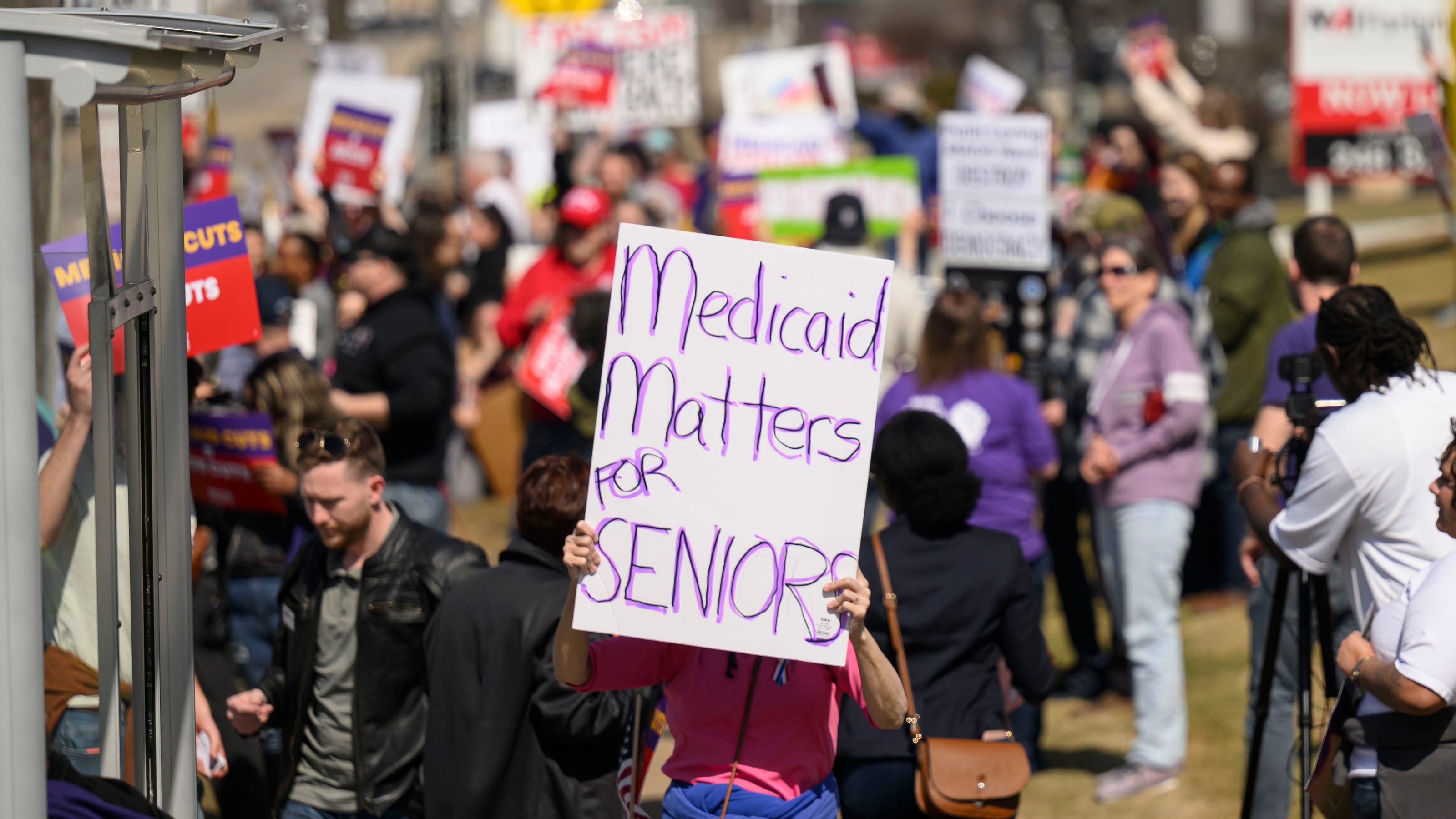
WORK PROGRAM FOR LOW-INCOME SENIORS: The Trump Labor Department has quietly ended that Senior Community Service Employment Program (SCSEP). This program helped tens of thousands of seniors (55 or older) who are living on the edge of poverty get part-time employment. The Labor Department withheld about $300 million from grant recipients in July. This is doubly cruel as the Trump / Republican budget is putting work requirements in place for these seniors to qualify for Medicaid health care coverage and for food assistance from the Supplemental Nutrition Assistance Program (SNAP). [5]

ACCURATE ECONOMIC DATA: The accuracy of economic data provided by the Trump administration has been a matter of concern for months. Cuts to staff at the Bureau of Labor Statistics (BLS), a key source of economic data, have hurt the timely production of accurate data. For example, the Consumer Price Index and related data that the BLS produces have included a lot more estimated data than in the past. [6]

When the August 1 jobs report from the BLS showed low job creation for the last three months, Trump falsely claimed that the data had been manipulated to make him look bad. So, Trump fired the Commissioner of Labor Statistics, Dr. Erika McEntarfer. With a Trump replacement, future data from the BLS, which is important to investors and business leaders making decisions about hiring and growth, will be even more suspect that it has been to date.

IMPACT ON STATES’ BUDGETS: Massachusetts Governor, Maura Healey, has introduced legislation to spend $400 million of emergency state funds on research and development. This is an effort to soften the blow of Trump administration cuts of research and development grants. MA state programs have lost $714 million in federal funding already this year and universities and other entities have also lost federal research and development funding. MA receives over $8 billion annually in federal research and development funding, which supports 81,300 jobs and generates $16 billion in ancillary economic activity. In New England, the Trump administration has canceled hundreds of research grants from the National Science Foundation and the Health and Human Services Department totaling over $3 billion. [7]


[1]      Waldman, M., 7/22/25, “Trump defunds effective crime-prevention policies,” Brennan Center for Justice: The Briefing (https://www.brennancenter.org/our-work/analysis-opinion/trump-defunds-effective-crime-prevention-policies

[2]      Hilliard, J., 7/14/25, “Immigration policy shift threatens Head Start,” The Boston Globe

[3]      Conley, J., 7/23/25, “Nonpartisan watchdog agency finds Trump admin illegally withheld Head Start funds,” Common Dreams (https://www.commondreams.org/news/head-start-trump)

[4]      Cox Richardson, H., 7/15/25, “Letters from an American,” (https://heathercoxrichardson.substack.com/p/july-15-2025)

[5]      Johnson, J., 7/20/25, “‘Extra cruel’: Trump admin ends job program for seniors as work requirements loom,” Common Dreams (https://www.commondreams.org/news/senior-job-training-program)

[6]      Cox Richardson, H., 8/1/25, “Letters from an American,” (https://heathercoxrichardson.substack.com/p/august-1-2025)

[7]      Gross, S. 8/1/25, “Mass. Research would get $400m,” The Boston Globe

HARMS OF THE TRUMP / REPUBLICAN BUDGET

The Trump / Republican budget just enacted will increase the federal debt, make college less affordable, harm our (and particularly women’s) health as well as our health care system, and hurt states’ finances. Please contact your members of Congress and tell them you oppose these budget cuts. Ask them to explain to their constituents the toll the budget will take on every day Americans and on our society.

(Note: If you find a post too long to read, please just skim the bolded portions. Thanks for reading my blog!)

The Trump / Republican budget just enacted will increase the federal debt, make college less affordable, harm our (and particularly women’s) health as well as our health care system overall, and hurt states’ finances (among other things). My previous post documented harm to seniors because of cuts to Medicaid, cuts to Medicare, and the weakening of Social Security. I also noted the harm to millions of non-seniors due to the cuts to Medicaid and food assistance.

The Congressional Budget Office (CBO) has just issued its final report on the budget: it will increase the deficit by $3.4 trillion over ten years and result in 10 million Americans losing health coverage from Medicaid (among other things). Low-income children and families will be among the groups hit hardest with about 37 million children losing their healthcare coverage from Medicaid or the Children’s Health Insurance Program (CHIP). The money from the huge increase in the deficit and the harmful cuts in vital programs helps pay for tax breaks for millionaires and large corporations, as well as grotesque increases in the budgets for Immigration and Customs Enforcement (ICE) and the military. [1]

THE FEDERAL GOVERNMENT’S TOTAL DEBT CEILING RAISED: While most people know that the Trump / Republican budget bill increased the annual budget deficits, few are aware that the bill also included a big, $5 trillion increase the federal government’s overall amount of allowable, accumulated debt, i.e., the debt ceiling. You may remember that Republicans threatened to shut down the federal government – and sometimes did – and created crises over the increasing of the debt ceiling when Democrats were president. Despite Republicans supposed concern about the amount of the federal debt, they were happy to increase the debt limit 27 times when Republicans Reagan and George H. W. Bush were president. But when Democrat Clinton was president, the Republicans shut down the federal government twice over increases in the federal debt, although ultimately the debt ceiling was increased eight times during the Clinton presidency. Under Republican president George W. Bush, the debt ceiling was increased eight times without Republican opposition. Under Democrat Obama, the debt ceiling was increased or suspended five times with Republicans threatening government shutdowns and creating crises over their supposed concern over the debt.

These Republican-created debt ceiling crises resulted in dramatic stock market declines and the downgrading of the federal government’s credit rating by Standard & Poor’s for the first time ever. In Republican Trump’s first term the debt ceiling was suspended three times with no Republican objections. Under Democratic President Biden, the Republicans returned to their hypocritical objection to increasing the debt ceiling and created another crisis. They also threatened, for the first time in history, to use the filibuster in the Senate to block an increase in the debt ceiling. So, the Republicans’ big increase in the debt ceiling and the annual federal budget deficit in the recent budget bill dramatically underscore the hypocrisy of their claims to be concerned about the federal budget deficit and the debt ceiling.

MAKING COLLEGE LESS AFFORDABLE: The Trump / Republican budget bill reduces and caps the total amount that students and parents can borrow to pay for college from federal sources. It raises interest costs and shuts down or weakens programs that allow loan forgiveness for low-income graduates and those in public service jobs. For new student loans, there are only two repayment plans, both of which are far more expensive than the current options. These changes will cost student borrowers about $355 billion over ten years most of it from repealing reduced loan payments for graduates in low-paying jobs. These budget savings come directly out of the pockets of student borrowers to help pay for tax cuts for the wealthy and increased funding for ICE and the military. [2]

MAKING HEALTH CARE FOR WOMEN LESS ACCESSIBLE: The Trump / Republican budget bill prohibits Medicaid funding from going to any organization that is primarily engaged in family planning services and got more than $800,000 from Medicaid in 2023. Note that federal law already prohibits federal funding from paying for almost all abortions.

The budget bill targets Planned Parenthood because of its abortion services, but it will also dramatically affect many other women’s health care services and many other providers of health care for women. While Planned Parenthood performs about 400,000 abortions a year, it also provides over 5 million tests and treatments for sexually transmitted infections, over 2 million family planning and contraception services, and over 400,000 cancer screenings and prevention services. The loss of Medicaid coverage for these services will harm many low-income women.

An example of the impact on non-Planned Parenthood providers is Maine Family Planning. It will lose about $2 million in Medicaid reimbursements (one-fourth of its total budget) for its non-abortion services to roughly 3,500 patients in rural Maine, such as cancer screenings, pregnancy testing, treatment for sexually transmitted infections, and family planning counseling and contraception services. It operates 18 clinics and for about two-thirds of its patients it is their only health care provider. [3]

HARMS TO THE HEALTH CARE SYSTEM AND STATES’ FINANCES: The Trump / Republican budget bill will harm the overall health care system by reducing the revenue it receives from Medicaid and Medicare by hundreds of millions of dollars. States simply do not have the resources to fill this gap. Higher insurance premiums and higher co-payments for services from patients will occur. States’ finances will be harmed as at least some states will use their funds to make up for some of the lost federal funding that supports low-income individuals and families. It is estimated that 51,000 preventable deaths will occur each year because of the cuts to the health care system. [4]

For example, in Massachusetts, it’s estimated that the federal budget cuts will reduce payments to MA health care providers by as much as $3.5 billion per year. About 326,000 MA residents (almost 5% of the population or 1 of every 20 people) are projected to lose their health insurance due to the budget cuts. Hospitals are projected to lose $424 million in revenue. As a result, some hospitals will close and some will stop providing services that are less profitable, such as psychiatric and obstetrical care. Emergency rooms may close. Massachusetts (and other states) will be forced to step in and subsidize critically important services, especially in rural areas. Hundreds of rural hospitals across the country are likely to close as they are more dependent on Medicaid revenue than urban / suburban hospitals. [5]

The budget’s new Medicaid work requirements will mean that millions of Medicaid recipients will lose coverage even though they are working or qualify for an exemption from the work requirements because of a disability, for example. They will lose their coverage because they are unable to assemble the necessary paperwork and to jump through all the hoops of presenting it quickly enough to avoid being cut off. By the way, the budget bill also requires them to do this twice a year rather than once a year as is currently required.

Please contact your members of Congress and tell them you oppose these budget cuts. Urge them to speak out against the Trump / Republican budget and to explain to their constituents the toll the budget will take on them and our society.

You can find contact information for your US Representative at  http://www.house.gov/representatives/find/ and for your US Senators at http://www.senate.gov/general/contact_information/senators_cfm.cfm.


[1]      Hubbell, R., 7/23/25, “Resisting while in political exile,” Today’s Edition Newsletter (https://roberthubbell.substack.com/p/resisting-while-in-political-exile)

[2]      Kuttner, R., 7/16/25, “Gutting the student loan program,” The American Prospect (https://prospect.org/blogs-and-newsletters/tap/2025-07-16-gutting-student-loan-program/)

[3]      Whittle, P., & Mulvihill, G., 7/17/25, “Trump’s new bill affects more than Planned Parenthood,” The Boston Globe from the Associated Press

[4]      Anderson, S. & Koshgarian, L., 7/9/25, “10 ways the GOP’s big ugly bill could hurt you,” Common Dreams (https://www.commondreams.org/opinion/10-harms-big-ugly-bill)

[5]      Globe Editorial, 7/17/25, “One big disaster for Massachusetts health care,” The Boston Globe

REPUBLICAN BUDGET HARMS SENIORS (AMONG MANY OTHERS)

The recently enacted Republican budget bill will harm seniors by reducing Medicaid spending, weakening Social Security, and cutting Medicare. These (and other) budget cuts are being made to help pay for large tax cuts for wealthy individuals and corporations.

The recently enacted Republican budget bill will harm seniors by reducing Medicaid spending, weakening Social Security, and cutting Medicare. These (and other) budget cuts are being made to help pay for large tax cuts for wealthy individuals and corporations.

(Note: If you find a post too long to read, please just skim the bolded portions. Thanks for reading my blog!)

The Republican budget just passed by Congress and signed by President Trump will harm seniors by reducing Medicaid spending, cutting Medicare, and weakening Social Security. Before I get into some of these details, a couple of notes on other provisions of the bill, of which there are many in the nearly 1,000-page bill’s language. As you probably know, 12 million people are projected to lose their health care due to Medicaid cuts of roughly $1 trillion (yes, trillion) over the next ten years. Medicaid provides health insurance for low-income families and seniors including long-term care for millions of seniors (see more below). Cuts to food assistance programs, primarily the Supplemental Nutrition Assistance Program (SNAP), will increase hunger for millions of families, including many new mothers and babies where malnutrition may have long-term effects on the babies’ development.

All the cuts in the budget are being made to help pay for large tax cuts for wealthy individuals and corporations. Note that the big tax cuts take effect right away, while many of the program cuts don’t go into effect until after the 2026 election. The Republicans hope that because people won’t be experiencing the program cuts before the election that it will be easier to con voters into voting for Republicans.

Most people know that the budget will increase the federal budget’s annual deficits by over $300 billion for a total of $3 trillion (yes, trillion) over the next ten years. However, few people are aware that the bill increases the federal government’s overall amount of allowable, accumulated debt, i.e., the debt ceiling, by $5 trillion. (I’ll document the Republicans’ hypocrisy on raising the debt ceiling in a future post.)

The Trump administration and Republicans are pumping out lots of disinformation about the budget bill in an attempt to keep the public from understanding the harm it will do.

For example, within hours of the passage of the bill, all of you who are seniors, tens of millions of Americans overall, received an email from the Social Security Administration stating that “The bill ensures that nearly 90% of Social Security beneficiaries will no longer pay federal income taxes on their benefitsand that “The new law includes a provision that eliminates federal income taxes on Social Security benefits for most beneficiaries.” [1]

These statements are misleading at best. Only about a quarter (25%) of seniors will see any tax benefit from the bill’s provisions – quite different from the figures used in the Social Security Administration’s email.The bill does not directly eliminate or even reduce taxes on Social Security benefits. What the bill does is temporarily increase the standard income tax deduction by $6,000 for seniors 65 and over. [2] Sixty-four percent of seniors receiving Social Security benefits ALREADY pay no tax on their Social Security payments. This percentage will increase to 88% due to the bill’s provisions. Furthermore, the people who will benefit will be those Social Security recipients who are better off and the richest will benefit the most. By the way, the increase in the income tax deduction will expire in 2028 when Trump’s term in office is ending. [3] [4]

Furthermore, the message from the Social Security Administration didn’t mention that, overall, the budget bill will weaken Social Security by reducing the revenue that flows into the Social Security system. Currently, the Social Security trust fund, built up over many years to help pay Social Security benefits, is projected to run out of money in 2033. After that, Social Security revenue would only be able to pay 77% of promised benefits. Under the Republican budget bill, the Social Security trust fund will run out of money one year earlier, in 2032, and its reduction of future Social Security revenue means that benefits after 2032 would be even lower than the currently projected 77% of the promised level. [5]

The Republican budget’s cuts to Medicaid will harm low-income seniors who qualify for Medicaid (and that they receive in addition to Medicare – which covers all seniors). In particular, it will harm the roughly eight million seniors and people with disabilities whose long-term home and community-based care services are paid for by Medicaid and the 1.5 million seniors in nursing homes. About two-thirds of all nursing home residents are covered by Medicaid. The budget’s Medicaid cuts will significantly reduce revenue for long-term care services and facilities. As a result, 25% of nursing homes are projected to close and over half are likely to have to reduce staff to remain financially viable. Therefore, finding nursing home care, let alone good quality care, will become even more difficult than it is now. [6] [7]

In addition to the direct cuts to Medicaid (government health care coverage for low-income families and seniors), the Republican budget will also force cuts to Medicare (government health care coverage for all seniors). Because of the budget’s large increases in the federal government’s annual budget deficits, the Pay-As-You-Go (PAYGO) Act of 2010 requires across-the-board budget cuts. A mandatory cut of about $50 billion a year to Medicare for each of the next ten years will be required. This cut will take place immediately (while many of the explicit program cuts in the budget are delayed until after the 2026 elections). [8]

Please contact your members of Congress and tell them you are opposed to (or even horrified by) budget cuts that will harm seniors. Tell them you are particularly upset that these cuts are being used to give wealthy individuals and corporations tax cuts. Urge them to speak out against these cuts and to explain to their constituents the toll the Republican budget is taking on seniors and others.

You can find contact information for your US Representative at  http://www.house.gov/representatives/find/ and for your US Senators at http://www.senate.gov/general/contact_information/senators_cfm.cfm.


[1]      Social Security Administration, 7/3/25, “Social Security applauds passage of legislation providing historic tax relief for seniors,” Press Release (https://www.ssa.gov/news/press/releases/2025/?utm_source=substack&utm_medium=email#2025-07-03)

[2]      Hubbell, R., 7/7/25, “Stay on task: Overwhelm the opposition,” Today’s Edition Newsletter (https://roberthubbell.substack.com/p/stay-on-task-overwhelm-the-opposition)

[3]      Edelman, L., 7/15/25, “Seniors score, gamblers get rolled in Trump’s ‘big beautiful bill’,” The Boston Globe

[4]      Siegel Bernard, T., 7/8/25, “Social Security email misleading,” The Boston Globe from the New York Times

[5]      Johnson, J., 7/4/25, “Trump Social Security chief applauds budget bill that will harm Social Security’s finances,” Common Dreams (https://www.commondreams.org/news/trump-social-security-budget-bill)

[6]      Lawson, A., 6/30/25, “The Republican nursing home apocalypse,” Common Dreams (https://www.commondreams.org/opinion/gop-nursing-homes)

[7]      National Association of Councils on Developmental Disabilities, Feb. 2025, “Medicaid facts with links to state data,” (https://nacdd.org/wp-content/uploads/2025/02/250204_NACDD-Medicaid-Fact-Sheet.pdf)

[8]      Dayen, D., 7/3/25, “Republicans are cutting Medicare. Not only Medicaid, Medicare.” The American Prospect (https://prospect.org/politics/2025-07-03-republicans-cutting-medicare-not-only-medicaid/)

EXAMPLES OF THE SOCIETAL TOLL OF TRUMP ADMINISTRATION ACTIONS

The actions of the Trump administration and Republicans in Congress are inflicting a serious toll on our society. Examples include their efforts to defund foreign aid and public broadcasting, their weakening of our cybersecurity defenses, and their efforts to eliminate the Consumer Financial Protection Bureau, not to mention all the horrible things in the budget bill.

(Note: If you find a post too long to read, please just skim the bolded portions. Thanks for reading my blog!)

The actions of the Trump administration and Republicans in Congress are taking a heavy toll on people, on our society, and on our democratic institutions. Here are some examples.(See this previous post for more examples.)

ACTION #1: Republicans in U.S. House recently passed a bill to rescind $9.4 billion of previously approved funding for foreign aid ($8.3 billion) and public broadcasting ($1.1 billion). The good news is that the Trump administration is tacitly acknowledging that it is illegal for it to cut congressionally approved funding through executive orders or actions by the so-called Department of Government Efficiency (DOGE). The vote to pass the bill was 214 to 212 and occurred only after Republican Speaker Johnson had pressured a few Republican representatives to switch their “no” votes and support the bill. [1] Republicans in both the House and the Senate have expressed concerns about this bill.

The bill would rescind funding for foreign aid programs that some of them support, such as President George W. Bush’s emergency AIDS program that has saved over 25 million lives around the globe. These cuts will ultimately harm health and result in deaths here in the U.S. as diseases spread across international borders.

It also would rescind funding that supports 1,500 public TV and radio stations, including many in rural, Republican areas where they are a vital, local resource.

ACTION #2: The Trump administration is weakening America’s cybersecurity defenses at a time when the likelihood of cyberattacks is growing. Trump fired the general who led the National Security Agency and other leaders of our cybersecurity agencies. He has cut staffing and funding for cybersecurity agencies. [2]

This makes no sense because the likelihood of cyber warfare is growing as global tensions and conflicts escalate – in Ukraine, the Middle East, and over Taiwan. U.S. adversaries Russia, Iran, China, and North Korea all have significant cyber warfare capabilities, and there are signs of cyber activity cooperation among them. Cyberattacks can be used for espionage – to steal valuable corporate or government information. Or they can be used to disrupt public infrastructure such as electric power supplies, phone and Internet services, hospitals, banks and financial services, and water supply systems. Recently, Russian hackers disabled the automatic control systems at a rural Texas municipal water plant. This was probably just a test of their capabilities or a warning about what they can do.

ACTION #3: The Trump administration, Republicans in Congress, and their wealthy backers in the financial industry are working hard to eliminate or at least emasculate the Consumer Financial Protection Bureau (CFPB). The CFPB was created in response to the financial industry corruption that caused the 2008 financial collapse and resulted in millions of Americans losing their homes due to abusive and fraudulent mortgages. Since its creation, the CFPB has returned more than $21 billion to consumers through enforcement actions on illegal behavior by financial companies. It has also saved consumers untold additional money through its regulation of the financial industry. [3] For example, it has capped exorbitant fees such as credit card late payment penalties and bank account overdraft charges.

The Trump administration and Elon Musk’s so-called Department of Government Efficiency (DOGE) have been trying to cut CFPB funding, fire its employees, and eliminate the agency. On February 14, a federal judge ordered a halt to these actions. The Trump administration responded by placing most of the CFPB staff on administrative leave and preventing them from performing their jobs.

On June 10, the head of enforcement for the CFPB resigned, writing: “It is clear that the bureau’s current leadership has no intention to enforce the law.” [4] (Russell Vought is the Acting Director of the CFPB and the Director of the White House Office of Management and Budget, as well as a key author of Project 2025.)

To benefit the wealthy executives and corporations in the financial industry, the Trump administration is persistently trying to eliminate the only independent agency protecting consumers from predatory and illegal practices of financial industry companies.

YOUR ACTION: Please contact your members of Congress and ask them to oppose these actions of the Trump administration in every way they can. Urge them to speak out against these actions and to explain to their constituents the toll Trump administration’s actions are taking on them and our society.

You can find contact information for your US Representative at  http://www.house.gov/representatives/find/ and for your US Senators at http://www.senate.gov/general/contact_information/senators_cfm.cfm.


[1]      Edmondson, C., 6/12/25, “House votes to claw back $9 billion for foreign aid and public broadcasting,” The Boston Globe from the New York Times

[2]      Klepper, D., 4/21/25, “Nations ready cybersecurity defenses,” The Boston Globe from the Associated Press

[3]      Economic Policy Institute, 6/12/25, “Trump administration attempts to close the CFPB, block agency’s work,” (https://www.epi.org/policywatch/trump-administration-closes-the-cfpb/)

[4]      Economic Policy Institute, 6/12/25, see above

ASK YOUR U.S. REPRESENTATIVE TO OPPOSE THE REPUBLICAN BUDGET

ACTION: Please contact your U.S. Representative NOW and ask them to do everything they can to stop the draconian Republican budget bill. The House will be voting soon on the bill just passed by the Senate, which has even bigger cuts to Medicaid and food assistance than the original, horrible House budget. In addition to spending cuts that will harm millions of Americans and tax cuts for wealthy individuals and corporations, it includes many other very harmful provisions.

(Note: If you find this message too long to read, please just skim the bolded portions. Thanks for reading and acting!)

The Republican budget the Senate just passed is now back in the House as it has significant differences from the bill the House originally passed. Please act NOW as the House will be voting soon. As you probably know, this budget bill makes big spending cuts in a range of government programs and services due to the need to offset some of the lost revenue from the big tax cuts for wealthy individuals and corporations. Nonetheless, the federal budget deficit will increase by over $300 billion a year. Overall, rich Americans would gain around $12,000 a year from the tax cuts, while the poorest families would lose about $1,600 on average from program cuts.

The vote in the Senate was 50 to 50, so Vice President Vance voted to break the tie and pass the bill 51 to 50. Senator Susan Collins, Republican of Maine, switch her “Yes” vote on the procedural preliminary vote to a “No” vote. Thanks to all of you who contacted her!! All Democrats and Republican Senators Tillis (NC) and Rand (KY) also voted against the budget bill. The bill includes a number of special benefits for Alaska to buy the vote of Alaska Senator Murkowski. (See this post from The American Prospect for highlights of the bill and what was done to buy Murkowski’s vote.)

Repeating what was in my previous post, here are some key things the Republicans’ proposed budget would do (among the many harmful provisions in the bill): [1] [2] [3]

  • Take health care away from roughly 12 million Americans by cutting spending on Medicaid by $930 billion over ten years. Medicaid provides health insurance for millions of low-income families, including students and families of low-paid and unemployed workers. It also covers nursing home care for millions of seniors and health care for disabled individuals. This cut, combined with cuts to the Affordable Care Act and Medicare, will reduce spending and wreak havoc throughout the whole health care system.
  • Take food assistance away from millions of low-income households, including many new mothers and their babies, as well as students and families of low-paid and unemployed workers. It would dramatically cut the Supplemental Nutrition Assistance Program (SNAP), formerly known as Food Stamps. It would also cut the Farm to School program that supports local, small farmers and provides healthy, fresh food to school lunch programs.
  • Increase the federal budget deficit by about $330 billion a year. This would add $3.3 trillion (yes, trillion) to the overall federal debt over the next ten years.
  • Extend expiring tax cuts and create new ones that will provide huge windfalls to wealthy individuals and corporations at a cost of about $4 trillion.
  • More than double the budget for the detention and deportation of immigrants by adding $150 billion to the budget of the Department of Homeland Security. It will add $45 billion to the budget for detention centers to increase or expand the existing 160 detention centers. This would mean ICE has more money for detention that the U.S. Bureau of Prisons.
  • End tax credits that have been in place since 2005 that incentivize the development of wind and solar energy. [4]
  • Increase funding for the Defense Department by about $150 billion, including for Elon Musk’s companies. This significant increase is proposed even though there’s more waste, fraud, and abuse in the Defense Department than anywhere else in the federal government. Clearly, Trump, his administration, and Musk and DOGE don’t really care about cutting waste and making government more efficient.

Please contact your U.S. Representative NOW, as they will be voting on this bill and its provisions in the next two days. Ask them to vote against this draconian budget. Let them know you oppose tax cuts for wealthy corporations and individuals, as well as cuts in programs that benefit everyday working Americans. It’s particularly galling that the cuts in programs for low-income families are being made to offset part of the cost of the tax cuts for the wealthy.

Your contacts are important even if you don’t change someone’s mind or vote. It lets your Representative know that you are watching them and paying attention to what’s going on in Congress. If they vote for the budget in upcoming votes, it will let them know that they are jeopardizing their chances of re-election, which is key to getting them to oppose Trump in these and future votes.

You can find contact information for your US Representative at  http://www.house.gov/representatives/find/

THANKS FOR ALL YOU DO! IT MAKES A DIFFERENCE!

(Note: Republican presidents (Reagan, Bush, and Trump) and Congresses have cut taxes for wealthy individuals and corporations multiple times since the 1981. These tax cuts have added over $10 trillion (yes, trillion) to the federal debt. The economic boom, jobs, increased tax revenue, and trickle down of benefits to everyday Americans they always promise have NEVER materialized. Most recently, they did not happen after the Trump and Republican tax cuts of 2017. Extending those tax cuts and adding others will not increase economic growth, will not increase tax revenue, will not create jobs, and will not trickle down to everyday Americans.)


[1]      Reich, R., 6/30/25, “The worst bill in history,” Robert Reich’s daily blog (https://robertreich.substack.com/p/the-three-myths-of-trickle-down-economics)

[2]      Mascaro, L., Freking, K., & Cappelletti, J., 6/29/25, “Trump’s tax and spending cuts bill clears key Senate vote as Republicans race to pass it by July 4,” The Boston Globe from the Associated Press

[3]      Cox Richardson, H., 6/28/25, “Letters from an American,” (https://heathercoxrichardson.substack.com/p/june-28-2025)

[4]      Reuters, 6/28/25, “Senate bill hastens end of wind, solar tax credits and imposes new tax,” U.S. News (https://www.usnews.com/news/politics/articles/2025-06-28/senate-bill-hastens-end-of-wind-solar-tax-credits-and-imposes-new-tax)

ASK YOUR SENATORS TO OPPOSE THE REPUBLICAN BUDGET

Please contact your US Senators NOW. Ask them to stop the draconian Republican budget the Senate is voting on NOW, which includes major cuts to Medicaid and food assistance. Its spending cuts will harm millions of Americans. Its tax cuts will be a windfall for wealthy individuals and corporations.

ACTION: Please contact your U.S. Senators NOW and ask them to do everything they can to stop the draconian 940-page Republican budget the Senate is voting on NOW, which includes major cuts to Medicaid and food assistance. In addition to spending cuts that will harm millions of Americans and tax cuts for wealthy individuals and corporations, it includes many other very objectionable provisions.

(Note: If you find this message too long to read, please just skim the bolded portions. Thanks for reading and acting!)

The Republican budget the Senate is voting on NOW makes big spending cuts in a range of government programs and services due to the need to reduce the increase in the federal budget deficit caused by the lost revenue from the big tax cuts for wealthy individuals and corporations. Overall, the richest Americans would gain around $12,000 a year from the tax cuts, while the poorest families would lose about $1,600 on average from program cuts. Here are some key things the Senate Republicans’ proposed budget would do: [1] [2] [3]

  • Take health care away from roughly 12 million Americans by cutting spending on Medicaid by $930 billion over ten years. Medicaid provides health insurance for millions of low-income families, including students and families of low-paid and unemployed workers. It also covers nursing home care for millions of seniors and health care for disabled individuals. This cut, combined with cuts to the Affordable Care Act and Medicare, will reduce spending and wreak havoc throughout the whole health care system.
  • Take food assistance away from millions of low-income households, including many new mothers and their babies, as well as students and families of low-paid and unemployed workers. It would dramatically cut the Supplemental Nutrition Assistance Program (SNAP), formerly known as Food Stamps. It would also cut the Farm to School program that supports local, small farmers and provides healthy, fresh food to school lunch programs.
  • Increase the federal budget deficit by about $330 billion a year. This would add $3.3 trillion (yes, trillion) to the overall federal debt over the next ten years.
  • Extend expiring tax cuts and create new ones that will provide huge windfalls to wealthy individuals and corporations at a cost of about $4 trillion.
  • More than double the budget for the detention and deportation of immigrants by adding $150 billion to the budget of the Department of Homeland Security. It will add $45 billion to the budget for detention centers to increase or expand the existing 160 detention centers. This would mean ICE has more money for detention that the U.S. Bureau of Prisons.
  • Immediately end tax credits in place since 2005 to incentivize the development of wind and solar energy. Moreover, it would implement a new tax on these projects. [4]
  • Increase funding for the Defense Department by about $150 billion, including for Elon Musk’s companies. This significant increase is proposed even though there’s more waste, fraud, and abuse in the Defense Department than anywhere else in the federal government. Clearly, Trump, his administration, and Musk and DOGE don’t really care about cutting waste and making government more efficient.

There are many other harmful provisions in the proposed Republican budget.

Please contact your U.S. Senators NOW (as they are voting on this bill and its provisions this week) and ask them to vote against this draconian budget in the upcoming votes. Let them know you oppose tax cuts for wealthy corporations and incredibly wealthy individuals –  especially when they are partially paid for by cutting programs that benefit everyday working Americans.

If your Senator is a Democrat or Republicans Tillis (NC) or Paul (KY), thank them for voting against the budget in a preliminary vote. If your Senator is one of the other Republicans, ask them to vote against the budget in upcoming votes.

Your contacts are important even if you don’t change someone’s mind or vote. It lets your Senators know that you are watching them and paying attention to what’s going on in Congress. If they voted against the budget preliminarily, it will encourage them to continue to oppose the budget. If they vote for the budget in upcoming votes, it will let them know that they are jeopardizing their chances of re-election, which is key to getting them to oppose Trump in these and future votes.

You can find contact information for your U.S. Senators at http://www.senate.gov/general/contact_information/senators_cfm.cfm.

THANKS FOR ALL YOU DO! IT MAKES A DIFFERENCE!

(Note: Republican presidents (Reagan, Bush, and Trump) and Congresses have cut taxes for wealthy individuals and corporations multiple times since the 1981. These tax cuts have added over $10 trillion (yes, trillion) to the federal debt. The economic boom, jobs, increased tax revenue, and trickle down of benefits to everyday Americans they always promise have NEVER materialized. Most recently, they did not happen after the Trump and Republican tax cut of 2017. Extending these tax cuts and adding others will not increase economic growth, will not increase tax revenue, will not create jobs, and will not trickle down to working Americans. They will, however, balloon the deficit by around $500 billion a year – unless spending is cut to make up for the loss of revenue.)


[1]      Reich, R., 6/30/25, “The worst bill in history,” Robert Reich’s daily blog (https://robertreich.substack.com/p/the-three-myths-of-trickle-down-economics)

[2]      Mascaro, L., Freking, K., & Cappelletti, J., 6/29/25, “Trump’s tax and spending cuts bill clears key Senate vote as Republicans race to pass it by July 4,” The Boston Globe from the Associated Press

[3]      Cox Richardson, H., 6/28/25, “Letters from an American,” (https://heathercoxrichardson.substack.com/p/june-28-2025)

[4]      Reuters, 6/28/25, “Senate bill hastens end of wind, solar tax credits and imposes new tax,” U.S. News (https://www.usnews.com/news/politics/articles/2025-06-28/senate-bill-hastens-end-of-wind-solar-tax-credits-and-imposes-new-tax)

EXAMPLES OF THE HUMAN TOLL OF TRUMP ADMINISTRATION ACTIONS

The Trump administration is making us less safe from disease, violence, and death. Cuts to Medicaid and Medicare will increase deaths. So will weakening gun violence prevention efforts. Finally, the Trump administration’s war on children is harming children and will increase deaths for them too.

The Trump administration is making us all less safe in many ways, including less safe from disease, violence, and death. Cuts to the Medicaid and Medicare health care programs will increase deaths. So will the weakening of gun violence prevention efforts. Finally, the Trump administration is engaged in a war on children that is harming the well-being of children and will increase deaths for them as well.

(Note: If you find a post too long to read, please just skim the bolded portions. Thanks for reading my blog!)

STORY #1: The expansion of Medicaid by the Affordable Care Act (ACA, aka Obama Care) has saved 27,400 lives. The National Bureau of Economic Research recently published an analysis of 37 million Americans since the passage of the ACA in 2010. The low-income adults who got Medicaid coverage under the ACA expansion were 21% less likely to die each year than those who did not have Medicaid coverage. Deaths also fell for 20 and 30-year-olds. Overall, the analysis estimated that 27,400 lives were saved by the Medicaid expansion. This is one of several studies that have found that having Medicaid coverage saves lives. These findings are particularly relevant now, given that the Republican budget just passed by the U.S. House would end Medicaid coverage for roughly eight million people who now have it. [1]

STORY #2: The Republican budget just passed by the U.S. House would increase the deficit so much that it would trigger mandatory spending cuts, according to the Congressional Budget Office (CBO). The cuts would include a roughly $50 billion a year reduction in Medicare spending. Explicit cuts to Medicaid (health coverage for low-income Americans including many seniors in nursing homes) are specified in the Republican budget. The cuts to Medicare (health coverage for all seniors) are not explicit in the budget but are forced by the budget’s sizable increase in the annual federal budget deficit. The CBO’s non-partisan analysis estimated that the Republican budget would increase the deficit by about $230 billion a year. Therefore, under the 2010 Pay-As-You-Go Act (PAYGO), the White House Office of Management and Budget would have to reduce spending (i.e., sequester authorized spending) by $230 billion a year. About $50 billion of this would come from cuts to Medicare, according to the CBO. [2]

STORY #3: The Trump administration is weakening multiple facets of gun violence prevention efforts. This makes us all less safe. On day two as President in 2025, Trump closed the White House Office of Gun Violence Prevention. Despite Trump’s promises to keep Americans safe and reduce crime, this and other actions that weaken gun violence prevention will do the opposite. The White House Office of Gun Violence Prevention, created by President Biden, brought a coordinated, government-wide approach to gun violence prevention for the first time. It coordinated the federal response to mass shootings and community violence. Its cross-agency, public health approach to the uniquely American epidemic of gun violence contributed to a 13.5% decline in the homicide rate in 2023, the largest annual decrease ever. It also contributed to a significant drop in the number of untraceable “ghost” guns, i.e., guns without serial numbers. It worked with the Bureau of Alcohol, Tobacco, Firearms and Explosives (ATF) to close down 644 gun dealers who had engaged in illegal sales. [3]

The Trump administration has also:

  • Legalized the sale of devices that convert ordinary guns into automatic weapons, i.e., machine guns,
  • Advocated for a nationwide right to carry a concealed weapon,
  • Cut Centers for Disease Control funding for studying and analyzing gun violence,
  • Promoted policies that would make it easier and more profitable to sell gun silencers, and
  • Facilitated re-licensing of gun dealers who had their licenses revoked for illegal activity.

Three hundred Americans are shot every day on average. Weakening gun violence protection efforts puts the interests and profits of the gun industry above the safety of children and all the rest of us.

STORY #4: The Trump administration is putting children at risk and making them less safe in multiple ways. The risks start at birth and continue through adolescence. The lack of federal regulations and enforcement for the health care of pregnant and post-partem women has led to significant increases in maternal and infant mortality.

The Trump administration has laid off thousands of workers who run programs that help children and their families. They have also cut funding or plan to cut funding for many of these programs. For example, the staffs of programs that help families keep the electricity and heat on have been fired en masse. The staff that provides enforcement for child support payments has been decimated. Funding has been terminated for investigating child sexual abuse, responding to internet crimes against children, preventing youth violence, and following up on reports of missing children. Billions of dollars for school meals and school safety have been suspended or delayed. [4]

Trump wants to eliminate funding for Head Start, which provides hundreds of thousands of low-income children annually with high quality early education along with meals and family support. The federal staff that oversees Head Start programs and processes their federal funding has been decimated, which may force some programs to shut down.

The Trump administration’s cutting of funding for food assistance, gun violence prevention efforts, and the suicide hotline will all disproportionately harm children. It’s ignoring the harm that social media does to children. And last, but by no means least, its targeting of immigrants, who frequently are parents of children (who may well be U.S. citizens) is doing untold and immeasurable harm to children.


[1]      Kliff, S., & Sanger-Katz, M., 5/17/25, “Medicaid expansion saved 27,000 lives, study finds,” The Boston Globe from The New York Times

[2]      Johnson, J., 5/21/25, “‘They’re not just cutting Medicaid’: GOP bill would trigger over $500 billion in Medicare cuts,” Common Dreams (https://www.commondreams.org/news/cuts-to-medicare)

[3]      Brady Campaign to Prevent Gun Violence, retrieved from the Internet 5/27/25, “Press releases,” (https://www.bradyunited.org/press)

[4]      Hager, E., 4/23/25, “The Trump administration’s war on children,” ProPublica (https://www.propublica.org/article/how-trump-budget-cuts-harm-kids-child-care-education-abuse)

ASK YOUR REPRESENTATIVE TO OPPOSE THE REPUBLICAN BUDGET

Contact your U.S. Representative and ask them to oppose the draconian measures, including major cuts to Medicaid, in the Republican budget the House is considering. Its spending cuts will harm millions of Americans while it gives tax cuts to wealthy individuals and corporations.

ACTION: Please contact your U.S. Representative and ask them to do everything they can to stop the draconian measures, including major cuts to Medicaid, in the roughly 400-page Republican budget the House is now considering. In addition to spending cuts that will harm millions of Americans and tax cuts for wealthy individuals and corporations, it includes many other very objectionable measures.

(Note: If you find this message too long to read, please just skim the bolded portions. Thanks for reading and acting!)

Note that the big spending cuts are driven by the need to avoid exploding the federal budget deficit due to the lost revenue from the big tax cuts for the wealthy. Here are some key things the proposed budget would do:

  • Take health care away from millions of Americans by cutting spending on Medicaid by around $700 – $800 million. Medicaid provides health insurance for millions of low-income families, including students and families of low-pay and unemployed workers. It also covers nursing home care for millions of seniors.
  • Take food assistance away from millions of low-income households, including many new mothers and their babies, as well as students and families of low-pay and unemployed workers. It would dramatically cut the Supplemental Nutrition Assistance Program (SNAP), formerly known as Food Stamps. It would also cut the Farm to School program that supports local, small farmers and provides healthy, fresh food to school lunch programs.
  • Prohibit state and local governments from regulating Artificial Intelligence (AI) for ten years. State laws (often bipartisan ones) are currently regulating AI. (Note: The federal government is doing nothing to regulate AI and protect us from its abuses. Elon Musk and other AI entrepreneurs have been very supportive of Trump. They want AI unregulated and are on the current Mideast trip with Trump as the Saudi Arabian royalty is very interested in investing in AI.)

    For example, state laws currently block deepfake pornography, election disinformation, use of discriminatory algorithms (e.g., in hiring decisions), AI-enabled price fixing (e.g., rents), and abusive targeting of children. State laws also protect consumers from AI abuses, including privacy violations, deceptive marketing, price manipulation, and harmful health care decision making. Millions of residents in these states would lose protections from AI abuses if this provision passes as part of the budget bill. California and other states are also cracking down on AI companies using copyrighted material without permission, payments, or attribution. In 2025, at least 45 states’ legislatures are considering 550 AI-related bills. [1]
  • Grant the Trump administration broad authority to take away tax-exempt status from non-profit organizations it deems to be supporting terrorism. It’s already illegal for non-profits to support terrorism, so this is a ploy to allow the administration to take away the tax exemption from organizations it doesn’t like. Moreover, the language doesn’t give the non-profits any effective way to challenge the administration’s decision and action. As I imagine you know, the Trump administration is already attacking non-profits it doesn’t like (e.g., Citizens for Responsibility and Ethics in Washington (CREW) and Harvard University) and threatening to take away their tax-exempt status. [2] (Note: It’s a crime for the President to ask the IRS to target a specific taxpayer, for example, to remove its tax-exempt status.) [3]
  • Defund the Consumer Financial Protection Bureau.
  • Cut renewable energy funding.
  • Limit judges’ ability to hold the Trump administration accountable.
  • Cut student financial assistance.
  • Cut federal workers’ retirement benefits.
  • Increase funding for the Defense Department, including for Musk’s companies, when the Defense Department is where there’s more waste, fraud, and abuse than in any other government agency.

Pick a few of these harmful effects of the Republican budget (or others you know of) that are most meaningful to you and ask your Representative to oppose them and the budget overall. Also, let them know you oppose tax cuts for the wealthy, especially when they are paid for by cutting programs that benefit everyday working Americans.

Moreover, tell them you support tax increases on wealthy individuals and corporations to reduce the high levels of economic inequality in the U.S. and so the wealthy pay their fair share for all the benefits our society and economy provide them.

THANKS FOR ALL YOU DO! IT MAKES A DIFFERENCE!

You can find contact information for your US Representative at  http://www.house.gov/representatives/find/

(Note: Republican presidents and Congresses have cut taxes for wealthy individuals and corporations multiple times since President Reagan did so in the early 1980s. The economic boom, increased tax revenue, and trickle down of benefits to everyday Americans they have always promised have NEVER materialized. Most recently, they did not happen after the Trump and Republican tax cut of 2017. Extending these tax cuts and adding others will not increase economic growth, will not increase tax revenue, and will not trickle down to working Americans. They will balloon the deficit by around $500 billion a year – unless spending is cut to make up for the loss of revenue.)


[1]      Conley, J., 5/13/25, “‘Gift-wrapped favor to big tech’: GOP sneakily pushes ban on state AI regulation,” Common Dreams (https://www.commondreams.org/news/regulating-artificial-intelligence)

[2]      Johnson, J., 5/13/25, “‘We need calls now!’ Republicans slip nonprofit killer bill into tax package,” Common Dreams (https://www.commondreams.org/news/nonprofit-killer-bill)

[3]      Gleckman, H., 4/25/25, “Why Trump’s efforts to revoke tax exemptions so dangerous for democracy,” Forbes (https://www.forbes.com/sites/howardgleckman/2025/04/25/why-trumps-efforts-to-revoke-tax-exemptions-are-so-dangerous/)

RESISTANCE: PEOPLE’S PROMISE LETTER, USPS, NIH, ETC.

Trump is taking so many illegal, cruel, and objectionable actions that it’s hard to know what to focus on. Most important is to regularly raise your voice and take actions to resist, protest, and push back. For example, ask Congress to support the NIH and USPS. Sign the People’s Promise letter.

The Trump administration is taking so many illegal (many are unconstitutional), cruel, and objectionable actions that it’s hard to know what to focus on. Most important is to regularly raise your voice and take actions to resist, protest, and push back, regardless of the issue or specific action you’re focused on.

(Note: If you find a post too long to read, please just skim the bolded portions. Thanks for reading my blog!)

Contact your members of Congress regularly so they know you’re paying attention, watching them, and that you care; that you want them to take strong actions to resist, protest, and push back. Thank them when they do good things; they need to hear this and feel supported. Criticize them when they do wrong things and urge them to do the right things, vigorously.

Ask them to take visible and powerful actions as Senator Booker (D-NJ) and Representative Jeffries (D-NY) did on Sunday with their 12-hour teach-in on the steps of the Capitol. [1] They highlighted the values and moral principles of Democrats, drawing from their religious faith.

While this post focuses on some perhaps less dramatic, but nonetheless very important issues – the National Institutes of Health (NIH) and the U.S. Postal Service (USPS), as well as the People’s Promise letterwe shouldn’t lose sight of critical, on-going targets of protest including:

  • The return of Abrego Garcia and others who have been illegally shipped to prison in El Salvador,
  • The release of Ozturk, Khalil, and others who have been illegally detained,
  • The cessation of foreign aid by USAID that will cause millions of avoidable deaths worldwide and here in the U.S. (see this previous post for more detail),
  • The SAVE Act in the Senate, which would dramatically increase voter suppression (see this previous post for more detail), and
  • The slashing of staff and funding, as well as disruption, at multiple government agencies and programs including the Veterans’ Administration, Social Security, the Consumer Financial Protection Bureau, Head Start, the Labor Department, the Department of Education, the Department of Health and Human Services, the IRS, and other government agencies. These actions will jeopardize the health, safety, and well-being of tens of millions of Americans in the short-term and all three hundred million Americans in the long-term.

Feel free to mention any of these when you contact your members of Congress – or contact them multiple times and mention all of them!

ACTION #1: Please contact your US Representative and Senators and ask them to do everything they can to stop the sabotage of research supported by the National Institutes of Health (NIH), which is the largest sponsor of biomedical research in the world. The firing of thousands of workers and the blocking of funding for hundreds (probably thousands) of on-going research projects endangers our short-term and long-term health. For example, research on detection and treatment of diseases such as Alzheimer’s and cancer are being brought to a screeching halt. Drug research and development are similarly being blocked. The impact of all of this cannot be overstated. For example, from 2010 – 2019, 99.4% of new drugs approved by the Food and Drug Administration (FDA) were developed with NIH funding support.

You can find contact information for your US Representative at  http://www.house.gov/representatives/find/ and for your US Senators at http://www.senate.gov/general/contact_information/senators_cfm.cfm. (Note: Many offices only accept messages on a voice mail system. In most cases, you can call outside of regular business hours and leave a message.)

ACTION #2: Contact your US Representative and Senators and ask them to oppose the privatization of the U.S. Postal Service (USPS). The USPS is a vital public service. It delivers mail to everyone, any place in the U.S. It is not profitable to deliver mail to isolated, small, and/or rural communities, so with privatization these places would lose mail service. This is exactly what happened when the airlines and railroads were deregulated – service to small, unprofitable communities ended or became prohibitively expensive for most people.

Ask your Representative and Senators to support the bipartisan resolutions opposing Trump’s USPS privatization scheme: Resolution 70 in the House and Resolution 147 in the Senate.

You can find contact information for your US Representative at  http://www.house.gov/representatives/find/ and for your US Senators at http://www.senate.gov/general/contact_information/senators_cfm.cfm.

ACTION #3: Please sign the People’s Promise Letter sponsored by Common Cause and others. It’s a response to Trump’s first 100 days in office. It calls for an alternative course of action that delivers:

  • An economy that works for everyone including livable wages, the right to unionize, affordable housing, quality healthcare, and quality early education and child care.
  • A government for the people including quality education for all, a strong safety net, and the wealthy paying their fair share in taxes.
  • Equal rights and opportunity for all including legal due process for all; voting for all that is easy, protected, and accurately counted; and freedom from hate and discrimination for all.

Click on “Sign The Letter” in the upper right of the People’s Promise website to sign. Scroll down to read about the harm that the Trump administration has done in its first 100 days.


[1]      Rubin, J., 5/2/25, “Undaunted,” The Contrarian (https://contrarian.substack.com/p/undaunted-57a)

CORRUPT MANAGEMENT OF PRESCRIPTION DRUG INSURANCE

The Federal Trade Commission is suing the three dominant prescription drug insurance managers for practices that it alleges have spiked the price of insulin in the U.S. The suit claims these drug insurance managers have been “engaging in anticompetitive and unfair rebating practices that have artificially inflated the list price of insulin drugs and impaired patients’ access to lower” cost alternatives. Drug insurance management was originally a cost-control effort that morphed into a profit center by getting rebates (i.e., kickbacks) from drug makers.

(Note: If you find my posts too long to read on occasion, please just skim the bolded portions. Thanks for reading my blog! Special Note: The new, more user-friendly website for my blog is here.)

The Federal Trade Commission (FTC) is suing the three largest pharmacy benefit managers (PBMs) for practices that it alleges have spiked the price of insulin in the U.S. to over 12 times what it was 20 years ago. PBMs are middlemen that manage the costs of prescription drug coverage for health insurers. They determine which drugs an insurance plan will pay for, what the co-pay for patients will be, and how much pharmaceutical manufacturers will be paid for their drugs. [1]

The FTC is suing Caremark Rx, Express Scripts, and Optum Rx, which process 80% of all prescription drug purchases in the U.S., for “engaging in anticompetitive and unfair rebating practices that have artificially inflated the list price of insulin drugs and impaired patients’ access to lower” cost alternatives. Each of these PBMs has roughly $100 billion in annual revenue and is tied to a large insurance corporation: Caremark Rx to CVS, Express Scripts to Cigna, and Optum Rx to UnitedHealth.

The FTC’s suit does not come as a surprise. Last year, numerous local governments sued these three PBMs and the three large insulin manufacturers alleging they had conspired to increase the price of insulin. [2]

PBMs were originally created by insurance corporations to manage the growing costs of prescription drugs. The initial intent was to save insurance corporations and patients money by negotiating lower prices with the drug makers and incentivizing patients to use lower cost drugs, particularly generic drugs as opposed to brand name drugs. A key part of these efforts was the creation of lists of drugs the PBM and insurer would pay for along with a tiered set of co-pays for patients to incentivize the use of lower cost drugs. These lists are known as “formularies.” [3]

The PBMs discovered they could turn this cost-control effort into a profit center by getting rebates (i.e., kickbacks) from the pharmaceutical manufacturers by paying them well for their drugs and incentivizing patients to use those drugs.

This created all sorts of perverse incentives. The PBMs could increase their profits by steering patients to brand name drugs with higher prices and co-pays (as opposed to cheaper generic drugs) because the PBMs got bigger rebates on the higher priced drugs. The PBMs could also increase their profits and rebates by paying the drug makers inflated prices for their drugs, because that allowed the drug makers to give them bigger rebates (also sometimes referred to as discounts). However, this drove up the “list prices” of these drugs so that people without health insurance (or with health insurers other than those linked to these PBMs) paid more.

The FTC suit focuses on insulin, although the illegal practices it charges the PBMs with apply to all prescription drugs. In the case of insulin, the PBMs’ formularies (i.e., list of approved drugs) include only certain types or brands of insulin. These are typically NOT the lowest price insulin products but the ones that give the PBMs the highest rebates and profits. Their collusion with the insulin product makers to maximize their rebates and profits, drives up the price of these insulin products for all users. The FTC has warned drug manufacturers that their complicity in the PBMs’ practices raises serious concerns and that they may be named as defendants in future FTC actions.

As background, insulin was invented in the 1920s and the inventors refused to patent it to make it as readily and cheaply available as possible. Today, three pharmaceutical corporations control the market for insulin: Eli Lilly, Novo Nordisk, and Sanofi. They’ve used their market power to unjustifiably increase the price of insulin. For example, Eli Lilly’s leading insulin product, Humalog, costs 13 times more now, $274 a dose, than it did in 1999 when it was $21.

Two interesting notes: First, Express Scripts has sued the FTC for defamation over the findings of its study of the PBMs’ behaviors. These findings were a precursor to the FTC’s lawsuit. Second, the FTC is also looking at the PBMs’ practices that favor certain, often affiliated pharmacy chains (such as CVS in the case of Caremark) and harm other pharmacies, particularly independent (i.e., non-chain) pharmacies. These, probably illegal, practices reduce competition in the pharmacy business.

As noted, these practices of the PBMs and the pharmaceutical corporations are by no means limited to insulin. The City of Baltimore is suing drug maker Biogen alleging illegal collusion with the three big PBMs to block competition for its brand name multiple sclerosis (MS) drug, Tecfidera. Biogen has regularly increased the price of the drug from $52,500 for a year’s supply in 2013 to $90,000 in 2019, so the drug now provides almost half of Biogen’s revenue. [4] Biogen’s patent on the drug was expiring and it was desperate to maintain the revenue stream and its profits. The suit alleges that Biogen paid the three PBMs to structure their drug formularies to promote the use of its drug rather than lower-cost generic drugs. Biogen calls the payments “rebates” or “fees,” but, in reality, they are good, old-fashioned kickbacks.

Kentucky is suing Express Scripts alleging that it colluded with opioid makers to increase opioid sales through deceptive marketing and other strategies. The result was a deadly, on-going opioid addiction crisis that was linked to roughly 75,000 deaths nationwide in the last year. [5]

There are bills in Congress and in state legislatures that would tackle various elements of PBMs’ corrupt practices. I’ll keep you posted if any of the bills in Congress look like they may move forward. In the meantime, you might want to raise this issue with your state representative or senator, or your state’s public health agency, to learn if they are taking steps to stop the anti-competitive practices of PBMs.

[1]      Dayen, D., 9/20/24, “FTC sues PBMs for jacking up insulin prices,” The American Prospect (https://prospect.org/health/2024-09-20-ftc-sues-pbms-jacking-up-insulin-prices/)

[2]      Silverman, E. 9/26/24, “Baltimore sues Biogen, accusing it of blocking generic MS drugs,” The Boston Globe from Stat News

[3]      Editorial, 7/30/24, “Reining in pharmacy benefit managers,” The Boston Globe

[4]      Silverman, E. 9/26/24, see above

[5]      Schreiner, B., 9/28/24, “Kentucky sues Express Scripts,” The Boston Globe from the Associated Press

PLEASE SIGN THIS PETITION TO REDUCE THE MEDICARE ADVANTAGE RIP OFF

Please join me in signing this petition (sponsored by Social Security Works) calling on the Biden administration to take steps to stop the undermining of Medicare by the Medicare Advantage plans offered by for-profit insurance corporations. They maximize their generous profits by denying and delaying care for seniors, as well as through fraudulent billing.

(Note: If you find my posts too long to read on occasion, please just skim the bolded portions. Thanks for reading my blog! Special Note: The new, more user-friendly website for my blog is here.)

The Biden administration will be finalizing the annual increase in payments to Medicare Advantage plans in early April. As you probably know, Medicare Advantage plans are the privatized alternative to regular Medicare. They are very profitable for the for-profit insurance corporations that run them. They cost more per enrollee than regular, public Medicare, even though their enrollees are younger and healthier than the population on regular Medicare. Medicare Advantage plans also deliver poor treatment when enrollees get sick. (More on this below.)

The Biden administration is proposing a 3.7% increase, but the insurance corporations and their lobbyists are pushing hard for a bigger increase. Medicare needs to start holding these insurance corporations accountable for their greed and poor performance. If anything, this proposed increase should be decreased, and certainly not increased. [1]

Therefore, I urge you to join me in signing this petition (sponsored by Social Security Works) calling on the Biden administration to reclaim Medicare from the for-profit Medicare Advantage insurance corporations. As a start, it should stop overpaying them and work to recoup past overpayments.

If you have a minute, I urge you to also contact President Biden to ask him to stop the undermining of Medicare by for-profit insurance corporations whose Medicare Advantage plans are overbilling Medicare while underserving their patients. You can email President Biden at http://www.whitehouse.gov/contact/submit-questions-and-comments or you can call the White House comment line at 202-456-1111 or the switchboard at 202-456-1414.

Here are some of the negative attributes of the for-profit Medicare Advantage (M.A.) plans:

  • 10,000 lives could be saved each year if Medicare eliminated the worst performing 5% of M.A. plans.
  • M.A. patients are 1.5 times more likely to die within a month after complex cancer surgery than regular Medicare patients.
  • M.A. patients cost Medicare roughly 6% more per patient than patients in regular Medicare, despite worse outcomes with younger, healthier patients.
  • M.A. insurance corporations cost Medicare between $88 billion and $140 billion extra every year over what it would cost if their patients were in regular Medicare. [2]
  • Almost every major M.A. plan sponsor has been found guilty of fraudulent billing of Medicare, many of them multiple times. They claim their patients are sicker than they really are and game the payment system in other ways despite repeated attempts to stop this.
  • M.A. plans regularly deny or delay coverage of treatment through complex prior authorization procedures. They want to pay out as little as possible to maximize their profits. (See more on this below.)
  • M.A. plans limit patients to the doctors and health care facilities in their networks (while regular Medicare lets you pick any doctor and medical facility that you want).
  • M.A. plans attract younger, healthier seniors through aggressive (and sometimes misleading) marketing and by offering coverage for services (such as dental and eye care) that they lobby to keep regular Medicare from being able to offer.
  • M.A. plans have high overhead costs for profits, advertising, executive pay, and complex administration, such as prior authorization procedures. They spend 15% – 25% less on medical services than regular Medicare, because their overhead is so much higher.

A very important strategy for maximizing profits is to minimize how much the M.A. plan pays for medical care. Therefore, they impose complex prior authorization procedures, particularly for expensive care. A recent study of prior authorizations estimated that there were 35 million prior authorization requests in 2021 (the most recent data available) and that 2 million were denied. Roughly 220,000 of these denials were appealed and in 82% of those cases the denial was overturned. The researchers estimated that, overall, there are 1.5 million unfounded denials of care by M.A. plans each year. If more patients went through the complex and time-consuming process of appealing denials, up to 75% of denials would be overturned. Surveys in 2023 found that 94% of doctors reported that the prior authorization process had delayed needed medical care, 89% reported that prior authorization requirements had negative effects on patients’ outcomes, and 33% of doctors reported that the need for a prior authorization had led to an avoidable serious medical event, such as hospitalization, a permanent disability, or death. [3]

The privatization of Medicare through Medicare Advantage plans only benefits for-profit insurance corporations, while patients, Medicare, and, ultimately, taxpayers pay the costs. In 2022, the seven large health care corporations that cover 70% of M.A. patients had over $1 trillion in revenue and over $69 billion in profits. They spent more than $26 billion buying back their own stock, which artificially boosts the stock price rewarding big stockholders, including their corporate executives. [4] For example, in 2023, giant M.A. plan sponsor UnitedHealth spent $8 billion buying back its own stock and another $7 billion on dividends to stockholders. Its CEO was paid nearly $21 million in 2022 (the 2023 figure isn’t available yet), it spent almost $11 million lobbying Congress, and paid $10 million for memberships in industry associations that also lobby and engage in political activity to its benefit. However, it claims that if the Biden administration doesn’t give its M.A. plans a bigger increase it will have to reduce patient benefits and make them pay more! [5]

I’ve been writing about the problems with Medicare Advantage and how this privatization undermines Medicare for over four years. See previous posts here, here, here, here, here, and here if you’re interested.

[1]      Rhodes, C., 3/28/24, “Ady Barkan’s legacy: Reclaiming Medicare from for-profit corporations,” Common Dreams (https://www.commondreams.org/opinion/ady-barkan-medicare-advantage)

[2]      Physicians for a National Health Program, 2023, “Our payments their profits,” (https://pnhp.org/system/assets/uploads/2023/09/MAOverpaymentReport_Final.pdf)

[3]      Cunningham-Cook, M., 3/6/24, “Between you and your doctor: How Medicare Advantage care denials affect patients,” The American Prospect (https://prospect.org/health/2024-03-06-how-medicare-advantage-care-denials-affect-patients/)

[4]      Johnson, J., 3/15/24, “Patients, advocates push Biden to ‘reclaim Medicare’ from privatized Medicare Advantage,” (https://www.commondreams.org/news/medicare-advantage-action)

[5]      Cunningham-Cook, M., 3/6/24, see above

SHORT TAKES ON IMPORTANT STORIES #2

Here are short takes on four important stories that have gotten little attention in the mainstream media. Each provides a quick summary of the story, a hint as to why it’s important, and a link to more information.

STORY #1: As the political divide in the U.S. widens, it’s been particularly evident in state level policies. States now vary widely in their health care coverage for low-income households under Medicaid and other public health programs. There’s also great variation in the generosity of other public benefits and safety net programs. Minimum wage and gun safety laws vary greatly as do rates of unionization. These and many other state policies affect the well-being and ultimately the longevity of a state’s residents.

Examining life expectancy provides a valuable perspective on the effects of policies on the residents of states and countries. Globally, life expectancy has been increasing in high-income countries for decades. While the U.S.’s life expectancy was increasing, when compared to these other countries it began to fall behind in the 1990s and by 2006 it ranked last. After 2014, life expectancy in the U.S. actually began to decline. By 2021, life expectancy in the U.S. was 76.4 years, compared to 80 to 83 years in European countries and 84.5 years in Japan. Even in China it was 78.2 years.  [1]

The trend in life expectancy varies considerably among U.S. states. Several recent studies provide convincing evidence that the divergence of state-level policies between Democratic and Republican dominated states has contributed significantly to the changes in life expectancy, especially for low-income people. The differences are highlighted by comparing Connecticut and Oklahoma where the policy ideology has shifted the most over the last 60 years. In CT, policies have trended toward Democratic, progressive, or liberal policies and in OK toward Republican or conservative policies. In both states, life expectancy was 71.1 years in 1959. By 2017, life expectancy in CT had increased to 80.7 years, while in OK it had increased to only 75.8 years. [2]

STORY #2: Not content to control just state policies (and harm residents statewide), Republican-controlled states are more and more frequently blocking local governments from enacting policies that benefit their local residents (but that state-level lawmakers don’t like). This trend began in 2016 when North Carolina’s Republican state officials nullified Charlotte’s ordinance protecting LGBTQ rights. Also in 2016, the Republican Alabama state legislature and governor banned local minimum wage laws after Birmingham had enacted one. (Note: Alabama is one of five states (all in the south) that has never enacted a state minimum wage law.) Mississippi’s Republican state lawmakers stripped Jackson of its criminal courts, having the state take over. Nashville’s civilian police review board was prohibited by Tennessee’s Republican state officials.

Texas, which had previously banned municipalities from enacting tenant protections and regulating fracking within their boundaries, for example, has now passed a blanket prohibition on any local law that does more than state law in a wide range of policy arenas, including agriculture, finance, insurance, labor, natural resources, and property rights, as well as in business, commerce, and employment law. Among many other things, this state law negated laws in Austin and Dallas that required water breaks for construction workers, despite scorching hot summer days. Florida is now trying to outdo even Texas’s blanket preemption of local government policy making. [3]

According to the Local Solutions Support Center (which helps municipalities fight state preemption laws), these preemption laws began as special interest legislation pushed by businesses for economic reasons but have now expanded to social issues and the culture war. Over 700 preemption bills have been filed in state legislatures in 2023 and, by October, 90 had been passed, even though they are typically unpopular with the public. They are, however, popular with wealthy business owners who provide campaign money to Republicans. Thirty-one of the largest 35 cities in the U.S. are run by Democrats and most of them have large minority populations, including Black majorities in some southern cities. Pre-emption by Republican state lawmakers prevents Democrats and, in some cases, Blacks from governing in their own communities.

STORY #3: A classic case of pre-emption by state and federal lawmakers has been protecting gun manufacturers and dealers from liability for gun crimes involving violence and deaths using illegally sold guns. In the late 1990s, dozens of cities filed lawsuits against gun manufacturers and dealers. Only one, brought by Gary, Indiana, has survived lawmakers’ protections and legal challenges. Last fall, the judge for the case ordered the gun manufacturers and retailers who are defendants to turn over internal records relevant to the case. It is widely believed that these documents would reveal damaging evidence about the gunmakers’ and sellers’ knowledge of illegal gun sales. Republicans, who hold large majorities in the Indiana state legislature and the governorship, are pushing legislation that would ban cities from suing gun manufacturers or dealers; reserving that power to the state. Not coincidentally, the legislation is retroactive to August 27, 1999, three days before the Gary lawsuit was filed. [4]

STORY #4: With the end of the pandemic’s ban on dropping children and adults from Medicaid health insurance, millions of children are losing health care coverage. States are now allowed to review the current eligibility of children covered by their Medicaid programs. At least 2 million children have already lost coverage and federal researchers estimate that more than 5 million children will eventually lose the health insurance they’ve been getting through Medicaid or the Children’s Health Insurance Program (CHIP). Under the pandemic’s emergency rules, Medicaid enrollment grew and researchers estimate that by 2022 more than half of the children in the U.S. were covered by Medicaid or CHIP. Overall, over 90 million people, more than one-fourth of the population, were enrolled in these health insurance programs. Over 15 million people have now lost their Medicaid coverage based on these eligibility reviews. Because Medicaid and CHIP are joint federal-state programs, the states have significant power to decide who they will cover and who they won’t and what happens to people who lose their coverage. [5] In Massachusetts, for example, 400,000 people have lost their Medicaid coverage, but the state is actively working to help them obtain other health insurance. Over 50,000 of them have signed up for subsidized health insurance under the state’s Health Connector program. [6]

[1]      OECD, 2024, “Life expectancy at birth,” (https://data.oecd.org/healthstat/life-expectancy-at-birth.htm)

[2]      Starr, P., 12/8/23, “The life-or-death cost of conservative power,” The American Prospect (https://prospect.org/health/2023-12-08-life-death-cost-conservative-power/)

[3]      Meyerson, H., 2/6/24, “Pre-preemption,” The American Prospect (https://prospect.org/politics/2024-02-06-pre-preemption/)

[4]      Cook, T., & Coleman, V., 1/30/24, “Indiana lawmakers trying to kill historic suit seeking gun industry accountability,” ProPublica and IndyStar (https://www.propublica.org/article/indiana-guns-gary-lawsuit-gunmakers-hb1235)

[5]      Weiland, N., 11/10/23, “2 million kids lost health coverage,” The Boston Globe  from the New York Times

[6]      Borkhetaria, B., 1/29/24, “MassHealth takes steps to preserve coverage for eligible members,” CommonWealth Beacon (https://commonwealthbeacon.org/the-download/the-download-masshealth-takes-steps-to-preserve-coverage-for-eligible-members/)

RESULTS OF FOR-PROFIT HEALTH CARE Part 2

Here are some current examples of the results of for-profit health care: lack of availability and use of generic drugs, huge bills for ambulance services, doctors unionizing, and illegal and unethical health care for prison inmates from a private equity-owned provider.

This is the eleventh post in a series on how the U.S. health care system is a high-cost, low-quality, profit-driven system. The tenth post provides some other examples of the results of for-profit health care and links to the previous posts. Those posts cover the negative effects of vertical integration and private equity-owned health care providers. They also describe illegal and unethical behavior by nursing home operators as well as anti-competitive and often illegal practices by drug companies. And one post highlights how doctors are pushing back against for-profit health care.

(Note: If you find my posts too long to read on occasion, please just skim the bolded portions. Thanks for reading my blog! Special Note: The new, more user-friendly website for my blog is here.)

Generic drugs that are just as effective as and cheaper than brand name drugs are sometimes unavailable in the U.S. or are underused because they don’t produce enough profit. For example, there’s a generic cold medicine, ambroxol, that’s been available in Europe since 1978. It’s cheap (a few euros), available over the counter, and Americans who have used it describe it as miraculous. However, no drugmaker has ever sought Food and Drug Administration (FDA) approval to sell it in the U.S. FDA approval is costly and time-consuming and the profits of a generic drug aren’t sufficient to warrant the expense, so it’s not available in the U.S. [1]

The Biden Administration should direct the FDA to establish a new, expedited approval process for drugs approved for sale in Europe. The European Medicines Agency, Europe’s equivalent of the FDA, has a proven track record as an effective drug regulator and the FDA could simply review its records on a drug and quickly approve the drug for use in the U.S.

Another example is anastrozole, a generic drug that works to prevent breast cancer in post-menopausal women with risk factors for breast cancer. Many women and even some doctors are unaware of this because, as a generic drug, it would not produce enough profit to warrant a marketing campaign by a drugmaker. A one-year supply costs only about $100. Anastrozole is FDA approved for treating breast cancer but not for preventing breast cancer. A definitive clinical trial showing its benefit in preventing breast cancer was completed in 2014 in the United Kingdom (UK). Because the UK has a single-payer health care system that is motivated to decrease costs as well as promote health, it promotes the use of anastrozole for preventing breast cancer, while no one is promoting that here in the U.S. [2]

On a different front, exorbitant bills for ambulance transportation are still widespread, despite the federal No Surprises Act passed in 2022. It eliminated surprise billing for most medical services but excluded ambulance services because of the complexities involved. An advisory committee charged with studying this issue recently recommended capping patients’ out-of-pocket costs at $100. At least ten states have banned surprise billing (aka balance billing) to patients of the difference between what a service provider charges and what the patient’s insurance will pay. In the absence of such a state law, patients are receiving ambulance bills that often are $1,000 and sometimes as high as $3,300. People who need an ambulance shouldn’t have second thoughts about calling one due to fear of an unaffordable bill. [3]

Doctors are pushing back against for-profit health care by unionizing (which was the topic of this previous post). The 145 doctors at Salem Hospital in Massachusetts have announced they are unionizing in order to improve patient care. Citing budget cuts, lack of sufficient beds, and decision-making without their input, they are joining Council 93 of the American Federation of State, County, and Municipal Employees (AFSCME), which represents roughly 3,000 doctors nationwide. Salem Hospital is part of the Mass General Brigham, Boston-based conglomerate, which employs about 7,500 doctors. Some of its nurses, medical residents and fellows, and other staff are already unionized. [4]

Another example of problems with private equity (PE) owned health care providers is Wellpath (owned by H.I.G. Capital). (See previous posts here and here for other examples.) Wellpath provides prison health care in 34 states for 300,000 patients, generating an estimated $2 billion in revenue. It is a defendant in over 1,000 lawsuits filed by prisoners, their families, and civil rights advocates. A survey of inmates it serves found that 80% reported delayed health care and 79% reported a medical condition that had been ignored. In its six years servicing 6,000 inmates in Massachusetts’s Department of Correction, it has been accused of chronic understaffing, denials of care, and failures to follow doctors’ treatment plans, as well as inappropriate treatment of inmates with mental health issues, including the inappropriate use of solitary confinement and chemical and physical restraints. In November 2020, an investigation by the Massachusetts U.S. Attorney and the U.S. Department of Justice’s Civil Rights Division found numerous problems and accused Wellpath of exposing inmates having a mental health crisis “to conditions that harm them or place them at serious risk of harm.” [5] [6]

I urge you to contact President Biden and your U.S. Representative and Senators to ask them to:

  • Implement an expedited FDA approval process for drugs approved in Europe,
  • Fund the FDA to promote generic drug use, and
  • Ban private equity firms from our healthcare system. Furthermore, ask them to regulate the private equity business generally to eliminate its harmful and unproductive extreme capitalism practices throughout our economy.

You can email President Biden at http://www.whitehouse.gov/contact/submit-questions-and-comments or you can call the White House comment line at 202-456-1111 or the switchboard at 202-456-1414. You can find contact information for your US Representative at  http://www.house.gov/representatives/find/ and for your US Senators at http://www.senate.gov/general/contact_information/senators_cfm.cfm.

[1]      Kuttner, R., 9/15/23, “How do you spell relief?” The American Prospect (https://prospect.org/blogs-and-newsletters/tap/2023-09-15-how-do-you-spell-relief/)

[2]      Kleiman, L., 12/27/23, “Cheap, effective treatments for cancer already exist, so why don’t we know about them?” The Boston Globe

[3]      Editorial Board, 11/20/23, “Ban expensive surprise bills for ambulance rides,” The Boston Globe

[4]      Johnston, K., 1/10/24, “Hospital doctors forming a union,” The Boston Globe

[5]      Piore, A., 1/3/24, “Company seeking new contract faces more scrutiny over prisoner treatment,” The Boston Globe

[6]      Editorial Board, 12/27/23, “Warren, Markey shine a much-needed light on prison health care,” The Boston Globe

RESULTS OF FOR-PROFIT HEALTH CARE

Here are some current examples of the results of for-profit health care. First, serious medical errors and complications increase in hospitals after they’ve been bought by private equity firms. Second, acquisitions, consolidations, and vertical integration are rampant throughout the U.S. health care system leading to monopolistic power and behaviors.

This is the tenth post in a series on how the U.S. health care system is a profit-driven system. The first post presented an overview of the system. The second and third ones focused on the role of the extreme capitalism of private equity firms. The fourth and fifth posts described large-scale vertical integration and the related problems and illegal behavior. The sixth post describes egregious illegal and unethical behavior that is all too common among nursing home operators. The seventh post highlighted how doctors are pushing back. The eighth and ninth posts described anti-competitive and often illegal practices by drug companies that are jacking up drug prices in the U.S. and what can be done about it.

(Note: If you find my posts too long to read on occasion, please just skim the bolded portions. Thanks for reading my blog! Special Note: The new, more user-friendly website for my blog is here.)

The rate of serious medical errors and complications increased by 25% or more in some hospitals after they were bought by private equity (PE) firms. A recent study of 51 hospitals between 2009 and 2019 found that in the three years after a hospital was bought by a private equity firm, infections, bed sores, and falls all increased by 25% or more. Reduced staffing is likely to be a major contributor to this increase in adverse outcomes. [1] [2]

Over the last 20 years, private equity firms have been major buyers of hospitals and other pieces of our health care system. For example, two PE-owned companies now dominate the motorized wheelchair business. To reduce costs and maximize profits, they a) use lower quality parts, which lead to more breakdowns and malfunctions; and b) have reduced the number of repair technicians so there are long waits for repairs. [3] [4]

The private equity model is to buy a business, saddle it with high levels of debt and/or rent (after profiting from selling its real estate), take (often excessive) fees and dividends, maximize short-term profits, and then sell what’s left of the business or file for bankruptcy. The PE model has led to monopolistic consolidations, staffing cuts (often compromising quality and safety), financial manipulation, disruptive bankruptcies, and reduced quality, access, and affordability of health care for many Americans. (See previous posts here and here for more details.)

In addition to private equity firms’ activities, acquisitions and consolidations are rampant throughout the U.S. health care system. Although large health care providers and vertical integration can, in theory, lead to efficiencies and lower costs, the extreme-concentration and vertical integration that’s occurring is leading to higher costs, along with reduced quality and access. (See previous posts here and here for more details on vertical integration in the health care system.)

A recent example of an acquisition creating increased consolidation and vertical integration is CVS’s purchase of Oak Street Health and its 169 clinics for $22 billion. Oak Street serves patients over 65 who are on Medicare and “its lucrative privatized cousin, Medicare Advantage.” So, another health system giant gets bigger by adding to the 11% of Medicare Advantage patients already covered by its Aetna subsidiary. [5] This increases CVS’s opportunities for profit growth through monopolistic power and vertical integration.

In another recent example, UnitedHealth, already the largest health care conglomerate, purchased Amedisys, a provider of home health and hospice care, in June 2023 for $3.3 billion. This gives UnitedHealth the ability to direct more of its Medicare patients (it runs the country’s largest Medicare Advantage plan) to itself, keeping the money and profits in-house. Home health and hospice care have some of the largest Medicare profit margins, 22% and 17% respectively, based on the latest data from the Medicare Payment Advisory Commission. [6]

As another example, local drug stores and pharmacies have been replaced by giant chains like CVS and Walgreens. Having gained large degrees of local market domination, they are now closing hundreds of stores to maximize profits, leaving some customers with long and inconvenient trips to get their medications. In a 1933 U.S. Supreme Court decision that stopped states from charging higher fees to chain store retailers in an effort to protect local businesses, Justice Louis Brandeis wrote a famous and prescient dissent. He wrote that opposition to the growth of chain stores was occurring because “furthering the concentration of wealth and of power and … promoting absentee ownership, is thwarting American ideals; that it is making impossible equality of opportunity; that it is converting independent tradesmen into clerks; and that it is sapping the resources, the vigor and the hope of the smaller cities and towns.” France, in contrast to U.S. policies, requires that a pharmacy must be owned by a licensed pharmacist, who is limited to having only one store! [7]

In addition to the large multi-state, billion-dollar acquisitions, many local and regional acquisitions occurred in 2023. Local or regional hospitals, physicians’ practices, and other health care providers are consolidating to boost their market share, which increases their negotiating leverage with insurers, allowing them to charge higher prices. These regional consolidations that provide monopolistic power to providers are occurring all over the country from Florida to Colorado and from Massachusetts to California.

[1]      Abelson, R., & Sanger-Katz, M., 12/27/23, “JAMA study notes rise in medical errors: Increase seen in hospitals bought by private equity,” The Boston Globe from the New York Times

[2]      Kannan S., Bruch, J. D., & Song, Z., 12/26/23, “Changes in hospital adverse events and patient outcomes associated with private equity acquisition,” Journal of the American Medical Association (https://jamanetwork.com/journals/jama/article-abstract/2813379)

[3]      Editorial Board, 1/17/24, “Scrutinize private equity’s involvement in health care,” The Boston Globe

[4]      Roberts, P., May-June 2022, “Two behemoths dominate the motorized wheelchair industry. Disabled customers pay the price,” Mother Jones (https://www.motherjones.com/politics/2022/05/motorized-wheelchairs-numotion-national-seating-mobility/)

[5]      Herman, B., & Bannow, T., 12/30/23, “2023 saw several health care deals that changed the landscape,” The Boston Globe

[6]      Herman, B., & Bannow, T., 12/30/23, see above

[7]      Kuttner R., 1/19/24, “Saving local retail,” The American Prospect blog (https://prospect.org/blogs-and-newsletters/tap/2024-01-19-saving-local-retail/)

SHORT TAKES ON IMPORTANT STORIES 2/1/24

These short takes highlight important stories that have gotten little attention in the mainstream media. They provide a quick summary of the story, a hint as to why it’s important, and a link to more information.

The U.S. economy is performing better than any other major economy in the world. Workers’ wages have grown 2.8% over the last four years after adjusting for inflation. The overall economy is 7% larger than before the pandemic and unemployment has been at record lows. Inflation is down to a benign 2% and consumer spending, which drives the U.S. economy, is growing. This isn’t just happenstance; it’s been fueled by pandemic relief measures and economy-stimulating legislation passed by Democrats in Congress and the Biden Administration. The success of these policies suggests that in future economic downturns, stimulative spending (i.e., fiscal policy) may well be more effective in reviving the economy than the Federal Reserve’s adjustment of interest rates (i.e., monetary policy). (Lynch, D. J., 1/28/24, “You don’t have to look far for the world’s best economic recovery because it’s happening here. What is going on in the US?” The Boston Globe from The Washington Post)

In February 2023, a train derailed in East Palestine, OH, and created a toxic nightmare. The railroads promised to operate more safely and Congress promised to pass legislation to prevent future accidents. However, derailments have increased and no legislation has been passed. Congressional legislation, the Railway Safety Act, has been opposed by lobbyists for the railroads. (Eavis, P., 1/28/24, “Since Ohio train derailment, accidents have gone up,” The Boston Globe from the New York Times)

The Consumer Financial Protection Bureau (CFPB) has proposed limiting the overdraft fees big banks can charge. The proposal, which will probably take a year or two to finalize and go into effect, would reduce the $35 overdraft fee that’s the current standard to between $3 and $14 or just enough to cover banks’ costs. The proposal would only apply to the 175 largest banks (out of about 9,000), but those banks collect about 2/3 of all overdraft fees. In 2022, consumers paid $7.7 billion in overdraft fees; the CFPB’s proposal would save bank customers about $3.5 billion a year. CFPB will be accepting public comments until April 1. (Crowley, S., 1/17/24, “Consumer bureau proposes overdraft fee limits for large banks,” The Boston Globe from the New York Times; The CFPB website: CFPB Proposes Rule to Close Bank Overdraft Loophole that Costs Americans Billions Each Year in Junk Fees)

Republicans in 15 states are refusing to provide federally-funded food to 8 million very low-income children this summer when they don’t get free meals at school. In 2022, roughly one out of every six households with children did not have enough food (17.3%). This was up almost 50% from 2021 due to the end of emergency food assistance, which was a response to the pandemic. The states refusing the federal funding are: Alabama, Alaska, Florida, Georgia, Idaho, Iowa, Louisiana, Mississippi, Nebraska, Oklahoma, South Carolina, South Dakota, Texas, Vermont, and Wyoming. (Gowen, A., 1/10/24, “Republican governors in 15 states reject summer food money for kids,” The Boston Globe from the Washington Post)

A record 20 million people have enrolled in health insurance under the Affordable Care Act (aka Obama Care) this year. This is up 25% over last year’s record of 16 million and is at least in part due to increased subsidies for health insurance’s costs. The need for and popularity of federally subsidized health insurance grows, despite Republican attempts to reduce the subsidies and statements denigrating the Affordable Care Act. (Weiland, N., 1/22/24, “20m signed up for Obamacare for the new year,” The Boston Globe from the New York Times; Weiland, N., 12/21/23, “Americans are signing up for Obamacare in record numbers,” The Boston Globe from the New York Times)

Intuit Inc., the maker of the Turbo Tax software for doing income tax returns, has lobbied aggressively against the IRS creating an easy, free, on-line system for Americans to file their income tax returns. It has claimed such a system would be too expensive and not a good use of taxpayers’ money. The IRS has estimated that it would cost between $64 and $249 million annually for it to offer a free E-filing system. Intuit got a federal research tax credit of $94 million in 2022, which would roughly pay for the cost of the free IRS filing system. (Business Talking Points, 1/4/24, “Lawmakers say break for Intuit could have financed free government tax filing program,” The Boston Globe from Bloomberg News; Senator E. Warren, 1/3/24, “Warren, Blumenthal, Sanders, Porter probe massive tax breaks received by Intuit while company fights free tax filing for millions of Americans”)

U.S. DRUG PRICES ARE A RIP-OFF Part 2

U.S. drug prices are 1 ½ to 3 times higher than they are in other well-off countries. Here are five steps our federal government should take to stop the ubiquitous anti-competitive strategies used by the pharmaceutical industry to jack up drug prices and profits. Inflated drug prices have dramatic, negative effects on people’s health and financial well-being.

This is the ninth post in a series on how the U.S. health care system is a profit-driven system. The first post presented an overview of the system. The second and third ones focused on the role of the extreme capitalism of private equity firms. The fourth and fifth posts described large-scale vertical integration and the related problems and illegal behavior. The sixth post describes egregious illegal and unethical behavior that is all too common among nursing home operators. The seventh post highlighted how doctors are pushing back against health care for profits rather than for patients.  The eighth post presented an overview of how anti-competitive and often illegal practices by drug companies are jacking up drug prices in the U.S.

(Note: If you find my posts too long to read on occasion, please just skim the bolded portions. They present the key points I’m making. Thanks for reading my blog! Special Note: The new, more user-friendly website for my blog is here. Click on the Subscribe Today button to receive notification of new posts.)

My previous post presented an overview of the anti-competitive and often illegal practices used by drug companies that result in U.S. drug prices being 1 ½ to 3 times higher than they are in other well-off countries. Importation of drugs from Canada could save consumers and governments hundreds of millions of dollars every year. Here are some specific examples of drug company rip-offs and some policies that could address the problem of exorbitant drug prices.

A classic example of the abuses of patents and monopolistic power is the EpiPen. The EpiPen injects a pre-loaded dose of epinephrine (which counteracts a potentially fatal allergic reaction) with the push of a button. Both this auto-injector technology and the drug are over 50 years old. However, Viatris Inc. (formerly Mylan) has maintained a patent-driven monopoly on the EpiPen and typically charges over $600 for one, although the cost to produce it is just a few dollars. It regularly files for new patents based on minor changes that allow it to block generics from the market. [1]

In 2022, Viatris paid $264 million to settle an antitrust lawsuit for illegally blocking generic competition for the EpiPen – a small penalty given Viatris’s $2 billion in profits in 2022. (I’ve previously written about high drug prices, including the EpiPen, in 2022 and 2016.)

Another abuse of the patent system is the filing of multiple patents on a particular drug. An investigation by the Initiative for Medicines, Access, and Knowledge (I-MAK) found that for the ten most frequently sold drugs in the U.S. companies had obtained an average of 74 patents on each of them! [2] Furthermore, there were an average 140 patent applications on each of these ten drugs and two-thirds of them were submitted after the drug was approved for sale by the FDA. One study found that 78% of drug patents are NOT for new drugs. [3]

Numerous patents on a drug are referred to as a “patent thicket” and its goal is to put a huge roadblock in front of any potential competitor even after the original patent expires. Cutting through this patent thicket to establish the legal right to market a generic version of the drug is likely to take years and to cost millions of dollars in legal fees.

Humira, an arthritis drug made by AbbVie Inc., is an example. AbbVie filed for 312 patents on the drug; 293 of them after it had gotten FDA approval! Of those, 166 were granted and extended the patent-based monopoly on the drug for seven years, from 2016 to 2023. About two-thirds of the money AbbVie got for selling Humira, or about $100 billion, came in the seven-year extension period. For sake of comparison, AbbVie got 6.4 times as many patents on Humira in the U.S. as it did in the European Union, where its 26 patents expired in 2018.

A report from the American Economic Liberties Project and the Initiative for Medicines, Access, and Knowledge (I-MAK) identified ten illegal, anti-competitive strategies used by the pharmaceutical industry to inflate drug prices (see this previous post for details) and also identified policy fixes, including: [4]

  1. Prohibiting payments to potential competitors to NOT produce generic alternatives.
  2. Tightening the U.S. patent office’s procedures and standards in order to eliminate fraud and abuse. Patents shouldn’t be issued for new products that are minor tweaks of existing products, as they are used simply to extend the life of the original patent and prevent generic alternatives from entering the market. Filings that simply delay the approval of generics should be prohibited or ignored. The patent office also needs more staff, resources, and medical expertise to deal with the barrage of patent applications from the pharmaceutical industry.
  3. Streamlining the FDA’s approval of generics, including ignoring attempts by makers of patented drugs to slow or block approvals.
  4. Strengthening antitrust enforcement, in part by increasing funding and personnel. For sake of comparison, the FDA has 14,000 employees to review and approve drugs, while antitrust enforcement has only a few dozen working on pharmaceutical industry cases.
  5. Increasing penalties on violators. Clearly, current penalties have been insufficient to deter persistent and repetitive illegal behavior. Both companies and corporate executives need to be more harshly punished. Delaying generic competition and other illegal behaviors are very profitable, therefore significant penalties need to be levied to discourage them.

I urge you to contact President Biden and your U.S. Representative and Senators to ask them to take strong action to stop anti-competitive practices in the pharmaceutical industry and to rein in drug prices. You can email President Biden at http://www.whitehouse.gov/contact/submit-questions-and-comments or you can call the White House comment line at 202-456-1111 or the switchboard at 202-456-1414. You can find contact information for your US Representative at  http://www.house.gov/representatives/find/ and for your US Senators at http://www.senate.gov/general/contact_information/senators_cfm.cfm.

[1]      Kuttner, R., 8/7/23, “Eminent domain for overpriced drugs,” The American Prospect blog (https://prospect.org/blogs-and-newsletters/tap/2023-08-07-eminent-domain-overpriced-drugs/)

[2]      Initiative for Medicines, Access, and Knowledge, Sept. 2023, “Overpatented, overpriced,” (https://www.i-mak.org/wp-content/uploads/2022/09/Overpatented-Overpriced-2022-FINAL.pdf

[3]      Cooper, R., 6/6/23, “How Big Pharma rigged the patent system,” The American Prospect (https://prospect.org/health/2023-06-06-how-big-pharma-rigged-patent-system/)

[4]      American Economic Liberties Project and the Initiative for Medicines, Access, and Knowledge, May 2023, “The costs of pharma cheating,” (https://www.economicliberties.us/wp-content/uploads/2023/05/AELP_052023_PharmaCheats_Report_FINAL.pdf)

U.S. DRUG PRICES ARE A RIP-OFF

U.S. drug prices have long been a classic example of the corporate, profit maximization mentality that puts profits before people. The lack of regulation and antitrust enforcement in the face of ubiquitous anti-competitive strategies by the pharmaceutical industry have allowed this rip-off to go on for far too long with horrible effects on people’s health and financial well-being.

This is the eighth post in a series on how the U.S. health care system is a profit-driven system. The first post presented an overview of the for-profit U.S. health care system. The second and third ones focused on the role of the extreme capitalism of private equity firms. The fourth and fifth posts described large-scale vertical integration and the problems and illegal behavior that have occurred with it. The sixth post describes an example of the egregious illegal and unethical behavior that is all too common among nursing home operators. The seventh post highlighted how doctors are pushing back against health care for profits rather than for patients.

(Note: If you find my posts too long to read on occasion, please just skim the bolded portions. They present the key points I’m making. Thanks for reading my blog! Special Note: The new, more user-friendly website for my blog is here. Click on the Subscribe Today button to receive notification of new posts.)

Drug prices are far higher in the U.S. than in other well-off countries. Per person drug spending in the U.S. is over three times what it is in the Netherlands, Norway, and Sweden; it’s one and a half times what it is in Switzerland, the next highest among the nine high-income countries in this study. [1] This is largely due to higher prices and not other factors.

A recent and rather dramatic example of how high drug prices are in the U.S. is that the U.S. Food and Drug Administration (FDA) just allowed Florida to buy drugs in bulk from Canada for its public health programs including Medicaid and incarcerated people’s health care. It is estimated that this will save Florida $150 million a year! Eight other states have laws allowing state drug importation and have asked, or plan to ask, the FDA for approval for similar bulk purchasing plans. There is broad (80% in some polls) and bipartisan support for drug importation from Canada to reduce drug costs. [2]

Congress passed a law allowing drug importation 20 years ago but the federal government has delayed its implementation, supposedly because of safety concerns. However, in many cases, the drugs are from the same manufacturer, just sold through a Canadian distributor.

The pharmaceutical industry, through its lobbying organization, the Pharmaceutical Research and Manufacturers of America (PhRMA), has fiercely opposed drug importation and has sued multiple times to block bulk drug importation plans. It is expected to file a lawsuit to block, or at least delay, Florida’s program.

Some drug manufacturers have agreements with Canadian distributors that prevent the distributors from exporting their drugs to the U.S. The Canadian government has taken steps to block the exportation of drugs that are in short supply, as the U.S. market is, of course, much bigger than the Canadian market.

It is estimated that the pharmaceutical industry’s aggressive and sometimes illegal efforts to keep drug prices high and block competition cost U.S. consumers, insurers, and government health programs (i.e., taxpayers) at least $40 billion every year. [3] As a result, one of out every four Americans can’t afford their prescribed medications. [4]

A study by the American Economic Liberties Project and the Initiative for Medicines, Access, and Knowledge (I-MAK) identified ten illegal, anti-competitive strategies used by the pharmaceutical industry to inflate drug prices. Its examination of the 100 most-used drugs in Medicare and Medicaid in 2019 estimated that the programs’ costs for them were inflated by $15 billion (14%) and $3 billion (9%), respectively. These two public programs are responsible for 45% of drug expenditures in the U.S. Other drug purchasers paid $22 billion more for these drugs due to the illegal, anti-competitive practices of the pharmaceutical industry. For example, it was estimated that Medicare and Medicaid would have paid 50% less for insulin in the absence of illegal practices by the four major insulin manufacturers. [5]

The anti-competitive practices of the pharmaceutical industry include:

  • Paying potential competitors not to sell generic alternatives to drugs,
  • Patent fraud and abuse including false statements to the patent office and sham patent lawsuits,
  • Fraudulent tactics to delay approval of a competing drug, often a generic alternative,
  • Collusion among competitors to increase prices,
  • Mergers, acquisitions, and monopolistic behavior, and
  • Rebates to drug insurance plans to steer consumers to brand name drugs and away from cheaper generic drugs. (These rebates are indistinguishable from bribes or kickbacks.)

My next post will highlight some specific examples of these anti-competitive practices and will present some policy changes that would reduce these abuses.

[1]      Sarnak, D. O., Squires, D., Kuzmak, G., & Bishop, S., Oct. 2017, “Paying for prescription drugs around the world: Why is the U.S. and outlier?” The Commonwealth Fund (https://www.commonwealthfund.org/sites/default/files/documents/___media_files_publications_issue_brief_2017_oct_sarnak_paying_for_rx_ib_v2.pdf)

[2]      Jewett, C., & Stolberg, S. G., 1/6/24, “FDA issues first approval for mass drug imports to states from Canada,” The Boston Globe from The New York Times

[3]      Johnson, J., 5/16/23, “Big Pharma’s ‘rampant corporate lawlessness’ cost Americans $40 billion in 2019: Report,” Common Dreams (https://www.commondreams.org/news/big-pharma-corporate-lawlessness)

[4]      American Economic Liberties Project and the Initiative for Medicines, Access, and Knowledge, May 2023, “The costs of pharma cheating,” (https://www.economicliberties.us/wp-content/uploads/2023/05/AELP_052023_PharmaCheats_Report_FINAL.pdf)

[5]      American Economic Liberties Project and the Initiative for Medicines, Access, and Knowledge, May 2023, see above

DOCTORS ARE FIGHTING FOR-PROFIT HEALTH CARE BY UNIONIZING

The U.S. health care system has been taken over by a corporate, big business mentality where profits rather than patients are the priority. The result is a system with very high costs, poor outcomes, and widespread fraud. It’s a system that doctors increasingly find unrewarding to work in and in violation of their ability and ethical desire to deliver quality care.

This is the seventh post in a series on how the U.S. health care system has become a profit-driven system. The first post presented an overview of the for-profit U.S. health care system. The second and third ones focused on the role of the extreme capitalism of private equity firms. The fourth and fifth posts described the large-scale vertical integration of UnitedHealth Group and the problems and illegal behavior that have occurred with it. The sixth post focused on a particularly egregious example of illegal and unethical behavior by a nursing home operator with a small degree of vertical integration.

(Note: If you find my posts too long to read on occasion, please just skim the bolded portions. They present the key points I’m making. Thanks for reading my blog! Special Note: The new, more user-friendly website for my blog is here. Click on the Subscribe Today button to receive notification of new posts.)

With the takeover of the U.S. health care system by large, corporate, for-profit providers, doctors are increasingly becoming employees, rather than small business practitioners. In 2012, only 5.6% of doctors were direct hospital employees and 60% were in physician-owned practices. By 2022, 52.1% of doctors were direct hospital employees and another 21.8% were employed by other corporate entities, [1] a complete reversal of the employment pattern in just ten years.

Furthermore, health care providers’ monopolistic concentration has left doctors with only a few employment options in many geographic areas. In 2016, 90% of all metropolitan areas had highly concentrated hospital markets. For example, in Pittsburgh, 71% of hospital beds are owned by a single company. In a quarter of metropolitan areas, more than 30% of doctors are employed by a single private equity firm. In 2021, private equity firms bought 484 physician practices. It’s estimated that private equity firms control between 25% and 40% of the staffing in emergency rooms nationwide.

As my previous posts have highlighted, monopolistic consolidation and private equity ownership in the health care system have led to higher costs, reduced access, worse health outcomes, and significant illegal behavior. In this profit-driven health care system, doctors are frequently not allowed to spend the time with patients they need to to deliver quality care. It’s not unusual for a primary care doctor to have 2,500 to 3,000 patients. With this many patients, personalized care is practically impossible and the primary care doctor’s job has largely been reduced to five-minute time slots to make a diagnosis and a referral to a specialist. Insurance typically pays only $30 to $60 for a primary care visit and the doctor typically gets just half of that. [2]

Doctors are pushing back by unionizing. Currently only 5.9% of doctors are unionized. However, the Committee of Interns and Residents (CIR), an affiliate of the Service Employees International Union (SEIU), has grown from 19,000 to 30,000 members in the last two years. It has won union recognition elections by large margins in hospitals from Boston to California. A poll in November 2022 found that 51% of clinicians would be willing to join a union. Doctors are resorting to unionization as the only way to have a voice in the for-profit health care system and to push for more patient-centered, humane health care.

Health care employers have responded just like other corporate employers: they’ve hired big name, expensive law firms that specialize in blocking unions. In addition to opposing union organizing up-front, including unionization elections, these law firms are perhaps most effective after a successful election when they challenge the vote and delay the bargaining that establishes the initial contract.

Another way doctors are pushing back is by leaving the system and starting what are called direct primary care (DPC) practices. In DPC, doctors don’t accept any insurance, including Medicare and Medicaid. Patients pay an up-front cash subscription fee of $75 to $100 per month. The doctor typically has around 600 patients and they have direct access to the doctor and hour-long appointments. The doctors often serve as their own pharmacists and link patients to needed services at low, wholesale prices (with only a small processing fee added on) to allow patients to access services with less frustration and lower costs than dealing with the mainstream health care system on their own.

The doctors with DPC practices find it a more rewarding way to practice medicine both in terms of their patients’ health outcomes and experiences, as well as their own personal, professional lives. DPC is great for patients who can afford the out-of-pocket costs.

The fact that doctors are finding that they must unionize or leave the system to have some control over their ability to deliver quality health care says a lot about how bad the for-profit health care system is. More and more doctors are supporting a public, single-payer system as the viable and better alternative to the current for-profit health care system.

A single-payer system is the only way to both ensure quality and control costs, as Don Berwick, M.D., has stated. (Berwick is the former head of the Centers for Medicare and Medicaid Services, the federal agency that oversees those public health insurance programs.)

[1]      Meyerson, H., 8/4/23,  “When M.D.s go union,” The American Prospect (https://prospect.org/health/2023-08-04-when-mds-go-union/)

[2]      Arnold, S., M.D., & Tkacik, M., 7/31/23, “My life in corporate medicine,” The American Prospect (https://prospect.org/health/2023-07-31-my-life-in-corporate-medicine/)

VERTICAL INTEGRATION AND ILLEGAL BEHAVIOR IN HEALTH CARE

Vertical integration in our health care system creates significant conflicts of interest and opportunities for illegal behavior – even when it’s at a relatively small scale (at least when compared to UnitedHealth Group as described in my previous posts here and here). It facilitates greed and putting profits before patients.

This is the fifth post in a series on how the U.S. health care system has been privatized so profits rather than patients have become the priority. The result is a system with very high costs and poor outcomes. The first post presented an overview of the for-profit U.S. health care system. The second and third ones focused on the role of the extreme capitalism of private equity firms. The fourth and fifth posts described the large-scale vertical integration of UnitedHealth Group and the problems and illegal behavior that have occurred there.

(Note: If you find my posts too long to read on occasion, please just skim the bolded portions. They present the key points I’m making. Thanks for reading my blog! Special Note: The new, more user-friendly website for my blog presents the Latest Posts chronologically here: https://www.policyforthepeople.org/blog. Please click on the Subscribe Today button to continue receiving notification of my posts.)

Nursing homes became a growth industry in the late 1960s as people lived longer and the federal government began paying billions of dollars for nursing home care through Medicare and Medicaid. With lax oversight, nursing homes became a golden opportunity for greedy entrepreneurs willing to cut corners on patient care and engaged in other questionable business practices.

For example, beginning in the late 1960s, Morris Esformes founded and built a chain of nursing homes. By the 1990s, he was among the most successful (i.e., wealthy) nursing home operators in Chicago, and also owned nursing homes in Missouri and Florida. His son, Philip, joined the family business and eventually took it over. They added skilled nursing and assisted living facilities, as well as home health providers and a small hospital to their limited set of vertically integrated health care services. [1]

Morris always seemed to be pushing boundaries – cutting corners on patient care, allegedly bribing a state official, and billing for fictitious services. Until 2016, he and Philip always managed to avoid any significant consequences.

Keeping beds occupied, and therefore generating revenue, is key to making money from the facilities they owned. To this end, Esformes’ facilities accepted a growing number of patients with mental illnesses. They also accepted homeless people and those with drug addiction, including significant numbers of ex-convicts. Eventually, the Esformeses were paying kickbacks to doctors and others who would send patients to their facilities, sometimes on fictitious grounds.

Their facilities were under-staffed and under-equipped, especially for serving the especially challenged populations they courted to keep their beds occupied and generating revenue. They also fraudulently billed Medicare and Medicaid, and set up dozens of shell companies to launder money so it appeared their facilities were barely profitable. Meanwhile, they spent lavishly on building connections to politicians and others who helped them, hosting expensive parties that sometimes included prostitutes.

Their small-scale vertical integration nonetheless allowed them to cycle patients among their various facilities. For example, a 72-hour hospital stay made patients eligible for their skilled nursing facilities, which were a particularly profitable part of their businesses. Medicare would pay for up to 100 days at a skilled nursing facility. Then, the patient could be transferred to one of their assisted living facilities and after 60 days there, the patient would be eligible for another 100 days at their skilled nursing facility. In 2004, the Esformeses settled a civil fraud case with the Justice Department for $15 million and no admission of guilt over their practice of shuttling patients between their hospital and skilled nursing facilities.

Between 2013 and 2018, the Esformes’ facilities were the subjects of more than two dozen wrongful death complaints. Most were settled without any admission of guilt. Some of their nursing homes were among the lowest on the federal quality rating system, but no meaningful sanctions were imposed. In 2009, Philip Esformes was an unindicted co-conspirator in a federal bribery and kickback conspiracy case in which another Chicago facility owner was convicted.

In 2016, Philip Esformes was arrested and charged with health care fraud, giving and getting illegal kickbacks, money laundering, obstruction of justice, and other offenses. He was convicted after an eight-week trial in 2019 and sentenced to 20 years in prison. Prosecutors described him as the central figure in the “largest single criminal health care fraud case ever brought against individuals by the Department of Justice,” citing over $1 billion in false reimbursement claims.

However, this was not the end of the story. During Philip’s prosecution, his father, Morris, from whom Philip had inherited the businesses, made a $65,000 contribution to the Aleph Institute, one of Jared Kusher’s favorite charities. In 2020, after President Trump had been voted out of office, Kushner (Trump’s son-in-law) was actively involved in the clemency decisions Trump was making. In December 2020, Trump commuted Philip’s sentence and ordered him released from prison, in a very unorthodox clemency grant. Philip’s conviction remains on his record as does an order for $44 million in restitution and penalties. (Court records listed his net assets at $78 million.)

Justice Department officials, in an unprecedented move of their own, are planning to charge and try Philip again. Although the jury convicted him on over two dozen charges, they were unable to reach a verdict on others, including the very significant charge of conspiracy to commit health care and wire fraud. The prohibition on double jeopardy, i.e., on retrying a defendant on charges they were found innocent of, does not apply to charges on which no verdict was rendered. Apparently, these charges were also not included in the grant of clemency.

This is one example, albeit a very egregious one, of illegal behavior by a nursing home and skilled nursing facility operator. A simple on-line search will find multiple examples of such illegal behavior and lawsuits. It will also find multiple sources with information about how to avoid and report this illegal behavior.

[1]      Pomorski, C., Nov. / Dec. 2023, “The untouchables: Donald Trump freed a convicted Medicare fraudster. The Justice Department wants him back,” Mother Jones (https://www.motherjones.com/politics/2023/11/philip-esformes-trial-morris-medicare-fraud-prosecution-donald-trump-clemency/)

VERTICAL INTEGRATION EXACERBATES PROFITEERING IN HEALTH CARE Part 2

UnitedHealth Group is a huge corporation that owns companies in every piece of the health care system. This vertical integration creates major conflicts of interest and opportunities for monopolistic behavior. It exacerbates the incentive to put profits before patients and tends to lead to illegal behavior. However, United’s vertical integration has created what amounts to a single-payer health care system.

This is the fifth post in a series on how the U.S. health care system has been privatized so profits rather than patients have become the priority. The result is a system with very high costs and poor outcomes. The first post presented an overview of the for-profit U.S. health care system. The second and third ones focused on the role of the extreme capitalism of private equity firms. The fourth post described how vertical integration creates opportunities for monopolistic behavior and exacerbates the incentive to put profits before patients.

(Note: If you find my posts too long to read on occasion, please just skim the bolded portions. They present the key points I’m making. Thanks for reading my blog! Special Note: The new, more user-friendly website for my blog presents the Latest Posts chronologically here: https://www.policyforthepeople.org/blog. Please click on the Subscribe Today button to continue receiving notification of my posts.)

UnitedHealth Group (United) is a huge, vertically-integrated, health care corporation. My previous post described how this vertical integration creates opportunities for monopolistic behavior and exacerbates the incentive to put profits before patients. Vertical integration also tends to lead to illegal behavior.

In 2002, 700,000 physicians filed a class action lawsuit against United and nine other managed care insurance companies for fraud and racketeering. They claimed that these insurers systematically denied and delayed payment to physicians and profited by doing so. The lawsuit went on for years. Most insurers settled out of court, but United fought on and eventually, in 2006, got a judge to dismiss the charges. The judge ruled that the free market should be allowed to operate unless Congress stepped in to regulate the health care system. [1]

A 2011 lawsuit against United detailed how it was profiteering by gaming Medicare’s per patient payment rates. United reported that its Medicare Advantage insurees were sicker than they actually were, thereby qualifying it for higher payments. The lawsuit was based on information from a whistleblower – United’s former finance director.

Medicare also tried to control insurers’ profiteering by requiring insurers to spend 80% to 85% of premiums on patient care. However, United’s vertical integration allowed it meet this criterion by shifting money internally, increasing payments for patient care to its own health services subsidiary, Optum.

Since 2010, United’s Optum subsidiary has made 28 purchases of physicians’ group practices, including one that had 15,000 doctor’s offices. Typically, it bought small physicians’ groups one at a time to avoid requirements to report purchases to regulators. Optum’s revenue grew from $29 billion in 2011 to $183 billion in 2022.

United also bought companies that provided unbiased benchmarks on industry-wide health care billing rates, which determine how much it (and other insurers) must pay for health care services. After it acquired essentially every company that provided such billing data, it wasn’t long before the New York State Attorney General sued United for manipulating the published benchmark rates so that it (and other insurers) had to pay less than a fair rate for health services. United settled the case for $50 million and a commitment to set up a non-profit entity to provide billing data.

United’s vertical integration creates numerous conflicts of interest. For example, one lawsuit claimed that United nursing homes denied services, such as hospitalization, to patients on its Medicare Advantage insurance plan. This kept the patient and the associated revenue flowing to its nursing home, while saving its Medicare Advantage plan from having to pay for hospital care. During the lawsuit, it was revealed that its nursing home facilities and nurses received bonuses for low hospitalization rates. Nurses were also required to encourage patients to sign “do not resuscitate” agreements. A patient’s death, of course, eliminated the need for United’s Medicare Advantage insurance to pay for additional services. Clearly, profits are being put before patients’ needs and vertical integration increases the incentives for doing so.

Not only was United aggressive in the market place, its CEO was aggressive in putting money in his own pocket. In 2006, an outside review of employee stock options found that United executives were regularly and illegally backdating stock option transactions to maximize their benefits. CEO William McGuire was the chief beneficiary, having backdated most or all of his 44 million stock options over the previous decade. He also received $5 million in cash bonuses due to errors in calculating stock-based compensation. McGuire resigned in October 2006, was fined $7 million, returned $600 million of illegal gains to United, and was barred from being a director or officer of a public corporation for 10 years, but walked away with $800 million.

Nonetheless, the backdating of stock options appears to have continued at United. A shareholder lawsuit in 2008 alleged that the new CEO offered backdated options to new employees. Although United denied the allegations, it settled this subsequent case for $895 million.

United’s vertical integration has created what amounts to a single-payer health care system. Others in the health care business are emulating United’s vertical integration strategy. With strong, public utility-like regulation, these huge health care companies could become the country’s single-payer system. It might be far easier to get to a single-payer system by regulating these private entities than trying to create a Medicare for All single-payer system, especially given the significant privatization of Medicare through Medicare Advantage.

[1]      Brown, K., & Sirota, S., 8/2/23, “Health care’s intertwined colossus,” The American Prospect (https://prospect.org/health/2023-08-02-health-cares-intertwined-colossus/) This post is, for the most part, a summary of this article.

VERTICAL INTEGRATION UNDERMINES QUALITY HEALTH CARE Part 1

UnitedHealth Group is a huge corporation that owns businesses in every part of the health care system. This is called vertical integration and creates major conflicts of interest along with opportunities for monopolistic behavior. It furthers the ability and incentives to put profits before patients.

This is the fourth post in a series on how the U.S. health care system has been privatized so profits rather than patients have become the priority. The result is a system with very high costs and poor outcomes. The first post presented an overview of the for-profit U.S. health care system. The second and third ones focused on the role of the extreme capitalism of private equity firms in the health care system.

(Note: If you find my posts too long to read on occasion, please just skim the bolded portions. They present the key points I’m making. Thanks for reading my blog! Special Note: The new, more user-friendly website for my blog presents the Latest Posts chronologically here: https://www.policyforthepeople.org/blog. Please click on the Subscribe Today button to continue receiving notification of my posts.)

UnitedHealth Group (United) is a huge corporation that owns an insurance company, primary care and mental health clinics, surgical and urgent care centers, pharmacies and a pharmacy benefit manager, home health and hospice agencies, a bank, and much more. It is the fifth largest publicly-traded corporation in the U.S., as well as the country’s largest and most powerful health care company. Its health services division, Optum, has 103 million patients (almost a third of the U.S. population), revenue of $186 billion a year, and profits of over $28 billion. It’s the country’s largest employer of doctors – 70,000 of them – across 2,200 locations. Its health insurance business covers 50 million people. [1]

This is called vertical integration – when a company owns multiple parts of a supply chain, i.e., when a company owns companies that supply goods or services to it. United owns so many companies (i.e., subsidiaries) that one quarter of its revenue comes from its subsidiaries.

Vertical integration creates opportunities for monopolistic behavior, although the more common horizontal integration (i.e., domination of the market for a particular good or service) is what’s typically monopolistic. United’s vertical integration is designed to maximize profits via monopolistic behavior, i.e., by exerting control over patients, providers, and payers, including the government. It also creates conflicts of interest.

United began in 1974 as Charter Med. Health Maintenance Organizations (HMOs) were being created in an effort to control rapidly rising health care cost. However, they were required to be non-profit organizations run by doctors. Charter Med, a for-profit, non-doctor run company, created a loophole by contracting with non-profit HMOs to provide management services. These HMO contracts were the beginning of managed care, where the power to control health care spending is in the hands of insurance companies rather than health care providers.

In 1982, United introduced the use of a list of approved prescription drugs with tiered co-payments that its insurance would pay for. This list, called a drug formulary, was a strategy for reducing spending on drugs. Two years later it introduced a new business model where the drugs on its formulary were linked to “rebates” (aka kickbacks) from drug manufacturers. This spawned a whole new industry – and opportunity to make profits – the creation of pharmacy benefit managers (PBMs). United marketed its PBM services to HMOs.

United grew rapidly from revenue of $13 million in 1984 to $606 million in 1990. Its growth was aided by states relaxing the requirement that HMOs be non-profits, which allowed United to buy several HMOs. United also bought a large, traditional, fee-for-service insurer.

In 1990, the federal government created an exemption to anti-kickback laws to allow pharmacy benefit managers to legally get “rebates” from drug manufacturers. Higher drug prices produce bigger rebates and bigger profits for PBMs. Therefore, this business model results in higher costs for patients because PBMs get more revenue and profit from the use of expensive brand-name drugs than from cheaper generic drugs. It also tends to put private pharmacies out of business by favoring the big chain drug stores’ pharmacies. By 2022, United’s PBM, Optum Rx, had almost $100 billion in revenue.

As early as the mid-1990s, United’s size and vertical integration gave it “critical mass,” as it wrote in an SEC filing. This meant it had monopolistic power to demand lower prices from doctors and hospitals, to undercut rival insurers, and to drive out competition. United’s implementation of aggressive managed care practices and their detrimental effects on patient care led to a powerful backlash. In the late 1990s, over 400 bills regulating managed care practices were introduced in state legislatures based on evidence that United and other health plans were denying treatment for patients and incentivizing doctors to limit services.

Nonetheless, United continued its expansion through acquisitions and contracts to manage government paid health care provided under Medicare and Medicaid. By 2002, it was overseeing the care of over 1 million Medicaid enrollees and 6 million Medicare beneficiaries in its Medicare Advantage plan.

By 2020, United had the largest Medicare Advantage plan in the country with 26% of the market and roughly $80 billion in revenue. I’ve written extensively about how Medicare Advantage plans undermine Medicare and how corrupt the Medicare Advantage plan providers are. (See previous posts here, here, and here.) United and other Medicare Advantage plan providers engaged in a multi-million dollar lobbying campaign to stop the federal government from reducing excessive payments to Medicare Advantage plans, as was required by the Affordable Care Act (aka Obama Care). They succeeded, and actually got the government to increase payments to Medicare Advantage plans.

The next post in my series on the U.S. health care system will further describe the problems created by vertical integration in health care and the corruption it engendered at United. It will also suggest that these huge, vertically integrated health care system companies could be used to move the U.S. to a single-payer health care system.

[1]      Brown, K., & Sirota, S., 8/2/23, “Health care’s intertwined colossus,” The American Prospect (https://prospect.org/health/2023-08-02-health-cares-intertwined-colossus/) This post is, for the most part, a summary of this article.

HOW PRIVATE EQUITY VULTURES HAVE CORRUPTED U.S. HEALTH CARE Part 2

This is the third in a series of posts on how the U.S. health care system has been privatized so profits rather than patients have become the priority. The result is a system with very high costs and poor outcomes because there’s a fundamental conflict between caring for patients and maximizing return for investors. The first post in this series presented an overview of the for-profit U.S. health care system. The second one and this one focus on the role of the extreme capitalism of private equity firms.

(Note: If you find my posts too long to read on occasion, please just skim the bolded portions. They present the key points I’m making. Thanks for reading my blog! Special Note: My new, more user-friendly website presents the Latest Posts chronologically here: https://www.policyforthepeople.org/blog. Please click on the Subscribe Today button to continue receiving notification of my posts.)

In addition to buying hospitals (see this previous post), private equity (PE) firms have also been heavily involved in providing outsourced, contracted staffing for hospitals and emergency room services. Not surprisingly (given the PE business model), two large PE-owned medical staffing providers have filed for bankruptcy this year, creating health care chaos. In May, Envision Healthcare filed for bankruptcy with $7.7 billion in debt. In September, American Physician Partners (APP) filed for bankruptcy. It had 160 contracts providing emergency room, hospital, and/or intensive care staff and services to healthcare providers. Those contracts involved over 2,500 physicians plus other staff at over 100 sites in 29 states. In less than three months, it shut down those 160 contracts and let go or transitioned those thousands of health care staff. [1] The bankruptcy revealed, among other things, that between 2018 and 2023 APP had underpaid eight physicians by a total of $14 million. [2]

As part of the chaos of these two bankruptcies, many of the firms’ hospital and emergency room physicians either lost up to two months of pay for work they had performed or received it a month or two late. Lapses in essential employer-paid malpractice insurance coverage were also a major issue for physicians. For clinicians who were not U.S. citizens, which were a third of staff at some locations, their work visas are valid only with a specific employer. When their employer changed because of the bankruptcy, their visas became invalid and had to be transferred to a new employer, a process that takes more time than the notice some of the staff were given. One doctor noted that her emergency room practice had experienced four ownership transitions in her 13 years at the trauma center of a major hospital in Illinois.

One notable patient impact of private equity firms’ ownership of medical staffing companies is the occurrence of surprise billing. This occurs when a patient with insurance gets a surprise (often quite large) bill because they unknowingly got treatment from a medical professional who was not part of their covered network of providers. The classic case of this is a patient who goes to the emergency room in a hospital in the network covered by their health insurer. While there, the patient gets treated by a physician who is an employee of a third-party medical staffing company owned by a PE firm. This physician is outside the patient’s approved network, so he or she gets billed by the PE firm for whatever it wants to charge for the physician’s services.

PE firms and their fake grassroots advocacy groups like Doctor Patient Unity have spent millions of dollars on campaign contributions, lobbying, and advertising campaigns to block regulation of their health care practices and billing. For example, until 2019, they were successful in blocking regulation of surprise out-of-network billing of patients for PE firms’ employees. Their success was in part due to their campaign contributions of at least $32,700 and $63,600 respectively to two key members of the U.S. House, Richard Neal (D-MA) and Kevin Brady (R-TX), who were the leaders of the powerful Ways & Means Committee. When a ban on most surprise billing was finally enacted, it exempted ground ambulances and public payers.

To avoid regulation, some PE firms have focused on segments of the health care system that lack clinical standards and strong government oversight, such as nursing homes and eating disorder and autism treatment facilities. PE firms bought nursing homes early in the 2000s and then largely abandoned them after extracting all the profits they could. They typically left behind financially struggling facilities, which were, not coincidentally, where more than one-fifth of all Covid deaths occurred, affecting both patients and staff. [3]

In conclusion, private equity firms buy health care providers because they can generate big short-term profits. PE firms drastically cut costs, push to maximize revenue (sometimes illegally), and manipulate real estate and other assets to maximize their return. Patient outcomes are not a concern.

For-profit health care dangerously incentivizes denials of care and other practices not in patients’ best interests. There is a fundamental conflict between caring for patients and maximizing return for investors. [4] The private equity business model should have been regulated out of business years ago. In particular, PE firms should never have been allowed to buy pieces of the health care system.

I urge you to contact President Biden and your U.S. Representative and Senators to ask them to ban private equity firms from our healthcare system. Furthermore, ask them to regulate the PE business generally to eliminate its harmful and unproductive extreme capitalism practices.

You can email President Biden at http://www.whitehouse.gov/contact/submit-questions-and-comments or you can call the White House comment line at 202-456-1111 or the switchboard at 202-456-1414. You can find contact information for your US Representative at  http://www.house.gov/representatives/find/ and for your US Senators at http://www.senate.gov/general/contact_information/senators_cfm.cfm.

[1]      Muoio, D., 9/20/23, “Hospital, ED staffer American Physician Partners files for Chapter 11 bankruptcy,” Fierce Healthcare (https://www.fiercehealthcare.com/providers/hospital-ed-staffer-american-physician-partners-files-chapter-11-bankruptcy)

[2]      Tkacik, M., 7/29/23, “Shock treatment in the emergency room,” The American Prospect (https://prospect.org/health/2023-07-29-shock-treatment-emergency-room/)

[3]      Goozner, M., Nov./Dec. 2023, “How America bungled the pandemic,” Washington Monthly (https://washingtonmonthly.com/2023/10/29/how-america-bungled-the-pandemic/)

[4]      Tkacik, M., & Dayen, D., 7/31/23, “A sick system,” The American Prospect (https://prospect.org/health/2023-07-31-sick-system-business-health-care/)

HOW PRIVATE EQUITY VULTURES HAVE CORRUPTED U.S. HEALTH CARE Part 1

This is the second in a series of posts on how the U.S. health care system has been privatized and financialized so that profits rather than patients have become the perverse and pervasive priority. The result is a system that has very high costs and poor outcomes because there is a fundamental conflict between caring for patients and delivering value to investors. The first post in this series presented an overview of the for-profit U.S. health care system. This one focuses on the role of the extreme capitalism of private equity firms.

(Note: If you find my posts too long to read on occasion, please just skim the bolded portions. They present the key points I’m making. Thanks for reading my blog! Special Note: The new, more user-friendly website for my blog presents the Latest Posts chronologically here: https://www.policyforthepeople.org/blog. The new home page, where posts are presented by topics, is here: https://www.policyforthepeople.org. Please click on the Subscribe Today button to continue receiving notification of my posts. I plan to retire this site at some point.)

An important piece of the for-profit privatization of the U.S. health care system is the role of private equity (PE) “investors.” “Investors” is in quotes because these financial manipulators aren’t investing in anything except their own short-term profits. They are not investing in the companies they buy; they are looking to maximize their short-term profits and have no qualms about the companies going bankrupt – in some cases that is their plan.

The private equity model involves using mostly borrowed money to buy a company. The debt and interest of the borrowed money are then made the responsibility of (and often an overwhelming burden for) the purchased company. This forces the purchased company to engage in (often severe) cost-cutting to be able to make the payments on the debt. This cost-cutting typically involves major cuts to the number of and compensation for employees, as well as reductions in the quality of the company’s products or services. In addition, the company’s assets, such as real estate, are often sold off to raise money to pay for the debt or provide payments to the private equity buyer. The success or failure of the company is largely irrelevant as long as the PE firm can extract a high return. PE firms regularly use bankruptcy to get rid of costs and liabilities while, nonetheless, holding onto their questionably acquired gains.

U.S. laws and policies aid and abet this process by granting tax benefits to having debt, including the very high levels of debt that private equity buyouts create. PE firms are also much more loosely regulated than publicly owned companies or mutual funds that sell shares to the public. Given their private ownership, PE firms have basically no requirements for public disclosures or transparency. And PE firms have learned how to expertly manipulate the bankruptcy laws to shortchange workers and customers (in the examples here doctors, nurses, and patients) while preserving benefits for themselves.

For the last 20 years, private equity firms have been buying health care companies. The PE model of maximizing profits with no regard for the purchased company or its customers or employees, means that this has undermined the quality, access, timeliness, and affordability of health care for many Americans. PE firms’ health care system purchases include hospitals, home care and hospice providers, diagnostic and imaging labs, pharmaceutical and medical device companies, dialysis and fertility clinics, physicians’ practices, and urgent and specialty care centers. In 2018, there were 800 PE health deals representing over $100 billion in value. The subsequent cost-cutting has led to the loss of 1.3 million jobs since 2009.  [1] Many communities have lost their local hospital or other medical services providers creating health care deserts that require people to travel tens or hundreds of miles to get medical care, including emergency room services.

For example, in 2006, a consortium of three private equity firms bought Hospital Corporation of America (HCA). To maximize profits for its PE owners, HCA manipulated billing to garner unwarranted revenue and refused to serve patients who didn’t pay in advance. Physicians in other PE-owned hospitals or clinics have been pressured to maximize patient volume by, among other things, restricting the time they spend with each patient. They have also been pressured to push products and treatments, some of which were unnecessary, while being required to be parsimonious with medical and other supplies. This is all typical of the revenue maximization and cost cutting that occurs under PE firm ownership, maximizing profits at any cost. Emergency room (ER) physicians also report being pushed to inappropriately admit patients when hospital beds were open and being asked to meet quotas for the number of admissions.

Here’s how a not atypical acquisition, in June 2019, of a community hospital played out in Watsonville, California. A PE firm, Halsen Healthcare, bought the community hospital for around $40 million. The hospital’s real estate was immediately sold to an Alabama real estate investment trust called Medical Properties Trust for $55 million. The hospital then had to pay $5 million a year to rent back the property. Under PE ownership, the hospital immediately stopped paying vendors and quickly ran out of essential supplies from printer paper to hospital gowns to surgical supplies. Within six months, doctors at the hospital were not getting paid; some quit. Halsen also stopped paying nurses’ health insurance premiums and froze employee’s retirement savings accounts. Sometime in the spring of 2020 it stopped paying rent. Somehow, the hospital managed to limp along until it filed for bankruptcy in late 2021, when, among other things, it owed $40 million on unpaid rent and loans. [2]

Similarly, Steward Health Care and its private equity owner, Cerberus Capital Management, did several hospital real estate transactions with Medical Properties Trust using real estate investment trusts (REITs). REITs are specialized investment vehicles that receive tremendous tax advantages under U.S. tax laws. Their use by PE firms for hospitals’ real estate allows the PE firms to extract hundreds of millions of dollars from each hospital purchase, but typically leaves the hospitals financially crippled. Between 2015 and 2021, Medical Properties Trust did hospital REIT transactions with at least seven PE firms for over a dozen hospitals or hospital chains. Investigations have revealed schemes and scams, as well as outright criminality, that have enriched PE firms and friendly CEOs of the hospitals they own. The CEO of Medical Properties Trust itself is still making about $16 million a year even though the price of the company’s stock has declined nearly 75% since January 2022. Meanwhile, countless hospitals whose real estate is owned by Medical Properties Trust and its REITs have gone bankrupt or slashed services and employee pay to make rent payments.

My next post will describe some other parts of the health care system that PE firms have bought and the effects this has had on patients, doctors, nurses, and other health care workers.

[1]      Feng, R., 6/3/22, “The pain profiteers,” The American Prospect (https://prospect.org/culture/books/pain-profiteers-mariner-olson-reviews/)

[2]      Tkacik, M., 5/23/23, “Quackonomics: Medical Properties Trust spent billions buying community hospitals in bewildering deals that made private equity rich and working-class towns reel,” The American Prospect (https://prospect.org/health/2023-05-23-quackonomics-medical-properties-trust/)

THE U.S. HEALTH CARE SYSTEM IS MORE THAN BROKEN, IT’S TOTALLY CORRUPTED

This is the first in a series of posts on how the U.S. health care system has been totally corrupted by private, for-profit companies. The system has very high costs and poor outcomes. Profits rather than patients have become the perverse and pervasive priority because there is a fundamental conflict between caring for patients and delivering value to investors.

(Note: If you find my posts too long to read on occasion, please just skim the bolded portions. They present the key points I’m making. Thanks for reading my blog! Special Note: The new, more user-friendly website for my blog presents the Latest Posts chronologically here: https://www.policyforthepeople.org/blog. The new home page, where posts are presented by topics, is here: https://www.policyforthepeople.org. Please click on the Subscribe Today button to continue receiving notification of my posts. I plan to retire this site at some point.)

The U.S. health care system is more than broken; it’s truly dysfunctional. It’s been totally corrupted by private, for-profit companies. If you ever want to prove that private, for-profit businesses aren’t necessarily effective and efficient, the U.S. health care system should be exhibit 1.

The U.S. health care system has the highest costs by far of any comparable country, but also has by far the worst outcomes. [1]

  • The U.S. spent 17.8% of its Gross Domestic Product (GDP, the value of all goods and services the economy produces) on health care. This is almost twice as much of as the average of the other 38 comparable countries in the Organisation for Economic Co-operation and Development (OECD), which range from Germany at 12.8% to South Korea at 8.8%.
  • The U.S. spends $11,912 per person on health care versus $7,382 in Germany (the next highest) and, in the three lowest countries, $4,666 in Japan, $4,393 in New Zealand, and $3,914 in South Korea.
  • U.S. life expectancy is 77.0 years, the lowest of the OECD countries, which range from the United Kingdom at 80.4 to Japan at 84.7. Furthermore, for Black Americans life expectancy is only 74.8 years and 71.8 years for American Indians and Alaska Natives.
  • The U.S. rate of preventable or treatable deaths per 100,000 people is 336, far higher than the other OECD countries, which range from Germany at 195 to Switzerland at 130.
  • The U.S. rate of infant deaths per 1,000 live births is 5.4, far higher than the other OECD countries, which range from Canada at 4.5 to Norway at 1.6.
  • The U.S. rate of maternal deaths per 100,000 live births is 23.8, far higher than the other OECD countries, which range from New Zealand at 13.6 to the Netherlands at 1.2. These are deaths due to complications of pregnancy and childbirth.
  • The U.S. rate of death from physical assault per 100,000 people is 74, far higher than the other OECD countries, which range from New Zealand at 1.3 to Japan at 0.2.
  • The U.S. supply of physicians per 1,000 people is 2.6, lower than the OECD countries’ average of 3.7, which range from Germany at 4.5 to Korea at 2.5.

The U.S. health care system has been privatized and financialized so that profits rather than patients have become the perverse and pervasive priority. Mergers and acquisitions have created behemoth health care corporations that have an insatiable drive to increase profits. Through local monopolies and vertical integration (where one company owns and profits from everything from primary care doctors and nurses to end-of-life hospice care), they maximize profits rather than patient outcomes. Pharmaceutical companies manipulate patents and buy off generic drug makers to maximize profits. Private equity firms profit by buying health care providers and monopolizing niche markets, slashing costs, and manipulating real estate and other assets.

The portion of U.S. health care dollars that go to administrative overhead, waste, and fraud has grown to 30%, while the portion going to pay doctors and nurses has fallen. For example, the CEOs of the top seven health insurers got an average of $48 million last year. Experts estimate that one-tenth (10%) of what the federal government spends on health care is fraud.

Meanwhile, the supposedly efficient private sector health care system has shortages of doctors and nurses; shortages of frequently used drugs (e.g., antibiotics and common cancer treatments) and of commonly used and essential intravenous solutions; and medical deserts where emergency and acute services can’t be found, typically due to the closing of small, often rural hospitals and other service providers for the sake of profit maximization. [2]

In the 1980s, due to deregulation and supposed innovation, the U.S. health care system began a dramatic shift from a small business and not-for-profit model to a large corporate, for-profit model. The cost of health care in the U.S. began to skyrocket. And outcomes did not improve. (See above for some data on costs and outcomes.)

The government pays for a growing portion of health care in the U.S.; it’s about half today, having grown from less than a third in the 1990s. Much of this care has been privatized. Over 80% of Medicaid’s low-income families and individuals are enrolled in some type of privatized care. Over half of Medicare’s seniors are in privatized plans known by the misnomer Medicare Advantage plans. Medicare Advantage plans are such large and reliable generators of profits that every insurer, many private equity capitalists, and even retailers like Amazon, Walgreens, and Dollar General are anxious to tap into the it. The health care industry and Congresspeople whose campaigns it has funded are also working hard to privatize the Veterans Affairs health care system.

One example of a huge health care corporation built through mergers and acquisitions is HCA Healthcare, which has $60 billion in annual revenue. It owns roughly 180 hospitals and 2,300 ambulatory care sites, including surgery centers, freestanding ERs, urgent care centers, and physician clinics, in 20 states and the United Kingdom. It is effectively a monopoly in some areas.

HCA has engaged in fraud, billing Medicare and Medicaid for unnecessary and wasteful services and supplies, including repeat lab tests and redundant scans. Critics describe it as the epitome of the profits over patients mindset. More than two dozen doctors from 16 HCA hospitals have corroborated its use of a “vulnerability index” algorithm to identify patients most likely to die. HCA then pushes staff to persuade the patients’ caregivers to abandon less profitable life support and move the patient to more profitable hospice care. Since acquiring a hospice provider two years ago, HCA’s hospital to hospice discharge rate has jumped to twice the national average. Insurance reimbursement practices mean that profits can be maximized by moving these patients to hospice and freeing up hospital beds for other patients who use more billable services. Moreover, this gets a death off the hospital’s records, improving its mortality statistics, which are part of HCA’s calculation of executives’ bonuses.

For-profit health care dangerously incentivizes denials of care and actions not in patients’ best interests because there is a fundamental conflict between caring for patients and delivering profits for investors. Vertical integration of health care services (where one company owns and profits from everything from primary care doctors and nurses to end-of-life hospice care) exacerbates conflicts of interest between maximizing profits and patient well-being.

[1]      The Commonwealth Fund, 1/31/23, “U.S. health care from a global perspective, 2022: Accelerating spending, worsening outcomes,” Issue Brief (https://www.commonwealthfund.org/publications/issue-briefs/2023/jan/us-health-care-global-perspective-2022)

[2]      Tkacik, M., & Dayen, D., 7/31/23, “A sick system,” The American Prospect (https://prospect.org/health/2023-07-31-sick-system-business-health-care/)

GOOD AND BAD NEWS ON MEDICARE

The takeaways from this post are:

  • President Biden has proposed Medicare changes as part of his proposed budget that would keep it funded for 25 years, however, Republicans in Congress are not likely to pass them.
  • Partial privatization of Medicare through the Medicare Advantage and ACO REACH programs undermines quality and increases costs.

(Note: If you find my posts too much to read on occasion, please just read the bolded portions. They present the key points I’m making.)

There are three pieces of good news on the Medicare front. First, President Biden’s budget for the next fiscal year (starting 10/1/23) includes increased funding and decreased costs for Medicare that would mean it is fully funded for the next 25 years. The increased funding comes from raising the Medicare tax on people with incomes over $400,000, based on both earned and unearned income (such as capital gains). The decreased costs come from significantly expanding Medicare’s ability to negotiate what it pays pharmaceutical companies for drugs. [1] The bad news is that Republicans in the House are not likely to pass this. The other bad news is that Biden didn’t propose strengthening Medicare by adding coverage for vision, hearing, and/or dental services.

Second, there’s some good news on reining in the privatization of Medicare. The Biden administration is increasing the auditing of the private Medicare Advantage (MA) plans. (As you may well know, Medicare pays a private insurer for seniors’ care when they enroll in a MA plan. Private insurers were allowed to offer these plans because they promised to deliver better care for less money. The result has been the reverse: worse care for more money.) Because of documented and systematic overbilling of Medicare by many of these private MA insurers, Medicare projects that these audits will save $470 million per year. (See this previous post for more details on overbilling by MA insurers.) [2] Nearly every large insurer offering a MA plan has been sued by the Justice Department for overbilling Medicare. [3]

Third, the Biden administration is proposing tougher rules governing Medicare Advantage plans to counter widespread inappropriate denial of coverage for seniors’ health care and deceptive marketing. The new rules would require quick action on authorizations (or denials) of coverage for health care services and require an authorization to cover the full course of treatment, rather than requiring reauthorization for each step or individual treatment.

An inspector general’s investigation found that one out of every seven denials of payment by a Medicare Advantage insurer was inappropriate. It estimated that tens of thousands of MA enrollees have been inappropriately denied medically necessary care. Health care providers report increasingly frequent denials of payment by MA insurers for care routinely covered by traditional, government-run Medicare. In 2022, the number of appeals patients filed contesting Medicare Advantage denials was almost 150,000, up 58% from 2020. On many occasions denials are overturned when appealed; for example, most denials of coverage of skilled nursing care are eventually overturned. However, the denial and appeal process can take over two years. It is not unusual for patients to use their life savings to pay for denied coverage before recovering thousands of dollars months or years later. It is also not unusual for patients to die before their appeals are decided. [4]

Insurers’ marketing of Medicare Advantage plans often confuses consumers (intentionally?) about the fact that MA plans are private, for-profit plans as opposed to traditional government-run Medicare. The new rules would ban the private insurers from using the Medicare logo and name in ads, while requiring them to identify the insurance company operating the MA plan. The rules would also hold the insurers responsible for the actions of third parties doing marketing for them, such as aggressive, unsolicited phone calls. This third-party marketing is often done on a commission basis, so there is great pressure to sell the MA plan.

Medicare Advantage plans are very profitable for the private insurers. They charge Medicare more per enrollee than traditional, government run Medicare costs, despite the fact that their advertising attracts healthier-than-average seniors. They use prior authorization and in-network provider requirements to limit and deny payments for care. Their in-network provider and geographic area limitations mean that enrollees may find that when they’re traveling or on vacation they have no health insurance coverage. [5] Furthermore, in numerous cases, MA networks do not include the best quality care options, such as the best cancer centers and specialists. It is estimated that roughly 10,000 lives per year would be saved if Medicare terminated the 5% of MA plans with the worst rankings. [6]

The bad news on the Medicare privatization front is that a new and more insidious privatization scheme is continuing, albeit with a new name as-of Jan. 1, 2023. The Direct Contracting program initiated by the Trump administration has been renamed ACO REACH by the Biden administration. It allows private companies to manage the care of seniors enrolled in traditional government-run Medicare. Medicare enrollees may be put into these plans without their knowledge or consent based on where they live. The sliver of good news is that new criteria for companies’ participation have eliminated some companies with histories of fraud and abuse with Medicare. However, over a dozen members of Congress have sent a letter to the Centers for Medicare & Medicaid Services (CMS, the agency running Medicare) asking for investigations into nine companies allowed to participate in ACO REACH that have documented cases of defrauding Medicare or other government health programs. [7]

The Physicians for a National Health Program (PNHP) has sent a series of letters to CMS highlighting problems with ACO REACH and calling for its termination. Its latest letter identifies four insurers in ACO REACH that have a history of involvement in health care fraud or other malfeasance (Centene, Sutter Health, Clover Health, and Bright Health). It took only a small investigation by PNHP to identify them. [8]

Overall, the seven largest for-profit health insurers in the U.S. are making a fortune in profits from Medicare and other government health programs, notably Medicaid and the Affordable Care Act which both provide subsidized health insurance for low-income people. For three of the seven, Centene, Humana, and Molina, roughly 90% of their health insurance revenues come from government programs. For all seven (the previous three plus Cigna, CVS/Aetna, Elevance, and UnitedHealth), their 2022 government-program revenues were $577 billion, up from $116 billion in 2012. These seven companies have more than 70% of the Medicare Advantage market, with MA plans generally being their most profitable products. Therefore, they aggressively market their MA plans and have grown them substantially so that now 31 million seniors, almost half of the Medicare-eligible population, have signed up for them. Because the private MA plans’ billings for care are more expensive per enrollee than traditional Medicare, Medicare would realize substantial savings if the MA program was eliminated. [9]

In conclusion, any privatization of Medicare, such as through the Medicare Advantage and ACO REACH programs, (as well as privatization of other government health programs) does NOT save money. It adds costs for private middlemen and their profits, advertising, and administrative costs. Moreover, there are additional costs for government oversight: creating rules and regulations to govern the private entities, monitoring their performance, enforcing the almost certain violations of the rules and regulations, and investigating and stopping efforts to game the system to increase profits. The efficiency and quality of Medicare would be best served by ending privatization, i.e., by eliminating the ACO REACH and MA programs.

I urge you to contact President Biden and your U.S. Representative and Senators and to ask them to stop the privatization of Medicare. Specifically, ask them to eliminate the new ACO REACH program and to rein in Medicare Advantage plans. You can email President Biden at http://www.whitehouse.gov/contact/submit-questions-and-comments or you can call the White House comment line at 202-456-1111 or the switchboard at 202-456-1414. You can find contact information for your US Representative at  http://www.house.gov/representatives/find/ and for your US Senators at http://www.senate.gov/general/contact_information/senators_cfm.cfm.

[1]      Biden, President J., 3/7/23, “My plan to extend Medicare for another generation,” New York Times (https://www.nytimes.com/2023/03/07/opinion/joe-biden-medicare.html)

[2]      Kuttner, R., 2/1/23, “Can Medicare Advantage be contained,” The American Prospect (https://prospect.org/blogs-and-newsletters/tap/2023-02-01-medicare-advantage-privatization/)

[3]      Abelson, R., & Sanger-Katz, M., 12/18/22, “US officials seek curbs on private Medicare Advantage plans,” The Boston Globe

[4]      Ross, C., & Herman, B., 3/14/23, “Denial of care often blamed on insurers’ AI,” The Boston Globe

[5]      Cyrus, R., 2/27/23, “Private health care companies are eating the American economy,” The American Prospect (https://prospect.org/health/2023-02-27-private-health-insurance-medicare/)

[6]      Archer, D., 6/2/22, “Inspector General, AMA and AHA agree: Some Medicare Advantage plans are endangering their enrollees’ lives,” Common Dreams (https://www.commondreams.org/views/2022/06/02/inspector-general-ama-and-aha-agree-some-medicare-advantage-plans-are-endangering)

[7]      Jayapal, Representative P., 1/19/23, “Jayapal applauds exit of bad actors from ACO Reach program, calls for greater accountability,” (https://jayapal.house.gov/2023/01/19/jayapal-applauds-exit-of-bad-actors-from-aco-reach-program-calls-for-greater-accountability/)

[8]      Physicians for a National Health Program, 1/17/23, “Letter to US Department of Health and Human Services Secretary Becerra and CMS Administrator Brooks-LaSure,” (https://pnhp.org/system/assets/uploads/2023/01/REACHLetter_20230117.pdf)

[9]      Johnson, J., 2/28/23, “Report shows big insurance profiting massively from Medicare privatization,” Common Dreams (https://www.commondreams.org/news/report-shows-big-insurance-profiting-massively-from-growing-privatization-of-medicare)

MEDICARE ADVANTAGE IS A PRIVATIZATION FRAUD

Medicare’s open enrollment period occurs each year from mid-October to early December. In this window, private insurers deluge seniors with ads for their privatized versions of Medicare, called Medicare Advantage plans. Rather than allowing more and more seniors to enroll in these slickly marketed for-profit plans, they should be eliminated because they undermine Medicare and our health care system with fraud and other schemes that reduce health care quality while overbilling the federal government. Roughly half of the Medicare population, almost 30 million seniors, are now enrolled in this privatized version of Medicare.

(Note: If you find my posts too much to read on occasion, please just read the bolded portions. They present the key points I’m making.)

Medicare was created in 1965 when people over 65 found it virtually impossible to get private health insurance coverage. It made health care a universal right for Americans 65 and over. It improved the health and longevity of older Americans, as well as their financial security. Initially, Medicare consisted solely of a public insurance program that included all seniors.

Today, a mixed public-private health insurance market exists under Medicare. The Medicare-eligible population has been able to enroll in private health insurance plans since the 1980s. The private, for-profit health insurance industry pushed hard for a privatized option under Medicare; they wanted the opportunity to sell insurance to the large, population of seniors. They claimed they could deliver better quality services at lower cost due to their efficiencies, thereby saving Medicare money. However, these promised efficiencies never materialized and it became clear that the private insurers were simply looking for a way to increase their profits. For example, the typical administrative overhead for Medicare Advantage plans, including profits, is around 15% – 20% of premiums paid, while for traditional, government-operated Medicare it’s around 2%. [1] [2]

Medicare Advantage plans should be eliminated for the following four reasons:

  • They have become very skillful at paying as little as possible for enrollees’ health care services in order to maximize profits for themselves. They attract seniors by offering low or no premiums and special benefits (such as dental or vision coverage, or a subsidized health club or gym membership). However, they typically have high out-of-pocket costs, restrictive networks of providers, and requirements for pre-authorization of services. Through their marketing, they work to attract healthier-than-average enrollees to minimize their costs; this is called cherry-picking. By restricting or denying access to care, they cut costs and often drive sicker enrollees to leave, further lowering their costs; this is referred to as lemon-dropping.
  • They game the reimbursement system by over-reporting the seriousness or even the number of illnesses or health conditions of their enrollees; this is called “upcoding”. It makes the enrollees appear to be sicker than they are and therefore eligible for more or higher reimbursements from Medicare. For example, knee pain can be reported as arthritis and an episode of distress can be reported as major depression, even if no services are provided for the more serious diagnosis. Efforts by Medicare to police upcoding result in significant administrative costs and a cat and mouse game where the private insurers find new ways to game the system as old ones are brought under control. Multiple studies and investigations have documented rampant, fraudulent upcoding. Estimates of its cost to Medicare range from $10 to $25 billion a year. (This is enough money to pay for adding vision and hearing coverage for everyone eligible for Medicare.) Almost every major insurer has been charged with upcoding fraud by the government or a whistleblower.
  • They have been very effective at limiting regulation and enforcement by contributing money to members of Congress, spending significantly on lobbying, and using the revolving door to move people back and forth between jobs at the insurance companies and at the government agencies that oversee Medicare. For example, U.S. Representative Richard Neal (D – MA), Chair of the House Ways and Means Committee, which oversees all government spending, has received $3.1 million in campaign contributions from the insurance industry.
  • Their profit motive inevitably provides perverse incentives to skimp on enrollees’ care and engage in fraud to maximize payments from Medicare. One study found that insurers make twice as much profit on Medicare Advantage plans as they do on other types of insurance. Medicare Advantage was supposed to lower Medicare spending and save the government money; instead, it costs the government substantially more per enrollee than traditional Medicare.

Furthermore, a mixed public-private health insurance system can’t achieve the efficiencies and quality of traditional Medicare because private insurers:

  • Fragment the pool of insured people undermining the basic theory and efficiency of insuring large groups of diverse individuals,
  • Have no financial incentive to maintain the long-term health of their enrollees, and
  • Spend a large portion of premiums on overhead and profits. (See this previous post for more details.)

(Previous posts provide more details on Medicare Advantage and why it can’t work and needs to be eliminated.)

Bills have been introduced in Congress to reduce payments to Medicare Advantage insurers, to increase regulation and oversight, and to end Medicare Advantage (and a related, even more insidious pilot program, called ACO REACH, which puts seniors into privatized plans without their consent or knowledge). Furthermore, a bill has been introduced to ban private insurers from using the term “Medicare” in the titles and ads for their plans. [3] This would reduce confusion for seniors and curb misleading advertising. In particular, this would reduce the confusion between Medicare Advantage plans and Medicare Supplemental Insurance (often called Medigap insurance) that covers health care not covered by traditional Medicare (i.e., it fills “gaps” in Medicare, such as coverage for dental, vision, and hearing care). Medigap insurance is also sold by private insurers and adds coverage on top of Medicare, while a Medicare Advantage plan is a replacement for Medicare.

I urge you to contact President Biden and your U.S. Representative and Senators to ask them to eliminate Medicare Advantage because it is a rip off of Medicare and undermines our health care system. You can email President Biden at http://www.whitehouse.gov/contact/submit-questions-and-comments or you can call the White House comment line at 202-456-1111 or the switchboard at 202-456-1414. You can find contact information for your US Representative at  http://www.house.gov/representatives/find/ and for your US Senators at http://www.senate.gov/general/contact_information/senators_cfm.cfm.

[1]      Rogers, S., 8/25/22, “Comment on Request for Information: Medicare Advantage program,” Physicians for a National Health Program (https://pnhp.org/system/assets/uploads/2022/08/PNHPMedicareAdvantageComment_Aug2022.pdf)

[2]      Stancil, K., 10/9/22, “ ‘Straight up fraud’: Data confirms private insurers use Medicare Advantage to steal billions,” Common Dreams (https://www.commondreams.org/news/2022/10/09/straight-fraud-data-confirms-private-insurers-use-medicare-advantage-steal-billions)

[3]      Johnson, J., 10/14/22, “New bill would ban private insurance plans from using ‘Medicare’ name,” Common Dreams (https://www.commondreams.org/news/2022/10/14/new-bill-would-ban-private-insurance-plans-using-medicare-name)

REFLECTIONS ON WHAT PRO-LIFE REALLY MEANS

Truly being pro-life would rationally mean being pro-child, and also pro-parent and pro-family, but that’s not the way the term is typically used. (See this previous post for a discussion of this.) A similar disconnect exists with the term “family values” as it’s used by many right-wing politicians. Pro-child and pro-family (i.e., truly pro-life) state and federal policies would, among other things, provide economic supports for families with children. Economic security, self-sufficiency, mobility, and well-being are all linked to better outcomes for children, mothers, and families. They are also linked to abortion rights, so being truly pro-child and pro-family means supporting abortion rights.

(Note: If you find my posts too long or too dense to read on occasion, please just read the bolded portions. They present the key points I’m making and the most important information I’m sharing.)

States where abortion is legal and accessible have lower rates of poverty, family financial hardship, teen births and marriages, and maternal mortality, especially for Black women. These states also have higher labor force participation, earnings, and educational attainment, again, especially for Black women. As Treasury Secretary Janet Yellen has said, “Eliminating the rights of women to make decisions about when and whether to have children would have very damaging effects on the economy and would set women back decades.” [1]

The states that are restricting abortion rights while also providing limited supports for children, mothers, and families (see this previous post which identifies MS, LA, AL, AR, OK, and WY as the worst ones) would seem to be engaged in an intentional effort to disempower and economically subjugate women. [2] As Meyerson writes in his analysis of the misuse of the term pro-life, “There is, however, one plausible explanation for their determination to compel women to carry unwanted pregnancies through to birth and … make sure that life after birth … will be hard. The common thread … is a punitive misogyny,” [3] in other words, a desire to punish and control women.

Legal and accessible abortion is essential not only to women’s economic well-being, but also to their humanity, dignity, life, liberty (freedom to make important decisions for oneself), and pursuit of happiness. Therefore, being truly pro-life means supporting economic justice and reproductive justice.

As an example of truly pro-life policy making, President Biden recently announced a major initiative to end hunger in America by 2030 while also increasing healthy eating. [4] Pandemic relief measures were also critical pro-life policies that supported children and families. They reduced child poverty and food insecurity by roughly 25% from pre-pandemic levels. However, the enhanced Child Tax Credit, which was one of the pandemic relief policies, was not extended when it expired in December 2021. As a result, food insecurity in households with children is up 12%. The expiration of other pandemic relief measures has pushed food insecurity well above pre-pandemic levels. Lack of access to good nutritional meals can have negative consequences for children’s cognitive and social-emotional development, for their ability to learn in school, and for their health, with potentially lifelong effects. [5] Therefore, efforts to address hunger and nutrition are definitely pro-life and the failure to do so is anything but pro-life, despite the fact that some politicians who claim to be “pro-life” and to support “family values” are stingy when it comes to funding programs to reduce hunger.

As a bit of an aside, the number of intentional abortions in the U.S. has been steadily declining for 30 years. It has declined over 40% from roughly 1.6 million per year in the 1980s to about 900,000 in 2020. There has been an even bigger decline in the rate of abortions per 1,000 women of child-bearing age (between 15 and 44) from 29.3 in 1980 to 13.5 in 2017, a 54% decline. [6] One might think that “pro-life” people would be celebrating this accomplishment but they aren’t. The causes for this decline aren’t known definitively. Access to and use of contraception is undoubtedly an important contributor to reducing abortions, however, “pro-life,” anti-abortion people are typically opposed to promotion of contraception. Reduced sexual activity by teens is another contributor to the decline, which “pro-life,” anti-abortion people generally support. These positions are driven in large part by religious beliefs: sex outside of marriage is wrong and access to contraceptives encourages sex, so contraceptives are bad. Some religious beliefs go so far as to assert that sex should be engaged in only for the purposes of procreation, and contraception is antithetical to this belief.

The assertion that a fertilized human egg is a person and should be given all the rights of personhood and, therefore, that all abortions should be banned is typically based on religious beliefs. Interestingly, the only religious group where a majority of members oppose abortion rights is white, evangelical Protestants. Perhaps surprisingly, 64% of white Catholics support abortion rights, as do 75% of Hispanic Catholics.

An examination of the history of evangelical opposition to abortion reveals a concerted effort by Republicans to convince evangelicals to take this position. As recently as 1976, the Southern Baptist Convention, a centerpiece of white evangelical religion, passed a resolution declaring that having an abortion was a matter to be decided by a woman and her doctor. In general, evangelicals oppose government intrusion into individuals’ beliefs, decisions, and actions.

In the 1960s and 1970s, Republicans realized that their pro-business and pro-wealth policies weren’t going to capture a majority of voters. So, their strategists identified “culture wars” as a way to broaden their support and get people to vote against their economic interests. Core elements of the culture wars were abortion, homosexuality, and racism, with racism initially raised with innuendo and dog whistles so it was disguised and could be denied. The culture wars were a key component of the Republicans’ “southern strategy” to turn southern Democrats into Republican voters. The Republicans’ southern strategy, particularly subtle racism, was used in Goldwater’s 1964 presidential campaign and Nixon’s campaigns in 1968 and 1972.

It wasn’t until the late 1970s that Republicans began a long and ultimately successful campaign to convince evangelicals to oppose abortion. They did so by claiming that abortion rights were part of a women’s movement that sought to upend patriarchal control and the traditional family. In 1979, a right-wing, Republican consultant, Paul Weyrich, and minister Jerry Falwell founded the Moral Majority organization. Its goal was to move southern and evangelical voters away from Democrats and President Jimmy Carter, who, ironically, was a southern evangelical Christian. Abortion, feminism, and their supposed undermining of traditional values and families were core wedge issues of the Republicans’ culture wars. [7]

The bottom line is that for five decades Republicans have used anti-abortion rhetoric, and a false “pro-life” moniker, for political purposes. Now that the Supreme Court has overturned the right to an abortion, the hypocrisy and insincerity of their political rhetoric is being exposed as Republican candidates are disavowing their past anti-abortion rhetoric to try to win in November’s elections. Some candidates are dramatically flip-flopping, while others are just eliminating their opposition to abortion from their talking points and websites, because, having won their primary elections, they now want to appeal to a broader set of voters. These candidates have been claiming to be “pro-life,” and defining it as meaning anti-abortion, solely for political purposes.

[1]      Banerjee, A., 5/18/22, “Abortion rights are economic rights,” Economic Policy Institute (https://www.epi.org/blog/abortion-rights/)

[2]      Banerjee, A. 5/18/22, see above

[3]      Meyerson, H., 8/26/22, “ ‘Pro-life’: America’s most patently absurd misnomer,” The American Prospect (https://prospect.org/politics/pro-life-americas-most-patently-absurd-misnomer/), page 6

[4]      The White House, 9/28/22, “The Biden-Harris Administration announces more than $8 billion in new commitments as part of call to action for White House Conference on Hunger, Nutrition, and Health,” (https://www.whitehouse.gov/briefing-room/statements-releases/2022/09/28/fact-sheet-the-biden-harris-administration-announces-more-than-8-billion-in-new-commitments-as-part-of-call-to-action-for-white-house-conference-on-hunger-nutrition-and-health/)

[5]      Stancil, K., 5/20/22, “Millions more kids going hungry since GOP, Manchin killed expanded child tax credit,” Common Dreams (https://www.commondreams.org/news/2022/05/20/millions-more-kids-going-hungry-gop-manchin-killed-expanded-child-tax-credit)

[6]      Diamant, J., & Mohamed, B., 6/24/22, “What the data says about abortion in the U.S.,” Pew Research Center (https://www.pewresearch.org/fact-tank/2022/06/24/what-the-data-says-about-abortion-in-the-u-s-2/)

[7]      Meyerson, H., 8/26/22, see above

WHAT PRO-LIFE REALLY MEANS

By John A. Lippitt, Ph.D., and Kirtly Parker Jones, M.D., OB/GYN

The Supreme Court’s overturning of the right to an abortion prior to fetal viability has put a spotlight on what it means to be “pro-life.” Right-wing Republicans declare that being “pro-life” means asserting that life begins at conception, i.e., fertilization. Therefore, they say, our laws should declare that a fertilized human egg is a person and should be given all the rights of personhood. If an individual believes, typically based on religious beliefs, that human (sacred) life begins at conception, they have every right to believe that, to lead their life based on that belief, and to try to convince others to live their lives that way. However, they do not have a right to impose that belief on others; that’s one important example of what a right to freedom of religion means.

(Note: If you find my posts too long or too dense to read on occasion, please just read the bolded portions. They present the key points I’m making and the most important information I’m sharing.)

A declaration in our laws that life and personhood begin at fertilization has many implications. It means, of course, that anything that prevents a fertilized egg from being born as living, breathing, presumably healthy baby is murder. It would criminalize some forms of contraception. Most forms of contraception primarily either stop ovulation (egg production) or prevent egg fertilization, but they can also reduce the likelihood of successful implantation of a fertilized egg, which could be considered murder. A personhood-at-fertilization law would make any miscarriage subject to a criminal investigation as to its cause. [1] Theoretically, the failure of a pregnant women to take steps to minimize the likelihood of a miscarriage could be criminalized, such as a failure to stop smoking, maintain a healthy weight, control diabetes, or cease use of alcohol and drugs, including some legal drugs.

Understanding the implications of a declaration that personhood begins at fertilization requires understanding the development of a pregnancy. Fertilization occurs in the fallopian tubes and it typically takes 3 – 4 days for the fertilized egg to reach the uterus. It then takes 2 – 6 more days for the fertilized egg to implant itself into the uterine lining where it will grow, assuming all goes well, for the next 38 or so weeks until birth.

Many fertilized eggs have abnormalities in their chromosomes. This means they cannot produce a viable fetus and typically die because they fail to successfully implant in the uterus or result in a miscarriage early in pregnancy. However, under a personhood-at-fertilization law, all deaths of a fertilized egg would be an illegal abortion and a murder.

Some fertilized eggs can get stuck in the fallopian tubes and an ectopic pregnancy results, which is life threatening if the embryo is not removed. But this would be an abortion and murder under a personhood law, unless a specific exception is included in such a law.

Overall, between a third and a half of all fertilized eggs do not implant in the uterus and therefore die. However, under personhood-at-fertilization laws, each such event would potentially be subject to a criminal investigation. This would also be true of any intentional or accidental destruction of a fertilized egg stored at a fertility clinic.

Somewhere between 7 and 9.5 million human eggs get fertilized each year in the U.S. Somewhere between 2.5 and 4.5 million of them don’t successfully implant in the uterus and do not lead to a viable fetus. Under proposed personhood laws, these would be considered abortions and potential murders, although in many cases the woman is not even aware that this has happened.

For medical professionals, pregnancy begins when the fertilized egg has successfully implanted itself in the uterus, roughly a week after fertilization. There are 4.5 to 5.0 million pregnancies in the U.S. each year. Roughly 18% of them are ended through intentional abortions, about 900,000 per year. A similar number, about 20% or 1 million, end through a miscarriage. [2]

If a person were truly pro-life (as opposed to anti-abortion), they would do everything they could to ensure that every pregnancy produced a vibrant, healthy baby. Prenatal and even pre-pregnancy care for women of child bearing age would be a priority. Furthermore, post-partum care for every baby and mother would be a high priority too, as would care and supports for children and their families from infanthood to adulthood.

An examination at the state level reveals that the six states that are most strongly anti-abortion (based on polls that find support for abortion rights is 49% or less) are the states with the worst records for supporting mothers and babies before, during, and after childbirth, despite the claims of at least their politicians to be “pro-life”. Indicators of their lack of support for mothers and babies include: [3]

  • Mississippi: ranks 50th among the states with the worst (i.e., highest) rate of infant mortality and ranks 45th worst on its rate of maternal mortality; it refused to expand Medicaid to cover more low-income families under the Affordable Care Act (aka Obama Care), despite the fact that Medicaid is the source of health insurance coverage for many low-income mothers and their babies
  • Louisiana: ranks 49th worst on infant mortality
  • Alabama: ranks 48th worst on infant mortality, 48th worst on maternal mortality, and refused to expand Medicaid
  • Arkansas: ranks 47th worst on infant mortality and 50th worst on maternal mortality
  • Oklahoma: ranks 46th worst on infant mortality
  • Wyoming: ranks 47th worst on its rate of women without medical insurance and refused to expand Medicaid

Conversely, polls find that in 14 states 70% or more of the population support abortion rights. In these states, support for mothers and babies is strong. All have implemented the Medicaid expansion and nine have enacted paid family and medical leave that includes coverage for when a new baby arrives. Another, less specific measure of support for parents, especially young parents, is the level of the minimum wage. Five of the six anti-abortion states listed above (Arkansas is the exception) have a minimum wage at the lowest level federal law allows, $7.25 per hour. On the other hand, 13 of the 14 states with strong support for abortion rights (New Hampshire is the exception) have minimum wages well above the federal $7.25 level. [4] By improving incomes and economic security, a higher minimum wage improves the well-being and outcomes of children, mothers, and families.

It’s hard to truthfully claim that you’re “pro-life” when you have high infant mortality, high maternal mortality, don’t provide health insurance to low-income mothers and babies, and/or maintain low wages for parents. As former U.S. Representative Barney Frank once quipped, many of these supposedly “pro-life” people seem to believe that “life begins at conception and ends at birth” at least from a public policy perspective.

Being pro-life should mean being pro-child, and also pro-parent and pro-family. Pro-child state and federal policies would support health, food, and nutrition benefits for mothers and children; a living wage for parents; affordable, high quality early childhood education and child care; and so forth. Being pro-life should mean being pro-mother and pro-woman, making contraception readily available, and leaving the decision about terminating a pregnancy to a woman and her doctor. To be truly and morally consistently pro-life, one would also have to be against capital punishment and war. Some people are consistently pro-life but many of those who claim to be “pro-life” are not.

The far-right won a battle in the culture war when they framed their anti-abortion stance as “pro-life” and the pro-abortion people lost when they used “pro-choice.” The pro-abortion folks should have framed their stance as pro-child and pro-woman, instead of pro-choice. But they didn’t. So, here we are today, fighting to take back the language and the law about what it really means to be pro-life.

[1]      Bartlett, J., 5/14/22, “Examining the biology of birth control,” The Boston Globe

[2]      Guttmacher Institute, Sept. 2019, “Induced abortion in the United States,” retrieved from the Internet on 9/16/22 (https://www.guttmacher.org/sites/default/files/factsheet/fb_induced_abortion.pdf)

[3]      Meyerson, H., 8/26/22, “ ‘Pro-life’: America’s most patently absurd misnomer,” The American Prospect (https://prospect.org/politics/pro-life-americas-most-patently-absurd-misnomer/)

[4]      Banerjee, A., 5/18/22, “Abortion rights are economic rights,” Economic Policy Institute (https://www.epi.org/blog/abortion-rights/)

THE HARMS OF INSTAGRAM, FACEBOOK, AND SOCIAL MEDIA

Note: If you find my posts too long or too dense to read on occasion, please just read the bolded portions. They present the key points I’m making and the most important information I’m sharing.

The news that Facebook and Instagram are harmful, especially to teens and young people, is not new. In 2006, a college professor, Joni Siani, whose class on Interpersonal Communications had access to Facebook a year before the public, found almost immediately that the Facebook experience was stressful and depressing for her students. Her class effectively became a Facebook group therapy session. That’s the beginning of a story I’ll come back to in a minute. [1] (By the way, Facebook and Instagram are now part of a new corporate entity, Meta Platforms. This name change seems to me to be an effort to obfuscate responsibility and accountability for the harms caused by Facebook and Instagram.)

In 2019, the docudrama The Social Dilemma came out, which highlights the manipulation and harms of social media. I encourage you to watch the film (on Netflix) or at least watch the 2 ½ minute trailer that’s available on the website. I urge you to explore the website; there’s a wealth of information under the button “The Dilemma” and a variety of ways to pushback under the “Take Action” button.

The Social Dilemma was created by the Center for Humane Technology, which was founded in 2013 by a Google design ethicist. The Center’s website provides terrific resources for understanding the effects of social media platforms and how to use them intelligently. It has modules for parents and educators on how to help teens be safe, smart users of social media.

Last fall, a former Facebook employee, Frances Haugen, blew the whistle on Facebook’s practices with testimony to Congress, an appearance on 60 Minutes, and a trove of inside documents that the Wall Street Journal reported on extensively. (Blogger Whitney Tilson in one of her posts provides links to Haugen’s interview on 60 Minutes and to the Wall St. Journal’s investigative articles based on documents provided by Haugen. Tilson also wrote a letter to Facebook COO Sheryl Sandberg that’s part of her blog post.)

Haugen documented that Facebook is a threat to our children and our democracy. Furthermore, she made it clear that Facebook knows this but fails to take steps to reduce the harm because doing so would hurt profits. I previously wrote about the threats of Facebook to our children and our democracy here and what can be done about them here.

Instagram, a Facebook partner under the Meta Platforms umbrella, says it only allows users on its platform who are 13 or older, but its age verification tools are weak. Its algorithm (i.e., its decision-making processes) for what information to direct to individual users has been shown to promote harmful content to youth who are particularly susceptible to such messages, such as material promoting eating disorders. Instagram was developing a separate product targeting children under 13 until criticism and pushback from parents and child advocacy organizations caused it to announce that it had paused (but not terminated) development.

A resource for responding to social media’s threats to children is an organization called Fairplay and its website. Formerly the Campaign for a Commercial Free Childhood, Fairplay has been fighting for years to protect kids from the manipulation and harm from commercial advertising and social media platforms. If you want to get updates from Fairplay, click on “Connect” under the “About” button to sign-up. Fairplay helps parents manage kids’ screen time and provides alternatives to screen time. It sponsors a Screen-free Week every spring. It has established the Screen Time Action Network to support parents concerned about the effects of screen time and social media platforms on their children.

Returning to the story of that college professor, Joni Siani, who in 2006 saw the harm that Facebook did to her college students, in 2013, she wrote a book about the love-hate relationship between users and their digital devices titled Celling your soul: no app for life. And she started an organization called No App for Life.

In 2021, Siani and No App for Life partnered with Fairplay and its Screen Time Action Network to create three podcasts titled The Harms. They present three stories of parents who lost a child due to social media platforms’ harmful impacts on their children. One describes the ruthless assaults of social media “friends” that led to a suicide. One describes how “fun” online challenges can lead to horrible results. And one describes how drug dealers sell their products on social media, even posting ads amongst all the other ads seen on social media constantly. These horrific examples are from strong families who were trying to do everything right in managing their children’s social media activities but were overwhelmed by the power of social media.

My next post will summarize Meta Platforms recent announcement of new and planned parental supervision tools, as well as the bipartisan Kids Online Safety Act, which has been introduced in Congress.

[1]      Rogers, J., & Siani, J., 3/6/22, “What do I do now? Unthinkable stories Big Tech  doesn’t want to tell,” Fairplay’s Screen Time Action Network and No App for Life Podcasts (https://fairplayforkids.org/harms-podcast/)

PRICE GOUGING BY BIG PHARMA

Note: If you find my posts too long or too dense to read on occasion, please just read the bolded portions. They present the key points I’m making and the most important information I’m sharing.

Big increases in the prices of many drugs from multiple manufacturers in January appear to be price gouging by the big drug companies. Price gouging by big corporations is increasingly being blamed as a major contributor to the current high level of inflation. (See this previous post for more detail.)

Thirteen Members of Congress have sent a letter to the industry trade group (the Pharmaceutical Research and Manufacturers of America [PhRMA]) asking for an explanation and justification for the price increases. [1] The letter alleges that the big drug companies are using their monopolistic power in the market to raise prices to increase their already large profits, i.e., to engage in price gouging. [2]

The broad price increases by virtually every manufacturer of popular prescription drugs appear to be coordinated and perhaps timed to coincide with (and therefore go unnoticed due to) the high inflation the economy is experiencing. These drug price increases will contribute to keeping inflation high. Although drug companies often increase some prices in January, they also often increase prices in July as well. Therefore, these drug price increases are probably not the only increases in drug prices consumers, Medicare and other health insurers, and the economy are likely to experience this year. [3]

A study of drug prices over the first 25 days of January found that drug companies increased the prices of 72% of the 187 different formulations of the 100 top selling drugs and on 26% of all brand name drugs. While the average increase for brand name drugs was 5.1%, for 118 drugs the increase was 10% or more. The highest price increase was 60%!

A separate study of price increases on the 20 drugs with the highest expenditures by Medicare found that prices were raised on 16 of them. Twelve of them had increases of 4.0% or more and four of those had increases of 6.0% or more. These price increases are estimated to cost Medicare and seniors $2.5 billion this year. Many of these drugs have been on the market for years and some for decades, so it appears that these price increases are only occurring to increase the already high profits of the drug companies.

The pharmaceutical drug industry’s profits (i.e., operating margin) are 26.4% of revenue compared with an average of 13.2% across all U.S. industries. [4] A profit margin of 10% is generally considered good and one of 20% is considered high. So, the pharmaceutical drug industry’s 26.4% is very high and price increases are possible only because of a lack of competition, i.e., a lack of other manufacturers that would sell at lower prices and be happy to have somewhat lower, but still healthy, profit margins.

Pfizer Inc., for example, is the manufacturer of eight of the twenty drugs with the highest price increases in January 2022, all of which were 10% or higher. In 2021, it reported revenues of $81.3 billion and profits of $25.2 billion, both of which had roughly doubled from 2020. Its 2021 profit margin was 31.0%. Nonetheless, it significantly increased drug prices in January 2022 and projects that in 2022 its revenue will grow 23% and its profit margin will grow to 37%. [5] It’s hard to view its price increases as anything but monopolistic power in the market for its drugs and greed for even more exorbitant profits.

The Build Back Better Act (BBBA) included some provisions to address high drug prices, including allowing Medicare to negotiate drug prices with manufacturers (which the Veterans’ Administration and every private health insurer and other country do). With the BBBA stalled, a standalone bill was introduced in the U.S. Senate to cut drug prices. However, Republicans blocked voting on the bill.

President Biden, in his State of the Union speech on March 1st, called for Congressional action to cut drug prices, including allowing Medicare to negotiate drug prices and putting a cap on the price of insulin at $35 per month. The price of insulin in the U.S. is eight times what it is in Canada and ten times the average price in three dozen other countries. [6]

I urge you to contact President Biden and your U.S. Representative and Senators to let them know that you support a range of actions to control and reduce drug prices. Allowing Medicare to negotiate drug prices is one. Price controls and a windfall profits tax are others. (By the way, price controls and a windfall profits tax should be considered for all businesses that are engaging in price gouging, not just the drug companies.)

You can email President Biden at http://www.whitehouse.gov/contact/submit-questions-and-comments or you can call the White House comment line at 202-456-1111 or the switchboard at 202-456-1414.

You can find contact information for your U.S. Representative at  http://www.house.gov/representatives/find/ and for your U.S. Senators at http://www.senate.gov/general/contact_information/senators_cfm.cfm.

UPDATE: I wrote about price gouging by drug companies in 2016, including highlighting the huge price increases ($100 to $608) for EpiPens, which inject a drug to treat severe allergic reactions, such as to peanuts or a bee sting. On Feb. 28, 2022, the EpiPen price gouger, Mylan (now Viatris), agreed to a $264 million class-action lawsuit settlement for illegal monopolistic behavior. EpiPens are made by two subsidiaries of Pfizer, which settled its piece of the lawsuit for $345 million last July. [7]

[1]      Corbett, J., 3/2/22, “Warren demands big pharma end ‘corporate price gouging’,” Common Dreams (https://www.commondreams.org/news/2022/03/02/warren-demands-big-pharma-end-corporate-price-gouging)

[2]      Price gouging typically refers to price increases when businesses are taking advantage of spikes in demand or shortages of supply and charge exorbitant prices for necessities, often after a natural disaster or another type of emergency. Here it refers to businesses that are taking advantage of having monopolistic power, which means they control the supply in the market.

[3]      Senator Elizabeth Warren et al., 3/1/22, “Letter to PhRMA on January 2022 drug price increases,” (https://www.warren.senate.gov/imo/media/doc/2022.03.01%20Letter%20to%20PhRMA%20on%20January%202022%20Drug%20Price%20Increases%20(1).pdf)

[4]      Stern School of Business, Jan. 2022, “Margins by sector (US),” New York University (https://pages.stern.nyu.edu/~adamodar/New_Home_Page/datafile/margin.html)

[5]      Pfizer Inc., 2/8/22, “Pfizer reports fourth-quarter and full-year 2021 results,” (https://s28.q4cdn.com/781576035/files/doc_financials/2021/q4/Q4-2021-PFE-Earnings-Release.pdf)

[6]      RAND Corporation, 1/6/21, “The astronomical price of insulin hurts American families,” (https://www.rand.org/blog/rand-review/2021/01/the-astronomical-price-of-insulin-hurts-american-families.html)

[7]      Jimenez, J., 2/28/22, “Viatris agrees to settle EpiPen antitrust litigation for $264 million,” The New York Times

PRICE GOUGING BY BIG PHARMA (3/5/22, #452) Categories:

Note: If you find my posts too long or too dense to read on occasion, please just read the bolded portions. They present the key points I’m making and the most important information I’m sharing.

Big increases in the prices of many drugs from multiple manufacturers in January appear to be price gouging by the big drug companies. Price gouging by big corporations is increasingly being blamed as a major contributor to the current high level of inflation. (See this previous post for more detail.)

Thirteen Members of Congress have sent a letter to the industry trade group (the Pharmaceutical Research and Manufacturers of America [PhRMA]) asking for an explanation and justification for the price increases. [1] The letter alleges that the big drug companies are using their monopolistic power in the market to raise prices to increase their already large profits, i.e., to engage in price gouging. [2]

The broad price increases by virtually every manufacturer of popular prescription drugs appear to be coordinated and perhaps timed to coincide with (and therefore go unnoticed due to) the high inflation the economy is experiencing. These drug price increases will contribute to keeping inflation high. Although drug companies often increase some prices in January, they also often increase prices in July as well. Therefore, these drug price increases are probably not the only increases in drug prices consumers, Medicare and other health insurers, and the economy are likely to experience this year. [3]

A study of drug prices over the first 25 days of January found that drug companies increased the prices of 72% of the 187 different formulations of the 100 top selling drugs and on 26% of all brand name drugs. While the average increase for brand name drugs was 5.1%, for 118 drugs the increase was 10% or more. The highest price increase was 60%!

A separate study of price increases on the 20 drugs with the highest expenditures by Medicare found that prices were raised on 16 of them. Twelve of them had increases of 4.0% or more and four of those had increases of 6.0% or more. These price increases are estimated to cost Medicare and seniors $2.5 billion this year. Many of these drugs have been on the market for years and some for decades, so it appears that these price increases are only occurring to increase the already high profits of the drug companies.

The pharmaceutical drug industry’s profits (i.e., operating margin) are 26.4% of revenue compared with an average of 13.2% across all U.S. industries. [4] A profit margin of 10% is generally considered good and one of 20% is considered high. So, the pharmaceutical drug industry’s 26.4% is very high and price increases are possible only because of a lack of competition from companies that would be willing to sell at lower prices and have lower profit margins.

Pfizer Inc., for example, is the manufacturer of eight of the twenty drugs with the highest price increases in January 2022, all of which were 10% or higher. In 2021, it reported revenues of $81.3 billion and profits of $25.2 billion, both of which had roughly doubled from 2020. Its 2021 profit margin was 31.0%. Nonetheless, it significantly increased drug prices in January 2022 and projects that in 2022 its revenue will grow 23% and its profit margin will grow to 37%. [5] It’s hard to view this as anything but monopolistic power in the market for its drugs and greed for even more exorbitant profits.

The Build Back Better Act (BBBA) included some provisions to address high drug prices, including allowing Medicare to negotiate drug prices with manufacturers (which the Veterans’ Administration and every private health insurer and other country do). With the BBBA stalled, a standalone bill was introduced in the U.S. Senate to cut drug prices. However, Republicans blocked voting on the bill.

President Biden, in his State of the Union speech on March 1st, called for Congressional action to cut drug prices, including allowing Medicare to negotiate drug prices and putting a cap on the price of insulin at $35 per month. The price of insulin in the U.S. is eight times what it is in Canada and ten times the average price in three dozen other countries. [6]

I urge you to contact President Biden and your U.S. Representative and Senators to let them know that you support a range of actions to control and reduce drug prices. Allowing Medicare to negotiate drug prices is one. Price controls and a windfall profits tax are others. (By the way, price controls and a windfall profits tax should be considered for all businesses that are engaging in price gouging, not just the drug companies.)

You can email President Biden at http://www.whitehouse.gov/contact/submit-questions-and-comments or you can call the White House comment line at 202-456-1111 or the switchboard at 202-456-1414.

You can find contact information for your U.S. Representative at  http://www.house.gov/representatives/find/ and for your U.S. Senators at http://www.senate.gov/general/contact_information/senators_cfm.cfm.

UPDATE: I wrote about price gouging by drug companies in 2016, including highlighting the huge price increases ($100 to $608) for EpiPens, which inject a drug to treat severe allergic reactions, such as to peanuts or a bee sting. On Feb. 28,2022, the EpiPen price gouger, Mylan (now Viatris), agreed to a $264 million class-action lawsuit settlement for illegal monopolistic behavior. EpiPens are made by two subsidiaries of Pfizer, which settled its piece of the lawsuit for $345 million last July. [7]

[1]      Corbett, J., 3/2/22, “Warren demands big pharma end ‘corporate price gouging’,” Common Dreams (https://www.commondreams.org/news/2022/03/02/warren-demands-big-pharma-end-corporate-price-gouging)

[2]      Price gouging typically refers to price increases when businesses are taking advantage of spikes in demand or shortages of supply and charge exorbitant prices for necessities, often after a natural disaster or another type of emergency. Here it refers to businesses that are taking advantage of having monopolistic power, which means they control the supply in the market.

[3]      Senator Elizabeth Warren et al., 3/1/22, “Letter to PhRMA on January 2022 drug price increases,” (https://www.warren.senate.gov/imo/media/doc/2022.03.01%20Letter%20to%20PhRMA%20on%20January%202022%20Drug%20Price%20Increases%20(1).pdf)

[4]      Stern School of Business, Jan. 2022, “Margins by sector (US),” New York University (https://pages.stern.nyu.edu/~adamodar/New_Home_Page/datafile/margin.html)

[5]      Pfizer Inc., 2/8/22, “Pfizer reports fourth-quarter and full-year 2021 results,” (https://s28.q4cdn.com/781576035/files/doc_financials/2021/q4/Q4-2021-PFE-Earnings-Release.pdf)

[6]      RAND Corporation, 1/6/21, “The astronomical price of insulin hurts American families,” (https://www.rand.org/blog/rand-review/2021/01/the-astronomical-price-of-insulin-hurts-american-families.html)

[7]      Jimenez, J., 2/28/22, “Viatris agrees to settle EpiPen antitrust litigation for $264 million,” The New York Times

MEDICARE PRIVATIZATION CAN’T BE FIXED; IT MUST BE ELIMINATED

Note: If you find my posts too long or too dense to read on occasion, please just read the bolded portions. They present the key points I’m making and the most important information I’m sharing.

The private health insurers in America have been working for decades to privatize Medicare, our public health insurance for all seniors, so they can profit from this large public funding stream. If we want to improve quality and control costs in our health care system, the privatization of Medicare must be stopped and rolled back. This and two other posts summarize:

  • The history and background of Medicare and efforts to privatize it (this previous post),
  • The unsuccessful efforts to control the costs and improve the quality of the privatized Medicare Advantage plans (this previous post), and
  • What needs to happen to save Medicare (this post). [1]

Theoretically, the problems of cost, quality, and access to health care services that arise with the privatized Medicare Advantage (MA) and Direct Contracting (DC) programs can be fixed with technical changes in laws and regulations. However, these approaches have been tried in the past without success. Some of the practices the MA and DC companies use to increase their revenues and profits are illegal. The Department of Justice has filed lawsuits against large MA providers for their “upcoding” gamesmanship to get more revenue per enrollee (see this previous post for more details). However, even lawsuits are unlikely to solve this problem permanently. And it won’t solve the gaming of the Medicare payment system in other ways.

The lengths the MA insurers will go to protect their profits was underscored by their active opposition to improving Medicare by adding hearing, vision, and dental benefits as was proposed by the Build Back Better Act. Recognizing that a more level field of competition from an improved public Medicare program was a threat to their profits, they engaged in a multi-million-dollar public relations campaign against the enhanced Medicare benefits. Despite the private sector’s rhetoric about believing in competition, in health care (as elsewhere) private providers do NOT want competition from the public sector on an even playing field. This is evident here with MA insurers and it was evident in the development of the Affordable Care Act (ACA) when private health insurers opposed and killed the inclusion of a public, Medicare-like option among the subsidized health insurance alternatives in the ACA marketplaces.

Both the MA insurers and the new DC entities are private companies that will pursue profits relentlessly. They can be constrained only by government regulation, which is extremely difficult if not impossible to implement effectively. Moreover, doing so would be costly and therefore inefficient. These corporations are timeless and soulless legal entities that have shown through past behavior that their only commitment is to maximizing profits. The MA insurers have shown time after time that they will find ways around government regulations or ways to game the regulations for their profit.

The delivery of key societal services, such as health care, by the public sector, i.e., government, is not only fairer and more compassionate than delivery by the private sector, it is also more efficient, effective, and streamlined. The private sector’s profit motive adds costs (i.e., profits, advertising, and administrative overhead) and incentivizes cost-cutting, often through denying needed services and cutting corners on quality. Furthermore, the private sector has no incentive to address inequality, bias, or discrimination; its only goal is to maximize profits.

To reverse the scourge that Medicare privatization has clearly become, and that is exacerbated by Direct Contracting, we need to assert strong public control over Medicare. This can and should be done by changing or reversing past policy decisions.

The privatization of Medicare is an example of the extreme capitalism that has come to dominate the U.S. economy. Bob Kuttner wrote about this in his powerful and poignant article analyzing the history of capitalism in our democracy. [2] (I summarized his article in this previous post.) This hyper-capitalism, as he calls it, includes the privatization and/or deregulation of important public services and public goods, including health care and health insurance.

Based on historical experience, Kuttner concludes that nothing short of full public control will stop the private sector’s relentless drive to capture – and profit from – Medicare spending. This large, public funding stream, currently $800 billion and projected to double by 2028 as more baby boomers become Medicare-eligible, is seen by private sector capitalists as a tremendous, irresistible profit opportunity.

Kuttner notes that without strong and effective public constraints capitalism evolves into an extreme form (which he calls hyper-capitalism) that serves wealthy individuals (i.e., plutocrats) and large corporations but leaves everyone else behind. This is antithetical to the ideals and principles on which our democracy was founded – equal opportunity for all, including the ability to realistically pursue happiness and a good life through access to health care and true freedom to make important life choices, such as where to live and work. These ideals and principles, as well as the public goods and basic societal functions that effectuate them, can only be ensured by an assertive government of, by, and for the people, not one that’s controlled by the plutocrats and wealthy corporations for their benefit.

A first step for saving Medicare is to eliminate the Direct Contracting privatization option created by the Trump Administration. Over 50 Democratic members of Congress, along with Physicians for a National Health Program (a  membership organization of 24,000 doctors and other health professionals), are calling on the Biden Administration to eliminate the Direct Contracting Medicare privatization program. A majority of the 53 current Direct Contracting companies are investor owned (i.e., owned by private equity or hedge fund vulture capitalists not by a health insurer or a healthy services provider). They are allowed to spend as little as 60% of their Medicare payments on patient care with the rest going to profits and overhead. So far, the Biden Administration has only paused the most extreme form of DC, while letting the other DC pilot programs proceed, despite questions over their legality. [3] [4]

I urge you to contact President Biden and ask him to eliminate the Direct Contracting Medicare privatization scheme. You can also let him know that you support reducing and eventually eliminating other Medicare privatization, while strengthening the public Medicare program. You can email President Biden at http://www.whitehouse.gov/contact/submit-questions-and-comments or you can call the White House comment line at 202-456-1111 or the switchboard at 202-456-1414.

I also urge you to contact your U.S. Representative and Senators to let them know that you support elimination of the Direct Contracting Medicare privatization scheme. You can also let them know that you support reducing and eliminating Medicare privatization, while strengthening the public Medicare program. You can find contact information for your U.S. Representative at  http://www.house.gov/representatives/find/ and for your U.S. Senators at http://www.senate.gov/general/contact_information/senators_cfm.cfm.

[1]      Caress, B., 1/24/22, “The dark history of Medicare privatization,” The American Prospect (https://prospect.org/health/dark-history-of-medicare-privatization/)

[2]      Kuttner, R., 12/1/21, “Capitalism vs. liberty,” The American Prospect (https://prospect.org/politics/capitalism-vs-liberty/)

[3]      Johnson, J., 2/3/22, “Warren warns, ‘Corporate vultures’ circling Medicare on Biden’s watch,” Common Dreams (https://www.commondreams.org/news/2022/02/03/warren-warns-corporate-vultures-are-circling-medicare-bidens-watch)

[4]      Johnson, J., 2/16/22, “Physicians slam industry push to ‘fix’ – not end – Medicare privatization scheme,” Common Dreams (https://www.commondreams.org/news/2022/02/16/physicians-slam-industry-push-fix-not-end-medicare-privatization-scheme)

PRIVATIZED MEDICARE CAN’T BE CONTROLLED

Note: If you find my posts too long or too dense to read on occasion, please just read the bolded portions. They present the key points I’m making and the most important information I’m sharing.

For decades, the private health insurers in America have, step by step, been privatizing Medicare, our public health insurance for all seniors, in order to make profits off this large public funding stream. Not surprisingly, they made dramatic new inroads during the Trump administration.

If we want to improve quality and control costs in our health care system for seniors, the privatization of Medicare must be stopped and rolled back. This and two other posts will summarize:

  • The history and background of Medicare and efforts to privatize it (a previous post),
  • The unsuccessful efforts to control the costs and improve the quality of the privatized Medicare Advantage plans (this post), and
  • What Medicare needs to do to fix what’s wrong, control runaway costs, and improve quality. [1]

Over the last 30 years, multiple efforts have attempted to control the costs of the privatized Medicare Advantage (MA) plans and to protect MA enrollees’ access to health care services (i.e., to reduce unwarranted denials of services or payments). However, the MA insurance companies always seem to find a way to dodge or get around new laws or regulations with these goals. Sometimes they block or weaken them before they’re ever enacted (e.g., through lobbying and campaign spending). Sometimes they alter their practices to skirt and undermine them.

When the privatized Medicare Advantage plans came into existence in 1985 (see my previous post for more details), reimbursement rates for MA plans were set at 95% of what seniors cost Medicare because the private insurers claimed they would be more efficient than the public Medicare program and would save Medicare money. However, MA insurance companies ended up spending 6% more per enrollee than Medicare, so they lobbied for and got higher and higher payments from Medicare. Instead of saving Medicare money, they cost it more and more. In 1997, the Clinton Administration’s Balanced Budget Act cut the excessive payments to MA plans and stopped the MA insurers from creaming-the-crop by enrolling healthier-than-average (i.e., less expensive) seniors. However, in 1999 and 2000, the MA companies got Congress to weaken these initiatives and then, under the pro-privatization George W. Bush Administration, they actually got increases in their payments from Medicare. The Obama Administration, as part of the Affordable Care Act (ACA) in 2010, tried again to cut excessive payments to MA insurers. The ACA cut about $14 billion from MA plans’ excess costs by limiting them to only 1% more per enrollee than traditional, public Medicare costs. In response, an extensive and expensive ad and media campaign was initiated by the MA health insurers and Republicans claiming that Obama and the ACA were hurting seniors by cutting Medicare – a  campaign you may well remember. As a result, two years later, under tremendous pressure, the Obama Administration backed off and instead of cutting MA rates by 2.3% to move toward the targeted savings, it increased them by 3.3%

The private Medicare Advantage insurers have been successful time after time in overcoming Medicare’s efforts to control their excessive costs. They are so big and profitable that they can spend the money needed to stymie Medicare’s efforts by engaging in campaign spending, lobbying, and advertising. Any time there is an effort to cut their funding, they run a massive media and lobbying campaign saying that the government is trying to cut spending on Medicare. This scares seniors and legislators into opposing efforts to make MA more cost effective. [2]

The private Medicare Advantage insurers also find innovative (and sometimes fraudulent) ways to dodge cost controls and increase their revenue. A major one is claiming that their enrollees are sicker than they actually are because the payments they receive are greater for sicker seniors. Codes indicating the presence of diseases and negative health conditions are added to enrollees’ records even if the MA provider is providing no treatment or services for those ailments. It is estimated that in 2019 this “upcoding” (as it is referred to) cost Medicare $9 billion. [3]

Another way that the private Medicare Advantage insurers are gaming Medicare is through its five-star quality rating program that provides bonuses to MA plans with high ratings. The original purpose of the quality rating program was to help seniors pick high quality plans. When the program was initiated in 2009, 15% of plans got 4 or 4.5 stars and none got 5 stars. Today, 86% of plans are rated at 4 or 5 stars and, therefore, get about $6 billion in quality bonuses. Yet research finds that MA plan quality has not improved. The only thing that has improved is the MA insurers’ ability to game the system to get billions in bonus payments.

When the pro-privatization Trump Administration came into power, it created a program to fully privatize Medicare called Direct Contracting. Some experts have described it as Medicare Advantage on steroids. For example, one of the three Direct Contracting models would allow all seniors in designated geographic areas to be enrolled in a privatized Direct Contracting health care plan with no right to opt out. In addition, for the first time, Direct Contracting would allow investor-controlled firms – as opposed to firms controlled by health service providers – to provide Medicare services. This would turn over the delivery of Medicare’s health care services to private investors like hedge fund and private equity vulture capitalists whose only goal is to make money. [4]

In a recent 18-month period, private investors spent $50 billion buying Medicare Advantage insurers and these new Direct Contracting firms because of the opportunities they see to make large profits. These deals value the purchased firms at an average of $87,000 for each senior they estimate they will enroll. This is indicative of the level of profit investors believe can be generated from Medicare payments to these firms. [5]

My next post will describe what Medicare needs to do to fix what’s wrong, control runaway costs, and improve quality.


[1]      Caress, B., 1/24/22, “The dark history of Medicare privatization,” The American Prospect (https://prospect.org/health/dark-history-of-medicare-privatization/)

[2]      Caress, B., 1/24/22, see above

[3]      Gilfillan, R., & Berwick, D., 9/29/21, “Medicare Advantage, Direct Contracting, and the Medicare ‘money machine,’ Part 1: The risk-score game,” Health Affairs (https://www.healthaffairs.org/do/10.1377/forefront.20210927.6239/full/)

[4]      Gilfillan, R., & Berwick, D., 9/30/21, “Medicare Advantage, Direct Contracting, and the Medicare ‘money machine,’ Part 2: Building on the ACO model,” Health Affairs (https://www.healthaffairs.org/do/10.1377/forefront.20210928.795755/full/)

[5]      Gilfillan, R., & Berwick, D., 9/29/21, see above

MEDICARE IS BEING PRIVATIZED AND IT’S A RIP OFF

Note: If you find my posts too long or too dense to read on occasion, please just read the bolded portions. They present the key points I’m making and the most important information I’m sharing.

The private health insurers in America have been working for decades to privatize Medicare, our public health insurance for all seniors, so they can make profits off this large public funding stream. Not surprisingly, they made dramatic new inroads during the Trump administration.

If we want to improve quality and control costs in our health care system, the privatization of Medicare must be stopped and rolled back. This and two subsequent posts will summarize:

  • The history and background of Medicare and efforts to privatize it (this post),
  • The unsuccessful efforts to control the costs and improve the quality of the privatized Medicare Advantage plans, and
  • What Medicare needs to do to fix what’s gone wrong and to control runaway costs while improving quality. [1]

The U.S. health care system is the most expensive in the world with some of the worst outcomes. It costs nearly twice as much per person as in peer countries. It is eating up nearly $1 out of every $5 spent in the U.S. economy. Our policies (i.e., laws and regulations, or lack thereof) have allowed our private health care system to rip off consumers with high prices and poor quality for the sake of profits that enrich shareholders and executives.

The public, meanwhile, is less healthy and its economic security is at-risk, because even with insurance a major health problem is often astronomically costly. Surveys have found that of the adults who are not old enough to be eligible for Medicare roughly one in four (26% or about 52 million people) face challenges paying medical bills. Roughly 1 million individuals declare bankruptcy each year and for many of them (estimates range from 26% to 62%) medical bills are a significant – if not the driving – factor. This makes medical costs the number one cause of personal bankruptcies. [2]

Medicare was created in 1965 to provide health insurance for seniors that would pay their doctor and hospital bills. The Centers for Medicare and Medicaid Services (CMS) oversees Medicare (and Medicaid which is for low-income families and individuals) and sets the regulations for health insurance plans for seniors. Private insurance companies process the payments for health care services under a contract with CMS. The insurers get paid for services according to CMS regulations. However, the insurance companies manage the payments to health care providers and the processing and paperwork requirements.

Privatized Medicare Advantage (MA) plans were introduced in 1985 because private insurers claimed they were more efficient and, therefore, could save Medicare money and deliver better services – despite their poor performance record in the general health care market. MA plans are publicly funded, privately run, currently enroll 26 million seniors (40% of Medicare enrollees), cost $343 million a year, and are very profitable for the private insurers. Moreover, two corporations, Humana and UnitedHealthcare, are the insurers for half of all MA enrollees. As is true in so many sectors of the U.S. economy, this market has a few huge corporations with a very large portion of the market. Due to this limited competition, these huge corporations have monopolistic power (e.g., to raise prices and lower quality). This is a classic example of the hyper-capitalism that emerges when corporations aren’t strongly regulated.

The portion of Medicare that is privatized through Medicare Advantage (MA) plans is growing and has resulted in increased costs and a bewildering array of choices that often confuse and manipulate seniors – 3,834 MA plans are offered by nine different health insurance companies. This makes seniors’ health care complex, confusing, and costly, thereby undermining confidence in Medicare and in government programs in general.

Seniors buy MA plans because they typically cover services Medicare doesn’t cover (such as vision, hearing, and dental services) and/or reduce Medicare’s out-of-pocket costs (e.g., deductibles and co-pays). To cover their overhead and make a profit, MA plans aggressively control costs by requiring enrollees to only use in-network providers and to get prior approval for many services, especially expensive ones.

MA plans deny 4% of requests for prior approval of health care services and 8% of requests for payments for services that have been delivered. There is an appeal process but few people use it. When they do, the denials are reversed 75% of the time. Denying coverage for health care services not only saves the MA plans money, it also tends to drive seniors who have serious and expensive health issues off their MA plan and back onto traditional Medicare. This is a creaming-the-crop technique that leaves healthier, less expensive (and more profitable) seniors in MA plans and shifts the less healthy, more expensive seniors onto the public Medicare program. As a result, MA plans spend 10% to 25% less per enrollee than traditional Medicare does for comparable enrollees.

Nonetheless, over the 12 years from 2009 to 2021, Medicare paid MA private insurance companies $140 billion more than it would have spent if those seniors had stayed in traditional, public Medicare. (A further explanation of how this happens is in my next post.) MA plan insurance companies made a gross profit of $2,256 per enrollee in 2020 (which is more than double what they make on non-senior enrollees in the general health care market).

The bottom line is that the partial privatization of Medicare through Medicare Advantage plans has not saved Medicare money as promised (quite the opposite) and it has not produced better outcomes for seniors.

My next post will summarize the unsuccessful efforts to control the costs and improve the quality of the privatized Medicare Advantage plans. A subsequent post will describe what Medicare needs to do to fix what’s gone wrong and to control runaway costs while improving quality.

[1]      Caress, B., 1/24/22, “The dark history of Medicare privatization,” The American Prospect (https://prospect.org/health/dark-history-of-medicare-privatization/)

[2]      Amadeo, K., 1/20/22, “Medical bankruptcy and the economy,” The Balance (https://www.thebalance.com/medical-bankruptcy-statistics-4154729)

PRESIDENT BIDEN: STAND UP FOR A STRONG PANDEMIC RELIEF BILL

I just sent the following message to President Biden about the pandemic relief bill that he is meeting with ten Republican Senators today to negotiate. I had to break it into two pieces because of the limit on how many words you can submit in their contact form.

I urge you to contact him at https://www.whitehouse.gov/contact/ with your thoughts about the  pandemic relief bill.

President Biden,

Please stand up firmly for a strong pandemic relief bill. Americans need economic security in the face of this pandemic. Many Americans need financial assistance, including direct payments and enhanced unemployment benefits. Over 1 million workers are still applying for unemployment each week. Millions of families are facing hunger and homelessness. Many small businesses need financial assistance too. Thousands of small businesses have gone out of business and thousands more are on the verge of doing so.

Funding for the COVID vaccination program and other steps to fight the pandemic are essential and should not be short-changed. This is a matter of life and death. It is also about reducing suffering by reducing the numbers of people that get COVID.  And it is essential to the recovery of the economy. If there’s an area where we should not worry about allocating more money than may eventually be needed, this is it.

Finally, state and local governments need financial assistance. They’ve seen their revenues fall dramatically and their costs increase with the pandemic. Without assistance, state and local governments have been laying off tens of thousands of workers which hurts the workers, the economy and its recovery, and the delivery of badly needed government services. Support for getting children back in schools is a critical component of this. We know from the Great Recession in 2008 how harmful cutbacks in state and local spending were.

While I support bipartisanship, please do not let the Republicans undermine support for working families, the COVID programs, small businesses, or state and local governments. Many Republicans’ concerns about the cost of the benefits and the deficit are hypocritical. Their concern about the deficit did not stop the bailout of large corporations nor the huge tax cuts for wealthy individuals and corporations back in 2017. If they are truly concerned about the deficit, ask them to support repealing the 2017 tax cuts.

President Biden,

Please stand up firmly for a strong pandemic relief bill. Do not let Republicans give the cold shoulder to working Americans and small businesses after they very generously – and successfully – provided financial assistance to large corporations. The financial assistance to large corporations has their stocks at record high prices and their executives and large shareholders taking in billions of dollars.

I urge you to approach the negotiations with Republicans with caution. There are multiple examples where Republicans have not negotiated in good faith. They have pushed for compromises, then pushed for more compromises, and then have failed to support the final, compromise legislation. The Affordable Care Act is a classic example of this. Their supposed negotiations on pandemic relief bills that never passed this summer were similar. They demanded poison pills, moved the goal posts, and added new demands at the last minute. Their threat that failing to meet their demands will poison the well of bipartisanship rings very hollow; their lack of bipartisanship and bad faith negotiations through the Trump presidency and the whole Obama administration poisoned the well of bipartisanship long ago.

Please do not let your commitment to bipartisanship blind you to the Republicans’ disingenuous and divisive partisan tactics over the last 12 years and beyond. Their tactics had nothing to do with unity and everything to do with dividing and conquering or delaying and killing legislation.

Unity means providing economic security and equal opportunity for all Americans. Calling for unity is hypocritical without a commitment to honestly work toward the vision of our democracy and our Constitution for liberty, justice, and equal opportunity for all. In the face of the pandemic, Americans need you to act boldly to move toward that vision. The danger is not in doing too much, it’s in doing too little.

BIDEN-HARRIS ADMINISTRATION CAN DO A LOT WITH EXECUTIVE ACTIONS Part 2

There are literally hundreds of important executive actions that the Biden-Harris Administration could take on day one (or shortly thereafter) that are well within its existing authority. The American Prospect magazine and the Biden-Sanders unity taskforce (which was created at the end of the Democratic primaries last summer) have identified 277 executive actions that it could take. All of them are policies that have broad support within the Democratic Party. Many of them simply more fully implement or better enforce current laws. They would take important steps toward addressing important problems. [1] [2]

In summary, the Biden-Harris Administration could, without having to wait for Congress to act:

  • Revamp many aspects of our immigration system (specific examples were in my previous post),
  • Address climate change along with energy and environmental issues (see my previous post),
  • Improve our education system and reduce the burden of student debt (see my previous post),
  • Make our tax system and economy fairer (see specific examples below),
  • Make important reforms in the criminal justice system (see below),
  • Expand access to health care and lower drug prices (see below), and
  • Strengthen the safety net by expanding unemployment benefits as well as housing and food assistance (see below).

Specific executive actions could include:

  • Change economic and tax policies
    • Require federal contractors to pay a $15 minimum wage and not to oppose unionization of their workers, not to move jobs overseas, and not to have violated labor laws
    • Enforce antitrust laws and broaden antitrust criteria to include factors other than hypothetical consumer cost savings
    • Strengthen the Consumer Financial Protection Bureau and regulation of the financial industry, especially payday lenders and the vulture capitalists of private equity
    • Ensure strong and binding labor, environmental, and human rights standards in every trade agreement
    • Direct the National Labor Relations Board to make unionization easier and to penalize companies that don’t bargain in good faith with their workers
    • Enforce existing tax laws to reduce tax avoidance and close tax loopholes, including ones created under the 2017 tax cut and especially those for multi-national corporations
    • Re-prioritize and expand IRS tax law enforcement with a focus on high-income individuals and large corporations instead of on low-income individuals [3]
    • Roll back policies that gutted fair lending and fair housing protections
    • Restore the requirement for net neutrality by Internet Service Providers (ISPs)
    • Catalyze the creation of public banking by initiating banking and financial services through the U.S. Postal Service
    • Ban arbitration clauses in consumer and employment contracts that prohibit aggrieved parties from suing in court
    • Direct government procurement of goods and services to prioritize purchasing from small businesses and those owned by people of color, women, and veterans
    • Expand job training programs particularly for green and environmental jobs, as well as for formerly incarcerated persons
  • Reform the criminal justice system
    • Rescind the policy directing prosecutors to pursue the harshest criminal penalties possible
    • Stop executions of federal prison inmates
    • Withhold funds from states that use cash bail
    • Reduce criminal penalties for drug possession and increase availability and use of treatment instead of incarceration for drug crimes
    • Investigate racial discrimination by police departments, prosecutors, and others in the criminal justice system
    • Enforce the requirement that police departments capture and report data on use of force
    • Establish national standards on police use of force and create a national police review commission to provide oversight and make recommendations to local departments
    • Empower the Civil Rights Division of the Department of Justice to aggressively fight racial discrimination within the federal government and in all federal policies
    • Nominate judges with backgrounds as public defenders, legal aid attorneys, and civil rights lawyers
    • Prosecute white collar crimes from illegal polluting to money laundering
    • Prosecute employers who violate wage and labor laws
    • Launch a federal restorative justice program
  • Improve health and health care
    • Re-join the World Health Organization
    • Allow new enrollments in health insurance through the Affordable Care Act (aka Obama Care) outside of the normal enrollment period due to COVID-19
    • Direct Medicare to reduce excessive prices and price increases for drugs
    • Issue and enforce strong workplace safety standards related to infectious diseases
    • Commit to study gun violence as a public health issue
    • Enforce the Mental Health Parity and Addiction Equity Act
  • Address other issues
    • Reestablish the White House’s pandemic response unit
    • End the work requirement for receiving food stamps
    • Change the definition of poverty and the eligibility for government assistance programs based on it
    • Make housing subsidy vouchers an entitlement to all those who qualify
    • Direct the Federal Communication Commission to use its Lifeline program to offer subsidies for high-speed internet access to low-income households
    • Strengthen enforcement of the Americans with Disabilities Act

Once President Biden and Vice President Harris have been inaugurated, I urge you to contact them and encourage them to act boldly using executive orders to improve racial and social justice as well as the economic well-being of every working American. Taking these bold policy actions will go a long way toward restoring the public’s faith in government and their belief that government can and is working for their benefit and not just for the benefit of big businesses and the wealthy. This is essential to rebuilding our economy, strengthening our society, and unifying our country by showing that the Biden-Harris Administration and the federal government are actively working to advance the principles and ideals of our democracy, namely liberty, justice, and equal opportunity for all.

[1]      Moran, M., 7/28/20, “The 277 policies for which Biden need not ask permission,” The American Prospect (https://prospect.org/day-one-agenda/277-policies-biden-need-not-ask-permission/)

[2]      Dayen, D., Fall 2019, “The day one agenda” and related articles, The American Prospect (https://prospect.org/day-one-agenda)

[3]      Wamhoff, S. & Gardner, M., 12/16/20, “The day one agenda for corporate taxes,” The American Prospect (https://prospect.org/day-one-agenda/day-one-agenda-for-corporate-taxes/)

EFFECTS OF RACISM Part 1

The murder of George Floyd, a black man, by a white police officer kneeling on his neck for nine minutes (while three other officers facilitated the killing) has brought the racism of U.S. society to the forefront. The attention to racism is going beyond this specific episode and is including the underlying, long-term racism of the U.S. economy, our society, and the policies, funding, and practices of federal, state, and local governments. (See my previous post here for more background.)

The effects of racism, of racial prejudice and discrimination, on black people today are broad and pervasive. They are the aggregation of current policies, practices, and characteristics of the U.S. economy and society, as well as the cumulative effects of 400 years of racism. I can’t do justice to all the effects in a couple of posts, but I will start by highlighting some of them. Some, particularly the better-known ones, I will just mention and others I will present in more detail. They are in no particular order, in part because they are all intertwined and the relative importance or severity of them is difficult, if not impossible, to determine.

Some of the detrimental effects of racism on black people evident today include:

Education

  • Black students, on average, attend K-12 schools of lower quality (e.g., less experienced and qualified teachers, less funding, lower quality materials and facilities) than white students. Housing segregation has been widely acknowledged for decades as the driver of racially unequal access to a good K-12 education. This is a result, in large part, of the fact that funding for K-12 schools comes primarily from local property taxes. As a result:
    • Black students have less success in our K-12 school systems than white students. Notably, their graduation rates are lower.
    • After their K-12 education, black students attend and succeed at lower rates in higher education than their white peers.
  • Good, development-nurturing early care and education (aka child care) is generally less accessible for black families and children than for white ones. Except for the federal Head Start program, good quality early care and education (ECE) is unaffordable and often not conveniently located for black families. The Head Start program, which targets children in families below the federal poverty line (about $22,000 in annual income for a family of three, which could be a single parent with two young children), only receives enough funding to serve about half of the eligible 3 and 4 year olds and about one in ten of the eligible infants and toddlers.

Health and health care

  • Black people have a shorter life expectancy than whites: 75.5 years versus 79.1 years.
  • Black mothers experience higher pregnancy-related maternal mortality rates than whites: 4.1 vs. 1.3 deaths per 10,000 live births. This difference persists even after adjusting for potentially related factors such as age, education, and income.
  • Black infants experience higher mortality rates than whites: 109 versus 47 deaths per 10,000 live births.
  • The coronavirus pandemic has highlighted the inequities in health and health care for black Americans. Black people in the U.S. have had somewhere between 33% and 40% of COVID-19 cases despite being only 13% of the population. Their cases tend to be more severe and the black death rate is over twice that of whites (62 vs. 26 per 100,000). (See previous posts on the disproportionate impact on Blacks and the reasons for this.)
  • Research has found that respiratory conditions (including asthma) that make one more vulnerable to COVID-19 are more common among people with long-term exposure to air pollution and that a small increase in exposure to fine particulate air pollution — tiny particles in the air — leads to a significant increase in the COVID-19 death rate. Low-income and densely populated areas (whose residents are disproportionately black) have higher levels of air pollution due to higher levels of vehicular exhaust, emissions from buildings’ heating systems, and emissions from power generation and industrial facilities.
  • Hospitals that serve primarily white people have 60% higher per patient funding ($8,325) than ones that serve the highest proportions of black people ($5,197). The primarily white-serving hospitals had nearly twice as much capital spending (e.g., for new equipment and modernization) as the hospitals with the most black patients. The white-serving hospitals had more specialty services, better nurse-to-patient ratios, fewer safety hazards, and lower readmission rates. [1]
  • Black people have less access to health care, both based on the locations of services and due to lack of insurance. In addition, they receive lower quality and biased care when they receive health services. For example, a 2003 National Academy of Sciences report, “Unequal Treatment: Confronting Racial and Ethnic Disparities in Health Care” examined 480 studies and found that for every medical intervention black people received poorer-quality care than white people, even when income and insurance were equal. [2] Medical decisions, diagnoses, and treatments have been found to be racially biased with worse outcomes for black patients than white ones.
  • The high levels of stress that black people experience due to racism, economic insecurity, and other factors have been linked, for both children and adults, to chronic health problems (e.g., asthma, obesity, high blood pressure, heart disease, and diabetes) and mental / behavioral health problems (e.g., behavior and anxiety disorders and substance abuse). The stresses of what are referred to as adverse childhood experiences (e.g., child abuse or neglect, violence in the home or neighborhood, parents’ mental health problems) have been found to contribute to a higher prevalence years later of chronic adult health conditions such as high blood pressure, heart disease, diabetes, obesity, and anxiety disorders. The stresses of economic insecurity, neighborhood and household violence, and racism, collectively sometimes referred to as allostatic load, have been linked to higher rates of negative health outcomes, including shorter lifespans and more low birthweight babies. For example, the prevalence of diabetes is 66% higher among Blacks than whites and elevated blood pressure is 49% higher. Blacks have more chronic health conditions even when researchers compare them with whites with similar levels of education and income.
    • Examples of stressors that black people deal with regularly include being presumed to be dangerous or a criminal and being presumed to be in a non-professional or subservient role. For example, black people are often presumed to be staff in a hotel, restaurant, store, or golf club, rather than a customer. Or, as former Massachusetts Governor Patrick stated, “Like every other Black trial lawyer I know, I have been mistaken for a defendant awaiting trial” when arriving in a courthouse or courtroom to argue a case. [3] These types of role misidentification are commonplace. Almost every black person – if not every black person – can cite multiple times when this has happened to them. This requires them to control their anger, frustration, and sometimes their fear time after time after time. This takes a toll on one’s stress level, happiness, and well-being.
    • Black parents routinely feel anxious when their sons and daughters are not in their home because they know of the dangers that discrimination and prejudice present when they are out in public. Black parents know they must have “the talk” with their children, especially their sons, where they tell them that regardless of the situation or provocation they must stay calm, keep their hands visible, and avoid confrontation, particularly with police officers.
  • Because they are concentrated in low-income neighborhoods, black people often live in food deserts, where access to affordable, good quality food is difficult. Supermarkets are typically not located in those neighborhoods, so a long trip, often on public transportation, is required to reach them.

In my next post, I will provide an overview of the detrimental effects of racism on black people in terms of economic inequality, housing, criminal justice, and voting. I welcome your comments with reactions, thoughts, and questions relative to this post and the larger issue of racism in the U.S.

[1]      Dayen, D., 6/19/20, “Unsanitized: Structural racism and the coronavirus crisis,” The American Prospect (https://prospect.org/coronavirus/unsanitized-structural-racism-and-the-coronavirus-crisis/)

[2]      Villarosa, L., 4/29/20, “ ‘A terrible price’: The deadly racial disparities of Covid-19 in America,” The New York Times Magazine (https://www.nytimes.com/2020/04/29/magazine/racial-disparities-covid-19.html)

[3]      Patrick, D., 6/16/20, “America is awakening to what it means to be Black. Will we also awaken to what it means to be American?” (https://medium.com/@DevalPatrick/america-is-awakening-to-what-it-means-to-be-black-3eb938969f7f)

WHY THE CORONA VIRUS HITS PEOPLE OF COLOR HARDER THAN WHITES

The corona virus pandemic has highlighted critical issues in the U.S. economy and society that have led to unnecessary hardship, suffering, and deaths. The infection and death rates have been higher among people of color than among whites. In addition, low-income households and people living in densely populated areas are at higher risk for COVID-19 than others. These three risk factors occur concurrently for many, resulting in a particularly high-risk population. [1] (See my previous post for more detail.)

There are multiple factors that lead to the corona virus hitting people of color harder than whites. It is important to recognize and acknowledge that these disparities are not linked to individual decisions and behaviors, but to longstanding characteristics of the social and physical environments they live in in the U.S. These social determinants of health, as they are called, are most often driven by public policies and spending patterns, as well as by institutional racism. [2]

One of the reasons for the elevated death rate among people of color, low-income households, and people living in densely populated areas is that COVID-19 is especially dangerous to people with underlying health problems, particularly respiratory conditions, given that the virus typically attacks the lungs. Chronic health problems, including asthma, are higher among these at-risk populations. Research has found that respiratory conditions that make one vulnerable to the virus are more likely among people with long-term exposure to air pollution and that a small increase in exposure to fine particulate air pollution — tiny particles in the air — leads to a significant increase in the COVID-19 death rate. Low-income and densely populated areas (whose residents are disproportionately people of color) have higher levels of air pollution due to higher levels of vehicular exhaust, emissions from buildings’ heating systems, and emissions from power generation and industrial plants. Coincidentally, less than two weeks after the research on air pollution and COVID-19 was released, the Trump administration declined to impose stricter controls on the lung-harming particulate pollution that the researchers identified as hazardous.

People of color and low-income households typically live in densely populated areas where they have more face-to-face contact with other people, which makes exposure to the virus more likely. Multi-family housing, crowded living conditions (i.e., many people for the size of the dwelling unit), and more crowded streets and stores increase contact and exposure. Non-white and low-income people are also more likely to rely on public transportation and to work in essential front-line jobs (such caregiving, public transportation, grocery store work, or delivery jobs), which put them in close contact with other people. [3] One dramatic recent example of a high exposure-risk job is work in meat processing facilities, where infection rates have been very high and where workers are primarily people of color.

Research has documented that chronic health conditions are linked to the high levels of stress that people of color experience, including the stress of discrimination and what are referred to as adverse childhood experiences (ACEs). ACEs have been found to contribute to a higher prevalence of chronic adult health conditions such as high blood pressure, heart disease, diabetes, obesity, and anxiety disorders. In addition, the stresses of economic insecurity, neighborhood and household violence, and discrimination, collectively sometimes referred to as allostatic load, have been linked to higher rates of chronic health conditions. Not surprisingly, then, people of color and those in low-income households have higher rates of these chronic health conditions. This puts them at higher risk for infection, serious illness, and death from the corona virus. For example, the prevalence of diabetes is 66% higher among Blacks than whites and elevated blood pressure is 49% higher. People of color have more chronic health conditions even when researchers compare them with whites with similar levels of education and income.

Finally, people of color and low-income households are at high risk because they have less access to health care, both based on the locations of services and due to lack of insurance. In addition, they receive lower quality and biased care when they receive health services, adding to their risk. For example, a 2003 National Academy of Sciences report, “Unequal Treatment: Confronting Racial and Ethnic Disparities in Health Care” documented bias in the medical system. It examined 480 studies and found that for every medical intervention Black people and other people of color received poorer-quality care than white people, even when income and insurance were equal. [4]

All of these factors contribute to COVID-19’s higher infection rate, greater severity of illness, and higher death rate for people of color. This makes it extremely important to have good data on race and ethnicity for COVID-19 tests and patients in order to effectively target testing, response, and treatment. These data are needed for our society as a whole to effectively control the spread of the virus and develop effective treatment. Because these data were not being captured, a group of U.S. Senators and the American Medical Association both sent letters to senior federal officials at the Department of Health and Human Services underscoring the importance of capturing data on race and ethnicity in all COVID-19 response activities.

I hope we will learn lessons from this COVID-19 pandemic and address the issues and risks faced by people of color, low-income households, and those living in densely populated areas. These lessons should include the need to address inequality and racism to make our economy and society fairer and to help our country live up to its ideal of equal opportunity. This would make access to life (literally), liberty, and the pursuit of happiness available to all Americans, both in good times and in the face of the inevitable, next pandemic. To do so, we will need to implement effective long-term fixes for the critical issues of racism and inequality in the U.S., which have been laid bare by this pandemic.

[1]      Ryan, A., & Lazar, K., 5/10/20, “Disparities drive up coronavirus death rates,” The Boston Globe

[2]      Villarosa, L., 4/29/20, “ ‘A terrible price’: The deadly racial disparities of Covid-19 in America,” The New York Times Magazine (https://www.nytimes.com/2020/04/29/magazine/racial-disparities-covid-19.html)

[3]      Osterheldt, J., 4/11/20, “With virus, racism is underlying ill,” The Boston Globe

[4]      Villarosa, L., 4/29/20, see above

CORONA VIRUS PANDEMIC HIGHLIGHTS RACISM AND INEQUALITY IN U.S.

The corona virus pandemic has highlighted critical issues in the U.S. economy and society that have led to unnecessary hardship, suffering, and deaths. These include racism and economic inequality. Despite limited data on COVID-19 by race and ethnicity (because some jurisdictions have not been collecting or reporting these data), clear patterns emerge.

The infection and death rates have been higher among people of color than among Whites. In addition, low-income households and people living in densely populated areas are at higher risk for COVID-19 than others. These three risk factors occur concurrently for many, resulting in a particularly high-risk population. The infection rate for these populations is likely to be understated because there has probably been less testing among them than among well-off, White populations who typically have better access to health care. People of color also have more severe cases when they get the virus. One study of COVID-19 patients, where 18% of the patients were Black, found that 33% of the severe cases were with a Black patient.

The death rate for these at-risk populations may well be understated as well. Research has found that the national 2020 death rate has been significantly higher than usual after adjusting for the known COVID-19 deaths. This almost certainly means there have been COVID-19 deaths that were not recognized as being caused by the virus. These unrecognized COVID-19 deaths are likely to be disproportionately among these at-risk populations because of their reduced access to health care and virus testing.

At the state level, analyses at various points in time in April and May of 2020 have found significantly higher death rates for Blacks (60% to 370% higher than their presence in the overall population): [1]

  • Wisconsin: 33% of deaths were Blacks, who make up 7% of the population
  • Michigan: 40% of deaths were Blacks, who make up 14% of the population
  • Louisiana: 70% of deaths were Blacks, who make up 33% of the population
  • Mississippi: 61% of deaths were Blacks, who make up 38% of the population

Similarly, Chicago and New York City have death rates of minorities that are roughly twice the rate of their presence in the population.

Rates of COVID-19 infections are also significantly higher for Blacks and Latinos than for Whites: [2]

  • Nationally, based on limited data, 33% of people with COVID-19 infections were Black, while they are only 13% of the population.
  • In Massachusetts,
    • 18% of people with COVID-19 infections were Black, while they are only 9% of the population.
    • 23% of people with COVID-19 infections were Latino, while they are only 12% of the population.
  • In Boston, 40% of people with COVID-19 infections were Black, while they are only 25% of the population.

Researchers in Massachusetts have also looked at the density of population and poverty based on the zip codes of COVID-19 patients’ addresses, along with data on race and ethnicity. They found that death rates were: [3]

  • 40% higher in cities or towns with the highest proportions of people of color versus those with the lowest proportions.
  • 14% higher in cities or towns with the highest population densities versus those with the lowest densities.
  • 9% higher in cities or towns with the highest poverty rates versus those with the lowest rates.

Native Americans, especially the Navajo Nation, have been extremely hard hit by the pandemic. The Navajos have experienced an infection rate higher than any U.S. state, with over 4,000 cases and over 140 deaths as-of May 17. As with other low-income communities, this reflects a lack of public infrastructure, including a lack of access to health care, shortages of protective equipment and supplies, and in some places a lack of water and/or sewer systems. [4]

There are multiple factors that lead to the higher coronavirus infection and death rates among people of color, low-income households, and people living in densely populated areas. It is important to recognize and acknowledge that these disparities are not linked to individual decisions and behaviors, but to long standing characteristics of their social and physical environments. These social determinants of health, as they are called, are most often driven by public policies and spending patterns, as well as by institutional racism. [5]

My next post will review the reasons for the disproportionate impact of COVID-19 on people of color, low-income households, and people living in densely populated areas.

[1]      Villarosa, L., 4/29/20, “ ‘A terrible price’: The deadly racial disparities of Covid-19 in America,” The New York Times Magazine (https://www.nytimes.com/2020/04/29/magazine/racial-disparities-covid-19.html)

[2]      Osterheldt, J., 4/11/20, “With virus, racism is underlying ill,” The Boston Globe

[3]      Ryan, A., & Lazar, K., 5/10/20, “Disparities drive up coronavirus death rates,” The Boston Globe

[4]      Goodluck, K., 5/21/20, “Every corner of the Navajo Nation has been hit by COVID-19,” Mother Jones (https://www.motherjones.com/politics/2020/05/every-corner-of-the-navajo-nation-has-been-hit-by-covid-19/)

[5]      Villarosa, L., 4/29/20, see above

CORONA VIRUS PANDEMIC HIGHLIGHTS WEAKNESS OF PUBLIC INFRASTRUCTURE

The corona virus pandemic has highlighted critical issues in the U.S. economy and society that have led to unnecessary hardship, suffering, and deaths. These include the neglect of public infrastructure that led to the inability of governments to respond effectively to a pandemic.

Although the Trump administration’s disorganized and incompetent response to the pandemic (aided and abetted by some in Congress) bears significant responsibility for the high death rate in the U.S. (as documented in this previous post), the long-term neglect of public agencies and capacities shares some of the blame.  [1]

For forty years the U.S. has been neglecting, weakening, and, in some cases, literally dismantling public infrastructure, including government agencies, programs, and capabilities. Much of this has been done because of tax cuts and reductions in government revenue. (By the way, these have disproportionately benefited wealthy individuals and corporations.) When a politician tells you he can cut taxes without harming the services government provides, remind him that there’s no such thing as a free lunch; this pandemic has painfully shown this to be true.

At both the federal and state levels, bipartisan neglect of investments in government infrastructure, typically with Republicans leading the way but with many Democrats jumping on board, is now painfully obvious. Often the people who use the government’s safety net infrastructure are our poor and vulnerable residents who have the least political influence. Now, middle-class Americans are discovering the shortcomings and challenges of these programs, which include unemployment insurance. One particular area of weakness is information technology, where investments in updating and enhancing computer systems has been sorely lacking. It’s important to note that other wealthy countries are not experiencing the same breakdowns of government systems. [2]

A successful response to a disease threat requires not only treatment capacity (personnel and equipment), but the ability to identify individuals who have contracted it, track them and their contacts, and quarantine those individuals to contain, slow, and eventually stop the spread of the disease.

The U.S., theoretically, learned all of this from the 2014 Ebola outbreak. However, the Trump administration ignored the response plan prepared by the Obama administration. It disbanded or weakened the agencies needed to respond. So, in the face of the current pandemic, these lessons learned were ignored. (See more here.) The lack of investment in pandemic preparedness has left the U.S. with an insufficient supply of ventilators, protective masks, and other medical supplies. It also lacks a plan to obtain these supplies, a trigger to initiate a pandemic response, and the capacity to implement testing, tracking, and containment of a deadly disease.

The threat of a deadly virus shouldn’t have come as any surprise. Bill Gates (the Microsoft billionaire) did a TED Talk in 2015 entitled, “The next outbreak? We’re not ready,” in which he states that the biggest threat of mass deaths is not war or terrorism – it’s a virus. Gates states that the U.S. needs to treat pandemic preparedness the same way we treat military readiness: we need to have people, equipment, and plans in place and ready to go at a moment’s notice.

Other warnings were ignored as well. In the fall of 2019, a government exercise revealed that the U.S. was woefully unprepared for a pandemic. In January 2020, U.S. intelligence agencies’ warnings that a pandemic was on its way went unheeded. Also in January, a medical mask manufacturer in Texas contacted senior federal government officials and offered to increase production of masks but was ignored. [3] The country – and the world – later scrambled to address serious shortages of these masks.

In addition to providing a direct response to the disease, public infrastructure is critical to supporting society and the economy in the wake of a pandemic. An essential response to the economic shutdown is to provide unemployment benefits. However, the state unemployment systems that deliver these benefits are a case study example of public sector systems and agencies that have been under-invested in and allowed to decay. State unemployment agencies have been completely overwhelmed and unable to deliver benefits, despite the availability of funding for emergency benefits. Applicants in states across the country report an inability to get a response from their state unemployment agencies. [4] An important factor has been old computer systems that are unable to support the workload and respond to changed eligibility requirements and benefits.

Similarly, the Small Business Administration has been overwhelmed by requests for emergency relief. Its staff and technology have been unable to process applications, let alone get money out the door. The Internal Revenue Service is struggling to get stimulus checks to people due to years of cuts that have resulted in reduced staffing and antiquated computer systems. It has had problems identifying recipients and delivering checks accurately. The people most in need are likely to be the last ones to actually get checks.

The neglect of public investment has left our economy less resilient and our public and private, physical and social infrastructure less able to respond to a crisis, such as this corona virus pandemic. Basic democratic institutions and capabilities, such as holding safe and fair elections and delivering the mail, have been undermined.

In the response to this pandemic, as with the 2008 financial industry implosion, the government has stepped in to bail out corporations (and their wealthy executives and investors) first and foremost, providing them the protections of socialism for their losses in bad times, after having let them take the out-sized profits of capitalism in the good times.

However, despite the public bailout of the private sector, the private sector has let workers go by the millions, leaving them to depend on the public sector for a safety net of unemployment benefits, food and housing subsidies, public health insurance, and other essentials. The pandemic has shown that a capitalistic economy and society built on catering to the rich and their large corporations (a plutocracy), promising (falsely) that some of the riches will trickle down to the masses, is literally willing to sacrifice the lives of its elders and others vulnerable to disease for the sake of the wealth of its plutocrats. [5]

I hope we will learn some lessons from and implement long-term fixes for the critical issues in the U.S. economy and society laid bare by the pandemic. These lessons include the need to invest in public infrastructure (such as pandemic preparedness), address inequality and racism in our economy and society, and provide an effective safety net.

In my next post I’ll explore how the pandemic is exposing the underlying racism in U.S. society and the devastating effects it’s having on Blacks, Latinos, Native Americans, and immigrants.

[1]      Hanauer, N., 4/14/20, “Our uniquely American virus,” The American Prospect (https://prospect.org/coronavirus/our-uniquely-american-virus/)

[2]      Cohen, M. A., 4/12/20, “Decades of neglect in basic services now exposed,” The Boston Globe

[3]      Davis, A. C., 5/10/20, “HHS turned down offer to manufacture N95 masks,” The Boston Globe

[4]      Cohen, M. A., 4/12/20, see above

[5]      Hanauer, N., 4/14/20, see above

CORONA VIRUS PANDEMIC HIGHLIGHTS ILLS OF U.S. ECONOMY AND SOCIETY

The corona virus pandemic has highlighted critical issues in the U.S. economy and society that have led to unnecessary hardship, suffering, and deaths. These include the economic inequality, insecurity, and instability of plutocratic economics, where the playing field is tilted in favor of wealthy corporations and individuals and workers struggle to survive, in some cases literally, with this pandemic.

The neglect of public infrastructure is another such issue highlighted by the pandemic, including the inability of the government to respond effectively to the crisis and the weakened safety net that is now literally leaving people at risk of dying. The pervasive racism of U.S. society has been highlighted by the disproportional rate at which Blacks, Latinos, and Native Americans have gotten ill with COVID-19 and have died from it.

Although the Trump administration’s disorganized and incompetent response to the pandemic (aided and abetted by some in Congress) bears significant responsibility for the high death rate in the U.S. (as documented in this previous post), the larger context is important and provides many lessons that should be learned.

The pandemic has highlighted the value of and risks to front-line workers who meet essential needs, such as providing food, transportation, and care services. They typically receive low pay and often limited benefits (such as paid sick leave and health insurance). They are disproportionately people of color. They interact with the public and therefore are disproportionately likely to be exposed to the virus. Increasing numbers of them are part-time or contract workers who have little if any job security and typically no benefits, including not being covered by unemployment insurance.

Over the last 40 years, safety, health, and economic protections for workers have been undermined. This includes the weakening of the Occupational Safety and Health Administration and more recently the Consumer Financial Protection Bureau (see previous posts on this here and here). Unions, which provide important protections to workers, and the ability to unionize have been weakened. This has resulted in stagnant wages, deteriorating working conditions, and increased economic insecurity for the middle- and lower-income households.

One result has been the highest level of economic inequality in the U.S. in one hundred years. Over 40% of households don’t have $400 for an emergency expense, let alone the savings to support months of self-quarantine. Furthermore, over 40% of full-time workers get no paid sick time. And, given the employer-based health insurance system, a worker (and often his or her family) has no health insurance once he or she loses a job – as over 20 million Americans have by early May 2020. [1] (By the way, the Trump administration has refused to allow these workers to enroll in health insurance through the Affordable Care Act’s insurance marketplaces.)

Plutocratic economics’ beliefs that the private sector is the best solution for all of society’s needs and that bigger businesses are better have led to policies that have benefited the private sector and corporate shareholders and executives over everyone else and over the greater public good. Examples include corporate-friendly trade treaties, the failure to enforce antitrust laws, and the relaxation of corporate regulation, or perhaps more accurately, the skewing of it to benefit large, often multi-national corporations.

Plutocratic economics have resulted in near-monopolistic corporations in everything from the food industry to medical equipment suppliers and medicine manufacturers. The pandemic has highlighted the lack of capacity in the U.S. to produce important goods, including reliance on China for medical supplies needed to respond to a pandemic, such as medical masks and ventilators. It has also highlighted dependence on a few huge corporations and their plants for key food items, such as meat.

In the health care industry, forty years of deregulation, lack of antitrust enforcement, and increasing numbers of for-profit entities have led to, among other things, mergers and closures of hospitals in search of greater profits. This has left the U.S. with some of the lowest numbers of both doctors and hospital beds per capita among countries with advanced economies. This is particularly surprising given that the U.S. spends almost twice as much per capita on health care as other wealthy nations. (The U.S. also has notably worse health outcomes than these other countries, even in good times.) Many localities now have a single provider of hospital services and many rural communities have no local hospital services. (See this previous post for more detail.)

Another example of the failure of this privatized, for-profit health care industry, is that the federal government’s plan to produce thousands of ventilators for pandemic preparedness collapsed in 2012 when the government’s contracted supplier was purchased by a large manufacturer that shut the supplier because it didn’t produce sufficient profit.

Another industry where the vulnerability of our dependence on large, dominant corporations has been exposed is meat processing. The presence of a few dominant meat processors and weak regulation has created the conditions for the inability to supply meat that we are now experiencing. The spread of COVID-19 in the huge processing plants is forcing them to shut down. Fourteen major slaughterhouses, each of which may process 10,000 animals a day, have had to close at least temporarily. The huge Smithfield Foods pork processing plant in South Dakota, which had to close, produces about 4% of the country’s supply of pork. [2]

In pork processing, after decades of mergers that receive little or no antitrust scrutiny, the four largest corporations control at least 70% of the market. This is bad for producers and consumers. Pig farmers often face a single local purchaser for their pigs, leaving them vulnerable to monopolistic business practices. Furthermore, U.S. Department of Agriculture (USDA) regulation favors large slaughterhouses over small ones. The USDA inspection regime for large slaughterhouses has been relaxed to the point that most health and safety inspections are self-performed. The regulation of speed on production lines has been rescinded and workers now report they must move so fast that they can’t stop to cover their faces if they cough or sneeze. In addition, it means they are working shoulder to shoulder, conditions that make it impossible to stop the transmission of disease, such as COVID-19. In the beef market similar concentration has occurred. As a result, the large slaughterhouses are now making a profit of about $550 per cow, while the ranchers make only about $25.

My next posts will discuss the neglect of public infrastructure and the pervasive racism in the U.S. and how they have been exposed by this pandemic.

[1]      Hanauer, N., 4/14/20, “Our uniquely American virus,” The American Prospect (https://prospect.org/coronavirus/our-uniquely-american-virus/)

[2]      Knox, R., 5/4/20, “Monopolies in meat: Endangering workers, farmers, and consumers,” The American Prospect (https://prospect.org/economy/meat-monopolies-endanger-workers-farmers-consumers/)

THE PROOF IN THE PUDDING OF TRUMP’S CORONA VIRUS RESPONSE

Although President Trump and his administration have not been wrong about everything they have said and done, they’ve been wrong about most things. The ultimate proof is in the results. Although final results aren’t in yet, of course, the results as-of late April are pretty damning: [1]

  • 4% of the world’s population is in the U.S. (330 million)
  • 33% of the world’s COVID-19 cases are in the U.S. (929,000)
  • 25% of the world’s COVID-19 fatalities are in the U.S. (52,500)
  • The U.S. death rate is 50 times that of Australia and New Zealand (see details below)

I could stop right here, but as long as I’ve started, here are some facts to back up the laying of the blame for these statistics at the feet of Trump and his administration.

In 2018, the Trump administration dissolved the office of pandemic preparedness in the National Security Council and cut funding for the Centers for Disease Control and Prevention (CDC). Those groups would have been the leaders in responding to the pandemic, using a plan (that the Trump administration ignored) prepared after the Ebola crisis in 2014. Trump had been briefed by outgoing Obama administration officials about the plan and its importance, but obviously ignored the briefing and the plan. [2]

If the pandemic response plan had been followed, the federal government would have started getting equipment to doctors in late January or February (rather than late March and April), given that by mid-January intelligence reports were warning of a likely pandemic. On January 18, Health and Human Services Secretary Azar warned Trump of the threat of the corona virus outbreak in Wuhan, China, which had begun in December 2019. As U.S. diplomats were being evacuated from Wuhan, cases of the virus were confirmed in South Korea and the U.S. (on Jan. 22).

The week of January 20th, South Korea began mass production of test kits for the virus and the World Health Organization (WHO) declared a global health emergency, while Trump did nothing. When China locked down Hubei Province (where Wuhan is located), Trump banned entry of foreigners from China but did nothing else.

By February, there were fourteen COVID-19 cases in the U.S. but few test kits for it – and the initial ones from the CDC proved faulty. Trump was actively downplaying the threat, saying things like, “We pretty much shut it down.”

On Feb. 25, the CDC announced that daily life could be seriously disrupted. It noted that containment was not in place, nor was the testing needed to effectively execute it. Meanwhile, Trump called the emerging crisis a hoax by Democrats. With 100 cases in the U.S., Trump declined to declare a national emergency. Testing in South Korea was ramping up 40 times faster than in the U.S.

Trump didn’t declare a national emergency until March 13th, when there were 1,645 cases in 47 states. [3] Even then, Trump did not take the steps needed to ensure the availability of sufficient test kits and of the equipment needed by hospitals and front-line workers.

In late April, even the military – the defenders of our country – can’t get enough COVID test kits. It is testing 7,000 troops a day and hopes to be able to test 60,000 a day by June – over eight times as many as it can test now. This would allow it to test all military personnel by some time this summer in order to ensure their readiness to fight.

Trump’s daily press briefings are more misinformation than information because he doesn’t attend corona virus task force meetings and doesn’t prepare for the press briefings. The official in charge of the agency working on vaccine development has been fired, apparently for political reasons, and there’s regular speculation on whether Trump will fire the other experts in the federal government who correct his press briefing statements. Trump appears to be detached from reality, indifferent to the suffering, and focused on the well-being of his ego and on his political popularity rather than the well-being of the American public and managing a public health crisis.

In case you’ve been wondering, the course of the pandemic is different with different leadership. In Australia (AU), with a conservative Prime Minister (PM) and states with significant power as in the U.S., there are just a handful of new cases a day, down from hundreds in March, while there are 25,000 – 30,000 new cases a day (and growing) in the U.S. The situation is the same in New Zealand (NZ) with a progressive Prime Minister.

In both Australia and New Zealand, partisanship has been put aside, experts and data are driving the response, and coordination and collaboration are the operating principles. Leaders in both countries responded to their country’s first case (1/25 in AU and 2/28 in NZ) with strong action and clear warnings. In Australia, the PM labeled the outbreak a pandemic on Feb. 27, two weeks before the WHO did and two weeks before the declaration of a national emergency in the U.S. He formed a national taskforce of federal and state leaders who worked together to build hospital capacity and guide the response. In New Zealand, the PM ordered a total lockdown less than one month after the first case. [4]

The results:

  • Australia (population 25 million): first case Jan. 25
    • 6,670 cases (27 per 100,000 people), <1% daily rate of new cases
    • 78 deaths (0.3 per 100,000 people)
  • New Zealand (population 5 million): first case Feb. 28
    • 1,456 cases (29 per 100,000 people), <1% daily rate of new cases
    • 17 deaths (0.3 per 100,000 people)
  • United States (population 330 million): first case Jan. 22
    • 929,000 cases (282 per 100,000 people), 3.5% daily rate of new cases
    • 52,500 deaths (15.9 per 100,000 people)

Leadership does make a difference. The U.S. would better off if Trump would simply get out of the way and let others lead – and had done so three months ago. His “leadership” has done startling harm. Given that the death rate in the U.S. is 50 times that of Australia or New Zealand, it seems safe to say that Trump’s lack of leadership has led to tens of thousands of unnecessary deaths.

[1]      Cohen, M., 4/26/20, “Say it loud, say it clear: Donald Trump needs to resign,” The Boston Globe

[2]      Reich, R., 4/16/20, “Trump’s failed coronavirus response,” The American Prospect (https://prospect.org/coronavirus/trumps-failed-coronavirus-response/)

[3]      Trump Administration, 3/13/20, “Proclamation on Declaring a National Emergency Concerning the Novel Coronavirus Disease (COVID-19) Outbreak,” (https://www.whitehouse.gov/presidential-actions/proclamation-declaring-national-emergency-concerning-novel-coronavirus-disease-covid-19-outbreak/)

[4]      Cave, D., 4/26/20, “Australia and New Zealand pave the way for virus eradication,” The Boston Globe from the New York Times

BIG BUSINESS HAS FAILED US IN THE PANDEMIC

Big businesses and their executives have failed us in the coronavirus pandemic, but nonetheless they are standing at the public trough getting more bailout money than anyone else. This sounds just like what happened in 2008.

Big corporations and their so smart executives didn’t see the business opportunity and respond to the pandemic when it appeared in late 2019 in China. They could and should have seen what was coming and increased the production of ventilators and personal protection equipment (PPE). This was a great opportunity for them to make a profit and garner good publicity but with their short-term, finance-focused mentality, they totally missed the opportunity.

Corporate executives have failed to push back on the Trump administration and the right-wing movement in their disdain for science and expertise. At times, they have promoted it, for example in climate change denial. In the case of the coronavirus, shortly before Trump made his dangerous call for the country to get back to normal by Easter, he had been on a conference call with financial executives who apparently told him that ending social distancing would be good for the financial markets.

Corporate executives – supposedly leaders – have failed to stand up for rational policies and preparedness. In doing so, they have aided and abetted the right-wing anti-government, anti-knowledge, anti-truth movement. By doing everything they can to avoid paying taxes, corporate executives have undermined government capacity to respond to public health crises, among other things.

Lessons that were learned during the Ebola outbreak in 2014 have been ignored and undermined by the Trump administration and its enablers in Congress. They have weakened our public health system and undermined our global health security, including eliminating the key position that coordinates U.S. global health efforts. [1] The Trump administration ignored the plans the Obama administration gave them, developed based on the Ebola outbreak, on how to respond to a public health crisis.

The right-wing movement reflexively opposes government policies and programs, both because it wants unbridled, unregulated opportunities to make profits at any cost to the public good, and because they don’t want to take the chance that any government action would appear to be valuable or successful. They don’t want voters to ever get the sense that government does important things that serve the public interest. [2]

Deregulation, particularly of the financial industry and financial standards, has undermined the financial stability of multiple corporations and industries. There are many financially unstable corporations in the U.S. that are likely to be in or on the brink of bankruptcy without government assistance in the face of the coronavirus pandemic. This is the result of big banks making high-risk loans, vulture capitalists’ leverage buyouts (with high-risk loans), and corporations using virtually all their profits and even borrowed money to buy back stock and pay dividends (which enriches executives and wealthy shareholders). The systematic weakening of the regulation of the big banks since the 2008 crash, including the undermining of the Dodd-Frank law’s financial safeguards put in place after that crash, have contributed significantly to this dangerous situation. [3]

For example, over the last decade the airline industry has spent 96% of the cash generated by profits to buy back its own shares of stock. Therefore, it failed to build a reserve against tough times and is now standing at the public trough asking for a bailout of $50 billion. Coincidentally, the six biggest U.S. airlines spent $47 billion over the last ten years buying their own stock, endangering the financial stability and future of the corporations. [4]

A corporation buying its own stock boosts the price of its shares, which enriches big stockholders and executives. In 2012, for example, the 500 highest paid executives at public U.S. corporations received, on average, $30 million each in compensation with 83% of it based on stock options and stock awards. Therefore, a boost in the price of the corporation’s stock enriches these executives substantially. [5]

Over five decades, corporate executives have outsourced their supply chains to foreign countries, notably China, while ignoring the risks and hidden costs of being dependent on global trade. They did so to increase profits by dramatically reducing labor costs. The coronavirus pandemic has brought the risks and hidden costs of globalization home to roost. Manufacturing operations in China and other countries have shut down due to the pandemic, which has also made the shipping of goods problematic. Foreign governments, especially authoritarian ones like China, are controlling exports, including of critically needed supplies to respond to the pandemic. As a result, corporations dependent on global operations to produce goods for export to and sale in the U.S., don’t have products to sell and consumers can’t get things they need, including critical health care supplies and drugs.

The risks of global supply chains shouldn’t have come as a surprise to smart corporate executives. In the 1930s, when dealing with the Great Depression, economist John Maynard Keynes argued for the globalization of ideas and arts, but the retention at home of the manufacturing of goods. [6]

The bottom line is that corporate executives exacerbated the coronavirus pandemic by:

  • Failing to respond to the emergence of the coronavirus in a timely and effective manner,
  • Failing to support preparedness for a public health crisis and a knowledge-based response when the coronavirus hit,
  • Supporting deregulation of finances that have made their own corporations and our economy more vulnerable to economic stress, and
  • Outsourcing global supply lines making their own corporations and all of us more vulnerable to disruptions in global trade.

[1]      Warren, E., retrieved from the Internet 4/5/20, “Preventing, containing, and treating infectious disease outbreaks at home and abroad,” https://elizabethwarren.com/plans/combating-infectious-disease-outbreaks

[2]      Krugman, P., 3/28/20, “COVID-19 brings out all the usual zombies,” The New York Times

[3]      Warren, E., retrieved from the Internet on 4/5/20, “My updated plan to address the coronavirus crisis,” https://elizabethwarren.com/plans/updated-plan-address-coronavirus

[4]      Van Doorn, P., 3/22/20, “Airlines and Boeing want a bailout – but look how much they’ve spent on stock buybacks,” MarketWatch (https://www.marketwatch.com/story/airlines-and-boeing-want-a-bailout-but-look-how-much-theyve-spent-on-stock-buybacks-2020-03-18)

[5]      Lazonick, W., Sept. 2014, “Profits without prosperity,” Harvard Business Review (https://hbr.org/2014/09/profits-without-prosperity)

[6]      Prestowitz, C., & Ferry, J., 3/30/20, “The end of the global supply chain,” The Boston Globe

CORPORATE LOBBYING AND WHAT THEY GET FOR IT

In 2019, corporate spending on lobbying the federal government grew to a nine-year high of $3.47 billion (yes, Billion).

The health industry spent a record $594 million on lobbying in 2019 as it fought against various proposed reforms of our health care system. Roughly half of this money was spent in opposition to controls on drug prices. As a result, proposals from both the Trump administration and Congress have stalled. [1]

The health industry also lobbied heavily against bipartisan legislation to control surprise medical bills. These are typically bills for services delivered by out-of-network providers that aren’t covered by insurance when patients had no idea this was occurring. New players in this industry, private equity vulture capitalists who have bought emergency medical providers and physician staffing services, opposed this legislation with a $54 million ad campaign funded by “dark money,” i.e., money whose actual source was obscured. As a result of this ad campaign and all the lobbying, despite bipartisan support in Congress and support from the Trump administration, this legislation to limit the dollar amount of surprise medical bills has stalled.

Trade and tariff actions were the target of lots of corporate lobbying; 1,430 lobbyists reported lobbying on trade issues, a record high. The giant corporations with huge resources are lobbying for exemptions from tariffs, while smaller businesses, without the resources to engage in major lobbying campaigns, will probably suffer from the tariffs. One example of lobbying on trade issues is that the Semiconductor Industry Association succeed in getting the Trump administration to reverse its ban on the sale of computer chips to the Chinese corporation, Huawei. [2]

The communications and electronics industry spent a record $435 million on lobbying in 2019. Amazon, Apple, and Facebook all set new records for lobbying expenditures in response to concerns in Congress about their business practices and antitrust investigations in Congress and the Department of Justice.

Corporations are spending huge sums on lobbying because they know there will be a high return on their investment. Success in lowering taxes or tariffs, or in allowing higher prices and revenue, will result in higher profits generally well in excess of the amount spent lobbying.

One argument against allowing huge corporations to exist is that they have huge resources to pay for lobbying and to use to pursue legal actions that skew the balance of power in our society and overwhelm the voice of the people and the public interest.

[1]      Evers-Hillstrom, K., 1/24/20, “Lobbying spending in 2019 nears all-time high as health sector smashes records,” Common Dreams and the Center for Responsive Politics (https://www.commondreams.org/views/2020/01/25/lobbying-spending-2019-nears-all-time-high-health-sector-smashes-records)

[2]      Evers-Hillstrom, K., 1/24/20, see above

VULTURE CAPITALISTS ARE IN OUR HEALTH CARE SYSTEM!

Private equity financiers (I described them as “vulture capitalists” in a previous post) have done extensive damage to individual firms (e.g., Toys R Us and Sears) and whole industries (e.g., food supermarkets and local newspapers). (See this previous post for more detail.) Private equity investing (i.e., “vulture capitalism”) is financial manipulation used to extract profits from companies without regard to the health or survival of the companies, or the welfare of their workers, customers, and communities. Vulture capitalism fails to produce benefits for anyone other than the rich private equity financiers.

Vulture capitalists, driven by profits and greed and nothing else, have taken a truly scary step: they are invading our health care system. The main focus has been on smaller community and rural hospitals.

Perhaps the most dramatic case to-date is the closing of Hahnemann Hospital by its private equity owner. The hospital was a 171-year-old institution in central Philadelphia that primarily served low-income patients of color. It closed in September 2019, 18 months after it was bought by a private equity vulture capitalist who apparently was only interested in harvesting some short-term cash and then closing it to sell the valuable downtown real estate to a developer. The land’s redevelopment will presumably further the gentrification of the area. [1]

Even without the entry of private equity money into the hospital industry, the industry has been consolidating, resulting in growing concentration and monopolistic power as has happened in so many industries in the U.S. in recent years. (See this previous post on the growth of monopolistic power in the U.S. economy.) By 2016, 90% of hospital markets were deemed to be highly concentrated. Nonetheless, in 2017, 115 more mergers and acquisitions were announced. Hospital executives tell antitrust regulators that their mergers and acquisitions will improve quality and increase efficiency (as executives do in other industries).

The result has been increased concentration and reduced competition. Even if costs do decline, consumers do not benefit from lower prices or reduced health insurance premiums. Increased concentration and monopolistic power allow hospitals to increase their profits by negotiating higher prices with health insurers. There is some evidence that with increased concentration health outcomes are worse and the quality of care is more inconsistent. [2]

The pattern of the vulture capitalists in the hospital industry is just like their mode of operation in other industries: buy hospitals using lots of borrowed money (i.e., a leverage buyout) and then make the hospitals pay off the loan and interest. Often the hospital’s real estate or facilities are sold to a separate entity (usually controlled by or affiliated with the vulture capitalist) and then leased back to the hospital, requiring it to pay rent. In addition, the private equity firm often takes large dividend payments and significant management or monitoring fees from the hospitals. (These actions are routine in private equity deals.)

Typically, these vulture capitalists plan to take their profits in 3 to 5 years and then sell off the hospitals or put them into bankruptcy. Rarely is there any commitment to making investments in technology, workers’ skills, or quality. Moreover, the costs the vulture capitalists load onto the hospitals (i.e., debt, rent, and other payments) often require them to cut costs elsewhere, such as through staff reductions or pay cuts, and the termination of services that aren’t the most profitable ones.

One somewhat unique feature of private equity firms’ purchases in the hospital industry is that the hospitals are usually small ones often in geographically dispersed areas. This means the mergers and acquisitions often fall under the radar of antitrust regulators. In some cases, the vulture capitalists will buy a bigger hospital first and then add several smaller ones.

When a private equity firm closes a whole hospital or specific services of a hospital, it can create real hardship for patients in the area. If the hospital, let alone a group of hospitals, is in a rural area, the result may be that hospital services are simply not available to residents without traveling substantial distances. For example, in 1996, the private equity firm Forstmann Little & Co. began building a portfolio of dozens of hospitals. In 2016, amid a series of restructurings and sales, it created Quorum Health Corp. that consisted of 38 small, mostly rural hospitals, 84% of which were the sole provider of acute-care hospital services in their areas. Quorum was saddled with roughly $1 billion in loans to repay. In the next three years, Quorum closed or sold 11 of these rural hospitals, often leaving area residents with no or limited access to acute medical care. [3]

The private equity industry’s model of vulture capitalism, where profits supersede any consideration of the well-being of companies’ workers, customers, communities, or the economy as a whole, might arguably be okay in retail businesses for non-essential goods, but in essential businesses vulture capitalism should not be allowed. It reduces the financial stability and resiliency of companies so they don’t have the resources to invest in innovation or quality and often are so financially stressed that they cannot survive.

In health care, this literally becomes a matter of life and death. The rules that govern our financial system must be changed to rein in the private equity industry and prevent its vulture capitalism from doing serious harm to individuals, communities, and our economy.

[1]      Applebaum, E., 10/7/19, “How private equity makes you sicker,” The American Prospect (https://prospect.org/health/how-private-equity-makes-you-sicker/)

[2]      Applebaum, E., 10/7/19, see above

[3]      Applebaum, E., 10/7/19, see above

MEDICARE’S PROBLEMATIC PRIVATE OPTION

Medicare was created in 1965 when people over 65 found it virtually impossible to get private health insurance coverage. Medicare made access to health care a universal right for Americans 65 and over. It improved the health and longevity of older Americans, as well as their financial security. Initially, Medicare consisted solely of a public insurance program that included all seniors.

Today, a mixed public-private health insurance market exists under Medicare. An examination of it is very instructive in terms of how a mixed public-private system would be likely to work if extended to people under age 65. The Medicare-eligible population has been able to enroll in private health insurance plans since the 1980s. The private health insurance industry lobbied heavily for access to the large, Medicare market.

Private health insurers argued for a private option under Medicare, stating that they could deliver better quality services at lower cost due to their efficiencies, thereby saving Medicare money. Initially they were paid 95% of what a Medicare enrollee cost based on promised efficiencies. However, once they had their foot in the door, the private insurers successfully lobbied for their payment rate to be increased. In 2009, it was as high as 120% of what a senior enrolled in the traditional, public Medicare program cost.

Not only have private health insurers been getting paid more per enrollee than it costs the government to serve seniors in the traditional, public Medicare insurance pool, but they have healthier enrollees who cost less to serve! Clearly, these private Medicare plans, referred to as Medicare Advantage plans, have not been saving Medicare any money, but rather costing it more than it would have to serve these seniors directly. [1] [2] And there’s no evidence that they are providing better quality services that would justify such a high rate of reimbursement. The Affordable Care Act is now working to lower this over-payment to private insurers.

Since shortly after they began, the private Medicare Advantage plans have been getting over paid, and this is exactly what is likely to happen if private insurers are allowed to participate in a universal health insurance program for people other than seniors.

There are four main strategies the Medicare Advantage plans have used to get paid more than they should. Private insurers in a mixed market for non-seniors would be expected to do the same things: [3]

  • Cherry-picking: The private Medicare Advantage insurers have worked to enroll  healthier seniors who are less expensive to serve. Through targeted advertising, special benefits (e.g., subsidized health club memberships), and specialized outreach they have successfully attracted a healthier than average clientele. In the market for non-seniors, the private insurers can be expected to successfully work to attract younger, healthier, and therefore less expensive enrollees, leaving sicker and more expensive people for the public plan.
  • Lemon-dropping: The Medicare Advantage insurers have implemented strategies to get sick and expensive enrollees to drop out of their plans, even though this is ostensibly illegal under Medicare. For example, they limit access to providers of expensive specialty services, require high co-pays for expensive drugs, and put a complex approval process and other barriers in front of patients trying to access expensive care. The data from Medicare Advantage plans are clear, when patients need expensive services like dialysis or nursing home care they switch back to the public, traditional Medicare in large numbers because the private insurers make it difficult to access these services and get them paid for. In the market for non-seniors, the private insurers can be expected to drop or force out the sicker, more expensive patients, dumping this burden onto the public plan.
  • Over-reporting the seriousness of diagnoses: Medicare Advantage insurers report more and more serious diagnoses than they should. This makes their enrollees appear to be sicker than they are and therefore eligible for more or higher reimbursements from Medicare. For example, knee pain can be reported as arthritis and an episode of distress can be reported as major depression. Medicare’s occasional audits of Medicare Advantage insurers indicate that they are getting paid $10 billion annually for fabricated diagnoses and much more for what appear to be overly serious diagnoses. Private insurers in a non-seniors’ market can be expected to game the payment system this way too.
  • Lobbying Congress for generous payments: Over the 35 years of Medicare Advantage plans, the private insurers have cost Medicare more than it would have cost for Medicare to serve their enrollees directly because Congress has directed Medicare to pay the insurers higher premiums than are warranted. These higher premiums support Medicare Advantage plans’ 14% overhead (e.g., profits, advertising, and executive salaries), which is seven times more than Medicare’s overhead of only 2%. The over-payment of Medicare Advantage plans peaked in 2009 at around 120% of the per patient costs of traditional, public Medicare. Since then, the over-payments have been reduced by provisions of the Affordable Care Act (aka Obama Care). The private health care industry has lots of lobbying clout with Congress and can be expected to strongly and successfully lobby for favorable treatment under any expansion of health care coverage to non-seniors, as they did when the Affordable Care Act was being passed. At that time, for example, they were able to eliminate a public option plan from being offered because they were scared (perhaps even knew) that a public option like Medicare for All might well out-perform them.

As the debate about changing the U.S. health care system to a universal single-payer system, e.g., Medicare for All, has been unfolding, some opponents of a single-payer system have proposed a mixed system with both private health insurers and a public health insurance option, often referred to simply as a “public option.”

Unfortunately, a mixed public-private health insurance market for non-seniors won’t achieve the efficiencies and quality of a single-payer system as is evident in the Medicare Advantage experience. A single-payer system is the only way to both improve quality and control costs. (See this previous post for more details.)

I urge you to contact your U.S. Representative and Senators, as well as candidates in the 2020 election, and ask them where they stand on moving toward a single-payer health insurance system, e.g., Medicare for All. The health care and related industries will lobby strenuously against this, but in the end a single-payer health care system will provide better health care and health outcomes for Americans and will save us all a lot of money.

You can find contact information for your US Representative at  http://www.house.gov/representatives/find/ and for your US Senators at http://www.senate.gov/general/contact_information/senators_cfm.cfm.

[1]      Patel, Y.M., & Guterman, S., 12/8/17, “The evolution of private plans in Medicare,” The Commonwealth Fund (https://www.commonwealthfund.org/publications/issue-briefs/2017/dec/evolution-private-plans-medicare)

[2]      McGuire, T.G., Newhouse, J.P., & Sinaiko, A.D., 2011, “An economic history of Medicare Part C,” The Milbank Quarterly (https://www.ncbi.nlm.nih.gov/pmc/articles/PMC3117270/pdf/milq0089-0289.pdf)

[3]      Himmelstein, D.U., & Woolhandler, S., 10/7/19, “The ‘public option’ is a poison pill,” The Nation (https://www.thenation.com/article/insurance-health-care-medicare/

A MIXED PUBLIC-PRIVATE HEALTH INSURANCE MARKET DOESN’T WORK

A serious debate about changing the U.S. health care system to a universal single-payer system, e.g., Medicare for All, is occurring. Some opponents of a single-payer system, who do want to expand access to health insurance, support a mixed system with both private health insurers and a public health insurance option, often referred to simply as a “public option.”

Unfortunately, the mixed public-private health insurance market some are proposing won’t achieve the efficiencies and quality of a single-payer system. It also won’t achieve universal coverage without substantial public expenditures. If universal coverage were achieved under such a mixed market, the government’s costs would be similar to or greater than those of a single-payer system but without its benefits of efficiency and quality.

There are three core problems with including private health insurers in our health care system (see this previous post for more details):

  • The private insurers will fragment the pool of insured people undermining the basic theory and efficiency of insurance – having a large pool of insurees with mixed risk profiles. Furthermore, the private insurers will work to enroll healthier people who are cheaper to serve, therefore maximizing profits, and leaving or dumping the higher cost, less healthy people in the public health plan. This and the ability of some, usually healthier people, to opt out if insurance isn’t mandated, further undermines the basis of an efficient insurance system with a large pool of people with mixed risks.
  • Private insurers have no financial incentive to maintain the long-term health of their enrollees because people change insurers frequently, for example when they change jobs. Therefore, private insurers do not have a long-term relationship with enrollees. Furthermore, profit not quality of care is the driving force for private insurers, so if denying coverage for services or providing low quality services produces more profit, that is what will happen.
  • Private health insurers spend a large portion of premiums (roughly 25%) on overhead, i.e., non-care expenses. This costs an estimated $570 billion a year and represents money that won’t be used to pay for health care services.

In a mixed market system, the presence of multiple payers (i.e., insurers) in the market means that the complexities of billing and administrative paperwork will not be eliminated as they would be with a single-payer system. Potential administrative and overhead cost savings will not be realized; they are estimated at $220 billion per year for insurers’ overhead expenses and $350 billion per year for the administrative costs of providers who have to deal with multiple sets of rules, regulations, co-pays, and forms. [1]

A single-payer system is the only way to both improve quality and control costs, as Dr. Donald Berwick (the former head of the Centers for Medicare and Medicaid Services (CMS), the federal agency that oversees those public health insurance programs) has stated. An example he cites to illustrate this point is an action he took when he was the head of CMS in 2010-2011. Data were showing that senior care facilities were using drugs to sedate patients whose behavior was challenging at times, rather than taking the time and energy to handle their behavior more appropriately. Given that Medicare and Medicaid pay for much of the care these facilities provide, he had the leverage to tell the facilities’ managers that they should address this problem or that he would develop regulations to deal with it. The result was that the facility managers reduced drug use and costs, while providing better care to their patients. Berwick could do this because he had the leverage as the primary payer (although not quite the only or single payer) for these services. [2]

The bottom line is that a mixed public-private health care system with multiple private insurers won’t work efficiently because:

  • Administrative and overhead costs will remain high,
  • The pool of people being insured will be fragmented and the private insurers will game the system to serve healthier people and maximize their profits, and
  • Improvements in quality will not occur because private insurers have no long-term incentive to keep enrollees healthy.

I urge you to study the policy proposals for our health care system; pay attention to the facts and ignore the scare tactics. If you do this and reflect on your experiences with our current health care system, I will be surprised if you don’t end up supporting a single-payer system. The transition to a single-payer system will not be easy and there will be bumps in the road.

The health care and related industries will lobby strenuously against it, but in the end a single-payer health care system will provide better health care and health outcomes for Americans and will save us all a lot of money. Remember that every other wealthy country in the world has a single-payer health care system and for half the per person cost of the U.S. system, they get better health outcomes, including everything from longevity to birth outcomes.

A mixed public-private health insurance market exists today under Medicare. An examination of it is very instructive in terms of how a mixed system would be likely to work if extended to those under Medicare’s eligibility age of 65, so I will summarize it in my next post.

[1]      Himmelstein, D.U., & Woolhandler, S., 10/7/19, “The ‘public option’ is a poison pill,” The Nation (https://www.thenation.com/article/insurance-health-care-medicare/)

[2]      Ready, T., 9/20/16, “Donald Berwick calls for ‘moral’ approach to healthcare,” Health Leaders Media (http://www.healthleadersmedia.com/quality/qa-donald-berwick-calls-moral-approach-healthcare) See in particular page 3 of the article.

MEDICARE FOR ALL: ONE WAY TO PAY FOR IT

The main critique of Medicare for All has been that it’s too expensive and that we can’t afford it. Or that the only way to pay for it would be a big tax increase on the middle class. My previous post discussed the big picture in the health care debate – should comprehensive health care be available and affordable for everyone or should it be left to the private market where people buy whatever they can afford. It also documented the consensus that Medicare for All would provide significant savings and reviewed the typically ignored costs of not having universal, comprehensive health care.

To counter criticism that Medicare for All is unaffordable, Senator Warren recently released a detailed proposal for how she would pay for Medicare for All and its estimated cost of $59 trillion over ten years. She identifies $7.5 trillion in savings to offset part of the cost and then identifies $52 trillion in revenue to pay for the remaining costs. The revenue would come from the following: [1] [2]

  • $31 trillion that is already being paid by the federal, state, and local governments for health care.
  • $9 trillion from a fee that employers would pay per employee instead of paying for a portion of employees’ health insurance. This is projected to SAVE employers $200 billion over ten years.
  • $3 trillion from a 3% annual tax on individuals’ wealth of over $1 billion and the annual collection of a tax on the increase in the value of investments (i.e., a capital gains tax).
  • $2.9 trillion from closing corporate tax loopholes on the earnings of multinational corporations and from reducing accelerated write-offs of equipment purchases.
  • $2.3 trillion from improved enforcement of existing tax laws by enhancing the IRS’s enforcement capacity and effectiveness.
  • $1.4 trillion from increased income taxes paid on the roughly $4 trillion increase in workers’ take-home pay because they would no longer have money deducted from their paychecks for the health insurance premiums of their employers’ health plan or for health savings accounts.
  • $900 billion from a financial transaction tax of 0.1% on sales of stocks, bonds, and other financial instruments (that’s a sales tax of $1 on every $1,000) and a fee on too-big-too-fail banks to reflect the risk they present to our economy.
  • $800 billion from eliminating the Defense Department’s Overseas Contingency Operations fund, which is basically a slush fund for military spending that was originally meant to be short-term funding for unanticipated expenses of wars in the Middle East.
  • $400 billion from immigration reform that allows undocumented workers to work legally and therefore pay taxes on their earnings.

Warren’s plan projects that over ten years about $11 trillion would go back into people’s pockets because they would no longer be paying the $20,000 per year the average family pays for private insurance premiums, co-pays, and deductibles. If insurance premiums are viewed as a mandatory expense that is essentially a tax, this would represent the largest tax cut in American history for low and middle-income households. [3]

The Warren plan projects savings of $7.5 trillion over ten years from:

  • Reducing payments to service providers to save $2.9 trillion.
  • Cutting administrative spending by $1.8 trillion, reducing it from the current 12% of private insurers’ premiums to 2.3%, which is what Medicare spends on administrative costs.
  • Saving $1.7 trillion on drug prices by negotiating prices and setting a price ceiling for each drug that is 110% of an international index. If a drug company won’t negotiate a price under that ceiling, the plan calls for revoking the drug’s patent and licensing other manufacturers to make the drug or having the government manufacture it directly.
  • Restraining the growth in health care costs to the rate of growth of the economy to save $1.1 trillion, setting an overall health care budget cap, if necessary.

These projected savings do not include likely savings from the benefits of broad implementation of preventive care or stronger enforcement of antitrust laws. Virtually every part of our health care system has become highly concentrated, which increases costs due to monopolistic power. For example, hospitals in 90% of metropolitan markets are highly concentrated due to the 1,667 hospital mergers that have occurred over the past 20 years.

Now that Sen. Warren has put out a detail proposal for paying for Medicare for All, opponents of Medicare for All will quibble over the specific estimates and whether these revenue sources are the best way to pay for Medicare for All. They may also shift their criticism to other aspects of the transition to Medicare for All. The transition will be complex because Medicare for All is a major restructuring of our health insurance system.

Warren proposes a four-year transition period in two steps. First, soon after she becomes President, everyone would be allowed to buy into Medicare and it would be free for anyone under 18 or with an income below twice the poverty line (about $51,000 for a family of four). Second, three years later, Warren would push legislation that would complete the transition to Medicare for All and eliminate private insurance except for very special situations. [4]

The bottom line is clear: Medicare for All can be paid for, it will lead to significant savings in health care, and most Americans will be better off both health care-wise and financially. Everyone who’s honestly analyzed Medicare for All acknowledges that there will be significant savings from reduced administrative and non-care overhead costs, as well as from cost controls and long-term health benefits due to increased preventive care and reduced barriers to accessing care when needed. As Dr. Donald Berwick, the former administrator of Medicare and Medicaid has said, based on his extensive experience, only a single-payer system can both improve quality and control costs.

Therefore, Medicare for All is a realistic policy option. After all, all the other developed countries in the world have some version of a national health care system that covers everyone, controls costs, and enhances quality. We can do this too!

Medicare for All will improve access to care for many Americans, reduce costs for almost all Americans, and increase people’s choices of doctors, hospitals, and other providers for everyone who now faces restrictions from their private insurers.

My next post will summarize the reasons why a single payer system is necessary for efficiency and quality, and why having a private insurer option undermines the overall health care system.

[1]      Warren, E., 11/1/19, “Ending the stranglehold of health care costs on American families,” Team Warren (https://medium.com/@teamwarren/ending-the-stranglehold-of-health-care-costs-on-american-families-bf8286b13086)

[2]      Dayen, D., 11/1/19, “Warren’s Medicare for All plan includes no new taxes on the middle class,” The American Prospect (https://prospect.org/health/warrens-medicare-for-all-plan-includes-no-new-taxes-on-the-middle-class/)

[3]      Dayen, D., 10/22/19, “The Medicare for All cost debate is extremely dishonest,” The American Prospect (https://prospect.org/politics/medicare-for-all-cost-debate-is-extremely-dishonest/)

[4]      Bidgood, J., 11/16/19, “Warren outlines phased path to Medicare goal,” The Boston Globe

THE REAL HEALTH CARE ISSUES FOR THE PRESIDENTIAL RACE

The mainstream media and their moderators of the Democratic debates have been focused on creating conflict and controversy among the Democratic candidates over their health care proposals. They, and some of the candidates, continually pit Medicare for All against alternative vehicles to provide health insurance to more Americans. They focus on Medicare for All’s costs and who will pay them as opposed to its benefits and savings. They typically ignore the issues of quality and efficiency.

Moreover, the mainstream media, their debate moderators, and some of the candidates miss the big point:

Democrats are talking about health care policies that would:

  • Expand coverage to more Americans,
  • Ensure coverage of a broad set of services, and
  • Reduce out-of-pocket costs for consumers such as co-pays and deductibles.

Meanwhile, Republicans in Congress and the White House are trying to:

  • Reduce the number of Americans who have health insurance by limiting access under the Affordable Care Act (aka Obama Care) and limiting the number of low-income people covered by Medicaid,
  • Limit the range of services that are covered,
  • Increase the number of people in insurance plans with high out-of-pocket costs, such as co-pays and deductibles,
  • Cut $845 billion from Medicare over the next ten years, and
  • Expand the privatization of Medicare by increasing the number of people in private Medicare Advantage plans, even though these plans cost the government more than traditional Medicare, have more restrictions on access to doctors and hospitals, and make it harder to access care, particularly expensive care, when one gets sick. [1]

Despite these major differences between the parties, the media and the debates have been deep in the weeds of policy details, focused on the cost of Medicare for All and how to pay for it. Because Medicare for All is a major restructuring of our health insurance system, there will be major differences between how health care is paid for today and how it would be paid for under Medicare for All. And there would be significant transition issues.

The alternatives to Medicare for All that some of the Democratic candidates support would also be expensive government programs, but no one seems to discuss that. If these alternatives were to cover anywhere near the number of people Medicare for All would cover, their costs would be similar to those for Medicare for All, if not higher, due to the inevitable inefficiencies in a system of multiple, competing, for-profit health insurers. Senator Warren has put forth the most detailed proposal on health care of any of the candidates. I will summarize it in my next post.

Medicare for All will generate significant cost savings. The overall and per patient costs in the U.S. are very high by international standards – almost 18% of our overall economy and more than $10,000 per person per year compared to 7% to 8% of the overall economy in other countries. Even a study by a right-wing think tank estimated that Medicare for All would save $2 trillion over ten years. The Congressional Budget Office recently estimated that a proposal in Congress to have Medicare negotiate prices for just 25 drugs would save $345 billion over ten years. This estimate implies that the savings from the bargaining power of Medicare for All on all health care spending would save far more than $2 trillion over ten years. [2]

Medicare for All would also improve health outcomes, an issue that has been largely ignored by the media and in the debates. From an international perspective, not only are our health care costs very high, but our outcomes are poor.

Also largely ignored by the media and in the debates are the costs of NOT having universal, affordable health insurance:

  • 5 million people without health insurance for all of 2018 and another 63 million who are under-insured (i.e., have plans with high out-of-pocket costs that are likely to cause financial hardship if a covered individual gets seriously ill or injured).
  • Medical costs lead 530,000 people to file for bankruptcy each year. Between 2013 and 2016, the most frequent reason families filed for bankruptcy was health care costs, even though over 90% of Americans had health insurance.
  • 57 million people had trouble paying their medical bills in 2018.
  • Tens of thousands of people die unnecessarily each year due to lack of access to health care.
  • 44% of people didn’t go to the doctor when they were sick or injured due to cost.
  • 37 million adults didn’t fill a prescription in 2018 because of cost.
  • 36 million people skipped a recommended treatment, test, or follow-up because of cost.
  • 34% of cancer patients had to borrow money from family or friends to pay for care.

Roughly a third of the $3.6 trillion spent annually on health care in the U.S. (i.e., $1.2 trillion) goes for expenses other than actual, direct health care services. These include costs such as administrative paper shuffling, advertising, profits, executive compensation, and nice office space for insurance companies, as well as more than $500 million a year spent on 2,500 lobbyists. In Canada, these administrative overhead costs are about a third of what they are here. The U.S. system with multiple payers, multiple forms, multiple sets of rules, and complicated billing spends 12% of overall costs on billing-related administrative expenses, while Medicare spends only 2% on these costs. [3]

A study recently published in the Journal of the American Medical Association (JAMA) finds that 20% – 25% of our current health care system spending, about $760 billion per year, is waste, which it analyzes in detail. The largest category of waste is the $266 billion per year in administrative costs. Changing to a single-payer system, such as Medicare for All, would largely eliminate the great and wasteful complexity of the multiple payment and reporting requirements of the various private payers. [4] [5]

The second largest category of waste, over $230 billion per year, is prices that are higher than they would be with more competitive markets or the price controls that are common in other countries, particularly on drug prices. A single-payer, Medicare for All-type system maximizes the ability to negotiate prices with providers for services, drugs, and medical equipment.

If identified strategies for reducing waste were implemented, the savings of $200 – $300 billion per year would pay for health insurance for the 27.5 million people (8.5% of the population) who lacked health insurance for all of 2018 [6] – even if our current high costs remain unchanged.

In my next post, I will summarize Senator Elizabeth Warren’s proposal for Medicare for All, including how the federal government would pay for it and the savings for middle and low-income households, for employers, and in the health care system as a whole.

[1]      Johnson, J., 10/3/19, “Warnings of ‘stealth privatization’ effort as Trump signs Executive Order expanding Medicare Advantage plans,” Common Dreams (https://www.commondreams.org/news/2019/10/03/warnings-stealth-privatization-effort-trump-signs-executive-order-expanding-medicare)

[2]      Dayen, D., 10/22/19, “The Medicare for All cost debate is extremely dishonest,” The American Prospect (https://prospect.org/politics/medicare-for-all-cost-debate-is-extremely-dishonest/)

[3]      Hightower, J., July 2019, “Here’s the straight skinny on Medicare for All,” The Hightower Lowdown (https://hightowerlowdown.org/article/heres-the-straight-skinny-on-medicare-for-all/)

[4]      Shrank, W.H., Rogstad, T.L., & Parekh, N., 10/7/19, “Waste in the US health care system,” Journal of the American Medical Association, (https://jamanetwork.com/journals/jama/article-abstract/2752664)

[5]      Frakt, A., 10/7/19, “The huge waste in the U.S. health system,” The New York Times

[6]      Census Bureau, Nov. 2019, “Health Insurance Coverage in the United States: 2018,” https://www.census.gov/content/dam/Census/library/publications/2019/demo/p60-267.pdf)

DRUG COMPANY PRICE GOUGING: THE INSULIN CASE

A quintessential case of price gouging by drug companies, with serious and sometimes fatal consequences, is that of insulin. Roughly 30 million Americans have diabetes, a chronic disease where the body’s mechanism for controlling blood sugar levels isn’t working properly. About 7 million of them must take multiple doses of insulin daily to control blood sugar. Those with Type 1 diabetes, formerly referred to as early-onset or juvenile diabetes, suffer from a pancreas that doesn’t produced adequate amounts of natural insulin so they must use three to four 20-milliliter vials of manufactured insulin a month (or other equivalent forms of insulin). Failure to use insulin regularly to control blood sugar levels can be fatal or have serious long-term impacts on health, including on vision and mobility.

Insulin is a 100-year-old drug whose three developers at the University of Toronto in 1922 sold their patent rights to the University for $1 apiece. They thought this would guarantee affordable access to those needing it in perpetuity. They sold manufacturing and distribution rights to Lilly in the U.S. and Nordisk in Europe. After a year, competitors were free to enter the market.

Today, three big pharmaceutical corporations make the worldwide supply of insulin: Lilly, Novo Nordisk, and Sanofi. Their prices for insulin have skyrocketed, tripling from 2007 to 2017, resulting in their making billions of dollars in profits from their insulin sales.

The U.S. market has 15% of global insulin users but generates 50% of worldwide revenue because prices here are so much higher than they are elsewhere. [1] For example, vials of insulin that sell for close to $300 in the U.S. sell for $30 in Canada.

Insulin for a Type 1 diabetic costs about $1,300 a month in the U.S. Because the U.S. does not regulate drug prices as other countries do, insulin’s manufacturers have increased U.S. prices dramatically in recent years. For example, a 20-milliliter vial of insulin that cost $175 fifteen years ago costs $1,487 today, eight and a half times as much. Because Medicare, the U.S. health insurance for seniors, is prohibited by law from negotiating drug prices (a gift to the industry from friendly Congress people and a friendly President), Medicare spending on insulin grew from $1.4 billion in 2007 to $13.3 billion in 2017. While some of this increase is due to increased numbers of patients using it, per patient Medicare spending on insulin increased 358% from $862 to $3,949. Out-of-pocket spending by Medicare patients themselves also increased, going from $236 million to $968 million. [2]

Estimates of the cost to produce a vial of insulin range from $2.28 to $6.16 depending on the version of insulin and other factors, [3] so the $300 retail cost represents a huge mark-up and huge profits for the drug makers. Until the 1970s, the price of insulin stayed relatively low. In the 1940s the U.S. Department of Justice leveled small anti-trust fines on entities in the Lilly supply chain, indicating the U.S. regulators would intervene if prices were jacked up. [4]

Starting in the late 1970s, changes in politics and laws created increased opportunities for drug makers to profit from the exclusive rights granted by patents on drugs and to effectively extend the longevity of patent protections by tweaking a drug or its delivery mechanism. This set the stage for the pharmaceutical industry to become the most profitable industry in America. For example, Sanofi filed for 74 different patents on its version of insulin, which meant that it could go 37 years without any competition. As of 2014, the three big insulin makers held 19 active patents on their insulin products.

Often the new, patented versions of insulin provide limited benefits to patients, despite their significantly higher prices. However, aggressive marketing campaigns and partnerships with improved delivery devices lead to prescriptions for the new more expensive, and more profitable, products.

A study published in the Internal Medicine edition of the Journal of the American Medical Association found that one in four insulin users (26%) in the U.S. had rationed their insulin use due to high costs; in other high-income countries the rate was only 6.5%. [5] Diabetics who couldn’t afford their insulin have died when they tried to do without or to ration their supply. Many others have endured financial hardships that have required them to use retirement savings, move to cheaper housing, sell possessions, or limit purchases of food and other drugs.

Even for individuals with health insurance, the high price of insulin is problematic because of increased co-payments for drugs and because deductibles they must pay before insurance coverage kicks in have, on average, quadrupled over the last 10 years.

The grassroots organizers of the #insulin4all campaign are working to change U.S. policies and make insulin affordable. Their campaign may prove to be the spark that leads to regulation and negotiation of all drug prices in the U.S. Advocacy is increasing in energy and urgency because diabetics are literally fighting for their lives as insulin makers jack up the price and they don’t see government standing up for them.

The issue of drug prices and particularly insulin prices is, finally, getting increased attention. Congress is holding hearings on insulin prices. Federal and state legislation is being considered. Colorado has passed legislation capping co-payments for insulin. Some advocates have called for nationalizing the insulin market and public manufacturing of generic drugs, including insulin.

I urge you to contact your state and federal elected representatives and to ask them to pass legislation to control the price of insulin and stop price gouging by the drug industry.

[1]      Shure, N., 6/24/19, “The insulin racket,” The American Prospect (https://prospect.org/article/insulin-racket)

[2]      Silverman, E., 6/22/19, “Insulin rationing high in US, survey finds,” The Boston Globe

[3]      Silverman, E., 6/22/19, see above

[4]      Shure, N., 6/24/19, see above

[5]      Silverman, E., 6/22/19, see above

WHY WE NEED EFFECTIVE GOVERNMENT REGULATION

The need for effective government regulation has been highlighted by recent events including the crash of an airliner in Africa and a mass shooting in New Zealand. We rely on federal regulators to keep us safe and to make informed and independent decisions about the safety of consumer products and services. Deregulation and privatization over the past 40 years, which have accelerated in recent years, have weakened federal regulation and increased risks for consumers and the public.

The Federal Aviation Administration’s (FAA) mission is to keep air travel safe. However, after the crash of a Boeing 737 in Africa, the second for that model airplane in four months, the FAA did not order this plane to be grounded, even though virtually every other airplane regulator in the world did. President Trump, of all people, overruled the FAA and ordered the plane to be temporarily grounded.

Because of the weakening of the FAA and privatization of some of its functions, the FAA relies on Boeing employees to certify that Boeing planes are safe. It’s hard to imagine a more obvious conflict of interest or lack of independent decision making, when the public’s safety should be the sole decision-making criterion.

The FAA’s regulatory mission has been compromised, at least in part, because Boeing is very active politically. It spent $15 million on lobbying in 2018. Its political action committee and employees have donated over $8 million to the election campaigns of members of Congress and presidential candidates since 2016. Trump’s decision was somewhat surprising because Boeing’s president and CEO frequently visits with Trump at his Mar-a-Lago resort and at the White House. He also gave $1 million to Trump’s inaugural committee. A former Boeing executive has also been appointed acting Secretary of Defense by Trump. [1] [2] All these activities by Boeing and its executives are meant to increase its influence over policy makers who oversee the FAA and its budget.

On a different front, Facebook allowed a mass shooting by a White supremacist in New Zealand to be live streamed and widely viewed over its platform. YouTube / Google and Twitter were guilty of allowing this shocking video to be broadly shared. Despite safeguards these companies claim to have in place to prevent this, it took them many hours to remove this video from their platforms. And this isn’t the first time violent, disturbing videos have been widely shared on these platforms. Furthermore, Facebook had been used by the shooter and other like-minded individuals to communicate and share ideas and plans. [3] [4]

Facebook has also faced strong criticism for its repeated failures to protect the privacy of individuals’ data – even after it had promised regulators that it would do so, including in a 2011 consent agreement with the Federal Trade Commission. [5] It has also faced criticism for allowing the spread of false information and inflammatory, racist, bigoted, and terrorist messaging by individuals and groups who were able to establish accounts on Facebook often with false identities or to hijack the accounts of legitimate Facebook users. It has also allowed groups that traffic in such mindsets and mis-information to flourish on its platform, exacerbating extremism and societal divisions, tensions, and hatred. [6]

Finally, Facebook blocked an advertisement by presidential candidate Elizabeth Warren that promoted her policy proposal to regulate and break up huge, monopolistic technology corporations, such as Facebook. Facebook relented and let the advertisement run after a firestorm of criticism.

Clearly, Facebook and other social media platforms need better and stronger government regulation. Government regulators need to figure out how to better protect citizens from mis-use of personal information; on-line sharing of violent videos, inflammatory content, and false information; discrimination by platform operators; and hackers, bullies, and trolls. Ultimately, if regulators can’t get these companies to correct these problems, the social media companies should be forced to shutdown services they can’t run responsibly, such as live-stream video sharing.

As a third example, the Consumer Financial Protection Bureau (CFPB) was created in the aftermath of the 2008 financial collapse in which millions of Americans lost their homes, their savings, and/or their jobs. The collapse occurred because Wall St. financial firms were weakly regulated and were able to engage in fraud and speculative investing that lost huge amounts of money. [7] The CFPB is an example of a federal regulator that was created in the wake of a huge scandal but is now being hampered and weakened by elected officials in response to campaign contributions and heavy lobbying from regulated industries. (See previous posts here, here, here, and here for more background.)

Recently, President Trump and many members of Congress, especially Republicans but including some Democrats, have been working to roll back regulation of payday lenders that the CFPB spent five years carefully crafting. These lenders exploit financially stressed individuals who need a short-term loan until their next payday. The lenders charge annual interest rates as high as 400% and make loans they know the individual is unlikely to be able to pay back on time. When the borrower defaults, the lender then renews the loan (often again and again), typically with additional fees each time, capturing the borrower as a perpetual revenue stream. The payday lending industry makes most of its profits from these financially distressed and desperate repeat borrowers. [8] [9]

Clearly, we need the CFPB to protect consumers from abusive, predatory, and fraudulent behavior by financial companies and to protect our economy from the likelihood of another financial collapse like the one in 2008.

We rely on, or perhaps at this point in time I should say that we should be able to rely on, these and other regulators, such as the Consumer Product Safety Commission, the Environmental Protection Agency, and the Department of Education, to protect us. However, due to regulatory failures, we are increasingly experiencing dangerous consumer products from manufacturers and importers, serious pollutants in our air and water, and fraudulent, for-profit colleges. Weakened federal regulators and increased influence of regulated industries over the regulators are to blame.

We, as citizens and voters in a democracy, and our elected representatives need to realize how important strong, independent regulation is to our health and safety. This is important to us individually and to the functioning of our economy. Regulators’ sole focus must be to protect the health and safety of consumers, workers, and the public. They must be truly independent of the industries they regulate and must have the necessary resources to effectively carry out their responsibilities.

[1]      Robinson, M. S., 3/15/19, “We shouldn’t depend on Boeing to tell us whether Boeing planes are safe to fly,” The Boston Globe

[2]      Lardner, R., & Lemire, J., 3/14/19, “Boeing packs massive lobbying arm,” The Boston Globe from the Associated Press

[3]      Editorial, 3/15/19, “New Zealand mosque attack should be a wake up call for big tech,” The Boston Globe

[4]      Pham, S., 3/15/19, “New Zealand shooting video,” CNN Business

[5]      LaForgia, M., & Rosenberg, M., 3/14/19, “US aims probe at Facebook’s data-sharing,” The Boston Globe from The New York Times

[6]      Schiffrin, A., Winter 2019, “The digital destruction of democracy,” The American Prospect

[7]      Warren, E., 9/17/18, “10 years after Lehman collapse, Washington is back to its old tricks,” The Boston Globe

[8]      Sweet, K., 10/27/18, “Federal agency eyes looser payday loan rules,” The Boston Globe from the Associated Press

[9]      Gordon, M., 3/8/19, “Fresh scrutiny for consumer watchdog,” The Boston Globe from t/he Associated Press

BAD BEHAVIOR IS PERVASIVE IN THE DRUG INDUSTRY

The bad behavior in the drug industry that has gotten the most attention is price gouging on brand name drugs. However, the bad behavior is more pervasive than just that.

The solution to price gouging on brand name drugs has typically been to wait for their patents to expire and assume that competition from generic drug makers would then drive prices down. The pharmaceutical industry has fought back against this by finding ways to extend their patents, for example by tweaking their drugs or the way they are delivered (e.g., pill, gel, slow-release formulation, etc.). The brand name drug makers have also paid generic drug companies not to release generic versions of their drugs. (See my previous posts on 1/2/18 and 1/13/18 for more detail.)

Recently, it’s come to light that generic drug makers have apparently been engaged in “illegal price-fixing schemes of massive proportion.” [1] An anti-trust lawsuit based on two drugs began in 2016 and has now grown to include 300 drugs and 16 generic drug makers. Consumers, health insurers, hospitals, and taxpayers have been paying illegally set high prices for antibiotics and medications for diabetes, asthma, high blood pressure, arthritis, anxiety, and much more.

The alleged collusion appears to have transformed the generic drug industry from a highly competitive and price-driven business into one where coordinated price increases occur regularly for identical or similar drugs. These price increases occur for no reason (other than greed) and are reminiscent of price hikes by brand name drug makers. However, in the case of generic drugs, claims of high research and development costs are irrelevant and big price increases shouldn’t be possible because they aren’t protected by drug patents.

For example, the cost of insulin, the life-saving drug used to manage diabetes, doubled between 2012 and 2016. Price increases occurred in a near lockstep manner across different manufacturers and different types of insulin. In January 2019, one drug maker’s prices on its insulin products increased by between 4.4% and 5.2%, while another manufacturer, simultaneously, raised its insulin prices by 5.2%. [2] In another example, Albuterol, a decades-old generic asthma medication sold by drug makers Mylan and Sun, saw its price from both manufacturers jump simultaneously from 13 cents a tablet to $4.70. (Price spikes in other generic drugs, such as the EpiPen, were highlighted in previous posts on 9/22/16 and 10/16/16.)

Generic drugs are a $100 billion a year business and represent 90% of all prescriptions. Therefore, the costs of this price fixing are undoubtedly in the billions of dollars. Forty-seven states are now plaintiffs in the expanding civil lawsuit, where new information keeps emerging and defendants are being added. Two former executives of Heritage Pharmaceuticals have pled guilty and are cooperating with prosecutors in a parallel federal criminal case.

On a different front, bad behavior in the marketing of brand name opioids is the target of increasing legal action. Executives of Insys Therapeutics are facing federal charges of racketeering, conspiracy, and mail fraud for their tactics in selling highly addictive fentanyl spray. They are charged with conspiracy to bribe and incentivize doctors, clinicians, pharmacists, and other medical professionals to prescribe the powerful opioid, including to patients who did not need it. Insys employees also contacted insurers, fraudulently claiming to be employees of medical practitioners, to lie about patients’ conditions so the insurer would pay for their fentanyl. Two executives, the former CEO and the head of sales, have pled guilty and are cooperating with prosecutors. Several doctors, a physician’s assistant, a nurse, and a former Insys sales representative (the CEO’s wife) have already been convicted. Insys has agreed to pay $150 million to settle civil and criminal charges. [3]

Purdue Pharma, the maker of OxyContin, misled prescribers and patients about the risk of addiction to OxyContin and worked to blame patients for becoming addicted. It engaged in a sophisticated and extensive marketing campaign that “educated” doctors about undertreatment of pain. It failed to report illegal activity, including blatant over-prescribing of OxyContin that clearly indicated sales in the black market. The company and three executives pled guilty in 2007 to federal charges of fraudulent marketing, with the company paying $600 million in fines.

There are scores of on-going lawsuits by states, local officials, and individuals against Purdue and other opioid makers. The Massachusetts Attorney General’s lawsuit and investigative reporting by the media are publicly revealing evidence against Purdue that was previously kept secret under plea deals engineered by Purdue and its executives. [4]

Learning the full truth about the marketing of opioids by U.S. drug makers still has a long way to go. We know enough to conclude that tens of thousands of lives could have been saved if our drug makers had not engaged in fraudulent practices or if information from earlier court cases had been made public instead of being kept secret under the terms of plea deals. [5] (See previous posts on the opioid crisis and drug makers here, here, here, and here, with a post on solutions here.)

Patients in the U.S. bought $430 billion of prescriptions drugs in 2018 that probably would have cost less than $80 billion in a truly free market, without patents and other constraints. This $350 billion difference is five times what we spend on food stamps, over eight times what the federal government spends on K-12 education and two-thirds of all state and local spending on K-12 education, and over 20 times what the federal government spends on Head Start and child care combined. [6]

Clearly, the prescription drug market in the U.S. is ineffectively regulated. Drug manufacturers have such huge profit margins that there are enormous incentives to use fraudulent methods to increase drug sales. These methods include bribing those who write prescriptions, misrepresenting the safety and effectiveness of drugs, pushing their inappropriate use, and more. This type of inappropriate, aggressive marketing is a major cause of the opioid epidemic and thousands of deaths. Predatory price increases and illegal price fixing by drug manufacturers are costing consumers, health insurers, and others billions of dollars a year that are pure profit for the pharmaceutical industry.

My next post will present steps that can be taken to control drug costs.

[1]      Rowland, C., 12/10/18, “Price-fixing probes on drugs expand,” The Boston Globe from The Washington Post

[2]      Silverman, E., 1/25/19, “Feeling the needle,” The Boston Globe

[3]      Cramer, M., 1/10/19, “Former CEO pleads guilty to conspiracy in fentanyl marketing,” The Boston Globe

[4]      Joseph, A., 1/16/19, “Opioid maker sought to put blame on addicted,” The Boston Globe

[5]      Meier, B., 12/26/18, “Opioid makers are the big winners in lawsuit settlements,” The New York Times

[6]      Baker, D., 1/14/19, “Three Bernie Sanders bills to arrest the highway robbery in the prescription drug market,” The American Prospect (https://prospect.org/article/three-bernie-sanders-bills-arrest-highway-robbery-prescription-drug-market)

CORPORATE PROFITS MORE IMPORTANT THAN BABIES’ SURVIVAL

The influence of large corporations on federal policy is nothing new, although the Trump administration seems to be even more unabashedly aligned with corporate interests than previous administrations. Meanwhile, the Trump administration’s callousness and inhumanity on issues having to do with families and children is clear, most notably in its policy of separating immigrant parents and children – despite the First Lady’s “Be Best” campaign that promotes good child outcomes.

Nonetheless, the Trump administration’s efforts to undermine a World Health Organization (WHO) resolution in support of breastfeeding shocked medical professionals, diplomats, and public health officials around the world. In case you haven’t heard, the US delegation to a WHO meeting in May attempted to block and then succeeded in somewhat watering down a resolution that called on governments to “protect, promote and support breastfeeding” and to put limits on misleading and dangerous marketing of breast-milk substitutes, such as infant formula, and other food products harmful to young children.

This effort by US officials promoted the interests of the $70 billion infant formula industry, despite decades of evidence of the benefits of breastfeeding over the use of infant formula. [1] Lobbyists for the industry were present at the meeting to support the Trump administration’s efforts. [2] The American Academy of Pediatrics recommends breastfeeding exclusively for a baby’s first 6 months whenever possible, as well as for the next 6 months or longer as other foods are appropriately introduced. [3]

Some of you may remember the boycott of Nestle in the 1970s when it was aggressively promoting infant formula in developing countries where clean water for preparing infant formula was often not available. Babies died because infant formula was contaminated with bad water and because mothers couldn’t afford to the continue with the formula but couldn’t breast-feed because they had stopped lactating. Abbott Laboratories, based in Chicago, is one of the biggest corporations in the infant formula industry, along with Nestle, which is based in Switzerland but has a significant presence in the US.

Breastfeeding is the cheapest, easiest, and safest form of nutrition for infants in most cases, especially for low-income mothers and where clean, safe water is not reliably available. A 2016 study found that universal breastfeeding would save 800,000 infants’ lives annually around the world, while saving $300 billion as well. Breast milk provides not only nutrition, but hormones and antibodies that protect babies from diseases. Breast-fed infants have significantly fewer respiratory tract, ear, and gastrointestinal infections. Breast-feeding is also associated with lower risks of sudden infant death syndrome, allergies, asthma, eczema, celiac disease, bowel disease, diabetes, obesity, and leukemia. Mothers who breast-feed have lower risks of breast and ovarian cancers, diabetes, arthritis, heart disease, and high blood pressure. [4]

As part of its efforts to block the breastfeeding resolution, the US delegation threatened to cut its funding for the World Health Organization. The US is the biggest funder of the WHO, providing about 15% of its budget or $845 million. The WHO is essential to public health globally and in the US, as it provides, for example, the first response to flu and Ebola epidemics wherever they occur. It also plays a leading role in addressing the rising death toll from diabetes and cardiovascular disease around the world.

Ecuador, the original sponsor of the breastfeeding resolution, withdrew its sponsorship after the US threatened it with trade sanctions and withdrawal of military assistance, which helps it deal with violence spilling over its border with Columbia. Health advocates scrambled to find another sponsor, but at least a dozen other countries refused citing fear of retaliation from the US. Russia finally agreed to sponsor the resolution, and apparently the US did not threaten it. [5]

Nonetheless, the US succeeded in weakening parts of the resolution. It insisted on adding the words “evidence-based” to references to long-standing practices that promote breastfeeding, despite public health experts pointing out that doing random assignment studies (where some children would be denied breast milk) to establish “evidence-based” outcomes would be ethically and morally unacceptable. The US unfortunately succeeded in getting language removed from the resolution that called on the WHO to support governments in their efforts to block the “inappropriate promotion of foods to infants and young children.”

In another part of the resolution, the US succeeded, unfortunately, in removing language that supported taxing sugar-laden soft drinks as a strategy for addressing soaring rates of obesity around the world. Fortunately, however, the US was unsuccessfully in its attempts to block a WHO program that helps poor countries obtain life-saving medicines at an affordable cost; opposition to this program comes, not surprisingly, from the pharmaceutical corporations.

It is appalling to me that the US government is making corporate profits a higher priority than the lives, health, and well-being of children and adults around the world, including in the US. These examples from the WHO meeting are some of the more dramatic and appalling ones, but there are plenty of other ones.

Corporate profits have been prioritized over the well-being of workers and the middle class in the US, in a variety of ways, for almost 40 years now. This is why US voters were so angry with the status quo in the federal government that in 2016 almost half of eligible voters did not vote in the presidential election and why almost half of those that did vote, voted for Trump. (He won in the Electoral College even though he lacked a majority of the actual votes.)

We need to change our policy priorities and put people first and regulate corporations so they serve the public good. The whole point of allowing the creation of corporations and other limited liability organizations was to more efficiently promote the public good and an economy where everyone could pursue life, liberty, and the pursuit of happiness. The purpose for corporations and the priorities of our public policies have gotten turned upside down. Particularly in the US., but elsewhere as well, the priorities of government and the role of corporations in our economy need to be returned to those of the late 1940s through the 1970s when income inequality was much lower and economic security was much higher.

[1]      Khazan, O., 7/10/18, “The epic battle between breast milk and infant-formula companies,” The Atlantic

[2]      Jacobs, A., 7/8/18, “U.S. opposition to breast-feeding resolution stuns world health officials,” The New York Times

[3]      Williams, E., 7/10/18, “Breastfeeding: The benefits,” The Boston Globe

[4]      Rabin, R. C., 7/9/18, “Trump stance on breast-feeding and formula criticized by medical experts,” The New York Times

[5]      Jacobs, A., 7/8/18, see above

FIGHTING THE OPIOID EPIDEMIC

A recent Op Ed in the Boston Globe caught my attention and I couldn’t resist sharing. If you want to know what we can and should do to truly fight the opioid epidemic, it provides the answers.

Here’s a summary of its recommendations for fighting the opioid epidemic: [1]

  • To seriously tackle the opioid epidemic, the federal government needs to spend $4 – $5 billion a year on the effort for the next 10 years.
  • Laws and regulations at the state and federal levels must ensure that health insurance covers addiction treatment, mental health services, and other services that will reduce opioid addiction and successfully treat those who experience addiction.
  • Medicaid, the Affordable Care Act (aka Obama Care), and perhaps other initiatives need to ensure that as many Americans as possible have health insurance to pay for treatment.
  • Through oversight and research, addiction treatment must be as effective as possible.
  • Pharmaceutical corporations must be held accountable, financially and otherwise, for their significant role in creating the opioid addiction crisis. They should be required to make substantial contributions to treatment costs, including making addiction-related medications available and affordable.
  • Federal laws and regulations should prohibit direct-to-consumer marketing of prescription drugs. Only one other country in the world allows this and it is a relatively recent phenomenon in the U.S. The big pharmaceutical corporations spend over $5 billion a year advertising drugs, increasing sales but leading to inappropriate use and overuse of drugs.
  • Everyone, in the public sector and in private life, should address addiction as a health and public health problem, not a criminal justice issue, and should work to de-stigmatize it.
  • The federal government needs to increase the effectiveness of efforts to reduce the smuggling of opioids into the country, including diplomatic efforts with Mexico and China, particularly focused on stopping the flow of Fentanyl into the U.S.

[1]      Tamasi, R.V., 1/22/18, “How to fight the opioid epidemic,” The Boston Globe

THE GREED OF THE PHARMACEUTICAL INDUSTRY Part 2

The pharmaceutical industry can engage in the unethical and sometimes illegal practices that I’ve highlighted in previous posts [1] because they have:

  • Monopolistic power in the market place due to limited competition,
  • An absence of government regulation, and
  • Political power to block or weaken regulation and oversight due to campaign spending, lobbying, and the revolving door of personnel moving between these corporations and government regulatory positions.

The result is that the greed of the executives of these corporations is unconstrained by market place competition, government regulations, their ethics, or, in some cases, even legality. The examples presented in my previous posts have not been isolated incidents or past bad behavior that has been rectified. This behavior by the pharmaceutical corporations is an on-going pattern.

A 2010 study found that the U.S. prices of prescription drugs were, on average, double what those same drugs cost in Canada, Australia, and the United Kingdom. And things have only gotten worse since then. As a result, one out of five Americans was unable to afford medicines prescribed by their doctors, while the five largest drug corporations had profits of a combined $50 billion in 2015. As Bernie Sanders wrote, “people go to the doctor because they are sick, they get a diagnosis from their doctor, but they can’t afford the treatment. Then they get sicker. Does this make any sense to anyone?” [2]

As part of their price gouging strategies, drug companies will go to great lengths to block competition. For example, Allergan corporation has transferred six drug patents to the St. Regis Mohawk Indian tribe. Because the tribe is a sovereign entity, it is immune from a type of challenge to drug patents that low-cost generic drug makers sometimes use to get the right to produce a generic version of a drug. It is expected that this will become a popular strategy to delay the availability of cheaper, generic versions of drugs, unless Congress intervenes and changes the law. Allergan will pay the tribe only $15 million a year under the deal for the right to continue to sell the drugs, which had $1.4 billion in sales last year.

For a different drug, Allergan tried to avoid competition from a generic version by pulling the drug from the market and forcing patients to buy a new, more expensive version. This move was blocked by a federal appeals court. By the way, Allergan has also moved its headquarters to Ireland to avoid U.S. taxes. [3]

There is no reason to believe that the behavior of pharmaceutical corporations is going to change on its own. Clearly, the free market and competition are not going to stop it. Public outrage, negative publicity, and criticism from elected officials may blunt the worst of the behavior, but it will not stop it.

The behavior of the pharmaceutical industry (which is evident in other industries like the financial industry as well) is not the way the economy should work in a democracy. This behavior is that of a corporatocracy, where large corporations are in control of both our (supposedly free) market place and our (supposedly democratic) government.

Only strong legislation from Congress and strong leadership from regulatory agencies in the executive branch of government will stop these harmful and greedy business practices of the pharmaceutical corporations (and other large corporations). The opioid crisis and the fueling of it by illegal and irresponsible marketing of narcotic prescription drugs has made this absolutely clear.

I urge you to contact your U.S. Representative and Senators and ask them to:

  • Support strong legislation to regulate the pharmaceutical industry,
  • Only confirm executive branch appointees (include the Secretary of Health and Human Services) who have a clear track record of supporting strong regulation of the drug corporations, including their drug pricing and marketing of narcotics, and
  • Pass legislation that not only allows, but requires, Medicare and insurance companies participating in the Affordable Care Act to negotiate drug prices with suppliers to receive the best price based on what other countries pay. A good place to start would be to ask them if they support the Medicare Drug Price Negotiation Act of 2017, which would allow the government to negotiate directly with drug companies to lower drug prices for Medicare beneficiaries, much like the Veterans Health Administration and Medicaid do today.

As we approach the Congressional and state level elections of 2018, I encourage you to scrutinize and ask about candidates’ positions on these issues. Then we can elect candidates who support strong regulation of drug corporations, who will take meaningful steps to control drug prices, and who will seriously tackle the opioid crisis and the pharmaceutical industry practices that have led to it.


[1]      You can go to any of the blog posts on my site and click on the categories in the right hand column to find other posts on corporate behavior or corporate power and influence to read more about unethical and illegal practices by large corporations.

[2]      Sanders, B., 2016, “Our revolution: A future to believe in,” St. Martin’s Press, NY, NY. Page 327.

[3]      Silverman, E., 9/19/17, “This CEO’s latest move is raiding eyebrows,” The Boston Globe

THE GREED OF THE PHARMACEUTICAL INDUSTRY Part 1

The unconstrained greed of pharmaceutical corporations is abundantly clear on multiple fronts:

  • Huge price increases on existing drugs with no reasonable justification (See my previous posts on this here and here.)
  • Inhibiting competition however possible (See my previous posts that include this topic here and here.)
  • Blocking regulation and oversight (See my previous post here.)
  • Selling and distributing narcotics that are clearly being diverted to the black market (See my previous posts on this here, here, and here.)

Despite Trump’s campaign rhetoric about bringing down the cost of drugs, his administration has not taken any significant steps to make drugs more affordable. Roughly 45 million Americans don’t buy drugs that are prescribed for them because they can’t afford them.

President Trump has nominated Alex Azar to be Secretary of Health and Human Services. Azar was the CEO of the drug corporation Eli Lilly when it increased the price of an insulin product from $74 to $269. In Sweden, the same medicine is sold for the (still profitable) price of $18.38. Insulin is the life-saving drug needed by the 30 million Americans with diabetes. [1]

The production of insulin is effectively controlled by a cartel of three drug corporations, Eli Lilly, Novo Nordisk, and Sanofi, that produce more than 90% of the insulin products in the world. Because of the inflated prices in the U.S., the typical American with Type 1 diabetes spends about $571 each month on insulin. Many can’t afford the full amount they need, so they risk serious health consequences by stretching their supply and under-medicating their diabetes. Some die as a result. Worldwide, the leading cause of death for a child with Type 1 diabetes is lack of insulin.

The pharmaceutical corporations’ typical response to criticism of drug price increases is that they need the increases to pay for research and development (R&D). However, this is simply not true. [2] Insulin, for example, was developed at a publicly funded lab at the University of Toronto in 1921. Eli Lilly was a small company when it signed an agreement with the University for the right to sell insulin in 1922. Clearly, greed, not R&D costs, is fueling the insulin price increases.

Today, the U.S. National Institute of Health (NIH) annually spends $34 billion to fund university research. When researchers develop new drugs, corporate drug manufacturers typically purchase the rights to them, tweak them, patent them, and then market them to maximize their profits. The U.S. needs to legislate a new, public health-focused drug licensing system that prioritizes access and affordability, along with innovation, instead of profit.

Another example of price gouging by drug corporations comes from the response to the opioid crisis and the increased demand for the drug naloxone, the antidote for a narcotic overdose. With over 60,000 Americans dying of drug overdoses each year, emergency responders, not-for-profit human service organizations, and family members want to have naloxone readily available to save lives. However, the drug manufacturers have responded by jacking up the prices of naloxone and its various delivery systems. Kaleo corporation has raised the price of its easy-to-use, naloxone auto-injector from $690 in 2014 to $4,500 in 2016. Amphastar Pharmaceuticals has raised its wholesale price for naloxone from $20 to $40. Adapt Pharma’s new Narcan nasal spray came on the market in 2015 at $150. These prices and the opioid crisis have increased the drug corporations’ revenue from sales of naloxone from $12 million in 2011 to $274 million in 2016. Economics, specifically economies of scale, would suggest that the price should be going down with increased demand, not up.

As prices for naloxone have risen, first responders and community-based non-profits who provide services to people with drug problems, who are on the front-lines of the opioid crisis, are finding that their tight budgets do not allow them to have the number of naloxone doses they’d like to have. [3] Naloxone has been available since 1985, although new delivery vehicles, such as a nasal spray, have been developed recently. Public funding through the NIH has contributed to the development of and conducting of clinical trials for some of these products. Only five corporations make naloxone and they have been working to block competitors. One of them is Mylan Pharmaceuticals, infamous for its price gouging with its EpiPen product.

Some drug companies are simply investors, buying the rights to drugs, often life-saving ones, that they believe can deliver big profits, usually through dramatic price increases. A recent example is NextSource, a start-up with no research and development costs. In 2013, it bought the rights to a cancer treatment drug with low demand and therefore a single producer. It was priced at $50 per dose. In three years, NextSource has raised the price to $768 per dose.

Soaring cancer drug costs are driving the cost of treatment well over $100,000 a year in many cases. As a result, some patients delay treatment to figure out how they can get the treatments paid for. A study earlier this year found that 24 cancer drugs had, on average, quadrupled in price over the last 8 years. [4]

In an interesting example of how our corporate media sometimes cover increasing drug prices – putting a positive spin on outrageous corporate behavior – The Boston Globe recently had a big headline on the front page of its Business Section that read “Price hikes on top-selling drugs were a lot smaller this year.” The article began with “Average annual price increases have declined at least four years in a row for 20 of America’s top-selling brand-name prescription drugs.” Nowhere in the article does it mention that the 6.9% increase over the last year is three times the rate of inflation or that over the last 5 years the cost of these drugs is up 66%. On a subsequent page the article does note that “these drugs have increased by an average of 213 percent since their launch, well out-pacing inflation.” It also notes that many of these drugs are very expensive with seven having an average, annual cost per patient of between $59,000 and $92,000. [5]

In my next post, I’ll discuss why the pharmaceutical corporations can get away with this price gouging and what we can do about it.

[1]      Zaitchik, A., 11/28/17, “Beyond the planet of the pharma bros,” The American Prospect (http://prospect.org/article/beyond-planet-pharma-bros)

[2]      Kesselheim, A.S., Avorn, J., & Sarparwari, A., 8/23/16, “The high cost of prescription drugs in the United States: Origins and prospects for reform,” The Journal of the American Medical Association

[3]      Denvir, D., 12/15/17, “These pharmaceutical companies are making a killing off the opioid crisis,” The Nation (https://www.thenation.com/article/these-pharmaceutical-companies-are-making-a-killing-off-the-opioid-crisis/)

[4]      Berr, J., 12/26/17, “Price of 40-year-old cancer drug hiked 1,400% by new owners,” CBS News, MoneyWatch (https://www.cbsnews.com/news/cancer-drug-lomustine-price-hiked-1400-percent-by-new-owners/)

[5]      Robbins, R., 12/29/17, “Price hikes on top-selling drugs were a lot smaller this year,” The Boston Globe

PURDUE PHARMA AND OXYCONTIN CAUSED THE OPIOID EPIDEMIC Part 1

Purdue Pharma, a privately-owned corporation, and its narcotic pain-killer, OxyContin, caused the current opioid epidemic. The mainstream media have not provided much coverage of Purdue Pharma’s role in their reporting on the opioid epidemic, which is perhaps the worst health epidemic in US history. The most detailed coverage of the role of Purdue and OxyContin that I am aware of is the article that appeared in the October 30th issue of The New Yorker, “The family that built an empire of pain”. [1] This blog post is largely a summary of that article.

This story is a familiar, but particularly deadly one, of greed, the power of wealthy corporate executives, and the willingness of members of Congress and government to do the bidding of powerful, wealthy interests. Many facets of the story mirror that of the tobacco industry, such as denial of known deadly effects. However, the connection between OxyContin and death is much quicker and clearer.

Purdue Pharma developed OxyContin in 1995. It is oxycodone, a chemical cousin of heroin and twice as powerful a pain-killer as morphine. Purdue’s innovation was a time release formula that allowed a large dose of oxycodone to be taken all at once and whose effect would last for 12 hours (supposedly). This meant that a pill had to be taken only twice a day and that its effect would last through the night, so the patient could get a full night’s sleep. Other narcotic pain-killers come in pills with much smaller doses and must be taken more frequently.

Potent, narcotic pain-killers like OxyContin were, at the time, only used to treat the acute pain of cancer and end-of-life situations. However, Purdue’s marketing worked to broaden the use of OxyContin to less acute pain. It targeted both the public and prescribing doctors. It included hiring doctors, researchers, and other experts to downplay the risks of OxyContin and argue that pain was being under-treated.

Using this strategy, Purdue engaged in one of the most extensive marketing campaigns in the history of the drug industry. It built a salesforce of over 1,000 people who were strongly incentivized through commissions and bonuses to sell lots of OxyContin. Some salespeople made over $100,000 in commissions and in 2001 Purdue paid out over $40 million in bonuses. Within 5 years of its introduction, sales of OxyContin hit $1 billion.

Today, roughly 250 million opioid pain-killer prescriptions are being written each year. In Ohio, a state hard hit by the opioid epidemic, 2.3 million people, about 1 out of every 5 people in the state, received a prescription for an opioid in 2016.

It is estimated that 2.5 million Americans are addicted to opioids and over 300,000 people have died due to the opioid epidemic. An addicted baby is now born every 30 minutes in the US and 10% of newborns in Huntington, West Virginia, are born opioid addicted. According to the American Society of Addiction Medicine, 4 out of every 5 people who use heroin start opioid use with a prescription pain killer.

Purdue has realized about $35 billion in revenue from OxyContin and billions in profits. The Sackler family that owns Purdue is worth an estimated $13 billion.

In my next post, I’ll outline the fraudulent marketing Purdue engaged in to profit from OxyContin and its on-going efforts to block any restrictions on the prescribing of it.

[1]      Keefe, P.R., 10/30/17, The family that built an empire of pain, The New Yorker (https://www.newyorker.com/magazine/2017/10/30/the-family-that-built-an-empire-of-pain)

THE OPIOID CRISIS: SAVING LIVES VS. SAVING PROFITS

President Trump pledged months ago to declare the nationwide opioid crisis a national emergency. He now says he’ll do so this week. The crisis has claimed well over 200,000 lives and the death rate continues to climb.

Declaring opioid deaths a national emergency would be nice, but taking effective action is even more important. So far, the Trump administration and key Republicans in Congress have shown no interest in doing so.

Trump recently nominated Representative Tom Marino, a Pennsylvania Republican, to be his national drug czar. Marino withdrew his name from consideration last week after it was revealed that he had spearheaded a successful effort in Congress to block the Drug Enforcement Agency’s (DEA) efforts to stop fraudulent distribution of prescription opioids. [1]

In April 2016, as the deadliest drug epidemic in US history raged, Congress passed a bill stripping the DEA of its ability to stop the distribution of large quantities of prescription narcotics. Drug industry experts blame the origins of the opioid crisis on the over-prescribing, some of it fraudulent, of narcotic pain killers. [2] The pharmaceutical corporations’ marketing of these drugs has also come in for blame, as they downplayed the potential for addiction to the drugs and promoted the supposed under-treatment of pain.

At the behest of the drug industry, Representative Marino in the House and Senator Hatch in the Senate (a Utah Republican) led the efforts by a handful of members of Congress to undermine DEA enforcement efforts aimed at blocking the supply of narcotic pain killers to corrupt doctors and pharmacists who were selling them on the black market. They passed a law making it impossible for the DEA to freeze suspicious shipments of narcotics by drug distributors who had repeatedly ignored DEA warnings while selling millions of pills for billions of dollars. Marino had spent years working to pass such a law.

The drug industry contributed at least $1.5 million to the campaigns of the 23 members of Congress who sponsored the bill and spent over $100 million lobbying Congress.

Besides the sponsors of the bill and the drug industry, few members of Congress or others outside of Congress knew of the impact the bill would have. It was passed in Congress by “unanimous consent,” an expedited process supposedly reserved for non-controversial bills. Former White House officials say they and President Obama were unaware of the bill’s impact when it was signed into law. Requests for interviews with current and former officials, as well as dozens of Freedom of Information (FOI) Requests, have been submitted to the DEA and the Justice Department by the media to try and find out who knew what when. The interview requests have been declined or ignored, and the FOI requests have been denied or delayed; some have been pending for 18 months. [3]

This is a powerful example of the incredible influence and control our large corporations have over policy making in Washington, D.C. The large pharmaceutical corporations and their distributors have gotten Congress to make their profits from illegally selling narcotic painkillers more important than the 60,000 deaths that are occurring each year from opioid use. These deaths are roughly twice the number that occur due to gun violence or car accidents. The number of deaths last year was roughly 50% more than occurred at the peak of the HIV/AIDS crisis. Drug overdoses have become the leading cause of death among those under 50. [4]

I urge you to contact your US Representative and Senators and ask them to take real action to fight the opioid crisis. This includes spending money on addiction treatment and drug enforcement. And it requires repealing the 2016 legislation that undermined the DEA’s efforts to control the distribution of prescription, narcotic pain killers. We must assert that people’s lives, as well as recovery from and avoidance of addiction, are more important than profits for large pharmaceutical corporations.

[1]      Superville, D., & Daly, M., 10/18/17, “Marino pulls name from US drug czar consideration,” The Boston Globe from the Associated Press

[2]      Higham, S., & Bernstein, L., 10/16/17, “Drug industry quashed effort by DEA to cut opioid supply,” The Boston Globe from The Washington Post

[3]      Higham, S., & Bernstein, L., 10/16/17, see above

[4]      Katz, J., 6/5/17, “Drug deaths in America are rising faster than ever,” The New York Times (https://www.nytimes.com/interactive/2017/06/05/upshot/opioid-epidemic-drug-overdose-deaths-are-rising-faster-than-ever.html)

THE CASE FOR SINGLE-PAYER HEALTH INSURANCE

Our private health insurance system is not working. As I outlined in my previous post, there are three core problems with our private health insurance system:

  • By fragmenting the pool of insured people and allowing some to opt out, the basic theory and efficiency of insurance is undermined.
  • Private insurers have no financial incentive to maintain the long-term health of their customers because customers change insurers frequently.
  • Private insurers spend a large portion of their health insurance premiums on overhead, i.e., non-medical expenses (roughly 25%, which adds up to hundreds of billions of dollars each year).

An alternative that would address these major problems with the U.S. health insurance system is a Medicare-for-All, single-payer system. This type of a system is supported by a growing majority of Americans (62%), most Democrats in Congress, many doctors, and a growing number of public figures, such as former President Jimmy Carter [1] and former Vice President Al Gore. [2] Physicians for a National Health Program is one of a number of groups advocating for a single-payer system. An interview with its President, Dr. Carol Paris, on why the group supports single-payer health insurance is here. (She joins the newscast at 17 minutes 25 seconds into this 28-minute segment. The link starts 14.5 minutes into the newscast, when the topic turns to health care.)

A universal, single-payer system provides the most efficient health insurance for multiple reasons. First, it maintains a single, large pool of insurees who have differentiated risks and health care needs. A large, differentiated pool of insurees is what the basic theory and efficiency of insurance is predicated on.

Second, a single-payer insurance system has people as customers for life, thereby providing a strong incentive to invest in preventive care and the long-term health of its customers. A focus on preventive care and wellness produces the best health outcomes and does so at the lowest cost.

Third, switching to a single-payer, Medicare-for-All type health insurance system would save about $500 billion per year by eliminating the administrative overhead of our health insurance corporations. [3] In addition, health care providers would have only one set of forms, procedures, and paperwork to deal with, greatly simplifying the processing of billing the insurer for their services and reducing their costs and frustrations in doing so. [4]

A single-payer system is the only way to both improve quality and control costs, as Don Berwick (a doctor and former head of the Centers for Medicare and Medicaid Services (CMS), the federal agency that oversees those public health insurance programs) has stated. An example he cites to illustrate this point is an action he took when he was the head of CMS. Data was showing that senior care facilities were using drugs to sedate patients whose behavior was challenging at times, rather than taking the time and energy to handle their behavior more appropriately. Given that Medicare and Medicaid pay for much of the care these facilities provide, he had the leverage to tell the facilities’ managers that they should address this problem or that he would develop regulations to deal with it. The result was that the facility managers reduced drug use and costs, and also provided better care to their patients. Berwick could do this because he had leverage as the primary payer (although not quite the only or single payer) for these services. [5]

Bills have been introduced in Congress to create a single-payer, Medicare-for-All health insurance system. Over half of the Democrats in the House, over 100 Representatives, have endorsed H.R. 676, The Expanded and Improved Medicare for All Act, sponsored by Rep. Conyers. Senator Bernie Sanders will introduce a similar bill in the Senate.

I don’t understand why Democrats in Congress haven’t been making more of a push for a single-payer health insurance as an alternative to the Affordable Care Act repeal-and-replace legislation that the Republicans have been promoting. [6] I am disappointed that our mainstream, corporate media haven’t provided more coverage of this as an option, although at some level I’m not surprised as it would make significant changes for the health insurers and drug companies that provide them significant advertising income. [7]

I urge you to contact your US Representative and Senators to ask them to support a single-payer, Medicare-for-All health insurance system. Every other economically advanced country has a universal, single-payer health service system that covers everyone at far lower costs than our current privatized system and produces better health outcomes with longer lifespans. [8]

There has been a concerted effort in the U.S. to discredit other countries’ universal, single-payer health care systems, particularly Canada’s, often with inaccurate information. An excerpt from a recent Congressional hearing where a Canadian doctor very effectively rebuts attacks on the Canadian health care system can be viewed here. (It’s just under 7 minutes.) Or you can watch or listen to a Canadian businessman rebut attacks on the Canadian health care system here (a short, less than 3-minute YouTube video).

I encourage you to engage, however you can, in the movement to make universal, single-payer health insurance a reality in the U.S. We need to pressure our elected officials to adopt this solution to our failing health insurance system. If you need further convincing that this is the way we need to go, please watch or listen to the interview with Dr. Carol Paris referenced above. (She joins the newscast at 17 minutes 25 seconds into this 28-minute segment. The link starts 14.5 minutes into the newscast, when the topic turns to health care.)

[1]    Nichols, J., 7/27/17, “Jimmy Carter calls for single payer,” The Nation (https://www.thenation.com/article/jimmy-carter-calls-for-single-payer/)

[2]      Johnson, J., 7/21/17, “Message to Democrats: Get on board with Medicare for All or go home,” Common Dreams (https://www.commondreams.org/news/2017/07/21/message-democrats-get-board-medicare-all-or-go-home)

[3]      Goodman, A., & Moynihan, D., 6/30/17, “Medicare for All: It’s a matter of life and death,” Common Dreams (https://www.commondreams.org/views/2017/06/30/medicare-all-its-matter-life-and-death)

[4]      Ready, T., 9/20/16, “Donald Berwick calls for ‘moral’ approach to healthcare,” Health Leaders Media (http://www.healthleadersmedia.com/quality/qa-donald-berwick-calls-moral-approach-healthcare) See in particular page 2 of the article.

[5]      Ready, T., 9/20/16, see above. See in particular page 3 of the article.

[6]      Cho, J., 6/30/17, “The cynical opposition of some Democrats to universal health care,” Common Dreams (https://www.commondreams.org/views/2017/06/30/cynical-opposition-some-democrats-universal-health-care)

[7]      Goodman, A., & Moynihan, D., 6/30/17, see above

[8]      Cho, J., 6/30/17, see above

WHY PRIVATE HEALTH INSURANCE DOESN’T WORK

The health insurance system in the U.S. has been getting a lot of attention lately, focused primarily on Republicans’ efforts to repeal and replace the Affordable Care Act, often referred to as Obama Care. The policy alternatives that have been presented would increase the number of people without health insurance and increase costs or reduce coverage for consumers with health insurance. They would, however, reduce the government’s costs.

Little attention has been given to ways to improve our health care system by decreasing the number of people without health insurance, improving the quality of services and outcomes, and reducing overall costs. From an international perspective, among countries with similar advanced economies, the U.S. health care system is the most expensive on a per person basis, has far more people without health insurance, and produces worse outcomes. [1] Clearly, our private sector health insurance system has failed to provide affordable health insurance for all Americans and fails to provide good health outcomes despite spending huge amounts of money. There are three core problems with our private health insurance system.

First, a central problem with our private health insurance system is that it undermines the basic theory of insurance, which is to have a large group (i.e., pool) of people with different risks and different (and unknown) future events. Then, when someone experiences an adverse event that requires payment under the insurance plan, the pooled insurance can cover their loss or expenses. With many private health insurers and many different insurance plans, the insurance pool is split into multiple small groups of people. In addition, our private market approach lets people who don’t believe they have much risk or who can’t afford it to opt out of having insurance. These characteristics of private health insurance undermine the basic theory and efficiency of insurance.

When multiple (and often for-profit) health insurers are allowed to split up the pool of people, they have a strong incentive to avoid people who are or are likely to become unhealthy and to attract customers who are and are likely to remain healthy. This reduces their costs and increases their profits. They do this by refusing to cover people with pre-existing conditions. They also tend to make it difficult for people they cover who develop health problems to access the services they want or to receive the insurance payments they are due. These people, therefore, have an incentive to leave this insurance company and go to another one.

When the insurer of last resort is a public program such as Medicaid or the public version of Medicare, the result is that the private insurers take the healthiest and least costly customers and dump the least healthy and most costly patients into the public programs. They also work to attract the healthiest customers up-front with advertising and targeted benefits, such as providing reimbursement for the cost of joining a fitness center. Once again, the basic theory of insurance – having a large and randomly differentiated pool of insurees – is undermined. [2]

Without universal participation in health insurance, those without health insurance undermine the insurance system and are what are referred to as “free riders.” They know that in an emergency they will get health care. However, because they haven’t paid for insurance, they get care for free or at low cost and the rest of us, through insurance premiums or tax dollars, pick up the tab.

If everyone is required to have insurance, costs are more equitably shared. In addition, with more people in the insurance pool to share the overall costs of the health care system, the cost to each individual is, on average, less. If we only buy insurance when we get sick, get injured, or have an accident, or as we get older and are more likely to need health care, the cost of insurance will be higher than if everyone participates in the health insurance system and the costs are spread more broadly.

Second, long-term incentives to keep people healthy are, unfortunately, not present in a fragmented, private health insurance system. If a health insurer knows they are going to have you as a customer for a long time (or even for your whole life), then it has an incentive to pay for programs that will maintain and promote your long-term health. It has a reason to spend time and energy to encourage you, for example, to exercise and eat healthy foods, to avoid smoking and excessive use of alcohol, and to regularly take drugs for chronic health conditions such as diabetes, high blood pressure, or asthma.

Because customers tend to change health insurers every couple of years, the insurers have no financial incentive to focus on long-term health maintenance. Due to the fragmented health insurance market, we change insurers frequently, such as when we change jobs, when our employer switches health insurance company offerings to save money, or when we change insurers to save money or access a different set of providers or benefits. Therefore, insurers have little or no incentive to invest in their customers’ long-term health; their goal as a private business is to minimize payments for their customers’ health care and maximize profits.

Finally, a large portion of private health insurance premiums go to non-medical expenses, i.e., overhead. Private insurers tend to spend about three-quarters (75%) of the money they receive in premiums on customers’ medical expenses. The rest goes to advertising, profits for shareholders, and administrative processing due to the complexity of the multiple plans they usually offer, each with its own different co-pays, drug payment schedules, and negotiated rates for providers. (By way of comparison, about 95% of Medicare and Medicaid spending, the two biggest public health insurance programs, is for medical expenses.) Furthermore, doctors, hospitals, and other service providers spend lots of time and money dealing with the multitude of variations in paperwork and procedures that are unique to billing each insurance company and plan for their services.

My next post will present a solution to these problems with our private health insurance system.

[1]      Goodman, A., & Moynihan, D., 6/30/17, “Medicare for All: It’s a matter of life and death,” Common Dreams (https://www.commondreams.org/views/2017/06/30/medicare-all-its-matter-life-and-death)

[2]      Johnson, J., 7/21/17, “Message to Democrats: Get on board with Medicare for All or go home,” Common Dreams (https://www.commondreams.org/news/2017/07/21/message-democrats-get-board-medicare-all-or-go-home)

DRUG PRICE GOUGING CONTINUES

Valeant Pharmaceuticals is price gouging again. Having acquired the rights to the drug used to treat severe lead poisoning in 2013, it has increased the price from $950 to $27,000. There is no reason other than greed for this huge price increase on a decades-old drug. The cost is limiting availability of the drug to children with lead poisoning, including those from Flint, Michigan. [1] Lead poisoning can be life-threatening, but more often causes problems with growth and development, including anemia, neurological damage, and cognitive impairments.

Valeant is the corporation that acquired two heart drugs in 2014 and more than doubled the price of one and quintupled the price of the other. This was on top of a quintupling of their prices in 2013 by the previous owner (who had recently purchased the rights to the drugs). So, overall their prices have jumped to 10 and 25 times what they were in 2013.

Valeant has been one of the poster children for pharmaceutical greed. It has repeatedly purchased drug companies and then dramatically boosted the prices of their medicines. [2]

My previous post, Drug Prices: A Big Problem in Our Privatized Health Care System, provides more information on the problem of unrestrained drug price increases. It also gives 8 more examples of dramatic drug price increases where the only explanation is greed coupled with a lack of regulation.

Drug prices in the U.S. are not regulated or routinely negotiated as they are in other countries. Therefore, the pharmaceutical corporations, which often have monopolistic power, can increase drug prices more or less at will.

In September 2015, Senator Bernie Sanders filed a bill in the U.S. Senate to address price gouging by pharmaceutical corporations. The Prescription Drug Affordability Act would allow the Medicare prescription drug program to negotiate prices with drug companies, a practice that is currently banned by a 2003 law. It would also require the pharmaceutical corporations to report information about the factors affecting their drug pricing, such as research and development costs.

I encourage you to contact your U.S. Senators and Representative to urge them to support the Prescription Drug Affordability Act and efforts to control drug prices in general.

[1]       Prupis, N., 10/14/16, “As Flint suffers, big pharma slammed for lead poisoning drug price hike of 2,700%,” Common Dreams (http://www.commondreams.org/news/2016/10/14/flint-suffers-big-pharma-slammed-lead-poison-drug-price-hike-2700)

[2]       Silverman, E., 10/11/16, “Huge Valeant price hike on lead poisoning drug sparks anger,” Stat (https://www.statnews.com/pharmalot/2016/10/11/valeant-drug-prices-lead-poisoning/)

SOLVING THE PROBLEMS OF OUR PRIVATIZED HEALTH CARE SYSTEM

Clearly, the private market is not working well for health insurance or health care in the U.S. Costs are rapidly escalating in a system that is already the most expensive in the world, but that has mediocre to poor outcomes. Many private health insurance, pharmaceutical, and health care corporations are putting profits before patients.

Increasing premiums for health insurance and high drug prices (see my previous post on drug prices) are undermining efforts to control health care costs. The exorbitant and fast growing costs of U.S. health care are squeezing state and federal governments’ budgets, as well as employers and individuals. In many states’ budgets, increased costs for health care for poor families and seniors through Medicaid, as well as for employees and retirees, are eating up all the increases in revenue from economic growth – and then some. This means that without tax increases or other sources of increased revenue, states and the federal government are having to cut spending in other areas of their budgets.

Increasing costs for employees’ health insurance are hurting employers’ competitiveness with foreign companies and reducing their profitability. Some employers have dropped health insurance as an employee benefit, while others have increased the portion of health insurance premiums employees must pay or are offering insurance plans with less comprehensive coverage as well as higher deductibles and co-pays. As fewer employees get health insurance through their employers, the number of people in subsidized government health programs increases, further increasing costs for governments.

Individuals are not getting the health care they need because insurance is not making it accessible and affordable. Many people are suffering financial hardship and some file for bankruptcy because of the costs of health care.

The clear solution to these problems is to provide everyone access to what’s referred to as a “public option” or a Medicare-for-all type health insurance plan. This would be a government run insurance pool, which is what Medicare is for seniors. When the Affordable Care Act (ACA) was being considered by Congress, a public option was initially included. In other words, a government run insurance plan would have been offered by each of the ACA’s state-level health insurance marketplaces (aka exchanges) where people without health insurance would buy coverage. A public option was vehemently opposed by the private insurers and was eventually dropped from the ACA legislation. They opposed it because they didn’t want the competition from a Medicare-type program that would be likely to expose their inefficiencies – despite, of course, these private corporations’ dedication to free markets and competition whenever any government regulation is proposed.

With problems in our privatized health care system becoming increasingly apparent, including a public option in the ACA exchanges is gaining increased support. [1] With some private health insurers abandoning the exchanges, it is projected that 7 states will have only one private insurer offering coverage. [2] In these state, having a public health insurance plan as an option would mean that there was still competition. This would serve as a check on the sole private insurer, ensuring that its coverage and pricing remained competitive and that it didn’t exploit a monopoly situation.

More broadly, there have been numerous proposals over many years to allow anyone over 50 or 55 years old to “buy into” Medicare. In other words, although they hadn’t yet reached the normal Medicare eligibility age of 65, these individuals would be allowed to pay an appropriate premium to buy health insurance as part of the Medicare insurance pool.

Senator Sanders, in his presidential campaign, highlighted his proposal for Medicare-for-All. This proposal would allow anyone to pay an appropriate premium to buy health insurance as part of a large, Medicare-like, government insurance pool. This proposal received broad and often enthusiastic support. [3]

A public option in the ACA exchanges or a Medicare-for-All option for everyone is the only way to realistically address the shortcomings of our privatized system of health care. By providing real competition for the private insurers, this would ensure the quality and affordability of health insurance. By giving the public option or Medicare-for-All insurance pools the right to negotiate with the pharmaceutical corporations over drug prices, prescription drug costs could be brought under control. (The Medicare drug benefit should also be changed to allow Medicare to negotiate drug prices.)

If we want quality and affordability in our health care system, a public option or Medicare-for-All program is essential as a check on the private corporations that currently dominate our health care system. Currently, a proposal in the U.S. Senate would add a public option to the ACA exchanges. It already has the support of over 30 Senators, including Senators Bernie Sanders (VT), Elizabeth Warren (MA), Jeff Merkley (OR), Charles Schumer (NY), Patty Murray (WA), and Dick Durbin (IL).

I encourage you to contact your U.S. Senators and other elected officials to tell them you support a public option under the Affordable Care Act specifically and a Medicare-for-All program in general. The for-profit health insurance, pharmaceutical, and health care corporations will fight tooth and nail to stop this competition. They will make huge campaign and lobbying expenditures to try to maintain their ability to manipulate our health care system to generate large profits and exorbitant executive compensation. Only a huge outcry and sustained pressure from the grassroots – from we the people – will get our policy makers to enact the significant reforms needed to create a health care system that delivers affordable, high quality care for all.

[1]       Willies, E., 8/28/16, “Recent headlines signal need for single-payer Medicare for All – now,” Daily Kos (http://www.dailykos.com/story/2016/8/28/1563720/-Recent-headlines-signal-need-for-single-payer-Medicare-for-All-now)

[2]       Alonso-Zaldivar, R., 8/29/16, “Challenges mount for health law,” The Boston Globe from the Associated Press

[3]       Nichols, J., 9/16/16, “Make the public option a central focus of the 2016 campaign,” The Nation (https://www.thenation.com/article/make-the-public-option-a-central-focus-of-the-2016-campaign/)

HEALTH INSURANCE: A BIG PROBLEM IN OUR PRIVATIZED HEALTH CARE SYSTEM

The goals of health insurance are to provide affordable access to health care and to protect people from the catastrophic costs of serious health problems. The health insurance system in the US is failing to meet these goals for many Americans.

The most recent and newsworthy issues with private health insurance are occurring in the so-called health insurance exchanges. These are state-level marketplaces created by the Affordable Care Act (ACA, aka Obama Care) where individuals without health insurance can buy coverage.

Many of the private health insurers offering policies through the exchanges are increasing the premiums they charge; some by as much as 62%. This is happening in part because some insurers initially set premiums unrealistically low in order to attract customers and gain market share. In addition, health care costs for those enrolling through the exchanges have been greater than some insurers estimated. [1]

As a result of these increased premiums, customers may switch to less expensive policies with less comprehensive coverage as well as higher deductible and co-payment amounts. This will increase the costs of health care for these customers, leaving some of them under-insured and vulnerable to financial hardship or bankruptcy if a major medical expense occurs.

Some insurers are terminating their participation in the exchanges, ostensibly because they aren’t making money on the policies they are selling there. However, in the case of Aetna, apparently it is planning to withdraw from 11 of the 15 exchanges in which it participates as retaliation for the federal government’s opposition to Aetna’s proposed merger with Humana. Both Aetna and Humana are among the 5 largest health insurers in the country. If this merger and another one (between Anthem and Cigna) that the government is blocking were approved, the top 5 health insurers would become 3 huge corporations. These are exactly the kinds of mergers that are resulting in decreased competition, increased prices, and near monopolistic power. (See my earlier blog post for more details.)

Overall, the health insurance corporations are raising premiums and cutting their participation in the exchanges to cut losses or increase profits. Profits are more important to them than meeting the goals of health insurance for customers.

Furthermore, private insurers are much less efficient than Medicare, the public health insurance program for our seniors. This is well documented. Medicare spends over 95% of its budget on actual health care. Private health insurers spends as little as 67% of premiums on actual health care. They use money from premiums to pay for advertising, profits, and executives’ compensation. To ensure a reasonable level of efficiency, the ACA requires health insurance policies offered on its exchanges to spend 80% of their premiums on actual health care – as opposed to administrative and corporate expenses.

Private health insurance simply doesn’t make sense from two key perspectives. First, health insurance and health care are not “markets” as defined by economics. Consumers don’t have perfect and clear information about the competing products. Consumers can’t and don’t effectively shop around for health insurance plans or health care services. When one needs a medical procedure, one doesn’t have the time, information, or capacity to shop around and find the best combination of quality and price.

Second, the whole premise of insurance is that risk is shared among a large, random pool of people. However, the multiple health insurers fragment the pool and, furthermore, each one works to attract healthy people (who are less costly to serve) and avoid those who are sick. With one large, random pool, the unpredictable nature of health care needs and costs is shared. The financial hardship of a serious medical issue does not fall on one individual or family. However, our private health insurance industry fragments the pool and tries to only insure healthy people. They do this through advertising, which therefore becomes a major expense, along with special perks like coverage for membership in a fitness center. They do it by denying payment so sick customers get frustrated and leave. This is clearly documented in Medicare, where the private insurers that provide services under Medicare are clearly successful at attracting the healthier seniors but then dumping them back into the government insurance pool when they get sick.

In addition, the presence of multiple private health insurers also increases costs for doctors, hospitals, and other providers of health care. Each insurer has its own forms and procedures with which the providers have to cope.

Roughly 50 – 60 million adults struggle with health care bills each year and the great majority of them have health insurance. This includes roughly 20% of the adult population under 65, the age of eligibility for automatic health insurance under Medicare. [2] Nearly 2 million Americans will file for bankruptcy this year in cases where unpaid medical bills are a major factor. Overwhelming health care bills are the number one reason for personal bankruptcy filings. [3]

More Americans have health insurance today than ever before thanks to the ACA, which has provided health insurance to 15 million people. However, because of the dysfunction of privatized health insurance, this has not significantly reduced financial hardship due to medical bills. Notably, the easiest way for health insurers to reduce costs and increase profits is to refuse to pay for health care services. Having a health insurer deny authorization or payment for care is something almost all Americans have experienced. In addition, health insurers are increasing premiums while reducing coverage and raising deductibles and co-payments.

Clearly, private health insurance is not meeting the goals of affordability and protection from financial hardship. My next post will present solutions to the problems of our privatized health care system.

[1]       Alonso-Zaldivar, R., 8/29/16, “Challenges mount for health law,” The Boston Globe from the Associated Press

[2]       Sanger-Katz, M., 1/5/16, “Even insured can face crushing medical debt, study finds,” The New York Times

[3]       Mangan, D., 6/25/13, “Medical bills are the biggest cause of US bankruptcies,” CNBC (http://www.cnbc.com/id/100840148)

DRUG PRICES: A BIG PROBLEM IN OUR PRIVATIZED HEALTH CARE SYSTEM

A series of recent events have highlighted the problems with our privatized, for-profit health care system. First, there have been numerous cases of drug prices that have increased dramatically. I’ll discuss this topic in this post.

Second, health insurance corporations have been merging (and continue to try to) to create a few, enormous corporations that have monopolistic power, which leads to increases in health insurance costs. A similar pattern is occurring among health care providers, although this tends to be more regional than national. I’ll discuss these issues in my next post, followed by a post on solutions to the problems of our privatized health care system.

These recent events highlight that per capita health care spending in the U.S. continues to climb more rapidly than overall inflation. And they underscore that our health care spending is already exorbitant compared to every other country, while our health outcomes are worse.

The dramatic increase in the cost of EpiPens has been the most recent and perhaps most prominent of the extraordinary increases in drug prices. Perhaps this is because of its widespread usage and dramatic life-saving potential, especially for allergic reactions in children. The history here is that the EpiPen cost $50 in 2004. It was bought by Mylan in 2007, which began to steadily increase its price. It hit $250 in 2013 and then, in August, Mylan jumped the price to $600 – 12 times what it cost in 2004. By the way, the actual drug in the EpiPen costs about $1. [1]

The pharmaceutical corporations typically argue that their high drug prices are needed to pay for research and development. The validity of this argument is questionable at best and clearly false in many cases, such as the EpiPen case. A recent study found no evidence of a connection between drug research and development costs and prices. It concluded that drug prices are based on what the manufacturer can squeeze out of consumers and their insurance. [2]

For example, in August the price of Daraprim was raised to $750 per pill from $13.50. It had been $1 per pill in 2010. This is a 62-year-old drug that treats a life-threatening parasitic infection in babies and those with compromised immune systems, such as AIDS and cancer patients. In 2010, GlaxoSmithKline sold the drug to CorePharma, which quickly increased the price from $1 to around $10 per pill. In August, the drug was acquired by Turing Pharmaceuticals, a start-up run by a former hedge fund manager, and its price was immediately increased to $750 – 750 times its cost in 2010. [3] Turing is not a pharmaceutical company; it doesn’t do research and development. It is basically a hedge fund that buys the rights to drugs on which it believes it can dramatically increase prices to make a great return on its investment. Why the price increases? Greed coupled with a lack of regulation is the only answer.

Similarly, Rodelis Therapeutics bought Cycloserine, a drug to treat drug-resistant tuberculosis. It quickly increased the price per pill to $360 from about $17. Likewise, Valeant Pharmaceuticals acquired two heart drugs and more than doubled the price of one and quintupled the price of the other. This was on top of a quintupling of their prices in 2013 by the previous owner that had recently purchased them. So, overall their prices have jumped to 10 and 25 times what they were in 2013.

Per capita prescription drug spending in the U.S. is the highest in the world. U.S. drug spending is more than twice as high as the average for 19 other advanced countries and one-third higher than in the next most expensive countries, Canada and Germany.

Medicare, the huge health insurance plan for our seniors, is prohibited from negotiating with pharmaceutical corporations for lower drug prices. [4] This was written into the expansion of Medicare that added coverage of drugs by the George W. Bush administration at the behest of the pharmaceutical corporations. Meanwhile, the Veterans Administration, many health insurers, and health care systems in other countries negotiate far lower prices for drugs than what Medicare ends up paying.

U.S. patent laws and other market protections slow the availability of less expensive, generic versions of drugs, thereby supporting high prices for brand name drugs here in the U.S. Brand name drugs (as opposed to generics) represent 10% of prescriptions but 72% of drug spending.

The pharmaceutical corporations also use multiple business strategies to limit competition so they can maintain high prices for their drugs. One strategy is to use what the pharmaceutical industry calls “controlled distribution.” This means that the drugs are not distributed through drugstores but only directly by the corporation. Therefore, companies that want to make and sell a generic version of the drug, cannot get the samples they need to analyze, replicate, and test a generic version of the drug. Another strategy is to pay generic drug manufacturers not to make a generic version of a drug, even after its patent has expired. A third strategy is to make a minor modification to a drug, one that often has no functional impact, in order to obtain a patent extension based on the modification.

Dramatic increases in the prices of generic drugs (i.e., non-brand-name drugs that are no longer covered by a patent) are a relatively new phenomenon. Prices of generic drugs declined from 2006 to 2013. However, there are numerous examples of dramatic price increases over the past 3 years: [5]

  • Tetracycline (a common antibiotic): $0.06 to $4.60 per pill (77 times as expensive)
  • Amitriptyline (an antidepressant): $0.04 to $1.03 per pill (26 times)
  • Clobetasol (a prescription skin cream): $0.26 to $4.15 per gram (16 times)
  • Captopril (a blood pressure med): $0.11 to $0.91 per pill (8 times)
  • Digoxin (a heart med): $0.12 to $0.98 per pill (8 times)

Drug prices in the U.S. are not regulated or routinely negotiated as they are in other countries. Mergers of pharmaceutical corporations have reduced competition. Increasingly, the remaining large corporations have monopolistic power in the marketplace, and hence can increase prices more or less at will.

In California, the pharmaceutical industry, led by Merck and Pfizer, is spending over $80 million to defeat a ballot question that would limit state health plans to paying the discounted drug prices negotiated by the US Department of Veterans Affairs. Back in 2005, the pharmaceutical industry spent $135 million to defeat a ballot question that would have required it to provide discounted drugs for the poor. [6]

Perhaps not surprisingly, prescription drug costs represent the fastest growing portion of health care costs. Overall spending on prescription drugs has been growing at 10% per year, double the rate of increase of total health care spending, and roughly 5 times the rate of general inflation in the economy. Prescription drugs now account for 17% of all health care spending. [7]

[1]       Rosenthal, E., 9/2/16, “The lesson of EpiPens: Why drug prices spike, again and again,” The New York Times

[2]       Kesselheim, A.S., Avorn, J., & Sarparwari, A., 8/23/16, “The high cost of prescription drugs in the United States: Origins and prospects for reform,” The Journal of the American Medical Association

[3]       Pollack, A., 9/21/16, “Huge hikes in prices of drugs raise protests and questions,” The Boston Globe from The New York Times

[4]       Weisman, R., 8/24/16, “Exclusivity rule seen driving up drug costs,” The Boston Globe

[5]       McCluskey, P. D., 11/7/15, “The not-so-cheap alternative,” The Boston Globe

[6]       Robbins, R., 9/7/16, “A revolt against high drug prices,” The Boston Globe

[7]       Weisman, R., 8/24/16, see above

A LARGE CORPORATION BLACKMAILS OUR GOVERNMENT

The U.S. Department of Justice (DOJ) is blocking two mergers, each of which would combine two of the five largest health insurance corporations in America. Aetna and Humana have plans to merge as do Anthem and Cigna. As a result, the big five health insurers would become three, reducing competition and choice for consumers, and, presumably, increasing the cost of health insurance. As I’ve written about in previous posts (here, here, and here), huge corporations with near monopoly power are bad for our economy and our democracy.

It appears in this case that Aetna is using its marketplace and political power to attempt to blackmail the federal government into approving its merger. On August 15, Aetna announced that it will withdraw from 11 of the 15 state health insurance marketplaces (called exchanges) in which it currently participates. These exchanges were created by the Affordable Care Act (aka Obama Care) and are where people without health insurance go to find and buy insurance.

Aetna claims it is dropping out of the exchanges because it cannot afford the losses it is experiencing on consumers from them. However, this is a dramatic reversal from the corporation’s statements four months ago when its CEO Mark Bertolini said that Aetna planned to stay in the exchanges and was “in a very good place to make this a sustainable program.” It appears the major reason for the shift was the DOJ’s decision to block its merger with Humana. [1]

Back in July, in a letter to the DOJ (obtained by The Huffington Post through a Freedom of Information Act request), Aetna CEO Bertolini stated that Aetna would reduce its participation in the health exchanges if the merger wasn’t approved. [2] Note that Bertolini would personally receive up to $131 million if the merger goes through [3] and that Aetna made a profit of $2.4 billion in 2015 on revenue of $60 billion.

The withdrawal of Aetna from the health insurance exchanges will force consumers to switch plans and will result in fewer choices and perhaps increased costs for Americans obtaining health insurance through the exchanges. Other health insurers, including regional Blue Cross Blue Shield plans, find their participation in the exchanges profitable or plan to continue their participation even if currently there are some losses. Obama Care has brought 20 million new consumers to the health insurers through its exchanges and subsidies.

Many people, including former presidential candidate Bernie Sanders, are pointing to Aetna’s action as an example of the unhealthy amount of power that giant corporations have. More specifically, many health advocates are concerned about corporate power in the health care arena and are citing this as another example of corporations putting profit before people’s health. Senator Elizabeth Warren wrote that “The health of the American people should not be used as bargaining chips to force the government to bend to one giant company’s will.” [4]

The need for a publicly sponsored alternative (sometimes referred to as Medicare-for-All) to the private, generally for-profit, health insurers in the health insurance exchanges, is being put forth as the solution to counter the pitfalls of for-profit health insurance. [5]

Corporations shouldn’t have the power – which largely comes with size and near-monopoly market share – to effectively blackmail our federal, state, and local governments. These large health insurers and other huge corporations have amassed unhealthy amounts of power. Fortunately, the DOJ is blocking the two proposed mergers that would only make the situation worse.

The “laws” of economics (more accurately economic theory) assume that markets have multiple small suppliers of goods and services. Therefore, there would be real competition and consumer choice that could constrain market prices and companies’ behavior. Small is beautiful (to revive an old saying).

However, major, critical sectors of our economy have one or a very few large corporate suppliers. Aetna’s actions provide a poignant example of how corporate power can harm consumers, our economy, and democracy.

[1]       Bryan, B., 8/17/16, “Now we know the real reason Aetna bailed on Obamacare,” Business Insider (http://www.businessinsider.com/aetna-humana-merger-reason-for-leaving-obamacare-2016-8)

[2]       Cohn, J., & Young, J., 8/17/16, “Aetna CEO threatened Obamacare pullout if Feds opposed Humana merger,” The Huffington Post (http://www.huffingtonpost.com/entry/aetna-obamacare-pullout-humana-merger_us_57b3d747e4b04ff883996a13)

[3]       Knight, N., 8/17/16, “Sanders: Aetna’s Obamacare threat shows what ‘corporate control looks like’,” Common Dreams (http://www.commondreams.org/news/2016/08/17/sanders-aetnas-obamacare-threat-shows-what-corporate-control-looks)

[4]       Knight, N., 8/17/16, see above

[5]       McCauley, L., 8/16/16, “Aetna’s greed proves that Medicare-for-All is the best solution,” Common Dreams (http://www.commondreams.org/news/2016/08/16/aetnas-greed-proves-medicare-all-best-solution)

ACT NOW: CORPORATE POWER BLOCKING GMO FOOD LABELING

One reason large corporations succeed in influencing policies is that they are relentless. If at first they don’t succeed, they try, try again and again and again. They can do so because they have:

  • Lots of money and other resources, such as top notch lawyers, and
  • As much time as it takes, given they are around forever and policy makers, i.e., elected and appointed public officials, change over time.

Corporations pursue favorable policies in multiple venues and at the federal, state, and local levels. They work to get the policies they want from legislatures and Congress, from regulators in the executive branch, and through court cases. They lobby, they contribute to candidates, they move people back and forth between being their employees and holding positions in government, and they engage in direct spending on campaigns, often through “dark money” groups so they can remain anonymous.

A perfect and current example of this is the battle over labeling food that contains genetically modified (GM) ingredients from genetically modified organisms (GMO) such as corn, wheat, soybeans, or animals.

The U.S. Food and Drug Administration (FDA) requires detailed food labeling that identifies ingredients. However, the big corporations of the food and agriculture industry have blocked any FDA requirement that food labels indicate the use of GMO ingredients. There have been bills on both sides of this issue in Congress, but they have gone nowhere – until now. But first a little background.

Various polls indicate that 70% to 93% of Americans want GMO labels. Proponents argue that consumers have a right to know what’s in their food so they can make informed decisions about what they want to eat – which is the precise reason for the FDA requirement to list ingredients. They do not argue that one should or shouldn’t eat GMO-containing food, but rather that one should have the information to make such a choice. By the way, over 60 other countries have GMO labeling laws.

Given the lack of progress on GMO labeling at the federal level, consumers who want to know if their food contains GMOs have turned their attention to requiring labeling through state laws. Ballot questions on GMO labeling were presented to voters in California in 2012, Washington State in 2013, and Colorado and Oregon in 2014. All were defeated by aggressive, expensive campaigns against them by the big food and agriculture corporations.

In California, opponents spent $46 million while proponents spent $9 million. Monsanto alone spent $8 million while DuPont, PepsiCo, Bayer, Kraft Foods, Coca-Cola, Nestle, ConAgra Foods, and General Mills each contributed over a million dollars. (Monsanto’s stakes in the fight are huge: its GM seeds account for 80% of the corn and 93% of the soybeans grown in the U.S.) Aggressive advertising by the opponents, including the claim that GMO labeling would lead to increased food prices, was successful in undermining support for the ballot questions. Polls showed the ballot question winning by 36% in mid-September and 8% to 9% in early October, but it eventually lost 51% to 49% on Election Day in November. [1]

The Oregon vote was even closer. After polls showed it winning by 65% in June and 5% to 8% in early October, it lost by 837 votes out of 1.5 million cast (0.06%) on Election Day. Twenty-one million dollars was spent in opposition to it and $11 million in support. Opposition spending included $6 million from Monsanto, $4.5 million from DuPont, and over $1 million each from PepsiCo and Coca-Cola. [2]

In addition to ballot questions, roughly 100 bills on GMO labeling have been introduced in state legislatures in at least 29 states. Alaska, Connecticut, Maine, and Vermont have passed labeling laws despite industry efforts to defeat them. As is not unusual in corporations’ relentless efforts to win policy battles, the industry is threatening to file court challenges to these laws. [3]

The Vermont GMO labeling law just went into effect on July 1, so the food and agriculture industry is making a big push to get federal legislation passed to preempt it. Ostensibly, their goal is to have one national standard rather than 50 individual state standards that would be hard to comply with and potentially confusing to consumers. However, the compromise legislation in Congress seems to indicate that they have other goals.

The bipartisan bill that the U.S. Senate Agriculture Committee announced last week would:

  • Ban states from requiring GMO labeling (preempting Vermont’s strong law),
  • Exempt beef, pork, poultry, and eggs from GMO labeling,
  • Exempt foods with meat as the majority ingredient from GMO labeling,
  • Narrowly define genetic engineering to exclude new techniques, and
  • Allow labeling that wouldn’t be clear to consumers, such as a symbol or a link to GMO information (e.g., a phone number, a website, or a QR code for scanning with a smart phone), as opposed to a clear, text label such as “Contains GMO ingredients.” [4]

Tellingly, the bill would not impose any penalties for violating the labeling requirement! The food and agriculture industry is supporting this compromise, of course, including Monsanto, General Mills, Campbell Soup, Kellogg, ConAgra Foods, and Mars corporations, as well as industry groups such as the American Soybean Association, the National Grain and Feed Association, and the Grocery Manufacturers Association.

I urge you to contact your U.S. Senators NOW, as they may vote on this bill the week of July 5. (One of the strategies used by big corporations and their allies to win policy battles is to rush bills through the legislative process so the public and opponents don’t have time to mount opposition.) Let them know what you think of this compromise legislation. Let them know if you’d like your food clearly labeled as to whether it contains GMO ingredients, thereby allowing you to make informed consumer decisions about what you eat.

You can find contact information for your US Senators at http://www.senate.gov/general/contact_information/senators_cfm.cfm.

[1]       Ballotpedia, “California Proposition 37, Mandatory Labeling of Genetically Engineered Food (2012)” (https://ballotpedia.org/California_Proposition_37,_Mandatory_Labeling_of_Genetically_Engineered_Food_(2012))

[2]       Ballotpedia, “Oregon Mandatory Labeling of GMOs Initiative, Measure 92 (2014)” (https://ballotpedia.org/Oregon_Mandatory_Labeling_of_GMOs_Initiative,_Measure_92_(2014))

[3]       The Atlantic, May 2014, “Want to know if your food is genetically modified?” (http://www.theatlantic.com/politics/archive/2014/05/want-to-know-if-your-food-is-genetically-modified/370812/)

[4]       Wasson, E., 6/26/16, “Bipartisan deal struck on GMO labeling,” The Boston Globe from Bloomberg News

AUSTERITY AGENDA RESULTS IN THE POISONING OF FLINT MICHIGAN

You may have heard that the tap water in Flint, Michigan, has been poisoning its residents and particularly its children. What you may not have heard was that this was caused by the austerity agenda of the Michigan Governor and legislature (the same ones that pushed Detroit into bankruptcy). Moreover, as with Detroit, the residents of this depressed city are very poor and largely minorities (56% black).

Based on municipal budget issues, Flint was forced into receivership, control was stripped from local elected officials, and an emergency manager appointed by the Governor. In April 2014, the austerity plan called for a switch to cheaper Flint River water for residential tap water rather than that of the Detroit water system. Residents immediately complained about the color, odor, and taste of the water, as well as the appearance of rashes after using it for bathing. Residents’ concerns were ignored despite the history of contamination of the river from manufacturing plants’ wastes. And the switch was defended as a necessary business decision to address the budget issues.

Within 4 months, the water had tested positive for E-coli bacteria and residents were told to boil it before drinking it. Within 7 months, children’s blood tests began showing elevated levels of lead. By early 2015, after residents had suffered with this water for a year, state and federal officials began acknowledging privately that there were serious issues with the water, including data indicating high levels of lead in the water. [1] However, it wasn’t until October, 2015, that the source of water was shifted back to the Detroit water system after 18 months of contaminated water. And it wasn’t until January, 2016, that a state of emergency was declared. [2]

The harm to Flint residents will be long lasting. Chemicals in the Flint River water corroded water pipes and leached lead out of the pipes and into the water. The result is widespread lead poisoning whose effects cannot be undone. Young children are particularly vulnerable to the toxic effects of lead, which is a neurotoxin that harms their developing brains and nervous systems. [3] Effects can include mental retardation, as well as stunted growth, hearing loss, and cognitive dysfunction. Over 1,700 cases of children with elevated blood lead levels have been found. In adults, high lead levels can cause miscarriages and increases in blood pressure and cardiovascular disease. Some of Flint’s children and adults have undoubtedly suffered permanent harm from which they will never recover.

To add insult to injury, Flint’s emergency manager has been sending out shut off notices to residents who are behind in paying for their contaminated water. Over 1,800 such notices have been sent out and more are on their way. [4]

The potential for the problem of lead leaching into the drinking water was well known in advance. However, the Michigan Department of Environmental Quality did not require Flint to treat the river water to prevent corrosion, belittled the public’s complaints, and did not conduct testing of the water. The agency’s director and other state officials resigned last month. [5] The federal Department of Justice has just announced that it is launching an investigation into the water crisis.

Despite the new water supply, damage to water pipes may mean the high lead levels will persist in tap water. The federal Environmental Protection Agency’s standard is that no amount of lead in drinking water is safe and it requires local water systems to take action if over 10% of samples at the tap contain lead. Unfortunately in Flint, almost a year went by before testing was done and another 6 months passed before action was taken.

This is an example (and there are numerous others at the state and federal levels) of what happens when austerity, budget and tax cutting, and shrinking of the public sector are the goals of elected officials – typically for ideological or political reasons – rather than the health and well-being of citizens.

[1]       Bryant, J., 1/15/16, “How much do we hate our children?” Common Dreams (http://www.commondreams.org/views/2016/01/15/how-much-do-we-hate-our-children)

[2]       Gilmore, B., 1/13/16, “Flint’s water crisis flows from a much bigger problem,” Common Dreams (http://www.commondreams.org/views/2016/01/13/flints-water-crisis-flows-much-bigger-problem)

[3]       Lazare, S. 1/7/16, “Calls for Michigan Gov. Snyder’s arrest as Flint poisoning scandal implicates top staffers,” Common Dreams (http://www.commondreams.org/news/2016/01/07/calls-michigan-gov-snyders-arrest-flint-poisoning-scandal-implicates-top-staffers)

[4]       Lazare, S., 1/15/16, “’Ludicrous’ as Flint tells residents: Pay for poisoned water or we’ll cut you off,” Common Dreams (http://www.commondreams.org/news/2016/01/15/ludicrous-flint-tells-residents-pay-poisoned-water-or-well-cut-you)

[5]       Schneider, R., & Eggert, D. 1/13/16, “Michigan National Guard, FEMA help Flint amid water crisis,” Associated Press (http://bigstory.ap.org/article/68fbd53623b147b2831296c2bce2f9ff/michigan-national-guard-fema-help-flint-amid-water-crisis)

MEDICARE FOR ALL WOULD CONTROL COSTS AND IMPROVE OUTCOMES

The health care system in the US is broken. It costs far more per person than other countries’ health care and its outcomes are worse – from infant mortality to life expectancy. Costs are escalating, typically faster than the general inflation in the economy. And millions of Americans don’t have health insurance and millions more have insurance with high co-payments and deductibles that could bankrupt them.

The Affordable Care Act (ACA), often called Obama Care, has taken some important steps to improve our health care system. Tens of millions of Americans now have health insurance who didn’t have it before. Elements of the ACA will improve outcomes and control costs, but these are band aids and won’t solve the real problems.

To really fix our broken health care system, we need to allow all Americans to participate in Medicare, our health insurance program for seniors. Individuals who aren’t old enough to qualify for Medicare would buy into it by paying health insurance premiums to Medicare. They would do this under the Affordable Care Act through the exchanges the ACA has setup where those without health insurance find and purchase coverage. Premium subsidies would be available for those who can’t afford the cost.

This would save money because Medicare is more efficient than private health insurance. Over 30% of health care spending in the US goes to administrative costs (e.g., advertising, marketing, paperwork, executive pay, and profits). However, Medicare’s administrative costs are only around 3%. This means that up to $400 billion a year could be saved if everyone opted to get their health insurance through a Medicare for All program. Furthermore, removing the prohibition on Medicare bargaining with drug companies for lower prices (put in place by President George W. Bush) would save additional billions of dollars. [1]

A Medicare for All program is the best way to improve health outcomes in the US while controlling costs. It incorporates many of the benefits of a single-payer system. It is effectively the “public option” that was originally part of the Affordable Care Act but was removed at the insistence of private insurers and their supporters in Congress. They didn’t want a Medicare-type program competing with private insurance because they knew Medicare for All would be more efficient and less costly for consumers.

Implementing Medicare for All is the eleventh (they decided 10 ideas wasn’t quite enough) of Ten Ideas to Save the Economy: The Big Picture presented by Robert Reich and MoveOn.org. (You can watch the 3 minute video at: https://www.facebook.com/moveon/videos/vb.7292655492/10152825520900493/?type=2&theater.)

[1]       Reich, R. (2010). “Aftershock: The next economy & America’s future,” Vintage Books.

OBAMACARE IS WORKING!!

ABSTRACT: Obamacare, or more formally the Affordable Care Act (ACA), is working: more people have health insurance. Nationwide, over 20 million people now have health insurance who didn’t before the ACA went into effect. With this and other good news about the ACA, the American public is growing more positive about it, despite continued efforts by Republicans to trash it and the failure of Democrats, including the President, to effectively get the message out about its successes and benefits.

The increase in health coverage is particularly evident in states that have fully adopted the provisions of the ACA for expanding Medicaid and establishing the clearinghouses (known as “exchanges”) where people can buy health insurance. In these states, the percentage of residents without health insurance has dropped by 4 percentage points in the last year. In states that have adopted neither or just one of these ACA provisions, the decline in the uninsured was roughly half that.

In the 24 states that have not adopted the ACA Medicaid expansion, up to 12 million of their residents will not have access to free health insurance. It is estimated that 45,000 people die each year because of lack of health insurance. The refusal of states to adopt the Medicaid expansion of the Affordable Care Act is basically for political purposes – so legislators and Governors can proclaim their opposition to Obama and Obamacare.

This refusal to provide Medicaid health coverage to low income residents is unconscionable and will be an issue in the 2014 campaigns. I encourage you to support candidates and officials who favor Medicaid expansion (and the ACA in general) and oppose those who don’t. The benefits for the millions of Americans who now have or will get health insurance due to the ACA is truly immeasurable.

FULL POST: Obamacare, or more formally the Affordable Care Act (ACA), is working: more people have health insurance. Nationwide, over 20 million people now have health insurance who didn’t before the ACA went into effect: roughly 10 million have purchased insurance through the exchanges, 7 million have been covered by the expansion of Medicaid, and 2 million children up to age 26 have been able to stay on their parents’ insurance. [1]

Another indication that the ACA is working is that the number of insurers participating in the ACA exchanges is growing, giving consumers more choices and very likely lowering premiums. The concern that many people would sign-up for health insurance but not follow through and pay for it has not been the case. With all the good news about the ACA, the American public is growing more positive about it, despite continued efforts by Republicans to trash it and the failure of Democrats, including the President, to effectively get the message out about its successes and benefits. [2]

The increase in health coverage is particularly evident in states that fully adopted the provisions of the ACA for expanding Medicaid coverage for low income individuals and establishing the clearinghouses (known as “exchanges”) where people can buy health insurance.

In these states, the percentage of residents without health insurance has dropped by 4 percentage points in the last year. Leading the way was Arkansas where the uninsured dropped from 22.5% in 2013 to 12.4% by the middle of 2014 – a 10 percentage point drop. In Kentucky, the uninsured dropped from 20.4% to 11.9% – an 8.5 percentage point decline. [3]

In states that have adopted neither or just one of these ACA provisions, the percentage of uninsured residents fell, but by only 2.2 percentage points. In other words, the decline in the uninsured was roughly half that of the states that fully adopted the ACA.

In the 24 states that have not adopted the ACA Medicaid expansion, up to 12 million of their residents will not have access to free health insurance. [4] Not having health insurance is hazardous to your health. It is estimated that 45,000 people die each year because of lack of health insurance. [5] A specific example is that women with no health insurance are 4 times more likely to die in childbirth or during pregnancy than women who have health insurance. In the US, 18.5 women die in childbirth or pregnancy for every 100,000 births. In countries with universal health coverage, the rates are much lower: in Canada the rate is 8.2, in Britain 6.1, and in Iceland 2.4. [6]

The refusal of states to adopt the Medicaid expansion of the Affordable Care Act (aka Obamacare) is harming millions of people’s health and killing some of them. The refusal is basically for political purposes – so legislators and Governors can proclaim their opposition to Obama and Obamacare. Although they will come up with other reasons for their failure to expand Medicaid, none of them really hold water. In particular, the Medicaid expansion will cost the states nothing for the first 3 years; it will be fully federally paid for. After the first 3 years, states will be asked to pick up part of the cost, but it will be less than 10%. And the benefit to the covered individuals and the state’s health care providers will far exceed the cost.

This refusal to provide Medicaid health coverage to low income residents in 24 states is unconscionable and will be an issue in the 2014 campaigns for federal and state offices. If you are in a state that hasn’t expanded Medicaid (see the Families USA reference to find out), I encourage you to ask your elected officials and candidates if they support the refusal to expand Medicaid and, if so, why. I encourage you to support candidates and officials who favor Medicaid expansion (and the ACA in general) and oppose those who don’t. The benefits for the millions of Americans who now have or will get health insurance due to the ACA is truly immeasurable.

[1]       Gaba, C., (aka Brainwrap), 5/4/14, “ACA signups: The final graph for the 2014 open enrollment period,” Daily Kos (http://www.dailykos.com/story/2014/05/04/1296851/-ACA-Signups-The-Final-Graph-of-the-2014-Open-Enrollment-Period)

[2]       McCarter, J., 6/13/14, “Obamacare’s very good week,” Daily Kos (http://www.dailykos.com/story/2014/06/13/1306811/-Obamacare-s-very-good-week)

[3]       Alonso-Zaldivar, R., 8/6/14, “Health care law paying off for states that embraced it,” The Boston Globe

[4]       Families USA, 5/30/14, “A 50-state look at Medicaid expansion: 2014,” (http://familiesusa.org/product/50-state-look-medicaid-expansion-2014)

[5]       Cecere, D., 9/17/09, “New study finds 45,000 deaths annually linked to lack of health coverage,” Harvard Gazette (http://news.harvard.edu/gazette/story/2009/09/new-study-finds-45000-deaths-annually-linked-to-lack-of-health-coverage/)

[6]       Reich, R., 5/13/14, “How the right wing is killing women,” RobertReich.org (http://robertreich.org/post/85556159055)

THE IGNORED DEFICIT IN PUBLIC GOODS

ABSTRACT: The federal government’s budget deficit is getting more attention than it deserves. It is half of what it was in 2009 and is at what economists consider a manageable level. Meanwhile, our deficit in investments in public goods is being almost totally ignored. Public goods are things of value to society but in which individuals, businesses, and other private organizations don’t and won’t invest.

These public goods are essential to a prosperous society. However, the US has been under-investing in public goods for decades. The paradox of public goods is that they are forgotten, unacknowledged, and in effect invisible when they are readily available.

Government spending on public goods has been in a relatively steep decline since the 2008 economic crash. And for the 30 years before that the investment in public goods had been in a slow decline.

Those opposed to a robust government, ideologically or due to self-interest, have engaged in an active campaign to get the public to forget the personal and societal benefits they receive from government. A discussion about public goods is largely missing from our media and society.

We need to correct this omission in our discourse and our investment in order to have a prosperous society. Without necessary public goods, we cannot maintain our health and productivity as individuals; nor will we be able to maintain the health and productivity of our businesses and ultimately those of our economy and society.

FULL POST: The federal government’s budget deficit is getting more attention than it deserves. It is half of what it was in 2009 and is at what economists consider a manageable level. (See post of 4/6/13. [1]) Meanwhile, our deficit in investments in public goods is being almost totally ignored.

Public goods are things of value to society but in which individuals, businesses, and other private organizations don’t and won’t invest. Public goods provide public benefits and require collective efforts and responsibility. Therefore, the public sector, namely government, must take responsibility for them. Children’s education, from birth through high school and beyond, is a classic example. Transportation infrastructure is another, including roads, railroads, bridges, airports, and ports. Other examples include parks, libraries, scientific research, public and individual health (including healthy air and water), and public safety (including safe communities, workplaces, homes, food, and medicine). A large, thriving, economically solid middle class may be the ultimate public good.

These public goods are essential to a prosperous society. [2] However, the US has been under-investing in public goods for decades. Part of the reason for this is that when they are present and functioning effectively, we forget about them – they are out of sight and out of mind. This is the paradox of public goods: they are unacknowledged and in effect invisible when they are readily available. We forget that there was a need or problem that has been addressed. Or we don’t realize that a problem, such as polluted drinking water, could occur if we don’t invest in protective and preventive measures. We forget that public expenditures by government were what met the need, maintain the solution, and prevent problems. [3]

However, here in the US, we are beginning to notice our public goods deficit. We’ve had bridges collapse or be closed because they are unsafe. Many of our school buildings are old, out-of-date, and in some cases unsafe. Students are leaving college with huge debts. Local governments are cutting police, fire, and school personnel. Our middle class and its economic security is dwindling. And so on.

Government spending on public goods has been in a relatively steep decline since the 2008 economic crash. And for the 30 years before that the investment in public goods had been in a slow decline. Economist John Kenneth Galbraith warned us way back in the 1950s that improper government budget priorities could lead to “private opulence and public squalor.”

In addition to the invisibility of public goods, those opposed to a robust government, ideologically or due to self-interest, have engaged in an active campaign to get the public to forget the personal and societal benefits they receive from government spending and actions. They have explicitly labeled government as the problem not a solution to problems. In fact, a survey of the public found that 94% of those who reported never receiving a benefit from a government program had indeed received benefits from one or more government programs and on average from four programs. [4]

A discussion about public goods is largely missing from our media and society. The notion of air, water, parks, and so forth, as shared public goods that require and deserve public investment is mostly missing from public consciousness. Our discussion of the production of wealth and goods by the private sector is robust, but the discussion is atrophied in terms of the role of the public sector and of the public goods that it produces, maintains, and protects.

We need to correct this omission in our discourse and our public spending in order to have a prosperous society. Without necessary public goods, we cannot maintain our health and productivity as individuals; nor will we be able to maintain the health and productivity of our businesses and ultimately those of our economy and society.


[2]       Hacker, J.S., & Loewentheil, N., 2012, “Prosperity economics: Building an economy for all,” Prosperity for All (http://www.prosperityforamerica.org/wp-content/uploads/2012/09/prosperity-for-all.pdf)

[3]       Derber, C., & Sekera, J., 1/22/14, “An invisible crisis: We are suffering from a mushrooming public goods deficit,” The Boston Globe

[4]       Mettler, S., 9/19/11, “Our hidden government benefits,” The New York Times

SHORT TAKES ON CURRENT EVENTS

ABSTRACT:

CONFIRMING PRESIDENTIAL NOMINEES: The US Senate voted on 11/21 to change its rules and eliminate the use of the filibuster to block presidential nominees other than Supreme Court Justices, given that Republicans had returned to full-scale obstructionism since the deal to approve 7 nominees in July. Under the new rules, the Senate has confirmed 11 nominees and Senate Democrats are pursuing at least 10 more confirmations before the holiday recess. Roughly 70 nominees remain pending.

FINING DRUG CORPORATIONS FOR COLLUSION: The European Union has fined two giant drug corporations, Johnson & Johnson and Novartis, $22 million for colluding to delay the availability of a cheaper generic drug.

FDA REDUCING ANTIBIOTIC OVERUSE AND DRUG-RESISTANT INFECTIONS: The Food and Drug Administration (FDA) is taking steps to reduce the unnecessary use of antibiotics in meat production. This overuse of antibiotics used for treating infections in humans is linked to the development of antibiotic-resistant infections in humans. 23,000 people are dying each year from such infections. The FDA is asking drug corporations to voluntarily stop labeling drugs used to treat human infections as acceptable for growth promotion in animals. The FDA is using this voluntary approach and giving the drug corporations 3 years to comply because it believes the complex regulatory process a mandatory rule would require would take many years and might not be successful.

FULL POST:

CONFIRMING PRESIDENTIAL NOMINEES

The US Senate voted on 11/21 to change its rules and eliminate the use of the filibuster to block presidential nominees other than Supreme Court Justices. Democrats in the Senate exercised this option, the so-called “nuclear option”, because after a deal in July that allowed the approval of 7 nominees for executive branch positions, Republicans had returned to full-scale obstructionism. With roughly 90 judicial vacancies and some key executive branch openings, the Democrats threatened again to change the filibuster rule and proceeded to do so when the Republicans refused to relent from their obstructionism.

Since then, the Senate has confirmed 11 nominees including the Secretary of Homeland Security, an Assistant Secretary of State, the Secretary of the Air Force, and 2 judges, despite continuing Republican use of delaying tactics. Interestingly, once the Republican blockade of the first two of these was overcome, they were confirmed by 78-16 votes.

Senate Democrats are pursuing at least 10 more confirmations before the holiday recess, including the Chair of the Federal Reserve and the head of the Internal Revenue Service. Roughly 70 nominees remain pending and some of them may have to be re-nominated and start the process all over again in the new year. (1. Alman, A., 12/16/13, “Jeh Johnson confirmed by Senate as Secretary of Homeland Security, The Huffington Post.  2. Reuters, 12/13/13, “U.S. Senate confirmation marathon approves two more Obama nominees,” Reuters) (See my post A Respite from Obstructionism on 7/25/13 at https://lippittpolicyandpolitics.org/2013/07/25/a-respite-from-obstructionism/, as well as those of 7/21/13 and 7/16/13, for more details on the July deal and obstruction of nominees’ confirmations.)


FINING DRUG CORPORATIONS FOR COLLUSION

The European Union has fined two giant drug corporations, Johnson & Johnson (J&J) and Novartis, $22 million for colluding to delay the availability of a cheaper generic drug. A patent on a J&J pain killer expired in 2005 but J&J paid Novartis to delay for 17 months production of a cheaper generic version of the drug. Both corporations were more profitable as a result. (Daily Briefing, 12/11/13, “EU fines drug firms over delay,” The Boston Globe)

FDA REDUCING ANTIBIOTIC OVERUSE AND DRUG-RESISTANT INFECTIONS

The Food and Drug Administration (FDA) is taking steps to reduce the unnecessary use of antibiotics in meat production. Many producers of cattle, hogs, and poultry give their animals antibiotics to make them grow faster. This overuse of antibiotics used for treating infections in humans is linked to the development of antibiotic-resistant infections in humans, which are much more difficult and expensive to treat, and can be fatal: 23,000 people are dying each year from such infections. The FDA is asking drug corporations to voluntarily stop labeling drugs used to treat human infections as acceptable for growth promotion in animals. This would make such use illegal without a prescription for use in a sick animal. The FDA is using this voluntary approach and giving the drug corporations 3 years to comply because it believes the complex regulatory process a mandatory rule would require would take many years and might not be successful. (Jalonick, M.C., 12/12/13, “FDA working to phase out some antibiotics in meat,” The Boston Globe from the Associated Press)


NOTE: There are so many issues and events that I think those of us trying to be well informed citizens and voters should know about that I can’t write full posts on all of them. And I’m sure you don’t have time to read full posts about them. Therefore, I’ll use this format to complement the full posts: Short Takes on current events. Please let me know if you find these valuable by commenting on them. I will provide references or links to more information for the topics, so you can pursue them in more depth if you have the interest and time.