Our democracy needs millions of Americans to stand up for it and to push back against the fascism [1] of the Trump administration and all the Republicans who are supporting it. PLEASE support and participate in a No Kings event on Saturday, March 28, in whatever way(s) you can. You can find an event near you here.
We need to stand up and push back against:
The cruel, illegal, and inhumane actions and detentions by ICE
The inhumane and un-Christian policies targeting immigrants, including refugees and asylees
The illegal and unconstitutional war against Iran and other acts of war
The implementation of and refusal to refund unconstitutional tariffs
The undermining of the United Nations, treaties, and alliances, while supporting and cooperating with authoritarians and dictators
The corruption of President Trump, some of his cabinet members, and his cronies who are putting millions if not billions of dollars in their own pockets
The violations of the rule of law including illegal firings of government employees, the failure to spend funds as authorized by Congress, the attempts and threats to prosecute political opponents, the pardoning of political supporters, the failures of transparency including on the Epstein files, etc.
The unqualified appointees who are harming Americans every day
The voter suppression and efforts to undermine our elections
The racism, misogyny, religious bigotry, and LGBTQ+ bigotry of Trump, his administration, and his supporters
The oligarchy that uses the government and public policy to enrich itself while cutting support for low- and moderate-income households, including cutting access to food assistance and health care
The lies and disinformation the Trump administration spews out daily
The condoning of political violence
The divisiveness and lack of civility of the Trump administration and the Republicans supporting it
All the ways the Trump administration and Republicans are making the affordability crisis worse
The egregious behavior of the Trump regime and the Republicans who support it will stop when enough of us stand up and say “NO!” Please say “NO” by being a part of a March 28th No Kings protest and in whatever other ways you can.
For lots of good news, see Jess Craven’s Chop Wood Carry Water blog’s most recent good news Sunday posts here and here.
My next post will return to the discussion of the affordability crisis and present some strategies for tackling it.
[1] Fascism is defined as “a populist political philosophy, movement, or regime … that exalts nation and often race above the individual, that is associated with a centralized autocratic government headed by a dictatorial leader, and that is characterized by severe economic and social regimentation and by forcible suppression of opposition.” Merriam-Webster Dictionary (https://www.merriam-webster.com/dictionary/fascism)
The revulsion at the violence, cruelty, terrorizing, lawlessness, and killings by ICE and CBP continues to grow. I urge you to contact your U.S. Senators and Representative NOW and ask them to block funding for ICE, CBP, and DHS until a full house cleaning and a total revamping of their operation make them compliant with the rule of law and the best practices of policing. Also, put March 28 on your calendar for the next No Kings protest.
(Note: If you find a post too long to read, please just skim the bolded portions. Thanks for reading my blog!)
(Note: Please follow me and get notices of my blog posts on Bluesky at:@jalippitt.bsky.social. Thanks!)
THANK YOU to the people of Minneapolis and Minnesota for showing us all how to stand up to ICE with dignity, strength, non-violent protest, and community support for vulnerable people. The broad, nationwide revulsion at violence, cruelty, terrorizing, lawlessness, and killings by Immigration and Customs Enforcement (ICE), Customs and Border Protection (CBP), and their parent agency, the Department of Homeland Security (DHS) continues to grow. They, Trump, and his administration continue to lie about what they’ve done, are doing, and who they target and detain, as well as to smear and defame their victims.
Everyone, and especially every Republican in Congress and elsewhere, who is not standing up, condemning, and calling for an end to this domestic terrorism in service to an authoritarian president is complicit in this heinous behavior.
My previous post provided an overview of ICE and CBP actions and noted that the cruelty is the point and that the lawlessness is a feature not a bug. It encouraged you to contact your U.S. Senators to ask them to block the budget for ICE until changes were made. The Senate has now passed most of the federal government’s budget for the rest of the year (through Sept. 30), but funded DHS (including ICE and CBP) for only two weeks to allow negotiations over funding amounts and stipulations for full-year funding.
I strongly urge you to contact your U.S. Senators and Representative NOW and to ask them to block the budget for ICE and CBP until major reforms are made. You can call them or email them through their congressional websites. A bill will have to be passed by both the Senate and the House to fund DHS, including ICE and CBP. The level of funding for ICE and CBP should also be dramatically cut from the combined $36 billion a year currently budgeted. [1]
ICE and CBP should meet the standards of any other police force in the country at a minimum. Additional requirements are also appropriate due to their past behavior and unique role. Here’s a list of some, but not all, of the things Congress should demand before funding ICE and CBP. It’s a long list, as the problems run deep, so pick a few items that resonate with you to mention when you contact your Senators and Representative. Also, feel free to put them in your own words. Let your elected officials know how upset or angry you are. Furthermore, tell them that strong enforcement mechanisms should be included because the track record of ICE, CBP, DHS, and the Trump administration has been to ignore Congress’s funding and policy directives.
Here are options for your message to your elected officials. Do NOT fund ICE or CBP until:
Thorough, credible investigations by local law enforcement of the killings of Renee Good and Alex Pretti are underway with cooperation from all federal officials and agents.
All deaths and violence at the hands of ICE and CBPare and will be credibly investigated. In the last seven months, at least eight people have died and others have been shot in ICE and CBP actions. Furthermore, at least 35 people have died in ICE detention. These are minimum numbers as the Trump administration is obviously working to hide the extent of the violence and deaths. [2]
ICE and CBP agents are prohibited from wearing masks and carrying guns. (If they need armed law enforcement support, they should contact local or state police.)
ICE and CBP agents are required to wear personal identification. (As police officers do.)
ICE and CBP agents are required to have warrants from judges to arrest someone or search their home or vehicle. (As local and state police officers do.)
ICE and CBP agents are required to wear body cameras at all times and to activate them whenever they are engaged in enforcement activities.
ICE and CBP agents are required to pass background checks and have training equivalent to what a local or state police officer receives. Current agents who don’t meet these criteria are fired but allowed to reapply under these standards.
ICE and CBP commit to the same standards of behavior, operation, discipline, and investigation of officers as state and local police. Among other things, this would stop racial / ethnic profiling and performance quotas.
It’s made clear that ICE and CBP agents do NOT have immunity from prosecution under state laws.
Arrests at sensitive locations are banned, such as courthouses, hospitals, schools, daycare providers, shelters, and places of worship.
Detention and deportation of legal residents is ended.
Detention and deportation of undocumented residents is ended unless they have a serious criminal conviction. This comports with what Trump and his administration say they are doing.
Detention of caregivers of children and of children is ended. In these situations, federal agents should contact and coordinate with state child welfare agencies.
ICE and CBP agents are only allowed to operate away from the border when they have a judicial warrant for the arrest of a specific individual.
Targeting cities and states for political reasons is banned.
Strong oversight and humane conditions at detention facilities are required.
Requests or agreements that state or local police perform ICE or CBP duties are banned.
The leaders of ICE and CBP, starting from the top with DHS Secretary Noem, should resign or be impeached, and should be disciplined or prosecuted for their illegal actions. For example, for the detentions of U.S. citizens and those with no criminal record; for illegal deportations, violence, and forced entries into people’s homes; and for violations of judges’ orders.
As this list makes clear, the problems at ICE, CBP, and DHS are very serious and deep-seated. Please encourage your Senators and Representative to demand a full house cleaning and a total revampingof ICE and CBP to make them compliant with the rule of law and the best practices of policing.
A major, nationwide protest of ICE, CBP, and the Trump administration is being planned for No Kings Day 3 on Sat., March 28. A general strike may be organized in conjunction with this day of protest. Please put March 28 on your calendar now and plan to participate in and support the protest however you can.
The Trump administration’s Immigration and Customs Enforcement (ICE) agency’s record of lawlessness, cruelty, and unnecessary violenceis well documented. Its budget is under consideration in Congress now. I urge you to contact your U.S. Senators NOW and ask them to block the budget for ICE until thorough, local investigations of the recent killings are underway and unless it includes strong accountability and transparency measures.
(Note: If you find a post too long to read, please just skim the bolded portions. Thanks for reading my blog!)
(Note: Please follow me and get notices of my blog posts on Bluesky at:@jalippitt.bsky.social. Thanks!)
The Immigration and Customs Enforcement (ICE) agency’s record of lawlessness, cruelty, and unnecessary violence (aimed at detainees, protesters, peaceful monitors, and bystanders) is well documented. It and the Trump administration routinely lie about what it’s done and who it targets and detains. Increasingly, Customs and Border Protection (CBP), which historically operated on the border, is joining ICE in its actions well away from the border. Both ICE and CBP are agencies within the Department of Homeland Security (DHS), headed by Secretary Kristi Noem. It’s clear that for ICE, CBP, and DHS:
Cruelty is the point (for intimidation and political purposes), and
Lawlessness is a feature not a bug, i.e., intentional and not a mistake.
The American public strongly supports reining in ICE, both in terms of its scale and scope, as well as its violent and lawless behavior. It’s critical, and past time, that Congress do everything it can to rein in ICE. Its budget is under consideration in Congress now. The House narrowly passed its budget with no significant provisions to rein in ICE. I strongly encourage you to contact your U.S. Senators NOW and ask them to block the budget for ICE until:
Thorough investigations by local law enforcement of the killings of Renee Good and Alex Pretti are underway with cooperation from all federal officials and agents.
And to oppose any ICE budget that doesn’t include strong accountability and transparency measures including:
Prohibiting ICE agents from wearing masks and carrying guns. (If they need law enforcement support, they should contact local or state police.)
Requiring them to wear personal identification. (All local and state police officers do.)
Requiring them to have warrants from judges to arrest someone or enter someone’s home. (As local and state police officers do.)
Clarifying that ICE agents do NOT have immunity from prosecution under state laws.
ICE’s budget should be cut. It has grown faster than can be responsibly implemented and spent, while also being inappropriately larger than other agencies. The Trump / Republican budget bill in July doubled the ICE budget to $19 billion a yearwith an additional $17 billion a year for CBP. For the sake of comparison, FEMA (the Federal Emergency Management Agency) got less than $1 billion a year, and the FBI’s budget is just $11 billion.
ICE’s leaders, starting from the top with DHS Secretary Noem, should be impeached or disciplined for their illegal actions. For example, for the detentions of U.S. citizens and those with no criminal record; for illegal deportations, use of violence, and forced entries into people’s homes; and for violations of judges’ orders.
Here are a few figures that highlight the scale of ICE and its actions: [1]
As of August 2025, over 60,000 people were in ICE detention and 70% of them had no criminal convictions.
Roughly 200,000 people have been deported in 2025 through August. Over 50,000 of them were children under twelve and over 20,000 of them were under 5 years old.
Under Trump, the overall number of monthly detentions has tripled to roughly 45,000. Fifteen thousand of them had criminal records (up 50% from under Biden), 15,000 had pending criminal charges (but no convictions) (up 200%), while 15,000 had no criminal record (up 1,400%).Clearly, the Trump administration’s rhetoric about detaining only serious criminals is a lie. Under President Biden, ICE detained about 15,000 people per month. Ten thousand had criminal records and 5,000 had pending criminal charges, while 1,000 or fewer had no criminal record.
ICE is clearly targeting states for political reasons(i.e., where Democrats are in control and not those with Republicans in control). For example, Texas, with an estimated 1.7 million undocumented immigrants and Florida with about one million have the 2nd and 3rd largest numbers of undocumented immigrants (after California with about two million). However, there have not been big efforts by ICE to detain immigrants in Texas and Florida. However, Minnesota, with fewer than 100,000 undocumented immigrants and Maine with 5,000 are currently experiencing large ICE detention campaign.
By the way, there is lots of good news, on the ICE front as well as elsewhere! For example, Jess Craven’s Chop Wood Carry Water blog’s most recent good news Sunday posts here and here include:
Spotify has stopped running ICE recruitment ads.
Avelo Airlines has stopped deportation flights. (They say it’s part of ‘streamlining its network’ but I believe that protests and boycotts are a big reason.)
Six federal prosecutors and an FBI agent have resigned due to the Justice Department’s failure to appropriately investigate the shooting of Renee Good.
Minneapolis residents in huge numbers are protesting, as well as organizing and volunteering to support immigrant members of their community. Truly inspiring!!
A judge ruled that ICE and DHS can’t detain or tear gas peaceful protesters.
Clergy occupied Target headquarters in Minneapolis and got a meeting with the CEO to ask him to stop letting ICE in their stores.
57% of Americans now view ICE unfavorably and a slight plurality favor abolishing it.
58% of Americans now say that Trump’s second term has been a failure.
Facing backlash, the Trump administration restored over $2 billion in mental health and addiction funding, just one day after announcing cuts.
Congress, in its work on the budget, is quietly rejecting almost all the deepest cuts to federal programs that Trump requested, rebuking his efforts to slash funding for foreign aid, global health, scientific research, the arts, and more in a bipartisan repudiation.
A federal judge in California became the second one to dismissa Justice Department case seeking to force state officials to give the department an unredacted list of the state’s voters.
CBS Evening News’ audience is down 23% probably due to its new, right-wing slant.
Rep. Robin Kelly (D-IL) filed articles of impeachment against DHS Secretary Noem for obstruction of Congress, violation of the public trust, and self-dealing. Over 50 House Democrats have signed on as co-sponsors.
The Washington National Opera will move its performances out of the Kennedy Center, in perhaps the largest rebuke yet to Trump’s renaming of the Kennedy Center with his name.
Democratic and Republican Senators agreed unanimously to mount a plaque honoring the Capitol police officers who fought Trump’s insurrection mob at the Capitol on Jan. 6, 2021. Republican House Speaker Johnson has refused to mount the plaque, which is required by law.
More than 1,000 companies are suing the Trump administration over tariffs, demanding refunds.
A major Catholic newspaper called Vice President JD Vance a “moral stain” and accused him of having a “twisted and wrongheaded view of Christianity”.
Big money is corrupting our elections and elected officials. There are ways to blunt its impact that can be taken now by Democratic Party officials and by state and municipal governments. Contact them and encourage them to act now to blunt the impact of big money in our political system.
(Note: If you find a post too long to read, please just skim the bolded portions. Thanks for reading my blog!)
(Note: Please follow me and get notices of my blog posts on Bluesky at:@jalippitt.bsky.social. Thanks!)
The U.S. economy is not working well for regular, working Americans. It is, however, working quite well for wealthy Americans and extremely well for the very wealthy. But for regular people, the affordability of every day life is often challenging and economic inequality is unfair. This is the result of government policies, including those for labor, taxes, health care, financial services, antitrust, corporate regulation, social services (e.g., child care and elder care), and the safety net.
The major reason that policies are so skewed to benefit the wealthy is the way we allow election campaigns to be financed. We now allow unlimited spending, unlimited contributions, and a lack of disclosure of who is contributing large sums of money. Citizens United and related Supreme Court decisions have greatly exacerbated the problem and made it difficult to tackle without a constitutional amendment – which is nowhere on the near-term horizon.
Here are three campaign finance reforms that can be done now and would dramatically reduce the influence of wealthy individuals and corporations in our elections:
Democrats should ban super Political Action Committee (super PAC) money and dark money (where the true donor is hidden) from their primaries. The Democratic Party sets its own rules for its primaries, so it could do this without legislation or any outside action. Eight Democratic Senators have called for such a ban. The Arizona Democratic Party has passed a resolution banning super PAC money in primaries. [1] Please see the case study of AIPAC’s spending in Democratic primaries below for an example of why this is important.
States and municipalities should enact campaign finance systems that use public funds to match small (e.g., less than $250) campaign contributions from residents of the election district. This previous post describes New York City’s public campaign financing system and its impact. And this post describes the role such campaign finance systems can play in supporting democracy.
States should remove corporations’ power to contribute to political campaigns and PACs. States, and only states, not the federal government, charter corporations. Corporations have no powers until a state grants them some and they only have those powers granted to them by their state charters. Delaware, where more corporations are chartered than any other state, does not, for example, grant private foundations the power to spend money on elections. Although the lack of power to spend money on elections has not been a feature of most corporate charters, there appears to be no reason that it couldn’t be. In Montana, an amendment to the state constitution will be presented to voters this November that would eliminate the power to spend money on elections from the powers of corporations chartered or operating in Montana. [2] It would apply to local, state, and federal elections, as well as to spending on ballot questions. [3]
The influence of PAC money in our elections is tremendous. In the sixteen years since the Supreme Court’s 2010 Citizens United decision, PAC spending has grown from roughly $150 million to over $4 billion. In addition, dark money spending has grown to hundreds of millions of dollars, if not billions. (There’s no exact figure because much of this money is unreported and intentionally hidden.) However, most of the dark money spending is done by non-profit corporations organized under Section 501(c)(4) of federal tax law, which could have their power to spend on elections eliminated. [4] (For an overview of how money is corrupting our elections and elected officials, see this previous post.)
The campaign spending by the American Israel Public Affairs Committee (AIPAC) is a case study of the impact of PAC money in Democratic primaries. AIPAC unequivocally supports Israel and demands that the politicians it gives money to do so as well. In the 2023-24 election cycle, more than 80% of the members of Congress received money from AIPAC. It spent roughly $100 million (mostly raised from big Republican donors) targeting Democrats it deemed insufficiently supportive of Israel. It spent $15 million to successfully beat incumbent U.S. Representative Jamaal Bowman (D-NY) in his Democratic primary. Bowman’s offense was that he cosponsored a resolution banning the use of U.S. funding for Israel from being used to harm Palestinian children. AIPAC also targeted Cori Bush (D-IA) for criticizing Israel’s crimes against humanity. She lost in her Democratic primary. The bottom line is that AIPAC, a single-issue lobbying and campaign donation group, using money primarily from Republican donors, has succeeded in muting, if not silencing, Democratic criticism of Israel, despite the atrocities and horrors of Israel’s war against the Palestinians. On the other hand, AIPAC has supported politicians with white supremacist views as well as ones who deny that Biden won the 2020 presidential election because of their unequivocal support for Israel. [5]
Big money has far too much influence in our elections to have a true democracy. I urge you to contact national and state Democratic Party leaders and elected officials and to ask them to ban PAC and dark money in Democratic primaries. I also urge you to contact your state legislators and statewide office holders, as well as municipal officials, and ask them to create a campaign finance system that matches small in-district contributions with public funds, as New York State and City have done. While you’re talking with them, ask your state officials to remove corporations’ power to contribute to election campaigns, including ballot question campaigns if you have those in your state.
Two key questions for 2026: Will we have fair and honest elections? What do the Democrats need to do to win – and win big? I encourage you to contact your state election officials, as well as national and state Democratic Party leaders and elected officials. Answers and messages are provided below.
(Note: If you find a post too long to read, please just skim the bolded portions. Thanks for reading my blog!)
(Note: Please follow me and get notices of my blog posts on Bluesky at:@jalippitt.bsky.social. Thanks!)
The elections in 2026 are going to be very important for the future of our country and our democracy. In this post, I’ll focus on two key questions:
Will we have fair and honest elections in 2026? Not completely, but if state officials and the courts stand up for the Constitution, which gives the states the power to run elections, the elections should be OK. I encourage you to contact your state election officials and ask them to refuse to give the Trump Department of Justice (DOJ) your state’s voter database. (See more below.) [1][2]
What do the Democrats need to do to win – and hopefully to win big, i.e., take control of both the U.S. House and Senate, as well as expand their control or power in state governments? Unequivocally embrace support for working Americans, i.e., a progressive, populist economic agenda. I urge you to contact national and state Democratic Party leaders and elected officials with this message. (See more below.) [3][4]
Question 1: There are serious threats to the integrity of our elections because Trump and the Republicans know they won’t win if voting is fair and participation is high. The threat is NOT from voter fraud (as Trump and the Republicans like to claim), which is incredibly rare. The threat isvoter suppression: keeping people from being able to register, wrongfully purging them from voting rolls, or keeping them from voting through obstacles to casting their vote, intimidation, or negative campaigning that makes them feel that their vote doesn’t matter.
Most notably, the DOJ has demanded access to at least 40 states’ voter databases. Although the Constitution clearly gives states control over election administration, the DOJ appears to be trying to claim that state voter databases are inaccurate and then todemand that states purge significant numbers of voters. If state officials refuse to purge voters as requested, the DOJ apparently plans to prosecute state officials and/or get court orders to force them to purge voters. The Trump administration has also attempted to usurp states’ constitutional power to administer elections by imposing voter ID requirements and taking control of the choice and certification of voting equipment, among other things.
The bottom line is that the DOJ will continue to make (largely unconstitutional) demands on state (and municipal) election officials. Many of them will resist and the DOJ will take them to court. Hopefully, the courts will uphold the Constitution and the states’ control of elections. Some of these cases may make it to the U.S. Supreme Court, which has a track record of supporting the Trump administration and undermining voting rights. The good news is that the Supreme Court would not have time before the 2026 elections to review all the cases that would occur in the lower courts. Nonetheless, it has done significant damage to voting rights and could do more.
There’s also gerrymandering, which selectively amplifies the influence of some voters and dilutes the influence of others. Through sophisticated analyses of detailed demographic data using powerful computers, Republicans have taken gerrymandering for partisan purposes to a whole new level over the last 15 years. Although past gerrymandering will favor Republicans in the U.S. House races in 2026, the recent, very blatant gerrymandering efforts by Trump and the Republicans have mostly fizzled due to some Republican resistance (e.g., in Indiana) and Democrats responding in-kind to neutralize Republican efforts.
Question 2: There’s an on-going debate among the upper echelons of the Democratic Party about what it needs to do to win elections: should itunequivocally stand up for working Americans and unions, and against wealthy individuals and businesses that support oligarchy? Orcontinue to hedge its support for working Americans and unions in order to garner big-dollar campaign contributions and support from wealthy special interests?
Recent election results and the reception that economic populism gets in polls (over many years) and in politicians’ speechesmake it clear thatthe affordability of living and the economic inequality in the U.S. are powerful issues that motivate voters, especially working Americans. Senator Bernie Sanders and Representative Ocasio-Cortez, on their “Fighting Oligarchy” tour that loudly calls for economic populism, have gotten enthusiastic responses from large crowds – even in very Republican parts of the country. Most recently, New York City Mayor Mamdani is getting powerful, enthusiastic responses to his message of economic populism, i.e., making life affordable for everyday New Yorkers.
If the New York City and other election results aren’t enough to convince the leaders of the Democratic Party that they need to return to the Party’s roots in economic populism, perhaps polling results will convince them. An Economist/YouGov poll released on December 30, 2025, showed that 80% of Americans believe that “political institutions have been captured by the rich and powerful,” 82% believe that “elites are out of touch with the realities of everyday life,” and 74% believe that “leaders who come from ordinary backgrounds better represent people like me.” [5] Furthermore, 65% of Americans are worried about the cost of food and 61% about housing costs. Well over 50% of Americans want Medicare for All and 70% believe corporations pay too little in taxes. [6]
Mamdani, in his inauguration speech, underscored a new politics that the Democratic Party should embrace to generate enthusiasm and support and that led to his victory. It focuses on “freedom to” rather than “freedom from.”For most Americans, government regulation and investment in education, infrastructure, and a safety net providefreedom to live and enjoy life that is not limited by economic insecurity and other obstacles imposed by policies that favor wealthy individuals and their companies (the Democrat’s so-called donor class). However, Republicans (and some Democrats) have for 45 years been calling for shrinking the government’s role, for reducing regulations and taxes, in order to increase Americans’ freedom from constraints. [7] This primarily benefits the wealthy and their businesses.
If Democrats want to win elections, they have to be unequivocal about addressing the affordability crisis, which requires embracing economic populism and progressive remedies including increasing the minimum wage; ensuring affordable food, health care, housing, and child care; stopping monopolistic companies from ripping off consumers and employees; and requiring wealthy individuals and companies to pay their fair share in taxes. I urge you to contact national and state Democratic Party leaders and elected officials to give them this message.
2025 was a horrible year for American democracy. However, many good things did happen; here are some of them. Let’s keep up the activism and resistance in 2026. And let’s get out to vote and get everyone we know out to vote. That will make it a much better year than 2025 was. Happy New Year!
(Note: If you find a post too long to read, please just skim the bolded portions. Thanks for reading my blog!)
(Note: Please follow me and get notices of my blog posts on Bluesky at:@jalippitt.bsky.social. Thanks!)
2025 was a horrible year for American democracy. However, there were glimmers of hope and many good things did happen. Let’s start 2026 by looking at some of the good things that happened in 2025.
Many increases in the minimum wage, put in place in 2025 or earlier, will go into effect in 2026. On January 1, 19 states will increase their minimum wage, on average from $13.90 to $14.57. (Note: The federal minimum wage is $7.25.) Over eight million workers will benefit. Three more states and D.C. will increase their minimum wage later in 2026. Furthermore, roughly 50 counties and municipalities will increase their minimum wage in 2026. [1]
Bob Reich presents his 2025 top ten biggest wins in domestic politics in a 3.5-minute video from Inequality Media. They include the growing pushback and protests against Trump and his administration from the public at the No Kings rallies and through other actions. He notes Democratic election wins for Governor in New Jersey and Virginia, for Mayor in Miami, New York, and Seattle, and for supreme court seats in Pennsylvania and Wisconsin, among others. He highlights positive actions by voters and legislators in several states in support of school meals and universal child care, in opposition to huge data centers and consumer price manipulation, and in blocking junk fees and private equity firms’ ownership of health care providers. He also celebrates the resurgence of unions and worker solidarity, including the strike by Starbucks workers.
Medea Benjamin at Common Dreams identifies “10 good things that happened in 2025”in the arena of justice and peace here in the U.S. and abroad. They include the growing protests against ICE and support for immigrants, which have led to the release of a number of ICE detainees. The growing resistance to war andthe use of the military by theTrump administration also make the list, along with the growing opposition to the horrors of the ongoing war on the Palestinians.
Jess Craven, in her Chop Wood, Carry Water blog, posts good news at a very granular level every Sunday. In addition to touching on many of the topics mentioned above, her 12/28 edition also highlighted the Supreme Court ruling disallowing the Trump administration’s deploying of the National Guard in Chicago, the growing resistance to ICE, and increasing opposition to the Trump administration’s military actions. She also notes the freeing of Abrego Garcia from ICE detention and Arizona’s elimination hundreds of millions of dollars of medical debt for its residents. And much more. In her 12/21 edition, she highlighted the growing production of clean energy (despite the Trump administration’s opposition), resignations at the Heritage Foundation (the source of Project 2025), the success of a discharge petition in the U.S. House requiring a vote on extending the Affordable Care Act subsidies, a judge blocking the corrupt sale of a private equity-owned nursing home chain (to escape liability for patient negligence claims), and a judge’s nullification of the Trump administration’s termination of some federal employees. And much, much more.
Let’s keep up the activism and resistance in 2026! And let’s get out to vote and get everyone we know out to vote. That will make it a much better year than 2025 was. I’m raring to go and I hope you are too!
The huge, billionaire-owned news and media companies are not providing voters with the balanced, factual information needed for a well-functioning democracy. I urge you to abandon these biased, corporate news sources, or, at the least, complement them with independent, typically viewer / reader supported, non-profit sources, such as those listed below.
(Note: If you find a post too long to read, please just skim the bolded portions. Thanks for reading my blog!)
(Note: Please follow me and get notices of my blog posts on Bluesky at:@jalippitt.bsky.social. Thanks!)
The huge, billionaire-owned news and media companies are not providing voters with the balanced, factual information they need to maintain a well-functioning democracy. In particular, they are not reporting on Trump, his administration, and his allies in a way that provides accurate, important information and context. In large part this reflects the bias of their owners toward conservative or right-wing, capitalist points of view. Can you imagine their reporting if President Biden had fallen asleep in cabinet meetings? Or had had an MRI and wouldn’t reveal what was scanned or why? Or once misspoke or blatantly lied as Trump does multiple times in every speech he gives?
My previous post identified seven ways to compensate for or correct this bias in the mainstream media, two that are things we can do as individuals, while the other five require institutional action.
The first individual step, which we all can and should take, is to patronize independent, reader / viewer funded news media. Your time spent reading / viewing them, your subscriptions to them, and, if you can, your financial support of them boosts their viability. Furthermore, share their content; comment on and like their reporting.
There’s so much information and so many sources of it that it’s overwhelming. Skimming is definitely required; only read, watch, or listen to pieces that particularly interest you or that are truly important. Keep in mind that a lot of the “news” from Trump and his administration is insignificant; it’s meant to divert attention and to confuse and overwhelm the media and all of us.
Here are some suggestions. First, do pay attention to (i.e., skim and read selectively) your local and state news. They are important and the foundation of democracy and grassroots activism.
Pick a local news source or two in your community to follow (assuming they exist).
Pick a state or regional news source or two to follow. For me, that’s the Boston Globe.
For national political news, analysis, and commentary (which is my focus), pick a couple of sources to follow (i.e., skim and read / watch selectively) from the options below or others. For visual news and information, here are three recommendations:
Watch or listen to your local PBS TV and/or radio station.
Watch the short videos (typically 4 – 6 minutes) from Robert Raich at Inequality Media. They are informative, yet entertaining and easy to understand, They cover current news and explanations of how our economy and democracy work or should work.
Watch or listen to Democracy NOW! programming on your TV, radio, computer, or other device. It airs an hour long current international news program recorded each weekday at 8 a.m. Eastern Time. It is available on the Internet, via its website, and on more than 1,400 radio and television stations. It combines worldwide news, investigative journalism, and progressive political commentary.
If you like text (to read or skim) here are some recommendations:
Robert Hubbellpublishes a daily online newsletter, Today’s Edition Newsletter, that covers current political news, providing analysis and commentary, particularly from a legal perspective. He is upbeat and optimistic. He includes specific opportunities to take grassroots action to fight for our democracy. You can also listen to the newsletter as a podcast.
Heather Cox Richardson publishes a daily online newsletter, Letters from an American, that covers current political events and provides analysis and context, and often a historical perspective.
Common Dreamsdistributes daily or weekly emails with summaries of and links to its relatively short articles covering current political news that is often underreported by the mainstream media.
Robert Reich publishes a daily online newsletter that provides analysis of and commentary on current political events and policies. He identifies policies that have led to our current situation and ones that would remedy it.
Mother Jonesprovides broad reporting, including progressive political commentary and investigative journalism. It’s available in print (every two months), online, and via videos, e-newsletters, and podcasts.
The Nation covers politics and culture with a progressive bent both online and in print (monthly). It has a variety of focused email newsletters one can sign up for as well as podcasts.
The American Prospect magazine (every 2 months) and website is the best and most comprehensive source for progressive policy analysis and proposals, in my humble opinion. It also has a variety of e-newsletters one can sign up for.
ProPublica does incredible and impactful investigative journalism with great depth and breadth, including national, regional, and local investigations. Its products are available online. It has e-newsletters one can sign up for. It also maintains a searchable database of the annual returns filed by non-profit organizations.
Chop Wood, Carry Water, Jess Craven’s daily blog on politics, includes messages to deliver to your members of Congress. She posts every Sundaya good news post that’s a very welcome source of hope and encouragement in these dark times.
Huge billionaire-owned news and media companies are dangerous, harmful, and biased. They control and skew the information we receive and not infrequently deliver disinformation. They are not providing voters with the balanced, factual information they need to maintain a well-functioning democracy.
I urge you to abandon the biased, corporate news sources, or, at the least, complement them with independent, typically viewer / reader supported, non-profit sources. There are plenty of options for good news and information that better serve voters in a democracy.
Huge news and media companies owned by billionaires are dangerous and harmful. They control the information and disinformation we receive. They are not providing voters with the complete, balanced, factual information they need to maintain a well-functioning democracy. Therefore, we need, individually and through government policy, to take steps, such as those below, to rein in and compensate for their dangers and harm.
(Note: If you find a post too long to read, please just skim the bolded portions. Thanks for reading my blog!)
(Note: Please follow me and get notices of my blog posts on Bluesky at:@jalippitt.bsky.social. Thanks!)
My previous post focused onthe dangers of huge, for-profit, billionaire-owned news and media companies in the TV, radio, print, and social media markets. It noted how their profit motive drives divisive content and a focus on culture war issues. And how this skews our politics and the focus of politicians and the public, while it undermines democracy.
This post focuses on how we can respond to this corruption of our news and media both personally and through government and institutional actions, including the following:[1][2]
Most immediately, patronize independent, reader / viewer funded news media. In particular, support local media, including local Public Broadcast System (PBS) radio and TV, as well as local print and on-line news sources. Your time spent reading / viewing and subscriptions to these outlets and, if you can, your financial support boosts their viability. Share their content; comment on and like their reporting. (Here’s a link to a previous post that identifies eight sources of news and analysis that I recommend. Much longer lists by topic are available here from Project Censored. Note: Project Censored’s primary goal is to highlight stories un- or under-reported by the mainstream media, i.e., effectively censored by them.)
Enhance media literacy for ourselves, our families, friends, and colleagues. Build critical thinking skills so we and everyone we know can distinguish truth from misinformation, disinformation, lies, and fiction, i.e., real news from fake news. Encourage schools and adult learning programs to include courses on critical thinking and media literacy. More information is available from PBS here.
Expect and, where possible, require news and media companies to clearly and fully disclose conflicts of interest and biases. When they don’t, call them out with comments, posts, letters to the editor, etc. Media watchdogs and professional associations should lead the way on this. Ultimately, ownership of news and media companies by individuals and entities with other business interests should be banned. This would prevent many conflicts of interest and biases. It would also insulate the news and media companies from being manipulated by government officials or others through leverage via other business interests. For example, Jeff Bezos owns The Washington Post and also Amazon, which has significant government contracts and is affected by many government labor regulations. Similarly, Elon Musk owns X and has many interests via government contracts and regulations on his other companies. Therefore, they are both susceptible to manipulation by President Trump.
Viewers’ and readers’ personal information should be protected (e.g., ban its collection) and it should be illegal to use it to tailor individual’s news feeds. Personal information is currently used to feed audiences one-sided and slanted information, including disinformation, to spark their emotions and therefore their engagement. This is divisive for society and undermines democracy by failing to provide voters with complete, balanced, factual information.
Regulate social media with a combination of Federal Communications Commission (FCC) standards and public utility regulations. These would require them to serve the public interest and to stop harming children. They should be liable for failures to moderate content for accuracy, to prevent hate speech and other inflammatory messages (e.g., calls for violence), and to prevent harm.
Reinstate rules on fairness and accuracy in broadcast media that the FCC repealed in the 1980s. Require that news divisions operate independently of executives, advertising, and shareholders, as they did prior to the 1980s. The relicensing of TV and radio stations for their use of the public airwaves should enforce these standards and serious fines should be levied for violations of them.
Use antitrust laws and anti-monopoly regulations to stop any further consolidation in the news and media industry. Ultimately, the huge conglomerates should be broken up. The FCC should change its rules and lower the number of news and media outlets any one entity is allowed to own in local, regional, and national markets.
Huge news and media companies are dangerous and harmful. They control the information and disinformation we receive. Their billionaire owners have biases, including politically. They are not providing voters with the complete, balanced, factual information they need to maintain a well-functioning democracy.
This situation is not inevitable. Personal and institutional actions, including public policies of governments, can change it. Steps, such as those above, need to be taken to rein in and compensate for the dangers and harms of huge news and media companies with billionaire owners.
The dramatic consolidation under billionaire owners in the news and media industry over the last 40 years includes TV, radio, print, and social media. Their profit motive drives them to promote divisive and culture war messages that they have found are most effective at attracting attention and viewers. It also pushes them to minimize local reporting and homogenize news to national topics. All of this undermines local civic engagement, perverts politics and politicians, and harms democracy.
(Note: If you find a post too long to read, please just skim the bolded portions. Thanks for reading my blog!)
(Note: Please follow me and get notices of my blog posts on Bluesky at:@jalippitt.bsky.social. Thanks!)
My previous post focused on the huge billionaire-owned companies in the news and media industry that dominate national information dissemination: in TV and streaming: Paramount (with CBS, etc.), Warner Brothers (with CNN, etc.), Fox, Netflix, and Amazon; in social media: Meta and X; and in print media: the Washington Post, The Wall Street Journal, and the New York Post. It noted thedangers of monopolistic power, particularly in the news and media industry, including resulting in news that is biased, including politically.
In the broadcast TV market, the three biggest companies (Sinclair, Nexstar, and Gray) own 40% of all local TV stations (about 100 each) and cover 80% of the U.S. [1]In the broadcast radio market, iHeartMedia is the country’s largest owner of radio stations, owning almost 900 AM and FM radio stations across the U.S. It was formerly Clear Channel Communications, which was founded in 1972 and taken private in 2008 by venture capital firms Bain Capital and Thomas H. Lee Partners in a leveraged buyout (i.e., one using substantial amounts of borrowed money). iHeart has gained its dominance through many acquisitions, mergers, and reorganizations over its 53 years.
The presence of huge billionaire-owned companies in the news and media industry goes much deeper than TV and radio. In the newspaper market, Gannett now owns one-sixth of all local daily papers.Venture capital firms like Alden Global Capital have been actively buying and consolidating (or closing) local print media. In some cases, the local newspapers have been struggling financially, but in any case, the purchasers typically slash jobs and the quality of the journalism. They often strip the papers of their assets (e.g., land and buildings), and then often close them or drive them into bankruptcy after collecting dividends and “management” fees. This is the standard venture capital business model (which I often refer to as vulture capitalism). (See this previous post for a summary of this business model and this post for an example of Alden Global Capital’s operation. Both posts are from 2018, so this has been an issue for quite some time.)
To minimize costs, outlets that remain in business typicallyrun homogenized national or regional news instead of local reporting. The loss of local reporting means the loss of coverage of local community activities, events, and organizations, including local government and local candidates for local, state, and even national offices. This can be particularly damaging in rural communities. [2]
With the demise of local reporting, fewer Americans know who their local elected officials are and voter turnout in local elections declines. The ability to hold those in power accountable, especially in local offices, can be decimated and misinformation (or disinformation) often fills the void. This weakens local civic engagement and democracy.
Furthermore, research shows that while Americans are most affected by government policies and programs on economic and affordability of living issues, over the last 40 years the news and media industry’s coverage of government and politics has shifted to the so-called culture war issues, such as race, crime, immigration, LGBTQ+ rights, and guns.
The harms of huge billionaire-owned companies dominating the news and media industry are exacerbated by their single-minded focus on maximizing profits. Beginning in the 1980s, with talk radio, cable TV, and Fox News, coupled with a more competitive and profit-focused industry, news and media companies became more and more focused on attracting attention and audience at any cost. As a result, sensationalism and rapid, first-to-report became more important. These outlets also discovered that conflict and divisive culture war issues were most effective in getting attention and audiences, and even in attracting viewers who normally didn’t watch the news. They had discovered, as the advertising industry had too, that emotions are more easily aroused, are more powerful motivators, and are more malleable than rational, intellectual messages and attempts at persuasion.
Studies have found that audiences who watch more cable news give greater importance to culture war issues. This influences our politics and politicians, who have responded with more culture war focus and messaging. This makes culture war issues more salient in voters’ minds and in elections. Fox “News” has been found to be the most powerful contributor to this evolution to a focus on culture war issues. One analyst summed this up in these words: “the companies that abuse our attention for profit are the real winners of American politics.”[3]
President Trump and his administration, with the support of his allies in the “news” and media industry, are taking this strategy to new heights, or perhaps new depths would be more appropriate. The consolidation of news and media companies under billionaire ownership dangerously aids and abets this political perversion of the information delivered to the American public.
My next post will focus on what can be done about media consolidation under billionaire owners and alternative sources of news and information.
The creation of huge mega-companies is harmful, in part because they have monopolistic powers. It is particularly concerning in the media and news industry because they control the information we receive. Recent and proposed mergers and acquisitions in the media industry have heightened concerns about politically slanted “news” due to billionaire owners. A citizenry that’s well informed is essential to a well-functioning democracy and there’s a growing danger that these huge media companies and their billionaire owners are not providing citizens and voters with the information they need.
(Note: If you find a post too long to read, please just skim the bolded portions. Thanks for reading my blog!)
(Note: Please follow me and get notices of my blog posts on Bluesky at:@jalippitt.bsky.social. Thanks!)
The consolidation of companies through mergers and acquisitions to produce huge mega-companies is harmful for consumers, workers, small businesses, innovation, our economy, and our country. Huge companies have monopolistic powers over prices, product quality, and jobs because of limited competition.
Huge companies, owned by billionaires, are particularly concerning in the media and news industry because they control the information we receive and, therefore, what we know. A citizenry that’s well informed with important and truthful information is essential to a well-functioning democracy. Disinformation and a lack of information are what allow authoritarians and dictators to rule.
Because of consolidation and limited local competition, thecosts of Internet access and cable TV have been going up. Costs have been increasing too for content providers and streaming services because of consolidation in those areas as well.
Recent and proposed mergers and acquisitions in the media industry have heightened concerns, not only about competition and prices, but also about politically slanted “news” as directed by billionaire owners. There are concerns about Trump’s influence on the owners and bias in reporting on him and his administration. For example,Paramount, owner of CBS and lots of other media companies, and its new billionaire CEO David Ellison have already installed a right-leaning journalist with limited experience as editor in chief of CBS news. Ellison has also gutted CBS’s diversity, equity, and inclusion (DEI) policies and installed a right-winger as “ombudsman” to (supposedly) ensure the fairness of news coverage. Paramount and Ellison are bidding to acquire Warner Brothers, which owns CNN among other entities, and are reportedly soliciting money from the Saudis and other Mideast sovereigns to help fund their bid. Ellison’s father,Larry Ellison, billionaire owner of Oracle and the world’s second richest person, has reportedly told President Trump that Paramount would fire CNN personnel that Trump doesn’t like if a deal for Warner Brothers is made and Trump’s regulators approve it. [1]
Billionaire owners of media companies generally have strong biases that are likely to affect the news and information (or disinformation) their companies report and spread. For example, billionaires (and other wealthy people) want public policies that allow them to make and keep great wealth. They often view democratic governance as a threat because it holds equal opportunity and equity as foundational principles. Billionaires may well want to suppress information on and criticism of their great wealth and the actions of their companies, or the private sector and unregulated markets in general. They may want to hide the ways they influence public officials and public policies, as well as the favorable policies they get.
The goals of billionaire media owners are not to provide valuable information to the citizens of a democracy, but rather to enrich and protect themselves. They also know that President Trump can and will support their companies (e.g., with government contracts and subsidies, by approving their proposed acquisitions) if they are on good terms with him. However, if they have a bad relationship, he can wreak havoc on their companies with regulations, tariffs, selective law enforcement, suits, penalties, or by using antitrust laws to block their acquisitions. [2]
Billionaire media owners include:
Elon Musk, the richest person in the world, who bought the major social media platform, Twitter, and rebranded it, X. He has allowed and encouraged it to become a purveyor of right-wing disinformation, hate speech, and dangerous rhetoric.
Larry Ellison, the second richest person, who, with his family, owns Paramount, CBS and many other media companies as described above. They are big supporters of Trump and Republicans. CBS paid Trump $16 million to settle a frivolous lawsuit and canceled Stephen Colbert’s show because he was often critical of Trump. (Some senior CBS staff, including at 60 Minutes, resigned because of presumably because they were told to treat Trump favorably.) The Trump administrationthen approved a multi-billion-dollar merger of Paramount and Skydance.
Mark Zuckerberg, the third richest person, who owns Meta, which includes Facebook, Instagram, and WhatsApp. He has allowed his companies to spread disinformation, hate speech, and messaging dangerous to the health and safety of children. He has also been a Trump supporter.
Jeff Bezos, the fourth richest person, who owns The Washington Post and Amazon, including all its media entities. He blocked the publishing of an editorial endorsing Kamal Harris in 2024 and has directed the Post’s editorial and opinion writing to support “personal liberties and free markets.” (The billionaire owner of the Los Angeles Times also blocked an editorial endorsing Kamal Harris.) Bezos is a Trump supporter and paidMelania Trump (the President’s wife) a staggering $40 million for the right to make a documentary about her.
Billionaire Rupert Murdoch and his offspring, who own Fox, The Wall Street Journal, and the New York Post. It’s widely recognized that Fox spreads disinformation favorable to Trump and Republicans, up to and including false election fraud disinformation that led to a court decision requiring Fox to pay nearly $800 million for defamation of an electronic voting machine company.
It’s impossible to know how these billionaires have skewed coverage of President Trump and his administration, as well as the criticism and protests of them, but it’s hard to believe they haven’t had considerable influence. There is a growing danger that these huge media companies and their billionaire owners are not providing citizens and voters with the information they need to have a well-functioning democracy.
More on the effects of billionaire ownership and media consolidation in my next post, as well as what can be done about it.
Economic inequality is at record breaking levels in the U.S. The American oligarchy is powerfully wielding its economic and political power. Public policies can stop and reverse the growing economic inequality. See examples below. If Democrats or others want to garner support and votes, they should support policies to reduce economic inequality and create a secure economic future for working Americans.
(Note: If you find a post too long to read, please just skim the bolded portions. Thanks for reading my blog!)
(Note: Please follow me and get notices of my blog posts on Bluesky at:@jalippitt.bsky.social. Thanks!)
Economic inequality is at record breaking levels in the U.S. America now has 916 billionaires whose combined wealth is $8 trillion (yes, trillion). Their wealth has increased by over $1 trillion in the first nine months of 2025. Since the passage of the Republican tax cut bill in 2017, it’s increased from $3 trillion to $8 trillion. For comparison, the least wealthy 167 million Americans (half the population) have combined wealth of just $3.6 trillion. In other words, the combined wealth of 167 million Americans is less than half the wealth of the 916 billionaires. The rise in billionaires’ wealth reflects the transfer of profits of economic activity away from workers and to owners and investors.
A big part of this is the increase in the value of the stocks of companies these billionaires own and in which they invest. Provisions in the 2017 Republican tax cut bill (that were continued by the GOP’s Big Ugly Bill in July 2025) give huge tax breaks to corporations. For example. Alphabet (Google’s parent) gets $17.9 billion, Amazon gets $15.7 billion, and Microsoft gets $12.5 billion.
With their great wealth, these billionaire oligarchs have great political power, especially given the laws and court decisions allowing unlimited spending in political campaigns. This basically allows them to buy our elected officials, as Elon Musk bought Trump with the over $250 billion he spent on Trump’s campaign. “Highly concentrated wealth leads naturally to concentrated political power.” [1] As Supreme Court Justice Louis Brandeis wrote almost 100 years ago, “We may have democracy, or we may have wealth concentrated in the hands of a few, but we can’t have both.”
The oligarchs have been wielding their political power very effectively for the last 45 years, and especially in the last ten years. They’ve succeeded in getting policies enacted that enrich themselves and leave American workers not just short changed, but shafted. Public policies to provide economic security for working Americans will never happen if the oligarchs retain their political and economic power. (This previous post presented policies to increase workers’ incomes and this post highlighted policies to reduce the cost of living for them.)
Therefore, the policies that allowed economic inequality to grow over the last 45 years, and to explode in the last 25 years, need to be changed. A group called Patriotic Millionaires has proposed “The Money Agenda,” a set of policies that would reduce economic inequality and “permanently stabilize the economic lives of working people, stimulate wide-spread economic growth, and ensure prosperity and stability for America’s next 250 years.”
The Money Agenda includes four pieces of legislation. Here’s a quick overview of them:
The Equal Tax Act
Increase tax rates on income from wealth (e.g., capital gains) so they are the same as the tax rates on income from work
Close the loophole that allows the wealthy to give away appreciated assets and dodge anyone having to pay tax on their increase in value (i.e., the stepped-up basis loophole)
The Anti-Oligarch Act
Phase 1: Stop the growth of economic inequality by putting a reasonable tax on the true income of the wealthy (e.g., including increases in wealth) and on the intergenerational transfers of wealth
Phase 2: Reduce economic inequality by implementing a wealth tax on the ultra-rich
The “Cost of Living” Tax Cut Act
Establish a Cost of Living Exemption of about $45,000 in order to eliminate income tax on income up to a reasonable cost of living for a single adult without children
Pay for the lost revenue by putting a surtax on incomes over $1 million
The “Cost of Living” Wage Act
Raise the minimum wage to a living wage for a single adult with no children, or about $21 per hour (roughly $45,000 per year for full-time work) and index it to inflation
Protect workers from loss of income due to automation or AI
Replacing the estate tax with a progressive income tax on those receiving an inheritance.
Raising the top marginal income tax rate back to its pre-2017 level (i.e., from 37% to 39.6%). This would generate revenue of over $30 billion a year. (Note: In 1980, the top rate was 70% and it was over 90% in the 1950s.)
Returning the corporate tax rate to 35% (where it was before the 2017 Republican Tax Cut Act reduced it to 21%). This would generate over $250 billion a year in revenue.
Closing tax loopholes that the ultrarich and corporations use to evade taxes.
Strengthening the IRS’s capability to enforce tax laws. The IRS estimates that $600 billion in taxes that are owed are not paid each year. However, in recent decades it has lacked the resources to enforce the laws and collect those taxes because Republicans have underfunded it.
If Democrats, or another party such as the Working Families Party, want to garner support and votes, they should support these policies to reduce economic inequality and the economic and political power of the American oligarchy. These and related policies would also provide economic security for working Americans. Democrats should be unequivocal in embracing economic populism and stop cozying up to the oligarchy and their PACs for campaign contributions. [2] To consistently win elections, Democrats need to loudly and unequivocally promote a vision of a more economically secure future for working Americans.
Every Republican, especially those in Congress, who does not stand up and push back against the undemocratic, unconstitutional, and illegal actions of Trump and his administration shares the blame for what’s happening. They are enabling a Trump dictatorship or monarchy. Congressional Republicans are unilaterally surrendering their constitutional powers. The Republican Party of Donald Trump is a dark shadow of its former self. Many past Republican leaders would be horrified.
(Note: If you find a post too long to read, please just skim the bolded portions. Thanks for reading my blog!)
(Note: Please follow me and get notices of my blog posts on Bluesky at:@jalippitt.bsky.social. Thanks!)
Although President Trump and his administration get blamed (and rightly so) for the undemocratic and illegal policies and actions they’re taking, every Republican, especially those in Congress, who does not stand up and push back is also to blame. This includes Governors, state Attorneys General, state legislators, Mayors, and others, as well as former elected Republican officials. If there was a loud chorus of Republicans, including current and former elected officials, standing up and criticizing Trump and his administration, it would make a dramatic difference.
Silent and acquiescent Republicans, particularly those in Congress, are enabling the dismantling of democratic norms, processes, and institutions. Congressional Republicans are unilaterally surrendering their constitutional powers to the Trump administration. They are ceding the separation of powers, which is the Constitution’s remedy for potential executive tyranny (and the tyranny of the King of England). They are enabling a Trump dictatorship or monarchy.
Congress by its inaction and, on occasion, by its actions is: [1]
Surrendering the power of the purse, i.e., the appropriation of funds and the requirement that the executive branch spend money as appropriated.
Surrendering the power to legislate and set policy, e.g., on immigration policies and enforcement, declarations of war and use of military force, tariff and trade policies, etc.
Surrendering meaningful scrutiny of Trump appointees and agencies.
Surrendering oversight of the President and his actions, i.e., any Congress with any integrity would have impeached and convicted Trump multiple times for his unconstitutional and illegal acts.
In the current budget crisis and government shutdown, Trump is refusing to meet with Democrats to negotiate a resolution, Republican House Speaker Johnson is refusing to even have the House in session to work on budget bills or compromises, and Republican Senate Majority Leader Thune is refusing to hold any meaningful negotiations with Democrats on a resolution to reopen the government. Meanwhile, the Trump administration istrying towithhold available funds for food assistance (the Supplemental Nutrition Assistance Program [SNAP]), which puts food on the table for 41 million Americans (roughly 1 out of every 8 residents).
Even before the government shutdown, the Trump administration was illegally withholding (aka impounding) funds appropriated by Congress. Head Start programs, which provide early education and child care, as well as other supports, to low-income children under school age and their families, have been forced to cut back and now, with the shutdown, some are closing. This jeopardizes young children’s growth, development, and health, and means parents can’t go to work because they don’t have child care. Foreign aid, research grants, and emergency response funds for natural disasters are other examples of illegally withheld funding.
Meanwhile, the Trump administration is illegally using public and private funds to finance favored people and initiatives, such as paying military personnel, funding ICE, prosecuting personal enemies, deploying the National Guard and military personnel on American soil, and demolishing part of the White House and building Trump’s new ballroom. [2]
Republicans and Americans who are not standing up and calling out these undemocratic, unconstitutional, and illegal actions are unpatriotic and share the blame. These actions are hurting Americans and undermining our democracy.
The Republican Party of Donald Trump is a dark shadow of its former self. Ronald Reagan, John McCain, Bob Dole, George H. W. Bush, and many other past Republican leaders would be horrified at the behavior of today’s Republicans and Republican Party.
The campaign finance system in the U.S. is corrupt. It allows wealthy individuals and corporations to effectively buy and bribe candidates. One of the signs of resurgent democracy is the passing of campaign finance reforms in many states and municipalities. One very effective way to democratize campaign financing is a public matching funds system that amplifies the campaign contributions, and therefore the voices and power, of everyday Americans. New York City’s public financing system is credited with allowing Zohran Mamdani to run a competitive race for Mayor.
(Note: If you find a post too long to read, please just skim the bolded portions. Thanks for reading my blog!)
(Note: Please follow me and get notices of my blog posts on Bluesky at:@jalippitt.bsky.social. Thanks!)
The campaign finance system in the U.S. is corrupt. It allows wealthy individuals and corporations to effectively buy and bribe candidates. This fosters oligarchy. However, as noted in this previous post, one sign of resurgent democracy is the passing of campaign finance reformsin many states and municipalities.
Making campaign financing more democratic is quite difficult, given that the Supreme Court has equated political spending with speech, including for corporations, and ruled that free speech rights, therefore, allow unlimited campaign spending by wealthy individuals and corporations.
However, there is one very effective wayto democratize campaign financing and level the playing field between candidates with access to big sums of money and everyday people running for elected office: a public financing system. More than 14 states and 25 municipalities have enacted campaign finance reformswith some form of public financial support. The most effective of these systems gives a candidate the option of participating in a public matching funds system. If they do, it requires them to agree to restrictions on the size of donations and the use of their own funds. Without voluntary opting in, these restrictions would be prohibited by the Supreme Court’s rulings. [1] Public matching funds amplify the small campaign contributions, and therefore the voices and power, of everyday Americans. [2]
New York City’s public financing system, which has been in place since 1988, is credited with allowing Zohran Mamdani to run a competitive race for Mayor. He won the Democratic primary and is favored to win Tuesday’s final election. (He’s facing disgraced former New York Governor, Andrew Cuomo, whom he beat in the primary. Cuomo, a lifelong Democratic, is running in the final election as an independent with backing from the oligarchy, including President Trump.)
Whether Mamdani wins the final election or not, this is a huge win for democracy. (See this previous post for more detail on public financing systems and their benefits for democracy.) It shows that a public financing system like New York City’s allows a serious candidate, but one who lacks access to big money, to run a competitive campaign against candidates with the backing of the big money oligarchs. It allows candidates to run and win without big money from private donors who want policy favors.
In New York City’s public financing system, small donations of up to $250 from constituents (i.e., residents of the City) are matched by public funds 8 to 1. Therefore, a $50 contribution is worth $450 to the candidate and a $250 contribution is worth $2,250. Mamdani raised over $4 million from over 40,000 contributors, making his average contribution amount under $100. He received over $13 million in public matching funds for his qualifying, private contributions.
Without these public matching funds, Mamdani probably would not have had the resources necessary to effectively reach out to enough New Yorkers to be competitive against the oligarch-funded Cuomo. As Mamdani said, “it allows … the amplification of the voice of ordinary New Yorkers, as opposed to the billionaires who have grown used to buying our elections.” [3]
The public financing of campaigns is not a new idea. It was first proposed by Teddy Roosevelt in 1907 as part of his effort to rein in the Robber Barons and their monopolistic trusts of the Gilded Age, as well as to rein in the political corruption they fostered. In 1974, after the Watergate scandal that led to the resignation of President Nixon, a public financing system was created for presidential campaigns. The Senate passed legislation creating a public financing system for congressional elections, but it was not passed by the Democratic-controlled House. In the 1990s, after the savings and loan crisis and scandals, Congress passed public financing for congressional elections, but Republican President George H. W. Bush vetoed it. Democratic President Clinton promoted public financing legislation, but Republicans blocked it with a filibuster. Some presidential candidates opted out of the presidential public financing system because they found its spending limits constraining and too low. As the cost and spending of presidential campaigns escalated, the public financing system failed to keep up. In 2008, candidate Barack Obama opted out of the system, which was essentially its death knell.
Public campaign financing systems at the state and local levels will hopefully gain enough support so that eventually such a system will again be proposed for our national elections. Without public financing, many candidates face a wrenching choice: run a race standing up for everyday people and challenging the oligarchs but that fails to be competitive due to a lack of resources, or sell out to the big donors who are looking for policies to be shaped to their benefit. In the current big donor dominated campaign finance system, multiple studies and many, many anecdotes show that broadly popular policies don’t get enacted because policies are consistently formulated to benefit the wealthy and their companies.
An American oligarchy has battled for control of our country since its founding. Today, there are signs of a resurgence of democracy and a third progressive policy era. These signs include a resurgence of unions, campaign finance reforms at the state and local levels, and the growing public and private protests and pushback against the Trump administration. We, the American people, must stand up for democracy. We can defeat the oligarchy.
(Note: If you find a post too long to read, please just skim the bolded portions. Thanks for reading my blog!)
(Note: Please follow me and get notices of my blog posts on Bluesky at:@jalippitt.bsky.social. Thanks!)
An American oligarchy based on wealth and privilege, with race and religion lurking behind them, has battled for control of our country since its founding. Two progressive eras have pushed back against oligarchy, heralded a resurgence of democracy, and made progress toward the founding principles of America. These efforts relegated and regulated the oligarchy to the back seat, putting we the people back in control of America. (See this previous post for more details.)
Today, there are signs of a resurgence of democracy and a third progressive policy era. After 45 years of dramatically increasing income and wealth inequality, shrinkage of the middle class, and workers’ wages not keeping up with inflation or increases in productivity, many Americans are ready to throw the oligarchy out. They recognize that:
Unrestrained capitalism is not good for consumers, workers, communities, or our planet.
Huge corporations tend to engage in monopolistic behaviors.
Oligarchs are anti-democratic and are focused on feathering their own nests.
One sign of surging democracy and progressive politics is the resurgence of unions. Collective bargaining by unionized workers levels the balance of power between oligarch business owners and workers. Unions improve workers’ compensation and working conditions. Evidence of the union resurgence includes:
The number of union elections has more than doubled since 2021.
Workers have won 70% of those elections, the highest win rate in 15 years.
Petitions for union elections increased by 27% in 2024.
Public support for unions is at 70%, the highest level since the 1960s.
60 million non-union workers (40% of the workforce) report they would vote to join a union if they got the chance.
Another sign of surging democracy and progressive politics is the passing of campaign finance reforms in multiple states and municipalities. Although reforms to enhance disclosure of campaign donations are very important, and election reforms to make it easier to register and vote are important, the most impactful reforms are ones that provide public financial support to candidates. There are multiple ways to do this, including giving vouchers or tax credits to voters to use to support the candidates of their choice. More than 14 states and 25 municipalities have enacted campaign finance reforms with some form of public financial support.
Perhaps the most effective way to level the playing field between candidates with access to big sums of money and everyday people running for elected office is a public financing system like the ones in New York City and more recently in New York State. These systems require the candidate to opt into the public financing system, which means the candidate agrees to restrictions on the size of donations and the use of one’s own funds that would otherwise be prohibited by the Supreme Court’s Citizens United decision. (As you probably know, the Supreme Court’s 2010 Citizens United decision equated the spending of money on election campaigns with speech. Therefore, freedom of speech means there can be no limits on campaign spending or donations.) [1]
In these public financing systems, small donations (generally less than $200) from constituents (i.e., residents of the candidate’s district) are matched by public funds (up to 8 to 1) for candidates who agree to limits on the size of donations and other restrictions. A candidate must qualify for public financing by garnering a certain number or dollar amount of small donations from constituents. Studies of campaign public financing systems find that they have many benefits including increased diversity of candidates (by class, race, and gender), increased civic engagement and voting, and increased focus of candidates on issues (as opposed to fundraising).
Another sign of the resurgence of support for democracy is the growing resistance to the Trump administration. Institutions from the mainstream media to colleges and universities to law firms are starting to stand up and push back. Elected officials at the state and local levels are pushing back more and more. Democrats in Congress are becoming more organized and effective in pushing back. The courts for the most part, except for the Supreme Court and certain other very right-wing judges, have been pushing back.
Various elections all around the country have also quite consistently shown that voters are standing up and voting against those who are undermining our democracy and supporting the oligarchy. We need to keep up this momentum in statewide elections in Virginia and New Jersey and state and local elections elsewhere this fall. And we need to continue to work to build a strong wave in support of democracy in the 2026 elections for Congress and other offices.
Most importantly, a growing segment of the public is standing up and pushing back.The millions of Americans who engaged in the Oct. 18 No Kings protests sent a strong, unequivocal message in support of democracy. The many, many other smaller protests that are occurring daily reinforce that message. The pushback on media executives, who were compromising freedom of speech by taking Jimmy Kimmel off the air, sent out shock waves that made those media executives change their minds. We’ll need to continue to do these things again and again to put democracy back in the driver’s seat.
Thank you for all you’re doing! Please keep up the great and important work to save our democracy! We, the American people, as citizens, consumers, and workers, must stand up for democracy. We can defeat the oligarchy, and its authoritarianism and fascism.
An American oligarchy has battled for control of our country since its founding. In 1980, the American oligarchy re-emerged and has been undermining democracy and skewing government policy. Defenders of democracy are fighting back, including with growing protests against and resistance to King Trump and his administration. Please find and participate in an Oct. 18 No Kings protest near you.
SPECIAL NOTE: We need millions of Americans at the No Kings protests on October 18 in defense of democracy. Please support this however you can. You can find an event near you here.
(Note: If you find a post too long to read, please just skim the bolded portions. Thanks for reading my blog!)
(Note: Please follow me and get notices of my blog posts on Bluesky at:@jalippitt.bsky.social. Thanks!)
An American oligarchy based on wealth and privilege, with race and religion lurking behind them, has battled for control of our country since its founding. The southern plantation owners were the first American oligarchy. The businessmen and industrialists of the late 1800s and early 1900s, who were dubbed the Robber Barons, were the second American oligarchy.
The first American progressive era from the 1890s through 1945 pushed back against oligarchy and the Great Depression, which was caused by the greed of the oligarchs. President Franklin D. Roosevelt’s New Deal and the growth of government and government power due to World War II relegated and regulated the oligarchy to the back seat. This put democracy and we the people in the driver’s seat and in control of America.
The period after World War II, from 1945 to 1980 was the second progressive era. An unwritten post-war social compact framed American society and the economy. It was based on three pillars:
Corporations served all stakeholders: workers, customers, communities, and shareholders;
Workers had a right to unionize and receive fair wages and safe working conditions; and
Government provided a safety net, managed capitalism, and leveled the playing field.
The result was an economy and society where, from 1945 to 1980, the rising tide did lift all boats. Economic inequality narrowed and America moved toward its promise of equal opportunity for all. Workers’ wages increased in accordance with their increases in productivity. The middle class grew along with economic security. Each generation was better off than the previous one. Democracy was working well.
In 1980, with the election of President Reagan, the American oligarchy re-emerged. For the last 45 years, it has been undermining democracy and skewing government policy in its favor. (See this previous post for more details.) Although Republicans have been the driving force, Democrats have contributed to this shift by supporting business deregulation and unconstrained globalization. Democrats also failed to support unions and failed to reform our campaign finance system. Moreover, they have come to rely on campaign contributions from wealthy individuals and corporations.
All this has led to 45 years of dramatically growing income and wealth inequality. The middle class has shrunk, and workers’ wages have increased much less than their increases in productivity. Many Americans have lost their economic security. The public’s faith in government and democracy has declined dramatically.
However, there are signs that a third American progressive era and a resurgence of democracy may be emerging. There is increasing acknowledgement and public awareness that:
Wealth and income inequality have grown to unacceptable levels.
Huge corporations tend to engage in monopolistic behaviors such as price fixing and price gouging; decreasing quality, choice, and customer service; and poor treatment of employees in terms of compensation and safety.
Unrestrained capitalism is not good for consumers, workers, communities, or our planet.
The oligarchs have rigged our economic system in their favor so that the rising tide is lifting only their yachts.
Oligarchy is anti-democratic and tends to turn into authoritarianism and fascism, i.e., white, male, Christian nationalism.
Bob Kuttner, a long-time, very astute and thoughtful observer and analyst of American politics and policies, has concluded that American democracy’s efforts to balance capitalism are doomed to fail. The incentives and power of huge corporations and huge wealth are too great and will inevitably overwhelm America’s brand of democracy. He concludes that significant public ownership of key sectors of the economy, i.e., democratic socialism, is necessary to keep capitalism in check. [1]
As Bob Reich recently wrote, “Capitalism is compatible with democracy only if democracy is in the driver’s seat. … [Otherwise] It fuels despotism.” [2] This is reminiscent of the quote from Supreme Court Justice Louis Brandeis back in the 1930s: “We can have democracy in this country, or we can have great wealth concentrated in the hands of a few, but we can’t have both.”
In many sectors of our economy there’s a clear need for strong regulation or public ownership including in health care, communications (including media and the big technology platforms), utilities and energy, the transportation system, banking and finance, housing, and food and agriculture. In these areas, a publicly owned option would be more effective and efficient because it wouldn’t have to cover the costs of profits, big executive pay packages, and advertising. For example, in the health care sector, when the Affordable Care Act (ACA, aka Obama Care) was being developed, health care providers and insurance companies vehemently opposed a public option in the health care market place (basically Medicare available to everyone) because they knew it would be more effective and efficient. This is also why they oppose Medicare of All and are working feverishly to undermine Medicare with their privatized Medicare Advantage plans. We need public Medicare for seniors and a public option for everyone else to stop the rapacious, for-profit health care businesses that put profits before patients. (See previous posts here, here and here for more details.)
The growing protests against and resistance to King Trump and his administration’s actions and policies are signs of a resurgence of democracy and an emerging progressive era. The successes are many, on the streets and in the courtrooms, sometimes small but nonetheless important, and are underreported by the mainstream media. Forcing media executives to put the Jimmy Kimmel show back on the air was a huge and very visible success. (For lots of current good news see Jess Craven’s Chop Wood Carry Water blog here.)
In this vein, please find an October 18th No Kings event near you here and participate and support it in whatever way you can. We, the American public, as citizens, consumers, and workers, must stand up for democracy, otherwise, we’ll continue down the slippery slope to oligarchy, authoritarianism, and fascism. We can stop the anti-democracy slide,as we did in the Jimmy Kimmel case.
We need millions of Americans engaged in the No Kings protests and in the many, many other smaller protests that are occurring daily. Thank you for all you’re doing! Please keep up the great and important work to save our democracy!
My next post will identify additional signs of a resurgence of democracy and the beginning of a third progressive era, including a surge in unionization, campaign finance reforms, and actions and elections at the state and local levels.
Oligarchy Definition A small group of people having formal and informal power based on (1)wealth; (2) connections; and (3) privilege.
American oligarchs have spent 45 years and billions of dollars undermining democracy and skewing government policy in their favor. We need to stand up and make Trump and corporate CEOs understand that the long-term success of their companies and our country depend on the trust and support of us, their customers and voters. We did this in a big way with the reaction to media executives pulling the Jimmy Kimmel show off the air. We need to do it again and again.
SPECIAL NOTE: We need millions of Americans at the No Kings protests on October 18 in defense of democracy. Please support this however you can. You can find an event near you here.
(Note: If you find a post too long to read, please just skim the bolded portions. Thanks for reading my blog!)
(Note: Please follow me and get notices of my blog posts on Bluesky at:@jalippitt.bsky.social. Thanks!)
American oligarchs, i.e., wealthy individuals and their large corporations, have spent at least the last 45 years undermining democracy and skewing government policy in their favor by: (See this previous post for more details.)
Increasing, coordinating, refining, and hiding their spending of billions of dollars on election campaigns. They spent over $10 billion in the 2023-24 federal election cycle alone.
Spending billions of dollars on lobbying the federal government, currently to the tune of $4 billion a year.
Moving tens of thousands of people through the revolving door between jobs in their corporations and in the government agencies that regulate them.
These efforts have been very successful; their return on investment has been extraordinary. Trump and his anti-democratic, authoritarian, and fascist administration are the culmination of this work that hasundermined our democracy and skewed government policies and our economy to favor the oligarchs. Examples of skewed government policies include the following.
The individual income tax rates on oligarchs’ incomes have been cut from 70% in 1980 and 92% in the 1950s to 37% today. Income taxes on income from wealth, i.e., long-term capital gains, have been cut from 28% in 1980 to 15% in 2012 but are back up to 24% today. Note that the tax rate on income from wealth (i.e., unearned income) has always been much lower than the tax rate on income from work (i.e., earned income). This benefits the oligarchs and entrenches and exacerbates wealth inequality. Furthermore, increases in wealth that aren’t cashed in aren’t taxed at all. As a result, the richest billionaires pay about 3.4% in income tax on their incomes while the average American pays 14.5%.
Corporate income tax rates have also been cut from 46% in 1980 to 21% today. Moreover, tax loopholes allow corporations many strategies to avoid taxes. In particular, multi-national corporations artificially shift profits to foreign countries with very low taxes. Corporations have also been allowed to move jobs to low-wage countries and to resist and undermine workers’ unions. Roughly one out of every three private sector workers was a union member in the 1950s; today it’s one out of every 15. [1]
Antitrust laws have basically been unenforced for the last 45 years. As a result, many sectors of the American economy are dominated by a few, large, monopolistic corporations. Reduced competition means corporations can raise prices, cut quality, and strong-arm employees. Deregulation has left consumers vulnerable to poor products and frustrating services.
All of this has led to 45 years of dramatically growing income and wealth inequality. The 50% of Americans with the least wealth now, collectively, have only 2.5% of national wealth (less than $23,000 each on average). The wealthiest 1% of Americans own 33% of national wealth (about $15 million each on average). Pay for CEOs is now 1,094% higher than in 1978, while a typical workers’ pay has only increased 26%. As a result, the CEO-to-worker pay ratio grew from 31 times a typical worker’s pay in 1978 to 281 times in 2024. [2] And CEOs now believe that their only responsibility is to maximize returns for shareholders; other stakeholders, including workers, customers, and communities, are not a matter for concern.
The oligarch’s successful assault on our democracy and public policies has resulted in many Americans losing their economic security, as well as their trust in government and democracy. Many of them don’t feel it’s worth voting because they don’t believe it’s going to make any difference. They believe government is controlled by special interests working to benefit themselves. These Americans are angry and fearful about the future. Therefore, they are willing to believe the lies that Trump tells them about bringing back their good jobs and wages. And they are willing to overlook his undermining of democracy.
We, American consumers, need to make corporate CEOs understand that the long-term success of their companies depends on the trust and support of us, their customers. We did this in a big way with the reaction to media executives pulling the Jimmy Kimmel show off the air in response to President Trump’s displeasure with him. We’ll need to do this again and again to wake up CEOs and to get them to focus on the long-term instead of pleasing the would-be dictator in the White House in the short-term.
The spinelessness of corporate CEOs in the face of Trump makes it clear that they “are poorly suited to be custodians of democracy or counterweights to presidential overreach.” [3] “Capitalism is compatible with democracy only if democracy is in the driver’s seat. … [Otherwise] It fuels despotism.” [4]
We, the American public, consumers and workers, must stand up for democracy and for its regulation of corporations and capitalism. Otherwise, we’ll continue down the slippery slope to oligarchy, authoritarianism, and fascism. We can stop this slide, as we did in the Jimmy Kimmel case.
I look forward to seeing millions of Americans engaged in the No Kings protests on October 18 and in many, many other smaller protests daily. Thank you for all you’re doing! Please keep up this great and important work to save our democracy!
Find an October 18th No Kings event near you here and participate and support it in whatever way you can.
For lots of current good news see Jess Craven’s Chop Wood Carry Water blog here.
Trump is the culmination of decades of work by wealthy individuals and corporate CEOs (i.e., America’s oligarchs) undermining democracy and skewing government policies. This has led to dramatic income and wealth inequality. Many Americans have lost their economic security, as well as their faith in government and democracy.
SPECIAL NOTE: We need millions of Americans at the No Kings protests on October 18 in defense of democracy. Please support this however you can. You can find an event near you at: https://www.mobilize.us/nokings/map/?tag_ids=27849.
(Note: If you find a post too long to read, please just skim the bolded portions. Thanks for reading my blog!)
(Note: Please follow me and get notices of my blog posts on Bluesky at:@jalippitt.bsky.social. Thanks!)
I’ve been surprised at how little spine corporate Chief Executive Officers (CEOs) (supposed “leaders”) have shown in the face of Trump’s behavior and attacks. They know that unpredictability and chaos in government, as well as uncertainty, polarization, and unrest in society (in America and globally), are bad for the economy and for their businesses, at least in the long run. They know that an autocrat’s lack of respect for the rule of law, for property rights, and for freedom of speech are bad for business.
However, the CEOs of large corporations (aka corporate oligarchs) tend to be pragmatic and short-sighted. They value having political power and influence to the point that they seem to care little about politicians’ ethics or actions on issues that don’t conflict with their corporate interests. They know their large corporations are dependent on the government for many things, e.g., approvals of mergers, government contracts, tax breaks and subsidies, and licenses to operate. And they know their corporations are affected by many other things government does, e.g., writing and enforcing regulations, tax laws, and export and import policies (e.g., tariffs). [1]
President Trump has been leveraging (generally illegally) these many interrelationships between the government and corporations to pressure CEOs to do what he wants them to do, to support his policies, and to support him personally (sometimes financially). CEOs know Trump is arbitrary, unpredictable, and vindictive. They know that if he is irritated by a company or its CEO that he will use the powers of the government in a punitive fashion against them. Therefore, they capitulate.
However, Trump and his anti-democratic, autocratic, and fascist behavior and administration are the culmination of decades of work by wealthy individuals and corporate CEOs (i.e., America’s oligarchs). They have been undermining democracy and skewing government policies and our economy in their favor for at least 45 years. They have quadrupled their political spending (after adjusting for inflation) over the last 40 years. [2] In the 2023-2024 federal election cycle, $5.3 billion was spent on the presidential race and $9.5 billion was spent on congressional races. The overwhelming majority of this money came from American oligarchs. One hundred billionaires alone spent $2.6 billion. The seven highest spending individuals spent $930 million, all for Republicans, with Elon Musk leading the way with $291 million in spending, almost exclusively for the Trump campaign.
In addition to spending on election campaigns, corporations are also spending over $4 billion a year lobbying the federal government. [3] Furthermore, they engage in an extensive “revolving door” cycle of personnel (tens of thousands of them) who move between government regulatory agencies and positions in corporations the agencies regulate. [4]
All of this is in the interest of skewing government policy to favor American oligarchs, i.e., wealthy individuals and their large corporations. They have been very successful; their return on investment has been extraordinary.
My next post will provide specific examples of their successes, along with the effects and implications of them.
In the meantime, please make plans to stand up for democracy and against the oligarchs. I hope you can participate in and/or support the No Kings protests on October 18 – and the many, many other smaller protests that are occurring daily. Thank you for all you are doing! Please keep up this great and important defense of democracy!
President Trump is perverting capitalism and the free market by asserting unprecedented influence over the private sector. His actions are not a coherent economic policy and make the U.S. economy look like China’s. They’re all about centralizing power and control, while undermining the rule of law and democracy. This is what fascism and oligarchy look like.
(Note: If you find a post too long to read, please just skim the bolded portions. Thanks for reading my blog!)
(Note: Please follow me and get notices of my blog posts on Bluesky at:@jalippitt.bsky.social. Thanks!)
President Trump is perverting capitalism and the free market by asserting unprecedented personal influence over and taking government ownership in private sector companies. His actions do not reflect a coherent economic policy. It is the power grabbing of a tyrant and bully who wants to control others and wants them to be subservient. Trump is using largely illegal financial (e.g., import tariffs and export fees), regulatory, and court-based actions to do this. He wants to influence the decisions of other countries and American businesses, including media corporations, financial institutions, law firms, and universities. He wants countries and companies to come to him begging for exemptions from his actions and threats. [1] This is, of course, a breeding ground for corruption and bribery.
Nothing even approaching this level of government interference in the private sector has occurred since the emergency mobilization of the private sector for World War II. This government interference in private companies, which is a type of state-controlled capitalism, has until now always been anathema to Republicans and the business community. If any president prior to Trump had attempted any of this, Republicans, business executives, and the mainstream media would be screaming about it being socialism or communism. The actions by Trump are making the U.S. economy look like that of China, where the government owns a stake in companies or has considerable influence over their decision making. [2][3] Or like Leninist capitalism where the Communist Party controlled the state’s ownership of businesses. [4]
This alignment of an authoritarian leader and a nominally capitalist economy is classic fascism. While Republicans and business executives are supportive or mute, the Wall Street Journal simply calls it inefficient. The business executives and other wealthy investors that facilitate and participate in Trump’s actions are the American oligarchy.
Examples of Trump’s actions include:
Allowed Nvidia and Advanced Micro Devices, makers of artificial intelligence (AI) computer chips, to export them to China on the condition that the companies pay the United States 15% of their profits. This poses risks to the U.S. AI industry and to U.S. national security (in part due to the chips’ use by the Chinese military). These payments are, for all intents and purposes, an export fee, which is unprecedented in U.S. history. Moreover, the Constitution explicitly bans export taxes (Article I, Section 9, Clause 5). [5]
Demanded that Intel’s CEO resign and then negotiated 10% government ownership of the company. This makes the U.S. government one of Intel’s largest shareholders. [6]
Proposed that the Defense Department take a 15% ownership stake in MP Materials, which mines minerals critical for chips and electronics.
Allowed Nippon Steel of Japan to take over U.S. Steel on condition that Nippon pay a “golden share” of the proceeds to the government and give Trump control over elements of corporate governance.
Reserved the right to personally direct some the $1.5 trillion in promised investments in the U.S. to be made by America’s trading partners as part of tariff negotiations.
Sued media corporations and negotiated approval of media corporation mergers to get money and influence over media content.
The government ownership in and influence over the private sector asserted by Trump has nothing to do with promoting the public interest, the well-being of American workers, or protecting national security. In fact, they undermine all these principles. They’re all about centralizing power and control in Trump’s hands as part of his efforts to undermine the rule of law and democracy. [7] Moreover, who holds the ownership stakes and who exercises the related rights is unclear.
Despite Trump’s bluster about being tough on China, his actions have been quite favorable to China. He has illegally extended the deadline for the sale of Chinese ownership of TikTok if it wants to do business in the U.S. He has shut down Radio Free Asia, which countered Chinese propaganda. He’s allowed the export of artificial intelligence computer chips to China, which was a key request from China in trade negotiations.
Please contact your members of Congress and ask them to assert their oversight of these deals Trump is making. Ask them to clarify who holds the ownership stakes, who is exercising ownership rights, and where the funds received are going. Ask them to ensure that the Trump administration’s economic policies and actions further the public interest, benefit workers, promote national security, and comport with the rule of law and democratic principles.
Despite all the bad news, there’s lots of good news. Democrats in Congress are starting to increase their resistance. In addition to action at the national level, state level action is critically important. I don’t condone gerrymandering, but I do believe we need to fight fire with fire. For lots of good news, look at Jess Craven’s weekly good news edition of her Chop Wood, Carry Water blog.
(Note: If you find a post too long to read, please just skim the bolded portions. Thanks for reading my blog!)
Despite all the bad news the Trump administration and Republicans in Congress are generating, there’s lots of good news.
Democrats in Congress are starting to increase their resistance. (Finally!) Democrats on the Homeland Security Committee invoked a rarely used procedure that allows five members of the committee to obtain documents from the administration. Senate Democrats have formally and officially demanded the release of the Epstein files by August 15. Senator Elizabeth Warren (D-MA) has announced that she and hopefully other Democrats will refuse to cooperate with Republicans on any spending bills until Trump stops withholding previously appropriated funds. She pointed out that if Republicans allow Trump to ignore spending decisions by Congress or to rescind them after the fact, any future spending bills are a meaningless waste of time. Democrats are also demanding a thorough vetting process for fifty Trump nominations awaiting Senate confirmation rather than letting Republicans ram them through in an expedited process. [1]
Senator Cory Booker (D-NJ) strongly criticized his fellow Democrats for voting for some of Trump’s policies. Apparently as a result, Democrats held a closed-door meeting to develop a strategy for their resistance to the Trump / Republican agenda for the next two months.
In addition to action at the national level, state level action is critically important. Most notable right now is states’ threats to gerrymander congressional districts. Texas is threatening to do a very unusual and very partisan redistricting (normally this is only done when there is new Census data every ten years). Its goal would be to create five districts where Republicans would replace Democrats. Not only are Texas Democrats working to block this however they can, Democratic states are announcing that if Texas does this, they will take similar action to create new districts where Democrats would replace Republicans. I don’t condone gerrymandering, but I do believe we need to fight fire with fire. Democrats can’t afford to play by the rules when Republicans aren’t playing by the rules and are destroying our democracy.
For lots of good news across all levels, look at Jess Craven’s weekly good news edition of her Chop Wood, Carry Water (CWCW) blog. Here are some samples of the dozens of items she reported in the last two weeks.
Michigan’s Gov. Gretchen Whitmer announced that nearly 210,000 Michiganders will see more than $144 million in medical debt eliminated.
A federal judge ruled that Planned Parenthood clinics nationwide must continue to be reimbursed by Medicaid, despite a provision in the Republican / Trump budget cutting off this funding.
On April 30, several thousand CWCW readers contacted their U.S. Representatives urging them to sign a bipartisan letter supporting fiscal year 2026 funding for global maternal and child health, GAVI (the vaccine alliance), and global nutrition. On July 23, the House Appropriations Committee rejected Trump’s proposed cuts, continued FY 2025 funding levels, and INCREASED nutrition funding to $172.5 million. ADVOCACY MAKES A DIFFERENCE!
Vermont Republican Gov. Phil Scott denied a request from the Department of Defense to activate Vermont Army National Guard soldiers in support of federal immigration enforcement activities.
The United Nations reported a global shift toward renewable energy, passing a “positive tipping point” where solar and wind power will become even cheaper and more widespread.
There are now about 11,400 high-speed, public, electric car charging stations in the US and hundreds more are being added every few months. Driven by the private sector, the rapid expansion has continued despite the Trump administration’s freezing of construction subsidies.
A House subcommittee voted to subpoena the DOJ for files in the sex trafficking investigation into Jeffrey Epstein after Democrats successfully goaded GOP lawmakers into defying Trump and Republican leadership to support the action.
Six hours after Louisville Public Media lost $376,000 in annual funding due to federal budget cuts, it held an emergency pledge drive and raised more than $500,000. Donations to NPR and PBS stations have surged since Trump and Republicans in Congress cut their funding.
After Democratic state Attorneys General and other groups sued, the Trump administration is releasing $6 billion in grants for education it had previously withheld.
Every Tuesday this summer at the Hart Senate Office Building in Washington, D.C., fired federal employees and their children will share personal stories and pen letters urging lawmakers to protect public service jobs and uphold democratic norms — they’re calling it “Camp Democracy.”
Please contact your members of Congress and tell them to increase their resistance. Urge them to speak out against Trump / Republican policies and to explain to their constituents the toll these policies will take on every day Americans and our society.
(Note: If you find a post too long to read, please just skim the bolded portions. Thanks for reading my blog!)
(Personal note: My posting has been and will be a bit less regular this summer primarily because of multiple opportunities to spend time with our grandchildren.)
I hope you’re planning to participate in a Make Good Trouble protest on Thursday, July 17.You can find an event near you here. These protests are important follow-ups to the No Kings protests on June 14. Resistance is even more important now as the Trump administration continues its assaults on democracyand on the safety and well-being of all Americans. Please participate in a protest if you can; bring family members and friends if possible. Support the resistance however you can. Let’s make this bigger and better than the No Kings protests in June!
In addition to protests against the Trump administration, these will also be rallies in support of democracy. They will include pro-democracy messaging supporting the Constitution, equality, due process, liberty, fairness, decency, compassion, and the common good. [1]
These Make Good Trouble protests will be honoring the legacy of civil rights activist and former member of Congress John Lewis, who advocated for making good trouble and marching forward despite all odds. Lewis and his fellow civil rights marchers didn’t make it across the Edmund Pettus Bridge on Bloody Sunday (and Lewis almost got beaten to death), but they persisted and now is our time to stand up for democracy, decency, the rule of law, fairness, and justice.
These protests are not seeking to change Trump’s mind or those of his MAGA supporters in and outside of Congress. They are seeking todemonstrate to our elected officials that if they do not stand with us in resisting the Trump administration and in protecting democracy that they will lose their next elections. They also seek to convince enough people of the importance of voting for Democrats (and against Republicans) in upcoming elections to give Democrats control of Congress, along with state and local offices and legislative bodies. They also seek to make it clear to corporate executives that siding with Trump will hurt their businesses as well as to judges that the people support and want democracy; that we want government of, by, and for the people; and that we will back them when they stand up to the Trump administration’s illegal actions.
The Make Good Trouble protests and pro-democracy rallies are also a way to support one another in our resistance and underscore the importance of our actions. As John Lewis wrote: “When you see something that is not right, you must say something. You must do something. Democracy is not a state. It is an act, and each generation must do its part to help build what we called the Beloved Community, a nation and world society at peace with itself. Ordinary people with extraordinary vision can redeem the soul of America by getting in what I call good trouble, necessary trouble.” [2]
Trump’s repeated assertions of illegal and autocratic powers undermine the Constitution, civil rights, the rule of law, and the foundations of our democracy. They are a coordinated attack on our democracy and a humane and healthy society. They attack our rights to due process, to vote, to protest, and even our well-being, including access to healthcare, food, and shelter. They target immigrants, families in need, and anyone who disagrees with them or calls out their lies.
The only solution to theTrump administration’s illegal and dictatorial actions is for millions of Americans to peacefully protest to show their opposition. Thousands of protests all over the country, in cities, towns, and rural areas, by people of all ages, political persuasions, and ethnicities, are needed to clearly show the Trump administration, our elected officials (members of Congress, Governors, Mayors, members of state legislatures, etc.), corporate executives, and our judges that the Trump administration’s actions are unacceptable and broadly opposed.
We, as citizens of a democracy, need to rise up in unassailable numbers to defend our democracy against the autocracy and budding police state dictatorship of the Trump administration.
Our political leaders (if they deserve to be called leaders) should be leading the charge and stepping up their resistance, as President Trump continues his assaults on our democracy. I urge you to contact your elected officials at all levels, from members of Congress to Governors to members of state legislatures to local officials, and ask them to join a protest on Thursday and to resist every day. Ask them to do more than just speak out. Now is the time for action!
The Trump administration and Republicans in Congress are taking a serious toll on our society. Examples include their sanctioning of unnecessarily aggressive and violent tactics by federal police, their false claims of fighting antisemitism, and their attacks on transgender girl athletes. It’s valuable to document the damage and the toll for multiple reasons.
(Note: If you find this post too long to read, please just skim the bolded portions. Thanks for reading my blog!)
The Trump administration is taking a serious toll on our society, in addition to its toll on individuals’ well-being and safety. (See this previous post for examples of the human toll).
Overall, the toll the Trump administration and Republicans in Congress are taking on people, on our society, and on our democratic institutions is immense. The more one looks and the deeper one looks the more damage one sees. At some point it can seem meaningless to document the damage in detail – it’s just omnipresent and unimaginable. And it’s depressing to think about it all.
This is what Project 2025 envisioned and planned to do. However, the swiftness, scope, and cruelty of the actions in these first few months has, I think, been a shock to almost everyone. Part of this is that I’m not sure anyone – even Trump and the Project 2025 authors – anticipated the involvement and aggressiveness of Musk.
I do think it’s valuable to document the damage and the toll for multiple reasons. Here are some reasons to do so:
To identify and make us appreciate all that the federal government does for us, which I think all of us took for granted, at least to some extent.
To identify opportunities for push back and responses that facilitate individuals’ involvement based on where personal interests, experiences, and/or expertise allow each of us to be uniquely effective.
To provide evidence and arguments that will convince more and more peopleto turn out to vote and to vote against Trump and Republicans. This provides talking points for all of us to use in convincing others to get engaged and to vote. (Note: Democrats also must present powerful reasons to vote for Democrats; something Democrats have not done well, to say the least.)
To identify what will need to be repaired and rebuilt once the Trump administration and Republican control of Congress are over.
Here are some examples of the toll the Trump administration and Republicans in Congress are inflicting on our society:
EXAMPLE #1: With Trump’s authorization and encouragement, federal police forces (including Homeland Security, Immigration and Customs Enforcement (ICE), and the FBI) are using unnecessarily aggressive tactics. The Los Angeles Police Department (LAPD), perhaps following their example, has also engaged in unnecessarily aggressive tactics in response to the recent, largely peaceful protests in LA. (See this previous post, which includes more on the unnecessarily aggressive tactics of the Trump administration in LA, the exaggerated reporting of violence by the mainstream media, and a note on the kidnapping-type tactics of ICE in detaining people.)
Jeremy Lindenfeld, a reporter for Capital & Main, a California-based non-profit news source, has reported based on firsthand experience that peaceful protesters in Los Angeles have faced aggressive use of force that violates police crowd-control protocols. He has experience with this because he’s previously covered Black Lives Matter protests and demonstrations on the Israel – Palestine conflict. He reports that in LA he “witnessed law enforcement agencies deploy crowd-control weapons with greater intensity and more indiscriminately than [he] ever had before.” [1] He witnessed clearly identified members of the press being targeted and injured by the police’s use of weapons.
EXAMPLE #2: The Trump administration and Republicans in Congress are using Jewish Americans as political pawns. They claim to be fighting antisemitism on college campuses and in protests over the war in the Middle East. However, this is just an excuse to attack colleges and individuals who don’t share their right-wing political views. Attacking colleges and universities is part of Project 2025 and something Vice President Vance has been talking about since at least 2021. [2]
The insincerity of the claims by Trump, members of his administration, and some Republican members of Congress that they are concerned about antisemitism is belied by their support (and pardoning) of January 6, 2021, insurrectionists who attacked the U.S. Capitol carrying Nazi flags and symbols, as well as spouting Nazi rhetoric. Trump also describedneo-Nazis marching in Charlottesville, VA, in 2017 as “very fine people.” Trump has hosted antisemites at his home at Mar a Lago and his biggest financial supporter and (until very recently) his co-president, Elon Musk, has engaged in antisemitic rhetoric and actions on multiple occasions.
EXAMPLE #3: The Trump administration and many Republicans are using LGBTQ+ individuals, and particularly transgender children, as pawns for political purposes. They are vilifying transgender children and denying them access to medical care as well as normal participation in everyday life.
Trump and many Republicans have targeted transgender girls playing public school and college sports. The number of these athletes is tiny and clearly should be handled on a case-by-case basis. Nonetheless, Trump and company are trying to ban their participation in sports. (Note: the NCAA reports that out of 500,000 college athletes, ten are transgender girls.)
Trump has targeted Maine over its laws that allow transgender girls to play on girls’ high school sports teams. He has tried to cut funding for Maine’s schools and to impose other penalties, but Governor Mills has fought back and has prevailed in court.
Recently, one of the very few transgender girls competing in high school sports in Maine won an event at a track meet. A Maine state legislator, Laurel Libby, on national TV, used Trump’s talking points to attack transgender girl athletes. She claimed that they are “pushing many, many of our young women out of the way on their ascent to the podium.” This is false because there aren’t that many transgender girl athletes and because they aren’t, by any stretch of the imagination, dominating girls’ sports. (Note: None of the ten fastest high school girl runners nationally in the events this girl ran is a transgender girl.) [3]Furthermore, Libby endangered the girl by posting a picture of her winning a race and portrayed transgender athletes as violent and dangerous during a legislative hearing.
The girl who finished second in the race won by the transgender athlete stated, “I don’t feel like first place was taken from me. Instead, I feel like a happy day was turned ugly by a bully who is using children to make political points. … No one was harmed by [the transgender girl’s] participation in the girls’ track meet, but we are all harmed by the hateful rhetoric of bullies, like Rep. Libby, who want to take sports away from some kids just because of who they are.”
(Note: If you find a post too long to read, please just skim the bolded portions. Thanks for reading my blog!)
(Personal note: I took last week off as I was on an overseas vacation – our first since Covid.)
I hope you’re planning to participate in a protest for No Kings Day on Saturday, June 14.You can find an event near you here. This important day of protest has been planned for many weeks and is even more important now that the Trump administration has escalated its attacks on democracy.
The Trump administration is actively working to impose martial law. Deploying National Guard troops, let alone Marines, to the streets of Los Angeles is blatantly illegal and unconstitutional. Trump is again declaring a fake emergency to justify his exercise of autocratic powers, and, in this case, the powers of a military dictator.
The confrontational protests in LA have occurred in a small, 4-block area of a huge city. The Trump administration has intentionally inflamed the situation first by the unnecessarily aggressive actions by Immigration and Customs Enforcement (ICE) personnel (see more on this in a note at the bottom), then by sending in the National Guard, and finally by sending in Marines. The LA Police Department was fully in control of the situation and the Trump administration’s actions only made their job harder. (See Robert Hubbell’s on-the-ground testimony and video of the calm and normalcy of LA as well as his blog post.)
As Hubbell notes, the depictions and reporting by the mainstream media are misrepresentations of the situation. They play right into Trump’s hands in making the unwarranted emergency he has declared seem reasonable. Trump has declared this and other fake emergencies to justify his exercise of illegal and autocratic powers, thereby undermining the Constitution, civil rights, the rule of law, and the foundations of our democracy.
The only solution to theTrump administration’s illegal and dictatorial actions is for millions of Americans to peacefully protest to show their opposition. Thousands of protests all over the country, in cities, towns, and rural areas, by people of all ages, political persuasions, and ethnicities, are needed to clearly show the Trump administration, our political leaders (members of Congress, Governors, Mayors, members of state legislatures, etc.), and our judges that these actions are unacceptable and broadly opposed.
We, as citizens of a democracy, need to rise up in unassailable numbers to defend our democracy against the autocracy and budding military dictatorship of the Trump administration.
Our political leaders (if they deserve to be called leaders) should be leading the charge and stepping up their resistance, given that President Trump has stepped up his attacks on our democracy.
I urge you to contact your elected officials at all levels, frommembers of Congress to Governors to members of state legislatures to local officials, and ask them to join a protest on Saturday. Ask them to speak out in support of California Governor Newsom and LA Mayor Bass. But tell them to do more than just speak out. Now is the time for action. I’d love to see members of Congress organize and lead a march to the Pentagon to protest the use of Defense Department resources to support ICE (and also, by the way, to stage a military dictator-style parade).
Note on ICE tactics: One thing our mainstream media aren’t covering at all, to my knowledge, is that if ICE was really focused on arresting and deporting undocumented immigrants with criminal records, it would be operating very differently. Our police arrest criminals all the time. Unless they catch them in the middle of a criminal act, they have warrants for their arrest – which ICE typically does not. Our police wear uniforms that identify who they work for and who they are. They don’t wear masks to hide their faces. ICE agents typically show up without identification, often wearing masks, and frequently in military dress with military weapons. Their detentions are more like kidnappings than arrests. There is no need for these tactics to make arrests.
The Trump administration is taking so many illegal (many are unconstitutional), cruel, and objectionable actions that it’s hard to know what to focus on. Most important is to regularly raise your voice and take actions to resist, protest, and push back, regardless of the issue or specific action you’re focused on.
(Note: If you find a post too long to read, please just skim the bolded portions. Thanks for reading my blog!)
Contact your members of Congress regularly so they know you’re paying attention, watching them, and that you care; that you want them to take strong actions to resist, protest, and push back. Thank them when they do good things; they need to hear this and feel supported. Criticize them when they do wrong things and urge them to do the right things, vigorously.
Ask them to take visible and powerful actions as Senator Booker (D-NJ) and Representative Jeffries (D-NY) did on Sunday with their 12-hour teach-in on the steps of the Capitol. [1] They highlighted the values and moral principles of Democrats, drawing from their religious faith.
While this post focuses on some perhaps less dramatic, but nonetheless very important issues – the National Institutes of Health (NIH) and the U.S. Postal Service (USPS), as well as the People’s Promise letter – we shouldn’t lose sight of critical, on-going targets of protest including:
The return of Abrego Garcia and others who have been illegally shipped to prison in El Salvador,
The release of Ozturk, Khalil, and others who have been illegally detained,
The cessation of foreign aid by USAID that will cause millions of avoidable deaths worldwide and here in the U.S. (see this previous post for more detail),
The SAVE Act in the Senate, which would dramatically increase voter suppression (see this previous post for more detail), and
The slashing of staff and funding, as well as disruption, atmultiple government agencies and programs including the Veterans’ Administration, Social Security, the Consumer Financial Protection Bureau, Head Start, the Labor Department, the Department of Education, the Department of Health and Human Services, the IRS, and other government agencies. These actions will jeopardize the health, safety, and well-being of tens of millions of Americans in the short-term and all three hundred million Americans in the long-term.
Feel free to mention any of these when you contact your members of Congress – or contact them multiple times and mention all of them!
ACTION #1:Pleasecontact your US Representative and Senators and ask them to do everything they can to stop the sabotage of research supported by the National Institutes of Health (NIH), which is the largest sponsor of biomedical research in the world. The firing of thousands of workers and the blocking of funding for hundreds (probably thousands) of on-going research projects endangers our short-term and long-term health. For example, research on detection and treatment of diseases such as Alzheimer’s and cancer are being brought to a screeching halt. Drug research and development are similarly being blocked. The impact of all of this cannot be overstated. For example, from 2010 – 2019, 99.4% of new drugs approved by the Food and Drug Administration (FDA) were developed with NIH funding support.
ACTION #2: Contact your US Representative and Senators and ask them to oppose the privatization of the U.S. Postal Service (USPS). The USPS is a vital public service. It delivers mail to everyone, any place in the U.S. It is not profitable to deliver mail to isolated, small, and/or rural communities, so with privatization these places would lose mail service. This is exactly what happened when the airlines and railroads were deregulated – service to small, unprofitable communities ended or became prohibitively expensive for most people.
Ask your Representative and Senators to support the bipartisan resolutions opposing Trump’s USPS privatization scheme: Resolution 70 in the House and Resolution 147 in the Senate.
ACTION #3: Please sign the People’s Promise Letter sponsored by Common Cause and others. It’s a response to Trump’s first 100 days in office. It calls for an alternative course of action that delivers:
An economy that works for everyone including livable wages, the right to unionize, affordable housing, quality healthcare, and quality early education and child care.
A government for the people including quality education for all, a strong safety net, and the wealthy paying their fair share in taxes.
Equal rights and opportunity for all including legal due process for all; voting for all that is easy, protected, and accurately counted; and freedom from hate and discrimination for all.
Click on “Sign The Letter” in the upper right of the People’s Promise website to sign. Scroll down to read about the harm that the Trump administration has done in its first 100 days.
Musk and Trump are corruptly lining their own pockets by ending or weakening investigations, enforcement, and regulation of Musk’s companies, as well as providing them with new government contracts. They’re also endangering workers, the public, and our national security.
(Note: If you find a post too long to read, please just skim the bolded portions. Thanks for reading my blog!)
My previous post provided an overview of the 32 (or more) ongoing investigations of Elon Musk’s six companies when Trump was sworn into office. It also noted that Musk has obtained much of his enormous wealth through government subsidies and contracts – over $38 billion in the last 20 years. In 2023, Space X and Tesla got almost $3 billion from 100 contracts with 17 federal agencies. [1] These include substantial contracts with the Department of Defense (DOD). Space X has a multi-billion-dollar contract to build a classified spy satellite network for the DOD. It also has contracts for communication services through Space X’s subsidiary, Starlink.
Needless to say, Musk’s role with the so-called Department of Government Efficiency (DOGE) presents huge conflicts of interest that are illegal. He would be swiftly barred from this work and/or prosecuted under any president other than Trump. Instead, Trump and Musk are systematically undermining the agencies that regulate businesses, including Musk’s, to keep workers, consumers, and the public safe. This deregulation results in windfall profits for Musk, Trump, members of Trump’s cabinet, and other wealthy business executives and investors. This is outright oligarchic corruption with wealthy business people funneling government money and benefits to themselves and their cronies.
Musk is lining his own pockets as a government contractor and businessman in two main ways:
Dismantling or emasculating agencies that regulate his business activities, often ending on-going investigations and enforcement actions, and
Having the Trump administration award his companies billions of dollars in new contracts, while continuing to pay billions of dollars to his companies under existing contracts.
Actions by Musk, DOGE, and Trump to block or weaken regulation, investigations, and sanctions of Musk’s companies include:
Firing members of the National Labor Relations Board, the Equal Opportunity Employment Commission, and others at the Department of Labor in order to hobble their 24 investigations into violations of workers’ rights at Musk’s companies.
Cutting staff at the National Highway Traffic Safety Administration that was investigating fatal crashes of Tesla vehicles and had ordered recalls of hundreds of thousands of Tesla vehicles due to safety issues.
Emasculating the Consumer Financial Protection Bureau (CFPB) that
Was reviewing over 300 complaints about Tesla’s financing entity, and
Would have oversight of the digital payment service Musk wants to add to his social media platform, X.
Slashing the workforce at the Federal Aviation Administration (FAA) that is suing Space X over worker safety and investigating it for violations related to its rocket launches.
Firing workers at the Food and Drug Administration (FDA) that was investigating Musk’s Neuralink company for violations of the Animal Welfare Act.
Eliminating USAID that was reviewing its contract with Space X subsidiary, Starlink, for communication services in Ukraine.
Firing over a dozen Inspectors General, which has reduced oversight of government contractors, among other negative effects. The firings of Inspectors General at the Defense Department most likely disrupted or ended an investigation into Space X’s contracts.
Presumably ending the three DOD investigations of Musk’s and Space X’s repeated failures to file mandatory national security reports of contacts and involvement with foreign entities. This is one small effect of Trump’s politicization of the DOD, e.g., his appointments of political loyalists such as Hegseth as Secretary of Defense and Caine as Chairman of the Joint Chiefs of Staff.
Musk and Space X have significant contacts and engagement with Chinese leaders and investors. This is one reason that their failure to make required national security reports is a matter of serious concern. Space X has sizeable investments from Chinese investors, but because of its contracts with the DOD, Space X does not want its investments from Chinese investors to be public knowledge. Therefore, it actively works to make sure those investments are laundered through intermediate entities in the Cayman Islands and elsewhere, which keeps investors anonymous. [2]
Roughly half of Musk’s Tesla vehicles are built in China and China is Tesla’s largest market. Tesla’s largest factory is in Shanghai and its construction received a $2.8 billion investment, major tax breaks, and special permissions from the Chinese government. Musk regularly meets with Chinese government and Communist Party officials due to his multiple business interests, current and future, in China.
Needless to say, Musk is considered a significant national security risk by DOD and intelligence officials and experts. Nonetheless, Musk had scheduled a private meeting with Secretary of Defense Hegseth and others for a briefing on top secret U.S. preparations for conflict with China. The briefing was apparently scrapped after knowledge of it became public. [3]
Notwithstanding all the above, the Trump administration has awarded or announced plans to award (it’s sometimes hard to tell the difference due to Trump’s and Musk’s frequent distortions of facts) Musk’s companies multiple new contracts. The FAA recently announced its intention to engage Space X subsidiary Starlink in a $2 billion contract to upgrade air traffic control systems. There were plans for the State Department to order $400 million worth of armored Teslas. The contract was backdated to make it look like it was awarded before Trump took office. The contract is apparently now on hold.
It’s abundantly clear that Musk, Trump, and their cronies are lining their pockets at taxpayers’ expense and at significant risk to the public. I urge you to contact your US Representative and Senators and ask them to call out and take whatever actions they can to stop the corrupt self-enrichment of Musk and Trump. You can find contact information for your US Representative at http://www.house.gov/representatives/find/ and for your US Senators at http://www.senate.gov/general/contact_information/senators_cfm.cfm.
Make it much harder for the 70 million married women to register to vote because they’ve changed their name, so their current name doesn’t match their birth certificate.
Require voters to provide proof of citizenship – a passport or birth certificate – in-person to register to vote, including re-registering (e.g., after moving) or updating their voter registration.
Ban online voter registration (which 42 states currently have), voter registration drives, and mail-in registration (which millions of Americans have used).
Over 21 million Americans (9%) don’t have the required documents readily available. Only 51 percent of Americans have passports and applying for one for the first time costs $165 and requires assembling needed documentation, getting a self-photograph, and going to an appointment. [1]
You can find contact information for your US Senators at http://www.senate.gov/general/contact_information/senators_cfm.cfm. (Note: Many offices only accept messages on a voice mail system. In most cases, you can call outside of regular business hours and leave a message.)
ACTION #2: Pleasecontact your US Senators and ask them to oppose – and filibuster if necessary – the No Rogue Rulings Act (NORRA), which passed in the House recently. It would limit the ability of federal district court judges to issue injunctions that apply nationwide. (Note: The ability to do this has been in place for centuries, literally.) [2] Such injunctions have been used recently to block actions taken by the Trump administration. If NORRA passes, it will mean each state or even each harmed individual would have to get their own injunction. Note that hypocrisy is clearly evident here, as Republicans used nationwide injunctions, often from a single radical judge in Texas, to block Biden administration actions and access to women’s reproductive health care.
ACTION #3: Contact your US Representative and Senators and ask them to demand that the Trump administration abide by court rulings and return Kilmar Abrego Garciafrom the El Salvador prison where he was sent after his admittedly mistaken arrest and deportation. Also, ask them to demand that the Trump administration stop failing to provide the due process of our laws to all people who are arrested. All people, even criminals, are guaranteed due process under our laws.
Democrats in Congress are finally stepping up to resist the unprecedented challenges the Trump administration and complicit Republicans are presenting to our democracy and its foundational institutions. They are using outside-the-box tactics to slow progress on Trump nominees and Republican legislation. They are more aggressively and effectively communicating with constituents and the public. Contact your members of Congress to thank them for what they’re doing to resist and ask them to do more.
(Note: If you find a post too long to read, please just skim the bolded portions. Thanks for reading my blog!)
The Hands Off! protest rallies across the country on Saturday, 4/5, showed the depth and breadth of the opposition to the Trump administration. Somewhere between 3 and 5 million people participated including in every state and in communities large and small, Republican and Democratic. To those of you who participated or supported the protests, THANK YOU! Many smaller, local protest rallies that hopefully will involve even more people are being planned, possibly for Sat., 4/19. More information will be forthcoming, but please plan to participate and bring a friend so the next protests are even bigger than April 5.
Democrats in Congress are finally stepping up to the unprecedented challenges the Trump administration and complicit Republicans are presenting to our democracy and its foundational institutions. The Democrats are beginning to use outside-the-box tactics, including delaying and obstructing progress on Trump nominees and Republican legislation. Some Democrats are more aggressively and effectively communicating with constituents and the public, including about the incompetence and failures of the Trump administration, as well as its illegal actions.
Thank your members of Congress when they do good things and push them to do more.
Democrats in both the Senate and the House have introduced bills (The Trade Review Act, S.1272 in the Senate) to take back control over tariffs from Trump. Eight Senate Republicans have now joined this fight. Ask your Senators and Representative to co-sponsor and support this bill. Thank them if they already have.
More Senators are putting holds on Trump nominees. (See this previous post for the initial holds.) Senator Schatz (D-HI) is placing holds on over 300 nominees and Senator Blumenthal (D-CT) has announced plans to place holds on all Trump nominees. Holds force the Senate to take votes to override each hold and this slows done the process of approving Trump nominees.
House Whip Katherine Clark (D-MA) (the second highest Democratic leader) is working with her colleagues to produce one-minute videos critiquing Trump administration actions on a variety of topics. They’re putting out roughly one per day. As far as I know, they’re only available on Bluesky at https://bsky.app/profile/housedemocrats.bsky.social. (Note: Rep. Clark is awesome! In the interests of full disclosure, she was my State Senator before she was elected to the U.S. House. Unfortunately, I’m one town away from being in her congressional district.)
There are 19 one-minute videos available by various Representatives on topics including the Republican budget (and its health care cuts and tax cuts for the wealthy), the SAVE Act (voter suppression), tariffs, Social Security, Medicaid, the Veterans Administration, Signalgate, the Department of Education, and protecting the privacy of our personal information.
(Note: I hope you have a Bluesky account and if not, I encourage you to sign up for one at: https://bsky.app/. It’s a partial alternative to Facebook and X. I encourage you to leave both of those platforms if possible or minimize your use of them because of the objectionable policies and politics of them and their owners. Unfortunately, Bluesky doesn’t have a group feature like Facebook and many of my online friends are still only on Facebook, so I still use it, but I minimize my time on it. I’m on Bluesky: @jalippitt.bsky.social. Follow me there if you’re so motivated.)
Individual Democrats in Congress are, of course, also creating videos on important issues. Senator Schiff recently did a 2 ½ minute video calling for an investigation of the likelihood of insider trading in the stock market by Trump cronies in advance of Trump’s announcements on tariffs.
The Democratic National Committee (DNC) is coordinating Town Hall meetings by members of Congress all over the country, including in Republican districts where the Republican refuses to hold a Town Hall meeting. The list of them is here: https://democrats.org/peoples-town-halls/. Please participate if there’s one in your area.
The DNC recently announced the formation of a “People’s Cabinet.” It will feature subject matter policy experts who will provide facts and better alternatives to the Trump administration’s lies and reckless agenda. [1] However, I don’t see anything on the DNC website about this yet.
Democrats in Congress are holding hearings even when Republicans refuse to cooperate. For example, Representatives Jeffries and Barragan recently held a hearing on the cuts targeting veterans. (The hearing starts two minutes into the YouTube recording and lasts an hour and 14 minutes.) Senator Shaheen (D-NH) convened a hearing on the dismantling of the U.S. Agency for International Development (USAID). (See this previous post for more detail.)
Democrats and a few Republicans are standing up and pushing back more frequently and vigorously, but they need to do more to resist the Trump administration and most Republicans’ support of it. The resisters need to feel free to use outside-the-box tactics; they need to fight fire with fire.
I encourage you tocontact your US Representative and Senators to thank them when they pushback against the inhumane and illegal actions of the Trump administration. Ask them to stand up and resist when the Trump administration is not acting in the best interests of all Americans, is violating the rule of law, and usurping the role of Congress.
The resistance to Trump and company is building. The public protests in the streets and pushback at town hall meetings with members of Congress are growing. A few Republicans in Congress are standing up and pushing back. Democrats are resisting more strongly. Recent election results have been bad for Republicans and 500 law firms have opposed Trump. Contact your members of Congress and tell them to do more to resist!
(Note: If you find a post too long to read, please just skim the bolded portions. Thanks for reading my blog!)
Although the Trump administration continues to do despicable things daily, the resistance is building in volume and impact. Judges are standing up and pushing back. Court decisions against the Trump administration are announced daily.
The Hands Off! protest rallies across the country on Saturday, 4/5, showed the depth and breadth of the opposition to Trump Administration policies. The pushback when members of Congress hold Town Hall meetings, especially the vehement feedback Republicans are getting, is another sign of widespread resistance. The Tesla Takedown protests across the country are expanding. The dramatic decline in Tesla sales and its stock price are significant.
An essential component of truly effective resistance will be Republicans in Congress standing up to Trump and his cronies. The pushback from constituents at Town Hall meetings and in communications to members of Congress will be key to getting them to stand up and pushback. Once they’re convinced that their re-election is at risk, they’ll begin to resist.
There are a few examples of Republicans in Congress starting to stand up and pushback. Four Republicans — Senators McConnell (KY), Collins (ME), Murkowski (AK), and Paul (KY) — opposed Trump by voting with Democrats to rescind the national economic emergency Trump declared in February (which allows him to impose tariffs by Executive Order). They then voted to eliminate the 25% tariff on Canadian imports. This sends a clear message to Trump that there is broad discontent with his tariffs.
Republican Senator Grassley (IA) introduced separate legislationto reestablish Congress’s power over tariffs. The bill would require tariffs to be approved by Congress or expire in 60 days. A Senate committee, with bipartisan support, has asked the Pentagon’s inspector general to investigate Secretary of Defense Hegseth’s use of the unsecure, prohibited Signal messaging app to communicate details of plans for the March 15 attack on the Houthis in Yemen.
Republican Senator Collins (ME), chair of the Appropriations Committee, has sent a letter to Trumpaccusing him of violating the six-month spending law recently approved by Congress by refusing to spend authorized funding.
Calls for National Security Adviser Waltz to resign are growing louder. He created the Signalgate scandal by setting up a messaging group on Signal that discussed the March 15 military strike in Yemen. The use of Signal is prohibited for security reasons by Department of Defense policy and Waltz included a journalist in the group by mistake. (See this previous post for more detail.) Subsequently, it’s been revealed that he and his staff set up at least 20 such messaging groups on sensitive national security issues. This was described as “commonplace” by one source. It’s also been revealed that Waltz and other members of Trump’s National Security Council conducted government business using personal email accounts, which are even less secure than Signal messaging. As one expert noted, it should be assumed that everything Waltz has discussed has been intercepted by China, Russia, Israel, Iran, North Korea, and perhaps others. [1]
Democrats are standing up and pushing back more frequently and vigorously. (About time!) I imagine you’ve heard about Senator Booker’s (D-NJ) 25-hour speech – and it was a speech not just blather! You can watch one minute of excerpts here or 4 minutes of excerpts here. He live-streamed the speech on TikTok and it got more than 400 million “likes” before he finished.
The Democratic National Committee (DNC) has just announced the formation of a “People’s Cabinet.” (About time!) It will feature subject matter policy experts who will provide facts and better alternatives to the Trump administration’s lies and reckless agenda. [2]
Senator Schiff (D-CA) has placed a hold on Trump’s nominee to be the U.S. Attorney in D.C., Eric Martin. Martin has never worked as a prosecutor and has engaged in a series of inappropriate actions while serving as the acting U.S. Attorney. For example, he has described the Justice Department as Trump’s personal attorney, launched unwarranted investigations, and fired and reassigned prosecutors who worked on bringing January 6 insurrectionists to justice. There have been several calls for investigations into Martin’s actions. [3]
Senator Gallego (D-AZ) has pledged to block all nominations for posts at the Veterans Administration (VA) to protest the Trump administration’s cuts to the VA’s workforce. The plan is to cut more than 80,000 jobs at the VA; 2,400 probationary employees were fired last month. [4]
Democrats in Congress are holding hearings even when Republicans refuse to cooperate. For example, Senator Shaheen (D-NH) convened a hearing on the dismantling of the U.S. Agency for International Development (USAID). The testimony is chilling at multiple levels – the millions of children and adults around the world who will die as a result, the harm to health here in the U.S. (more detail on these first two topics is in this previous post), the utter recklessness with which this was handled (e.g., the waste of resources that were in-place around the world), and the way the USAID employees were treated. You can watch the hearing here. Watch any five minutes and you’ll be horrified. We found it so riveting that we watched all one hour and 48 minutes of it.
More than 500 law firms have signed onto a court brief in support of Perkins Coie’s lawsuit against the Trump administration’s executive order attempting to punishing it for supporting people Trump doesn’t like. [5]
Recent election results have been encouraging. Most notably, Crawford, the progressive, won the Wisconsin Supreme Court race in a landslide (10-point margin), despite over $20 million spent by Musk opposing her. Musk and his money were a drag not a help. Although, Republican candidates for two U.S. House seats in Florida won, they won by just 14 points in each race. Five months ago, Republicans won those seats by 30 and 37 points. There was good news from other elections as well. [6]
Democrats in Congress need to do more to resist the Trump administration and Republicans’ support of it. One way to do so and to gain leverage in negotiating with congressional Republicans is to slow down the process of, for example, confirming Trump nominees and action on Republican legislation. Time is an essential resource in Congress and it makes no sense for Democrats to streamline the process of confirming Trump nominees who are hell bent on destroying our government and democracy. Senator Booker showed us one way to slow things down. Another is to deny “unanimous consent” in the confirmation of Trump nominees, or in other words have a Senator object to the nominee. Democrats have provided unanimous consent over 500 times so far this year. Each objection to unanimous consent would eat up about two hours of the Senate’s time. [7]
I encourage you tocontact your US Representative and Senators and ask them to stand up and pushback against the despicable and illegal actions of the Trump administration. Encourage them to go beyond the norm, as Senator Booker did. Trump and his cronies aren’t abiding by any norms and therefore the resistance must go beyond the norms as well.
ACTION #1:Pleasecontact your US Representative and Senators and ask them to demand that law abiding, legal U.S. residents who have been abducted and detained by Immigration and Customs Enforcement (ICE) be released immediately and that these illegal arrests stop. In addition, ask them to demand that the individuals abducted be allowed to contact lawyers and loved ones. ICE has been quickly moving them around the U.S. to make it difficult, if not impossible, for them to contact lawyers and loved ones. In addition, the movement has (presumably intentionally) frustrated attempts by judges to establish jurisdiction and to order ICE to release or justify the detention of these individuals and to order that they not be deported. [1]
Rumeysa Ozturk, a Tufts student, and Mahmoud Khalil, a Columbia student, are two examples of law abiding, legal U.S. residents abducted and detained by ICE. No evidence against them was presented and there was no due process.
There are others, and maybe many others; I’m not sure that it’s known how many. However, Secretary of State Rubio recently stated, “It might be more than 300 at this point. We do it every day.” [2] These individuals are political prisoners and this behavior by the Trump administration mimics what dictators do to intimidate and eliminate all opposition. This is what Russia and China do. They replace the rule of law with the rule of fear. This has never been done in the U.S. in my lifetime. This is a repugnant repudiation of the rule of law, which is a cornerstone of democracy.
Note that many offices only accept messages on a voice mail system. In most cases, you can call outside of regular business hours and leave a message.
ACTION #2: If you can, join the big, nationwide HANDS OFF! protest planned for Saturday, April 5. Go to Indivisible to find an event near you. Let’s make this a huge event! Please spread the word! If you can’t attend, consider supporting it in other ways, e.g., a donation to pay for buses transporting people to the events, spreading the word, etc.
ACTION #3: Contact your US Representative and ask him or her to support and vote for Senate Bill S.1077, the 2025 District of Columbia (D.C.) Local Funds Act. This bill would reverse a $1 billion cut to D.C.’s budget that was made by the federal budget bill recently passed by Congress (the infamous Continuing Resolution). It cut the D.C. budget even though no federal funds are involved. These funds are local D.C. tax revenues that have already been collected and budgeted. If not reversed, D.C. would be forced to cut funding for teachers, police officers, fire fighters, other emergency staff, public transportation, health services, and even retirees’ pensions. The bill has already passed the Senate. [3]
[1] Murphy, S., 4/2/25, “US officials defend the detention of Tufts PhD student. Also say federal judge in Boston lacks jurisdiction,” The Boston Globe
[2] Solomont, A., 4/1/25, “Jewish community must stand up to Trump’s targeting of international students,” The Boston Globe
ACTION #1:Pleasecontact your US Representative and Senators to ask them to demand a full investigation of the major national security breach around the March 15 military attack in Yemen. They should demand the resignations, firings, or impeachment of the officials involved. There’s NO EXCUSE for them communicating secret military plans over an unsecure, commercial messaging app whose use is SPECIFICALLY PROHIBITED by Defense Department policy. Included in the chat group were the:
Secretaries of Defense and State,
President’s National Security Advisor and Chief of Staff,
Central Intelligence Agency (CIA) Director and the Director of National Intelligence,
Vice President, and others.
Any government employee of lower status who engaged in such a breach of security would be immediately jailed without bail. The incompetence, inexperience, lack of qualifications, and cavalier attitude toward sensitive information by these senior officials is stunning, egregious, and unacceptable. I will have more detail on this in my next post.
Note that many offices only accept messages on a voice mail system. In most cases, you can call outside of regular business hours and leave a message.
ACTION #2: Join a protest rally or march in-person if you can.
Big, nationwide HANDS OFF! protests are planned for Saturday, April 5. Go to Indivisible to find an event near you. Let’s make this a huge event!
Nationwide protest rallies at Tesla dealerships this Saturday, March 29. Put in your zip code at #TeslaTakedown and find a rally near you. These rallies have been very effective. They’ve gained media attention, and, as I’m sure you’ve heard, Tesla sales and its stock price are down substantially.
ACTION #1:Pleasecontact your US Representative and Senators regularly to thank them for what they do right and encourage them to resist and protest the harmful and/or illegal actions of the Trump administration and Musk. For example:
If they’ve held an in-person or virtual town hall meeting for constituents, thank them. If they have not, ask them to. Or ask them to hold another one. Participate if you can. Call their office afterwards and give them feedback on it.
Ask them to publicly condemn the Trump administration for its failure to comply with judges’ orders and to call for congressional hearings on the Trump administration’s failure to comply with court orders and requests for information.
If they are Democrats, ask them to form a shadow cabinet that would provide a daily critique of the actions of the Trump administration and its cabinet secretaries. They should state what Democrats would do differently and how that would benefit the American people.
Ask them to oppose the elimination of funding for our libraries from the Institute of Museum and Library Services. This is the only federal government agency that supports libraries.
Note that many offices only accept messages on a voice mail system. In most cases, you can call outside of regular business hours and leave a message.
ACTION #2: Join a protest rally or march in-person if you can. Big, nationwide protests are planned for Saturday, April 5, and there are many protests planned before then. Several national organizations, some with local chapters, are promoting the April 5 event as well as publicizing and organizing other protests. Here are some opportunities to find protests near you:
Indivisible is highlighting the April 5th event and will help you find an event near you. It has local chapters you can join and other actions you can be part of. Here’s a list of Indivisible Protests near you.
#TeslaTakedown. Put in your zip code and find a protest at a Tesla dealer near you. These rallies have been very effective. They’ve gained media attention, and, as I’m sure you’ve heard, Tesla sales and its stock price are down substantially.
50501 is a grassroots organization listing protests organized by independent activists across the nation. It’s promoting the April 5th event, will link you to protests in your state, and allows you to add a protest to its list of actions.
Mobilize is a clearinghouse for protests and will help you find one near you. It also has online events, phone banking, petitions to sign and other quick actions, groups you can join, and volunteer opportunities.
The resistance to the Trump administration, Musk and DOGE, and the Republicans in Congress is growing. You are all heroes for whatever actions you’ve contributed to the resistance. There are some heroes that I would like to highlight, including federal workers, some who continue to diligently do their jobs despite the chaos, threats, and demeaning actions of the Trump administration and some who have resigned or resisted being fired to protest.
(Note: If you find a post too long to read, please just skim the bolded portions. Thanks for reading my blog!)
The resistance is growing. Thank you for your participation! Thank you for pushing back and supporting the resistance in whatever ways you can, from donating money to in-person protesting to honking or waving in support of protesters you’ve seen. I hope you’re seeing, hearing about, and feeling the resistance from many people in many ways. I hope you’ve contacted your members of Congress to ask them to block or protest onerous actions of the Trump administration.
I hope you’ve participated in, seen, or read about the town hall meetings where both Republican and Democratic members of Congress have gotten strong pushback from their constituents. I imagine you’ve heard that the Republican leaders in Congress have recommended that their members NOT hold town hall meetings because of all the negative feedback they’re getting. That’s the result of all the feedback you and others have been delivering in-person and via all the various communication modes.
You’re all heroes of the resistance!
Another hero is Reverend Mariann Edgar Budde, who spoke to Trump directly at the National Prayer Service after his inauguration and asked him to show mercy for immigrants and LGBTQ+ individuals. I hope other religious leaders will call out the inhumanity of many of the actions of the Trump administration. I urge you to ask religious leaders you interact with to stand up and speak out.
I want to highlight for you a few of the heroes in our federal government workforce. But first I’d like to acknowledge and thank every federal worker who’s on the job every day working hard to serve the American people despite the demeaning rhetoric and threats from Trump, Musk, and others. Many of them are working to hold the Trump administration accountable, but unfortunately we will never know about most of them and what they’ve done on our behalf. It’s important to acknowledge that, despite threats and risks, many of them are doing heroic work. It’s good for them to know we’ve got their backs and for us to know they’re pushing back from the inside as we’re pushing back from the outside. See We the builders for more on federal workers and how they and their unions are pushing back.
Nicholas Enrichwas the acting assistant administrator for global health at USAID until March 2 when he was abruptly put on leave. He is a hero for working to keep programs functioning despite a workforce slashed from 783 to less than 70. And despite the freeze on funding. Funds were supposedly freed up by temporary waivers from the Secretary of State for lifesaving assistance. Enrich tried repeatedly to make the waivers work but was blocked at every turn.
He and others wrote a series of memos, which became public, documenting what was happening and what the impact would be. Despite his diligent work, Enrich was put on leave. [1]
The memos share estimates that without USAID’s work and funding more than 16 million pregnant women and more than 11 million newborns will not get medical care; more than 14 million children will not get care for pneumonia and diarrhea (among the top causes of preventable deaths for children under the age of 5); 200,000 children will be paralyzed with polio; 1 million children will not be treated for severe malnutrition; and 2.3 million children a year will die because they will not get vaccinated. There will be at least an additional 12.5 million cases of malaria this year, leading to 71,000 to 166,000 avoidable deaths.
USAID leaders estimated there will be a roughly 30% increase in cases of tuberculosis (TB). The increased tuberculosis infections and disruptions to treatment will cause TB to develop drug resistance, making future treatment options more difficult and costly. This will inevitably lead to more cases in the U.S. USAID staff forecast about 80 additional cases of multi-drug-resistant TB in the U.S. each year as a result. These cases will cost the U.S. millions in tax dollars because it costs roughly $500,000 to treat someone with drug-resistant TB.
There are many judges and public prosecutors who are heroes. Among them are U.S. District JudgeAmir Ali. He has now ordered the Trump administration four times to pay the $2 billion owed to USAID contractors. U.S. District JudgesWilliam Alsup, Amy Berman Jackson, James Bredan, Tanya Chutkan, Jesse Furman, Beryl Howell, and Lauren King are also heroes. [2]
Eight senior prosecutors at the Department of Justice (DOJ) resigned rather than present a motion to dismiss the charges against NY Mayor Eric Adams. Danielle Sassoon, the acting U.S. Attorney for the Southern District of NY, led the way by resigning when ordered by deputy U.S. Attorney General Emil Bove to file for dismissal of the case against Adams, apparently in exchange for Adams’s agreement to help the Trump administration implement its anti-immigrant policies. Kevin Briscoll, John Keller, Hagan Scotten, and four others also resigned. [3]
Trump has attempted to fire 18 Inspector Generals (IGs) in various departments of the federal government. At least eight of them have filed suits claiming they were fired illegally. The IGs’ role is explicitly to ensure effective and efficient operation of their agencies by detecting and preventing waste, fraud, and abuse, while making recommendations for enhanced functioning. Their track records are impressive. Here’s a list of some of them and some highlights of their work: [4]
Robert Storch, Dept. of Defense, 281 reports, 970 recommendations, $10.8 billion impact.
Michael Missal, Dept. of Veterans Affairs, 10,000 recommendations, $45 billion impact.
Christi Grimm, Dept. Health and Human Services, 1,300 reports, $18.5 billion impact.
Carde Richardson, Dept. of State, $17 million impact in 8 months.
Sandra Bruce, Dept. of Education, 739 recommendations, $1.2 billion impact.
Larry Turner, Labor Dept., 400 recommendations, $75 billion impact.
Mike Ware, Small Business Administration and acting at the Social Security Administration, $14 billion impact plus $30 billion seized or returned to the U.S. Treasury.
Paul Martin, U.S. Agency for International Development (USAID), documented the waste of funding and aid, as well as the impaired functioning of USAID, based on Musk’s interference and personnel cuts, among other things.
Phyllis Fong, Dept. of Agriculture, 7,250 reports, $19 billion impact. She refused to leave when fired and had to be dragged from her office. Among other things, she was investigating Musk’s company, Neuralink.
Denise Cheung, a senior DOJ attorney, resigned after refusing to launch a fraudulent criminal investigation into grantees of an environmental program.
New York Attorney General Letitia James and Georgia District Attorney Fani Wills each prosecuted Trump despite threats and personal attacks.
Brian Driscoll, acting FBI Director, and his deputy, Robert Kissane, refused a DOJ order to assist in firing FBI employees who had investigated the January 6 insurrection.
Ellen Weintraub, chair of the Federal Elections Commission (FEC), is resisting Trump’s illegal attempt to remove her.
Hampton Dellinger, head of the Office of Special Counsel, which protects whistleblowers and enforces the prohibition on federal employees engaging in political activity, is suing Trump for firing him illegally.
Gwynne Wilcox, chair of the National Labor Relations Board (NLRB), is suing Trump for illegally firing her. By firing her, Trump made the NLRB unable to function because it lacks the quorum necessary to make decisions. By the way, there are 24 cases against Musk companies pending before the NLRB. (Note: She was recently reinstated by a judge’s ruling.)
The Trump administration, the Department of Government Efficiency (DOGE), and the Republicans in Congress do not care about efficiency and making government work better. They are focused on destroying our federal government and making it unable to perform functions we all rely on in our everyday lives. Please contact your members of Congress and ask them to oppose indiscriminate firing of federal workers.
(Note: If you find a post too long to read, please just skim the bolded portions. Thanks for reading my blog!)
I probably don’t need to tell you that Elon Musk’s Department of Government Efficiency (DOGE) does not care about efficiency. DOGE and the Trump administration are focused on destroying our federal government and making it unable to perform functions we all rely on in our everyday lives.
They are undermining the agencies and systems that keep us safe, including:
Military and intelligence systems that keep us, our country, and our troops safe from physical and cyber attacks.
Law enforcementagencies that keep us safe from both physical and cyber crime.
Public health agencies that protect us from diseases and unsafe air and water.
Agencies that keep us safe from dangerous consumer products, financial scams, and hazardous working conditions.
The agency that keeps us safe when we fly.
They are underminingeverything that makes us a civilized society, and, of course, everything that makes us a democracy, including the health and education systems that allow all of us and our economy to prosper.
Their extensive and random firings of employees with no rationale other than claiming financial savings from reducing the payroll make it clear their intent is destruction and NOT efficiency. The fraudulent nature of their claims of waste is exposed by the situations where they have had to re-hire employees after learning what the employees did. These are NOT thoughtful reductions in the workforce after carefully identifying opportunities for efficiency; this is indiscriminate slashing of the workforce.
Roughly 11% (more than one out of ten) of the 2.4 million federal civilian employees (excluding postal workers) have been fired, have resigned, or have otherwise been relieved of their positions. Most have been relatively new employees within their two-year probationary period. No assessment was made of the need for these workers or of their job performance.
Here are just a few examples (of many) of their destructive firings and forced departures of government workers: [1]
The Federal Aviation Administration (FAA) has had 300 employees cut, despite 90% of its facilities having been previously identified as being understaffed. It was already short 3,000 air traffic controllers and at least 800 technicians. The airliner crash in D.C. may have been because air traffic control hadn’t paid enough attention to keeping the military helicopter out of the airspace of the jet that was landing. The more recent close calls in Chicago and D.C., where a plane landing had to abort because there was another plane on or near the runway, almost certainly reflect air traffic control errors.
Workers tracking the bird flu virus were fired and then re-hired.
Workers overseeing the safety of our nuclear weapons were fired and then re-hired. Roughly 300 fired employees at the National Nuclear Security Agency (NNSA) were re-hired after DOGE learned that they were responsible for managing the US nuclear weapons arsenal.
Senior military leaders, including the leaders of the military justice system, were fired and are being replaced with political loyalists. This is not about efficiency; it’s about establishing dictatorial power.
76,000 civilian employees at the Defense Department will be fired. The largest amount of waste, fraud, and abuse in the federal government is in the Defense Department, and particularly in its contracts with private companies. Yet this has not been a focus of DOGE. A huge reduction in civilian employees will undoubtedly weaken the oversight of contracts with private companies. Ironically, in the budget outline just approved by Republicans in Congress, the Defense Department receives a significant increase ($100 billion over 10 years in the House’s proposal and $150 billion in the Senate’s)! This makes it unequivocally clear that cutting waste, fraud, and abuse is NOT what Trump, DOGE, and the Republicans are doing.
The Social Security Commissioner has been removed, five of eight regional commissioners have departed, and the plan is to fire half of the 57,000 workers at the Social Security Administration, despite it already being at a 50 year low in its number of employees. How long will it be before Social Security is unable to enroll new eligible seniors, to stop payments to those who have passed away, to resolve problems, and even, ultimately, to keep payments flowing to current recipients?
Over a dozen senior leaders and 1,000 of the 17,000 employees (6%) at the Federal Emergency Management Agency (FEMA) are gone, despite pre-existing personnel shortages. Many of its most experienced disaster recovery leaders are gone, with hurricane season arriving shortly.
Over a dozen Inspectors General and the director of the office that protects whistleblowers have been fired. These offices were specifically established to root out waste and fraud in government, so this is clearly NOT an effort to increase efficiency. It can only be seen as an effort to allow waste and fraud that benefits Trump, Musk, members of the administration, and their cronies.
The Consumer Financial Protection Bureau has been shut down. This is clearly NOT an effort to increase efficiency. It can only be seen as an effort to allow fraud and abusive financial practices that benefit Trump, Musk, and large banks, credit card, and financial companies.
The Environmental Protection Agency (EPA) and its 15,000 employees will be cut by 65%.
The National Oceanic and Atmospheric Administration (NOAA) has lost 1,000 workers. Its weather, marine, and storm forecasts are essential to all Americans. It also operates the two U.S. tsunami warning centers and staff there have been fired.
The Small Business Administration has had 20% of its staff cut (720 people).
USAID has been shut down and on and on.
It is abundantly clear that the Trump administration, Musk, DOGE, and Republicans in Congress have no interest in efficiency or making government work better. They want to break our government and turn our democracy into a dictatorship. Mindlessly slashing hundreds of thousands of government workers is harming our safety in multiple ways and weakening our economy. It is increasing unemployment and the number of people who will need public assistance because they can’t pay the rent, afford health care, or pay for food and medicine. It reduces what these former government employees pay in taxes and contribute to the economy through their everyday spending.
Here are three action opportunities to resist Trump and Republicans at the national and state levels.
ACTION #1: A national, 24-hour economic boycott will occur on Friday, Feb. 28. Please plan ahead so that on 2/28 you can:
NOT shop online or in stores; NOT make any purchases if at all possible. In particular, do NOT shop at Amazon, Walmart, Best Buy, Target, and other stores that have dropped their DEI commitments.
NOT use credit cards, debit cards, or any electronic payment systems.
NOT click on ads on social media.
If you must make an emergency purchase (e.g., food, medicine), shop at small, local businesses and use cash if you can.
Please SPREAD THIS MESSAGE. Talk about it, post about it, share it, and document your actions on 2/28!
THIS MATTERS because retail, financial, and other corporations only care about their bottom line. A noticeable blip in their business, even for just a day, will send a powerful message.
ACTION #2: Blue Wave is running a postcard campaign in support of Wisconsin Democratic Supreme Court candidate Susan Crawford. Election day is April 1. The outcome of the race will determine the balance of power on the Court through 2028. Maintaining the 4 – 3 Democratic majority is essential to protecting constitutional rights in Wisconsin (such as access to women’s reproductive health services), supporting unionization, requiring fair electoral maps, and ensuring free and fair elections in 2026 and beyond.
The postcards must be purchased in packets of 100 and come with stick-on address labels. (If you don’t want to do 100, find a friend to share the work.) They have a VERY short message for you to write and are a great way to help win this election.
More information about Judge Crawford and her campaign is here. Donate if you can.
ACTION #3: There are two special elections for seats in the U.S. House from Florida on April 1. As you know, the balance in the House between Democrats and Republicans is very close and winning these two seats would narrow the margin and give Democrats greater strength. For now, donate if you can. I’ll share other ways to get involved in the future.
Gay Valimont(Democrat) is running in the special election for Florida’s 1st congressional district. (The special election will fill the seat left by Matt Gaetz, who resigned from office after Trump nominated him for attorney general. Gaetz later withdrew from consideration for that position.)
More information about Ms. Valimont and her campaign is here.
Josh Weil (Democrat) is running in the special election for Florida’s 6th congressional district. (The special election will fill the seat left by Michael Waltz, who Trump nominated to serve as national security advisor.)
More information about Mr. Weil and his campaign is here.
I strongly urge you to contact your US Representative and Senators NOW and demand that they stop Musk and DOGE from accessing your (and everyone else’s) IRS records. Here’s a sample message:
Please speak out loudly and clearly, and do everything in your power, to stop Musk and his DOGE group from accessing IRS records. I do not want them looking at my financial and tax information at the IRS.
Sharing IRS records with anyone outside of the IRS typically results in jail time. IRS employees who access records without authorization are seriously disciplined.
There is absolutely no justification for Musk and DOGE having access to IRS records and the potential for harm is immense.
The resistance to the coup and dictatorship of President Trump and co-President Musk is growing. Non-violent resistance has overthrown many dictatorships in recent decades. There are a wide range of actions we can take to resist Trump and his cronies. Don’t acquiesce; participate in the resistance and fight back.
(Note: If you find a post too long to read, please just skim the bolded portions. Thanks for reading my blog!)
President Trump and co-president Musk continue their deluge of destructive and generally illegal actions. Republicans in Congress and in the states are standing by mutely and acquiescing to everything Trump and Musk are doing. They are complicit in the coup.
Elsewhere, the resistance is growing. Democrats in Congress and on the ground are starting to find their voices although they need to speak out more frequently and more forcefully. Federal workers are starting to find their voices and, with the help of lawyers, to push back. Lawyers and the courts are starting to find their voices and to stand up for the rule of law.
All of us are starting to find our voices and are pushing back more and more, both individually and collectively. We need to be louder. We need to do more. We need to badger our elected officials into doing more. They are our elected representatives; they should represent us.
As the negative effects of Trump’s and Musk’s actions are starting to hit home, more and more Americans, including in Republican districts, are starting to pushback. For example, the farmers in the Midwest whose agricultural products are not being purchased by US AID for foreign aid are complaining about the loss of sales and the potential impact on the prices they get for their products.
My previous post suggested actions to take. Everyone can do something and every little bit of protest and resistance matters. These actions and many more (198 in total) are listed in the book From Dictatorship to Democracy(Gene Sharp, 2012, CPI Group Ltd., UK). It was originally published as a pamphlet in Bangkok in 1993 by the Committee for the Restoration of Democracy in Burma. The original pamphlet and now the book are viewed by many as the go-to guide for non-violent resistance. It played a key role in the uprisings of the Arab Spring in 2010 and 2011. These pro-democracy protests and revoltstook place in the Middle East and North Africa. They challenged and toppled entrenched authoritarian governments in Tunisia, Egypt, and most recently, after a long struggle, in Syria.
Since 1980, regime change through non-violent resistance has occurredin numerous countries, including Estonia, Latvia, Lithuania, Poland, East Germany, Czechoslovakia, Slovenia, Madagascar, Mali, Bolivia, the Philippines, and the Ukraine. Significant non-violent resistance has taken place in numerous other countries including the Tiananmen Square protest in China and the protests in Hong Kong against the Chinese takeover.
Here in the U.S., we don’t face nearly as daunting a challenge as the people of these countries did, so I’m sure we can succeed. I’m not saying it will be quick or easy; it certainly wasn’t in most of these other examples. However, if we work together and each of us makes a commitment to do what we can, we will succeed.
As Sharp writes, dictators rely on the acquiescence of the people they rule. They need people to acquiesce to the authority they claim, i.e., to obey and often to cooperate or even assist the dictatorship. Refusing to acquiesce is a key piece of resistance.This applies not only to individuals but also to the organizations and institutions they are part of.
Dictatorships are inherently unstable because of lack of competency, inefficiency due to decision making based on favoritism and whims, internal strife due to personal and institutional conflicts and rivalries, and the instability of hierarchical power structures.
Sharp identifies three types of non-violent resistance:
Protest and persuasion
Non-cooperation
Intervention
Protest and persuasion can include:
Formal statements in speeches or in writing presented in the full range of media.
Symbolic acts, such as commemorating an event or person with a moment of silence or placing flowers at a relevant site, or by wearing buttons or relevant colors.
Physical acts, including protest rallies, marches, or sit-ins; as well as protest songs and acting performances in skits (such as SNL) or plays.
Non-cooperation is essential for effective resistance and has three sub-types:
Social actions, such as boycotts or cancellations of events, walkouts from social institutions or events, and turning one’s back at events.
Economic actions, including targeted or widespread consumer boycotts of companies, strikes (including a short-term general strike of all workers and all consumers), work slowdowns or sick-outs, and a refusal to cooperate from key experts.
Political actions, such as rejection of the dictator’s authority through speeches, writing, or actions; boycotting or blockading governmental buildings, agencies, or bodies; non-cooperation with government officials or agencies; and civil disobedience.
Intervention can include occupation of facilities, publicized fasting, overloading governmental administrative systems, exposing and publicizing the actions of and the individuals cooperating with the dictator’s regime, and mock trials of government officials.
There have been many local resistance actions and a national resistance movement is beginning to develop.
Friday, February 28, will be a one-day consumer economic boycott where customers will not buy anything and in particular will avoid using credit and debit cards and other electronic payment systems.
Saturday, April 19, appears to be developing as a day for nationwide rallies and marches.
These are unprecedented and dangerous times for our democracy. Things are worse than I thought they’d be. President Trump and co-President Musk are hard at work attempting a coup to establish a dictatorship. They want to create chaos, fear, and despair, while breaking our government and destroying our democratic institutions. We as citizens of a democracy must take action to resist the coup and the would-be dictators. There are a very wide range of actions you can take. See options below.
(Note: If you find a post too long to read, please just skim the bolded portions. Thanks for reading my blog!)
In November, just after the election, I wrote, “This is a post I never thought I’d write. In January, the United States of America will unequivocally become a plutocratic oligarchy with strong elements of fascism. … we and our country are in for some dark and difficult times. Take care of yourself and nurture the strength for the fights ahead.
I’m not giving up hope or the values and principles I espouse in this blog. Things will get worse, perhaps much worse, before we can turn things around. The fight for democracy has often been hard, and, as I’ve written before, democracy is not a spectator sport.
After a period of mourning and to rest and recuperate from the shock and horror, we all need to get to work fighting for our democracy and the vulnerable members of our society.” (The post is here.)
Well, things are worse than I thought they’d be. I never thought I’d write that there’s a bloodless (so far) coup underway and that our President (and co-President) are hard at work attempting to establish a dictatorship.
Needless to say, these are unprecedented and dangerous times for our democracy. President Trump’s and co-President Musk’s actions have been far more aggressive, far-reaching, and damaging than I think anyone expected. Trump seems to be focused on foreign matters and Musk on domestic ones.
Their goal is clearly to create chaos, fear, and despair. They’re trying to break our government and destroy our democratic institutions. They don’t care about democracy, the rule of law, or anyone but themselves and their cronies.
In the maelstrom of all they’re doing, it’s important to sort the wheat from the chaff and focus on what’s having a crucial, and generally immediate, effect. A lot of what Trump is doing and saying is just hot air and smoke meant to distract from the really important actions.
Right now, I’d urge us to focus on the coup (that is what it is) they’re executing by single-handedly and illegally asserting control over government agencies and spending. We also need to focus on their efforts to destroy the rule of law, which is a cornerstone of democracy and an essential element of their coup.
They’re asserting dictatorial powers over the federal government and its spending, denying any role for Congress. So much for the checks and balances between the legislative and executive branches of government clearly spelled out in the Constitution. (By the way, don’t believe for a second that Trump and Musk have any allegiance to or intent to uphold the Constitution. When Trump swore at his inauguration to uphold the Constitution, that was the first lie of his second term.)
They’re flouting privacy laws by accessing information and data, including your and my personal data, without any authorization. They’re making each of us and our country less safe and secure.With the chaos they have caused at the Department of Justice and the FBI, we are more at risk for everything from ordinary crime to identity theft. Their breaching of sensitive federal government computer systems makes the government and each of us more vulnerable to hackers and cybercrime. The focus of the Secretary of Defense on the Mexican border and purging diversity, equity, inclusion, and transgender individuals from the military has diverted attention from real foreign threats. This makes usmore vulnerable to terrorism and foreign attacks of all kinds.
Oh, and by the way, none of their actions have done anything to reduce inflation or bring down the price of groceries. Quite to the contrary, Trump’s spat and threatened tariffs on Columbia have spiked the price of coffee. And the failure and anticipated failure of the CDC to tackle the bird flu, have spiked the price of eggs. Not to mention the impact of tariffs on prices.
We as citizens of a democracy must take action to resist the coup and the would-be dictators. There are a very wide range of actions you can take; there’s something everyone can do, and every little bit helps.
I encourage you to contact your U.S. Representative and your Senators. Urge them to do whatever they can to block the illegal actions and coup by President Trump and co-President Musk. Call if you can (and if their voice mailboxes aren’t full) and try both local and Washington phone numbers. Or email them using their contact forms or email addresses. (You can find contact information for your US Representative at http://www.house.gov/representatives/find/ and for your US Senators at http://www.senate.gov/general/contact_information/senators_cfm.cfm.)
Here are some other ways to protest and resist. I also encourage you to be creative and come up with your own.
Wear a button, a T-shirt with a message, and/or a color symbolic of resistance.
Boycott X (formerly Twitter), Tesla, Amazon, The Washington Post, Facebook, etc. and/or protest in front of stores of companies that are capitulating to Trump.
Communicate. Talk to others, like and share resistance messaging on social media, and/or send letters to the editor of media outlets or submit online comments.
Join the protests in the streets.
Support those protesting and those resisting (e.g., government employees Trump and Musk are trying to fire, lawyers and non-profits filing lawsuits, etc.).
Give financial support to media that are standing up to Trump, to lawyers and organizations who are suing Trump and Musk, and to those organizing protests.
Get organizations you belong to and their leaders to speak out, e.g., religious organizations and clergy.
U.S. political campaigns are awash in money. American oligarchs are buying our elected officials, thereby corrupting all facets of government.We must reform campaign financing to preserve our democracy. Matching small campaign contributions with public funds in a system that restricts the size and source of campaign contributions is the most effective answer to big money in our elections, particularly within the context of current Supreme Court rulings.
(Note: If you find a post too long to read, please just skim the bolded portions. Thanks for reading my blog!)
My previous three posts have focused on how a miniscule group of billionaires (aka the American oligarchs) are buying our elected officials (here), using super PACs to do so (here) and expecting a return on their “investments,” all of which corrupt our government (here). They also highlighted how big donors are using non-profit organizations that don’t have to report donors to hide their identities and how super PACs are violating the law by coordinating with candidates’ campaigns. Unfortunately, the Federal Elections Commission (FEC) is failing to enforce campaign finance laws. Meanwhile, Congress has failed to act, although bills to reform campaign financing have been on the table. [1]
In the 2024 election campaigns, donors who spent at least $5 million spent more than twice as much as they had in the 2020 presidential election cycle. About 44% ($480 million) of all the money spent on Trump’s campaign came from just ten individual donors. The wealthy individuals spending tens and hundreds of millions of dollars on campaigns are motivated by greed (they expect a return on investment for their spending), as well as a desire for power and influence. Elon Musk (Tesla, X, Space X, Starlink, etc.) is the most visible of these oligarchs. He appears to be motivated primarily by a desire for power and influence. Jeff Bezos (Amazon and the Washington Post) and Mark Zuckerberg (Meta, Facebook, and Instagram) appear to be motivated primarily by greed and fear that Trump would retaliate and hurt their businesses if they didn’t support him. Peter Thiel (vulture capitalist and sponsor of J. D. Vance) appears to be motivated primarily by a desire for power and influence. Trump and J. D. Vance appear to be motivated primarily by a desire for power, although wealth may be a close second.
This huge spending on campaigns corrupts who runs for elected offices, who wins, what issues governments address, what policy alternatives are considered and adopted, and how laws are implemented and enforced (or not). The oligarchs’ spending buys access to elected and regulatory officials. It allows them to influence policies such as regulations and tax laws, as well as enforcement of them. [2]
More and more of the money spent on congressional races is coming from out-of-state donors, highlighting that big spenders are looking for a return on their investments, not just supporting their local congressional candidates. It also means that our elected officials are more likely to be responsive to wealthy special interests than to the constituents who actually live in their congressional districts.
The huge amount of money in supposedly democratic, one person one vote, elections is obscene. The buying of our elected officials by wealthy interests is corrupting all facets of our governments.To preserve democracy, we must reform campaign financing laws and push back against the power and influence of the oligarchs.
Supreme Court Justice Louis Brandeis faced these issues roughly a century ago. As a lawyer, often doing pro bono work in the public interest, he successfully challenged the powerful railroad, street car, electricity, and banking companies, as well as their wealthy owners.
The current situationmakes clear how right Brandeis, a fervent supporter of democracy, was when he wrote almost 100 years ago, “We must make our choice. We may have democracy, or we may have wealth concentrated in the hands of a few, but we can’t have both.” How true those words ring today. [3]
An ancillary effect of the incredible cost of election campaigns is that elected officials must spend substantial time fundraising from the day they get elected. This diverts time, energy, and attention from policy making and legislating, as well as from interacting with constituents.
Before Republicans took control of the House in 2022, The Freedom to Vote Act (S.2747) was developed and introduced in the Senate to address the issues of big money and dark money in our elections. It included most of the key provisions of the For the People Act and the Democracy Is Strengthened by Casting Light on Spending in Elections (DISCLOSE) Act, which had previously been passed by Democrats in the House. Unfortunately, Republicans in the Senate blocked these bills and there is no hope for such reforms at the national level with Republicans fully in control now. (For more details see this previous post.)
The Freedom to Vote Act included provisions that would have: [4]
Reformed the campaign finance system by
a) requiring enhanced disclosure of all major donors by any entity spending more than $10,000,
b) ensuring super PACs are truly independent of candidates, and
c) strengthening enforcement of campaign finance laws.
Created a system for matching small donations with public funds in U.S. House campaigns that states and candidates could opt into. It would have matched each dollar of small donations with $6 of public funds in exchange for limiting the size of donations. This would eliminate the need for candidates to rely on large donations from wealthy special interests with their corrupting influence.
Given the control of the federal government by Republicans, oligarchs, and the six corrupt Supreme Court justices, people working to limit the influence of wealthy interests in our elections will need to focus at the state and local levels for now. State and local governments can enact laws implementing all of the provisions for the Freedom to Vote Act above: enhanced disclosure and transparency for campaign spending, requirements that super PAC and other outside spending is truly independent of candidates’ campaigns, public matching funds for small contributions to campaigns, and strict enforcement of campaign financing laws. [5]
Matching small campaign contributions with public funds in a system that restricts the size and source of campaign contributions is the most effective answer to big money in our elections, particularly within the context of current Supreme Court rulings. Such systems have been in place in multiple states for some time and in New York State starting in 2024. A number of municipalities also have such systems, including a very successful one in New York City since 1988. (See this previous post for more details.)
Given that the state and national parties set the rules for their primaries, they could address campaign finance reform. They could, for example, ban super PAC money and dark money in party primaries, as well as require strict disclosure of donors. So far, the Democratic National Committee has refused to consider such campaign finance rules, despite a push from some internal groups to do so. Apparently, it is still too wedded to big donors to be willing to work for government of, by, and for the people, as opposed to wealthy special interests.
I encourage you to contact your local and state elected officials, as well as state and national party officials, to ask them to enact campaign finance reforms. The corrupting influence of big money in our elections must be reversed if the U.S. is to be a democracy where all voters have a fair, if not equal, voice in our government. Money should not drown out the voices of citizens, and even candidates, in our elections. And voters have a right to know who is spending money to try to influence their vote. Justice Brandeis summed it all up by saying, “The end for which we must strive is the attainment of rule by the people” as opposed to rule by the oligarchs who are buying our elected officials and government.
U.S. political campaigns are awash in money and it’s corrupting our government. The big spenders, wealthy individuals and corporations, are looking for something in return. They generally get rewarded with policies and actions that provide a high return on their investments.
(Note: If you find a post too long to read, please just skim the bolded portions. Thanks for reading my blog!)
My previous two posts have focused on how billionaires are buying our elected officials (here) and how super PACs (political action committees) are the vehicle they are using to do so (here). They also highlighted how big donors are using non-profit organizations that don’t have to report donors in order to hide their identities (i.e., “dark money”) and how super PACs are violating the law by coordinating with candidates’ campaigns. Unfortunately, the Federal Elections Commission (FEC) is failing to enforce campaign finance laws.
An example of how big money donors and our political parties are flouting campaign finance lawsis the growing and now extensive use of joint fundraising committees. These joint fundraising committees allow big donors to skirt campaign contribution limits and write one huge check, typically for tens of thousands of dollars, for candidates’ campaign committees and political party PACs. The entities in the joint committee then supposedly split up the money so that no contribution limits are violated. Some of the joint fundraising committees directly pay for advertising but frame it as a fundraising solicitation to evade restrictions on their activities. These joint committees have also figured out how to game the system to get the lower advertising rates supposedly given only to candidates’ committees. (Note: Advertising rates for super PACs and other non-candidate entities can be up to 20 times higher than those for candidates’ committees.) [1]
These big donors are special interests, and they view their campaign spending as an investment. They expect a return on their investment, and generally they get paid back many, many times over. You may remember that in 2017 wealthy Republican donors were telling Trump and the Republicans that if they didn’t get a big tax cut their support of Republicans in the 2018 congressional elections would be curtailed. So, the Republicans in Congress and Trump, in December 2017, enacted the Tax Cuts and Jobs Act, which gave huge tax cuts to wealthy individuals and corporations.
As campaign spending is increasingly dominated by outside money, which is increasingly from super PACs and done with dark money, the result is a political environment of hidden influence by wealthy individuals and corporations. This undermines an essential principle of democracy: that voters deserve to know who is trying to influence their vote.
An example of huge spending by a special interest, using, of course, a super PAC, is the cryptocurrency industry. It was one of the largest and most successful special interest spenders in the 2024 elections. It spent roughly $245 million via a super PAC called Fairshake. The majority of its money went to Republicans. It won every one of the 49 races it spent money on except for Sen. Elizabeth Warren’s (D-MA) winning re-election campaign. However, none of Fairshake’s advertisements even mentioned cryptocurrency; it clearly wanted to influence elections without revealing its true interests.
Fairshake’s 48 victorious campaigns may understate its influence, as its spending in primaries instilled fear in numerous Democratic candidates who avoided criticizing the crypto-industry or stated support for it. Cryptocurrency industry donors were responsible for almost half of all corporate donations to all super PACs. Fairshake already has $78 million on hand for the 2026 congressional elections. Based on all of this, the crypto industry will almost certainly be rewarded with weak regulation by Congress and the Trump administration.
Another example of special interest spending with a very specific outcome in mind is the American Israel Affairs Committee’s super PAC (AIPAC). It spent roughly $100 million in the 2024 elections, primarily in primaries to beat Democratic candidates who weren’t unquestioning supporters of Israel in the face of the horrific Gaza War. It spent $14 million in one Democratic primary to beat incumbent Jamaal Bowman (D-NY), a record for outside spending in a House race. It also spent heavily in incumbent Cori Bush’s (D-MO) primary, which she ended up losing. The primary funders of AIPAC are Republican mega-donors, many of whom each gave hundreds of thousands of dollars to it. [2]
As another example, two multi-national, multi-hundred-billion-dollar investment management firms, Blackstone Group and Citadel, each gave $22 million to the Republican Senate Leadership super PAC for the 2022 congressional elections. They want, and so far have gotten, lax regulation of their financial activities and favorable tax treatment for their incomes. For example, the “carried interest” provision of U.S. tax laws allows the firms’ managers to treat their income as capital gains, which lets them pay an income tax rate on their huge incomes at less than half the rate they’d pay on regular income (i.e., non-capital gains income).
The fossil fuel industry is also reaping rewards for its spending of about $75 million in support of Trump’s campaign. Although Trump, in a public statement, told fossil fuel industry executives that if they invested $1 billion in his campaign that he would reward them, $75 million appear to have done the trick. Trump, in his first days in office, has signed executive orders, some of them likely written by fossil fuel industry lobbyists, revoking climate change reduction rules. These executive orders allow increased oil and gas drilling off the U.S. coast and on federal lands, allow the building of new liquified natural gas (LNG) export terminals, and withdraw the U.S. from international climate change reduction efforts. [3]
My next post will discuss some more general effects of all this special interest spending on election campaigns and what can be done about this obscene and corrupting spending.
U.S. political campaigns are awash in money with increasing portions of it coming from super PACs and “dark money” non-profits. The unlimited political spending by super PACs, allowed by the Supreme Court’s Citizens United decision, is not independent of candidates’ campaigns nor are its donors fully disclosed. These were the Supreme Court’s stated requirements to ensure that candidates weren’t corrupted by the unlimited spending. Knowledgeable observers knew these requirements and the avoidance of corruption were a joke from day one.
(Note: If you find a post too long to read, please just skim the bolded portions. Thanks for reading my blog!)
Sixteen billion dollars were spent on the 2024 U.S. federal election campaigns. (See this previous post for more details.) Three types of spending occur in our federal elections:
Candidates’ political committees
Political action committees (PACs)
Super PACs
Candidates’ committees can accept up to $3,300 from an individual per election. (A primary and general election count as two elections.) A candidate’s committee can receive up to $5,000 per election from a PAC or party committee. A candidate’s committee may not accept any money from a super PAC. (Note: All money spent on a campaign that is not spent by a candidate’s committee is referred to as “outside money.”) [1]
PACs can accept contributions from individuals (not organizations) of up to $5,000 per year. PACs can contribute up to $5,000 per election to a candidate’s committee and up to $15,000 per election to a political party committee.
Super PACs (which came into existence after the Supreme Court’s 2010 Citizens United decision) can accept contributions of unlimited size from any entity, i.e., an individual or an organization, including a corporation or other business entity. They are not allowed to contribute to candidates’ committees or to political party committees. Their expenditures are supposed to be independent of candidates and parties. This requirement for independence was central to the Supreme Court’s Citizens United decision. The five justices supporting the unlimited contributions and spending wrote in their decision that disclosed, independent spending could not corrupt candidates or our government. Therefore, allowing unlimited, independent spending in campaigns, including by corporations, was constitutionally protected free speech.
To maintain independence, super PACs are prohibited (supposedly) from coordinating with candidates’ campaigns. However, this independence began eroding the day after the Court’s decision. That erosion grew dramatically in 2024. Knowledgeable observers knew from day one that this assertion of independence and lack of corruptive influence was a smoke screen for the justices who wanted to allow wealthy individuals and corporations to dominate our elections and government. The Federal Election Commission (FEC) has not enforced the law on independence. It has never fined or otherwise penalized a super PAC, even when coordination was blatant, as knowledgeable observers knew it wouldn’t.
For example, campaigns put “red boxes” in the media sections of their websites with messaging and targeting information. The super PACs use this information to ensure their messaging and targeting is aligned with the candidate’s campaign strategy. [2]
One of the most blatant violations of super PAC independence in 2024, was that super PACs actually ran extensive door knocking and other voter outreach efforts. Elon Musk’s super PAC’s activities in Pennsylvania were the most notable example. This kind of voter outreach requires sophisticated voter lists and street maps that candidates’ campaigns typically have and that PACs typically don’t have. Moreover, a failure to coordinate such activities with campaigns would create substantial redundancy and inefficiency. Nonetheless, an FEC ruling in 2024 essentially legalized such activities.
Furthermore, wealthy donors have found a way to avoid disclosure of their identities by funneling their money through non-profit 501(c)(4) organizations. (See this previous post for more details on 501(c)(4)s.) This “dark money,” as it is referred to, was about half of the $4.5 billion in outside spending in the 2024 federal elections.
My next post will present more examples of the corruption of the campaign finance system, discuss the effects of all this special interest spending, and give some options for what can be done about this obscene spending on our elections.
U.S. elections are awash in money and billionaires are the dominant spenders. Wealthy interests have been allowed by the Supreme Court to engage in unlimited political spending, and they have found ways to avoid disclosing that they are the sources of the funding. Democrats made a huge political mistake years ago in not regulating campaign spending.
(Note: If you find my posts too long to read on occasion, please just skim the bolded portions. Thanks for reading my blog! Special Note: The new, more user-friendly website for my blog is here.)
Elections in the U.S. are awash in money. The Supreme Court’s 2010 Citizens United decision (and related ones) allowed unlimited spending by wealthy individuals and corporations. Supposedly, the donors and spending would be disclosed, as well as independent of candidates’ campaigns. This would, according to the supportive Supreme Court justices, ensure that there was no corruption. Most observers knew from day one that the independence of such spending and the prevention of corruption were not realistic. Time has proven this sentiment to be correct.
Wealthy interests have found or manufactured loopholes to get around disclosure and independence requirements. Furthermore, the lack of enforcement from the Federal Elections Commission (FEC) and the Internal Revenue Service (IRS) has eviscerated disclosure and independence laws.
Sixteen billion dollars were spent on the 2024 federal elections for president and Congress. Roughly $5.5 billion was spent on the presidential race and over $10 billion on congressional races. The record of over $18 billion from 2020 still stands. However, both the 2024 and 2020 amounts are roughly double what was spent in prior presidential election years before wealthy interests had figured out how to fully take advantage of the Citizens United decision. [1]
To win a seat in the U.S. House now costs on average about $3 million and about $30 million for a seat in the Senate. Incumbents win well over 90% of the time. Business interests’ campaign spending on behalf of incumbents is roughly 50 times what they spend for challengers. Business interests spend about 16 times what labor interests spend, despite the fact that labor represents millions of every day workers (and to some extent all workers) while business interests represent lifeless but immortal legal entities (e.g., corporations) and the self-interest of a small number of wealthy executives and investors.
Campaign donations by small donors ($200 or less) are overwhelmed in most races by big donors. Of the 535 members of Congress, only 16 got over 50% of their donations from small donors. Over 40%, 230 of them, got less than 5% (1/20th) of their donations from small donors. Over 80%, 432 of them, got less than 20% (one fifth) of their donations from small donors.
The dominant campaign spenders today are the billionaires. Just 150 billionaire families spent $2 billion on federal elections in 2024. More than one-sixth (over 16%) of spending in the presidential race came from billionaires. Over 70% of billionaires’ money went to Republicans. Although determining exact figures is probably impossible, Elon Musk spent roughly $250 million in support of Trump’s campaign and additional tens of millions supporting other Republicans. Timothy Mellon spent $197 million on Republican campaigns. In the list of the top ten campaign spenders, only two supported Democrats, Michael Bloomberg and Dustin Moskovitz (Facebook co-founder). Their combined spending of less than $100 million pales in comparison to the money spent by wealthy individuals supporting Republicans. [2]
Much of this spending, including Musk’s $250 million, is spent through super PACs. Super PACs can accept unlimited contributions, but they must be reported to the FEC. However, wealthy donors who want to hide their identities have found a way to avoid this disclosure. A non-profit organization is created under section 501(c)(4) of the IRS code, which does not have to disclose donors. However, it can make unlimited contributions to super PACs, as well as engage in lobbying or issue advocacy for the public good (independent of candidates’ campaigns of course). Political activity is not supposed to be their primary activity, but IRS enforcement of this has been largely non-existent. Therefore, wealthy interests and super PACs are using 501(c)(4)s extensively. Most super PACs have an affiliated 501(c)(4) organization to facilitate secrecy for any donors who would like it. Hence, money flowing through 501(c)(4)s is referred to as “dark money.”
In the 2024 election cycle, about half of the $4.5 billion in election spending outside of candidates’ own campaigns was so-called “dark money,” i.e., funneled through 501(c)(4)s to hide the identity of the donors.
Democrats have historically raised more money for campaigns than Republicans, including through super PACs and dark money. It is projected that Democratic candidates got more dark money funding in the 2024 elections than Republicans. In 2020, Democratic candidates got about $500 million of dark money while Republicans got about $200 million.
Republicans have now caught up and, by aggressively innovating, ignoring the law, and pressuring the FEC and IRS to be lax in their enforcement activities, are poised to take the lead in campaign fundraising. With the majority of wealthy interests favoring Republicans, along with laws that allow unlimited spending, Republicans and the overwhelming wealth of their supporters are likely to be more dominant and powerful than ever in the coming years.
To reap big contributions from wealthy individuals and corporations, Democrats have catered to the wishes of these interests to the detriment of workers and everyday Americans. This has undermined Democrats’ electoral success. As the Democratic National Committee (DNC) selects new officers, it has tried to keep its membership list secret. Apparently, this was to limit grassroots advocacy and to hide the number of big money people on the list. In addition, the dominant funders of the DNC are corporations and venture capital companies. [3] This underscores the DNC’s focus on big money as opposed to workers and everyday Americans. [4] This is a major reason the Democrats did not perform better in the recent elections.
Democrats made a huge political mistake in not reforming campaign finance laws when they had chances to do so years ago. Democratic party leaders were too enamored with big contributions from the wealthy to see the writing on the wall over the long-term. President Clinton was a primary culprit in this big mistake.
Future posts will go into more detail on how our campaign finance system has become so corrupted, what the effects of this are, and what can be done about it.
American oligarchs have tried to stay behind the curtain and to distract the public and the mainstream media from their schemes to get richer at the expense of the rest of us. The recent process of funding for the federal government opened the curtain a bit. The greed and power-lust of the oligarchs made their schemes hard to hide.
(Note: If you find my posts too long to read on occasion, please just skim the bolded portions. Thanks for reading my blog! Special Note: The new, more user-friendly website for my blog is here.)
As you probably know, Congress just passed a continuing resolution (CR) to fund the federal government for the next three months. The Republicans have made Congress so dysfunctional that is has been unable to pass a normal budget since Clinton was President. Instead, it passes continuing resolutions to fund the government for a relatively short period of time. CRs typically extend previous programs and spending levels without any significant changes. Often this process unfolds with significant drama as a shutdown of the government due to lack of funding looms.
On December 21, 2024, Congress again ran right up to the shutdown deadline before passing a three-month CR. An earlier version of the CR (which had the bipartisan support needed to pass) was scuttled at the last minute by oligarch Elon Musk (and then 13 hours later by president-elect Trump). Musk threatened to fund opposition to any member of Congress who voted for the painstakingly negotiated CR. [1] (Musk, as you probably know is the multi-multi-billionaire who largely funded Trump’s 2024 presidential campaign and that Trump has named to head the “Department of Government Efficiency” (DOGE). DOGE is not a real department, but rather a private advisory group. This means Musk has no accountability and is not covered by any of the ethics or disclosure laws that cover public employees.)
Musk’s opposition to the original CR was supposedly because it spent too much money. He falsely criticized it for including, among other things, a 40% pay raise for Congress (it’s actually 3.8%). However, good journalists have uncovered other motives for his opposition, in part by comparing the CR that finally passed with the one the Musk blocked.
The original CR included a provision that restricted American investments in technology businesses in China. This was a bipartisan measure targeted at keeping sensitive, national-security-related technology such as artificial intelligence (AI) and advanced “quantum” computing capability out of the hands of the Chinese government. However, Musk is investing in businesses in China and wants to build an AI data center there. This investment restriction would have limited Musk’s ability build and profit from his businesses in China. The provision was removed and was not in the final version of the CR that was passed. [2] [3]
Also not included in the final CR was a provision of the original version that would have reined in pharmacy benefit managers. These middlemen for drug sales were supposed to save consumers money but instead have figured out how to negotiate with drug makers and insurance companies to generate huge profits for themselves. (See this previous post for more details.)
Also dropped from the original CR were five provisions to tackle childhood cancer. Although at least some of this funding was approved in separate bills, there was widespread outrage that the victims of the first cuts to government spending driven by Musk were children with cancer.
These are examples of the things that were going on behind the curtain as Musk, Trump, and other Republicans were diverting everyone’s attention with a government funding crisis. This is how the oligarchs will wield their power – cutting funding for children with cancer and increasing what we pay for drugs while letting Musk and other billionaires make money investing in China while transferring sensitive technology there. This is how the rich get richer while the rest of us pay the costs and suffer the consequences. This is how oligarchy becomes a kleptocracy as the powerful use the government to take the public’s money and, directly or indirectly, put it in their own pockets.
This continuing resolution is just one small example of how this happens. More examples will be shared in future posts.
After over a decade of covering Donald Trump, the mainstream media (MSM) still have not figured out how to report on him in a way that provides accurate, important information to the public.Meanwhile, Trump threatens the MSM when they don’t give him the favorable coverage he wants. Unfortunately, the MSM often capitulate to his threats, having lost their courage, moral compass, and integrity. They have become complicit in promoting Trump’s propaganda. Those of us who want to be informed citizens need to find and amplify media that provide essential information and challenge Trump and MAGA lies and policies. The good news is that there are many of them.
(Note: If you find my posts too long to read on occasion, please just skim the bolded portions. Thanks for reading my blog! Special Note: The new, more user-friendly website for my blog is here.)
After over a decade of covering Donald Trump, the mainstream media (MSM) still have not figured out how to report on him and his Make America Great Again (MAGA) allies in a way that provides accurate, important information to the public.Meanwhile, Trump threatens the MSM when they don’t give him the favorable coverage he wants, including when they fact check his statements. He has threatened to take away the broadcast licenses of TV and radio stations, he has sued MSM outlets for defamation, and lambasts them regularly. Unfortunately, the MSM often capitulate to his threats. For example, the Washington Post and Los Angeles Times blocked publication of editorial endorsements of Vice President Harris in the presidential election. The ABC TV network just paid $15 million to settle a very weak defamation case that no one thinks Trump would have won. Trump’s threats and, for example, his recent suit against the Des Moines Register are media terrorism. Their purpose is to scare the media into giving him flattering coverage and ignoring his lack of veracity. [1]
The result is that the MSM are and have been treating Trump differently than other candidates and politicians. For example, the MSM aren’t hounding Trump for details of his plans for tariffs or for health care reform. He’s been saying for nine years that he’d replace the Affordable Care Act (aka Obamacare) with something better but he still only says he has “a concept” for how to do this. His tariff proposals vary from day-to-day and before the election I didn’t see the MSM asking about or reporting that his tariffs would raise the prices of consumer goods and cause inflation. Yet, the MSM hounded VP Harris for not providing more detail on her economic plans even though she provided far more detail than Trump ever has.
Furthermore, the MSM are and have been ignoring Trump’s threats and actions that undermine democracy. They treated him as a regular presidential candidate and are now treating him as a normal president-elect, despite his unwillingness to accept election results that didn’t go his way and his willingness to undermine free and fair elections. They are ignoring his threats and actions that destroy democratic institutions such as the rule of law and freedom of the press. [2]
As Heather Cox Richardson reported on 12/17/24, “Yesterday, Trump gave his first press conference since the election. It was exactly what Trump’s public performances always are: attention-grabbing threats alongside lies and very little apparent understanding of actual issues. His mix of outrageous and threatening is central to his politics, though: it keeps him central to the media … The uncertainty he creates is key to his power … It keeps everyone off balance and focused on him in anticipation of trouble to come.” [3] A few days earlier she had written, “If there is one major continuity between Trump’s campaign and plans for his administration, it is that his focus on shock and performance, rather than the detailed work of governing, still plays well to the media.” [4]
Despite this consistent Trump modus operandi stretching back more than a decade, the MSM haven’t yet figured out how to report on Trump and his threats, lies, and ignorance in a meaningful way. The MSM seem only to be able to report the clickbait, i.e., his outrageous, obviously attention-grabbing antics. They generally fail to put them in any context or do any fact checking. If anyone else engaged in this kind of behavior, the MSM would skewer them.
The MSM are all huge corporations driven by profit maximization. Given the online world of media today, focusing on clickbait, as opposed to meaningfully reporting news, fits their profit motivation. The MSM have lost their courage, moral compass, and integrity. They have become complicit in promoting Trump’s propaganda. [5]
Those of us who want to be informed citizens need to find and amplify media that provide essential information and challenge Trump and MAGA lies and policies. The good news is that there are many of them. I recommend you pick one or a few for your source(s) of information. Most, if not all, of the media and organizations listed below are non-profits. They are supported by readers and philanthropy, and some by labor unions. Most don’t take corporate money or advertising. I urge you to support whichever one(s) you pick financially if you can. They have been and are crucial to our democracy, and will be especially so over the next four years. Some of them will be attacked and perhaps sued by Trump and his cronies. They will need our moral as well as financial support to stand up to the expected attacks. Their funding bases are miniscule compared to the conservative media that’s supported by rightwing billionaires. With Trump in the White House, progressive and independent media will be in danger. [6]
Here are some alternative media that I read regularly:
Heather Cox Richardson publishes a daily online newsletter, Letters from an American, that covers current political events and provides analysis and context, particularly from an historical perspective.
Robert Hubbell publishes a daily online newsletter, Today’s Edition Newsletter, that covers current political news, providing commentary, particularly from a legal and grassroots political perspective.
Robert Reich publishes a daily online newsletter that provides analysis of current political events.
Common Dreams distributes daily or weekly emails with summaries of and links to its relatively short articles covering current news that is often under-reported by the MSM.
The American Prospect magazine and website is the best and most comprehensive source for progressive policy analysis and proposals, in my humble opinion.
The Nation provides progressive journalism both online and in print.
Mother Jones provides progressive reporting and investigative journalism available in print, online, and via videos and podcasts.
ProPublica does investigative journalism with great depth and breadth; available online.
The U.S. is now a plutocracy, an oligarchy, and arguably a kleptocracy. The estimated wealth of Trump’s cabinet nominees is at least $350 billion. There is every reason to believe that Trump and his wealthy appointees and supporters will benefit financially from actions of Trump and his administration. The only real question is how much they will benefit and how much it will cost the American public. Journalism, including investigative journalism, that won’t be intimidated will be crucial to exposing and publicizing the kleptocracy, the malfeasance, and the lies of Trump and his cronies.
(Note: If you find my posts too long to read on occasion, please just skim the bolded portions. Thanks for reading my blog! Special Note: The new, more user-friendly website for my blog is here.)
The U.S. national government is now clearly a plutocracy, i.e., a government of the wealthy, an oligarchy, i.e., a government of a small group of generally wealthy businessmen, and arguably a kleptocracy, i.e., a society or system ruled by people who use their power to steal their country’s resources.
The estimated wealth of Trump’s cabinet nominees is at least $350 billion. President-elect Trump himself is probably a billionaire, although there is no reliable figure and Trump has lied about his wealth and the value of his properties on multiple occasions. The figure for his cabinet does not include Elon Musk (wealth of about $400 billion) and Vivek Ramaswamy (wealth of over $1 billion) who are not members of the cabinet but informal advisers for Trump’s supposed efforts to reduce government spending and increase efficiency. For the sake of comparison, the total net worth of President Biden’s cabinet was about $118 million. [1] Trump’s cabinet is roughly 3,000 times wealthier! Trump has also nominated other billionaires for government positions, from ambassadors to the NASA administrator.
Elon Musk spent at least $250 million to help get Trump elected. He contributed $238 million to the America Political Action Committee (PAC), which was dedicated to electing Trump. Musk also supported Trump through free advertising and messaging on his social media platform X, as well as by campaigning for him personally. Recent election financial disclosures reveal that Elon Musk was the sole and secret funder of the $20 million “RBG PAC.” It was created so close to election day that it avoided having to file any disclosure before the election. It paid for advertising claiming that Trump has the same position on abortion as the late Supreme Court Justice Ruth Bader Ginsberg. This is a blatantly false claim as Ginsburg supported the right to abortion as established by the Supreme Court’s 1973 Roe v. Wade decision. Trump, on the other hand, has bragged about justices he appointed overturning that decision. The RBG PAC ads also promised that Trump would not support a national abortion ban, however, this varies based on when, where, and who asks Trump. [2]
Trump is also getting support from other billionaires who are pledging cooperation in furthering his agenda and policies. For example, Mark Zuckerberg (wealth of about $220 billion), majority owner of Meta (parent of Facebook, Instagram, etc.), has contributed $1 million to Trump’s inaugural fund. Jeff Bezos (wealth of about $245 billion), majority owner of Amazon and The Washington Post, has also contributed $1 million to Trump’s inaugural fund. In addition, Amazon will livestream the inauguration for free, an in-kind contribution worth roughly $1 million. Marc Benioff (wealth of about $12 billion), owner of Time magazine, named Trump Time’s Man of the Year and wrote “We look forward to working together to advance American success and prosperity for everyone.” [3]
Trump, his nominees, and his supporters are trying to avoid (or ignore) disclosures and conflict of interest laws whenever they can. For example, Musk and Ramaswamy are informal advisers to Trump, which means they avoid requirements for financial and conflict of interest disclosures that would be required if they were in an official position. Trump’s inaugural committee has refused to sign the traditional agreement that would provide some government funding for inaugural activities but would require disclosures of and limits on private contributions. Therefore, it is a slush fund for Trump’s benefit that allows unlimited, secret donations. [4] If that isn’t corrupt, I don’t know what is. Zuckerberg, Bezos, and others have voluntarily disclosed their contributions, which implies that they want to be known and visible in their support for Trump. Contributions to the inaugural committee are efforts to curry favor with Trump with the hope of benefits for contributors’ businesses and financial interests.
There is every reason to believe that Trump and his wealthy appointees and supporters will benefit financially from actions of Trump and his administration. For example, both Bezos and Musk have multi-billion contracts with government agencies. During his first administration, Trump benefited financially from foreign officials and others currying his favor staying at his hotels and golf courses. The Secret Service detail protecting Trump paid to stay at his hotels and golf courses when he was in the vicinity and, apparently paid exorbitant rates at least sometimes. Jared Kushner, Trump’s son-in-law and Middle East envoy in Trump’s first administration, got billions from Saudi Arabia for his new venture capital firm shortly after leaving his government role.
Kleptocracy has been growing in the U.S. since the 1980s. Trickle-down economics, i.e., tax cuts for wealthy individuals and corporations that supposedly will trickle-down benefits for everyone, has been ascendent among Republicans since the 1980s. It is kleptocracy because the benefits have never trickled-down to everyday Americans, while the wealth of the rich has grown tremendously. The economic well-being and security of the middle and lower classes have actually declined. Meanwhile, the tax cuts have eliminated the government revenue needed to maintain infrastructure, support valuable government programs, and provide a safety net.
The only real question is how much they all – including Trump, his appointees, and the many who will be currying his favor – will benefit and how much it will cost the American public. There will be costs for taxpayers for direct government spending that may be exorbitant or unwarranted. There will be costs for consumers from increased prices of products, for example from failure to regulate prices (such as for drugs), from junk fees, and from tariffs. And there will be costs for workers, for example from less overtime pay, lower wages (due to failure to regulate employers and increase the minimum wage), and less safe working conditions.
Trump and his cronies are oligarchs, i.e., very rich business people with a great deal of political influence. American oligarchs’ influence has been growing since the 1980s and has reached a new level with Trump. In many cases, they are individuals who have benefited quite directly from government actions, such as deregulation and/or the privatization of what had been or should be government functions (e.g., banking and finance, Medicare and other parts of the health care system, education through private voucher programs, space-based activities, etc.).
Journalism, including investigative journalism, that won’t be intimidated will be crucial to exposing and publicizing the kleptocracy, the malfeasance, and the lies of Trump and his cronies. As we have seen, Trump and company will lie to cover up failures and undesirable outcomes, as well as to put the blame elsewhere. They will make blameless people scapegoats and use demagoguery to get their supporters to blame the wrong people and causes for problems.
The mainstream American media have not done a good job, to say the least, of exposing the lies and false promises of Trump and his minions. For example, how much reporting was there before the election that Trump’s proposed tariffs would increase prices for American consumers and cause inflation to spike upwards?
My next post will share sources of information that won’t be intimidated and do excellent investigative reporting.
Oligarchy Definition A small group of people having formal and informal power based on (1)wealth; (2) connections; and (3) privilege.
Trump’s election is the culmination of decades-long efforts to roll back America’s progress toward achieving its founding principles of democracy; equality under the rule of law; equal opportunity for all to pursue life, liberty, and happiness; and government of, by, and for the people.
In modern political history, these efforts began in the 1960s with Nixon’s southern strategy with dog whistles to racism, accelerated in the 1980s with Reagan’s supply side economics, turned nasty in the 1990s with Gingrich’s demonization of the political opposition, and exploded in 2016 with Trump’s emergence. Historians like Heather Cox Richardson trace anti-democracy efforts back to the southern plantation and slave owners of the pre- and post-Civil War periods. [1]
The rejection of democracy is based on the belief that some people (or some men) are better than others and that they deserve to rule over the lesser human beings. This rejects the Declaration of Independence’s assertion that all people (or even all men) are created equal. This belief in oligarchy (rule by a small group) has led tothe use of a range of tactics by elites to assert their control and supremacy – from slavery, to Jim Crow laws, to anti-immigrant laws, to voter suppression, to gerrymandering, to buying elections and elected officials. The latter three have been used very effectively in recent years.
For example, a long-standing voter suppression technique has been barring convicted felons from voting for life and creating a criminal justice system that disproportionately convicts Blacks of felonies. As you may remember, the 2000 presidential race between Al Gore and George W. Bush was decided by a few hundred votes in Florida. At that time, there were over 800,000 disenfranchised felons in Florida who were disproportionately Black and who most likely would have changed the outcome of the election if any significant number of them had been allowed to vote.
Current gerrymandering of congressional districts probably gives Republicans 15 to 20 more seats in the U.S. House than they would have with fairly-drawn districts. This determined which party hadcontrol of the House after both the 2022 and 2024 elections.
To some degree, money from wealthy individuals has been corrupting our elections probably forever. However, this was exacerbated by the Supreme Court’s 2010 Citizens United decision that allows unlimited spending on campaigns by wealthy individuals and corporations. One clear cut, current example of wealth purchasing political office is J. D. Vance. He almost certainly wouldn’t have been elected to the U.S. Senate in 2022 without the $15 million or so his key backer, billionaire Peter Thiel, spent on his behalf. And he almost certainly wouldn’t have been Trump’s vice-presidential pick if Thiel and billionaire Elon Musk hadn’t pledge tens of millions of dollars to Trump’s campaign on the condition that he pick Vance for vice president.
In large part, Trump, his campaign, and the Republicans have been able to sell the rejection of democracy and equality under law by appealing to the frustration, anger, and grievance of the primarily, but not exclusively, white, working class. Workers are angry because their economic security and well-being has been stripped from them. Meanwhile, the rich have gotten much richer and huge, monopolistic corporations and private equity financiers have exerted more and more power over workers. Workers’ jobs have been shipped out of the country, their union memberships have been taken away or denied, and their pensions have been lost to corporate and private equity bankruptcies.Furthermore, their costs of living, for housing, health care, and everyday goods, have skyrocketed. Their wages have been stagnant in the face of inflation and record-setting corporate profits, including in the essential-for-living food and gasoline industries. [2]
Trump is a master of demagoguery and, with significant success, he and his campaign have blamed the struggles of workers on immigrants, minorities, non-Christians, LGBTQ+ and transgendered people, and even women who don’t adhere to a patriarchically defined role.
Trump, personally, doesn’t appear to have any political ideology other than wanting power, prestige, and wealth, including the power to take revenge against anyone who would stand in his way. J. D. Vance’s and Trump’s billionaire backers, however, are committed to establishing an oligarchy. Thiel and Musk are openly anti-democratic and anti-egalitarian. They believeAmerican democracy is a failed experiment and should be replaced by an authoritarian government. They view democracy as inefficient and wasteful. They believe that its commitment to equality and justice erodes (their desired) social values and order. [3]
Thiel wrote in 2009, “I no longer believe that freedom and democracy are compatible.” (That begs the question of freedom for whom.) He also wrote that democracy and capitalism are no longer compatible, in part because women have been granted the right to vote. [4]
Thiel, Musk, and other wealthy backers of Trump(and probably more importantly as backers of J. D. Vance), view Trump as ineffective due to his erratic, impulsive nature and cognitive limitations, including a lack of knowledge and attention span. They see him as a transitional means to an end, with Vance as their power behind the throne and as the next president. So, keep your eyes on Vance, Musk, and the other powerful people around Trump. Trump is a master at creating distractions to get the media and the public to pay attention to little, often outrageous stuff, while the important action is going on behind this obfuscation screen.
In future posts, I’ll discuss what can and needs to be done to constrain Trump and his cronies. For example, hopefully, at least some Republicans in the Senate will take their responsibility to vet and approve Trump’s cabinet nominees seriously. State governments and Attorneys General can take action to protect vulnerable people, to move forward on important policies (such as climate change), and to block the Trump administration’s egregious actions.
This is a post I never thought I’d write. In January, the United States of America will unequivocally become a plutocratic oligarchy with strong elements of fascism. Before getting into details of what this means, I want to acknowledge that we and our country are in for some dark and difficult times. Take care of yourself and nurture the strength for the fights ahead.
I’m not giving up hope or the values and principles I espouse in this blog. Things will get worse, perhaps much worse, before we can turn things around. The fight for democracy has often been hard, and, as I’ve written before, democracy is not a spectator sport.
After a period of mourning and to rest and recuperate from the shock and horror, we all need to get to work fighting for our democracy and the vulnerable members of our society. We’ll need to roll up our sleeves, knowing that at times it will get ugly, down and dirty. This is our generation’s fight for democracy. It’s different than my parents’ fight of World War II, but we may need to show the same resolve and courage as they did in the 1940s in the face of what appeared at times to be overwhelming odds.
Here are some thoughts and messages that have helped me in this dark time and I hope will help you.
Kamala Harris in her concession speech: “ … in our nation, we owe loyalty not to a president or a party, but to the Constitution of the United States, and loyalty to our conscience and to our God. … My allegiance to all three is why I am here to say, while I concede this election, I do not concede the fight that fuels this campaign, the fight for freedom, for opportunity, for fairness and the dignity of all people, a fight for the ideals at the heart of our nation, the ideals that reflect America at our best. …
“We will never give up the fight for our democracy, for the rule of law, for equal justice, and for the sacred idea that every one of us, no matter who we are or where we start out, has certain fundamental rights and freedoms that must be respected and upheld. … We will continue to wage this fight in the voting booth, in the courts and in the public square. … On the campaign, I would often say when we fight, we win. But here’s the thing, sometimes the fight takes a while. That doesn’t mean we won’t win. The important thing is don’t ever give up. Don’t ever give up.”
Liz Cheney, former U.S. Republican Representative from Wyoming, wrote: “We now have a special responsibility, as citizens of the greatest nation on earth, to do everything we can to support and defend our Constitution, preserve the rule of law, and ensure that our institutions hold over these coming four years. Citizens across this country, our courts, members of the press and those serving in our federal, state and local governments must now be the guardrails of democracy.”
Rebecca Solnit, writer and author of Hope in the Dark, wrote: “They want you to feel powerless and to surrender and to let them trample everything and you are not going to let them. You are not giving up, and neither am I. The fact that we cannot save everything does not mean we cannot save anything and everything we can save is worth saving. You may need to grieve or scream or take time off, but you have a role no matter what, and right now good friends and good principles are worth gathering in. Remember what you love. Remember what loves you. Remember in this tide of hate what love is. The pain you feel is because of what you love. …
“People kept the faith in the dictatorships of South America in the 1970s and 1980s, in the East Bloc countries and the USSR, women are protesting right now in Iran and people there are writing poetry. There is no alternative to persevering, and that does not require you to feel good. You can keep walking whether it’s sunny or raining. Take care of yourself and remember that taking care of something else is an important part of taking care of yourself, because you are interwoven with the ten trillion things in this single garment of destiny that has been stained and torn, but is still being woven and mended and washed.”
From the son of a friend who was with Obama after the 2016 election: “But I mostly remember Obama talking about how growing up biracial in America in the 60s and 70s he had lived through setbacks and agonizing, searing zigs and zags in history, and ultimately he had decided to stay in the fight and stay in the work and stay hopeful. And he challenged us — after taking some time to care for ourselves and mourn — to think about what we were going to do about it in the coming weeks and years.”
We need to fight and persevere because our federal government is going to be run by a small group (oligarchy) of wealthy (plutocracy), primarily white, supposedly Christian, men. They want this power so they can rule like kings, enhancing their wealth and their privileged status. They believe they deserve power because they think they are better people, including smarter and better decision makers, than the rest of us. They don’t really care about working people beyond conning them into voting for them by parroting populist rhetoric.
Although fascism doesn’t have a clear, agreed upon definition, the rhetoric and apparent plans for governing of Trump and his supporters have many elements of fascism. A key one is that the means of production of goods and services, as well as land and other property, remain in private hands. The owners of businesses and the holders of wealth typically work in coordination with government officials to mutually increase their wealth and power.
Fascism is authoritarian, a dictatorship or an oligarchy. Political and intellectual opposition are suppressed, sometimes violently. Other elements of fascism include a social hierarchy often based on race, national origin, and/or religion. It is built on extreme nationalism and a set of “traditional” social values. It denigrates pluralism and democracy that give voice and power to “others.” The nation’s interests (as defined by the rulers) supersede those of the individual, which is, of course, in direct contradiction to the Bill of Rights that America’s founders ensconced in our Constitution.
I’m all in for democracy and for protecting the vulnerable members of our society. I hope you are too. We’ve got our work cut out for us.
The huge amounts of money being spent on campaigns is a serious and growing problem, distorting who runs, who wins, and the policies they support. Increased giving by small donors is good news, but the bad news is that it’s overwhelmed by the giving of big donors. Nationalization of campaign fundraising and increasing donor opacity are also problems. Your involvement in giving to and volunteering on campaigns makes a difference. Matching small donations by constituents with public funds is a growing way to address problems with campaign financing.
(Note: If you find my posts too long to read on occasion, please just skim the bolded portions. Thanks for reading my blog! Special Note: The new, more user-friendly website for my blog is here.)
The huge amounts of money being spent on campaigns is a serious and growing problem. For example, Peter Thiel’s $15 million and additional money from his cronies basically bought J.D. Vance a U.S. Senate seat in 2022. Elon Musk pledged $45 million a month to Trump’s presidential campaign. (He may have subsequently rescinded the pledge.) Overall, as-of August 15, supposedly independent super PACs and groups had already spent a record amount – over $1 billion – in 2024 election campaigns. This is almost twice what they had spent at the same point in the last presidential election year of 2020, which was the record at the time. [1]
The good news is that giving by small donors has increased. The bad news is that giving by big donors has increased even more and outweighs the donations of the millions of small donors. In the 2022 congressional elections, the 100 biggest donors contributed more than $1.2 billion in total (yes, billion). That’s 60% more than the total donated by millions of small donors. This is in large part due to the Supreme Court’s 2010 Citizens United decision (and related decisions) that allowed unlimited donations by wealthy individuals and corporations, asserting that this is a free speech right. Prior to 2010, small donations significantly outweighed the 100 largest donors. [2]
Another troubling trend is the nationalization of campaign fundraising, which means that more and more campaign money is coming from outside a candidate’s district, i.e., NOT from the candidate’s constituents. In high profile congressional races, out-of-state contributions now constitute the vast majority of the money spent on campaigns. This is a result of the unlimited spending by super political action committees (PACs) and other outside groups that are ostensibly operating independently of the candidate’s campaign. Nationalized funding incentivizes candidates to take extreme positions and engage in outrageous behavior to garner national attention and donors.
A third troubling trend is that campaign money is becoming harder and harder to track, i.e., it is harder and harder to identify the original source of the money. So-called “dark money” groups, which are not required to disclose their donors, are spending more and more. Legal loopholes and lax enforcement (particularly by the Internal Revenue Service (IRS) and the Federal Election Commission (FEC)) are allowing non-profits and even charities (whose donations are tax deductible) to spend money on political campaigns. In addition, more and more money is being spent on on-line activities and promotions where disclosure laws haven’t caught up with the reality of today’s campaigns.
The prominent role of big money distorts not only who wins elections, but who runs, as well as what policies are supported by candidates and then enacted by those who win. People without access to wealth, disproportionately people of color and women, are less likely to run for office and to win. Big money also exacerbates the risk of corruption, both blatant and subtle.
To address these problems, requirements for campaign donor transparency need to be strengthened and enforced. Rules and regulations for super PACs and other politically active groups need to be tightened and better enforced. Ultimately, the Citizens United and other related Supreme Court decisions need to be overturned by a constitutional amendment.
In the meantime, matching small campaign donations from constituents with public funds is needed to enhance the importance of contributions from actual voters. This also makes non-traditional candidates (i.e., non-white and non-male) more competitive. New York City, and more recently New York State, along with other states and municipalities, have successfully implemented this campaign financing reform, and it’s been very effective.
I urge you to donate what you can to candidates you support. Small contributions do make a difference, particularly in lower-profile and local elections. They also let the candidate know that you are paying attention and want your voice heard. They give you additional visibility and influence with elected officials you supported when they were running for office. To further increase your visibility and influence, volunteer for candidates you care about, if you can. Knocking on doors, making phone calls, writing postcards, and other personal communications really make a difference in campaigns!
The extensive, well-funded right-wing network in the U.S. is actively working to turn America into an oligarchy with an authoritarian president. They do not believe in democracy. However, a solid majority of the public does not support them. Those of us who believe in democracy, need to inform the public of the right-wing’s plans, and then get the public engaged and out to vote.
(Note: If you find my posts too long to read on occasion, please just skim the bolded portions. Thanks for reading my blog! Special Note: The new, more user-friendly website for my blog is here.)
J.D. Vance has now been upgraded from a newly minted (in 2022), billionaire-backed, U.S. Senator (see this previous post for background including Peter Thiel’s major role) to Republican vice-presidential nominee. Peter Thiel and other tech entrepreneurs and venture capitalists, including Elon Musk (of Tesla and Space X), lobbied hard for Trump to select Vance as his vice-presidential running mate. Musk reportedly pledged $45 million a month to Trump’s campaign if Vance was selected. (Musk has since walked back that pledge.) Having their handpicked guy as vice president would give these billionaires tremendous influence in the White House and throughout the federal government, which is what oligarchy is all about.
Peter Thiel and his cronies would look to Vance to push policies that would favor the companies they own, run, and invest in. They want to be unregulated and favored in tax policies and other laws. They see no need for government to regulate the economy so there is fair competition (as opposed to monopolistic power) and so workers and consumers are treated fairly and are kept safe. They have already gotten Trump to embrace many of their desired policies, including support for electric vehicles, cryptocurrency, artificial intelligence (AI), and the unregulated finance and acquisition strategies of the venture capital industry. [1]
Thiel’s embrace of oligarchy and authoritarianism was evident when he wrote in 2009, “I no longer believe that freedom and democracy are compatible.” (That begs the question of freedom for whom.) He also wrote that democracy and capitalism are no longer compatible, in part because women have been granted the right to vote. [2]
J.D. Vance is not only deeply indebted to Thiel and his other right-wing financial backers, he is also deeply embedded in promoting right-wing Christian nationalism. Vance wrote the foreword for Kevin Roberts’ new book, Dawn’s Early Light: Taking Back Washington to Save America. (Roberts is the President of the Heritage Foundation and led the development of Project 2025, the blueprint for a right-wing, authoritarian presidency.) In the foreword, Vance writes that he is part of the right-wing network working to create “a fundamentally Christian view of culture and economics.”
In March 2024, a specific example of the ability of billionaires to corrupt our political and economic systems was apparent when, after meeting with billionaire Jeff Yass, former president Trump reversed his position that the Chinese company TikTok should be banned in the U.S. Yass owns 15% of TikTok’s Chinese parent company, Byte Dance, and is also a big investor in Trump’s Truth Social online media company. [3] Yass is also this election cycle’s biggest donor to-date to non-candidate, Republican-affiliated Political Action Committees, having already given over $46 million. [4]
Robert Reich recently wrote that “Big money, especially from Big Tech, is the second-biggest threat to American democracy — after Donald Trump.” He noted that some billionaire donors to Democrats (in addition to those supporting Republicans) are pushing back against efforts to regulate the economy and, in particular, against enforcement of anti-trust laws and other anti-monopoly policies. Lina Khan, the Chair of the Federal Trade Commission in the Biden Administration, has been the strongest enforcer of anti-trust laws in 45 years and the billionaire businessmen on both sides of the political aisle don’t like this. Therefore, they have been calling on Biden, and now Kamala Harris, to remove her. [5]
The billionaires have money and the right-wing has a well-funded and impressive organizational network, but what they don’t have is the support of the public and voters. Those of us who want to preserve our democracy need to mobilize the public to get out to vote in record numbers to overwhelm the minority that are right-wingers and Trump cult members.
Supporters of democracy need to get out the word about who the right-wingers’ policies benefit and where they want to take our country – as they have laid it out in Project 2025’s 900 plus page blueprint. They want to implement an authoritarian presidency, an oligarchy of billionaires that control our economy and society, and policies that are aligned with right-wing Christian nationalism. They want an unregulated economy with big brother tech companies that know more about us than we know about ourselves and that use this information to relentlessly sell us products for the absolute maximum we are willing to pay – to maximize their profits and outrageous wealth. They want unregulated venture (i.e., vulture) capital firms to flourish along with cryptocurrency, which, among other things, is the financial vehicle of choice of terrorists, drug cartels, human traffickers, oligarchs laundering money, and everyday criminals.
The right-wing and their Project 2025 want to put wealthy oligarchs and authoritarians in power. They want Trump and Republican presidents to rule like the king the colonists rebelled against 250 years ago. They want a government that will benefit them and their cronies. That’s what the vast right-wing conspiracy has been all about for the last 45 years. It’s now out in the open and we need to push back hard against their 45 years of momentum.
Democracy is not a spectator sport and for too long too many citizens have been spectators – and in many cases not even watching closely at all. We, who believe in democracy, need to get them informed, engaged, and out to vote.
[1] Dwoskin, E., & Zakrzewski, C., 7/29/24, “Powerful tech group anointed Vance,” The Boston Globe from the Washington Post
Based on the recent decisions by the Supreme Court’s six radical, reactionary justices, we should all be in the streets protesting.Their decisions undermine the Constitution and our system of government. For those of us who want to keep our democracy, we need to fight back and protest in whatever ways we can, starting with getting out to vote and voting for every office on your ballot in every election.
(If you find my posts too long to read on occasion, please just skim the bolded portions. Thanks for reading my blog! Note: The new, more user-friendly website for my blog is here.)
Based on the recent decisions by the Supreme Court’s six radical, reactionary justices, we should all be in the streets protesting. Their recent decisions undermine the Constitution and our system of government. Their presidential immunity decision violates the principle that everyone is subject to the rule of law (see this previous post for more details).
In addition, in late June, the Supreme Court’s six radical, reactionary justices, in their Loper Bright Enterprises v. Raimondo decision, overturned a 40-year-old Supreme Court precedent and over 200 years of precedent in practice. They ruled that the courts should not defer to the expertise of federal executive branch agencies on the details of the implementation of laws. [1]
The authority of executive branch agencies to make the detailed decisionsnecessary to implement laws hadbeen the practice and core of our system of government for over 200 years. It was upheld and formalized by the Supreme Court in 1984 in a case that established the so-called “Chevron doctrine,” which said that the court system should defer to executive branch agencies’ expertise in interpreting and implementing laws. That decision reflected the Court’s belief and understanding from the Constitution that policy decisions should be responsive to the voters and their elected representatives, not made by unelected federal judges with lifetime appointments. Therefore, policy decisions should be in the hands of the president, the head of the executive branch and its agencies, and Congress, which writes the laws.
Based on the Court’s Loper Bright ruling, federal judges now have the power to determine the interpretation and implementation of laws. This means that agencies’ expertise and process in establishing rules and regulations can now be superseded by the courts. This takes crucial decision making out of the hands of experts and scientists at federal agencies and hands it to federal judges. Judges don’t have the expertise to make these decisions. The roughly 800 judges that make up the federal judicial system have widely varied philosophical and ideological views that mean there will be contradictory rulings that will create confusion and even chaos in the court system and in our economy and society. Furthermore, the workload of reviewing challenges to the thousands of decisions that executive branch agencies make in implementing laws is likely to bog down and maybe overwhelm the court system. Even Congress does not have the capacity to micromanage the implementation of the laws it passes, so it leaves this work to the fourteen executive branch agencies, their over 1 million employees, and their expertise. (The Department of Defense is the fifteenth executive branch agency and has over 3 million employees, but has less of a role in establishing rules and regulations that affect civilian society.)
The door is now open for court challenges to rules and regulations on, for example, public safety, public health, and environmental protection, such as protecting the public from pollution, unsafe and contaminated food, and unsafe working conditions. The approval of drugs and the regulation of drug prices are now susceptible to court challenges. The details of safety standards for aircraft construction and air travel, as well as the detailed regulations of financial instruments and institutions are now subject to court review. The federal requirements for services for children with special needs can now be challenged in the courts. And on and on and on. Some expert legal observers are worried that a likely plethora of challenges to rules and regulations could lead to legal and administrative chaos in the federal judiciary and regulatory agencies.
An important effect of these recent Supreme Court decisions by the six radical, reactionary justices is that more power has been arrogated to the court system and ultimately to the Supreme Court. In the Loper Bright case it’s power over rules and regulations and in the presidential immunity case, the courts will now decide which presidential acts are immune official acts, which aren’t, and what evidence can be used in a trial. Note that these rulings have created a strong president at the head of the executive branch but weak executive branch agencies. This is just another contradiction in the dramatic lack of coherence in the Court’s decisions.
The six radical, reactionary Supreme Court justices are not behaving as good-faith players in a constitutional democracy. They have overturned the balance of power among the three branches of government established by the Constitution, undermined its checks and balances, and made the courts (i.e., themselves) the supreme rulers and the ultimate arbiters of all legislative and executive branch decisions.
For those of us who want a democracy, with government of, by, and for the people, operating under the rule of law, rather than an authoritarian government overseen by an imperial president and an all-powerful cadre of six radical Supreme Court justices, we need to fight back and protest in whatever ways we can: [2]
Write letters to the editor, post on social media, call in to talk shows on the radio, etc.,
Talk with family, friends, colleagues, and neighbors,
Participate in local events and demonstrations,
Donate money to good organizations and candidates,
Volunteer in local government and local organizations,
Engage in local government and politics, perhaps even run for an elected position, and
Most of all, get out and vote and get everyone you know to do so as well.
On this last point, getting out to vote, I encourage you to vote for every office on your ballot in every election.In addition to federal offices, state and local elections and offices matter greatly. They affect your everyday life, your local schools, and the well-being of everyone in your local community. They also are the proving ground and pipeline for candidates for higher offices. I painfully note (as someone who was a proud independent until the days of President Reagan and who viewed local elections as non-partisan until 20 years ago) that the Republican Party, at least everywhere that I can see, has become the party of Trump and authoritarianism, of the wealthy, and of the large corporations. Therefore, I encourage you to scrutinize any Republican you might vote for very carefully, and, when in doubt, to vote for Democrats – all the way down the ballot to your local offices. (For more on the importance of “down ballot” races, see this blog post from Robert Hubbell.)
Democrats need to be in control of Congress and the presidency so the Supreme Court can be reformed. It clearly needs enforceable ethics rules. Perhaps most importantly, the Court needs to be expanded to counteract the two seats that were stolen by Republicans and have given the radical, reactionary justices control. There are other reforms that should be considered, such as term limits. See this previous post for some options for reforming the Supreme Court.
Here are short takes on two important stories that have gotten little attention in the mainstream media. Each provides a quick summary of the story, a hint as to why it’s important, and a link to more information. They highlight the role of money in our elections and how the often overwhelming power and influence of the wealthy is only increasing.
STORY #1: U.S. federal elections are already awash in money that gives wealthy individuals and corporations inordinate influence in our elections and therefore in policy making. Very unfortunately, the Federal Elections Commission (FEC) is now making this even worse. For over ten years the FEC has been dysfunctional as hyper-partisanship among its three Democratic and three Republican members has caused gridlock. However, since her appointment in 2022, Democratic appointee Dara Lindenbaum has repeatedly voted with the three Republicans to further deregulate campaign spending. They are rolling back constraints on the spending and raising of money by candidates, political parties, and political action committees (PACs). [1]
For example, their decisions have:
Allowed candidates’ campaigns and PACs to coordinate door-to-door canvassing efforts. Previously, all coordination between them was banned because of the unlimited amounts of money PACs can receive and the potential for such large sums of money to corrupt elected officials. Although, the FEC has done a poor job of enforcing the prohibition on coordination, to officially allow it is a huge step in the wrong direction.
Permitted federal candidates to raise unlimited amounts of money for state-level ballot initiatives. Huge spending by corporations (hundreds of millions of dollars) in state ballot initiatives has skewed results of this supposedly ultimate democratic policy making avenue. Allowing federal candidates to raise unlimited amounts of money for these campaigns not only further undermines the supposed public interest democracy of ballot initiatives, it also presents serious opportunities for corruption of federal candidates.
Allowed wealthy campaign donors to put money into a trust which would then donate to campaigns, while keeping the original donor anonymous. More transparency not less is needed about the sources of campaign spending. Voters should know who is trying to influence their voting.
Ruled that mass text messages are not “public communications” thereby subjecting them to less regulation.
Allowed members of Congress to use money from their PACs for their personal benefit. This means that donors to these PACs can, in effect, put money into the pockets of members of Congress. If this isn’t ripe for corruption, nothing is.
STORY #2: As hyper-partisanship, influence by corporations and the wealthy, and other factors are blocking enactment of policies in state legislatures that have broad public support, voters are using ballot initiatives to attempt to enact such policies. These ballot initiatives, especially when they address hot-button issues like abortion, Medicaid expansion, marijuana legalization, and workers’ rights, are becoming very expensive. In 2022, across the country, spending on ballot initiatives exceeded $1 billion. In 2023, with fewer state elections and ballot initiatives in only eight states, spending exceeded $200 million. [2]
Much of the spending on ballot initiatives is in California because it is a huge state and it’s relatively easy to put a question on the ballot there. For example, in 2022, over $450 million was spent on two CA ballot initiatives on sports betting. In 2020, Uber, Lyft, DoorDash, InstaCart and others spent over $200 million on a successful CA ballot initiative to define their workers as independent contractors and not employees under labor laws and regulations. Those opposing the ballot initiative spent almost $20 million, a significant sum but less than one-tenth of what the proponents spent. [3]
The 2024 elections are almost certainly going to set records for ballot initiative spending with many issues in many states on the ballot in November. For example, at least 14 states have efforts underway to put an abortion rights question on the ballot. Spending on these ballot questions alone will certainly exceed $100 million.
[1] Goldmacher, S., 6/11/24, “On elections, from deadlock to deregulation,” The Boston Globe from The New York Times
Our democracy’s challenges are serious and longstanding. This post describes states’ laws and practices on voter registration and voting that create barriers to some citizens’ ability to vote. In most cases, they are Republican efforts to keep Democratic leaning voters from voting.
(Note: If you find my posts too long to read on occasion, please just skim the bolded portions. Thanks for reading my blog! Special Note: The new, more user-friendly website for my blog is here.)
The one person, one vote standard is a cornerstone of democracy along with the assumption that every citizen can vote. Two violations of these standards are in the Constitution in the structure of the Senate and the Electoral College. (See this previous post for more details.) The Constitution gives control of elections to the states and state laws and practices create other violations of these standards. Gerrymandering is one way that states violate the spirit of these standards without directly violating them. (See this previous post for more details.)
Some states’ laws and practices on voter registration and voting create barriers to some citizens’ ability to vote. A true commitment to democracy would mean making it easy for every citizen to vote. However, historically, states erected a variety of barriers to voting by non-white citizens, particularly former slaves and Native Americans. The Voting Rights Act of 1965 addressed these barriers and did so quite effectively. However, since 2013, the radical, right-wing Supreme Court has effectively repealed the Voting Rights Act and suppression of voting by Blacks (and others) is now very much alive in some states. [1] Most recently, the Supreme Court has basically allowed racial gerrymandering if a state claims it’s partisan (not racial) gerrymandering, which the Supreme Court has ruled the courts have no jurisdiction over.
Republicans know that their policy positions are not popular with the majority of the voting public and, therefore, that they won’t win most elections. So, they try to obfuscate their policy positions, but even more effectively, they work to suppress voting by anyone who is not one of their fervent supporters.
Perhaps the most common barriers to voting are the ID requirements some states have put in place to register or to vote. Many states require a government issued ID such as a driver’s license. Low-income and minority citizens (who disproportionately vote for Democrats) are less likely to have a license and, therefore, this is more likely to be a barrier to voting for them. Some states bar the use of a student ID, but, as in Texas, allow the use of a firearm ID.
The number and location of polling places has long been a technique states use to make it easier for some voters to vote and harder for others. Voting on remote and rural Indian Reservations has often been made difficult by requiring a long trip to get to a polling location. Polling places in densely populated, low-income, neighborhoods, often with a high proportion of Blacks or Latinos, have sometimes been sparse and under-equipped leading to long wait times.
The expansion of voting by mail that occurred during the pandemic made voting easier for many people. However, some states have made it difficult to get a mail ballot or complex to submit a valid mail vote. Some have restricted the availability of drop boxes where mail ballots could be delivered, which was a particular issue given the slowing of mail delivery by President Trump’s appointees to run the postal service.
Many states have restricted voting by those convicted of a felony crime or those in prison. Some states have prohibited a convicted felon from ever voting again. These voting restrictions disproportionately affect Blacks and in some jurisdictions were clearly put in place with this in mind. There is a partisan effect, of course, because Blacks tend to disproportionately vote for Democrats. For example, in the 2000 presidential election, which Republican George W. Bush won by winning Florida by less than 600 votes, over 100,000 felons in Florida who had completed their jail sentences were barred from voting.
Purges of registered voters from the list of eligible voters is another technique that can be used to suppress voting. This is a strategy currently being used by Republicans in the run up to the 2024 elections. A common technique is to send a mailing to a voter that requires a response or the voter will be dropped from the voting rolls. Renters or others who have less stable housing, typically low-income and minority citizens and students, are less likely to get the mail and to respond, so they get purged and prevented from voting.
Another technique is to purge voters who have not voted in an election or two. This is done in Georgia, where in July 2017, Secretary of State Brian Kemp, who was running for Governor in the 2018 election, purged 560,000 voters. It was estimated that at least 107,000 of them were eligible to vote. Then in October 2018, the month before the election, he blocked 53,000 voter registrations, 70 – 80 percent of them for people of color, based on minor discrepancies such as a missing apostrophe or hyphen in a name. Kemp, a white, male, Republican, won the Governor’s race on November 6, 2018, by less than 55,000 votes over Stacey Abrams, a black, female, Democrat.
As you can probably surmise from this summary of barriers states are erecting to voting, these barriers (and others) are almost exclusively put in place by Republicans to disproportionately keep likely Democrats from voting.
One solution to much of this voter suppression is to establish national standards for voter registration and voting for national elections. A future post will discuss this and other solutions to the problems facing democracy here in the U.S.
Demonstrators protest during a Fair Maps rally outside the U.S. Supreme Court, in Washington, U.S., March 26, 2019. REUTERS/Brendan McDermid – RC16A5DDD500
Our democracy’s challenges are serious and longstanding. This post describes ways to stop the gerrymandering of U.S. House and state legislative districts and its subversion of democracy. This previous post presented an overview of the challenges to our democracy, including the undemocratic selection of the president via the Electoral College (as well as how to fix this). Another previous post described the lack of fair representation in Congress, including due to the gerrymandering of House district boundaries.
(Note: If you find my posts too long to read on occasion, please just skim the bolded portions. Thanks for reading my blog! Special Note: The new, more user-friendly website for my blog is here.)
In our democratic republic, where power is placed in the hands of elected representatives, fair representation requires that our elected officials accurately represent the population’s characteristics –politically, racially, gender wise, etc. Gerrymandering of some U.S. House districts and some state legislative districts (some of it quite extreme) means that representation is not fair and democracy is subverted.
Fair and competitive elections are necessary for a healthy democracy as they ensure that the will of the voters is reflected in their elected representatives. One outcome of gerrymandering is that very few elections are competitive as districts are drawn to predetermine the outcome. In 2022, only 30 out of the 435 U.S. House seats had a margin of victory of less than four-percentage points (i.e., 52% to 48% or closer). [1]
The boundaries of U.S. House and state legislative districts are redrawn every ten years based on data from the decennial Census. The drawing of boundaries is done by the states and historically by state legislators. Given growing partisanship and a Voting Rights Act seriously weakened by the Supreme Court, legislators in some states, aided by the enhanced capabilities of computers to process very detailed data and maps, have engaged in extreme and effective gerrymandering for partisan advantage. The best estimates are that in the 2022 elections, through gerrymandering, Republicans captured between 15 and 20 more seats in the U.S. House (out of 435) than would have been expected otherwise. This gave them a majority, and therefore control, in the House by just five seats. In the U.S. House, and at the state legislature level as well, it’s clear that gerrymandering can dramatically affect the partisan control of legislative chambers. (See this previous post for more details.)
One result of super-charged gerrymandering has been that redistricting maps are much more frequently challenged in court. When courts find districts illegal and require them to be redrawn, the once-in-ten-years change in districts can become a change in districts every two years for each election. [2] However, some of these court cases can drag on for years.
The most common way to combat gerrymandering is to remove the power to draw district maps from state legislators, who are inherently partisan, and instead have an independent commission draw them. Eight states (AK, AZ, CA, CO, ID, MI, MT, and WA) have done so through legislation or ballot initiatives. Common Cause is one organization that has mobilized and supported efforts to create independent redistricting commissions. Key elements of an effective and truly independent commission include:
Politicians are prohibited from participating in or influencing the process, and the commission has the ultimate power to establish district boundaries;
Commission members are non-partisan or some members with a balance of party affiliation are included;
Strong conflict of interest rules are in place for commission members; and
The process is public and open so regular citizens can have input, as well as monitor progress and decision-making.
Independent commissions have worked extremely well when they are well insulated from political influence. When they aren’t, the process can devolve into partisanship and gridlock. [3] Districts drawn by well-designed independent commissions result in fairer representation of a state’s population, more competitive elections, fewer court challenges (and fewer successful ones) of redistricting maps, and a more public, transparent, democratic map development process.
Having a clear, prioritized set of rules for making decisions on where to draw boundaries is also important and can be put in place whether an independent commission is used or not. For example, districts should: [4]
Meet all legal requirements, including one person, one vote;
Be geographically contiguous and reasonably compact;
Respect the integrity of communities of interest to the extent practicable, including providing racial and language minorities the opportunity to elect representatives; and
Respect existing municipal and other political boundaries to the extent possible.
At the federal level, the Freedom to Vote Act has been introduced in Congress with strong Democratic support. (It’s a slimmed down version of the For the People Act.) It would (among other things): [5]
Ban partisan gerrymandering,
Strengthen protections for minority populations, and
Make it easier and quicker for voters to get unfair districts struck down in court and replaced with fair districts.
I urge you to contact your state legislators and ask them to support an independent redistricting commission for developing maps for legislative and U.S. House districts.
Our democracy’s challenges are serious and longstanding. I presented an overview of the challenges, some history, and then focused on the selection of the president via the undemocratic Electoral College, including how to fix it, in a previous post. This post focuses on Congress. The Senate is a long way from the one person, one vote representation on which democracy is typically built. The extreme gerrymandering of some U.S. House districts (and of some state legislative seats) means that democracy is subverted there too. Finally, the Supreme Court has allowed elections to be held with gerrymandered districts.
(Note: If you find my posts too long to read on occasion, please just skim the bolded portions. Thanks for reading my blog! Special Note: The new, more user-friendly website for my blog is here.)
Like the process of selecting the president via the Electoral College, the process for electing members of Congress is also flawed and undemocratic. The Senate, while established in the Constitution at two seats per state, is blatantly unconstitutional under the “one person, one vote” standard established by the Supreme Court in the 1960s based on the Constitution’s Equal Protection Clause. Although Senators are elected now rather than appointed by state legislatures (due to the 17th amendment to the Constitution in 1913), Senate representation is clearly undemocratic based on a state-to-state comparison. [1] For example, a California Senator represents the state’s 39 million people, over 67 times the581,000 peoplea Wyoming Senator represents.
All Representatives in the U.S. House do represent similar numbers of people, but in some states the districts are so gerrymandered that they do not reflect the population of the state politically or racially. In part because of partisan gerrymandering, very few House elections are competitive. In 2022, only 30 out of the 435 House seats had a margin of victory of less than four-percentage points (i.e., 52% to 48% or closer). [2]
Gerrymandering, which is the manipulation of the boundaries of an electoral district to predetermine the outcome based on party, race, incumbency, or other factors, has been happening for a long time. Gerrymandering has become more blatant and effective in the 21st century because computers and mapping software now allow more sophisticated mapping using more detailed data.
In the redrawing of U.S. House districts after the 2010 Census, independent analyses find that Republicans engaged in extreme partisan gerrymandering in seven states. Partisan gerrymandering is accomplished by packing as many supporters of the opposition party as possible into as few districts as possible. The opponents will win these seats overwhelmingly. Meanwhile, supporters of the favored party are spread more evenly across the other districts, so this party will comfortably win as many seats as possible. Partisan gerrymandering has also dramatically affected thousands of seats in state legislatures.
The best estimates are that, through gerrymandering, Republicans captured between 15 and 20 more seats in the House (out of 435) than would have been expected otherwise. After the 2022 elections, the Republicans controlled the House by a margin of just five votes (which has now shrunk to one vote due to resignations and a removal). For example, in South Carolina and Wisconsin the Republicans’ percentage of each state’s House seats is about 26-percentage points higher than the percentage of their vote in statewide races. (In SC: Republicans got roughly 60% of the vote in the Governor’s and Senator’s races but, due to gerrymandering, won 6 out of 7 House seats, 86%. In WI: Republicans got roughly 49% of the vote in the Governor’s and Senator’s races but, due to gerrymandering, won 6 out of 8 House seats, 75%.)
Extreme partisan gerrymandering means that officials get elected by a small handful of their constituents – those who vote for them in the primary election (where turnout is typically very low). Given that the party that will win the general election is in most cases pre-determined by gerrymandering or a district’s natural political characteristic, the winning candidate is selected by the small number of voters who are motivated enough to turn out and vote in the primary election. These are typically the party’s most committed and partisan voters. The result is that elected officials are in effect picking their voters, rather than most voters having any real choice about who their elected representative will be. (See this previous post for more details on gerrymandering and its undermining of democracy.)
The Supreme Court, prior to the 2022 elections, blocked the implementation of changes to House districts in at least seven states despite lower courts’ rulings that the districts were unconstitutionally gerrymandered. After the election, it confirmed that the districts were unconstitutional. This probably delivered at least seven seats to Republicans that otherwise would have gone to Democrats. (See this previous post for more detail on the Supreme Court’s rulings and their effects on the election.) The shift of five seats from Republicans to Democrats would have changed the control of the House, which would have made a dramatic difference in policy making in the House and for the country. It’s hard to believe that the Supreme Court’s actions and timing were anything but blatantly political.
Racial and partisan gerrymandering are closely linked because a large percentage of Blacks typically vote for Democrats. Racial gerrymandering is still very much present in the south. For example, in Alabama, there are seven congressional districts. Twenty-seven percent of the population is Black (and four percent is in other non-white categories), but by packing as many Black voters into one district as possible and splitting up the other Black voters among the other districts, there is only one Black-majority district in the state. The courts have ordered the creation of another Black-majority district but Alabama officials have been resistant. From a partisan perspective, Alabama Republicans got 67% of the vote in the Governor’s and U.S. Senator’s race but, because of gerrymandering, won 86% of the House seats (6 of 7), a 19-percentage point difference.
Similarly, in Louisiana, there are six congressional districts. A third of the population is Black, but, again, by packing as many Black voters into one district as possible and splitting up the other Black voters among the other districts, there is only one Black-majority district in the state. From a partisan perspective, Louisiana Republicans got 62% of the vote in the U.S. Senator’s race but, because of gerrymandering, have 83% of the House seats (5 of 6), a 21-percentage point difference.
My next post will present ways to reduce partisan and racial gerrymandering, which would make our elections for the U.S. House (and state legislatures) more democratic, i.e., more representative of a state’s and district’s population.
Here are short takes on three important stories that have gotten little attention in the mainstream media. Each provides a quick summary of the story, a hint as to why it’s important, and a link to more information. They range from encouraging responsibility in the media to a major victory for workers to the corruption of our economy and politics by a billionaire.
STORY #1: I urge you to sign the Media and Democracy Project’s open letterto news organizations demanding that they cover the upcoming elections in a substantive and meaningful way while making the threats to democracy clear and actively exposing and discrediting disinformation. The Media and Democracy Project describes itself as a non-partisan, grassroots, civic organization engaging in actions in support of more informative, diverse, independent, and pro-democracy media operating in the public interest. It is urging news organizations to follow a detailed set of guidelines summarized by these three principles: [1]
Cover elections like they matter more than sports scores (stop the “horse race” analysis).
Make the threats to democracy clear.
Protect Americans from disinformation.
STORY #2: In a stunning victory for workers, 73% of Volkswagen workers at a Chattanooga TN plant voted to join the United Auto Workers union (2,628 to 985). This is the first major successful union vote in the South and the first at a foreign-owned auto plant in the U.S. (However, every other VW plant in the world is unionized indicating how far behind the U.S. is in supporting workers and the middle class.) Not only had plant management opposed the union, but six southern state governors had issued a joint statement attacking unionization as a threat to liberty and freedom.
This is major step in the rebirth of the labor movement, which had been languishing since 1980. Public approval of labor unions is close to 70%, the highest level in 50 years. The last couple of years have seen a resurgence of union organizing and successful bargaining efforts, including by Hollywood writers, UPS employees, health care workers, university employees, and auto workers, among others.
In the 1950s, one out of every three private sector workers belonged to a union. Today, it’s only one out of every 16 workers. This decline in union membership has caused a decline in the bargaining power of workers, the reduction of wages and benefits, and the decline of the middle class. Corporate America’s war on unions and on workers included changes in government policies that supported unionization, global trade agreements that pitted American workers against foreign labor, and financial deregulation that allowed corporate takeovers, private equity’s vulture capitalism, and abuse of bankruptcy laws to undermine workers and their benefits, particularly retirement benefits. [2]
STORY #3: The ability of billionaires to corrupt our political and economic systems was in evidence as former president Trump reversed himself on whether TikTok should be banned in the U.S. after a recent meeting with Jeff Yass, a billionaire who owns 15% of TikTok’s Chinese parent company, Byte Dance. Yass’s investment companyis alsothebiggest institutional investor in the shell company that merged with Trump’s Truth Social online media company. This merger provided Trump with a windfall profit at a time when he apparently badly needs cash. [3]
As-of March 2024, Yass is also this election cycle’s biggest donor to non-candidate, Republican-affiliated Political Action Committees, having given over $46 million. [4] Yass is also a big donor to right-wing groups in Israel that have supported Netanyahu’s efforts to weaken Israel’s democracy and Palestinian’s rights.
Our democracy is in real trouble – and always has been. The current crisis of ensuring a peaceful transition of power based on election results is very serious. However, there are other serious problems with our elections including voter suppression, gerrymandering, huge sums of money from wealthy interests, and the Electoral College. This post provides an historical overview and then focuses on the Electoral College and how to fix it.
(Note: If you find my posts too long to read on occasion, please just skim the bolded portions. Thanks for reading my blog! Special Note: The new, more user-friendly website for my blog is here.)
Our democracy is in real trouble – and always has been. The current crisis is ensuring a peaceful transition of power based on election results and it’s an immediate, very real, and very serious threat. The possibility of electing an authoritarian, dictatorial government in the next presidential election, one that would ignore the will of the voters in policy making and in future elections, is significant.
However, the problems with our elections go much deeper than simply honoring the will of the voters. Other serious problems include voter suppression (using many strategies), gerrymandered districts, huge sums of money in campaigns from wealthy individuals and corporations, and the Electoral College, which allows someone to win the presidency with far less than a majority of the votes.
Before delving into these issues and solutions for them, a little history and perspective are valuable. Our Founding Fathers had limited confidence in true democracy, despite their truly radical statement that all men are created equal. Even putting aside their limited vision that included only white men and no women, they put serious limits on a government supposedly operating based on the consent of the governed, which is reflected in multiple elements of the government they created. [1]
For example, U.S. Senators were appointed not elected (until a Constitutional Amendment in 1913), the Electoral College not the voters select the President, the Constitution is very difficult to amend, and the checks and balances of the three branches of government have a built in a bias toward the status quo and make major policy changes difficult. Furthermore, elections are winner take all; proportional representation (to ensure that minority voices are included in government) is not included.
In part this was because the Founding Fathers were designing a government for a small, agrarian country and could not envision the demands on government of today’s complex, fast changing society and world. They created a government where major policy changes are difficult unless there is a strong, broad consensus – and it’s painfully obvious how difficult that is to achieve these days.
The national government today is unstable because it often does not respond expeditiously to the will of the voters. This is typical of political systems where a strong president is elected separately from the legislative branch and where the legislative branch has two equally powerful chambers. This structure and the status quo bias of the government’s checks and balances make responsiveness to voters difficult. Voters quickly get frustrated with the inability of the officials they have just elected to respond to their wishes and therefore tend to vote for the other party in the next election.
In the national elections since 2006, party control of at least one chamber of Congress or the presidency has changed hands in every election except in 2012 (when President Obama was re-elected, Democrats maintained control of the Senate, and Republican maintained control of the House). Since 1980, there’s been a politically divided federal government over 70% of the time. In other words, the presidency and both chambers of Congress have been held by the same party less than 30% of the time. Therefore, it’s been rare that either party has been able to definitively advance its policy agenda.
Winner-take-all elections (as opposed to proportional representation in multi-candidate districts) are a major reason the U.S. has two party politics and a fluctuation of control back and forth. Other parties have little chance of electing any of their candidates and, therefore, are seen as spoilers, not serious options, in elections.
When democratic governments have been setup around the world, including in U.S.-led efforts after World War II and the war in Iraq, the U.S. model has not typically been used. Of the 78 relatively stable democracies in the world, only four use the U.S. model of a strong, head-of-government president and a legislature that are elected in separate voting in winner-take-all elections (U.S., Ghana, Liberia, and Sierra Leone).
The more frequent model for democracies is a parliamentary system. In a parliamentary system the head of the government, usually the prime minister, is the leader of the party or coalition that controls the parliament (i.e., the legislative body). (There is typically only one legislative chamber and if there is a second one, it typically has very limited power.) The president is typically a largely ceremonial figurehead (i.e., a head of state rather than a head of government). If the governing party or coalition in parliament cannot pass its policy agenda, an election is usually quickly held to elect a parliament that can advance its policy agenda.
The Electoral College system of selecting the U.S. President is particularly undemocratic and unstable. A state-based, winner-take-all model prevails in awarding Electoral College votes to the presidential candidates. (Only two states, Maine and Nebraska, split their electors between the presidential candidates.) What this means is that the presidential election is decided in a small number of “swing” states (typically four to maybe 12) by the tiny share of the overall electorate in those states who are the “swing” voters (about 400,000 voters or ¼ of one percent of the total votes cast of roughly 160 million). Moreover, because each state’s electoral votes are the sum of its number of U.S. Representative and Senators, the Electoral College votes are far from the democratic one person one vote standard. Most dramatically, each California Elector represents more than 700,000 people while each Wyoming Elector represents fewer than 200,000 people.
The easiest way to fix the Electoral College problem is to get states with a majority of the Electoral College votes to pass a National Popular Vote (NPV) law. This law simply states that the state’s electoral college votes will go to the presidential candidate with the most popular votes nationally. However, the law won’t go into effect in any state until enough states have passed it to make up a majority of the Electoral College votes (i.e., 270 votes). So far, it has been enacted in 17 states and Washington, D.C., which adds up to 209 electoral college votes. (D.C. has 3 votes even though it has no votes in Congress.) So, only 61 more votes from as few as five more states are needed for NPV to go into effect. In eight states with 80 electoral college votes, it has passed either one or both chambers of the state legislature. You can see the status of NPV in your state here.
If your state is one that hasn’t passed NPV, particularly if it’s one of the states where at least one chamber of the legislature has passed it, please contact your state legislators and urge them to pass it. There’s a nice one-page description of NPV and its status that you may find of interest or want to share with your state legislators here.
There will be more on the challenges facing our democracy and ways to strengthen it in future posts.
There’s a detailed, written plan for the Trump administration, if he’s elected in 2024, to turn our democracy into an authoritarian dictatorship. Project 2025 is a detailed presidential transition plan that identifies policies and personnel to accomplish this transformation. It was developed by a Heritage Foundation-led coalition with a $22 million budget.
(Note: If you find my posts too long to read on occasion, please just skim the bolded portions. Thanks for reading my blog! Special Note: The new, more user-friendly website for my blog is here.)
It becomes clearer by the day that the plan for the next Trump presidency is for an authoritarian dictatorship. This is not just Trump making crazy off-the-cuff statements; it’s a written plan that right-wing organizations and people are advancing every day.
Project 2025 is a detailed presidential transition plan that identifies policies and personnel to transform our democracy into an authoritarian Trump presidency in 2025. It was developed by a Heritage Foundation-led coalition of over 65 right-wing organizations with a $22 million budget. The Heritage Foundation, founded in 1973, a formerly conservative and now revolutionary think tank, has played a leading role in shaping Republican policies since 1980. It’s part of the well-funded network of right-wing groups that have transformed the Republican Party and the Supreme Court. [1]
Project 2025 lays out specific plans to transform the presidency, the executive branch of government, and all our democratic institutions into an authoritarian, strongman-led government. (See this previous post for more details.) If Trump is elected, its authors and supporters will aggressively implement the plan. As Kevin Roberts, president of the Heritage Foundation said, “[T]he Trump administration [in 2016], with the best of intentions, simply got a slow start. And Heritage and our allies in Project 2025 believe that must never be repeated.” [2]
I used to regard the Heritage Foundation as a very conservative but thoughtful contributor to policy debates. This is no longer true. The dramatic change came when Kevin Roberts was appointed its president in 2021. It abruptly changed; for example, it shifted from supporting Ukraine against Russia’s invasion to supporting Russia. Some staff members resigned because of this and other changes. It’s now fully embracing authoritarianism, ending our democracy, and “institutionalizing Trumpism.”
You probably know that Hungarian authoritarian Prime Minister Victor Orban recently visited former president Trump at Mar-a-Lago. And you probably know that Orban upended Hungarian democracy, replacing it with authoritarianism, including gutting civil service and filling government positions with his loyalists, taking over businesses to benefit friends and family, and attacking the rights of immigrants, women, and LGBTQ+ people.
What you may not have heard is that Orban also visited Washington, D.C. Despite being Hungary’s Prime Minister, he did not meet with any government officials. Instead, he met privately with right-wing luminaries and politicians at the headquarters of the Heritage Foundation. Its president, Kevin Roberts, is a big fan of Orban’s and the Heritage Foundation has established a formal partnership with the Hungarian Danube Institute, which is basically a government-funded front for Orban’s propaganda. The Danube Institute has given grants to right-wing entities in the U.S. It’s not known if the Heritage Foundation is one of those entities, but it wouldn’t be a surprise if it was.
There’s an in-depth article on the Project 2025 plan for a Trump presidency in The American Prospect magazine. [3] For example, the Justice Department would be used to prosecute Trump’s political and civilian adversaries. The Insurrection Act would be invoked so the military could be used to crush any protests. The plan includes a long list of enemies and how to target them, including everyone from federal civil servants to business and environmental regulators to union leaders to safety net beneficiaries.
Project 2025 includes a key strategy for quickly implementing the plan: immediately install loyal Deputy Directors (who don’t require Senate confirmation) across the federal bureaucracy and fire all the senior managers who require Senate confirmation. Under federal law, the deputies then become acting heads of the agencies.
Project 2025 states that the Department of Defense (DOD) “has emphasized leftist politics over military readiness” and that the DOD needs to “eliminate Marxist indoctrination.” It encourages rigorous review of all senior officers, i.e., generals and admirals, to ensure they “prioritize the core roles and responsibilities of the military over social engineering and non-defense matters.” This sounds like the implementation of an ideological purity test for military leaders.
Project 2025 would increase economic inequality by favoring the wealthy and large corporations. It calls for cutting taxes on unearned income, i.e., capital gains and dividend income. It calls for lowering the corporate tax rate (which has already been reduced by the 2017 Trump / Republican tax cut bill), privatizing every government function possible, and deregulating every industry. It would incentivize corporations to limit employee benefits by capping the amount that could be treated as an expense to $12,000. It would end congressional approval of arms sales to foreign countries. It would basically eliminate scientists and scientific studies from any role in policy making except for studies of “the risks and complications of abortion.” It would put Christian nationalism at the center of all policy-making and government activities.
Project 2025 would gut current environmental and climate change policies. It would repeal the tax credits for clean-energy companies and ensure climate change deniers are appointed to all relevant agencies and bodies, including the EPA’s Science Advisory Board. It would support the fossil fuel industry while cutting funding for improvements to the electric grid that are necessary for using renewable energy sources. [4]
Even if Trump himself is incompetent and mercurial, Project 2025 would put in place bureaucrats and procedures in all executive branch agencies that would be focused on and effective at implementing the authoritarian government it envisions. The complete Project 2025 plan itself is here, but at close to 1,000 pages it’s a lot to wade through.
[1] Swan, J., Savage, C., & Haberman, M., 7/17/23, “Trump and allies forged plans to increase presidential power in 2025,” The New York Times
America’s biggest corporations are giving tens of millions of dollars to the 147 members of Congress who voted to deny the 2020 election results. They are making campaign donations to these election deniers, also known as the Sedition Caucus, both directly and indirectly through political action committees (PACs) and business groups. Despite concerns expressed by some corporate leaders about political and business or economic upheaval if Trump were to be re-elected, if one follows the money, it’s clear that these corporations and their leaders care more about their profits and political influence than they care about democracy.
(Note: If you find my posts too long to read on occasion, please just skim the bolded portions. Thanks for reading my blog! Special Note: The new, more user-friendly website for my blog is here.)
The billions of dollars flooding candidates’ campaigns for the 2024 elections are not just corrupting policy making and the enforcement of our laws (see this previous post for more detail), they are also undermining our democracy.
In January, senior executives of America’s biggest corporations and other wealthy individuals attended the annualWorld Economic Forum in Davos, Switzerland, where the theme for the year was “Rebuilding Trust.” However, their hypocrisy was hard to miss. Some of them expressed fear of what a Trump re-election might mean in terms of political unrest and potential risks for businesses. However,they are providing substantial campaign funding for Trump and his acolytes in the Republican Party.
Since the January 6, 2021, Capitol Hill insurrection, 228 of the 300 largest American corporations that have political action committees (PACs) have given over $26 million to the 147 members of Congress who voted to deny the 2020 election results. In the immediate aftermath of the insurrection,numerous corporations announced to great fanfare that they would stop making political contributions to members of Congress who were election deniers. However, many of them have quietly resumed making donations to the election deniers, also known as members of the Sedition Caucus.
For example,Boeingsuspended contributions but resumed making them four months later and has since given over $650,000 to 85 election deniers. The list of corporations suspending but then resuming contributions to election deniers includes Amazon, FedEx, Home Depot, Johnson & Johnson, McDonald’s, UPS, Verizon, Walmart, and Wells Fargo. In addition to contributing directly to the election deniers, they are also contributing to Republican Party PACs that support the election deniers. Furthermore, the known contributions are only the ones the corporations’ PACs are making openly and directly; many of them are also contributing to election deniers through vehicles that obscure donors’ identities such as business groups (like the Chamber of Commerce and industry-based associations), super PACs, and dark money groups that do not have to disclose their donors. [1]
If you’d like more detail, check out ProPublica’s database of contributions by Fortune 500 corporations to election deniers. It includes how much they’ve given, what percentage of their total giving it represents, who they’ve given to, and how long they kept their promise not to contribute to election deniers.
If business groups, like the Chamber of Commerce, are added into the calculations, these groups and corporate PACs have given over $108 million to election deniers since the January 6 insurrection. Over 1,400 such entities have given over $91 million directly to election deniers and another $17 million to PACs affiliated with them. The top ten contributors to the election deniers in 2023 are: [2]
American Bankers Assoc. $430,500
National Assoc. of Realtors $370,000
Nat’l Rural Electric Coop Assoc. $272,000
UPS $269,500
Boeing $257,500
Nat’l Multifamily Housing Council $255,000
Honeywell $251,000
AT&T $248,000
Lockheed Martin $239,500
Nat’l Auto Dealers Assoc. $236,000
The election deniers who received the largest amounts from these business entities in the first three quarters of 2023 are:
Jason Smith (R-MO) $2,007,185 Chair of the Ways & Means Comm. (which oversees the budget & all fiscal matters)
Kevin McCarthy (R-CA) $1,740,000 Former House Speaker
Steve Scalise (R-LA) $1,549,300 House Majority Leader (2nd in command to the Speaker)
The efforts by wealthy individuals and corporations to skew our policies, laws (and enforcement of them), economy, and society to their benefit are nowhere more obvious than in their huge contributions to political candidates. Apparently, they don’t even have qualms about donating to those who voted to block the democratic transfer of power. Needless to say, major reforms of our campaign finance laws are needed, along with the reversal of the 2010 Citizens United U.S. Supreme Court decision (and related ones). Those decisions equated the spending of money in political campaigns with the right to free speech and have given corporations free speech rights like those granted to human beings.
We must reform campaign financing, which is currently dominated by individuals and corporations with great wealth and, therefore, great power. Supreme Court Justice Louis Brandeis tackled those issues roughly a century ago. As a lawyer, often doing pro bono work in the public’s interests, he successfully took on Boston’s street car and light monopolies and got lower rates and better service. He challenged the power of big railroads, life insurance companies, and banks, as well as their wealthy owners.
Brandeis was a fervent supporter of democracy, saying “The end for which we must strive is the attainment of rule by the people.” He believed that democracy had to include economic freedom, not just political and religious freedom. He supported policies and actions that promoted the general welfare and opposed monopolistic power and special privileges or power for the wealthy.
Brandeis summed it all up by saying, “We must make our choice. We may have democracy, or we may have wealth concentrated in the hands of a few, but we can’t have both.” How true these words ring today, almost 100 years later. [3]
It’s likely that over $10 billion will be spent on political campaigns in the 2023 – 2024 election cycle. The bulk of this money comes from wealthy individuals and corporations. This skews our public policies and the enforcement of our laws to favor their special interests because theydo expect to get something in return for their investments. Most Republicans and even some Democrats oppose efforts to limit campaign contributions.
(Note: If you find my posts too long to read on occasion, please just skim the bolded portions. Thanks for reading my blog! Special Note: The new, more user-friendly website for my blog is here.)
As we enter the 2024 presidential election year, money is once again, of course, flooding into candidates’ campaigns. It’s no surprise that, with all the money wealthy individuals and corporations are putting into campaigns, public policies and the enforcement of our laws are skewed to their special interests. A key cause of the growing flood of money is the 2010 Citizens United U.S. Supreme Court decision (and related ones) that have equated the spending of money in political campaigns with the right to free speech and have given corporations free speech rights like those granted to human beings by our Bill of Rights.
Although the presidential election year has just begun, huge amounts of money have already flowed into presidential candidates’ campaign coffers. Including each candidate’s campaign committee as well as any super political action committee(s) (PACs) or other “outside” group(s) dedicated to supporting the candidate, the major candidates have already raised the following sums: [1]
Biden $147.5 million
Trump $139.5 million
Haley $105.4 million
Kennedy $ 0 million
There typically is at least one super PAC or outside group supporting any serious presidential candidate. These groups can raise and spend unlimited amounts of money and some of them work hard to obscure who their donors are (e.g., through “dark money” groups). Legally, PACs and outside groups are supposed to operate independently of the candidate’s committee, but this is true only in theory. They’re often run by former staffers, friends, or even family members. They sometimes share office space or consultants with the candidate’s campaign. Increasingly, these supposedly independent entities are taking on some of the duties traditionally handled by the candidate’s campaign, such as organizing town hall meetings or doing voter outreach. This is happening because currently there’s effectively no enforcement of the requirement for independence as the Federal Election Commission has largely been emasculated by political gridlock.
The political parties are, of course, also raising money. The Democrats and Republicans each have three major committees, a national one, a Senate one, and a House one. The combined fundraising totals for the three committees are: [2]
Democrats $315.5 million
Republicans $262.8 million
Campaign fundraising will, of course, increase during this election year. It’s likely that each side will spend over $1 billion on the presidential race alone. This is a staggering amount of money and the wealthy individual and corporate donors do expect to get something in return for their investments. Therefore, their money skews the policy topics and alternatives that are on the table for consideration, as well as which ones are enacted and how laws are enforced (or not).
For all federal elections (not just the presidential race), outside spending is greater than it’s ever been. Super PACs and other outside groups have already spent almost $318 million on the presidential and congressional races. This is over six times what had been spent at this point in the last presidential election cycle in 2020. An advertising analyst is predicting that over $10 billion will be spent on political advertising in the 2023 – 2024 election cycle. [3]
Most Republicans and, unfortunately, even some Democrats oppose efforts to limit campaign contributions. Elected officials have successfully used the current system to get elected and the large contributions of wealthy individuals and corporations are typically what got them into office and will keep them there, whether they’re Democrats or Republicans.
Recently, in Virginia, Democrats who control the General Assembly quietly killed a bill that would have limited campaign contributions. Virginia is one of five states with virtually no limits on campaign contributions. Although three-quarters of voters in Virginia – including strong majorities of Democrats (82%) and Republicans (67%) – support contribution limits, bills to do so make no progress in the legislature.
The recent legislation that was killed would have limited individuals’ contributions to Senate and statewide candidates to $20,000 and to $10,000 for House candidates. Typical contribution limits for individuals in other states are between $2,000 and $4,000, and are $3,300 at the federal level. Even these amounts are much more than the average voter can or will contribute. So, the proposed Virginia limits were quite high, but still weren’t acceptable to Democratic legislators there. Overall, campaign contributions for legislative candidates in Virginia have grown from $39 million in 1989 to $191 million in 2023 (after adjusting for inflation). Dominion Energy, the state’s largest publicly-regulated electric utility, was the largest contributor in the 2023 election cycle, giving $11.5 million to candidates and party committees, including almost $700,000 to the Democratic House Speaker. This money is buying access if not outright influence. [4]
Massive campaign spending corrupts our democracy. Many elected officials are beholden to wealthy donors, individuals and corporations. The effects on our government and its policy making are both blatant and subtle, but we certainly do NOT have a democratic government that’s truly of the people, by the people, and for the people.
Here are short takes on four important stories that have gotten little attention in the mainstream media. Each provides a quick summary of the story, a hint as to why it’s important, and a link to more information.
STORY #1: As the political divide in the U.S. widens, it’s been particularly evident in state level policies. States now vary widely in their health care coverage for low-income households under Medicaid and other public health programs. There’s also great variation in the generosity of other public benefits and safety net programs. Minimum wage and gun safety laws vary greatly as do rates of unionization. These and many other state policies affect the well-being and ultimately the longevity of a state’s residents.
Examining life expectancy provides a valuable perspective on the effects of policies on the residents of states and countries. Globally, life expectancy has been increasing in high-income countries for decades. While the U.S.’s life expectancy was increasing, when compared to these other countries it began to fall behind in the 1990s and by 2006 it ranked last. After 2014, life expectancy in the U.S. actually began to decline.By 2021, life expectancy in the U.S. was 76.4 years, compared to 80 to 83 years in European countries and 84.5 years in Japan. Even in China it was 78.2 years. [1]
The trend inlife expectancyvaries considerably among U.S. states. Several recent studies provide convincing evidence that the divergence of state-level policies between Democratic and Republican dominated states has contributed significantly to the changes in life expectancy, especially for low-income people. The differences are highlighted by comparing Connecticut and Oklahoma where the policy ideology has shifted the most over the last 60 years. In CT, policies have trended toward Democratic, progressive, or liberal policies and in OK toward Republican or conservative policies. In both states, life expectancy was 71.1 years in 1959. By 2017, life expectancy in CT had increased to 80.7 years, while in OK it had increased to only 75.8 years. [2]
STORY #2: Not content to control just state policies (and harm residents statewide), Republican-controlled states are more and more frequently blocking local governments from enacting policies that benefit their local residents (but that state-level lawmakers don’t like). This trend began in 2016 when North Carolina’s Republican state officialsnullified Charlotte’s ordinance protecting LGBTQ rights. Also in 2016, the Republican Alabama state legislature and governor banned local minimum wage laws after Birmingham had enacted one. (Note: Alabama is one of five states (all in the south) that has never enacted a state minimum wage law.) Mississippi’s Republican state lawmakersstripped Jackson of its criminal courts, having the state take over. Nashville’s civilian police review board was prohibited by Tennessee’s Republican state officials.
Texas, which had previously banned municipalities from enacting tenant protections and regulating fracking within their boundaries, for example, has now passed a blanket prohibition on any local law that does more than state law in a wide range of policy arenas, including agriculture, finance, insurance, labor, natural resources, and property rights, as well as in business, commerce, and employment law. Among many other things, this state law negated laws in Austin and Dallas that required water breaks for construction workers, despite scorching hot summer days. Floridais now trying to outdo even Texas’s blanket preemption of local government policy making. [3]
According to the Local Solutions Support Center (which helps municipalities fight state preemption laws), these preemption laws began as special interest legislation pushed by businesses for economic reasons but have now expanded to social issues and the culture war. Over 700 preemption bills have been filed in state legislatures in 2023 and, by October, 90 had been passed, even though they are typically unpopular with the public. They are, however, popular with wealthy business owners who provide campaign money to Republicans. Thirty-one of the largest 35 cities in the U.S. are run by Democrats and most of them have large minority populations, including Black majorities in some southern cities. Pre-emption by Republican state lawmakers prevents Democrats and, in some cases, Blacks from governing in their own communities.
STORY #3: A classic case of pre-emption by state and federal lawmakers has been protecting gun manufacturers and dealers from liability for gun crimes involving violence and deaths using illegally sold guns. In the late 1990s, dozens of cities filed lawsuits against gun manufacturers and dealers. Only one, brought by Gary, Indiana, has survived lawmakers’ protections and legal challenges. Last fall, the judge for the case ordered the gun manufacturers and retailers who are defendants to turn over internal records relevant to the case. It is widely believed that these documents would reveal damaging evidence about the gunmakers’ and sellers’ knowledge of illegal gun sales. Republicans, who hold large majorities in the Indiana state legislature and the governorship, are pushing legislation that would ban cities from suing gun manufacturers or dealers; reserving that power to the state. Not coincidentally, the legislation is retroactive to August 27, 1999, three days before the Gary lawsuit was filed. [4]
STORY #4: With the end of the pandemic’s ban on dropping children and adults from Medicaid health insurance, millions of children are losing health care coverage. States are now allowed to review the current eligibility of children covered by their Medicaid programs. At least 2 million children have already lost coverage and federal researchers estimate that more than 5 million children will eventually lose the health insurance they’ve been getting through Medicaid or the Children’s Health Insurance Program (CHIP). Under the pandemic’s emergency rules, Medicaid enrollment grew and researchers estimate that by 2022 more than half of the children in the U.S. were covered by Medicaid or CHIP. Overall, over 90 million people, more than one-fourth of the population, were enrolled in these health insurance programs. Over 15 million people have now lost their Medicaid coverage based on these eligibility reviews. Because Medicaid and CHIP are joint federal-state programs, the states have significant power to decide who they will cover and who they won’t and what happens to people who lose their coverage. [5] In Massachusetts, for example, 400,000 people have lost their Medicaid coverage, but the state is actively working to help them obtain other health insurance. Over 50,000 of them have signed up for subsidized health insurance under the state’s Health Connector program. [6]
In the latest example of the use of bankruptcy laws by the rich to stay rich while others suffer, Rudy Giuliani just filed for bankruptcy after our justice system ordered him to pay Georgia election workers Ruby Freeman and Shaye Moss $148 million for defaming them. His public defamation of them led other Trump supporters to harass and threaten them and their family members, forcing them out of their homes and to live in fear of being assaulted.
(Note: If you find my posts too long to read on occasion, please just skim the bolded portions. They present the key points I’m making. Thanks for reading my blog!)
By filing for bankruptcy, Giuliani protects himself from having to pay Freeman and Moss for now. It may well be years before they get any money from him under the court’s order and it’s likely they’ll get far less than $148 million.
As you probably know, Trump companies filed for bankruptcy on multiple occasions, which allowed him to keep his wealth while others, including small business contractors and employees, got nothing or much less than his companies owed them.
Meanwhile, over the last forty years, Congress has passed laws making it harder for average people to declare bankruptcy and get relief from debts, while they’ve made it easier for large corporations, including Wall Street financial firms and banks, to do so. [1]
For example, homeowners can’t be relieved of mortgage loans on their primary residence by declaring bankruptcy. This protects banks and financial institutions while hurting homeowners. During the 2008 financial crash, 5 million homeowners lost their homes because they couldn’t get protection from bankruptcy laws. Meanwhile, Congress and other federal agencies provided hundreds of billions of dollars to large banks and financial institutions to keep them from going bankrupt.
People with student loans also can’t be relieved of them by declaring bankruptcy. Student loans are now 10% of all debt in the U.S., more than credit card and auto loan debt. (Only mortgages are a higher portion of debt.) The law allows student loan lenders take money directly from debtors’ paychecks, including Social Security checks if people collecting Social Security still have outstanding student loans! The only way to escape student debt is to prove that repayment would impose “undue hardship,” a more difficult standard to meet than is required of gamblers trying to escape their gambling debts!
Furthermore, filing for bankruptcy costs money. Typically, it costs at least $50 to file for bankruptcy in court and potentially hundreds of dollars for other fees. The cost of a lawyer can, of course, be substantial, and because attorney’s fees, like many other debts, are wiped out in a bankruptcy, most bankruptcy lawyers require cash up-front. This all means that many people who would benefit from filing for bankruptcy can’t afford to do so.
Bankruptcy laws are a perfect example of the fact that there’s no such thing as a “free market.” The market, i.e., the operation of our economy, is determined by the laws that are enacted by legislatures, Governors, and Presidents, as well as how they are implemented by the courts.
The laws that determine how the economy and markets function reveal whose interests our policy makers are protecting and making the priority. The current bankruptcy laws make it clear that wealthy individuals and businesses are the priority for our policy makers; they are being protected while the rest of us suffer.
Senator Elizabeth Warren (D-MA) and others have introduced the Consumer Bankruptcy Reform Act in Congress (S.4980). It would simplify and streamline the personal bankruptcy process as well as reduce filing fees. It would help individuals and families facing a financial crisis, who are disproportionately women and people of color, get back on their feet. It would allow student loans to be forgiven in bankruptcy and it would help those in bankruptcy avoid eviction, keep their homes and cars, and discharge local government fines. The law would protect people in the bankruptcy process by prohibiting and punishing illegal behavior by debt collectors and others. It would also close loopholes that let the wealthy exploit the bankruptcy system. The bottom line is that the bill would improve fairness and equity in our financial system, while strengthening a key piece of the social safety net. [2]
We should all be giving thanks for President Biden. He and his administration have taken historic steps to protect America’s democracy politically and economically. He is leading the charge to restore fairness and competitiveness in the U.S. economy. He is finding creative ways to support local governments in states where right-wing Republican Governors and legislatures are blocking progressive local policies. Biden has nominated, and the Democrats in the Senate have confirmed, over 150 very diverse judges. He is tackling economic inequality by enforcing our tax laws so the rich pay what they owe.
(Note: If you find my posts too long to read on occasion, please just skim the bolded portions. They present the key points I’m making. Thanks for reading my blog! Special Note: The new, more user-friendly website for my blog presents the Latest Posts chronologically here: https://www.policyforthepeople.org/blog. Please click on the Subscribe Today button to continue receiving notification of my posts.)
I hope you are finding many things to give thanks for this Thanksgiving, despite the troubled state of the world and our democracy. We should all be giving thanks for the accomplishments of President Biden and his administration.
President Biden and his administration have taken historic steps, with remarkable success, in the fight to protect America’s democracy politically and economically, including standing up for workers and consumers. His administration has resurrected the idea that government can promote economic growth by regulating businesses, investing in ordinary Americans, and protecting workers and consumers. This was the American social contract that was in place from 1933 to 1980. Since 1980, Republicans have torn up that social contract and instead deregulated business, including ignoring antitrust laws that had blocked the growth of huge, monopolistic companies. The result has been that trillions of dollars have been taken from lower- and middle-class workers and consumers and given to the richest 1% of Americans. [1]
President Biden has been leading the charge to restore fairness and competitiveness in the U.S. economy. The economy is displayingremarkably strong growth and a dramatic increase in jobs (13.2 million) (both are stronger than under President Trump). With Biden’s support, workers have made dramatic gains. For example, the United Auto Workers have reached an agreement with the auto makers that includes a 25% wage increase over the next 4.5 years, along with cost-of-living adjustments that will bring the increases up to an estimated 33%. [2]
In 2021, Biden signed an Executive Order requiring agencies throughout the executive branch to promote competition in the economy. His administration is reinvigorating the enforcement of antitrust laws that had been mostly ignored for the past 40 years. It has focused on opposing large monopolistic corporations’ proposed mergers and acquisitions that would make them even larger and more powerful. The filing of antitrust litigation or the threat to do so has stopped the merger of big publishers Simon & Schuster and Penguin Random House, the anti-competitive partnership of Jet Blue and American Airlines, as well as several proposed mergers in the health care, energy, and technology sectors of the economy. Antitrust investigations of Apple, Ticketmaster, and Visa are underway. In 2023, the value of completed mergers is down 40% from the average of the past five years largely because of the administration’s focus on enforcement of antitrust laws. [3]
Biden and his administration have also focused broadly on reducing anti-worker and anti-consumer business practices. It is working to reduce junk fees, eliminate non-compete clauses in most employment contracts, and end mandatory arbitration clauses in many consumer contracts. His administration has broken up the hearing aid cartel making hearing aids cheaper and more readily accessible. It has issued new regulations on broadband service providers and railroad corporations. It has revived the prohibition on directors serving simultaneously on the boards of competitors, which can lead to anti-competitive behavior in the market place and insider trading in the stock market. It won an $85 million settlement from agricultural giant Cargill and others for collusion to suppress workers’ wages.
The Biden administration is finding creative ways to support local governments in states where right-wing Republican Governors and legislatures are blocking progressive local policies. For example, in 2011, Wisconsin Republicans blocked local governments from requiring employers to offer paid sick leave, as Milwaukee had done. Fifteen states have passed similar laws including Texas, which has also blocked local governments from expanding voting options, taking some Covid response measures, and regulating local oil and gas drilling. In Florida, the state is controlling what local schools can teach and what books they can have. In Georgia, the state criminalized the provision of food and water to people waiting to vote at local polling places. And the list goes on and on. [4]
Perhaps the most dramatic step Biden has taken to support local governments is making federal funding available directly to them instead of having it flow through state governments, as has traditionally been the case. For example, the 2021 American Rescue Plan Act sent $130 billion directly to municipalities along with $220 billion to state governments. The 2021 Bipartisan Infrastructure Law includes $196 billion for surface transportation grants that municipalities can apply for directly. The 2022 Inflation Reduction Act includes a novel mechanism that allows municipalities to take advantage of tax credits for renewable energy projects.
Biden has nominated, and the Democrats in the Senate have confirmed, over 150 judges who may well be called on to protect our democracy (particularly around the 2024 elections) and our rights in the face of the right-wing and authoritarian onslaught from Republicans and former President Trump. In addition to the quality of these judges (in stark contrast to some who were nominated and approved under Trump and President George W. Bush), they are much more diverse than those nominated and confirmed under those Republican Presidents. Of Biden’s first 150 judges, 100 are women and 98 are people of color. [5]
President Biden is tackling economic inequality by enforcing our tax laws so the rich pay what they owe. The 2022 Inflation Reduction Act provided new funding for the IRS to enhance enforcement. In just a few months, it has recovered $38 million in delinquent taxes from 175 high-income taxpayers. It is estimated that for each dollar the IRS spends auditing the top 1% of taxpayers it will recover $3.18; from the top 0.1%, it will recover $6.29 for each $1 spent. A study in 2021 estimated that the 1% of people with the highest incomes failed to report more than 20% of their earnings to the IRS. [6]
These are just some examples of the many steps President Biden and his administration have taken to promote fairness and competition in our economy, as well as to re-establish our democracy’s promise of equal opportunity for all. These actions are guided by his principles and values for our economy, our society, and our democracy. A subsequent post will put his actions in this larger context.
President Biden is providing outstanding leadership in a series of very challenging situations. President Biden’s speech to the nation on 10/19 will impress and move you. The mainstream media focus on drama, conflict, and negativity. Calm, steady, effective leadership doesn’t get the coverage it deserves. Below are three examples ofnon-mainstream media that have done a much better job of telling the story of Biden’s leadership than the mainstream media. Stop and think for a minute what would be happening if Donald Trump were President.
(Note: If you find my posts too long to read on occasion, please just skim the bolded portions. They present the key points I’m making. Thanks for reading my blog! Special Note: The new, more user-friendly website for my blog presents the Latest Posts chronologically here: https://www.policyforthepeople.org/blog. The new home page, where posts are presented by topics, is here: https://www.policyforthepeople.org. Please click on the Subscribe Today button to continue receiving notification of my posts. I plan to retire this site at some point.)
In turbulent situations, it’s invaluable to have an experienced, thoughtful, steady, and rational leader. President Biden is providing outstanding leadership in a series of very challenging situations:
The Covid pandemic and its aftermath, including serious damage to the economy;
Putin’s attack on Ukraine;
The dysfunction of the Republicans in the U.S. House of Representatives and, in particular, their threat to default on the U.S. debt; and
Hamas’s attack on Israel and all the volatility it could unleash in the Middle East.
I don’t think any other President in my lifetime has faced such a set of serious challenges. Stop and think for a minute what would be happening if Donald Trump had been re-elected in 2020.
The mainstream media is now driven by on-line clicks, and therefore focuses on drama, conflict, and negativity. Calm, steady, effective leadership doesn’t generate as many clicks, so it doesn’t get the coverage it deserves.
Non-mainstream media have done a much better job of telling the story of President Biden’s leadership. For example, Robert Reich (who served as President Clinton’s Secretary of Labor and in a number of other federal government jobs before that), in his blog on 10/19/23, titled The last adult in the room, describes President Biden as “shrewd, careful, and calibrated” in the face of major challenges, despite the child-like behavior of many other supposed leaders. Reich highlights Biden’s significant actions and successes on the home and global stages from the Middle East to dealing with Congress to delivering benefits for the American workforce.
Robert Hubbell, in his blog on 10/20/23, titled We cannot give up on peace, reviews President Biden’s speech to the nation on the evening of 10/19. I encourage you to listen to Biden’s 15-minute speech. You will be impressed and moved by it. (It begins 2 hours and 5 minutes into the YouTube recording of the news broadcast.) Hubbell calls it a truly great speech in which Biden forcefully and convincingly addresses the complicated situations in the Middle East, Ukraine, and here in America. He links all of them back to the need to defend democracy from the threats of dictators, terrorists, and hate. Biden is thoughtful, compassionate, and comprehensive; he does not shrink from taking on difficult topics including racism, Islamophobia, and antisemitism.
In the speech, Biden underscores the importance of the United States of America and its leadership on the global stage. He calls America the “essential” and “indispensable nation,” noting that America “is a beacon to the world” … “the idea of America, the promise of America.” He states that we must “reject all forms of hate. It’s what great nations do.”
Heather Cox Richardson, in her blog, Letters from an American on 10/18/23, reviews Biden’s visit to Israel and the speeches he gave there, where he adroitly walked the tight rope of condemning terrorism, supporting Israel, stating that the vast majority of Palestinians are not Hamas terrorists, and negotiating humanitarian aid to the Palestinians in Gaza. He called unequivocally for the protection of civilians on all sides and adherence to the rules of war. He stated that democracies must live by the rule of law, not the rules of terrorism. Richardson takes note of “Biden’s steady hand, experience, and courage” in visiting Israel and taking on the tricky issues the Hamas-Israel conflict presents.
We are lucky, and should be thankful, that President Biden is bringing such capable leadership to our country and the world at this very challenging time both globally and domestically.
There are two philosophical types of freedom: “positive freedom” and “negative freedom,” also referred to as “freedom to” and “freedom from,” respectively. Government policies and programs have a big impact on the freedom we experience. “Freedom to” better aligns with democracy and equal opportunity. However, for 40 years, “freedom from” has dominated U.S. politics and policy making. President Biden and Democrats in Congress are working to change that and promote “freedom to.”
(Note: If you find my posts too long to read on occasion, please just skim the bolded portions. They present the key points I’m making. Thanks for reading my blog! Special Note: The new, more user-friendly website for my blog presents the Latest Posts chronologically here: https://www.policyforthepeople.org/blog. The new home page, where posts are presented by topics, is here: https://www.policyforthepeople.org. Please click on the Subscribe Today button to continue receiving notification of my posts. I plan to retire this site at some point.)
My previous post beganan exploration of what freedom means in a democratic society. It provided an overview of the two philosophical types of freedom: “positive freedom” and “negative freedom.” Negative freedom is often referred to as “freedom from” and positive freedom as “freedom to.” “Freedom from” means freedom from constraints of external forces, while “freedom to” means the opportunity to make choices, take advantage of possibilities, pursue happiness, and be safe and secure. “Freedom to” is facilitated by governments’ policies and programs that protect rights, promote equal opportunity, provide a safety net, and invest in public infrastructure, including investments in knowledge and innovation through research. (Note: The terms “freedom” and “liberty” are generally used interchangeably by political and social philosophers.)
Beginning in the 1970s and continuing to today, the “freedom from” philosophy has been ascendant in American policy and politics. As a result, there has been a push to reduce the role of government in our society. Efforts to reduce the size of government have been part of this, including through policies that cut taxes so government has less revenue to fund its activities and programs. Cuts in the safety net of economic supports and assistance have followed, including everything from the minimum wage and overtime pay to unemployment benefits to housing and food assistance. As a result, the economic security and “freedom to” of many middle and low-income people has been undermined.
The push for freedom from government constraints has been applied not only to individuals, but also to businesses. This has led to deregulation of business, which has predominantly benefited large, wealthy corporations and their executives and investors (as has the tax cutting noted above). One piece of this deregulation had been the suspension of enforcement of anti-trust laws. As a result, huge companies have been formed and now almost every sector of the American economy is dominated by a few large companies. These companies have monopolistic power over markets resulting in reduced consumer choice, fewer employment options, and often lower quality in goods and services. They also have the power to manipulate prices, squash market place competition, and exert significant influence over our economic and political systems.
Reduced government regulation of the private sector has resulted in a loss of “freedom to” in many ways. Private companies have reduced the economic security of workers, which reduces their freedom to pursue opportunities and happiness. For example, employers have been allowed to make cuts in employer-provided health and retirement benefits. Companies have also imposed external constraints on workers and consumers. For example, many employers require workers to sign non-compete clauses prohibiting them from going to work for a competitor – a significant loss of job opportunities. Consumers are required to sign mandatory arbitration agreements in many contracts for products or services, which ban consumers from suing companies, including through class action lawsuits. This is just one item in the lengthy contracts consumers are required to sign for many services, particularly in the software and Internet markets.
Reduced regulation of companies as employers, and therefore of the labor market, has led to a dramatic decline in union membership. This has reduced workers’ ability to bargain collectively for economic security through job stability and good pay and benefits. As a result, “freedom to” has been dramatically reduced for many workers. In addition, the exploitation of labor has gone so far as to lead to a push to repeal child labor laws. These protect children from working in unsafe and unhealthy environments and from working long and late hours, which inhibit their ability to learn in school and therefore gain knowledge and skills that will provide them opportunities (i.e., “freedom to”) in the future. [1] [2]
On top of policies that have allowed these huge companies to be formed, U.S. policies have allowed financial speculation, manipulation, and exploitation through private equity firms and vulture capitalism. This, coupled with reduced taxes, has led to extremely wealthy businesspeople and investors who have outsized influence in public (or what should be public) functions and decision making. These very wealthy businesspeople, usually men, have great power not just in the economic system, but also in politics and information dissemination through ownership of social media and of many media outlets (e.g., Fox TV, many other TV and radio stations, and many local and national newspapers). They even can have dramatic effects on international populations and events. The Gates Foundation exerts tremendous influence over education in the U.S. and global health initiatives. Elon Musk, through his ownership of the Starlink satellite Internet service, often controls communication in disaster or war zones. US policies have allowed him to launch over 4,500 satellites (over 50% of all active satellites) and to maintain control over their use. At least twice, he has cut off Ukraine’s use of Starlink communications when they were critical to their efforts to fight Russia. [3]
Basic economics describes capitalism as a system that advances “freedom to” for consumers and workers – freedom to make rational decisions and choices among good alternatives. Free market capitalism is supposed to provide perfect competition among multiple providers of goods and services, while consumers and workers have the full information they need to make good choices that are in their best interests.
However, this is not the economy we have, because without government regulation (i.e., with “freedom from”) the private sector has shown itself to be greedy and manipulative, even rapacious. Perhaps the greatest obstacle to economic freedom today is businesses’ monopolistic power over consumers, workers, and even government policies. We need to restore competition to promote innovation, protect workers, keep prices down, provide good choices, and preserve democracy. In other words, competition is needed to provide “freedom to.” Recent estimates have put the cost of the lack of competition at as much as $5,000 a year for a typical U.S. household.
To address the 40-year trajectory of declining economic competition and “freedom to,” President Biden has established a White House Competition Council. It is directing government-wide efforts to promote competition in the private sector. For example, the Federal Trade Commission is reinvigorating enforcement of antitrust laws As Biden recently stated, “Fair competition is why capitalism has been the world’s greatest force for prosperity and growth. … But what we’ve seen over the past few decades is less competition and more concentration that holds our economy back.” [4]
George Packer’s book, Last best hope: America in crisis and renewal, offers an analysis of American democracy’s current crisis. He points out that our democracy has gone through similar crises in the past. He identifies key elements of a functioning democracy and four cultural narratives, moral identities, or “tribes” that have emerged in the U.S. They have fractured American politics and society. This post, the last in a 4-part series, discusses his specific recommendations on how we put America back together again.
(Note: If you find my posts too long to read on occasion, please just skim the bolded portions. They present the key points I’m making. Thanks for reading my blog! Special Note: The new, more user-friendly website for my blog presents the Latest Posts chronologically here: https://www.policyforthepeople.org/blog. The new home page, where posts are presented by topics, is here: https://www.policyforthepeople.org. Please click on the Subscribe Today button to continue receiving notification of my posts. I plan to retire this site at some point.)
In Packer’s analysis, America fractured in the 1970s. From two relatively stable cultural narratives or moral identities aligned with the Democratic and Republican parties, four rival narratives emerged. Previous posts summarized the narratives of the Free America and Smart America “tribes” here and of the Real America and Just America “tribes” here.
All four “tribes” emerged due to America’s failure to maintain a middle-class-focused democracy and an economy that lived up to its founding principle of equal opportunity for all. Although this ideal has never been reached and has often been violated, without a commitment to work toward it, American democracy cannot function.
American democracy has had near-death experiences before; perhaps, most relevant is the Civil War. Americans have used the same tools of citizenship to recover democracy that we have today: journalism, government, and activism. (See this previous post for an overview of this history and the overall path to recovery.)
We will require a period of detoxification according to Packer’s analysis. It will also be essential to show the American people that government can make, and is making, their lives better. The economy must be governed so that everyone has a chance, not just to survive, but to participate in society with dignity and with a real chance to enjoy life, liberty, and happiness.
Packer states that the first needed step is to repair the safety net for workers and families by building on FDR’s New Deal of the 1930s, including policies such as universal health care and child care, paid family and medical leave, a living wage, solid unemployment insurance, and stronger workplace safety protections. He advocates for improved education for poor and middle-class children, including by moving funding responsibility away from local communities with more state and federal support for local public schools
Second, workers and citizens in the middle and lower-income brackets need to have more economic and political power. A key strategy is to make it easier for workers to organize and form unions, including instituting collective bargaining across whole sectors of the economy, not just with individual employers (e.g., for fast food workers and hospitality workers in hotels). In addition to direct benefits for workers and their families, unions build shared experience, responsibility, and empowerment among diverse groups of workers. Packer also suggests worker representation on corporate boards as is done in Europe.
Third, a new type of activism is needed that builds cohesion and solves real problems. It goes beyond just protesting and embraces working together. The local level, including local government, presents promising opportunities for this. This new activism is emerging and empowers Americans, makes their voices heard, and allows them to act as self-governing citizens.
Fourth, American democracy needs a revitalization that ensures that every citizen’s voice is heard. This means encouraging voter participation and stopping the erection of barriers to voting. Racial and partisan gerrymandering need to be ended. Campaign financing needs to be reformed, including through the use of public funds to make small contributions more impactful.
Packer advocates for significant government investments in key economic sectors, such as clean energy, manufacturing, education, and caregiving to create jobs, stimulate innovation, and raise pay and benefits for workers. A fairer tax system is also necessary to put the brakes on growing inequality. This would require taxing wealth, including an increase in taxes on large estates.
Packer writes that the greatest obstacle to economic freedom today is businesses’ monopolistic power over consumers, workers, and government. He also cites the need for reform of the media which are under financial, technological, and political pressures. The result is an information (and disinformation) stream that is faster, simpler, louder, more partisan, and more divisive. The demise of small news outlets (in large part due to our winner take all economic system) has led to the nationalization of news and politics, polarization of “facts,” and partisanship in everything that is reported. Objectivity is routinely questioned and struggled with in today’s journalism. Fear of hyper-partisan responses and social media firestorms has bred a self-censorship in the media that is more dangerous and less visible than government censorship. All of this leads to less thoughtful journalism and readership. And all of this is exacerbated by the rise of the big tech monopolies in social media.
I encourage you to engage in constructive activism in whatever way works for you. Working on local issues and/or in local government is a great way to work productively with others to address concrete issues that affect people’s everyday lives. Writing letters to the editor of local news outlets is an important way to share information and opinions.
In addition to voting, being informed about and engaging in campaigns for elected offices is, of course, essential to a functioning democracy. Engagement can involve volunteering for campaign work locally or remotely (e.g., through writing postcards to encourage voter registration and turnout). Making contributions to candidates you support of whatever amount you’re comfortable with is also an important way to participate.
I encourage you to contact your elected officials and, if possible, establish a personal relationship with them (and/or members of their staff). This ensures that your voice is heard – even when you don’t get the result you would like. Volunteering for or contributing to candidates’ campaigns helps in getting their attention and building a relationship with them.
Democracy is NOT a spectator sport. If all of us are engaged and act as responsible citizens, in whatever ways we can, large or small, we can revitalize our democracy and its work toward its founding and exemplary principle of equal opportunity for all. This probably won’t happen as quickly or easily as we’d like, and it will happen with fits and starts, but we can make it happen if we all pitch in.
George Packer’s book, Last best hope: America in crisis and renewal, offers an analysis of how American democracy got to its current crisis and how it will, hopefully, renew itself and survive. He points out that American democracy has gone through similar crises in the past. He identifies key elements of a functioning democracy and four cultural narratives, moral identities, or “tribes” that have emerged in the U.S. They have fractured American politics and society. This post, number 3 in a 4-part series, summarizes the decline of democracy in America and outlines the path to recovering it.
(Note: If you find my posts too long to read on occasion, please just skim the bolded portions. They present the key points I’m making. Special Note: The new, more user-friendly website for my blog presents the Latest Posts chronologically here: https://www.policyforthepeople.org/blog. The new home page, where posts are presented by topics, is here: https://www.policyforthepeople.org. Please click on the Subscribe Today button to continue receiving notification of my posts. I plan to retire the old site at some point. Thank you for reading my blog!)
In Packer’s analysis, America fractured in the 1970s. From two relatively stable cultural narratives or moral identities aligned with the Democratic and Republican parties, four rival narratives emerged. Packer names and describes these four new “tribes.” Previous posts summarized the narratives of the Free America and Smart America tribes here and of the Real America and Just America tribes here.
All four tribes emerged due to America’s failure to maintain a middle-class-focused democracy and an economy that lived up to its founding principle of equal opportunity for all. Forty years of increasing economic inequality and declining social mobility have turned America into a stratified society where wealth and status are now strongly linked to heredity.
The vision of a democracy based on equality for all has been badly damaged, although it is still clung to as central to American identity. Disillusionment has grown as progress toward the ideal of equality seems to have stalled or reversed. Although this ideal has never been reached and has often been violated, without a commitment to work toward it, American democracy cannot function.
Each of the four tribes is a response to real problems and espouses values that are essential for American democracy. They shape each other, as alliances among and membership of them are in constant flux. However, their tendency is to divide us, which tends to push each tribe to its extremes.
Elections in America force a choice between two alternatives. In 2020 and 2016, the choice fractured the country and forced a strained and temporary alignment of Smart and Just America on the Democratic side and Free and Real America on the Republican side. As the national sense of a common purpose shattered, our ability to engage in self-governing democracy suffered. Individualists, even if they were all equal, feel little obligation to those outside their small, inner circles and grow indifferent to, and even distrustful of, the common good. The pursuit of happiness becomes an individual endeavor and is increasingly defined as accumulating wealth.
The vehemence of the political divide, the desire of those with political and economic power to retain it, the leaning of the American system of government in favor of the minority party (e.g., the apportionment and operation of the U.S. Senate), and the powerful role that wealth plays in our politics and economy have led the Republican Party to embrace the retention of power by undemocratic means.
American democracy has had near-death experiences before: the Gilded Age of the late 1800s, the Great Depression of the 1930s, the 1960s, and, perhaps most relevant, the Civil War. Packer states that “These years we’re living through feel like the 1850s.” (page 167)
The desire for equality, despite its link to individualism and the pursuit of wealth, is a core piece of American identity. So are the love of democracy and innovation, as well as suspicion of authority, intellect, and elitism. The way forward must embrace all of these and revive the progress toward equality for all where each person is free and able to pursue their individual dreams while having a voice in shaping our shared destiny. Packer notes that historically,Americans have used the same tools of citizenship to recover democracy that we have today: journalism, government, and activism.
As examples of people who have used these tools in the past, Packard writes about Horace Greeley, Frances Perkins, and Bayard Rustin. Greeley was “an extraordinary man who never stopped identifying with ordinary people; a journalist whose vocation was to be a citizen.” (page 172) Perkins, FDR’s Secretary of Labor and the first woman in a presidential cabinet, was “able to move between the worlds of the elites and the masses in a way that seems unthinkable today.” (page 178) She was driven by a “patriotism based on the love of the men and women who were fellow citizens.” (page 175) Packer notes that in the 1930s to be woke was apparently patriotic.
Rustin started his fight against injustice and racism well before the 1960s. In 1949, Rustin was arrested for sitting in a white seat on a bus, long before the Freedom Riders of the early 1960s. He was instrumental in organizing the 1963 March on Washington and was on the Lincoln Memorial next to Martin Luther King as King gave his “I Have a Dream” speech. Rustin was committed to justice for all, not just black Americans.
Packer summarizes the current situation this way: “Inequality destroys the sense of shared citizenship, and with it self-government.” (page 187) Democracy is not a spectator sport and, by being complacent, Americans have demonstrated how fragile it is. To rebuild America and our democracy we will “have to create the conditions of equality and [re]acquire the art of self-government.” (page 190) Packer quotes from Walter Lippman’s 1914 progressive vision in his book Drift and Mastery: “You can’t expect civic virtue from a disenfranchised class … The first item in the program of self-government is to drag the whole population well above the misery line.” (page 191)
My next post will complete my review of Packer’s book. It will discuss his specific recommendations on how we put America back together again.
George Packer’s book, Last best hope: America in crisis and renewal, offers an analysis of how American democracy got to its current crisis and how it will, hopefully, renew itself and survive. He points out that American democracy has gone through similar crises in the past. He identifies key elements of a functioning democracy and four cultural narratives, moral identities, or “tribes” that have emerged in the U.S. They have fractured American politics and society.
(Note: If you find my posts too long to read on occasion, please just skim the bolded portions. They present the key points I’m making. Special Note: The new, more user-friendly website for my blog presents the Latest Posts chronologically here: https://www.policyforthepeople.org/blog. The new home page, where posts are presented by topics, is here: https://www.policyforthepeople.org. Please click on the Subscribe Today button to continue receiving notification of my posts. I plan to retire the old site at some point. Thank you for reading my blog!)
In Packer’s analysis, America fractured in the 1970s from two relatively stable cultural narratives or moral identities aligned with the Democratic and Republican parties into four rival narratives. Democrats traditionally stood for workers, social solidarity, and ensuring fairness for all. Republicans stood for business, individual enterprise, and getting ahead. In the late 1960s, both parties were undemocratic, corrupt, and often bigoted. Some of the organized constituencies that had traditionally been aligned with each party began to question their affiliation. The post-World War II, middle-class-focused, bipartisan America was being transformed.
Packer names and describes four new, rival cultural narratives, moral identities, or “tribes” that emerged from this transformation. My previous post briefly summarized the Free America and Smart America tribes. This post provides a summary of the other two: Real America and Just America.
Real America: The members of the Real America tribetypically live in small towns and are hardworking, patriotic, generally Christian, predominantly white, members of the working class. They are suspicious of both a shiftless underclass and a parasitic upper class. They blame multinational corporations and big government for their declining socioeconomic status. Internationally, they are isolationists.
Real Americans typically support the Republican Party, which has cultivated their loyalty with its culture war politics of racist, xenophobic, anti-abortion, and anti-LGBTQ positions. They turn a blind eye to the Republicans’ support of big business and the wealthy, despite its undermining of their economic security. As their economic security and opportunities have declined, they have rightly felt that neither party was listening to them and that they had no voice and no way of participating meaningfully in American democracy.
Therefore, despair and anger have grown in Real America. Donald Trump’s rhetoric gave voice to their despair and anger. They turned a blind eye to his (and the Republican Party’s) support for big business and the wealthy (again). His apparent empathy with their feelings and raw emotions about blacks, immigrants, cultural changes, and their decline in social status were all they needed to hear to become ardent supporters. His identity politics was classic demagoguery, connecting with their sense of grievance and unfairness, their fear of the “other” (e.g., blacks, immigrants, non-heterosexuals, and non-evangelical Christians), and their desire for power to push back against their perceived enemies, including economic and political elites.
Just America: Members of the Just America tribe tend to be young (born in the late 1990s or after) and to have a jaundiced view of the progress of America towards its aspirational principle of equal opportunity for all. They are skeptical of capitalism and democracy, as well as of business and political elites. They see an accumulation of failures by these elites including on civil rights, criminal justice, economic inequality, and climate change.
Many of them entered the workforce with crushing college debt only to find employment opportunities limited by the Great Recession, a skewed economy, and then the pandemic. With the election of Donald Trump, police killings of unarmed blacks, rampant gun violence, active undermining of democracy by Republicans, unaddressed climate change, and re-emergent racism and anti-LGBTQ+ rhetoric and policies, Just Americans see little of value in America’s historical path and traditions.
They espouse a new, more differentiated identity politics, a politics focused on identity groups and not individuals. They expand identity politics from a focus on just race, ethnicity, religion, and gender, to a more differentiated version based on sexuality (i.e., LGBTQ+), on differentiated types of disabilities, and on the intersections among the old identity categories as well as the new ones.
Events that have paralleled the rise of Just America include the multiple and continuing killings of often unarmed blacks, particularly young males, by white police officers and others. These are now often caught on video by cellphone cameras, such as that of Michael Brown in Ferguson, Missouri in the summer of 2014 and of George Floyd in Minnesota in 2020.
The publication of The 1619 Project: A new origin story in the summer of 2019, with its re-examination of the history of slavery, furthered Just Americans’ call for action to address the persistent effects of slavery and racial discrimination. Their perception is that America has a persistent, caste-like, racial hierarchy. But Just Americans aren’t only focused on race, they also support economic justice, addressing gender issues, justice for the LGBTQ+ community, and tackling climate change and environmental concerns.
New language based on Just America’s principles has become pervasive in our society, including, for example, systemic racism, white privilege, marginalized communities, toxic masculinity, intersectionality, nonbinary, and BIPOC (black, indigenous, and people of color). Just America has changed the way Americans think, talk, and act, but has not yet significantly changed most people’s lived experiences.
Just American’s strong commitment to social justice has, at times, made them hostile to open debate and compromise.
My next post will discuss the interactions among Packer’s four American tribes and his analysis of where we go from here, including how we put America back together and back on track.
George Packer’s book, Last best hope: America in crisis and renewal, offers an analysis of how American democracy got to its current crisis and how it will, hopefully, renew itself and survive. He points out that American democracy has gone through similar crises in the past. He identifies key elements of a functioning democracy and four cultural narratives, moral identities, or “tribes” that have emerged in the U.S. They have fractured American politics and society.
(VacationNote: Sorry for not posting the last two weeks. I was on vacation with grandkids in LA and friends from Salt Lake City.)
(Note: If you find my posts too long to read on occasion, please just skim the bolded portions. They present the key points I’m making. Special Note: The new, more user-friendly website for my blog presents the Latest Posts chronologically here: https://www.policyforthepeople.org/blog. The new home page, where posts are presented by topics, is here: https://www.policyforthepeople.org. Please click on the Subscribe Today button to continue receiving notification of my posts. I plan to retire the old site at some point. Thank you for reading my blog!)
George Packer’s book, Last best hope: America in crisis and renewal, offers an analysis of how American democracy got to its current crisis and how it will, hopefully, renew itself and survive. He points out that American democracy has gone through similar crises in the past and has successfully renewed itself and resumed its journey toward the visionary principles expressed in the Declaration of Independence.
He posits that a functioning democracy requires three elements:
The people view each other as fellow citizens of goodwill,
The people believe that their government hears and responds to them, and
The people believe that their government leaders will abide by democratic rules, including that votes will be accurately cast, counted, and respected.
Right now, the American people – or at least some of them – are questioning each of these. Destructive tribalism has shattered these foundations of democracy and the shared reality that is essential for self-government. The high and growing levels of inequality that our current economic system produces makes national solidarity impossible – especially in a country founded on the principle of equal opportunity. Concentrated economic and political power in the hands of a small number of wealthy capitalists and their political allies has denied many Americans control of their lives and futures, and has taken away their economic security.
In Packer’s analysis, America fractured in the 1970s from two relatively stable cultural narratives or moral identities aligned with the Democratic and Republican parties into four rival narratives. Democrats stood for workers, social solidarity, and ensuring fairness for all. Republicans stood for business, individual enterprise, and getting ahead. In the late 1960s, both parties were undemocratic, corrupt, and often bigoted. Some of the organized constituencies that had traditionally been aligned with each party began to question their affiliation. The post-World War II, middle-class-focused, bipartisan America was being transformed.
Packer names and describes four new, rival cultural narratives, moral identities, or “tribes” that emerged from this transformation. Here’s a brief summary of two of them. (The other two and more on Packer’s analysis will be presented in subsequent posts.)
Free America: Driven by consumer capitalism and libertarian ideas, members of the Free America tribe are focused on individual freedom unconstrained by government, society, or other people. They are skeptical of democracy and view the role of government as simply to secure individual rights. They embrace the mythical self-made man, pioneer, and cowboy. Their individualism and resultant self-isolation tend to breed distrust. They support deregulation without foreseeing the resultant emergence of concentrated wealth and economic power in the hands of a small number of huge corporations and wealthy capitalists. They are strongly nationalistic, believing in American exceptionalism, ideals, and military might. They tend to be radical rather than conservative. They break down institutions and oppose rules and traditions. The quality of the leadership of this tribe has steadily deteriorated from Ronald Reagan to Newt Gingrich to Donald Trump. Ultimately, the Free America that this tribe’s members advocate for has, for many of them, eroded their economic security, their ability to enjoy their freedom, and their identity as solid members of the middle class.
Smart America: Smart America is an embodiment of the new knowledge economy. Its members believe in expertise and credentials (e.g., college degrees). They embrace capitalism and meritocracy. They support government and private programs to ensure equal opportunity, such as affirmative action, diversity hiring, and perhaps reparations to promote racial justice. They support economic and educational justice too. They are, however, individualists. The American society they have built, based on education and merit, has created a new, often hereditary, professional, white collar social class. Politically, they align with and have shaped the new Democratic Party, with Bill and Hillary Clinton as quintessential members and leaders. They and this new Democratic Party have moved away from supporting unions and blue-collar workers. Instead, they support free trade, deregulation, and the resultant concentration of economic power in huge, international corporations. The winners in Smart America are on Wall Street and in Silicon Valley. Its families strive feverishly to get their children into elite universities. The country’s education system (from kindergarten through higher education), envisioned as the vehicle for equal opportunity, has now become the enforcer of ostensibly merit-based inequality. As the professionals of Smart America have succeeded, blue collar workers have seen their economic security and opportunities diminish. The loyalty of Smart Americans is to their families and less so to America. Their identity is less American and more that of global citizen.
My next post will summarize Packer’s other two rival cultural narratives, moral identities, or “tribes”: Real America and Just America. A subsequent post will discuss the interactions among the four American tribes and Packer’s analysis of where we go from here, including how we put America back together and back on track.
Donald Trump and his allies want to abandon democracy and create an authoritarian government in the U.S. This is now the official and explicit plan of the right-wing of the Republican Party. Their “Project 2025” is the culmination of efforts by right-wing, wealthy elitists to control the government’s administrative capacity and its regulation of the private sector. Its plan would give wealthy individuals and corporations unfettered control of the American economy, government, and society. To achieve these goals, they are willing to give the President dictatorial powers.
(Note: If you find my posts too long to read on occasion, please just skim the bolded portions. Special Note: The new, more user-friendly website for my blog presents the Latest Posts chronologically here. The new home page, where posts are presented by topics, is here. Please click on the Subscribe Today button to continue receiving notification of my posts. I plan to retire the old site at some point. Thank you for reading my blog!)
Donald Trump and his allies want to create an authoritarian government in the U.S. Although Trump has rhetorically and through some actions given indications of this in the past, what is new and shocking is that it is now the official and explicit plan of the right-wing of the Republican Party. This has the support (at least tacitly) of the Republican establishment. What has happened is that “businessmen who hated regulation joined with racists who hated federal protection of civil rights and traditionalists who opposed women’s rights” to advocate for upending our democratic government and returning the country to the pre-Franklin Roosevelt, pre-New Deal days of the 1920s. [1]
Their plan would abandon democracy, eliminate the checks and balances of the three branches of government, and create a presidency with dictatorial powers. It would increase presidential authority over every part of the executive branch of government, particularly over employees or agencies that currently have some measure of independence from political control from the White House.
Created by Project 2025, this presidential transition plan is identifying policies and personnel for a transition to a Trump (or other Republican) presidency in 2025. The scale and revolutionary nature of the plan are unprecedented. Project 2025 is being run by a Heritage Foundation-led coalition of over 65 right-wing organizations with a $22 million budget. The Heritage Foundation, founded in 1973, a formerly conservative and now revolutionary think tank, has played a leading role in shaping Republican policies and funneling personnel to Republican administrations since the Reagan Administration. It is part of the well-funded network of right-wing, radical, revolutionary groups that have transformed the Republican Party and the Supreme Court. [2] They now want to transform the presidency and all our democratic practices and institutions.
Project 2025’s plan is echoed by information on the Trump campaign website that was primarily written by Trump advisors Vince Haley and Ross Worthington, [3] with input from others, including Trump’s virulent, anti-immigrant advisor, Stephen Miller. The plan has been publicly promoted by Russell Vought, Trump’s head of the Office of Management and Budget, and by John McEntee, head of Trump’s Presidential Personnel Office. McEntee, as part of President Trump’s effort to control the government bureaucracy, was working to install Trump loyalists throughout the Executive Branch, even over the objections of Trump’s Cabinet Secretaries. The culmination of these efforts was clear in the leadup to the January 6, 2021, insurrection when Trump tried to get these loyalists to assert control at the DOJ, DOD, and other government agencies. [4]
Project 2025’s plan would:
Bring independent agencies under direct presidential control such as the Department of Justice (DOJ), the Internal Revenue Services (IRS), the Consumer Financial Protection Bureau, the Federal Trade Commission (which is the business regulation and antitrust agency), the Postal Regulatory Commission, and probably the Federal Reserve;
Allow the President to refuse to spend (“impound”) funds appropriated by Congress that were for programs or policies he didn’t like and, in general, to emasculate the legislative branch of government and any checks and balances it might exercise over the President;
Strip Civil Service protections from tens of thousands of career federal government employees, including at the intelligence agencies, the State Department, and the Department of Defense (DOD), so that they would be political appointees serving at the pleasure of the President and acting at his behest regardless of national security or the best interests of the country; and
Eliminate administrative procedures requiring public hearings and public comment periods for changes in regulations, as well as requirements for information sharing such as open meeting laws.
Project 2025 is the culmination of efforts by right-wing, wealthy elitists to have unfettered control of the American economy, government, and society via a President and Republican Party that they control with their money. To achieve these goals, they are willing to abandon democracy and create an authoritarian presidency with dictatorial powers. [5]
Many of the elements of the plan would be challenged in court if they are implemented. Many of these cases would eventually get to the Supreme Court. Although historically (in 1935 and 1988) the Court has upheld the independence of executive branch agencies and personnel from presidential political meddling, the current Court has already begun to erode those precedents. The Supreme Court’s recent track record would certainly seem to indicate that it would allow much of the concentration of power in the presidency that is being proposed by Project 2025’s plan.
If implemented, Project 2025 would likely end equality before the law, protection of civil rights, investments in programs that allow working people to prosper, and policies that build an economy that reduces economic inequalities. It would allow the President, for example, to:
Have the IRS target political opponents for tax audits and enforcement, while ignoring tax fraud or evasion by political supporters;
Have the DOJ prosecute political opponents, including on trumped up charges (no pun intended), while ignoring crimes by political supporters;
Target business regulations and antitrust actions at companies of political opponents, while letting those of political supporters operate uninhibitedly;
Order the Federal Reserve to cut interest rates before an election;
Target federal spending to states and municipalities led by political supporters while penalizing those of political opponents; and
Harm national security by directing loyalists in intelligence, diplomacy, and defense activities to act on his whims (e.g., friendships with Putin and Kim Jong Un) rather than on expertise and the country’s best interests.
[2] Swan, J., Savage, C., & Haberman, M., 7/17/23, “Trump and allies forged plans to increase presidential power in 2025,” The New York Times
[3] Vince Haley and Ross Worthington were Trump Advisors for Policy, Strategy and Speechwriting and developed Trump’s policies for undermining ethics standards among other things. Both had previously worked for former U.S. House Speaker Newt Gingrich for many years.
The six radical reactionary Supreme Court justices have clearly demonstrated that they believe there are no constraints on their decision making. To them, the end justifies the means. Through their invented “major questions” doctrine, they have crowned themselves the rulers over all government policies. Through their rulings, they are returning our society to one where some people are better and have more rights than others. Through their acceptance of contrived cases without true plaintiffs (see this previous post for details), they rule over what is acceptable or not in our society.
(Note: If you find my posts too long to read on occasion, please just skim the bolded portions. They present the key points I’m making. Special Note: The new, more user-friendly website for my blog presents the Latest Posts chronologically here: https://www.policyforthepeople.org/blog. The new home page, where posts are presented by topics, is here: https://www.policyforthepeople.org. Please click on the Subscribe Today button to continue receiving notification of my posts. I plan to retire the old site at some point. Thank you for reading my blog!)
Recent decisions by the Supreme Court clearly show that its radical reactionary six-justice majority (Roberts, Alito, Barrett, Gorsuch, Kavanaugh, and Thomas) recognizes no constraints on its decision making. They are making up law, precedents, procedures, and conclusions that fit their white supremacist, evangelical Christian, plutocratic ideology. This is not hyperbole or political bias speaking, it is fact. What worries me the most is their decision-making process, not the substance of their decisions, as horrific as that is. Their perversion of the law, their disregard for facts, their rejection of procedural standards and precedents, and their contorted “logic” clearly have no constraints.
Heather Cox Richardson, an historian, in her June 30th post on her Letters from an American daily blog, writes that in the student loan forgiveness case, Biden v. Nebraska, the six radical reactionary justices based their decision that loan forgiveness was unconstitutional on their “major questions” doctrine. She notes that they invented this new doctrine in 2022 in the West Virginia v. Environmental Protection Agency (EPA) case. In that case, they stripped the EPA of the authority to regulate some kinds of air pollution based on their assertion that Congress cannot delegate “major questions” to executive branch agencies.
This “major questions” doctrine has no basis in law or the Constitution. The Court itself determines whether an issue is a “major question.” Therefore, the Court has basically taken over the legislative branch’s power and authority to delegate implementation of policy to the executive branch. By deeming an issue a “major question,” the Court can and is blocking any policy it doesn’t like, whether it’s regulation of air pollution or forgiving student loans. As Justice Kagan wrote in her dissent to the Biden v. Nebraska decision, “the Court, by deciding this case, exercises authority it does not have. It violates the Constitution.”
Robert Hubbell, a retired lawyer, in his Today’s Edition Newsletter on July 5, 2023, “The walls of liberty,” writes that the “major questions” doctrine is a “judge-made doctrine [that] arrogates to the Court the right to overturn any decision by a federal agency with which the reactionary majority disagrees. The pseudo-rationale for the doctrine is that if Congress intends to delegate discretion to federal agencies on “major questions,” it should use a level of specificity that is to the liking of the Supreme Court. … The doctrine was invented from whole cloth to justify judicial activism in service of an anti-government agenda.”
Richardson also writes that recent Supreme Court decisions, particularly the decision in 303 Creative LLC v. Elenis on the ability of a business to refuse to serve LGBTQ people, “continue to push the United States back to the era before the New Deal” and, indeed, back to the mid-1800s’ and the Civil War’s issues of slavery and Black citizenship and voting. The issues of discrimination and segregation from the Civil Rights Movement of the 1960s are also rekindled by this decision.
She writes that the 303 Creative decision means that the federal government cannot prevent discrimination against LGBTQ people by individuals and their businesses based on the proprietor’s religious beliefs and, moreover, the Court won’t let the states do so either. Richardson writes that this takes the country back to the 1800s when it was acceptable to exclude people from voting based on literacy tests, poll taxes, a criminal conviction, etc. White men were protected from these requirements because they were allowed to vote if their grandfathers had been eligible to vote, so the effect, of course, was to discriminate against Black men.
Richardson writes in her July 3rd post, “as in the 1850s, we are now, once again, facing a rebellion against our founding principle, as a few people seek to reshape America into a nation in which certain people are better than others.” That founding principle of the United States, which is what made it exceptional, was that all people are created equal – although they really only meant all white men – but that was revolutionary at the time.
As Justice Sotomayor wrote in her dissent on the 303 Creative case, for “the first time in history” the Court has given “a business open to the public a constitutional right to refuse to serve members of a protected class.” This is reminiscent, of course, of the Woolworth lunch counter’s exclusion of Blacks, which was a seminal moment in the 1960s Civil Rights Movement. Segregation was and is defended as based on deeply held religious beliefs just as is the discrimination against LGBTQ people allowed by the 303 Creative case decision.
The six radical reactionary Supreme Court justices have clearly demonstrated that they are unconstrained by precedents of any kind. They are not in any way conservative. Democracy, the separation of powers, the rule of law, and the Constitution apparently mean nothing to them. To them the end justifies the means. Their decisions are truly radical.
They are reactionary in that they are reversing the trajectory of U.S. history which has continually extended rights and equality to broader groups of people, e.g., Black men, women, and LGBTQ individuals. This trajectory has moved the United States toward its founding principle that all people are created equal. For the first time in the country’s history, the Supreme Court and its six reactionary justices are taking away people’s rights and equality, rather than expanding them. To these six justices, discrimination and inequality are not issues that the government should do anything about.
They apparently will let nothing stand in their way of creating a society based on evangelical Christian religious tenets, where wealthy white men control the government and society.
P.S. There are two new scandals involving Justice Thomas. First, in 2019, an aide to Justice Thomas received cash, apparently for Thomas’s Christmas Party, from at least seven lawyers who have had cases before Thomas and the Supreme Court. The names of seven lawyers are known although the amounts of money are not. [1] Second, shortly after Thomas’s confirmation to the Supreme Court in 1991, he was accepted into the Horatio Alger Association of Distinguished Americans, a group made up primarily of extraordinarily wealthy, conservative, male, businessmen. Thomas is an honorary Board Member of the non-profit organization with a roughly $20 million annual budget, $300 million in assets, and a 21-person staff. He provides it unusual access to the Supreme Court’s actual courtroom, where he hosts its annual awards ceremony. Leaders of the organization are major donors to conservative causes with broad interests in Supreme Court decisions, even if they are not actual parties in specific cases. Thomas has received personal hospitality and other undisclosed benefits from some of them. [2]
The U.S. Supreme Court’s status as a revered institution of American democracy has been destroyed by the actions of the six radical, reactionary, right-wing justices.
There are strong reasons to question the impartiality of three of these justices, Thomas, Gorsuch, and Chief Justice Roberts, on cases that have come before the Court but where they have not recused themselves.
Chief Justice Roberts has done nothing to respond to ethical issues or to address the overarching issue of the lack of ethical standards for the Supreme Court.
Justice Abe Fortas resigned in 1969 due to an ethical issue far less serious than those in which Justices Roberts, Thomas, and Gorsuch have been involved.
(Note: If you find my posts too much to read on occasion, please just read the bolded portions. They present the key points I’m making.)
SPECIAL NOTE: I’ve created a new website for my blog that’s more user-friendly. The Latest Posts are presented chronologically here: https://www.policyforthepeople.org/blog. The new home page, where posts are presented by topics, is here: https://www.policyforthepeople.org/. If you like the new format, please click on the Subscribe Today button and subscribe. Any comments on the new site, or the posts themselves of course, are most welcome. The old site will continue to be available.
The U.S. Supreme Court’s status as a revered institution of American democracy has been destroyed by the actions of the six radical, reactionary, right-wing justices. This is not hyperbole but a statement of fact. They are right-wing, politically-driven, radical, and reactionary individuals engaged in an unprecedented undermining of the legitimacy and credibility of the Supreme Court. They have shown time and again that they have no respect for the Supreme Court as an institution or for its processes and precedents. Another way to put this is that they have no respect for the rule of law. They are not conservative, originalists, contextualists, or any of the other things they and their supporters like to call them. Calling them radical reactionaries is appropriate and accurate as this previous post and the three prior posts it has links to explain.
The most recent scandal, of course, is Justice Thomas’s unethical (to say the least, corrupt would probably be more accurate) relationship with the right-wing, politically active, businessman Harlan Crow. Thomas has claimed – and much of the media has echoed – that there isn’t any ethical issue or reason to question Thomas’s impartiality because Crow hasn’t had business before the Supreme Court. That’s only true in the narrowest of meanings in that Crow hasn’t personally had a case before the Court. Some detail on Justice Thomas’s extensive interactions with and financial benefits from Crow, as well as the conflicts of interest that have been present, will be covered in my next post.
This is not Justice Thomas’s first serious ethical violation to come to light. In 2011, he amended 20 years of annual financial disclosure forms to include the sources of his wife’s income, including right-wing political organizations that had been involved in cases before the Court. [1] Thomas didn’t recuse himself from those Court cases nor from cases involving efforts to overturn the 2020 presidential election even though his wife was involved in those efforts.
The media recently reported that Justice Gorsuch, another of the radical reactionaries, sold a piece of property nine days after being confirmed to the Supreme Court. He shared ownership of the home and land, which sold for $1.825 million, and received between $250,000 and $500,000 from the sale. He did report the transaction, but surprisingly did not disclose the buyer, who was the CEO of the law firm Greenberg Traurig that has been involved in at least 22 Supreme Court cases since then. Gorsuch’s failure to disclose the buyer is surprising both because it’s clearly required and because he did report the names of those who gave him a fishing rod, a painting, and a pair of cowboy boots. [2]
A scandal hiding behind the Thomas and Gorsuch scandals, that in some ways is even more serious, is that Chief Justice Roberts has done nothing to respond to these scandals or to address the overarching issue of the lack of ethical standards for the Court. He has stonewalled requests from Congress to provide information and to establish binding ethical standards for the Court. He has failed to take any public action or to make any public statements to address the scandals. His previous apparent concern for maintaining the legitimacy of the Court appears to have lapsed or to have been overwhelmed by his inability to control the three extreme justices appointed by President Trump. His lack of leadership will presumably go down in history as being a major contributor to the destruction of the Supreme Court’s credibility, legitimacy, and revered status. (See this previous post for more detail on Chief Justice Roberts failure to address ethical problems at the Supreme Court and in the federal judiciary more broadly.)
By the way, Chief Justice Roberts has his own ethical problem in that his wife is a legal personnel recruiter for law firms that appear before the Court. It was recently revealed that between 2007 and 2014 (Roberts has been on the Court since 2005) she received over $10 million in commissions with at least hundreds of thousands of dollars of that coming from firms appearing regularly before the Court. [3]
Judicial rules that apply to the Supreme Court require justices to recuse themselves “in any proceeding in which [their] impartiality might be questioned.” Clearly Thomas, Roberts, and Gorsuch have failed to abide by this rule.
Although there aren’t rules that require resignation and the only standard in the Constitution for justices is that they exhibit “good behaviour,” there is a precedent for resigning based on an ethics issue. In 1969, Justice Abe Fortas resigned because he had accepted $20,000 for advising the family foundation of Louis Wolfson, a financier who subsequently went to prison for stock fraud. Fortas insisted that there was no wrongdoing – and there was no evidence of anything corrupt – but that he was resigning to protect the reputation of the Court and to spare the Court from controversy. Fortas had terminated his relationship with the foundation in June 1966, less than a year after it had begun, when he decided he didn’t have time to work for the foundation given the workload at the Court. He had returned the $20,000 in December 1966 after Wolfson was indicted in September and October 1966. The relationship with the foundation and the original payment were disclosed in May 1969 and Fortas resigned 11 days later. [4] (Note: $20,000 in 1966 would be around $185,000 today, adjusted for inflation.)
Clearly, Fortas resigned for an ethical issue far, far less serious than the ethical issues Justice Thomas is involved in, and also less serious than the ethical issues in which Justices Roberts and Gorsuch are involved. Nonetheless, there were bipartisan calls for Fortas’s resignation and talk of possible impeachment from members of Congress, despite the fact that his resignation allowed President Nixon to tilt the balance of the Court in a more conservative direction. If Thomas doesn’t resign, impeachment would be appropriate, however the political partisanship in Congress means this won’t happen.
The Biden administration is taking strong actions to rein in monopolistic corporations and reinvigorate competition in our economy.
Some members of Congress are pushing to revitalize antitrust enforcement.
Results are already evident and will benefit workers, consumers, the public, and democracy.
(Note: If you find my posts too much to read on occasion, please just read the bolded portions. They present the key points I’m making.)
Corporations and other business interests spend billions of dollars each year on election campaigns and lobbying. (See this previous post for details of their spending.) This spending is an investment in influencing public policies and the enforcement of them that provides benefits that are much, much greater than what the business interests spend. (See this previous post for more details on the benefits they get.)
The good news is that the Biden Administration and some members of Congress are working to turn the tide on monopolistic corporate power. In 2022, Congress passed the first significant update to antitrust laws in 50 years. It includes a new merger fee that will be used to fund the Federal Trade Commission’s (FTC) and the Department of Justice’s (DOJ) antitrust enforcement efforts, as well as to support states’ attorneys general in enforcing antitrust laws at the state level. [1]
Senator Warren (D-MA) is introducing the Prohibiting Anticompetitive Mergers Act in Congress, which would set clearer rules for what makes a merger illegal and create a streamlined process for breaking up monopolistic corporations. There are also three bills with bipartisan support that would rein in some of the monopolistic practices of the Big Tech companies, Amazon, Apple, Google, and Facebook. Bills to further update antitrust laws, make meat processing more competitive, and increase competition in defense contracting are also being introduced in Congress.
On July 9, 2021, President Biden signed a sweeping Executive Order. It included 72 separate actions all focused on reinvigorating competition in the U.S. economy and pushing back against monopolistic corporate behavior. He described it as being “about capitalism working for people” and noted that “Capitalism without competition isn’t capitalism; it’s exploitation.” [2]
Seventeen federal agencies were specifically named in the Executive Order and even ones that weren’t responded with explanations of what they would do to foster competition in the economy. Key Biden appointees leading the revitalization of competition are Lina Kahn, chair of the Federal Trade Commission and Jonathan Kanter, head of the Department of Justice’s Antitrust Division. A new White House competition council was created, led by the National Economic Council, to monitor implementation of the executive order, including complementary legislative and administrative efforts.
Results are already evident. The Federal Trade Commission (FTC) has promulgated new definitions of unfair or deceptive acts and practices. And it’s taking action based on them. It has proposed a ban on non-compete clauses in employment contracts, which depress wages and limit workers’ career advancement. At least one-third of U.S. companies require non-compete clauses, including for fast food workers, dog groomers, and custodians. The FTC has also filed a lawsuit to force Meta (parent of Facebook) to spin off Instagram and WhatsApp. It has sued Meta over its acquisition of the virtual reality company, Within. Last February, Lockheed Martin dropped its proposed merger with Aerojet in the face of an FTC lawsuit. The FTC is working to restore consumers’ right to repair equipment they have purchased, from cell phones to farm tractors. There’s also new scrutiny of bank mergers, pricing practices in the pharmaceutical industry, anti-competitive practices by the giant railroad corporations, price fixing in ocean shipping, abusive use of patents to restrict markets and jack up prices, and junk fees in banking, credit cards, airlines and elsewhere.
For example, according to research by the Center for Responsible Lending, TD Bank charges U.S. customers more than $100 a day for overdrafts by levying a $35 fee three times in a day. These are junk fees that bear no relationship to actual costs; they are opportunistic price gouging. In Canada, where these practices are regulated, TD and other banks may charge overdraft fees only once a day of no more than five Canadian dollars (about $3.50 in USD). This is one reason TD Bank’s proposed merger with Memphis-based First Horizon Bank, a $13.4 billion deal, should be blocked. [3]
The Department of Justice (DOJ)and FTC are rewriting merger guidelines to strengthen antitrust enforcement. The DOJ has already begun a number of antitrust enforcement actions. One would require Google to separate its online advertising business from its search engine business. The DOJ has successfully blocked the merger of publishing houses Simon & Schuster and Penguin Random House. It has filed suit against three giant poultry processors who are alleged to have colluded to deny workers $85 million in pay and benefits.
The DOJ is also investigating the Live Nation – Ticketmaster merger. This is an all-too-frequent example of a merger that was allowed with conditions, but where the merged entity has not complied with the conditions. Live Nation and Ticketmaster promised that after their merger they would not block events from taking place at venues that did business with their competitors. It now appears that Live Nation – Ticketmaster have done just that. In many cases in the past, there has been no enforcement when merger conditions were violated. Hopefully, this is changing. Furthermore, Senator Warren (D-MA) argues that a merger that requires conditions simply shouldn’t be approved. If it’s illegal, then it’s illegal and authorities should just say, “No.” The government shouldn’t be put in the position of having to spend time and money monitoring compliance with merger conditions and then having to go through a typically long and costly process to enforce them when violations occur. [4]
Several federal agencies, not just the FTC and DOJ, have the power to block anticompetitive mergers in their areas of jurisdiction. The Department of Transportation can stop anticompetitive mergers and practices by airlines and other transportation corporations and banking regulators can do so for banks. The Department of Agriculture can regulate mergers and practices of food processors and can protect farmers and ranchers from exploitation by monopolistic agribusinesses. The Treasury Department’s Alcohol and Tobacco Tax and Trade Bureau is investigating monopolistic consolidation among beer makers and also the distributors of alcoholic beverages.
In 2017, Congress passed bipartisan legislation allowing the purchase of hearing aids without a prescription. The requirement for a prescription had allowed a small cartel to control the market and jack up prices by thousands of dollars. As a result, less than one-fifth of the Americans who would have benefitted from a hearing aid got one. The Trump administration failed to implement the law. Biden’s executive order gave the Food and Drug Administration 120 days to implement it. People are now able to buy hearing aids for thousands of dollars less than before.
It’s past time to take on corporate power in America and return power to workers, consumers, and the public, i.e., to rebuild democracy. The Biden administration has made a good start at doing so. Partially as a result of its efforts, merger and acquisition activity in the last half of 2022 slowed sharply. (See this post for more on ways to take on corporate power and rebuild democracy.)
Competition is essential to the vitality of our economy – and of our democracy. A shift seems to be taking place in government and public consciousness about what it means to be a democracy, both politically and economically. Taking back our democracy requires regulating capitalism so it serves multiple stakeholders and the public good, not just wealthy shareholders and executives.
I urge you to contact President Biden and thank him for his efforts to reinvigorate competition in our economy and democracy in our society. You can email President Biden at http://www.whitehouse.gov/contact/submit-questions-and-comments or you can call the White House comment line at 202-456-1111 or the switchboard at 202-456-1414.





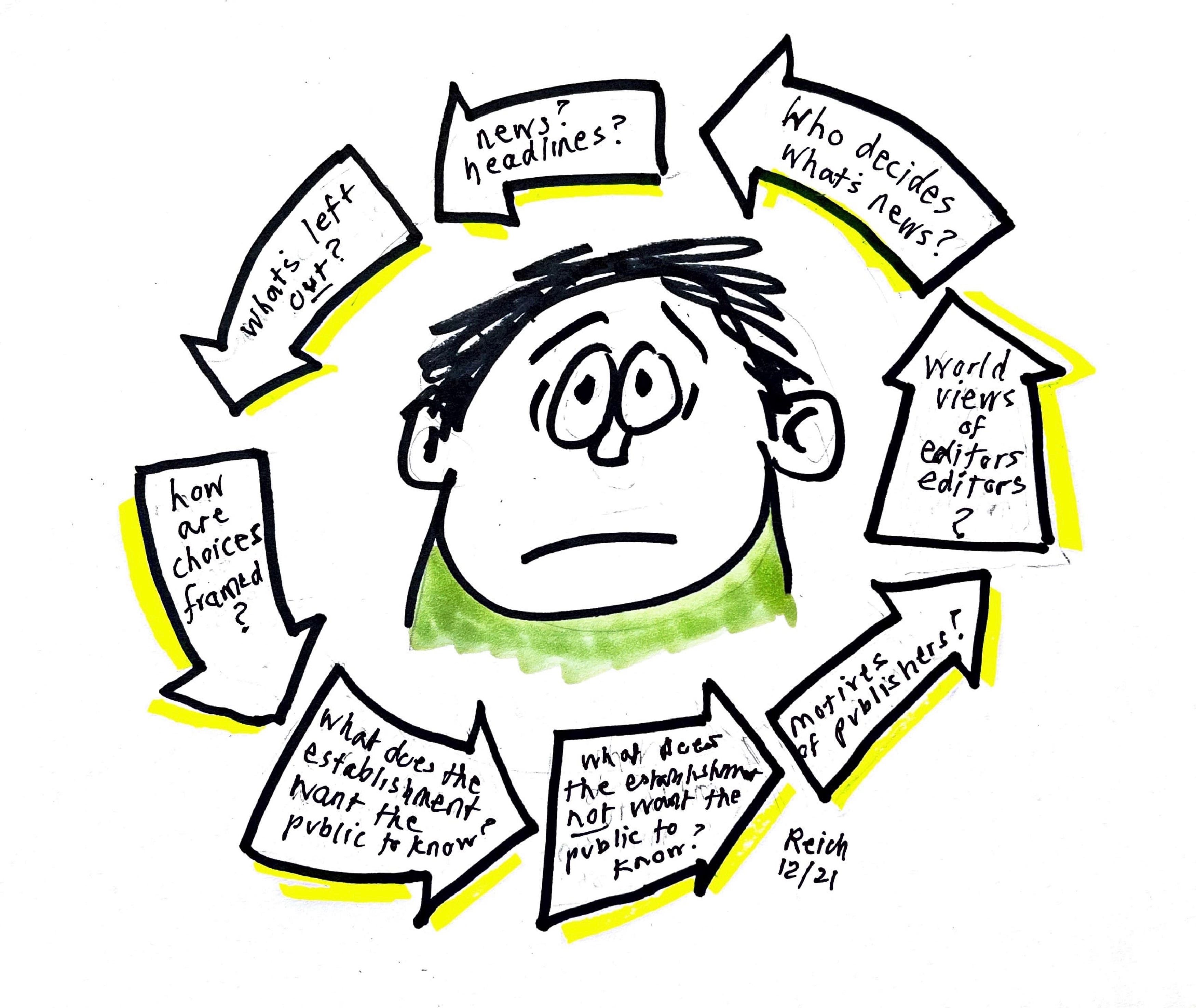



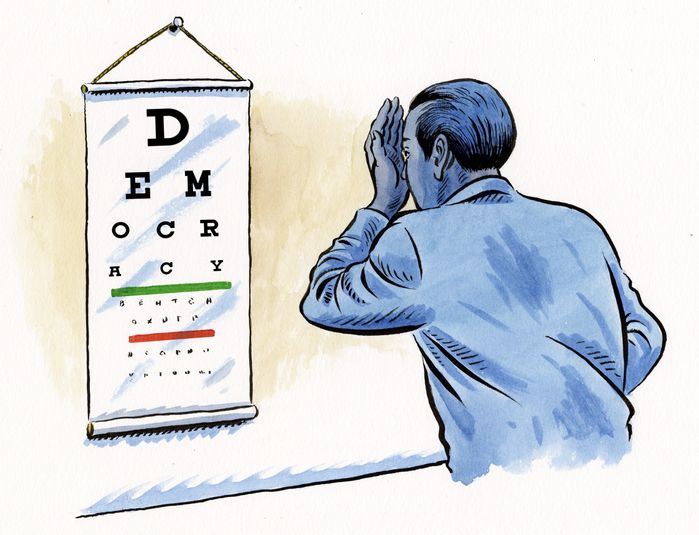

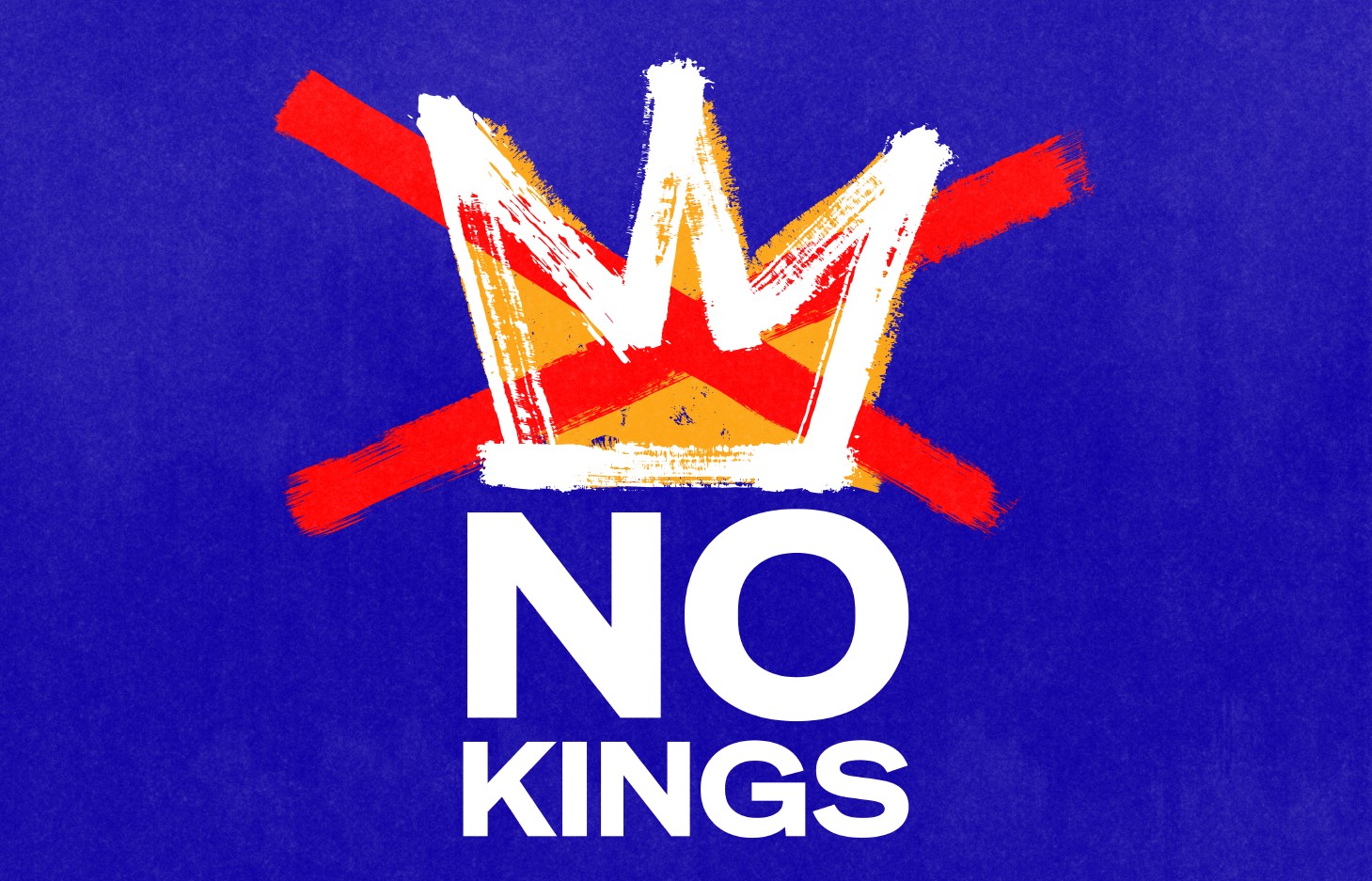


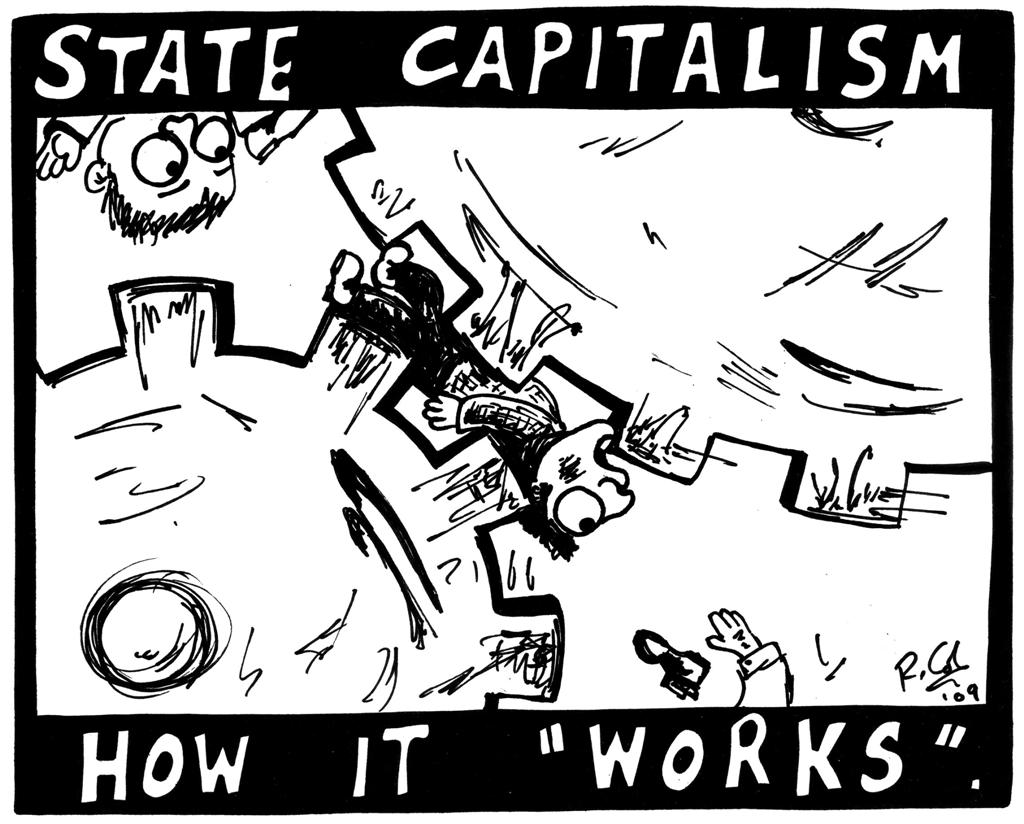







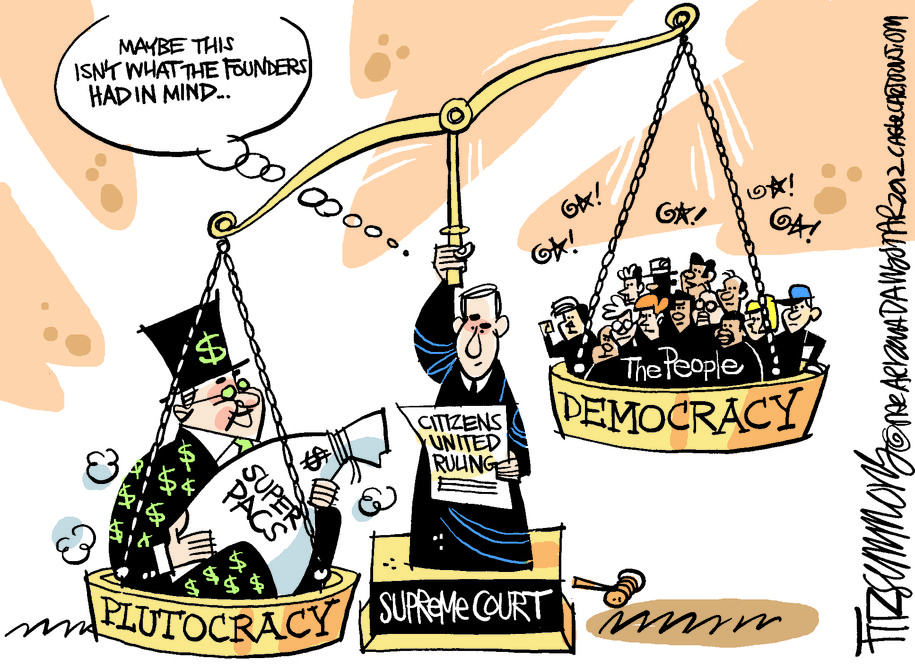






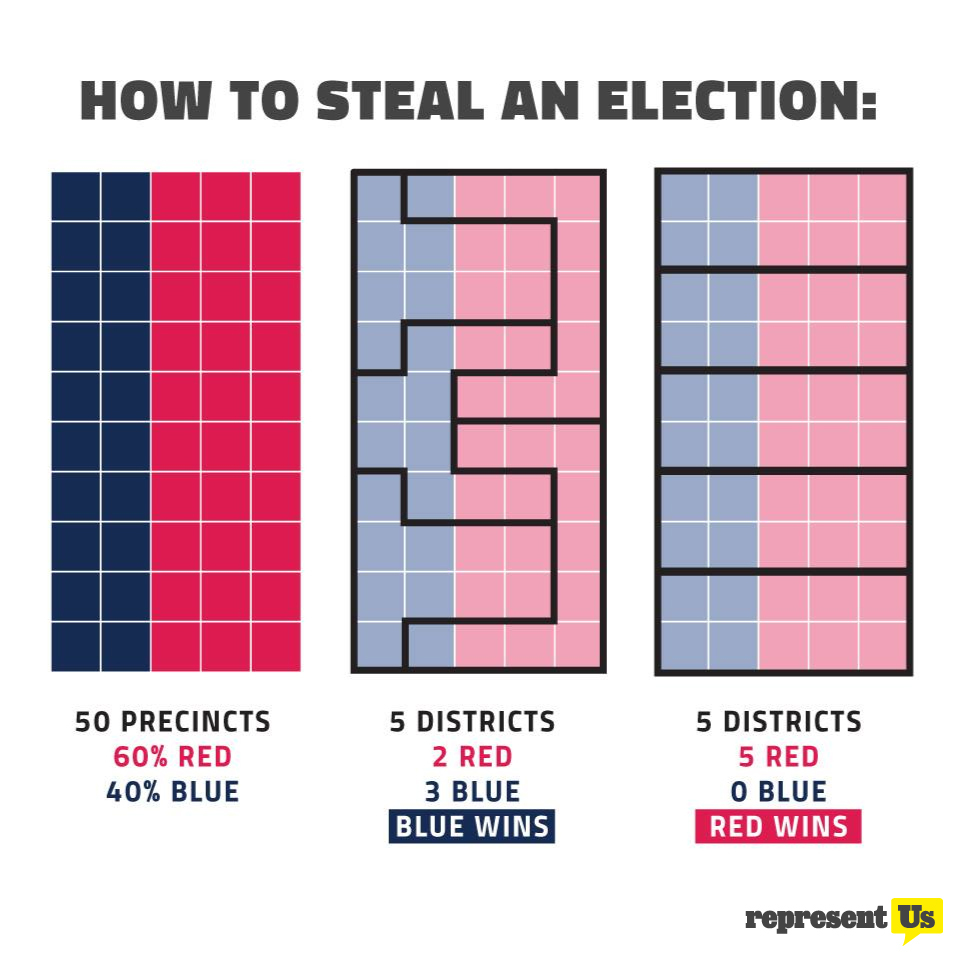



 Lippitt's Policy and Politics Blog