WHAT EVERYDAY AMERICANS WANT FROM GOVERNMENT Part 2

Many Americans are worried about the cost of living. Government policies can reduce or control the costs of everyday expenses. If Democrats or others want to garner support and votes, they should aggressively promote such policies. Some examples are presented below.

(Note: If you find a post too long to read, please just skim the bolded portions. Thanks for reading my blog!)

(Note: Please follow me and get notices of my blog posts on Bluesky at: @jalippitt.bsky.social. Thanks!)

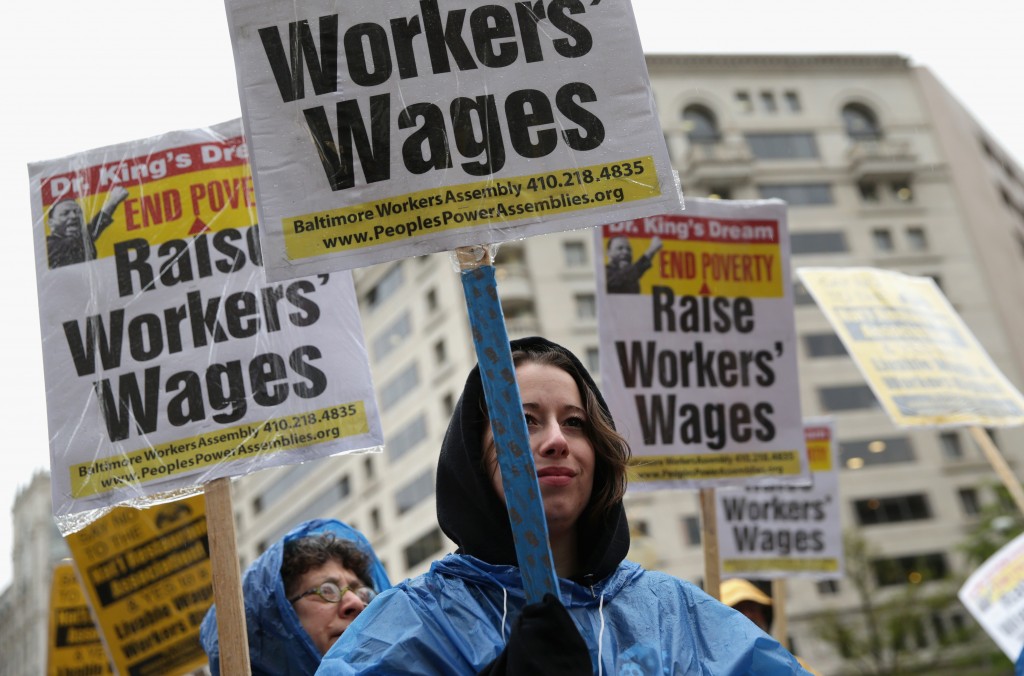
Many Americans are worried about the cost of living. The affordability of the cost of living has two components: 1) the amount of money people make and the benefits they get from their employer, and 2) the costs of everyday expenses from food to housing to health care to utilities. If Democrats, or another party such as the Working Families Party, want to garner support and votes, they should focus on the affordability of day-to-day life. They need to promote a vision of and policies for a more economically secure future for working Americans. This means embracing economic populism, including reducing economic inequality. [1]

This previous post discussed the first component, workers’ compensation. This post discusses ways public policies and government action can reduce, or at least control increases in, the cost of living, i.e., inflation. Over the last 45 years, the cost of everyday necessities has increased faster than workers’ wages, including for food, housing, child care, utilities, health care, and medicine.

Here’s an overview of some government policies that would reduce or control the cost of living. [2]

  • Rescind Trump’s tariffs. As even President Trump is now acknowledging, his tariffs have and will drive up consumer prices. He recently rescinded some tariffs on beef, coffee, tea, fruit and fruit juice, cocoa, spices, tomatoes and other commodities. He acknowledged that his tariffs may have contributed to higher prices at the supermarket. Since the first day that Trump announced his intention to impose tariffs, every reputable economist has stated that tariffs increase prices for consumers. (Note: Tariffs can be good policies if implemented as part of well-planned, comprehensive jobs or national security policies. However, Trump’s tariffs clearly do not meet this criterion.)
  • Enforce antitrust laws. Forty-five years of failure by the federal government to enforce antitrust laws (except for efforts to revitalize them under President Biden) have allowed the emergence of huge companies with monopolistic powers. This has harmed everyday Americans in many ways as outlined below. If Democrats or others, such as the Working Families Party, want to attract support and voters, they should unequivocally call out these huge companies and their oligarchic executives and investors for their greed and monopolistic behavior. This does mean that Democrats will have to stop cozying up to the oligarchs to get campaign donations.

Stop price gouging. Monopolistic or near monopolistic size allows companies to raise prices on consumers who have few if any options. In the short term, governments should implement windfall profits taxes and/or price controls to stop price gouging. In the longer term, governments should enforce antitrust laws and break up or impose very large fines on companies that engage in price gouging and other unfair, monopolistic business practices. This applies to a wide range of consumer goods and services from food to rent to air travel to health care to drug prices. It also applies to the big tech companies, Amazon, Meta (Facebook, Instagram, etc.), Alphabet (Google), Microsoft, and Apple.

Restore competition. By stopping mergers and acquisitions that lead to monopolistic power, and by breaking up monopolistic companies, competition could be restored to consumer markets. Without competition, prices go up and quality goes down, and consumers suffer.

Restoring competition would also reduce employers’ power over workers. Although this wouldn’t reduce costs, it would improve workers’ compensation and therefore the affordability of the cost of living. Employers’ power over workers has grown in multiple ways. The huge and monopolistic size of many employers limits the options for employees and, along with globalization, has allowed employers to undermine unions and cut workers’ compensation. Furthermore, many employers, including some fast-food chains, require employees to sign non-compete employment contracts that limit their ability to move to other employers for better jobs and better pay. President Biden took steps to ban non-compete agreements, but President Trump stopped this effort.

  • Stop privatization of public services and public goods. Privatization is often sold to the public with claims that the private sector will deliver cheaper and better services or products. This rarely turns out to be true. Once the profit incentive is introduced, prices are likely to go up and quality is likely to go down.

Nowhere is this clearer than in our health care system. The privatized system in the U.S. is the costliest system in any of the well-off countries of the world and its outcomes are among the worst. All elements of the system are putting profits before patients. Medicare is much more efficient than any of the private health insurance companies. The health care industry vehemently resisted including a public, Medicare-like option in the Affordable Care Act (ACA) because it knew the public option would deliver better care at lower prices. (See this previous post for more information on the failures of for-profit health care.)

Numerous other examples exist. Rail transportation in the rest of the world is more efficient, dependable, and convenient than the privatized system in the U.S. Internet service is cheaper and faster in Europe than in the U.S. (I’ve been criticizing privatization since way back in 2012. See this previous post and this one for more information.)

  • Stop the abuse of patents. Pharmaceutical companies abuse patent laws to keep cheaper generic versions of drugs from being introduced to the market. Classic cases of this are insulin and EpiPens. (See this previous post for more information.)
  • Enhance regulation. Regulations and enforcement of regulations need to be strengthened to protect consumers from fraud, price gouging, and unsafe food and products. Particularly where large companies have monopolistic power, strong regulation is needed. For example, millions of homeowners lost their homes in the aftermath of the 2008 financial crisis because large financial institutions were pushing fraudulent mortgages. The Consumer Financial Protection Bureau (CFPB) was created to protect consumers from financial fraud and abusive practices, such as exorbitant late and overdraft fees. The Trump administration is trying to eliminate the CFPB so big financial institutions can maximize their profits by ripping off consumers. (See this previous post for more information on the Trump administration’s weakening of regulations and the scams that are likely to be the result.)

My next post will discuss economic insecurity and inequality and the government policies that are needed to address them.


[1]      Reich, R., 11/3/25, “What the Democrats must do. Now!” (https://robertreich.substack.com/p/what-the-democrats-must-do-now) /

[2]      Kuttner, R., 11/12/25, “A blessing in disguise?” Today on The American Prospect (https://americanprospect.bluelena.io/index.php?action=social&chash=9a32ff36c65e8ba30915a21b7bd76506.3779&s=6009966078bda0f5 056f960a346ead8a

STANDING UP TO TRUMP AND CORPORATE OLIGARCHS

Oligarchy Definition A small group of people having formal and informal power based on (1)wealth; (2) connections; and (3) privilege.

American oligarchs have spent 45 years and billions of dollars undermining democracy and skewing government policy in their favor. We need to stand up and make Trump and corporate CEOs understand that the long-term success of their companies and our country depend on the trust and support of us, their customers and voters. We did this in a big way with the reaction to media executives pulling the Jimmy Kimmel show off the air. We need to do it again and again.

SPECIAL NOTE: We need millions of Americans at the No Kings protests on October 18 in defense of democracy. Please support this however you can. You can find an event near you here.

(Note: If you find a post too long to read, please just skim the bolded portions. Thanks for reading my blog!)

(Note: Please follow me and get notices of my blog posts on Bluesky at: @jalippitt.bsky.social. Thanks!)

American oligarchs, i.e., wealthy individuals and their large corporations, have spent at least the last 45 years undermining democracy and skewing government policy in their favor by: (See this previous post for more details.)

  • Increasing, coordinating, refining, and hiding their spending of billions of dollars on election campaigns. They spent over $10 billion in the 2023-24 federal election cycle alone.
  • Spending billions of dollars on lobbying the federal government, currently to the tune of $4 billion a year.
  • Moving tens of thousands of people through the revolving door between jobs in their corporations and in the government agencies that regulate them.

These efforts have been very successful; their return on investment has been extraordinary. Trump and his anti-democratic, authoritarian, and fascist administration are the culmination of this work that has undermined our democracy and skewed government policies and our economy to favor the oligarchs. Examples of skewed government policies include the following.

The individual income tax rates on oligarchs’ incomes have been cut from 70% in 1980 and 92% in the 1950s to 37% today. Income taxes on income from wealth, i.e., long-term capital gains, have been cut from 28% in 1980 to 15% in 2012 but are back up to 24% today. Note that the tax rate on income from wealth (i.e., unearned income) has always been much lower than the tax rate on income from work (i.e., earned income). This benefits the oligarchs and entrenches and exacerbates wealth inequality. Furthermore, increases in wealth that aren’t cashed in aren’t taxed at all. As a result, the richest billionaires pay about 3.4% in income tax on their incomes while the average American pays 14.5%.

Corporate income tax rates have also been cut from 46% in 1980 to 21% today. Moreover, tax loopholes allow corporations many strategies to avoid taxes. In particular, multi-national corporations artificially shift profits to foreign countries with very low taxes. Corporations have also been allowed to move jobs to low-wage countries and to resist and undermine workers’ unions. Roughly one out of every three private sector workers was a union member in the 1950s; today it’s one out of every 15. [1]

Antitrust laws have basically been unenforced for the last 45 years. As a result, many sectors of the American economy are dominated by a few, large, monopolistic corporations. Reduced competition means corporations can raise prices, cut quality, and strong-arm employees. Deregulation has left consumers vulnerable to poor products and frustrating services.

All of this has led to 45 years of dramatically growing income and wealth inequality. The 50% of Americans with the least wealth now, collectively, have only 2.5% of national wealth (less than $23,000 each on average). The wealthiest 1% of Americans own 33% of national wealth (about $15 million each on average). Pay for CEOs is now 1,094% higher than in 1978, while a typical workers’ pay has only increased 26%. As a result, the CEO-to-worker pay ratio grew from 31 times a typical worker’s pay in 1978 to 281 times in 2024. [2] And CEOs now believe that their only responsibility is to maximize returns for shareholders; other stakeholders, including workers, customers, and communities, are not a matter for concern.

The oligarch’s successful assault on our democracy and public policies has resulted in many Americans losing their economic security, as well as their trust in government and democracy. Many of them don’t feel it’s worth voting because they don’t believe it’s going to make any difference. They believe government is controlled by special interests working to benefit themselves. These Americans are angry and fearful about the future. Therefore, they are willing to believe the lies that Trump tells them about bringing back their good jobs and wages. And they are willing to overlook his undermining of democracy.

We, American consumers, need to make corporate CEOs understand that the long-term success of their companies depends on the trust and support of us, their customers. We did this in a big way with the reaction to media executives pulling the Jimmy Kimmel show off the air in response to President Trump’s displeasure with him. We’ll need to do this again and again to wake up CEOs and to get them to focus on the long-term instead of pleasing the would-be dictator in the White House in the short-term.

The spinelessness of corporate CEOs in the face of Trump makes it clear that they “are poorly suited to be custodians of democracy or counterweights to presidential overreach.” [3]Capitalism is compatible with democracy only if democracy is in the driver’s seat. … [Otherwise] It fuels despotism.” [4]

We, the American public, consumers and workers, must stand up for democracy and for its regulation of corporations and capitalism. Otherwise, we’ll continue down the slippery slope to oligarchy, authoritarianism, and fascism. We can stop this slide, as we did in the Jimmy Kimmel case.

I look forward to seeing millions of Americans engaged in the No Kings protests on October 18 and in many, many other smaller protests daily. Thank you for all you’re doing! Please keep up this great and important work to save our democracy!

Find an October 18th No Kings event near you here and participate and support it in whatever way you can.

For lots of current good news see Jess Craven’s Chop Wood Carry Water blog here.


[1]      Economic Policy Institute, retrieved from the Internet 9/29/25, “State of Working America: Unions,” (https://data.epi.org/unions/union_members_historical/line/year/national/percent_union_members_historical/overall)

[2]      Gould, E., Bivens, J., & Kandra, J., 9/25/25, “CEO pay increased in 2024 and is now 281 times that of the typical worker,” Economic Policy Institute (https://www.epi.org/blog/ceo-pay-increased-in-2024-and-is-now-281-times-that-of-the-typical-worker-new-epi-landing-page-has-all-the-details/)

[3]      Edelman, L., 9/23/25, “Why corporate leaders are appeasing Trump,” The Boston Globe

[4]      Reich, R., 9/26/25, “Why are we so polarized? Why is democracy in such peril?” Blog post (https://robertreich.substack.com/p/why-are-we-so-polarized)