CRYPTO AND AI PRESENT ECONOMIC RISKS

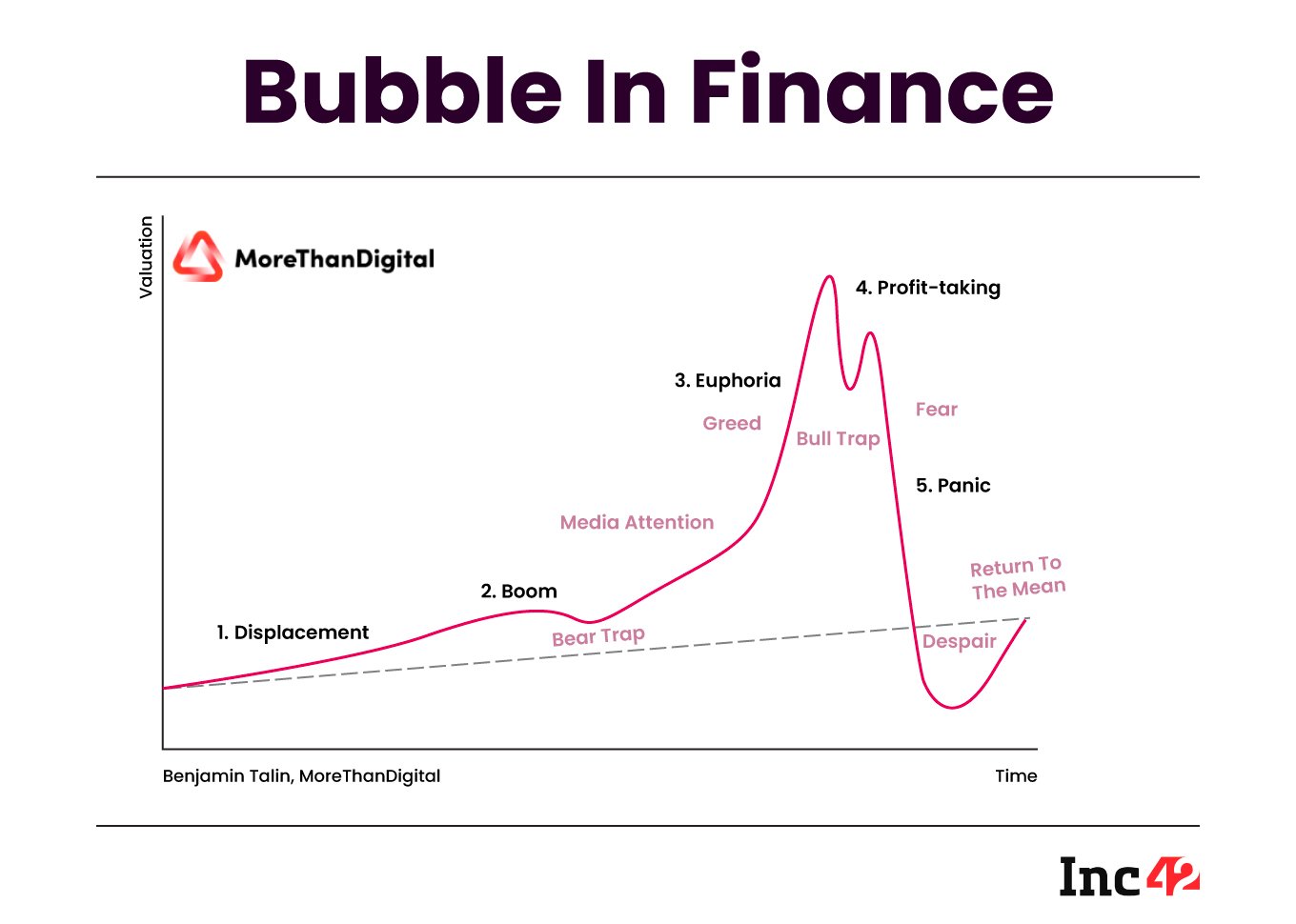
The crytpo and AI industries present serious risks to the U.S. economy. They may be economic bubbles whose bursting would have serious negative effects. Crypto is a Ponzi scheme. Both industries pose serious threats to the environment and are vulnerable to China’s control of rare earth minerals.

The crytpo and AI industries present serious risks to the U.S. economy. Crypto and AI may be economic bubbles that have the potential to burst with serious negative effects on the whole U.S. economy. Crypto is truly a Ponzi scheme. Both industries pose serious threats to the environment and are vulnerable to China’s dominance of rare earth minerals mining, processing, and subsequent use in manufacturing.

(Note: If you find a post too long to read, please just skim the bolded portions. Thanks for reading my blog!)

(Note: Please follow me and get notices of my blog posts on Bluesky at: @jalippitt.bsky.social. Thanks!)

The crytpo and AI industries present serious risks to the U.S. economy. Both have grown quickly and dramatically. Both are supported by risky financing and high levels of investor speculation. Both are industries that many people and investors do not understand well and that are largely unregulated, especially under the Trump administration. [1] (I’m not an investment advisor and claim no special knowledge, but, at best, investments in these industries are likely to be quite volatile. At worst, they have a quite high risk of loss.)

Crypto and AI may be economic bubbles. If, or perhaps when, they burst, they have the potential to have serious negative effects on the whole U.S. economy. They have features that are reminiscent of the housing and mortgage bubble of 2008 whose bursting created the Great Recession and almost brought down the whole U.S. economy (which was saved from far worse by massive government bailouts for large financial firms). Before that, there were the dot-com bubble bursting in the late 1990s and the savings and loan housing and mortgage bubble bursting in the late 1980s and early 1990s. Another historical economic bubble bursting was the 1929 stock market crash.

Crypto is truly a Ponzi scheme. There is no underlying asset. The only thing supporting the value of any cryptocurrency is someone else’s desire to buy it. Its only real value is facilitating get rich quick schemes, money laundering, and money transfers among criminals. The cryptocurrency industry is trying to transform its image from that of a scandal-ridden and crime-enabling financial technology (aka fintech) experiment into that of a mainstream financial and commercial investment and transaction vehicle. The Trump administration is doing everything it can to support this perception transformation without doing anything to actually clean up the industry – and while Trump is enriching himself, his family, and his cronies with crypto investment schemes.

The crypto industry’s nine-month stock market rally has been fueled by optimism due to Trump’s presidency and support, as well as by a shaky financial foundation built on huge amounts of borrowed money. On October 10, Trump’s statement about big tariffs on China sent the crypto stocks plummeting, 12% to 30%, reducing the value of crypto assets by $19 billion. (See previous posts on the risks of the crypto industry here and here.)

The crypto industry is dependent on lots of computer processing and massive amounts of electricity. The associated risks will be discussed more below in an examination of the AI industry, which shares these vulnerabilities.

The threats and promises of the artificial intelligence (AI) industry are widely discussed and debated. Its appropriation of copyrighted information without compensation or attribution, both to train its software as well as to answer questions posed to it, is the subject of multiple copyright infringement lawsuits. Its ability to create and disseminate misinformation and disinformation, including by amplifying it via fraudulent chatbots on social media, are widely recognized as a threat to an accurately informed public, and therefore to elections and societal cohesion, among other things. It’s also recognized as a threat to workers by automating jobs and displacing human workers. Its chatbots that serve as personal companions or mental health counselors seem to help some people and harm others. Their overall value and safety are widely debated.

Perhaps the most immediate threats of the AI industry are to our economy and the environment. The stock market values of AI-involved companies have soared based not on profits or even revenue, but on hype and hope. This includes Amazon, Google, Meta (parent of Facebook, Instagram, etc.), Microsoft, Nvidia (a computer chip maker), OpenAI, Oracle, and xAI (a Musk company). AI-related companies account for about 75% of the increase in stock market values this year, yet 95% of these companies aren’t making profits from their AI activities. The Bank of England recently warned that AI stock values may be overvalued and at risk of a sudden loss of value that could have global effects.

The building of AI-related infrastructure, including chip manufacturing and data and computing center construction, has represented 90% of capital expenditures in the U.S. A good portion of this is taxpayer subsidized, not just through federal tax breaks, but hundreds of millions of dollars in state and local tax breaks for building facilities in at least 37 states. And, as with the crypto industry, a good part of this growth is built on a shaky foundation of borrowed money.

The data and computing centers required by both AI and crypto need large amounts of electricity to run them and large amounts of water to cool the computers. The availability of both electricity and water may be a constraint and will require large investments in public infrastructure, e.g., electricity generation and distribution. For example, as you may have heard, Microsoft is planning to reopen a Three Mile Island nuclear power reactor to provide electricity for its data processing centers. (As you may remember, Three Mile Island was the site of the most serious accident in the U.S. nuclear power industry, a partial reactor meltdown in 1979.)

Another vulnerability of both the AI and crypto industries is the need for chips and other electronics whose manufacture requires rare earth minerals. China is responsible for 70% of the mining of rare earth minerals, 90% of their processing, and 93% of the manufacturing of a key product. This is why Trump’s threat of tariffs on China and a possible trade war with China dramatically affected AI and crypto stocks. If China were to deny the U.S. AI and crypto industries access to rare earth minerals or the products that use them, or even increase their prices significantly, it would be a very serious blow to the companies. This in turn would be a very serious blow to the whole U.S. economy. [2]

The Trump administration has further weakened or removed even the weak regulations and restrictions that were in place on crypto and AI. Moreover, it has been opening the door to investments in crypto and AI by pension funds, individuals’ retirement and savings accounts (e.g., 401(k)s), and banks and financial institutions. This exacerbates the negative impacts of a serious downturn in either industry.

Economic bubbles typically make a few people rich, sometimes very rich, but many people lose money, sometimes lots of money, when the bubble bursts. If the overall threat to the economy is bad enough, the government will step in and provide a bailout, usually to the larger entities that often were at least partially responsible for the bubble. However, millions of Americans could lose their jobs, and, if they or their pension plans had been lured into investing in crypto, lose significant chunks of their savings.

For lots of good news see Jess Craven’s Chop Wood Carry Water blog here and here.


[1]      Reich, R., 10/14/25, “Beware the oligarchs’ two bubbles,” Blog post (https://robertreich.substack.com/p/beware-the-oligarchs-ai-bubble)

[2]      Dayen, D., 10/14/25, “Why China can collapse the U.S. with one decree,” The American Prospect (https://prospect.org/2025/10/14/why-china-can-collapse-the-u-s-with-one-decree/)

BEWARE! SCAMS ARE COMING YOUR WAY! PART 2

Consumers beware; you’ll need to up your vigilance to avoid scams. The Trump administration is weakening consumer protections. From the cryptocurrency industry to cyber security to Social Security and health care, weak oversight and regulation will lead to consumer rip-offs and outright fraud.

Consumers beware; scams of all sorts are coming your way. The Trump administration is weakening or eliminating agencies and regulations that protect consumers. From the cryptocurrency industry to cyber security to Social Security and health care, weak oversight and regulation will lead to consumer rip-offs and outright fraud. You will need to up your level of vigilance to avoid getting scammed.

(Note: If you find a post too long to read, please just skim the bolded portions. Thanks for reading my blog!)

(Note: Please follow me and get notices of my blog posts on Bluesky at: @jalippitt.bsky.social. Thanks!)

Consumers beware; scams of all sorts are coming your way. The Trump administration is weakening or eliminating agencies and regulations that protect consumers, so it’s an open field for unscrupulous behavior by businesses and fraudsters. From the cryptocurrency industry to cyber security to Social Security and health care, weak oversight and regulation will lead to consumer rip-offs and outright fraud. (See this previous post focused on financial and other corporate scamming.)

The cryptocurrency industry is trying to transform its image from that of a scandal-ridden and crime-enabling financial technology (aka fintech) experiment into that of a mainstream financial and commercial investment and transaction vehicle. Don’t let yourself be fooled. For example, Coinbase, founded in 2012 and now the largest U.S.-based cryptocurrency exchange as well as the world’s biggest bitcoin custodian, has had over 8,000 consumer complaints filed against it with the Consumer Financial Protection Bureau (CFPB). [1]

The crypto industry spent well over $100 million in the last elections, including donations to Trump-affiliated entities, to elect pro-crypto politicians and to instill fear into others who might oppose the industry. It has also spent millions on a lobbying campaign to build bipartisan support for the Republican-led pro-crypto bills and to obtain a favorable regulatory environment.

Despite the crypto industry’s record of fraud, facilitating criminal activity, and extreme volatility, the Trump administration, through an executive order, is allowing investments in it by retirement plans, corporations (including banks!), and the government itself. [2] Furthermore, the Trump administration has eliminated crypto crime units at the Securities and Exchange Commission (SEC), the Department of Justice (DOJ), and in other government agencies. It has ended numerous investigations and criminal prosecutions of crypto industry entities. These actions effectively facilitate money laundering and criminal activity. [3]

Three bills have been introduced in Congress ostensibly to regulate the industry but appear more focused on giving it legitimacy and a government seal of approval. One of the three bills, the so-called Genius Act has passed and become law. It established a regulatory framework for a piece of the crypto industry called stablecoins. This type of cryptocurrency is linked to the value of the U.S. dollar which is supposed to prevent the volatility that occurs with other cryptocurrencies. Most, but not all, Democrats opposed this bill due to concerns that it lacked strong provisions to prevent fraud and money laundering. Furthermore, it does nothing to stop President Trump, his family, and his associates from profiting from cryptocurrency activities that allow other people and entities to effectively put money in Trump’s and his affiliates’ pockets. [4]

One of the other bills, the so-called Clarity Act would create a broader crypto regulatory framework. The third bill would ban the Federal Reserve from creating its own cryptocurrency that would compete with private cryptocurrencies and presumably reduce the profitability of the private crypto industry. So, beware of anything crypto industry related that comes your way.

In a variety of other arenas, the Trump administration is also weakening consumer protections.

Having effectively eliminated the Consumer Financial Protection Bureau (CFPB), the Trump administration is now considering weakening the Consumer Product Safety Commission (CPSC) that protects consumers from dangerous non-financial products.

The Trump administration has dramatically weakened some of the federal government’s cyber security agencies. So, be ever more alert for cyber crime and cyber scams. It is taking FBI agents away from their specialties such as combating hackers (as well as terrorism, espionage, public corruption, white-collar crime, civil rights, child sex crime, etc.) to have them patrol the streets of D.C. where crime is at its lowest level in years. Moreover, a map of where FBI agents and troops have been deployed makes it very clear they are not really there to combat crime; they are there to be seen and to make a statement. [5]

The Trump administration is cutting staffing and services at the Social Security Administration, while having it send out misleading information. (See this previous post for more detail.) This will make it harder for seniors and others to receive the benefits they’re owed and to get accurate information. This will create fertile ground for scammers to step in. Be on your guard.

Similarly, cuts to the health care system and weakened oversight of privatized Medicare Advantage Plans will open the door to scammers. For example, 17% of Americans now report they are using buy now, pay later (BNPL) programs to pay for medical or dental care. [6] BNPL programs not infrequently involve terms and costs that are not well explained to consumers and, therefore, result in financial abuse.

Please contact your members of Congress and tell them you support strong regulation of the crypto industry to protect consumers and to prevent crime and money laundering. Ask them to oppose the two crypto industry bills as they are currently written. Ask them to stand up for strong consumer protections from the CFPB, CPSC, and cyber security agencies. Ask them to protect seniors and others from the undermining of Social Security and our health care system.

You can find contact information for your US Representative at http://www.house.gov/representatives/find/ and for your US Senators at http://www.senate.gov/general/contact_information/senators_cfm.cfm.

By the way, there is lots of good news. See Jess Craven’s latest good news post. It includes California Governor Newsom fighting fire with fire on the gerrymandering front, numerous judges’ decisions, protests all across the country, conservative economists opposing Trump’s nominee to run the Bureau of Labor Statistics, Ohio’s Sherrod Brown deciding to run for U.S. Senate again in 2026, and much more.


[1]      Silverman, J., 5/27/25, “Three coin monte,” The American Prospect (https://prospect.org/power/2025-05-27-three-coin-monte-crypto-regulation/)

[2]      Johnson, J., 8/7/25, “‘Disaster in the making’: Trump to open 401(k)s to crypto, private equity vultures,” Common Dreams (https://www.commondreams.org/news/trump-private-equity-401k)

[3]      Silverman, J., 5/27/25, see above

[4]      Gold, M., 7/18/25, “Here’s how Congress is wading into crypto regulation,” The Boston Globe from the New York Times

[5]      Cox Richardson, H., 8/19/25, “Letters from an American,” (https://heathercoxrichardson.substack.com/p/august-19-2025)

[6]      Corbett, J., 8/6/25, “‘Gouging’: US health insurance giants raked in over $71 billion in profits last year,” Common Dreams (https://www.commondreams.org/news/health-insurance-profits)