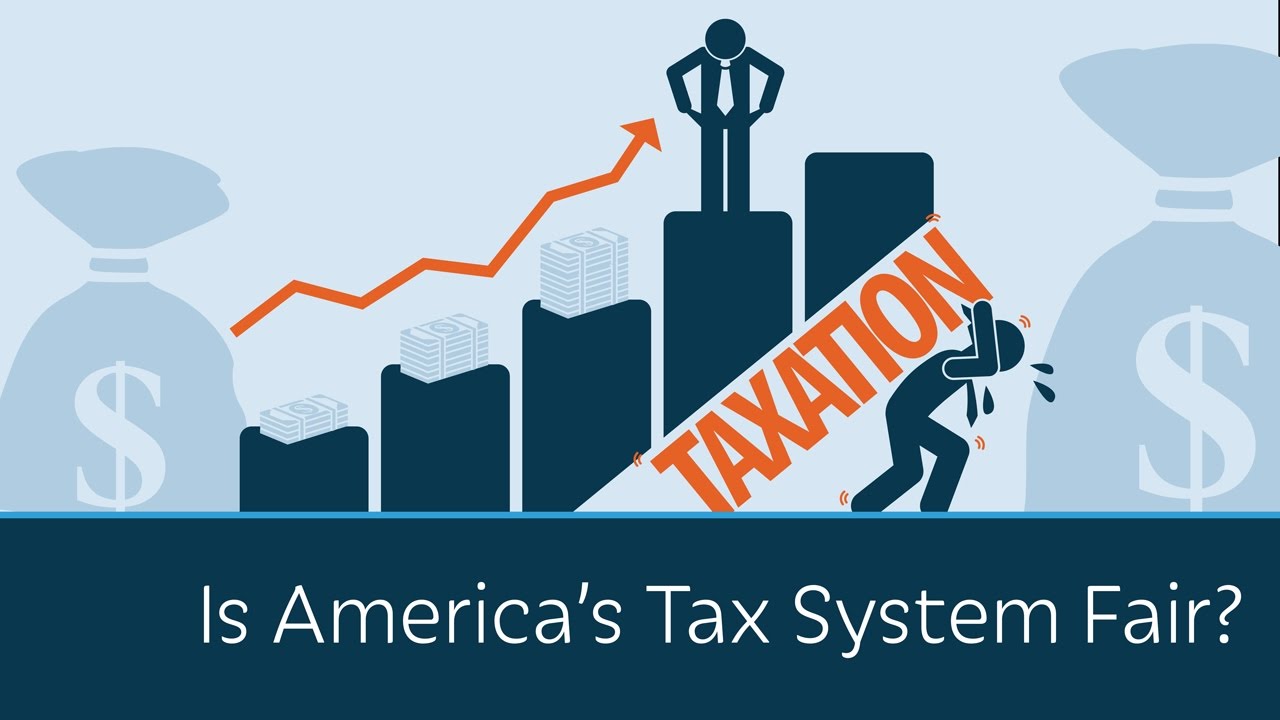
FAIR TAXATION IS ESSENTIAL FOR DEMOCRACY

Democracy requires a government that fosters people’s freedom. Its resources must come from fair taxation. Oligarchs cut taxes and undermine democracy to consolidate their power. Economic inequality has bred discontent and distrust of government and democracy, an opening for authoritarianism.

Democracy requires a government that fosters people’s freedom based on their experiencing safety, economic security, liberty, and happiness. To do these things, it must have the resources that come from taxation. The taxes must be perceived as fair and government perceived as reasonably efficient at fulfilling its role. High and growing economic inequality has bred discontent and distrust of government – and of democracy. This has opened the door for demagogues and acceptance of authoritarianism.

(Note: If you find a post too long to read, please just skim the bolded portions. Thanks for reading my blog!)

(Note: Please follow me and get notices of my blog posts on Bluesky at: @jalippitt.bsky.social. Thanks!)

The American democracy, as announced in the Declaration of Independence, would ensure the right of the people to “Life, Liberty and the pursuit of Happiness.” The government it envisioned would “effect their Safety and Happiness.” The preamble to the Constitution expands on these principles and states that “We the People [are forming a government to] establish Justice, insure domestic Tranquility, provide for the common defence, promote the general Welfare, and secure the Blessings of Liberty.”

For a government to do these things, it must have the necessary resources. Taxes are what provide government with its resources to honor these principles and achieve these goals. They are the life blood of a democratic government of, by, and for the people. As Deval Patrick, former Governor of Massachusetts put it, “Taxes are the dues we pay to live in a civilized society.”

Historian Heather Cox Richardson had a 42-minute conversation with Dr. Vanessa Williamson of the Brookings Institution about the relationship between taxes and democracy, based on Williamson’s 2025 book, The Price of Democracy: The Revolutionary Power of Taxation in American History. I strongly encourage you to listen to all or part of it, however, I’ll share a summary of and commentary on this conversation here. (Williamson gives a 1-minute summary of the relationship between taxes and democracy at the Patriotic Millionaires conference Money. Message. Millionaires.)

American history indicates that the people are willing to pay taxes if they are perceived to be fair and the government is fostering their freedom based on their experiencing safety, economic security (aka general welfare), liberty (aka justice under the rule of law), and happiness.

The public wants government to do and provide things often referred to as public goods that include schools, roads, law and order, clean air and water, national parks, and a safety net for when things in life go wrong. These things allow people the freedom to pursue their dreams and achieve their goals. The effectiveness of governments and, therefore, their support by the people, comes from their ability to act and get things done. Revenues from taxes are, of course, essential to giving governments the capacity and power to act and deliver these public goods.

It’s important that taxes be perceived as fair and government perceived as reasonably efficient at fulfilling its role. That way the people feel they’re getting a fair return on their investment. The American Revolution occurred, in part, because of taxation without representation and the perception that the government wasn’t delivering what the people wanted. However, the Boston Tea Party was actually a protest over the King giving the East India Tea Company, a huge corporation in its day, a monopoly on the sale of tea in the colonies.

Paying taxes means that taxpayers have a personal stake in their government (aka skin in the game) and, therefore, in participating in democracy, in elections, and with their representatives in government. It’s everyone’s civic duty to make their contribution to democracy by paying their fair share of taxes and being engaged to have their say in the governing process. When governments are capable of and accountable for acting in the interests of the people (aka for the public good), this reinforces democracy and the connection between taxation and representation.

In the 1980s, the Republicans, President Reagan, and the American oligarchy (although we didn’t call them that at the time) promoted efforts to undermine the relationship among taxation, representation, and democracy. They pushed the notion that government wasn’t efficient, that taxes were bad, and that they could cut taxes and still deliver the public goods that people wanted. Basically, they promised a free lunch. They claimed their tax cuts, which disproportionately benefited wealthy individuals and corporations, would “trickle down” to everyone because the economy would boom. Actual experience, with multiple tax cuts over the last 45 years, has definitively shown that this does not happen. The results of their individual and corporate tax cuts have been sharply growing economic inequality and huge, monopolistic corporations.

High and growing economic inequality, along with the loss of economic security and upward mobility for working Americans, has bred discontent and distrust of government – and of democracy. This has opened the door for demagogues and acceptance of authoritarianism.

Throughout American history, oligarchs, from southern plantation owners to the robber barons to today’s corporate executives and investors (including private equity financiers), have worked to cut taxes and undermine a fair tax system. Not only does this make them wealthier, but it also undermines the power of government and democracy to stand up for the people and constrain the oligarchs’ power. If the government can’t and doesn’t deliver the public goods the public wants, the people won’t support it. Oligarchs want to shrink government, make it ineffective, and as one of them said, make it small enough to drown in a bathtub by starving it of the tax revenue it needs to get things done for the people. This undermines support for the government and faith in democracy, creating a reinforcing destructive cycle for government of, by, and for the people while cementing the oligarchs’ power.

Oligarchs want their power to be uncontested and unconstrained. They don’t want to be subject to government regulations or even the rule of law. They want to undermine the voice and representation of the people, as well as their faith in government and democracy. In addition to undermining a fair tax system, they use their wealth to effectively buy politicians and government policies. And they work to undermine voting and faith in elections.

My next post will discuss what a fair tax system would look like and what it will take to get there.

For lots of good news, see Jess Craven’s Chop Wood Carry Water blog’s most recent good news Sunday post here.
TACKLING THE AFFORDABILITY CRISIS Part 3

The U.S. affordability crisis is caused by low pay, high prices, economic inequality, and public policies skewed to favor wealthy individuals and corporations. Here are some strategies for tackling the affordability crisis. THANK YOU to all of you who participated in or supported a No Kings rally!

The U.S. affordability crisis is caused by low pay, high prices, economic inequality, and public policies skewed to favor wealthy individuals and corporations. Here are some strategies for tackling the affordability crisis.

THANK YOU to all of you who participated in or supported a No Kings rally (pro-democracy and anti-Trump) on March 28 in one way or another. Protests are a critically important strategy for tackling affordability and saving our democracy.

(Note: If you find a post too long to read, please just skim the bolded portions. Thanks for reading my blog!)

(Note: Please follow me and get notices of my blog posts on Bluesky at: @jalippitt.bsky.social. Thanks!)

The U.S. affordability crisis will require multiple strategies to effectively remedy it. My previous post discussed some longer-term strategies and an earlier post some short-term strategies. Here are some additional longer-term strategies. Generally, they require action by the federal government and, therefore, aren’t likely to happen soon.

Here are some strategies for addressing high prices:

  • Implement a windfall profits tax. The federal government should enact a windfall profits tax to stop price gouging by monopolistic businesses and by ones taking advantage of unusual market conditions. A windfall profits tax would tax away excessive growth in profits and, therefore, discourage price gouging because increased profits would be significantly reduced. However, if businesses continue to charge high prices and generate big profits, the tax revenue from the windfall profits tax could be used to provide assistance to working families facing economic hardship due to those increased prices.

    With the spike in fossil fuel prices due to the Iran war, fossil fuel companies are likely to realize windfall profits. Other businesses may use the smoke screen of high fuel and energy prices as a pretext for raising prices beyond what’s justifiable and, therefore, generate windfall profits. The federal government should be prepared to tax those windfall profits and take other actions to keep prices down and protect consumers. [1]
  • Regulate surveillance pricing. With AI and high-powered computers, businesses gather extensive data on consumers and can then engage in sophisticated and opaque price manipulation to maximize what a consumer will pay (aka personalized or surveillance pricing). Sellers should be required to post prices clearly and provide the same prices to all consumers. This will prevent price gouging, discrimination, and bait and switch strategies that rip off consumers. Junk fees and other abusive pricing techniques should be banned.

    For example, Uber and Lyft shouldn’t be allowed to charge you more (as they do) when your phone’s battery is low and they know you are in a hurry to book your ride. And landlords shouldn’t be allowed to collude through a large database of rental properties and AI analysis to jack up rents.

Here are some strategies for addressing affordability in general:

  • Eliminate the poverty wage business model. At least 16 U.S. billionaires owe their wealth to running corporations that pay workers poverty wages so the workers have to rely on taxpayer-funded public assistance to survive. Eight of these billionaires are associated with Walmart, two each with Amazon and Tyson Foods, and one each with Best Buy, Chipotle, Home Depot, and Starbucks. Large numbers of employees at these firms rely on Medicaid for health care and SNAP for food assistance. [2] Increasing the minimum wage would be one step in ending this public subsidy of corporate profits and shareholder wealth.
  • Reform the U.S. campaign finance system. Government policies are skewed to benefit the wealthy because of the way we allow election campaigns to be financed. The unlimited spending and lack of disclosure of who is contributing large sums of money have produced politicians and policies that favor the wealthy and their large corporations. This results in lower wages for workers and higher profits through higher prices that benefit shareholders and corporate executives. (See this previous post for more detail and ways to address this problem.)
  • Reduce economic inequality. Reducing economic inequality would tackle the affordability crisis in multiple ways. Extreme inequality destabilizes democracy, the economy, and society. Shifting some of the tax burden from low- and middle-class households to the wealthy could both reduces taxes for households struggling with affordability and increase the ability of the government to provide supports for working families such as affordable child care, paid family leave, housing subsidies, affordable health care, and a safety net when people hit hard times including unemployment benefits and food assistance. [3] Reduced economic inequality would also reduce the premiumization of the economy that drives prices up. (See this previous post for more detail.)

    Many proposals to tax the wealthy are being considered at the state and local levels, [4] as well as at the federal level. At the federal level, the Billionaires Income Tax Act would tax the increase in value of assets (e.g., stocks) even if they aren’t sold. There are also two different wealth tax proposals, one from Senator Warren (D-MA) and Representative Jayapal (D-WA), the Ultra-Millionaire Tax Act, and another from Senator Sanders (I-VT) and Representative Khanna (D-CA), the Make Billionaires Pay Their Fair Share Act. There is also the Working Americans’ Tax Cut Act that would shift the income tax burden from low- and moderate-income households to those with incomes of over $1 million.

    Reduced inequality benefits democracy and, when coupled with campaign finance reform, would produce politicians and policies that are more responsive to the needs of every day Americans, thereby addressing the affordability crisis. “Highly concentrated wealth leads naturally to concentrated political power.” [5] As Supreme Court Justice Louis Brandeis wrote almost 100 years ago, “We may have democracy, or we may have wealth concentrated in the hands of a few, but we can’t have both.”

Every politician, at every level, local, state, and federal, who’s serious about addressing the affordability crisis should embrace these strategies. I encourage you to contact your U.S. Representative and Senators and ask them to endorse them. You can find contact information for your US Representative at  http://www.house.gov/representatives/find/ and for your US Senators at http://www.senate.gov/general/contact_information/senators_cfm.cfm.

For lots of good news, see Jess Craven’s Chop Wood Carry Water blog’s most recent good news Sunday post here.


[1]      Reed, B, 3/25/26, “Dems call for prosecution of corporations using Trump’s illegal Iran war as cover to hike prices,” Common Dreams (https://www.commondreams.org/news/iran-war-price-gouging)

[2]      Anderson, S., & James, R., 3/25/26, “Meet the 16 billionaires making bank by underpaying their workers,” Inequality.org (https://inequality.org/article/billionaires-low-wage-workers/)

[3]      Meyerson, H., 12/3/25, “The $79 trillion heist,” The American Prospect (https://prospect.org/2025/12/03/79-trillion-heist-worker-pay/)

[4]      Meyerson, H., 3/12/26, “Democrats get serious about taxing the rich,” The American Prospect (https://prospect.org/2026/03/12/democrats-get-serious-taxing-rich/)

[5]      Bivens, J., 11/17/25, “Raising taxes on the ultrarich,” page 5, Economic Policy Institute (https://www.epi.org/publication/raising-taxes-on-the-ultrarich-a-necessary-first-step-to-restore-faith-in-american-democracy-and-the-public-sector/)