TACKLING THE AFFORDABILITY CRISIS Part 3

The U.S. affordability crisis is caused by low pay, high prices, economic inequality, and public policies skewed to favor wealthy individuals and corporations. Here are some strategies for tackling the affordability crisis. THANK YOU to all of you who participated in or supported a No Kings rally!

The U.S. affordability crisis is caused by low pay, high prices, economic inequality, and public policies skewed to favor wealthy individuals and corporations. Here are some strategies for tackling the affordability crisis.

THANK YOU to all of you who participated in or supported a No Kings rally (pro-democracy and anti-Trump) on March 28 in one way or another. Protests are a critically important strategy for tackling affordability and saving our democracy.

(Note: If you find a post too long to read, please just skim the bolded portions. Thanks for reading my blog!)

(Note: Please follow me and get notices of my blog posts on Bluesky at: @jalippitt.bsky.social. Thanks!)

The U.S. affordability crisis will require multiple strategies to effectively remedy it. My previous post discussed some longer-term strategies and an earlier post some short-term strategies. Here are some additional longer-term strategies. Generally, they require action by the federal government and, therefore, aren’t likely to happen soon.

Here are some strategies for addressing high prices:

  • Implement a windfall profits tax. The federal government should enact a windfall profits tax to stop price gouging by monopolistic businesses and by ones taking advantage of unusual market conditions. A windfall profits tax would tax away excessive growth in profits and, therefore, discourage price gouging because increased profits would be significantly reduced. However, if businesses continue to charge high prices and generate big profits, the tax revenue from the windfall profits tax could be used to provide assistance to working families facing economic hardship due to those increased prices.

    With the spike in fossil fuel prices due to the Iran war, fossil fuel companies are likely to realize windfall profits. Other businesses may use the smoke screen of high fuel and energy prices as a pretext for raising prices beyond what’s justifiable and, therefore, generate windfall profits. The federal government should be prepared to tax those windfall profits and take other actions to keep prices down and protect consumers. [1]
  • Regulate surveillance pricing. With AI and high-powered computers, businesses gather extensive data on consumers and can then engage in sophisticated and opaque price manipulation to maximize what a consumer will pay (aka personalized or surveillance pricing). Sellers should be required to post prices clearly and provide the same prices to all consumers. This will prevent price gouging, discrimination, and bait and switch strategies that rip off consumers. Junk fees and other abusive pricing techniques should be banned.

    For example, Uber and Lyft shouldn’t be allowed to charge you more (as they do) when your phone’s battery is low and they know you are in a hurry to book your ride. And landlords shouldn’t be allowed to collude through a large database of rental properties and AI analysis to jack up rents.

Here are some strategies for addressing affordability in general:

  • Eliminate the poverty wage business model. At least 16 U.S. billionaires owe their wealth to running corporations that pay workers poverty wages so the workers have to rely on taxpayer-funded public assistance to survive. Eight of these billionaires are associated with Walmart, two each with Amazon and Tyson Foods, and one each with Best Buy, Chipotle, Home Depot, and Starbucks. Large numbers of employees at these firms rely on Medicaid for health care and SNAP for food assistance. [2] Increasing the minimum wage would be one step in ending this public subsidy of corporate profits and shareholder wealth.
  • Reform the U.S. campaign finance system. Government policies are skewed to benefit the wealthy because of the way we allow election campaigns to be financed. The unlimited spending and lack of disclosure of who is contributing large sums of money have produced politicians and policies that favor the wealthy and their large corporations. This results in lower wages for workers and higher profits through higher prices that benefit shareholders and corporate executives. (See this previous post for more detail and ways to address this problem.)
  • Reduce economic inequality. Reducing economic inequality would tackle the affordability crisis in multiple ways. Extreme inequality destabilizes democracy, the economy, and society. Shifting some of the tax burden from low- and middle-class households to the wealthy could both reduces taxes for households struggling with affordability and increase the ability of the government to provide supports for working families such as affordable child care, paid family leave, housing subsidies, affordable health care, and a safety net when people hit hard times including unemployment benefits and food assistance. [3] Reduced economic inequality would also reduce the premiumization of the economy that drives prices up. (See this previous post for more detail.)

    Many proposals to tax the wealthy are being considered at the state and local levels, [4] as well as at the federal level. At the federal level, the Billionaires Income Tax Act would tax the increase in value of assets (e.g., stocks) even if they aren’t sold. There are also two different wealth tax proposals, one from Senator Warren (D-MA) and Representative Jayapal (D-WA), the Ultra-Millionaire Tax Act, and another from Senator Sanders (I-VT) and Representative Khanna (D-CA), the Make Billionaires Pay Their Fair Share Act. There is also the Working Americans’ Tax Cut Act that would shift the income tax burden from low- and moderate-income households to those with incomes of over $1 million.

    Reduced inequality benefits democracy and, when coupled with campaign finance reform, would produce politicians and policies that are more responsive to the needs of every day Americans, thereby addressing the affordability crisis. “Highly concentrated wealth leads naturally to concentrated political power.” [5] As Supreme Court Justice Louis Brandeis wrote almost 100 years ago, “We may have democracy, or we may have wealth concentrated in the hands of a few, but we can’t have both.”

Every politician, at every level, local, state, and federal, who’s serious about addressing the affordability crisis should embrace these strategies. I encourage you to contact your U.S. Representative and Senators and ask them to endorse them. You can find contact information for your US Representative at  http://www.house.gov/representatives/find/ and for your US Senators at http://www.senate.gov/general/contact_information/senators_cfm.cfm.

For lots of good news, see Jess Craven’s Chop Wood Carry Water blog’s most recent good news Sunday post here.


[1]      Reed, B, 3/25/26, “Dems call for prosecution of corporations using Trump’s illegal Iran war as cover to hike prices,” Common Dreams (https://www.commondreams.org/news/iran-war-price-gouging)

[2]      Anderson, S., & James, R., 3/25/26, “Meet the 16 billionaires making bank by underpaying their workers,” Inequality.org (https://inequality.org/article/billionaires-low-wage-workers/)

[3]      Meyerson, H., 12/3/25, “The $79 trillion heist,” The American Prospect (https://prospect.org/2025/12/03/79-trillion-heist-worker-pay/)

[4]      Meyerson, H., 3/12/26, “Democrats get serious about taxing the rich,” The American Prospect (https://prospect.org/2026/03/12/democrats-get-serious-taxing-rich/)

[5]      Bivens, J., 11/17/25, “Raising taxes on the ultrarich,” page 5, Economic Policy Institute (https://www.epi.org/publication/raising-taxes-on-the-ultrarich-a-necessary-first-step-to-restore-faith-in-american-democracy-and-the-public-sector/)

THE PERVERSION OF CAPITALISM BY TRUMP

President Trump is perverting capitalism and the free market by asserting unprecedented influence over the private sector. His actions are not a coherent economic policy. They’re all about centralizing power and control. This is what fascism and oligarchy look like.

President Trump is perverting capitalism and the free market by asserting unprecedented influence over the private sector. His actions are not a coherent economic policy and make the U.S. economy look like China’s. They’re all about centralizing power and control, while undermining the rule of law and democracy. This is what fascism and oligarchy look like.

(Note: If you find a post too long to read, please just skim the bolded portions. Thanks for reading my blog!)

(Note: Please follow me and get notices of my blog posts on Bluesky at: @jalippitt.bsky.social. Thanks!)

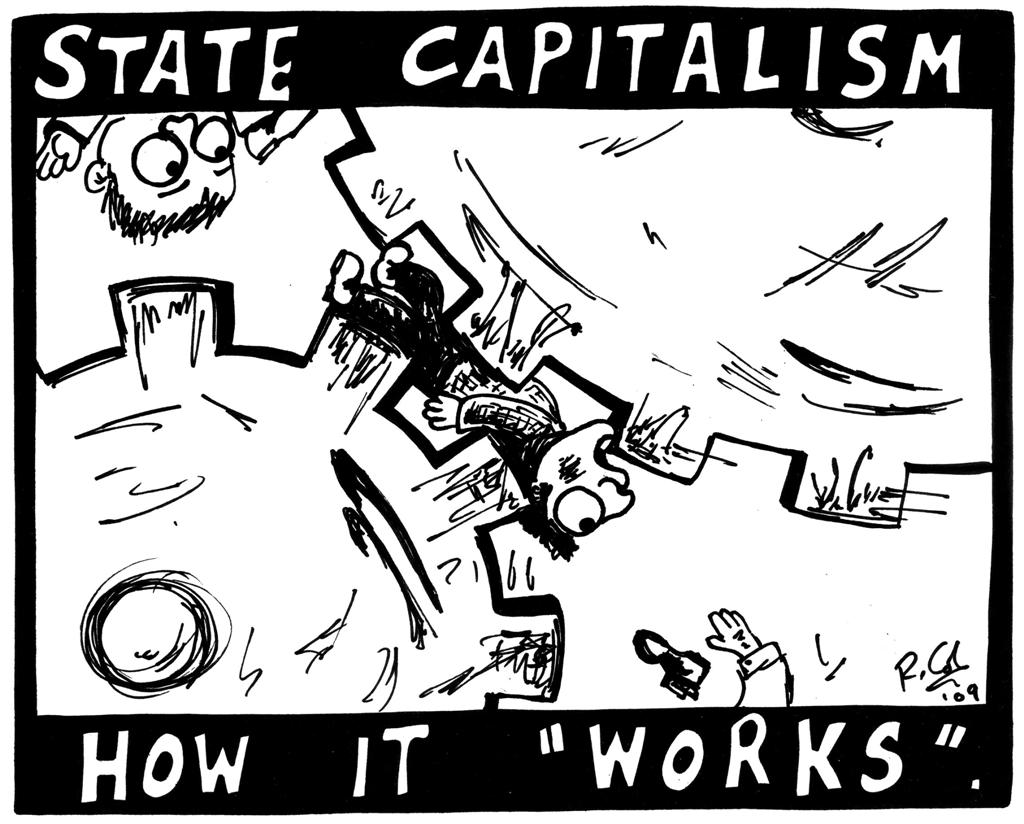
President Trump is perverting capitalism and the free market by asserting unprecedented personal influence over and taking government ownership in private sector companies. His actions do not reflect a coherent economic policy. It is the power grabbing of a tyrant and bully who wants to control others and wants them to be subservient. Trump is using largely illegal financial (e.g., import tariffs and export fees), regulatory, and court-based actions to do this. He wants to influence the decisions of other countries and American businesses, including media corporations, financial institutions, law firms, and  universities. He wants countries and companies to come to him begging for exemptions from his actions and threats. [1] This is, of course, a breeding ground for corruption and bribery.

Nothing even approaching this level of government interference in the private sector has occurred since the emergency mobilization of the private sector for World War II. This government interference in private companies, which is a type of state-controlled capitalism, has until now always been anathema to Republicans and the business community. If any president prior to Trump had attempted any of this, Republicans, business executives, and the mainstream media would be screaming about it being socialism or communism. The actions by Trump are making the U.S. economy look like that of China, where the government owns a stake in companies or has considerable influence over their decision making. [2] [3] Or like Leninist capitalism where the Communist Party controlled the state’s ownership of businesses. [4]

This alignment of an authoritarian leader and a nominally capitalist economy is classic fascism. While Republicans and business executives are supportive or mute, the Wall Street Journal simply calls it inefficient. The business executives and other wealthy investors that facilitate and participate in Trump’s actions are the American oligarchy.

Examples of Trump’s actions include:

  • Allowed Nvidia and Advanced Micro Devices, makers of artificial intelligence (AI) computer chips, to export them to China on the condition that the companies pay the United States 15% of their profits. This poses risks to the U.S. AI industry and to U.S. national security (in part due to the chips’ use by the Chinese military). These payments are, for all intents and purposes, an export fee, which is unprecedented in U.S. history. Moreover, the Constitution explicitly bans export taxes (Article I, Section 9, Clause 5). [5]
  • Demanded that Intel’s CEO resign and then negotiated 10% government ownership of the company. This makes the U.S. government one of Intel’s largest shareholders. [6]
  • Proposed that the Defense Department take a 15% ownership stake in MP Materials, which mines minerals critical for chips and electronics.
  • Allowed Nippon Steel of Japan to take over U.S. Steel on condition that Nippon pay a “golden share” of the proceeds to the government and give Trump control over elements of corporate governance.
  • Reserved the right to personally direct some the $1.5 trillion in promised investments in the U.S. to be made by America’s trading partners as part of tariff negotiations.
  • Sued media corporations and negotiated approval of media corporation mergers to get money and influence over media content.

The government ownership in and influence over the private sector asserted by Trump has nothing to do with promoting the public interest, the well-being of American workers, or protecting national security. In fact, they undermine all these principles. They’re all about centralizing power and control in Trump’s hands as part of his efforts to undermine the rule of law and democracy. [7] Moreover, who holds the ownership stakes and who exercises the related rights is unclear.

Despite Trump’s bluster about being tough on China, his actions have been quite favorable to China. He has illegally extended the deadline for the sale of Chinese ownership of TikTok if it wants to do business in the U.S. He has shut down Radio Free Asia, which countered Chinese propaganda. He’s allowed the export of artificial intelligence computer chips to China, which was a key request from China in trade negotiations.

Please contact your members of Congress and ask them to assert their oversight of these deals Trump is making. Ask them to clarify who holds the ownership stakes, who is exercising ownership rights, and where the funds received are going. Ask them to ensure that the Trump administration’s economic policies and actions further the public interest, benefit workers, promote national security, and comport with the rule of law and democratic principles.

You can find contact information for your US Representative at  http://www.house.gov/representatives/find/ and for your US Senators at http://www.senate.gov/general/contact_information/senators_cfm.cfm.


[1]      Dayen, D., 8/11/25, “Tariffs to import and fees to export,” The American Prospect (https://prospect.org/blogs-and-newsletters/tap/2025-08-11-tariffs-to-import-fees-to-export-nvidia-chips-china/)

[2]      Reich, R., 8/12/25, “Trump’s ‘state capitalism’,” Blog post (https://robertreich.substack.com/p/trumps-state-capitalism)

[3]      Cox Richardson, H., 8/11/25, Letters from an American blog post, (https://heathercoxrichardson.substack.com/p/august-11-2025)

[4]      Meyerson, H., 8/18/25, “When l’etat c’est Trump, the U.S. goes in for state capitalism,” The American Prospect (https://prospect.org/economy/2025-08-18-when-letat-cest-trump-us-goes-in-for-state-capitalism/)

[5]      Dayen, D., 8/11/25, see above

[6]      Liedtke, M., & Kurtenbach, E., 8/20/25, “US vying to own a big stake in Intel,” The Boston Globe from the Associated Press

[7]      Reich, R., 8/12/25, see above

SHORT TAKES ON IMPORTANT STORIES 2/1/24

These short takes highlight important stories that have gotten little attention in the mainstream media. They provide a quick summary of the story, a hint as to why it’s important, and a link to more information.

The U.S. economy is performing better than any other major economy in the world. Workers’ wages have grown 2.8% over the last four years after adjusting for inflation. The overall economy is 7% larger than before the pandemic and unemployment has been at record lows. Inflation is down to a benign 2% and consumer spending, which drives the U.S. economy, is growing. This isn’t just happenstance; it’s been fueled by pandemic relief measures and economy-stimulating legislation passed by Democrats in Congress and the Biden Administration. The success of these policies suggests that in future economic downturns, stimulative spending (i.e., fiscal policy) may well be more effective in reviving the economy than the Federal Reserve’s adjustment of interest rates (i.e., monetary policy). (Lynch, D. J., 1/28/24, “You don’t have to look far for the world’s best economic recovery because it’s happening here. What is going on in the US?” The Boston Globe from The Washington Post)

In February 2023, a train derailed in East Palestine, OH, and created a toxic nightmare. The railroads promised to operate more safely and Congress promised to pass legislation to prevent future accidents. However, derailments have increased and no legislation has been passed. Congressional legislation, the Railway Safety Act, has been opposed by lobbyists for the railroads. (Eavis, P., 1/28/24, “Since Ohio train derailment, accidents have gone up,” The Boston Globe from the New York Times)

The Consumer Financial Protection Bureau (CFPB) has proposed limiting the overdraft fees big banks can charge. The proposal, which will probably take a year or two to finalize and go into effect, would reduce the $35 overdraft fee that’s the current standard to between $3 and $14 or just enough to cover banks’ costs. The proposal would only apply to the 175 largest banks (out of about 9,000), but those banks collect about 2/3 of all overdraft fees. In 2022, consumers paid $7.7 billion in overdraft fees; the CFPB’s proposal would save bank customers about $3.5 billion a year. CFPB will be accepting public comments until April 1. (Crowley, S., 1/17/24, “Consumer bureau proposes overdraft fee limits for large banks,” The Boston Globe from the New York Times; The CFPB website: CFPB Proposes Rule to Close Bank Overdraft Loophole that Costs Americans Billions Each Year in Junk Fees)

Republicans in 15 states are refusing to provide federally-funded food to 8 million very low-income children this summer when they don’t get free meals at school. In 2022, roughly one out of every six households with children did not have enough food (17.3%). This was up almost 50% from 2021 due to the end of emergency food assistance, which was a response to the pandemic. The states refusing the federal funding are: Alabama, Alaska, Florida, Georgia, Idaho, Iowa, Louisiana, Mississippi, Nebraska, Oklahoma, South Carolina, South Dakota, Texas, Vermont, and Wyoming. (Gowen, A., 1/10/24, “Republican governors in 15 states reject summer food money for kids,” The Boston Globe from the Washington Post)

A record 20 million people have enrolled in health insurance under the Affordable Care Act (aka Obama Care) this year. This is up 25% over last year’s record of 16 million and is at least in part due to increased subsidies for health insurance’s costs. The need for and popularity of federally subsidized health insurance grows, despite Republican attempts to reduce the subsidies and statements denigrating the Affordable Care Act. (Weiland, N., 1/22/24, “20m signed up for Obamacare for the new year,” The Boston Globe from the New York Times; Weiland, N., 12/21/23, “Americans are signing up for Obamacare in record numbers,” The Boston Globe from the New York Times)

Intuit Inc., the maker of the Turbo Tax software for doing income tax returns, has lobbied aggressively against the IRS creating an easy, free, on-line system for Americans to file their income tax returns. It has claimed such a system would be too expensive and not a good use of taxpayers’ money. The IRS has estimated that it would cost between $64 and $249 million annually for it to offer a free E-filing system. Intuit got a federal research tax credit of $94 million in 2022, which would roughly pay for the cost of the free IRS filing system. (Business Talking Points, 1/4/24, “Lawmakers say break for Intuit could have financed free government tax filing program,” The Boston Globe from Bloomberg News; Senator E. Warren, 1/3/24, “Warren, Blumenthal, Sanders, Porter probe massive tax breaks received by Intuit while company fights free tax filing for millions of Americans”)