FAIR TAXATION IS ESSENTIAL FOR DEMOCRACY Part 3

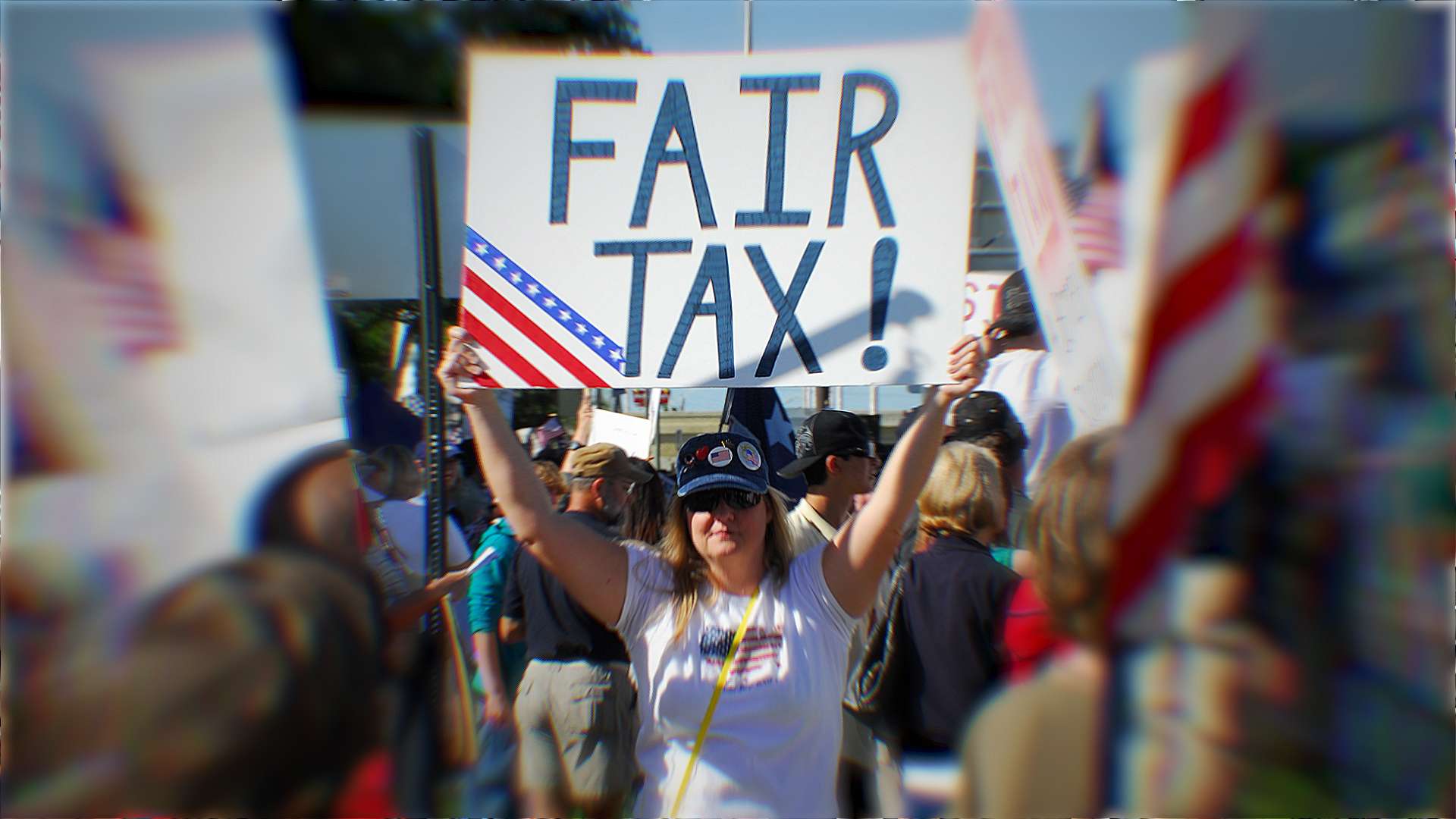
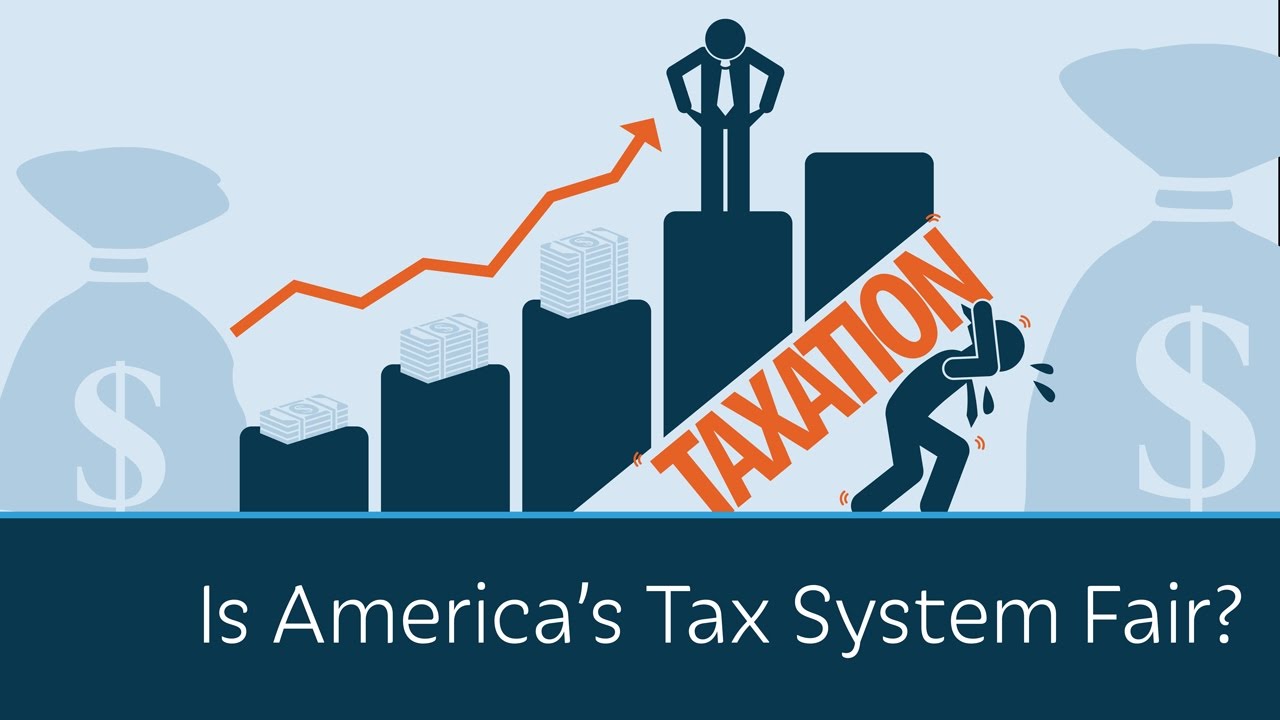
Democracy requires fair taxation. The current U.S. tax system is unfair. Given the huge inequalities in wealth, wealth and transfers of it need to be taxed directly. Wealth taxes are essential to re-establishing a fair tax system and reducing economic inequality.

Democracy requires fair taxation. The current U.S. tax system is unfair. Given the huge inequalities in wealth, wealth and transfers of it need to be taxed directly. Wealth taxes are essential to re-establishing a fair tax system and reducing economic inequality.

(Note: If you find a post too long to read, please just skim the bolded portions. Thanks for reading my blog!)

(Note: Please follow me and get notices of my blog posts on Bluesky at: @jalippitt.bsky.social. Thanks!)

Democracy requires fair taxation. The current U.S. tax system is unfair. My previous post focused on increasing the progressivity of individual and business income tax rates as one essential piece of re-establishing a fair tax system and reducing economic inequality. This post focuses on taxing wealth.

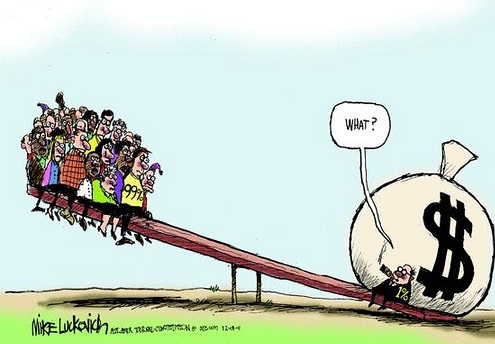
Wealth inequality has grown even more dramatically than income inequality. U.S. billionaires’ wealth has doubled since 2019. [1] Wealth inequality is so great that the only way to reduce it is to tax wealth and transfers of it directly. To re-establish a fair tax system and reduce economic inequality, we must: [2]

  • Tax existing wealth to slow and ultimately reverse the huge growth in wealth inequality and because the wealthy can (and do) maintain their extravagant lifestyles without having income. They borrow money and use their wealth as collateral for the loans. Therefore, they pay little or no income tax.
  • Tax increases in wealth even if assets aren’t sold. These increases in wealth are effectively income even when not sold.
  • Tax the intergenerational transfer of wealth because otherwise America will have a perpetual class of reigning, oligarchic families.
  • Give the Internal Revenue Service (IRS) the resources to enforce U.S. tax laws and dramatically reduce the hundreds of billions of dollars a year of tax dodging by wealthy individuals and businesses, i.e., not paying the taxes they legally owe.

A wealth tax makes sense and is fair because, among other reasons, the main source of wealth for the middle class – their home – has a wealth tax on it, i.e., the property tax. Therefore, taxing other forms of wealth that the wealthy own is fair and reasonable. There are many proposals on the table to tax wealth at the state and local levels, [3] as well as at the federal level. At the federal level, the Billionaires Income Tax Act would tax the increase in value of assets (e.g., stocks) even if they aren’t sold. There are also two different wealth tax proposals, one from Senator Warren (D-MA) and Representative Jayapal (D-WA), the Ultra-Millionaire Tax Act, and another from Senator Sanders (I-VT) and Representative Khanna (D-CA), the Make Billionaires Pay Their Fair Share Act. There is also the Working Americans’ Tax Cut Act that would shift some of the income tax burden from low- and moderate-income households to those with incomes of over $1 million.

In California, a one-time 5% wealth tax on billionaires is being proposed. Bob Reich explains why this makes sense in this 3-minute video. California’s 200 billionaires would pay $100 million a year for the next 5 years. This would allow the state government to provide health and food assistance benefits to millions of residents who would otherwise lose them due to federal funding cuts.

Current federal laws allow wealthy parents to pass their wealth on to their children with little or no tax being paid, including on assets that have increased in value while the parents owned them. At least 90 billionaires died over the last ten years and left their beneficiaries a total of $455 billion. Roughly $250 billion of that was increases in the value of assets during the time the deceased person held them (e.g., stock in a corporation). There was no capital gains tax paid on that $250 billion because current laws allow it to be transferred at its current value; this is the so-called “stepped up basis” tax loophole. This loophole should be repealed.

The estate tax has been cut in recent years and should be increased to decrease economic inequality, increase fairness, and curb the perpetuation of an oligarchic class in American society. The For the 99.5% Act proposed by Senator Sanders (I-VT) and Representative Gomez (D-CA) would reduce the size of an estate that is exempt from taxation from $30 million per couple to $7 million. It would also apply progressive tax rates based on the size of an estate (as opposed to the current flat rate of 40%). [4]

The IRS has been attacked and vilified by Republicans and the oligarchs for decades, presumably because they and their supporters don’t want to pay taxes, including by dodging taxes they owe. They’ve cut its funding and therefore its staffing, particularly for enforcement, leaving hundreds of billions of dollars owed by wealthy individuals and companies uncollected each year. President Biden and Democrats in Congress provided $80 billion in additional funding to the IRS to address understaffing and weak enforcement. For every dollar spent auditing the wealthy, the government recovered $26.

As soon as the Republicans and Trump returned to power, they began cutting tens of billions from the IRS’s funding and reducing its staffing. In 2025, about 22,000 employees left the IRS, about one-quarter of its workforce. Seven former IRS Commissioners, going back to President Reagan, co-wrote an opinion piece in the New York Times in February criticizing the cuts to funding and staffing at the IRS. [5] The IRS workers’ union, the National Treasury Employees Union, pushed back against some of the Trump administration’s cuts. So, in February 2026, the Trump administration terminated the union’s collective bargaining agreement.

To better serve taxpayers, the IRS introduced Direct File in 2024, which enabled many taxpayers to file simplified income tax returns for free – saving taxpayers an estimated $23 billion a year in tax preparation costs. Nearly 300,000 taxpayers used it in 2025. However, tax preparation and software companies have long opposed it because it reduces the demand for their services. So, the Trump administration has terminated it. In addition to its lobbying, the tax preparation industry’s opposition included, for example, Intuit, the parent company of Turbo Tax, donating $1 million to Trump.

I encourage you to contact your state and local elected officials, as well as your U.S. Representative and Senators, to ask them to support a fairer tax system that taxes wealth and transfers of it. Also ask your members of Congress to support funding for the IRS so it can enforce our tax laws. You can find contact information for your US Representative at http://www.house.gov/representatives/find/ and for your US Senators at http://www.senate.gov/general/contact_information/senators_cfm.cfm.

For lots of good news, see Jess Craven’s Chop Wood Carry Water blog’s most recent good news Sunday post here.


[1]      Collins, C., 4/5/26, “Tax the rich across the land!” Common Dreams (https://www.commondreams.org/opinion/how-to-tax-the-rich)

[2]      See this previous post on reducing economic inequality, which includes information on tax reforms proposed by the Economic Policy Institute and in the Money Agenda proposed by a group called Patriotic Millionaires.

[3]      Meyerson, H., 3/12/26, “Democrats get serious about taxing the rich,” The American Prospect (https://prospect.org/2026/03/12/democrats-get-serious-taxing-rich/)

[4]      Conley, J., 12/13/24, “Why can’t we fund universal public goods? Blame the tax-dodging billionaire nepo babies,” Common Dreams (https://www.commondreams.org/news/what-billionaires-avoid-taxes)

[5]      Sorapuru, J. E. J., 4/8/26, “Smaller IRS still pressured by Trump,” The Boston Globe

FAIR TAXATION IS ESSENTIAL FOR DEMOCRACY Part 2

Democracy requires fair taxation. The current U.S. tax system is unfair. Increased progressivity of individual and business income tax rates, especially on income from wealth (versus work), is one essential piece of re-establishing a fair tax system and reducing economic inequality.

(Note: If you find a post too long to read, please just skim the bolded portions. Thanks for reading my blog!)

(Note: Please follow me and get notices of my blog posts on Bluesky at: @jalippitt.bsky.social. Thanks!)

The American democracy described in the Declaration of Independence and further detailed in the  preamble to the Constitution requires fair taxation linked to meaningful representation to produce a government of, by, and for the people. (See this previous post for more detail.)

Fair taxation requires individuals and businesses to pay their fair share. The current U.S. tax system is unfair based on common sense,an historical perspective, and the current experiences of everyday Americans. It has allowed wealth and income inequality to grow dramatically in the last 45 years, both among individuals and among businesses. To re-establish a fair tax system and reduce economic inequality, the U.S. must: [1]

  • Increase the progressivity of individual and business income tax rates, especially on income from wealth (versus work), such as interest, dividends, and capital gains on the sale of assets that have appreciated (i.e., increased in value).
  • Tax increases in wealth even if assets are not sold. These increases in wealth are effectively income even when the assets are not sold.
  • Tax existing wealth to slow or reverse the huge growth in wealth inequality and because the wealthy can (and do) maintain their extravagant lifestyles without having income by borrowing money and using their wealth as collateral for the loans. U.S. billionaires’ wealth has doubled since 2019 and in 2024 alone, the 19 richest billionaires added one trillion dollars to their wealth, an average of over $50 billion each. [2]
  • Tax intergenerational transfers of wealth because otherwise America will have a class of reigning, perpetual oligarch families.
  • Close loopholes in tax laws to prevent tax avoidance by wealthy individuals and corporations.
  • Establish an international tax system to prevent tax avoidance by wealthy individuals and corporations through the shifting of wealth and income streams to low-tax countries. [3] [4]
  • Give the Internal Revenue Service (IRS) the resources to enforce U.S. tax laws and dramatically reduce the hundreds of billions of dollars a year of tax dodging by wealthy individuals and businesses when they do not pay the taxes they legally owe.

Progressive income tax rates are fair (i.e., percentage tax rates that increase with increases in income) because the value of $1,000 of additional income to a millionaire is far less than it is to someone with a $50,000 or $100,000 income. Or from the perspective of taxes, a tax of $100 (10%) on that $1,000 of additional income has much less impact on the millionaire than the lower income individual.

What tax rates are fair across the income range is, of course, a matter of judgment. However, for a starting point, a relatively small increase in the top marginal personal income tax rate (i.e., the tax rate on the last dollar of income) back to its pre-2017 level (i.e., from 37% to 39.6%) would generate revenue of over $30 billion a year for the government to use to deliver public goods that people need or want. (Note: In 1980, the top rate was 70% and it was over 90% in the 1950s and the wealthy and the economy, nonetheless, did quite well.)

Returning the tax rate on large corporations to 35% (where it was before the 2017 Republican Tax Cut Act reduced it to 21%) would make sense, be fair, and generate over $250 billion a year in revenue for the government.

I encourage you to contact your state and local elected officials, as well as your U.S. Representative and Senators, and ask them to support enacting a fairer tax system with progressive income tax rates for wealthy individuals and businesses. You can find contact information for your US Representative at http://www.house.gov/representatives/find/ and for your US Senators at http://www.senate.gov/general/contact_information/senators_cfm.cfm.

For lots of good news, see Jess Craven’s Chop Wood Carry Water blog’s most recent good news Sunday post here.

My next post will discuss taxing wealth and the intergenerational transfer of it. It will also discuss the IRS and its role in enforcing a fair tax system.


[1]      See this previous post on reducing economic inequality, which includes information on tax reforms proposed by the Economic Policy Institute and in the Money Agenda of a group called Patriotic Millionaires.

[2]      Collins, C., 4/5/26, “Tax the rich across the land!” Common Dreams (https://www.commondreams.org/opinion/how-to-tax-the-rich)

[3]      Johnson, J., 11/19/24, “Tax dodging by super-rich, big corporations costs nations half a trillion per year: Study,” Common Dreams (https://www.commondreams.org/news/global-tax-dodging)

[4]      Conley, J., 11/19/24, “G20 leaders reach ‘landmark commitment’ for global tax on ultrarich,” Common Dreams (https://www.commondreams.org/news/global-wealth-tax-2669945403)

TACKLING THE AFFORDABILITY CRISIS Part 3

The U.S. affordability crisis is caused by low pay, high prices, economic inequality, and public policies skewed to favor wealthy individuals and corporations. Here are some strategies for tackling the affordability crisis. THANK YOU to all of you who participated in or supported a No Kings rally!

The U.S. affordability crisis is caused by low pay, high prices, economic inequality, and public policies skewed to favor wealthy individuals and corporations. Here are some strategies for tackling the affordability crisis.

THANK YOU to all of you who participated in or supported a No Kings rally (pro-democracy and anti-Trump) on March 28 in one way or another. Protests are a critically important strategy for tackling affordability and saving our democracy.

(Note: If you find a post too long to read, please just skim the bolded portions. Thanks for reading my blog!)

(Note: Please follow me and get notices of my blog posts on Bluesky at: @jalippitt.bsky.social. Thanks!)

The U.S. affordability crisis will require multiple strategies to effectively remedy it. My previous post discussed some longer-term strategies and an earlier post some short-term strategies. Here are some additional longer-term strategies. Generally, they require action by the federal government and, therefore, aren’t likely to happen soon.

Here are some strategies for addressing high prices:

  • Implement a windfall profits tax. The federal government should enact a windfall profits tax to stop price gouging by monopolistic businesses and by ones taking advantage of unusual market conditions. A windfall profits tax would tax away excessive growth in profits and, therefore, discourage price gouging because increased profits would be significantly reduced. However, if businesses continue to charge high prices and generate big profits, the tax revenue from the windfall profits tax could be used to provide assistance to working families facing economic hardship due to those increased prices.

    With the spike in fossil fuel prices due to the Iran war, fossil fuel companies are likely to realize windfall profits. Other businesses may use the smoke screen of high fuel and energy prices as a pretext for raising prices beyond what’s justifiable and, therefore, generate windfall profits. The federal government should be prepared to tax those windfall profits and take other actions to keep prices down and protect consumers. [1]
  • Regulate surveillance pricing. With AI and high-powered computers, businesses gather extensive data on consumers and can then engage in sophisticated and opaque price manipulation to maximize what a consumer will pay (aka personalized or surveillance pricing). Sellers should be required to post prices clearly and provide the same prices to all consumers. This will prevent price gouging, discrimination, and bait and switch strategies that rip off consumers. Junk fees and other abusive pricing techniques should be banned.

    For example, Uber and Lyft shouldn’t be allowed to charge you more (as they do) when your phone’s battery is low and they know you are in a hurry to book your ride. And landlords shouldn’t be allowed to collude through a large database of rental properties and AI analysis to jack up rents.

Here are some strategies for addressing affordability in general:

  • Eliminate the poverty wage business model. At least 16 U.S. billionaires owe their wealth to running corporations that pay workers poverty wages so the workers have to rely on taxpayer-funded public assistance to survive. Eight of these billionaires are associated with Walmart, two each with Amazon and Tyson Foods, and one each with Best Buy, Chipotle, Home Depot, and Starbucks. Large numbers of employees at these firms rely on Medicaid for health care and SNAP for food assistance. [2] Increasing the minimum wage would be one step in ending this public subsidy of corporate profits and shareholder wealth.
  • Reform the U.S. campaign finance system. Government policies are skewed to benefit the wealthy because of the way we allow election campaigns to be financed. The unlimited spending and lack of disclosure of who is contributing large sums of money have produced politicians and policies that favor the wealthy and their large corporations. This results in lower wages for workers and higher profits through higher prices that benefit shareholders and corporate executives. (See this previous post for more detail and ways to address this problem.)
  • Reduce economic inequality. Reducing economic inequality would tackle the affordability crisis in multiple ways. Extreme inequality destabilizes democracy, the economy, and society. Shifting some of the tax burden from low- and middle-class households to the wealthy could both reduces taxes for households struggling with affordability and increase the ability of the government to provide supports for working families such as affordable child care, paid family leave, housing subsidies, affordable health care, and a safety net when people hit hard times including unemployment benefits and food assistance. [3] Reduced economic inequality would also reduce the premiumization of the economy that drives prices up. (See this previous post for more detail.)

    Many proposals to tax the wealthy are being considered at the state and local levels, [4] as well as at the federal level. At the federal level, the Billionaires Income Tax Act would tax the increase in value of assets (e.g., stocks) even if they aren’t sold. There are also two different wealth tax proposals, one from Senator Warren (D-MA) and Representative Jayapal (D-WA), the Ultra-Millionaire Tax Act, and another from Senator Sanders (I-VT) and Representative Khanna (D-CA), the Make Billionaires Pay Their Fair Share Act. There is also the Working Americans’ Tax Cut Act that would shift the income tax burden from low- and moderate-income households to those with incomes of over $1 million.

    Reduced inequality benefits democracy and, when coupled with campaign finance reform, would produce politicians and policies that are more responsive to the needs of every day Americans, thereby addressing the affordability crisis. “Highly concentrated wealth leads naturally to concentrated political power.” [5] As Supreme Court Justice Louis Brandeis wrote almost 100 years ago, “We may have democracy, or we may have wealth concentrated in the hands of a few, but we can’t have both.”

Every politician, at every level, local, state, and federal, who’s serious about addressing the affordability crisis should embrace these strategies. I encourage you to contact your U.S. Representative and Senators and ask them to endorse them. You can find contact information for your US Representative at  http://www.house.gov/representatives/find/ and for your US Senators at http://www.senate.gov/general/contact_information/senators_cfm.cfm.

For lots of good news, see Jess Craven’s Chop Wood Carry Water blog’s most recent good news Sunday post here.


[1]      Reed, B, 3/25/26, “Dems call for prosecution of corporations using Trump’s illegal Iran war as cover to hike prices,” Common Dreams (https://www.commondreams.org/news/iran-war-price-gouging)

[2]      Anderson, S., & James, R., 3/25/26, “Meet the 16 billionaires making bank by underpaying their workers,” Inequality.org (https://inequality.org/article/billionaires-low-wage-workers/)

[3]      Meyerson, H., 12/3/25, “The $79 trillion heist,” The American Prospect (https://prospect.org/2025/12/03/79-trillion-heist-worker-pay/)

[4]      Meyerson, H., 3/12/26, “Democrats get serious about taxing the rich,” The American Prospect (https://prospect.org/2026/03/12/democrats-get-serious-taxing-rich/)

[5]      Bivens, J., 11/17/25, “Raising taxes on the ultrarich,” page 5, Economic Policy Institute (https://www.epi.org/publication/raising-taxes-on-the-ultrarich-a-necessary-first-step-to-restore-faith-in-american-democracy-and-the-public-sector/)

EXTREME CAPITALISM OF PRIVATE EQUITY FIRMS DOES GREAT HARM Part 2

Illustration of a vulture sitting on a falling graph. Concept for vulture capitalists, economic crisis, recession, bankruptcy and insolvency.

This post provides an overview of how the private equity financial model works. It includes two examples of its detrimental effects, one in the chemical industry and the other in communications services for the 500,000 deaf people in the U.S.

(Note: If you find my posts too long to read on occasion, please just skim the bolded portions. Thanks for reading my blog! Special Note: The new, more user-friendly website for my blog is here.)

My previous post provided a high-level summary of the harm being done by private equity (PE) firms. It then focused on the Stop Wall Street Looting Act in Congress as an important step to stop the harm being done to patients, consumers, employees, and communities by the PE financial model.

Here’s an overview of how the private equity financial model works. The PE firm, using mostly borrowed money, buys a company. The debt and interest of the borrowed money are then made the responsibility of (and often an overwhelming burden on) the purchased company. The PE owners also pay themselves exorbitant fees (usually for “management”) and pay large dividends to themselves and their other investors. They often sell the company’s assets, such as real estate, to raise money to pay for these payments or to make debt payments. Typically, the company’s real estate is leased back to it at an exorbitant cost.

All this forces the purchased company to engage in (often severe) cost-cutting to be able to make the payments on the debt, the lease, and to the PE owners and investors. This cost-cutting often involves major layoffs and cuts in compensation for employees. Abusive employment practices, union busting, and unsafe workplaces are not uncommon. The quality of the company’s products or services is often compromised to reduce costs. Despite all this cost cutting, the companies often go bankrupt, leaving employees without jobs and often without owed pay and benefits, including retirement benefits.

U.S. laws and policies aid and abet this process by granting tax and other benefits to elements of this model. PE firms are much more loosely regulated than publicly-owned companies or mutual funds that sell shares to the public. Given their private ownership, PE firms have basically no requirements for public disclosures or transparency. The Stop Wall Street Looting Act (see this previous post for an overview) would change this, regulating PE firms and holding them accountable.

Previous posts have reported on PE ownership and its effects in pet care, retail, and health care (here, here, here, and here). Here are two additional examples.

EXAMPLE #1: Centerbridge Partners, a PE firm, bought KIK Custom Products, the parent company of BioLab Inc., in 2015 for $1.6 billion. In late September, 2024, a BioLab chemical plant in Conyers, Georgia, had a massive explosion. Toxic clouds of smoke spread over the area and 17,000 residents had to be evacuated and another 90,000 were told to shelter-in-place. In 2020, an explosion at another BioLab plant in Georgia released a cloud of toxic chlorine gas and there was also a major fire at a plant in Louisiana. Under PE firm Centerbridge’s ownership, BioLab has a long history of explosions, fires, and workplace safety violations. [1]

Centerbridge and its investors have gotten at least $3.45 billion in dividends; a return of more than double their investment – in dividends alone. In the last four years, Centerbridge has added over $2.6 billion in debt to BioLab, primarily to pay for dividends paid to Centerbridge and its investors. In addition, in July, 2024, it sold off a separate subsidiary of KIK for $850 million, which was used to pay Centerbridge and its investors another large dividend and had the effect of increasing the debt load on BioLab. With interest rates rising, this significantly undermines BioLab’s financial stability and makes bankruptcy more likely.

If this most recent plant explosion pushes BioLab into bankruptcy, the company’s workers, including their pensions, as well as contractors and suppliers, will end up losing money that is owed to them. Furthermore, if BioLab goes bankrupt, anyone suing BioLab for personal or environmental harms from the toxic explosions will likely get nothing. It will be left up to the government and the taxpayers to pay for the harm and damage done, as well as the clean-up.

EXAMPLE #2: Two companies, Sorenson Communications and ZP Better Together, separately owned by PE firms, run the service that allows deaf people to communicate by phone using sign language via the Video Relay Service (VRS). The phone companies are required by the Americans with Disabilities Act to make the VRS available for free to the 500,000 deaf people in the U.S. A small fee on all phone calls pays for it and the funding is funneled through the Federal Communications Commission (FCC). The FCC pays a fixed rate per minute for the video calls. The VRS must be available 24 hours a day, seven days a week, and must answer 85% of calls within ten seconds.

The VRS companies were targeted for acquisition by the PE firms because of their steady cashflow with effectively guaranteed profits. [2] Furthermore, the two companies have pushed the FCC to increase reimbursement rates and, in 2023, it announced a new five-year deal with rate increases of 30% to 49%. The rate for the first million minutes of calls will now be $6.27, up from $3.92. After the first million minutes, the rate declines.

Sorenson’s annual revenue is projected to be $2.1 billion and ZP’s about $400 million. Nonetheless, the two PE-owned firms have presided over declining service quality and deteriorating working conditions for employees in their efforts to maximize profits. There have been layoffs, under staffing, and under-training of staff. For example, some staff are specially trained to handle difficult calls, such as notifying a deaf person of the death of a loved one. Some are specially trained to handle translation and communication of legal documents. However, because of staff and training shortages, interpreters are being asked to do work they are not trained for. Workers typically have quotas for the number of minutes per hour they must be on calls to get paid. In some call centers, quotas have been increased because of labor shortages.

The companies have engaged in unfair labor practices and have aggressively resisted efforts to unionize. Labor representatives report that the FCC has not responded to a request for a meeting to discuss working conditions for months, while FCC staff and Commission members have met with the companies’ executives 16 times in the last two years.

Most of the sign language interpreters are part-time employees, with lower pay and benefits than full-time employees, who are usually managers. Although the FCC said that pay for interpreters would increase 65% over five years due to the rate increase, interpreters haven’t received wage increases and therefore are pushing to unionize. Several months after the 2023 rate increase, ZP closed two call centers in Minnesota after workers tried to unionize. ZP also closed two centers in California after settling a case of wage theft and retaliation for $320,000.

Sorenson has laid off workers, including middle management, many of whom were deaf people who had started as interpreters and worked their way up. The middle managers are some of the few employees who are typically full-time workers with decent pay and benefits.

More examples of PE ownership and its detrimental effects, including the Steward Health Care fiasco, will be shared in future posts.

[1]      Tkacik, M., & Goldstein, L., 10/2/24, “A toxic explosion in private equity payouts,” The American Prospect (https://prospect.org/power/2024-10-02-conyers-biolab-explosion-private-equity/)

[2]      Goldstein, L., 9/30/24, “Private equity is taking your calls,” The American Prospect (https://prospect.org/power/2024-09-30-private-equity-is-taking-your-calls/)

EXTREME CAPITALISM OF PRIVATE EQUITY FIRMS DOES GREAT HARM Part 1

The extreme capitalism of private equity firms does great harm. These vulture capitalists use financial manipulation to extract big profits from companies without regard to their survival or the welfare of stakeholders. There’s a bill in Congress that will stop this.
Illustration of a vulture sitting on a falling graph. Concept for vulture capitalists, economic crisis, recession, bankruptcy and insolvency.

SUMMARY: The current brand of capitalism in the U.S. does lots of harm. Nowhere are the harms more evident than in the extreme capitalism of private equity (PE) firms. These vulture capitalists use financial manipulation to extract big profits from companies they buy without regard to the health or survival of the companies, or the welfare of their employees, customers, and communities. There’s a bill in Congress that will stop this vulture capitalism and all the damage it does.

(Note: If you find my posts too long to read on occasion, please just skim the bolded portions. Thanks for reading my blog! Special Note: The new, more user-friendly website for my blog is here.)

The current brand of capitalism in the U.S. does lots of harm. Even “routine” corporate activity results in lots of bad behavior, some of it illegal or corrupt, all of which harms employees, consumers, and the public. I’ve cited examples of this in many previous posts and, in my most recent post, I highlighted three examples and also shared why it’s important to be aware of this. The profit motive of capitalism and the greed of capitalists result in harmful business behaviors unless they’re well-regulated and the penalties and punishments for businesses and their executives are sufficient to truly discourage bad behavior or to put them out of business.

Nowhere are the harms of capitalism more evident than in the extreme capitalism of private equity (PE) firms. PE firms (i.e., “vulture capitalists”) use financial manipulation to extract profits from companies without regard to the health or survival of the companies, or the welfare of their employees, customers, and communities. Vulture capitalism fails to produce benefits for anyone other than the rich private equity financiers. They are not investing in the companies they buy; they are looking to maximize their short-term profits and have no qualms about the companies going bankrupt – in some cases that’s their plan. (See this previous post from 2018 describing the private equity business model and why it deserves to be called vulture capitalism.)

PE firms have purchased companies in many sectors of the economy from health care (over $500 billion between 2018 and 2023) to child care to pet care, from housing to private colleges, and from retail store chains to newspapers. Everywhere they’ve gone they’ve left destruction in their wake, including decimating local newspapers, bankrupting long-standing retail store chains, and causing deaths and injuries in health care.

In my next post, I’ll give a description of the PE business model and some specific recent examples of the harm it’s done, but, for now, here’s what can be done to stop this vulture capitalism. The Stop Wall Street Looting Act has been introduced in Congress by Senators Elizabeth Warren (D-MA), Tammy Baldwin (D-WI), Sherrod Brown (D-OH), (all three are up for re-election, by the way) and others, along with over half a dozen Representatives. First introduced in 2019, the Act would: [1]

  • Make the PE owners and investors responsible for the debts and liabilities of the companies they own rather than allowing them to continue to avoid responsibility and liability by claiming to be an independent entity.
  • Change bankruptcy laws so that when PE-owned companies go bankrupt (as they often do) workers’ pay and benefits, including pensions, would be given a higher priority, rather than being the last party to get paid if there’s any money left over (which there usually isn’t).
  • Ban practices that allow PE owners to extract short-term profits that undermine the financial viability of a purchased company. For example, if a PE-owned company files for bankruptcy, the PE owners and investors could be forced to pay back the fees, dividends, and other payments they had received over the last 3 – 5 years.
  • Prohibit PE-owned firms that receive federal or state funds (as all health care providers do and as 611 PE-owned companies that received $5.3 billion in Covid relief funds did) from acquiring other companies or making payments to the PE owners or investors for two years.
  • Ban PE-owned health care companies from receiving federal money from Medicare or Medicaid if they sell property to or receive property-based loans from a real estate investment trust (REIT). REIT transactions are a standard, financial manipulation practice for PE-owned hospitals and were a key factor in Steward Health’s rapid expansion and then bankruptcy.
  • Subject PE firms to greater oversight and disclosure requirements. Cerberus Capital Management, the PE firm behind the Steward health care bankruptcy and debacle, would not have been able to withhold financial information from health care oversight agencies and from Congress – as it continues to do today.

I urge you to contact your U.S. Representative and Senators to ask them to support the Stop Wall Street Looting Act. Private equity’s model of vulture capitalism needs to be reined in before more patients, customers, employees, and communities are harmed. You can find contact information for your US Representative at  http://www.house.gov/representatives/find/ and for your US Senators at http://www.senate.gov/general/contact_information/senators_cfm.cfm.

The PE industry and its allies will, of course, strenuously oppose this legislation, as they have since it was first introduced in Congress in 2019. For example, during the 2021-2022 election cycle, the PE industry donated almost $350 million to federal election candidates and committees.

If you need any convincing of the need to stop the vulture capitalism of the PE model of business financial manipulation, my next post will present some recent examples of PE ownership and the detrimental effects it’s had. It will also share an overview of the PE model.

[1]      Office of Senator Warren, 10/10/24, “Warren, lawmakers renew legislative push to stop private equity looting,” Press release (U.S. Senator Elizabeth Warren | Warren, Lawmakers Renew L…) and (Stop Wall Street Looting Act One Pager)

SHORT TAKES ON IMPORTANT STORIES 2/1/24

These short takes highlight important stories that have gotten little attention in the mainstream media. They provide a quick summary of the story, a hint as to why it’s important, and a link to more information.

The U.S. economy is performing better than any other major economy in the world. Workers’ wages have grown 2.8% over the last four years after adjusting for inflation. The overall economy is 7% larger than before the pandemic and unemployment has been at record lows. Inflation is down to a benign 2% and consumer spending, which drives the U.S. economy, is growing. This isn’t just happenstance; it’s been fueled by pandemic relief measures and economy-stimulating legislation passed by Democrats in Congress and the Biden Administration. The success of these policies suggests that in future economic downturns, stimulative spending (i.e., fiscal policy) may well be more effective in reviving the economy than the Federal Reserve’s adjustment of interest rates (i.e., monetary policy). (Lynch, D. J., 1/28/24, “You don’t have to look far for the world’s best economic recovery because it’s happening here. What is going on in the US?” The Boston Globe from The Washington Post)

In February 2023, a train derailed in East Palestine, OH, and created a toxic nightmare. The railroads promised to operate more safely and Congress promised to pass legislation to prevent future accidents. However, derailments have increased and no legislation has been passed. Congressional legislation, the Railway Safety Act, has been opposed by lobbyists for the railroads. (Eavis, P., 1/28/24, “Since Ohio train derailment, accidents have gone up,” The Boston Globe from the New York Times)

The Consumer Financial Protection Bureau (CFPB) has proposed limiting the overdraft fees big banks can charge. The proposal, which will probably take a year or two to finalize and go into effect, would reduce the $35 overdraft fee that’s the current standard to between $3 and $14 or just enough to cover banks’ costs. The proposal would only apply to the 175 largest banks (out of about 9,000), but those banks collect about 2/3 of all overdraft fees. In 2022, consumers paid $7.7 billion in overdraft fees; the CFPB’s proposal would save bank customers about $3.5 billion a year. CFPB will be accepting public comments until April 1. (Crowley, S., 1/17/24, “Consumer bureau proposes overdraft fee limits for large banks,” The Boston Globe from the New York Times; The CFPB website: CFPB Proposes Rule to Close Bank Overdraft Loophole that Costs Americans Billions Each Year in Junk Fees)

Republicans in 15 states are refusing to provide federally-funded food to 8 million very low-income children this summer when they don’t get free meals at school. In 2022, roughly one out of every six households with children did not have enough food (17.3%). This was up almost 50% from 2021 due to the end of emergency food assistance, which was a response to the pandemic. The states refusing the federal funding are: Alabama, Alaska, Florida, Georgia, Idaho, Iowa, Louisiana, Mississippi, Nebraska, Oklahoma, South Carolina, South Dakota, Texas, Vermont, and Wyoming. (Gowen, A., 1/10/24, “Republican governors in 15 states reject summer food money for kids,” The Boston Globe from the Washington Post)

A record 20 million people have enrolled in health insurance under the Affordable Care Act (aka Obama Care) this year. This is up 25% over last year’s record of 16 million and is at least in part due to increased subsidies for health insurance’s costs. The need for and popularity of federally subsidized health insurance grows, despite Republican attempts to reduce the subsidies and statements denigrating the Affordable Care Act. (Weiland, N., 1/22/24, “20m signed up for Obamacare for the new year,” The Boston Globe from the New York Times; Weiland, N., 12/21/23, “Americans are signing up for Obamacare in record numbers,” The Boston Globe from the New York Times)

Intuit Inc., the maker of the Turbo Tax software for doing income tax returns, has lobbied aggressively against the IRS creating an easy, free, on-line system for Americans to file their income tax returns. It has claimed such a system would be too expensive and not a good use of taxpayers’ money. The IRS has estimated that it would cost between $64 and $249 million annually for it to offer a free E-filing system. Intuit got a federal research tax credit of $94 million in 2022, which would roughly pay for the cost of the free IRS filing system. (Business Talking Points, 1/4/24, “Lawmakers say break for Intuit could have financed free government tax filing program,” The Boston Globe from Bloomberg News; Senator E. Warren, 1/3/24, “Warren, Blumenthal, Sanders, Porter probe massive tax breaks received by Intuit while company fights free tax filing for millions of Americans”)