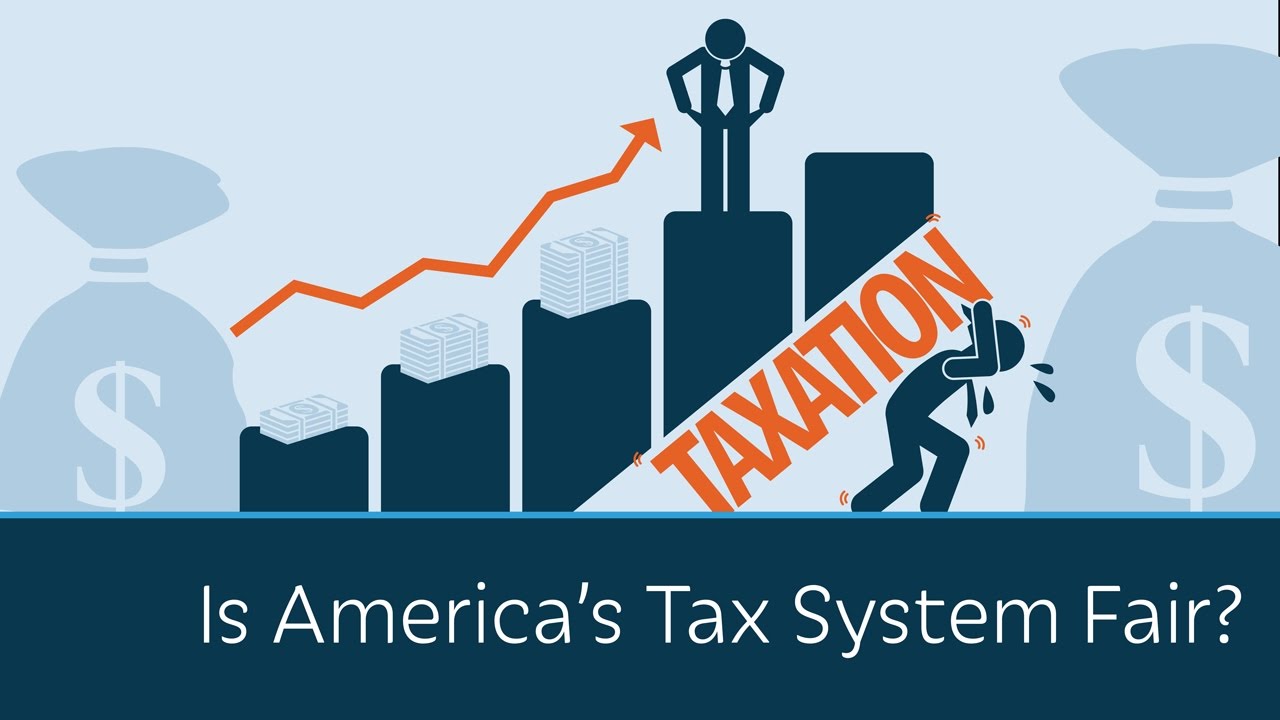
FAIR TAXATION IS ESSENTIAL FOR DEMOCRACY

Democracy requires a government that fosters people’s freedom. Its resources must come from fair taxation. Oligarchs cut taxes and undermine democracy to consolidate their power. Economic inequality has bred discontent and distrust of government and democracy, an opening for authoritarianism.

Democracy requires a government that fosters people’s freedom based on their experiencing safety, economic security, liberty, and happiness. To do these things, it must have the resources that come from taxation. The taxes must be perceived as fair and government perceived as reasonably efficient at fulfilling its role. High and growing economic inequality has bred discontent and distrust of government – and of democracy. This has opened the door for demagogues and acceptance of authoritarianism.

(Note: If you find a post too long to read, please just skim the bolded portions. Thanks for reading my blog!)

(Note: Please follow me and get notices of my blog posts on Bluesky at: @jalippitt.bsky.social. Thanks!)

The American democracy, as announced in the Declaration of Independence, would ensure the right of the people to “Life, Liberty and the pursuit of Happiness.” The government it envisioned would “effect their Safety and Happiness.” The preamble to the Constitution expands on these principles and states that “We the People [are forming a government to] establish Justice, insure domestic Tranquility, provide for the common defence, promote the general Welfare, and secure the Blessings of Liberty.”

For a government to do these things, it must have the necessary resources. Taxes are what provide government with its resources to honor these principles and achieve these goals. They are the life blood of a democratic government of, by, and for the people. As Deval Patrick, former Governor of Massachusetts put it, “Taxes are the dues we pay to live in a civilized society.”

Historian Heather Cox Richardson had a 42-minute conversation with Dr. Vanessa Williamson of the Brookings Institution about the relationship between taxes and democracy, based on Williamson’s 2025 book, The Price of Democracy: The Revolutionary Power of Taxation in American History. I strongly encourage you to listen to all or part of it, however, I’ll share a summary of and commentary on this conversation here. (Williamson gives a 1-minute summary of the relationship between taxes and democracy at the Patriotic Millionaires conference Money. Message. Millionaires.)

American history indicates that the people are willing to pay taxes if they are perceived to be fair and the government is fostering their freedom based on their experiencing safety, economic security (aka general welfare), liberty (aka justice under the rule of law), and happiness.

The public wants government to do and provide things often referred to as public goods that include schools, roads, law and order, clean air and water, national parks, and a safety net for when things in life go wrong. These things allow people the freedom to pursue their dreams and achieve their goals. The effectiveness of governments and, therefore, their support by the people, comes from their ability to act and get things done. Revenues from taxes are, of course, essential to giving governments the capacity and power to act and deliver these public goods.

It’s important that taxes be perceived as fair and government perceived as reasonably efficient at fulfilling its role. That way the people feel they’re getting a fair return on their investment. The American Revolution occurred, in part, because of taxation without representation and the perception that the government wasn’t delivering what the people wanted. However, the Boston Tea Party was actually a protest over the King giving the East India Tea Company, a huge corporation in its day, a monopoly on the sale of tea in the colonies.

Paying taxes means that taxpayers have a personal stake in their government (aka skin in the game) and, therefore, in participating in democracy, in elections, and with their representatives in government. It’s everyone’s civic duty to make their contribution to democracy by paying their fair share of taxes and being engaged to have their say in the governing process. When governments are capable of and accountable for acting in the interests of the people (aka for the public good), this reinforces democracy and the connection between taxation and representation.

In the 1980s, the Republicans, President Reagan, and the American oligarchy (although we didn’t call them that at the time) promoted efforts to undermine the relationship among taxation, representation, and democracy. They pushed the notion that government wasn’t efficient, that taxes were bad, and that they could cut taxes and still deliver the public goods that people wanted. Basically, they promised a free lunch. They claimed their tax cuts, which disproportionately benefited wealthy individuals and corporations, would “trickle down” to everyone because the economy would boom. Actual experience, with multiple tax cuts over the last 45 years, has definitively shown that this does not happen. The results of their individual and corporate tax cuts have been sharply growing economic inequality and huge, monopolistic corporations.

High and growing economic inequality, along with the loss of economic security and upward mobility for working Americans, has bred discontent and distrust of government – and of democracy. This has opened the door for demagogues and acceptance of authoritarianism.

Throughout American history, oligarchs, from southern plantation owners to the robber barons to today’s corporate executives and investors (including private equity financiers), have worked to cut taxes and undermine a fair tax system. Not only does this make them wealthier, but it also undermines the power of government and democracy to stand up for the people and constrain the oligarchs’ power. If the government can’t and doesn’t deliver the public goods the public wants, the people won’t support it. Oligarchs want to shrink government, make it ineffective, and as one of them said, make it small enough to drown in a bathtub by starving it of the tax revenue it needs to get things done for the people. This undermines support for the government and faith in democracy, creating a reinforcing destructive cycle for government of, by, and for the people while cementing the oligarchs’ power.

Oligarchs want their power to be uncontested and unconstrained. They don’t want to be subject to government regulations or even the rule of law. They want to undermine the voice and representation of the people, as well as their faith in government and democracy. In addition to undermining a fair tax system, they use their wealth to effectively buy politicians and government policies. And they work to undermine voting and faith in elections.

My next post will discuss what a fair tax system would look like and what it will take to get there.

For lots of good news, see Jess Craven’s Chop Wood Carry Water blog’s most recent good news Sunday post here.

DEMOCRATS AND ELECTIONS

Two key questions for 2026: Will we have fair and honest elections? What do the Democrats need to do to win – and win big? I encourage you to contact your state election officials, as well as national and state Democratic Party leaders and elected officials. This post provides answers and messages.

Two key questions for 2026: Will we have fair and honest elections? What do the Democrats need to do to win – and win big? I encourage you to contact your state election officials, as well as national and state Democratic Party leaders and elected officials. Answers and messages are provided below.

(Note: If you find a post too long to read, please just skim the bolded portions. Thanks for reading my blog!)

(Note: Please follow me and get notices of my blog posts on Bluesky at: @jalippitt.bsky.social. Thanks!)

The elections in 2026 are going to be very important for the future of our country and our democracy. In this post, I’ll focus on two key questions:

  • Will we have fair and honest elections in 2026? Not completely, but if state officials and the courts stand up for the Constitution, which gives the states the power to run elections, the elections should be OK. I encourage you to contact your state election officials and ask them to refuse to give the Trump Department of Justice (DOJ) your state’s voter database. (See more below.) [1] [2]
  • What do the Democrats need to do to win – and hopefully to win big, i.e., take control of both the U.S. House and Senate, as well as expand their control or power in state governments? Unequivocally embrace support for working Americans, i.e., a progressive, populist economic agenda. I urge you to contact national and state Democratic Party leaders and elected officials with this message. (See more below.) [3] [4]

Question 1: There are serious threats to the integrity of our elections because Trump and the Republicans know they won’t win if voting is fair and participation is high. The threat is NOT from voter fraud (as Trump and the Republicans like to claim), which is incredibly rare. The threat is voter suppression: keeping people from being able to register, wrongfully purging them from voting rolls, or keeping them from voting through obstacles to casting their vote, intimidation, or negative campaigning that makes them feel that their vote doesn’t matter.

Most notably, the DOJ has demanded access to at least 40 states’ voter databases. Although the Constitution clearly gives states control over election administration, the DOJ appears to be trying to claim that state voter databases are inaccurate and then to demand that states purge significant numbers of voters. If state officials refuse to purge voters as requested, the DOJ apparently plans to prosecute state officials and/or get court orders to force them to purge voters. The Trump administration has also attempted to usurp states’ constitutional power to administer elections by imposing voter ID requirements and taking control of the choice and certification of voting equipment, among other things.

The bottom line is that the DOJ will continue to make (largely unconstitutional) demands on state (and municipal) election officials. Many of them will resist and the DOJ will take them to court. Hopefully, the courts will uphold the Constitution and the states’ control of elections. Some of these cases may make it to the U.S. Supreme Court, which has a track record of supporting the Trump administration and undermining voting rights. The good news is that the Supreme Court would not have time before the 2026 elections to review all the cases that would occur in the lower courts. Nonetheless, it has done significant damage to voting rights and could do more.

There’s also gerrymandering, which selectively amplifies the influence of some voters and dilutes the influence of others. Through sophisticated analyses of detailed demographic data using powerful computers, Republicans have taken gerrymandering for partisan purposes to a whole new level over the last 15 years. Although past gerrymandering will favor Republicans in the U.S. House races in 2026, the recent, very blatant gerrymandering efforts by Trump and the Republicans have mostly fizzled due to some Republican resistance (e.g., in Indiana) and Democrats responding in-kind to neutralize Republican efforts.

Question 2: There’s an on-going debate among the upper echelons of the Democratic Party about what it needs to do to win elections: should it unequivocally stand up for working Americans and unions, and against wealthy individuals and businesses that support oligarchy? Or continue to hedge its support for working Americans and unions in order to garner big-dollar campaign contributions and support from wealthy special interests?

Recent election results and the reception that economic populism gets in polls (over many years) and in politicians’ speeches make it clear that the affordability of living and the economic inequality in the U.S. are powerful issues that motivate voters, especially working Americans. Senator Bernie Sanders and Representative Ocasio-Cortez, on their “Fighting Oligarchy” tour that loudly calls for economic populism, have gotten enthusiastic responses from large crowds – even in very Republican parts of the country. Most recently, New York City Mayor Mamdani is getting powerful, enthusiastic responses to his message of economic populism, i.e., making life affordable for everyday New Yorkers.

If the New York City and other election results aren’t enough to convince the leaders of the Democratic Party that they need to return to the Party’s roots in economic populism, perhaps polling results will convince them. An Economist/YouGov poll released on December 30, 2025, showed that 80% of Americans believe that “political institutions have been captured by the rich and powerful,” 82% believe that “elites are out of touch with the realities of everyday life,” and 74% believe that “leaders who come from ordinary backgrounds better represent people like me.” [5] Furthermore, 65% of Americans are worried about the cost of food and 61% about housing costs. Well over 50% of Americans want Medicare for All and 70% believe corporations pay too little in taxes. [6]

Mamdani, in his inauguration speech, underscored a new politics that the Democratic Party should embrace to generate enthusiasm and support and that led to his victory. It focuses on “freedom torather than “freedom from.” For most Americans, government regulation and investment in education, infrastructure, and a safety net provide freedom to live and enjoy life that is not limited by economic insecurity and other obstacles imposed by policies that favor wealthy individuals and their companies (the Democrat’s so-called donor class). However, Republicans (and some Democrats) have for 45 years been calling for shrinking the government’s role, for reducing regulations and taxes, in order to increase Americans’ freedom from constraints. [7] This primarily benefits the wealthy and their businesses.

If Democrats want to win elections, they have to be unequivocal about addressing the affordability crisis, which requires embracing economic populism and progressive remedies including increasing the minimum wage; ensuring affordable food, health care, housing, and child care; stopping monopolistic companies from ripping off consumers and employees; and requiring wealthy individuals and companies to pay their fair share in taxes. I urge you to contact national and state Democratic Party leaders and elected officials to give them this message.


[1]      Kuttner, R., 12/23/25, “Will we have free and fair elections in 2026?” The American Prospect (https://prospect.org/2025/12/23/will-we-have-free-fair-elections-2026/)

[2]      Atkins Stohr, K., 12/25/25, “Why Trump’s Justice Department is coming for your voter data – and your vote,” The Boston Globe

[3]      Sunkara, B., Sept. 2025, “Democrats keep misreading the working class,” The Nation (https://www.thenation.com/article/politics/working-class-democrats-mamdani-jeffries-schumer/)

[4]      The Nation, Nov. 2025, “People are furious with Democrats. Bernie Sanders knows why.” The Nation (https://www.thenation.com/article/politics/bernie-sanders-democratic-party-mamdani/)

[5]      Cox Richardson, H., 1/2/26, “Letters from an American blog,” (https://heathercoxrichardson.substack.com/p/january-2-2026)

[6]      Caiazzo,J., 11/13/25, “How Democrats can build a party worth believing in,” The Hill (https://thehill.com/opinion/campaign/5602181-rebuilding-democratic-party/)

[7]      Cox Richardson, H., 1/2/26, see above