HARMS OF THE TRUMP / REPUBLICAN BUDGET

The Trump / Republican budget just enacted will increase the federal debt, make college less affordable, harm our (and particularly women’s) health as well as our health care system, and hurt states’ finances. Please contact your members of Congress and tell them you oppose these budget cuts. Ask them to explain to their constituents the toll the budget will take on every day Americans and on our society.

(Note: If you find a post too long to read, please just skim the bolded portions. Thanks for reading my blog!)

The Trump / Republican budget just enacted will increase the federal debt, make college less affordable, harm our (and particularly women’s) health as well as our health care system overall, and hurt states’ finances (among other things). My previous post documented harm to seniors because of cuts to Medicaid, cuts to Medicare, and the weakening of Social Security. I also noted the harm to millions of non-seniors due to the cuts to Medicaid and food assistance.

The Congressional Budget Office (CBO) has just issued its final report on the budget: it will increase the deficit by $3.4 trillion over ten years and result in 10 million Americans losing health coverage from Medicaid (among other things). Low-income children and families will be among the groups hit hardest with about 37 million children losing their healthcare coverage from Medicaid or the Children’s Health Insurance Program (CHIP). The money from the huge increase in the deficit and the harmful cuts in vital programs helps pay for tax breaks for millionaires and large corporations, as well as grotesque increases in the budgets for Immigration and Customs Enforcement (ICE) and the military. [1]

THE FEDERAL GOVERNMENT’S TOTAL DEBT CEILING RAISED: While most people know that the Trump / Republican budget bill increased the annual budget deficits, few are aware that the bill also included a big, $5 trillion increase the federal government’s overall amount of allowable, accumulated debt, i.e., the debt ceiling. You may remember that Republicans threatened to shut down the federal government – and sometimes did – and created crises over the increasing of the debt ceiling when Democrats were president. Despite Republicans supposed concern about the amount of the federal debt, they were happy to increase the debt limit 27 times when Republicans Reagan and George H. W. Bush were president. But when Democrat Clinton was president, the Republicans shut down the federal government twice over increases in the federal debt, although ultimately the debt ceiling was increased eight times during the Clinton presidency. Under Republican president George W. Bush, the debt ceiling was increased eight times without Republican opposition. Under Democrat Obama, the debt ceiling was increased or suspended five times with Republicans threatening government shutdowns and creating crises over their supposed concern over the debt.

These Republican-created debt ceiling crises resulted in dramatic stock market declines and the downgrading of the federal government’s credit rating by Standard & Poor’s for the first time ever. In Republican Trump’s first term the debt ceiling was suspended three times with no Republican objections. Under Democratic President Biden, the Republicans returned to their hypocritical objection to increasing the debt ceiling and created another crisis. They also threatened, for the first time in history, to use the filibuster in the Senate to block an increase in the debt ceiling. So, the Republicans’ big increase in the debt ceiling and the annual federal budget deficit in the recent budget bill dramatically underscore the hypocrisy of their claims to be concerned about the federal budget deficit and the debt ceiling.

MAKING COLLEGE LESS AFFORDABLE: The Trump / Republican budget bill reduces and caps the total amount that students and parents can borrow to pay for college from federal sources. It raises interest costs and shuts down or weakens programs that allow loan forgiveness for low-income graduates and those in public service jobs. For new student loans, there are only two repayment plans, both of which are far more expensive than the current options. These changes will cost student borrowers about $355 billion over ten years most of it from repealing reduced loan payments for graduates in low-paying jobs. These budget savings come directly out of the pockets of student borrowers to help pay for tax cuts for the wealthy and increased funding for ICE and the military. [2]

MAKING HEALTH CARE FOR WOMEN LESS ACCESSIBLE: The Trump / Republican budget bill prohibits Medicaid funding from going to any organization that is primarily engaged in family planning services and got more than $800,000 from Medicaid in 2023. Note that federal law already prohibits federal funding from paying for almost all abortions.

The budget bill targets Planned Parenthood because of its abortion services, but it will also dramatically affect many other women’s health care services and many other providers of health care for women. While Planned Parenthood performs about 400,000 abortions a year, it also provides over 5 million tests and treatments for sexually transmitted infections, over 2 million family planning and contraception services, and over 400,000 cancer screenings and prevention services. The loss of Medicaid coverage for these services will harm many low-income women.

An example of the impact on non-Planned Parenthood providers is Maine Family Planning. It will lose about $2 million in Medicaid reimbursements (one-fourth of its total budget) for its non-abortion services to roughly 3,500 patients in rural Maine, such as cancer screenings, pregnancy testing, treatment for sexually transmitted infections, and family planning counseling and contraception services. It operates 18 clinics and for about two-thirds of its patients it is their only health care provider. [3]

HARMS TO THE HEALTH CARE SYSTEM AND STATES’ FINANCES: The Trump / Republican budget bill will harm the overall health care system by reducing the revenue it receives from Medicaid and Medicare by hundreds of millions of dollars. States simply do not have the resources to fill this gap. Higher insurance premiums and higher co-payments for services from patients will occur. States’ finances will be harmed as at least some states will use their funds to make up for some of the lost federal funding that supports low-income individuals and families. It is estimated that 51,000 preventable deaths will occur each year because of the cuts to the health care system. [4]

For example, in Massachusetts, it’s estimated that the federal budget cuts will reduce payments to MA health care providers by as much as $3.5 billion per year. About 326,000 MA residents (almost 5% of the population or 1 of every 20 people) are projected to lose their health insurance due to the budget cuts. Hospitals are projected to lose $424 million in revenue. As a result, some hospitals will close and some will stop providing services that are less profitable, such as psychiatric and obstetrical care. Emergency rooms may close. Massachusetts (and other states) will be forced to step in and subsidize critically important services, especially in rural areas. Hundreds of rural hospitals across the country are likely to close as they are more dependent on Medicaid revenue than urban / suburban hospitals. [5]

The budget’s new Medicaid work requirements will mean that millions of Medicaid recipients will lose coverage even though they are working or qualify for an exemption from the work requirements because of a disability, for example. They will lose their coverage because they are unable to assemble the necessary paperwork and to jump through all the hoops of presenting it quickly enough to avoid being cut off. By the way, the budget bill also requires them to do this twice a year rather than once a year as is currently required.

Please contact your members of Congress and tell them you oppose these budget cuts. Urge them to speak out against the Trump / Republican budget and to explain to their constituents the toll the budget will take on them and our society.

You can find contact information for your US Representative at  http://www.house.gov/representatives/find/ and for your US Senators at http://www.senate.gov/general/contact_information/senators_cfm.cfm.


[1]      Hubbell, R., 7/23/25, “Resisting while in political exile,” Today’s Edition Newsletter (https://roberthubbell.substack.com/p/resisting-while-in-political-exile)

[2]      Kuttner, R., 7/16/25, “Gutting the student loan program,” The American Prospect (https://prospect.org/blogs-and-newsletters/tap/2025-07-16-gutting-student-loan-program/)

[3]      Whittle, P., & Mulvihill, G., 7/17/25, “Trump’s new bill affects more than Planned Parenthood,” The Boston Globe from the Associated Press

[4]      Anderson, S. & Koshgarian, L., 7/9/25, “10 ways the GOP’s big ugly bill could hurt you,” Common Dreams (https://www.commondreams.org/opinion/10-harms-big-ugly-bill)

[5]      Globe Editorial, 7/17/25, “One big disaster for Massachusetts health care,” The Boston Globe
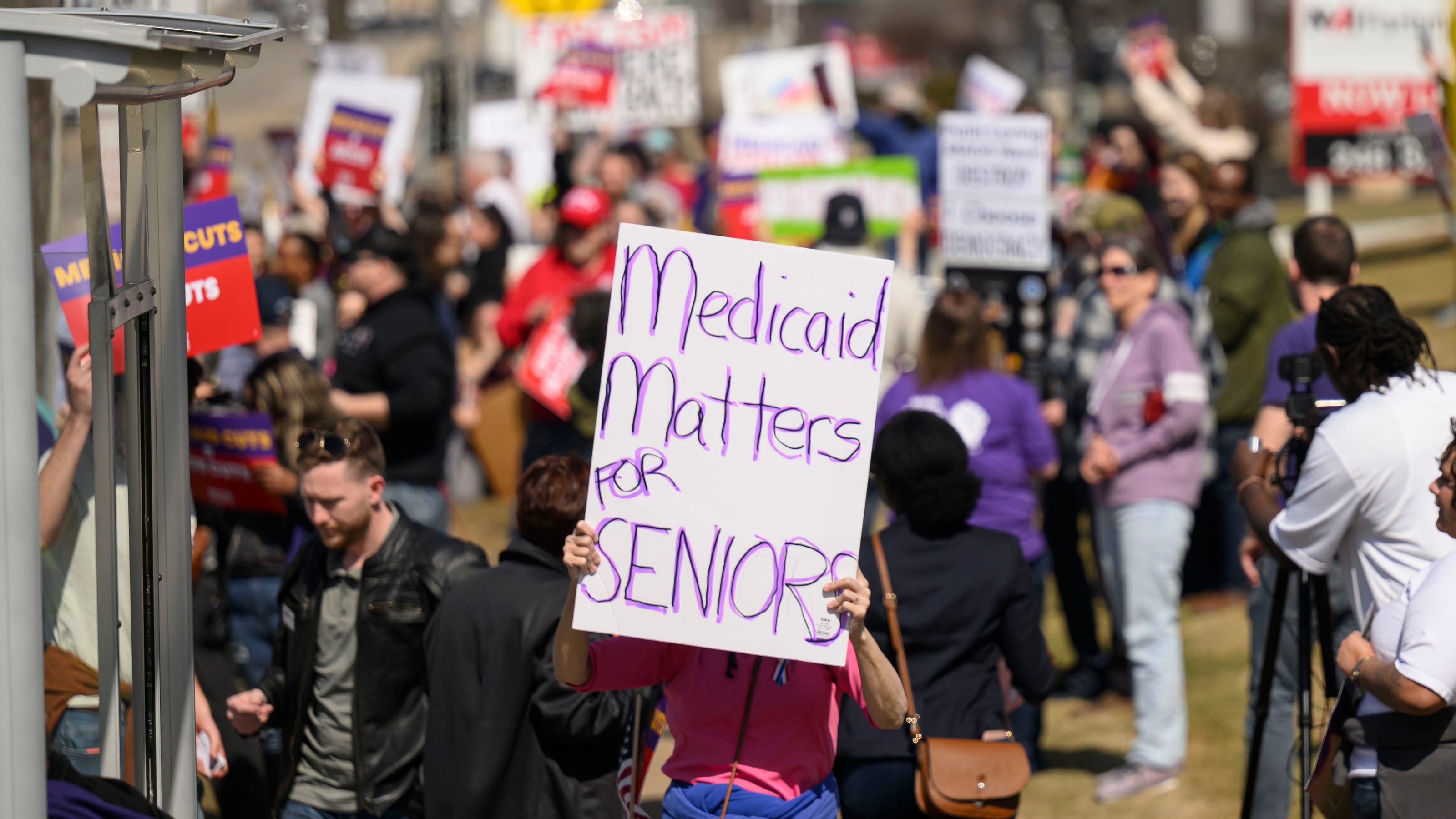
REPUBLICAN BUDGET HARMS SENIORS (AMONG MANY OTHERS)

The recently enacted Republican budget bill will harm seniors by reducing Medicaid spending, weakening Social Security, and cutting Medicare. These (and other) budget cuts are being made to help pay for large tax cuts for wealthy individuals and corporations.

The recently enacted Republican budget bill will harm seniors by reducing Medicaid spending, weakening Social Security, and cutting Medicare. These (and other) budget cuts are being made to help pay for large tax cuts for wealthy individuals and corporations.

(Note: If you find a post too long to read, please just skim the bolded portions. Thanks for reading my blog!)

The Republican budget just passed by Congress and signed by President Trump will harm seniors by reducing Medicaid spending, cutting Medicare, and weakening Social Security. Before I get into some of these details, a couple of notes on other provisions of the bill, of which there are many in the nearly 1,000-page bill’s language. As you probably know, 12 million people are projected to lose their health care due to Medicaid cuts of roughly $1 trillion (yes, trillion) over the next ten years. Medicaid provides health insurance for low-income families and seniors including long-term care for millions of seniors (see more below). Cuts to food assistance programs, primarily the Supplemental Nutrition Assistance Program (SNAP), will increase hunger for millions of families, including many new mothers and babies where malnutrition may have long-term effects on the babies’ development.

All the cuts in the budget are being made to help pay for large tax cuts for wealthy individuals and corporations. Note that the big tax cuts take effect right away, while many of the program cuts don’t go into effect until after the 2026 election. The Republicans hope that because people won’t be experiencing the program cuts before the election that it will be easier to con voters into voting for Republicans.

Most people know that the budget will increase the federal budget’s annual deficits by over $300 billion for a total of $3 trillion (yes, trillion) over the next ten years. However, few people are aware that the bill increases the federal government’s overall amount of allowable, accumulated debt, i.e., the debt ceiling, by $5 trillion. (I’ll document the Republicans’ hypocrisy on raising the debt ceiling in a future post.)

The Trump administration and Republicans are pumping out lots of disinformation about the budget bill in an attempt to keep the public from understanding the harm it will do.

For example, within hours of the passage of the bill, all of you who are seniors, tens of millions of Americans overall, received an email from the Social Security Administration stating that “The bill ensures that nearly 90% of Social Security beneficiaries will no longer pay federal income taxes on their benefitsand that “The new law includes a provision that eliminates federal income taxes on Social Security benefits for most beneficiaries.” [1]

These statements are misleading at best. Only about a quarter (25%) of seniors will see any tax benefit from the bill’s provisions – quite different from the figures used in the Social Security Administration’s email.The bill does not directly eliminate or even reduce taxes on Social Security benefits. What the bill does is temporarily increase the standard income tax deduction by $6,000 for seniors 65 and over. [2] Sixty-four percent of seniors receiving Social Security benefits ALREADY pay no tax on their Social Security payments. This percentage will increase to 88% due to the bill’s provisions. Furthermore, the people who will benefit will be those Social Security recipients who are better off and the richest will benefit the most. By the way, the increase in the income tax deduction will expire in 2028 when Trump’s term in office is ending. [3] [4]

Furthermore, the message from the Social Security Administration didn’t mention that, overall, the budget bill will weaken Social Security by reducing the revenue that flows into the Social Security system. Currently, the Social Security trust fund, built up over many years to help pay Social Security benefits, is projected to run out of money in 2033. After that, Social Security revenue would only be able to pay 77% of promised benefits. Under the Republican budget bill, the Social Security trust fund will run out of money one year earlier, in 2032, and its reduction of future Social Security revenue means that benefits after 2032 would be even lower than the currently projected 77% of the promised level. [5]

The Republican budget’s cuts to Medicaid will harm low-income seniors who qualify for Medicaid (and that they receive in addition to Medicare – which covers all seniors). In particular, it will harm the roughly eight million seniors and people with disabilities whose long-term home and community-based care services are paid for by Medicaid and the 1.5 million seniors in nursing homes. About two-thirds of all nursing home residents are covered by Medicaid. The budget’s Medicaid cuts will significantly reduce revenue for long-term care services and facilities. As a result, 25% of nursing homes are projected to close and over half are likely to have to reduce staff to remain financially viable. Therefore, finding nursing home care, let alone good quality care, will become even more difficult than it is now. [6] [7]

In addition to the direct cuts to Medicaid (government health care coverage for low-income families and seniors), the Republican budget will also force cuts to Medicare (government health care coverage for all seniors). Because of the budget’s large increases in the federal government’s annual budget deficits, the Pay-As-You-Go (PAYGO) Act of 2010 requires across-the-board budget cuts. A mandatory cut of about $50 billion a year to Medicare for each of the next ten years will be required. This cut will take place immediately (while many of the explicit program cuts in the budget are delayed until after the 2026 elections). [8]

Please contact your members of Congress and tell them you are opposed to (or even horrified by) budget cuts that will harm seniors. Tell them you are particularly upset that these cuts are being used to give wealthy individuals and corporations tax cuts. Urge them to speak out against these cuts and to explain to their constituents the toll the Republican budget is taking on seniors and others.

You can find contact information for your US Representative at  http://www.house.gov/representatives/find/ and for your US Senators at http://www.senate.gov/general/contact_information/senators_cfm.cfm.


[1]      Social Security Administration, 7/3/25, “Social Security applauds passage of legislation providing historic tax relief for seniors,” Press Release (https://www.ssa.gov/news/press/releases/2025/?utm_source=substack&utm_medium=email#2025-07-03)

[2]      Hubbell, R., 7/7/25, “Stay on task: Overwhelm the opposition,” Today’s Edition Newsletter (https://roberthubbell.substack.com/p/stay-on-task-overwhelm-the-opposition)

[3]      Edelman, L., 7/15/25, “Seniors score, gamblers get rolled in Trump’s ‘big beautiful bill’,” The Boston Globe

[4]      Siegel Bernard, T., 7/8/25, “Social Security email misleading,” The Boston Globe from the New York Times

[5]      Johnson, J., 7/4/25, “Trump Social Security chief applauds budget bill that will harm Social Security’s finances,” Common Dreams (https://www.commondreams.org/news/trump-social-security-budget-bill)

[6]      Lawson, A., 6/30/25, “The Republican nursing home apocalypse,” Common Dreams (https://www.commondreams.org/opinion/gop-nursing-homes)

[7]      National Association of Councils on Developmental Disabilities, Feb. 2025, “Medicaid facts with links to state data,” (https://nacdd.org/wp-content/uploads/2025/02/250204_NACDD-Medicaid-Fact-Sheet.pdf)

[8]      Dayen, D., 7/3/25, “Republicans are cutting Medicare. Not only Medicaid, Medicare.” The American Prospect (https://prospect.org/politics/2025-07-03-republicans-cutting-medicare-not-only-medicaid/)

ASK YOUR SENATORS TO OPPOSE THE REPUBLICAN BUDGET

Please contact your US Senators NOW. Ask them to stop the draconian Republican budget the Senate is voting on NOW, which includes major cuts to Medicaid and food assistance. Its spending cuts will harm millions of Americans. Its tax cuts will be a windfall for wealthy individuals and corporations.

ACTION: Please contact your U.S. Senators NOW and ask them to do everything they can to stop the draconian 940-page Republican budget the Senate is voting on NOW, which includes major cuts to Medicaid and food assistance. In addition to spending cuts that will harm millions of Americans and tax cuts for wealthy individuals and corporations, it includes many other very objectionable provisions.

(Note: If you find this message too long to read, please just skim the bolded portions. Thanks for reading and acting!)

The Republican budget the Senate is voting on NOW makes big spending cuts in a range of government programs and services due to the need to reduce the increase in the federal budget deficit caused by the lost revenue from the big tax cuts for wealthy individuals and corporations. Overall, the richest Americans would gain around $12,000 a year from the tax cuts, while the poorest families would lose about $1,600 on average from program cuts. Here are some key things the Senate Republicans’ proposed budget would do: [1] [2] [3]

  • Take health care away from roughly 12 million Americans by cutting spending on Medicaid by $930 billion over ten years. Medicaid provides health insurance for millions of low-income families, including students and families of low-paid and unemployed workers. It also covers nursing home care for millions of seniors and health care for disabled individuals. This cut, combined with cuts to the Affordable Care Act and Medicare, will reduce spending and wreak havoc throughout the whole health care system.
  • Take food assistance away from millions of low-income households, including many new mothers and their babies, as well as students and families of low-paid and unemployed workers. It would dramatically cut the Supplemental Nutrition Assistance Program (SNAP), formerly known as Food Stamps. It would also cut the Farm to School program that supports local, small farmers and provides healthy, fresh food to school lunch programs.
  • Increase the federal budget deficit by about $330 billion a year. This would add $3.3 trillion (yes, trillion) to the overall federal debt over the next ten years.
  • Extend expiring tax cuts and create new ones that will provide huge windfalls to wealthy individuals and corporations at a cost of about $4 trillion.
  • More than double the budget for the detention and deportation of immigrants by adding $150 billion to the budget of the Department of Homeland Security. It will add $45 billion to the budget for detention centers to increase or expand the existing 160 detention centers. This would mean ICE has more money for detention that the U.S. Bureau of Prisons.
  • Immediately end tax credits in place since 2005 to incentivize the development of wind and solar energy. Moreover, it would implement a new tax on these projects. [4]
  • Increase funding for the Defense Department by about $150 billion, including for Elon Musk’s companies. This significant increase is proposed even though there’s more waste, fraud, and abuse in the Defense Department than anywhere else in the federal government. Clearly, Trump, his administration, and Musk and DOGE don’t really care about cutting waste and making government more efficient.

There are many other harmful provisions in the proposed Republican budget.

Please contact your U.S. Senators NOW (as they are voting on this bill and its provisions this week) and ask them to vote against this draconian budget in the upcoming votes. Let them know you oppose tax cuts for wealthy corporations and incredibly wealthy individuals –  especially when they are partially paid for by cutting programs that benefit everyday working Americans.

If your Senator is a Democrat or Republicans Tillis (NC) or Paul (KY), thank them for voting against the budget in a preliminary vote. If your Senator is one of the other Republicans, ask them to vote against the budget in upcoming votes.

Your contacts are important even if you don’t change someone’s mind or vote. It lets your Senators know that you are watching them and paying attention to what’s going on in Congress. If they voted against the budget preliminarily, it will encourage them to continue to oppose the budget. If they vote for the budget in upcoming votes, it will let them know that they are jeopardizing their chances of re-election, which is key to getting them to oppose Trump in these and future votes.

You can find contact information for your U.S. Senators at http://www.senate.gov/general/contact_information/senators_cfm.cfm.

THANKS FOR ALL YOU DO! IT MAKES A DIFFERENCE!

(Note: Republican presidents (Reagan, Bush, and Trump) and Congresses have cut taxes for wealthy individuals and corporations multiple times since the 1981. These tax cuts have added over $10 trillion (yes, trillion) to the federal debt. The economic boom, jobs, increased tax revenue, and trickle down of benefits to everyday Americans they always promise have NEVER materialized. Most recently, they did not happen after the Trump and Republican tax cut of 2017. Extending these tax cuts and adding others will not increase economic growth, will not increase tax revenue, will not create jobs, and will not trickle down to working Americans. They will, however, balloon the deficit by around $500 billion a year – unless spending is cut to make up for the loss of revenue.)


[1]      Reich, R., 6/30/25, “The worst bill in history,” Robert Reich’s daily blog (https://robertreich.substack.com/p/the-three-myths-of-trickle-down-economics)

[2]      Mascaro, L., Freking, K., & Cappelletti, J., 6/29/25, “Trump’s tax and spending cuts bill clears key Senate vote as Republicans race to pass it by July 4,” The Boston Globe from the Associated Press

[3]      Cox Richardson, H., 6/28/25, “Letters from an American,” (https://heathercoxrichardson.substack.com/p/june-28-2025)

[4]      Reuters, 6/28/25, “Senate bill hastens end of wind, solar tax credits and imposes new tax,” U.S. News (https://www.usnews.com/news/politics/articles/2025-06-28/senate-bill-hastens-end-of-wind-solar-tax-credits-and-imposes-new-tax)

EXAMPLES OF THE HUMAN TOLL OF TRUMP ADMINISTRATION ACTIONS

The Trump administration is making us less safe from disease, violence, and death. Cuts to Medicaid and Medicare will increase deaths. So will weakening gun violence prevention efforts. Finally, the Trump administration’s war on children is harming children and will increase deaths for them too.

The Trump administration is making us all less safe in many ways, including less safe from disease, violence, and death. Cuts to the Medicaid and Medicare health care programs will increase deaths. So will the weakening of gun violence prevention efforts. Finally, the Trump administration is engaged in a war on children that is harming the well-being of children and will increase deaths for them as well.

(Note: If you find a post too long to read, please just skim the bolded portions. Thanks for reading my blog!)

STORY #1: The expansion of Medicaid by the Affordable Care Act (ACA, aka Obama Care) has saved 27,400 lives. The National Bureau of Economic Research recently published an analysis of 37 million Americans since the passage of the ACA in 2010. The low-income adults who got Medicaid coverage under the ACA expansion were 21% less likely to die each year than those who did not have Medicaid coverage. Deaths also fell for 20 and 30-year-olds. Overall, the analysis estimated that 27,400 lives were saved by the Medicaid expansion. This is one of several studies that have found that having Medicaid coverage saves lives. These findings are particularly relevant now, given that the Republican budget just passed by the U.S. House would end Medicaid coverage for roughly eight million people who now have it. [1]

STORY #2: The Republican budget just passed by the U.S. House would increase the deficit so much that it would trigger mandatory spending cuts, according to the Congressional Budget Office (CBO). The cuts would include a roughly $50 billion a year reduction in Medicare spending. Explicit cuts to Medicaid (health coverage for low-income Americans including many seniors in nursing homes) are specified in the Republican budget. The cuts to Medicare (health coverage for all seniors) are not explicit in the budget but are forced by the budget’s sizable increase in the annual federal budget deficit. The CBO’s non-partisan analysis estimated that the Republican budget would increase the deficit by about $230 billion a year. Therefore, under the 2010 Pay-As-You-Go Act (PAYGO), the White House Office of Management and Budget would have to reduce spending (i.e., sequester authorized spending) by $230 billion a year. About $50 billion of this would come from cuts to Medicare, according to the CBO. [2]

STORY #3: The Trump administration is weakening multiple facets of gun violence prevention efforts. This makes us all less safe. On day two as President in 2025, Trump closed the White House Office of Gun Violence Prevention. Despite Trump’s promises to keep Americans safe and reduce crime, this and other actions that weaken gun violence prevention will do the opposite. The White House Office of Gun Violence Prevention, created by President Biden, brought a coordinated, government-wide approach to gun violence prevention for the first time. It coordinated the federal response to mass shootings and community violence. Its cross-agency, public health approach to the uniquely American epidemic of gun violence contributed to a 13.5% decline in the homicide rate in 2023, the largest annual decrease ever. It also contributed to a significant drop in the number of untraceable “ghost” guns, i.e., guns without serial numbers. It worked with the Bureau of Alcohol, Tobacco, Firearms and Explosives (ATF) to close down 644 gun dealers who had engaged in illegal sales. [3]

The Trump administration has also:

  • Legalized the sale of devices that convert ordinary guns into automatic weapons, i.e., machine guns,
  • Advocated for a nationwide right to carry a concealed weapon,
  • Cut Centers for Disease Control funding for studying and analyzing gun violence,
  • Promoted policies that would make it easier and more profitable to sell gun silencers, and
  • Facilitated re-licensing of gun dealers who had their licenses revoked for illegal activity.

Three hundred Americans are shot every day on average. Weakening gun violence protection efforts puts the interests and profits of the gun industry above the safety of children and all the rest of us.

STORY #4: The Trump administration is putting children at risk and making them less safe in multiple ways. The risks start at birth and continue through adolescence. The lack of federal regulations and enforcement for the health care of pregnant and post-partem women has led to significant increases in maternal and infant mortality.

The Trump administration has laid off thousands of workers who run programs that help children and their families. They have also cut funding or plan to cut funding for many of these programs. For example, the staffs of programs that help families keep the electricity and heat on have been fired en masse. The staff that provides enforcement for child support payments has been decimated. Funding has been terminated for investigating child sexual abuse, responding to internet crimes against children, preventing youth violence, and following up on reports of missing children. Billions of dollars for school meals and school safety have been suspended or delayed. [4]

Trump wants to eliminate funding for Head Start, which provides hundreds of thousands of low-income children annually with high quality early education along with meals and family support. The federal staff that oversees Head Start programs and processes their federal funding has been decimated, which may force some programs to shut down.

The Trump administration’s cutting of funding for food assistance, gun violence prevention efforts, and the suicide hotline will all disproportionately harm children. It’s ignoring the harm that social media does to children. And last, but by no means least, its targeting of immigrants, who frequently are parents of children (who may well be U.S. citizens) is doing untold and immeasurable harm to children.


[1]      Kliff, S., & Sanger-Katz, M., 5/17/25, “Medicaid expansion saved 27,000 lives, study finds,” The Boston Globe from The New York Times

[2]      Johnson, J., 5/21/25, “‘They’re not just cutting Medicaid’: GOP bill would trigger over $500 billion in Medicare cuts,” Common Dreams (https://www.commondreams.org/news/cuts-to-medicare)

[3]      Brady Campaign to Prevent Gun Violence, retrieved from the Internet 5/27/25, “Press releases,” (https://www.bradyunited.org/press)

[4]      Hager, E., 4/23/25, “The Trump administration’s war on children,” ProPublica (https://www.propublica.org/article/how-trump-budget-cuts-harm-kids-child-care-education-abuse)

WHAT DEMOCRATS NEED TO DO Part 2

Democrats need to be more dramatic, effective, and consistent in opposing Trump, his nominees, and the congressional Republicans’ agenda. They need to step up their resistance while promoting and committing to enact policies that would support everyday Americans.

Democrats need to be more dramatic, effective, and consistent in opposing Trump, his nominees, and the congressional Republicans’ agenda. They need to step up their resistance while promoting and committing to enact policies that would support everyday Americans.

(Note: If you find this post too long to read, please just skim the bolded portions. Thanks for reading my blog!)

(Note: Correction. In my previous post asking you to contact your U.S. Representative and ask them to oppose elements of the proposed Republican budget, I wrote that the proposed cuts to Medicaid were “$700 – $800 million.” As many of you know, that should have been $700 – $800 BILLION.)

This previous post made the case that Democrats need to be more dramatic, effective, and consistent in opposing Trump, his nominees, and the congressional Republicans’ agenda. It identified policies that Democrats should be promoting for our economy and the economic well-being of all Americans. This current post focuses on policies in the social services arena, including health care reforms, drug price reductions, enhancements to Medicare, and ensuring long-term funding for Social Security.

Here are some specific policies Democrats ought to be promoting and committing to enact in the social services arena when they are back in power:

  • Ending wasteful and dangerous privatization of health care. Here are two examples;
    • Private equity firms should be banned from the health care industry. The example of Steward Health alone should be enough to seal this case, but there are plenty of other examples as well. (See this previous post for more information.)
    • End the Medicare Advantage program, which privatizes Medicare and results in huge, often fraudulent, wasteful costs to the Medicare program. For example, in 2024, illegal overbilling by Medicare Advantage providers (i.e., big insurance corporations) was estimated to be $83 billion. Medicare Advantage is estimated to cost Medicare $140 billion more per year than if all individuals were on traditional Medicare. [1] (See this previous post for more details.)
  • Strong regulation of drug prices. President Biden took some initial steps to regulate and reduce drug prices, but President Trump is undoing them. In 2022, U.S. drug prices were two and three-quarters times (178% more than) prices in 33 other industrialized countries. This means that our federal, state, and local governments (i.e., taxpayers) and all of us pay over $200 billion a year extra, which fuels exceptionally high profits for drug makers (when compared to other sectors of our economy). [2] (See this previous post for more details.)
  • Enhance Medicare. If the Medicare Advantage program was eliminated and Medicare was allowed to negotiate prices for all drugs (see the above two bullet points), the savings would be sufficient to pay for the addition of dental, hearing, and vision benefits to Medicare, as well as to cap out-of-pocket spending by Medicare enrollees.
  • Ensure Social Security funding for the rest of this century. Currently, workers pay taxes into Social Security only on the first $176,100 they earn in a year. This means that someone making a million dollars stops paying into Social Security after February 15 and someone making ten million dollars stops paying into Social Security after the first week of January. Simply eliminating this cap would increase Social Security’s revenue by roughly $100 billion per year. This would provide about 75% of the funding needed to allow Social Security to pay out its full planned benefits for the rest of the century. The rest could be raised by taxing investment income, estates, and gifts or a variety of other strategies. [3]
    • NOTE: The Medicare and Social Security Fair Share Act in Congress would require taxpayers with over $400,000 in income in a year to pay a bit more into Medicare and Social Security. This would fully fund planned Medicare and Social Security benefits for at least the next 75 years. [4]

There are plenty of other policies that Democrats should be advancing to demonstrate that they would better serve and support workers and everyday Americans than Trump and the Republicans. Examples include housing; early education and child care; supporting workers and their unions; effective regulation of businesses for worker, consumer, and public safety; and strong enforcement of antitrust laws including the breaking up of monopolistic companies.

If any of your members of Congress are Democrats, I urge you to contact them and ask them to step up their resistance while promoting and committing to enact policies that would support everyday Americans. You can find contact information for your US Representative at  http://www.house.gov/representatives/find/ and for your US Senators at http://www.senate.gov/general/contact_information/senators_cfm.cfm.


[1]      Dayen, D., 1/27/25, “We found the $2 trillion,” The American Prospect (https://prospect.org/economy/2025-01-27-we-found-the-2-trillion-elon-musk-doge/)

[2]      Dayen, D., 1/27/25, see above.

[3]      Dayen, D., 1/27/25, see above.

[4]      Conley, J., 5/9/25, “Democrats’ bill would extend Social Security and Medicare solvency ‘as far as the eye can see’,” Common Dreams (https://www.commondreams.org/news/social-security-medicare-2671925476)

STOP TRUMP NOMINEES FOR EDUCATION AND MEDICARE / MEDICAID NOW!

I strongly urge you to contact your US Senators NOW and demand that they block the confirmation of Trump nominees Linda McMahon for Secretary of Education and Dr. Mehmet Oz for Administrator of the Centers for Medicare and Medicaid Services (CMS). CMS oversees health care for more than 150 million Americans. Call if you can or email your Senators. Here’s a sample message:

Please speak out loudly and clearly, and do everything in your power, to stop Linda McMahon from being confirmed as Secretary of Education and Dr. Oz from being confirmed as Administrator of CMS. Both nominees are extremely unqualified for these jobs. Maintaining our public education and health care systems is critical to the future of our country. Neither of these nominees has the experience or expertise to oversee these critical systems.

Please stop these nominees NOW! If you have to stage a sit-in in the Senate chamber to get the attention of your colleagues, the mainstream media, and the public, please do so. Dramatic action is required to stop these dramatically unqualified nominees.

You can find contact information for your US Senators at http://www.senate.gov/general/contact_information/senators_cfm.cfm.

RESULTS OF FOR-PROFIT HEALTH CARE Part 2

Here are some current examples of the results of for-profit health care: lack of availability and use of generic drugs, huge bills for ambulance services, doctors unionizing, and illegal and unethical health care for prison inmates from a private equity-owned provider.

This is the eleventh post in a series on how the U.S. health care system is a high-cost, low-quality, profit-driven system. The tenth post provides some other examples of the results of for-profit health care and links to the previous posts. Those posts cover the negative effects of vertical integration and private equity-owned health care providers. They also describe illegal and unethical behavior by nursing home operators as well as anti-competitive and often illegal practices by drug companies. And one post highlights how doctors are pushing back against for-profit health care.

(Note: If you find my posts too long to read on occasion, please just skim the bolded portions. Thanks for reading my blog! Special Note: The new, more user-friendly website for my blog is here.)

Generic drugs that are just as effective as and cheaper than brand name drugs are sometimes unavailable in the U.S. or are underused because they don’t produce enough profit. For example, there’s a generic cold medicine, ambroxol, that’s been available in Europe since 1978. It’s cheap (a few euros), available over the counter, and Americans who have used it describe it as miraculous. However, no drugmaker has ever sought Food and Drug Administration (FDA) approval to sell it in the U.S. FDA approval is costly and time-consuming and the profits of a generic drug aren’t sufficient to warrant the expense, so it’s not available in the U.S. [1]

The Biden Administration should direct the FDA to establish a new, expedited approval process for drugs approved for sale in Europe. The European Medicines Agency, Europe’s equivalent of the FDA, has a proven track record as an effective drug regulator and the FDA could simply review its records on a drug and quickly approve the drug for use in the U.S.

Another example is anastrozole, a generic drug that works to prevent breast cancer in post-menopausal women with risk factors for breast cancer. Many women and even some doctors are unaware of this because, as a generic drug, it would not produce enough profit to warrant a marketing campaign by a drugmaker. A one-year supply costs only about $100. Anastrozole is FDA approved for treating breast cancer but not for preventing breast cancer. A definitive clinical trial showing its benefit in preventing breast cancer was completed in 2014 in the United Kingdom (UK). Because the UK has a single-payer health care system that is motivated to decrease costs as well as promote health, it promotes the use of anastrozole for preventing breast cancer, while no one is promoting that here in the U.S. [2]

On a different front, exorbitant bills for ambulance transportation are still widespread, despite the federal No Surprises Act passed in 2022. It eliminated surprise billing for most medical services but excluded ambulance services because of the complexities involved. An advisory committee charged with studying this issue recently recommended capping patients’ out-of-pocket costs at $100. At least ten states have banned surprise billing (aka balance billing) to patients of the difference between what a service provider charges and what the patient’s insurance will pay. In the absence of such a state law, patients are receiving ambulance bills that often are $1,000 and sometimes as high as $3,300. People who need an ambulance shouldn’t have second thoughts about calling one due to fear of an unaffordable bill. [3]

Doctors are pushing back against for-profit health care by unionizing (which was the topic of this previous post). The 145 doctors at Salem Hospital in Massachusetts have announced they are unionizing in order to improve patient care. Citing budget cuts, lack of sufficient beds, and decision-making without their input, they are joining Council 93 of the American Federation of State, County, and Municipal Employees (AFSCME), which represents roughly 3,000 doctors nationwide. Salem Hospital is part of the Mass General Brigham, Boston-based conglomerate, which employs about 7,500 doctors. Some of its nurses, medical residents and fellows, and other staff are already unionized. [4]

Another example of problems with private equity (PE) owned health care providers is Wellpath (owned by H.I.G. Capital). (See previous posts here and here for other examples.) Wellpath provides prison health care in 34 states for 300,000 patients, generating an estimated $2 billion in revenue. It is a defendant in over 1,000 lawsuits filed by prisoners, their families, and civil rights advocates. A survey of inmates it serves found that 80% reported delayed health care and 79% reported a medical condition that had been ignored. In its six years servicing 6,000 inmates in Massachusetts’s Department of Correction, it has been accused of chronic understaffing, denials of care, and failures to follow doctors’ treatment plans, as well as inappropriate treatment of inmates with mental health issues, including the inappropriate use of solitary confinement and chemical and physical restraints. In November 2020, an investigation by the Massachusetts U.S. Attorney and the U.S. Department of Justice’s Civil Rights Division found numerous problems and accused Wellpath of exposing inmates having a mental health crisis “to conditions that harm them or place them at serious risk of harm.” [5] [6]

I urge you to contact President Biden and your U.S. Representative and Senators to ask them to:

  • Implement an expedited FDA approval process for drugs approved in Europe,
  • Fund the FDA to promote generic drug use, and
  • Ban private equity firms from our healthcare system. Furthermore, ask them to regulate the private equity business generally to eliminate its harmful and unproductive extreme capitalism practices throughout our economy.

You can email President Biden at http://www.whitehouse.gov/contact/submit-questions-and-comments or you can call the White House comment line at 202-456-1111 or the switchboard at 202-456-1414. You can find contact information for your US Representative at  http://www.house.gov/representatives/find/ and for your US Senators at http://www.senate.gov/general/contact_information/senators_cfm.cfm.

[1]      Kuttner, R., 9/15/23, “How do you spell relief?” The American Prospect (https://prospect.org/blogs-and-newsletters/tap/2023-09-15-how-do-you-spell-relief/)

[2]      Kleiman, L., 12/27/23, “Cheap, effective treatments for cancer already exist, so why don’t we know about them?” The Boston Globe

[3]      Editorial Board, 11/20/23, “Ban expensive surprise bills for ambulance rides,” The Boston Globe

[4]      Johnston, K., 1/10/24, “Hospital doctors forming a union,” The Boston Globe

[5]      Piore, A., 1/3/24, “Company seeking new contract faces more scrutiny over prisoner treatment,” The Boston Globe

[6]      Editorial Board, 12/27/23, “Warren, Markey shine a much-needed light on prison health care,” The Boston Globe

U.S. DRUG PRICES ARE A RIP-OFF

U.S. drug prices have long been a classic example of the corporate, profit maximization mentality that puts profits before people. The lack of regulation and antitrust enforcement in the face of ubiquitous anti-competitive strategies by the pharmaceutical industry have allowed this rip-off to go on for far too long with horrible effects on people’s health and financial well-being.

This is the eighth post in a series on how the U.S. health care system is a profit-driven system. The first post presented an overview of the for-profit U.S. health care system. The second and third ones focused on the role of the extreme capitalism of private equity firms. The fourth and fifth posts described large-scale vertical integration and the problems and illegal behavior that have occurred with it. The sixth post describes an example of the egregious illegal and unethical behavior that is all too common among nursing home operators. The seventh post highlighted how doctors are pushing back against health care for profits rather than for patients.

(Note: If you find my posts too long to read on occasion, please just skim the bolded portions. They present the key points I’m making. Thanks for reading my blog! Special Note: The new, more user-friendly website for my blog is here. Click on the Subscribe Today button to receive notification of new posts.)

Drug prices are far higher in the U.S. than in other well-off countries. Per person drug spending in the U.S. is over three times what it is in the Netherlands, Norway, and Sweden; it’s one and a half times what it is in Switzerland, the next highest among the nine high-income countries in this study. [1] This is largely due to higher prices and not other factors.

A recent and rather dramatic example of how high drug prices are in the U.S. is that the U.S. Food and Drug Administration (FDA) just allowed Florida to buy drugs in bulk from Canada for its public health programs including Medicaid and incarcerated people’s health care. It is estimated that this will save Florida $150 million a year! Eight other states have laws allowing state drug importation and have asked, or plan to ask, the FDA for approval for similar bulk purchasing plans. There is broad (80% in some polls) and bipartisan support for drug importation from Canada to reduce drug costs. [2]

Congress passed a law allowing drug importation 20 years ago but the federal government has delayed its implementation, supposedly because of safety concerns. However, in many cases, the drugs are from the same manufacturer, just sold through a Canadian distributor.

The pharmaceutical industry, through its lobbying organization, the Pharmaceutical Research and Manufacturers of America (PhRMA), has fiercely opposed drug importation and has sued multiple times to block bulk drug importation plans. It is expected to file a lawsuit to block, or at least delay, Florida’s program.

Some drug manufacturers have agreements with Canadian distributors that prevent the distributors from exporting their drugs to the U.S. The Canadian government has taken steps to block the exportation of drugs that are in short supply, as the U.S. market is, of course, much bigger than the Canadian market.

It is estimated that the pharmaceutical industry’s aggressive and sometimes illegal efforts to keep drug prices high and block competition cost U.S. consumers, insurers, and government health programs (i.e., taxpayers) at least $40 billion every year. [3] As a result, one of out every four Americans can’t afford their prescribed medications. [4]

A study by the American Economic Liberties Project and the Initiative for Medicines, Access, and Knowledge (I-MAK) identified ten illegal, anti-competitive strategies used by the pharmaceutical industry to inflate drug prices. Its examination of the 100 most-used drugs in Medicare and Medicaid in 2019 estimated that the programs’ costs for them were inflated by $15 billion (14%) and $3 billion (9%), respectively. These two public programs are responsible for 45% of drug expenditures in the U.S. Other drug purchasers paid $22 billion more for these drugs due to the illegal, anti-competitive practices of the pharmaceutical industry. For example, it was estimated that Medicare and Medicaid would have paid 50% less for insulin in the absence of illegal practices by the four major insulin manufacturers. [5]

The anti-competitive practices of the pharmaceutical industry include:

  • Paying potential competitors not to sell generic alternatives to drugs,
  • Patent fraud and abuse including false statements to the patent office and sham patent lawsuits,
  • Fraudulent tactics to delay approval of a competing drug, often a generic alternative,
  • Collusion among competitors to increase prices,
  • Mergers, acquisitions, and monopolistic behavior, and
  • Rebates to drug insurance plans to steer consumers to brand name drugs and away from cheaper generic drugs. (These rebates are indistinguishable from bribes or kickbacks.)

My next post will highlight some specific examples of these anti-competitive practices and will present some policy changes that would reduce these abuses.

[1]      Sarnak, D. O., Squires, D., Kuzmak, G., & Bishop, S., Oct. 2017, “Paying for prescription drugs around the world: Why is the U.S. and outlier?” The Commonwealth Fund (https://www.commonwealthfund.org/sites/default/files/documents/___media_files_publications_issue_brief_2017_oct_sarnak_paying_for_rx_ib_v2.pdf)

[2]      Jewett, C., & Stolberg, S. G., 1/6/24, “FDA issues first approval for mass drug imports to states from Canada,” The Boston Globe from The New York Times

[3]      Johnson, J., 5/16/23, “Big Pharma’s ‘rampant corporate lawlessness’ cost Americans $40 billion in 2019: Report,” Common Dreams (https://www.commondreams.org/news/big-pharma-corporate-lawlessness)

[4]      American Economic Liberties Project and the Initiative for Medicines, Access, and Knowledge, May 2023, “The costs of pharma cheating,” (https://www.economicliberties.us/wp-content/uploads/2023/05/AELP_052023_PharmaCheats_Report_FINAL.pdf)

[5]      American Economic Liberties Project and the Initiative for Medicines, Access, and Knowledge, May 2023, see above