SUMMARY: For over 40 years, small government advocates have worked to shrink government by shrinking its revenue, i.e., by cutting taxes. Despite their claims of strong economic growth benefiting everyone, the reality has been exploding economic inequality and federal budget deficits. Now, they are turning their focus to cutting state income taxes and even the local property tax. If they succeed, it will only expand economic inequality and feed the oligarchy that is trying to take over our democracy.
(Note: If you find a post too long to read, please just skim the bolded portions. Thanks for reading my blog!)
(Note: Please follow me and get notices of my blog posts on Bluesky at: @jalippitt.bsky.social. Thanks!)
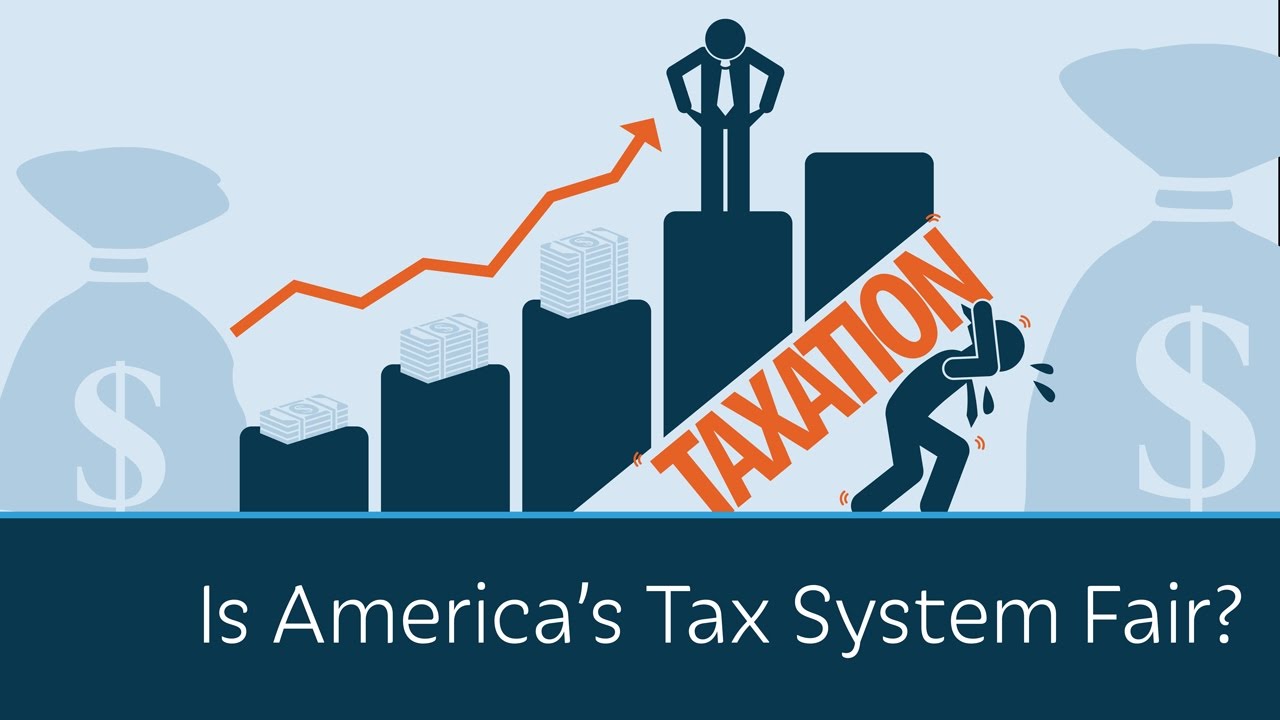
For over 40 years, small government advocates, historically conservative Republicans, have worked to shrink government by shrinking its revenue, i.e., by cutting taxes. At the federal level, they have succeeded in dramatically reducing income taxes on corporations and high-income households.
- Year Corporate tax rate Top personal income tax rate
- 1950s 50% 90%
- 1970s High 40% 70%
- 1980s 34% 50%
- 2026 21% 37%
Republicans and so-called supply-side economists promised that tax cuts would spur economic and job growth resulting in prosperity for all (aka trickle-down economics), but the reality has been exploding economic inequality. Everyday working Americans are struggling with the affordability of the cost of living and many middle-class Americans have seen their dreams and economic security vanish. Meanwhile, the wealth of the wealthy has skyrocketed. Note that if tax cuts did indeed stimulate economic growth, based on the tax cuts documented above, our economy should have been soaring for the last 50 years.
Despite Republicans’ and supply-side economists’ claims that tax cuts would actually increase government tax revenue due to strong economic growth, their tax cuts and increases in military spending have caused the federal budget deficit to explode. The annual budget deficits have grown from under $74 billion in 1980 to almost 30 times that or $2 trillion in 2025. The accumulated federal debt has grown from under $1 trillion in 1980 to $38.5 trillion in 2025. Although Republicans have offset their tax cuts’ increases in the deficit somewhat by cutting social spending, these efforts have met with limited success because of the need for and public support of a social safety net that includes unemployment benefits, food assistance, and subsidized health care when workers fall on hard times.
Republicans and their supply-side economists have also been trying to get states to cut taxes. The focus has typically been on personal and corporate income taxes and they’ve had significant success. Since 2021, twenty-six states have cut their personal and/or corporate income taxes. [1] Massachusetts will likely have two tax cut measures on the November 2026 ballot.
They are proceeding with these tax cut efforts despite the dreadful experience a decade ago in Kansas. In 2012, Kansas dramatically cut its personal and business income taxes based on the supply-side promises of booming economic growth. However, by 2017, state revenue was down hundreds of millions of dollars, economic growth was below average, and the state was having to cut funding for schools and roads. The Republicans in the state legislature voted to repeal the tax cuts, the Republican Governor who’d sponsored the cuts vetoed the repeal, and the Republican legislature voted with an over two-thirds majority to override the Governor’s veto.
Furthermore, in part because not every state has an income tax, the Republicans and their supply-side economists are now targeting the source of 70% of local government revenue, the property tax. They claim that state governments will step in to make up local government shortfalls through sales taxes and other state revenue sources.
Almost inevitably, tax cuts on personal or business income, as well as to property taxes, disproportionately benefit wealthy individuals and corporations. Although middle- and lower-income individuals may see some benefits, the larger benefits go to the well off. This expands the already growing economic inequality in the U.S. For example, one of the Massachusetts proposals would cut the state’s base income tax rate from 5% to 4%. While the proponents state that on average families would get a $1,300 tax break, low-income families would get about $70, those with incomes of roughly $1 million would get $1,000, and the wealthiest families would get $35,000 or more. Similar effects would occur with cuts to, let alone elimination of, property taxes as the wealthiest families have the properties with the highest values.
Note that replacing this lost income or property tax revenue with sales taxes or gambling revenue means using very regressive taxes to replace often progressive ones. Moreover, the loss of government services and supports due to loss of revenue will hit the lowest income families the hardest.
Therefore, these tax cut strategies that Republicans and their supply-side economists are pushing will further increase economic inequality, which will only strengthen the oligarchy that is working to take control of our democracy. If someone tries to tell you they can cut your taxes without cutting the services you get from government, such as schools, roads, public safety, and a safety net for hard times, don’t believe them. There is no such thing as a free lunch. And if they tell you you’ll save a little money, ask them how much the millionaires will save and what you’ll lose from your government in the bargain.
I encourage you to contact your state and local elected officials, as well as your U.S. Representative and Senators, to ask them to support progressive tax policies that support everyday working Americans. [2] Such policies include progressive income tax rates, wealth and unearned income taxes, and fair business taxes. (See this previous post for more on fair taxation.)
For lots of good news, see Jess Craven’s Chop Wood Carry Water blog’s most recent good news Sunday post here.
[1] Curry Wimbish, W., 4/8/26, “Live tax-free and die,” The American Prospect (https://prospect.org/2026/04/08/apr-2026-magazine-live-tax-free-and-die/)
[2] You can find contact information for your US Representative at http://www.house.gov/representatives/find/ and for your US Senators at http://www.senate.gov/general/contact_information/senators_cfm.cfm.