THE AFFORDABILITY CRISIS Part 2

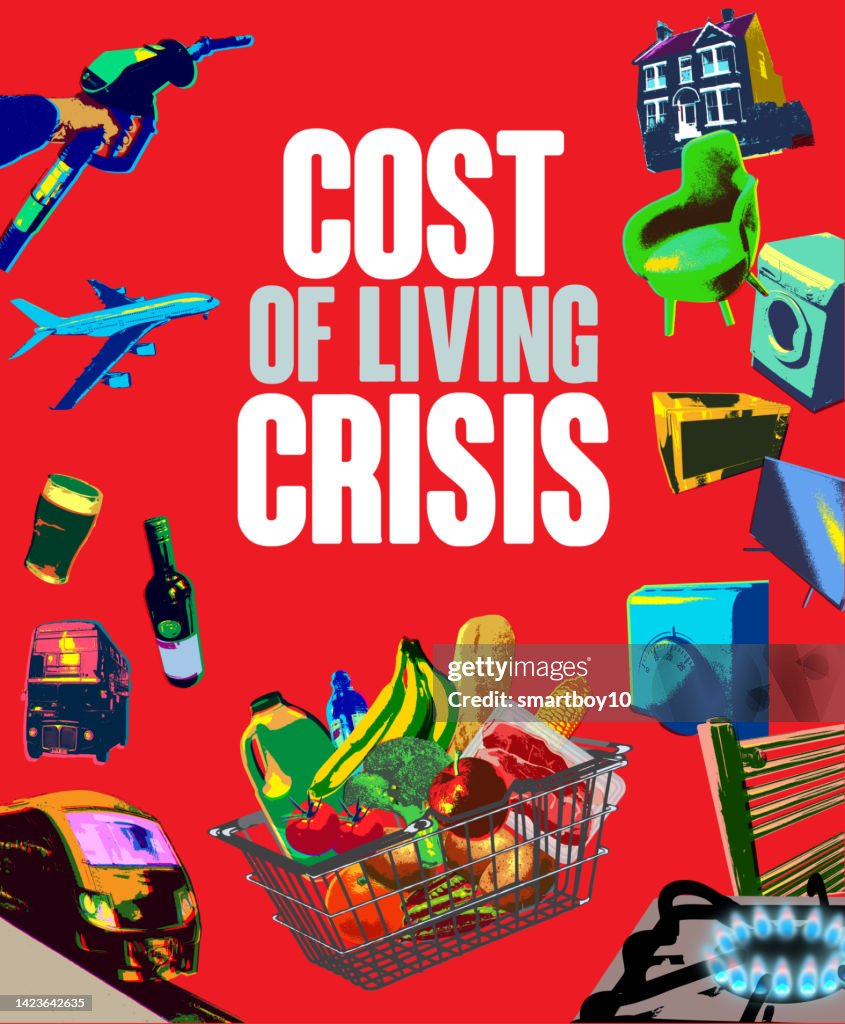
Cost of Living Crisis theme done in a Posterised style. Inflation – Economics, cost, shopping basket, supermarket

The affordability crisis (aka cost of living crisis) in the U.S. is multifaceted and has been growing for 45 years, due to low pay and high prices. There are many factors pushing up prices well beyond normal inflation, including profit-taking middlemen and privatization of public goods and services.

(Note: If you find a post too long to read, please just skim the bolded portions. Thanks for reading my blog!)

(Note: Please follow me and get notices of my blog posts on Bluesky at: @jalippitt.bsky.social. Thanks!)

My previous post presented an overview of the affordability crisis (aka cost of living crisis) in the U.S., its 45 year history, and began a discussion of why prices are so high. It covered:

  • Monopolistic price gouging,
  • Tariffs, and
  • Personalized (aka surveillance) pricing driven by artificial intelligence (AI).

This post will discuss:

  • Profit-taking by middlemen (aka intermediaries) from ticket sellers to drug benefit managers that increases costs for consumers, often unjustifiably and even illegally.
  • Privatization and the fraud that often accompanies it leave consumers and taxpayers with higher costs and often degraded quality.

Middlemen, also referred to as intermediaries, are entities that operate between consumers and the producers of goods or services. Ostensibly, they make the market operate more efficiently by linking consumers and producers, while making transactions easier and smoother. However, given their need to make a profit, they often end up more focused on profit-making than helping markets operate efficiently. They add a layer of costs to consumers’ purchases, pushing up prices. [1]

Pharmacy Benefit Managers (PBMs) are a classic example of  middlemen. The original intent was to reduce drug costs, saving insurers and consumers money, but that has morphed into rapacious profit making by manipulating the market and increasing drug costs for consumers. PBMs manage drug benefits for insurance companies and largely determine which drugs are available to insurees and how much they will pay for them. There are three huge, monopolistic PBMs that manage the great majority of drug benefits for private insurers, which is a $600 billion global market. They have found that they can be very profitable by negotiating kickbacks from drug manufacturers (that may be half the cost of a drug) for the drugs they include in an insurer’s formulary, i.e., the list of insured drugs and how much consumers must pay for them. They also sign contracts with pharmacies that tend to reward the big chains and make it very hard for independent pharmacies to exist. It’s estimated that 42 cents of every dollar paid for prescription drugs now goes to a PBM. Meanwhile, the PBM industry spends over $10 million a year lobbying the federal government to block regulation. [2]

As with the PBMs, other monopolistic middlemen often find ways to manipulate the market to make big profits by not only increasing prices for consumers but also lowering the prices they pay to producers. Amazon, once it gained monopolistic control of various e-commerce sectors, has shown itself to be a master at squeezing producers to minimize costs, while also figuring out ways to maximize its revenue from consumers.

Live Nation (parent company of Ticket Master) is another example of a monopolistic middleman. It dominates ticket sales for entertainment events and jacks up prices and adds junk fees to boost its profits. It has increased its monopolistic power by also managing thousands of performers and purchasing many entertainment venues. [3]

Middlemen, from Wall St. asset managers and stock traders to real estate agents, eBay, and the apps that deliver food to your door, add their costs and profits to transactions, thereby increasing prices for consumers. Some have been found to engage in illegal or at least unethical ways to increase their profits.

Meat packers are middlemen that buy meat from ranchers and farmers, process it, and sell it to consumer outlets, e.g., supermarkets. There are four giant meat packers that engage in monopolistic practices, both in the buying and the selling of meat. This, and illegal collusion, has led them to be very profitable as prices for consumers have increased dramatically while the prices they pay to meat producers have fallen. In October 2025, the meatpackers settled two separate price-fixing lawsuits for almost $300 million for illegally jacking up the prices of beef and pork.

As with middlemen, the privatization of goods and services typically delivered by government is presented as a way to make markets more efficient. There are many examples such as privatization of Medicare, roads and bridges with private tolls, and electricity, water, and sewer systems operated by private entities. Often, the profit motive leads to increased costs for consumers and decreased quality of the goods or services delivered.

For example, the federal government has allowed the privatization of the delivery of Medicare health care services to seniors through what are called Medicare Advantage plans. They are run by private insurers and are very profitable because they make it hard to get some health care services (especially expensive ones) and because they cheat the federal government. They cost more than traditional, publicly provided Medicare and deliver worse outcomes. It is estimated that Medicare would save at least $75 billion a year by eliminating Medicare Advantage plans. Because taxpayers pay for Medicare, they are driving up the taxes we all pay for Medicare’s health care. [4] (See this previous post for more detail on the Medicare Advantage rip off.)

Another example is Connecticut’s largest water system, which serves over 200,000 homes and businesses, and is privately owned by Eversource, the large New England utility corporation. It’s asking for a 42% rate increase ($88 million a year) or to allow it to be sold for $2.4 billion to a nonprofit, quasi-public entity. Many experts believe such a sale would lead to higher costs for consumers and weaker regulation. [5] This highlights the complexity and risk of having a public good such as water in private hands.

My next post will discuss the premiumization of markets, meaning that products and prices target consumers with high incomes, and factors that are keeping wages low.


[1]      Curry Wimbish, W., 12/5/25, “Meet the connectors,” The American Prospect (https://prospect.org/2025/12/05/meet-the-connectors-middlemen/)

[2]      Curry Wimbish, W., 12/5/25, see above

[3]      Dayen, D., 4/30/24, “Live Nation strikes up the band in Washington,” The American Prospect (https://prospect.org/2024/04/30/2024-04-30-live-nation-strikes-up-band-washington/)

[4]      Johnson, J., 1/28/26, “A $1.2 trillion ‘rip off’: Report spotlights massive scale of Medicare Advantage fraud,” Common Dreams (https://www.commondreams.org/news/medicare-advantage-fraud)

[5]      Associated Press, 12/18/25, “Connecticut’s largest water company seeking 42% rate increase,” The Boston Globe, Business Talking Points

THE MANY FACES OF THE AFFORDABILITY CRISIS

The U.S. affordability crisis is multifaceted and has been growing for 45 years, driven by low pay and high prices. Many factors push up prices including monopolistic price gouging, tariffs, personalized pricing driven by AI, profit-taking middlemen, privatization, and premiumization of markets.

The American affordability crisis is a multifaceted beast that has been growing for 45 years, driven by low pay and high prices. There are many factors pushing up prices well beyond normal inflation, including monopolistic price gouging, tariffs, personalized (aka surveillance) pricing driven by AI, profit-taking middlemen, privatization, and premiumization of markets.

(Note: If you find a post too long to read, please just skim the bolded portions. Thanks for reading my blog!)

(Note: Please follow me and get notices of my blog posts on Bluesky at: @jalippitt.bsky.social. Thanks!)

The American affordability crisis is a multifaceted beast that has been growing for 45 years. It’s driven by low pay and high prices. Over the last 45 years, many workers’ pay hasn’t kept up with the increase in prices. What pay increases there have been have gone disproportionately to high earners. Good, middle-class blue- and white-collar jobs have been lost to globalization, while the pay for remaining jobs has shrunk due to the purposeful undermining of unions and global wage competition. The result is a crushing affordability crisis for many current and formerly middle-class households, as well as for lower income households. [1]

According to a Brookings Institute analysis, 43% of American families can’t afford to pay for the housing, food, health care, child care, and transportation they need. This figure is 59% for Black families and 66% for Latino families. There’s been a dramatic shift in income from workers to executives and investors: in 1947 workers received 70% of total national income, while today they get only 59%. Unlike the previous 35 years, after 1980, workers did not receive wage increases that reflected their increases in productivity: from 1979 to 2025 workers’ productivity increased by 87% but their compensation only increased 33%. According to a Rand Corporation analysis, in 1975, the 90% of workers at the bottom of the income spectrum received 67% of national income, while in 2019 (the latest data it had) they received 47% of national income. It calculated that if those workers in 2023 had received 67% of national income (as they did in 1975), they would have earned an additional $4 trillion or, on average, each worker would have made $28,000 more than they did. Over the period from 1975 to 2023, if workers had received 67% of national income, they would, in aggregate, have received $79 trillion more in income. [2]

There are many factors that have been depressing workers’ compensation. They range from the failure to raise the minimum wage to the dramatic weakening of unions to the monopolistic power of huge employers. I’ll address these issues in future posts. This post will begin a discussion of why prices are so high.

There are many factors pushing up prices well beyond normal inflation. They include:

  • Monopolistic price gouging by huge companies due to a lack of antitrust enforcement, a lack of regulation, regional concentration, and other factors.
  • Tariffs. The best estimates are that they have added about 1% to the inflation rate so far.
  • Personalized (aka surveillance) pricing driven by artificial intelligence (AI) algorithms that squeeze every dollar possible out of consumers.
  • Profit-taking by middlemen (aka intermediaries) from ticket resellers to drug benefit managers.
  • Privatization and the fraud that often accompanies it.
  • Premiumization of markets, meaning that products and prices target consumers with high incomes.

Capitalism is out of control in the U.S. Competition has been stymied and monopolistic power is widespread in the U.S. economy. This means the “invisible hand” of a market economy and the economic “rules” of supply and demand do not work to keep prices down and quality up. The rules of the economic game have been rigged to favor large corporations, financial manipulation, and wealth. One indicator that clearly confirms this is that corporate profits are at historically very high levels in terms of percentage of revenue.

Many sectors of our economy are dominated by a small number of large companies that have monopolistic power, especially when the companies serve different, concentrated geographic areas. This has happened because of the failure to enforce antitrust laws for 45 years (except for four years under President Biden). This has allowed dominant companies to buy up competitors or put them out of business, often using illegal business practices that weren’t stopped or punished.

Regulation has been compromised (aka captured) by large companies through their political influence garnered by campaign spending and lobbying, as well as the revolving door of personnel between government regulatory positions and private industry jobs. As a result, many aspects of corporate behavior have been deregulated, allowing companies to increase profits through, for example, price gouging, high interest rates on loans and credit cards, high fees for overdrafts and late payments, and junk fees on entertainment tickets, hotel rooms, and airline fares (among other things).

Companies with monopolistic power (sometimes through illegal collusion with the few other large companies in an industry) can raise prices almost at will, generating abnormally high profits. They can also degrade service and product quality because there is no competition that can offer consumers a better deal. For example, Amazon, through extensive surveillance of both buyers’ and sellers’ behaviors, can manipulate the market to extract high prices from consumers and low prices from suppliers, generating huge profits for itself. HP (and others) won’t let you use replacement parts (such as ink cartridges) made by a competitor. Companies from Apple to John Deere to car makers won’t let third parties repair their devices or machines. And Monsanto won’t let farmers save seeds from their crops to use for planting next season; it requires them to buy new seed from it.

Technology companies and others, using AI with vast amounts of personal data and tremendous computer processing power, can tweak prices instantaneously so each consumer pays the maximum they’re willing or able to pay at a specific moment in time. For example, Uber will charge you more when it knows your phone is running low on battery power and you need to quickly accept your ride. It will also charge you more based on your past behavior: for example, if you always grab the first option that is offered. If it knows you’re a shopper and will wait for a better offer, it will offer you a better price to get your business. It may even charge you more if it knows you recently had a pay day. It also pays drivers differing amounts based on a similar calculus. If a driver always grabs the first job that shows up, it will pay them less than a driver that waits for a better paying option.

Airlines have engaged in some degree of individualized pricing for some time, e.g., the person sitting next to you probably didn’t pay the same price you did. Hotels have been found to offer different prices depending on where you’re located – more if you’re in a pricey suburb than if you’re in a lower income city neighborhood or rural community – assuming your location is an indication of how much you’re able and willing to pay.

My next post will discuss the effects on prices of profit-taking intermediaries, privatization and related fraud, and premiumization. After that, I’ll discuss the factors keeping workers’ pay low.


[1]      Kuttner, R. 12/1/25, “Sources of America’s hidden inflation,” The American Prospect (https://prospect.org/2025/12/01/sources-of-americas-hidden-inflation/)

[2]      Meyerson, H., 12/3/25, “The $79 trillion heist,” The American Prospect (https://prospect.org/2025/12/03/79-trillion-heist-worker-pay/)