WHAT DEMOCRATS SHOULD BE DOING

Democrats should be taking steps now to lay the ground work for electoral successes and policy making in the future. Running against Trump is not enough; Democrats need to state what they are for. They should ban super PAC and dark money from their primaries and support progressive policies.

SUMMARY: Democrats should be taking steps now within the national party and at the state level to lay the ground work for electoral successes and for policy making in the future. Running against Trump is not enough; Democrats need to clearly state what they are for. Americans support progressive policy solutions. The Democratic National Committee (DNC) and state committees should ban super PAC and dark money from their primary elections.

(Note: If you find a post too long to read, please just skim the bolded portions. Thanks for reading my blog!)

(Note: Please follow me and get notices of my blog posts on Bluesky at: @jalippitt.bsky.social. Thanks!)

While Democrats have very limited influence on national policy right now, there’s a lot they should be doing now within the national party and at the state level to lay the ground work for electoral successes and for policy making in the future. My previous two series of blog posts on fair taxation and the affordability crisis identified policies that Democrats should be supporting at the national and state level, and enacting now at the state level.

Electorally, running against Trump is not enough; Democrats need to clearly state what they are for. Sure, Trump is a convicted criminal and unpopular, but nobody cares about that if they cannot afford basic needs and they think Trump and the Republicans will address the affordability crisis better than Democrats. That’s what happened in 2024 in a nutshell.

Voters will not believe Democrats are serious about addressing the affordability crisis if they don’t unequivocally embrace progressive remedies, as Senators Warren (D-MA) and Sanders (I-VT) and Representative Ocasio-Cortez (D-NY), among others, have been doing. Opponents, including Democrats, call their policies “too progressive,” which is code for opposition to any policy that favors working Americans over the oligarchs.

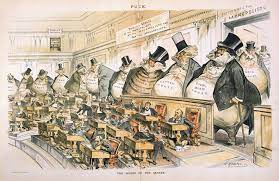
The real split among Democrats is between (a) Democrats on the take from the oligarchs of the crypto industry, Big Tech and AI businesses, and Wall Street; and (b) Democrats who are standing up for working Americans and against the oligarchs and their monopolistic companies. It’s that split that deprives Democrats of unity and of a consistent message that resonates with the real frustrations of everyday Americans. Democrats need to acknowledge the failures of our rigged economic system and clearly advocate for structural changes to the status quo that would: [1]

  • Boost pay including by raising the minimum wage
  • Build more affordable homes and crack down on corporate landlords
  • Increase Social Security checks
  • Provide universal child care
  • Block price gouging
  • Strengthen unions
  • Establish universal health care
  • Tax the wealthy and giant corporations
  • Stop members of Congress from buying and selling stock and crypto assets (i.e., insider trading)

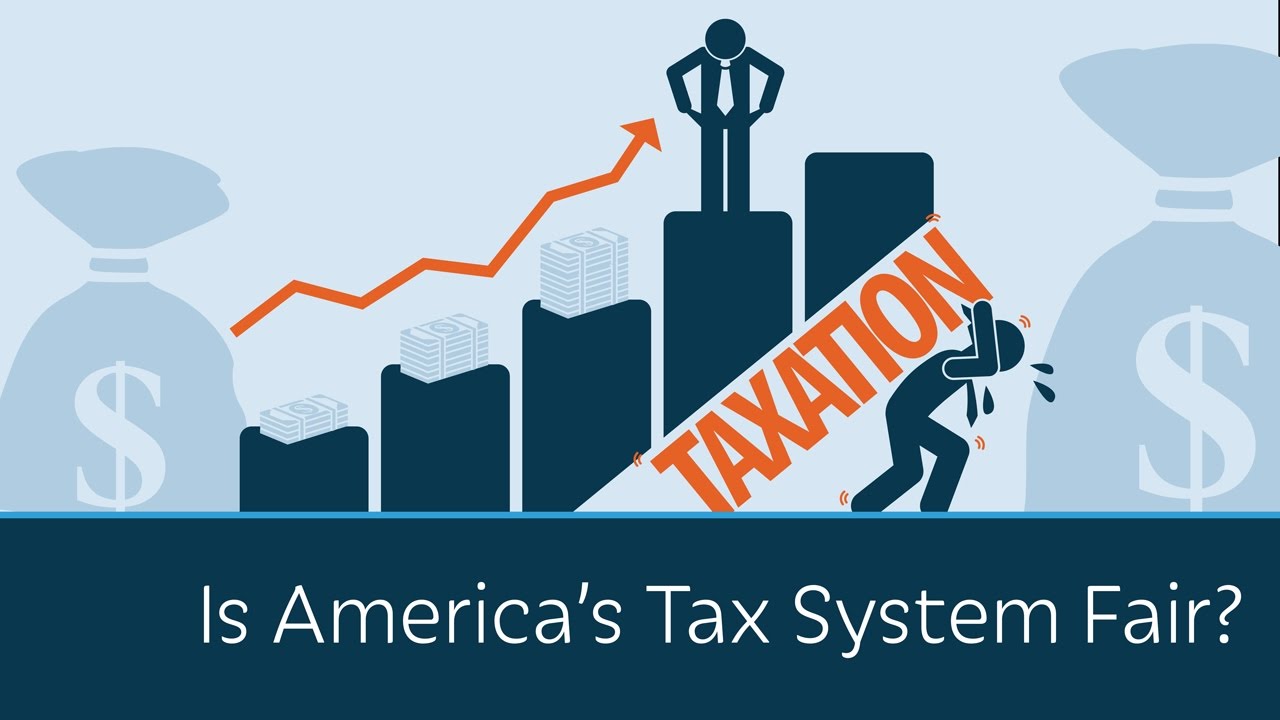
For years, polling data have repeatedly shown that Americans support progressive policy solutions to the challenges they face in their daily lives. For example, over 70 percent of Americans support Medicare for All, which would make health insurance more affordable and health care more accessible and less fraught. Seventy percent believe our tax system is unfair, while 66% support universal free child care. More broadly, 66% of Democrats now view socialism favorably, while only 42% view capitalism favorably. [2]

To enact this policy agenda and to get Democrats to unequivocally support it, billionaires must be stopped from buying our elections and our policy making process. A Democratic Party that worries more about offending wealthy donors than enacting policies that support working Americans will not succeed. Democrats should refuse campaign money from organizations and individuals opposed to basic workers’ rights and a strong social safety net.

As a first step, the Democratic National Committee (DNC) and state committees should ban super PAC and dark money (i.e., money where the true donor is unidentified) from their primary elections. Unfortunately, the DNC recently voted for a resolution that simply condemned the influence of dark and corporate money in Democratic primaries. It needs to go further and ban such money, which it can do, given that it sets the rules for its own primary elections. Corporate and Republican-linked super PACs and dark money organizations spent over $200 million in 2024 Democratic primaries. Their goal, sometimes successful, was to defeat progressive Democrats, particularly ones opposing Israel’s genocidal war on the Palestinians. [3] The Israel, crypto, and AI interests have been, and will in 2026, skew Democratic primaries and candidates to ones supporting their interests, which are not the interests of mainstream Democrats and Americans.

A ban on super PACs and dark money would force Democrats to turn to smaller donations from regular people, as Senators Warren (D-MA) and Sanders (I-VT) and New York City Mayor Mamdani have successfully done. This is what democracy, as opposed to oligarchy, looks like.

I encourage you to contact your state and local elected officials, as well as your U.S. Representative and Senators, to ask them to support policies that support working Americans. If any of these officials are Democrats, I urge you to point out that just running against Trump isn’t enough, as we saw in 2024, and that they need to run on what they stand for. [4]

If you’re frustrated that the Democrats aren’t unequivocally supporting working Americans, you might want to look at and perhaps support the Working Families Party. They’ve put forth a platform, their Working Families Guarantee, which is reminiscent of FDR’s economic bill of rights. It includes:

  • A home you can afford
  • Healthcare you can rely on
  • A good job to support your family
  • Childcare when and where you need it
  • Paid family and medical leave
  • Taxing the rich, and
  • Getting big money out of politics.

For lots of good news, see Jess Craven’s Chop Wood Carry Water blog’s most recent good news Sunday post here.


[1]      Warren, E., 1/12/26, “The Democratic Party is at a crossroads,” The Nation (https://www.thenation.com/article/politics/elizabeth-warren-democrats-2026-midterms/)

[2]      Meyerson, H., 1/7/26, “The Democratic base is social democratic,” The American Prospect (https://prospect.org/2026/01/07/democratic-base-socialist-democratic-zohran-mamdani-medicare-for-all/)

[3]      Wilkins, B., 4/10/26, “DNC half-measures condemning dark money won’t cut it, says Sanders as he demands total ban,” Common Dreams (https://www.commondreams.org/news/bernie-dark-money-ban)

[4]     You can find contact information for your US Representative at http://www.house.gov/representatives/find/ and for your US Senators at http://www.senate.gov/general/contact_information/senators_cfm.cfm.

FAIR TAXATION IS ESSENTIAL FOR DEMOCRACY

Democracy requires a government that fosters people’s freedom. Its resources must come from fair taxation. Oligarchs cut taxes and undermine democracy to consolidate their power. Economic inequality has bred discontent and distrust of government and democracy, an opening for authoritarianism.

Democracy requires a government that fosters people’s freedom based on their experiencing safety, economic security, liberty, and happiness. To do these things, it must have the resources that come from taxation. The taxes must be perceived as fair and government perceived as reasonably efficient at fulfilling its role. High and growing economic inequality has bred discontent and distrust of government – and of democracy. This has opened the door for demagogues and acceptance of authoritarianism.

(Note: If you find a post too long to read, please just skim the bolded portions. Thanks for reading my blog!)

(Note: Please follow me and get notices of my blog posts on Bluesky at: @jalippitt.bsky.social. Thanks!)

The American democracy, as announced in the Declaration of Independence, would ensure the right of the people to “Life, Liberty and the pursuit of Happiness.” The government it envisioned would “effect their Safety and Happiness.” The preamble to the Constitution expands on these principles and states that “We the People [are forming a government to] establish Justice, insure domestic Tranquility, provide for the common defence, promote the general Welfare, and secure the Blessings of Liberty.”

For a government to do these things, it must have the necessary resources. Taxes are what provide government with its resources to honor these principles and achieve these goals. They are the life blood of a democratic government of, by, and for the people. As Deval Patrick, former Governor of Massachusetts put it, “Taxes are the dues we pay to live in a civilized society.”

Historian Heather Cox Richardson had a 42-minute conversation with Dr. Vanessa Williamson of the Brookings Institution about the relationship between taxes and democracy, based on Williamson’s 2025 book, The Price of Democracy: The Revolutionary Power of Taxation in American History. I strongly encourage you to listen to all or part of it, however, I’ll share a summary of and commentary on this conversation here. (Williamson gives a 1-minute summary of the relationship between taxes and democracy at the Patriotic Millionaires conference Money. Message. Millionaires.)

American history indicates that the people are willing to pay taxes if they are perceived to be fair and the government is fostering their freedom based on their experiencing safety, economic security (aka general welfare), liberty (aka justice under the rule of law), and happiness.

The public wants government to do and provide things often referred to as public goods that include schools, roads, law and order, clean air and water, national parks, and a safety net for when things in life go wrong. These things allow people the freedom to pursue their dreams and achieve their goals. The effectiveness of governments and, therefore, their support by the people, comes from their ability to act and get things done. Revenues from taxes are, of course, essential to giving governments the capacity and power to act and deliver these public goods.

It’s important that taxes be perceived as fair and government perceived as reasonably efficient at fulfilling its role. That way the people feel they’re getting a fair return on their investment. The American Revolution occurred, in part, because of taxation without representation and the perception that the government wasn’t delivering what the people wanted. However, the Boston Tea Party was actually a protest over the King giving the East India Tea Company, a huge corporation in its day, a monopoly on the sale of tea in the colonies.

Paying taxes means that taxpayers have a personal stake in their government (aka skin in the game) and, therefore, in participating in democracy, in elections, and with their representatives in government. It’s everyone’s civic duty to make their contribution to democracy by paying their fair share of taxes and being engaged to have their say in the governing process. When governments are capable of and accountable for acting in the interests of the people (aka for the public good), this reinforces democracy and the connection between taxation and representation.

In the 1980s, the Republicans, President Reagan, and the American oligarchy (although we didn’t call them that at the time) promoted efforts to undermine the relationship among taxation, representation, and democracy. They pushed the notion that government wasn’t efficient, that taxes were bad, and that they could cut taxes and still deliver the public goods that people wanted. Basically, they promised a free lunch. They claimed their tax cuts, which disproportionately benefited wealthy individuals and corporations, would “trickle down” to everyone because the economy would boom. Actual experience, with multiple tax cuts over the last 45 years, has definitively shown that this does not happen. The results of their individual and corporate tax cuts have been sharply growing economic inequality and huge, monopolistic corporations.

High and growing economic inequality, along with the loss of economic security and upward mobility for working Americans, has bred discontent and distrust of government – and of democracy. This has opened the door for demagogues and acceptance of authoritarianism.

Throughout American history, oligarchs, from southern plantation owners to the robber barons to today’s corporate executives and investors (including private equity financiers), have worked to cut taxes and undermine a fair tax system. Not only does this make them wealthier, but it also undermines the power of government and democracy to stand up for the people and constrain the oligarchs’ power. If the government can’t and doesn’t deliver the public goods the public wants, the people won’t support it. Oligarchs want to shrink government, make it ineffective, and as one of them said, make it small enough to drown in a bathtub by starving it of the tax revenue it needs to get things done for the people. This undermines support for the government and faith in democracy, creating a reinforcing destructive cycle for government of, by, and for the people while cementing the oligarchs’ power.

Oligarchs want their power to be uncontested and unconstrained. They don’t want to be subject to government regulations or even the rule of law. They want to undermine the voice and representation of the people, as well as their faith in government and democracy. In addition to undermining a fair tax system, they use their wealth to effectively buy politicians and government policies. And they work to undermine voting and faith in elections.

My next post will discuss what a fair tax system would look like and what it will take to get there.

For lots of good news, see Jess Craven’s Chop Wood Carry Water blog’s most recent good news Sunday post here.

TACKLING THE AFFORDABILITY CRISIS Part 3

The U.S. affordability crisis is caused by low pay, high prices, economic inequality, and public policies skewed to favor wealthy individuals and corporations. Here are some strategies for tackling the affordability crisis. THANK YOU to all of you who participated in or supported a No Kings rally!

The U.S. affordability crisis is caused by low pay, high prices, economic inequality, and public policies skewed to favor wealthy individuals and corporations. Here are some strategies for tackling the affordability crisis.

THANK YOU to all of you who participated in or supported a No Kings rally (pro-democracy and anti-Trump) on March 28 in one way or another. Protests are a critically important strategy for tackling affordability and saving our democracy.

(Note: If you find a post too long to read, please just skim the bolded portions. Thanks for reading my blog!)

(Note: Please follow me and get notices of my blog posts on Bluesky at: @jalippitt.bsky.social. Thanks!)

The U.S. affordability crisis will require multiple strategies to effectively remedy it. My previous post discussed some longer-term strategies and an earlier post some short-term strategies. Here are some additional longer-term strategies. Generally, they require action by the federal government and, therefore, aren’t likely to happen soon.

Here are some strategies for addressing high prices:

  • Implement a windfall profits tax. The federal government should enact a windfall profits tax to stop price gouging by monopolistic businesses and by ones taking advantage of unusual market conditions. A windfall profits tax would tax away excessive growth in profits and, therefore, discourage price gouging because increased profits would be significantly reduced. However, if businesses continue to charge high prices and generate big profits, the tax revenue from the windfall profits tax could be used to provide assistance to working families facing economic hardship due to those increased prices.

    With the spike in fossil fuel prices due to the Iran war, fossil fuel companies are likely to realize windfall profits. Other businesses may use the smoke screen of high fuel and energy prices as a pretext for raising prices beyond what’s justifiable and, therefore, generate windfall profits. The federal government should be prepared to tax those windfall profits and take other actions to keep prices down and protect consumers. [1]
  • Regulate surveillance pricing. With AI and high-powered computers, businesses gather extensive data on consumers and can then engage in sophisticated and opaque price manipulation to maximize what a consumer will pay (aka personalized or surveillance pricing). Sellers should be required to post prices clearly and provide the same prices to all consumers. This will prevent price gouging, discrimination, and bait and switch strategies that rip off consumers. Junk fees and other abusive pricing techniques should be banned.

    For example, Uber and Lyft shouldn’t be allowed to charge you more (as they do) when your phone’s battery is low and they know you are in a hurry to book your ride. And landlords shouldn’t be allowed to collude through a large database of rental properties and AI analysis to jack up rents.

Here are some strategies for addressing affordability in general:

  • Eliminate the poverty wage business model. At least 16 U.S. billionaires owe their wealth to running corporations that pay workers poverty wages so the workers have to rely on taxpayer-funded public assistance to survive. Eight of these billionaires are associated with Walmart, two each with Amazon and Tyson Foods, and one each with Best Buy, Chipotle, Home Depot, and Starbucks. Large numbers of employees at these firms rely on Medicaid for health care and SNAP for food assistance. [2] Increasing the minimum wage would be one step in ending this public subsidy of corporate profits and shareholder wealth.
  • Reform the U.S. campaign finance system. Government policies are skewed to benefit the wealthy because of the way we allow election campaigns to be financed. The unlimited spending and lack of disclosure of who is contributing large sums of money have produced politicians and policies that favor the wealthy and their large corporations. This results in lower wages for workers and higher profits through higher prices that benefit shareholders and corporate executives. (See this previous post for more detail and ways to address this problem.)
  • Reduce economic inequality. Reducing economic inequality would tackle the affordability crisis in multiple ways. Extreme inequality destabilizes democracy, the economy, and society. Shifting some of the tax burden from low- and middle-class households to the wealthy could both reduces taxes for households struggling with affordability and increase the ability of the government to provide supports for working families such as affordable child care, paid family leave, housing subsidies, affordable health care, and a safety net when people hit hard times including unemployment benefits and food assistance. [3] Reduced economic inequality would also reduce the premiumization of the economy that drives prices up. (See this previous post for more detail.)

    Many proposals to tax the wealthy are being considered at the state and local levels, [4] as well as at the federal level. At the federal level, the Billionaires Income Tax Act would tax the increase in value of assets (e.g., stocks) even if they aren’t sold. There are also two different wealth tax proposals, one from Senator Warren (D-MA) and Representative Jayapal (D-WA), the Ultra-Millionaire Tax Act, and another from Senator Sanders (I-VT) and Representative Khanna (D-CA), the Make Billionaires Pay Their Fair Share Act. There is also the Working Americans’ Tax Cut Act that would shift the income tax burden from low- and moderate-income households to those with incomes of over $1 million.

    Reduced inequality benefits democracy and, when coupled with campaign finance reform, would produce politicians and policies that are more responsive to the needs of every day Americans, thereby addressing the affordability crisis. “Highly concentrated wealth leads naturally to concentrated political power.” [5] As Supreme Court Justice Louis Brandeis wrote almost 100 years ago, “We may have democracy, or we may have wealth concentrated in the hands of a few, but we can’t have both.”

Every politician, at every level, local, state, and federal, who’s serious about addressing the affordability crisis should embrace these strategies. I encourage you to contact your U.S. Representative and Senators and ask them to endorse them. You can find contact information for your US Representative at  http://www.house.gov/representatives/find/ and for your US Senators at http://www.senate.gov/general/contact_information/senators_cfm.cfm.

For lots of good news, see Jess Craven’s Chop Wood Carry Water blog’s most recent good news Sunday post here.


[1]      Reed, B, 3/25/26, “Dems call for prosecution of corporations using Trump’s illegal Iran war as cover to hike prices,” Common Dreams (https://www.commondreams.org/news/iran-war-price-gouging)

[2]      Anderson, S., & James, R., 3/25/26, “Meet the 16 billionaires making bank by underpaying their workers,” Inequality.org (https://inequality.org/article/billionaires-low-wage-workers/)

[3]      Meyerson, H., 12/3/25, “The $79 trillion heist,” The American Prospect (https://prospect.org/2025/12/03/79-trillion-heist-worker-pay/)

[4]      Meyerson, H., 3/12/26, “Democrats get serious about taxing the rich,” The American Prospect (https://prospect.org/2026/03/12/democrats-get-serious-taxing-rich/)

[5]      Bivens, J., 11/17/25, “Raising taxes on the ultrarich,” page 5, Economic Policy Institute (https://www.epi.org/publication/raising-taxes-on-the-ultrarich-a-necessary-first-step-to-restore-faith-in-american-democracy-and-the-public-sector/)

ALTERNATIVES TO THE HUGE, BILLIONAIRE-OWNED NEWS AND MEDIA COMPANIES

The huge, billionaire-owned news and media companies are not providing voters with the balanced, factual information needed for a well-functioning democracy. I urge you to abandon these biased, corporate news sources, or, at the least, complement them with independent, typically viewer / reader supported, non-profit sources, such as those listed below.

(Note: If you find a post too long to read, please just skim the bolded portions. Thanks for reading my blog!)

(Note: Please follow me and get notices of my blog posts on Bluesky at: @jalippitt.bsky.social. Thanks!)

The huge, billionaire-owned news and media companies are not providing voters with the balanced, factual information they need to maintain a well-functioning democracy. In particular, they are not reporting on Trump, his administration, and his allies in a way that provides accurate, important information and context. In large part this reflects the bias of their owners toward conservative or right-wing, capitalist points of view. Can you imagine their reporting if President Biden had fallen asleep in cabinet meetings? Or had had an MRI and wouldn’t reveal what was scanned or why? Or once misspoke or blatantly lied as Trump does multiple times in every speech he gives?

My previous post identified seven ways to compensate for or correct this bias in the mainstream media, two that are things we can do as individuals, while the other five require institutional action.

The first individual step, which we all can and should take, is to patronize independent, reader / viewer funded news media. Your time spent reading / viewing them, your subscriptions to them, and, if you can, your financial support of them boosts their viability. Furthermore, share their content; comment on and like their reporting.

There’s so much information and so many sources of it that it’s overwhelming. Skimming is definitely required; only read, watch, or listen to pieces that particularly interest you or that are truly important. Keep in mind that a lot of the “news” from Trump and his administration is insignificant; it’s meant to divert attention and to confuse and overwhelm the media and all of us.

Here are some suggestions. First, do pay attention to (i.e., skim and read selectively) your local and state news. They are important and the foundation of democracy and grassroots activism.

  1. Pick a local news source or two in your community to follow (assuming they exist).
  2. Pick a state or regional news source or two to follow. For me, that’s the Boston Globe.

For national political news, analysis, and commentary (which is my focus), pick a couple of sources to follow (i.e., skim and read / watch selectively) from the options below or others. For visual news and information, here are three recommendations:

  1. Watch or listen to your local PBS TV and/or radio station.
  2. Watch the short videos (typically 4 – 6 minutes) from Robert Raich at Inequality Media. They are informative, yet entertaining and easy to understand, They cover current news and explanations of how our economy and democracy work or should work.
  3. Watch or listen to Democracy NOW! programming on your TV, radio, computer, or other device. It airs an hour long current international news program recorded each weekday at 8 a.m. Eastern Time. It is available on the Internet, via its website, and on more than 1,400 radio and television stations. It combines worldwide news, investigative journalism, and progressive political commentary.

If you like text (to read or skim) here are some recommendations:

  1. Robert Hubbell publishes a daily online newsletter, Today’s Edition Newsletter, that covers current political news, providing analysis and commentary, particularly from a legal perspective. He is upbeat and optimistic. He includes specific opportunities to take grassroots action to fight for our democracy. You can also listen to the newsletter as a podcast.
  2. Heather Cox Richardson publishes a daily online newsletter, Letters from an American, that covers current political events and provides analysis and context, and often a historical perspective.
  3. Common Dreams distributes daily or weekly emails with summaries of and links to its relatively short articles covering current political news that is often underreported by the mainstream media.
  4. Robert Reich publishes a daily online newsletter that provides analysis of and commentary on current political events and policies. He identifies policies that have led to our current situation and ones that would remedy it.
  5. Mother Jones provides broad reporting, including progressive political commentary and investigative journalism. It’s available in print (every two months), online, and via videos, e-newsletters, and podcasts.
  6. The Nation covers politics and culture with a progressive bent both online and in print (monthly). It has a variety of focused email newsletters one can sign up for as well as podcasts.
  7. The American Prospect magazine (every 2 months) and website is the best and most comprehensive source for progressive policy analysis and proposals, in my humble opinion. It also has a variety of e-newsletters one can sign up for.
  8. ProPublica does incredible and impactful investigative journalism with great depth and breadth, including national, regional, and local investigations. Its products are available online. It has e-newsletters one can sign up for. It also maintains a searchable database of the annual returns filed by non-profit organizations.
  9. Chop Wood, Carry Water, Jess Craven’s daily blog on politics, includes messages to deliver to your members of Congress. She posts every Sunday a good news post that’s a very welcome source of hope and encouragement in these dark times.

Other sources that I use on occasion include the Economic Policy Institute, the Center on Budget and Policy Priorities, the Brennan Center for Justice, Open Secrets (on money in elections), The Guardian (which includes international news), and The Atlantic. A longer list by topic is available here from Project Censored. (Note: Project Censored’s primary goal is to highlight stories un- or under-reported by the mainstream media, i.e., effectively censored by them.)

Huge billionaire-owned news and media companies are dangerous, harmful, and biased. They control and skew the information we receive and not infrequently deliver disinformation. They are not providing voters with the balanced, factual information they need to maintain a well-functioning democracy.

I urge you to abandon the biased, corporate news sources, or, at the least, complement them with independent, typically viewer / reader supported, non-profit sources. There are plenty of options for good news and information that better serve voters in a democracy.

FIXES FOR HUGE, BILLIONAIRE-OWNED NEWS AND MEDIA COMPANIES

Huge news and media companies are dangerous and harmful. They control the information and disinformation we receive. They are not providing voters with the information they need to maintain a well-functioning democracy. Here are steps to rein in and compensate for their dangers and harm.

Huge news and media companies owned by billionaires are dangerous and harmful. They control the information and disinformation we receive. They are not providing voters with the complete, balanced, factual information they need to maintain a well-functioning democracy. Therefore, we need, individually and through government policy, to take steps, such as those below, to rein in and compensate for their dangers and harm.

(Note: If you find a post too long to read, please just skim the bolded portions. Thanks for reading my blog!)

(Note: Please follow me and get notices of my blog posts on Bluesky at: @jalippitt.bsky.social. Thanks!)

My previous post focused on the dangers of huge, for-profit, billionaire-owned news and media companies in the TV, radio, print, and social media markets. It noted how their profit motive drives divisive content and a focus on culture war issues. And how this skews our politics and the focus of politicians and the public, while it undermines democracy.

This post focuses on how we can respond to this corruption of our news and media both personally and through government and institutional actions, including the following: [1] [2]

  1. Most immediately, patronize independent, reader / viewer funded news media. In particular, support local media, including local Public Broadcast System (PBS) radio and TV, as well as local print and on-line news sources. Your time spent reading / viewing and subscriptions to these outlets and, if you can, your financial support boosts their viability. Share their content; comment on and like their reporting. (Here’s a link to a previous post that identifies eight sources of news and analysis that I recommend. Much longer lists by topic are available here from Project Censored. Note: Project Censored’s primary goal is to highlight stories un- or under-reported by the mainstream media, i.e., effectively censored by them.)
  2. Enhance media literacy for ourselves, our families, friends, and colleagues. Build critical thinking skills so we and everyone we know can distinguish truth from misinformation, disinformation, lies, and fiction, i.e., real news from fake news. Encourage schools and adult learning programs to include courses on critical thinking and media literacy. More information is available from PBS here.
  3. Expect and, where possible, require news and media companies to clearly and fully disclose conflicts of interest and biases. When they don’t, call them out with comments, posts, letters to the editor, etc. Media watchdogs and professional associations should lead the way on this. Ultimately, ownership of news and media companies by individuals and entities with other business interests should be banned. This would prevent many conflicts of interest and biases. It would also insulate the news and media companies from being manipulated by government officials or others through leverage via other business interests. For example, Jeff Bezos owns The Washington Post and also Amazon, which has significant government contracts and is affected by many government labor regulations. Similarly, Elon Musk owns X and has many interests via government contracts and regulations on his other companies. Therefore, they are both susceptible to manipulation by President Trump.
  4. Viewers’ and readers’ personal information should be protected (e.g., ban its collection) and it should be illegal to use it to tailor individual’s news feeds. Personal information is currently used to feed audiences one-sided and slanted information, including disinformation, to spark their emotions and therefore their engagement. This is divisive for society and undermines democracy by failing to provide voters with complete, balanced, factual information.
  5. Regulate social media with a combination of Federal Communications Commission (FCC) standards and public utility regulations. These would require them to serve the public interest and to stop harming children. They should be liable for failures to moderate content for accuracy, to prevent hate speech and other inflammatory messages (e.g., calls for violence), and to prevent harm.
  6. Reinstate rules on fairness and accuracy in broadcast media that the FCC repealed in the 1980s. Require that news divisions operate independently of executives, advertising, and shareholders, as they did prior to the 1980s. The relicensing of TV and radio stations for their use of the public airwaves should enforce these standards and serious fines should be levied for violations of them.
  7. Use antitrust laws and anti-monopoly regulations to stop any further consolidation in the news and media industry. Ultimately, the huge conglomerates should be broken up. The FCC should change its rules and lower the number of news and media outlets any one entity is allowed to own in local, regional, and national markets.

Huge news and media companies are dangerous and harmful. They control the information and disinformation we receive. Their billionaire owners have biases, including politically. They are not providing voters with the complete, balanced, factual information they need to maintain a well-functioning democracy.

This situation is not inevitable. Personal and institutional actions, including public policies of governments, can change it. Steps, such as those above, need to be taken to rein in and compensate for the dangers and harms of huge news and media companies with billionaire owners.


[1]      Reich, R., 11/26/25, “The billionaires destroying our media system and what to do about it,” Common Dreams (https://www.commondreams.org/opinion/billionaire-ownership-media)

[2]      Reich, R., 12/2/25, “The monetization of rage,” (https://robertreich.substack.com/p/the-monetization-of-rage)

THE DANGERS OF MEDIA CONSOLIDATION AND BILLIONAIRE OWNERS

The creation of huge mega-companies is harmful, in part because they have monopolistic powers. It is particularly concerning in the media and news industry because they control the information we receive. Recent and proposed mergers and acquisitions in the media industry have heightened concerns about politically slanted “news” due to billionaire owners. A citizenry that’s well informed is essential to a well-functioning democracy and there’s a growing danger that these huge media companies and their billionaire owners are not providing citizens and voters with the information they need.

(Note: If you find a post too long to read, please just skim the bolded portions. Thanks for reading my blog!)

(Note: Please follow me and get notices of my blog posts on Bluesky at: @jalippitt.bsky.social. Thanks!)

The consolidation of companies through mergers and acquisitions to produce huge mega-companies is harmful for consumers, workers, small businesses, innovation, our economy, and our country. Huge companies have monopolistic powers over prices, product quality, and jobs because of limited competition.

Huge companies, owned by billionaires, are particularly concerning in the media and news industry because they control the information we receive and, therefore, what we know. A citizenry that’s well informed with important and truthful information is essential to a well-functioning democracy. Disinformation and a lack of information are what allow authoritarians and dictators to rule.

Because of consolidation and limited local competition, the costs of Internet access and cable TV have been going up. Costs have been increasing too for content providers and streaming services because of consolidation in those areas as well.

Recent and proposed mergers and acquisitions in the media industry have heightened concerns, not only about competition and prices, but also about politically slanted “news” as directed by billionaire owners. There are concerns about Trump’s influence on the owners and bias in reporting on him and his administration. For example, Paramount, owner of CBS and lots of other media companies, and its new billionaire CEO David Ellison have already installed a right-leaning journalist with limited experience as editor in chief of CBS news. Ellison has also gutted CBS’s diversity, equity, and inclusion (DEI) policies and installed a right-winger as “ombudsman” to (supposedly) ensure the fairness of news coverage. Paramount and Ellison are bidding to acquire Warner Brothers, which owns CNN among other entities, and are reportedly soliciting money from the Saudis and other Mideast sovereigns to help fund their bid. Ellison’s father, Larry Ellison, billionaire owner of Oracle and the world’s second richest person, has reportedly told President Trump that Paramount would fire CNN personnel that Trump doesn’t like if a deal for Warner Brothers is made and Trump’s regulators approve it. [1]

Billionaire owners of media companies generally have strong biases that are likely to affect the news and information (or disinformation) their companies report and spread. For example, billionaires (and other wealthy people) want public policies that allow them to make and keep great wealth. They often view democratic governance as a threat because it holds equal opportunity and equity as foundational principles. Billionaires may well want to suppress information on and criticism of their great wealth and the actions of their companies, or the private sector and unregulated markets in general. They may want to hide the ways they influence public officials and public policies, as well as the favorable policies they get.

The goals of billionaire media owners are not to provide valuable information to the citizens of a democracy, but rather to enrich and protect themselves. They also know that President Trump can and will support their companies (e.g., with government contracts and subsidies, by approving their proposed acquisitions) if they are on good terms with him. However, if they have a bad relationship, he can wreak havoc on their companies with regulations, tariffs, selective law enforcement, suits, penalties, or by using antitrust laws to block their acquisitions. [2]

Billionaire media owners include:

  • Elon Musk, the richest person in the world, who bought the major social media platform, Twitter, and rebranded it, X. He has allowed and encouraged it to become a purveyor of right-wing disinformation, hate speech, and dangerous rhetoric.
  • Larry Ellison, the second richest person, who, with his family, owns Paramount, CBS and many other media companies as described above. They are big supporters of Trump and Republicans. CBS paid Trump $16 million to settle a frivolous lawsuit and canceled Stephen Colbert’s show because he was often critical of Trump. (Some senior CBS staff, including at 60 Minutes, resigned because of presumably because they were told to treat Trump favorably.) The Trump administration then approved a multi-billion-dollar merger of Paramount and Skydance.
  • Mark Zuckerberg, the third richest person, who owns Meta, which includes Facebook, Instagram, and WhatsApp. He has allowed his companies to spread disinformation, hate speech, and messaging dangerous to the health and safety of children. He has also been a Trump supporter.
  • Jeff Bezos, the fourth richest person, who owns The Washington Post and Amazon, including all its media entities. He blocked the publishing of an editorial endorsing Kamal Harris in 2024 and has directed the Post’s editorial and opinion writing to support “personal liberties and free markets.” (The billionaire owner of the Los Angeles Times also blocked an editorial endorsing Kamal Harris.) Bezos is a Trump supporter and paid Melania Trump (the President’s wife) a staggering $40 million for the right to make a documentary about her.
  • Billionaire Rupert Murdoch and his offspring, who own Fox, The Wall Street Journal, and the New York Post. It’s widely recognized that Fox spreads disinformation favorable to Trump and Republicans, up to and including false election fraud disinformation that led to a court decision requiring Fox to pay nearly $800 million for defamation of an electronic voting machine company.

It’s impossible to know how these billionaires have skewed coverage of President Trump and his administration, as well as the criticism and protests of them, but it’s hard to believe they haven’t had considerable influence. There is a growing danger that these huge media companies and their billionaire owners are not providing citizens and voters with the information they need to have a well-functioning democracy.

More on the effects of billionaire ownership and media consolidation in my next post, as well as what can be done about it.


[1]      Myerson, H., 11/20/25, “Ellisons tap Saudis to fund news media takeover,” Today on The American Prospect (https://prospect.org/2025/11/20/ellisons-tap-saudis-to-fund-news-media-takeover/)

[2]      Reich, R., 11/26/25, “The billionaires destroying our media system and what to do about it,” Common Dreams (https://www.commondreams.org/opinion/billionaire-ownership-media)

RESIST! OUR DEMOCRACY IS IN DANGER

These are unprecedented and dangerous times for our democracy. Things are worse than I thought they’d be. President Trump and co-President Musk are hard at work attempting a coup to establish a dictatorship. They want to create chaos, fear, and despair, while breaking our government and destroying our democratic institutions. We as citizens of a democracy must take action to resist the coup and the would-be dictators. There are a very wide range of actions you can take. See options below.

(Note: If you find a post too long to read, please just skim the bolded portions. Thanks for reading my blog!)

In November, just after the election, I wrote, “This is a post I never thought I’d write. In January, the United States of America will unequivocally become a plutocratic oligarchy with strong elements of fascism. …  we and our country are in for some dark and difficult times. Take care of yourself and nurture the strength for the fights ahead.

I’m not giving up hope or the values and principles I espouse in this blog. Things will get worse, perhaps much worse, before we can turn things around. The fight for democracy has often been hard, and, as I’ve written before, democracy is not a spectator sport.

After a period of mourning and to rest and recuperate from the shock and horror, we all need to get to work fighting for our democracy and the vulnerable members of our society.” (The post is here.)

Well, things are worse than I thought they’d be. I never thought I’d write that there’s a bloodless (so far) coup underway and that our President (and co-President) are hard at work attempting to establish a dictatorship.

Needless to say, these are unprecedented and dangerous times for our democracy. President Trump’s and co-President Musk’s actions have been far more aggressive, far-reaching, and damaging than I think anyone expected. Trump seems to be focused on foreign matters and Musk on domestic ones.

Their goal is clearly to create chaos, fear, and despair. They’re trying to break our government and destroy our democratic institutions. They don’t care about democracy, the rule of law, or anyone but themselves and their cronies.

In the maelstrom of all they’re doing, it’s important to sort the wheat from the chaff and focus on what’s having a crucial, and generally immediate, effect. A lot of what Trump is doing and saying is just hot air and smoke meant to distract from the really important actions.

Right now, I’d urge us to focus on the coup (that is what it is) they’re executing by single-handedly and illegally asserting control over government agencies and spending. We also need to focus on their efforts to destroy the rule of law, which is a cornerstone of democracy and an essential element of their coup.

They’re asserting dictatorial powers over the federal government and its spending, denying any role for Congress. So much for the checks and balances between the legislative and executive branches of government clearly spelled out in the Constitution. (By the way, don’t believe for a second that Trump and Musk have any allegiance to or intent to uphold the Constitution. When Trump swore at his inauguration to uphold the Constitution, that was the first lie of his second term.)

They’re flouting privacy laws by accessing information and data, including your and my personal data, without any authorization. They’re making each of us and our country less safe and secure. With the chaos they have caused at the Department of Justice and the FBI, we are more at risk for everything from ordinary crime to identity theft. Their breaching of sensitive federal government computer systems makes the government and each of us more vulnerable to hackers and cybercrime. The focus of the Secretary of Defense on the Mexican border and purging diversity, equity, inclusion, and transgender individuals from the military has diverted attention from real foreign threats. This makes us more vulnerable to terrorism and foreign attacks of all kinds.

Oh, and by the way, none of their actions have done anything to reduce inflation or bring down the price of groceries. Quite to the contrary, Trump’s spat and threatened tariffs on Columbia have spiked the price of coffee. And the failure and anticipated failure of the CDC to tackle the bird flu, have spiked the price of eggs. Not to mention the impact of tariffs on prices.

We as citizens of a democracy must take action to resist the coup and the would-be dictators. There are a very wide range of actions you can take; there’s something everyone can do, and every little bit helps.

I encourage you to contact your U.S. Representative and your Senators. Urge them to do whatever they can to block the illegal actions and coup by President Trump and co-President Musk. Call if you can (and if their voice mailboxes aren’t full) and try both local and Washington phone numbers. Or email them using their contact forms or email addresses. (You can find contact information for your US Representative at  http://www.house.gov/representatives/find/ and for your US Senators at http://www.senate.gov/general/contact_information/senators_cfm.cfm.)

Here are some other ways to protest and resist. I also encourage you to be creative and come up with your own.

  • Wear a button, a T-shirt with a message, and/or a color symbolic of resistance.
  • Boycott X (formerly Twitter), Tesla, Amazon, The Washington Post, Facebook, etc. and/or protest in front of stores of companies that are capitulating to Trump.
  • Communicate. Talk to others, like and share resistance messaging on social media, and/or send letters to the editor of media outlets or submit online comments.
  • Join the protests in the streets.
  • Support those protesting and those resisting (e.g., government employees Trump and Musk are trying to fire, lawyers and non-profits filing lawsuits, etc.).
  • Give financial support to media that are standing up to Trump, to lawyers and organizations who are suing Trump and Musk, and to those organizing protests.
  • Get organizations you belong to and their leaders to speak out, e.g., religious organizations and clergy.

THE SUPREME COURT IS A THREAT TO OUR DEMOCRACY

Abortion rights activists rally outside of the US Supreme Court after the overturning of Roe Vs. Wade, in Washington, DC, on June 24, 2022. (Photo by Mandel NGAN / AFP) (Photo by MANDEL NGAN/AFP via Getty Images)

Based on the Supreme Court’s decisions of the last few weeks, we should all be in the streets protesting and storming the Supreme Court. Its decisions undermine the Constitution and our system of government, while giving the president king-like status.

(Note: If you find my posts too long to read on occasion, please just skim the bolded portions. Thanks for reading my blog! Special Note: The new, more user-friendly website for my blog is here.)

Based on the Supreme Court’s decisions of the last few weeks, we should all be in the streets protesting and storming the Supreme Court. Their decisions undermine the Constitution and our system of government as it’s worked for over 200 years. I won’t go into the details of the decisions because you’ve probably read or heard about them. I’ll just state that this is a radical, reactionary Court – not a conservative one by any stretch of the imagination. (See this previous post for details.)

The six radical, reactionary justices on the Court totally disregard precedents both in content and procedure to make rulings that are political and ideological, not grounded in law or the Constitution. Their claim of being true to the original text and intent of the Constitution is a blatant lie – a smoke screen for making rulings out of thin air that suit their political purposes. This is judicial activism in the extreme, which conservatives used to decry (and still would if they were true conservatives).

Moreover, the six radical, activist justices stated in their congressional confirmation hearings that they would respect precedents; they would call balls and strikes but not change the rules of the game. It’s now clear they were lying and committing perjury.

With its recent decision on presidential immunity from criminal prosecution, the Court puts the president above the rule of law. The decision exempts the president from the rule of law for all official acts (and probably for many unofficial acts as well). This grants the president king-like status.

This is in blatant contradiction to what the Founding Fathers intended in the Constitution and made clear in their writings. The Constitution does mention immunity – for citizens, for witnesses to crimes, and for legislators in limited cases (for speech or debate in congressional chambers). Clearly, the writers of the Constitution thought carefully about immunity and did NOT grant it to the president. The supposed constitutional originalists on the Supreme Court invented presidential immunity out of thin air, presumably for political reasons.

Historian Heather Cox Richardson has a clear and concise interview (6 mins.) on the immunity issue and has written about it in her Letters from an American blog. Her blog post includes quotes from the confirmation hearings of Justices Roberts, Alito, and Kavanaugh where they stated that no one is above the law. Therefore, they have, very specifically, shown that their congressional testimony was a lie and that they committed perjury.

Retired lawyer Robert Hubbell states that the Court’s presidential immunity decision (and others) by the six radical justices shows that the “Supreme Court is lawless.” The immunity decision “overthrew the American Revolution and anointed the US president as a modern-day king.” He succinctly outlines what the decision does and gives examples of what a president can now do without fear of criminal prosecution, including accept a bribe in exchange for a pardon and direct the Justice Department to target political enemies. With this immunity in place, what President Nixon did during Watergate would presumably have been completely legal. [1]

Moreover, the Supreme Court’s decision leaves it to the courts (i.e., ultimately itself) to decide what are “official” (immune from prosecution) and “unofficial” presidential acts, and also to decide what evidence can be used in a prosecution. Therefore, the Court has arrogated substantial power to itself over the implementation of its presidential immunity ruling – a real power grab.

The hypocrisy of the six radical Supreme Court justices who claim to be constitutional “originalists” is laid bare by their decisions. For example, they have ruled:

  • For very strong presidential immunity, which is not only nowhere in the Constitution, but contradicts the Constitution and its writers. This ruling’s lack of a constitutional basis is made clear by provisions for other immunities that ARE in the Constitution and by the expressed sentiments of the writers of the Constitution that the president should NOT be above the law and have king-like powers.
  • Against banning an insurrectionist from the ballot, despite clear language in the Constitution that an insurrectionist cannot hold elected office without 2/3 approval from Congress.

My next post will discuss the Supreme Court’s decimation of the power of executive branch agencies to implement laws and protect workers, consumers, and residents through rules and regulations.

[1]      Hubbell, R., 7/2/24, “The Supreme Court is the biggest threat to democracy we face,” Today’s Edition Newsletter (https://roberthubbell.substack.com/p/the-supreme-court-is-the-biggest)