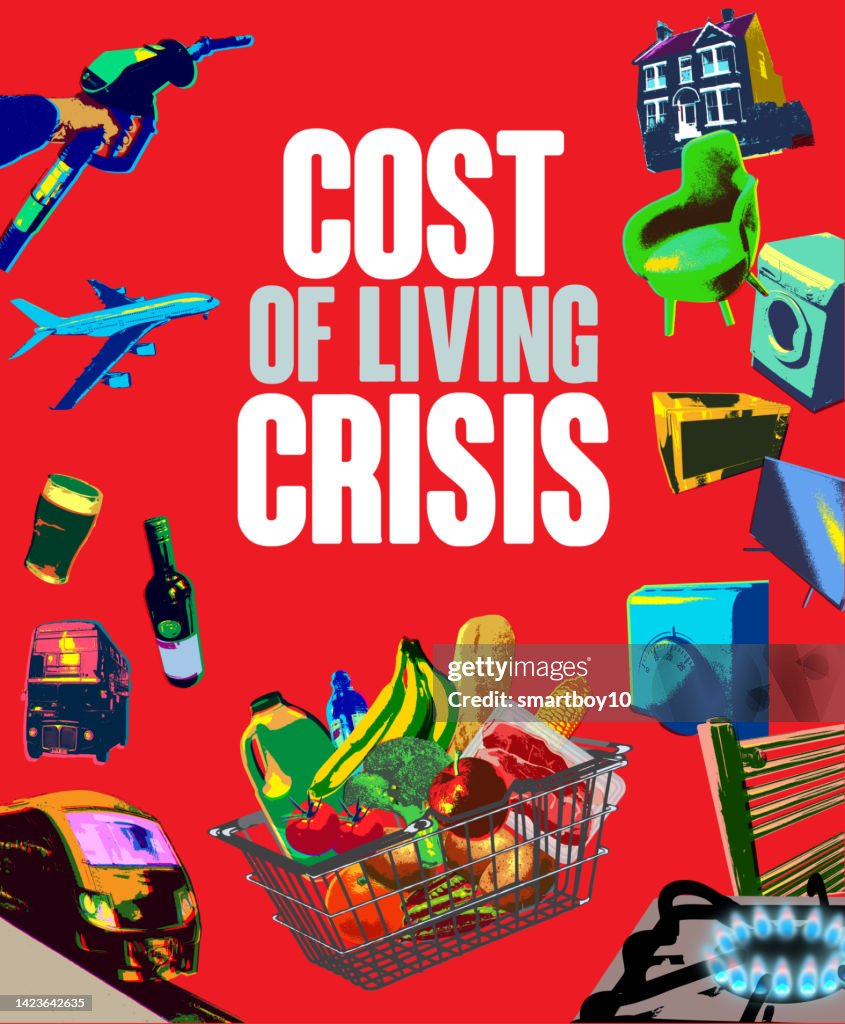
WHAT EVERYDAY AMERICANS WANT FROM GOVERNMENT Part 2

Many Americans are worried about the cost of living. Government policies can reduce or control the costs of everyday expenses. If Democrats or others want to garner support and votes, they should aggressively promote such policies. Some examples are presented below.

(Note: If you find a post too long to read, please just skim the bolded portions. Thanks for reading my blog!)

(Note: Please follow me and get notices of my blog posts on Bluesky at: @jalippitt.bsky.social. Thanks!)

Many Americans are worried about the cost of living. The affordability of the cost of living has two components: 1) the amount of money people make and the benefits they get from their employer, and 2) the costs of everyday expenses from food to housing to health care to utilities. If Democrats, or another party such as the Working Families Party, want to garner support and votes, they should focus on the affordability of day-to-day life. They need to promote a vision of and policies for a more economically secure future for working Americans. This means embracing economic populism, including reducing economic inequality. [1]

This previous post discussed the first component, workers’ compensation. This post discusses ways public policies and government action can reduce, or at least control increases in, the cost of living, i.e., inflation. Over the last 45 years, the cost of everyday necessities has increased faster than workers’ wages, including for food, housing, child care, utilities, health care, and medicine.

Here’s an overview of some government policies that would reduce or control the cost of living. [2]

  • Rescind Trump’s tariffs. As even President Trump is now acknowledging, his tariffs have and will drive up consumer prices. He recently rescinded some tariffs on beef, coffee, tea, fruit and fruit juice, cocoa, spices, tomatoes and other commodities. He acknowledged that his tariffs may have contributed to higher prices at the supermarket. Since the first day that Trump announced his intention to impose tariffs, every reputable economist has stated that tariffs increase prices for consumers. (Note: Tariffs can be good policies if implemented as part of well-planned, comprehensive jobs or national security policies. However, Trump’s tariffs clearly do not meet this criterion.)
  • Enforce antitrust laws. Forty-five years of failure by the federal government to enforce antitrust laws (except for efforts to revitalize them under President Biden) have allowed the emergence of huge companies with monopolistic powers. This has harmed everyday Americans in many ways as outlined below. If Democrats or others, such as the Working Families Party, want to attract support and voters, they should unequivocally call out these huge companies and their oligarchic executives and investors for their greed and monopolistic behavior. This does mean that Democrats will have to stop cozying up to the oligarchs to get campaign donations.

Stop price gouging. Monopolistic or near monopolistic size allows companies to raise prices on consumers who have few if any options. In the short term, governments should implement windfall profits taxes and/or price controls to stop price gouging. In the longer term, governments should enforce antitrust laws and break up or impose very large fines on companies that engage in price gouging and other unfair, monopolistic business practices. This applies to a wide range of consumer goods and services from food to rent to air travel to health care to drug prices. It also applies to the big tech companies, Amazon, Meta (Facebook, Instagram, etc.), Alphabet (Google), Microsoft, and Apple.

Restore competition. By stopping mergers and acquisitions that lead to monopolistic power, and by breaking up monopolistic companies, competition could be restored to consumer markets. Without competition, prices go up and quality goes down, and consumers suffer.

Restoring competition would also reduce employers’ power over workers. Although this wouldn’t reduce costs, it would improve workers’ compensation and therefore the affordability of the cost of living. Employers’ power over workers has grown in multiple ways. The huge and monopolistic size of many employers limits the options for employees and, along with globalization, has allowed employers to undermine unions and cut workers’ compensation. Furthermore, many employers, including some fast-food chains, require employees to sign non-compete employment contracts that limit their ability to move to other employers for better jobs and better pay. President Biden took steps to ban non-compete agreements, but President Trump stopped this effort.

  • Stop privatization of public services and public goods. Privatization is often sold to the public with claims that the private sector will deliver cheaper and better services or products. This rarely turns out to be true. Once the profit incentive is introduced, prices are likely to go up and quality is likely to go down.

Nowhere is this clearer than in our health care system. The privatized system in the U.S. is the costliest system in any of the well-off countries of the world and its outcomes are among the worst. All elements of the system are putting profits before patients. Medicare is much more efficient than any of the private health insurance companies. The health care industry vehemently resisted including a public, Medicare-like option in the Affordable Care Act (ACA) because it knew the public option would deliver better care at lower prices. (See this previous post for more information on the failures of for-profit health care.)

Numerous other examples exist. Rail transportation in the rest of the world is more efficient, dependable, and convenient than the privatized system in the U.S. Internet service is cheaper and faster in Europe than in the U.S. (I’ve been criticizing privatization since way back in 2012. See this previous post and this one for more information.)

  • Stop the abuse of patents. Pharmaceutical companies abuse patent laws to keep cheaper generic versions of drugs from being introduced to the market. Classic cases of this are insulin and EpiPens. (See this previous post for more information.)
  • Enhance regulation. Regulations and enforcement of regulations need to be strengthened to protect consumers from fraud, price gouging, and unsafe food and products. Particularly where large companies have monopolistic power, strong regulation is needed. For example, millions of homeowners lost their homes in the aftermath of the 2008 financial crisis because large financial institutions were pushing fraudulent mortgages. The Consumer Financial Protection Bureau (CFPB) was created to protect consumers from financial fraud and abusive practices, such as exorbitant late and overdraft fees. The Trump administration is trying to eliminate the CFPB so big financial institutions can maximize their profits by ripping off consumers. (See this previous post for more information on the Trump administration’s weakening of regulations and the scams that are likely to be the result.)

My next post will discuss economic insecurity and inequality and the government policies that are needed to address them.


[1]      Reich, R., 11/3/25, “What the Democrats must do. Now!” (https://robertreich.substack.com/p/what-the-democrats-must-do-now) /

[2]      Kuttner, R., 11/12/25, “A blessing in disguise?” Today on The American Prospect (https://americanprospect.bluelena.io/index.php?action=social&chash=9a32ff36c65e8ba30915a21b7bd76506.3779&s=6009966078bda0f5 056f960a346ead8a

MUSK AND DOGE ARE ALL ABOUT CORRUPT SELF-ENRICHMENT

Musk, DOGE, and Trump do not care about efficiency & reducing waste. They’re not targeting for-profit contractors, which is where the bulk of fraud & waste occurs. They’re focused on ending investigations & enforcement actions against Musk’s companies, letting Musk corruptly line his own pockets.

Musk, his Department of Government Efficiency (DOGE), and Trump do not care about efficiency and reducing government waste. They’re not targeting for-profit government contractors, which is where the bulk of fraud and waste occurs. Instead, they’re focused on ending investigations of and enforcement actions against Musk’s companies, and providing them with new government contracts. Musk is corruptly lining his own pockets.

(Note: If you find a post too long to read, please just skim the bolded portions. Thanks for reading my blog!)

I’m sure I don’t need to tell you that Elon Musk’s Department of Government Efficiency (DOGE) is not focused on efficiency and reducing government waste. DOGE’s haphazard actions of laying off workers and dismantling government programs, processes, and agencies that Musk and Trump don’t like are actually decreasing efficiency. (See previous posts here and here for more detail.) Musk and Trump are focused on lining their own pockets, i.e., on corrupt self-enrichment.

Contrary to Musk’s and Trump’s claims that the government workforce is bloated, the federal government had fewer employees before Trump took office (3 million) than at its peak in 1990 (3.1 million), despite significant growth in the responsibilities of the government. Federal government employees were 4.3% of the U.S. workforce in 1960; they’re just 1.9% of the workforce today. In general, government agencies are understaffed, due to budgetary restrictions.

If Musk, Trump, and DOGE were serious about increasing government efficiency, they would be targeting for-profit government contractors – like Musk’s companies. Before looking specifically at Musk’s companies, overall, the major sources of waste, fraud, and abuse in government spending are contractors for military hardware and services, and insurance companies that are contractors providing Medicare coverage through so-called Medicare Advantage programs. It’s estimated that 40% of the people working for the federal government are contractors and not employees. For example, in 2019, in Iraq and Afghanistan, there were 50% more U.S. contractors than U.S. soldiers.

Between 2013 and 2023, spending on government contractors grew by nearly 63%. This reflects the mistaken belief by many that private, for-profit contractors are more efficient than government employees. A 2011 study found that contractors are overpaid in comparison to government workers and that when waste and fraud are identified in government programs it is often for-profit contractors that are the culprits. A 1994 Defense Department Inspector General’s report had similar findings.

For-profit contractors are seeking to maximize profit. They do this by maximizing their prices and minimizing their costs, which generally means minimizing the quality of services and products delivered. Contractors are exempt from transparency and accountability laws that cover government programs, making waste, fraud, and abuse hard to identify, eliminate, and punish. Contractors also violate the law with shocking regularity and repetitiveness. Defense contractor RTX (formerly Raytheon) averages over five sanctions per year for illegal activities. Insurance companies operating Medicare Advantage programs regularly and repetitively engage in fraudulent billing of the government. (See this previous post for more detail.)

To feather their own nests, government contractors spend millions lobbying the government and send employees through the revolving door to work in government roles often overseeing their contracts or work. In 2024, the ten largest federal government contractors spent $71 million lobbying the hand that feeds them. They also spent $8.5 million in the 2023-24 election cycle on contributions to federal candidates’ campaigns, although this is technically illegal. They circumvent laws banning contractors contributing to campaigns by setting up supposedly independent political action committees (PACs).

Musk is lining his own pockets as a government contractor and businessman in two main ways:

  • Dismantling or emasculating agencies that regulate his business activities, often ending on-going investigations and enforcement actions, and
  • Having the Trump administration award his companies billions of dollars in new contracts, while continuing to pay billions of dollars under existing contracts.

Musk has obtained much of his enormous wealth through government subsidies and contracts. His companies have received over $38 billion in government funding over the last 20 years. Currently, among other things, Musk’s Space X company is receiving billions of dollars a year from NASA for rocket launches and from the Department of Defense (DOD) for satellite launches and Starlink communications services. Musk’s Tesla vehicle company got significant funding from the Department of Energy for its development of electric cars. (Note: This support was called wasteful by Republican presidential candidate Mitt Romney.) [1] In 2023, Space X and Tesla got almost $3 billion from 100 contracts with 17 federal agencies. [2]

When Trump was sworn into office, Musk’s six companies were the subject of more than 32 ongoing investigations by at least 11 federal agencies. The agencies conducting these enforcement actions are being emasculated by Musk, DOGE, and Trump. Therefore, these investigations and potential penalties from them are now likely to be ended. This means Musk’s companies are now worth far more than before because they are no longer threatened with government penalties or constraints on their operations. As their major shareholder, Musk is a huge winner. [3]

The enforcement actions against Musk and his companies included: [4]

  • A Securities and Exchange Commission lawsuit accusing Musk and his companies of violating federal securities laws.
  • A lawsuit by the Federal Aviation Administration accusing him and his rocket company, Space X, of violating worker safety.
  • 24 separate investigations by the National Labor Relations Board into violations of workers’ rights.
  • Over a dozen investigations of Tesla and Space X for unfair labor practices, safety violations, and workplace discrimination by various agencies of the Department of Labor.
  • Several open investigations by the National Highway Traffic Safety Administration into safety issues with Tesla vehicles.
  • An investigation by the Federal Aviation Administration (FAA), which had fined Space X for previous violations, for issues with its rocket launches, including post-launch explosions that had interrupted air traffic and spread debris and toxic pollution in the atmosphere.
  • At least three investigations by the DOD of Musk and Space X for repeatedly failing to meet reporting requirements aimed at protecting national security, including reporting information on Musk’s meeting with foreign leaders. This non-compliance with national security protocols has led to investigations by the DOD Inspector General (now fired), by the Air Force, and by the Under Secretary of Defense for Intelligence and Security.

My next post will discuss actions by Musk, DOGE, and Trump to block regulation, investigations, and sanctions of Musk companies; Musk’s and Space X’s China connections; and new government contracts for Musk’s companies.


[1]      Heinz, B., 4/1/25, “Rule by contractor: DOGE is not about waste and efficiency – it’s about privatization,” The American Prospect (https://prospect.org/power/2025-04-03-rule-by-contractor-doge-privatization/)

[2]      Elordi, M., 10/21/24, “Elon Musk’s companies have faced at least 20 federal probes,” Daily Wire (https://www.dailywire.com/news/elon-musks-companies-have-faced-at-least-20-federal-probes-report)

[3]      Reich, R., 2/11/25, “Fraud and Musk,” Robert Reich blog (https://robertreich.substack.com/p/fraud)

[4]      House Committee on the Judiciary, 2/13/25, “Fact Sheet: Trump administration, DOGE punish agencies investigating Elon Musk’s companies,” (https://democrats-judiciary.house.gov/uploadedfiles/2025.02.13_fact_sheet_re_musk_investigations.pdf