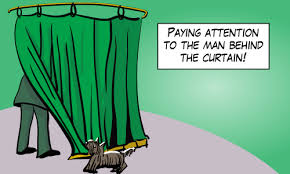
REINING IN ICE

ICE’s lawlessness, cruelty, and violence are well documented. PLEASE contact your U.S. Senators NOW. Ask them to block ICE’s budget until thorough, local investigations of ICE killings are underway and unless it includes strong accountability and transparency measures.

The Trump administration’s Immigration and Customs Enforcement (ICE) agency’s record of lawlessness, cruelty, and unnecessary violence is well documented. Its budget is under consideration in Congress now. I urge you to contact your U.S. Senators NOW and ask them to block the budget for ICE until thorough, local investigations of the recent killings are underway and unless it includes strong accountability and transparency measures.

(Note: If you find a post too long to read, please just skim the bolded portions. Thanks for reading my blog!)

(Note: Please follow me and get notices of my blog posts on Bluesky at: @jalippitt.bsky.social. Thanks!)

The Immigration and Customs Enforcement (ICE) agency’s record of lawlessness, cruelty, and unnecessary violence (aimed at detainees, protesters, peaceful monitors, and bystanders) is well documented. It and the Trump administration routinely lie about what it’s done and who it targets and detains. Increasingly, Customs and Border Protection (CBP), which historically operated on the border, is joining ICE in its actions well away from the border. Both ICE and CBP are agencies within the Department of Homeland Security (DHS), headed by Secretary Kristi Noem. It’s clear that for ICE, CBP, and DHS:

  • Cruelty is the point (for intimidation and political purposes), and
  • Lawlessness is a feature not a bug, i.e., intentional and not a mistake.

The American public strongly supports reining in ICE, both in terms of its scale and scope, as well as its violent and lawless behavior. It’s critical, and past time, that Congress do everything it can to rein in ICE. Its budget is under consideration in Congress now. The House narrowly passed its budget with no significant provisions to rein in ICE. I strongly encourage you to contact your U.S. Senators NOW and ask them to block the budget for ICE until:

  • Thorough investigations by local law enforcement of the killings of Renee Good and Alex Pretti are underway with cooperation from all federal officials and agents.

And to oppose any ICE budget that doesn’t include strong accountability and transparency measures including:

  • Prohibiting ICE agents from wearing masks and carrying guns. (If they need law enforcement support, they should contact local or state police.)
    • Requiring them to wear personal identification. (All local and state police officers do.)
    • Requiring them to have warrants from judges to arrest someone or enter someone’s home. (As local and state police officers do.)
    • Clarifying that ICE agents do NOT have immunity from prosecution under state laws.

(Contact information for your US Senators is at http://www.senate.gov/general/contact_information/senators_cfm.cfm.)

ICE’s budget should be cut. It has grown faster than can be responsibly implemented and spent, while also being inappropriately larger than other agencies. The Trump / Republican budget bill in July doubled the ICE budget to $19 billion a year with an additional $17 billion a year for CBP. For the sake of comparison, FEMA (the Federal Emergency Management Agency) got less than $1 billion a year, and the FBI’s budget is just $11 billion.

ICE’s leaders, starting from the top with DHS Secretary Noem, should be impeached or disciplined for their illegal actions. For example, for the detentions of U.S. citizens and those with no criminal record; for illegal deportations, use of violence, and forced entries into people’s homes; and for violations of judges’ orders.

Here are a few figures that highlight the scale of ICE and its actions: [1]

  • As of August 2025, over 60,000 people were in ICE detention and 70% of them had no criminal convictions.
  • Roughly 200,000 people have been deported in 2025 through August. Over 50,000 of them were children under twelve and over 20,000 of them were under 5 years old.
  • Under Trump, the overall number of monthly detentions has tripled to roughly 45,000. Fifteen thousand of them had criminal records (up 50% from under Biden), 15,000 had pending criminal charges (but no convictions) (up 200%), while 15,000 had no criminal record (up 1,400%). Clearly, the Trump administration’s rhetoric about detaining only serious criminals is a lie. Under President Biden, ICE detained about 15,000 people per month. Ten thousand had criminal records and 5,000 had pending criminal charges, while 1,000 or fewer had no criminal record.
  • ICE is clearly targeting states for political reasons (i.e., where Democrats are in control and not those with Republicans in control). For example, Texas, with an estimated 1.7 million undocumented immigrants and Florida with about one million have the 2nd and 3rd largest numbers of undocumented immigrants (after California with about two million). However, there have not been big efforts by ICE to detain immigrants in Texas and Florida. However, Minnesota, with fewer than 100,000 undocumented immigrants and Maine with 5,000 are currently experiencing large ICE detention campaign.

By the way, there is lots of good news, on the ICE front as well as elsewhere! For example, Jess Craven’s Chop Wood Carry Water blog’s most recent good news Sunday posts here and here include:

  • Spotify has stopped running ICE recruitment ads.
  • Avelo Airlines has stopped deportation flights. (They say it’s part of ‘streamlining its network’ but I believe that protests and boycotts are a big reason.)
  • Six federal prosecutors and an FBI agent have resigned due to the Justice Department’s failure to appropriately investigate the shooting of Renee Good.
  • Minneapolis residents in huge numbers are protesting, as well as organizing and volunteering to support immigrant members of their community. Truly inspiring!!
  • A judge ruled that ICE and DHS can’t detain or tear gas peaceful protesters.
  • Clergy occupied Target headquarters in Minneapolis and got a meeting with the CEO to ask him to stop letting ICE in their stores.
  • 57% of Americans now view ICE unfavorably and a slight plurality favor abolishing it.
  • 58% of Americans now say that Trump’s second term has been a failure.
  • Facing backlash, the Trump administration restored over $2 billion in mental health and addiction funding, just one day after announcing cuts.
  • Congress, in its work on the budget, is quietly rejecting almost all the deepest cuts to federal programs that Trump requested, rebuking his efforts to slash funding for foreign aid, global health, scientific research, the arts, and more in a bipartisan repudiation.
  • A federal judge in California became the second one to dismissa Justice Department case seeking to force state officials to give the department an unredacted list of the state’s voters.
  • CBS Evening News’ audience is down 23% probably due to its new, right-wing slant.
  • Rep. Robin Kelly (D-IL) filed articles of impeachment against DHS Secretary Noem for obstruction of Congress, violation of the public trust, and self-dealing. Over 50 House Democrats have signed on as co-sponsors.
  • The Washington National Opera will move its performances out of the Kennedy Center, in perhaps the largest rebuke yet to Trump’s renaming of the Kennedy Center with his name.
  • Democratic and Republican Senators agreed unanimously to mount a plaque honoring the Capitol police officers who fought Trump’s insurrection mob at the Capitol on Jan. 6, 2021. Republican House Speaker Johnson has refused to mount the plaque, which is required by law.
  • More than 1,000 companies are suing the Trump administration over tariffs, demanding refunds.
  • A major Catholic newspaper called Vice President JD Vance a “moral stain” and accused him of having a “twisted and wrongheaded view of Christianity”.

[1]      Mother Jones, Nov./Dec. 2025, “American gulag,” (https://www.motherjones.com/politics/2025/10/american-gulag-immigration-police-state-ice-deportation-detention-centers-trump-miller/)

PUBLIC POLICIES TO REDUCE ECONOMIC INEQUALITY IN AMERICA

Economic inequality is at record breaking levels in the U.S. The American oligarchy is powerfully wielding its economic and political power. Public policies can stop and reverse the growing economic inequality. See examples below. If Democrats or others want to garner support and votes, they should support policies to reduce economic inequality and create a secure economic future for working Americans.

(Note: If you find a post too long to read, please just skim the bolded portions. Thanks for reading my blog!)

(Note: Please follow me and get notices of my blog posts on Bluesky at: @jalippitt.bsky.social. Thanks!)

Economic inequality is at record breaking levels in the U.S. America now has 916 billionaires whose combined wealth is $8 trillion (yes, trillion). Their wealth has increased by over $1 trillion in the first nine months of 2025. Since the passage of the Republican tax cut bill in 2017, it’s increased from $3 trillion to $8 trillion. For comparison, the least wealthy 167 million Americans (half the population) have combined wealth of just $3.6 trillion. In other words, the combined wealth of 167 million Americans is less than half the wealth of the 916 billionaires. The rise in billionaires’ wealth reflects the transfer of profits of economic activity away from workers and to owners and investors.

A big part of this is the increase in the value of the stocks of companies these billionaires own and in which they invest. Provisions in the 2017 Republican tax cut bill (that were continued by the GOP’s Big Ugly Bill in July 2025) give huge tax breaks to corporations. For example. Alphabet (Google’s parent) gets $17.9 billion, Amazon gets $15.7 billion, and Microsoft gets $12.5 billion.

With their great wealth, these billionaire oligarchs have great political power, especially given the laws and court decisions allowing unlimited spending in political campaigns. This basically allows them to buy our elected officials, as Elon Musk bought Trump with the over $250 billion he spent on Trump’s campaign. “Highly concentrated wealth leads naturally to concentrated political power.” [1] As Supreme Court Justice Louis Brandeis wrote almost 100 years ago, “We may have democracy, or we may have wealth concentrated in the hands of a few, but we can’t have both.”

The oligarchs have been wielding their political power very effectively for the last 45 years, and especially in the last ten years. They’ve succeeded in getting policies enacted that enrich themselves and leave American workers not just short changed, but shafted. Public policies to provide economic security for working Americans will never happen if the oligarchs retain their political and economic power. (This previous post presented policies to increase workers’ incomes and this post highlighted policies to reduce the cost of living for them.)

Therefore, the policies that allowed economic inequality to grow over the last 45 years, and to explode in the last 25 years, need to be changed. A group called Patriotic Millionaires has proposed “The Money Agenda,” a set of policies that would reduce economic inequality and “permanently stabilize the economic lives of working people, stimulate wide-spread economic growth, and ensure prosperity and stability for America’s next 250 years.”

The Money Agenda includes four pieces of legislation. Here’s a quick overview of them:

  • The Equal Tax Act
    • Increase tax rates on income from wealth (e.g., capital gains) so they are the same as the tax rates on income from work
    • Close the loophole that allows the wealthy to give away appreciated assets and dodge anyone having to pay tax on their increase in value (i.e., the stepped-up basis loophole)
  • The Anti-Oligarch Act
    • Phase 1: Stop the growth of economic inequality by putting a reasonable tax on the true income of the wealthy (e.g., including increases in wealth) and on the intergenerational transfers of wealth
    • Phase 2: Reduce economic inequality by implementing a wealth tax on the ultra-rich
  • The “Cost of Living” Tax Cut Act
    • Establish a Cost of Living Exemption of about $45,000 in order to eliminate income tax on income up to a reasonable cost of living for a single adult without children
    • Pay for the lost revenue by putting a surtax on incomes over $1 million
  • The “Cost of Living” Wage Act
    • Raise the minimum wage to a living wage for a single adult with no children, or about $21 per hour (roughly $45,000 per year for full-time work) and index it to inflation
    • Protect workers from loss of income due to automation or AI

The Economic Policy Institute recently issued a report titled “Raising taxes on the ultrarich: A necessary first step to restore faith in American democracy and the public sector.” It states that if “policymakers are unwilling to raise taxes on income derived from wealth, the tax system can never be made as fair as it needs to be.” Its recommendations echo the provisions of The Equal Tax Act and The Anti-Oligarch Act above.

It also proposes:

  • Replacing the estate tax with a progressive income tax on those receiving an inheritance.
  • Raising the top marginal income tax rate back to its pre-2017 level (i.e., from 37% to 39.6%). This would generate revenue of over $30 billion a year. (Note: In 1980, the top rate was 70% and it was over 90% in the 1950s.)
  • Returning the corporate tax rate to 35% (where it was before the 2017 Republican Tax Cut Act reduced it to 21%). This would generate over $250 billion a year in revenue.
  • Closing tax loopholes that the ultrarich and corporations use to evade taxes.
  • Strengthening the IRS’s capability to enforce tax laws. The IRS estimates that $600 billion in taxes that are owed are not paid each year. However, in recent decades it has lacked the resources to enforce the laws and collect those taxes because Republicans have underfunded it.

If Democrats, or another party such as the Working Families Party, want to garner support and votes, they should support these policies to reduce economic inequality and the economic and political power of the American oligarchy. These and related policies would also provide economic security for working Americans. Democrats should be unequivocal in embracing economic populism and stop cozying up to the oligarchy and their PACs for campaign contributions. [2] To consistently win elections, Democrats need to loudly and unequivocally promote a vision of a more economically secure future for working Americans.


[1]      Bivens, J., 11/17/25, “Raising taxes on the ultrarich,” page 5, Economic Policy Institute (https://www.epi.org/publication/raising-taxes-on-the-ultrarich-a-necessary-first-step-to-restore-faith-in-american-democracy-and-the-public-sector/)

[2]      Reich, R., 11/3/25, “What the Democrats must do. Now!” (https://robertreich.substack.com/p/what-the-democrats-must-do-now) /

WHAT EVERYDAY AMERICANS WANT FROM GOVERNMENT

Many Americans are worried about being able to afford the cost of living. Government policies can increase the amount of money they make and the benefits they get, as well as reduce the cost of everyday expenses. If Democrats or others want to garner support and votes, they should unequivocally advocate for policies that would improve the affordability of day-to-day life. Some examples are presented below.

(Note: If you find a post too long to read, please just skim the bolded portions. Thanks for reading my blog!)

(Note: Please follow me and get notices of my blog posts on Bluesky at: @jalippitt.bsky.social. Thanks!)

Polls have shown for some time, and elections results on Nov. 4 underscored, that many Americans are worried about being able to afford the cost of living. This has two components: 1) the amount of money they make and the benefits they get from their employer, and 2) the cost of everyday expenses from food to housing to health care to utilities.

If Democrats, or another party such as the Working Families Party, want to garner support and votes, they should focus on the affordability of day-to-day life. They need to promote a vision of a more economically secure future for working Americans. They should embrace economic populism, including reducing economic inequality. [1]

Workers’ wages haven’t kept up with inflation over the last 45 years. The value of the federal minimum wage is 60% of what it was 45 years ago. Similarly, workers’ wages have not kept up with their increases in productivity. The result has been that investors and corporate executives have gotten rich, very rich, billionaire rich, off the big profits companies make on the backs of underpaid workers. Meanwhile, workers’ standard of living has been falling, and, for many, their economic security is gone. Government has helped, but its safety net is fragmented and full of holes. It prevents some workers, some of the time, from becoming destitute. Nonetheless, many workers are anxious, distraught, depressed, and even suicidal. Meanwhile, the government safety net is in effect subsidizing large companies that don’t pay their employees enough to live on. However, these big companies and their owners and investors don’t want to pay a fair share of the taxes needed to fund even this limited safety net.

Here’s an overview of some government policies that would increase workers’ compensation, including both wages and benefits. [2]

  1. Increase the minimum wage. Government officials and candidates at all levels, national, state, and local, should work toward increasing the minimum wage. If Democrats want to continue the winning momentum from the recent elections and want to win back one or both chambers of Congress, they should run hard on increasing the minimum wage and put questions to do so on the ballot wherever they can. (Note: An enormous body of research on the effects of higher minimum wages has shown that past minimum wage increases have meaningfully raised pay for low-wage workers without causing significant increases in unemployment. Moreover, increases in the minimum wage often lower worker turnover, a major cost savings for employers, and can attract  better workers.)
  2. Support unions and unionization. Unions built the American middle class, but Republicans have been undermining unions and the ability to unionize for 45 years. (See Story #2 in this previous post and also this previous post for more background.) Democrats weren’t actively supporting unions either and were complicit in expanding global trade and the off-shoring of jobs, which undermined unions and workers’ wages here in the U.S. Elected officials and candidates need to stand up for unions and strengthen federal laws and agencies that support and protect workers right to unionize. For example, federal laws and regulators should not allow companies to do what Starbucks has done. It has been stonewalling its workers since the first votes to unionize in December 2021. It has refused to meet with union representatives and has failed to engage in any serious bargaining. It has shut stores where workers voted to unionize. While its workers face low pay, rising health care costs, and working conditions that are not worker friendly, Starbucks’ CEO made $96 million last year.
  3. Other ways to increase workers’ incomes. The federal and state governments should take action to enforce labor laws and reduce wage theft. Wage theft occurs when employers don’t pay overtime as they’re supposed to, don’t pay workers for some of the time they spend on the job or in job-related activities, etc. It adds up to billions of dollars a year. In addition, overtime rules should be strengthened so employers can’t dodge overtime pay by claiming that low-level, low-pay workers are members of management who aren’t eligible for overtime pay.
  4. Ways to increase benefits. The federal and state governments could increase unemployment benefits, strengthen regulations on employer offered health insurance, and enhance requirements for employer-supported retirement savings programs. They could require minimum amounts of paid sick leave and vacation time.
  5. Enhance public supports and the safety net. The federal and state governments could expand food, heat, and utility cost assistance programs. They could also enhance subsidies for early education and child care, as well as implement paid family leave. They could increase support for renters and first-time home buyers, while also better regulating private owners of large rental properties and single-family homes, which are increasingly being bought up by investors. They could help alleviate the student debt crisis. Perhaps, most importantly, they could make health insurance and health care more affordable and accessible. Over half of Americans support creating a Medicare for All type universal health insurance program. These public supports and the safety net are underfunded today because wealthy individuals and corporations are not paying their fair share in taxes. More on this in my next post.

My next post will discuss policies that would tackle the cost of goods and services. It will also discuss economic inequality.


[1]      Reich, R., 11/3/25, “What the Democrats must do. Now!” (https://robertreich.substack.com/p/what-the-democrats-must-do-now) /

[2]      Dayen, D., 7/28/25, “Greg Casar is organizing to win,” The American Prospect (https://prospect.org/2025/07/28/2025-07-28-organizing-to-win-greg-casar/

HARMS OF THE TRUMP / REPUBLICAN BUDGET

The Trump / Republican budget just enacted will increase the federal debt, make college less affordable, harm our (and particularly women’s) health as well as our health care system, and hurt states’ finances. Please contact your members of Congress and tell them you oppose these budget cuts. Ask them to explain to their constituents the toll the budget will take on every day Americans and on our society.

(Note: If you find a post too long to read, please just skim the bolded portions. Thanks for reading my blog!)

The Trump / Republican budget just enacted will increase the federal debt, make college less affordable, harm our (and particularly women’s) health as well as our health care system overall, and hurt states’ finances (among other things). My previous post documented harm to seniors because of cuts to Medicaid, cuts to Medicare, and the weakening of Social Security. I also noted the harm to millions of non-seniors due to the cuts to Medicaid and food assistance.

The Congressional Budget Office (CBO) has just issued its final report on the budget: it will increase the deficit by $3.4 trillion over ten years and result in 10 million Americans losing health coverage from Medicaid (among other things). Low-income children and families will be among the groups hit hardest with about 37 million children losing their healthcare coverage from Medicaid or the Children’s Health Insurance Program (CHIP). The money from the huge increase in the deficit and the harmful cuts in vital programs helps pay for tax breaks for millionaires and large corporations, as well as grotesque increases in the budgets for Immigration and Customs Enforcement (ICE) and the military. [1]

THE FEDERAL GOVERNMENT’S TOTAL DEBT CEILING RAISED: While most people know that the Trump / Republican budget bill increased the annual budget deficits, few are aware that the bill also included a big, $5 trillion increase the federal government’s overall amount of allowable, accumulated debt, i.e., the debt ceiling. You may remember that Republicans threatened to shut down the federal government – and sometimes did – and created crises over the increasing of the debt ceiling when Democrats were president. Despite Republicans supposed concern about the amount of the federal debt, they were happy to increase the debt limit 27 times when Republicans Reagan and George H. W. Bush were president. But when Democrat Clinton was president, the Republicans shut down the federal government twice over increases in the federal debt, although ultimately the debt ceiling was increased eight times during the Clinton presidency. Under Republican president George W. Bush, the debt ceiling was increased eight times without Republican opposition. Under Democrat Obama, the debt ceiling was increased or suspended five times with Republicans threatening government shutdowns and creating crises over their supposed concern over the debt.

These Republican-created debt ceiling crises resulted in dramatic stock market declines and the downgrading of the federal government’s credit rating by Standard & Poor’s for the first time ever. In Republican Trump’s first term the debt ceiling was suspended three times with no Republican objections. Under Democratic President Biden, the Republicans returned to their hypocritical objection to increasing the debt ceiling and created another crisis. They also threatened, for the first time in history, to use the filibuster in the Senate to block an increase in the debt ceiling. So, the Republicans’ big increase in the debt ceiling and the annual federal budget deficit in the recent budget bill dramatically underscore the hypocrisy of their claims to be concerned about the federal budget deficit and the debt ceiling.

MAKING COLLEGE LESS AFFORDABLE: The Trump / Republican budget bill reduces and caps the total amount that students and parents can borrow to pay for college from federal sources. It raises interest costs and shuts down or weakens programs that allow loan forgiveness for low-income graduates and those in public service jobs. For new student loans, there are only two repayment plans, both of which are far more expensive than the current options. These changes will cost student borrowers about $355 billion over ten years most of it from repealing reduced loan payments for graduates in low-paying jobs. These budget savings come directly out of the pockets of student borrowers to help pay for tax cuts for the wealthy and increased funding for ICE and the military. [2]

MAKING HEALTH CARE FOR WOMEN LESS ACCESSIBLE: The Trump / Republican budget bill prohibits Medicaid funding from going to any organization that is primarily engaged in family planning services and got more than $800,000 from Medicaid in 2023. Note that federal law already prohibits federal funding from paying for almost all abortions.

The budget bill targets Planned Parenthood because of its abortion services, but it will also dramatically affect many other women’s health care services and many other providers of health care for women. While Planned Parenthood performs about 400,000 abortions a year, it also provides over 5 million tests and treatments for sexually transmitted infections, over 2 million family planning and contraception services, and over 400,000 cancer screenings and prevention services. The loss of Medicaid coverage for these services will harm many low-income women.

An example of the impact on non-Planned Parenthood providers is Maine Family Planning. It will lose about $2 million in Medicaid reimbursements (one-fourth of its total budget) for its non-abortion services to roughly 3,500 patients in rural Maine, such as cancer screenings, pregnancy testing, treatment for sexually transmitted infections, and family planning counseling and contraception services. It operates 18 clinics and for about two-thirds of its patients it is their only health care provider. [3]

HARMS TO THE HEALTH CARE SYSTEM AND STATES’ FINANCES: The Trump / Republican budget bill will harm the overall health care system by reducing the revenue it receives from Medicaid and Medicare by hundreds of millions of dollars. States simply do not have the resources to fill this gap. Higher insurance premiums and higher co-payments for services from patients will occur. States’ finances will be harmed as at least some states will use their funds to make up for some of the lost federal funding that supports low-income individuals and families. It is estimated that 51,000 preventable deaths will occur each year because of the cuts to the health care system. [4]

For example, in Massachusetts, it’s estimated that the federal budget cuts will reduce payments to MA health care providers by as much as $3.5 billion per year. About 326,000 MA residents (almost 5% of the population or 1 of every 20 people) are projected to lose their health insurance due to the budget cuts. Hospitals are projected to lose $424 million in revenue. As a result, some hospitals will close and some will stop providing services that are less profitable, such as psychiatric and obstetrical care. Emergency rooms may close. Massachusetts (and other states) will be forced to step in and subsidize critically important services, especially in rural areas. Hundreds of rural hospitals across the country are likely to close as they are more dependent on Medicaid revenue than urban / suburban hospitals. [5]

The budget’s new Medicaid work requirements will mean that millions of Medicaid recipients will lose coverage even though they are working or qualify for an exemption from the work requirements because of a disability, for example. They will lose their coverage because they are unable to assemble the necessary paperwork and to jump through all the hoops of presenting it quickly enough to avoid being cut off. By the way, the budget bill also requires them to do this twice a year rather than once a year as is currently required.

Please contact your members of Congress and tell them you oppose these budget cuts. Urge them to speak out against the Trump / Republican budget and to explain to their constituents the toll the budget will take on them and our society.

You can find contact information for your US Representative at  http://www.house.gov/representatives/find/ and for your US Senators at http://www.senate.gov/general/contact_information/senators_cfm.cfm.


[1]      Hubbell, R., 7/23/25, “Resisting while in political exile,” Today’s Edition Newsletter (https://roberthubbell.substack.com/p/resisting-while-in-political-exile)

[2]      Kuttner, R., 7/16/25, “Gutting the student loan program,” The American Prospect (https://prospect.org/blogs-and-newsletters/tap/2025-07-16-gutting-student-loan-program/)

[3]      Whittle, P., & Mulvihill, G., 7/17/25, “Trump’s new bill affects more than Planned Parenthood,” The Boston Globe from the Associated Press

[4]      Anderson, S. & Koshgarian, L., 7/9/25, “10 ways the GOP’s big ugly bill could hurt you,” Common Dreams (https://www.commondreams.org/opinion/10-harms-big-ugly-bill)

[5]      Globe Editorial, 7/17/25, “One big disaster for Massachusetts health care,” The Boston Globe

REPUBLICAN BUDGET HARMS SENIORS (AMONG MANY OTHERS)

The recently enacted Republican budget bill will harm seniors by reducing Medicaid spending, weakening Social Security, and cutting Medicare. These (and other) budget cuts are being made to help pay for large tax cuts for wealthy individuals and corporations.

The recently enacted Republican budget bill will harm seniors by reducing Medicaid spending, weakening Social Security, and cutting Medicare. These (and other) budget cuts are being made to help pay for large tax cuts for wealthy individuals and corporations.

(Note: If you find a post too long to read, please just skim the bolded portions. Thanks for reading my blog!)

The Republican budget just passed by Congress and signed by President Trump will harm seniors by reducing Medicaid spending, cutting Medicare, and weakening Social Security. Before I get into some of these details, a couple of notes on other provisions of the bill, of which there are many in the nearly 1,000-page bill’s language. As you probably know, 12 million people are projected to lose their health care due to Medicaid cuts of roughly $1 trillion (yes, trillion) over the next ten years. Medicaid provides health insurance for low-income families and seniors including long-term care for millions of seniors (see more below). Cuts to food assistance programs, primarily the Supplemental Nutrition Assistance Program (SNAP), will increase hunger for millions of families, including many new mothers and babies where malnutrition may have long-term effects on the babies’ development.

All the cuts in the budget are being made to help pay for large tax cuts for wealthy individuals and corporations. Note that the big tax cuts take effect right away, while many of the program cuts don’t go into effect until after the 2026 election. The Republicans hope that because people won’t be experiencing the program cuts before the election that it will be easier to con voters into voting for Republicans.

Most people know that the budget will increase the federal budget’s annual deficits by over $300 billion for a total of $3 trillion (yes, trillion) over the next ten years. However, few people are aware that the bill increases the federal government’s overall amount of allowable, accumulated debt, i.e., the debt ceiling, by $5 trillion. (I’ll document the Republicans’ hypocrisy on raising the debt ceiling in a future post.)

The Trump administration and Republicans are pumping out lots of disinformation about the budget bill in an attempt to keep the public from understanding the harm it will do.

For example, within hours of the passage of the bill, all of you who are seniors, tens of millions of Americans overall, received an email from the Social Security Administration stating that “The bill ensures that nearly 90% of Social Security beneficiaries will no longer pay federal income taxes on their benefitsand that “The new law includes a provision that eliminates federal income taxes on Social Security benefits for most beneficiaries.” [1]

These statements are misleading at best. Only about a quarter (25%) of seniors will see any tax benefit from the bill’s provisions – quite different from the figures used in the Social Security Administration’s email.The bill does not directly eliminate or even reduce taxes on Social Security benefits. What the bill does is temporarily increase the standard income tax deduction by $6,000 for seniors 65 and over. [2] Sixty-four percent of seniors receiving Social Security benefits ALREADY pay no tax on their Social Security payments. This percentage will increase to 88% due to the bill’s provisions. Furthermore, the people who will benefit will be those Social Security recipients who are better off and the richest will benefit the most. By the way, the increase in the income tax deduction will expire in 2028 when Trump’s term in office is ending. [3] [4]

Furthermore, the message from the Social Security Administration didn’t mention that, overall, the budget bill will weaken Social Security by reducing the revenue that flows into the Social Security system. Currently, the Social Security trust fund, built up over many years to help pay Social Security benefits, is projected to run out of money in 2033. After that, Social Security revenue would only be able to pay 77% of promised benefits. Under the Republican budget bill, the Social Security trust fund will run out of money one year earlier, in 2032, and its reduction of future Social Security revenue means that benefits after 2032 would be even lower than the currently projected 77% of the promised level. [5]

The Republican budget’s cuts to Medicaid will harm low-income seniors who qualify for Medicaid (and that they receive in addition to Medicare – which covers all seniors). In particular, it will harm the roughly eight million seniors and people with disabilities whose long-term home and community-based care services are paid for by Medicaid and the 1.5 million seniors in nursing homes. About two-thirds of all nursing home residents are covered by Medicaid. The budget’s Medicaid cuts will significantly reduce revenue for long-term care services and facilities. As a result, 25% of nursing homes are projected to close and over half are likely to have to reduce staff to remain financially viable. Therefore, finding nursing home care, let alone good quality care, will become even more difficult than it is now. [6] [7]

In addition to the direct cuts to Medicaid (government health care coverage for low-income families and seniors), the Republican budget will also force cuts to Medicare (government health care coverage for all seniors). Because of the budget’s large increases in the federal government’s annual budget deficits, the Pay-As-You-Go (PAYGO) Act of 2010 requires across-the-board budget cuts. A mandatory cut of about $50 billion a year to Medicare for each of the next ten years will be required. This cut will take place immediately (while many of the explicit program cuts in the budget are delayed until after the 2026 elections). [8]

Please contact your members of Congress and tell them you are opposed to (or even horrified by) budget cuts that will harm seniors. Tell them you are particularly upset that these cuts are being used to give wealthy individuals and corporations tax cuts. Urge them to speak out against these cuts and to explain to their constituents the toll the Republican budget is taking on seniors and others.

You can find contact information for your US Representative at  http://www.house.gov/representatives/find/ and for your US Senators at http://www.senate.gov/general/contact_information/senators_cfm.cfm.


[1]      Social Security Administration, 7/3/25, “Social Security applauds passage of legislation providing historic tax relief for seniors,” Press Release (https://www.ssa.gov/news/press/releases/2025/?utm_source=substack&utm_medium=email#2025-07-03)

[2]      Hubbell, R., 7/7/25, “Stay on task: Overwhelm the opposition,” Today’s Edition Newsletter (https://roberthubbell.substack.com/p/stay-on-task-overwhelm-the-opposition)

[3]      Edelman, L., 7/15/25, “Seniors score, gamblers get rolled in Trump’s ‘big beautiful bill’,” The Boston Globe

[4]      Siegel Bernard, T., 7/8/25, “Social Security email misleading,” The Boston Globe from the New York Times

[5]      Johnson, J., 7/4/25, “Trump Social Security chief applauds budget bill that will harm Social Security’s finances,” Common Dreams (https://www.commondreams.org/news/trump-social-security-budget-bill)

[6]      Lawson, A., 6/30/25, “The Republican nursing home apocalypse,” Common Dreams (https://www.commondreams.org/opinion/gop-nursing-homes)

[7]      National Association of Councils on Developmental Disabilities, Feb. 2025, “Medicaid facts with links to state data,” (https://nacdd.org/wp-content/uploads/2025/02/250204_NACDD-Medicaid-Fact-Sheet.pdf)

[8]      Dayen, D., 7/3/25, “Republicans are cutting Medicare. Not only Medicaid, Medicare.” The American Prospect (https://prospect.org/politics/2025-07-03-republicans-cutting-medicare-not-only-medicaid/)

EXAMPLES OF THE SOCIETAL TOLL OF TRUMP ADMINISTRATION ACTIONS

The actions of the Trump administration and Republicans in Congress are inflicting a serious toll on our society. Examples include their efforts to defund foreign aid and public broadcasting, their weakening of our cybersecurity defenses, and their efforts to eliminate the Consumer Financial Protection Bureau, not to mention all the horrible things in the budget bill.

(Note: If you find a post too long to read, please just skim the bolded portions. Thanks for reading my blog!)

The actions of the Trump administration and Republicans in Congress are taking a heavy toll on people, on our society, and on our democratic institutions. Here are some examples.(See this previous post for more examples.)

ACTION #1: Republicans in U.S. House recently passed a bill to rescind $9.4 billion of previously approved funding for foreign aid ($8.3 billion) and public broadcasting ($1.1 billion). The good news is that the Trump administration is tacitly acknowledging that it is illegal for it to cut congressionally approved funding through executive orders or actions by the so-called Department of Government Efficiency (DOGE). The vote to pass the bill was 214 to 212 and occurred only after Republican Speaker Johnson had pressured a few Republican representatives to switch their “no” votes and support the bill. [1] Republicans in both the House and the Senate have expressed concerns about this bill.

The bill would rescind funding for foreign aid programs that some of them support, such as President George W. Bush’s emergency AIDS program that has saved over 25 million lives around the globe. These cuts will ultimately harm health and result in deaths here in the U.S. as diseases spread across international borders.

It also would rescind funding that supports 1,500 public TV and radio stations, including many in rural, Republican areas where they are a vital, local resource.

ACTION #2: The Trump administration is weakening America’s cybersecurity defenses at a time when the likelihood of cyberattacks is growing. Trump fired the general who led the National Security Agency and other leaders of our cybersecurity agencies. He has cut staffing and funding for cybersecurity agencies. [2]

This makes no sense because the likelihood of cyber warfare is growing as global tensions and conflicts escalate – in Ukraine, the Middle East, and over Taiwan. U.S. adversaries Russia, Iran, China, and North Korea all have significant cyber warfare capabilities, and there are signs of cyber activity cooperation among them. Cyberattacks can be used for espionage – to steal valuable corporate or government information. Or they can be used to disrupt public infrastructure such as electric power supplies, phone and Internet services, hospitals, banks and financial services, and water supply systems. Recently, Russian hackers disabled the automatic control systems at a rural Texas municipal water plant. This was probably just a test of their capabilities or a warning about what they can do.

ACTION #3: The Trump administration, Republicans in Congress, and their wealthy backers in the financial industry are working hard to eliminate or at least emasculate the Consumer Financial Protection Bureau (CFPB). The CFPB was created in response to the financial industry corruption that caused the 2008 financial collapse and resulted in millions of Americans losing their homes due to abusive and fraudulent mortgages. Since its creation, the CFPB has returned more than $21 billion to consumers through enforcement actions on illegal behavior by financial companies. It has also saved consumers untold additional money through its regulation of the financial industry. [3] For example, it has capped exorbitant fees such as credit card late payment penalties and bank account overdraft charges.

The Trump administration and Elon Musk’s so-called Department of Government Efficiency (DOGE) have been trying to cut CFPB funding, fire its employees, and eliminate the agency. On February 14, a federal judge ordered a halt to these actions. The Trump administration responded by placing most of the CFPB staff on administrative leave and preventing them from performing their jobs.

On June 10, the head of enforcement for the CFPB resigned, writing: “It is clear that the bureau’s current leadership has no intention to enforce the law.” [4] (Russell Vought is the Acting Director of the CFPB and the Director of the White House Office of Management and Budget, as well as a key author of Project 2025.)

To benefit the wealthy executives and corporations in the financial industry, the Trump administration is persistently trying to eliminate the only independent agency protecting consumers from predatory and illegal practices of financial industry companies.

YOUR ACTION: Please contact your members of Congress and ask them to oppose these actions of the Trump administration in every way they can. Urge them to speak out against these actions and to explain to their constituents the toll Trump administration’s actions are taking on them and our society.

You can find contact information for your US Representative at  http://www.house.gov/representatives/find/ and for your US Senators at http://www.senate.gov/general/contact_information/senators_cfm.cfm.


[1]      Edmondson, C., 6/12/25, “House votes to claw back $9 billion for foreign aid and public broadcasting,” The Boston Globe from the New York Times

[2]      Klepper, D., 4/21/25, “Nations ready cybersecurity defenses,” The Boston Globe from the Associated Press

[3]      Economic Policy Institute, 6/12/25, “Trump administration attempts to close the CFPB, block agency’s work,” (https://www.epi.org/policywatch/trump-administration-closes-the-cfpb/)

[4]      Economic Policy Institute, 6/12/25, see above

ASK YOUR U.S. REPRESENTATIVE TO OPPOSE THE REPUBLICAN BUDGET

ACTION: Please contact your U.S. Representative NOW and ask them to do everything they can to stop the draconian Republican budget bill. The House will be voting soon on the bill just passed by the Senate, which has even bigger cuts to Medicaid and food assistance than the original, horrible House budget. In addition to spending cuts that will harm millions of Americans and tax cuts for wealthy individuals and corporations, it includes many other very harmful provisions.

(Note: If you find this message too long to read, please just skim the bolded portions. Thanks for reading and acting!)

The Republican budget the Senate just passed is now back in the House as it has significant differences from the bill the House originally passed. Please act NOW as the House will be voting soon. As you probably know, this budget bill makes big spending cuts in a range of government programs and services due to the need to offset some of the lost revenue from the big tax cuts for wealthy individuals and corporations. Nonetheless, the federal budget deficit will increase by over $300 billion a year. Overall, rich Americans would gain around $12,000 a year from the tax cuts, while the poorest families would lose about $1,600 on average from program cuts.

The vote in the Senate was 50 to 50, so Vice President Vance voted to break the tie and pass the bill 51 to 50. Senator Susan Collins, Republican of Maine, switch her “Yes” vote on the procedural preliminary vote to a “No” vote. Thanks to all of you who contacted her!! All Democrats and Republican Senators Tillis (NC) and Rand (KY) also voted against the budget bill. The bill includes a number of special benefits for Alaska to buy the vote of Alaska Senator Murkowski. (See this post from The American Prospect for highlights of the bill and what was done to buy Murkowski’s vote.)

Repeating what was in my previous post, here are some key things the Republicans’ proposed budget would do (among the many harmful provisions in the bill): [1] [2] [3]

  • Take health care away from roughly 12 million Americans by cutting spending on Medicaid by $930 billion over ten years. Medicaid provides health insurance for millions of low-income families, including students and families of low-paid and unemployed workers. It also covers nursing home care for millions of seniors and health care for disabled individuals. This cut, combined with cuts to the Affordable Care Act and Medicare, will reduce spending and wreak havoc throughout the whole health care system.
  • Take food assistance away from millions of low-income households, including many new mothers and their babies, as well as students and families of low-paid and unemployed workers. It would dramatically cut the Supplemental Nutrition Assistance Program (SNAP), formerly known as Food Stamps. It would also cut the Farm to School program that supports local, small farmers and provides healthy, fresh food to school lunch programs.
  • Increase the federal budget deficit by about $330 billion a year. This would add $3.3 trillion (yes, trillion) to the overall federal debt over the next ten years.
  • Extend expiring tax cuts and create new ones that will provide huge windfalls to wealthy individuals and corporations at a cost of about $4 trillion.
  • More than double the budget for the detention and deportation of immigrants by adding $150 billion to the budget of the Department of Homeland Security. It will add $45 billion to the budget for detention centers to increase or expand the existing 160 detention centers. This would mean ICE has more money for detention that the U.S. Bureau of Prisons.
  • End tax credits that have been in place since 2005 that incentivize the development of wind and solar energy. [4]
  • Increase funding for the Defense Department by about $150 billion, including for Elon Musk’s companies. This significant increase is proposed even though there’s more waste, fraud, and abuse in the Defense Department than anywhere else in the federal government. Clearly, Trump, his administration, and Musk and DOGE don’t really care about cutting waste and making government more efficient.

Please contact your U.S. Representative NOW, as they will be voting on this bill and its provisions in the next two days. Ask them to vote against this draconian budget. Let them know you oppose tax cuts for wealthy corporations and individuals, as well as cuts in programs that benefit everyday working Americans. It’s particularly galling that the cuts in programs for low-income families are being made to offset part of the cost of the tax cuts for the wealthy.

Your contacts are important even if you don’t change someone’s mind or vote. It lets your Representative know that you are watching them and paying attention to what’s going on in Congress. If they vote for the budget in upcoming votes, it will let them know that they are jeopardizing their chances of re-election, which is key to getting them to oppose Trump in these and future votes.

You can find contact information for your US Representative at  http://www.house.gov/representatives/find/

THANKS FOR ALL YOU DO! IT MAKES A DIFFERENCE!

(Note: Republican presidents (Reagan, Bush, and Trump) and Congresses have cut taxes for wealthy individuals and corporations multiple times since the 1981. These tax cuts have added over $10 trillion (yes, trillion) to the federal debt. The economic boom, jobs, increased tax revenue, and trickle down of benefits to everyday Americans they always promise have NEVER materialized. Most recently, they did not happen after the Trump and Republican tax cuts of 2017. Extending those tax cuts and adding others will not increase economic growth, will not increase tax revenue, will not create jobs, and will not trickle down to everyday Americans.)


[1]      Reich, R., 6/30/25, “The worst bill in history,” Robert Reich’s daily blog (https://robertreich.substack.com/p/the-three-myths-of-trickle-down-economics)

[2]      Mascaro, L., Freking, K., & Cappelletti, J., 6/29/25, “Trump’s tax and spending cuts bill clears key Senate vote as Republicans race to pass it by July 4,” The Boston Globe from the Associated Press

[3]      Cox Richardson, H., 6/28/25, “Letters from an American,” (https://heathercoxrichardson.substack.com/p/june-28-2025)

[4]      Reuters, 6/28/25, “Senate bill hastens end of wind, solar tax credits and imposes new tax,” U.S. News (https://www.usnews.com/news/politics/articles/2025-06-28/senate-bill-hastens-end-of-wind-solar-tax-credits-and-imposes-new-tax)

ASK YOUR SENATORS TO OPPOSE THE REPUBLICAN BUDGET

Please contact your US Senators NOW. Ask them to stop the draconian Republican budget the Senate is voting on NOW, which includes major cuts to Medicaid and food assistance. Its spending cuts will harm millions of Americans. Its tax cuts will be a windfall for wealthy individuals and corporations.

ACTION: Please contact your U.S. Senators NOW and ask them to do everything they can to stop the draconian 940-page Republican budget the Senate is voting on NOW, which includes major cuts to Medicaid and food assistance. In addition to spending cuts that will harm millions of Americans and tax cuts for wealthy individuals and corporations, it includes many other very objectionable provisions.

(Note: If you find this message too long to read, please just skim the bolded portions. Thanks for reading and acting!)

The Republican budget the Senate is voting on NOW makes big spending cuts in a range of government programs and services due to the need to reduce the increase in the federal budget deficit caused by the lost revenue from the big tax cuts for wealthy individuals and corporations. Overall, the richest Americans would gain around $12,000 a year from the tax cuts, while the poorest families would lose about $1,600 on average from program cuts. Here are some key things the Senate Republicans’ proposed budget would do: [1] [2] [3]

  • Take health care away from roughly 12 million Americans by cutting spending on Medicaid by $930 billion over ten years. Medicaid provides health insurance for millions of low-income families, including students and families of low-paid and unemployed workers. It also covers nursing home care for millions of seniors and health care for disabled individuals. This cut, combined with cuts to the Affordable Care Act and Medicare, will reduce spending and wreak havoc throughout the whole health care system.
  • Take food assistance away from millions of low-income households, including many new mothers and their babies, as well as students and families of low-paid and unemployed workers. It would dramatically cut the Supplemental Nutrition Assistance Program (SNAP), formerly known as Food Stamps. It would also cut the Farm to School program that supports local, small farmers and provides healthy, fresh food to school lunch programs.
  • Increase the federal budget deficit by about $330 billion a year. This would add $3.3 trillion (yes, trillion) to the overall federal debt over the next ten years.
  • Extend expiring tax cuts and create new ones that will provide huge windfalls to wealthy individuals and corporations at a cost of about $4 trillion.
  • More than double the budget for the detention and deportation of immigrants by adding $150 billion to the budget of the Department of Homeland Security. It will add $45 billion to the budget for detention centers to increase or expand the existing 160 detention centers. This would mean ICE has more money for detention that the U.S. Bureau of Prisons.
  • Immediately end tax credits in place since 2005 to incentivize the development of wind and solar energy. Moreover, it would implement a new tax on these projects. [4]
  • Increase funding for the Defense Department by about $150 billion, including for Elon Musk’s companies. This significant increase is proposed even though there’s more waste, fraud, and abuse in the Defense Department than anywhere else in the federal government. Clearly, Trump, his administration, and Musk and DOGE don’t really care about cutting waste and making government more efficient.

There are many other harmful provisions in the proposed Republican budget.

Please contact your U.S. Senators NOW (as they are voting on this bill and its provisions this week) and ask them to vote against this draconian budget in the upcoming votes. Let them know you oppose tax cuts for wealthy corporations and incredibly wealthy individuals –  especially when they are partially paid for by cutting programs that benefit everyday working Americans.

If your Senator is a Democrat or Republicans Tillis (NC) or Paul (KY), thank them for voting against the budget in a preliminary vote. If your Senator is one of the other Republicans, ask them to vote against the budget in upcoming votes.

Your contacts are important even if you don’t change someone’s mind or vote. It lets your Senators know that you are watching them and paying attention to what’s going on in Congress. If they voted against the budget preliminarily, it will encourage them to continue to oppose the budget. If they vote for the budget in upcoming votes, it will let them know that they are jeopardizing their chances of re-election, which is key to getting them to oppose Trump in these and future votes.

You can find contact information for your U.S. Senators at http://www.senate.gov/general/contact_information/senators_cfm.cfm.

THANKS FOR ALL YOU DO! IT MAKES A DIFFERENCE!

(Note: Republican presidents (Reagan, Bush, and Trump) and Congresses have cut taxes for wealthy individuals and corporations multiple times since the 1981. These tax cuts have added over $10 trillion (yes, trillion) to the federal debt. The economic boom, jobs, increased tax revenue, and trickle down of benefits to everyday Americans they always promise have NEVER materialized. Most recently, they did not happen after the Trump and Republican tax cut of 2017. Extending these tax cuts and adding others will not increase economic growth, will not increase tax revenue, will not create jobs, and will not trickle down to working Americans. They will, however, balloon the deficit by around $500 billion a year – unless spending is cut to make up for the loss of revenue.)


[1]      Reich, R., 6/30/25, “The worst bill in history,” Robert Reich’s daily blog (https://robertreich.substack.com/p/the-three-myths-of-trickle-down-economics)

[2]      Mascaro, L., Freking, K., & Cappelletti, J., 6/29/25, “Trump’s tax and spending cuts bill clears key Senate vote as Republicans race to pass it by July 4,” The Boston Globe from the Associated Press

[3]      Cox Richardson, H., 6/28/25, “Letters from an American,” (https://heathercoxrichardson.substack.com/p/june-28-2025)

[4]      Reuters, 6/28/25, “Senate bill hastens end of wind, solar tax credits and imposes new tax,” U.S. News (https://www.usnews.com/news/politics/articles/2025-06-28/senate-bill-hastens-end-of-wind-solar-tax-credits-and-imposes-new-tax)

EXAMPLES OF THE HUMAN TOLL OF TRUMP ADMINISTRATION ACTIONS

The Trump administration is making us less safe from disease, violence, and death. Cuts to Medicaid and Medicare will increase deaths. So will weakening gun violence prevention efforts. Finally, the Trump administration’s war on children is harming children and will increase deaths for them too.

The Trump administration is making us all less safe in many ways, including less safe from disease, violence, and death. Cuts to the Medicaid and Medicare health care programs will increase deaths. So will the weakening of gun violence prevention efforts. Finally, the Trump administration is engaged in a war on children that is harming the well-being of children and will increase deaths for them as well.

(Note: If you find a post too long to read, please just skim the bolded portions. Thanks for reading my blog!)

STORY #1: The expansion of Medicaid by the Affordable Care Act (ACA, aka Obama Care) has saved 27,400 lives. The National Bureau of Economic Research recently published an analysis of 37 million Americans since the passage of the ACA in 2010. The low-income adults who got Medicaid coverage under the ACA expansion were 21% less likely to die each year than those who did not have Medicaid coverage. Deaths also fell for 20 and 30-year-olds. Overall, the analysis estimated that 27,400 lives were saved by the Medicaid expansion. This is one of several studies that have found that having Medicaid coverage saves lives. These findings are particularly relevant now, given that the Republican budget just passed by the U.S. House would end Medicaid coverage for roughly eight million people who now have it. [1]

STORY #2: The Republican budget just passed by the U.S. House would increase the deficit so much that it would trigger mandatory spending cuts, according to the Congressional Budget Office (CBO). The cuts would include a roughly $50 billion a year reduction in Medicare spending. Explicit cuts to Medicaid (health coverage for low-income Americans including many seniors in nursing homes) are specified in the Republican budget. The cuts to Medicare (health coverage for all seniors) are not explicit in the budget but are forced by the budget’s sizable increase in the annual federal budget deficit. The CBO’s non-partisan analysis estimated that the Republican budget would increase the deficit by about $230 billion a year. Therefore, under the 2010 Pay-As-You-Go Act (PAYGO), the White House Office of Management and Budget would have to reduce spending (i.e., sequester authorized spending) by $230 billion a year. About $50 billion of this would come from cuts to Medicare, according to the CBO. [2]

STORY #3: The Trump administration is weakening multiple facets of gun violence prevention efforts. This makes us all less safe. On day two as President in 2025, Trump closed the White House Office of Gun Violence Prevention. Despite Trump’s promises to keep Americans safe and reduce crime, this and other actions that weaken gun violence prevention will do the opposite. The White House Office of Gun Violence Prevention, created by President Biden, brought a coordinated, government-wide approach to gun violence prevention for the first time. It coordinated the federal response to mass shootings and community violence. Its cross-agency, public health approach to the uniquely American epidemic of gun violence contributed to a 13.5% decline in the homicide rate in 2023, the largest annual decrease ever. It also contributed to a significant drop in the number of untraceable “ghost” guns, i.e., guns without serial numbers. It worked with the Bureau of Alcohol, Tobacco, Firearms and Explosives (ATF) to close down 644 gun dealers who had engaged in illegal sales. [3]

The Trump administration has also:

  • Legalized the sale of devices that convert ordinary guns into automatic weapons, i.e., machine guns,
  • Advocated for a nationwide right to carry a concealed weapon,
  • Cut Centers for Disease Control funding for studying and analyzing gun violence,
  • Promoted policies that would make it easier and more profitable to sell gun silencers, and
  • Facilitated re-licensing of gun dealers who had their licenses revoked for illegal activity.

Three hundred Americans are shot every day on average. Weakening gun violence protection efforts puts the interests and profits of the gun industry above the safety of children and all the rest of us.

STORY #4: The Trump administration is putting children at risk and making them less safe in multiple ways. The risks start at birth and continue through adolescence. The lack of federal regulations and enforcement for the health care of pregnant and post-partem women has led to significant increases in maternal and infant mortality.

The Trump administration has laid off thousands of workers who run programs that help children and their families. They have also cut funding or plan to cut funding for many of these programs. For example, the staffs of programs that help families keep the electricity and heat on have been fired en masse. The staff that provides enforcement for child support payments has been decimated. Funding has been terminated for investigating child sexual abuse, responding to internet crimes against children, preventing youth violence, and following up on reports of missing children. Billions of dollars for school meals and school safety have been suspended or delayed. [4]

Trump wants to eliminate funding for Head Start, which provides hundreds of thousands of low-income children annually with high quality early education along with meals and family support. The federal staff that oversees Head Start programs and processes their federal funding has been decimated, which may force some programs to shut down.

The Trump administration’s cutting of funding for food assistance, gun violence prevention efforts, and the suicide hotline will all disproportionately harm children. It’s ignoring the harm that social media does to children. And last, but by no means least, its targeting of immigrants, who frequently are parents of children (who may well be U.S. citizens) is doing untold and immeasurable harm to children.


[1]      Kliff, S., & Sanger-Katz, M., 5/17/25, “Medicaid expansion saved 27,000 lives, study finds,” The Boston Globe from The New York Times

[2]      Johnson, J., 5/21/25, “‘They’re not just cutting Medicaid’: GOP bill would trigger over $500 billion in Medicare cuts,” Common Dreams (https://www.commondreams.org/news/cuts-to-medicare)

[3]      Brady Campaign to Prevent Gun Violence, retrieved from the Internet 5/27/25, “Press releases,” (https://www.bradyunited.org/press)

[4]      Hager, E., 4/23/25, “The Trump administration’s war on children,” ProPublica (https://www.propublica.org/article/how-trump-budget-cuts-harm-kids-child-care-education-abuse)

MUSK AND DOGE ARE FAILURES

Musk and the so-called Department of Government Efficiency (DOGE) are failures. They haven’t even managed to reduce federal spending, let alone reduce waste, fraud, and abuse, or increase government efficiency – according to Jeff Jacoby, a quite conservative columnist for the Boston Globe.

Musk and the so-called Department of Government Efficiency (DOGE) are failures. They haven’t even managed to reduce federal spending, let alone reduce waste, fraud, and abuse, or increase government efficiency – according to Jeff Jacoby, a quite conservative columnist for the Boston Globe.

(Note: If you find a post too long to read, please just skim the bolded portions. Thanks for reading my blog!)

Musk and the so-called Department of Government Efficiency (DOGE) are failures. Don’t take my word for it, according to Jeff Jacoby, a quite conservative columnist for the Boston Globe (with whom I almost never agree), they have failed at the most basic of their goals: reducing federal government spending. [1]

It may be debatable whether Musk and DOGE had any intention of reducing waste, fraud, and abuse in the federal government, or of increasing government efficiency, or even just cutting government spending. However, the results are clear: they accomplished none of these things. (See previous posts about their successes in benefiting Musk and his companies, as well as their failure to focus on the places where waste, fraud, abuse, and inefficiency are widespread, namely the Defense Department and private, for-profit government contractors.)

First, Jacoby recapitulates Musk’s own statements. Initially, Musk said he would cut at least $2 trillion in government spending. In March, he said DOGE would deliver $1 trillion in spending cuts by the end of May. At an April 10 cabinet meeting, he said he was anticipating savings of $150 billion. The DOGE website lists only $71 billion in spending cuts.

However, the Treasury Department’s report on federal spending says that spending in February and March was $86 billion MORE (up 7%) than in the same months last year. Jacoby notes that Musk and DOGE have not touched programs that account for three-quarters of the federal budget: Social Security payments (as opposed to staff), Medicare and Medicaid health care, the Defense Department, veterans’ benefits, and the interest on the national debt. The Congressional Budget Office reported separately that the federal budget deficit for this fiscal year has increased by about $200 billion in the first seven months of the year.

Although DOGE appears to have reduced or planned reductions of 121,000 federal employees, the cost of the entire civilian workforce of the federal government is only $336 billion. Given that there were three million government employees when Trump took office, assuming these reductions occur, this would reduce the workforce by only 4%. Ignoring severance and any other separation costs, this would save only about $13.5 billion – nowhere near the $2 trillion of promised savings.

Jacoby states that Musk and DOGE have “not made a dent in the vast amount of money the government annually loses to fraud and abuse – as much as $521 billion … It has not clawed back any of the improper payments disbursed by Medicare and Medicaid, which amounted to $101 billion in 2023.” (My bolding.) Trump, Musk, and the Republicans in their party platform, in the campaign, and once Trump was in office promised to slash wasteful government spending. Jacoby closes by noting, “That’s a promise the GOP always makes when it’s out of power and never keeps when it regains control.”

I couldn’t have said this better myself!


[1]      Jacoby, J., 5/18/25, “Why Musk flopped,” The Boston Globe

WHAT DEMOCRATS NEED TO DO Part 2

Democrats need to be more dramatic, effective, and consistent in opposing Trump, his nominees, and the congressional Republicans’ agenda. They need to step up their resistance while promoting and committing to enact policies that would support everyday Americans.

Democrats need to be more dramatic, effective, and consistent in opposing Trump, his nominees, and the congressional Republicans’ agenda. They need to step up their resistance while promoting and committing to enact policies that would support everyday Americans.

(Note: If you find this post too long to read, please just skim the bolded portions. Thanks for reading my blog!)

(Note: Correction. In my previous post asking you to contact your U.S. Representative and ask them to oppose elements of the proposed Republican budget, I wrote that the proposed cuts to Medicaid were “$700 – $800 million.” As many of you know, that should have been $700 – $800 BILLION.)

This previous post made the case that Democrats need to be more dramatic, effective, and consistent in opposing Trump, his nominees, and the congressional Republicans’ agenda. It identified policies that Democrats should be promoting for our economy and the economic well-being of all Americans. This current post focuses on policies in the social services arena, including health care reforms, drug price reductions, enhancements to Medicare, and ensuring long-term funding for Social Security.

Here are some specific policies Democrats ought to be promoting and committing to enact in the social services arena when they are back in power:

  • Ending wasteful and dangerous privatization of health care. Here are two examples;
    • Private equity firms should be banned from the health care industry. The example of Steward Health alone should be enough to seal this case, but there are plenty of other examples as well. (See this previous post for more information.)
    • End the Medicare Advantage program, which privatizes Medicare and results in huge, often fraudulent, wasteful costs to the Medicare program. For example, in 2024, illegal overbilling by Medicare Advantage providers (i.e., big insurance corporations) was estimated to be $83 billion. Medicare Advantage is estimated to cost Medicare $140 billion more per year than if all individuals were on traditional Medicare. [1] (See this previous post for more details.)
  • Strong regulation of drug prices. President Biden took some initial steps to regulate and reduce drug prices, but President Trump is undoing them. In 2022, U.S. drug prices were two and three-quarters times (178% more than) prices in 33 other industrialized countries. This means that our federal, state, and local governments (i.e., taxpayers) and all of us pay over $200 billion a year extra, which fuels exceptionally high profits for drug makers (when compared to other sectors of our economy). [2] (See this previous post for more details.)
  • Enhance Medicare. If the Medicare Advantage program was eliminated and Medicare was allowed to negotiate prices for all drugs (see the above two bullet points), the savings would be sufficient to pay for the addition of dental, hearing, and vision benefits to Medicare, as well as to cap out-of-pocket spending by Medicare enrollees.
  • Ensure Social Security funding for the rest of this century. Currently, workers pay taxes into Social Security only on the first $176,100 they earn in a year. This means that someone making a million dollars stops paying into Social Security after February 15 and someone making ten million dollars stops paying into Social Security after the first week of January. Simply eliminating this cap would increase Social Security’s revenue by roughly $100 billion per year. This would provide about 75% of the funding needed to allow Social Security to pay out its full planned benefits for the rest of the century. The rest could be raised by taxing investment income, estates, and gifts or a variety of other strategies. [3]
    • NOTE: The Medicare and Social Security Fair Share Act in Congress would require taxpayers with over $400,000 in income in a year to pay a bit more into Medicare and Social Security. This would fully fund planned Medicare and Social Security benefits for at least the next 75 years. [4]

There are plenty of other policies that Democrats should be advancing to demonstrate that they would better serve and support workers and everyday Americans than Trump and the Republicans. Examples include housing; early education and child care; supporting workers and their unions; effective regulation of businesses for worker, consumer, and public safety; and strong enforcement of antitrust laws including the breaking up of monopolistic companies.

If any of your members of Congress are Democrats, I urge you to contact them and ask them to step up their resistance while promoting and committing to enact policies that would support everyday Americans. You can find contact information for your US Representative at  http://www.house.gov/representatives/find/ and for your US Senators at http://www.senate.gov/general/contact_information/senators_cfm.cfm.


[1]      Dayen, D., 1/27/25, “We found the $2 trillion,” The American Prospect (https://prospect.org/economy/2025-01-27-we-found-the-2-trillion-elon-musk-doge/)

[2]      Dayen, D., 1/27/25, see above.

[3]      Dayen, D., 1/27/25, see above.

[4]      Conley, J., 5/9/25, “Democrats’ bill would extend Social Security and Medicare solvency ‘as far as the eye can see’,” Common Dreams (https://www.commondreams.org/news/social-security-medicare-2671925476)

ASK YOUR REPRESENTATIVE TO OPPOSE THE REPUBLICAN BUDGET

Contact your U.S. Representative and ask them to oppose the draconian measures, including major cuts to Medicaid, in the Republican budget the House is considering. Its spending cuts will harm millions of Americans while it gives tax cuts to wealthy individuals and corporations.

ACTION: Please contact your U.S. Representative and ask them to do everything they can to stop the draconian measures, including major cuts to Medicaid, in the roughly 400-page Republican budget the House is now considering. In addition to spending cuts that will harm millions of Americans and tax cuts for wealthy individuals and corporations, it includes many other very objectionable measures.

(Note: If you find this message too long to read, please just skim the bolded portions. Thanks for reading and acting!)

Note that the big spending cuts are driven by the need to avoid exploding the federal budget deficit due to the lost revenue from the big tax cuts for the wealthy. Here are some key things the proposed budget would do:

  • Take health care away from millions of Americans by cutting spending on Medicaid by around $700 – $800 million. Medicaid provides health insurance for millions of low-income families, including students and families of low-pay and unemployed workers. It also covers nursing home care for millions of seniors.
  • Take food assistance away from millions of low-income households, including many new mothers and their babies, as well as students and families of low-pay and unemployed workers. It would dramatically cut the Supplemental Nutrition Assistance Program (SNAP), formerly known as Food Stamps. It would also cut the Farm to School program that supports local, small farmers and provides healthy, fresh food to school lunch programs.
  • Prohibit state and local governments from regulating Artificial Intelligence (AI) for ten years. State laws (often bipartisan ones) are currently regulating AI. (Note: The federal government is doing nothing to regulate AI and protect us from its abuses. Elon Musk and other AI entrepreneurs have been very supportive of Trump. They want AI unregulated and are on the current Mideast trip with Trump as the Saudi Arabian royalty is very interested in investing in AI.)

    For example, state laws currently block deepfake pornography, election disinformation, use of discriminatory algorithms (e.g., in hiring decisions), AI-enabled price fixing (e.g., rents), and abusive targeting of children. State laws also protect consumers from AI abuses, including privacy violations, deceptive marketing, price manipulation, and harmful health care decision making. Millions of residents in these states would lose protections from AI abuses if this provision passes as part of the budget bill. California and other states are also cracking down on AI companies using copyrighted material without permission, payments, or attribution. In 2025, at least 45 states’ legislatures are considering 550 AI-related bills. [1]
  • Grant the Trump administration broad authority to take away tax-exempt status from non-profit organizations it deems to be supporting terrorism. It’s already illegal for non-profits to support terrorism, so this is a ploy to allow the administration to take away the tax exemption from organizations it doesn’t like. Moreover, the language doesn’t give the non-profits any effective way to challenge the administration’s decision and action. As I imagine you know, the Trump administration is already attacking non-profits it doesn’t like (e.g., Citizens for Responsibility and Ethics in Washington (CREW) and Harvard University) and threatening to take away their tax-exempt status. [2] (Note: It’s a crime for the President to ask the IRS to target a specific taxpayer, for example, to remove its tax-exempt status.) [3]
  • Defund the Consumer Financial Protection Bureau.
  • Cut renewable energy funding.
  • Limit judges’ ability to hold the Trump administration accountable.
  • Cut student financial assistance.
  • Cut federal workers’ retirement benefits.
  • Increase funding for the Defense Department, including for Musk’s companies, when the Defense Department is where there’s more waste, fraud, and abuse than in any other government agency.

Pick a few of these harmful effects of the Republican budget (or others you know of) that are most meaningful to you and ask your Representative to oppose them and the budget overall. Also, let them know you oppose tax cuts for the wealthy, especially when they are paid for by cutting programs that benefit everyday working Americans.

Moreover, tell them you support tax increases on wealthy individuals and corporations to reduce the high levels of economic inequality in the U.S. and so the wealthy pay their fair share for all the benefits our society and economy provide them.

THANKS FOR ALL YOU DO! IT MAKES A DIFFERENCE!

You can find contact information for your US Representative at  http://www.house.gov/representatives/find/

(Note: Republican presidents and Congresses have cut taxes for wealthy individuals and corporations multiple times since President Reagan did so in the early 1980s. The economic boom, increased tax revenue, and trickle down of benefits to everyday Americans they have always promised have NEVER materialized. Most recently, they did not happen after the Trump and Republican tax cut of 2017. Extending these tax cuts and adding others will not increase economic growth, will not increase tax revenue, and will not trickle down to working Americans. They will balloon the deficit by around $500 billion a year – unless spending is cut to make up for the loss of revenue.)


[1]      Conley, J., 5/13/25, “‘Gift-wrapped favor to big tech’: GOP sneakily pushes ban on state AI regulation,” Common Dreams (https://www.commondreams.org/news/regulating-artificial-intelligence)

[2]      Johnson, J., 5/13/25, “‘We need calls now!’ Republicans slip nonprofit killer bill into tax package,” Common Dreams (https://www.commondreams.org/news/nonprofit-killer-bill)

[3]      Gleckman, H., 4/25/25, “Why Trump’s efforts to revoke tax exemptions so dangerous for democracy,” Forbes (https://www.forbes.com/sites/howardgleckman/2025/04/25/why-trumps-efforts-to-revoke-tax-exemptions-are-so-dangerous/)

MUSK AND TRUMP ARE ENGAGED IN CORRUPT SELF-ENRICHMENT

Musk and Trump are corruptly lining their own pockets by ending or weakening investigations, enforcement, and regulation of Musk’s companies, as well as providing them with new government contracts. They’re also endangering workers, the public, and our national security.

Musk and Trump are corruptly lining their own pockets by ending or weakening investigations, enforcement, and regulation of Musk’s companies, as well as providing them with new government contracts. They’re also endangering workers, the public, and our national security.

(Note: If you find a post too long to read, please just skim the bolded portions. Thanks for reading my blog!)

My previous post provided an overview of the 32 (or more) ongoing investigations of Elon Musk’s six companies when Trump was sworn into office. It also noted that Musk has obtained much of his enormous wealth through government subsidies and contracts – over $38 billion in the last 20 years. In 2023, Space X and Tesla got almost $3 billion from 100 contracts with 17 federal agencies. [1] These include substantial contracts with the Department of Defense (DOD). Space X has a multi-billion-dollar contract to build a classified spy satellite network for the DOD. It also has contracts for communication services through Space X’s subsidiary, Starlink.

Needless to say, Musk’s role with the so-called Department of Government Efficiency (DOGE) presents huge conflicts of interest that are illegal. He would be swiftly barred from this work and/or prosecuted under any president other than Trump. Instead, Trump and Musk are systematically undermining the agencies that regulate businesses, including Musk’s, to keep workers, consumers, and the public safe. This deregulation results in windfall profits for Musk, Trump, members of Trump’s cabinet, and other wealthy business executives and investors. This is outright oligarchic corruption with wealthy business people funneling government money and benefits to themselves and their cronies.

Musk is lining his own pockets as a government contractor and businessman in two main ways:

  • Dismantling or emasculating agencies that regulate his business activities, often ending on-going investigations and enforcement actions, and
  • Having the Trump administration award his companies billions of dollars in new contracts, while continuing to pay billions of dollars to his companies under existing contracts.

Actions by Musk, DOGE, and Trump to block or weaken regulation, investigations, and sanctions of Musk’s companies include:

  • Firing members of the National Labor Relations Board, the Equal Opportunity Employment Commission, and others at the Department of Labor in order to hobble their 24 investigations into violations of workers’ rights at Musk’s companies.
  • Cutting staff at the National Highway Traffic Safety Administration that was investigating fatal crashes of Tesla vehicles and had ordered recalls of hundreds of thousands of Tesla vehicles due to safety issues.
  • Emasculating the Consumer Financial Protection Bureau (CFPB) that
    • Was reviewing over 300 complaints about Tesla’s financing entity, and
    • Would have oversight of the digital payment service Musk wants to add to his social media platform, X.
  • Slashing the workforce at the Federal Aviation Administration (FAA) that is suing Space X over worker safety and investigating it for violations related to its rocket launches.
  • Firing workers at the Food and Drug Administration (FDA) that was investigating Musk’s Neuralink company for violations of the Animal Welfare Act.
  • Eliminating USAID that was reviewing its contract with Space X subsidiary, Starlink, for communication services in Ukraine.
  • Firing over a dozen Inspectors General, which has reduced oversight of government contractors, among other negative effects. The firings of Inspectors General at the Defense Department most likely disrupted or ended an investigation into Space X’s contracts.
  • Presumably ending the three DOD investigations of Musk’s and Space X’s repeated failures to file mandatory national security reports of contacts and involvement with foreign entities. This is one small effect of Trump’s politicization of the DOD, e.g., his appointments of political loyalists such as Hegseth as Secretary of Defense and Caine as Chairman of the Joint Chiefs of Staff.

Musk and Space X have significant contacts and engagement with Chinese leaders and investors. This is one reason that their failure to make required national security reports is a matter of serious concern. Space X has sizeable investments from Chinese investors, but because of its contracts with the DOD, Space X does not want its investments from Chinese investors to be public knowledge. Therefore, it actively works to make sure those investments are laundered through intermediate entities in the Cayman Islands and elsewhere, which keeps investors anonymous. [2]

Roughly half of Musk’s Tesla vehicles are built in China and China is Tesla’s largest market. Tesla’s largest factory is in Shanghai and its construction received a $2.8 billion investment, major tax breaks, and special permissions from the Chinese government. Musk regularly meets with Chinese government and Communist Party officials due to his multiple business interests, current and future, in China.

Needless to say, Musk is considered a significant national security risk by DOD and intelligence officials and experts. Nonetheless, Musk had scheduled a private meeting with Secretary of Defense Hegseth and others for a briefing on top secret U.S. preparations for conflict with China. The briefing was apparently scrapped after knowledge of it became public. [3]

Notwithstanding all the above, the Trump administration has awarded or announced plans to award (it’s sometimes hard to tell the difference due to Trump’s and Musk’s frequent distortions of facts) Musk’s companies multiple new contracts. The FAA recently announced its intention to engage Space X subsidiary Starlink in a $2 billion contract to upgrade air traffic control systems. There were plans for the State Department to order $400 million worth of armored Teslas. The contract was backdated to make it look like it was awarded before Trump took office. The contract is apparently now on hold.

It’s abundantly clear that Musk, Trump, and their cronies are lining their pockets at taxpayers’ expense and at significant risk to the public. I urge you to contact your US Representative and Senators and ask them to call out and take whatever actions they can to stop the corrupt self-enrichment of Musk and Trump. You can find contact information for your US Representative at  http://www.house.gov/representatives/find/ and for your US Senators at http://www.senate.gov/general/contact_information/senators_cfm.cfm.


[1]      Elordi, M., 10/21/24, “Elon Musk’s companies have faced at least 20 federal probes,” Daily Wire (https://www.dailywire.com/news/elon-musks-companies-have-faced-at-least-20-federal-probes-report)

[2]      Kaplan, J., & Elliott, J., 3/26/25, “How Elon Musk’s Space X secretly allows investments from China,” ProPublica (https://www.propublica.org/article/elon-musk-spacex-allows-china-investment-cayman-islands-secrecy)

[3]      Reich, R., 3/21/25, “Is the Muskrat working for China?” Robert Reich blog (https://robertreich.substack.com/p/is-the-muskrat-working-for-china )

MUSK AND DOGE ARE ALL ABOUT CORRUPT SELF-ENRICHMENT

Musk, DOGE, and Trump do not care about efficiency & reducing waste. They’re not targeting for-profit contractors, which is where the bulk of fraud & waste occurs. They’re focused on ending investigations & enforcement actions against Musk’s companies, letting Musk corruptly line his own pockets.

Musk, his Department of Government Efficiency (DOGE), and Trump do not care about efficiency and reducing government waste. They’re not targeting for-profit government contractors, which is where the bulk of fraud and waste occurs. Instead, they’re focused on ending investigations of and enforcement actions against Musk’s companies, and providing them with new government contracts. Musk is corruptly lining his own pockets.

(Note: If you find a post too long to read, please just skim the bolded portions. Thanks for reading my blog!)

I’m sure I don’t need to tell you that Elon Musk’s Department of Government Efficiency (DOGE) is not focused on efficiency and reducing government waste. DOGE’s haphazard actions of laying off workers and dismantling government programs, processes, and agencies that Musk and Trump don’t like are actually decreasing efficiency. (See previous posts here and here for more detail.) Musk and Trump are focused on lining their own pockets, i.e., on corrupt self-enrichment.

Contrary to Musk’s and Trump’s claims that the government workforce is bloated, the federal government had fewer employees before Trump took office (3 million) than at its peak in 1990 (3.1 million), despite significant growth in the responsibilities of the government. Federal government employees were 4.3% of the U.S. workforce in 1960; they’re just 1.9% of the workforce today. In general, government agencies are understaffed, due to budgetary restrictions.

If Musk, Trump, and DOGE were serious about increasing government efficiency, they would be targeting for-profit government contractors – like Musk’s companies. Before looking specifically at Musk’s companies, overall, the major sources of waste, fraud, and abuse in government spending are contractors for military hardware and services, and insurance companies that are contractors providing Medicare coverage through so-called Medicare Advantage programs. It’s estimated that 40% of the people working for the federal government are contractors and not employees. For example, in 2019, in Iraq and Afghanistan, there were 50% more U.S. contractors than U.S. soldiers.

Between 2013 and 2023, spending on government contractors grew by nearly 63%. This reflects the mistaken belief by many that private, for-profit contractors are more efficient than government employees. A 2011 study found that contractors are overpaid in comparison to government workers and that when waste and fraud are identified in government programs it is often for-profit contractors that are the culprits. A 1994 Defense Department Inspector General’s report had similar findings.

For-profit contractors are seeking to maximize profit. They do this by maximizing their prices and minimizing their costs, which generally means minimizing the quality of services and products delivered. Contractors are exempt from transparency and accountability laws that cover government programs, making waste, fraud, and abuse hard to identify, eliminate, and punish. Contractors also violate the law with shocking regularity and repetitiveness. Defense contractor RTX (formerly Raytheon) averages over five sanctions per year for illegal activities. Insurance companies operating Medicare Advantage programs regularly and repetitively engage in fraudulent billing of the government. (See this previous post for more detail.)

To feather their own nests, government contractors spend millions lobbying the government and send employees through the revolving door to work in government roles often overseeing their contracts or work. In 2024, the ten largest federal government contractors spent $71 million lobbying the hand that feeds them. They also spent $8.5 million in the 2023-24 election cycle on contributions to federal candidates’ campaigns, although this is technically illegal. They circumvent laws banning contractors contributing to campaigns by setting up supposedly independent political action committees (PACs).

Musk is lining his own pockets as a government contractor and businessman in two main ways:

  • Dismantling or emasculating agencies that regulate his business activities, often ending on-going investigations and enforcement actions, and
  • Having the Trump administration award his companies billions of dollars in new contracts, while continuing to pay billions of dollars under existing contracts.

Musk has obtained much of his enormous wealth through government subsidies and contracts. His companies have received over $38 billion in government funding over the last 20 years. Currently, among other things, Musk’s Space X company is receiving billions of dollars a year from NASA for rocket launches and from the Department of Defense (DOD) for satellite launches and Starlink communications services. Musk’s Tesla vehicle company got significant funding from the Department of Energy for its development of electric cars. (Note: This support was called wasteful by Republican presidential candidate Mitt Romney.) [1] In 2023, Space X and Tesla got almost $3 billion from 100 contracts with 17 federal agencies. [2]

When Trump was sworn into office, Musk’s six companies were the subject of more than 32 ongoing investigations by at least 11 federal agencies. The agencies conducting these enforcement actions are being emasculated by Musk, DOGE, and Trump. Therefore, these investigations and potential penalties from them are now likely to be ended. This means Musk’s companies are now worth far more than before because they are no longer threatened with government penalties or constraints on their operations. As their major shareholder, Musk is a huge winner. [3]

The enforcement actions against Musk and his companies included: [4]

  • A Securities and Exchange Commission lawsuit accusing Musk and his companies of violating federal securities laws.
  • A lawsuit by the Federal Aviation Administration accusing him and his rocket company, Space X, of violating worker safety.
  • 24 separate investigations by the National Labor Relations Board into violations of workers’ rights.
  • Over a dozen investigations of Tesla and Space X for unfair labor practices, safety violations, and workplace discrimination by various agencies of the Department of Labor.
  • Several open investigations by the National Highway Traffic Safety Administration into safety issues with Tesla vehicles.
  • An investigation by the Federal Aviation Administration (FAA), which had fined Space X for previous violations, for issues with its rocket launches, including post-launch explosions that had interrupted air traffic and spread debris and toxic pollution in the atmosphere.
  • At least three investigations by the DOD of Musk and Space X for repeatedly failing to meet reporting requirements aimed at protecting national security, including reporting information on Musk’s meeting with foreign leaders. This non-compliance with national security protocols has led to investigations by the DOD Inspector General (now fired), by the Air Force, and by the Under Secretary of Defense for Intelligence and Security.

My next post will discuss actions by Musk, DOGE, and Trump to block regulation, investigations, and sanctions of Musk companies; Musk’s and Space X’s China connections; and new government contracts for Musk’s companies.


[1]      Heinz, B., 4/1/25, “Rule by contractor: DOGE is not about waste and efficiency – it’s about privatization,” The American Prospect (https://prospect.org/power/2025-04-03-rule-by-contractor-doge-privatization/)

[2]      Elordi, M., 10/21/24, “Elon Musk’s companies have faced at least 20 federal probes,” Daily Wire (https://www.dailywire.com/news/elon-musks-companies-have-faced-at-least-20-federal-probes-report)

[3]      Reich, R., 2/11/25, “Fraud and Musk,” Robert Reich blog (https://robertreich.substack.com/p/fraud)

[4]      House Committee on the Judiciary, 2/13/25, “Fact Sheet: Trump administration, DOGE punish agencies investigating Elon Musk’s companies,” (https://democrats-judiciary.house.gov/uploadedfiles/2025.02.13_fact_sheet_re_musk_investigations.pdf

ARE TARIFFS AND NO TAX ON TIPS GOOD POLICIES?

Trump’s proposal to eliminate taxes on tips sounds good but analysis shows it’s bad policy. Tariffs can be used effectively, but Trump’s tariff actions are already hurting our economy and will raise prices. They’re also ripe for political corruption.

Trump’s proposal to eliminate taxes on tips sounds good but careful analysis shows it would benefit few workers, be unfair, create perverse incentives, and open a door for tax avoidance. On the other hand, tariffs can be used effectively, but Trump’s on-again-off-again, high, broad-based tariffs are already hurting our economy and will raise prices for consumers and businesses. They are also ripe for political corruption.

(Note: If you find a post too long to read, please just skim the bolded portions. Thanks for reading my blog!)

Let’s take a step back from the dramatic and illegal actions of the Trump administration for a moment and take a look at their policy proposals on tariffs and eliminating taxes on tip income.

Trump has proposed eliminating income tax on tips, which sounds like a good policy that would help low-income workers. However, when carefully analyzed, it’s clearly a bad idea. First, it’s one more complexity in our tax code, unfairly treating some low-income workers and one type of income differently than others. It also creates a perverse incentive to create tip income, even the conversion of regular income to tip income. This is a new avenue for tax avoidance that some employers and business people would take advantage of. [1]

Second, eliminating tax on tips would help very few workers. Workers who earn less than $25 per hour and are in traditionally tipped jobs are only 2.5% of the overall workforce, which is about 4.3 million workers. However, 37% of tipped workers earn so little that they already don’t pay federal income tax. So, fewer than 2.5 million workers would benefit from eliminating tax on tips. Moreover, some low-income tipped workers would lose their eligibility for tax credits such as the Earned Income Tax Credit and the Child Tax Credit.

It’s unfair to give this benefit to low-wage tipped workers but no similar benefit to low-wage workers who don’t get tips, such as fast-food workers, teachers’ aides, retail cashiers, and bank tellers, for example. The biggest beneficiaries of eliminating taxes on tips would be servers in high-end, expensive restaurants who are already making a decent living.

Third, it undermines efforts to increase wages for all low-wage workers. Some employers might see this tax cut as a justification for not increasing workers’ wages. So, in effect, part of the benefit of this tax cut would go to employers rather than employees. It undermines efforts to raise the federal tipped worker minimum wage of only $2.13 per hour (set in 1993), as well as efforts to raise the regular federal minimum wage of $7.25 (set in 2009).

Fourth, it would incentivize increasing the number of tipped jobs because it would allow employers to pay $2.13 an hour rather than $7.25. Furthermore, tipping might proliferate to many services that currently aren’t tipped. Businesses might add an automatic “tip” to bills or classify a portion of their fees as “tips.” The use of “tipping” to dodge taxes could spread to a wide range of services such as car repair and servicing, appliance installation, child care, and even dental and legal services. [2]

An expansion of low wage tipped jobs is clearly not in workers’ economic interests and, furthermore, tipped work is rife with wage theft, worker mistreatment and abuse, and discrimination (including by tippers).

Turning to tariffs, Trump declared a fake economic emergency that gives him the power to unilaterally impose tariffs. Putting aside the disruptive aspects of threatening or implementing tariffs and then stepping back from them, let’s examine the role and impact of tariffs.

Tariffs can be used effectively to achieve important goals of economic and trade policy. They are most effective when they are narrowly targeted at well-defined goals as part of a larger, clearly established policy strategy. The three main goals of tariffs are: [3]

  • Protecting domestic production of specific products for reasons of national security, resilience of key supply chains, or other clearly justified purposes,
  • Protecting U.S. workers from unfair competition from specific other countries, and
  • Protecting domestic climate change and environmental policies from specific other countries with weaker policies.

High, broad-based tariffs harm the U.S. economy in multiple ways, and they do not reduce the U.S. trade deficit. They raise prices of imported goods for consumers and for businesses who use inputs that are imported. Furthermore, other countries are very likely to implement retaliatory tariffs or restrictions on the importation of U.S. products. For example, when Trump imposed tariffs on China in his first term, China retaliated with tariffs on U.S. agricultural products and a ban on the purchase of Boeing airplanes. The loss of the Chinese market had such a profound impact on U.S. farmers and ranchers that the Trump administration authorized $61 billion in emergency relief for them. This ate up (no pun intended) roughly all the tariff revenue generated by the Trump tariffs. Boeing lost the 25% of its sales that had been in China, and this strengthened the Chinese competitor to Boeing and increased its sales.

High, broad-based tariffs facilitate political corruption. They typically allow importers to petition for reductions of or exclusions from the tariffs. This favors politically connected or favored companies. The first Trump administration granted more than 100,000 exclusions or reductions to tariffs through a process that the Government Accountability Office (GAO) and the Commerce Department’s Inspector General found lacked transparency and made inconsistent and apparently arbitrary decisions. Further analysis found that tariff reductions were used to reward political supporters and contributors, while punishing political opponents. [4]

[1]      Cooper, D., & Mast, N., 2/6/25, “‘No tax on tips’ will harm more workers than it helps,” Economic Policy Institute (https://www.epi.org/blog/no-tax-on-tips-will-harm-more-workers-than-it-helps-proposals-in-congress-and-now-20-states-could-encourage-harmful-employer-practices-and-lead-to-tip-requests-in-virtually-every-co/)

[2]      Cooper, D., & Mast, N., 2/6/25, see above.

[3]      Hersh, A. S., & Bivens, J., 2/10/25, “Tariffs – Everything you need to know but were afraid to ask,” Economic Policy Institute (https://www.epi.org/publication/tariffs-everything-you-need-to-know-but-were-afraid-to-ask/)

[4]      Hersh, A. S., & Bivens, J., 2/10/25, see above.

STOP THE CONTINUING RESOLUTION SPENDING BILL

I’m sorry to be in your inbox again this week, but this is a real emergency.

Please contact your US Senators NOW and ask them to vote against the Continuing Resolution (CR) spending bill that the House Republicans passed. It would fund the federal government until September and avoid a shutdown but has many very objectionable provisions. If you have a Democratic Senator, ask them to filibuster the CR. That’s probably the only way to stop it. Keep in mind that the Republicans are doing a CR because they can’t come up with a regular budget.

Normally, a Continuing Resolution, as the name implies, extends current spending levels but this one slashes most spending, such as a $1 billion in DC (even though it’s local tax dollars and will cut public safety and other vital services), and increases defense spending (there’s more waste, fraud, and abuse in the defense budget than anywhere else in the federal government, so if anything should be cut, defense should be). Furthermore, the CR doesn’t rein in Musk, doesn’t stop illegal firings and withholding of approved funding, and doesn’t block Trump’s tariffs and end the fake “economic emergency” Trump declared that gives him unilateral power to implement tariffs.

Without these provisions, a government shutdown is no worse than what Trump and Musk are already doing. And the CR would explicitly let them continue what they’re doing through next September!

You can find contact information for your US Senators at http://www.senate.gov/general/contact_information/senators_cfm.cfm.

Note that many offices only accept messages on a voice mail system. In most cases, you can call outside of regular business hours and leave a message.

TRUMP AND THE REPUBLICANS DO NOT CARE ABOUT MAKING GOVERNMENT WORK BETTER

The Trump administration and the Republicans in Congress are not trying to make government work better. They’re focused on destroying our federal government and making it unable to perform functions we all rely on in our everyday lives. They also plan to give huge tax cuts to wealthy individuals and corporations. Please contact your members of Congress and ask them to oppose the draconian budget Republicans have proposed.

(Note: If you find a post too long to read, please just skim the bolded portions. Thanks for reading my blog!)

I probably don’t need to tell you that the Trump administration and the Republicans in Congress are not trying to make government work better. Rather, they want to destroy our federal government and leave it unable to perform functions we all rely on in our everyday lives.

This post will examine the Republicans’ budget proposal. My previous post documented the random slashing of personnel, which does not increase efficiency or make government work better. More examples of this have emerged in recent days. The Trump administration has disbanded the information technology group that was working to make the federal government’s public websites more user-friendly and functional. So, for example, it will no longer be working to make it easier and faster to get a passport from the Department of State or to use the free tax filing service of the IRS. [1] Many cybersecurity personnel from multiple agencies have been fired. Computer systems in the U.S. are not being effectively protected and Russia and other adversaries know this. Moreover, it has been reported that the Trump administration has stopped efforts to counter Russian cyberattacks. [2] Obviously, these actions are not doing anything to make the government more effective and efficient; quite the opposite.

Turning to the budget, the Republicans in Congress have proposed draconian cuts to agency and program budgets. They’ve set dollar-amount targets for cuts that reflect no analysis of need or efficiency. Their budget proposal has big cuts in everything that supports working Americans and their families. However, it includes big increases for defense and immigrant detention and deportation. It also extends and expands the very large 2017 tax cuts for wealthy corporations and individuals, which would cost $4.5 trillion over the next ten years. For example, the wealthiest 1% of Americans, with yearly incomes of over $743,000, would get an annual tax cut averaging $62,000. This is more than the yearly incomes of most of the 72 million people in the US who receive health insurance under Medicaid, many of whom are seniors in nursing homes. And make no mistake about it, Medicaid would have to be cut dramatically to meet the Republicans’ budget targets. [3]

These budget cuts are NOT about cutting waste or fraud; they are about cutting programs that working Americans rely on every day – from health care to nutrition programs to student loans to child and elder care. These deep cuts in programs are being proposed to make the tax cuts for wealthy individuals and corporations affordable, i.e., to keep them from exploding the budget deficit. Note that the Republicans’ budget proposal does NOT extend the tax credits that make health care more affordable under the Affordable Care Act (aka Obama Care) for 20 million low- and middle-income Americans, including three million small business owners and self-employed individuals. The Republicans’ budget proposal would also shift significant costs to state and local governments – which don’t have the capacity to pay them.

Despite the draconian programmatic cuts, the Republican budget proposal would increase the national debt by $4 trillion in less than two years.

It is abundantly clear that the Trump administration and Republicans in Congress, along with Musk and DOGE, have no interest in efficiency or making government work better. They want to break our government and turn our democracy into a dictatorship. Moreover, they act like bullies; being cruel and hurting people appears to be one of their goals. Why else would you separate children from parents and post gloating videos of immigrants in chains?

Mindless slashing of agency budgets and staff is harming our safety in multiple ways and weakening our economy. It will increase homelessness, hunger, and hardship for many; it will allow diseases to spread and environmental damage to grow.

I urge you to contact your US Representative and Senators and ask them to take strong action to oppose the draconian budget cuts Republicans are proposing.

If you have members of Congress who are Democrats, urge them to form a shadow cabinet and identify a party spokesperson. These individuals should critique the actions of the Trump administration on a daily basis by:

  • Identifying what it’s doing right and what it’s doing wrong.
  • Sharing data and people’s stories to document the damage that’s being done.
  • Presenting what Democrats would do differently and how people’s lives would be better if Democrats were running the government.

You can find contact information for your US Representative at  http://www.house.gov/representatives/find/ and for your US Senators at http://www.senate.gov/general/contact_information/senators_cfm.cfm.

In my next post, I’ll share some profiles in courage of those resisting and good news about how the resistance is growing and proving to be effective.


[1]      Hubbell, R., 3/3/25, “Every effort matters – now more than ever!” Today’s Edition Newsletter (Every effort matters—now more than ever!)

[2]      Cox Richardson, H., 3/2/25, “Letters from an American,” (March 2, 2025 – by Heather Cox Richardson)

[3]      Parrott, S., 2/25/25, “House budget would increase costs and hardship for many while providing huge tax breaks for a wealthy few,” Center on Budget and Policy Priorities (https://www.cbpp.org/press/statements/house-budget-would-increase-costs-and-hardship-for-many-while-providing-huge-tax)

AMERICAN OLIGARCHS CAN’T STAY BEHIND THE CURTAIN

American oligarchs have tried to stay behind the curtain and to distract the public and the mainstream media from their schemes to get richer at the expense of the rest of us. The recent process of funding for the federal government opened the curtain a bit. The greed and power-lust of the oligarchs made their schemes hard to hide.

(Note: If you find my posts too long to read on occasion, please just skim the bolded portions. Thanks for reading my blog! Special Note: The new, more user-friendly website for my blog is here.)

As you probably know, Congress just passed a continuing resolution (CR) to fund the federal government for the next three months. The Republicans have made Congress so dysfunctional that is has been unable to pass a normal budget since Clinton was President. Instead, it passes continuing resolutions to fund the government for a relatively short period of time. CRs typically extend previous programs and spending levels without any significant changes. Often this process unfolds with significant drama as a shutdown of the government due to lack of funding looms.

On December 21, 2024, Congress again ran right up to the shutdown deadline before passing a three-month CR. An earlier version of the CR (which had the bipartisan support needed to pass) was scuttled at the last minute by oligarch Elon Musk (and then 13 hours later by president-elect Trump). Musk threatened to fund opposition to any member of Congress who voted for the painstakingly negotiated CR. [1] (Musk, as you probably know is the multi-multi-billionaire who largely funded Trump’s 2024 presidential campaign and that Trump has named to head the “Department of Government Efficiency” (DOGE). DOGE is not a real department, but rather a private advisory group. This means Musk has no accountability and is not covered by any of the ethics or disclosure laws that cover public employees.)

Musk’s opposition to the original CR was supposedly because it spent too much money. He falsely criticized it for including, among other things, a 40% pay raise for Congress (it’s actually 3.8%). However, good journalists have uncovered other motives for his opposition, in part by comparing the CR that finally passed with the one the Musk blocked.

The original CR included a provision that restricted American investments in technology businesses in China. This was a bipartisan measure targeted at keeping sensitive, national-security-related technology such as artificial intelligence (AI) and advanced “quantum” computing capability out of the hands of the Chinese government. However, Musk is investing in businesses in China and wants to build an AI data center there. This investment restriction would have limited Musk’s ability build and profit from his businesses in China. The provision was removed and was not in the final version of the CR that was passed. [2] [3]

Also not included in the final CR was a provision of the original version that would have reined in pharmacy benefit managers. These middlemen for drug sales were supposed to save consumers money but instead have figured out how to negotiate with drug makers and insurance companies to generate huge profits for themselves. (See this previous post for more details.)

Also dropped from the original CR were five provisions to tackle childhood cancer. Although at least some of this funding was approved in separate bills, there was widespread outrage that the victims of the first cuts to government spending driven by Musk were children with cancer.

These are examples of the things that were going on behind the curtain as Musk, Trump, and other Republicans were diverting everyone’s attention with a government funding crisis. This is how the oligarchs will wield their power – cutting funding for children with cancer and increasing what we pay for drugs while letting Musk and other billionaires make money investing in China while transferring sensitive technology there. This is how the rich get richer while the rest of us pay the costs and suffer the consequences. This is how oligarchy becomes a kleptocracy as the powerful use the government to take the public’s money and, directly or indirectly, put it in their own pockets.

This continuing resolution is just one small example of how this happens. More examples will be shared in future posts.

[1]      Cox Richardson, H., 12/21/24, “Letters from an American,” (https://heathercoxrichardson.substack.com/p/december-21-2024)

[2]      Dayen, D., 12/20/24, “The government is shutting down because Elon Musk has factories in China,” The American Prospect (https://prospect.org/politics/2024-12-20-government-shutting-down-elon-musk-factories-china/)

[3]      Kuttner, R., 12/21/24, “How Musk outmaneuvered Trump,” The American Prospect (https://prospect.org/politics/2024-12-21-how-musk-outmaneuvered-trump-government-funding-china/)

CORPORATIONS ARE NOT PAYING THEIR FAIR SHARE IN TAXES

Large, profitable corporations are NOT paying their fair share in federal income tax. President Trump and the Republicans passed a huge tax cut for corporations in 2017 that exacerbated this problem. It cut the stated corporate tax rate from 35% to 21% (a 40% cut) and created new loopholes that let them reduce what they actually pay.

President Biden and Democrats in Congress are working to get big corporations to pay their fair share of taxes. The 2022 Inflation Reduction Act established a 15% minimum corporate tax and funded expanded tax enforcement. In addition, in 2021, the Biden administration negotiated a global minimum tax treaty with other nations but its approval has been blocked in Congress. [1] More on this later.

A study of the effects of the 2017 Tax Cut and Jobs Act found that the 342 large corporations that were profitable in every year from 2018 to 2022 – so it would be reasonable to expect that they would be paying significant taxes – actually paid just 14.1% of their profits in taxes (i.e., their “effective” tax rate). [2] This is only two-thirds of the tax rate stated in the law. In other words, these 342 corporations, as a group, paid an average of $55 billion less per year in taxes than the stated tax rate would require. [3] So, while big, profitable corporations were paying 14.1% of their profits in taxes, the average household was paying 13.6% of its income in federal income taxes in 2020. [4]

Moreover, 23 of these 342 profitable corporations paid NOTHING in federal taxes for the whole five-year period, despite being profitable in every one of those years! Even with $131 billion in profits over this period, these 23 big corporations (as a group) received tax refunds totaling almost $4 billion.

Another 109 of the 342 profitable corporations paid no federal tax in at least one year of the 2018 – 2022 period. In the years when they paid no tax, they, as a group, had $258 billion in profits but received over $14 billion in tax refunds.

Fifty-five of the 342 profitable corporations had effective tax rates of under 5% for the five-year period, including:

  • Bank of America:         $139 billion in profits             $5.3 billion in taxes          8% rate
  • AT&T:                              $  96 billion in profits             $2.5 billion in taxes          6% rate
  • Citigroup:                      $  35 billion in profits             $1.5 billion in taxes          3% rate
  • General Motors:          $  33 billion in profits             $0.4 billion in taxes          3% rate
  • Nike:                              $  19 billion in profits             $1.0 billion in taxes          9% rate
  • T-Mobile:                       $  18 billion in profits             $-0.0 billion in taxes         -0.4% rate
  • FedEx:                            $  16 billion in profits             $0.7 billion in taxes          6% rate
  • Net Flix:                         $  15 billion in profits             $0.2 billion in taxes          6% rate
  • Molson Coors:             $    7 billion in profits              $0.3 billion in taxes          8% rate
  • Voya Financial:             $    4 billion in profits             $-0.3 billion in taxes         -8.0% rate
  • Darden Restaurants:  $    4 billion in profits             $0.0 billion in taxes          8% rate
  • Office Depot:                $    7 billion in profits             $-0.0 billion in taxes         -4.6% rate

Also notable was that in an analysis by industry, the oil, gas, and pipeline industry had the second lowest effective tax rate of just 2.0%. Our tax policy has a long way to go if we want to use it to incentivize movement away from fossil fuels!

Here are some key statistics that make the case that corporations are not paying their fair share of taxes currently: [5]

  • The overall tax rate actually paid by corporations has fallen steadily from over 50% in the early 1950s to well under 20% today. (This is the cumulative effective tax rate for federal, state, and local taxes.)
  • In the 1950s, corporate taxes provided between 25% and 33% of federal revenue. For the past 40 years, corporate taxes have provided less than 15% of federal revenue.
  • As a share of the U.S. economy (GDP), corporate profits have risen from 8% in 1980 to 12% in 2022, a 50% increase. Meanwhile, corporate taxes have fallen from roughly 3% to 2% of GDP.

President Biden and Democrats are working to get big corporations to pay their fair share of taxes. The 2022 Inflation Reduction Act, passed by Democrats in Congress and signed by President Biden, established a 15% minimum corporate tax. More than half of the 342 corporations in the study cited above would have paid more in taxes with a 15% minimum tax rate. It’s estimated that it will generate over $200 billion in revenue over ten years from billion-dollar corporations. The Inflation Reduction Act also increased funding for enforcement of tax laws, which will reduce tax dodging by big corporations. [6]

In 2021, the Biden administration negotiated a global minimum tax treaty with other nations, but Congress has blocked approval of it. It would require multinational corporations to pay at least 15% of their profits in taxes. This would prevent corporations from avoiding taxes by shifting profits on paper to low tax countries. [7]

Note that Trump and the Republicans are stating in the presidential campaign that they will make the 2017 tax cuts permanent (they expire in 2025) and add on even more tax cuts. Among other things, they want to further cut the corporate tax rate from 21% to 15%. This would give the 100 largest, U.S. corporations, as a group, an estimated $50 billion a year in additional profits.

[1]      Johnson, J., 9/27/24, “Dems name and shame companies paying executives more than they pay in federal taxes,” Common Dreams (https://www.commondreams.org/news/executive-pay-federal-taxes)

[2]      Gardner, M., Wamhoff, S., & Marasini, S., Feb. 2024, “Corporate tax avoidance in the first five years of the Trump tax law,” Institute on Taxation and Economic Policy (https://itep.org/corporate-tax-avoidance-trump-tax-law/)

[3]      Johnson, J., 2/29/24, “Corporate tax avoidance rampant during first five years of Trump-GOP law: Study,” Common Dreams (https://www.commondreams.org/news/trump-corporate-tax-avoidance)

[4]      Anderson, S., Tashman, Z., & Rice, W., March 2024, “More for them, less for us,” Institute for Policy Studies and Americans for Tax Fairness (https://ips-dc.org/report-corporations-that-pay-their-executives-more-than-uncle-sam/)

[5]      Anderson, S., Tashman, Z., & Rice, W., March 2024, see above

[6]      Johnson, J., 9/27/24, see above

[7]      Johnson, J., 2/29/24, see above

HOW POLICY AFFECTS FREEDOM

There are two philosophical types of freedom: “positive freedom” and “negative freedom,” also referred to as “freedom to” and “freedom from,” respectively. Government policies and programs have a big impact on the freedom we experience. “Freedom to” better aligns with democracy and equal opportunity. However, for 40 years, “freedom from” has dominated U.S. politics and policy making. President Biden and Democrats in Congress are working to change that and promote “freedom to.”

(Note: If you find my posts too long to read on occasion, please just skim the bolded portions. They present the key points I’m making. Thanks for reading my blog! Special Note: The new, more user-friendly website for my blog presents the Latest Posts chronologically here: https://www.policyforthepeople.org/blog. The new home page, where posts are presented by topics, is here: https://www.policyforthepeople.org. Please click on the Subscribe Today button to continue receiving notification of my posts. I plan to retire this site at some point.)

My previous post began an exploration of what freedom means in a democratic society. It provided an overview of the two philosophical types of freedom: “positive freedom” and “negative freedom.” Negative freedom is often referred to as “freedom from” and positive freedom as “freedom to.” “Freedom from” means freedom from constraints of external forces, while “freedom to” means the opportunity to make choices, take advantage of possibilities, pursue happiness, and be safe and secure. “Freedom to” is facilitated by governments’ policies and programs that protect rights, promote equal opportunity, provide a safety net, and invest in public infrastructure, including investments in knowledge and innovation through research. (Note: The terms “freedom” and “liberty” are generally used interchangeably by political and social philosophers.)

Beginning in the 1970s and continuing to today, the “freedom from” philosophy has been ascendant in American policy and politics. As a result, there has been a push to reduce the role of government in our society. Efforts to reduce the size of government have been part of this, including through policies that cut taxes so government has less revenue to fund its activities and programs. Cuts in the safety net of economic supports and assistance have followed, including everything from the minimum wage and overtime pay to unemployment benefits to housing and food assistance. As a result, the economic security and “freedom to” of many middle and low-income people has been undermined.

The push for freedom from government constraints has been applied not only to individuals, but also to businesses. This has led to deregulation of business, which has predominantly benefited large, wealthy corporations and their executives and investors (as has the tax cutting noted above). One piece of this deregulation had been the suspension of enforcement of anti-trust laws. As a result, huge companies have been formed and now almost every sector of the American economy is dominated by a few large companies. These companies have monopolistic power over markets resulting in reduced consumer choice, fewer employment options, and often lower quality in goods and services. They also have the power to manipulate prices, squash market place competition, and exert significant influence over our economic and political systems.

Reduced government regulation of the private sector has resulted in a loss of “freedom to” in many ways. Private companies have reduced the economic security of workers, which reduces their freedom to pursue opportunities and happiness. For example, employers have been allowed to make cuts in employer-provided health and retirement benefits. Companies have also imposed external constraints on workers and consumers. For example, many employers require workers to sign non-compete clauses prohibiting them from going to work for a competitor – a significant loss of job opportunities. Consumers are required to sign mandatory arbitration agreements in many contracts for products or services, which ban consumers from suing companies, including through class action lawsuits. This is just one item in the lengthy contracts consumers are required to sign for many services, particularly in the software and Internet markets.

Reduced regulation of companies as employers, and therefore of the labor market, has led to a dramatic decline in union membership. This has reduced workers’ ability to bargain collectively for economic security through job stability and good pay and benefits. As a result, “freedom to” has been dramatically reduced for many workers. In addition, the exploitation of labor has gone so far as to lead to a push to repeal child labor laws. These protect children from working in unsafe and unhealthy environments and from working long and late hours, which inhibit their ability to learn in school and therefore gain knowledge and skills that will provide them opportunities (i.e., “freedom to”) in the future. [1] [2]

On top of policies that have allowed these huge companies to be formed, U.S. policies have allowed financial speculation, manipulation, and exploitation through private equity firms and vulture capitalism. This, coupled with reduced taxes, has led to extremely wealthy businesspeople and investors who have outsized influence in public (or what should be public) functions and decision making. These very wealthy businesspeople, usually men, have great power not just in the economic system, but also in politics and information dissemination through ownership of social media and of many media outlets (e.g., Fox TV, many other TV and radio stations, and many local and national newspapers). They even can have dramatic effects on international populations and events. The Gates Foundation exerts tremendous influence over education in the U.S. and global health initiatives. Elon Musk, through his ownership of the Starlink satellite Internet service, often controls communication in disaster or war zones. US policies have allowed him to launch over 4,500 satellites (over 50% of all active satellites) and to maintain control over their use. At least twice, he has cut off Ukraine’s use of Starlink communications when they were critical to their efforts to fight Russia. [3]

Basic economics describes capitalism as a system that advances “freedom to” for consumers and workers – freedom to make rational decisions and choices among good alternatives. Free market capitalism is supposed to provide perfect competition among multiple providers of goods and services, while consumers and workers have the full information they need to make good choices that are in their best interests.

However, this is not the economy we have, because without government regulation (i.e., with “freedom from”) the private sector has shown itself to be greedy and manipulative, even rapacious. Perhaps the greatest obstacle to economic freedom today is businesses’ monopolistic power over consumers, workers, and even government policies. We need to restore competition to promote innovation, protect workers, keep prices down, provide good choices, and preserve democracy. In other words, competition is needed to provide “freedom to.” Recent estimates have put the cost of the lack of competition at as much as $5,000 a year for a typical U.S. household.

To address the 40-year trajectory of declining economic competition and “freedom to,” President Biden has established a White House Competition Council. It is directing government-wide efforts to promote competition in the private sector. For example, the Federal Trade Commission is reinvigorating enforcement of antitrust laws As Biden recently stated, “Fair competition is why capitalism has been the world’s greatest force for prosperity and growth. … But what we’ve seen over the past few decades is less competition and more concentration that holds our economy back.” [4]

[1]      Stancil, K., 7/19/23, “GOP assault on child labor laws under fresh scrutiny after 16-year-old dies at poultry plant,” Common Dreams (https://www.commondreams.org/news/mississippi-poultry-plant-teen-dies)

[2]      The Conversation, 6/26/23, “States are weakening their child labor restrictions nearly 8 decades after the US government took kids out of the workforce,” (https://theconversation.com/states-are-weakening-their-child-labor-restrictions-nearly-8-decades-after-the-us-government-took-kids-out-of-the-workforce-205175)

[3]      Richardson, H.C., 9/9/23, “Letters from an American blog,” https://heathercoxrichardson.substack.com/p/september-9-2023

[4]      Richardson, H.C., 9/26/23, “Letters from an American blog,” (https://heathercoxrichardson.substack.com/p/september-26-2023)

THE RICH GET RICHER BUT THEY MAY HAVE TO PAY THE TAXES THEY OWE

The wealth of rich Americans is growing by leaps and bounds, but CEO’s pay raises have slowed a bit. The Internal Revenue Service (IRS) is beginning to crack down on wealthy tax dodgers, but Republicans in Congress are trying to cut the funding for this IRS crackdown.

(Note: If you find my posts too long to read on occasion, please just skim the bolded portions. They present the key points I’m making. Special Note: The new, more user-friendly website for my blog presents the Latest Posts chronologically here: https://www.policyforthepeople.org/blog. The new home page, where posts are presented by topics, is here: https://www.policyforthepeople.org. Please click on the Subscribe Today button on the new site to continue receiving notification of my posts. I plan to retire the old site at some point. Thank you for reading my blog!)

The world’s wealthiest 500 people each added an average of $1.7 billion to their wealth in the first six months of 2023. The world’s wealthiest person added almost $100 billion to his wealth. For the members of the Bloomberg Billionaires Index, it was an increase of $14 million a day during the first half of the year. [1]

However, for CEOs, 2022 wasn’t such a great year as their typical compensation rose less than 1%, although median pay was still a wealth-creating $14.8 million. This was the smallest increase since 2015. However, their pay had increased a healthy 17% in 2021. [2]

The small 2022 increase for CEOs meant that the pay ratio when compared to the average worker actually narrowed a tad – for the first time in many years. Median pay for workers rose to just over $77,000, meaning CEO pay was 186 times that of workers. This pay gap is, nonetheless, extremely high by historical standards.

The CEO of Alphabet (the parent corporation of Google) had the top compensation package, which was valued at $226 million. The great majority of this was from a grant of restricted stock options, which Google gives to its CEO every three years. Underscoring that CEO pay is not linked to actual performance, this huge reward was given just before Google laid off tens of thousands of employees and after shareholder returns fell by 39% last year.

Meanwhile, the Internal Revenue Service (IRS) is showing what it can do if given the resources to audit wealthy tax dodgers. In the past few months, it has collected $38 million of back taxes owed by about 175 wealthy individuals. Many of these individuals are likely to face criminal investigations. This is just the tip of the iceberg. A report in 2021 estimated that the 1% of taxpayers with the highest incomes fail to report and pay taxes on 20% (one-fifth) of their incomes. [3]

The IRS got a new commissioner in March 2023 and was given an additional $80 billion in funding over the next ten years by the Inflation Reduction Act of 2022, passed by Democrats in Congress and President Biden. This increased funding is for IRS enforcement, customer service, and technology improvements. The IRS reports that with the increased funding it was able to answer 3 million more calls from taxpayers in the 2023 tax-filing season than in 2022, while cutting waiting times to three minutes from 28. In addition, it has processed the backlog of 2022 tax returns.

Republicans in Congress began cutting IRS funding in 2010, cumulatively cutting its annual budget by $2.5 billion (22%) by 2021. As a result, IRS enforcement staff has been reduced by about one-third (15,000 employees). Therefore, the audit rate for taxpayers with incomes over $1 million has fallen by 71% and for large corporations by 54%. The outcome has been systematic tax evasion by wealthy taxpayers and the loss of an estimated $600 – $700 billion of revenue each year that would help fund the federal government’s programs and operations. Overall, in 2021, the IRS had roughly the same number of employees (79,000) as in 1970, despite great growth in the economy and the complexity of tax laws. [4]

Republicans are continuing to work to cut IRS funding. They demanded a $1.4 billion cut to the IRS in the debt ceiling and budget deal recently passed by Congress. In a related agreement, they demanded cuts in IRS funding of another $20 billion over the next two years.

I urge you to contact President Biden and your U.S. Representative and Senators to ask them to oppose any cuts to funding for the IRS. Tell them you support the IRS’s efforts to enforce our tax laws and make everyone pay the taxes they owe. You can email President Biden at http://www.whitehouse.gov/contact/submit-questions-and-comments or you can call the White House comment line at 202-456-1111 or the switchboard at 202-456-1414. You can find contact information for your US Representative at  http://www.house.gov/representatives/find/ and for your US Senators at http://www.senate.gov/general/contact_information/senators_cfm.cfm.

[1]      Business Talking Points, 7/4/23, “Musk, Zuckerberg lead surge as rich get richer,” The Boston Globe

[2]      Olson, A., 6/1/23, “Smaller raises for CEOs, but pay still towers over workers,” The Boston Globe from the Associated Press

[3]      Hussein, F., 7/8/23, “IRS says it collected $38 million from more than 175 high-income tax delinquents,” The Boston Globe from the Associated Press

[4]      Facundo, J., 1/26/23, “Reanimating the taxman,” The American Prospect (/https://prospect.org/economy/2023-01-/26-reanimating-taxman-internal-revenue-service/)

REPUBLICANS’ HYPOCRISY AND HARM OVER THE DEBT CEILING

The congressional Republicans’ demands for supporting an increase in the federal government’s debt ceiling are hypocritical and their arguments disingenuous – even more so than most people realize. For example:

  • The Republicans only care about the budget deficit and the accumulated debt when Democrats are president.
  • The Republicans’ argument that federal government spending is out of control and is the cause of the increasing debt is simply false, as well as hypocritical.
  • The Republicans are protecting tax cuts, as well as growing incomes and wealth, for their already wealthy campaign contributors and benefactors, both individuals and corporations.
  • The Republicans are more than willing to cause all this anxiety, risk, and harm because they think it will help them politically in the next election.

Therefore, I urge you to do whatever you can, at all levels of community and government, to oppose Republican candidates for elected office.

(Note: If you find my posts too much to read on occasion, please just read the bolded portions. They present the key points I’m making.)

SPECIAL NOTE: The new, more user-friendly website for my blog presents the Latest Posts chronologically here: https://www.policyforthepeople.org/blog. The new home page, where posts are presented by topics, is here: https://www.policyforthepeople.org. If you like the new site, please click on the Subscribe Today button. The old site will continue to be available.

As you probably know, the congressional Republicans’ demands for supporting an increase in the federal government’s debt ceiling are hypocritical, but it’s important to underscore just how hypocritical they are and how disingenuous their arguments over the budget and the debt ceiling are.

This is a manufactured crisis because it is over whether to pay the bills of the budgets that have already been passed by Congress and how much room to give the government to pay for future budgets that will be passed. Increasing the debt ceiling, which is the total accumulated debt of all the deficits and surpluses in the budgets that have been passed to-date, does not authorize or change any spending; only the budgets that Congress passes can do that.

It is also a manufactured crisis because the Republicans only care about the budget deficit and the accumulated debt when Democrats are president. The have no problem passing budgets with big deficits or increasing the debt ceiling when Republicans are president. Under President Trump, for example, they approved four budgets with total deficits of $7.7 trillion and voted to increase the debt ceiling three times by roughly $11 trillion (about 65%) without concerns or objections.

The Republicans’ argument that federal government spending is out of control and is the cause of the increasing debt is simply false, as well as hypocritical. Under President Trump, annual federal spending grew by $3.25 trillion (roughly 82%) with no objections from Republicans. Over the last 50 years, federal discretionary spending as set by each year’s budget has fallen from 11.0% to 6.3% of the U.S. gross domestic product (GDP, the total of all goods and services produced by the U.S.  economy), a 43% decline. [1]

Furthermore, based on international comparisons, U.S. spending is far below the average of the other 37 wealthy nations of the Organization for Economic Cooperation and Development (OECD). If spending were at the average OECD level, the U.S. would be spending about $2.5 trillion more each year, a 40% increase. If the U.S. spent at the European Union average, it would be spending about $3.5 trillion more each year, a 56% increase.

Tax cuts under Presidents Trump and George W. Bush are what have driven the increase in budget deficits and the debt. They will have added $8 trillion and $1.7 trillion, respectively, to the debt by the end of fiscal year 2023 in September. These tax cuts will add another $3.5 trillion to the debt over the next 10 years. Nonetheless, the Republicans oppose any reduction in these tax cuts.

The Republicans’ have argued since the 1980s and President Reagan’s time in office that tax cuts for wealthy individuals and corporations would improve economic growth, job creation, and the well-being of everyday Americans. People’s experiences, basic economic data, and multiple academic studies have all shown that none of this has happened. [2]

Instead, economic inequality has grown dramatically. The tax cuts and other policies have shifted $50 trillion from the 90% of Americans with middle or low-incomes to the richest 10% of Americans, with much of it going to the richest 1%. In 2020 alone, the incomes of the top 1% increased by 7.3% from already astronomically high levels, while the incomes of the 90% of Americans with middle or low incomes increased by just 1.7%.

There are two key takeaways from all of this. First, the Republicans will protect tax cuts, as well as growing incomes and wealth, for their already wealthy campaign contributors and benefactors, both individuals and corporations, at any cost. For them, these ends justify the means, which include generating significant uncertainty and risk in the U.S. economy and globally too. The means also include demanding budget cuts that will hurt many middle and especially low-income workers and families. For example, cuts in funding for nutrition and food programs will increase hunger in the U.S., including for many children and babies, which will have lasting effects on their health and development.

Second, the Republicans are more than willing to cause all this anxiety, risk, and harm because they believe it will help them politically in the next election. Causing chaos, disruption, and hardship when a Democrat is president, they believe, will improve their chances of winning the next presidential and congressional elections. Again, for them, the ends (political gain and power) justify the means.

When I started this blog over eleven years ago, my intent was to focus on policy and to include the politics of policy change but to avoid getting explicitly partisan. The developments of the last seven years – the actions of Trump and what the Republican Party has become with him as its leader – have convinced me that I have to be explicitly partisan.

When the Republican Party is willing to take the well-being of our country and the majority of its people hostage in order to gain political advantage and benefit the wealthiest Americans despite their already incredible wealth, the time to speak out in a partisan fashion has come.

I urge you to do whatever you can, at all levels of community and government, to oppose Republican candidates for elected office. Yes, there may be a few decent Republican candidates out there, but unfortunately, they are part of a party infrastructure that is actively undermining our country, our democracy, and our fellow human beings. We must do all we can to stop this.

[1]      Cox Richardson, H., 5/24/23, “Letters from an American blog,” (https://heathercoxrichardson.substack.com/p/may-24-2023)

[2]      Cox Richardson, H., 5/23/23, “Letters from an American blog,” (https://heathercoxrichardson.substack.com/p/may-23-2023)

EFFECTIVE GOVERNMENT IS NEEDED TO PROTECT OUR RIGHTS AND WELL-BEING

Governments are established to ensure people’s rights and well-being, along with a fair, well-functioning society. Government agencies need to have appropriate levels of human and financial resources to effectively carry out this mission. Since the 1980s, Republicans have led on-going efforts to shrink government and reduce agency resources (except for Defense). The result is that government agencies are unable to effectively fulfill their missions and serve the public. This undermines the public’s faith in government and in democracy.

(Note: If you find my posts too much to read on occasion, please just read the bolded portions. They present the key points I’m making.)

According to the Declaration of Independence, governments are established to secure people’s rights to life, liberty, and the pursuit of happiness. To ensure these rights, governments must have the resources and policies to function effectively. Well-functioning government agencies are necessary to have a fair and smoothly operating society. (See previous posts here and here for more details.)

Since 1980, it has been the ideology of the Republican Party to shrink government so that it does not have the capacity to ensure these rights for residents – although Republicans rarely say the second part of this out loud. In the 1980s, President Reagan and other Republicans (abetted by some Democrats) began cutting taxes (primarily for the wealthy) and the budgets of many government agencies, while claiming that they could do this without cutting government services.

Their claim to be able to cut taxes and budgets without cutting services is essentially promising people a free lunch. It was a lie, as has been proven over time, and as I believe many of them knew at the time. In many cases, this claim was a smoke screen for two Republican ideological initiatives:

  • Defunding of services and supports for poor people, which has racist implications, and
  • Privatization of public services to allow the private sector to make profits delivering them.

Forty years of work defunding and shrinking the federal government have taken a toll. Public services and regulation of the private sector that people want and that protect their rights as stated in the Declaration of Independence have been weakened or eliminated. One measure of this is the decline in the number of federal employees, despite growth in the economy and the population. Furthermore, the scope and complexity of what society needs and wants public employees to do has escalated. For example, the Covid pandemic and the growing number and severity of disasters (from hurricanes to forest fires) have placed new burdens and challenges on the federal government and agency employees.

Declining financial and human resources coupled with a growing workload mean that the government can’t effectively serve the public. This undermines faith in government and democracy, which may have been a goal of some of the right-wing architects of the efforts to shrink government. Underfunding not only starves agencies of the employees needed to fulfill their mandates, but also of other necessary infrastructure such as effective, up-to-date computer systems. [1]

In 2011, the Republicans in Congress used negotiations on lifting the debt ceiling cap to force dramatic cuts in federal civilian employment. (They are trying to do this again right now.) After these cuts were implemented, largely between 2013 and 2017, President Trump took office in 2017 and implemented further cuts in executive branch employees especially at the Departments of Interior, Labor, Justice, State, Agriculture, and Health and Human Services. The number of employees at independent agencies like the Environmental Protection Agency (EPA) and the Social Security Administration have also dropped significantly.

From 2010 to 2022, the number of employees at most federal agencies (other than Defense and Veterans’ Affairs) declined, some dramatically. For example: [2]

  • Interior: down 23%, i.e., 18,500 employees (manages national parks and wildlife refuges; responsible for environmental initiatives and protecting endangered species)
  • Agriculture: down 21%, i.e., 22,500 employees (oversees food safety, nutrition programs, agriculture, natural resources, and rural development)
  • Environmental Protection Agency: down 20% (protects the environment and public health)
  • Housing and Urban Development: down 18% (provides housing and community development assistance; works to ensure fair housing)
  • Treasury: down 10%, i.e., 10,900 employees (manages federal finances, collects taxes, oversees banks, enforces finance and tax laws)
  • Labor: down 10% (oversees workers’ rights to fair, safe, and healthy working conditions; minimum wage and overtime pay; unemployment insurance)

On top of the reduced number of employees, there has been a significant loss in experience, expertise, and institutional knowledge due to the departure of employees with longevity. There has also been a serious loss of diversity. The Biden administration is beginning to rebuild federal agencies, but, even if Congress were cooperative, it would take significant time to rebuild the numbers, and even longer to rebuild the expertise and therefore the full effectiveness of the federal government.

From a longer-term perspective, the number of federal civilian employees is about 2 million, roughly the same as in 1966, despite a population that has grown by 68% and a federal budget that is five times what it was then.

These cuts mean, for example, that the EPA is taking the fewest civil enforcement actions against polluters in 20 years. Food inspections are down and our railroads aren’t as safe as they should be. At the Internal Revenue Service, audit and enforcement actions on taxpayers earning $1 million a year or more has dropped from 7.2% of returns filed in 2011 to just 0.7% in 2019. [3]

Providing federal government agencies with appropriate financial and human resources is essential to their ability to fulfill their missions, serve the public effectively, ensure people’s rights, and oversee a fair, well-functioning society and democracy.

I urge you to contact President Biden and your U.S. Representative and Senators to ask them to support appropriate funding for federal government agencies so they can fulfill their missions and effectively serve and protect the public. You can email President Biden at http://www.whitehouse.gov/contact/submit-questions-and-comments or you can call the White House comment line at 202-456-1111 or the switchboard at 202-456-1414. You can find contact information for your US Representative at  http://www.house.gov/representatives/find/ and for your US Senators at http://www.senate.gov/general/contact_information/senators_cfm.cfm.

[1]      Panditharatne, M., 4/5/23, “Rebuilding federal agencies hollowed out by Trump and Congress,” Brennan Center for Justice (https://www.brennancenter.org/our-work/analysis-opinion/rebuilding-federal-agencies-hollowed-out-trump-and-congress)

[2]      Panditharatne, M., 4/5/23, see above

[3]      Cox Richardson, H., 4/7/23, “Letters from an American blog,” (https://heathercoxrichardson.substack.com/p/april-7-2023)

WHAT CORPORATIONS GET FOR THEIR CAMPAIGN AND LOBBYING SPENDING

Corporations and other business interests spend billions of dollars each year on election campaigns and lobbying. (See this previous post for details.) This spending is an investment in influencing public policies and the way they are (or are not) enforced. It provides benefits that are much, much greater than what the businesses spend.

(Note: If you find my posts too much to read on occasion, please just read the bolded portions. They present the key points I’m making.)

Here are some examples of what they get in return for their lobbying and campaign spending:

  • Deregulation so they can maximize profits with little regard for the safety of workers and the public or the fair treatment of customers and employees.
  • Lack of enforcement of antitrust laws, so they can become as big and as powerful as possible, while swallowing up or squashing competition.
  • Low tax rates and tax loopholes that allow them to minimize the taxes they pay.
  • Regulations, such as patent laws, that stymie competition.
  • Government bailouts when they’re in trouble.
  • Financial laws and regulations that facilitate acquisitions and mergers, including the vulture capitalism of hedge funds and private equity, such as bankruptcy laws (see this post for more detail) that allow rewarding executives and shareholders while ripping off every other stakeholder.

The safety risks of deregulation are apparent in the derailment of the Norfolk Southern train in Ohio on February 3, 2023, and the toxic nightmare that’s been the result. In 2017, after the railroad industry put over $6 million into Republican campaigns and millions more into lobbying, the Trump Administration repealed a regulation enacted by the Obama Administration that required better braking systems on rail cars carrying hazardous materials. Norfolk Southern and other railroads lobbied for its repeal because they claimed the regulation would be costly and wouldn’t increase safety that much. The railroad industry also lobbied to limit the regulation by defining the “high-hazard flammable trains” (HHFTs) that it would cover to include only trains carrying oil and not ones with industrial chemicals. The train that recently derailed in Ohio was NOT classified as a HHFT! [1] (See this previous post for more details on the railroad industry’s deregulation, consolidation, monopolistic behavior, working conditions, and soaring profits.)

In the aftermath of the train derailment, President Biden pointed out that deregulation has compromised Americans’ safety. He stated that “Rail companies have spent millions of dollars to oppose common-sense safety regulations. And it’s worked. This is more than a train derailment or a toxic waste spill – it’s years of opposition to safety measures coming home to roost.” [2]

Despite their rhetoric about the free market, big corporations do not want to compete for customers or for workers. Because of forty years of failure to enforce antitrust laws, monopolistic corporations dominate the U.S. economy from airlines to food processing to oil and gas to beer, banks, and health care. (See this post for more details.) For example, since 2006, banking regulators have processed 3,500 bank merger applications and haven’t stopped a single one.

To avoid competing for customers, huge monopolistic corporations eliminate competitors via the extreme capitalism they have gotten the government to allow, which includes wiping out small businesses. The dominant corporations buy small business competitors and swallow them, or drive them out of business with their market place power. For example, in the last decade, nearly 20,000 small businesses have been eliminated from the military goods and services market by the five huge defense contractors. Amazon did this in the book selling market and now does this in other markets as well.

Among other things, huge corporations that dominate an industry have monopolistic pricing power. Therefore, during the pandemic, these dominant corporations have been able to engage in price gouging to increase their profits. The best estimates are that between 40% and 53% of the inflation consumers have experienced over the last year is due to corporate price gouging. (See this post for more details.)

Huge, dominant corporations have dramatic negative effects on the economy if they get into trouble, therefore they’re too big to let fail. So, they get government bailouts when they’re in danger. The big banks and financial corporations got trillions of dollars in bailouts in the aftermath of the 2008 financial catastrophe they created. More recently, the airlines – the four huge airlines that are left after consolidation in this industry – got $25 billion in a government bailout during the pandemic. Nonetheless, they laid off thousands of workers, are now raising fares and fees at an exorbitant rate, schedule flights they know they don’t have the workers to fly, and are squeezing workers and customers to increase profits. [3]

Big businesses don’t want to compete for workers, so they have imposed non-compete clauses on many employees in many industries, including the fast-food industry. These non-compete clauses are in employment contracts employees are required to sign and prevent an employee from going to work for a competitor. This means lower wages for workers and less turnover, both of which boost corporate profits. The Federal Trade Commission (FTC) has proposed banning non-compete clauses and big businesses are apoplectic about having to compete for workers. The U.S. Chamber of Commerce, big businesses’ powerful trade association and political megaphone, along with 99 other industry associations, have written a letter to the FTC to complain.

In terms of taxes, the effective tax rate for large, profitable corporations (i.e., what they actually pay) has fallen from 16% in 2014 to 9% in 2018. Furthermore, the portion of large, profitable corporations paying no corporate income tax has increased to 34%. This has occurred in part because of the 2017 Republican tax law that cut the maximum, theoretical corporate tax rate from 35% to 21% and added even more loopholes to a tax code already riddled with them. Corporate taxes are now less than 11% of government revenue; in the 1950s, they were over 30% of revenue. [4]

The ever-increasing wealth of large corporations and rich individuals gives them plenty of money to spend on election campaigns and lobbying. This enhances their political power and allows them to tilt the playing field further and further in their favor, from lax antitrust enforcement to favorable tax and bankruptcy laws to weak regulations to employer-leaning labor laws. This lets them disempower workers (see this post for more details) and destroy communities. It leads to rising prices for housing, food, and medical care; to lower pay and worse working conditions; to the degradation of the quality of the information we get from mass media; and to further concentration of wealth and power.

All of this undermines democracy. It’s past time to take on American corporatocracy and reinvigorate democracy. My next post will discuss current and potential future strategies for fighting back against monopolistic corporations.

[1]      Cox Richardson, H., 2/15/23, “Letters from an American blog,” (https://heathercoxrichardson.substack.com/p/february-15-2023)

[2]      Cox Richardson, H., 2/22/23, “Letters from an American blog,” (https://heathercoxrichardson.substack.com/p/february-22-2023)

[3]      Warren, Senator E., 2/15/23, “Keynote speech at the Renewing the Democratic Republic Conference,” Open Markets Institute (https://www.warren.senate.gov/imo/media/doc/FINAL%20-%20Senator%20Warren%20Speech%20Antitrust%20Open%20Markets%202023.pdf)

[4]      U.S. Government Accountability Office, 12/14/22, “Corporate income tax: Effective rates before and after 2017 law change,” (https://www.gao.gov/products/gao-23-105384)

REPUBLICANS, DEMOCRATS, THE DEBT, AND THE ECONOMY

Here are the three takeaways from this post:

  • The U.S. economy is strong, it’s growing and creating jobs, despite the Federal Reserves’ interest rate increases.
  • Over the last 90 years (the period for which data has been captured), the economy has been significantly stronger under Democratic Presidents than Republican ones.
  • Republicans’ current concerns over the federal government’s debt and deficit are hypocritical as they had no such concerns when Trump and other Republicans were president.

(Note: If you find my posts too much to read on occasion, please just read the bolded portions. They present the key points I’m making.)

The U.S. economy finished off 2022 with strong 2.9% growth in the 4th quarter in Gross Domestic Product (GDP, the total of all goods and services sold). GDP growth was 2.1% for the full year. The economic growth was strong despite big interest rate increases by the Federal Reserve (the Fed) designed to slow the economy in an effort to reduce inflation. Employers added 4.5 million jobs in 2022, the second-best year on record; 6.7 million jobs were created in 2021 (available data goes back to 1940). The unemployment rate is 3.5%, a 53-year low. [1]

Inflation is down significantly. Actually, in December, prices were DOWN 0.1% from the previous month. Over the last six months, prices have risen just 1.9%. This is below the Federal Reserve’s target rate of 2%, which would suggest that the Fed should stop increasing interest rates in its fight against inflation. [2]

However, the mainstream media have focused on the fact that prices in December were 6.5% higher than a year earlier, even though this is a significant decrease from June when they were up 9.1%. This focus supports the Fed continuing to increase interest rates, which benefits the banks, investors, and financial elites, but hurts workers and everyday Americans trying to buy homes and pay debts.

Moreover, the current inflation is different than inflation historically; it’s being driven by corporate price gouging, supply chain problems, and the war in the Ukraine. Therefore, interest rate increases are not likely to be as effective in fighting this current inflation as they have been historically. Nonetheless, the Fed’s interest rate increases may well needlessly drive our economy into a recession.

Reviewing economic growth historically, there’s a stark pattern in the U.S. over the last 90 years (the period for which data have been captured): The economy has performed significantly better under Democratic presidents than Republican ones. Although a president has limited control over the overall economy, this pattern is true for all the major measures of the economy: GDP growth, job creation, incomes, productivity, and even stock prices. And the gap is significant in size. [3]

Over the last 90 years, there have been seven Democratic presidents and seven Republicans. (This does not include the current president.) In terms of annual GDP growth, the top four (FDR, Kennedy, Johnson, and Clinton) and number six (Carter) are Democrats. Three of the bottom four are Republicans (Trump [worst], G. W. Bush, and G. H. W. Bush) with Truman (D) as the third from the bottom. Overall, since 1933, the average annual GDP growth has been 4.6% under Democratic presidents, but only 2.4% under Republicans.

Looking at job growth (instead of GDP growth), the top six rates were under Democrats (the five top performers above plus Truman), while the bottom four were under Republicans (the three bottom performers above plus Eisenhower). Trump, by the way, is at the bottom and is the only president in this 90-year period with negative job growth.

Identifying the cause of this pattern is difficult, and, therefore, a bit inconclusive. However, it’s NOT spending and, in particular, it’s NOT deficit spending. In fact, Republican presidents have run up larger deficits than Democrats. (I’ll come back to this below.) Control of Congress is not the answer either.

The answer with the most supporting evidence is that Democratic presidents have been more willing to be pragmatic and follow evidence about which policies have actually strengthened the economy in the past. On the other hand, Republicans have clung to the theory that tax cuts (tilted heavily toward wealthy individuals and corporations) and deregulation will spur economic growth, despite consistent evidence to the contrary based on actual experience. Interestingly, tax increases enacted by President G. H. W. Bush in the late 1980s (to reduce the deficit created by Reagan) and by President Clinton in 1993 were both followed by strong economic growth.

In addition, it may be that Democratic presidents are more aggressive at using the government to respond to crises and that they are more focused on ensuring people have jobs. Democratic presidents may also be more aggressive in having the government invest in job-creating innovation when the private sector doesn’t, such as in medical research and clean energy.

While the causes of the better economic performance under Democratic presidents than Republican ones may not be entirely clear, the pattern is clear, strong, and long-term. (I have written about this pattern before, here.)

In terms of the federal budget deficit and the debt, over the last 40 years, Republican presidents have run up larger deficits and added more to the debt (a bit over $12 trillion) than Democrats (a bit under $7 trillion). (I have written about this pattern before, here.) The last president to balance the federal budget was Clinton (D), who actually reduced the debt over his eight years in office. Previous to that, President Johnson (D) was the most recent one who had a budget surplus.

So, when Republicans oppose raising the debt ceiling, it’s blatant hypocrisy. Under President Trump, they voted to raise the debt ceiling three times as $6.6 trillion was added to the federal debt. The tax cut they passed in 2017 raised the annual deficit by about $200 billion. Moreover, raising the debt ceiling simply allows the government to pay for the spending Republicans and Democrats have already approved in annual budgets.

Republicans’ rhetoric about the debt and deficit is a smokescreen for their efforts to cut spending that supports average Americans, like Social Security; Medicare, Medicaid, and Obama Care that provide health insurance; and the Child Tax Credit that helps low-income families with children. On the other hand, they support spending that benefits wealthy individuals and corporations, often giving them the money through tax breaks. Moreover, Republicans have for years cut the funding for the IRS, preventing it from enforcing our tax laws. As a result, wealthy individuals and corporations are dodging about $100 billion a year in taxes they owe under current tax laws.

Without the Republicans’ 2017 tax cut and with better enforcement of tax laws by the IRS, the federal government wouldn’t be hitting the debt ceiling now. So, Republicans’ opposition to raising the debt ceiling has nothing to do with fiscal responsibility or the debt. Rather, it’s all about holding our government and economy hostage to their demands for cuts in spending that supports everyday Americans. Meanwhile, they protect the wealthy (who provide lots of money for Republicans’ campaigns) from having to pay their fair share in taxes. [4]

[1]      Wiseman, P., 1/27/23, “Slow US economy grew last quarter,” The Boston Globe from the Associated Press

[2]      Kuttner, R., 1/13/23, “The misleading reporting on inflation,” The American Prospect (https://prospect.org/blogs-and-newsletters/tap/2023-01-13-misleading-reporting-on-inflation/)

[3]      Leonhardt, D., 2/2/21, “Why are Republican presidents so bad for the economy?” The New York Times

[4]      Warren, E., 1/24/23, “The Republican con on the debt ceiling,” The Boston Globe

MILITARY CORPORATIONS DISTORT DEPT. OF DEFENSE SPENDING

Large corporate contractors providing military hardware and services distort Department of Defense (DoD) spending. They inflate U.S. military spending and generate waste, abuse, and sometimes outright fraud.

(Note: If you find my posts too much to read on occasion, please just read the bolded portions. They present the key points I’m making.)

The United States spends more on its military (over $800 billion a year) than the combined total of the next nine biggest military spenders: China, India, Russia, United Kingdom, Saudi Arabia, Germany, France, Japan, and South Korea. The U.S. also spends a larger share of its overall economy on military spending than its key allies, spending roughly twice the percentage of its Gross Domestic Product on the military as do the UK, France, Italy, Canada, Germany, and Japan.

U.S. military spending is roughly half of all federal government discretionary spending (i.e., spending that is authorized each year as opposed to multi-year, mandatory spending such as Social Security and Medicare). Even after adjusting for inflation, Department of Defense spending has been higher in each of the last 20 years than in any previous year since World War II. Over these 20 years, it’s been higher each year than the spike in DoD spending during President Reagan’s military build-up in the 1980s and higher than the spending peaks during the Korean and Vietnam Wars. [1]

In the budget for fiscal year 2023 that was just passed by Congress, military spending is $858 billion and spending for all other federal government programs and functions is $787 billion. There’s also $85 billion in emergency spending; $47 billion for Ukraine and $38 billion for natural disasters that occurred in 2022. These three pieces make up the $1.73 trillion overall cost of the omnibus budget bill. The $858 billion for the military is $45 billion MORE than the Biden administration requested.

This very high level of military spending in the last 20 years is due in good part to the political activities of large corporations that provide military hardware and services. These corporations have spent about $130 million a year on lobbying for the last 25 years. In addition, they have contributed about $15 million a year to candidates and political committees for the last 15 years, with a spike in contributions to $51 million for the two-year 2020 campaign cycle. This political spending targets presidential candidates and members of Congress who sit on the armed services and appropriations committees that have jurisdiction over military spending. [2] One analysis of military spending attributes excessive Department of Defense spending to three causes: corporate lobbying, pork-barrel politics, and strategic overreach.  [3]

In addition to the direct lobbying and campaign contributions of these corporations, they also pay significant amounts to trade associations and other groups lobbying for more defense spending in general, sometimes for their corporate interests explicitly, and sometimes for positions the corporations support but want to keep at arms’ length (so they are not associated with them in their shareholders’ or the public’s eyes). These groups include the U.S. Chamber of Commerce, the Business Roundtable, the National Defense Industrial Association, the Air Force Association, the Navy League, the Submarine Industrial Base Council, and state and local groups lobbying for funding for local jobs. The military contractors also provide in excess of $100 million a year to think tanks that advocate for more military spending.

Roughly half of military spending goes to contractors and about half of that, over $100 billion per year, goes to just five huge military contractors.  These five and their 2020 contract awards in billions are: Lockheed Martin ($75B), Raytheon, ($28B), General Dynamics ($22B), Boeing ($22B), and Northrop Grumman ($20B). From 2001 to 2020, these five corporations received over $2.1 trillion in DoD contracts (adjusted for inflation). These five corporations have been the five biggest recipients of government money every year since 2016 except in 2021 when Pfizer broke in due to spending on the Covid vaccine. [4] Similar to what’s happened in so many industries in the U.S. economy, mergers and acquisitions have reduced what were 51 companies in the 1990s to just these five huge, powerful, politically active corporations.

The Department of Defense’s growing reliance on private contractors raises issues of accountability and transparency, increases risks of waste and fraud, and creates perverse, profit-driven incentives. The five huge military contractors are spending about $40 to $50 million a year on lobbying. Overall, the defense industry hires about 700 lobbyists each year to lobby the executive branch and the 435 members of Congress. The majority of these lobbyists have come through the revolving door from jobs in Congress, the DoD, or other military-related positions in the executive branch of the federal government.

Further evidence of the revolving door is one study’s finding of 645 instances in 2018 alone of the top 20 military contractors hiring former members of Congress or their staffs, ex-military officers, or former executive branch officials. The revolving door turns the other way as well and, for example, four of the past five Secretaries of Defense came from the top five military contractors. [5]

The very high level of U.S. military spending is not necessary to keep the country safe. The DoD (which has never passed an audit) and its contractors are known for significant waste, abuse, and sometimes outright fraud. For example, the F-35 jet fighter may never fly a combat mission because of its hundreds of defects and problems. Nonetheless, the Defense Department has contracted for 2,400 of the planes at a multi-year cost of $200 billion. Lockheed Martin, which builds the plane, spends about $13 million a year on lobbying and $7 million on campaign contributions. This, and its exaggerated claims about the number of jobs the F-35 program creates (which it breaks down by state), have pushed Congress to approve spending for even more planes than the DoD asked for! [6]

One straightforward but valuable step that could be taken to address the issue of corporate influence on DoD spending would be for President Biden to issue an executive order requiring companies with significant government contracts to disclose all their direct and indirect political spending. Such transparency would allow the public and our elected officials to better understand and counteract the military contractors’ self-serving lobbying and campaign activities.

I urge you to contact President Biden and to ask him to require the disclosure of all political spending by government contractors. You can email President Biden at http://www.whitehouse.gov/contact/submit-questions-and-comments or you can call the White House comment line at 202-456-1111 or the switchboard at 202-456-1414.

[1]      Hartung, W. D., 9/13/21, “Profits of war: Corporate beneficiaries of the post-9/11 Pentagon spending surge,” Watson Institute, Brown University (https://watson.brown.edu/costsofwar/files/cow/imce/papers/2021/Profits%20of%20War_Hartung_Costs%20of%20War_Sept%2013%2C%202021.pdf)

[2]      Open Secrets, Retrieved from the Internet 12/28/22, “Summary of defense industry political spending,” (https://www.opensecrets.org/industries/indus.php?Ind=D)

[3]      Williams, J., & Hartung, W. D., 8/14/22, “Secret spending by the weapons industry is making us less safe,” The Hill (https://thehill.com/opinion/national-security/3588029-secret-spending-by-the-weapons-industry-is-making-us-less-safe/)

[4]      Giorno, T., & Timotija, F., 11/3/22, “Defense sector spent $101 million on lobbying during the first three quarters of 2022.,” Open Secrets (https://www.opensecrets.org/news/2022/11/defense-sector-spent-101-million-lobbying-during-first-three-quarters-of-2022/)

[5]      Hartung, W. D., 9/13/21, see above

[6]      Williams, J., & Hartung, W. D., 8/14/22, see above

REINING IN GREAT WEALTH WOULD REDUCE POLITICAL CORRUPTION

Wealthy individuals and corporations are buying and corrupting our candidates for public office and our political system like never before. An increasing proportion of the record amounts of campaign spending is coming from a small number of wealthy donors. This is damaging our democracy in multiple ways. (See previous posts here and here for some details.) Changes in our campaign finance system will help, such as increasing disclosure and limiting contribution amounts in exchange for matching public funds. (See this previous post for more details.)

(Note: If you find my posts too long or too dense to read on occasion, please just read the bolded portions. They present the key points I’m making and the most important information I’m sharing.)

However, as Louis Brandeis once said (prior to becoming a Supreme Court justice), “we can have democracy in this country or we can have great wealth concentrated in the hands of the few, but we can’t have both.” The current accumulation of huge wealth and hence political power in the hands of a few has indeed proved to be antithetical to democracy.

Economic inequality has grown because progressivity in the American tax system has largely disappeared. This is the result of two trends:

  • Income tax rates at the federal and state levels have become less progressive, and
  • More and more government revenues are coming from regressive taxes such as state and local sales taxes, taxes on gambling, and property taxes, as well as the federal payroll tax for Medicare and Social Security.

A progressive tax or tax system is based on the taxpayer’s ability to pay. It imposes lower taxes as a percentage of income on low-income earners than on those with higher incomes, i.e., the percentage of income paid as taxes progresses from lower to higher as income increases. A regressive tax or tax system does the reverse; those with lower incomes pay a higher percentage of their incomes in taxes.

Progressive taxes are viewed as fairer because low-income households need their income to pay for necessities, such as housing, food, clothing, utilities, and transportation. Higher income households have enough income to afford luxuries; they have more discretionary income, i.e., income they can spend at their discretion rather than having to use it to pay for necessities of life. Another way of thinking about this is that an extra dollar of income is much more valuable to a low-income household than to a high-income household. Therefore, it is fair to take a higher portion of that extra dollar of income from a high-income household in taxes.

Most of the taxes we pay have a flat tax rate, such as sales taxes and taxes on alcohol and tobacco. The effect of these taxes is regressive because low-income households spend a greater portion of their incomes on purchases that are subject to these taxes. Another example of a regressive tax is the revenue governments get from gambling. Low-income households spend a greater portion of their incomes on gambling, such as lottery tickets, and, therefore, this is a regressive revenue source for government and effectively a quite regressive tax.

The only significant progressive tax in the U.S. today is the income tax. The federal income tax has become much less progressive over the last 40 years and the portion of revenue that governments at all levels get from progressive taxes has declined significantly. As a result, our overall tax system has become much less progressive over the last 40 years and, at the state and local levels, generally quite regressive.

To have a progressive income tax, multiple brackets (i.e., income ranges) with higher tax rates for higher income brackets are necessary. The federal income tax has had as many as 50 brackets and until 1986 had always had at least 15. The highest tax rate was 94%, which, in 1944, was the marginal rate on income over $200,000 (equivalent to $2.5 million today). By the way, this tax rate was in place during one of the longest periods of economic growth in U.S. history.

The top tax rate was at least 70% until 1981; today it is 37%. President Reagan and other Republicans led the effort in the 1980s that reduced the top income tax rate from 70% to 28%. They also led the reduction of the number of tax brackets from 16 to two. Needless to say, the progressivity of the U.S. tax system plummeted and the path to great economic inequality was created. Today, there are seven tax brackets and a top rate of 37%. [1] So, some progressivity has been reintroduced but it’s still much, much less than it was prior to the 1980s. (The issue of taxes on capital gains, both realized and unrealized, is also important but a topic unto itself.)

The loss of progressivity has also occurred in state and local tax systems. Washington State has the country’s most regressive overall state tax system; state and local taxes consume 17.8% of family incomes for the 20% of families with the lowest incomes and only 3% of incomes for the 1% with the highest incomes. In Massachusetts, the richest 1% pay 6.5% of income in state and local taxes while the bottom 80% pay between 9% and 10% of income in state and local taxes.

Several proposals have been put forward to change the current regressivity of the U.S. tax system and to begin to change the high and growing level of economic inequality in the U.S., in terms of both income and wealth:

  • Taxing wealth (in addition to income) is important because of the huge wealth that some individuals have accumulated over the last 40 years and because the wealthy are able to avoid income taxes by minimizing their incomes and living off their wealth. (See this previous post for more on the rationale for a wealth tax.) Two of the proposals for taxing wealth are:
    • The Ultra-Millionaire Tax, proposed by Senator Elizabeth Warren (D-MA), would put a 2% tax on wealth between $50 million and $1 billion and a 4% tax on wealth over $1 billion. The wealth of 99.9% of American households is below $50 million, so they would pay no wealth tax under this proposal. [2]
    • The OLIGARCH Act: The Oppose Limitless Inequality Growth and Restore Civil Harmony (OLIGARCH) Act, proposed by the group Patriotic Millionaires, would tax wealth in four brackets defined in relation to the median wealth of an American household, which is about $122,000. It would put a 2% tax on wealth between 1,000 and 10,000 times median wealth, or wealth of about $122 million to $1.2 billion. The tax rate would go up in 2% steps and top out at 8% on wealth over roughly $122 billion (one million times median wealth). (Note: There are two Americans with wealth of over $122 billion.) [3]
  • For the federal income tax, the End the Bracket Racket Act, also put forth by Patriotic Millionaires, would add five new brackets with one establishing a 50% tax rate on income between $1 and $5 million and progressing to a 90% tax rate on income over $100 million. It would also incentivize states to raise revenue through income taxes by providing a federal tax credit for state and local income taxes (while eliminating the deduction for property, sales, and excise taxes). [4]

I encourage to you contact President Biden and your Representative and Senators in Congress. Ask them to support the establishment of a wealth tax as well as changes to the income tax to increase progressivity. These steps would begin to reduce economic inequality and, ultimately, the ability of the wealthy to corrupt our elections and democracy. You can email President Biden at http://www.whitehouse.gov/contact/submit-questions-and-comments or you can call the White House comment line at 202-456-1111 or the switchboard at 202-456-1414. You can find contact information for your U.S. Representative at  http://www.house.gov/representatives/find/ and for your U.S. Senators at http://www.senate.gov/general/contact_information/senators_cfm.cfm.

[1]      Patriotic Millionaires, retrieved 10/22/22, “End the Bracket Racket (EBR) Act,” (https://patrioticmillionaires.org/wp-content/uploads/End-the-Bracket-Racket-Act-1.pdf)

[2]      Senator E. Warren, retrieved 10/22/22, “Ultra-Millionaire Tax,” (https://elizabethwarren.com/plans/ultra-millionaire-tax)

[3]      Patriotic Millionaires, retrieved 10/22/22, “Oppose Limitless Inequality Growth and Restore Civil Harmony (OLIGARCH) Act,” (https://patrioticmillionaires.org/wp-content/uploads/Oligarch-Act-Memo.pdf)

[4]      Patriotic Millionaires, retrieved 10/22/22, see above

POLITICAL INFLUENCE BUYING SURE SMELLS LIKE CORRUPTION

Corporations want to have political power and influence on issues that directly affect their interests. They make political contributions and engage in political spending to ensure they have access and a sympathetic ear with elected officials. They view these expenditures as investments from which they expect a return and often get a very high return. Their campaign contributions and political spending are used to grease the wheels of access and influence for their lobbying.

A blatant example of this occurred recently with Senator Kyrsten Sinema (D-AZ) and her demands for modifications in the Inflation Reduction Act in exchange for her critically important vote. Her vote was the crucial 50th vote for the bill and in exchange she demanded that two provisions that would have increased taxes on the wealthy operators of private equity investment funds and hedge funds be taken out of the bill, although they are broadly popular with other Senators as well as with the public. This will allow these few thousand, very wealthy individuals to pay a lower income tax rate than a typical worker. [1]

First, Senator Sinema demanded that the carried interest loophole remain unchanged. It lets hedge fund and private equity managers claim their income is capital gain taxed at around 20% instead of earned income taxed at around 37%. This saves them about $1.4 billion a year. Not only the public, but even many of the people who benefit from this special interest tax break, recognize that it so egregiously unfair that it should be ended.

Second, she demanded that private equity-owned firms be exempt from the new 15% minimum tax on companies with over $1 billion in annual profits. This change in the tax laws would ensure the large, profitable companies cannot use loopholes to avoid paying any income tax as many of them have done in the past. (See previous posts here and here for more on the long history of large, profitable corporations paying little or no income tax.) This exemption is estimated to save the private equity industry about $3.5 billion per year.

Senator Sinema has received more than half a million dollars in campaign contributions from private equity and hedge fund managers in the current two-year election cycle. This represents about 10% of her fundraising from individual donors. Since she was elected in 2017, she has received more than $2.2 million from the securities and investment industry. [2]

The roughly $5 billion per year tax benefit the private equity and hedge fund managers will receive with the elimination of these two tax changes represents an over 10,000 to 1 return on their investment! If this doesn’t scream corruption, I don’t know what does. As the Patriotic Millionaires group wrote, “It’s clear that [Senator Sinema] doesn’t work for her constituents, she works for private equity and hedge fund billionaire supporters.”

On a different front, the Blue Cross Blue Shield (BCBS) network of non-profit health insurance companies receives substantial tax benefits that are the result of significant expenditures on campaign contributions and lobbying. From 2018 to 2021, 12 of 32 BCBS companies didn’t pay any net federal taxes and have, in fact, collectively received more than $6.6 billion in tax refunds. This reflects a long history of working with people in Congress to craft complex tax rules that give the BCBS companies special treatment.

Most recently, the 2017 tax cut law passed by Republicans in Congress and the Trump administration repealed the Alternative Minimum Tax (AMT). The AMT was created to ensure that high-income taxpayers, businesses and individuals, could not use loopholes in the income tax system to owe little or no tax, which many had done and could do without the AMT. An AMT was first created in 1969, was significantly modified in 1982, experienced changes in other years, and then was repealed in 2017.

Many of the BCBS companies paid the Alternative Minimum Tax because the special treatment they had gotten into the tax system reduced their traditional income taxes to little or nothing. In particular, in 1986, the BCBS companies succeed in lobbying Congress to create them a special tax break that reduced their taxes by about $400 million per year. It has been described as “an artificial deduction that no one else gets.” [3]

Therefore, the BCBS companies lobbied hard and successfully to get the AMT repealed in the 2017 Tax Cuts and Jobs Act. Not only did this reduce their taxes for future years, it also allowed them to use tax credits they had accumulated in the past to receive substantial one-time tax benefits, reflected in the billions of dollars of tax refunds BCBS companies have received in the last four years.

(NOTE: If you’re surprised that the non-profit BCBS companies pay income taxes to begin with, they were historically considered tax-exempt non-profit charities. However, in 1982 their exemption was removed because they, and other health care non-profits, were operating much like traditional corporate businesses; they were for all intents and purposes commercial enterprises rather than charitable ones.)

The BCBS companies, over the last eight years, have invested an average of over $4 million a year in campaign contributions and over $23 million a year in lobbying. [4] Over the last four years, just the tax refunds they have received reflect a 60 to 1 return on investment, before even factoring in the reduced taxes paid by the BCBS companies.

The health care industry as a whole in the 2020 two-year election cycle spent $690 million on campaign contributions and $1.2 billion on lobbying. As a result, the internationally unique, private, capitalistic U.S. health care system had over $189 billion in profits in 2021 (pharmaceuticals: over $100 billion; hospitals: over $70 billion; and health insurers: $19 billion). Meanwhile, over 500,000 families experienced medical cost-driven bankruptcy in 2021. A recent National Academy of Sciences report estimated that a public, single-payer, universal health care system, similar to what exists in every other developed country, would save, every year, 212,000 lives and $438 billion. [5] [6]

[1]      Bowden, A., 8/5/22, “Sinema’s defense of carried interest is indefensible,” Patriotic Millionaires blog (https://patrioticmillionaires.org/2022/08/05/sinemas-defense-of-carried-interest-is-indefensible-2/)

[2]      Stancil, K., 8/8/22, “Sinema received over $500K from private equity before shielding industry from tax hikes,” Common Dreams (https://www.commondreams.org/news/2022/08/08/sinema-received-over-500k-private-equity-shielding-industry-tax-hikes)

[3]      Herman, B., 6/20/22, “Blue Cross Blue Shield system reaps billions in tax refunds,” The Boston Globe

[4]      OpenSecrets, retrieved 9/2/22, “Blue Cross / Blue Shield summary,” (https://www.opensecrets.org/orgs/blue-cross-blue-shield/summary?id=D000000109)

[5]      Hartmann, T., 6/15/22, “How many billions in profit is it worth to kill 212,000 Americans a year?” Common Dreams (https://www.commondreams.org/views/2022/06/15/how-many-billions-profit-it-worth-kill-212000-americans-year)

[6]      Galvani, A.P., et al., 4/22/22, “Universal healthcare as pandemic preparedness: The lives and costs that could have been saved during the COVID-19 pandemic,” Proceedings of the National Academy of Sciences (https://www.pnas.org/doi/epdf/10.1073/pnas.2200536119)

CORPORATE PROFITS, “INFLATION,” AND THE FEDERAL RESERVE

Soaring profits at the big oil and gas companies are again making headlines. Combined, Shell, Exxon, and Chevron reported $41 billion in profits for the second quarter of 2022 –  record setting figures. Profits in the oil and gas industry are up 235% from a year ago. Meanwhile, almost half of the increase in “inflation” over the past few months has been due to soaring gasoline prices.

(Note: If you find my posts too long or too dense to read on occasion, please just read the bolded portions. They present the key points I’m making and the most important information I’m sharing.)

The companies’ executives indicated that they plan to spend those profits on buying up their own stock (on top of $19 billion already spent on buybacks this year). This enriches shareholders and executives. The executives do NOT plan to reinvest those profits in their companies, for example to expand production or refinery capacity, or invest in modernization, research, and development. This underscores that these record profits from record high gasoline prices are price gouging and a huge transfer of money from the pockets of working Americans to the wealth of rich shareholders and corporate executives. [1] The oil and gas companies did used some of their huge profits – $200 million last year – to influence policy makers in Washington, D.C.

Price hikes and price gouging are not occurring just in the oil and gas industry, however. Overall, U.S. corporate profits are at their highest level since the 1950s. Markups – the difference between the actual cost of producing a good or delivering a service and the price charged the consumer – are at the highest level on record and saw their largest year-to-year increase in 2021. As a result, as U.S. companies increased their prices, their profit margins jumped from an average of 5.5% from 1960 to 1980, to 9.5% in 2021. [2] (See this previous post for more evidence that much of the current “inflation” is price gouging.)

All of these price hikes have created the highest “inflation” in 40 years. The primary measure of inflation that the Federal Reserve uses, the personal consumption expenditures (PCE) price index, was up 6.8% over prices a year ago. Excluding typically volatile food and energy, the so-called core PCE, was up 4.8% over the last year.

The Federal Reserve likes to see inflation at 2% and historically has used interest rate increases to slow down the economy and reduce inflation. This approach works by slowing consumer buying and business expansion by increasing the cost to borrow money for these purposes. This slows business growth and therefore the need for employees. This increases unemployment and reduces wage increases needed to hire or keep employees. This reduces businesses’ labor costs and their need to increase prices to pay their workers. Hence, price increases, i.e., inflation, are reduced.

The Federal Reserve has increased its key interest rates (which is what it charges financial institutions) by a hefty 1.5% over the last two months, from a range of 0.75% – 1.0% to 2.25% – 2.5%. This is the most aggressive increase in rates in 30 years. There are already signs that economic growth, gasoline price increases, and wage increases have slowed. The economy overall actually shrank a bit in each of the last two three-month periods.

Many economists are worried that the Federal Reserve is raising interest rates too aggressively and that a recession will be the result. Our economy is in an historically uncharted situation. The Covid pandemic has resulted in unprecedented changes in the global economy, in work and the workforce, and in supply chains. On top of this, climate change is affecting food production and natural disasters (from droughts to wildfires to storms) in ways not previously seen. And the war in the Ukraine is disrupting the global economy, especially supplies of and prices for food and fossil fuels, in ways never experienced before. [3] Finally, the widespread presence of huge, monopolistic corporations with the power to increase prices and profits has not been seen for 100 years. [4]

All of this suggests that the Federal Reserve’s effort to fight inflation with interest rate increases is not likely to work as it has in the past. Interest rate increases are not effective in controlling the drivers of today’s inflation. Federal Reserve Chairman Powell was asked by Senator Warren at a recent congressional hearing if he thought interest rate increases would bring down food and gas costs and he replied, “ I would not think so, no.” [5]

A recession, if the Federal Reserve triggers one, would increase unemployment and disproportionately hurt lower-wage employees and workers of color. It would also negatively affect the world economy and have major impacts on poor countries globally.

President Biden has appealed to oil and gas company executives and foreign leaders to increase production and reduce prices. They have refused. So, what’s needed to rein in inflation, curb corporate price gouging, and help consumers deal with high inflation is a windfall profits tax, as was done in 1980. A tax on excessive profits would make price gouging less attractive to companies and provide the government with revenue that could be used to assist families suffering from the effects of inflation and to invest in the transition from fossil fuels.

Multiple countries have already implemented windfall profits taxes. Britain’s Conservative government has implemented a 25% windfall profits tax on oil and gas companies. It will use the $19 billion in revenue generated to support low-income households struggling due to inflation. Italy raised its 10% windfall profits tax to 25% and will use the revenue to subsidize households’ energy costs. Spain implemented a windfall profits tax back in September 2021; Romania and Bulgaria have windfall profits taxes. All of them are using the revenue to provide inflation relief to working people. (See this previous post for more on tackling inflation and its effects.)

Bills in Congress would put a windfall profits tax on oil and gas companies. Senator Bernie Sanders has introduced legislation that would put such a tax on a broader range of companies. [6] Eighty percent (80%) of U.S. voters support a windfall profits tax. [7]

I encourage to you contact President Biden and your Representative and Senators in Congress. Tell them you support a windfall profits tax on companies that are price gouging, like the big oil and gas companies. You can email President Biden at http://www.whitehouse.gov/contact/submit-questions-and-comments or you can call the White House comment line at 202-456-1111 or the switchboard at 202-456-1414. You can find contact information for your U.S. Representative at  http://www.house.gov/representatives/find/ and for your U.S. Senators at http://www.senate.gov/general/contact_information/senators_cfm.cfm.

[1]      Corbett, J., 7/29/22, “Price gouging at the pump results in 235% profit jump for big oil: Analysis,” Common Dreams (https://www.commondreams.org/news/2022/07/29/price-gouging-pump-results-235-profit-jump-big-oil-analysis)

[2]      Johnson, J., 6/21/22, “Study shows excess corporate profits in the US have become ‘widespread’,” Common Dreams (https://www.commondreams.org/news/2022/06/21/study-shows-excess-corporate-profits-us-have-become-widespread)

[3]      Lehigh, S., 7/20/22, “A Nobel laureate’s polite plea to the Fed: Go slowly in fighting inflation,” The Boston Globe

[4]      Reich, R., 6/16/22, “The Fed is making a big mistake,” (https://www.youtube.com/watch?v=4xcrdDnDR-c)

[5]      Johnson, J., 7/25/22, “Elizabeth Warren accuses Fed Chair of fomenting ‘devastating recession’,” Common Dreams (https://www.commondreams.org/news/2022/07/25/elizabeth-warren-accuses-fed-chair-fomenting-devastating-recession)

[6]      Corbett, J., 7/29/22, see above

[7]      Johnson, J., 6/15/22, “With US consumers ‘getting fleeced,’ Democrats demand windfall profits tax on big oil,” Common Dreams (https://www.commondreams.org/news/2022/06/15/us-consumers-getting-fleeced-democrats-demand-windfall-profits-tax-big-oil)j

SUPPORTING CHILDREN AND FAMILIES: SOMETHING EVERY DEMOCRAT OUGHT TO BE CAMPAIGNING ON NOW

Note: If you find my posts too long or too dense to read on occasion, please just read the bolded portions. They present the key points I’m making and the most important information I’m sharing.

Democrats in Congress and the Biden Administration enacted a nearly universal Child Tax Credit as part of the American Rescue Plan Act (ARPA) in March 2021. It provided almost every family in America with $3,600 annually for each child under age 6 and $3,000 for each child age 6 and up. Importantly, the credit was paid on a monthly basis rather than having to wait until one filed a tax return at the end of the year to get the money. In effect, it provided a universal basic monthly income for families with kids, something most wealthy countries do. [1]

The effect of this enhanced Child Tax Credit was dramatic – the child poverty rate declined by almost half. However, ARPA authorized these payments for only one year. Many politicians and policy analysts thought that the program would prove so effective and so popular that it would be extended. This is what was proposed by the Biden Administration and most Democrats in Congress as part of the Build Back Better bill.

Last summer, as the Build Back Better (BBB) bill was taking shape, the debate between Democratic progressives and centrists was whether to make the enhanced Child Tax Credit permanent or just extend it for five years. But then, Senators Joe Manchin and Kyrsten Sinema went rogue. They claimed they were concerned about the budgetary impact, but voted for an increased defense budget many times more expensive. They claimed that families were benefiting from it that didn’t need it or deserve it. I’ll come back to these arguments below.

Now, the question is whether any form of the enhanced Child Tax Credit will survive in whatever the Build Back Better bill becomes.

Longstanding research shows substantial benefits for child outcomes from family economic support. This research was bolstered very recently by a research paper published in the prestigious Proceedings of the National Academy of Sciences. In a randomized control trial, the most definitive kind of scientific study (the same approach as is used for testing new drugs), monthly cash support of $4,000 per year given to poor mothers with infants was found to result in changes in the infant’s brain activity that are associated with better development of important cognitive skills. [2]

Despite the strong body of research that documents that economic support for families improves children’s cognitive, school success, and life success outcomes, the Republicans and a few Democrats in Congress let the enhanced Child Tax Credit expire in January. As a result, 3.7 million more children are now in families living in poverty. The overall child poverty rate increased from 12.1% to 17.0% (a 41% increase in the poverty rate) and the impact on non-White children was greater:

  • White children in poverty increased from    7.5% to 11.4% (+3.9%)
  • Black children in poverty increased from   19.5% to 25.4% (+5.9%)
  • Latino children in poverty increased from  16.8% to 23.9% (+7.1%)
  • Asian children in poverty increased from   11.9% to 15.1% (+3.2%) [3]

The Child Tax Credit is a potent anti-poverty program. It is also extremely efficient. There are no middlemen, no application hassles, and no bureaucracy required to determine who’s eligible and who’s not; the government just provides money to all families with children, the same way it provides money to all seniors through Social Security. And the benefits are taxable, so higher income families who have less need for the money pay some of it back in income tax.

Senator Manchin has said he might support an enhanced Child Tax Credit if it had strict income limits or a work requirement. This would make it an inefficient, counter-productive policy because it requires a large bureaucratic effort to determine who is eligible and who isn’t, and mistakes will undoubtedly occur. It creates complexity and confusion because parents’ work status and income can change, often frequently for low-income workers and those in part-time jobs. Furthermore, it creates what are called “cliff effects” where as a parent’s earned income increases, they fall off the eligibility cliff and lose benefits. This creates a perverse incentive for low-income workers to refuse increases in pay or hours, or even to refuse a new job, because this might reduce their eligibility for benefits from the Child Tax Credit.

It would also make the Child Tax Credit less politically popular because middle-class parents wouldn’t get it. This reduced political support means that it will be more likely to be cut or eliminated in the future.

The Child Tax Credit is an issue that exposes the hypocrisy of many Republicans and some conservative Democrats. They claim they support family values and a right to life (as well as to liberty and the pursuit of happiness), but don’t support the enhanced Child Tax Credit that supports families and improves a child’s likelihood of leading a successful and fulfilling life.

I urge you to contact President Biden and your U.S. Representative and Senators to let them know that you support the enhanced Child Tax Credit, which would provide economic support to over 36 million families and over 61 million children. Tell them that this is what family values really are all about and that this is what a right to a life is all about for children in America.

You can email President Biden at http://www.whitehouse.gov/contact/submit-questions-and-comments or you can call the White House comment line at 202-456-1111 or the switchboard at 202-456-1414.

You can find contact information for your U.S. Representative at  http://www.house.gov/representatives/find/ and for your U.S. Senators at http://www.senate.gov/general/contact_information/senators_cfm.cfm.

[1]      Kuttner, R., 2/18/22, “Save the Child Tax Credit,” The American Prospect blog (https://prospect.org/blogs/tap/save-the-child-tax-credit/)

[2]      Troller-Renfree, S. V., et al., 2/1/22, “The impact of a poverty reduction intervention on infant brain activity,” Proceedings of the National Academy of Sciences (https://www.pnas.org/content/119/5/e2115649119)

[3]      Center on Poverty and Social Policy, 2/17/22, “3.7 million more children in poverty in Jan 2022 without monthly Child Tax Credit,” Columbia University (https://www.povertycenter.columbia.edu/news-internal/monthly-poverty-january-2022)

REPUBLICAN HYPOCRISY ON THE FEDERAL DEFICIT

Note: If you find my posts too long or too dense to read on occasion, please just read the bolded portions. They present the key points I’m making and the most important information I’m sharing.

The Republican Party is guilty of lots of hypocrisy these days, some of it new and some of it old. One of the older elements that’s resurfacing today is concern about the federal government’s annual budget deficit and its overall accumulated debt. One of my real frustrations with the mainstream media is that they rarely call out Republican hypocrisy. They typically report the Democratic and Republican rhetoric as a he said / she said conflict without any historical or factual context.

Therefore, I was pleased to see a front-page story in the Boston Globe on 9/17/21 explicitly calling out the Republicans’ current hypocrisy on the federal deficit. The title and subtitle, no less, highlighted the hypocrisy: “Democrat in office, GOP focuses on the debt; But true to form, Republicans were silent as Trump ran up spending.” [1] What follows is a summary of the article.

Republicans are trying to build support for their opposition to President Biden’s and congressional Democrats’ infrastructure investment bills by saying they’re concerned about the federal budget deficit and overall debt. This is hypocritical because congressional Republicans remained largely silent as the debt grew by $8 trillion (40%) under President Trump in just four years. It’s also inaccurate because the Democrats are planning to pay for most if not all of the costs of the bills with tax increases on wealthy individuals and corporations, along with other revenue increases, so the deficit and debt would not grow as a result.

The hypocrisy is quite blatant because congressional Republicans pushed through a tax cut in 2017 that increased the debt by about $200 billion a year. Trump’s hypocrisy was stunning, given that he had promised during his campaign to balance the federal budget in four or five years. Instead, his four budgets ran deficits of an average of $2 trillion per year! Voters appeared to believe his campaign promise, in part because the mainstream media didn’t provide the context that would have shown it was a lie, particularly in the context of his other promises.

Republicans are saying they won’t vote to increase the federal government’s ceiling on its total amount of debt. However, they raised or suspended the debt ceiling three times when Trump was president. Moreover, most of the increase in the federal debt that has occurred since the debt ceiling was last raised in 2019, occurred under President Trump. Republicans are resurrecting their opposition to increasing the debt ceiling that they exhibited when Obama (a Democrat) was president. Then, they pushed the government to the brink of defaulting on its debt, which would create an unprecedented economic crisis.

This hypocritical opposition to increasing the debt ceiling and to increased spending because it might increase the annual budget deficit reflects a 40-year pattern of Republican presidents and congresspeople creating large budget deficits and then leaving a fiscal and economic mess for Democratic presidents to deal with and clean up. Brian Riedl, a senior fellow at the Manhattan Institute (a conservative, free-market think tank) and a Republican economic and tax policy expert, is quoted in the article as saying, “Republicans are absolutely guilty of hypocrisy in that they focus on the debt during Democratic presidents and then run up spending during Republican presidents.”

[1]      Puzzanghera, J., 9/17/21, “Democrat in office, GOP focuses on the debt,” The Boston Globe

HOW THE GOVERNMENT CAN SUPPORT THE ECONOMY AND WORKERS

Note: If you find my posts too long or too dense to read on occasion, please just read the bolded portions. They present the key points I’m making and the most important information I’m sharing.

Effective governments are critical components of our societal infrastructure. They are needed to combat public health threats such as the coronavirus, to keep people safe, and to provide a safety net for workers and families in economic hard times, among other things. Government programs and actions can provide important supports for our economy and its workers. Economic growth and workers’ pay and employment are inextricably linked as consumer spending, i.e., workers spending their pay, is what drives our economy, representing about two-thirds of all economic activity.

My previous two posts (here and here) focused on efforts to undermine and weaken government. They outlined negative effects of weak government infrastructure and of privatization of public sector work. This post highlights the benefits of government action.

The “Biden Plan,” as the President calls it, uses aggressive federal government action to combat the coronavirus and to stimulate the economy. The first piece of it was an aggressive effort to get people vaccinated along with other steps to reduce the impact of Covid on people’s health. The second major piece, the American Rescue Plan (ARP), was passed in March 2021 and provides $1.9 trillion to combat the pandemic and its harmful effects on workers, businesses, and the economy. It strengthens our healthcare system; provides funding for schools, housing, small businesses, and local governments; and supports low- and middle-income workers by extending unemployment benefits and providing monthly support checks for families with children.

Given the popularity of the American Rescue Plan (75% of voters like it) and support from local and state governments (including a number of Republican governors), it wouldn’t seem to be a partisan issue, but every Republican member of Congress voted against it. Every President, Democrat or Republican, from WWII to 1980 used government actions to support the economy and workers, and to ensure that the rising tide did indeed lift all boats somewhat equitably. [1]

However, since 1980, Republican ideology has opposed such government action, taking the position that government action is unnecessary because the private sector, stimulated by tax cuts, will meet society’s needs even in the face of crises and economic recessions. This ideology claims that cutting taxes, particularly for wealthy individuals and corporations, will stimulate the economy, generate growth that will more than make up for the revenue lost due to the tax cuts, and that benefits will “trickle down” to workers.

Republican Presidents Reagan, George W. Bush, and Trump all cut taxes and in every case the economy did NOT boom, tax revenue did NOT grow, and workers did NOT benefit, but the deficit DID grow substantially. Republicans’ concern about the federal government’s deficit seems to only apply to Democratic initiatives. Moreover, Republican President George H. W. Bush promised not to raise taxes when he ran in 1988, but when the previous Reagan tax cuts led to dramatic growth of the  deficit, Bush raised taxes to reduce the deficit – for which he was basically disowned by the Republican Party.

According to Republicans, the American Rescue Plan and any government actions like it will (supposedly) kill economic growth and job creation, leading to high unemployment and growing deficits.

However, recent economic data show that Republican predictions have NOT come true. Rather, the data show growth in the number of jobs, falling unemployment, increased pay for workers, a growing economy, and a falling deficit. This provides solid validation for the government actions President Biden and Democrats in Congress have taken in response to the pandemic and its negative effects on workers and the economy. By the way, economic and job growth also occurred after Democratic President Clinton raised taxes. Moreover, the resultant increase in revenue and economic growth made the deficit disappear! Both the current experience and that under President Clinton clearly debunk Republican fear mongering about tax increases, a strong safety net, and government intervention in the economy.

Perhaps convinced by these data, 19 Republicans in the U.S. Senate (out of 50) along with all 50 Democrats voted for a $1 trillion infrastructure bill that will make major government investments in roads, bridges, railroads, mass transit, water systems, pollution clean-up, and high-speed Internet access among other things. This spending over the next ten years is projected to create 3 million jobs.

However, Republicans are still unified in opposition to an additional $3.5 trillion infrastructure bill that would address climate change and more directly support workers and their families through funding for education, health care, housing, paid family leave, elder care, early education and child care, and making the temporary child tax credit of the ARP permanent. This last provision alone is projected to cut child poverty in half – disproportionately benefiting children of color – and would keep families with children from slipping back into poverty if the temporary ARP child tax credit were allowed to expire. The climate change investments in clean energy and reduction of carbon emissions are likely to save trillions of dollars in damages and mitigation measures that would occur if climate change continues unabated.

In response to Republicans’ concerns about the costs for the infrastructure bills, Treasury Secretary and former Chair of the Federal Reserve Janet Yellen said: “My largest concern is not: What are the risks if we make these big investments? It is: What is the cost if we don’t?” [2]

I encourage you to let your U.S. Representative and Senators, along with President Biden, know that you support government investments in our infrastructure to support a strong economy, and workers and their families as well.

You can find contact information for your U.S. Representative at  http://www.house.gov/representatives/find/ and for your U.S. Senators at http://www.senate.gov/general/contact_information/senators_cfm.cfm.

You can email President Biden via http://www.whitehouse.gov/contact/submit-questions-and-comments or you can call the White House comment line at 202-456-1111 or the switchboard at 202-456-1414.

[1]      Richardson, H. C., 8/10/21, “Letters from an American blog,” (https://heathercoxrichardson.substack.com/p/august-10-2021)

[2]      Richardson, H. C., 8/10/21, see above

WE NEED SOLID GOVERNMENT INFRASTRUCTURE Part 2

Note: If you find my posts too long or too dense to read on occasion, please just read the bolded portions. They present the key points I’m making and the most important information I’m sharing.

Governments are critical components of our societal infrastructure. Effective governments are needed to deliver the services, supports, and public amenities that Americans want and need. For 40 years, small government advocates – led by Republicans but with the acquiescence or assistance of many Democrats – have successfully shrunk and weakened government infrastructure and capacity. (My previous post focused on the targeting of public employees.)

One reason for the attacks on government infrastructure has been to privatize government functions so the private sector can make profits by performing work previously done by public employees. This has always been justified by the claim that the private sector will do things more efficiently and save taxpayers money. However, numerous real-life experiences have shown that this is often not the case.

The Internal Revenue Service (IRS), the nation’s tax collector, is a classic example of the harm that results from privatizing and weakening public infrastructure. In 2004, President G. W. Bush privatized the efforts to collect hundreds of billions of dollars owed to the IRS, claiming the private sector would do a better job. The private collectors brought in $86 million from the easy to win cases. The IRS then brought the work back in-house and its agents collected about $140 million in just a few months from more difficult cases that the private collectors had skipped over. This experience demonstrated that privatizing the collection of owed taxes was inefficient and a waste of money. [1]

Nonetheless, the Republicans persisted in slashing the budget, staff, and enforcement capacity of the IRS. From 2010 to 2018, the Republicans slashed the IRS’s budget by 20% and its staff by 22%. The number of audits of taxpayers with over $1 million in income dropped by 72% and money collected from audits dropped by 40%. Now, President Biden is proposing increasing funding for the IRS and its enforcement activities, which will more than pay for itself in increased tax collections. (See my previous post on the IRS for more details.)

Other examples of privatization that have been problematic include:

  • Privatized prisons and detention centers are less safe, less secure, and more costly than government-run facilities. (See my previous posts on this here and here.)
  • Disaster response to hurricanes Irma and Maria in Puerto Rico was privatized by the Federal Emergency Management Administration because of insufficient staff. The results were substantial delays in the delivery of critical supplies, cost overruns of $179 million, and another $50 million in questionable costs.
  • Paying bills, monitoring quality of care, and transmission of funds to states for Medicaid and Medicare have been privatized leading to a labyrinthian maze that is challenging to navigate when problems or questions arise.
  • Housing for refugees arriving at the Mexican border has been privatized resulting in an unresponsive amalgamation of contractor-run shelters.

With privatized services, quality problems and cost overruns are frequent, but it’s the government that gets blamed. A classic example is the problem with the Affordable Care Act (aka Obama Care) website rollout. The problems stemmed from the 62 contracts with private firms that were hired to build the website. The government’s failing, beyond perhaps the decision to privatize this work, was that it didn’t have the capacity to effectively manage this complex set of private contractors.

Good management and oversight of contractors requires time and skill, which costs money. Privatization deals rarely provide for this because the focus is on cutting costs. So, the government can end up with private contractors managing other contractors. Contractors also end up writing policies – that sometimes benefit themselves. Private employees under long-term contracts end up sitting in the same offices and doing the same work as government employees, often at significantly greater cost. Members of the public dealing with the government have no idea whether they are interacting with a government employee or a contractor, but if things don’t go well the government gets the blame.

The number and complexity of privatization arrangements and a lack of transparency about some of them (often very intentional) mean that the number of private, contracted personnel and their cost to taxpayers are impossible to accurately aggregate. The effectiveness and efficiency of their performance is also often impossible to determine.

Reversing the trend toward privatization will be difficult for multiple reasons, but partly because companies with federal contracts are active lobbyists and campaign contributors. A 2011 study found that of the 41 companies making the most in campaign contributions over the previous 20 years, 33 had federal contracts.

I encourage you to let your elected officials at all levels, particularly the federal and state levels, know that you support strong government infrastructure as an essential component of a well-functioning society. We need President Biden and Members of Congress to support the rebuilding of government infrastructure and capacity, and to oppose privatization of core government responsibilities. The importance of this has become particularly evident during the pandemic, when the capacity of government public health agencies was essential to keeping people safe, through everything from economic assistance to eviction moratoriums to the distribution of vaccines and personal protective equipment. As Bob Kutner wrote in a recent blog from The American Prospect, “Face it, the only way to keep relatively safe is to elect people to run the government who believe in the government, and who operate it competently and relatively free of corruption.” [2] In other words, the only way to have the effective government that we need is to have solid, well-run government infrastructure.

You can find contact information for your U.S. Representative at  http://www.house.gov/representatives/find/ and for your U.S. Senators at http://www.senate.gov/general/contact_information/senators_cfm.cfm.

You can email President Biden via http://www.whitehouse.gov/contact/submit-questions-and-comments or you can call the White House comment line at 202-456-1111 or the switchboard at 202-456-1414.

[1]      Kettl, D. F., & Glastris, P., 7/1/21, “Memo to AOC: Only you can save the government,” Washington Monthly (https://washingtonmonthly.com/magazine/july-august-2021/memo-to-aoc-only-you-can-fix-the-federal-government/) This blog post is primarily a summary of this article.

[2]      Kuttner, R., 7/2/21, “The Condo, the Inspector, the Market, and the Government,” Today on The American Prospect blog (http://americanprospect.activehosted.com/index.php?action=social&chash=61b4a64be663682e8cb037d9719ad8cd.839&s=6009966078bda0f5056f960a346ead8a)

WE NEED STRONG GOVERNMENT INFRASTRUCTURE

Note: If you find my posts too long or too dense to read on occasion, please just read the bolded portions. They present the key points I’m making and the most important information I’m sharing.

Governments are critical components of our societal infrastructure. Effective governments are needed to deliver the services, supports, and public amenities that Americans want and need. As I noted in my last post, an important reason that massive unemployment insurance fraud occurred during the pandemic was that government infrastructure wasn’t up to the task of effectively administering expanded benefits. State computer systems and personnel didn’t have the capacity to accurately enroll and pay the wave of new beneficiaries. And law enforcement lacked the capacity to identify and punish fraudulent applicants.

For 40 years, small government advocates – mostly Republicans but with the acquiescence or assistance of many Democrats – have successfully pushed to shrink government infrastructure and capacity. President Reagan (a Republican) asserted in 1980 that government was the problem and not the solution – a claim that went unanswered by Democrats. This marked the beginning of a concerted effort by Republicans to downsize the federal government – except for the Defense Department – in terms of number of personnel, regulatory capacity and responsibility, provision of a safety net, emergency response and public health capacity, scientific and policy analysis expertise and data, etc. President Clinton (a Democrat) in 1992 declared the end of the era of big government and of welfare as we’d known it – supporting and furthering the weakening of government infrastructure.

One component of this attack on government infrastructure has targeted public employees, both to reduce their numbers and to denigrate them. One reason for this has been to discredit government by claiming that its employees are inefficient, incompetent, and overpaid. Another reason has been to undermine unions, which today are strongest in the public sector given the very successful efforts by corporatists and oligarchs to undermine private sector unions. (The percentage of private sector workers represented by a union has fallen to 20% of what it was 60 years ago – from over 30% to under 7%.)

Federal civilian employment is a little over 2 million, roughly the same as it was in 1966, despite a quintupling of federal spending and a population that has grown by 68%. The government has added agencies in that time such as the Environmental Protection Agency, the Department of Homeland Security, and the Department of Energy. In these new agencies and others, the government’s roles and responsibilities have grown and have also become much more complex. Nonetheless, the number of federal employees has not grown to meet these needs. Moreover, under the Trump administration, employment at the Department of Labor declined 11%, 9% at the State Department, and 8% at the Education Department, although their workloads were not declining. Scientists were a particular target of the Trump administration. For example, the Agriculture Department had 50% of its research jobs vacant under Trump. [1]

To maintain the services that Americans want and the functions government must perform (such as tax collection) with a limited number of federal employees has required a dramatic increase in the number of consultants and contractors working for the government. This has become big business for many companies including some of the well-known consulting companies such as McKinsey and Booz Allen. Booz Allen now gets 96% of its revenue from federal government contracts.

There are now over twice as many private contractors working for the federal government as there are employees. The Government Accountability Office has warned for years that the extensive use of contractors was eroding the government’s ability to govern, including the making of important policy decisions. President Obama worked diligently to reduce the number of contractors, having noted that they are “often unaccountable and often less efficient than government workers.” His administration succeeded in reducing the ratio of contractors to employees from 3.38 to 2.34. Trump reversed this trend and the contractor workforce grew by about 1.4 million people in his four years as President.

A 2010 study by the Project on Government Oversight examined 35 government job categories and found that for 33 of them government employees were less expensive than private contractors even when federal fringe benefits were included. For one job category, contractors were almost five times more expensive.

As a result of the weakening of the federal government’s infrastructure and the extensive use of privatization and contractors, the rate of highly visible failures of government services as risen from 1.6 per year in the 1980s to 4.3 during the Trump administration.

My next post will more closely examine the privatization of government functions and its effects.

Note: In addition to personnel, computer systems are another essential component of government infrastructure. Many government computer systems, at the federal and state levels, are out-of-date, if not antiquated, due to a lack of investment over the last 40 years. As a result, many government computer systems can barely perform essential functions, are difficult to update, and are unable to share data with other systems. This is a story for another day and another post or two.

[1]      Kettl, D. F., & Glastris, P., 7/1/21, “Memo to AOC: Only you can save the government,” Washington Monthly (https://washingtonmonthly.com/magazine/july-august-2021/memo-to-aoc-only-you-can-fix-the-federal-government/) This blog post is primarily a summary of this article.

HOW THE RICH GET RICHER #4

Note: If you find my posts too long or too dense to read on occasion, please just read the bolded portions. They present the key points I’m making and the most important information I’m sharing.

The inability of the Internal Revenue Service (IRS) to enforce tax laws has resulted in a high level of tax evasion by wealthy individuals and corporations. Some experts estimate that as much as $1 billion a year in taxes owed are not paid.

As the country’s tax collector and tax enforcer, the IRS has never been a popular agency among the public or politicians. However, the importance of the IRS’s work in enforcing tax laws, maintaining a fair and functional tax system, and collecting the revenue the government needs to operate had been broadly respected.

This changed when Republicans gained control of the U.S. House of Representatives and Newt Gingrich became the House leader in 1994. Republicans began vilifying the IRS and using “abolish the IRS” as a sound bite. Republican presidential candidates, including Sen. Lugar in 1996 and Sen. Cruz in 2016, made abolishing the IRS a central policy proposal. In 1998, Republicans introduced a bill in Congress to repeal the Internal Revenue Code (the country’s tax laws) and abolish the IRS. [1]

The Republicans have held congressional hearings on alleged abuses by the IRS. Despite the fact that in most cases investigations by the Government Accountability Office (GAO) and others have debunked the alleged abuses, the IRS’s reputation has been seriously undermined. This gave Republicans cover for passing laws weakening the IRS and its tax enforcement.

Beginning in 2010, Republicans in Congress undertook a multi-year initiative to cut the IRS’s budget and enforcement capacity. Since 2010 when its budget peaked at $14 billion, the IRS’s budget has been cut by about 20% (adjusted for inflation). Its staff has been cut by nearly one-quarter to 76,000 full-time employees and the number doing enforcement has fallen from 23,500 to 6,500, a 72% reduction. [2] It has the fewest auditors it has had since the 1940s and it has the oldest computer technology in the federal government.

The IRS recently announced a backlog of 35 million unprocessed tax returns, three times the number from a year ago and four times what it was in 2019. This means taxpayers have to wait longer for their refunds, payments from the Earned Income Tax Credit to low-income families will be delayed, and some transactions, like mortgage approvals, that require current income tax documentation will be delayed. It also revealed that only 3% of the calls to its most popular, toll-free hotline reach a real person. Despite its challenges, it has processed 137 million individual tax returns and sent refunds of more than $281 billion.

Tax obligations expire (i.e., become uncollectible) after ten years if the IRS doesn’t pursue them. In 2017, $8.3 billion of tax obligations expired, up from $482 million in 2010 (a 17-fold increase). Investigations of people who didn’t file a tax return have fallen from 2.4 million in 2011 to 362,000 in 2018 (down 85%). Similarly, collections from people who file but don’t pay have dropped dramatically. In 2017, the IRS conducted 675,000 fewer audits than in 2010, a 42% drop in the audit rate. The audit rate has dropped roughly 70% on those with incomes over $200,000 and but only about 40% for those with incomes under $200,000. This is a key contributor to increased tax evasion by the wealthy.

The impact of the IRS’s budget cuts has been exacerbated by substantial new responsibilities that it has been given under the Affordable Care Act and the response to the pandemic. In responding to the pandemic, the IRS has been tasked with distributing three rounds of relief payments, implementing changed rules on unemployment benefits and tax credits, and, most recently, sending out monthly checks to most families with children. With a significantly reduced budget and staff, it has been expected to do all of these things while trying to maintain its core business of processing tax returns. [3]

President Biden has proposed increasing the budget of the IRS by $40 billion over ten years to reduce tax evasion and generate revenue to help pay for infrastructure investments. He estimates that this increased IRS funding would raise government revenue by $140 billion over those ten years. The Congressional Budget Office (CBO) estimates added revenue of $103 billion and others have other estimates, but everyone agrees that increased enforcement would generate significant revenue. It would also make our tax system fairer by reducing tax evasion, which is largely done by wealthy individuals and corporations. However, it might well take five years to make the upgrades to the IRS’s computer systems and to hire and train the new staff needed to achieve these results.

Initially, the Republicans who were part of the bipartisan group of 21 Senators working on the infrastructure investment bill endorsed the increased funding for the IRS, but now they are backing away from it after hearing opposition from some of their wealthy backers.

Support for increased funding for the IRS has come from five former Secretaries of the Treasury, from both Republican and Democratic administrations. They state that increased funding for the IRS would “raise significant revenue and create a fairer, more efficient” tax system. [4]

The IRS and our income tax system depend, in large part, on the voluntary compliance and honesty of taxpayers. If taxpayers’ come to believe that the tax system is not fairly administered, voluntary and honest tax compliance is likely to decline. This could have dire implications for government revenue and for the IRS’s ability to do its job. It is important that the public believe that people pay the taxes the law says they owe. This encourages compliance with tax laws even if the overall perception is that the wealthy are not paying their fair share under our current tax laws. Then, the focus can be on making our tax laws fairer.

I urge you to contact your U.S. Representative and Senators and to ask them to support additional funding for the IRS so it can effectively enforce our tax laws. You can find contact information for your U.S. Representative at  http://www.house.gov/representatives/find/ and for your U.S. Senators at http://www.senate.gov/general/contact_information/senators_cfm.cfm.

Please also contact President Biden and thank him for proposing increased funding for the IRS because this will mean it can more effectively implement our tax laws. You can email President Biden via http://www.whitehouse.gov/contact/submit-questions-and-comments or you can call the White House comment line at 202-456-1111 or the switchboard at 202-456-1414.

[1]      Kiel, P., & Eisinger, J., 12/11/18, “How the IRS was gutted,” ProPublica and The Atlantic (https://www.propublica.org/article/how-the-irs-was-gutted)

[2]      Puzzanghera, J., 7/5/21, “Aggressive IRS could help with roads bill,” The Boston Globe

[3]      Stein, J., 6/30/21, “IRS faces 35 million unprocessed tax returns as backlog swells, watchdog says,” The Washington Post

[4]      Puzzanghera, J., 7/5/21, see above

THE CASE FOR A WEALTH TAX

Note: I apologize for the infrequent blog posting. I’m on sabbatical with out-of-town grandchildren visiting.

Note: If you find my posts too long or too dense to read on occasion, please just read the bolded portions. They present the key points I’m making and the most important information I’m sharing.

Recent revelations about how little federal income tax the ultrawealthy pay and how they legally avoid income tax liability make the case that a wealth tax is essential for a fair tax system. A fair tax system is necessary a) to provide sufficient funds for the public programs needed to serve the public and the public good, and b) to preserve public support for the tax system.

ProPublica, an independent, nonprofit newsroom that does investigative journalism in the public interest, has obtain and analyzed 15 years of data on the tax returns of thousands of the country’s wealthiest households. Its analyses show the wealthy pay very little in income taxes, perfectly legally, despite the fact that their wealth is growing by leaps and bounds. [1] (This post is largely a summary of this ProPublica reporting.)

The median American household earns about $70,000 a year and pays about 15% of this in income taxes. For the period from 2014 to 2018, a typical middle class American household paid a total (for these five years) of about $62,000 in federal income tax on total earnings of around $350,000. Meanwhile, its wealth, primarily the value of its home, grew by $65,000. Its effective tax rate on the combine total of earned income and increase in wealth was about 15%.

ProPublica’s detailed analysis of the 25 wealthiest Americans found that collectively their wealth increased by $401 billion in the five-year period from 2014 to 2018. Their earned income was tiny by comparison. They paid an aggregate total of $13.6 billion in federal income taxes. Their effective tax rate on the combined total of their earned income and increase in wealth was about 3.4% (versus the 15% paid by a typical middle-income taxpayer).

Another analysis found that in 2018, in comparison to their wealth, a typical middle-income household paid 75 times as much in income tax as those 25 ultrawealthy Americans. At the end of 2018, the 25 wealthiest Americans had an estimated wealth of $1.1 trillion and in 2018 paid federal income taxes of $1.9 billion. It would take 14.3 million typical American households to have this much wealth and those 14.3 million households paid federal income taxes of $143 billion in 2018.

This disparity in income tax paid when wealth is factored in is the result of a 1920 Supreme Court decision where the Court ruled that the income tax laws as written apply only to income received in cash and not to an increase in wealth (i.e., the value of assets), unless assets are sold and cash (or other forms of proceeds) are received. Before this decision, the income tax had applied to increases in wealth.

This decision provided the wealthy with a huge loophole for tax avoidance. The ultrawealthy own billions of dollars worth of stock, often in companies they own or control. The 25 wealthiest Americans have seen the value of their stocks skyrocket in recent years. To minimize earned income (and income tax), they often take modest salaries from their companies; some take salaries of only $1.

Some of the ultrawealthy avoid having income (and therefore paying income tax) because they are able to pay their living expenses by borrowing large sums of money, sometimes billions of dollars, using their stock wealth as collateral for loans. These loans are not considered income and therefore are not subject to income tax. Furthermore, the interest on the loans is often tax deductible and can be used to offset (i.e., cancel out) income, reducing or eliminating taxable income and the amount of income tax owed.

The wealthy often avoid income tax by reducing taxable income with deductions. Deductions can be losses on various investments or business ventures, such as real estate or sports teams. Charitable contributions are another deduction that reduces taxable income. And, of course, if they do sell some of their stock or other assets, the profits on those sales, as well as the dividends and interest they get from their investments, are unearned income, which is taxed at a lower rate than earned income (if it isn’t eliminated by deductions).

The wealthy have gotten these tax breaks (and others) written into U.S. tax laws through their spending on and donations to the political campaigns of many of our elected officials, as well as through their lobbying of elected and appointed officials. (See my previous posts on how the U.S. tax system favors the rich and what can be done to make it fairer.)

The degree to which the wealthy control the debate on tax policy is reflected in the fact that the current tax reform proposals from President Biden would have little impact on the wealthy. Nonetheless, these tax reform proposals are reported as being big and controversial changes in our income tax laws. One proposal is to raise the income tax rate on high earned incomes back to 39.6% from 37%. (For perspective, it was over 90% in the 1950s and 70% in 1980.) This would have little effect on the wealthy because only a small portion of their income is earned income and this is a small percentage increase. A second proposal, would make the income tax rate on unearned income (e.g., dividends and the gain on the sale of assets) the same as the higher rate on earned income. This would have more of an effect on the wealthy, but little effect on the ultrawealthy that ProPublica analyzed in detail as they rarely sell their assets or they have deductions that reduce or eliminate their taxable income.

The failure of the wealthy in America to pay their fair share in taxes harms our country in two main ways. First, government is under-funded and can’t do the things we need it to do – from maintaining and building infrastructure, to investing in human capital, to maintaining a just and sufficient safety net for those who fall on hard times, to building and maintaining a public health system that can save lives during a pandemic or other health crisis. Second, taxes are citizens’ collective contributions to having a civil society and supporting the public good. Such a system is viable only if citizens believe it is fair and everyone is contributing their fair share.

ProPublica’s investigative reporting on the U.S. tax system is performing a valuable public service. An informed debate about our tax system and the design of policies for a fair system can only happen if there is good data and an accurate picture of how the tax system is working.

These data and the picture they paint make it clear that the only way to have a truly fair tax system is to tax wealth (as Senators Warren and Sanders have proposed) or to tax increases in wealth as income even if assets are not sold and no cash or other proceeds are received (i.e., to tax unrealized capital gains).

I urge you to contact your U.S. Representative and Senators and to ask them to support a tax on wealth or increases in wealth as the only way to make our tax system fair. You can find contact information for your U.S. Representative at  http://www.house.gov/representatives/find/ and for your U.S. Senators at http://www.senate.gov/general/contact_information/senators_cfm.cfm.

Please also contact President Biden and ask him to support a tax on wealth or increases in wealth, in addition to his current proposals, as such a tax is essential to making our tax system truly fair. You can email President Biden via http://www.whitehouse.gov/contact/submit-questions-and-comments or you can call the White House comment line at 202-456-1111 or the switchboard at 202-456-1414.

[1]      Eisinger, J., Ernsthausen, J., & Kiel, P. 6/8/21, “The secret IRS files: Trove of never-before-seen records reveal how the wealthiest avoid income tax,” ProPublica (https://www.propublica.org/article/the-secret-irs-files-trove-of-never-before-seen-records-reveal-how-the-wealthiest-avoid-income-tax)

OPPOSITION TO “SOCIALISM” IS A DOG WHISTLE FOR RACISM

Note: If you find my posts too long or too dense to read on occasion, please just read the bolded portions. They present the key points I’m making and the most important information I’m sharing.

As I imagine you’ve heard, Republicans are attacking President Biden’s and Democrats’ policy proposals as “socialism.” I thought, naively, that Republicans were just trying foster opposition based on Cold War fears by conflating socialism with communism and identifying it as the existential threat to American democracy.

Heather Cox Richardson, with her historical perspective, has opened my eyes to the fact that the opposition to “socialism” has deeper roots in our history and is a dog whistle for racism. (If this use of the term dog whistle is new to you, please see this footnote. [1])

First, socialism is formally defined as an economic and political system where workers own the means of production (e.g., factories, farms, and organizations that provide services as well as the raw materials, machines, tools, and physical facilities used in producing goods and services). This is NOT, by any stretch of the truth, what Biden and Democrats are proposing. Socialism recognizes workers as the essential input to the economy and, therefore, posits that they should own the means of production and be the beneficiaries of the fruits of the economy.

Social democracy, on the other hand, is a political and economic system where a democratic government manages and regulates capitalism (i.e., private ownership of the means of production) to ensure social and economic justice. In our democracy, the government’s commitment to social and economic justice for all is stated in our founding documents – that all people are created equal, that all people should be guaranteed life, liberty, and the ability to pursue happiness, and that all people have the rights delineated in the Bill of Rights.

The explicit recognition that equal opportunity and true freedom require economic security was stated by President Franklin D. Roosevelt in his proposal for an economic bill of rights [2] and by Senator Bernie Sanders in his statements on what democratic socialism means to him (although technically speaking, he was describing social democracy and not democratic socialism). [3] [4] (See this footnote for a definition of democratic socialism and communism. [5])

Currently, Republicans are using “socialism” as a dog whistle to mean the use of government resources to promote racial equity and justice. Their dog whistle definition of “socialism” is the use of taxes paid by hardworking white men (and women) to benefit lazy people of color who are happy to live on government benefits. Today’s Republicans claim this “socialism” will undermine American democracy and freedom. The dog whistle is that these policies will undermine the “freedom” and privilege of white people.

This use of “socialism” goes back to 1871 when southern Democrats claimed they opposed voting by Blacks, not due to racism, but because Black voters would elect policy makers who would promote “socialism,” i.e., taxing white property owners to pay for roads, schools, and hospitals that would benefit Blacks. [6] They argued that Black voting would lead to “socialism” that would destroy America (namely the America of white supremacy). [7] [8]

After the Brown v. Board of Education decision in 1954, which found racial segregation in public schools unconstitutional, the use of government resources to enforce desegregation and civil rights was attacked as “socialism” because the costs of implementing desegregation and civil rights (for “undeserving” Black people) would be paid for by taxes on hardworking white men (and women). In 1958, Republican Senator Barry Goldwater accused his own party’s President Eisenhower of succumbing to “the siren song of socialism” for his use of government resources (troops) to enforce desegregation of Little Rock, Arkansas, High School. The irony was that the Goldwater family had made its money from government funding for dam construction in Arizona. [9]

Republican attacks on government, on a public safety net, and on beneficiaries of public assistance (inaccurately stereotyped as people of color) took on new strength and significance with the election of President Reagan in 1980. Remember Reagan’s attack on the mythical “welfare queen” with her Cadillac and mink coat? The attacks on “socialism” as a dog whistle for racism have only escalated since then.

Today, Republicans are vigorously charging that President Biden and Democrats are working to bring “socialism” to America. They claim that a no-holds-barred fight is necessary to save American from “socialism.” They are even willing to dispense with a commitment to democracy to “save” America. This disregard for democracy dates to at least 1980 when Republican strategist Paul Weyrich stated, “I don’t want everybody to vote …our leverage in the elections quite candidly goes up as the voting populace goes down.” That’s why Republicans have been and are actively engaged in voter suppression efforts. (Weyrich was a co-founder of the Heritage Foundation, which today is deeply involved in promoting state voting suppression laws and with the “audit” of voting in Arizona and elsewhere.) In October 2020, Utah Senator Mike Lee tweeted, “Democracy is not the objective … liberty, peace, and prosperity are. … democracy can thwart that.” [10]

Republicans are claiming today, as white southern Democrats did after the Civil War, that keeping “socialism” from coming to America requires keeping Black and other likely Democratic voters from voting; democracy, our Constitution, and our founding principles (which make America exceptional) be damned. The racism of the post-Civil War white Democrats’ attacks on “socialism” was made clear by the brutal Jim Crow laws they implemented to keep Blacks in their place and to prevent them from voting.

The implications of today’s Republicans’ claims of needing to prevent “socialism” in America aren’t completely clear, but civil rights, police reform, and social and economic justice are definitely targets. However, the racism behind their attacks on “socialism” is clear and these attacks should no longer be a dog whistle; every American should hear the racism in their attacks on “socialism” loudly and clearly.

[1]      The term dog whistle here is a political adaptation of the fact that a dog whistle can’t be heard by humans but can be heard by dogs. In politics, it refers to language that will be heard as supporting white privilege and supremacy by those people attuned to such sentiments, but won’t be heard by many other people as being racist and where the politician opposing “socialism” – or using other dog whistles – can deny racist intent.

[2]      President Franklin Delano Roosevelt, 1/11/44, “The economic bill of rights,” retrieved from the Internet 5/22/21 at https://www.ushistory.org/documents/economic_bill_of_rights.htm

[3]    Senator Bernie Sanders, 11/19/15, “Senator Sanders on Democratic Socialism and Defeating ISIS,” retrieved from the Internet 5/22/21 at https://www.c-span.org/video/?400961-1/senator-bernie-sanders-address-democratic-socialism (Sanders begins speaking at 8 mins., defines socialism at 12 mins., and presents his and FDR’s vision at 30 mins. into this 1 hr. 40 min. video)

[4]    Golshan, T., 6/12/19, “Bernie Sanders defines his vision for democratic socialism in the United States,” Vox (https://www.vox.com/2019/6/12/18663217/bernie-sanders-democratic-socialism-speech-transcript)

[5]     Democratic socialism is socialism where both the economy and society are governed democratically, with decision making by citizens with a focus on economic and social justice. Democratic socialism is not compatible with capitalism, which is based on private ownership of the means of production and, therefore, where the benefits, economic and also social and political power, flow to the owners of capital, i.e., the owners of physical and monetary assets.

Communism is formally defined as an economic and political system where the workers own the means of production and that is dedicated to equality for all, implemented through an authoritarian government. The main difference between communism and socialism is that socialism is compatible with democracy and liberty, while communism requires authoritarianism and denies basic individual liberties.

[6]      Cox Richardson, H., 4/19/21, “Letters from an American blog,” (https://heathercoxrichardson.substack.com/p/april-19-2021)

[7]      Cox Richardson, H., 5/14/21, “Letters from an American blog,” (https://heathercoxrichardson.substack.com/p/may-14-2021)

[8]      Cox Richardson, H., 1/16/21, “Letters from an American blog,” (https://heathercoxrichardson.substack.com/p/january-16-2021

[9]      Cox Richardson, H., 4/19/21, see above

[10]     Cox Richardson, H., 5/14/21, see above

KEEPING THE RICH FROM GETTING EVEN RICHER

The rich have been getting dramatically richer, generally at the expense of the rest of us, for the last 40 years. My previous post identified four ways the U.S. tax system favors the rich:

  • Lower tax rates on the types of income (i.e., unearned income) that are prevalent among the wealthy,
  • Weak enforcement of tax laws that allows the wealthy to engage in substantial illegal tax evasion,
  • The lack of a wealth tax on anything other than one’s home, and
  • Tax loopholes that allow the wealthy to significantly reduce the amount of income tax they pay.

Federal tax laws and regulations are, obviously, the result of policy decisions made by elected officials (i.e., Congress and the President) and bureaucrats in the executive branch who report to the President. Therefore, these four ways that the tax system is tilted in favor of the wealthy can and should be changed.

First, the tax rates on unearned income should be raised. There’s a strong argument for making the tax rates on unearned income the same as on earned income and there’s no good reason to tax unearned income at a lower rate than earned income. It would be fairer to treat all kinds of income the same and this would eliminate the perverse incentive to manipulate income to have it fall into a category with a lower tax rate.

Tax rates in general, for both unearned and earned income, should be made more progressive. This would make our tax system fairer. The current top income tax rate is 37%. In the 1950s, the top tax rate was over 90% and in 1980, it was 70%. [1] So, the rich have gotten huge tax cuts over the last 70 years. And by the way, the economy was doing just fine in the 1950s with those higher tax rates. Raising the top rate by 1% would increase government revenue for needed programs and investments by about $12 billion per year. President Biden has proposed increasing the top rate to 39.6% (where it was before the 2017 Republican tax cut). This would generate about $31 billion in annual revenue.

Second, the budget of the IRS needs to be increased to strengthen enforcement of tax laws. It is estimated that every dollar spent on enforcement will reduce tax evasion by about $10. President Biden has proposed increasing IRS funding by about $8 billion per year and estimates that this would decrease tax evasion and increase government revenue by about $70 billion per year.

The IRS’s funding has been cut dramatically in recent years. This has reduced its ability to enforce tax laws and stop tax evasion. According to a Congressional Budget Office (CBO) report, from 2010 to 2018, the IRS’s annual budget declined by 20% and its staff decreased by 22%. Funding for enforcement fell by nearly 33%. Reviews of individual tax returns fell by 46%, while reviews of corporate tax returns fell by 37%. With less money and fewer staff, the IRS has had reduced capacity to enforce tax laws. [2] Nonetheless, the IRS is auditing low-income households, particularly those claiming the Earned Income Tax Credit for low-wage workers, at about twice the average rate that it audits the overall population.

The CBO estimated that $381 billion per year of taxes owed are not collected, mostly because of under-reporting of income by wealthy Americans. Because nearly all wage income is reported to the IRS by employers, unearned income and business income are far more likely to be under-reported. Wealthy Americans receive far more of these kinds of income than middle- and lower-income households. Therefore, the wealthy are the primary ones guilty of tax evasion by under-reporting income and are the beneficiaries of reduced IRS enforcement.

Third, a wealth tax would be an important step in making our tax system fairer, reducing economic inequality, and limiting the ability of families to perpetuate multi-million-dollar fortunes across generations, which is contributing to the emergence of an oligarchy in American society and politics. (See my previous posts on oligarchy in America here and here.) Senators Warren and Sanders have proposed a wealth tax that would place a 2% annual tax on wealth over $50 million, rising to 3% on wealth over $1 billion. It is estimated that such a wealth tax would raise $300 billion a year in revenue for the federal government.

Fourth, tax loopholes for the wealthy should be closed. There are too many of them to go into detail or provide an exhaustive list. As a starting point, we should:

  • Eliminate the “carried interest” loophole for managers of real estate, venture capital, private equity, and hedge funds that lets them pay the lower unearned income tax rates on the income they earn from their jobs,
  • Reduce the amount of money that can be given as tax-free gifts,
  • Reduce the amount of money that can be put tax-free into retirement accounts,
  • Reduce the amount of money that can be transferred tax-free in an estate, and
  • Eliminate the “stepped up basis” law that allows for tax-free transfers of assets that have increased in value. (See my previous post for more details on these tax loopholes.)

I encourage you to contact your U.S. Representative and Senators and tell them you support policy changes such as those above that would make our tax system fairer, stop the runaway increase in economic inequality, and generate revenue to pay for needed government programs, such as improving infrastructure and providing better supports for children and families. You can find contact information for your US Representative at  http://www.house.gov/representatives/find/ and for your Senators at http://www.senate.gov/general/contact_information/senators_cfm.cfm.

I also encourage you to contact President Biden and to tell him you support his policy changes and others that would make our tax system fairer, reduce economic inequality, and generate revenue to pay for needed government programs. Contact the White House at https://www.whitehouse.gov/contact.

[1]      Reich, R., 4/2/21, “Tax the rich. Here’s how,” Common Dreams (https://www.commondreams.org/views/2021/04/02/tax-rich-heres-how)

[2]      Congressional Budget Office, July 2020, “Trends in the Internal Revenue Service’s funding and enforcement,” https://www.cbo.gov/system/files/2020-07/56422-CBO-IRS-enforcement.pdf

HOW THE RICH GET RICHER #2

Here’s number 2 in a series of posts on how the rich get richer, generally at the expense of the rest of us. (See number 1 here.)

The U.S. tax system favors the rich with:

  • Lower tax rates on the types of income (i.e., unearned income) that are prevalent among the wealthy,
  • Tax loopholes that allow the wealthy to significantly reduce the amount of income tax they pay,
  • Weak enforcement of tax laws that allows the wealthy to engage in substantial illegal tax evasion, and
  • The lack of a wealth tax on anything other than one’s home.

First, unearned income (e.g., income from dividends and the increased value of investments, aka capital gains) is generally taxed at a lower rate than earned income (i.e., income from wages). The wealthy, of course, receive the lion’s share of unearned income.

The overall federal tax rate on earned income for a typical household is 29.65%. The income tax rate is 22% on middle income households. The tax for Social Security is 6.2% and is matched by one’s employer. The tax for Medicare is 1.45% and is also matched by one’s employer. Income tax rates on earned income begin at 10% for lower income households and increases to 37% (on income over $622,000). Social Security only taxes earnings up to $142,800, so the effective tax rate for those with higher incomes declines as income increases. Therefore, the highest overall federal tax rate on earned income today is just about 40%. (Historically, the maximum federal income tax rate was 70% in 1980 and over 90% in the 1950s, compared with 37% today.)

The federal tax rate on most unearned income is roughly half of that on earned income – 15% for middle income taxpayers and a maximum of 20% for high income taxpayers. The tax on long-term capital gains (i.e., the increase in value of investments owned for more than one year) is zero for lower income households and increases to 20% (on income over $434,550). Most dividend income is taxed at the same rates as long-term capital gains. Unearned income  is not subject to Social Security and Medicare taxes. By the way, billionaires in the U.S. gained about $1 trillion in wealth due to the increased values of their investments during the pandemic year from March 2020 to March 2021.

In early 2011, the very wealthy investor Warren Buffett publicly stated that he believed it was wrong that rich people, like himself, paid a smaller portion of their incomes in income taxes than  middle class people, like his secretary. President Obama and some in Congress proposed changes in income tax laws to ensure that the wealthy paid more in income tax, but these proposals were not enacted.

Second, the broad variety of tax loopholes that benefit the wealthy constitute a form of welfare for the wealthy that is rarely discussed using this terminology. One of the most egregious loopholes is the so-called “carried interest” loophole. It allows managers of real estate, venture capital, private equity, and hedge funds (who are invariably wealthy) to claim the income they earn from their jobs to be capital gains (i.e., unearned income), which cuts the income taxes they pay roughly in half. This loophole is estimated to cost the federal government about $1.4 billion a year in lost tax revenue. [1]

An individual can make a gift of up to $15,000 per year to anyone they want to (e.g., children and grandchildren) and to as many people as they want to. The recipient(s) do not have to pay any tax on the gift they receive. Only the wealthy can afford to make gifts of this magnitude, of course.

An individual can contribute up to $19,500 ($26,000 if over 50) to a 401k retirement savings account and reduce their taxable income by the amount of their contribution. In some cases, an individual could also contribute $6,000 ($7,000 if over 50) to an Individual Retirement Account (IRA) and reduce their taxable income by this amount as well. Clearly, only wealthy individuals can afford to make contributions of this magnitude to retirement accounts, so this is another way the rich can dodge income taxes.

When a wealthy individual dies, roughly $11 million of their estate can be passed on tax-free. As a result, only about 3,000 estates are subject to the federal estate tax each year. The maximum tax rate on the assets passed on by an estate is 40%. Some in Congress have proposed eliminating the estate tax completely.

If investments or assets are left to children when a wealthy parent dies, the children never have to pay any tax on the increased value of the investment during the parent’s lifetime. If they were to sell the investment or asset on the day they received it, they would owe no tax. So, for example, Bill Gates can leave his billions of dollars of Microsoft stock to his children and they can sell it when they receive it and owe no tax, so no tax would ever be paid on the billions of dollars of increase in its value from the day Bill Gates got the stock.

Any homeowner can deduct the interest paid on up to $1 million of mortgages to reduce the amount of income on which they owe tax. (This limit has been reduced to $750,000 for mortgages obtained after 2017.) This applies to mortgages on first and second homes. This tax break costs the federal government more than it spends helping poor families pay rent and avoid homelessness. Homeowners can also reduce their taxable income by up to $10,000 for property taxes they paid. [2] This $10,000 limit was imposed in 2017; the deduction used to be unlimited. These tax breaks have the greatest benefit for the wealthy, of course.

The cost to the federal government of lost revenue due to the various income tax breaks (aka loopholes) is huge – more than $1.5 trillion a year, which is more than the cost of Social Security or of Medicare and Medicaid combined. The bulk of the benefits from these income tax breaks or loopholes goes to wealthy individuals, of course.

Third, the wealthiest 1% of U.S. households don’t report over one-fifth of their income costing the federal government an estimated $175 billion every year. Some simply don’t report all their income, but many use complex tax strategies to dodge income taxes. Because the IRS rarely audits wealthy taxpayers (only 6% of those with income over $10 million), much of this tax avoidance is never subject to enforcement actions. Budget cuts and staff shortages at the IRS are partly to blame, but policy decisions have also contributed to the fact that the poor are audited at about twice the rate (roughly 0.7%) of the overall population. [3]

Finally, wealth is not taxed in the U.S., with the exception of the major asset or investment of the middle-class – one’s home. The property tax on one’s home, typically levied by local government, is the only wealth tax in America. It ranges from a high of 2% per year to a low of an effective rate of 0.3%. Ownership of all other wealth, other assets or investments (e.g., stocks, bonds, and other financial instruments), which are mostly owned by the wealthy, are not taxed.

The wealthy and their political supporters have lots of rationales for why they shouldn’t pay more taxes. Many of these rationales contradict ones they present to argue against public assistance for the poor or increased unemployment benefits or an increase in the minimum wage.

The bottom line is that by pretty much any measure and also from an historical perspective, the wealthy are not paying their fair share. The U.S. tax system is rigged in favor of the wealthy. When the wealthy and their political supporters say the country can’t afford to help low- and middle-income people with health care, child care, higher education, or housing costs, or that Social Security benefits need to be cut, remember that the wealthy are getting hundreds of millions of dollars of benefits each year from the provisions or loopholes of our tax laws. On top of this, there would be additional hundreds of millions of dollars of revenues for the federal government each year if the wealthy were paying their fair share.

My next post will present a variety of proposals and strategies to make our tax system fairer.

[1]      Reich, R., 4/2/21, “Tax the rich. Here’s how,” Common Dreams (https://www.commondreams.org/views/2021/04/02/tax-rich-heres-how)

[2]      Buchheit, P., 3/22/21, “The boundless advantages of the welfare state – for the rich,” Common Dreams (https://www.commondreams.org/views/2021/03/22/boundless-advantages-welfare-state-rich)

[3]      Johnson, J., 3/22/21, “ ‘This is tax evasion’: Richest 1% of US households don’t report 21% of their income, analysis finds,” Common Dreams (https://www.commondreams.org/news/2021/03/22/tax-evasion-richest-1-us-households-dont-report-21-their-income-analysis-finds)

PANDEMIC RELIEF, UNITY, AND BIPARTISANSHIP

Note: If you find my posts too long or too dense to read on occasion, please just read the bolded portions. They present the key points I’m making and the most important information I’m sharing.

Passage of the American Rescue Plan (ARP), i.e., the pandemic relief package, is a milestone for unity because it fosters economic recovery and fairness for all Americans. Although it was a great opportunity for bipartisanship, unfortunately it has only been another milestone in the continuing, now decades-long, hyper-partisanship of Republicans.

President Biden had Republicans to the White House to try to obtain bipartisan support. He compromised by cutting unemployment benefits and reducing the number of Americans who qualified for relief payments by 17 million to address Republicans’ and conservative Democrats’ concerns about the costs of the bill and the targeting of benefits to those most in need. Nonetheless, the Republicans did everything they could to delay the bill, including demanding that the whole 628-page bill be read aloud in the Senate. And then, not one single Republican voted for it despite its overwhelming, bipartisan support for it among Americans. Roughly 75% of Americans supported the bill, including about 60% of Republicans.

Many in the media reported inaccurately that the passage of the ARP was also the death of bipartisanship because no Republican voted for it. The truth is that Republicans killed bipartisanship in the 1990s with their impeachment of President Clinton and put another nail in its coffin in 2008 with their pledge to make President Obama fail and to block every one of his legislative initiatives.

The ARP will cut the number of children living in poverty by one half. Child poverty in the U.S. is significantly higher than any other wealthy country and is incredibly harmful to children. Children in poverty in the U.S. are, of course, disproportionately children of color. The ARP will cut the overall number of Americans in poverty by 1/3. By the way, the official poverty line in the U.S. is well below any minimally realistic standard of living in many parts of the country at $26,500 for a family of four, which can be a single parent with three children.

The ARP provides a huge boost to middle-income families, increasing their after-tax incomes by an average of 5.5%, or about $2,750 for a family with a $50,000 income and $5,500 for a family with a $100,000 income.

Perhaps not surprisingly, Republicans’ calls for unity seem to have disappeared in the shadow of their blatantly partisan actions on the ARP. They have made it clear that their primary goal is obstruction of any initiative proposed by President Biden and supported by Democrats, even if it would do tremendous good for the country, its people and small businesses, as the ARP will. The Republicans will even obstruct policies that have broad bipartisan support among the public if somehow they believe that doing so will help them politically, i.e., in retaining their power and elected positions.

Perhaps not surprisingly as well, some Republicans are already trying to take credit for the benefits of the ARP, making it sound like they supported it. For example, Senator Wicker (R-MS) tweeted positively about the bill the same day that it passed, noting that it would help small businesses and restaurants, and giving the false impression that he had voted for it.

Republicans’ obstructionism has extended to President Biden’s nominees for his Cabinet and other positions. The precedent is that every President should be allowed to have whomever he wishes in his Cabinet, regardless of political differences. Unqualified and inappropriate nominees have been smoothly confirmed for President Trump and other Republican Presidents. Nonetheless, Senate Republicans have been dragging their feet and opposing some of Biden’s nominees solely for political reasons. They are even opposing nominees because of their partisan social media activity – a standard that would have disqualified a number of Trump nominees.

Looking ahead a bit, the For the People Act and the John Lewis Voting Rights Advancement Act were recently passed by the House and would take strong steps to guarantee the right to vote for all, a key step toward unifying America. (See this previous post for more details.) These bills have the broad, bipartisan support of about 70% of Americans. However, the Republicans plan to block them in the Senate with the filibuster. Meanwhile, Republicans in many state legislatures and Governors’ offices are pushing bills that would suppress voting, particularly of people of color and those with low-incomes. (See this previous post for more details.) The House has also passed the George Floyd Justice in Policing Act, which will presumably be blocked by a filibuster by Senate Republicans. Clearly, most Republicans in Congress and those in many states across the country have no interest in bipartisanship and no interest in unifying America.

The hypocrisy of Republicans in Congress was just highlighted by their filing of a bill to repeal the estate tax. Over the next ten years, this would give $350 billion to 2,000 very wealthy people (i.e., those with estates of over $11 million for an individual or $22 million for a couple). Yet, the Republicans pushed to stop 17 million middle class Americans from receiving the $1,400 pandemic relief payments to save $24 billion (7% of the estate tax giveaway) and also to reduce weekly unemployment benefits by $100. So, Republicans support a big tax cut for some of the wealthiest people in America but oppose a little help for those in the middle class. This makes it clear that their purported concern about government spending and the deficit is hypocritical. Clearly, their calls for unity are hypocritical as well.

On a personal note, I’m dismayed to be writing so negatively about most Republicans and the Republican Party. I believe in political competition and an honest debate over policies. I grew up in New York State when Nelson Rockefeller, a Republican, was a well-respected Governor for 16 years. Up until the 1980s, I was a proud Independent voter, not registered in either party. My first significant political involvement was in 1980 when I worked hard for John Anderson for President, a Republican running as an independent against Jimmy Carter and Ronald Reagan.

However, the 1980s made it clear to me that the Republicans had become wedded to an anti-government, anti-worker, anti-civil rights agenda. And their agenda has only gotten more extreme since then. In the 1990s, I became quite disillusioned with the national Democrats who adopted much of the Republican deregulation, pro-big business, pro-Wall Street agenda.

The Republican Party, for the most part, has now adopted an anti-democracy agenda that supports voter suppression, big corporations, and wealthy individuals without reservations. I hope President Biden can change the direction of the country and the Democratic national party while standing up to the radical revolutionaries of the Republican Party.

I urge you to contact the White House and let Biden know that you support his and the Democrats’ efforts to restore our democracy and its commitments to equal opportunity for all, the rule of law, and government of, by, and for ALL the people. You can contact the White House at https://www.whitehouse.gov/contact.

PRESIDENT BIDEN: STAND UP FOR A STRONG PANDEMIC RELIEF BILL

I just sent the following message to President Biden about the pandemic relief bill that he is meeting with ten Republican Senators today to negotiate. I had to break it into two pieces because of the limit on how many words you can submit in their contact form.

I urge you to contact him at https://www.whitehouse.gov/contact/ with your thoughts about the  pandemic relief bill.

President Biden,

Please stand up firmly for a strong pandemic relief bill. Americans need economic security in the face of this pandemic. Many Americans need financial assistance, including direct payments and enhanced unemployment benefits. Over 1 million workers are still applying for unemployment each week. Millions of families are facing hunger and homelessness. Many small businesses need financial assistance too. Thousands of small businesses have gone out of business and thousands more are on the verge of doing so.

Funding for the COVID vaccination program and other steps to fight the pandemic are essential and should not be short-changed. This is a matter of life and death. It is also about reducing suffering by reducing the numbers of people that get COVID.  And it is essential to the recovery of the economy. If there’s an area where we should not worry about allocating more money than may eventually be needed, this is it.

Finally, state and local governments need financial assistance. They’ve seen their revenues fall dramatically and their costs increase with the pandemic. Without assistance, state and local governments have been laying off tens of thousands of workers which hurts the workers, the economy and its recovery, and the delivery of badly needed government services. Support for getting children back in schools is a critical component of this. We know from the Great Recession in 2008 how harmful cutbacks in state and local spending were.

While I support bipartisanship, please do not let the Republicans undermine support for working families, the COVID programs, small businesses, or state and local governments. Many Republicans’ concerns about the cost of the benefits and the deficit are hypocritical. Their concern about the deficit did not stop the bailout of large corporations nor the huge tax cuts for wealthy individuals and corporations back in 2017. If they are truly concerned about the deficit, ask them to support repealing the 2017 tax cuts.

President Biden,

Please stand up firmly for a strong pandemic relief bill. Do not let Republicans give the cold shoulder to working Americans and small businesses after they very generously – and successfully – provided financial assistance to large corporations. The financial assistance to large corporations has their stocks at record high prices and their executives and large shareholders taking in billions of dollars.

I urge you to approach the negotiations with Republicans with caution. There are multiple examples where Republicans have not negotiated in good faith. They have pushed for compromises, then pushed for more compromises, and then have failed to support the final, compromise legislation. The Affordable Care Act is a classic example of this. Their supposed negotiations on pandemic relief bills that never passed this summer were similar. They demanded poison pills, moved the goal posts, and added new demands at the last minute. Their threat that failing to meet their demands will poison the well of bipartisanship rings very hollow; their lack of bipartisanship and bad faith negotiations through the Trump presidency and the whole Obama administration poisoned the well of bipartisanship long ago.

Please do not let your commitment to bipartisanship blind you to the Republicans’ disingenuous and divisive partisan tactics over the last 12 years and beyond. Their tactics had nothing to do with unity and everything to do with dividing and conquering or delaying and killing legislation.

Unity means providing economic security and equal opportunity for all Americans. Calling for unity is hypocritical without a commitment to honestly work toward the vision of our democracy and our Constitution for liberty, justice, and equal opportunity for all. In the face of the pandemic, Americans need you to act boldly to move toward that vision. The danger is not in doing too much, it’s in doing too little.

ENHANCED UNEMPLOYMENT BENEFITS NEEDED BY WORKERS – AND BUSINESSES

The enhanced unemployment benefits provided by the federal government expired this week and whether Congress will extend them is unknown. The federal program added $600 per week to the unemployment benefits provided by the states, which vary substantially from Mississippi’s $235 per week to Massachusetts’s $795. The amount received typically depends on how much a worker was earning and, in some states, the amount can increase based on the number of dependents a worker has.

Republicans are claiming that the added $600 per week serves as a disincentive for people to return to work and therefore this program should not be continued. It is possible that a few people would choose to continue to collect the enhanced unemployment benefit and not go back to work, but this number and its impact would be negligible, especially when compared to the positive effects of continuing the enhanced unemployment benefit.

The assertion that large numbers of workers wouldn’t go back to work is a myth with racist overtones as its premise is that many of “those people” are lazy and happy to collect welfare or other public benefits rather than work. [1]

Here are five reasons that make the case for continuing the enhanced unemployment benefit and that rebut the argument that doing so would mean workers wouldn’t return to work.

First, roughly 24.5 million Americans are unemployed, largely due to the coronavirus pandemic, and need financial assistance. Many of these workers simply cannot support their families on the unemployment benefit amounts provided by their states and a significant number of these families would fall into poverty without the enhanced benefit.

Second, given that consumer spending is roughly two-thirds of economic activity in the U.S., the enhanced unemployment benefit means people have money to spend, which keeps our economy and businesses going. Putting this money directly into workers’ pockets is one of the most effective ways to counter the economic slowdown of the pandemic. If all 24.5 million people without jobs were collecting the $600 per week federal supplement, that would be $14.7 billion that workers would be receiving. The great majority of that would be spent immediately on living expenses. That’s $14.7 billion a week that would not be spent in the U.S. economy if these benefits stop. It is estimated that the loss of this spending would result in the loss of 5.1 million jobs. [2]

Third, Americans were returning to work in record numbers and the unemployment rate was falling in May and June even though the enhanced unemployment benefit was being paid. Clearly, people want to work even if their unemployment benefit is greater than what they would get paid to work, given that for two-thirds of those who qualify for unemployment benefits the enhanced benefit is greater than what they were paid at work. (The fact that the enhanced unemployment benefit is more than they earned is a sad commentary on our low minimum wage and the low wages paid by many employers.) Workers know that the unemployment benefit is temporary and that they can lose the benefit if they aren’t actively looking for work, so if a job is available, the great majority of them will take it. [3]

Fourth, the still high unemployment rate (over 11% at the end of June) reflects the lack of available jobs. Workers can’t be incentivized by reduced benefits to take jobs that don’t exist. Moreover, the biggest disincentive to returning to work is the danger of becoming infected with the coronavirus, which is killing over 1,000 Americans a day.

Fifth, cutting unemployment benefits, when paid sick leave is far from universal, increases the risk that workers will go back to work even if they don’t feel well or have been exposed to the coronavirus because they would need the income from work if they aren’t getting the enhanced unemployment benefit. This obviously increases the risk they will spread the coronavirus to co-workers, customers, and others they come in contact with at work or in getting to and from work. This risk is exacerbated by the difficulty of getting a test for COVID-19 and the lack of quick availability of test results.

For all these reasons, not to mention a basic sense of fairness and humane decency, the $600 per week enhanced unemployment benefit from the federal government should be continued. I urge you to contact your U.S. Representative and your Senators and ask them to support the continuation of this emergency unemployment benefit. Please do this NOW as this decision may well be made this week as part of the pandemic relief bill currently moving through Congress.

You can find contact information for your US Representative at  http://www.house.gov/representatives/find/ and for your US Senators at http://www.senate.gov/general/contact_information/senators_cfm.cfm.


[1]      Editorial, 7/30/20, “No, unemployment benefits do not discourage work,” The Boston Globe

[2]      Sainato, M., 7/13/20, “Millions of U.S. workers still unemployed as enhanced benefits set to expire,” The American Prospect (https://prospect.org/coronavirus/millions-workers-still-unemployed-as-benefits-expire/)

[3]      Editorial, 7/30/20, see above

WE CAN’T AFFORD OUR RIGGED TAX SYSTEM

Our unfair tax system is one piece of our rigged economic system. To put our tax system in some perspective, the Internal Revenue Service (IRS) collects nearly 95% of all the federal government’s revenue; it collected $3.5 trillion in taxes in 2018.

My previous post on how our overall economic system is rigged, noted that the CARES Act, the $2.2 trillion coronavirus pandemic response, tilted our tax system further in favor of the wealthy by providing $135 billion in tax cuts for the richest 1% of Americans. This is money that could have been used to provide aid to workers who lost their jobs or to buy personal protective equipment for front-line workers or other needs related to the effects of the pandemic. Ironically, Republicans are now complaining about the cost of the pandemic relief efforts!

Another example of the rigging of our tax system in favor of wealthy individuals and corporations is the substantial tax cuts for corporations and wealthy individuals that were at the center of the 2017 Tax Cuts and Jobs Act (TCJA). The Act failed to deliver any significant benefits to workers and the middle class, despite politicians’ promises. (See this post for more detail.)

However, the tax cuts of the TCJA weren’t enough for the big multi-national corporations, so they lobbied, quite successfully, to rig the tax system even further to their benefit by getting additional tax reductions in the rules and regulations that were written to implement the TCJA. (See this post for more detail.)

A year after the TCJA passed, a study of the largest corporations in the U.S. found that of 379 large, profitable corporations:

  • 91 (almost a quarter of them) paid no federal income tax including Amazon, Chevron, Halliburton, and IBM.
  • Another 56 of them (15%) paid less than 5% of profits in taxes.
  • The average effective federal income tax rate for these 379 large, profitable corporations was 11.3%, barely half of the reduced tax rate of 21% in the TCJA (down from 35%), and the lowest rate in the history of this analysis, which was first done in 1984. [1]

So, not only are wealthy individuals and corporations successful in getting politicians to cut the taxes they owe, but many of them then do everything they can to avoid paying even the reduced (I’m tempted to say, minimal) taxes they owe under our rigged tax system.

Some of them simply don’t pay the taxes they owe. According to a recent report from the Congressional Budget Office (CBO) [2] unpaid taxes averaged $381 billion per year (roughly 14% of federal taxes owed) from 2011 to 2013. The richest 1% of taxpayers are responsible for 70% ($267 billion) of this total. [3]

The amount of unpaid taxes is growing because the IRS’s budget has been cut by 20% since 2010 (after adjusting for inflation), reducing its capacity to crack down on tax avoidance. Audits of the tax returns of the highest income taxpayers have declined by 63% from 2010 to 2018 and now occur at the same rate as for the poorest taxpayers. This has happened because the IRS no longer has the capacity to engage in audits of the complex tax returns of the rich. The number of IRS personnel who handle these complex cases fell by about 40% between 2010 and 2018. [4] Enforcement action against high-income individuals who do not file a tax return has been reduced to simply mailing a notice to them.

The CBO report estimated that for every dollar added to the IRS budget for tax law enforcement, about three dollars in unpaid taxes would be collected. In addition to reduced auditing of wealthy individuals, the frequency of audits of the largest corporations (those with over $20 billion in assets) also dropped from 2010 to 2018; it dropped by roughly 50%.

In his reaction to the CBO report, Senator Sanders stated that “the primary beneficiaries of IRS funding cuts are wealthy tax cheats and large corporations.” [5] In response to an earlier study of audit rates, Senator Wyden stated that “We have two tax systems in this country, and nothing illustrates that better than the IRS ignoring wealthy tax cheats while penalizing low-income workers over small mistakes.” [6]

Our tax system is rigged from top to bottom – from reduced tax rates for wealthy individuals and corporations, to tax loopholes and subsidies for them, to tax dodging by them, to weak enforcement of tax laws to stop their tax avoidance. Hundreds of billions of dollars (actually probably well over a trillion dollars) of tax revenue from wealthy individuals and businesses are lost every year because of unfairly low tax rates, special interest tax breaks, and tax dodging.

When politicians say we can’t afford to support education or unemployment benefits or food assistance or whatever, don’t believe them. What we can’t afford is rich individuals and corporations who don’t pay their fair share in taxes due to our rigged tax system.

[1]      Gardner, M., Roque, L., & Wamhoff, S., Dec. 2019, “Corporate tax avoidance in the first year under the Trump tax law,” Institute on Taxation & Economic Policy (https://itep.org/corporate-tax-avoidance-in-the-first-year-of-the-trump-tax-law/)

[2]      Congressional Budget Office, July 2020, “Trends in the Internal Revenue Service’s funding and enforcement,” (https://www.cbo.gov/system/files/2020-07/56422-CBO-IRS-enforcement.pdf)

[3]      Johnson, J., 7/9/20, “‘An absolute outrage’: Sanders rips ‘wealthy tax cheats’ as CBO estimates $381 billion in annual unpaid taxes,” Common Dreams (https://www.commondreams.org/news/2020/07/09/absolute-outrage-sanders-rips-wealthy-tax-cheats-cbo-estimates-381-billion-annual)

[4]      Congressional Budget Office, July 2020, see above

[5]      Johnson, J., 7/9/20, see above

[6]      Kiel, P., 5/30/19, “It’s getting worse: The IRS now audits poor Americans at about the same rate as the top 1%,” ProPublica (https://www.propublica.org/article/irs-now-audits-poor-americans-at-about-the-same-rate-as-the-top-1-percent)

RECENT EXAMPLES OF A RIGGED ECONOMIC SYSTEM

Here are some recent examples of how our rigged economic system favors wealthy individuals and big corporations.

In the CARES Act, the $2.2 trillion coronavirus pandemic response, Republican Senators slipped in a tax break that will give each of 43,000 wealthy business owners a $1.6 million tax cut, on average. Hedge fund investors and owners of real estate businesses (including President Trump and his family) will receive the great majority of this tax cut windfall. [1]

Overall, the CARES Act provides $135 billion in tax cuts for the richest 1% of Americans. This is money that could have been used to provide aid to workers who lost their jobs or to buy personal protective equipment for front-line workers.

Moreover, the Trump Administration and Republicans in Congress are considering a variety of additional tax cuts for investors and businesses for the next pandemic relief bill. [2] Supposedly, these tax cuts will stimulate the economy and help it return to normal, but what they really do is make the rich richer. And while Trump and the Republicans claim that there should be no more spending on unemployment and payments to individuals because we’ve spent enough, tax cuts are simply spending before the fact of revenue collection rather than after the fact. Conceptually, there is no difference, other than who gets the money.

Perhaps the ultimate indication of how rigged our economic system is, is that the wealth of billionaires in the U.S. increased almost $600 billion or 20% between March 18 and June 17 as the pandemic crushed the lives and livelihoods of mainstream Americans. The 643 U.S. billionaires, who are overwhelmingly white males, saw their aggregate wealth increase from $2.9 trillion to $3.5 trillion, an increase of about $1 billion a piece, on average. [3] [4]

Meanwhile, working and middle-class households lost $6.5 trillion in wealth and over 45 million Americans applied for unemployment insurance. The 643 billionaires’ increase in wealth was twice as much as what the federal government spent on the one-time stimulus checks that went to 150 million Americans.

The billionaires and other wealthy individuals have used their incredible wealth to gain extraordinary influence over our politics and policy making. This led to the tax cuts in the CARES Act, in the 2017 Tax Act, and on numerous other occasions. As a result, the taxes paid by these billionaires decreased by 79% as a percentage of their wealth from 1980 to 2018. [5]

As another indicator of a rigged economic system, as the pandemic hit in early 2020 only the richest 20% of U.S. households had regained the same level of wealth that they had had prior to the Great Recession of 2008. The other 80% of households were still struggling with the economic hangover of the 2008 financial industry crash. The 400 wealthiest billionaires, on the other hand, recovered their wealth in three years and in ten years had increased their wealth by over 80%.

On the corporate front, corporations are rewarding their investors, i.e., shareholders, while laying off their workers. For example, Caterpillar closed three facilities in late March and two weeks later made a $500 million distribution to shareholders. Levi Strauss announced on April 7th that it would stop paying workers and furloughed about 4,000 over the following month. Nonetheless, it paid $32 million to shareholders in April. Stanley Black & Decker announced furloughs and layoffs on April 2nd, but within two weeks issued a $106 million dividend to shareholders. [6]

You may recall that in August 2019 the chief executives of 181 companies from the Business Roundtable released a statement announcing that companies should deliver value to customers, workers, and suppliers, as well as shareholders. To-date, three of the executives who signed that statement – ones from Caterpillar, Stanley Black & Decker, and Steelcase – have furloughed workers while paying dividends to shareholders.

In our rigged economic system, the capitalists in government bailout capitalists (i.e., business owners and investors), not workers, home owners, parents, students, schools, states and cities, our social services, or our so-called safety net. Even small businesses get left behind as wealthy investors and corporations are taken care of first and foremost. This was evident in the 2008 bailout after the collapse of the financial and mortgage sectors and it’s evident again in the response to this pandemic.

I urge you to contact your U.S. Representative and Senators and to tell them that pandemic relief should go to workers, middle-class and low-income households, and small businesses. Not only is this what would be fair and democratic, this would support our economy because two-thirds of economic activity is consumer purchases. If consumers can buy, they will keep the economy going and create demand for the goods and services businesses produce. Bailouts to corporations and investors will make them wealthier but will do little to keep the economy going and very little to help the mainstream residents of America.

You can find contact information for your US Representative at  http://www.house.gov/representatives/find/ and for your US Senators at http://www.senate.gov/general/contact_information/senators_cfm.cfm.

[1]      Stein, J., 4/14/20, “Tax change in coronavirus package overwhelmingly benefits millionaires, congressional body finds,” The Washington Post

[2]      Tankersley, J., 5/6/20, “Trump considers tax-cut proposal for new bill,” The New York Times

[3]      McCarthy, N., 6/22/20, “U.S. billionaire wealth surged since the start of the pandemic,” Forbes

[4]      Americans for Tax Fairness, 6/18/20, “3 months into COVID-19 pandemic: Billionaires boom as middle class implodes,” (https://americansfortaxfairness.org/issue/3-months-covid-19-pandemic-billionaires-boom-middle-class-implodes/)

[5]      Collins, C., 5/11/20, “Billionaires are getting even richer from the pandemic. Enough is enough,” CNN Business (https://www.cnn.com/2020/04/28/perspectives/inequality-coronavirus-billionaires/index.html)

[6]      Whoriskey, P., 5/6/20, “Amid layoffs, investors reap dividends,” The Boston Globe from The Washington Post

UNDER-TAXED CORPORATIONS AND WAYS TO MAKE THEIR TAXES FAIRER

A year’s worth of data on what corporations are actually paying in taxes under the 2017 Tax Cuts and Jobs Act (TCJA) is now available. The TCJA cut the stated federal corporate income tax rate to 21% from 35%, a 40% reduction. It created many new tax breaks and loopholes, while (supposedly) closing some existing ones. However, as a previous post highlighted, corporations have been lobbying vigorously, and in many cases successfully, to have the rules and regulations implementing the TCJA weaken or eliminate its closing of tax breaks and loopholes.

An in-depth review of the financial filings of the Fortune 500 largest corporations revealed that 379 of them were profitable in 2018 and found enough information to calculate an effective federal income tax rate for them. (Their effective tax rate is the portion of their profits they paid in federal income taxes.)

The average effective federal income tax rate for these 379 large, profitable corporations was 11.3%, which is barely half of the stated rate. Ninety-one (91) paid no federal income tax including Amazon, Chevron, Halliburton, and IBM. Another fifty-six (56) of them paid less than 5% of profits in taxes.

The 11.3% average rate is the lowest rate since this analysis was begun in 1984. [1]  The industries with the lowest effective federal income tax rates, all of which paid less than half of the stated rate, were:

  • Industrial machinery (which paid an average effective tax of a negative 0.6%, meaning that on average they got back money from the government)
  • Gas and electric utilities (-0.5%)
  • Motor vehicles and parts (1.5%)
  • Oil, gas, and pipelines (3.6%)
  • Chemicals (4.4%)
  • Transportation and also Engineering & construction (8.0%)
  • Miscellaneous services (8.3%)
  • Publishing and printing (9.8%)
  • Financial (10.2%)

Twenty-five very large corporations received the bulk of the tax breaks that led to these low effective tax rates. They received $37 billion in tax breaks, half of the $74 billion in tax breaks that all 379 corporations received. This is the result of their capacity to influence public policy through lobbying, campaign spending, and use of the revolving door. (Two previous posts here and here provide more details on corporate manipulation of public policies.)

Five of those very large corporations received more than $16 billion in tax breaks (22% of the total for all 379 corporations): Amazon, Bank of America, J.P. Morgan Chase, Verizon, and Wells Fargo.

Large corporations have succeeded in manipulating tax laws, including through the TCJA and its implementing rules and regulations, to unfairly reduce their taxes. This results in small businesses and individuals having to pay more taxes and to bear an unfair portion of the taxes needed to support government at the federal, state, and local levels. Furthermore, it means governments don’t have the resources they need to perform important functions that are in the public interest and desired by taxpayers.

Here are some examples of changes in tax laws that would lead to large corporations paying a fairer share of taxes: [2]

  • Remove tax incentives and loopholes that reward the shifting of profits and jobs to offshore entities. This includes effective implementation of provisions of the TCJA that were meant to address this problem but have been undermined by successful lobbying by multi-national corporations during the writing of implementation rules and regulations. (See this previous post for more details.)
  • Reinstate a corporate Alternative Minimum Tax to ensure that all profitable corporations pay a reasonable amount of income tax each year.
  • Repeal TCJA and previous tax law provisions that allow corporations to deduct expenses for equipment and other capital expenditures much more quickly than the equipment actually depreciates in value. This is an accounting “trick” that reduces profits and, therefore, income taxes.
  • Stop the fictitious creation of large expenses for granting stock options to executives. This is another accounting “trick” that reduces profits and, therefore, income taxes.
  • Require public disclosure of key corporate financial data, including profits and taxes paid, on a country-by-country basis as a routine part of corporate financial reporting. This transparency will allow policy makers and the public to understand whether corporations are paying a fair share of their income in taxes and to adjust policies accordingly.

I urge you to contact your U.S. Representative and Senators to ask them to fix corporate tax laws so that corporations, particularly large, multi-national corporations, are paying their fair share in taxes. Otherwise, you and I and the small businesses we patronize in our communities will continue to bear an unfair burden in funding the public services we need from our governments at all levels.

You can find contact information for your US Representative at  http://www.house.gov/representatives/find/ and for your US Senators at http://www.senate.gov/general/contact_information/senators_cfm.cfm.

[1]      Gardner, M., Roque, L., & Wamhoff, S., Dec. 2019, “Corporate tax avoidance in the first year under the Trump tax law,” Institute on Taxation & Economic Policy (https://itep.org/corporate-tax-avoidance-in-the-first-year-of-the-trump-tax-law/)

[2]      Gardner, M., Roque, L., & Wamhoff, S., Dec. 2019, see above

NO BENEFITS FOR WORKERS FROM THE 2017 TAX CUT ACT DESPITE THE PR

The actual effects versus the claimed effects of the Tax Cuts and Jobs Act (TCJA) are becoming clearer all the time. (The TCJA is the December 2017 tax cut bill rushed into law by Republicans in Congress and President Trump.) A previous post provided a summary of what the TCJA did, the promises made about its effects, and the actual effects of the law. My last post reviewed the largely failed provisions that were supposed to tax the profits of multinational corporations more fairly.

Promised benefits for workers have failed to materialize and claims that the Tax Cuts and Jobs Act resulted in bonuses and wage increases for workers are unfounded. When President Trump signed the TCJA in December 2017, he stated that corporations would give “billions and billions of dollars away to their workers.” This has not happened.

Over the last two years, there has been no increase in workers’ compensation that can be attributed to the TCJA. In the short-term, to support the President and the rationale for the TCJA, some large corporations asserted that the bonuses they gave to workers in late 2017 were due to the TCJA. These bonuses were largely a public relations stunt. A few of those employers, such as AT&T and Walmart, engaged in major publicity around giving workers bonuses and then quietly laid off thousands of workers shortly thereafter.

The TCJA did incentivize the shifting of one-time bonuses from 2018 into 2017. Because expenses recorded in 2017 reduced 2017 profits when the tax rate was higher than it would be in 2018, it was advantageous to book as many expenses as possible in 2017. The value of the deduction of expenses, including the bonuses, from profits was more valuable under the 35% tax rate in place in 2017 than it would be in 2018 when the tax rate would only be 21%. In other words, it was cheaper for the corporations to pay the bonuses in 2017 than it would have been to pay them in 2018. Moreover, the TCJA provided a perverse incentive for the bonuses to be only a one-time occurrence, because in 2018 and beyond there would be increased incentives to maximize profits because of the reduced tax rate, which might not stay at that low level forever.

Nonetheless, bonuses accounted for only 2.7% of workers compensation in 2017, only a slight increase from 2.5% in 2016. Furthermore, this was a one-time blip as bonuses have declined since then.

If the TCJA were to have long-term or permanent effects on pay and the number of jobs, they would only be realized over a period of months or years, not immediately upon passage of the law, because making the necessary investments takes time. For the TCJA’s cut in the corporate tax rate to create a long-term, permanent increase in workers’ pay, corporations would need to use their tax savings for investments in improved equipment, worker skills training, or other steps that would improve workers’ productivity. To permanently increase the number of jobs, corporations would need to invest in increased production capacity. [1] Therefore, any compensation increases or growth in the number of jobs announced in late 2017 and early 2018 that were claimed to be results of the TCJA were public relations (PR) stunts, not effects of the TCJA.

Furthermore, corporate profits and cash reserves were high before the enactment of the TCJA, so corporations already had the resources needed to increase workers’ compensation or expand production if they wanted to. They weren’t increasing workers’ compensation or the number of jobs before the TCJA and they haven’t done so afterwards.

As background, corporate profits had risen dramatically from 5% of Gross Domestic Product (GDP, the total output of the U.S. economy) in 1990 to 9% in 2019, after having been largely in the range of 5% to 7% from 1952 to 1990. Furthermore, corporate taxes have been falling since the 1950s, so corporations have been keeping more of their profits. Taxes on corporate profits were 5% of GDP in 1952 and fell to 4% from the late 1950s to the late 1960s. They fell further to 3% of GDP from 1970 to 1980, and then to roughly 2% of GDP from 1982 until 2017. [2]

The bottom line is that the Tax Cuts and Jobs Act of 2017 has delivered none of the promised benefits for workers and low- and middle-income households, but has delivered much greater benefits than were promised (or admitted to) to wealthy individuals and to large, particularly multi-national, corporations. Increases in workers’ compensation that have occurred since the passage of the TCJA are ones that economic analysis indicates would have occurred anyway. Business investment and economic growth have not increased as promised. The promise of more fairly taxing multi-national corporations’ profits to increase tax revenue and discourage the shifting of profits and jobs overseas has been undermined. The multi-national corporations’ lobbying campaign got rules and regulations written for the implementation of the TCJA that significantly reduced the expected taxes on their profits. (See my previous post for more details on this.)

The truth about the Tax Cuts and Jobs Act is that despite the promises and public relations announcements that said otherwise, it has been a huge windfall for wealthy corporations and individuals, and of little or no benefit to workers. Historical experience and economic analysis indicated this would be the result in advance of TCJA’s enactment. The claims of benefits trickling down to workers from tax cuts for corporations and wealthy individuals had been convincingly rebutted. Nonetheless, proponents of the TCJA used this claim to argue for its tax cuts.

I believe many of the people who supported and voted for the TCJA knew what its actual effects would be. They lied about it because admitting that they wanted to enrich their political supporters and big campaign donors would have been unseemly and a political liability.

[1]      Corser, M., Bivens, J., & Blair, H., Dec. 2019, “Still terrible at two: The Trump tax act delivered big benefits to the rich and corporations but nearly none to working families,” The Center for Popular Democracy and the Economic Policy Institute (https://www.epi.org/files/uploads/20191211_Trump-Tax-Bill-R6.pdf)

[2]      Corser, M., Bivens, J., & Blair, H., Dec. 2019, see above

LOBBYING BY MULTI-NATIONAL CORPORATIONS UNDERMINES TAX FAIRNESS & INCREASES THE DEFICIT

The actual effects of the Tax Cuts and Jobs Act (TCJA) (the December 2017 tax cut bill rushed through by Republicans in Congress and President Trump) are becoming clearer all the time. My previous post provided a summary of what it did, noted the promises that were made about its effects, and provided an overview of its actual effects.

One result has been that the promise to tax the profits of multinational corporations more fairly remains largely unachieved. This was supposed to be accomplished by increasing taxes on profits shifted to overseas entities and by incentivizing corporations to repatriate trillions of dollars of profits previously stashed overseas.

Because the 2017 Tax Cuts and Jobs Act was rushed through Congress in a process some experts have called chaotic, it was sloppily written and left lots of details to be filled in by the executive branch agencies writing the rules and regulations implementing the law. (Congressional Republicans and Trump wanted to be able to claim a major legislative victory for their first year in full control of the federal government and to reward their wealthy campaign donors in the run-up to the 2018 elections.) Corporations had lobbied heavily during the writing and passage of the TCJA and they continued to lobby for favorable treatment during the process of writing TCJA’s rules and regulations.

The sloppiness and lack of detail in the law meant that lobbying for favorable rules and regulations was a potential gold mine for the big multi-national corporations. Therefore, in early 2018, shortly after the TCJA was enacted, the Treasury Department, a key agency writing rules and regulations, was swamped by corporate lobbyists. Reportedly, senior Treasury officials were having so many meetings with lobbyists, up to 10 a week, that they had little time to do their jobs.

The TCJA was supposed to be a grand bargain between the federal government and the big multi-national corporations where a big cut in the tax rate (35% to 21%) would occur in exchange for a reduction in tax dodging through the shifting of profits to low-tax offshore locations. Two new taxes were included in the TCJA to fulfill the second half of this bargain: BEAT and GILTI. The Base Erosion and Anti-abuse Tax (BEAT) targeted foreign corporations with major U.S. operations that had been dodging U.S. taxes by shifting profits from their U.S. subsidiaries to their foreign parents. Some payments sent to foreign parents would now be subject to a new 10% tax. The Global Intangible Low-Taxed Income tax (GILTI) targeted U.S. corporations that shifted profits offshore. Some of these offshore profits would be subject to a new tax of up to 10.5%.

At the time of the passage of the TCJA, it was projected that these two new taxes would generate about $26 billion a year of revenue for the federal government. However, lobbying on the writing of rules and regulations has succeeded in significantly reducing the taxes that will be paid. [1] In the lobbying on BEAT and GILTI rules and regulations, the revolving door has been very evident. For example, the senior Treasury official who has been writing them had previously spent decades at a consulting firm and a law firm where he guided corporations in using the tax avoidance strategies BEAT and GILTI were supposed to stop. Lobbyists from the firms he used to work for were lobbying him for rules that were favorable for their corporate clients. One of them had been a top Treasury official in the G. W. Bush administration.

A small group of foreign banks lobbied heavily against BEAT. Treasury Secretary Mnuchin, a longtime bank executive before taking his job at the Treasury, supported the regulatory loophole the foreign banks were asking for. Furthermore, one of the banks’ lobbyists joined the Treasury Department in September 2019 to work in the office that was writing the TCJA rules!

In December 2019, the Treasury Department issued final versions of some of the BEAT regulations and the corporations, foreign banks, and their lobbyists got most of what they wanted. The loophole for the foreign banks alone is estimated to reduce BEAT revenues by $5 billion a year. Experts estimate that BEAT, given the rules and regulations promulgated after all the lobbying, will produce a small fraction for the $15 billion a year that it was projected to raise. [2]

The lobbying around GILTI’s rules and regulations was similarly intense. As background, many multi-national corporations, including Apple, Google, Facebook, Coca-Cola, and drug companies Pfizer and Merck, use elaborate legal, financial, and accounting strategies to make it appear that sizable chunks of their profits are earned by subsidiaries in low-tax offshore countries such as Ireland, the Cayman Islands, Bermuda, or Luxembourg. For example, the drug and technology corporations shift the rights to their patents and other intellectual property (such as trademarks, logos, and copyrights) to offshore subsidiaries. Then these subsidiaries charge their U.S. parent corporations very high licensing fees, which, on paper, shift profits to these offshore entities.

In June 2019, the Treasury Department announced rules and regulations that greatly reduced the profits subject to GILTI’s new taxes, reducing corporate taxes by tens of billions of dollars. This increases the federal deficit while allowing multi-national corporations to continue to shift hundreds of billions of profits to offshore tax havens.

Finally, the multi-national corporations have repatriated far less of the profits they had previously stashed overseas than the projected $4 trillion; only about $1 trillion has been repatriated and therefore subjected to U.S. taxes. Once again, this has substantially reduced the amount of new tax revenue the federal government received, increasing the deficit further beyond the promised level.

The overall result of all the corporate lobbying during the writing of TCJA’s rules and regulations has indeed been a gold mine for multi-national U.S. and foreign corporations. The Treasury’s rules and regulations mean that these multi-national corporations will pay little or nothing in new taxes on profits shifted offshore, saving them tens if not hundreds of billions of dollars. The Organisation for Economic Cooperation and Development reported that in 2018 the U.S. had the largest drop in tax revenue among its 36 member countries and had the largest federal budget deficit of any of the countries by a wide margin. [3]

The Treasury Department is likely to finish the last set of rules and regulations for the TCJA shortly. The multi-national corporations have continued their intense lobbying through the fall and some of the U.S.-based ones have even threatened to move their headquarters overseas if the rules and regulations don’t further cut the new taxes BEAT and GILTI were supposed to impose.

The result of the multi-national corporations’ lobbying has been rules and regulations for implementing the BEAT and GILTI taxes that:

  • Significantly reduce the revenue for the federal government from what was projected and, therefore, increase the federal budget deficit much more than what TCJA proponents promised;
  • Dramatically undermine the effort to increase tax fairness; and
  • Have made the supposedly even-handed grand bargain for the big corporate tax rate cut very one-sided.

[1]      Drucker, J., & Tankersley, J., 12/30/19, “How big companies won new tax breaks from the Trump Administration,” The New York Times

[2]      Drucker, J., & Tankersley, J., 12/30/19, see above

[3]      Drucker, J., & Tankersley, J., 12/30/19, see above

LIES ABOUT THE 2017 TAX CUT ARE NOW CLEAR

The effects of the December 2017 tax cut bill, the Tax Cuts and Jobs Act (TCJA), rammed through by Republicans in Congress and President Trump, are now quite clear. I’ll provide a summary of what it did, note the promises that were made about its effects, and then review its actual effects.

The 2017 Tax Cuts and Jobs Act, among other things:

  • Permanently cut the corporate tax rate from 35% to 21% (the lowest level since 1939)
  • Repealed the 20% corporate alternative minimum tax (which had required profitable corporations to pay at least some taxes on their profits)
  • Allowed up to $63,000 of pass-through business profits to go untaxed to help small businesses (supposedly). (These are profits from businesses that are not taxed because they are passed through to and taxed on an individual’s tax return.)
  • Provided significant tax benefits to corporations for investments in facilities and equipment, as well as for borrowing money
  • Adjusted the taxation of multinational corporations to more fairly tax their profits, for example, by increasing taxes on profits shifted to overseas entities and by incentivizing corporations to repatriate trillions of dollars of profits previously stashed overseas
  • Doubled the size of an estate that is exempt from taxation from $5 million to $10 million per person
  • Repealed the requirement of the Affordable Care Act (aka Obama Care) that individuals have health insurance or pay a tax to support the health care system
  • Made changes in the personal income tax system that are generally neutral for most taxpayers, although several of the tax reduction provisions are scheduled to expire in 2025

The supporters of the TCJA, including Members of Congress, the President, corporate executives, and wealthy shareholders all promised that it would:

  • Provide a sizable tax cut for workers and middle-income people, while increasing taxes on high-income people
  • Increase wages and workers’ incomes by $4,000 a year
  • Increase business investment, and hence worker productivity, the number of jobs, and economic growth in the U.S.
  • Limit the increase in the federal government’s deficit to $150 billion a year
  • Discourage the shifting of corporate profits and jobs overseas through new taxes, while also increasing tax revenue by giving corporations an incentive to bring up to $4 trillion of profits stashed overseas back to the U.S. by reducing the taxes they would have to pay on those profits. (More on this topic in my next post.)

The actual effects of the TCJA have been: [1]

  • No discernable wage increase due to the TCJA. In fact, wage growth appears to have slowed in 2019.
  • Clear failure to increase business investment; no increase in 2018 and a significant decline in the first 9 months of 2019. When the TCJA was enacted in 2017, year-over-year investment growth was at 5.4%. However, it has been dropping sharply and was only 1.3% in the third quarter of 2019 (the latest data available). [2]
  • Larger than projected decline in federal corporate tax revenue, which was expected to be $96 billion a year (roughly a 26% tax cut). As a result, the deficit is increasing by about $30 billion a year more than the $150 billion a year that was promised. The deficit is projected to increase to over $1 trillion a year in 2020.

    The latest information suggests that the decline in revenue and the increase in the deficit may be even larger. (More on this in my next post.) The Congressional Budget Office now estimates that the deficit (including interest payments) will be an average of $230 billion a year higher over the next 10 years due to the TCJA and $310 billion a year higher in 2028.

    The federal government’s revenue from corporate taxes had already been declining as a portion of total federal tax revenue, largely due to corporate tax evasion and avoidance. The trend of declining tax revenue from corporations has been accelerated by the TCJA, which cut corporate taxes by about 26% or $96 billion a year. The corporate tax cut has primarily benefited corporate shareholders, at least in the short run; the 10% wealthiest households own roughly 80% of corporate shares and, therefore, these already wealthy households are the primary beneficiaries of the corporate tax cuts. [3]

  • Business profit pass-through tax exemption, supposedly targeted at small businesses, has largely benefited millionaires, which isn’t what most people think of when they think of a small businessperson. This shouldn’t have been a surprise to anyone, as 49% of pass-through income appears on the tax returns of the richest 1% of taxpayers.
  • Increase in income and wealth inequality along both class and racial lines. Rich corporate executives and wealthy shareholders have been enriched at the expense of workers. White households are 67% of taxpayers but are estimated to receive 80% of the TCJA’s benefits, and most of this will go to the 5% of households with the highest incomes, i.e., over $243,000 a year. The average tax cut for a Black household has been $840, but $2,020 for a White household. For families with incomes under $25,000, the average tax cut has been about $40.

    In 2018, the 5% of individuals with the highest incomes received nearly 50% of the TCJA’s benefits. After the individual tax cuts expire in 2025, the 1% of households with the highest incomes will receive 83% of the benefits of the TCJA.

  • A bigger tax cut for foreign investors than for low- and middle-income households in the U.S. Foreign investors, as a group, will receive an estimated $38 billion tax cut from the TCJA in 2020, while the 20% poorest households in the U.S., as a group, will receive an estimated $2 billion.

The bottom line is that the Tax Cuts and Jobs Act of 2017 has delivered none of the promised benefits to workers and low- and middle-income households, but has delivered much greater benefits than were promised (or admitted to) to large, particularly multi-national, corporations and to wealthy individuals. Economic benefits for workers and low- and middle-income households have not materialized and there is no reason to expect them to. Business investment and economic growth have not increased as promised. The promise of more fairly taxing multi-national corporations’ profits to increase tax revenue and discourage the shifting of profits and jobs overseas have not lived up to the promises made, and the most recent findings indicate that this failure has been more dramatic than was initially realized. (More on this topic in my next post.)

The loss of revenue for the federal government is significantly larger than was projected and, therefore, the increase in the federal budget deficit is much greater than what was promised.

[1]      Corser, M., Bivens, J., & Blair, H., Dec. 2019, “Still terrible at two: The Trump tax act delivered big benefits to the rich and corporations but nearly none to working families,” The Center for Popular Democracy and the Economic Policy Institute (https://www.epi.org/files/uploads/20191211_Trump-Tax-Bill-R6.pdf)

[2]      Blair, H., 12/17/19, “On its second anniversary, the TCJA has cut taxes for corporations, but nothing has trickled down,” Economic Policy Institute (https://www.epi.org/blog/on-its-second-anniversary-the-tcja-has-cut-taxes-for-corporations-but-nothing-has-trickled-down/)

[3]      Corser, M., Bivens, J., & Blair, H., Dec. 2019, see above

MEDICARE FOR ALL: ONE WAY TO PAY FOR IT

The main critique of Medicare for All has been that it’s too expensive and that we can’t afford it. Or that the only way to pay for it would be a big tax increase on the middle class. My previous post discussed the big picture in the health care debate – should comprehensive health care be available and affordable for everyone or should it be left to the private market where people buy whatever they can afford. It also documented the consensus that Medicare for All would provide significant savings and reviewed the typically ignored costs of not having universal, comprehensive health care.

To counter criticism that Medicare for All is unaffordable, Senator Warren recently released a detailed proposal for how she would pay for Medicare for All and its estimated cost of $59 trillion over ten years. She identifies $7.5 trillion in savings to offset part of the cost and then identifies $52 trillion in revenue to pay for the remaining costs. The revenue would come from the following: [1] [2]

  • $31 trillion that is already being paid by the federal, state, and local governments for health care.
  • $9 trillion from a fee that employers would pay per employee instead of paying for a portion of employees’ health insurance. This is projected to SAVE employers $200 billion over ten years.
  • $3 trillion from a 3% annual tax on individuals’ wealth of over $1 billion and the annual collection of a tax on the increase in the value of investments (i.e., a capital gains tax).
  • $2.9 trillion from closing corporate tax loopholes on the earnings of multinational corporations and from reducing accelerated write-offs of equipment purchases.
  • $2.3 trillion from improved enforcement of existing tax laws by enhancing the IRS’s enforcement capacity and effectiveness.
  • $1.4 trillion from increased income taxes paid on the roughly $4 trillion increase in workers’ take-home pay because they would no longer have money deducted from their paychecks for the health insurance premiums of their employers’ health plan or for health savings accounts.
  • $900 billion from a financial transaction tax of 0.1% on sales of stocks, bonds, and other financial instruments (that’s a sales tax of $1 on every $1,000) and a fee on too-big-too-fail banks to reflect the risk they present to our economy.
  • $800 billion from eliminating the Defense Department’s Overseas Contingency Operations fund, which is basically a slush fund for military spending that was originally meant to be short-term funding for unanticipated expenses of wars in the Middle East.
  • $400 billion from immigration reform that allows undocumented workers to work legally and therefore pay taxes on their earnings.

Warren’s plan projects that over ten years about $11 trillion would go back into people’s pockets because they would no longer be paying the $20,000 per year the average family pays for private insurance premiums, co-pays, and deductibles. If insurance premiums are viewed as a mandatory expense that is essentially a tax, this would represent the largest tax cut in American history for low and middle-income households. [3]

The Warren plan projects savings of $7.5 trillion over ten years from:

  • Reducing payments to service providers to save $2.9 trillion.
  • Cutting administrative spending by $1.8 trillion, reducing it from the current 12% of private insurers’ premiums to 2.3%, which is what Medicare spends on administrative costs.
  • Saving $1.7 trillion on drug prices by negotiating prices and setting a price ceiling for each drug that is 110% of an international index. If a drug company won’t negotiate a price under that ceiling, the plan calls for revoking the drug’s patent and licensing other manufacturers to make the drug or having the government manufacture it directly.
  • Restraining the growth in health care costs to the rate of growth of the economy to save $1.1 trillion, setting an overall health care budget cap, if necessary.

These projected savings do not include likely savings from the benefits of broad implementation of preventive care or stronger enforcement of antitrust laws. Virtually every part of our health care system has become highly concentrated, which increases costs due to monopolistic power. For example, hospitals in 90% of metropolitan markets are highly concentrated due to the 1,667 hospital mergers that have occurred over the past 20 years.

Now that Sen. Warren has put out a detail proposal for paying for Medicare for All, opponents of Medicare for All will quibble over the specific estimates and whether these revenue sources are the best way to pay for Medicare for All. They may also shift their criticism to other aspects of the transition to Medicare for All. The transition will be complex because Medicare for All is a major restructuring of our health insurance system.

Warren proposes a four-year transition period in two steps. First, soon after she becomes President, everyone would be allowed to buy into Medicare and it would be free for anyone under 18 or with an income below twice the poverty line (about $51,000 for a family of four). Second, three years later, Warren would push legislation that would complete the transition to Medicare for All and eliminate private insurance except for very special situations. [4]

The bottom line is clear: Medicare for All can be paid for, it will lead to significant savings in health care, and most Americans will be better off both health care-wise and financially. Everyone who’s honestly analyzed Medicare for All acknowledges that there will be significant savings from reduced administrative and non-care overhead costs, as well as from cost controls and long-term health benefits due to increased preventive care and reduced barriers to accessing care when needed. As Dr. Donald Berwick, the former administrator of Medicare and Medicaid has said, based on his extensive experience, only a single-payer system can both improve quality and control costs.

Therefore, Medicare for All is a realistic policy option. After all, all the other developed countries in the world have some version of a national health care system that covers everyone, controls costs, and enhances quality. We can do this too!

Medicare for All will improve access to care for many Americans, reduce costs for almost all Americans, and increase people’s choices of doctors, hospitals, and other providers for everyone who now faces restrictions from their private insurers.

My next post will summarize the reasons why a single payer system is necessary for efficiency and quality, and why having a private insurer option undermines the overall health care system.

[1]      Warren, E., 11/1/19, “Ending the stranglehold of health care costs on American families,” Team Warren (https://medium.com/@teamwarren/ending-the-stranglehold-of-health-care-costs-on-american-families-bf8286b13086)

[2]      Dayen, D., 11/1/19, “Warren’s Medicare for All plan includes no new taxes on the middle class,” The American Prospect (https://prospect.org/health/warrens-medicare-for-all-plan-includes-no-new-taxes-on-the-middle-class/)

[3]      Dayen, D., 10/22/19, “The Medicare for All cost debate is extremely dishonest,” The American Prospect (https://prospect.org/politics/medicare-for-all-cost-debate-is-extremely-dishonest/)

[4]      Bidgood, J., 11/16/19, “Warren outlines phased path to Medicare goal,” The Boston Globe

THE WEALTHY PAY A LOWER TAX RATE THAN YOU DO

It’s now official: the 400 wealthiest Americans pay taxes at a lower rate than everyone else, thanks to tax cuts, loopholes, and lax enforcement. For the first time in history, wealthy Americans’ federal, state, and local taxes are a lower percentage of their incomes, 23%, than anyone else.

The portion of income paid in taxes by the wealthy has plummeted over the last 70 years, contributing substantially to growing income and wealth inequality. In the 1950s, wealthy Americans paid 70% of their incomes in taxes. This dropped to 47% in 1980 and then was cut in half, to 23%, by 2018. Meanwhile, middle-income households’ tax burden increased, rising from 20% to 30% and then falling back to about 25%. Low-income households experienced the largest proportional increase in their tax burden, which rose from under 20% to roughly 25%.

This animated graph dramatically illustrates how the effective tax rates experienced by all households, from the lowest income households on the left to the 400 wealthiest households on the right, have shifted from 1950 to 2018 for the aggregated total of federal, state, and local taxes. [1]

Not only have tax rates on the wealthy been cut and loopholes added, but tax enforcement has been weakened. Driven by Republicans in Congress, the enforcement budget of the Internal Revenue Service (IRS) has been cut by 25% (adjusted for inflation) since 2010.

Since 2010, the auditing of high-income taxpayers has declined sharply, although the audit rate for taxpayers with under $100,000 of income has remained roughly the same. In 2015, 34.7% of taxpayers with over $10 million of income were audited; in 2018, 6.7% were audited – an 80% decline. For taxpayers with between $1 million and $5 million in income, audit rates fell from 8.4% to 2.2% – a 74% decline. This reduction in audits is happening at the same time as tax avoidance schemes used by the rich, such as using overseas accounts and business entities, are proliferating. Partnerships, which are typically used by high-income individuals such as lawyers and investment managers, had an audit rate in 2017 of only 0.2%, half of what it was in 2015. [2]

Audits of low-income households that are poor enough to claim the earned income tax credit [3] account for 39% of all IRS audits. The IRS claims this is because auditing the poor is quick and easy; it can often be done by mail and by lower level employees. The IRS says this is the most efficient use of limited enforcement resources and that it can’t increase audits of higher-income taxpayers until it has the money to hire more skilled employees and have them devote the time required to do more complex audits. [4] However, audits of low-income tax returns can only yield small amounts of additional taxes when mistakes or problems are uncovered. Audits of high-income returns, on the other hand, can yield millions of dollars of additional taxes and may reveal illegal tax avoidance that has been going on for years.

The share of income paid in taxes by the wealthy has declined because politicians have cut every tax that falls more heavily on those who are well-off: income tax rates on high incomes have been cut by more than half, taxes on income from investments (i.e., wealth) have been cut, and the estate tax has been dramatically cut. The justification for this has been the supply side plutocratic economics theory that the economy as a whole, and even tax revenue, would benefit. This has been proven wrong. The wealthy – and only the wealthy – have benefited. Incomes for workers and the middle class have been stagnant since 1980 and the growth of the economy has been disappointingly slow. The American economy hasn’t done well when inequality is extremely high and rising, and tax rates on the rich are low and falling. [5]

Raising income tax rates on very high incomes, implementing a small, annual wealth tax, and increasing taxes on large estates would increase the fairness of our taxes and begin to slow or reverse growing income and wealth inequality. Moreover, this would provide the public sector with the revenue needed to make critical public investments that will actually spur economic growth.

I encourage you to contact your elected officials and candidates for office to tell them you are outraged that the wealthy pay taxes at a lower rate than you do. Tell them that it’s crystal clear that income and wealth inequality are the result of policy choices made by elected policy makers. Ask them what they will do to reduce income and wealth inequality, and to make the American tax system fair again.

[1]      Leonhardt, D., 10/6/19, “The rich really do pay lower taxes than you,” New York Times

[2]      Fleischer, V., 9/26/19, “Create a more progressive tax policy,” The American Prospect (https://prospect.org/day-one-agenda/create-a-more-progressive-tax-policy/)

[3]      The earned income tax credit provides its greatest benefit of $6,400 to families with three or more children and incomes under $19,000. The benefit is then phased out at higher incomes and goes to zero at an income of $49,000 for a family with 3 or more children and at lower levels for smaller families.

[4]      Kiel, P., 10/2/19, “IRS: Sorry, but it’s just easier and cheaper to audit the poor,” Pro Publica (https://www.propublica.org/article/irs-sorry-but-its-just-easier-and-cheaper-to-audit-the-poor)

[5]      Leonhardt, D., 10/6/19, see above

PROGRESSIVE POLICIES TO REVERSE PLUTOCRATIC ECONOMICS AND ITS FAILURES

Forty years of plutocratic economics has produced a high level of economic inequality and numerous business sectors dominated by a monopoly or near monopolies. This has undermined democracy in our economy and in our political institutions.

A high level of economic inequality is bad for the economy. The Organisation for Economic Cooperation and Development (OECD), an international organization of 36 economically developed countries, estimates the U.S. lost almost 5% in economic growth over the period from 2000 to 2015 ($1 trillion a year in a $20 trillion economy) due to its high level of inequality. Part of this loss is due to limited access to education for people with lower incomes, which wastes human capital and reduces the productivity of the workforce. [1] In addition, our high level of inequality has undermined the consumer spending that is close to 70% of our economy because workers and the middle class simply have less money to spend.

There are multiple policy changes that are needed to reverse the failed plutocratic economic policies (see more information in previous posts here and here) that have been put in place over the last four decades and their effects. Some of them directly address the high levels of economic inequality in incomes and wealth that have been created. Others address the underlying issues that have allowed the plutocrats to amass wealth and power. Both are needed to reinvigorate our democracy and its commitment to equal opportunity, fairness, and the ability of all to pursue life, liberty, and happiness.

Policy changes that would directly address the dramatically increased and increasing economic inequality include: [2]

  • Increasing incomes of workers and the middle class by raising the minimum wage and strengthening unionization
  • Increasing spending on public education and making it equitable so all students are prepared to be productive members of society and the workforce
  • Raising taxes, partly by eliminating loopholes, on wealthy individuals and businesses
  • Raising the estate tax (which was meant to prevent wealth from accumulating and being passed down from generation to generation thereby creating a plutocracy [3])
  • Requiring the payment of a tax on the gain in value of appreciated property when it is passed on to heirs
  • Implementing a wealth tax

Policy changes that would address underlying issues that have enriched and empowered plutocrats include: [4] [5] [6]

  • Building progressive, grassroots, inclusive, and broad-based participation in our democratic policy making and elections, including through reforming campaign financing
  • Strengthening business and financial industry regulation, including strong anti-trust enforcement that limits the size and power, both economically and politically, of businesses (my next post will provide more detail on this important policy)
  • Reforming trade policies to protect workers and the environment and reduce the power of multi-national corporations over nations’ sovereignty
  • Updating labor laws for the gig economy, including clarifying standards for who is deemed an employee vs. an individual contractor
  • Strengthening regulation of public utilities from electric power to phones to airlines and of services that are essential to everyday life such as the Internet and financial services (which is what the Consumer Financial Protection Bureau was created to do but has been undermined in carrying out)
  • Stopping privatization of assets and functions best managed by democratic public entities, such as roads, bridges, basic education, prisons, health insurance, and public assistance programs
  • Building a robust system of public banking and mortgage finance perhaps through the U.S. Postal Service (which used to provide basic banking services)
  • Creating publicly owned, mixed-income, highly desirable social housing (as is widely done in Europe especially Austria) as opposed to the poorly performing privatized or public-private partnership subsidized housing we now have
  • Regulating the flow of capital and valuation of currency to reduce financial manipulation, speculation, and tax avoidance
  • Adding employees to corporate boards of directors

These are some of the key policy changes needed to reverse plutocratic economics and support workers and the middle class. I urge you to listen to and ask candidates running for public office which of these policies they support.

[1]      Ingraham, C., 7/25/19, “The richest 1 percent now owns more of the country’s wealth than at any time in the past 50 years,” The Washington Post

[2]      Reich, R., 7/9/19, “The four biggest conservative lies about inequality,” The American Prospect (https://prospect.org/article/four-biggest-conservative-lies-about-inequality)

[3]      Collins, C., & Hoxie, J., October 2018, “Billionaire Bonanza 2018: Inherited Wealth Dynasties of the United States,” Institute for Policy Studies (https://inequality.org/wp-content/uploads/2018/11/Billionaire-Bonanza-2018-Report-October-2018.pdf)

[4]      Sabeel Rahman, K., Summer 2019, “The moral vision after neoliberalism,” Democracy Journal (https://democracyjournal.org/magazine/53/the-moral-vision-after-neoliberalism/)

[5]      Kuttner, R., 6/25/19, “Neoliberalism: Political success, economic failure,” The American Prospect (https://prospect.org/article/neoliberalism-political-success-economic-failure)

[6]      Warren, E., 6/4/19, “A plan for economic patriotism,” Office of Senator Elizabeth Warren (https://medium.com/@teamwarren/a-plan-for-economic-patriotism-13b879f4cfc7)

SUPPLY-SIDE, TRICKLE-DOWN TAX CUT THEORY HAS FAILED

Plutocratic economics (see this previous post for background), and specifically so-called supply-side or trickle-down economics, claims that cutting taxes, particularly on the wealthy and businesses, will stimulate economic growth so much that 1) government tax revenue will actually increase, 2) the number of jobs will grow, and 3) workers’ pay will increase.

There have been at least six significant federal tax cuts between 1978 to 2019 and, in every case, federal government revenue did NOT increase as promised. These tax cuts, under Presidents Carter, Reagan, G. W. Bush, and Trump, each produced some short-term economic stimulus, but federal revenue declined and the budget deficit increased. Furthermore, these tax cuts have been neither fair (economic inequality has increased) nor efficient (some of the country’s most profitable corporations and wealthiest individuals pay little or no taxes). [1]

Some states have also cut taxes based on supply-side economic theory, most notably Kansas in 2012. Like the federal cases, the results have not been what was promised. Kansas’s Republican Governor Brownback and the state’s overwhelmingly Republican legislature eliminated state income taxes for more than 100,000 businesses and greatly reduced taxes on wealthy individuals. Invoking supply-side, trickle-down economic theory, Brownback predicted the tax cuts would more than pay for themselves, i.e., that state tax revenue would grow. Instead, revenues fell so precipitously that shortages in funding for schools required that the school year had to be considerably shortened to save money, public construction projects ground to a halt, and the health coverage of the state’s Medicaid program had to be greatly reduced. The state’s economy ceased producing jobs and Kansas’s economy performed more poorly than its neighboring states on virtually every economic indicator. (See this previous post for more details.)

In 2016, Kansas voters – including Republicans who objected to seeing their children’s educations shortchanged – revolted. Republican primary voters, joined by Democrats, ousted legislators who had refused to repeal the tax cuts, and in 2017, the new legislature overrode Brownback’s veto of a bill repealing the cuts. In 2018, voters elected Democrat Laura Kelly as their new governor, and today, with adequate funding restored, Kansas has resumed its support for education, infrastructure spending, and the other basic governmental functions. As a result, in 2019, Kansas leapt from 35th (in 2018) to 19th on CNBC’s list of the top states for business. [2]

Nonetheless, in 2017, supply-side, trickle-down economic theory was invoked by President Trump and the Republicans in Congress in justifying their $150 billion a year tax cut primarily for corporations and wealthy individuals. The results of these tax cuts have been, predictably, NOT what was promised. Rather than stimulating higher economic growth, growth and job creation have been slow.

The federal budget deficit has grown substantially and workers’ compensation remains stagnant. Huge rewards have gone to large corporations and their executives, so economic inequality has grown sharply. The corporations are using the windfall to buy back their own stock at record rates. This enriches executives and other large stockholders. Corporations have not been increasing workers’ compensation, nor hiring additional workers, nor investing in innovation. (For more detail see this previous post.)

Furthermore, the Trump administration and Republicans in Congress, citing the growing budget deficit, argue that cuts need to be made in economic safety net programs including food assistance for the poor, health care for the poor and seniors (i.e., Medicaid and Medicare), and Social Security.

Future posts will summarize the harm plutocratic economics has done to workers and our democracy. They will also discuss the politics of neoliberalism and identify progressive policies that can reverse the harmful effects of plutocratic economics.

[1]      Kuttner, R., 6/25/19, “Neoliberalism: Political success, economic failure,” The American Prospect (https://prospect.org/article/neoliberalism-political-success-economic-failure)

[2]      Meyerson, H., 7/23/19, “Going up in economic ratings? Then lose trickle-down,” The American Prospect Today (https://prospect.org/blog/on-tap/going-economic-ratings-then-lose-trickle-down)

THE PLUTOCRATS’ ECONOMIC CON

Since the late 1970s, a concerted effort has been made by right-wing, wealthy elites to promote a new brand of “free market” capitalism, which I refer to as plutocratic economics. [1] Their broad, well-funded initiative was successful in reversing and undermining the progressive, managed capitalism that was put in place in the 1930s and 40s in response to the failure of the largely unregulated markets that led to the Great Depression.

After 40 years of experience with these plutocratic policies, the results are in: they don’t work. Wealthy elites (the plutocrats) have benefited substantially, but the consequences for the economy, workers, and the middle class have been very negative.

The plutocrats’ basic argument is that markets work and government doesn’t. They assert that government is inherently incompetent, in part because it and its regulators have been “captured” by the special interests they were supposed to regulate. [2]

The wealthy individuals and large, often multi-national, corporations pushing plutocratic economics invested in politicians, academicians, think tanks, and advocacy organizations to promote their theories, rationales, and policies. Academicians and think tanks were hired and funded to give a scholarly veneer and rationale to what otherwise would have been seen for what it was – a raw power grab. The resultant public policies greatly benefited the self-interest of the wealthy elites and corporate executives.

On the political front, the plutocrats use multiple strategies to achieve their policy goals. They employ lobbyists who work to convince policy makers to support their policies. They place supporters (often former corporate employees) within the government bureaucracy (a.k.a. the revolving door). They make campaign contributions and “independent” expenditures on behalf of candidates to elect supportive individuals and to buy access to elected officials. They promote trade policies and a type of globalization that undermines American workers. They got U.S. policy makers to choose trade policy options that put the interests of multi-national corporations and investors first and those of workers last. [3]

Proponents of the plutocratic economics promised that markets and businesses would regulate themselves for the good of all, that markets would be more efficient without government regulation, and that social goals could be more effectively achieved by using market forces. They also argued that social programs that supported low income workers and families were inefficient, unnecessary, and provided disincentives to work hard and make positive contributions to our economy.

In concert with their economic and political theories, the plutocrats pushed to reduce progressive taxation, eliminate government regulation and anti-trust enforcement (which had limited the size and marketplace power of corporations), and dramatically weaken public programs that provide support for workers and a safety net (including the minimum wage, unemployment benefits, unions, and welfare payments to the poor). Their trade policies allowed U.S. multi-national corporations to ship five million jobs overseas over the last 20 years. As a result, multi-national corporations now have a smaller portion of their global workforce in the U.S. than the portion of their sales that are in the U.S. [4]

The plutocrats and their hired experts developed rationales for their policies based on economic theories and assumptions about markets that were not supported by actual experience (and have since been disproved by actual experience). For example, they assumed ideal and efficient markets where perfect information was available to buyers and sellers, where prices were set solely by supply and demand, where sellers and buyers were numerous and no one had any marketplace power, and where there were no significant externalities, such as pollution. Supply-side economics is a classic case of an economic theory with no actual evidence for it and with substantial evidence refuting it today. It claims that cutting taxes, particularly on the wealthy and businesses, will 1) stimulate economic growth and 2) do so to such an extent that government tax revenue will actually increase. Despite multiple experiences where tax cuts have been enacted and have not produced the promised effects, the plutocrats still use supply-side theory to justify tax cuts, as they did successfully with the December 2017 $150 billion a year tax cut.

It is important to note, that despite the rhetoric, markets under plutocratic economics are NOT actually free markets. All markets require rules to function, such as rules about ownership of property including patents, copyrights, and other protections for intellectual property; laws governing contracts and courts to enforce them; standards for what constitutes unfair competitive practices; laws and courts to determine liability for accidents and harm from products; and standards for credit, debt, bankruptcy, financial transactions, and investments.

The issue for policy makers is how the markets’ rules balance the power and interests of various parties. The bottom-line questions are who makes the rules and who benefits. For 40 years, plutocratic economic policies have put returns to shareholders (i.e., primarily wealthy investors) and, by implication, corporate executives, ahead of the interests of workers and also of investment in a company’s future. As a result, compensation for workers has been flat while their productivity has continued to grow. Overall, the result of these plutocratic policies has been dramatic growth in income and wealth inequality, leaving the U.S. with the most unequal income distribution of any rich democracy. [5]

Future posts will 1) summarize the evidence that plutocratic economic policy has failed, 2) discuss the politics of plutocratic economics and how the plutocrats have reacted as the failure of their policies has become clear, 3) review the harm that plutocratic economics has done to our democracy, and 4) identify progressive policies that are needed to reverse the harmful effects of plutocracy.

[1]      Technically, among policy wonks and economists, this form of capitalism has been labeled neoliberal economics. This is confusing because liberal in the economic world means something quite different than liberal means in common political usage. Although this is a bit of an oversimplification, liberal in economics refers to individualism – an every person for him or herself approach.

[2]      Kuttner, R., 6/25/19, “Neoliberalism: Political success, economic failure,” The American Prospect (https://prospect.org/article/neoliberalism-political-success-economic-failure)

[3]      Kuttner, R., 6/4/19, “Warren’s astonishing plan for economic patriotism,” The American Prospect (https://prospect.org/article/warrens-astonishing-plan-economic-patriotism)

[4]      Tyler, G., 1/10/19, “The codetermination difference,” The American Prospect (https://prospect.org/article/codetermination-difference)

[5]      Tyler, G., 1/10/19, see above

THE U.S. SHOULD HAVE A WEALTH TAX SAY THE WEALTHY

A group of wealthy Americans who would be taxed by a wealth tax have written a letter supporting such as tax. It is a very persuasive letter explaining their reasoning. Here is a summary of it.

They call on all the presidential candidates (making it clear they are not endorsing any candidate) to support a modest wealth tax on people like them – the 19 signers of the letter who are among the richest 1/10 of 1% of Americans. By increasing taxes on the one-out-of-a-thousand wealthiest households, or about 75,000 families, our country could address many important challenges that it is facing and would, thereby, provide millions of Americans a better life and a better shot at the American dream.

They state that the U.S. has a moral, ethical, and economic responsibility to tax wealth more heavily. They note that middle income Americans already pay a wealth tax on their primary form of wealth, namely the property taxes they pay on their homes. A broader wealth tax would ask the richest Americans to pay a similar wealth tax on the primary sources of their wealth, namely stocks, bonds, and other financial investments.

The letter notes that a moderate tax on so few people raises so much money (about $300 billion a year) because the wealthiest Americans have extremely high levels of wealth. These 75,000 households have as much wealth as the least wealthy 90% of Americans. In other words, these 75,000 families have as much combined wealth as that of the 67,500,000 families with the least wealth.

The letter highlights six key reasons the signers support a wealth tax, which could do all of the following:

  • Tackle the climate crisis: The wealth tax revenue could be used to invest in accelerating innovation and implementation of a clean-energy, low-carbon economy. A wealth tax would mean that those who have benefited the most from our economic system would be helping to pay for fixing one of its most devastating flaws.
  • Strengthen our economy: The revenue could be used to invest in aging infrastructure, child care, education, and easing student debt. This would increase productivity, entrepreneurship, and homeownership, thereby promoting broad-based economic growth and prosperity. Wealth tax revenue could support innovation and job creation, strengthening our economy in ways that would benefit everyone.
  • Improve health: High economic inequality is linked to disparities in health outcomes and longevity; the wealthiest individuals have a life expectancy 15 years longer than the poorest individuals. The wealth tax revenue could be used to invest in addressing major public health challenges such as cardiovascular disease and opioid addiction.
  • Increase fairness: A wealth tax would help close the gap between the low effective tax rates paid by the wealthy and those paid by everyone else. The wealthiest 1/10 of 1% of Americans are estimated to pay 3.2% of their wealth in taxes annually, while the bottom 99% pay an estimated 7.2%. The letter states that “Taxing extraordinary wealth should be a greater priority than taxing hard work. The most fortunate should contribute more.” (p. 4)
  • Strengthen freedom and democracy: The growing concentration of wealth undermines the stability and integrity of our democracy. High levels of economic inequality have tended to concentrate political power and lead to plutocratic governments in other countries. In the U.S., major policies seldom become law without the support of wealthy interests, leading to division, dissatisfaction, and distrust of democratic institutions among the public. The wealthy signers of the letter state that “We believe instituting a wealth tax would lead to political, social, and economic stability, strengthening and safeguarding America’s democratic freedoms.” (p. 4)
  • Reflect patriotic duty: It is the patriotic duty of every American to contribute what they can to the success of the country. The letter states that the richest Americans should be proud to pay a bit more to strengthen America’s future; it’s the least they can do for the country they love.

The letter discusses the arguments against a wealth tax and concludes that they are often overstated and are mostly technical, implementation details.

The signers of the letter conclude by noting that while a wealth tax does not further their narrow economic interests, it is in their interests as Americans. Due to the strong rationale for a moderate wealth tax, they join the majority of Americans in supporting it and call on all the presidential candidates to do so as well. (For more information on a wealth tax and the rationale for it, see this previous post.)

CAN THE U.S. AFFORD PROGRESSIVE POLICIES?

Many in Congress and the Trump Administration, along with many in the media and many pundits, assert that the U.S. can’t afford the progressive policies being proposed by some Democrats in Congress and some of the Democratic presidential candidates.

This is a matter of priorities not affordability. For example, in 2017, Congress and the Trump Administration were able to afford $150 billion a year in tax cuts primarily for wealthy individuals and corporations. They also propose spending over $700 billion in 2020 on the military and foreign wars, a $34 billion increase from 2019. And the country has had no problem spending hundreds of billions of dollars building prisons and paying for a huge increase in the number of people in prison.

To fund her progressive policy proposals, Senator (and candidate for president) Elizabeth Warren has proposed a wealth tax on American citizens with over $50 million in wealth. It would generate about $275 billion per year to spend on progressive programs. (See my previous post for details and background on her proposed wealth tax.)

A recent report called the Poor People’s Moral Budget puts forth a vision for a set of progressive polices for the U.S. including ways to pay for them. [1] Their definition of “poor people” includes low-income households up to twice the federal poverty line or “one emergency away from being poor.” This includes 43.5% of the U.S. population or 140 million people. Many of these people are on the edge of being middle class and many of them were middle class before the loss of a good job, a health care emergency, or some other crisis pushed them over the edge and into economic hardship.

The Poor People’s Moral Budget identifies three categories of policy changes that could provide the federal government with the funds to pay for progressive policies:

  • $886 billion a year from fairer taxes on wealthy individuals, businesses, and the financial industry (see detail below),
  • $350 billion a year in cuts to military spending (see detail below), and
  • Billions of dollars in savings from reducing incarceration and other sources.

The proposals for fairer taxes on wealthy individuals would bring in an estimated $628 billion per year:

  • An annual wealth tax: $275 billion per year. (This is the same as Sen. Warren’s proposal. See my previous post for details.)
  • Increase the income tax rate on income (e.g., dividends and interest) and gains from assets (e.g., stocks and bonds) so they are taxed at the same rate as income from work: $150 billion per year.
  • Apply the capital gains tax to the increased value of assets prior to any transfer, such as through a gift or inheritance: $78 billion per year.
  • Impose a 5.5% income tax surtax on income above $500,000 per person: $50 billion per year.
  • Increase the inheritance tax by closing loopholes and applying it on inheritances of over $3.5 million per person (instead of the current $11 million per person): $40 billion per year.
  • Increase the income tax rate on income over $10 million to 70% (which is what it was in the 1970s and before): $35 billion per year.

The proposals for fairer taxes on businesses would bring in an estimated $170 billion per year:

  • Restore the corporate tax rate to 35% (instead of 21%) as it was before the 2017 tax cut law: $130 billion per year.
  • Repeal the 2017 tax cut that provides individuals with a 20% deduction for income from un-incorporated businesses: $39 billion per year. (More than 80% of this tax cut goes to the richest 5% of individuals, such as hedge fund managers and partners in law firms.)
  • Repeal tax breaks for fossil fuel companies: $1 billion per year.

The proposals for fairer taxes on the financial industry would bring in an estimated $88 billion per year:

  • Place a small “sales” tax on financial transactions ($1 for every $1,000 of value): $78 billion per year. (This would discourage speculative, short-term trading, which is destabilizing to financial markets and has no productive value for the economy. See my earlier post for more details.)
  • Place a small tax on big banks ($1.50 for every $1,000 of liabilities): $10 billion per year. (This would discourage risky investments and reduce the likelihood that banks fail and must be bailed out.)

The proposals for cutting military spending would save $350 billion per year and cut military spending roughly in half. The savings in military spending include:

  • Close 480 of the 800 overseas military bases in 90 countries: $90 billion per year. (The U.S. would still have four times as many overseas bases as all other countries combined.)
  • End the foreign wars the U.S. is currently fighting: $66 billion per year.
  • Reduce purchases of weapons that are obsolete, ineffective, or unneeded: $58 billion per year.
  • Eliminate nuclear weapons and delivery systems, and cancel planned upgrades: $43 billion per year. (This would be a huge step toward eliminating the threat of nuclear war and allow the U.S. to join the 70 countries that have signed the U.N. ban on nuclear weapons.)
  • A variety of other cuts and improvements in efficiency: $93 billion per year.

These new revenues and spending cuts would allow the federal government to spend over $1,250 billion per year (roughly one-third of the current federal budget) on progressive policies that would increase opportunity and fairness in our society. The new progressive policies would create jobs, strengthen our economy, address climate change, rebuild infrastructure, invest in education and human capital, and provide other short-term and long-term benefits.

With progressive policies in place, the rising tide of a growing economy would once again lift up all people as it did in the 1950s, 1960s, and 1970s. The middle class would be revived and re-invigorated.

Future posts will discuss some of the specific progressive policies that could be implemented with the $1.25 trillion in annual funding made available by the changes in revenue and spending policies identified above.

[1]      Barnes, S.G., Koshgarian, L., & Siddique, A., June 2019, “Poor people’s moral budget: Everybody has the right to live,” Poor People’s Campaign, Institute for Policy Studies, and Kairos Center (https://www.poorpeoplescampaign.org/budget/)

SHOULD THE U.S. HAVE A WEALTH TAX?

Economic inequality has been growing rapidly in the U.S. over the last 40 years. The wealthiest 10% of households now have roughly 80% of all wealth in the U.S. and 50% of all income. The richest 130,000 households now have almost as much wealth as the poorest 117 million households combined. The top 0.1% of households have seen their share of all wealth nearly triple, from 7% to 20%, in the last 40 years. Changes in tax laws since the 1980s have dramatically reduced taxes on the wealthy, even though they are the ones who receive the greatest benefit from the U.S. economic system and our public infrastructure. Economic disparities in the U.S. are greater than in any of the other 36 countries with advanced economies that make up the Organisation for Economic Co-operation and Development (OECD). [1]

One way to slow the growth of inequality, and perhaps reverse it, would be to tax wealth annually, like income taxation. Income is taxed because it is one way to determine how much someone has benefited from our economic system and public infrastructure, how much they can afford to pay in taxes, and how much it would be fair for them to contribute to the maintenance of our public infrastructure and the smooth functioning of our society – our education system, our transportation systems, our public safety systems, our legal system of laws and courts, etc. As with the income tax, a wealth tax would have a standard deduction or exemption so that low-wealth households would not pay any wealth tax. For example, the current exemption in Switzerland is about $75,000 per person in wealth (i.e., savings), in Spain it’s around $800,000 per person, and Senator Warren has proposed $50 million per household for the U.S. (See below.)

Under our current tax system (including federal, state, and local taxes), wealthy households pay a smaller portion of their financial resources in taxes than poorer households. This is true whether the calculation is done based on income or wealth. For example, the 0.1% wealthiest households are estimated to pay 3.2% of their wealth in all taxes, while the bottom 99% of households are estimated to pay 7.2%. U.S. tax laws no longer reflect the core principle of fairness – that what one pays in taxes reflects his or her ability to pay.

Some current taxes share some characteristics of a wealth tax but are limited in scope or scale. At the state and local levels, the ownership of real estate is typically taxed and in some places some forms of tangible property, such as cars or business assets, are taxed. However, ownership of financial assets (e.g., stocks, bonds, etc.), of boats and planes, of jewelry and art, of collectibles, and of other forms of wealth are generally not taxed. Income from wealth held as financial assets and the profits from the sales of assets are taxed. Transfers of assets through gifts and inheritance are taxed.

For every one of the wealth-related taxes – on property, on income and gains from assets, and on inheritance – the wealthy and well-connected (often due to their campaign spending) have gotten policy makers to change and write loopholes into our tax laws that reduce the taxes wealthy individuals pay. For property ownership, real estate taxes and interest payments on mortgages are deductible when calculating federal income taxes (although the 2017 tax bill has surprisingly put some limits on these deductions). Income from wealth held as financial assets and the profits from the sales of assets are taxed at a lower rate that income earned from working. If assets are transferred to another person, through inheritance, gifts, or other means, the gain or profit on the assets is typically NOT taxed, allowing the wealthy to pass on their wealth tax-free. Furthermore, the inheritance tax has been cut and serious efforts have been made to eliminate it. Currently, it is applied only on assets over $11 million per person. In addition, loopholes in tax laws allow wealthy families and their tax experts to avoid or reduce their payment of inheritance taxes. If an asset is given to a charity, the gain or profit on it is not taxed, even though the donor can deduct the full, current value of the asset to reduce the income tax they would otherwise owe. This is a double tax avoidance scheme that provides huge benefits to the wealthy.

Four European countries have a wealth tax and back in 1990 twelve of them did. The wealth tax has been dropped in eight countries for a variety of reasons, but one was that wealthy individuals in Europe can relatively easily designate a tax-free location as their official residence to avoid the wealth tax. In addition, the wealth taxes were not generating much revenue because the tax rate was low (e.g., 1% to 2%), because exemptions for certain assets or circumstances have been written into the laws, and because of tax avoidance. Furthermore, other wealth-related taxes were viewed as preferable, e.g., taxes on gains or profits when assets are sold, inheritance taxes, property taxes, and taxes on inter-generational gifts. [2]

Senator Elizabeth Warren, as part of her presidential campaign, has proposed a wealth tax for the U.S. that she calls the Ultra-Millionaire Tax. It would apply only to the 0.1% richest households – about 75,000 households – with net wealth (i.e., assets minus debts and other liabilities) of over $50 million. They would pay an annual tax of 2% on net worth over $50 million up to $1 billion and 3% on net worth over $1 billion. This tax is estimated to generate $275 billion per year and, thereby, increase federal government revenue by about 7%. [3]

Warren’s proposed wealth tax would apply to all assets held anywhere in the world by a U.S. citizen. The IRS would be able to grant deferments (i.e., a postponement or delay) in the payment of the tax in extenuating circumstances. To calculate someone’s wealth, Warren notes that the IRS already has rules for valuing most assets for inheritance tax purposes. These rules could be used or they could be improved, and the IRS would be authorized to use cutting-edge valuation techniques for hard-to-value assets. Her proposal includes an increase in the IRS’s enforcement budget to oversee taxpayers subject to the Ultra-Millionaire Tax. A 40% exit tax would be charged on net worth above $50 million for anyone renouncing their U.S. citizenship to avoid the tax. The revenue this proposal would generate is what Senator Warren would use to pay for the programs she has proposed in other policy areas.

Economic inequality in the U.S. is spiraling to unprecedented levels because the wealthy have been using their wealth to skew public policies, such as tax policies, to their benefit. For example, some Republicans in Congress acknowledged that the 2017 tax bill, with its huge tax cuts for the wealthy, was passed to satisfy and reward donors to their campaigns, who were demanding a return on their “investment”. [4]

A wealth tax could be one strategy to address the huge and growing economic inequality in the U.S. It would ask those who have benefited tremendously from the U.S. economic system and our public infrastructure to pay something back to maintain this business environment so that the next generation has the same opportunity to succeed as they did.

[1]      Thornton, A., & Hendricks, G., 6/4/19, “Ending special tax treatment for the very wealthy,” Center for American Progress (https://www.americanprogress.org/issues/economy/reports/2019/06/04/470621/ending-special-tax-treatment-wealthy/)

[2]      Taylor, T., 2/4/19, “Why have other countries been dropping their wealth taxes?” Conversable Economist (http://conversableeconomist.blogspot.com/2019/02/why-have-other-countries-been-dropping.html)

[3]      Warren, E., retrieved 6/12/19, “Ultra-Millionaire Tax,” (https://elizabethwarren.com/ultra-millionaire-tax/)

[4]      Thornton, A., & Hendricks, G., 6/4/19, see above

PRIVATE WEALTH IS MADE ON PUBLIC INVESTMENTS

Private companies and individuals benefit from public investments in many ways. You may remember Senator Elizabeth Warren saying back in 2014 that “Nobody got rich on their own. Nobody. People worked hard, they built a business, God bless, but they moved their goods on roads the rest of us helped build, they hired employees the rest of us helped educate, they plugged into a power grid the rest of us helped build,” they are protected by police and firefighters that we all pay for, and so forth. [1]

Clearly, successful companies and individuals owe their success in part to public infrastructure and investments. Therefore, they should pay their fair share in taxes to support public spending on both the infrastructure they depend on and also to invest in the future so other individuals and companies can succeed as they did.

Another way that public investment supports and benefits private individuals and companies is that the federal government invests heavily in basic research that is then used by the private sector to develop products and services.

One example of this is that the National Institutes of Health (NIH) spends $30 billion each year on drug research and development (R&D). The pharmaceutical industry routinely justifies the high prices of drugs by citing the high cost of R&D to bring new drugs to market. This rationale is overstated from many perspectives (see my previous blog on drug pricing), but Representative Ocasio-Cortez shed new light on this overblown claim in a hearing in Congress earlier this year.

Rep. Ocasio-Cortez asked Dr. Aaron Kesselheim [2] whether the public was receiving any return on the investments in drug R&D made by the NIH when they led to highly profitable drugs. His answer, “No, … when those products are … handed off to a for-profit company, there aren’t licensing deals that bring money back into the coffers of the NIH.” [3]

Every one of the 210 new drugs approved by the Food and Drug Administration (FDA) between 2010 and 2016 benefited from NIH funded R&D.

The U.S. government is the biggest venture capital investor in the world. Examples outside of pharmaceuticals abound. The Internet grew out of the 1960s ARAPNET program funded by the Defense Department. Touchscreen technology was developed at a publicly-funded university using National Science Foundation grants. GPS technology began as a 1970s Defense Department program. Voice recognition technology came out of a project of the Defense Advanced Research Projects Agency (DARPA). Every one of the 12 key technologies of smart phones grew out of government-funded research projects. The Department of Energy has made over $35 billion in loans to high-risk clean technology projects, including Tesla’s development of electric cars. [4]

Unfortunately, the U.S. public is not getting the return it deserves on these investments. One way to get a public return is to tax the profits of companies using technologies in which the government has invested. Currently however, some of these companies pay very little or nothing in taxes. Furthermore, the 2017 tax cuts reduced corporate taxes to a near-record low. In addition to taxes, in countries such as Germany and Finland, the government obtains partial ownership or royalty payments from companies that benefit from public investments.

Part of the reason the public does not get a return on public investments in the U.S. is that our political system has been skewed to favor the interests of the private sector through our campaign finance system, lobbying, and the revolving door between government and private sector jobs. For example, over the last ten years, the pharmaceutical industry has spent almost $2.5 billion lobbying Congress. This includes hundreds of millions of dollars spent to influence the drug coverage provisions of the Affordable Care Act, which produce about $35 billion in additional profits for the pharmaceutical corporations.

Our elected officials and government regulators need to begin insisting that private companies and individuals provide the public – the taxpayers – with a reasonable return on public investments, including everything from roads, bridges, and air transportation, to our education system, to research and development. Fair taxation is one way to do this, but other avenues, such as partial ownership and royalty payments, should be explored as well.

[1]      Senator Elizabeth Warren, August 2012, campaign event https://www.youtube.com/watch?v=AHFHznu-N-M (30 seconds in)

[2]      Dr. Kesselheim is a doctor and a lawyer. He is an Associate Professor of Medicine at Harvard Medical School. He is an expert on the effects of intellectual property laws and regulatory policies on pharmaceutical development, the drug approval process, the costs, availability, and use of prescription drugs, and bioethics. (https://bioethics.hms.harvard.edu/person/faculty-members/aaron-kesselheim)

[3]      Karma, R., 3/6/19, “Alexandria Ocasio-Cortez and the myth of American innovation,” The American Prospect (https://prospect.org/article/alexandria-ocasio-cortez-and-myth-american-innovation)

[4]      Karma, R., 3/6/19, see above

EFFECTS OF THE 2017 CORPORATE TAX CUTS

There are new data on the effects of the federal tax cuts enacted in December 2017 by the Tax Cuts and Jobs Act (TCJA). They are not what their Republican proponents promised. They promised that corporations would use their big tax cuts to create new jobs, hire new workers, and improve workers’ pay and benefits. And they promised the tax cuts would pay for themselves and not increase the federal debt. (See this previous post for some background information.)

The tax cuts did dramatically increase profits for corporations. Corporate profits for the biggest 500 corporations (the S&P 500) grew by almost 21% in 2018. At the six biggest U.S. banks, profits grew almost 30% to a record $120 billion. [1] AT&T projects profits will be up $3 billion in 2018 and Amazon doubled its profits to $11.2 billion.

So, what did corporations do with their record profits?

Corporations have rewarded shareholders, first and foremost. In 2018, they spent $1 trillion buying up their own shares of stock and paid out $500 billion in dividends to shareholders. Both figures are records. Because of foreign ownership of stock in US corporations and of corporations or subsidiaries in the US, a third of the money spent on stock buybacks and dividends goes to foreign nationals. Because this money doesn’t get spent in the US economy, the tax cuts probably made America poorer, not richer. [2] US corporations also spent a record $400 billion on cash acquisitions of other companies, which doesn’t add to the economy or benefit workers.  [3]

Stock buybacks boost a stock’s prices, rewarding shareholders (not workers) and corporate executives, whose pay is almost always tied to the price of the stock. Senators Sanders and Schumer have proposed a law that would ban stock buybacks for any corporation that pays workers less than $15 per hour. [4]

Stock buybacks were illegal until 1982, which is roughly (and probably not wholly coincidentally) the same time wages stopped rising for most Americans. Before then, a bigger share of corporate profits was used to increase workers’ wages, rewarding them for their increased productivity. [5]

Given that the great bulk of the corporate tax cuts have been passed through to stockholders via dividends and stock buybacks, and given that 84% of stocks are owned by the wealthiest 10% of the population, the other 90% of residents will see little if any benefit from the corporate tax cuts. Therefore, these corporate tax cuts contribute to growing income and wealth inequality.

The creation of new jobs and the growth in wages have been modest. There certainly hasn’t been the boom in the economy or wages that Trump and the Republicans claimed would happen. Moreover, the largest corporations, which benefited the most from the tax cuts, have NOT been creating jobs or boosting workers’ wages.

The 1,000 largest public corporations in the U.S. have CUT nearly 140,000 jobs since the passage of the tax cut law. For example, General Motors recently announced plans to close several plants and cut 15,000 jobs, despite receiving a roughly $500 million benefit from the tax cuts.

AT&T cut over 10,000 jobs in 2018 and is closing three U.S. call centers, despite an estimated $3 billion annual increase in profits due to the tax cut. Although AT&T’s CEO had promised to create jobs and bolster its workforce with the benefits of the tax cuts, AT&T has only paid a one-time, $1,000 bonus to its employees at a cost of $200 million, which is only 7% of one year’s increase in profits. Meanwhile, three-quarters of its overall 2018 profits were spent on dividends and stock buybacks that benefit shareholders, including executives, and not its workforce. [6]

For the Wall Street financial corporations, profits for the first half of 2018 were up 11% at $13.7 billion, after rising 42% in 2017. The average salary in these firms jumped 13% to $422,500. Jobs in the financial industry account for less then 5% of private sector jobs in New York City, but 21% of private sector wages. [7] Wages for these highly-paid workers are rising, but not for most workers.

Due to the tax cut, federal tax revenue on corporate income plunged $130 billion (45%) from 2017 to 2018, from $290 billion to $160 billion. [8] Furthermore, Amazon, for example, paid no federal income taxes for the second year in a row despite having profits of $17 billion over those two years. [9]

The federal deficit is increasing and is estimated to be $830 billion for 2018 and to climb to $1,000 billion next year (i.e., $1 trillion) and remain at that level for subsequent years. The annual deficit had been declining under President Obama both in terms of dollars ($585 billion in 2016) and as a portion of the overall economy (i.e., 3.1% percent of Gross Domestic Product [GDP]). Under President Trump, it has jumped in dollars ($830 billion) and to 4.0% percent of GDP. [10] So, clearly the tax cuts are not paying for themselves.

Moreover, the increase in the federal deficit and the cost of interest on the growing federal debt will result in future cuts to government programs or increases in other taxes. These cuts or increases are much more likely to fall on the less wealthy 90% of the population.

Therefore, it’s a near certainty that the great majority of Americans will be worse off due to the Trump and Republican corporate tax cuts of 2017.

[1]      Levitt, H., & Abelson, M., 1/16/19, “It’s official: Wall Street topped $100 billion in profit,” The Wall Street Journal

[2]      Krugman, P., 1/1/19, “The Trump tax cut: Even worse than you’ve heard,” The New York Times

[3]      Wursthorn, M., 12/16/18, “The rocky stock market stills pays dividends to investors,” The Wall Street Journal

[4]      Inequality Weekly newsletter, 2/18/19, Inequality.org (https://inequality.org/resources/inequality-weekly/)

[5]      Reich, R., 3/21/18, “The buyback boondoggle is beggaring America,” The American Prospect (http://prospect.org/article/buyback-boondoggle-beggaring-america)

[6]      Johnson, J., 1/7/19, “After promising more jobs from Trump tax cut, report shows AT&T has ‘done just the opposite’ by slashing over 10,000 jobs in 2018,” Common Dreams (https://www.commondreams.org/news/2019/01/07/after-promising-more-jobs-trump-tax-cuts-report-shows-att-has-done-just-opposite)

[7]      Talking Points, 9/18/18, “Wall Street salaries at highest level since 2008,” The Boston Globe

[8]      Krugman, P., 1/1/19, see above

[9]      Inequality Weekly newsletter, 2/18/19, see above

[10]     Amadeo, K., 2/12/19, “US budget deficit by year, compared to GDP, debt increase, and events,” The Balance (https://www.thebalance.com/us-deficit-by-year-3306306)

THE DEPARTMENT OF DEFENSE’S MASSIVE FINANCIAL FRAUD

The Department of Defense (DOD) has been engaging in massive financial fraud for years. It has inflated its expenditures and budget requests repeatedly while stashing hundreds of billions of dollars into hidden slush funds.

In 1990, Congress passed and President George H. W. Bush signed into law the Chief Financial Officers Act. It requires 24 federal agencies to submit to annual audits – something every publicly-owned, private, for-profit corporation and every not-for-profit organization are required to do.

Only one of the 24 agencies has failed to comply with the requirement for an annual audit: the Department of Defense. It has only had one audit conducted and it failed the audit miserably. The private firms that were hired to perform the audit concluded that DOD’s financial records were so deficient and full of errors and irregularities that a reliable audit was impossible to perform.

The unsuccessful audit identified at least $21 TRILLION in financial transactions at DOD since 1999 that can’t be traced, documented, or explained. The DOD has the largest discretionary budget in the federal government, $716 billion in 2019, representing 54% of all appropriations. So, the financial problems uncovered and its failure to perform annual audits are extremely significant.

The attempted audit documented that the DOD’s leaders and accountants have been falsifying accounting records for decades. This has been done to deliberately mislead Congress (and the public) and to justify ever increasing budgets, regardless of actual need. The DOD was found to be literally making up numbers and financial transactions in its reports to Congress. [1] It’s important to note that higher DOD budgets mean more money for military contractors, including Boeing, Lockheed Martin, Raytheon, BAE Systems, Northrop Grumman, and General Dynamics.

One of DOD’s strategies was that rather than returning the money to the Treasury, as is required by law, when it didn’t spend all the money in its annual budget, it would create phony transactions to shift the money to a slush fund where it could hide the money and keep it.

Another DOD strategy was to create phony figures to cover up accounting errors and mismanagement. These made it look like its financial reports were accurate and that spending was in alignment with appropriations in the budget. These figures are referred to as “plugs” because they plug holes in DOD’s financial reporting. For example, in the 2015 Army’s budget alone, $6.5 trillion of plugs were found; a truly astonishing figure given the Army’s budget for the year was $122 billion.

DOD also frequently shifts money from the purposes officially authorized in its budget to other uses. Sometimes money is shifted multiple times making the ultimate use of the funds virtually untraceable.

Part of the reason for the 1990 Chief Financial Officers Act and its requirement for annual audits was that whistle-blowers in the 1980s had exposed wildly inflated DOD spending. Cost over-runs on weapons, enormous amounts of waste (such as $1,200 mugs [2]), financial mismanagement, and out-right fraud were evident at DOD then as they are today. The 1980s whistle-blowers estimated that DOD had accumulated roughly $50 billion in a slush fund by not returning unspent funds to the Treasury. However, this story line goes back at least to 1968 when another whistle-blower, A. Ernest Fitzgerald, testified before Congress and Senator Proxmire about cost overruns at DOD. He was demoted and his position eliminated as a result. In 1973, he was reinstated by order of the Civil Service Commission, but DOD marginalized him. In 1981, he was a founder of the organization that became the Project on Government Oversight (POGO), a private government watchdog that helps other whistle-blowers share information without having to be publicly identified. [3]

On September 10, 2001, Donald Rumsfeld, President G.W. Bush’s Secretary of Defense, held a press conference and made the startling announcement that “According to some estimates we cannot track $2.3 trillion in [DOD] transactions.” [4] This amount was over seven times the total DOD budget of $313 billion for 2001. No other Secretary of Defense, before or after Rumsfeld, has been anywhere near this forthright about DOD’s accounting shenanigans. Unfortunately, the attention this revelation was due got completely overshadowed and lost due to the terrorist attack the next day on the World Trade Centers in New York.

The Office of the Inspector General (OIG) within DOD has criticized DOD’s accounting practices for years but has never advocated for punitive action against DOD accountants or anyone else. After the recent increased attention to the problems highlighted by the unsuccessful audit, OIG began removing previous reports from its website. In addition, while OIG audit reports have always been made available on-line and in full, a recent report on the Navy’s 2017 financial statement was heavily redacted when it was made publicly available. Despite requests from the media and Congress for an unredacted version of the report, OIG has refused to release one. A Freedom of Information Act (FOIA) request by The Nation magazine for the unredacted version is currently pending. [5]

The scale and consistency of DOD’s financial manipulation and misreporting make it clear that this has been an intentional strategy to mislead Congress and pad its budget year after year after year. If this happened in the private sector (think Enron) people would be fired and prosecuted; and companies would go out of business.

If we want to make government more efficient and to save money by reducing waste and fraud, there’s more money and efficiency to be found at DOD than all other federal agencies combined. We need members of Congress now and a future President to demand that DOD clean-up its finances. They will need to counter the huge and powerful bureaucracy that is the DOD and the power of the military contractors (and their campaign contributions and lobbyists). They will have to overcome the sacrosanct nature of DOD spending and the political dogma that anyone who criticizes DOD spending is weak on defense and unpatriotic. Of course, nothing could be further from the truth. Having an efficient, effective, well-managed DOD is what being strong on defense is really all about.

[1]      Lindorff, D., 11/27/18, “Exclusive: The Pentagon’s massive accounting fraud exposed,” The Nation (https://www.thenation.com/article/pentagon-audit-budget-fraud/)

[2]      Gelardi, C., Week of 12/3/18, “A mugs’ game,” The Nation

[3]      Sandomir, R., 2/14/19 “A. Ernest Fitzgerald, exposer of waste at the Pentagon, dies at 92” The New York Times

[4]      As reported in Lindorff, D., 11/27/18, see above

[5]      Lindorff, D., 11/27/18, see above

INVESTING IN INFRASTRUCTURE AND A GREEN ECONOMY: THE PROPOSALS

My previous post outlined the need for investing in our infrastructure while simultaneously taking advantage of opportunities to make our economy more environmentally friendly and fairer for workers. Here are overviews of some of the infrastructure investment proposals that various groups have developed to address these issues.

The Democrats have proposed “A Better Deal to Rebuild America” which calls for a $1 trillion federal investment in infrastructure that would create more than 16 million jobs. It would invest in green infrastructure and ensure opportunities for small businesses. It would incorporate strong environmental protections and labor standards. It proposes investing in roads, bridges, rail, and public transit; high-speed internet; schools; airports, ports, and waterways; and water and energy systems.

The infrastructure proposals from the Congressional Progressive Caucus, [1] the Campaign for America’s Future, [2] and Demos [3] have much in common and share similar underlying visions. The Campaign for America’s Future’s proposal is put forth as a “pledge to fight for good jobs, sustainable prosperity, and economic justice.” It incorporates investment in traditional and green infrastructure along with ensuring that workers can form unions to bargain collectively for better wages and benefits. It supports a living wage, affordable health care and child care, and paid family leave, sick and vacation time for workers. It advocates for full employment with particular attention to helping individuals and communities harmed by discrimination, de-industrialization, and privatization.

Demos proposes an economic agenda that addresses issues of race and class, while motivating working people to “engage in the civic life of their communities and our nation.” Its 25 policies mirror the goals of the Campaign for America’s Future’s pledge. They also call for investment in affordable housing and for guaranteed employment for everyone who wants to work, with the federal government as the employer of last resort (as was done during the Great Depression).

In an article in The American Prospect, Jon Rynn recommends considering health care, education, and financial infrastructure as part of the infrastructure investment paradigm. This reflects the inclusion of human capital and public goods, not just physical capital, as important components of overall infrastructure. Universal health insurance, such as Medicare for All, would expand health care infrastructure and support the productivity of human capital. Affordable public college and early care and education (aka child care) are both pieces of educational infrastructure and are investments in the current and future workforce’s human capital. Finally, regulating the financial industry and creating public banks would be ways of strengthening and democratizing financial infrastructure. [4]

A recent addition to the infrastructure proposals being promoted in Congress is the Green New Deal. It isn’t as detailed as the proposals mentioned above; it’s more of a vision statement. It envisions a substantial investment in infrastructure and the green economy. It would transform our economy by decarbonizing it to address climate change, while also making it fairer. [5]

After the October release of the Intergovernmental Panel on Climate Change (IPCC) report that presented ominous data and predictions about global warming, a series of events occurred that have pushed the Green New Deal into the spotlight. After the November election, Representative (and soon-to-be House Speaker) Pelosi announced that she planned to revive the Select Committee on Energy Independence and Global Warming to pursue bipartisan action. However, climate change activists viewed the Committee and a bipartisan approach as likely to continue to be fruitless.

So, the youth-led Sunrise Movement organized a sit-in in Rep. Pelosi’s office, calling for a committee charged with developing a plan to meet the goals deemed essential by the IPCC report. Sunrise approached Representative-elect Ocasio-Cortez, who had campaigned in support of a Green New Deal, and asked her to help publicize the sit-in. She not only agreed to do so and to reach out to other new representatives, but agreed to attend the sit-in. Roughly 200 activists occupied Pelosi’s office on November 13 with significant media attention.

Sunrise, Rep. Ocasio-Cortez, and others in or coming into Congress developed a proposal for a Select Committee on a Green New Deal. By December 10, forty members of Congress had endorsed the proposed committee and an even larger occupation of Pelosi’s office occurred.

While the specifics of a Green New Deal are to be determined, its four core elements are:

  • Decarbonizing the economy
  • Large-scale public infrastructure investment
  • Federally-guaranteed employment for everyone who wants to work
  • A just transition to a green economy with remediation for those most negatively affected by historical discrimination, climate change, and the shift to a green economy

For any infrastructure investment program, the first question usually is, can we afford it? Many people would argue that we can’t afford not to make these investments and that the cost of climate change will be much larger than these costs if we don’t take aggressive steps to green our economy.

To put the suggested costs of roughly $500 billion per year for a significant infrastructure program in perspective, the Works Progress Administration’s budget in the 1930s was roughly 2.2% of Gross Domestic Product (GDP, the size of the overall economy). This would be about $450 billion per year today with U.S. GDP at $20.66 trillion. The tax cuts passed in 2017 cost roughly $200 billion per year. Congress and President G.W. Bush approved, on short notice, a $700 billion bailout of the financial sector after the 2008 crash and, in addition, by March 2009, the Federal Reserve had committed $7.8 trillion, more than 50% of GDP at the time, to rescuing the financial system. So, the answer to whether we can afford the proposed infrastructure investments is YES; we can afford it if we have the public and political will to make the commitment to repairing and modernizing our infrastructure while greening our economy and making it work fairly for the benefit of all.

If Democrats are willing to commit to a Green New Deal (GND), which means standing up for a fair economy and taking aggressive steps to address climate change, they could reap the benefits of the current grassroots energy behind these issues. Some Democrats will resist endorsing a GND, fearing the loss of campaign donations and support from wealthy individuals and corporations. However, not supporting a GND would risk squandering a tremendous opportunity, both politically and to do what’s good for our people, our democracy, our country, and our planet.

I encourage you to communicate with your U.S. Senators and Representative about infrastructure investment and the Green New Deal. Nothing is more likely to persuade them to support a GND than hearing from constituents who care about climate change, well-maintained infrastructure, and an economy that works for everyone. I welcome your comments and feedback on steps you feel are needed to make our economy fairer and more responsive to regular Americans, as well as to tackle global warming and climate change.

[1]      Blair, H., 7/24/18, “‘The People’s Budget’: Analysis of the Congressional Progressive Caucus budget for fiscal year 2019,” Economic Policy Institute (https://www.epi.org/publication/the-peoples-budget-analysis-of-the-congressional-progressive-caucus-budget-for-fiscal-year-2019/)

[2]      Campaign for America’s Future, 2018, “The Pledge” (http://campaignforamericasfuture.org/pledge/)

[3]      Demos, 1/31/18, “Everyone’s economy: 25 policies to lift up working people” (https://www.demos.org/publication/everyones-economy)

[4]      Rynn, J., 6/28/18, “What else we could do with $1.9 trillion,” The American Prospect (https://prospect.org/article/what-else-could-we-do-19-trillion)

[5]      Roberts, D., 12/26/18, “The Green New Deal explained,” Vox (https://www.vox.com/energy-and-environment/2018/12/21/18144138/green-new-deal-alexandria-ocasio-cortez)

INVESTING IN INFRASTRUCTURE AND A GREEN ECONOMY

In previous posts, I’ve noted that with Democrats taking over control of the U.S. House in January, there’s a wide range of issues they might tackle. Even if many of the bills they propose, and hopefully pass, don’t become law (because they aren’t passed by the Senate or are vetoed by President Trump), they will frame the debate going forward and into the 2020 elections. Raising substantive issues will shift the political discussion to meaningful policies to address important problems rather than tweets and meaningless bluster.

Readers’ feedback on the list of topics in a previous post identified infrastructure investment and environmental policy issues as the two top priorities. Coincidentally, these two issues have become linked. They were described in my post as follows:

  • Infrastructure: repair roads and bridges; repair and improve mass transit including railways and airports; provide quality school buildings for all children; repair and enhance water, sewer, and energy systems; provide universal, high speed, affordable Internet access; restore and enhance public parks; provide good jobs with good wages and benefits through work on infrastructure projects.
  • The environment: move forward with the Green New Deal, which supports the development of renewable energy and green jobs while aggressively addressing climate change.

The American Society of Civil Engineers’ (ASCE) 2013 Report Card for America’s Infrastructure gave the U.S. a grade of D+ and estimated that an investment of $3.6 trillion was needed by 2020. No significant improvement has occurred since the report card was issued. (A new report card, which is done every four years, will be out on March 9, 2019.) ASCE describes infrastructure as the backbone of our economy and notes that there’s a significant backlog of maintenance and a pressing need for modernization. The overall grade is a summary of grades in 16 areas from schools to water and waste systems to transportation and energy systems.

Large portions of our deteriorating infrastructure were built in the 1930s under the New Deal’s Works Progress Administration (WPA). The WPA built electricity generation and distribution systems, constructed dams and water distribution systems, restored ecosystems, built national parks, and rescued the Midwest from the Dust Bowl. During World War II, the government built factories that produced military equipment and supplies, which after the war produced consumer goods. After WWII, the government subsidized housing construction and invested in human capital through the GI bill, which subsidized education for veterans. In the 1950s, public money built the Interstate Highway System and our aviation system. [1]

By the late 1960s, public infrastructure investment began to slow and by the 1980s, with privatization, deregulation, cutting taxes, and shrinking government at the top of the political agenda, the decline in infrastructure investment accelerated. The public seems to have quickly forgotten that it was public investments that built the infrastructure everyone takes for granted in their everyday lives.

Today, recognition is growing that our failure to invest in maintaining and modernizing infrastructure is hurting our global competitiveness and inconveniencing our everyday lives. A growing number of voices are noting that infrastructure investment is needed and would be a much better use of public funds than spending $5 billion on a wall to prevent immigration from Mexico or $1.9 trillion over 10 years on tax cuts (largely for wealthy individuals and corporations) as was done in December 2017.

Investing in green industries, particularly clean and renewable energy, thereby addressing climate change, is one component of infrastructure investment. This is also an opportunity to revitalize the U.S. economy and to foster our ability to compete in the growing international market for green technology.

Infrastructure investment can also be a means to address under-employment and inequality. Although overall unemployment figures are low, many people who lost good, blue collar, union jobs to global trade are still earning less and are less secure economically than they used to be. Many recent college graduates are struggling to find good jobs and unemployment is still high for people without college degrees, especially those who are not white. Ensuring that the many jobs created by infrastructure investment are full-time jobs with good wages and benefits would be an important step toward reducing economic inequality and insecurity.

Although President Trump has expressed support for infrastructure investment, his approach would privatize public infrastructure, unfairly enrich private developers, and fail to build much of the infrastructure that’s need. (See my earlier post, Trump’s Infrastructure Plan: A Boondoggle, for more details.) Furthermore, it would not promote the greening of our economy or reducing inequality.

My next post will review some infrastructure investment proposals, including the Green New Deal, which has been getting a lot of attention lately.

[1]      Rynn, J., 6/28/18, “What else we could do with $1.9 trillion,” The American Prospect (https://prospect.org/article/what-else-could-we-do-19-trillion)

THE DOWNSIDE OF PHILANTHROPY

Philanthropy, particularly at this time of year, is typically viewed as the ideal expression of caring for others and contributing to amelioration of social problems. However, philanthropy, particularly when tax-subsidized and done by the super-rich, has a significant downside.

Philanthropy in the U.S. is subsidized for those who itemize deductions on their income tax returns. Deducting charitable donations from taxable income means that the donation costs the donor less than its full amount. For a high-income tax payer paying roughly 40% of income in taxes, the donation only costs 60 cents for every dollar donated. For a lower-income taxpayer paying a 15% tax rate, a donation costs 85 cents for every dollar donated. Furthermore, it’s primarily high-income taxpayers and home owners who itemize deductions. So, both of these factors skew the financial benefits of philanthropy to those with high incomes and provide lower or no benefit to those with lower incomes.

Therefore, our current system of tax-subsidized philanthropy favors the giving preferences of the wealthy over those of low income or poor people. This problem was exacerbated by the 2017 tax cut. It raised the standard deduction for income tax calculation, which means that only the top 10% or so of incomes will still find it worthwhile to itemized deductions. Therefore, our tax system will now subsidize the philanthropy of only the top 10%.

Poor and middle-class people give away as high a percentage of their incomes as the wealthy, which suggests that the tax subsidies for philanthropy are rewarding the wealthy for behavior they would most likely engage in anyway. Charitable activities have occurred for centuries, but we have provided tax benefits for them only for the last 100 years. Therefore, these tax subsidies may well just be a benefit, a pat on the back, for high income people. If this is the case, it makes no sense to give away the tax revenue or to allow the wealthy to avoid paying their fair share in taxes by giving them a tax break for their charitable giving. [1]

Because of the growth of income and wealth inequality, and the huge amounts of money the super-rich can easily afford to give away, increasingly the philanthropic preferences of the wealthy are shaping our society. However, the giving preferences of the wealthy do not reflect the philanthropic preferences of the rest of society. [2]

Rob Reich, the author of “Just Giving,” would prefer to see society pursue democratically identified goals rather than private projects selected by wealthy philanthropists. The big splash that big philanthropy makes, such as Amazon’s Bezos’s recent announcement of a $2 billion commitment to address homelessness and improve early childhood education, distracts us from crafting policy solutions that will systematically address problems and help everyone who is facing a challenge rather than the subset who fall within the purview of a philanthropic project.

When the super-rich decide which institutions to support (e.g., universities, museums, hospitals) and which social problems to tackle (e.g., homelessness in the U.S., hunger and health in poor countries), they are usurping the role of public decision-making and priority setting that should be done by democratically run organizations, particularly governments. [3]

Charitable donations have been increasing since the 2008 recession, exceeding $400 billion for the first time in 2017. However, fewer households are giving, dropping from 66% in 2000 to 55% in 2014. While Giving Tuesday this year set a record with $380 million raised from 4 million individuals (an average of about $100 each), this represents only 0.1% (one tenth of one percent or one thousandth of overall giving).

Non-profit organizations are relying on fewer, larger donations. This means their support is less reliable from year to year and that they may tweak their missions to fit the interests of large donors. Overall, it means the favored institutions, causes, and projects of the wealthy are funded, while others struggle to survive. For example, it may mean that there is one awesome charter school for a hundred or so children, but that quality public education for all gets left behind.

Large-scale philanthropy can cause public organizations, such as public schools, to alter policies and procedures to qualify for philanthropic funding. For example, billionaire Bill Gates’s foundation’s grants for public schools have pushed school systems and states to adopt the Common Core learning standards and to internally subdivide schools into “schools-within-a-school” in accordance with grant requirements.

Super-sized philanthropy can’t replace broad-based public programs and investments that improve overall public well-being. An irony is that the super-rich may oppose public policies that would address issues they tackle through their philanthropy. The most dramatic and recent example is that of Amazon’s Bezos. He announced $2 billion in philanthropy to tackle homelessness and early education, but vehemently opposed, successfully, a per person tax on employment in Seattle to address the growing homelessness there. [4] Seattle’s homelessness problem is exacerbated by escalating housing prices driven in significant part by the need for housing for the growing number of Amazon employees in the Seattle area.

A more equitable and democratic system would stop providing a tax benefit for the philanthropy of the rich and more fairly tax the high incomes and wealth of individuals and corporations. The increased public revenue could be used to broadly and equitably improve societal well-being. For example, if we had increased the minimum wage to keep up with inflation and productivity since the 1960s, if we had reduced executive salaries and shareholder rewards in order to benefit employees, and if we provided affordable, quality health care for all, maybe we wouldn’t need super-sized philanthropy to help people afford a place to live or child care.

Charitable giving is not a bad thing, although giving of one’s time can be as valuable and more rewarding than giving money. However, our current system of tax-subsidized charitable giving and super-sized philanthropy based on great disparities in wealth is not good for democracy nor the best way to maximize social welfare.

[1]      Ortiz, A., 12/2/18, “The price of philanthropy,” The Boston Globe (This article is an interview with Rob Reich, the author of the new book “Just Giving.”)

[2]      Ortiz, A., 12/2/18, see above

[3]      Loth, R., 12/10/18, “We can’t privatize our way out of poverty,” The Boston Globe

[4]      Loth, R., 12/10/18, see above

EVEN THE RICH RECOMMEND TAXING THE RICH

There are many arguments for increasing taxes on the rich. It’s interesting and noteworthy when the rich themselves argue for higher taxes on themselves and others like them. Warren Buffet, one of the richest men on the planet and an investor without peers, has been stating since 2011 that he pays a lower income tax rate than his secretary and that this isn’t fair. [1]

Other wealthy individuals also argue that the rich should pay more. First, there’s Douglas Durst, a billionaire New York City real estate magnate, who recently stated that he supports “higher taxes on people like me.” He noted that the US “has more of a revenue problem than a spending problem.” His father, also a real estate man, created the National Debt Clock (that displays the federal government’s overall debt) and put it on a building he owned near Times Square in New York in 1989. Durst, the son, maintains it today as the US government’s debt is growing by almost $1 trillion per year. Republicans, who campaigned on balancing the budget, have increased the annual deficit to this level (and even higher in the future) by cutting taxes and increasing spending. The US hasn’t had this high a debt level in comparison to the size of the overall economy (i.e., Gross Domestic Product [GDP]) since World War II.

Durst is baffled that President Trump and the Republicans in Congress would give a tax cut to wealthy people like him. “We’re mortgaging our children’s future. … The tax cut was an overall step in the wrong direction. Nobody who has any background in economics thought the tax bill was a good idea.” [2]

Over the last 40 years, President Clinton is the only President who has balanced the federal budget and reduced the overall debt.

Second, there’s Nick Hanauer, a billionaire, venture capitalist, and serial entrepreneur, who recorded a 6-minute TED Talk in 2012 and this summer wrote an article in The American Prospect magazine, both of which argue that taxes on the rich should be increased. [3] He argues that “taxing the rich is the only plan that would increase investment, boost productivity, grow the economy, and create more and better jobs.” He states (correctly) that there is no observable evidence or plausible economic mechanism to support the claim that cutting taxes for the rich will spur economic growth. This did not happen when President Reagan cut taxes on the rich; it did not happen when President G. W. Bush did it. However, when President Clinton raised taxes on the rich, the economy boomed and the federal government balanced the budget. President Trump and the Republicans cut taxes on the rich in December 2017 and the economy has not boomed; it has continued its slow growth that began under President Obama. Furthermore, well over 90% of the benefits of current economic growth are going to the wealthy.

In Kansas in 2012, Governor Brownback and Republicans in the state legislature dramatically cut taxes on the rich, promising unprecedented economic growth. The reality has been that Kansas’s economy has under-performed neighboring states and the country. Because of the loss of state revenue, spending on schools (and everything else) has been cut dramatically and the state’s courts stepped in and ordered the state to spend more on K-12 education. The legislators have now overridden a gubernatorial veto and reversed some of the tax cuts.

Many (if not all) credible studies of the interaction between tax rates for the wealthy and economic outcomes show either that 1) increasing taxes on the rich increases economic growth and other indicators of economic success and well-being or 2) there is no link between top tax rates and the economic benefits the proponents of tax cuts and trickle-down economics claim.

In the 1950s, the top tax rate was 91% – and the economy was booming. It was 70% in 1980 when President Reagan took office and he cut it to 50%. The 2017 tax cut cut the top rate to 37%! As Hanauer states in his TED Talk, if cutting tax rates on the rich led to economic growth and job creation, our economy would be exploding and everyone would have great jobs given that today’s top rate is only 37%.

Finally, Hanauer notes (accurately) that consumer spending is what drive the US economy; it accounts for 70% of GDP. Current levels of inequality mean that rich people (and corporations) literally have more money than they know what to do with. With income and wealthy that is over 1,000 times that of the average American, they can’t buy 1,000 houses, or 1,000 times as many cars, clothes, and food items.

Therefore, putting more money in the hands of the middle class, workers, and low-income people will boost the economy because they will spend it in the local economy. They will also invest some of the money in human capital development, i.e., education and training, for themselves and their children. These investments in human capital are key to spurring future growth and success for our economy.

Hanauer states that anything governments spend money on will pump more money into our economy that what the rich do with their excessive amounts of money. Low wages and high levels of inequality cause slow growth. Therefore, increasing inequality by cutting taxes on the rich will not spur economic growth. A 2014 report from the Organisation for Economic Cooperation and Development (OECD) concluded that growing economic inequality in the US had reduced its economic growth by 9% over the previous 20 years.

In conclusion, we need to reduce economic inequality in the US as a matter of fairness and to live up to our ideals of equal opportunity and that all people are created equal. We also need to reduce inequality to spur economic growth today and in the future.

To reduce economic inequality, we need to increase taxes on the rich and invest the revenue in good jobs (e.g., rebuilding our infrastructure), in human capital (e.g., education and training from birth and throughout careers), and in a safety net (e.g., unemployment insurance and guaranteed healthcare) to support people who fall on hard times.

These steps will allow the United States to live up to its ideals and principles of equal opportunity, will boost our economy, and will contribute to creating a fairer, more just society that supports all children and families.

[1]      Isidore, C., 3/4/13, “Buffet says he’s still paying lower tax rate than his secretary,” CNNMoney (https://money.cnn.com/2013/03/04/news/economy/buffett-secretary-taxes/index.html)

[2]      Long, H., 9/17/18, “‘I support higher taxes’: the billionaire behind the National Debt Clock has had it with Trump,” The Washington Post

[3]      Hanauer, N., Summer 2018, “Want to expand the economy? Tax the rich!” The American Prospect (http://prospect.org/article/want-expand-economy-tax-rich)

THE EFFECTS OF THE FEDERAL TAX CUT

The initial effects of the federal tax cuts enacted in December 2017 by the Tax Cuts and Jobs Act (TCJA) are now visible; they are not what their Republican architects promised.

Although it’s too early to know definitively if the tax cuts will have an effect on the overall economy, growth in the first quarter of 2018 was steady but not noteworthy. There is no evidence of the tax-cut-fueled acceleration of economic growth the Republicans promised. [1] The latest projections, as well as experiences elsewhere, strongly suggest that the effects on economic growth will be small at best.

The effects of the tax cut on the deficit are becoming clearer. The latest projections from the non-partisan Congressional Budget Office (CBO) are that the federal government’s revenue will be reduced by $1.3 trillion over the next 10 years. When the costs of paying interest on the growing debt are included, the CBO projects that the cumulative deficit will increase by $1.9 trillion over the period from 2018 to 2028 due to the tax cuts, despite the Republicans’ promise of no increase in the deficit. [2] Furthermore, the growth in the deficit will be exacerbated by the spending bill that was enacted in early 2018, which increases spending by $300 million over the next two years.

The CBO projects the federal government’s deficit will be $804 billion for fiscal year 2018, up 21% from 2017. Furthermore, it projects the deficit will be over $1 trillion a year by 2020, despite President Trump’s campaign promise to eliminate the deficit. From 2021 to 2028, the CBO estimates the deficits will average 4.9% of Gross Domestic Product (GDP), the total of all economic activity in the U.S. This is higher than at any time since World War II, except during the Great Recession of 2008 – 2009 when tax revenue slumped with the collapsing economy and spending was high to bail out Wall St. and to stimulate the economy.

The growing deficit reflects the gap between what the Republicans who control the federal government want to spend and their unwillingness to enact the taxes necessary to pay for it. This is blatant fiscal irresponsibility. Moreover, growing deficits are of serious concern when the economy is doing well and unemployment is low. In this situation, many economists and responsible officials recommend reducing the deficit and even generating a surplus, as President Clinton did, so that the country has the capacity to weather the next economic downturn.

Analysis of the individual tax cuts finds that the wealthiest households will receive the biggest tax cuts, both in terms of dollars and percentage increase in after-tax income. Households with incomes under $25,000 will receive an average tax cut of $40. Meanwhile, those with incomes from $49,000 to $86,000 will receive an average tax cut of about $800, those with incomes of $308,000 to $733,000 will get about $11,200, and those with incomes over $733,000 will get a tax cut of about $33,000. [3]

As an example of the benefits of the corporate tax cuts, the six biggest, multi-national banking corporations (JPMorgan Chase, Citigroup, Wells Fargo, Goldman Sachs, Morgan Stanley, and Bank of America) together paid at least $3.6 billion less in taxes for the first quarter of 2018 than they would have without the 2017 tax cut law. Before the tax cut, these corporations had paid 28% to 31% of their income in taxes; for the first quarter of 2018 they paid between 17.2% and 23.7%. Their tax rate is estimated to be 20% – 22% for the full year, meaning they will receive a tax cut of $19 billion for this year. [4] By the way, the tax cut law also provides benefits, and therefore incentives, to corporations to move jobs and profits overseas to dodge U.S. income taxes. [5]

The Economic Policy Institute projects that roughly 80% of the benefits of the corporate tax cuts will be passed on to shareholders and executives, and not used to pay employees or re-invest in the business. Although some corporations gave small raises or bonuses to their workers – thanks to intense public visibility and pressure – a huge chunk of the tax cut has been used to buy back company stock.

In just the four months since the tax cuts were enacted in December, corporations have announced more than $250 billion in stock buybacks. This rewards stockholders and executives as it pushes up the price of the corporation’s stock. These buyback announcements are an acceleration from an already record-high, $5.1 trillion of buybacks over the previous decade. Virtually all the profits of the country’s 500 largest corporations from 2005 to 2015 went to share buybacks and dividends, and not to workers’ wages or investments that would increase productivity, both of which have stagnated. [6]

Stock buybacks give huge rewards to corporate executives because much of their compensation is paid in shares of stock. For example, the CEO of Wells Fargo bank got a $4.6 million raise for the year due to the increase in the corporation’s stock price from stock buybacks.

Stock buybacks were illegal until 1982, which is roughly (and probably not wholly coincidentally) the same time wages stopped rising for most Americans. Before then, a bigger share of corporate profits was used to increase workers’ wages and re-invest in the business, rather than for less economically productive stock buybacks. [7]

Some corporations have announced bonuses or pay increases for workers. However, so far these announcements have applied to only 4.1% of workers and roughly 80% of them are one-time bonuses not on-going pay increases, even though the corporations’ tax cuts are permanent and on-going. [8] In some cases, the workers have not received (and may never receive) actual increases in pay. For example, some corporations have made the pay increases the subject of negotiations with unions. Corporations have announced spending 42 times as much on stock buybacks as on increases in employees’ pay. [9]

To put all this in some perspective, it is estimated that the Koch brothers, extremely wealthy corporate executives, will see their incomes increase by about $27 million per week or $1.4 billion per year. Not coincidentally, they have pumped hundreds of millions of dollars into Republican election campaigns over the last four years. Meanwhile, the few workers lucky enough to get a pay increase are typically getting, at most, a one-time bonus of a few hundred or maybe a thousand dollars for the year. [10]

I encourage you to contact your U.S. Representative and Senators and to ask them to support the Reward Work Act. This bill would significantly limit stock buybacks, give employees of publicly traded corporations the power to elect one-third of the corporation’s Board of Directors, and force corporations to use their tax cuts to reward their workers, instead of executives and stockholders.

You can find your US Representative’s name and contact information at: http://www.house.gov/representatives/find/. You can find your US Senators’ names and contact information at: http://www.senate.gov/general/contact_information/senators_cfm.cfm.

[1]      Horowitz, E., 4/28/18, “So far, tax cuts aren’t noticeably driving growth,” The Boston Globe

[2]      Stein, J., 4/9/18, “Deficit to top $1 trillion per year by 2020, CBO says,” The Washington Post

[3]      Sammartino, F., Stallworth, P., & Weiner, D., 3/28/18, “The effect of the Tax Cuts and Jobs Act individual income tax provisions across income groups and across the states,” Tax Policy Center (http://www.taxpolicycenter.org/publications/effect-tcja-individual-income-tax-provisions-across-income-groups-and-across-states/full)

[4]      Sweet, K., 4/20/18, “Big banks saved $3.6 billion in taxes last quarter under new law,” Associated Press

[5]      Thomhave, K., “Even the CBO says the GOP tax reform will incentivize corporate offshoring,” The American Prospect (http://prospect.org/article/even-cbo-says-gop-tax-reform-will-incentivize-corporate-offshoring)

[6]      Heath, T., 4/13/18, “America’s biggest companies are announcing buybacks. But whose cash is it, anyway?” The Washington Post

[7]      Reich, R., 3/21/18, “The buyback boondoggle is beggaring America,” The American Prospect (http://prospect.org/article/buyback-boondoggle-beggaring-america)

[8]      Madrid, M., 4/13/18, “Waiting — and waiting– for corporate tax cuts to deliver those wage hikes,” The American Prospect (http://prospect.org/article/waiting-and-waiting-corporate-tax-cuts-deliver-those-wage-hikes)

[9]      Americans for Tax Fairness, retrieved 4/28/18, “Trump tax cut truths,” (https://americansfortaxfairness.org/trumptaxcuttruths/)

[10]     Hoxie, J., 4/18/18, “Five tax myths debunked,” Institute for Policy Studies (http://otherwords.org/five-tax-myths-debunked/)

TAX CUTS FOR THE WEALTHY DON’T STIMULATE THE ECONOMY

Tax cuts for wealthy individuals and corporations don’t stimulate the economy, grow jobs and wages, or increase government revenue. The evidence for this comes not only from national experience under Presidents Reagan and G. W. Bush, but also from the recent, dramatic events in Kansas.

In 2012, in an effort led by newly elected Governor Sam Brownback, Kansas passed a tax bill like the one recently enacted by President Trump and the Republicans in Congress. The Kansas law slashed income tax rates (especially for the wealthy) and for privately-held companies, just like the recently enacted federal tax law. It also cut tax credits that helped low and moderate-income families, just like the recent federal tax law.

Governor Brownback and his supporters in the Kansas legislature promised that Kansas’s economy would boom and state tax revenue would grow as a result, just like the promises President Trump and the Republicans in Congress are making. [1]

In the almost six years since Kansas’s tax cuts, it has had one of the worst performing state economies in the country, the state’s tax revenues have been falling by hundreds of millions of dollars each year, and Kansas ranks among the top ten states for the percentage of people moving out-of-state. The big tax cut for privately-held companies appears to have fueled more tax evasion than job creation.

To deal with the dramatic decline in revenue for the state’s $6 billion budget, Governor Brownback and Republican Legislature have:

  • Cut hundreds of millions of dollars from spending, putting public schools (see more below) and other service providers into crisis
  • Cut payment rates for health care services, putting many of the state’s hospitals into crisis
  • Cut state administrative capacity, resulting in residents experience lengthy delays and waitlists when accessing state services (e.g., the delays in approving seniors’ eligibility for Medicaid so they could go into nursing homes became so bad that the federal government charged Kansas with violating federal law)
  • Increased regressive taxes, such as the sales tax and alcohol and tobacco taxes
  • Diverted over $100 million from the state’s highway fund and $40 million from the required contribution to the state employees’ retirement fund in 2015 alone
  • Increased state debt by over $1 billion, which, along with other fiscal issues, led to the downgrading of Kansas’s bond rating

The cuts in public school funding led to a lawsuit where the state’s Supreme Court ruled in 2015 that the state had to spend hundreds of millions of dollars more on K-12 public education. A previous, decades-long dispute between local school districts and the state over the levels and allocation of state funding for public education had been settled in 2006. That settlement required the state to increase funding for public education. However, the Great Recession of 2008 and then Governor Brownback’s tax cutting in 2012 had reduced state revenue so dramatically that, despite the settlement, the state cut funding for public schools by 16.5% (one-sixth) between 2008 and 2013.

In 2015, as state revenue continued its dramatic decline due to the tax cuts, Brownback cut another $28 million from K-12 public education funding. Two school districts were forced to end their school years early because they ran out of money. The cuts in state school funding disproportionately hurt low-income and urban school districts that couldn’t make up for lost state funding with increased local funding.

Some of the school districts sued and in 2015 the state’s Supreme Court ruled that the state had to provide $40 million immediately as a first step in correcting the under-funding of public education. In a further ruling in 2017, the courts required the state to come up with over $700 million for public education over the next several years.

In the 2016 elections, while Trump was winning 57% of the presidential vote in Kansas, Democrats and moderate Republicans were winning state legislative races due to concerns about the public schools and other issues. Facing a nearly $1 billion shortfall in the state’s two-year budget and a court requirement to significantly increase funding for K-12 education, the legislature voted in February 2017 to repeal most of the 2012 income tax cuts for individuals and privately held companies. Governor Brownback vetoed the bill and the legislature came up just short of overriding the veto.

In June 2017, the legislature again passed a repeal of most of the 2012 income tax cuts. Governor Brownback again vetoed the bill. This time the legislature overrode the veto by one vote in the Senate and four votes in the House. Although it will take Kansas many years to recover from the damage that has been done to the state’s schools, health care system, and economy, the state’s bond rating was lifted a step just two days later.

There are striking similarities between Governor Brownback’s tax cuts and those of President Trump and the congressional Republicans. There are also striking similarities in their promises of economic growth and increased government revenue. However, the great majority of economists and other knowledgeable observers believe the results of the federal tax cuts are very likely to be similar to Kansas’s experiences.

The major difference is that the federal government does not have to have a balanced budget. So, along with the recently passed budget bill, the result in the short-term will be federal budget deficits of roughly $1 trillion per year. This is not sustainable, financially or politically. Sooner or later, significant federal spending cuts and/or tax increases are highly likely to be necessary.

The only questions, in both Kansas and nationally, are how much damage will be done by the tax cuts and how long will it take to recover from them. Note that some individuals in Kansas, such as children whose schooling was compromised or people whose health was compromised by lack of access to health care or other services, will never recover all that they have lost. The harm on a national level will certainly be greater in scale – more people will be harmed. Only time will tell how great and long lasting the harm will be for individuals and for our society.

[1]      Miller, J., 6/28/17, “Kansas, Sam Brownback, and the trickle-down implosion,” The American Prospect (http://prospect.org/article/kansas-sam-brownback-and-trickle-down-implosion-0)

FIGHTING TAX AVOIDANCE BY THE WEALTHY

A recent Op Ed in the Boston Globe caught my attention and I couldn’t resist sharing it. If you want to understand how wealthy individuals and corporations use off-shore tax havens to avoid paying their fair share of taxes and what we can do about it, this article provides answers. [1]

  • The best estimate is that 11.5% of personal wealth (i.e., $8.7 trillion), globally, is stashed in off-shore tax havens.
  • This costs the U.S. government an estimated $32 billion a year in lost tax revenue from individuals. (Other countries’ governments probably lose $140 billion a year in tax revenue.)
  • In addition, corporations dodge about $70 billion a year in U.S. taxes by using off-shore tax havens. This represents about 20% (one-fifth) of what the U.S. does collect in corporate income taxes each year. (Other countries’ governments probably lose $60 billion a year in tax revenue.)
  • The roughly $100 billion per year the U.S. is losing to off-shore tax dodging is what the federal government spends on Food Stamps, other nutrition programs (such as school lunches), the Children’s Health Insurance Program (CHIP), Head Start, child care subsidies, and welfare COMBINED.
  • Taxing corporate income based on what is called formulary apportionment would stop this tax avoidance. Under this approach, a corporation would pay U.S. taxes based on the portion of its sales that are in the U.S., regardless of any accounting gimmicks or other strategies that made it look like the income from those sales was in another country. This tax approach is in wide use today; many states use it to calculate state corporate income taxes. It is a tax approach that has been used since the days of multi-state railroad construction in the 1800s.
  • Stopping individuals from using offshore accounts to avoid paying taxes would require international cooperation. Today, the IRS has a comprehensive system for tracking earned income. Even if you move from state to state or out of the country, the income you earn is reported to the IRS and you pay income taxes based on your total income. States with income taxes track income that you earn out-of-state and require you to pay state income tax on it. A similar approach should be applied to tracking other kinds of income and ownership of financial securities or assets that produce income. The U.S. passed the Foreign Account Tax Compliance Act in 2010 that requires foreign banks, including the notoriously secretive Swiss and Cayman Island banks, to share information with the IRS on accounts held by American clients. This is a starting point for the international cooperation needed to reduce tax dodging by the wealthy that hurts the U.S. and many other countries.

Tax avoidance by the wealthy contributes to the astronomical and growing inequality of wealth and income. It also means that everyone else must pay more in taxes to make up for the lost taxes when wealthy individuals and corporations don’t pay their fair share.

[1]      Scharfenberg, D., 1/21/18, “A world without tax havens,” The Boston Globe

GENERATING THE REVENUE NEEDED TO INVEST IN AMERICA

The People’s Budget, an alternative budget for the US, presents a coherent vision and a detailed plan for generating the revenue needed to invest in America’s infrastructure and people. It includes specific proposals for increasing revenue, decreasing tax expenditures (i.e., loopholes and deductions), and increasing efficiency in the public and private sectors. These will more than pay for its spending proposals (which I summarized in my previous post). [1]

Current tax policy is failing in multiple ways. Tax cuts and tax avoidance have reduced government revenue so that it is insufficient to pay for needed spending. Tax policy changes over the last 35 years have exacerbated economic inequality and created complexity that favors politically powerful special interests and those who can afford sophisticated tax accountants and lawyers. The theoretical progressivity of income taxes has been lost through tax cuts, tax deductions, tax avoidance, and favored tax rates and loopholes for high-income individuals.

The People’s Budget addresses the inequities in our tax system through changes in individual and corporate tax laws. Income taxes on the richest individuals would be increased. The tax on income from investments would be raised so it is at the same rate as income earned from working. The People’s Budget also would reduce tax deductions that favor the wealthy, such as interest deductions for mortgages on vacation homes and yachts. It maintains a tax on estates worth over $3.5 million, which current proposals would eliminate. It would also reduce income inequality by increasing tax deductions for low-income families. [2]

Inefficient corporate tax loopholes would be eliminated. Corporate tax benefits from moving jobs, profits, and a corporation’s legal home overseas would be ended. The People’s Budget would ensure that corporations pay their fair share of taxes and that large, multi-national corporations do not enjoy more favorable tax treatment than small, US-based companies. Current tax loopholes make it hard for small businesses to compete with large multi-national corporations.

A small tax would be placed on financial transactions. This is essentially a small sales tax on the buying and selling of financial products, like (but at a much lower rate than) the sales taxes many of us pay on non-financial products we buy. In addition to generating hundreds of millions of dollars in annual revenue, it would also discourage quick turnaround, high-volume, speculative trading of securities that can destabilize markets and that provide no benefit to our economy.

The People’s Budget would close tax loopholes and end subsidies for fossil fuel corporations, while putting a price on carbon pollution. This would end the unjustifiable public subsidies of fossil fuel extraction and use, requiring those burning carbon fuels to pay the true costs of doing so. In addition, the People’s Budget would invest in energy efficiency and clean, renewable energy production.

Income and wealth inequality would be reduced by the tax reforms in the People’s Budget, as well as by its spending proposals, which were summarized in my previous post. The Economic Policy Institute’s (EPI) analysis of the People’s Budget concludes that it “would have significant positive impacts, including improving the economic well-being of low- and middle-class families, … and increasing tax progressivity and adequacy while reducing the deficit in the medium term.” [3]

The People’s Budget would reduce the federal government’s projected debt level by trillions of dollars over the next 10 years. This makes it clear that we can afford investments in our human and physical capital if we reform our individual and corporate tax systems. Furthermore, we can simultaneously reduce income and wealth inequality.

I believe that candidates and the party(ies) who fully embrace the vision and goals of the People’s Budget will find that the American public and voters will strongly support them. Senator Bernie Sanders’ presidential campaign was built on a very similar vision and received tremendous grassroots support. Although President Trump’s rhetoric supported elements of the People’s Budget and many people voted for him believing or hoping that he would bring this kind of change in direction to Washington, his actions to-date have not reflected the vision or goals of the People’s Budget. The Republican Party appears to have a totally different vision for America – one where the rich and large corporations do very well and where everyone else struggles to make ends meet.

The Democratic Party would seem to have every reason to embrace the People’s Budget’s vision and goals. Although the Congressional Progressive Caucus has 75 Democratic members in the House (out of 194 Democratic Representatives), the national Democratic Party has not adopted many of the key proposals of the People’s Budget. The Party has not committed itself to goals and a vision for America that puts the working and middle class before wealthy individuals and large corporations.

Our democracy is threatened. Plutocracy, where a relatively small number of wealthy individuals control the government, might be a more accurate description of our current political system. Currently, neither of our major political parties is committed to government of, by, and for the people, as opposed to wealthy individuals and corporations. The People’s Budget would change this.

I encourage you to contact your Representative and Senators in Congress to encourage them to support the Congressional Progressive Caucus’s comprehensive, well thought out proposals that make up the People’s Budget. We need to support the working and middle class, decrease income and wealth inequality, and invest in preparing America and Americans for the future. The People’s Budget makes it clear we can do this and lays out a realistic plan to do so.

[1]      Vanden Heuvel, K., 5/9/17, “Trump’s budget betrays his supporters. Here’s one that doesn’t.” The Washington Post

[2]      Congressional Progressive Caucus, retrieved 7/7/17, “The People’s Budget: A roadmap for the resistance,” https://cpc-grijalva.house.gov/uploads/FINAL%20CPC%20Budget%20FY18%20Executive%20Summary.pdf

[3]      Blair, H., 5/2/17, “‘The People’s Budget’: Analysis of the Congressional Progressive Caucus budget for fiscal year 2018,” Economic Policy Institute Policy Center (http://www.epi.org/publication/the-peoples-budget-analysis-of-the-congressional-progressive-caucus-budget-for-fiscal-year-2018/)

AN ALTERNATIVE BUDGET FOR THE U.S.

Meaningful alternatives to the policies being put forward in Washington, D.C., are available, but do not get the attention they deserve, particularly from our mainstream, corporate media. For example, the Congressional Progressive Caucus has prepared a detailed, well thought out alternative budget for the country.

The People’s Budget, as it is called, presents a coherent vision and plan for making our democracy and economy work for everyone, not just the wealthy. It promotes true full employment (i.e., full utilization of the workforce’s skills) and reduces income and wealth inequality. It is a comprehensive ten-year plan that provides much more detail than the budget document presented by the Trump administration. [1] It includes specific dollar amounts for all major budget items for fiscal year 2018, which starts Oct. 1, 2017, as well as for the next 10 years.

The Economic Policy Institute (EPI) has analyzed the People’s Budget and concluded that it would make our tax system more progressive (i.e., fairer) and increase revenue so we can afford to address national needs and priorities. In addition, it “would have significant positive impacts, including improving the economic well-being of low- and middle-class families, making necessary public investments, strengthening the social safety net, and … reducing the deficit in the medium term” (i.e., in 2-3 years). [2] The EPI estimates that the People’s Budget would bring the US economy to a full recovery from the Great Recession of 2008, increasing Gross Domestic Product (GDP, the total of all the goods and services produced by the US economy) by 2% and employment by 2.4 million jobs in the near term (i.e., over the next 1-2 years). It would end the under-use of productive resources, particularly the under-employment of the workforce, and improve productivity, which would produce growth in workers’ incomes and living standards.

The People’s Budget would spend $2 trillion over 10 years to repair our crumbling infrastructure and provide jobs. It would repair and modernize our energy, water and sewer, and transportation systems, while increasing access to reliable, high-speed internet services. The infrastructure spending would cover 92% of what the American Society of Civil Engineers has estimated is needed to make our infrastructure safe and up-to-date.

It would also invest in our human capital through spending on our education system. It would make health care and child care affordable. It would support the working and middle class and improve their economic security. It would strengthen our safety net programs while reducing the need for them. It would provide support to the strained budgets of state and local governments, supporting, for example, local public safety and K-12 education systems.

While the spending in the People’s Budget would increase the deficit in fiscal year 2018 (FY2018), it includes increases in revenue and decreases in tax expenditures that would not only pay for its spending proposals, but reduce the federal budget deficit in subsequent years. [3] (More detail on this in my next post.)

The People’s Budget would reverse the reductions in domestic spending that have been made over the last 10 years of austerity budget cutting and the previous 25 years of cuts and failure to keep up with inflation. These cuts have reduced spending for education, job training, research, aid to state and local governments, and just about every other type of non-defense public spending. Current non-defense discretionary spending is near a historical low and current budget plans would have it continue to decline over the next 10 years to new all-time lows. The government spending cuts of the last 10 years have been a major – if not the major – cause of the slow recovery from the 2008 Great Recession. The People’s Budget would gradually increase non-defense discretionary spending to its historical level as a percentage of GDP by 2022.

In the health care arena, the People’s Budget strengthens and improves the Affordable Care Act (aka Obama Care). It would provide a public, Medicare-like option in each state’s insurance market, providing competition for the private insurers. This would ensure that the private insurers must provide good coverage at reasonable rates to be competitive. It would also allow states to transition to a single-payer, Medicare-for-All type health care system if they would like to. It would expand access to mental health services and to drug addiction treatment. It would lower prescription drug costs by allowing Medicare to negotiate drug prices (as Medicaid, veterans’ health care, and private insurers currently do) and by reforming laws covering drug patents and pricing.

The People’s Budget invests in our human capital by supporting our education system from birth to career. It makes quality early care and education (aka good child care) affordable for all families. It invests in our K-12 education system and in special education from birth through age 21. It increases educational opportunities in computer science, allows refinancing of student debt, and makes debt free college a possibility for all students.

Workers are supported by increasing the minimum wage, strengthening collective bargaining rights, and addressing gender pay equity. It would increase funding for the safety net where needed, especially for assistance to workers whose jobs have been moved overseas. Support for small businesses would be increased to support job creation.

Overall, the People’s Budget is projected to cut the number of people living in poverty in half in 10 years. As part of its comprehensive plan, the People’s Budget also addresses problems with our support for veterans, our criminal justice system, our immigration system, and voting rights and elections. It would modernize and increase efficiency in the Defense Department, reducing military spending while increasing funding for diplomacy and international humanitarian programs.

Some people say we can’t afford the investments in our human and physical capital that the People’s Budget calls for. However, it includes specific proposals for increasing revenue, decreasing tax expenditures (i.e., tax loopholes and deductions), and increasing efficiency in the public and private sectors that will more than pay for its spending proposals. I’ll summarize these proposals in my next post.

[1]      Vanden Heuvel, K., 5/9/17, “Trump’s budget betrays his supporters. Here’s one that doesn’t.” The Washington Post

[2]      Blair, H., 5/2/17, “‘The People’s Budget’: Analysis of the Congressional Progressive Caucus budget for fiscal year 2018,” Economic Policy Institute Policy Center (http://www.epi.org/publication/the-peoples-budget-analysis-of-the-congressional-progressive-caucus-budget-for-fiscal-year-2018/)

[3]      Congressional Progressive Caucus, retrieved 7/7/17, “The People’s Budget: A roadmap for the resistance,” https://cpc-grijalva.house.gov/uploads/FINAL%20CPC%20Budget%20FY18%20Executive%20Summary.pdf

TAX REFORM FOR THE WEALTHY

After the failure of the Republican health care reform proposal, the Trump administration and Congressional Republicans may turn their attention to tax reform. As with their health care reform, WATCH OUT!

House Speaker Paul Ryan, one of the architects of the health care reform proposal, has a tax reform plan. However, despite unprecedented levels of income and wealth inequality in the US, it would exacerbate inequality, not reduce it.

House Speaker Ryan’s tax plan would give huge tax cuts to high income households and very modest ones to everyone other than the 5% richest households. The other 95% of households – those with incomes of less than roughly $300,000 – would receive an average tax cut of less than $400 per year. Households with incomes of less than $25,000 would get an average tax cut of only $50 per year. [1]

The richest 1% of households – those with incomes of more than $700,000 – would receive an average tax cut of about $200,000 per year. And the richest 0.1% of households – those with incomes of more than $3,700,000 – would receive an average tax cut of about $1,200,000 per year or $12 million over 10 years! Clearly, this would make income inequality worse, not better!

Speaker Ryan’s plan would cut individual income taxes by approximately $3 trillion over 10 years, with 76% of the cuts going to the richest 1% and 47% of the cuts going to the richest 0.1%. Over time the benefits become even more skewed, with the top 1% getting 99.6% of the benefits by 2025.

The highest tax rate on unearned interest income would be cut from 43.4% to 16.5%, while the top rate on capital gains and dividends would be cut from 23.8% to 16.5%. This means that an individual, working hard and earning a modest $50,000, would be paying income tax at a rate of 25%, while a wealthy individual with $50,000 in unearned income from investments would be paying a tax rate of 16.5%.

The top individual tax rate on earned income (i.e., income from working) would be cut from 39.6% to 33% and the Alternative Minimum Tax, whose purpose is to ensure that high income households pay at least some taxes, would be eliminated. In addition to cutting income taxes, Ryan’s plan would eliminate the estate and gift taxes, thereby cutting taxes on the transfer of wealth and facilitating the perpetuation of the tremendous wealth inequality in the US. [2]

If instead of Ryan’s plan, the $3 trillion 10-year tax cut were simply split evenly across all households, every household – rich, middle class, or poor – would get $1,810 per year. Given the tremendous inequality of income and the economic insecurity of the middle and working class, I don’t think it’s fair to give everyone the same amount of money. Some need more income much more than others. But it’s much fairer than what Ryan and the Republicans have proposed to-date!

The rationale that we’re likely to hear for these tax cuts is that they will stimulate economic growth. However, real-life experience has shown that this is not true. Presidents Reagan and George W. Bush cut taxes for the rich and the economy did NOT boom. President Clinton, on the other hand, increased taxes on the rich and economic growth accelerated. So, don’t believe the false argument that tax cuts for the rich will improve the economy. The only rationale that I can think of for these tax cuts that makes any sense is that our policy makers want to give big tax cuts to their big campaign donors.

[1]      Blair, H., 1/13/17, “Republicans’ opening bid for tax reform is egregiously tilted to the rich,” Economic Policy Institute (http://www.epi.org/publication/republicans-opening-bid-for-tax-reform-is-egregiously-tilted-to-the-rich/)

[2]      Nunns, J., Burman, L., Page, B., Rohaly, J., & Rosenberg, J., 9/16/16, “An analysis of the House GOP tax plan,” Tax Policy Center of the Urban  Institute and the Brookings Institution (http://www.taxpolicycenter.org/publications/analysis-house-gop-tax-plan/full)

CORPORATE BEHAVIOR DRIVES INEQUALITY

Several corporate practices, particularly those of large, multi-national corporations, are major contributors to income and wealth inequality. One is their avoidance of taxes, which means other taxpayers must make up the difference. Another is their employee compensation practices.

The huge and growing differential between the compensation for corporate executives and workers needs to be reduced. Increasing the minimum wage is one step. However, taxing or limiting compensation for executives should also occur.

Wall Street gave out $24 billion in bonuses last year to 177,000 workers who got an average of $138,200 each. The average Wall Street bonus has increased 900% since 1985, while the minimum wage has increased a little over 100%. This $24 billion in bonuses for 177,000 workers is over one and a half times the total pay for the year for all 1,000,000 (1 million), full-time, minimum wage workers. [1]

This excessive Wall Street compensation not only contributes to overall inequality, it contributes to gender and racial income disparities. Roughly 85% of Wall Street executives and senior managers are white and over two-thirds are male. By contrast, 56% of minimum wage workers are non-white and almost two-thirds of them are female.

Huge Wall Street bonuses and “performance pay” provide incentives to Wall Street to engage in the kind of high risk, high return financial strategies that led to the 2008 financial collapse. The Dodd-Frank financial reform law called for regulation of these bonuses but these regulations have been blocked and delayed. Furthermore, the 20 largest US banks gave out over $2 billion in so-called performance pay to their top executives between 2012 and 2015. Not only do these huge amounts provide incentives for risky behavior, they are also tax deductible for the corporations, saving them $725 million in taxes.

A recent study of corporate taxes showed that many large, profitable corporations frequently pay no federal taxes. The analysis found that 258 large corporations that were consistently profitable from 2008 to 2015 and had $3.8 trillion in profits rarely paid the 35% tax rate that they, President Trump, and Republicans in Congress say needs to be cut. On average, the study found they paid only 21% of their profits in taxes – a lower rate than many individuals pay on their incomes.

In fact, 18 of these large, consistently profitable corporations paid no federal tax over the study’s 8-year period. And 100 of them paid no taxes in at least one year of the 2008 and 2015 period studied, despite reporting a profit. They did this by using tax loopholes and avoidance strategies such as shifting profits to overseas entities, depreciating assets very quickly, deducting the cost of huge stock options given to executives, and using special industry-specific tax breaks they’ve gotten slipped into our tax laws.

These tax breaks are highly concentrated with most of them going to a few, very large, multi-national corporations. Just 25 corporations received over half of the tax subsidies of all 258 corporations in the study. The study reported that the corporations with the biggest tax subsidies over the 8-year period were AT&T ($38 billion), Wells Fargo ($31 billion), JPMorganChase ($22 billion), and Verizon ($21 billion). [2]

The study refutes the argument that the US’s corporate tax rate is higher than that of foreign countries and that it makes the US an unfavorable location for doing business. The tax rates paid over the 8-year period by certain industries were quite low: gas and electric utilities – 3%, industrial machinery – 11%, telecommunications – 12%, oil, gas, and pipelines – 12%, and Internet services and retailing – 16%. The industry-specific tax breaks that lead to these low tax rates are unfair and unnecessary.

The study’s report recommends five changes to US tax laws to remedy these problems:

  • Repeal the tax exemption for overseas profits,
  • Limit the deduction for the phantom costs of executive stock options,
  • Eliminate tax provisions that allow for rapid, let alone immediate, depreciation of assets,
  • Reinstate a strong corporate Alternative Minimum Tax, and
  • Increase transparency by requiring full, country-by-country disclosure of corporate financial information. [3]

I urge you to contact your members of Congress and ask them to support these changes to our tax laws so that large, multi-national corporations pay their fair share of taxes. Please also ask them to support increasing the minimum wage and implementing regulations on Wall Street compensation to reduce incentives for risky behavior that could lead to another financial disaster.

[1]      Anderson, S., 3/15/17, “Off the deep end: The Wall Street bonus pool and low-wage workers,” Moyers & Company (http://billmoyers.com/story/wall-street-bonus-pool-2017/)

[2]      Cohen, P., 3/9/17, “Profitable companies, no taxes: Here’s how they did it,” The New York Times https://www.nytimes.com/2017/03/09/business/economy/corporate-tax-report.html?_r=0

[3]      Institute on Taxation and Economic Policy, 3/9/17, “The 35 percent corporate tax myth: Corporate tax avoidance by Fortune 500 companies, 2008 to 2015” http://itep.org/itep_reports/2017/03/the-35-percent-corporate-tax-myth.php#.WM6CaYWcHIU