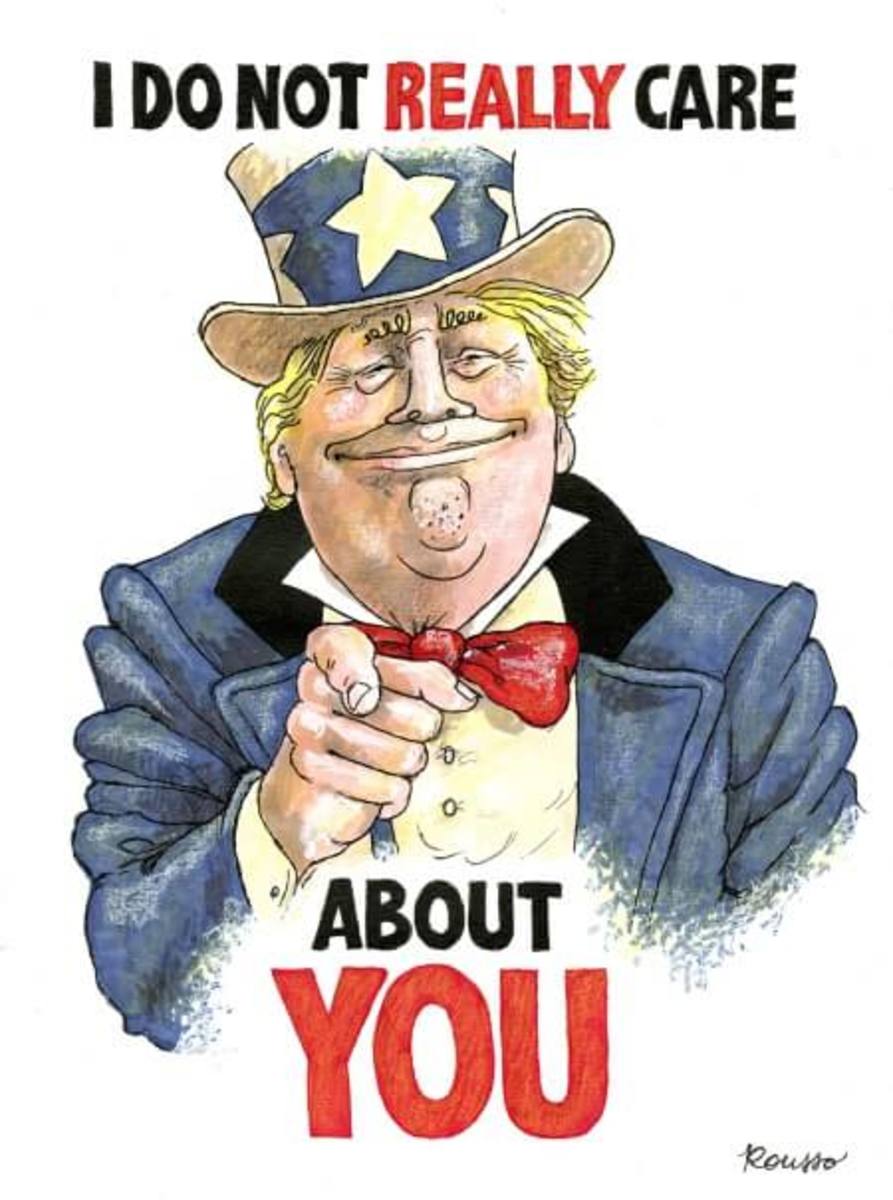
TRUMP AND HIS REGIME DON’T CARE ABOUT YOU

SUMMARY: President Trump and his regime don’t care about you and aren’t protecting your health, safety, or financial security. Here are some examples of actions they have taken that put you at risk.

(Note: If you find a post too long to read, please just skim the bolded portions. Thanks for reading my blog!)

(Note: Please follow me and see my blog posts on Bluesky at: @jalippitt.bsky.social. Thanks!)

Trump and his regime don’t care about you, your health or safety, or protecting you from financial fraud and crime. They demonstrate this in many ways. Here are some examples.

The Trump regime is NOT protecting you from financial fraud and abuse. Since its first days in office, it’s been weakening the Consumer Financial Protection Bureau (CFPB). Most recently, the Trump-controlled CFPB announced it would no longer make consumer complaints public. Failure to make complaints public will protect financial companies from scrutiny and transparency, hiding corporate misconduct from the public. It removes the incentive companies have to avoid, fix, and respond to problems that comes with public awareness and publicity. Furthermore, the CFPB recently purged its backlog of complaints and canceled a policy requiring refunds to consumers who had been overcharged. [1]

Consumer complaints filed with the CFPB have doubled in 2025 to 6.6 million (from 3.2 million in 2024). Since 2011, the CFPB has received and made public more than seventeen million complaints. Nearly six million consumers have received some form of relief in response to their CFPB complaints over its 16 years of operation. The CFPB has gotten consumers over $20 billion in compensation based on complaints involving loans, bank accounts, credit reports, and other financial matters.

The Trump regime is also NOT protecting us from drug and human trafficking as well as financial fraud because it has stopped blocking the money laundering necessary for these criminal enterprises. It has terminated the shell company [2] registry of the Financial Crimes Enforcement Network (FinCEN) in the Treasury Department. Congress created the registry in 2021 through the Corporate Transparency Act (CTA). It was a response to the reporting of investigative journalists who documented that between 1999 and 2017 U.S. banks had processed more than $2 trillion in potentially laundered money for criminals using shell companies and operating out of Russia, China, Iran, and Syria. At the time, Senator Rubio, now Trump’s Secretary of State, called the CTA “the most significant anti-corruption and money laundering law in decades.” [3]

To combat this extensive money laundering, the CTA requires every individual owning at least 25% of a shell company to register their legal name, date of birth, and residential street address; and provide an image of an official identification document with a unique identifying number. The Trump regime has now (probably illegally) stopped enforcing this law. [4] The termination of the shell company registry also facilitates oligarchs’ ability to hide their money and avoid taxes. Trump’s Treasury Department also destroyed the registry’s data that had been previously collected.

Law enforcement, national security experts, and small business owners are alarmed. Senator Elizabeth Warren (D-MA) has called this lack of enforcement of the CTA “a gift to cartels, criminals, and U.S. adversaries.” [5]

On a different front, Trump’s Justice Department has reduced or stopped investigations and prosecutions of crimes like tax evasion, drug trafficking, and sex trafficking. The number of personnel assigned to these crimes has declined because of staffing shortages, funding cuts, and the reassignment of agents to immigration enforcement. [6]

The Trump regime is also NOT protecting your health. Measles in the U.S. is at levels not seen in many years and children have died from it. Nonetheless, Trump issued an executive order demanding states revise their recommendations for childhood vaccinations in ways that will reduce vaccinations for measles, as well as for mumps and rubella. Although the executive order does not change the Centers for Disease Control and Prevention’s recommendations or insurance coverage, it will increase confusion over and distrust of vaccinations that Trump’s Secretary of Health and Human Services Kennedy has been fomenting. This will result in more diseases, disabilities, and deaths. [7]

Foodborne illnesses in the U.S. are at very high levels. This year’s 10,500 cases to-date are almost ten times the annual rates in 2021 – 2025. A major contributor is the Trump regime’s cuts of more than 40% to food safety detection systems, including reduced funding for federal agencies to conduct food inspections and for grants to state and local health departments that track outbreaks. [8]

To add insult to injury, the Trump regime is also reducing access to health insurance and raising its cost for millions of Americans. In late June 2026, its own Department of Health and Human Services reported that at least five million people lost public health insurance in the first six months of the year, a drop of about 13%. For those remaining on public plans, premiums have spiked, more than doubling for some, while deductibles have increased by about $1,000 a person for many as they chose cheaper policies. [9]

The Trump regime announced in June plans to cancel 53 of 66 active grants from the Teen Pregnancy Prevention (TPP) program. TPP was created by bipartisan legislation in 2009 and has been credited with contributing to reducing the unwanted teen pregnancy rate by 65%. The Trump regime wants to end the comprehensive sex education of TPP programs and focus on abstinence promotion, despite evidence that abstinence only sex education is ineffective. A federal judge recently paused the regime’s attempt to put limits on the TPP grants’ sex education programs. [10]

Other examples of Trump regime actions that may hurt you:

  • Canceled the rule requiring airlines to compensate you for canceled flights (after United and Delta donated a million dollars to Trump).
  • Ended the IRS’s free tax return filing program (after the TurboTax tax return prepration software’s parent company gave a million dollars to Trump).
  • Weakened gun laws including restrictions that have been in place since 1934 on sawed-off (and therefore easily concealed) shotguns and silencers.
  • Promote cryptocurrency. But that’s a whole other story.

For lots of good news see Jess Craven’s Chop Wood Carry Water blog’s most recent good news Sunday post here.


[1]      Conley, J., 8/14/26, “In gift to abusive Wall Street firms, Trump CFPB moves to suppress consumer complaints,” Common Dreams (https://www.commondreams.org/news/cfpb-complaint-database)

[2]      Shell companies are legal entities that don’t have any physical presence or operations but are used for moving money and processing financial transactions.

[3]      Baratta, J., 8/14/26, “Trump makes crime legal,” The American Prospect (https://prospect.org/2026/08/14/trump-makes-crime-legal-corporate-transparency-act-treasury/)

[4]      Cox Richardson, H., 8/15/26, “Letters from an American blog,” (https://heathercoxrichardson.substack.com/p/august-15-2026)

[5]      Baratta, J., 8/14/26, see above

[6]      Cox Richardson, H., 8/13/26, “Letters from an American blog,” (https://heathercoxrichardson.substack.com/p/august-13-2026)

[7]      Cox Richardson, H., 8/13/26, see above

[8]      Cox Richardson, H., 8/20/26, “Letters from an American blog,” (https://heathercoxrichardson.substack.com/p/august-20-2026)

[9]      Cox Richardson, H., 8/20/26, see above

[10]     Conley, J., 8/19/26, “Federal judge blocks Trump and RFK effort to get more teens pregnant,” Common Dreams (https://www.commondreams.org/news/teen-pregnancy-programs)

PROGRESSIVES ARE WINNING ELECTIONS BY FOCUSING ON AFFORDABILITY, FAIRNESS, AND CORRUPTION

SUMMARY: Strong progressive election results are continuing. Voters are making it clear that their top issues are the unaffordability of daily life, corruption in our politics, fairness in our economy, and strong, effective opposition to the Trump regime.

(Note: If you find a post too long to read, please just skim the bolded portions. Thanks for reading my blog!)

(Note: Please follow me and see my blog posts on Bluesky at: @jalippitt.bsky.social. Thanks!)

Strong progressive election results are continuing. My earlier post noted wins by progressives in June and early July elections, and my hope that national Democrats were hearing the voters’ clear message. Many still seem too entrenched with big-money backers to hear the grassroots voices. Voters are signaling that everyday unaffordability, as well as corruption in politics and the economy, are the issues that matter most to them.

In the past two weeks, elections were held in Alabama, Connecticut, Michigan, Minnesota, Missouri, South Carolina, Vermont, and Wisconsin. Progressives won repeatedly, including in Minnesota’s U.S. Senate race, and even democratic socialists won, although the democratic socialist in Wisconsin’s governor race lost narrowly.

Incumbent House Democrats’ losses to more progressive primary challengers suggest that Democratic voters want representatives who will more aggressively confront the affordability crisis, demand fairness, and take on the Trump regime’s corruption and bad policies on the economy, the war, ICE, the climate crisis, and protections for individual rights and the rule of law. [1]

While attention was focused on Democratic primaries, Republican primaries also produced notable results. Several Trump-endorsed candidates have lost, including Mike Lindell (the MyPillow guy) in Minnesota’s governor’s race, as well as Amir Hassan in Michigan and Andy Ogles in Tennessee in U.S. House races. In South Carolina’s U.S. Senate race, Darline Graham was pushed into a runoff despite Trump’s endorsement. [2]

In Missouri, voters strongly rejected two Republican ballot initiatives. One would have eliminated the state income tax and replaced it with a higher sales tax (defeated 83% – 17%), even though supporters outspent opponents by more than two to one (with many proponent groups keeping their donors’ identities secret). This and other election results may indicate that the era of tax cuts as the supposed path to economic growth and jobs may be ending. [3] Missouri voters also rejected (80% – 20%) a GOP-backed effort to make it harder to pass initiative petitions. Both ballot questions passed in all eight Missouri congressional districts. [4]

These candidates and issues are winning, even when being outspent, because voters are no longer being fooled by messaging from a corrupt campaign financing system, including candidates’ disingenuous economic promises (e.g., tax cuts whose benefits will trickle down) that have resulted in economic inequality and the unaffordability of everyday life.

What unites these candidates is a shared focus: improving everyday life and making society fairer. They call out the greed and power of the American oligarchy and their control of the economy and policymaking. They make the case that for our private enterprise system to survive government must put a stop to huge monopolistic companies and dramatic wealth and income inequality. They argue that regulation and fair taxes are needed to curb monopolies and stop price-gouging (including by major food and gas and oil companies). They call for an end to private for-profit control of essential public services, such as healthcare, education, mail delivery, utilities, and transportation. [5]

For lots of good news see Jess Craven’s Chop Wood Carry Water blog’s most recent good news Sunday post here.


[1]      Hubbell, R. B., 8/6/26, “The polls were wrong in Michigan – by a mile! Why that matters,” Today’s Edition Newsletter (https://roberthubbell.substack.com/p/the-polls-were-wrong-in-michiganby)

[2]      Hubbell, R. B., 8/13/26, “Don’t underestimate the ability of Democratic voters to get it right,” Today’s Edition Newsletter (https://roberthubbell.substack.com/p/dont-underestimate-the-ability-of)

[3]      Cox Richardson, H., 8/5/26, “Letters from an American blog,” (https://heathercoxrichardson.substack.com/p/august-5-2026)

[4]      Hubbell, R. B., 8/5/26, “The misleading narrative of Democratic disunity,” Today’s Edition Newsletter (https://roberthubbell.substack.com/p/the-misleading-narrative-of-democratic)

[5]      Cox Richardson, H., 6/26/26, “Letters from an American blog,” (https://heathercoxrichardson.substack.com/p/june-26-2026)

THE TRUMP FAMILY’S SAUDI ARABIAN CONNECTIONS Part 3

The Trump family’s relationships with Saudi Arabia and its ruler involve billions of dollars of investments and real estate deals. These conflicts of interest and apparent corruption are unprecedented. There are many accessories, and there should be many investigations and prosecutions.

SUMMARY: The Trump family’s relationships with Saudi Arabia and its ruler Mohammed bin Salman (MBS) involve billions of dollars of investments and real estate deals. These conflicts of interest and apparent corruption by a president and his family are unprecedented in American history. The acquiescence and enabling behavior by Republicans in Congress, other officials in the Trump administration, and by the Supreme Court make them accessories. If there were a functioning, independent Department of Justice or Congress, there would be more investigations and prosecutions than one could count.

(Note: If you find a post too long to read, please just skim the bolded portions. Thanks for reading my blog!)

(Note: Please follow me and see my blog posts on Bluesky at: @jalippitt.bsky.social. Thanks!)

The third facet of the Trump family’s friendly relationships with Saudi Arabia and its ruler Mohammed bin Salman (MBS) is the one that financially benefits Trump himself, his family, and the Trump organization. Therefore, it presents huge conflicts of interest that may well be the core explanation for Trump’s friendly relationship that has benefited Saudi Arabia and MBS with deals for nuclear, AI, and military infrastructure and capabilities. As noted in my previous posts (here and here), these deals by the Trump administration represent significant changes in U.S. policies and, in many experts’ views, present serious national security risks.

In President Trump’s first term, he appointed his son-in-law, Jared Kushner, as a senior advisor and Director of the Office of American Innovation. Kushner was involved in various policy initiatives, including peace negotiations with Israel and Arab nations, despite a total lack of public policy, international relations, and diplomacy experience. This role presented conflicts of interest due to his past and current business dealings with Arab leaders and investors. In 2018, it was reported that multiple foreign governments had discussed manipulating Kushner and the Trump administration through Kushner’s financial dealings. MBS bragged to other Arab leaders that he had Kushner in his pocket. [1]

Just as the first Trump presidential term was winding down late in 2020, Kushner founded an investment management firm, Affinity Partners. Kushner had no investment management experience and his sales pitch was described as very amateurish as he worked to raise hundreds of millions of dollars for his firm to manage. A key target was the nearly $1 trillion sovereign wealth fund of Saudi Arabia. Kushner, in overseeing the Trump administration’s foreign policy in the Middle East, along with his father-in-law, President Trump, had cultivated a relationship with the Saudis and in particular with Crown Prince Mohammed bin Salman (MBS).

The Saudi officials screening investment opportunities recommended not investing with Affinity Partners because of its lack of investment management experience and lack of a clear strategy, among other factors. However, MBS overruled them and invested $2 billion with Kushner’s firm. United Arab Emirates and Qatar invested about $1.5 billion. Along with other mostly foreign investors, Affinity Partners raised over $6 billion. This generated over $100 million in fees for Kushner and his partners based on a fee structure the Saudi analysts had called excessive. [2]

In Trump’s second term starting in 2025, Kushner was again involved in Mideast negotiations as well as negotiations with Russia on Ukraine. (Trump’s and Kushner’s Russian connections are, of course, a whole other story.) In 2025, Kushner privately brokered the $55 billion Saudi purchase of the huge video game company Electronic Arts. (MBS reportedly loves video games and has played them with Kushner.) In 2026, even as the U.S. war on Iran was on-going and Kushner was serving as a negotiator, he was meeting with the Saudis to secure additional billions of dollars for his Affinity Partners investment firm. [3]

In February 2025, the Saudi’s sovereign wealth fund, known as its Public Investment Fund (PIF), sponsored its third annual investment conference in Miami. President Trump was again the headline speaker. Kushner and Donald Trump, Jr., were also present to schmooze with Saudi officials and businessmen. PIF has made billions of dollars of investments in the U.S., including in Kushner’s Affinity Partners, Trump’s golf resorts, and with other former Trump administration officials, such as former Treasury Secretary Steve Mnuchin. [4] One commentator noted that you don’t need an army to have power and influence in the world, you just need to have a sovereign wealth fund with a trillion dollars as the Saudis do. By the way, the proposed purchase of CNN and Warner Brothers Discovery by Paramount (which is owned and run by Trump’s friends the Ellisons) is funded by the sovereign wealth funds of Saudi Arabia, Abu Dhabi, and Qatar. If the deal goes through, those three countries’ funds would own 49.5% of the new company with the possibility that their share might grow to controlling majority interest. [5]

In January 2026, less than two months after hosting MBS at the White House, Trump announced $7 billion in private real estate development projects by the Trump organization in Saudi Arabia. Previously, in late 2024, shortly after Trump’s election as president, his son, Eric, who is leading the Trump organization, had announced a separate $3 billion real estate project in Saudi Arabia. The Trump organization also has real estate projects in Oman and the United Arab Emirates (UAE). [6]

President Trump’s son Donald, Jr., also has an investment firm. It’s called 1789 Capital and has extensive investments in defense companies. Don Jr. was intimately involved with vetting candidates for Pentagon jobs in 2025. Shortly thereafter, at least four companies 1789 Capital was invested in got Pentagon contracts. Trump sons, Don Jr. and Eric, are also the officers of a shell company that has invested in mining interests, including one that has a $1.6 billion U.S. government contract to obtain tungsten from Kazakhstan. [7]

The billions of dollars in business deals described above present conflicts of interest for and apparent corruption by the President and his family that are unprecedented in American history. These examples are just an overview. There’s much more, such as the Trump family’s crypto businesses.

This post and my previous two posts (here and here) highlight some dramatic government and private actions by Trump, his family members, and his administration that present mind-boggling conflicts of interest. One commentator stated that Jared Kushner is effectively on Saudi Arabia’s payroll. Although President Trump and his family are the primary culprits, the acquiescence and enabling behavior of Republicans in Congress and other officials in the Trump administration, as well as of the Supreme Court, make them accessories. If there were a functioning, independent Department of Justice or Congress, there would be more investigations and prosecutions than one could count.

For lots of good news see Jess Craven’s Chop Wood Carry Water blog’s most recent good news Sunday posts here.


[1]      Michel, C., July-August 2026, “They went to Jared,” Mother Jones (https://www.motherjones.com/politics/2026/06/jared-kushner-affinity-partners-fund-saudi-arabia-qatar-uae-israel-middle-east-deals-nepotism-iran-war-gaza-peace-deal-diplomat-steve-witkoff-donald-ivanka-trump/)

[2]      Michel, C., July-August 2026, see above

[3]      Michel, C., July-August 2026, see above

[4]      Human Rights Watch, 2/19/25, “Saudi Arabia: Public Investment Fund meeting whitewashes abuses,” (https://www.hrw.org/news/2025/02/19/saudi-arabia-public-investment-fund-meeting-whitewashes-abuses)

[5]      Meyerson, H., 7/21/26, “When the anti-Sharia law demagogues fall silent,” The American Prospect (https://prospect.org/2026/07/21/anti-sharia-law-republicans-paramount-warner-bros-chip-roy-keith-self-tommy-tuberville/)

[6]      Kile, M., 1/13/26, “Trumps announce $7B in new Saudi Arabia projects – including mansions ‘where winners reside’ – after Crown Prince’s White House visit,” People (https://people.com/trump-international-announces-saudi-arabia-projects-weeks-after-crown-prince-white-house-visit-11884610)

[7]      Makdisi, N., 7/26/26, “The business of war: Trump’s critical minerals grift,” Common Dreams (https://www.commondreams.org/opinion/trump-minerals-grift)

THE TRUMP FAMILY’S SAUDI ARABIAN CONNECTIONS Part 2

Trump’s friendly relationship with Saudi Arabia and its ruler is evident in his administration’s sales to them of military equipment and artificial intelligence (AI) technology, and his visits to Saudi Arabia. Trump’s extravagant military spending and sales have been called the “Bloody New Deal.”

SUMMARY: Trump’s (and his family’s) friendly relationship with Saudi Arabia and its ruler Mohammed bin Salman (MBS) is evident in his administration’s huge sales to Saudi Arabia of military equipment and artificial intelligence (AI) technology. Other signs of the close relationship are that the first foreign visits of each Trump presidential term have been to Saudi Arabia and that MBS was given the royal treatment on his visit to the White House. Trump’s extravagant military spending and sales have been called the “Bloody New Deal.”

(Note: If you find a post too long to read, please just skim the bolded portions. Thanks for reading my blog!)

(Note: Please follow me and get notices of my blog posts on Bluesky at: @jalippitt.bsky.social. Thanks!)

One example of Trump’s friendly relationship with Saudi Arabia and its leader Mohammed bin Salman (MBS) is his administration’s huge sales of military equipment and of artificial intelligence (AI) technology to Saudi Arabia. (See more below.) Another example of the close relationship is Trump’s recent deal to provide nuclear technology to Saudi Arabia described in my previous post. Trump, and his family, have maintained and built this friendly relationship despite Saudi Arabia being an autocratic, Islamic country whose leader, MBS, is widely believed to have ordered the murder of Jamal Khashoggi, the Washington Post columnist, and whose members were the planners and most of those who executed the 9/11/2001 terrorist attack on the U.S.

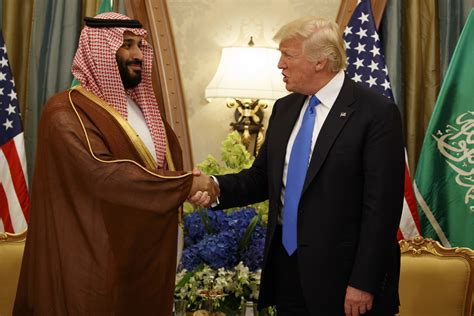
Evidence of Trump’s close relationship with the Saudis was made clear in that his first foreign visit of his first term was to Saudi Arabia, not a geographically close ally as is traditional. In May 2017, Trump and Jared Kushner met with Saudi King Salman, then Saudi defense minister MBS, and other Saudi leaders. Trump signed a $110 billion arms deal (growing to $350 billion over ten years) with Saudi Arabia, representing a substantial expansion of the U.S. – Saudi relationship.

Later in 2017, Trump’s son-in-law, Jared Kushner, went to Saudi Arabi for a private meeting with MBS, who had just become the Crown Prince and was taking control of the Saudi government. From late 2017 through January 2019, MBS undertook a purge and shakedown of the Saudi government, ruling royalty, and wealthy Saudi businessmen under a claim of ending corruption. Roughly 500 people were detained: some were beaten and tortured, at least 17 required hospitalization, and some ended up in prison. Assets of up to $800 billion were surrendered or seized. Trump indicated his support for MBS and lack of concern about the purge, shakedown, and their victims. (On June 30, 2026, PBS’s Frontline program aired a 90-minute report, The Crown Prince and the President, which documents many examples of the Trump family’s close relationship with MBS. It’s available on multiple streaming services.)

In 2019, President Trump vetoed multiple efforts to block U.S. military assistance to Saudi Arabia for its war on Yemen and the Houthis, despite strong evidence of significant civilian casualties.

In May 2025, President Trump’s first major international trip of his second term was to Saudi Arabia. The four-day visit focused primarily on securing business deals and investments. He met with Crown Prince MBS and King Salman and participated in a Saudi-U.S. Investment Forum.

In November 2025, MBS visited the White House, receiving the lavish treatment usually reserved for a head of state. (Note: MBS is the Crown Prince not the King, although he is effectively ruling Saudi Arabia. This was his first visit to the U.S. since the murder of Khashoggi in 2018.) The Trump administration approved the sale of an estimated $1 billion worth of advance artificial intelligence (AI) chips – up to 35,000 of them – to Saudi Arabia. This was a major reversal of U.S. policy which had previously restricted export sales of these chips to protect U.S. technology and national security. In particular, there is concern that this AI technology would be obtained by China due to Saudi Arabia’s existing economic and technological cooperation with China. Saudi Arabia’s state-backed AI company has signed contracts with nearly a dozen U.S. firms for AI technology and data centers in Saudi Arabia. [1] During this visit, MBS announced that Saudi Arabia would be investing up to $1 trillion in U.S. investment firms and infrastructure projects.

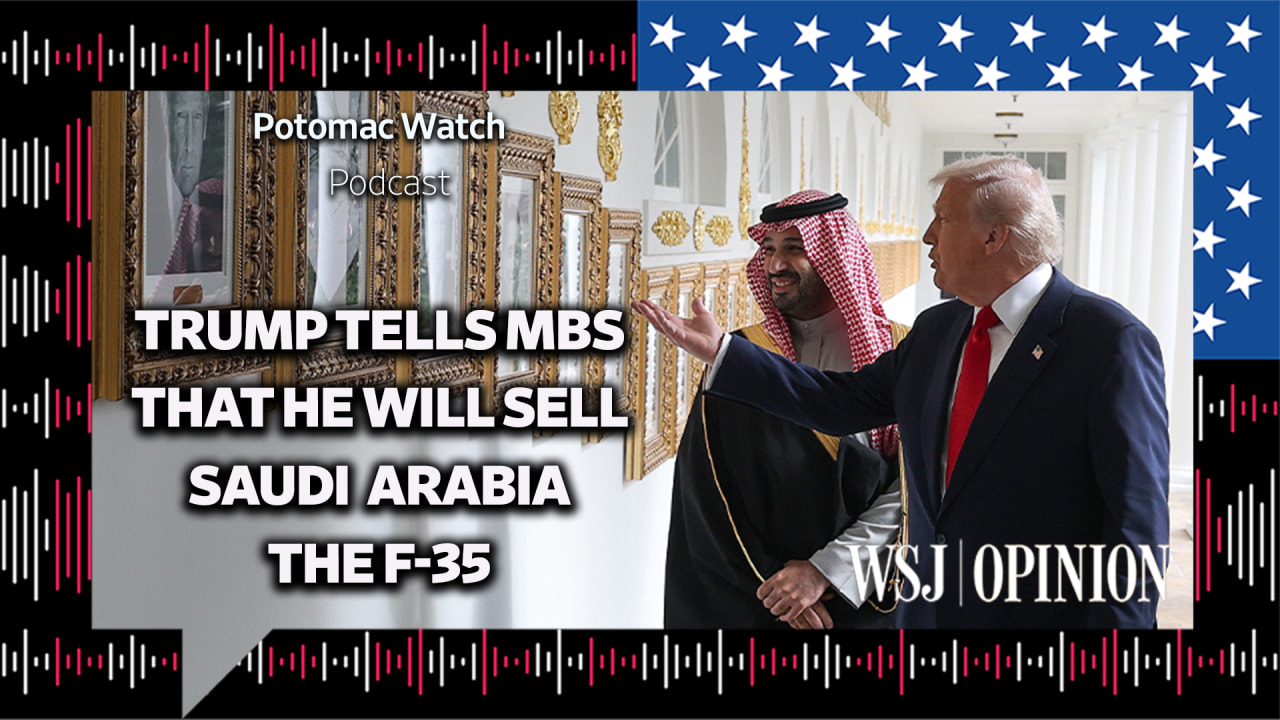
In March 2026, the Trump administration approved a $142 billion sale of military equipment and support to Saudi Arabia. This included 48 of the U.S.’s most advanced stealth fighter jets, the F-35. This represents a significant shift in U.S. arms export policy as only Israel had previously been able to obtain these fighter jets. This has raised national security concerns due to the sensitive technology in these jets, in particular because of Saudi Arabia’s connections with China. [2]

In July 2026, the Trump administration approved $2 billion in sales of Advanced Precision Kill Weapon Systems to Saudi Arabia, including 20,000 missiles.

Saudi Arabia is the largest purchaser of U.S. military equipment and second only to Israel in the technology and sophistication of the weapons systems it buys. The sale of these advanced weapons systems to Saudi Arabia is undoubtedly making Israel uncomfortable.

The hundreds of billions of dollars in military sales to the Saudis, the tens of billions of dollars in ordnance being used in the Iran War, and Trump’s request for a $1.5 trillion defense budget and an $80 billion supplemental appropriation for the Iran War are making the defense industry very happy. This unprecedented funding of the military-industrial complex has been called the “Bloody New Deal.” [3]

My next post will review the real estate and financial deals between Trump family members and Saudi Arabia.

For lots of good news see Jess Craven’s Chop Wood Carry Water blog’s most recent good news Sunday posts here.


[1]      Graham, E., 11/20/25, “U.S. greenlights AI chip exports to Gulf tech giants after Saudi Crown Prince’s Wahington visit,” CNBC (https://www.cnbc.com/2025/11/20/us-approves-ai-chip-exports-to-gulf-after-saudi-crown-prince-visit.html)

[2]      Kumar, A., 3/30/26, “U.S. approves F-35 stealth fighter jet sale to Saudi Arabia under strategic defense deal,” The Defense News (https://www.thedefensenews.com/US-Approves-F-35-Stealth-Fighter-Jet-Sale-to-Saudi-Arabia-Under-Strategic-Defense-Deal/)

[3]      Manning, S., 3/23/26, “Trump’s proposed military spending would be a ‘Bloody New Deal’,” Union of Concerned Scientists (https://blog.ucs.org/sean-manning/trumps-proposed-military-spending-would-be-a-bloody-new-deal/)