WHY GOVERNMENT FUNCTIONS SHOULD BE DE-PRIVATIZED

Privatization of government functions gives a private entity control of a public good or service and is often inefficient and risky. The real goal is often to give businesses profits. Democrats need to reverse privatization. DOD contracts for mission critical capabilities need to be de-privatized.

SUMMARY: Privatization of government functions means giving a private entity control of or power over a public good or service. Privatization is often inefficient and can have safety and national security risks. The real goal of many privatization efforts is to give private businesses an opportunity to make profits. Democrats need to reverse decades of privatization to better serve the public. The companies the Department of Defense has contracted with to provide mission critical capabilities need to be nationalized, most notably Elon Musk’s SpaceX.

(Note: If you find a post too long to read, please just skim the bolded portions. Thanks for reading my blog!)

(Note: Please follow me and see my blog posts on Bluesky at: @jalippitt.bsky.social. Thanks!)

(Note: For lots of good news see Jess Craven’s Chop Wood Carry Water blog’s most recent Sunday post here.)

Privatization of government functions or “outsourcing” means more than just contracting for a prison or selling off a municipal water system. It means giving a private entity control of or power over a public good or service – essential things we depend on including public health, clean air and water, safe food, good education, transportation, health care, utilities, and safety.

Privatization is often inefficient (i.e., costs more and/or delivers lower quality goods or services than public provision) and can have safety and national security risks. (See this previous post for more information.) Privatization tends to be inefficient because it adds a layer of management and profits onto public functions. Any cost savings typically come from paying workers less. Public transparency and control over the delivery of services are typically lost and, in addition, government can lose its capacity to deliver basic services. [1] Private, for-profit companies tend to cut corners and purposely avoid expensive to serve individuals to maximize profits, compromising quality and fairness.

The real goal of many privatization efforts is not greater efficiency but a desire of politicians to give private businesses an opportunity to make profits. Some politicians may believe that privatization will produce efficiencies despite significant evidence to the contrary. However, some politicians may be looking to curry favor with private companies and their executives who can give them campaign contributions.

Some examples of failed or unwarranted privatization (in addition to ones in this previous post) include:

  • Privatization of prisons and detention facilities (see posts here and here for more information)
  • Use of ID.me for logging in to government agencies and information (see this post for more information)
  • Use of CLEAR for expedited security clearance at airports. (TSA PreCheck is the public alternative which costs less than one-tenth as much.)
  • Vouchers for K-12 education in private schools. (They divert money from public schools and typically subsidize well-off parents who are already sending their children to private schools.)
  • Privatization of Medicare through so-called Medicare Advantage plans. (Public Medicare is much more efficient than the privatized plans (i.e., lower cost per patient and better outcomes). Medicare would save about $100 billion a year if these private plans were eliminated. See more information here, here, and here.)

Contracts, vouchers, and just allowing the private sector to provide a service (e.g., rail and bus transportation, electricity, and Internet and phone service) are not the only ways to privatize government functions. For example, federal policies have hamstrung the U.S. Postal Service, including prohibiting it from providing some services, to allow private companies to provide a significant portion of package delivery services. The Department of Defense and other government agencies have been taking ownership shares in private companies, such as strategic minerals, chip making, and small defense manufacturing companies. [2] (For detailed information about privatization and its many variants see In the Public Interest.) [3] (For more information on how the Trump administration has been taking ownership interests in private companies and exerting control over private companies in other ways see this previous post.)

It’s usually more efficient and almost always fairer to have government provide the public goods and services that meet essential public needs (e.g., education, health care, water, sewer, waste removal, electricity, communications, transportation, public safety, and defense). Decades of privatization need to be reversed to better serve the public.

When Democrats take control of Congress in January, they should immediately take steps to slow privatization with a goal of halting additional privatization in the short-term. Over the longer term, they should de-privatize important public functions, such as the provision of Medicare and eventually all of health care.

There are situations where the ownership of private companies should be taken over by the government, i.e., they should be nationalized. The clearest examples are companies the Department of Defense has contracted with to provide mission critical capabilities. Specifically, it has contracted critical satellite-based communications and intelligence capabilities to SpaceX, including use of its Starlink and Starshield communications systems. It is not wise or safe to have these capabilities in private hands, let alone the hands of Elon Musk, the owner of SpaceX. He is a significant national security risk given his business interests, contacts, and engagement with Chinese leaders and investors. [4] Ownership of SpaceX needs to be taken over by the federal government. [5] (See this previous post for more information on Musk, SpaceX, and the national security risks they represent.)


[1]      Kuttner, R., 10/13/26, “Time to de-privatize,” The American Prospect (https://prospect.org/2026/10/13/time-to-de-privatize-federal-government/)

[2]      Groz, Z., 10/22/26, “As lawmakers scrutinize Pentagon equity deals, Pentagon keeps making them,” The American Prospect (https://prospect.org/2026/10/22/as-lawmakers-scrutinize-pentagon-equity-deals-pentagon-keeps-making-them/)

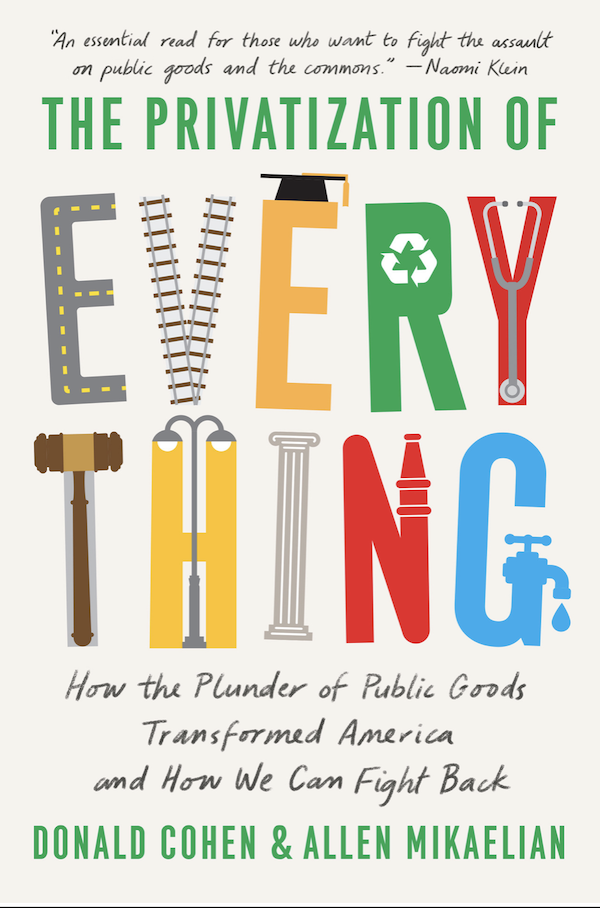
[3]      See also Cohen, D., & Potter, C., 1/7/22, “Why privatization is worse than you know,” Public Seminar (https://publicseminar.org/essays/why-privatization-is-worse-than-you-know/), which, among other things, references the book, The Privatization of Everything, by Cohen and Mikaelian.

[4]      Kaplan, J., & Elliott, J., 3/26/25, “How Elon Musk’s Space X secretly allows investments from China,” ProPublica (https://www.propublica.org/article/elon-musk-spacex-allows-china-investment-cayman-islands-secrecy)

[5]      Myerson, H., 10/22/26, “SpaceX is a de facto government agency. It should be nationalized.” The American Prospect (https://prospect.org/2026/10/22/spacex-government-agency-nationalized-elon-musk-russia-ukraine-starlink/)
THE RISKS OF PRIVATIZING GOVERNMENT SERVICES

Privatization of government services, promoted by Republicans and some Democrats, rarely delivers greater efficiency. Over 40% of the federal government workforce are now private contractors. The DOD uses contractors extensively; its contracts with Musk’s SpaceX present national security risks.

SUMMARY: Privatization of government services has been promoted by Republicans and some Democrats for over 40 years. Their promises of greater efficiency rarely turn out to be true. Over 40% of the federal government’s workforce are now private contractors. The Department of Defense uses contractors extensively, including for sensitive, mission-critical functions. Its contracts with Elon Musk’s SpaceX company present serious national security risks.

(Note: If you find a post too long to read, please just skim the bolded portions. Thanks for reading my blog!)

(Note: Please follow me and see my blog posts on Bluesky at: @jalippitt.bsky.social. Thanks!)

(Note: For lots of good news see Jess Craven’s Chop Wood Carry Water blog’s most recent Sunday post here.)

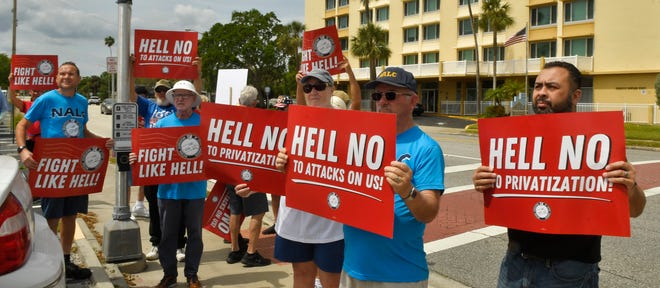
Privatization of government services or “outsourcing” has been promoted by Republicans and some Democrats for over 40 years. Proponents claim it will save taxpayers money, improve public services, and increase public sector accountability. This rarely turns out to be true. Once the profit incentive is introduced, prices are likely to go up and quality is likely to go down. Privatization only tends to be successful if there is strong oversight and regulation, as well as real competition.  (See this previous post for more details.)

Poor experiences with privatization at the municipal level led to a wave of de-privatization between 1997 and 2002. Nonetheless, privatization continued to march ahead at the federal level. (I’ve been criticizing privatization since way back in 2012. See previous posts here and here for more information.)

Numerous examples exist of privatization’s failure to deliver its promised benefits. The U.S. health care system is a classic one. The privatized, for-profit system in the U.S. is the costliest system among any of our peer countries and its outcomes are among the worst. All elements of the system are putting profits before patients. (See previous posts here and here for more information on the failures of for-profit health care.)

Other examples of failed privatization include:

  • Rail transportation is more efficient, dependable, and convenient in the rest of the world than with the privatized system in the U.S.
  • Bridges, roads, and parking meters that have been privatized by state and municipal governments often did not produce the desired results.
  • Water, sewer, and solid waste disposal systems’ privatization has been found in most studies to provide no cost or efficiency benefits.
  • Internet service is cheaper and faster where there are municipally run systems and in Europe.

Privatization is also evident in the increasing portion of the federal workforce that is contractors. The total federal government workforce of roughly 9.1 million people can be categorized as follows: [1]

  • 3.7 million contractors (40.7%),
  • 2.0 million civilian employees (22.0%),
  • 1.6 million people paid through various grant programs (17.6%),
  • 1.3 million active-duty military personnel (14.3%), and
  • 0.5 million Postal Service employees (5.5%). [2]

The use of contractors by the Department of Defense (DOD) on the ground in war zones has gone largely unnoticed. However, more contractors have died (8,000) than US service members (7,000) in post 9/11 military activities. Contractors have become a permanent element of the military infrastructure. In the Middle East region, operational and battlefield contractors greatly outnumbered military personnel (43,800 contractors to 15,000 military) in October 2020. There were three contractors for each member of the military in Afghanistan at the end of U.S. involvement in August 2021. [3]

But the DOD’s privatization goes further and, as has become apparent recently, is jeopardizing national security and U.S. foreign policy. The U.S. DOD has billions of dollars of contracts with Elon Musk’s SpaceX company to provide critical military and national security capabilities. For example, Space X has a multi-billion-dollar contract to build a classified spy satellite network for the DOD. It also has contracts for communication services through Space X’s subsidiary, Starlink. [4]

Recently, Trump and Musk were limiting Ukraine’s use of Starlink and its military version, Starshield. Musk claims that Starshield is operated by the US government. The limitations that were imposed on these communications services prevented or slowed warnings of incoming Russian missiles and drones, and also degraded Ukraine’s offensive military capabilities. [5]

It seems likely that the U.S. DOD is similarly dependent on SpaceX communications capabilities. It doesn’t seem wise or safe to have privatized these DOD mission critical capabilities.

Furthermore, Musk is considered a significant national security risk by DOD and intelligence officials, as well as by other intelligence experts. [6] When Trump took office in 2025, there were three DOD investigations of Musk’s and Space X’s repeated failures to file mandatory national security reports of contacts and involvement with foreign entities. [7] Their significant contacts and engagement with Chinese leaders and investors make this a matter of serious concern. Space X has sizeable investments from Chinese investors, but because of its contracts with the DOD, Space X does not want its investments from Chinese investors to be public knowledge. Therefore, it actively works to make sure those investments are laundered through intermediate entities in the Cayman Islands and elsewhere, which keeps investors anonymous. [8]

Roughly half of Musk’s Tesla vehicles are built in China and China is Tesla’s largest market. Tesla’s largest factory is in Shanghai and its construction received a $2.8 billion investment, major tax breaks, and special permissions from the Chinese government. Musk regularly meets with Chinese government and Communist Party officials due to his multiple business interests, current and future, in China.

It seems quite clear that sensitive DOD capabilities should not be privatized to Musk’s company – or anyone else’s for that matter.

My next post will focus on the need to slow, stop, and eventually reverse the privatization of essential government functions.


[1]      Gordon, N., 10/5/17, “Contractors and the true size of government,” Project On Government Oversight (https://www.pogo.org/analyses/contractors-and-true-size-of-government)

[2]      Note: These data are from 2017, but overall these numbers have been relatively stable over time. If anything, the percentage of contractors has increased.

[3]      Cancian, M., 8/30/21, “In Afghanistan, contractors were unsung heroes of US efforts,” Breaking Defense (https://breakingdefense.com/2021/08/in-afghanistan-contractors-were-unsung-heroes-of-us-efforts/)

[4]      Elordi, M., 10/21/24, “Elon Musk’s companies have faced at least 20 federal probes,” Daily Wire (https://www.dailywire.com/news/elon-musks-companies-have-faced-at-least-20-federal-probes-report)

[5]      Roth, A. 10/14/26, “Ukrainian military’s access to Starlink satellite internet suddenly restricted,” The Guardian (https://www.theguardian.com/world/2026/oct/14/ukraine-soldiers-combat-access-starlink-satellite-internet-restricted)

[6]      Reich, R., 3/21/25, “Is the Muskrat working for China?” Robert Reich blog (https://robertreich.substack.com/p/is-the-muskrat-working-for-china )

[7]      House Committee on the Judiciary, 2/13/25, “Fact Sheet: Trump administration, DOGE punish agencies investigating Elon Musk’s companies,” (https://democrats-judiciary.house.gov/uploadedfiles/2025.02.13_fact_sheet_re_musk_investigations.pdf

[8]      Kaplan, J., & Elliott, J., 3/26/25, “How Elon Musk’s Space X secretly allows investments from China,” ProPublica (https://www.propublica.org/article/elon-musk-spacex-allows-china-investment-cayman-islands-secrecy)

THE TRUMP FAMILY’S SAUDI ARABIAN CONNECTIONS Part 2

Trump’s friendly relationship with Saudi Arabia and its ruler is evident in his administration’s sales to them of military equipment and artificial intelligence (AI) technology, and his visits to Saudi Arabia. Trump’s extravagant military spending and sales have been called the “Bloody New Deal.”

SUMMARY: Trump’s (and his family’s) friendly relationship with Saudi Arabia and its ruler Mohammed bin Salman (MBS) is evident in his administration’s huge sales to Saudi Arabia of military equipment and artificial intelligence (AI) technology. Other signs of the close relationship are that the first foreign visits of each Trump presidential term have been to Saudi Arabia and that MBS was given the royal treatment on his visit to the White House. Trump’s extravagant military spending and sales have been called the “Bloody New Deal.”

(Note: If you find a post too long to read, please just skim the bolded portions. Thanks for reading my blog!)

(Note: Please follow me and get notices of my blog posts on Bluesky at: @jalippitt.bsky.social. Thanks!)

One example of Trump’s friendly relationship with Saudi Arabia and its leader Mohammed bin Salman (MBS) is his administration’s huge sales of military equipment and of artificial intelligence (AI) technology to Saudi Arabia. (See more below.) Another example of the close relationship is Trump’s recent deal to provide nuclear technology to Saudi Arabia described in my previous post. Trump, and his family, have maintained and built this friendly relationship despite Saudi Arabia being an autocratic, Islamic country whose leader, MBS, is widely believed to have ordered the murder of Jamal Khashoggi, the Washington Post columnist, and whose members were the planners and most of those who executed the 9/11/2001 terrorist attack on the U.S.

Evidence of Trump’s close relationship with the Saudis was made clear in that his first foreign visit of his first term was to Saudi Arabia, not a geographically close ally as is traditional. In May 2017, Trump and Jared Kushner met with Saudi King Salman, then Saudi defense minister MBS, and other Saudi leaders. Trump signed a $110 billion arms deal (growing to $350 billion over ten years) with Saudi Arabia, representing a substantial expansion of the U.S. – Saudi relationship.

Later in 2017, Trump’s son-in-law, Jared Kushner, went to Saudi Arabi for a private meeting with MBS, who had just become the Crown Prince and was taking control of the Saudi government. From late 2017 through January 2019, MBS undertook a purge and shakedown of the Saudi government, ruling royalty, and wealthy Saudi businessmen under a claim of ending corruption. Roughly 500 people were detained: some were beaten and tortured, at least 17 required hospitalization, and some ended up in prison. Assets of up to $800 billion were surrendered or seized. Trump indicated his support for MBS and lack of concern about the purge, shakedown, and their victims. (On June 30, 2026, PBS’s Frontline program aired a 90-minute report, The Crown Prince and the President, which documents many examples of the Trump family’s close relationship with MBS. It’s available on multiple streaming services.)

In 2019, President Trump vetoed multiple efforts to block U.S. military assistance to Saudi Arabia for its war on Yemen and the Houthis, despite strong evidence of significant civilian casualties.

In May 2025, President Trump’s first major international trip of his second term was to Saudi Arabia. The four-day visit focused primarily on securing business deals and investments. He met with Crown Prince MBS and King Salman and participated in a Saudi-U.S. Investment Forum.

In November 2025, MBS visited the White House, receiving the lavish treatment usually reserved for a head of state. (Note: MBS is the Crown Prince not the King, although he is effectively ruling Saudi Arabia. This was his first visit to the U.S. since the murder of Khashoggi in 2018.) The Trump administration approved the sale of an estimated $1 billion worth of advance artificial intelligence (AI) chips – up to 35,000 of them – to Saudi Arabia. This was a major reversal of U.S. policy which had previously restricted export sales of these chips to protect U.S. technology and national security. In particular, there is concern that this AI technology would be obtained by China due to Saudi Arabia’s existing economic and technological cooperation with China. Saudi Arabia’s state-backed AI company has signed contracts with nearly a dozen U.S. firms for AI technology and data centers in Saudi Arabia. [1] During this visit, MBS announced that Saudi Arabia would be investing up to $1 trillion in U.S. investment firms and infrastructure projects.

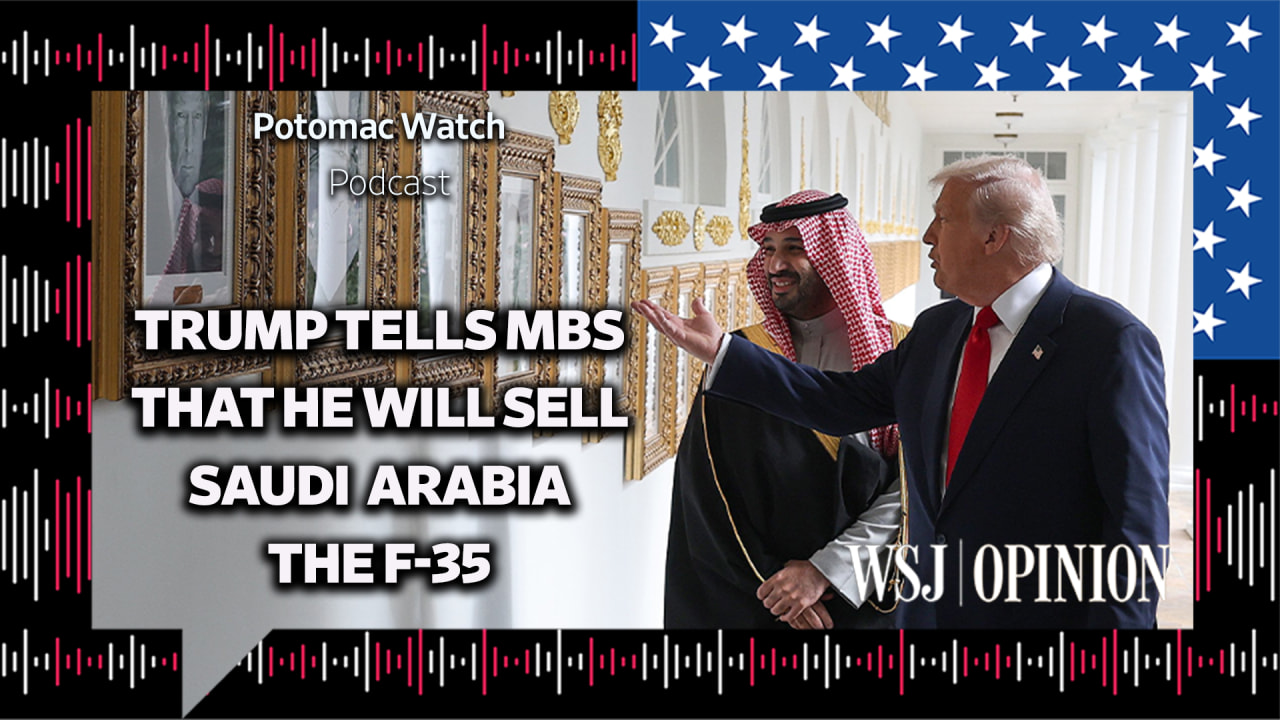
In March 2026, the Trump administration approved a $142 billion sale of military equipment and support to Saudi Arabia. This included 48 of the U.S.’s most advanced stealth fighter jets, the F-35. This represents a significant shift in U.S. arms export policy as only Israel had previously been able to obtain these fighter jets. This has raised national security concerns due to the sensitive technology in these jets, in particular because of Saudi Arabia’s connections with China. [2]

In July 2026, the Trump administration approved $2 billion in sales of Advanced Precision Kill Weapon Systems to Saudi Arabia, including 20,000 missiles.

Saudi Arabia is the largest purchaser of U.S. military equipment and second only to Israel in the technology and sophistication of the weapons systems it buys. The sale of these advanced weapons systems to Saudi Arabia is undoubtedly making Israel uncomfortable.

The hundreds of billions of dollars in military sales to the Saudis, the tens of billions of dollars in ordnance being used in the Iran War, and Trump’s request for a $1.5 trillion defense budget and an $80 billion supplemental appropriation for the Iran War are making the defense industry very happy. This unprecedented funding of the military-industrial complex has been called the “Bloody New Deal.” [3]

My next post will review the real estate and financial deals between Trump family members and Saudi Arabia.

For lots of good news see Jess Craven’s Chop Wood Carry Water blog’s most recent good news Sunday posts here.


[1]      Graham, E., 11/20/25, “U.S. greenlights AI chip exports to Gulf tech giants after Saudi Crown Prince’s Wahington visit,” CNBC (https://www.cnbc.com/2025/11/20/us-approves-ai-chip-exports-to-gulf-after-saudi-crown-prince-visit.html)

[2]      Kumar, A., 3/30/26, “U.S. approves F-35 stealth fighter jet sale to Saudi Arabia under strategic defense deal,” The Defense News (https://www.thedefensenews.com/US-Approves-F-35-Stealth-Fighter-Jet-Sale-to-Saudi-Arabia-Under-Strategic-Defense-Deal/)

[3]      Manning, S., 3/23/26, “Trump’s proposed military spending would be a ‘Bloody New Deal’,” Union of Concerned Scientists (https://blog.ucs.org/sean-manning/trumps-proposed-military-spending-would-be-a-bloody-new-deal/)