ARE THE NATIONAL DEMOCRATS LISTENING?

SUMMARY: I hope the national Democrats are listening. The grassroots are yelling and voting based on the unaffordability of daily life and the corruption in our politics and economy. In recent elections across the country, progressive, grassroots candidates are beating incumbents and winning even in conservative, Republican districts. Many of these candidates are young, female, multicultural, and/or new to politics.

(Personal note: I didn’t post the last two weeks because of the combination of a scramble to get signatures to put a question on the November ballot and a ten-day visit by an out-of-town grandson.)

(Note: If you find a post too long to read, please just skim the bolded portions. Thanks for reading my blog!)

(Note: Please follow me on Bluesky at: @jalippitt.bsky.social. Thanks!)

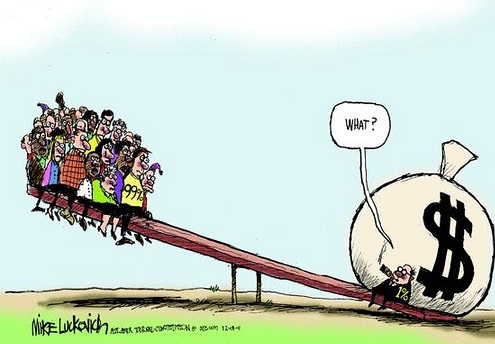
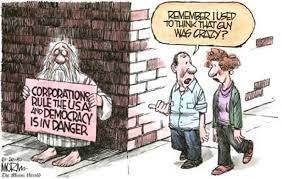
I hope the national Democrats are listening. The people and the voters are sending a loud, clear message. I worry that many of the Democrats in Washington are too entrenched with the oligarchs who spend big money to support their campaigns to hear the grassroots voices. The grassroots are yelling and voting based on the unaffordability of daily life and the corruption in our politics and economy.

In recent elections across the country, from Maine to Florida, from New York to Ohio to Colorado and Montana, from Arizona to California to Washington State, progressive, grassroots candidates are winning. They are beating incumbents and winning even in conservative, Republican districts. [1]

These candidates are winning by calling out monopolistic, corporate America, by attacking the political corruption of big money, and by addressing the everyday problems of ordinary Americans. [2] They are advocating for:

  • Guaranteeing health care for everyone
  • Making housing and child care more affordable
  • Increasing the minimum wage and easing the path to union membership
  • Reforming the corrupt campaign finance system
  • Requiring that wealthy individuals and corporations pay their fair share in taxes
  • Addressing climate change
  • Ensuring AI benefits all of us and not just the oligarchs
  • Ending wars and bloated military spending

The majority of the American people support these policies in poll after poll – and now in election after election. The public is sick and tired of status quo politics and corrupt campaign finance and economic systems that benefit only the rich and powerful.

Many of these winning candidates are young, female, multicultural, and/or new to politics. Some of them are Democrats and some are Democratic Socialists – not that many voters know what that means or care. What unites these candidates is that they are committed to making people’s everyday lives better and our society fairer. They are calling out the greed of the American oligarchy and their control of our economy and policy making. They make the case that our private enterprise system cannot survive unless the government ends huge monopolistic companies and dramatic wealth and income inequality through regulation and taxation. They call for an end to monopolistic price gouging like that of the food and gas and oil companies. They oppose private for-profit ownership of societal functions that people need to survive and that should serve the public good, such as health care, education, mail delivery, utilities, detention facilities, and roads, bridges, and public transportation. [3]

Ironically, Republicans supported many of these policies from the 1950s through the 1970s – ones they are now calling dangerous socialism or communism (without knowing or caring what those terms really mean). (More on the meaning of these terms in a future post.)

In 1969, Republican President Richard Nixon proposed the Family Assistance Plan, which would have provided a universal basic income to all families, effectively ending poverty. But it didn’t get enacted. In 1971, Congress passed legislation creating a universal, federally subsidized child care system that President Nixon was about to sign until pressured by right-wing political forces to veto it. In 1974, Nixon proposed universal health care with cost controls and financial assistance for those who couldn’t afford insurance. This also didn’t get enacted.

Back in the 1950s, Republicans and President Eisenhower supported workers, unions, and increasing the minimum wage; the expansion of social security and unemployment insurance; as well as improved housing and health care. The Republican Party platform called for equal pay for equal work and the elimination of discrimination in employment. [4]

It’s amazing to review how American politics and policies have changed over the last 75 years. What were centrist policies, supported by Republicans, in the 1950s through 1970s, are now called far left, socialist (or even communist) policies.

For lots of good news see Jess Craven’s Chop Wood Carry Water blog’s most recent good news Sunday posts here, here, and here.


[1]      Sanders, B., 7/1/26. “Last night in Colorado,” (https://www.facebook.com/reel/1517611133169096)

[2]      Reich, R., 7/6/26, “Why is he using the communist trump card,” Blog post (https://robertreich.substack.com/p/trumps-communist-trump-card)

[3]      Cox Richardson, H., 6/26/26, “Letters from an American blog (https://heathercoxrichardson.substack.com/p/june-26-2026)

[4]      Cox Richardson, H., 6/26/26, see above

FAIR TAXATION IS ESSENTIAL FOR DEMOCRACY Part 3

Democracy requires fair taxation. The current U.S. tax system is unfair. Given the huge inequalities in wealth, wealth and transfers of it need to be taxed directly. Wealth taxes are essential to re-establishing a fair tax system and reducing economic inequality.

Democracy requires fair taxation. The current U.S. tax system is unfair. Given the huge inequalities in wealth, wealth and transfers of it need to be taxed directly. Wealth taxes are essential to re-establishing a fair tax system and reducing economic inequality.

(Note: If you find a post too long to read, please just skim the bolded portions. Thanks for reading my blog!)

(Note: Please follow me and get notices of my blog posts on Bluesky at: @jalippitt.bsky.social. Thanks!)

Democracy requires fair taxation. The current U.S. tax system is unfair. My previous post focused on increasing the progressivity of individual and business income tax rates as one essential piece of re-establishing a fair tax system and reducing economic inequality. This post focuses on taxing wealth.

Wealth inequality has grown even more dramatically than income inequality. U.S. billionaires’ wealth has doubled since 2019. [1] Wealth inequality is so great that the only way to reduce it is to tax wealth and transfers of it directly. To re-establish a fair tax system and reduce economic inequality, we must: [2]

  • Tax existing wealth to slow and ultimately reverse the huge growth in wealth inequality and because the wealthy can (and do) maintain their extravagant lifestyles without having income. They borrow money and use their wealth as collateral for the loans. Therefore, they pay little or no income tax.
  • Tax increases in wealth even if assets aren’t sold. These increases in wealth are effectively income even when not sold.
  • Tax the intergenerational transfer of wealth because otherwise America will have a perpetual class of reigning, oligarchic families.
  • Give the Internal Revenue Service (IRS) the resources to enforce U.S. tax laws and dramatically reduce the hundreds of billions of dollars a year of tax dodging by wealthy individuals and businesses, i.e., not paying the taxes they legally owe.

A wealth tax makes sense and is fair because, among other reasons, the main source of wealth for the middle class – their home – has a wealth tax on it, i.e., the property tax. Therefore, taxing other forms of wealth that the wealthy own is fair and reasonable. There are many proposals on the table to tax wealth at the state and local levels, [3] as well as at the federal level. At the federal level, the Billionaires Income Tax Act would tax the increase in value of assets (e.g., stocks) even if they aren’t sold. There are also two different wealth tax proposals, one from Senator Warren (D-MA) and Representative Jayapal (D-WA), the Ultra-Millionaire Tax Act, and another from Senator Sanders (I-VT) and Representative Khanna (D-CA), the Make Billionaires Pay Their Fair Share Act. There is also the Working Americans’ Tax Cut Act that would shift some of the income tax burden from low- and moderate-income households to those with incomes of over $1 million.

In California, a one-time 5% wealth tax on billionaires is being proposed. Bob Reich explains why this makes sense in this 3-minute video. California’s 200 billionaires would pay $100 million a year for the next 5 years. This would allow the state government to provide health and food assistance benefits to millions of residents who would otherwise lose them due to federal funding cuts.

Current federal laws allow wealthy parents to pass their wealth on to their children with little or no tax being paid, including on assets that have increased in value while the parents owned them. At least 90 billionaires died over the last ten years and left their beneficiaries a total of $455 billion. Roughly $250 billion of that was increases in the value of assets during the time the deceased person held them (e.g., stock in a corporation). There was no capital gains tax paid on that $250 billion because current laws allow it to be transferred at its current value; this is the so-called “stepped up basis” tax loophole. This loophole should be repealed.

The estate tax has been cut in recent years and should be increased to decrease economic inequality, increase fairness, and curb the perpetuation of an oligarchic class in American society. The For the 99.5% Act proposed by Senator Sanders (I-VT) and Representative Gomez (D-CA) would reduce the size of an estate that is exempt from taxation from $30 million per couple to $7 million. It would also apply progressive tax rates based on the size of an estate (as opposed to the current flat rate of 40%). [4]

The IRS has been attacked and vilified by Republicans and the oligarchs for decades, presumably because they and their supporters don’t want to pay taxes, including by dodging taxes they owe. They’ve cut its funding and therefore its staffing, particularly for enforcement, leaving hundreds of billions of dollars owed by wealthy individuals and companies uncollected each year. President Biden and Democrats in Congress provided $80 billion in additional funding to the IRS to address understaffing and weak enforcement. For every dollar spent auditing the wealthy, the government recovered $26.

As soon as the Republicans and Trump returned to power, they began cutting tens of billions from the IRS’s funding and reducing its staffing. In 2025, about 22,000 employees left the IRS, about one-quarter of its workforce. Seven former IRS Commissioners, going back to President Reagan, co-wrote an opinion piece in the New York Times in February criticizing the cuts to funding and staffing at the IRS. [5] The IRS workers’ union, the National Treasury Employees Union, pushed back against some of the Trump administration’s cuts. So, in February 2026, the Trump administration terminated the union’s collective bargaining agreement.

To better serve taxpayers, the IRS introduced Direct File in 2024, which enabled many taxpayers to file simplified income tax returns for free – saving taxpayers an estimated $23 billion a year in tax preparation costs. Nearly 300,000 taxpayers used it in 2025. However, tax preparation and software companies have long opposed it because it reduces the demand for their services. So, the Trump administration has terminated it. In addition to its lobbying, the tax preparation industry’s opposition included, for example, Intuit, the parent company of Turbo Tax, donating $1 million to Trump.

I encourage you to contact your state and local elected officials, as well as your U.S. Representative and Senators, to ask them to support a fairer tax system that taxes wealth and transfers of it. Also ask your members of Congress to support funding for the IRS so it can enforce our tax laws. You can find contact information for your US Representative at http://www.house.gov/representatives/find/ and for your US Senators at http://www.senate.gov/general/contact_information/senators_cfm.cfm.

For lots of good news, see Jess Craven’s Chop Wood Carry Water blog’s most recent good news Sunday post here.


[1]      Collins, C., 4/5/26, “Tax the rich across the land!” Common Dreams (https://www.commondreams.org/opinion/how-to-tax-the-rich)

[2]      See this previous post on reducing economic inequality, which includes information on tax reforms proposed by the Economic Policy Institute and in the Money Agenda proposed by a group called Patriotic Millionaires.

[3]      Meyerson, H., 3/12/26, “Democrats get serious about taxing the rich,” The American Prospect (https://prospect.org/2026/03/12/democrats-get-serious-taxing-rich/)

[4]      Conley, J., 12/13/24, “Why can’t we fund universal public goods? Blame the tax-dodging billionaire nepo babies,” Common Dreams (https://www.commondreams.org/news/what-billionaires-avoid-taxes)

[5]      Sorapuru, J. E. J., 4/8/26, “Smaller IRS still pressured by Trump,” The Boston Globe