Is Trump the Real Communist in American Politics?

SUMMARY: Trump is the only politician calling for and taking government control of private companies and resources. At his direction, the government has taken stakes in at least nine companies. On the other hand, democratic socialists in the U.S. today are in the mainstream of our history, not outliers, let alone communists.

(Note: If you find a post too long to read, please just skim the bolded portions. Thanks for reading my blog!)

(Note: Please follow me and get notices of my blog posts on Bluesky at: @jalippitt.bsky.social. Thanks!)

Despite Trump and the Republicans calling Democrats communists, – especially the progressive ones and the ones who identify as democratic socialists – Trump is the actual communist. Really. [1] Let’s review definitions of socialism and communism, and then look at Trump’s actions.

Democratic socialism was eloquently defined by Senator Bernie Sanders in the fall of 2015 when he was running for president. You can watch and listen to his two-minute definition here. (My post about Sanders’ speech with more detail is here.)

His definition builds on President Franklin D. Roosevelt’s (FDR) proposed economic bill of rights and notes that true individual freedom cannot exist without economic security. Democratic socialism includes:

  • Decent jobs at decent pay with time off and the ability to retire with dignity;
  • The ability to have adequate food, clothing, health care, and housing;
  • A right to a good education; and
  • The opportunity for small businesses, including farmers, to operate without domination by large corporations.

Sanders noted that Martin Luther King, in 1968, echoed FDR’s call for economic rights and stated that the US provides “socialism for the rich and rugged individualism for the poor.” By the way, while “socialism” may be a politically negative label to older Americans, 67% of young Americans have a positive or neutral association with the word “socialism” compared to 40% who are positive or neutral about “capitalism.”

Historian Heather Cox Richardson states that the democratic socialists in the U.S. today are in the mainstream of our history. Their policy proposals echo the 1860s, when the Republicans established public colleges; the 1900s, when Theodore Roosevelt called for public health insurance; the 1930s with FDR’s New Deal and proposed economic bill of rights; Eisenhower Republicans of the 1950s; and Republican President Nixon in the late 1960s and 1970s. (See my previous post for more details.)

Cox Richardson notes that today’s American democratic socialists are not communists or even hardcore socialists. [2] Communists and some hardcore socialists advocate for eliminating all private property. Today’s American democratic socialists call for a robust system of private ownership and enterprise, alongside government control of essential societal functions required for people to survive and for the economy to work for the good of everyone. (See my previous post for more details.)

Communism calls for government or communal ownership of all resources as well as all means of production, meaning the state, rather than private individuals or corporations, owns factories, farms, mines, etc. None of the Democratic or Democratic Socialist candidates is proposing anything akin to this.

The only politician calling for state takeover of private industries and resources is Trump. At his direction, the government has taken stakes in at least nine companies at a cost of at least $10 billion in taxpayer money. These companies are in the steel, minerals, nuclear energy, and semiconductor industries. [3] Trump claims he’s done this for national security reasons, but increasing his power, control, wealth, and influence seem to be the real reasons. Notably, the arrangements his regime has made leave power and control, as well as money, in his hands, not under the control of some group or entity that is committed to the public good. Trump has used tariffs (and exemptions from them), regulatory actions (e.g., approval or denial of mergers and acquisitions), and trumped-up lawsuits (no pun intended) to coerce business leaders into complying with his requests for control of their businesses.

For example, in August 2025, the Trump administration converted $9 billion in federal grants to Intel into a 10% ownership share in the company. The grants were made under President Biden’s 2022 CHIPS and Science Act to boost domestic semiconductor manufacturing and research. The U.S. government is now Intel’s biggest shareholder. Intel had been struggling financially and this, along with other actions by Trump requiring other companies to buy Intel products or invest in it, bailed Intel out. (Imagine what Trump and Republicans would have said if the Obama administration had converted its bailouts of Wall Street and automakers in the 2008 Great Recession into government ownership of those companies!)

Apple got an exemption from Trump’s 100% tariffs on semiconductor imports (essential to iPhones and many other Apple products) by promising to buy Intel chips and collaborate with it.

Nvidia got Trump’s approval to sell its artificial intelligence (AI) chips to China (which he had said and others believe is a national security risk). Nvidia agreed to give 25% of the profits from Nvidia’s China sales to the government and to invest $5 billion in Intel.

The U.S. government has also become the largest shareholder in MP Materials, the only rare earth mining company in the country, after a $400 million investment of taxpayers’ money.

When the Japanese company, Nippon Steel, acquired U.S. Steel in 2025, Trump conditioned government approval on his receiving a “golden share” in U.S. Steel. This golden share allows him to veto key business decisions including decisions on changing U.S. Steel’s name, moving its headquarters out of Pittsburgh, or closing production facilities. [4]

These actions are not capitalism. Establishing government control over private companies is nationalized socialism or communism. Nothing at all close to this has happened in U.S. history except during the true national emergency of World War II. This is oligarchic communism in that it’s making Trump and wealthy executives and investors in these companies even richer. And it’s concentrating ever more power over a broader range of the U.S. economy and society in Trump’s hands. That’s authoritarianism.

For lots of good news see Jess Craven’s Chop Wood Carry Water blog’s most recent good news Sunday posts here.


[1]      Sonnenfeld, J.A., Pepper, J., Mulcahy, A., George, B., and Tyson, L.D., 8/21/25, “MAGA’s march toward a command economy,” Yale Insights (https://insights.som.yale.edu/insights/magas-march-toward-command-economy)

[2]      Cox Richardson, H., 7/5/26, Letters from an American blog (https://heathercoxrichardson.substack.com/p/july-5-2026)

[3]      Cox Richardson, H., 6/26/26, Letters from an American blog (https://heathercoxrichardson.substack.com/p/june-26-2026)

[4]      Kimball, S., 11/24/25, “Trump appoints two Commerce officials to oversee U.S. Steel under ‘golden share’ agreement,” CNBC (https://www.cnbc.com/2025/11/24/trump-us-steel-nippon-golden-share.html)

THE AMERICAN STRUGGLE BETWEEN OLIGARCHY AND DEMOCRACY

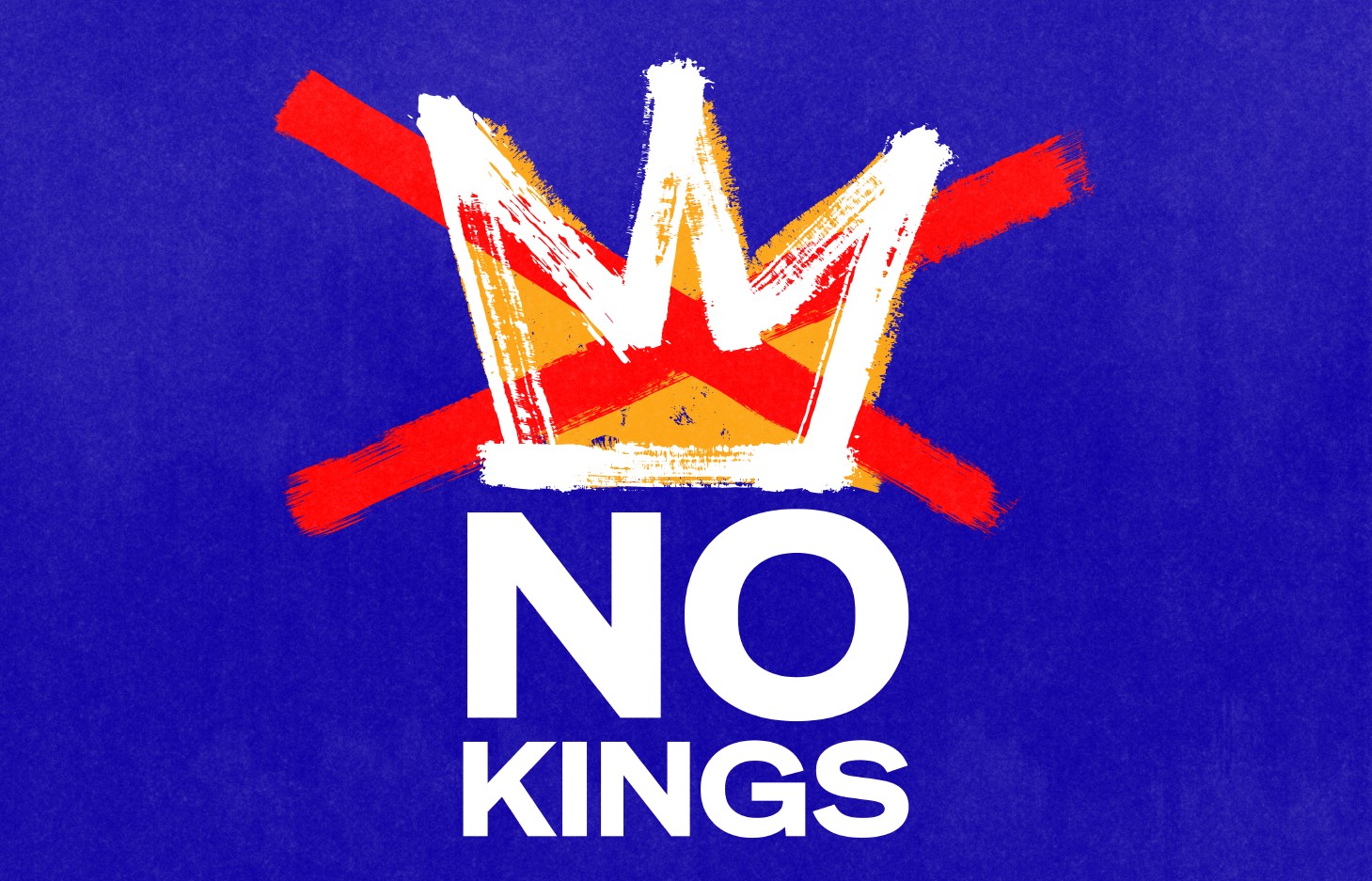
An American oligarchy has battled for control of our country since its founding. In 1980, the American oligarchy re-emerged and has been undermining democracy and skewing government policy. Defenders of democracy are fighting back, including with growing protests against and resistance to King Trump and his administration. Please find and participate in an Oct. 18 No Kings protest near you.

SPECIAL NOTE: We need millions of Americans at the No Kings protests on October 18 in defense of democracy. Please support this however you can. You can find an event near you here.

(Note: If you find a post too long to read, please just skim the bolded portions. Thanks for reading my blog!)

(Note: Please follow me and get notices of my blog posts on Bluesky at: @jalippitt.bsky.social. Thanks!)

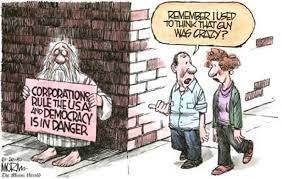
An American oligarchy based on wealth and privilege, with race and religion lurking behind them, has battled for control of our country since its founding. The southern plantation owners were the first American oligarchy. The businessmen and industrialists of the late 1800s and early 1900s, who were dubbed the Robber Barons, were the second American oligarchy.

The first American progressive era from the 1890s through 1945 pushed back against oligarchy and the Great Depression, which was caused by the greed of the oligarchs. President Franklin D. Roosevelt’s New Deal and the growth of government and government power due to World War II relegated and regulated the oligarchy to the back seat. This put democracy and we the people in the driver’s seat and in control of America.

The period after World War II, from 1945 to 1980 was the second progressive era. An unwritten post-war social compact framed American society and the economy. It was based on three pillars:

  • Corporations served all stakeholders: workers, customers, communities, and shareholders;
  • Workers had a right to unionize and receive fair wages and safe working conditions; and
  • Government provided a safety net, managed capitalism, and leveled the playing field.

The result was an economy and society where, from 1945 to 1980, the rising tide did lift all boats. Economic inequality narrowed and America moved toward its promise of equal opportunity for all. Workers’ wages increased in accordance with their increases in productivity. The middle class grew along with economic security. Each generation was better off than the previous one. Democracy was working well.

In 1980, with the election of President Reagan, the American oligarchy re-emerged. For the last 45 years, it has been undermining democracy and skewing government policy in its favor. (See this previous post for more details.) Although Republicans have been the driving force, Democrats have contributed to this shift by supporting business deregulation and unconstrained globalization. Democrats also failed to support unions and failed to reform our campaign finance system. Moreover, they have come to rely on campaign contributions from wealthy individuals and corporations.

All this has led to 45 years of dramatically growing income and wealth inequality. The middle class has shrunk, and workers’ wages have increased much less than their increases in productivity. Many Americans have lost their economic security. The public’s faith in government and democracy has declined dramatically.

However, there are signs that a third American progressive era and a resurgence of democracy may be emerging. There is increasing acknowledgement and public awareness that:

  • Wealth and income inequality have grown to unacceptable levels.
  • Huge corporations tend to engage in monopolistic behaviors such as price fixing and price gouging; decreasing quality, choice, and customer service; and poor treatment of employees in terms of compensation and safety.
  • Unrestrained capitalism is not good for consumers, workers, communities, or our planet.
  • The oligarchs have rigged our economic system in their favor so that the rising tide is lifting only their yachts.
  • Oligarchy is anti-democratic and tends to turn into authoritarianism and fascism, i.e., white, male, Christian nationalism.

Bob Kuttner, a long-time, very astute and thoughtful observer and analyst of American politics and policies, has concluded that American democracy’s efforts to balance capitalism are doomed to fail. The incentives and power of huge corporations and huge wealth are too great and will inevitably overwhelm America’s brand of democracy. He concludes that significant public ownership of key sectors of the economy, i.e., democratic socialism, is necessary to keep capitalism in check. [1]

As Bob Reich recently wrote, “Capitalism is compatible with democracy only if democracy is in the driver’s seat. … [Otherwise] It fuels despotism.” [2] This is reminiscent of the quote from Supreme Court Justice Louis Brandeis back in the 1930s: “We can have democracy in this country, or we can have great wealth concentrated in the hands of a few, but we can’t have both.”

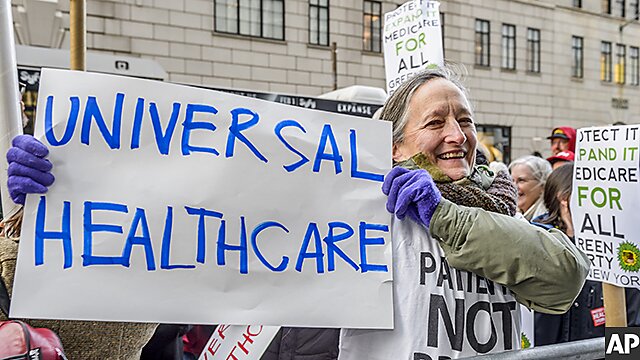
In many sectors of our economy there’s a clear need for strong regulation or public ownership including in health care, communications (including media and the big technology platforms), utilities and energy, the transportation system, banking and finance, housing, and food and agriculture. In these areas, a publicly owned option would be more effective and efficient because it wouldn’t have to cover the costs of profits, big executive pay packages, and advertising. For example, in the health care sector, when the Affordable Care Act (ACA, aka Obama Care) was being developed, health care providers and insurance companies vehemently opposed a public option in the health care market place (basically Medicare available to everyone) because they knew it would be more effective and efficient. This is also why they oppose Medicare of All and are working feverishly to undermine Medicare with their privatized Medicare Advantage plans. We need public Medicare for seniors and a public option for everyone else to stop the rapacious, for-profit health care businesses that put profits before patients. (See previous posts here, here and here for more details.)

The growing protests against and resistance to King Trump and his administration’s actions and policies are signs of a resurgence of democracy and an emerging progressive era. The successes are many, on the streets and in the courtrooms, sometimes small but nonetheless important, and are underreported by the mainstream media. Forcing media executives to put the Jimmy Kimmel show back on the air was a huge and very visible success. (For lots of current good news see Jess Craven’s Chop Wood Carry Water blog here.)

In this vein, please find an October 18th No Kings event near you here and participate and support it in whatever way you can. We, the American public, as citizens, consumers, and workers, must stand up for democracy, otherwise, we’ll continue down the slippery slope to oligarchy, authoritarianism, and fascism. We can stop the anti-democracy slide, as we did in the Jimmy Kimmel case.

We need millions of Americans engaged in the No Kings protests and in the many, many other smaller protests that are occurring daily. Thank you for all you’re doing! Please keep up the great and important work to save our democracy!

My next post will identify additional signs of a resurgence of democracy and the beginning of a third progressive era, including a surge in unionization, campaign finance reforms, and actions and elections at the state and local levels.


[1]      Kuttner, R., 12/1/21, “Capitalism vs. liberty,” The American Prospect (https://prospect.org/politics/capitalism-vs-liberty/)

[2]      Reich, R., 9/26/25, “Why are we so polarized? Why is democracy in such peril?” Blog post (https://robertreich.substack.com/p/why-are-we-so-polarized)