UNIVERSAL HEALTH CARE SAVES LOTS OF LIVES AND MONEY

SUMMARY: A universal, single-payer U.S. health care system could save over 100,000 lives and $1 trillion every year. However, because capitalism has corrupted our health care system, which now puts profits before patients, the potential benefits, both in quality and in savings, won’t occur unless the corporate giants in the system are broken up or strongly regulated. Six corporations dominate Big Medicine with over $2 trillion in revenue and $34 billion in profits in 2025.

(Note: If you find a post too long to read, please just skim the bolded portions. Thanks for reading my blog!)

(Note: Please follow me and see my blog posts on Bluesky at: @jalippitt.bsky.social. Thanks!)

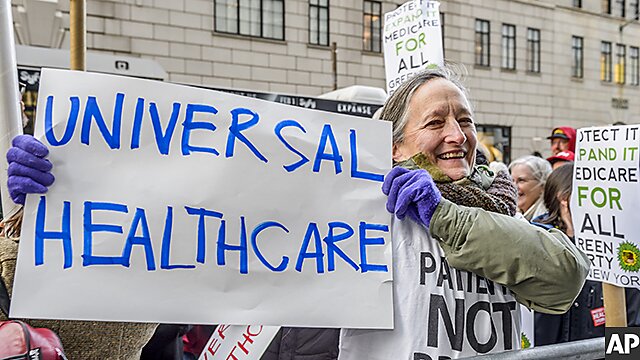
A reformed U.S. health care system providing universal coverage could save over 100,000 lives and $1 trillion every year according to a study from the Yale School of Public Health. A universal U.S. public health insurance program, such as Medicare for All, would save over $1 trillion a year even after including roughly $300 billion for the additional care received by currently uninsured or underinsured people. [1]

The five major sources of savings are:

  • Reduced administrative overhead. At least 15% of U.S. health care spending, about $800 billion annually, is administrative waste. Peer countries and Medicare spend 1% to 4% on administration.
  • Lowered drug costs due to regulation and negotiation of drug prices.
  • Reduced fraudulent billing from for-profit entities working to maximize profits.
  • Fewer emergency room visits and hospitalizations due to earlier and less expensive treatment of medical conditions.
  • Standardized and capped prices for health care services.

Universal health insurance would, of course, undo the coverage cuts and other health policy changes implemented by the Trump administration since 2025. This alone would prevent about 51,300 deaths a year. Universal comprehensive and affordable health coverage would benefit the over 45 million adults who are underinsured – where deductibles and co-pays make needed care unaffordable. This would save another 29,600 lives a year. Finally, universal health insurance would, of course, insure the uninsured saving an estimated 33,300 additional lives. So, in total over 114,000 deaths per year would be averted.

The Yale study builds on and confirms estimates in a less comprehensive 2020 study that concluded that a single-payer, universal health care system in the U.S. would save at least 68,000 lives and $450 billion a year. [2]

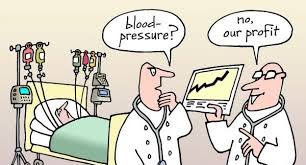
However, capitalism has corrupted the U.S. health care system. The pursuit of profits has become the priority, rather than care for patients. Costs are high and growing fast, while outcomes are poor. (See this previous post for more details.) Big corporations (aka Big Medicine) dominate health insurance, drug manufacturing, hospitals, and doctors’ practices. Middlemen skim off profits at many points in the system. Private equity firms (vulture capitalists) pocket profits at the expense of patients, doctors, and others. Practitioners are burned out and leaving clinical practices in record numbers leading to shortages of doctors in primary care and many specialties, especially mental health. [3]

Therefore, a universal, single-payer, Medicare-for-All type system won’t achieve all its potential benefits, both in quality and in savings, unless the corporate giants in the health care system are broken up or strongly regulated. [4]

Six corporations dominate Big Medicine: huge insurer / provider conglomerates UnitedHealth, CVS, and Cigna, along with mega-wholesalers McKesson, Cencora, and Cardinal Health. They are six of the fifteen largest corporations in the U.S. They have been built by mergers and acquisitions over the last 16 years; only one of them was among the fifteen largest corporations in 2010. They had over $2 trillion in revenue and $34 billion in profits in 2025. For example, McKesson, Cencora, and Cardinal Health are the three largest wholesale drug distributors, controlling 98% of the market, giving them, as middlemen, monopolistic leverage over drug manufacturers, providers, and consumers. (See this previous post for more on corporate consolidation and concentration in health care.)

Big Medicine now employs 80% of doctors. This exemplifies the major changes in our health care system since the early 1980s when 80% of doctors owned their own private practices. Big Medicine (as with big retailers and big tech) also pushes manufacturing  of drugs and medical supplies to low-cost sources overseas. This makes supply chains brittle and results in shortages if there’s any disruption.

For patients, Big Medicine means unaffordable coverage, doctor shortages and long wait times, longer trips to doctors and hospitals, administrative barriers to care and payments, worse health, and medical debt for 40% of American adults. For doctors and other practitioners, it means decreased pay and benefits, increased pressure to produce billings, decreased time with patients, delayed payments for services, and worsening working conditions. Big Medicine has pushed both patients and practitioners into frustration and anger, and, as a result, only 28% of patients trust the health care system and practitioners are leaving the field at unprecedented rates.

For lots of good news see Jess Craven’s Chop Wood Carry Water blog’s most recent good news Sunday post here.


[1]      Kristoffersen, M., 8/13/26, “Universal health coverage could save $1 trillion and 114,000 lives every year, Yale study projects,” Yale School of Public Health (https://ysph.yale.edu/news-article/universal-health-coverage-could-save-one-trillion-dollars-and-114000-lives-every-year/)

[2]      Galvani, A. P., et al., 2/15/20, “Improving the prognosis of health care in the USA,” The Lancet (https://www.thelancet.com/journals/lancet/article/PIIS0140-6736(19)33019-3/abstract)

[3]      Freer, E., & Harper, M., August 2026, “Break up Big Medicine: A health care agenda to restore power to patients and practitioners and save families $6,000 a year,” American Economic Liberties Project (https://www.economicliberties.us/wp-content/uploads/2026/08/AELPHealthcareAgenda.pdf)

[4]      Dayen, D., 8/27/26, “Health care reform needs more than universal coverage,” The American Prospect (https://prospect.org/2026/08/27/health-care-reform-universal-coverage-medicare-for-all/)

CAPITALISM HAS CORRUPTED HEALTH CARE

Capitalism and its pursuit of profits have corrupted our health care system, resulting in the most expensive system in the world, but one that delivers poor outcomes. Three elements have driven this corruption: corporate consolidation, private equity, and privatization.

SUMMARY: Capitalism and its pursuit of profits have corrupted our health care system. Oligarchs have been allowed to reap huge rewards resulting in the most expensive health care system in the world but one that delivers poor outcomes. Three essential elements that have driven this corruption are corporate consolidation, private equity, and privatization. Some remedies are clear but require dramatic changes in our federal elected officials.

(Note: If you find a post too long to read, please just skim the bolded portions. Thanks for reading my blog!)

(Note: Please follow me and see my blog posts on Bluesky at: @jalippitt.bsky.social. Thanks!)

Capitalism has corrupted our health care system. My previous two posts described more generally 1) how corporate America’s current brand of capitalism is corrupt and undermines democracy, while abetting oligarchy and fascism; and 2) how large, profitable corporations avoid paying taxes while paying their employees so little they have to rely on government assistance to survive.

The U.S. health care system does not provide high-quality health care and is not accessible and affordable because it has been corrupted by the pursuit of profits. As a result, Americans have the worst health outcomes among peer countries. Moreover, they face high costs for insurance and care, resulting in huge amounts of medical debt and many bankruptcies. Individual health care providers are burned out and have low morale because their managers are focused on maximizing profit.

The U.S. health care system has been corrupted by the “free market” revolution that began in the 1970s, took off under President Reagan in the 1980s, and has dominated the U.S. economic system ever since. This laissez-faire, deregulated, no-holds-barred brand of capitalism has been championed by wealthy “conservatives” and Republicans, and abetted by some Democrats. It has been dubbed neo-liberalism. It is a turbocharged version of capitalism that promotes deregulation of business and privatization of public goods and services. [1]

Oligarchs have been allowed to reap huge rewards from our health care system through financial manipulation, mergers and acquisitions, and what amounts to bribery of elected officials. The result has been huge mega-hospitals and vertically integrated insurers / providers, along with pharmaceutical giants and a mind-boggling number of middlemen. All these entities are focused on squeezing as much profit as possible out of the health care system, while patient outcomes and the well-being of individual providers are sacrificed.

The result is the most expensive health care system in the world but one that delivers poor outcomes.

There are three essential elements that have driven this corruption of our health care system: [2]

  • Corporate consolidation: Deregulation and lack of antitrust enforcement over the last 40 years have led to huge health care corporations that have monopolistic power, which allows them to maximize profits at the expense of patients and individual providers. Almost every component of our health care system is rated as “highly concentrated.” [3] For example, 90% of dialysis is performed by just two companies, while 90% of hospital markets, 74% of health insurance markets, and 65% of specialized physician services are rated as highly concentrated.
  • Private equity: Private equity firms (which I referred to as vulture capitalists [see background here]) invaded health care starting in the 2000s. In the decade from 2010 to 2020, private equity firms spent $750 billion buying health care entities. While these purchases have produced big returns for the private equity financiers, the results for patients have been higher prices, poorer quality, and less access due to the closing of facilities, while doctors and other personnel are disempowered and discouraged. (This is consistent with the standard practice of private equity firms in all sectors of our economy. See more here.)

    Steward Health is perhaps the poster child for private equity’s harmful impact on health care. Among other negative outcomes, it delivered poor care as it cut corners to maximize profits. By filing for bankruptcy, patient malpractice awards (among other debts) won’t be paid or will be paid with pennies on the dollar, while executives and private equity owners walked away with fortunes.
  • Privatization: Privatization and profits are the hallmarks of our neoliberal health care system. Notably, Medicare, which provides health insurance coverage for 65 million seniors and people with disabilities, is being increasingly privatized to the detriment of taxpayers and patients. A growing portion of Medicare enrollees are being seduced by slick advertising and short-term benefits to sign up for privatized Medicare Advantage plans, which now have 55% of the population.

    The only long-term advantage of the plans is to the profits of private insurers, such as the giants UnitedHealthcare and Humana, which between them have 46% of all Medicare Advantage enrollees. Recently, these two corporations announced plans to boost their profits by dropping some “under-performing” markets and kicking more than a million seniors off their insurance plans.

    Medicare Advantage (MA) plans cost the government over $500 billion a year and more per person than non-privatized, traditional Medicare, despite serving a healthier population. MA companies are notorious for denying payments for necessary care and for overbilling the government. Nonetheless, the Trump administration recently approved a substantial increase in payments to MA plans. [4]

Not surprisingly, another result of this corruption of our health care system has been that trust in the system has dropped dramatically from 79% in 1975 to 28% in 2026. [5]

Some of the remedies for our health care system’s dysfunction are clear but obviously would require dramatic changes in our federal elected officials:

  • Strong enforcement of antitrust laws (as the Biden administration started to do for the first time in 40 years). The high concentration in many parts of the health care system will require breaking up some of the huge, monopolistic corporations that have been created.
  • Banning private equity ownership from our health care system.
  • Regulating drug prices, as they are in every other peer country.
  • Implementing a single-payer, Medicare for All type system, like those in every other peer country.
  • Establishment of a new patient bill of rights.

For lots of good news see Jess Craven’s Chop Wood Carry Water blog’s most recent good news Sunday post here.


[1]      McDonough, J. E., 8/30/26, “The little-understood roots of the American health care catastrophe,” The Boston Globe

[2]      McDonough, J. E., 8/30/26, see above

[3]      Highly concentrated is defined in the merger guidelines of the Federal Trade Commission. More on its application to health care is in this American Medical Association publication: https://www.ama-assn.org/health-care-advocacy/access-care/95-us-health-insurance-markets-are-highly-concentrated

[4]      Johnson, J., 9/10/26, “To boost profits, Medicare Advantage giants move to kick over a million seniors off their plans,” Common Dreams (https://www.commondreams.org/news/medicare-advantage-benefit-cuts)

[5]      McDonough, J. E., 8/30/26, see above

TACKLING THE AFFORDABILITY CRISIS Part 2

The U.S. affordability crisis is multifaceted and has been growing for 45 years, caused by low pay and high prices. Here are longer-term strategies for tackling low pay and high prices. Unfortunately, the Trump administration’s policies are exacerbating the crisis. Please join a protest on March 28.

The U.S. affordability crisis is multifaceted and has been growing for 45 years, caused by low pay and high prices. There are many strategies for tackling the affordability crisis; some are presented below. However, many (most?) of the Trump administration’s policies are exacerbating the crisis. Therefore, one longer-term strategy for tackling affordability would be to participate in a No Kings rally (pro-democracy and anti-Trump) on Sat., March 28. Find an event near you here.

(Note: If you find a post too long to read, please just skim the bolded portions. Thanks for reading my blog!)

(Note: Please follow me and get notices of my blog posts on Bluesky at: @jalippitt.bsky.social. Thanks!)

The U.S. affordability crisis is multifaceted and caused by low pay and high prices. My previous post discussed short-term strategies that would increase low pay including: [1]

  • Reduce wage theft.
  • Raise the minimum wage.
  • Enact family-friendly policies including subsidies for child care and paid family leave.
  • Strengthen unions and union organizing.
  • Reform tax systems.

These strategies can be undertaken at the state and local levels now but would benefit from or require changes in federal laws or enforcement to be most effective. This probably won’t happen until Democrats take control of Congress and the presidency. Therefore, they and the other strategies in my previous post are also longer-term strategies.

There are other longer-term strategies for addressing low pay. Generally, they require action by the federal government and, therefore, aren’t likely to happen soon. They include:

  • Trade treaties that include standards for workers. These standards could include standards for working conditions, the ability to unionize, and minimum wage levels. Such standards would prevent unfair overseas competition for U.S. workers, which undermines pay and working conditions here in the U.S.
  • Antitrust law enforcement so there is more competition for workers among employers.

There are many strategies for addressing high prices. Some are potentially short-term but given that they typically require action by the federal government, they aren’t likely to happen soon. They include:

  • Rescinding tariffs.
  • Enforcing antitrust laws so there’s competition based on the price and quality of goods and services, as well as on customer service. Poor customer service is not only frustrating but a tax on our time. We’ve all spent hours on the phone, much of it often waiting for a real person, trying to resolve a credit card problem, a denial of coverage for health care, or a problem with a purchase.
  • Reforming our health care system so the costs of insurance, services, and drugs are at levels comparable to those in every other wealthy country, which are dramatically lower than they are here.
  • Ending the vulture capitalism of private equity financing. Saks Fifth Avenue is the latest in a long list of retailers that have gone bankrupt after being pillaged by private equity financiers. The list includes Sears, Toys ‘R’ Us, Kmart, Sports Authority, RadioShack, RJR Nabisco, Barneys, Neiman Marcus, Lord & Taylor, Hudson’s Bay, Payless, Joann Fabrics, Party City, Red Lobster, and on and on. The loss of retailers due to private equity vulture capitalism raises prices, costs workers their jobs, undermines communities, and reduces government tax revenue. [2]

The private equity financiers’ model is to buy a company using lots of debt; sell off its assets (often real estate) and pocket the money; charge the company exorbitant management fees, rent, interest, and other expenses; fire employees, slash pay, and cut their benefits including gutting their pensions; and file for bankruptcy while walking away with hundreds of millions of dollars. The private equity financing model is only possible because of loopholes in securities and bankruptcy laws, as well as the unlimited tax deduction allowed for interest payments on debt.

Senator Warren’s (D-MA) Stop Wall Street Looting Act would put an end to the private equity model by stopping these abusive practices and making the private equity financiers personally liable for damages and losses. [3] Private equity financiers are buying up and bankrupting or charging exorbitant prices (while often degrading quality and service) in health care, nursing homes, trailer parks, pest control, veterinary practices, youth sports facilities, fire truck manufacturing, restaurant chains, prisons and detention facilities, and anything else out of which they can squeeze a profit.

  • Stopping corporate investor purchases of housing. Corporate investors (as opposed to residents or community members) own nearly 450,000 single family homes, more than 2.2 million apartments, and more mobile home communities than anyone else. In 2025, they bought nearly one out of every six homes sold. Consequently, costs for residents go up (e.g., rents and fees) while maintenance often goes down. Evictions go up. Meanwhile the investors take advantage of federally backed mortgages meant for home owners and other federal tax breaks at taxpayers’ expense. Senator Warren’s (D-MA) American Homeownership Act would end these abusive practices and invest in building homes that working families can afford. It has just been passed in the Senate with a large, bipartisan vote, 89 to 10. [4]

Every politician, at every level, local, state, and federal, who’s serious about addressing the affordability crisis should embrace these strategies.

I encourage you to contact your U.S. Representative and Senators and ask them to endorse these strategies for tackling the affordability crisis. You can find contact information for your US Representative at  http://www.house.gov/representatives/find/ and for your US Senators at http://www.senate.gov/general/contact_information/senators_cfm.cfm.

For lots of good news, see Jess Craven’s Chop Wood Carry Water blog’s most recent good news Sunday post here.

My next post will discuss additional strategies for tackling the affordability crisis.


[1]      Meyerson, H., 12/3/25, “The $79 trillion heist,” The American Prospect (https://prospect.org/2025/12/03/79-trillion-heist-worker-pay/)

[2]      Kuttner, R., 1/20/26, “Private equity Saks another retail outlet,” The American Prospect (https://prospect.org/2026/01/20/private-equity-saks-another-retail-outlet/)

[3]      Warren, E., 10/10/24, “Warren, Lawmakers Renew Legislative Push to Stop Private Equity Looting,” (https://www.warren.senate.gov/newsroom/press-releases/warren-lawmakers-renew-legislative-push-to-stop-private-equity-looting)

[4]      Kuttner, R., 3/13/26, “Elizabeth Warren’s Amazingly Progressive Housing Bill,” (https://prospect.org/2026/03/13/elizabeth-warrens-amazingly-progressive-housing-bill/)

WHAT EVERYDAY AMERICANS WANT FROM GOVERNMENT

Many Americans are worried about being able to afford the cost of living. Government policies can increase the amount of money they make and the benefits they get, as well as reduce the cost of everyday expenses. If Democrats or others want to garner support and votes, they should unequivocally advocate for policies that would improve the affordability of day-to-day life. Some examples are presented below.

(Note: If you find a post too long to read, please just skim the bolded portions. Thanks for reading my blog!)

(Note: Please follow me and get notices of my blog posts on Bluesky at: @jalippitt.bsky.social. Thanks!)

Polls have shown for some time, and elections results on Nov. 4 underscored, that many Americans are worried about being able to afford the cost of living. This has two components: 1) the amount of money they make and the benefits they get from their employer, and 2) the cost of everyday expenses from food to housing to health care to utilities.

If Democrats, or another party such as the Working Families Party, want to garner support and votes, they should focus on the affordability of day-to-day life. They need to promote a vision of a more economically secure future for working Americans. They should embrace economic populism, including reducing economic inequality. [1]

Workers’ wages haven’t kept up with inflation over the last 45 years. The value of the federal minimum wage is 60% of what it was 45 years ago. Similarly, workers’ wages have not kept up with their increases in productivity. The result has been that investors and corporate executives have gotten rich, very rich, billionaire rich, off the big profits companies make on the backs of underpaid workers. Meanwhile, workers’ standard of living has been falling, and, for many, their economic security is gone. Government has helped, but its safety net is fragmented and full of holes. It prevents some workers, some of the time, from becoming destitute. Nonetheless, many workers are anxious, distraught, depressed, and even suicidal. Meanwhile, the government safety net is in effect subsidizing large companies that don’t pay their employees enough to live on. However, these big companies and their owners and investors don’t want to pay a fair share of the taxes needed to fund even this limited safety net.

Here’s an overview of some government policies that would increase workers’ compensation, including both wages and benefits. [2]

  1. Increase the minimum wage. Government officials and candidates at all levels, national, state, and local, should work toward increasing the minimum wage. If Democrats want to continue the winning momentum from the recent elections and want to win back one or both chambers of Congress, they should run hard on increasing the minimum wage and put questions to do so on the ballot wherever they can. (Note: An enormous body of research on the effects of higher minimum wages has shown that past minimum wage increases have meaningfully raised pay for low-wage workers without causing significant increases in unemployment. Moreover, increases in the minimum wage often lower worker turnover, a major cost savings for employers, and can attract  better workers.)
  2. Support unions and unionization. Unions built the American middle class, but Republicans have been undermining unions and the ability to unionize for 45 years. (See Story #2 in this previous post and also this previous post for more background.) Democrats weren’t actively supporting unions either and were complicit in expanding global trade and the off-shoring of jobs, which undermined unions and workers’ wages here in the U.S. Elected officials and candidates need to stand up for unions and strengthen federal laws and agencies that support and protect workers right to unionize. For example, federal laws and regulators should not allow companies to do what Starbucks has done. It has been stonewalling its workers since the first votes to unionize in December 2021. It has refused to meet with union representatives and has failed to engage in any serious bargaining. It has shut stores where workers voted to unionize. While its workers face low pay, rising health care costs, and working conditions that are not worker friendly, Starbucks’ CEO made $96 million last year.
  3. Other ways to increase workers’ incomes. The federal and state governments should take action to enforce labor laws and reduce wage theft. Wage theft occurs when employers don’t pay overtime as they’re supposed to, don’t pay workers for some of the time they spend on the job or in job-related activities, etc. It adds up to billions of dollars a year. In addition, overtime rules should be strengthened so employers can’t dodge overtime pay by claiming that low-level, low-pay workers are members of management who aren’t eligible for overtime pay.
  4. Ways to increase benefits. The federal and state governments could increase unemployment benefits, strengthen regulations on employer offered health insurance, and enhance requirements for employer-supported retirement savings programs. They could require minimum amounts of paid sick leave and vacation time.
  5. Enhance public supports and the safety net. The federal and state governments could expand food, heat, and utility cost assistance programs. They could also enhance subsidies for early education and child care, as well as implement paid family leave. They could increase support for renters and first-time home buyers, while also better regulating private owners of large rental properties and single-family homes, which are increasingly being bought up by investors. They could help alleviate the student debt crisis. Perhaps, most importantly, they could make health insurance and health care more affordable and accessible. Over half of Americans support creating a Medicare for All type universal health insurance program. These public supports and the safety net are underfunded today because wealthy individuals and corporations are not paying their fair share in taxes. More on this in my next post.

My next post will discuss policies that would tackle the cost of goods and services. It will also discuss economic inequality.


[1]      Reich, R., 11/3/25, “What the Democrats must do. Now!” (https://robertreich.substack.com/p/what-the-democrats-must-do-now) /

[2]      Dayen, D., 7/28/25, “Greg Casar is organizing to win,” The American Prospect (https://prospect.org/2025/07/28/2025-07-28-organizing-to-win-greg-casar/)