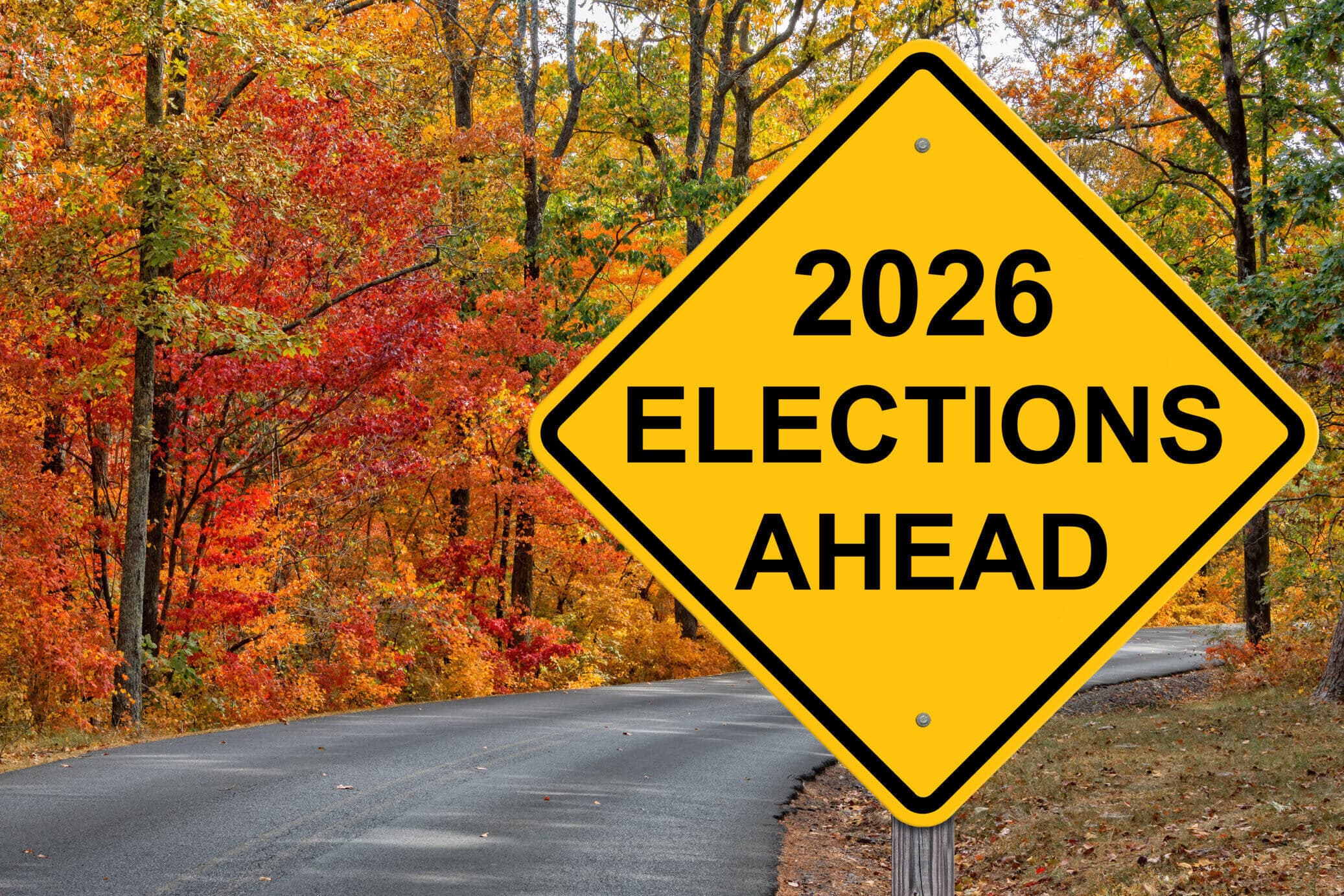
THE ESCALATING CORRUPTION IN OUR ELECTIONS

The corruption of Trump and his cronies is omnipresent. The November elections are an opportunity for election and campaign contribution corruption. Trump is using government money in efforts to buy votes, while big campaign contributors get tangible benefits from the Trump administration.

SUMMARY: The corruption of Trump and his cronies is omnipresent. The upcoming November elections have become another opportunity for both new and old types of election and campaign contribution corruption. Trump has made multiple promises to give – and in some cases has delivered – government money directly to voters in both explicit and implicit efforts to buy votes. The linkages between campaign contributions and tangible benefits from the Trump administration are more numerous and blatant than in the past. Just 172 billionaires have spent $1.7 billion on the 2026 elections already.

(Note: If you find a post too long to read, please just skim the bolded portions. Thanks for reading my blog!)

(Note: Please follow me and see my blog posts on Bluesky at: @jalippitt.bsky.social. Thanks!)

The corruption of Trump and his cronies is omnipresent and is happening through many different avenues. The upcoming November elections have become another opportunity for both new and old types of election and campaign contribution corruption.

In a new form of election corruption, Trump has made multiple promises to give – and in some cases has delivered – government money directly to voters in both explicit and implicit efforts to buy votes. He’s doing this far more brazenly and blatantly than any other politician I can think of in at least the last 50 years. Here are the most notable examples: [1]

  • In October, sent $90 to over 20 million seniors enrolled in Medicare. To pay for this, the Trump administration is diverting money from the $2 billion Medicare Improvement Fund, which is supposed to be used to improve Medicare services. The Trump administration’s rationale for making these payments is that “the best way to improve Medicare is to put healthcare dollars back where they belong – in the hands of our Medicare beneficiaries – and make coverage more affordable.”
  • In September, sent $500 to roughly 1 million Americans who were supposedly overcharged when they purchased health care under the Affordable Care Act during the Biden administration. (Note: Trump and Congressional Republicans terminated the subsidies for purchasing health care under the Affordable Care Act that the Biden administration had put in place. This led to health insurance costs increasing dramatically for millions of people and millions dropped their health insurance as a result.)
  • Will give $1,000 to all children born from 1/1/25 – 12/31/28 (i.e., during Trump’s second term) whose families open “Trump Accounts” on their behalf. These tax-free accounts, which others can add to, have also been called “money account for growth and advancement” or MAGA accounts. Wealthy individuals have pledged to help fund these accounts, which appears to be a blatant effort to curry favor with Trump. I received an email from the Social Security Administration on October 21 promoting the “Trump Accounts” and stating that they are available to nearly 70 million American children. (Note: These accounts were created by the July 2025 Big Beautiful Budget Bill that also cut food assistance, health care subsidies, and other spending that supported children and their families.)
  • In September, Trump announced that every American citizen would receive $5,000 if Republicans retained control of the U.S. House and Senate.

With an eye on the November 2026 mid-term elections, Republicans in Congress and Trump scheduled implementation of many of the spending cuts in the July 2025 Big Beautiful Budget Bill to occur after the election. In addition to the above payoffs, Trump has said on more than one occasion that Americans would receive a tariff dividend of at least $2,000 sometime in 2026. This appears unlikely to happen.

The more traditional corruption of campaign contributions and spending – traditional since the Supreme Court in 2010 allowed unlimited spending by wealthy individuals and corporations – has grown in size and explicitness. Perhaps most notable and explicit has been Elon Musk’s spending of at least $276 million in an effort to keep Republicans in control of Congress. (This is as of early October. Newer reports put it at $445 million.) Musk’s money comes from his ownership in a number of companies including Tesla and SpaceX. The value of his companies and his wealth is based on tens of billions of dollars of government contracts and subsidies. [2] (Note: As you probably remember, Musk spent at least $250 million to help Trump get elected in 2024 and was rewarded with effectively a co-presidency role and leadership of DOGE for several months, as well as with government contracts worth billions.)

Linkages between campaign contributions and tangible benefits from the Trump administration are more numerous and blatant than in the past. The Center for American Progress has tracked the contributions to MAGA Inc., Trump’s main political action committee (PAC), and the benefits donors have received. Overall, MAGA Inc. has raised over $400 million in contributions of over $100,000. Just 108 donors contributed 79% of this total (an average of $3 million each) and each one received a tangible benefit from Trump or the government. Here are some highlights:

  • 65 donors of roughly $97 million benefited from regulatory actions affecting the companies in which they work or invest.
  • 20 donors who along with friends and relatives contributed $88 million received appointments to government agency and advisory board positions; sometimes ones that had influence over the industries in which they work or invest.
  • 7 donors of $79 million had investigations or enforcement actions terminated or reversed.
  • 6 donors of $42 million received government contracts worth at least $11 billion.
  • 2 donors who contributed $4.5 million were connected to presidential pardons.

An analysis of the industries that are contributing – and looking for favorable actions from the government – finds the following:

  • Crypto companies and executives contributed $88 million
  • AI and data center builders contributed $37 million
  • Fossil fuel companies and executives contributed $30 million
  • Nursing home companies and executives contributed $10 million
  • Health insurance and benefits companies contributed $6 million

This is just for MAGA Inc. So, both in terms of campaign spending and the corruption of Trump and his administration, this is just a tip of an iceberg. As of early October, the 15 billionaires spending the most on the 2026 elections have contributed roughly $1 billion (about $67 million each on average). The next 157 biggest billionaire spenders have spent a total of approximately $700 million. Over half of MAGA Inc.’s money is coming from these 172 billionaires. [3] These numbers have grown by hundreds of millions of dollars since this analysis was done and will continue to grow until election day.

For lots of good news see Jess Craven’s Chop Wood Carry Water blog’s most recent good news Sunday post here.


[1]      Metzger, B., Edmonds, L., & Hennessey, G., 10/1/26, “Here’s all the free money Trump’s talked about giving Americans during his second term – and where it all stands,” Business Insider (https://www.businessinsider.com/trump-checks-free-money-status-doge-tariff-rebate-warrior-dividend-2025-12)

[2]      Cox Richardson, H., 10/21/26, “”Letters from an American blog,” (https://heathercoxrichardson.substack.com/p/october-21-2026)

[3]      Johnson, J., 10/7/26, “172 billionaire families have spent record $1.7 billion on 2026 midterms so far: Analysis,” Common Dreams (https://www.commondreams.org/news/billionaire-family-spending-2026)

DEMOCRATS AND ELECTIONS

Two key questions for 2026: Will we have fair and honest elections? What do the Democrats need to do to win – and win big? I encourage you to contact your state election officials, as well as national and state Democratic Party leaders and elected officials. This post provides answers and messages.

Two key questions for 2026: Will we have fair and honest elections? What do the Democrats need to do to win – and win big? I encourage you to contact your state election officials, as well as national and state Democratic Party leaders and elected officials. Answers and messages are provided below.

(Note: If you find a post too long to read, please just skim the bolded portions. Thanks for reading my blog!)

(Note: Please follow me and get notices of my blog posts on Bluesky at: @jalippitt.bsky.social. Thanks!)

The elections in 2026 are going to be very important for the future of our country and our democracy. In this post, I’ll focus on two key questions:

  • Will we have fair and honest elections in 2026? Not completely, but if state officials and the courts stand up for the Constitution, which gives the states the power to run elections, the elections should be OK. I encourage you to contact your state election officials and ask them to refuse to give the Trump Department of Justice (DOJ) your state’s voter database. (See more below.) [1] [2]
  • What do the Democrats need to do to win – and hopefully to win big, i.e., take control of both the U.S. House and Senate, as well as expand their control or power in state governments? Unequivocally embrace support for working Americans, i.e., a progressive, populist economic agenda. I urge you to contact national and state Democratic Party leaders and elected officials with this message. (See more below.) [3] [4]

Question 1: There are serious threats to the integrity of our elections because Trump and the Republicans know they won’t win if voting is fair and participation is high. The threat is NOT from voter fraud (as Trump and the Republicans like to claim), which is incredibly rare. The threat is voter suppression: keeping people from being able to register, wrongfully purging them from voting rolls, or keeping them from voting through obstacles to casting their vote, intimidation, or negative campaigning that makes them feel that their vote doesn’t matter.

Most notably, the DOJ has demanded access to at least 40 states’ voter databases. Although the Constitution clearly gives states control over election administration, the DOJ appears to be trying to claim that state voter databases are inaccurate and then to demand that states purge significant numbers of voters. If state officials refuse to purge voters as requested, the DOJ apparently plans to prosecute state officials and/or get court orders to force them to purge voters. The Trump administration has also attempted to usurp states’ constitutional power to administer elections by imposing voter ID requirements and taking control of the choice and certification of voting equipment, among other things.

The bottom line is that the DOJ will continue to make (largely unconstitutional) demands on state (and municipal) election officials. Many of them will resist and the DOJ will take them to court. Hopefully, the courts will uphold the Constitution and the states’ control of elections. Some of these cases may make it to the U.S. Supreme Court, which has a track record of supporting the Trump administration and undermining voting rights. The good news is that the Supreme Court would not have time before the 2026 elections to review all the cases that would occur in the lower courts. Nonetheless, it has done significant damage to voting rights and could do more.

There’s also gerrymandering, which selectively amplifies the influence of some voters and dilutes the influence of others. Through sophisticated analyses of detailed demographic data using powerful computers, Republicans have taken gerrymandering for partisan purposes to a whole new level over the last 15 years. Although past gerrymandering will favor Republicans in the U.S. House races in 2026, the recent, very blatant gerrymandering efforts by Trump and the Republicans have mostly fizzled due to some Republican resistance (e.g., in Indiana) and Democrats responding in-kind to neutralize Republican efforts.

Question 2: There’s an on-going debate among the upper echelons of the Democratic Party about what it needs to do to win elections: should it unequivocally stand up for working Americans and unions, and against wealthy individuals and businesses that support oligarchy? Or continue to hedge its support for working Americans and unions in order to garner big-dollar campaign contributions and support from wealthy special interests?

Recent election results and the reception that economic populism gets in polls (over many years) and in politicians’ speeches make it clear that the affordability of living and the economic inequality in the U.S. are powerful issues that motivate voters, especially working Americans. Senator Bernie Sanders and Representative Ocasio-Cortez, on their “Fighting Oligarchy” tour that loudly calls for economic populism, have gotten enthusiastic responses from large crowds – even in very Republican parts of the country. Most recently, New York City Mayor Mamdani is getting powerful, enthusiastic responses to his message of economic populism, i.e., making life affordable for everyday New Yorkers.

If the New York City and other election results aren’t enough to convince the leaders of the Democratic Party that they need to return to the Party’s roots in economic populism, perhaps polling results will convince them. An Economist/YouGov poll released on December 30, 2025, showed that 80% of Americans believe that “political institutions have been captured by the rich and powerful,” 82% believe that “elites are out of touch with the realities of everyday life,” and 74% believe that “leaders who come from ordinary backgrounds better represent people like me.” [5] Furthermore, 65% of Americans are worried about the cost of food and 61% about housing costs. Well over 50% of Americans want Medicare for All and 70% believe corporations pay too little in taxes. [6]

Mamdani, in his inauguration speech, underscored a new politics that the Democratic Party should embrace to generate enthusiasm and support and that led to his victory. It focuses on “freedom to” rather than “freedom from.” For most Americans, government regulation and investment in education, infrastructure, and a safety net provide freedom to live and enjoy life that is not limited by economic insecurity and other obstacles imposed by policies that favor wealthy individuals and their companies (the Democrat’s so-called donor class). However, Republicans (and some Democrats) have for 45 years been calling for shrinking the government’s role, for reducing regulations and taxes, in order to increase Americans’ freedom from constraints. [7] This primarily benefits the wealthy and their businesses.

If Democrats want to win elections, they have to be unequivocal about addressing the affordability crisis, which requires embracing economic populism and progressive remedies including increasing the minimum wage; ensuring affordable food, health care, housing, and child care; stopping monopolistic companies from ripping off consumers and employees; and requiring wealthy individuals and companies to pay their fair share in taxes. I urge you to contact national and state Democratic Party leaders and elected officials to give them this message.


[1]      Kuttner, R., 12/23/25, “Will we have free and fair elections in 2026?” The American Prospect (https://prospect.org/2025/12/23/will-we-have-free-fair-elections-2026/)

[2]      Atkins Stohr, K., 12/25/25, “Why Trump’s Justice Department is coming for your voter data – and your vote,” The Boston Globe

[3]      Sunkara, B., Sept. 2025, “Democrats keep misreading the working class,” The Nation (https://www.thenation.com/article/politics/working-class-democrats-mamdani-jeffries-schumer/)

[4]      The Nation, Nov. 2025, “People are furious with Democrats. Bernie Sanders knows why.” The Nation (https://www.thenation.com/article/politics/bernie-sanders-democratic-party-mamdani/)

[5]      Cox Richardson, H., 1/2/26, “Letters from an American blog,” (https://heathercoxrichardson.substack.com/p/january-2-2026)

[6]      Caiazzo,J., 11/13/25, “How Democrats can build a party worth believing in,” The Hill (https://thehill.com/opinion/campaign/5602181-rebuilding-democratic-party/)

[7]      Cox Richardson, H., 1/2/26, see above