RESIST GOVERNMENT USE OF ID.me FOR IDENTITY VERIFICATION

xr:d:DAFZCzzlxfU:13,j:46031831340,t:23012914

SUMMARY: Our governments should not be requiring us to provide personal identity information to a private, for-profit company in order to access government programs and information. Yet, that’s what’s happening. It’s a dangerous example of privatization that is redundant and costs taxpayers money, and, in this case, their privacy. I urge you to boycott this if you can and to contact your elected officials to protest. Furthermore, the U.S. needs to better regulate the collection and use of our personal data by the private sector, as Europe has done since 2018.

(Note: If you find a post too long to read, please just skim the bolded portions. Thanks for reading my blog!)

(Note: Please follow me and see my blog posts on Bluesky at: @jalippitt.bsky.social. Thanks!)

Providing citizens access to government agencies and information is an essential government function. Verifying people’s identity for such access shouldn’t be contracted out to a for-profit company. Yet, that’s what the federal government is doing.

Since 2016, some federal agencies have contracted out identity verification for access to their programs and databases to ID.me. ID.me is a hundred-million-dollar, for-profit company. Recently, Medicare and the U.S. Treasury have been added to the list of ID.me users that includes the IRS, Social Security, and Veterans Affairs (which requires it to access family members’ old military records that are public information). As-of 10/29/26, the U.S. Treasury Department will require use of ID.me to access account information. ID.me has contracts for identity verification with 20 federal agencies, as well as at least 50 state agencies, notably those providing unemployment benefits. [1]

ID.me requires you to provide your date of birth, Social Security number, a photograph of your driver’s license or passport, and a picture of your face taken with your cellphone. This puts a biometric facial recognition image in the hands of a private company with little oversight or control over how it uses the data. ID.me also provides identity verification services to dozens of private companies, including Apple, Amazon, Bank of America, Ford, and JPMorgan Chase. ID.me claims it doesn’t sell data and that it makes its money by charging fees for its services, but I find it hard to believe that it isn’t finding ways to monetize the data it holds on hundreds of millions of Americans.

I urge you to resist by refusing to use ID.me if you can. I also urge you to contact your U.S. Representative and Senators to ask them to block the use of ID.me (or at least the expansion of its use). (You can find contact information for your US Representative at  http://www.house.gov/representatives/find/ and for your US Senators at http://www.senate.gov/general/contact_information/senators_cfm.cfm.)

If a login ID and password, along with verification by email, text, or phone message, is secure enough for our access to our bank and other financial accounts, it’s good enough for access to Medicare, Social Security, and other federal data and programs. Furthermore, you can apply for and collect Social Security benefits without going through ID.me and you can sign up for Medicare without it. So, why should it be required to access one’s information at Social Security, Medicare, or the U.S. Treasury? There has been no demonstrated need for this additional security.

Moreover, the U.S. government has its own very similar enhanced security program called Login.gov. So, ID.me is redundant. (Note: I don’t even want to use Login.gov as it puts a biometric facial recognition image in the hands of the Trump regime and I don’t trust how it might use such data.)

ID.me has persuaded government agencies to use its ID verification services through aggressive lobbying and marketing. For its unnecessary services, ID.me has, to date, billed the government (i.e., taxpayers) over $1 billion! ID.me is worse than unnecessary and redundant, it’s another example of privatization taking (stealing?) money from taxpayers. Moreover, once in place, it’s very hard to terminate its use and, eventually, the government may just give in and drop its own capability to perform identity verification. This would mean the end of the historically relatively easy and secure access of citizens to government agencies and programs without giving sensitive personal data to a private entity.

It’s bad enough that for-profit businesses are capturing our personal identity information whenever we interact with them directly. They capitalize on it by using it to tailor their marketing and pricing (aka surveillance pricing; see more here). They also make money by selling our data or sharing it with others. They capture our data through preferred customer and frequent flyer programs, through our activity on social media platforms, through product warranty and purchase registrations, etc.

There should be better government regulation of personal data collection and use by the private sector. For example, regulations should require disclosure of when and what personal data companies are capturing, and how they’re using it. We should have better options for opting out of personal data collection and use, and the ability to require companies to delete our data. Europe has done a much better job than the U.S. of regulating personal data collection and use through its 2018 General Data Protection Regulation (GDPR). It protects individuals when their data is captured and used by private and public entities. There’s a nice overview of it here and more on its legal background here.

What for-profit companies are doing when we interact with them is egregious, but the public sector – our government – should not be abetting the capture, use, and abuse of our personal data by requiring us to provide personal identity information to a for-profit company in order to access government programs and data. However, this is what’s happening with governments’ use of ID.me for login identity verification.

I urge you to contact your U.S. Representative and Senators and ask them to oppose the use of ID.me by the federal government. (See above for links to find contact information for your US Representative and Senators.) You can also contact state officials – your Governor and legislators – and ask them to oppose the use of ID.me at the state level.

For lots of good news see Jess Craven’s Chop Wood Carry Water blog’s most recent good news Sunday post here.


[1]      Kuttner, R., 10/6/26, “Identity crisis,” The American Prospect (https://prospect.org/2026/10/06/identity-crisis-federal-government-access-id-me/)
ENDING SURPRISE HEALTH CARE BILLING COSTS LOTS OF MONEY

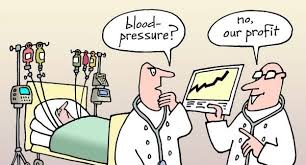
The 2020 No Surprises Act set up an arbitration process so patients didn’t get huge surprise medical bills. The result was profits for corporate capitalists and huge health care costs and waste. Patients pay for this through increased premiums with no improvements in health care quality or outcomes.

SUMMARY: The federal No Surprises Act was passed in 2020 and set up an arbitration process where insurance companies and providers would negotiate the payment for out-of-network charges so patients didn’t get huge surprise bills. What happened is a classic example of how for-profit corporate capitalism creates huge costs and waste in our health care system. Ultimately, patients are paying for all of this through increased premiums, while the cost of our health care system spirals upward with no improvements in quality or outcomes.

(Note: If you find a post too long to read, please just skim the bolded portions. Thanks for reading my blog!)

(Note: Please follow me and see my blog posts on Bluesky at: @jalippitt.bsky.social. Thanks!)

You probably remember the surprise health care billing problem that made headlines in 2019 and 2020 where patients were getting huge bills for “out-of-network” medical services over which they had no control, such as in the emergency room or for anesthesia or radiology. As a remedy, the federal No Surprises Act was passed in 2020 and set up an arbitration process where insurance companies and providers would negotiate the payment for out-of-network charges, so patients didn’t get huge surprise bills.

Although the Act did succeed in keeping patients from getting surprise bills, what happened is a classic example of 1) how for-profit corporate capitalism dominates and has corrupted our health care system, and 2) how the lack of a single payer system wastes time and money. With a single payer system, the surprise billing problem would never have happened in the first place because there would be no such thing as “out-of-network.”

The arbitration system created to “solve” the surprise bill problem has become another layer of bureaucratic waste. It has created two new sets of middlemen, arbitrators and consultants, who manipulate the system to maximize their own profits on the backs of our already expensive health care system. [1]

The arbitration system primarily has huge insurance companies on one side who want to pay less for medical services. On the other side, in many cases, are private equity-owned medical staffing companies trying to maximize billings and profits. The No Surprises Act instituted an arbitration system using an independent dispute resolution process (IDR).

The in-network rate for medical services is supposed to be used as a guideline for determining payments, but it is not a mandated standard. Policy makers estimated there would be 20,000 arbitration cases a year nationally, based on experience with a similar system that mandated in-network rates as the standard.

However, in 2025 there were 2.2 million arbitration cases and payments were triple those of the previous year. Providers won roughly 85% of the cases and some outrageous payments were made. For example, there were 25 payments for over $10 million each for procedures that had an in-network cost of $100 to $2,000.

One of the new middlemen, the arbitrators get a flat fee per case and took in $1.3 billion. Given their flat rate, they have a perverse incentive to want to stimulate more cases as the only way to increase their revenue. The way to incentivize more cases is to make high payment awards that create an incentive for providers to file more cases. These high payments establish precedents that are cited in subsequent cases, so the payment awards just spiral upward. By the way, five of the certified arbitrators have private equity backers.

The other new middlemen are consultants to providers and their private equity owners. One of these consultant companies, HaloMD, filed 20% of all the arbitration cases and earned over $1 billion in fees in 2025. These consultants, of course, have an incentive to maximize the payment awards and they brag about getting eight to thirteen times the typical in-network payment rate for their clients.

The insurers are fighting back in unusual ways. Across the 2.2 million cases in 2025, in roughly one million cases they simply gave up and defaulted to the providers’ requests. In another 380,000 cases, they offered to pay $1 or less. Clearly, they are not participating in the arbitration system in good faith. It appears their strategy is to fight in court to get cases thrown out en masse rather than having to fight case by case – although the No Surprises Act bans judicial review of individual billing disputes. Or their strategy may be to have the arbitration system spiral so far out of control that the insurers can argue in court that the whole system should be thrown out. A piece of the court-based strategy may be to delay payments. In some cases, providers are reporting that insurers are simply refusing to pay. A trade association for emergency medical services providers has reported that about 60% of awards were not paid within the 30-day period mandated by the No Surprises Act.

Ultimately, patients are paying for all of this – the outrageous payments for the services and the billions of dollars of administrative overhead costs. Individual patients aren’t getting huge surprise bills, rather we are all paying through increased premiums for our health insurance. And the cost of our health care system spirals upward with no improvements in quality or outcomes – just more capitalists making more money. (See this previous post for a more general overview of how capitalism has corrupted our health care system. See this previous post for how a universal, single-payer health care system would save lots of money and lives.)

For lots of good news see Jess Craven’s Chop Wood Carry Water blog’s most recent good news Sunday post here.


[1]      Dayen, D., 8/13/26, “Congress face-plants on surprise health care bills,” The American Prospect (https://prospect.org/2026/08/13/congress-trump-no-surprises-act-health-care-bills-insurance/)

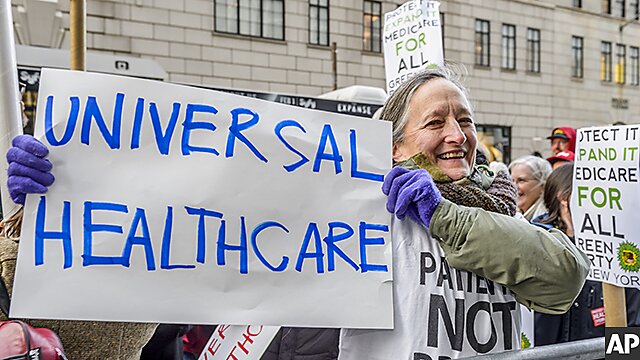
UNIVERSAL HEALTH CARE SAVES LOTS OF LIVES AND MONEY

SUMMARY: A universal, single-payer U.S. health care system could save over 100,000 lives and $1 trillion every year. However, because capitalism has corrupted our health care system, which now puts profits before patients, the potential benefits, both in quality and in savings, won’t occur unless the corporate giants in the system are broken up or strongly regulated. Six corporations dominate Big Medicine with over $2 trillion in revenue and $34 billion in profits in 2025.

(Note: If you find a post too long to read, please just skim the bolded portions. Thanks for reading my blog!)

(Note: Please follow me and see my blog posts on Bluesky at: @jalippitt.bsky.social. Thanks!)

A reformed U.S. health care system providing universal coverage could save over 100,000 lives and $1 trillion every year according to a study from the Yale School of Public Health. A universal U.S. public health insurance program, such as Medicare for All, would save over $1 trillion a year even after including roughly $300 billion for the additional care received by currently uninsured or underinsured people. [1]

The five major sources of savings are:

  • Reduced administrative overhead. At least 15% of U.S. health care spending, about $800 billion annually, is administrative waste. Peer countries and Medicare spend 1% to 4% on administration.
  • Lowered drug costs due to regulation and negotiation of drug prices.
  • Reduced fraudulent billing from for-profit entities working to maximize profits.
  • Fewer emergency room visits and hospitalizations due to earlier and less expensive treatment of medical conditions.
  • Standardized and capped prices for health care services.

Universal health insurance would, of course, undo the coverage cuts and other health policy changes implemented by the Trump administration since 2025. This alone would prevent about 51,300 deaths a year. Universal comprehensive and affordable health coverage would benefit the over 45 million adults who are underinsured – where deductibles and co-pays make needed care unaffordable. This would save another 29,600 lives a year. Finally, universal health insurance would, of course, insure the uninsured saving an estimated 33,300 additional lives. So, in total over 114,000 deaths per year would be averted.

The Yale study builds on and confirms estimates in a less comprehensive 2020 study that concluded that a single-payer, universal health care system in the U.S. would save at least 68,000 lives and $450 billion a year. [2]

However, capitalism has corrupted the U.S. health care system. The pursuit of profits has become the priority, rather than care for patients. Costs are high and growing fast, while outcomes are poor. (See this previous post for more details.) Big corporations (aka Big Medicine) dominate health insurance, drug manufacturing, hospitals, and doctors’ practices. Middlemen skim off profits at many points in the system. Private equity firms (vulture capitalists) pocket profits at the expense of patients, doctors, and others. Practitioners are burned out and leaving clinical practices in record numbers leading to shortages of doctors in primary care and many specialties, especially mental health. [3]

Therefore, a universal, single-payer, Medicare-for-All type system won’t achieve all its potential benefits, both in quality and in savings, unless the corporate giants in the health care system are broken up or strongly regulated. [4]

Six corporations dominate Big Medicine: huge insurer / provider conglomerates UnitedHealth, CVS, and Cigna, along with mega-wholesalers McKesson, Cencora, and Cardinal Health. They are six of the fifteen largest corporations in the U.S. They have been built by mergers and acquisitions over the last 16 years; only one of them was among the fifteen largest corporations in 2010. They had over $2 trillion in revenue and $34 billion in profits in 2025. For example, McKesson, Cencora, and Cardinal Health are the three largest wholesale drug distributors, controlling 98% of the market, giving them, as middlemen, monopolistic leverage over drug manufacturers, providers, and consumers. (See this previous post for more on corporate consolidation and concentration in health care.)

Big Medicine now employs 80% of doctors. This exemplifies the major changes in our health care system since the early 1980s when 80% of doctors owned their own private practices. Big Medicine (as with big retailers and big tech) also pushes manufacturing  of drugs and medical supplies to low-cost sources overseas. This makes supply chains brittle and results in shortages if there’s any disruption.

For patients, Big Medicine means unaffordable coverage, doctor shortages and long wait times, longer trips to doctors and hospitals, administrative barriers to care and payments, worse health, and medical debt for 40% of American adults. For doctors and other practitioners, it means decreased pay and benefits, increased pressure to produce billings, decreased time with patients, delayed payments for services, and worsening working conditions. Big Medicine has pushed both patients and practitioners into frustration and anger, and, as a result, only 28% of patients trust the health care system and practitioners are leaving the field at unprecedented rates.

For lots of good news see Jess Craven’s Chop Wood Carry Water blog’s most recent good news Sunday post here.


[1]      Kristoffersen, M., 8/13/26, “Universal health coverage could save $1 trillion and 114,000 lives every year, Yale study projects,” Yale School of Public Health (https://ysph.yale.edu/news-article/universal-health-coverage-could-save-one-trillion-dollars-and-114000-lives-every-year/)

[2]      Galvani, A. P., et al., 2/15/20, “Improving the prognosis of health care in the USA,” The Lancet (https://www.thelancet.com/journals/lancet/article/PIIS0140-6736(19)33019-3/abstract)

[3]      Freer, E., & Harper, M., August 2026, “Break up Big Medicine: A health care agenda to restore power to patients and practitioners and save families $6,000 a year,” American Economic Liberties Project (https://www.economicliberties.us/wp-content/uploads/2026/08/AELPHealthcareAgenda.pdf)

[4]      Dayen, D., 8/27/26, “Health care reform needs more than universal coverage,” The American Prospect (https://prospect.org/2026/08/27/health-care-reform-universal-coverage-medicare-for-all/)

CAPITALISM HAS CORRUPTED HEALTH CARE

Capitalism and its pursuit of profits have corrupted our health care system, resulting in the most expensive system in the world, but one that delivers poor outcomes. Three elements have driven this corruption: corporate consolidation, private equity, and privatization.

SUMMARY: Capitalism and its pursuit of profits have corrupted our health care system. Oligarchs have been allowed to reap huge rewards resulting in the most expensive health care system in the world but one that delivers poor outcomes. Three essential elements that have driven this corruption are corporate consolidation, private equity, and privatization. Some remedies are clear but require dramatic changes in our federal elected officials.

(Note: If you find a post too long to read, please just skim the bolded portions. Thanks for reading my blog!)

(Note: Please follow me and see my blog posts on Bluesky at: @jalippitt.bsky.social. Thanks!)

Capitalism has corrupted our health care system. My previous two posts described more generally 1) how corporate America’s current brand of capitalism is corrupt and undermines democracy, while abetting oligarchy and fascism; and 2) how large, profitable corporations avoid paying taxes while paying their employees so little they have to rely on government assistance to survive.

The U.S. health care system does not provide high-quality health care and is not accessible and affordable because it has been corrupted by the pursuit of profits. As a result, Americans have the worst health outcomes among peer countries. Moreover, they face high costs for insurance and care, resulting in huge amounts of medical debt and many bankruptcies. Individual health care providers are burned out and have low morale because their managers are focused on maximizing profit.

The U.S. health care system has been corrupted by the “free market” revolution that began in the 1970s, took off under President Reagan in the 1980s, and has dominated the U.S. economic system ever since. This laissez-faire, deregulated, no-holds-barred brand of capitalism has been championed by wealthy “conservatives” and Republicans, and abetted by some Democrats. It has been dubbed neo-liberalism. It is a turbocharged version of capitalism that promotes deregulation of business and privatization of public goods and services. [1]

Oligarchs have been allowed to reap huge rewards from our health care system through financial manipulation, mergers and acquisitions, and what amounts to bribery of elected officials. The result has been huge mega-hospitals and vertically integrated insurers / providers, along with pharmaceutical giants and a mind-boggling number of middlemen. All these entities are focused on squeezing as much profit as possible out of the health care system, while patient outcomes and the well-being of individual providers are sacrificed.

The result is the most expensive health care system in the world but one that delivers poor outcomes.

There are three essential elements that have driven this corruption of our health care system: [2]

  • Corporate consolidation: Deregulation and lack of antitrust enforcement over the last 40 years have led to huge health care corporations that have monopolistic power, which allows them to maximize profits at the expense of patients and individual providers. Almost every component of our health care system is rated as “highly concentrated.” [3] For example, 90% of dialysis is performed by just two companies, while 90% of hospital markets, 74% of health insurance markets, and 65% of specialized physician services are rated as highly concentrated.
  • Private equity: Private equity firms (which I referred to as vulture capitalists [see background here]) invaded health care starting in the 2000s. In the decade from 2010 to 2020, private equity firms spent $750 billion buying health care entities. While these purchases have produced big returns for the private equity financiers, the results for patients have been higher prices, poorer quality, and less access due to the closing of facilities, while doctors and other personnel are disempowered and discouraged. (This is consistent with the standard practice of private equity firms in all sectors of our economy. See more here.)

    Steward Health is perhaps the poster child for private equity’s harmful impact on health care. Among other negative outcomes, it delivered poor care as it cut corners to maximize profits. By filing for bankruptcy, patient malpractice awards (among other debts) won’t be paid or will be paid with pennies on the dollar, while executives and private equity owners walked away with fortunes.
  • Privatization: Privatization and profits are the hallmarks of our neoliberal health care system. Notably, Medicare, which provides health insurance coverage for 65 million seniors and people with disabilities, is being increasingly privatized to the detriment of taxpayers and patients. A growing portion of Medicare enrollees are being seduced by slick advertising and short-term benefits to sign up for privatized Medicare Advantage plans, which now have 55% of the population.

    The only long-term advantage of the plans is to the profits of private insurers, such as the giants UnitedHealthcare and Humana, which between them have 46% of all Medicare Advantage enrollees. Recently, these two corporations announced plans to boost their profits by dropping some “under-performing” markets and kicking more than a million seniors off their insurance plans.

    Medicare Advantage (MA) plans cost the government over $500 billion a year and more per person than non-privatized, traditional Medicare, despite serving a healthier population. MA companies are notorious for denying payments for necessary care and for overbilling the government. Nonetheless, the Trump administration recently approved a substantial increase in payments to MA plans. [4]

Not surprisingly, another result of this corruption of our health care system has been that trust in the system has dropped dramatically from 79% in 1975 to 28% in 2026. [5]

Some of the remedies for our health care system’s dysfunction are clear but obviously would require dramatic changes in our federal elected officials:

  • Strong enforcement of antitrust laws (as the Biden administration started to do for the first time in 40 years). The high concentration in many parts of the health care system will require breaking up some of the huge, monopolistic corporations that have been created.
  • Banning private equity ownership from our health care system.
  • Regulating drug prices, as they are in every other peer country.
  • Implementing a single-payer, Medicare for All type system, like those in every other peer country.
  • Establishment of a new patient bill of rights.

For lots of good news see Jess Craven’s Chop Wood Carry Water blog’s most recent good news Sunday post here.


[1]      McDonough, J. E., 8/30/26, “The little-understood roots of the American health care catastrophe,” The Boston Globe

[2]      McDonough, J. E., 8/30/26, see above

[3]      Highly concentrated is defined in the merger guidelines of the Federal Trade Commission. More on its application to health care is in this American Medical Association publication: https://www.ama-assn.org/health-care-advocacy/access-care/95-us-health-insurance-markets-are-highly-concentrated

[4]      Johnson, J., 9/10/26, “To boost profits, Medicare Advantage giants move to kick over a million seniors off their plans,” Common Dreams (https://www.commondreams.org/news/medicare-advantage-benefit-cuts)

[5]      McDonough, J. E., 8/30/26, see above

BLUNTING THE IMPACT OF BIG MONEY IN ELECTIONS

Big money is corrupting our elections and elected officials. There are ways to blunt its impact that can be taken now by Democratic Party officials and by state and municipal governments. Contact them and encourage them to act now to blunt the impact of big money in our political system.

(Note: If you find a post too long to read, please just skim the bolded portions. Thanks for reading my blog!)

(Note: Please follow me and get notices of my blog posts on Bluesky at: @jalippitt.bsky.social. Thanks!)

The U.S. economy is not working well for regular, working Americans. It is, however, working quite well for wealthy Americans and extremely well for the very wealthy. But for regular people, the affordability of every day life is often challenging and economic inequality is unfair. This is the result of government policies, including those for labor, taxes, health care, financial services, antitrust, corporate regulation, social services (e.g., child care and elder care), and the safety net.

The major reason that policies are so skewed to benefit the wealthy is the way we allow election campaigns to be financed. We now allow unlimited spending, unlimited contributions, and a lack of disclosure of who is contributing large sums of money. Citizens United and related Supreme Court decisions have greatly exacerbated the problem and made it difficult to tackle without a constitutional amendment – which is nowhere on the near-term horizon.

Here are three campaign finance reforms that can be done now and would dramatically reduce the influence of wealthy individuals and corporations in our elections:

  • Democrats should ban super Political Action Committee (super PAC) money and dark money (where the true donor is hidden) from their primaries. The Democratic Party sets its own rules for its primaries, so it could do this without legislation or any outside action. Eight Democratic Senators have called for such a ban. The Arizona Democratic Party has passed a resolution banning super PAC money in primaries. [1] Please see the case study of AIPAC’s spending in Democratic primaries below for an example of why this is important.
  • States and municipalities should enact campaign finance systems that use public funds to match small (e.g., less than $250) campaign contributions from residents of the election district. This previous post describes New York City’s public campaign financing system and its impact. And this post describes the role such campaign finance systems can play in supporting democracy.
  • States should remove corporations’ power to contribute to political campaigns and PACs. States, and only states, not the federal government, charter corporations. Corporations have no powers until a state grants them some and they only have those powers granted to them by their state charters. Delaware, where more corporations are chartered than any other state, does not, for example, grant private foundations the power to spend money on elections. Although the lack of power to spend money on elections has not been a feature of most corporate charters, there appears to be no reason that it couldn’t be. In Montana, an amendment to the state constitution will be presented to voters this November that would eliminate the power to spend money on elections from the powers of corporations chartered or operating in Montana. [2] It would apply to local, state, and federal elections, as well as to spending on ballot questions. [3]

The influence of PAC money in our elections is tremendous. In the sixteen years since the Supreme Court’s 2010 Citizens United decision, PAC spending has grown from roughly $150 million to over $4 billion. In addition, dark money spending has grown to hundreds of millions of dollars, if not billions. (There’s no exact figure because much of this money is unreported and intentionally hidden.) However, most of the dark money spending is done by non-profit corporations organized under Section 501(c)(4) of federal tax law, which could have their power to spend on elections eliminated. [4] (For an overview of how money is corrupting our elections and elected officials, see this previous post.)

The campaign spending by the American Israel Public Affairs Committee (AIPAC) is a case study of the impact of PAC money in Democratic primaries. AIPAC unequivocally supports Israel and demands that the politicians it gives money to do so as well. In the 2023-24 election cycle, more than 80% of the members of Congress received money from AIPAC. It spent roughly $100 million (mostly raised from big Republican donors) targeting Democrats it deemed insufficiently supportive of Israel. It spent $15 million to successfully beat incumbent U.S. Representative Jamaal Bowman (D-NY) in his Democratic primary. Bowman’s offense was that he cosponsored a resolution banning the use of U.S. funding for Israel from being used to harm Palestinian children. AIPAC also targeted Cori Bush (D-IA) for criticizing Israel’s crimes against humanity. She lost in her Democratic primary. The bottom line is that AIPAC, a single-issue lobbying and campaign donation group, using money primarily from Republican donors, has succeeded in muting, if not silencing, Democratic criticism of Israel, despite the atrocities and horrors of Israel’s war against the Palestinians. On the other hand, AIPAC has supported politicians with white supremacist views as well as ones who deny that Biden won the 2020 presidential election because of their unequivocal support for Israel. [5]

Big money has far too much influence in our elections to have a true democracy. I urge you to contact national and state Democratic Party leaders and elected officials and to ask them to ban PAC and dark money in Democratic primaries. I also urge you to contact your state legislators and statewide office holders, as well as municipal officials, and ask them to create a campaign finance system that matches small in-district contributions with public funds, as New York State and City have done. While you’re talking with them, ask your state officials to remove corporations’ power to contribute to election campaigns, including ballot question campaigns if you have those in your state.


[1]      Corbett, J., 6/17/25, “8 Senators demand Super PAC, dark money ban in Democratic primaries,” Common Dreams (https://www.commondreams.org/news/super-pac)

[2]      Reich, R., 1/24/25, “How to get rid of ‘Citizens United’,” (https://substack.com/@robertreich/p-177418904)

[3]      Moore, T., 9/15/25, “The Corporate Power Reset That Makes Citizens United Irrelevant,” (https://www.americanprogress.org/article/the-corporate-power-reset-that-makes-citizens-united-irrelevant/)

[4]      Moore, T., 9/15/25, see above

[5]      Conwright, A., Nov. 2025, “The Congressional Black Caucus’s silent partnership with AIPAC,” The Nation (https://www.thenation.com/article/society/congressional-black-caucus-aipac-gaza/)

FIXES FOR HUGE, BILLIONAIRE-OWNED NEWS AND MEDIA COMPANIES

Huge news and media companies are dangerous and harmful. They control the information and disinformation we receive. They are not providing voters with the information they need to maintain a well-functioning democracy. Here are steps to rein in and compensate for their dangers and harm.

Huge news and media companies owned by billionaires are dangerous and harmful. They control the information and disinformation we receive. They are not providing voters with the complete, balanced, factual information they need to maintain a well-functioning democracy. Therefore, we need, individually and through government policy, to take steps, such as those below, to rein in and compensate for their dangers and harm.

(Note: If you find a post too long to read, please just skim the bolded portions. Thanks for reading my blog!)

(Note: Please follow me and get notices of my blog posts on Bluesky at: @jalippitt.bsky.social. Thanks!)

My previous post focused on the dangers of huge, for-profit, billionaire-owned news and media companies in the TV, radio, print, and social media markets. It noted how their profit motive drives divisive content and a focus on culture war issues. And how this skews our politics and the focus of politicians and the public, while it undermines democracy.

This post focuses on how we can respond to this corruption of our news and media both personally and through government and institutional actions, including the following: [1] [2]

  1. Most immediately, patronize independent, reader / viewer funded news media. In particular, support local media, including local Public Broadcast System (PBS) radio and TV, as well as local print and on-line news sources. Your time spent reading / viewing and subscriptions to these outlets and, if you can, your financial support boosts their viability. Share their content; comment on and like their reporting. (Here’s a link to a previous post that identifies eight sources of news and analysis that I recommend. Much longer lists by topic are available here from Project Censored. Note: Project Censored’s primary goal is to highlight stories un- or under-reported by the mainstream media, i.e., effectively censored by them.)
  2. Enhance media literacy for ourselves, our families, friends, and colleagues. Build critical thinking skills so we and everyone we know can distinguish truth from misinformation, disinformation, lies, and fiction, i.e., real news from fake news. Encourage schools and adult learning programs to include courses on critical thinking and media literacy. More information is available from PBS here.
  3. Expect and, where possible, require news and media companies to clearly and fully disclose conflicts of interest and biases. When they don’t, call them out with comments, posts, letters to the editor, etc. Media watchdogs and professional associations should lead the way on this. Ultimately, ownership of news and media companies by individuals and entities with other business interests should be banned. This would prevent many conflicts of interest and biases. It would also insulate the news and media companies from being manipulated by government officials or others through leverage via other business interests. For example, Jeff Bezos owns The Washington Post and also Amazon, which has significant government contracts and is affected by many government labor regulations. Similarly, Elon Musk owns X and has many interests via government contracts and regulations on his other companies. Therefore, they are both susceptible to manipulation by President Trump.
  4. Viewers’ and readers’ personal information should be protected (e.g., ban its collection) and it should be illegal to use it to tailor individual’s news feeds. Personal information is currently used to feed audiences one-sided and slanted information, including disinformation, to spark their emotions and therefore their engagement. This is divisive for society and undermines democracy by failing to provide voters with complete, balanced, factual information.
  5. Regulate social media with a combination of Federal Communications Commission (FCC) standards and public utility regulations. These would require them to serve the public interest and to stop harming children. They should be liable for failures to moderate content for accuracy, to prevent hate speech and other inflammatory messages (e.g., calls for violence), and to prevent harm.
  6. Reinstate rules on fairness and accuracy in broadcast media that the FCC repealed in the 1980s. Require that news divisions operate independently of executives, advertising, and shareholders, as they did prior to the 1980s. The relicensing of TV and radio stations for their use of the public airwaves should enforce these standards and serious fines should be levied for violations of them.
  7. Use antitrust laws and anti-monopoly regulations to stop any further consolidation in the news and media industry. Ultimately, the huge conglomerates should be broken up. The FCC should change its rules and lower the number of news and media outlets any one entity is allowed to own in local, regional, and national markets.

Huge news and media companies are dangerous and harmful. They control the information and disinformation we receive. Their billionaire owners have biases, including politically. They are not providing voters with the complete, balanced, factual information they need to maintain a well-functioning democracy.

This situation is not inevitable. Personal and institutional actions, including public policies of governments, can change it. Steps, such as those above, need to be taken to rein in and compensate for the dangers and harms of huge news and media companies with billionaire owners.


[1]      Reich, R., 11/26/25, “The billionaires destroying our media system and what to do about it,” Common Dreams (https://www.commondreams.org/opinion/billionaire-ownership-media)

[2]      Reich, R., 12/2/25, “The monetization of rage,” (https://robertreich.substack.com/p/the-monetization-of-rage)

THE DANGERS OF MEDIA CONSOLIDATION AND BILLIONAIRE OWNERS

The creation of huge mega-companies is harmful, in part because they have monopolistic powers. It is particularly concerning in the media and news industry because they control the information we receive. Recent and proposed mergers and acquisitions in the media industry have heightened concerns about politically slanted “news” due to billionaire owners. A citizenry that’s well informed is essential to a well-functioning democracy and there’s a growing danger that these huge media companies and their billionaire owners are not providing citizens and voters with the information they need.

(Note: If you find a post too long to read, please just skim the bolded portions. Thanks for reading my blog!)

(Note: Please follow me and get notices of my blog posts on Bluesky at: @jalippitt.bsky.social. Thanks!)

The consolidation of companies through mergers and acquisitions to produce huge mega-companies is harmful for consumers, workers, small businesses, innovation, our economy, and our country. Huge companies have monopolistic powers over prices, product quality, and jobs because of limited competition.

Huge companies, owned by billionaires, are particularly concerning in the media and news industry because they control the information we receive and, therefore, what we know. A citizenry that’s well informed with important and truthful information is essential to a well-functioning democracy. Disinformation and a lack of information are what allow authoritarians and dictators to rule.

Because of consolidation and limited local competition, the costs of Internet access and cable TV have been going up. Costs have been increasing too for content providers and streaming services because of consolidation in those areas as well.

Recent and proposed mergers and acquisitions in the media industry have heightened concerns, not only about competition and prices, but also about politically slanted “news” as directed by billionaire owners. There are concerns about Trump’s influence on the owners and bias in reporting on him and his administration. For example, Paramount, owner of CBS and lots of other media companies, and its new billionaire CEO David Ellison have already installed a right-leaning journalist with limited experience as editor in chief of CBS news. Ellison has also gutted CBS’s diversity, equity, and inclusion (DEI) policies and installed a right-winger as “ombudsman” to (supposedly) ensure the fairness of news coverage. Paramount and Ellison are bidding to acquire Warner Brothers, which owns CNN among other entities, and are reportedly soliciting money from the Saudis and other Mideast sovereigns to help fund their bid. Ellison’s father, Larry Ellison, billionaire owner of Oracle and the world’s second richest person, has reportedly told President Trump that Paramount would fire CNN personnel that Trump doesn’t like if a deal for Warner Brothers is made and Trump’s regulators approve it. [1]

Billionaire owners of media companies generally have strong biases that are likely to affect the news and information (or disinformation) their companies report and spread. For example, billionaires (and other wealthy people) want public policies that allow them to make and keep great wealth. They often view democratic governance as a threat because it holds equal opportunity and equity as foundational principles. Billionaires may well want to suppress information on and criticism of their great wealth and the actions of their companies, or the private sector and unregulated markets in general. They may want to hide the ways they influence public officials and public policies, as well as the favorable policies they get.

The goals of billionaire media owners are not to provide valuable information to the citizens of a democracy, but rather to enrich and protect themselves. They also know that President Trump can and will support their companies (e.g., with government contracts and subsidies, by approving their proposed acquisitions) if they are on good terms with him. However, if they have a bad relationship, he can wreak havoc on their companies with regulations, tariffs, selective law enforcement, suits, penalties, or by using antitrust laws to block their acquisitions. [2]

Billionaire media owners include:

  • Elon Musk, the richest person in the world, who bought the major social media platform, Twitter, and rebranded it, X. He has allowed and encouraged it to become a purveyor of right-wing disinformation, hate speech, and dangerous rhetoric.
  • Larry Ellison, the second richest person, who, with his family, owns Paramount, CBS and many other media companies as described above. They are big supporters of Trump and Republicans. CBS paid Trump $16 million to settle a frivolous lawsuit and canceled Stephen Colbert’s show because he was often critical of Trump. (Some senior CBS staff, including at 60 Minutes, resigned because of presumably because they were told to treat Trump favorably.) The Trump administration then approved a multi-billion-dollar merger of Paramount and Skydance.
  • Mark Zuckerberg, the third richest person, who owns Meta, which includes Facebook, Instagram, and WhatsApp. He has allowed his companies to spread disinformation, hate speech, and messaging dangerous to the health and safety of children. He has also been a Trump supporter.
  • Jeff Bezos, the fourth richest person, who owns The Washington Post and Amazon, including all its media entities. He blocked the publishing of an editorial endorsing Kamal Harris in 2024 and has directed the Post’s editorial and opinion writing to support “personal liberties and free markets.” (The billionaire owner of the Los Angeles Times also blocked an editorial endorsing Kamal Harris.) Bezos is a Trump supporter and paid Melania Trump (the President’s wife) a staggering $40 million for the right to make a documentary about her.
  • Billionaire Rupert Murdoch and his offspring, who own Fox, The Wall Street Journal, and the New York Post. It’s widely recognized that Fox spreads disinformation favorable to Trump and Republicans, up to and including false election fraud disinformation that led to a court decision requiring Fox to pay nearly $800 million for defamation of an electronic voting machine company.

It’s impossible to know how these billionaires have skewed coverage of President Trump and his administration, as well as the criticism and protests of them, but it’s hard to believe they haven’t had considerable influence. There is a growing danger that these huge media companies and their billionaire owners are not providing citizens and voters with the information they need to have a well-functioning democracy.

More on the effects of billionaire ownership and media consolidation in my next post, as well as what can be done about it.


[1]      Myerson, H., 11/20/25, “Ellisons tap Saudis to fund news media takeover,” Today on The American Prospect (https://prospect.org/2025/11/20/ellisons-tap-saudis-to-fund-news-media-takeover/)

[2]      Reich, R., 11/26/25, “The billionaires destroying our media system and what to do about it,” Common Dreams (https://www.commondreams.org/opinion/billionaire-ownership-media)

CORPORATE OLIGARCHS HAVE BEEN UNDERMINING DEMOCRACY FOR 45 YEARS

Trump is the culmination of decades of work by wealthy individuals and CEOs (America’s oligarchs) undermining democracy & skewing government policy. This has led to high income & wealth inequality. Many Americans have lost their economic security, as well as their faith in government & democracy.

Trump is the culmination of decades of work by wealthy individuals and corporate CEOs (i.e., America’s oligarchs) undermining democracy and skewing government policies. This has led to dramatic income and wealth inequality. Many Americans have lost their economic security, as well as their faith in government and democracy.

SPECIAL NOTE: We need millions of Americans at the No Kings protests on October 18 in defense of democracy. Please support this however you can. You can find an event near you at: https://www.mobilize.us/nokings/map/?tag_ids=27849.

(Note: If you find a post too long to read, please just skim the bolded portions. Thanks for reading my blog!)

(Note: Please follow me and get notices of my blog posts on Bluesky at: @jalippitt.bsky.social. Thanks!)

I’ve been surprised at how little spine corporate Chief Executive Officers (CEOs) (supposed “leaders”) have shown in the face of Trump’s behavior and attacks. They know that unpredictability and chaos in government, as well as uncertainty, polarization, and unrest in society (in America and globally), are bad for the economy and for their businesses, at least in the long run. They know that an autocrat’s lack of respect for the rule of law, for property rights, and for freedom of speech are bad for business.

However, the CEOs of large corporations (aka corporate oligarchs) tend to be pragmatic and short-sighted. They value having political power and influence to the point that they seem to care little about politicians’ ethics or actions on issues that don’t conflict with their corporate interests. They know their large corporations are dependent on the government for many things, e.g., approvals of mergers, government contracts, tax breaks and subsidies, and licenses to operate. And they know their corporations are affected by many other things government does, e.g., writing and enforcing regulations, tax laws, and export and import policies (e.g., tariffs). [1]

President Trump has been leveraging (generally illegally) these many interrelationships between the government and corporations to pressure CEOs to do what he wants them to do, to support his policies, and to support him personally (sometimes financially). CEOs know Trump is arbitrary, unpredictable, and vindictive. They know that if he is irritated by a company or its CEO that he will use the powers of the government in a punitive fashion against them. Therefore, they capitulate.

However, Trump and his anti-democratic, autocratic, and fascist behavior and administration are the culmination of decades of work by wealthy individuals and corporate CEOs (i.e., America’s oligarchs). They have been undermining democracy and skewing government policies and our economy in their favor for at least 45 years. They have quadrupled their political spending (after adjusting for inflation) over the last 40 years. [2] In the 2023-2024 federal election cycle, $5.3 billion was spent on the presidential race and $9.5 billion was spent on congressional races. The overwhelming majority of this money came from American oligarchs. One hundred billionaires alone spent $2.6 billion. The seven highest spending individuals spent $930 million, all for Republicans, with Elon Musk leading the way with $291 million in spending, almost exclusively for the Trump campaign.

In addition to spending on election campaigns, corporations are also spending over $4 billion a year lobbying the federal government. [3] Furthermore, they engage in an extensive “revolving door” cycle of personnel (tens of thousands of them) who move between government regulatory agencies and positions in corporations the agencies regulate. [4]

All of this is in the interest of skewing government policy to favor American oligarchs, i.e., wealthy individuals and their large corporations. They have been very successful; their return on investment has been extraordinary.

My next post will provide specific examples of their successes, along with the effects and implications of them.

In the meantime, please make plans to stand up for democracy and against the oligarchs. I hope you can participate in and/or support the No Kings protests on October 18 – and the many, many other smaller protests that are occurring daily. Thank you for all you are doing! Please keep up this great and important defense of democracy!

Find a No Kings October 18th event near you here.


[1]      Edelman, L., 9/23/25, “Why corporate leaders are appeasing Trump,” The Boston Globe

[2]      Reich, R., 9/26/25, “Why are we so polarized? Why is democracy in such peril?” Blog post (https://robertreich.substack.com/p/why-are-we-so-polarized)

[3]      Open Secrets, retrieved from the Internet 9/29/25, “Lobbying data summary,” (https://www.opensecrets.org/federal-lobbying/)

[4]      Open Secrets, retrieved from the Internet 9/29/25, “Revolving door overview,” (https://www.opensecrets.org/revolving-door/)