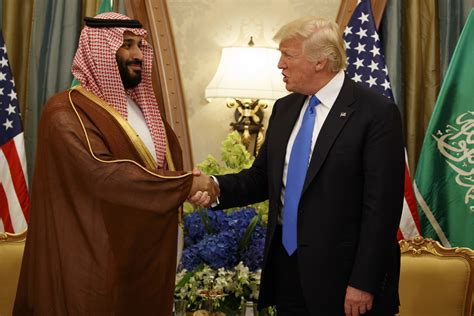
THE TRUMP FAMILY’S SAUDI ARABIAN CONNECTIONS Part 3

The Trump family’s relationships with Saudi Arabia and its ruler involve billions of dollars of investments and real estate deals. These conflicts of interest and apparent corruption are unprecedented. There are many accessories, and there should be many investigations and prosecutions.

SUMMARY: The Trump family’s relationships with Saudi Arabia and its ruler Mohammed bin Salman (MBS) involve billions of dollars of investments and real estate deals. These conflicts of interest and apparent corruption by a president and his family are unprecedented in American history. The acquiescence and enabling behavior by Republicans in Congress, other officials in the Trump administration, and by the Supreme Court make them accessories. If there were a functioning, independent Department of Justice or Congress, there would be more investigations and prosecutions than one could count.

(Note: If you find a post too long to read, please just skim the bolded portions. Thanks for reading my blog!)

(Note: Please follow me and see my blog posts on Bluesky at: @jalippitt.bsky.social. Thanks!)

The third facet of the Trump family’s friendly relationships with Saudi Arabia and its ruler Mohammed bin Salman (MBS) is the one that financially benefits Trump himself, his family, and the Trump organization. Therefore, it presents huge conflicts of interest that may well be the core explanation for Trump’s friendly relationship that has benefited Saudi Arabia and MBS with deals for nuclear, AI, and military infrastructure and capabilities. As noted in my previous posts (here and here), these deals by the Trump administration represent significant changes in U.S. policies and, in many experts’ views, present serious national security risks.

In President Trump’s first term, he appointed his son-in-law, Jared Kushner, as a senior advisor and Director of the Office of American Innovation. Kushner was involved in various policy initiatives, including peace negotiations with Israel and Arab nations, despite a total lack of public policy, international relations, and diplomacy experience. This role presented conflicts of interest due to his past and current business dealings with Arab leaders and investors. In 2018, it was reported that multiple foreign governments had discussed manipulating Kushner and the Trump administration through Kushner’s financial dealings. MBS bragged to other Arab leaders that he had Kushner in his pocket. [1]

Just as the first Trump presidential term was winding down late in 2020, Kushner founded an investment management firm, Affinity Partners. Kushner had no investment management experience and his sales pitch was described as very amateurish as he worked to raise hundreds of millions of dollars for his firm to manage. A key target was the nearly $1 trillion sovereign wealth fund of Saudi Arabia. Kushner, in overseeing the Trump administration’s foreign policy in the Middle East, along with his father-in-law, President Trump, had cultivated a relationship with the Saudis and in particular with Crown Prince Mohammed bin Salman (MBS).

The Saudi officials screening investment opportunities recommended not investing with Affinity Partners because of its lack of investment management experience and lack of a clear strategy, among other factors. However, MBS overruled them and invested $2 billion with Kushner’s firm. United Arab Emirates and Qatar invested about $1.5 billion. Along with other mostly foreign investors, Affinity Partners raised over $6 billion. This generated over $100 million in fees for Kushner and his partners based on a fee structure the Saudi analysts had called excessive. [2]

In Trump’s second term starting in 2025, Kushner was again involved in Mideast negotiations as well as negotiations with Russia on Ukraine. (Trump’s and Kushner’s Russian connections are, of course, a whole other story.) In 2025, Kushner privately brokered the $55 billion Saudi purchase of the huge video game company Electronic Arts. (MBS reportedly loves video games and has played them with Kushner.) In 2026, even as the U.S. war on Iran was on-going and Kushner was serving as a negotiator, he was meeting with the Saudis to secure additional billions of dollars for his Affinity Partners investment firm. [3]

In February 2025, the Saudi’s sovereign wealth fund, known as its Public Investment Fund (PIF), sponsored its third annual investment conference in Miami. President Trump was again the headline speaker. Kushner and Donald Trump, Jr., were also present to schmooze with Saudi officials and businessmen. PIF has made billions of dollars of investments in the U.S., including in Kushner’s Affinity Partners, Trump’s golf resorts, and with other former Trump administration officials, such as former Treasury Secretary Steve Mnuchin. [4] One commentator noted that you don’t need an army to have power and influence in the world, you just need to have a sovereign wealth fund with a trillion dollars as the Saudis do. By the way, the proposed purchase of CNN and Warner Brothers Discovery by Paramount (which is owned and run by Trump’s friends the Ellisons) is funded by the sovereign wealth funds of Saudi Arabia, Abu Dhabi, and Qatar. If the deal goes through, those three countries’ funds would own 49.5% of the new company with the possibility that their share might grow to controlling majority interest. [5]

In January 2026, less than two months after hosting MBS at the White House, Trump announced $7 billion in private real estate development projects by the Trump organization in Saudi Arabia. Previously, in late 2024, shortly after Trump’s election as president, his son, Eric, who is leading the Trump organization, had announced a separate $3 billion real estate project in Saudi Arabia. The Trump organization also has real estate projects in Oman and the United Arab Emirates (UAE). [6]

President Trump’s son Donald, Jr., also has an investment firm. It’s called 1789 Capital and has extensive investments in defense companies. Don Jr. was intimately involved with vetting candidates for Pentagon jobs in 2025. Shortly thereafter, at least four companies 1789 Capital was invested in got Pentagon contracts. Trump sons, Don Jr. and Eric, are also the officers of a shell company that has invested in mining interests, including one that has a $1.6 billion U.S. government contract to obtain tungsten from Kazakhstan. [7]

The billions of dollars in business deals described above present conflicts of interest for and apparent corruption by the President and his family that are unprecedented in American history. These examples are just an overview. There’s much more, such as the Trump family’s crypto businesses.

This post and my previous two posts (here and here) highlight some dramatic government and private actions by Trump, his family members, and his administration that present mind-boggling conflicts of interest. One commentator stated that Jared Kushner is effectively on Saudi Arabia’s payroll. Although President Trump and his family are the primary culprits, the acquiescence and enabling behavior of Republicans in Congress and other officials in the Trump administration, as well as of the Supreme Court, make them accessories. If there were a functioning, independent Department of Justice or Congress, there would be more investigations and prosecutions than one could count.

For lots of good news see Jess Craven’s Chop Wood Carry Water blog’s most recent good news Sunday posts here.


[1]      Michel, C., July-August 2026, “They went to Jared,” Mother Jones (https://www.motherjones.com/politics/2026/06/jared-kushner-affinity-partners-fund-saudi-arabia-qatar-uae-israel-middle-east-deals-nepotism-iran-war-gaza-peace-deal-diplomat-steve-witkoff-donald-ivanka-trump/)

[2]      Michel, C., July-August 2026, see above

[3]      Michel, C., July-August 2026, see above

[4]      Human Rights Watch, 2/19/25, “Saudi Arabia: Public Investment Fund meeting whitewashes abuses,” (https://www.hrw.org/news/2025/02/19/saudi-arabia-public-investment-fund-meeting-whitewashes-abuses)

[5]      Meyerson, H., 7/21/26, “When the anti-Sharia law demagogues fall silent,” The American Prospect (https://prospect.org/2026/07/21/anti-sharia-law-republicans-paramount-warner-bros-chip-roy-keith-self-tommy-tuberville/)

[6]      Kile, M., 1/13/26, “Trumps announce $7B in new Saudi Arabia projects – including mansions ‘where winners reside’ – after Crown Prince’s White House visit,” People (https://people.com/trump-international-announces-saudi-arabia-projects-weeks-after-crown-prince-white-house-visit-11884610)

[7]      Makdisi, N., 7/26/26, “The business of war: Trump’s critical minerals grift,” Common Dreams (https://www.commondreams.org/opinion/trump-minerals-grift)
THE TRUMP FAMILY’S SAUDI ARABIAN CONNECTIONS Part 2

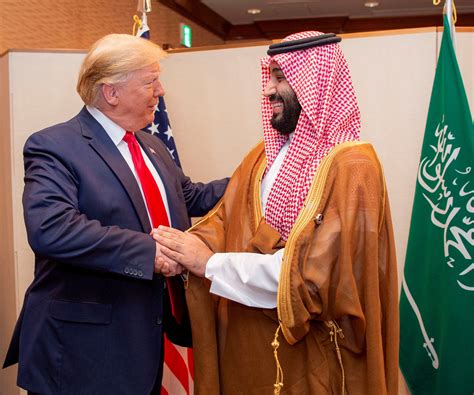
Trump’s friendly relationship with Saudi Arabia and its ruler is evident in his administration’s sales to them of military equipment and artificial intelligence (AI) technology, and his visits to Saudi Arabia. Trump’s extravagant military spending and sales have been called the “Bloody New Deal.”

SUMMARY: Trump’s (and his family’s) friendly relationship with Saudi Arabia and its ruler Mohammed bin Salman (MBS) is evident in his administration’s huge sales to Saudi Arabia of military equipment and artificial intelligence (AI) technology. Other signs of the close relationship are that the first foreign visits of each Trump presidential term have been to Saudi Arabia and that MBS was given the royal treatment on his visit to the White House. Trump’s extravagant military spending and sales have been called the “Bloody New Deal.”

(Note: If you find a post too long to read, please just skim the bolded portions. Thanks for reading my blog!)

(Note: Please follow me and get notices of my blog posts on Bluesky at: @jalippitt.bsky.social. Thanks!)

One example of Trump’s friendly relationship with Saudi Arabia and its leader Mohammed bin Salman (MBS) is his administration’s huge sales of military equipment and of artificial intelligence (AI) technology to Saudi Arabia. (See more below.) Another example of the close relationship is Trump’s recent deal to provide nuclear technology to Saudi Arabia described in my previous post. Trump, and his family, have maintained and built this friendly relationship despite Saudi Arabia being an autocratic, Islamic country whose leader, MBS, is widely believed to have ordered the murder of Jamal Khashoggi, the Washington Post columnist, and whose members were the planners and most of those who executed the 9/11/2001 terrorist attack on the U.S.

Evidence of Trump’s close relationship with the Saudis was made clear in that his first foreign visit of his first term was to Saudi Arabia, not a geographically close ally as is traditional. In May 2017, Trump and Jared Kushner met with Saudi King Salman, then Saudi defense minister MBS, and other Saudi leaders. Trump signed a $110 billion arms deal (growing to $350 billion over ten years) with Saudi Arabia, representing a substantial expansion of the U.S. – Saudi relationship.

Later in 2017, Trump’s son-in-law, Jared Kushner, went to Saudi Arabi for a private meeting with MBS, who had just become the Crown Prince and was taking control of the Saudi government. From late 2017 through January 2019, MBS undertook a purge and shakedown of the Saudi government, ruling royalty, and wealthy Saudi businessmen under a claim of ending corruption. Roughly 500 people were detained: some were beaten and tortured, at least 17 required hospitalization, and some ended up in prison. Assets of up to $800 billion were surrendered or seized. Trump indicated his support for MBS and lack of concern about the purge, shakedown, and their victims. (On June 30, 2026, PBS’s Frontline program aired a 90-minute report, The Crown Prince and the President, which documents many examples of the Trump family’s close relationship with MBS. It’s available on multiple streaming services.)

In 2019, President Trump vetoed multiple efforts to block U.S. military assistance to Saudi Arabia for its war on Yemen and the Houthis, despite strong evidence of significant civilian casualties.

In May 2025, President Trump’s first major international trip of his second term was to Saudi Arabia. The four-day visit focused primarily on securing business deals and investments. He met with Crown Prince MBS and King Salman and participated in a Saudi-U.S. Investment Forum.

In November 2025, MBS visited the White House, receiving the lavish treatment usually reserved for a head of state. (Note: MBS is the Crown Prince not the King, although he is effectively ruling Saudi Arabia. This was his first visit to the U.S. since the murder of Khashoggi in 2018.) The Trump administration approved the sale of an estimated $1 billion worth of advance artificial intelligence (AI) chips – up to 35,000 of them – to Saudi Arabia. This was a major reversal of U.S. policy which had previously restricted export sales of these chips to protect U.S. technology and national security. In particular, there is concern that this AI technology would be obtained by China due to Saudi Arabia’s existing economic and technological cooperation with China. Saudi Arabia’s state-backed AI company has signed contracts with nearly a dozen U.S. firms for AI technology and data centers in Saudi Arabia. [1] During this visit, MBS announced that Saudi Arabia would be investing up to $1 trillion in U.S. investment firms and infrastructure projects.

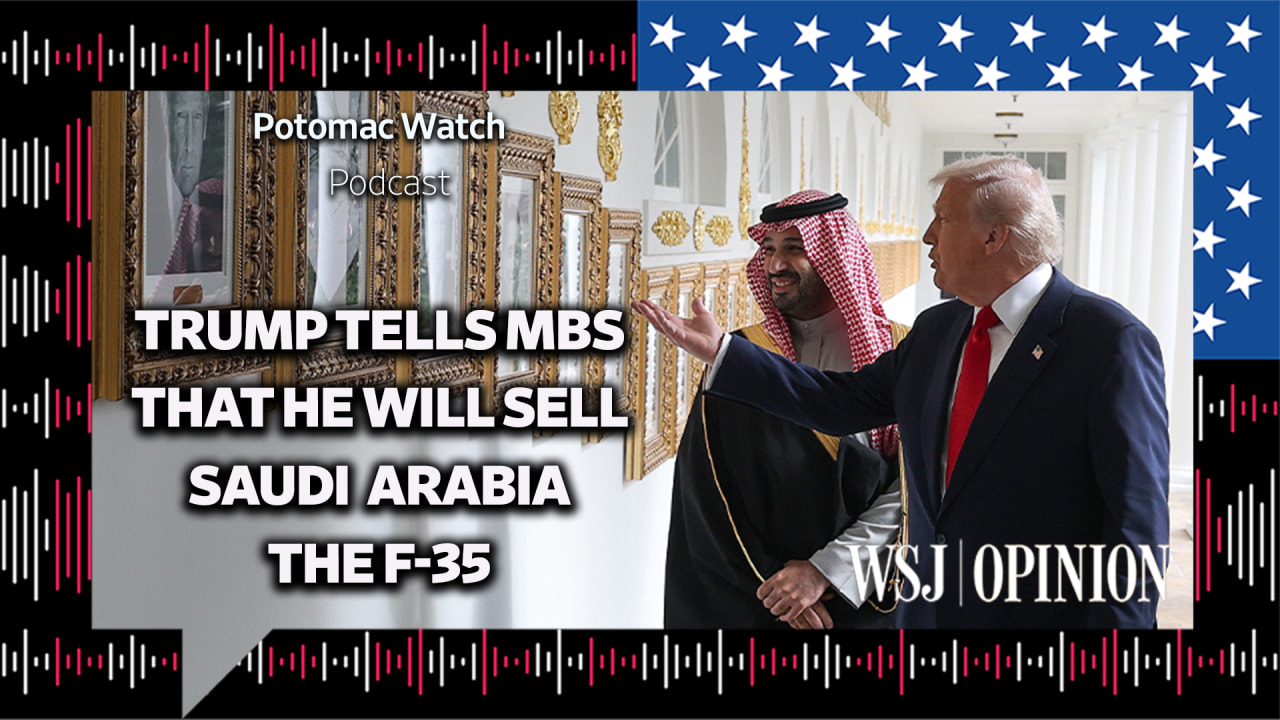
In March 2026, the Trump administration approved a $142 billion sale of military equipment and support to Saudi Arabia. This included 48 of the U.S.’s most advanced stealth fighter jets, the F-35. This represents a significant shift in U.S. arms export policy as only Israel had previously been able to obtain these fighter jets. This has raised national security concerns due to the sensitive technology in these jets, in particular because of Saudi Arabia’s connections with China. [2]

In July 2026, the Trump administration approved $2 billion in sales of Advanced Precision Kill Weapon Systems to Saudi Arabia, including 20,000 missiles.

Saudi Arabia is the largest purchaser of U.S. military equipment and second only to Israel in the technology and sophistication of the weapons systems it buys. The sale of these advanced weapons systems to Saudi Arabia is undoubtedly making Israel uncomfortable.

The hundreds of billions of dollars in military sales to the Saudis, the tens of billions of dollars in ordnance being used in the Iran War, and Trump’s request for a $1.5 trillion defense budget and an $80 billion supplemental appropriation for the Iran War are making the defense industry very happy. This unprecedented funding of the military-industrial complex has been called the “Bloody New Deal.” [3]

My next post will review the real estate and financial deals between Trump family members and Saudi Arabia.

For lots of good news see Jess Craven’s Chop Wood Carry Water blog’s most recent good news Sunday posts here.


[1]      Graham, E., 11/20/25, “U.S. greenlights AI chip exports to Gulf tech giants after Saudi Crown Prince’s Wahington visit,” CNBC (https://www.cnbc.com/2025/11/20/us-approves-ai-chip-exports-to-gulf-after-saudi-crown-prince-visit.html)

[2]      Kumar, A., 3/30/26, “U.S. approves F-35 stealth fighter jet sale to Saudi Arabia under strategic defense deal,” The Defense News (https://www.thedefensenews.com/US-Approves-F-35-Stealth-Fighter-Jet-Sale-to-Saudi-Arabia-Under-Strategic-Defense-Deal/)

[3]      Manning, S., 3/23/26, “Trump’s proposed military spending would be a ‘Bloody New Deal’,” Union of Concerned Scientists (https://blog.ucs.org/sean-manning/trumps-proposed-military-spending-would-be-a-bloody-new-deal/)

THE TRUMP FAMILY’S SAUDI ARABIAN CONNECTIONS Part 1

SUMMARY: The Trump administration’s recent deal to support Saudi Arabia’s development of a nuclear energy program represents a major shift in U.S. policy and risks accelerating the nuclear arms race in the Middle East and globally. It is in stark contrast with Trump’s position on neighboring Iran’s nuclear energy program. It has again put a spotlight on the Trump family’s relationship with Saudi Arabia and its ruler Mohammed bin Salman (MBS). This friendly relationship highlights the hypocrisy of Trump’s and other Republicans anti-Muslim rhetoric and policies.

(Note: If you find a post too long to read, please just skim the bolded portions. Thanks for reading my blog!)

(Note: Please follow me and get notices of my blog posts on Bluesky at: @jalippitt.bsky.social. Thanks!)

The Trump administration’s recent deal to support Saudi Arabia’s development of a nuclear energy program has again put a spotlight on the Trump family’s friendly relationship with Saudi Arabia and its ruler Mohammed bin Salman (MBS). President Trump, son Eric, and son-in-law Jared Kushner have conflicts of interest, present national security risks, and face ethical dilemmas in their relationship with MBS and Saudi Arabia.

It’s important to give this relationship some context. Saudi Arabia is an autocratic, Islamic country that uses Sharia law for parts of its society and places severe restrictions on women. MBS is also widely believed to have ordered the murder of Jamal Khashoggi, the Washington Post columnist. Saudi Arabians were the planners and most of those who executed the 9/11/2001 terrorist attack on the U.S.

Trump’s friendly relationship with MBS and Saudi Arabia highlight the hypocrisy of his anti-Muslim rhetoric and policies. The silence of other Republicans in the face of this nuclear technology deal, sales of military hardware, and other dealings with Saudi Arabia highlight their hypocrisy in their vilification of Muslims and vocal opposition to supposed efforts to implement Sharia law in the U.S.

This most recent example of the cozy relationship between Trump and MBS is an unprecedented, 30-year agreement to support Saudi Arabia’s development of nuclear energy and related technology. The deal gives a monopoly worth billions of dollars to U.S. companies, benefiting Westinghouse in particular (which was bailed out by Trump after it filed for bankruptcy in 2017). Notably, the deal does NOT include monitoring and inspections by the International Atomic Energy Agency to ensure that nuclear fuel isn’t enriched into weapons grade material, despite MBS’s statement that if Iran builds a nuclear weapon, Saudi Arabia will too. The agreement must be approved by Congress, although a veto-proof two-thirds majority in both the House and Seante would be required to reject it, which is unlikely.

The deal’s transfer of nuclear technology presents a clear risk of nuclear weapons proliferation and a stark contrast with Trump’s position on neighboring Iran’s nuclear energy program, which Trump has gone to war to destroy. Saudi Arabia and Iran are long time Middle East rivals, and this deal will strengthen Iran’s claim that it should have nuclear technology. The agreement, whose text has not been made publicly available, is being described differently by different parties (which is not unusual with Trump’s deals) and may allow Saudi Arabia to build and operate its own uranium enrichment facilities. Such facilities, which Iran has, can enrich nuclear power fuel to make weapons grade nuclear material. [1] Note: A day after the Saudi Arabia nuclear deal was signed, President Trump apparently added a new condition: that Saudi Arabia normalize diplomatic relations with Israel. Saudi Arabia has clearly stated in the past that it would not do so without a path to a Palestinian state, something Israel has rejected. [2]

Providing nuclear technology to Saudi Arabia is a major shift in U.S. policy, a reversal of 50 years of U.S. nuclear nonproliferation efforts, and risks accelerating the nuclear arms race in the Middle East and globally. Other U.S. allies are likely to ask for similar arrangements, in particular the ability to enrich nuclear fuel on-site, which the U.S. has prohibited for decades. It also opens the door for China and Russia to share nuclear technology with their allies because the U.S. has done so. [3]

Back in 2016, Trump’s campaign rhetoric included support for building nuclear power plants in Saudi Arabia. At that time, son-in-law Kushner and others formed a company to engage in such a project. During Trump’s first term as president, White House ethics and national security officials warned that selling nuclear technology to Saudi Arabia might violate the Atomic Energy Act and that it presented national security risks. [4]

My next posts will review U.S. sales of military equipment and artificial intelligence (AI) technology to Saudi Arabia. They will also describe the real estate and financial deals between Trump family members and Saudi Arabia.

For lots of good news see Jess Craven’s Chop Wood Carry Water blog’s most recent good news Sunday posts here.


[1]      Hjelmgaard, K., 7/23/26, “Saudi Arabia gets nuclear deal. Iran gets bombed. What’s in the pact?” USA Today (https://www.usatoday.com/story/news/world/2026/07/23/us-saudi-nuclear-deal-iran-raises-regional-arms-race-fears/91020032007/)

[2]      Sanger, D. E., & Demirjian, K., 7/24/26, “Trump makes Saudi-Israel ties a must for nuclear deal,” The Boston Globe from the New York Times

[3]      Schwartz, F., Wu, J., & Ewing, G. R., 7/22/26, “Trump’s Saudi nuclear deal risks igniting a Middle East arms races, lawmakers warn,” Politico (https://www.politico.com/news/2026/07/22/saudi-nuclear-pact-fears-regional-enrichment-01009142)

[4]      Cox Richardson, H., 7/22/26, Letters from an American blog (https://heathercoxrichardson.substack.com/p/july-22-2026))