THE TRUMP FAMILY’S SAUDI ARABIAN CONNECTIONS Part 2

Trump’s friendly relationship with Saudi Arabia and its ruler is evident in his administration’s sales to them of military equipment and artificial intelligence (AI) technology, and his visits to Saudi Arabia. Trump’s extravagant military spending and sales have been called the “Bloody New Deal.”

SUMMARY: Trump’s (and his family’s) friendly relationship with Saudi Arabia and its ruler Mohammed bin Salman (MBS) is evident in his administration’s huge sales to Saudi Arabia of military equipment and artificial intelligence (AI) technology. Other signs of the close relationship are that the first foreign visits of each Trump presidential term have been to Saudi Arabia and that MBS was given the royal treatment on his visit to the White House. Trump’s extravagant military spending and sales have been called the “Bloody New Deal.”

(Note: If you find a post too long to read, please just skim the bolded portions. Thanks for reading my blog!)

(Note: Please follow me and get notices of my blog posts on Bluesky at: @jalippitt.bsky.social. Thanks!)

One example of Trump’s friendly relationship with Saudi Arabia and its leader Mohammed bin Salman (MBS) is his administration’s huge sales of military equipment and of artificial intelligence (AI) technology to Saudi Arabia. (See more below.) Another example of the close relationship is Trump’s recent deal to provide nuclear technology to Saudi Arabia described in my previous post. Trump, and his family, have maintained and built this friendly relationship despite Saudi Arabia being an autocratic, Islamic country whose leader, MBS, is widely believed to have ordered the murder of Jamal Khashoggi, the Washington Post columnist, and whose members were the planners and most of those who executed the 9/11/2001 terrorist attack on the U.S.

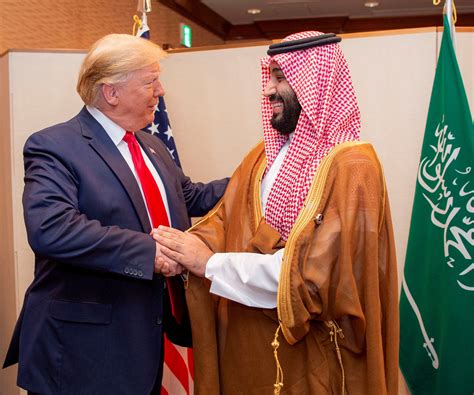
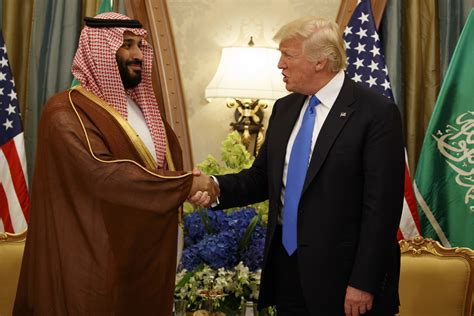
Evidence of Trump’s close relationship with the Saudis was made clear in that his first foreign visit of his first term was to Saudi Arabia, not a geographically close ally as is traditional. In May 2017, Trump and Jared Kushner met with Saudi King Salman, then Saudi defense minister MBS, and other Saudi leaders. Trump signed a $110 billion arms deal (growing to $350 billion over ten years) with Saudi Arabia, representing a substantial expansion of the U.S. – Saudi relationship.

Later in 2017, Trump’s son-in-law, Jared Kushner, went to Saudi Arabi for a private meeting with MBS, who had just become the Crown Prince and was taking control of the Saudi government. From late 2017 through January 2019, MBS undertook a purge and shakedown of the Saudi government, ruling royalty, and wealthy Saudi businessmen under a claim of ending corruption. Roughly 500 people were detained: some were beaten and tortured, at least 17 required hospitalization, and some ended up in prison. Assets of up to $800 billion were surrendered or seized. Trump indicated his support for MBS and lack of concern about the purge, shakedown, and their victims. (On June 30, 2026, PBS’s Frontline program aired a 90-minute report, The Crown Prince and the President, which documents many examples of the Trump family’s close relationship with MBS. It’s available on multiple streaming services.)

In 2019, President Trump vetoed multiple efforts to block U.S. military assistance to Saudi Arabia for its war on Yemen and the Houthis, despite strong evidence of significant civilian casualties.

In May 2025, President Trump’s first major international trip of his second term was to Saudi Arabia. The four-day visit focused primarily on securing business deals and investments. He met with Crown Prince MBS and King Salman and participated in a Saudi-U.S. Investment Forum.

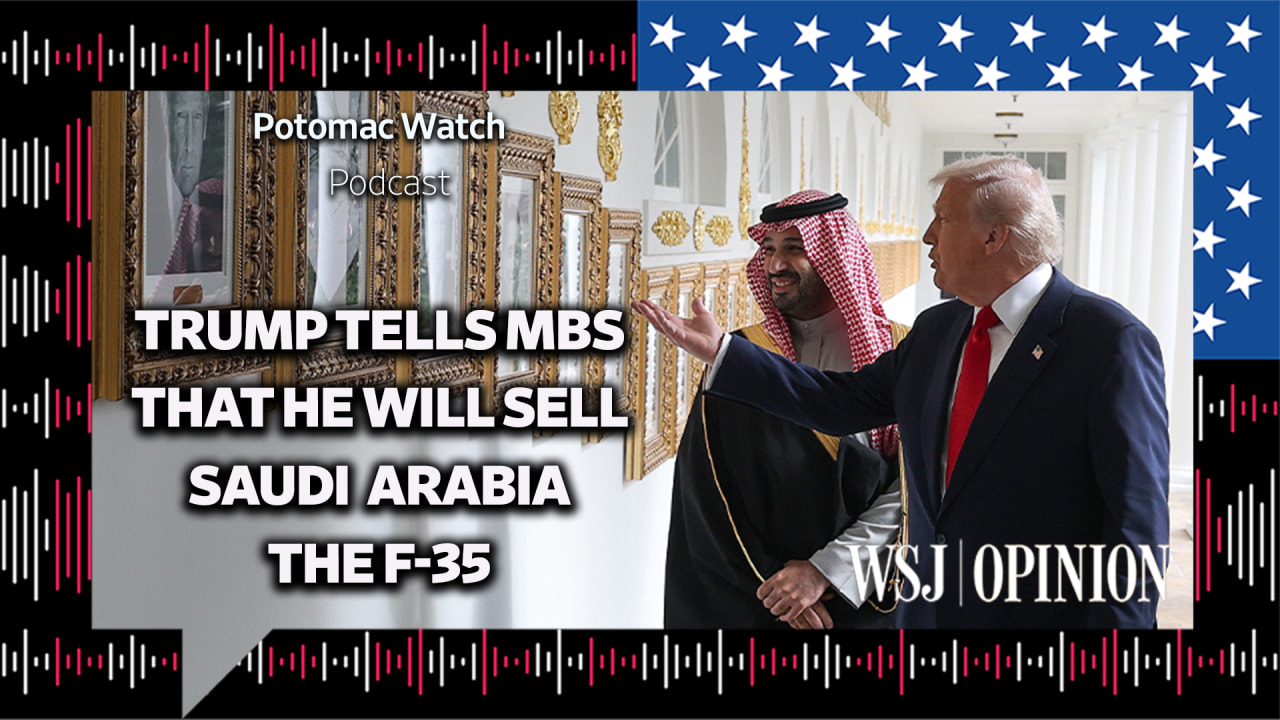
In November 2025, MBS visited the White House, receiving the lavish treatment usually reserved for a head of state. (Note: MBS is the Crown Prince not the King, although he is effectively ruling Saudi Arabia. This was his first visit to the U.S. since the murder of Khashoggi in 2018.) The Trump administration approved the sale of an estimated $1 billion worth of advance artificial intelligence (AI) chips – up to 35,000 of them – to Saudi Arabia. This was a major reversal of U.S. policy which had previously restricted export sales of these chips to protect U.S. technology and national security. In particular, there is concern that this AI technology would be obtained by China due to Saudi Arabia’s existing economic and technological cooperation with China. Saudi Arabia’s state-backed AI company has signed contracts with nearly a dozen U.S. firms for AI technology and data centers in Saudi Arabia. [1] During this visit, MBS announced that Saudi Arabia would be investing up to $1 trillion in U.S. investment firms and infrastructure projects.

In March 2026, the Trump administration approved a $142 billion sale of military equipment and support to Saudi Arabia. This included 48 of the U.S.’s most advanced stealth fighter jets, the F-35. This represents a significant shift in U.S. arms export policy as only Israel had previously been able to obtain these fighter jets. This has raised national security concerns due to the sensitive technology in these jets, in particular because of Saudi Arabia’s connections with China. [2]

In July 2026, the Trump administration approved $2 billion in sales of Advanced Precision Kill Weapon Systems to Saudi Arabia, including 20,000 missiles.

Saudi Arabia is the largest purchaser of U.S. military equipment and second only to Israel in the technology and sophistication of the weapons systems it buys. The sale of these advanced weapons systems to Saudi Arabia is undoubtedly making Israel uncomfortable.

The hundreds of billions of dollars in military sales to the Saudis, the tens of billions of dollars in ordnance being used in the Iran War, and Trump’s request for a $1.5 trillion defense budget and an $80 billion supplemental appropriation for the Iran War are making the defense industry very happy. This unprecedented funding of the military-industrial complex has been called the “Bloody New Deal.” [3]

My next post will review the real estate and financial deals between Trump family members and Saudi Arabia.

For lots of good news see Jess Craven’s Chop Wood Carry Water blog’s most recent good news Sunday posts here.


[1]      Graham, E., 11/20/25, “U.S. greenlights AI chip exports to Gulf tech giants after Saudi Crown Prince’s Wahington visit,” CNBC (https://www.cnbc.com/2025/11/20/us-approves-ai-chip-exports-to-gulf-after-saudi-crown-prince-visit.html)

[2]      Kumar, A., 3/30/26, “U.S. approves F-35 stealth fighter jet sale to Saudi Arabia under strategic defense deal,” The Defense News (https://www.thedefensenews.com/US-Approves-F-35-Stealth-Fighter-Jet-Sale-to-Saudi-Arabia-Under-Strategic-Defense-Deal/)

[3]      Manning, S., 3/23/26, “Trump’s proposed military spending would be a ‘Bloody New Deal’,” Union of Concerned Scientists (https://blog.ucs.org/sean-manning/trumps-proposed-military-spending-would-be-a-bloody-new-deal/)

THE TRUMP FAMILY’S SAUDI ARABIAN CONNECTIONS Part 1

SUMMARY: The Trump administration’s recent deal to support Saudi Arabia’s development of a nuclear energy program represents a major shift in U.S. policy and risks accelerating the nuclear arms race in the Middle East and globally. It is in stark contrast with Trump’s position on neighboring Iran’s nuclear energy program. It has again put a spotlight on the Trump family’s relationship with Saudi Arabia and its ruler Mohammed bin Salman (MBS). This friendly relationship highlights the hypocrisy of Trump’s and other Republicans anti-Muslim rhetoric and policies.

(Note: If you find a post too long to read, please just skim the bolded portions. Thanks for reading my blog!)

(Note: Please follow me and get notices of my blog posts on Bluesky at: @jalippitt.bsky.social. Thanks!)

The Trump administration’s recent deal to support Saudi Arabia’s development of a nuclear energy program has again put a spotlight on the Trump family’s friendly relationship with Saudi Arabia and its ruler Mohammed bin Salman (MBS). President Trump, son Eric, and son-in-law Jared Kushner have conflicts of interest, present national security risks, and face ethical dilemmas in their relationship with MBS and Saudi Arabia.

It’s important to give this relationship some context. Saudi Arabia is an autocratic, Islamic country that uses Sharia law for parts of its society and places severe restrictions on women. MBS is also widely believed to have ordered the murder of Jamal Khashoggi, the Washington Post columnist. Saudi Arabians were the planners and most of those who executed the 9/11/2001 terrorist attack on the U.S.

Trump’s friendly relationship with MBS and Saudi Arabia highlight the hypocrisy of his anti-Muslim rhetoric and policies. The silence of other Republicans in the face of this nuclear technology deal, sales of military hardware, and other dealings with Saudi Arabia highlight their hypocrisy in their vilification of Muslims and vocal opposition to supposed efforts to implement Sharia law in the U.S.

This most recent example of the cozy relationship between Trump and MBS is an unprecedented, 30-year agreement to support Saudi Arabia’s development of nuclear energy and related technology. The deal gives a monopoly worth billions of dollars to U.S. companies, benefiting Westinghouse in particular (which was bailed out by Trump after it filed for bankruptcy in 2017). Notably, the deal does NOT include monitoring and inspections by the International Atomic Energy Agency to ensure that nuclear fuel isn’t enriched into weapons grade material, despite MBS’s statement that if Iran builds a nuclear weapon, Saudi Arabia will too. The agreement must be approved by Congress, although a veto-proof two-thirds majority in both the House and Seante would be required to reject it, which is unlikely.

The deal’s transfer of nuclear technology presents a clear risk of nuclear weapons proliferation and a stark contrast with Trump’s position on neighboring Iran’s nuclear energy program, which Trump has gone to war to destroy. Saudi Arabia and Iran are long time Middle East rivals, and this deal will strengthen Iran’s claim that it should have nuclear technology. The agreement, whose text has not been made publicly available, is being described differently by different parties (which is not unusual with Trump’s deals) and may allow Saudi Arabia to build and operate its own uranium enrichment facilities. Such facilities, which Iran has, can enrich nuclear power fuel to make weapons grade nuclear material. [1] Note: A day after the Saudi Arabia nuclear deal was signed, President Trump apparently added a new condition: that Saudi Arabia normalize diplomatic relations with Israel. Saudi Arabia has clearly stated in the past that it would not do so without a path to a Palestinian state, something Israel has rejected. [2]

Providing nuclear technology to Saudi Arabia is a major shift in U.S. policy, a reversal of 50 years of U.S. nuclear nonproliferation efforts, and risks accelerating the nuclear arms race in the Middle East and globally. Other U.S. allies are likely to ask for similar arrangements, in particular the ability to enrich nuclear fuel on-site, which the U.S. has prohibited for decades. It also opens the door for China and Russia to share nuclear technology with their allies because the U.S. has done so. [3]

Back in 2016, Trump’s campaign rhetoric included support for building nuclear power plants in Saudi Arabia. At that time, son-in-law Kushner and others formed a company to engage in such a project. During Trump’s first term as president, White House ethics and national security officials warned that selling nuclear technology to Saudi Arabia might violate the Atomic Energy Act and that it presented national security risks. [4]

My next posts will review U.S. sales of military equipment and artificial intelligence (AI) technology to Saudi Arabia. They will also describe the real estate and financial deals between Trump family members and Saudi Arabia.

For lots of good news see Jess Craven’s Chop Wood Carry Water blog’s most recent good news Sunday posts here.


[1]      Hjelmgaard, K., 7/23/26, “Saudi Arabia gets nuclear deal. Iran gets bombed. What’s in the pact?” USA Today (https://www.usatoday.com/story/news/world/2026/07/23/us-saudi-nuclear-deal-iran-raises-regional-arms-race-fears/91020032007/)

[2]      Sanger, D. E., & Demirjian, K., 7/24/26, “Trump makes Saudi-Israel ties a must for nuclear deal,” The Boston Globe from the New York Times

[3]      Schwartz, F., Wu, J., & Ewing, G. R., 7/22/26, “Trump’s Saudi nuclear deal risks igniting a Middle East arms races, lawmakers warn,” Politico (https://www.politico.com/news/2026/07/22/saudi-nuclear-pact-fears-regional-enrichment-01009142)

[4]      Cox Richardson, H., 7/22/26, Letters from an American blog (https://heathercoxrichardson.substack.com/p/july-22-2026))

SIGNALGATE: AN UNFORGIVABLE NATIONAL SECURITY BREACH

Top Trump administration officials in the military and intelligence agencies have committed an unbelievable and unforgivable breach of national security. Investigations by Congress and the military are essential. Officials responsible should resign, be fired, or be impeached, and perhaps prosecuted.

(Note: If you find a post too long to read, please just skim the bolded portions. Thanks for reading my blog!)

There is NO EXCUSE for top Trump administration officials communicating secret military plans over Signal, an unsecured, commercial messaging app, whose use is SPECIFICALLY PROHIBITED by Defense Department policy. Included in the Signal chat group discussing the March 15 attack in Yemen, before and during the action, were:

  • Secretary of Defense Hegseth and Secretary of State Rubio,
  • The President’s National Security Advisor Waltz and Chief of Staff Wiles,
  • The Central Intelligence Agency (CIA) Director Ratliffe and the Director of National Intelligence Gabbard,
  • Vice President Vance, and others.

None of them, over the four-day chat (3/11 – 3/15), raised a red flag over the illegal use of an unsecured communication channel, with a reporter accidentally included no less. This is astounding. Any government employee of lower rank who engaged in such a breach of security would be fired immediately and jailed without bail. Concerning elements of this national security breach include:

  • The incompetence, inexperience, and cavalier attitude toward sensitive information of these top Trump administration official is stunning and unacceptable.
  • This strongly implies that senior Trump administration officials are regularly having very sensitive communications over an unsecured, commercial messaging app in violation of the law.
  • Some of them were using their personal, unsecured phones. Experts have stated that it’s highly likely foreign intelligence services are monitoring their personal phones. (Official government-issued secured phones have special encryption and other security features, including the inability to download apps, such as Signal, WhatsApp, X, etc. that make a phone vulnerable to hacking.) [1]
  • Secretary of Defense Hegseth repeatedly lied about what had occurred and Gabbard and Ratliffe lied under oath at a Senate hearing. [2]
  • President Trump stated he had no knowledge of the breach on March 24. Based on the pre-attack messaging, which Trump was not part of, it appears the decision to go ahead with the strikes was made by deputy chief of staff Stephen Miller, not the President, which is startling. Stunningly, the acting chairman of the Joint Chiefs of Staff for the military was also not included.
  • The name of at least one CIA operative was revealed in the messaging. [3]
  • The revelation of a specific, targeted individual and on-the-ground intelligence about him, while the strike was on-going, is breathtaking and put intelligence sources at risk. (Apparently some of the intelligence and sources were Israeli and the Israelis are furious about the compromising of their information and sources.)
  • It must be assumed that Russia and China (and maybe other adversaries such as Iran and North Korea) have the ability to intercept these unsecured communications, according to multiple experts. An internal bulletin from the National Security Agency warned staff in February 2025 not to use Signal, citing concerns that the app was vulnerable to Russian hackers. [4]
  • The Signal messaging app being used by top Trump administration officials deletes communications after a set period of time – days or a few weeks. This violates federal laws requiring the preservation of documents and communications. Signal may well have been deliberately used here and in other communications to evade having a public record. [5]

All members of Congress, and particularly any with military service backgrounds, should be enraged and determined to get to the bottom of this. It is a national security breach of breathtaking seriousness that could or may have endangered the lives of military and intelligence personnel. Our troops and our country are clearly not being kept safe. If the Iranians had access to the messaging and had alerted their Houthi allies (the targets) to prepare for the attack, including anti-aircraft weaponry, the U.S. jets and pilots would have been at serious risk and the success of the mission would likely have been compromised.

The military itself should undertake a rigorous investigation with decisive punishment for those guilty of compromising national security. [6]

Reporters and internet sleuths have found personal information about phones and email addresses for a number of the chat participants, including usernames and passwords for email accounts for Hegseth, Waltz, and Gabbard. This makes it highly likely that foreign adversaries have been monitoring everything they have communicated since their nominations. [7]

There are many serious implications of this breach of national security. Here are a few:

  • Allies will NOT be sharing sensitive intelligence with the U.S. because they cannot trust that it will be kept secure. (This exacerbates their concerns raised by Trump’s behavior in his first term and his taking of classified documents to Mar-a-Lago at the end of it.)
  • U.S. soldiers’ lives are at-risk because Trump administration members are not maintaining security about upcoming military actions and allies won’t be sharing their intelligence.
  • U.S. CIA agents’ lives are at-risk because Trump administration members will include their names in unsecured communications and allies won’t be sharing their intelligence.

If you haven’t already, please contact your US Representative and Senators to express your concerns and outrage about this astonishingly dangerous national security breach. (And if you have been in touch with them, it can’t hurt to contact them again.) Ask them to demand a full investigation of the unsecured communication about the March 15 military action in Yemen. Ask them to demand the resignations, firing, impeachment, and/or prosecution of the officials involved. Hypocritically, Hegseth, Rubio, Gabbard, and Ratliffe have all stated the importance of secure handling of sensitive information and the need for accountability when it is mishandled in past attempts to criticize Democrats for supposed breaches of national security. Just imagine what Republicans would be saying if a Democrat had committed a breach anywhere near this serious!

You can find contact information for your US Representative at  http://www.house.gov/representatives/find/ and for your US Senators at http://www.senate.gov/general/contact_information/senators_cfm.cfm.

[1]      Hubbell, R., 3/27/25, “Signalgate: A crack in the façade?” Daily Edition Newsletter (Signalgate: A crack in the facade? – by Robert B. Hubbell)

[2]      Queally, J., 3/26, “Here are the texted war plans that Hegseth said ‘Nobody was texting’ on Signal,” Common Dreams  (https://www.commondreams.org/news/war-plans-signal-hegseth)

[3]      Cox Richardson, H., 3/24/25, “Letters from an American,” (March 24, 2025 – by Heather Cox Richardson)

[4]      Cox Richardson, H., 3/26/25, “Letters from an American,” (March 26, 2025 – by Heather Cox Richardson)

[5]      Hubbell, R., 3/25/25, “Criminal recklessness,” Daily Edition Newsletter (https://roberthubbell.substack.com/p/criminal-recklessness)

[6]      Editorial, 3/26/25, “A ‘gross error’ that needs to be punished,” The Boston Globe

[7]      Hubbell, R., 3/28/25, “Let’s ‘create a ruckus’,” Daily Edition Newsletter (Let’s “create a ruckus.” – by Robert B. Hubbell)

PROTEST NATIONAL SECURITY BREACH ETC.

ACTION #1: Please contact your US Representative and Senators to ask them to demand a full investigation of the major national security breach around the March 15 military attack in Yemen. They should demand the resignations, firings, or impeachment of the officials involved. There’s NO EXCUSE for them communicating secret military plans over an unsecure, commercial messaging app whose use is SPECIFICALLY PROHIBITED by Defense Department policy. Included in the chat group were the:

  • Secretaries of Defense and State,
  • President’s National Security Advisor and Chief of Staff,
  • Central Intelligence Agency (CIA) Director and the Director of National Intelligence,
  • Vice President, and others.

Any government employee of lower status who engaged in such a breach of security would be immediately jailed without bail. The incompetence, inexperience, lack of qualifications, and cavalier attitude toward sensitive information by these senior officials is stunning, egregious, and unacceptable. I will have more detail on this in my next post.

You can find contact information for your US Representative at  http://www.house.gov/representatives/find/ and for your US Senators at http://www.senate.gov/general/contact_information/senators_cfm.cfm.

Note that many offices only accept messages on a voice mail system. In most cases, you can call outside of regular business hours and leave a message.

ACTION #2: Join a protest rally or march in-person if you can.

  • Big, nationwide HANDS OFF! protests are planned for Saturday, April 5. Go to Indivisible to find an event near you. Let’s make this a huge event!
  • Nationwide protest rallies at Tesla dealerships this Saturday, March 29. Put in your zip code at #TeslaTakedown and find a rally near you. These rallies have been very effective. They’ve gained media attention, and, as I’m sure you’ve heard, Tesla sales and its stock price are down substantially.