THE COLD CIVIL WAR AMONG THE STATES

Some Republican states, with Texas in the lead, are trying to impose their right-wing policies on Democratic states. The federal government is fanning the flames of this divisive extremism. Abortion, gun laws, public school funding, and even private companies’ behaviors are targets.

SUMMARY: Some Republican states, with Texas leading the way, are actively trying to impose their right-wing policies on Democratic states. The federal government is currently fanning the flames of this divisive extremism. Abortion, gun laws, public school funding, and even private companies’ behaviors are targets of these efforts.

(Note: If you find a post too long to read, please just skim the bolded portions. Thanks for reading my blog!)

(Note: Please follow me and get notices of my blog posts on Bluesky at: @jalippitt.bsky.social. Thanks!)

As my previous post documented, states’ policies have very significant effects on people’s well-being, including health and health care, safety from gun violence, economic well-being, civil rights, and even their longevity. It also documented the very significant differences in policies and outcomes between Democratic-controlled (“blue”) states and Republican (“red”) states.

As politics and policies have become more polarized between Republicans and Democrats, these state-level differences are becoming more dramatic. This trend has been exacerbated over the last 45 years because the federal government has abandoned its role of working to provide a consistent national economic safety net and to reduce economic disparities among states.

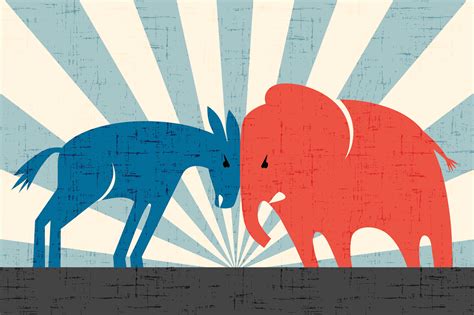
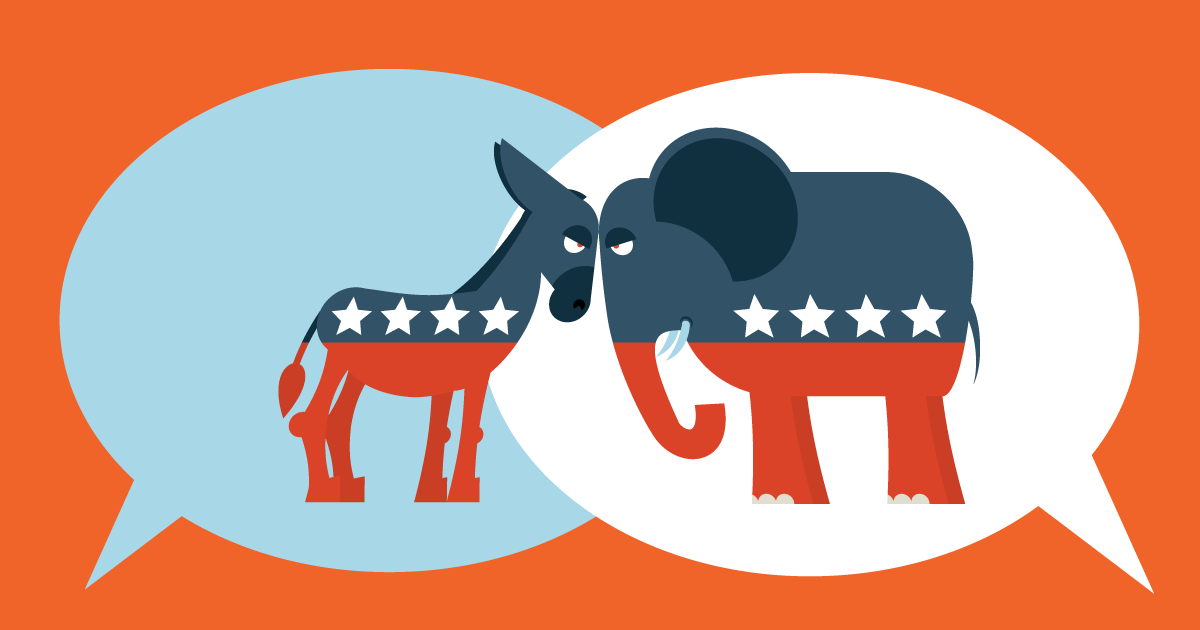
As partisanship has grown, right-wing policy extremism has become a goal of red states in and of itself. The federal government is currently fanning the flames of this extremism. Furthermore, red states are actively trying to impose their right-wing policies on Democratic states. This has created a cold civil war among the states. [1]

Red states, with Texas leading the way, are enacting aggressive and extreme right-wing policies and actively encouraging other states and communities to follow their lead. There’s even a competition of sorts among red states to enact the most aggressive and extreme right-wing policies. [2]

Texas and other red states are even trying to impose these policies on Democratic governments and private individuals beyond their borders. Abortion has been one focal point of these efforts. Texas and other red state haven’t been satisfied with banning abortions in their states; they have attempted to criminalize travel to other states to obtain an abortion and to ban the provision of abortion drugs across state lines. Texas has deputized its citizens by allowing them to sue anyone who aids or abets an abortion. Alabama has threatened felony charges against health care providers assisting patients with obtaining an out-of-state abortion. [3]

Gun laws have been another focus. Red states and red communities within blue states have asserted themselves to be “Second Amendment sanctuaries” where federal gun laws don’t apply. When their residents travel to other states, they have tried to make other states honor their laws that allow individuals to carry guns in public.

Red states have been expanding the funding for school vouchers, which allow parents to use public funding to pay tuition for a child attending a private school, including a religious school. They, and right-wing activists, have been pressuring the federal government to divert its education funding, including its funding for schools serving large populations of children from low-income families, to provide vouchers to parents to use for tuition at any school of their choice. [4]

Texas has used its economic leverage to coerce private companies. Its leverage comes from investing almost $400 billion held in various state-controlled pension funds and tens of billions more in various investment funds. It has pressured companies not to embrace policies or investment strategies supporting environmental, social, or good governance (ESG) goals. It has barred state investment in companies that encourage alternatives to oil and gas production and use.

The Texas Attorney General has sued other states to overturn their election results. He has sued hospitals in other states for allegedly providing telehealth services to transgender Texans.

Texas has also usurped some powers of the federal government. For example, it has evicted the federal border patrol from parts of the Mexico border and taken over border enforcement itself. It has invited other states to send law enforcement personnel and national guard troops to help it patrol the border. It, along with Florida, has shipped immigrants to blue states and cities, as much for political showmanship as anything else.

My next post will discuss how red states are using vigilantism and violence in the effort to spread their policies. It will also discuss the role of the judicial system and how blue states and cities can resist and push back.

For lots of good news see Jess Craven’s Chop Wood Carry Water blog’s most recent good news Sunday post here.


[1]      Dayen, D., 10/7/24, “The cold civil war,” The American Prosect (https://prospect.org/2024/10/07/2024-10-07-cold-civil-war/)

[2]      Hooks, C., 10/8/24, “Texas will mess with you,” The American Prosect (https://prospect.org/2024/10/08/2024-10-08-texas-will-mess-with-you/)

[3]      Janssen, E., 10/9/24, “Red-state abortion tactics push into deep-blue Illinois,” The American Prosect (https://prospect.org/2024/10/09/2024-10-09-red-state-abortion-tactics-deep-blue-illinois/)

[4]      Berkshire, J. C., 10/11/24, “Breaking the public schools,” The American Prospect (https://prospect.org/2024/10/11/2024-10-11-breaking-public-schools/)

YOUR STATE GOVERNMENT MAKES A BIG DIFFERENCE

SUMMARY: State policies and programs make a real difference in people’s lives and even in their longevity. They’re more important than ever given the dysfunction of our federal government. There are stark differences between the policies and programs of Republican-controlled states and Democratic ones that affect access to healthcare, workers’ incomes, and overall well-being.

(Note: If you find a post too long to read, please just skim the bolded portions. Thanks for reading my blog!)

(Note: Please follow me and get notices of my blog posts on Bluesky at: @jalippitt.bsky.social. Thanks!)

States’ policies have very significant effects on people’s health, safety, financial security, and even their longevity. With our federal government so dysfunctional right now, there’s a lot of very valuable work that can and is being done at the state and local levels including:

  • Blocking the impact of big money in elections by enacting campaign financing systems that match small donations with public funds (see this previous post for more details), and
  • Tackling the affordability crisis by reducing wage theft, increasing the minimum wage, supporting unions, making taxes fairer, subsidizing child care and health care, and enacting paid family leave (see this previous post for more details).

As politics and policies have become more polarized between Republicans and Democrats, a natural experiment has been taking place among the states. Over the last 30 years, a state government’s partisan control has become an increasingly strong indicator of the policies it will adopt or not adopt. This trend has been amplified by the decreasing number of states where government control is or has been shared between Republicans and Democrats. Gerrymandering of state legislative districts is partly to blame. Aggressive and extreme policy proposals from right-wing funded think tanks and advocacy groups, such as the American Legislative Exchange Council (ALEC), have also contributed to the widening differences among states’ policies. [1]

The federal government used to work to narrow differences among the states but now is fueling a widening of the gaps among states. From the New Deal in the 1930s through the 1970s, the federal government worked actively and effectively to shrink the significant economic gaps between richer and poorer states. It provided financial assistance to state governments and residents, including supporting a safety net for low-income families and workers who fell on hard times. However, starting in 1980 and with the election of Republican president Reagan, the federal government reversed its role and has been fostering a widening of the gaps among the states.

Democratic controlled states tend to have stronger worker protections and safety nets than Republican controlled states. They also have better health and well-being among their residents. Republican states have, for example:

  • Higher rates of residents without health insurance, the ten worst health care systems in the country, and lower life expectancies.
  • Ten of the twelve states with the highest rates of smoking-related cancer.
  • Ten of the twelve states with the highest rates of obesity.
  • Eight of the ten states with the most Covid deaths.
  • Lower minimum wages. Of the twenty states that have the lowest minimum wage (i.e., the federal $7.25 per hour), thirteen are Republican.
  • Weaker gun violence prevention laws and higher rates of gun deaths.
  • Weaker protections for civil rights, including for LGBTQ individuals.

On the other hand, the thirteen states with paid parental leave all have Democrats in control. Notable differences between Republican controlled states and Democratic controlled states are evident in environmental, labor, tobacco, and, of course, voting and election policies.

As partisanship has grown, right-wing policy extremism has become a goal in and of itself. And Republican states, now abetted by the federal government, are actively trying to impose their right-wing policies on Democratic states. In effect, the U.S. now has a cold civil war among the states. [2] (More on this is a subsequent post.)

A case study comparing Oklahoma and Connecticut serves to highlight the differences in policies and outcomes. [3] In 1959, Oklahoma (OK) and Connecticut (CT) had nearly identical life expectancies and political and policy climates that weren’t that far apart. Between 1970 and 2014, researchers found that Democratic CT had passed the most progressive policies among the states, while Republican OK had passed the most conservative ones. Connecticut invested in healthcare expansion, paid leave, and tax credits for working families. Oklahoma cut taxes and its social safety net. Its 2024 state budget was 12% less than in 2000 after adjusting for inflation and population growth.

As a result, today, the gaps are dramatic:

Metric                                Oklahoma (Republican)                     Connecticut (Democratic)

Life expectancy [4]           61.2 years (47th in nation)                 65.9 years (7th in nation)

Medicaid expansion         Rejected until voters demanded it      First to expand after federal law passed

Minimum wage                 $7.25                                                   $16.94

Paid family leave              Not available                                      Enacted

Paid sick leave                  Not available                                      Enacted

Earned Income
       Tax Credit                 
Not available                                      Enacted

Child well-being
        ranking (2024)         
46th among the states                         8th among the states

Food-insecure children    24%                                                     17%

Despite one of the highest rates of child food insecurity in the country, in 2024, OK rejected $48 million of federal funding to provide food to low-income children in the summer when free meals at school are not available. (Twelve other Republican states also rejected this federal assistance.)

OK has a part-time legislature, which has fewer staff now than in 1979. Therefore, it often relies on industry lobbyists to draft legislation and on model legislation from conservative advocacy groups like ALEC. For example, ALEC’s proposed bills to cut or ban health care services and other programs have been passed.

The comparison of OK and CT provides a stark example of the differences in state-level policies being promoted by Republicans and Democrats and the real and serious effects of these differences. It also underscores how important state policies and programs are, and reminds us all to set aside some time and energy to advocate for good state (and local) policies and programs. After all, they directly affect access to healthcare, paychecks, safety, and affordability.

For lots of good news, much of it at the state and local levels,see Jess Craven’s Chop Wood Carry Water blog’s most recent good news Sunday post here.


[1]      Dayen, D., 10/7/24, “The cold civil war,” The American Prosect (https://prospect.org/2024/10/07/2024-10-07-cold-civil-war/)

[2]      Dayen, D., 10/7/24, see above

[3]      Thomhave, K., 10/7/24, “The chasm between Oklahoma and Connecticut,” The American Prospect (https://prospect.org/2024/10/07/2024-10-07-chasm-between-oklahoma-connecticut/)

[4]      World Population Review, retrieved from the Internet on 5/14/26, “Life expectancy by state 2026,” (https://worldpopulationreview.com/state-rankings/life-expectancy-by-state)

WHAT EVERYDAY AMERICANS WANT FROM GOVERNMENT

Many Americans are worried about being able to afford the cost of living. Government policies can increase the amount of money they make and the benefits they get, as well as reduce the cost of everyday expenses. If Democrats or others want to garner support and votes, they should unequivocally advocate for policies that would improve the affordability of day-to-day life. Some examples are presented below.

(Note: If you find a post too long to read, please just skim the bolded portions. Thanks for reading my blog!)

(Note: Please follow me and get notices of my blog posts on Bluesky at: @jalippitt.bsky.social. Thanks!)

Polls have shown for some time, and elections results on Nov. 4 underscored, that many Americans are worried about being able to afford the cost of living. This has two components: 1) the amount of money they make and the benefits they get from their employer, and 2) the cost of everyday expenses from food to housing to health care to utilities.

If Democrats, or another party such as the Working Families Party, want to garner support and votes, they should focus on the affordability of day-to-day life. They need to promote a vision of a more economically secure future for working Americans. They should embrace economic populism, including reducing economic inequality. [1]

Workers’ wages haven’t kept up with inflation over the last 45 years. The value of the federal minimum wage is 60% of what it was 45 years ago. Similarly, workers’ wages have not kept up with their increases in productivity. The result has been that investors and corporate executives have gotten rich, very rich, billionaire rich, off the big profits companies make on the backs of underpaid workers. Meanwhile, workers’ standard of living has been falling, and, for many, their economic security is gone. Government has helped, but its safety net is fragmented and full of holes. It prevents some workers, some of the time, from becoming destitute. Nonetheless, many workers are anxious, distraught, depressed, and even suicidal. Meanwhile, the government safety net is in effect subsidizing large companies that don’t pay their employees enough to live on. However, these big companies and their owners and investors don’t want to pay a fair share of the taxes needed to fund even this limited safety net.

Here’s an overview of some government policies that would increase workers’ compensation, including both wages and benefits. [2]

  1. Increase the minimum wage. Government officials and candidates at all levels, national, state, and local, should work toward increasing the minimum wage. If Democrats want to continue the winning momentum from the recent elections and want to win back one or both chambers of Congress, they should run hard on increasing the minimum wage and put questions to do so on the ballot wherever they can. (Note: An enormous body of research on the effects of higher minimum wages has shown that past minimum wage increases have meaningfully raised pay for low-wage workers without causing significant increases in unemployment. Moreover, increases in the minimum wage often lower worker turnover, a major cost savings for employers, and can attract  better workers.)
  2. Support unions and unionization. Unions built the American middle class, but Republicans have been undermining unions and the ability to unionize for 45 years. (See Story #2 in this previous post and also this previous post for more background.) Democrats weren’t actively supporting unions either and were complicit in expanding global trade and the off-shoring of jobs, which undermined unions and workers’ wages here in the U.S. Elected officials and candidates need to stand up for unions and strengthen federal laws and agencies that support and protect workers right to unionize. For example, federal laws and regulators should not allow companies to do what Starbucks has done. It has been stonewalling its workers since the first votes to unionize in December 2021. It has refused to meet with union representatives and has failed to engage in any serious bargaining. It has shut stores where workers voted to unionize. While its workers face low pay, rising health care costs, and working conditions that are not worker friendly, Starbucks’ CEO made $96 million last year.
  3. Other ways to increase workers’ incomes. The federal and state governments should take action to enforce labor laws and reduce wage theft. Wage theft occurs when employers don’t pay overtime as they’re supposed to, don’t pay workers for some of the time they spend on the job or in job-related activities, etc. It adds up to billions of dollars a year. In addition, overtime rules should be strengthened so employers can’t dodge overtime pay by claiming that low-level, low-pay workers are members of management who aren’t eligible for overtime pay.
  4. Ways to increase benefits. The federal and state governments could increase unemployment benefits, strengthen regulations on employer offered health insurance, and enhance requirements for employer-supported retirement savings programs. They could require minimum amounts of paid sick leave and vacation time.
  5. Enhance public supports and the safety net. The federal and state governments could expand food, heat, and utility cost assistance programs. They could also enhance subsidies for early education and child care, as well as implement paid family leave. They could increase support for renters and first-time home buyers, while also better regulating private owners of large rental properties and single-family homes, which are increasingly being bought up by investors. They could help alleviate the student debt crisis. Perhaps, most importantly, they could make health insurance and health care more affordable and accessible. Over half of Americans support creating a Medicare for All type universal health insurance program. These public supports and the safety net are underfunded today because wealthy individuals and corporations are not paying their fair share in taxes. More on this in my next post.

My next post will discuss policies that would tackle the cost of goods and services. It will also discuss economic inequality.


[1]      Reich, R., 11/3/25, “What the Democrats must do. Now!” (https://robertreich.substack.com/p/what-the-democrats-must-do-now) /

[2]      Dayen, D., 7/28/25, “Greg Casar is organizing to win,” The American Prospect (https://prospect.org/2025/07/28/2025-07-28-organizing-to-win-greg-casar/