WHAT DEMOCRATS MUST DO – NOW!

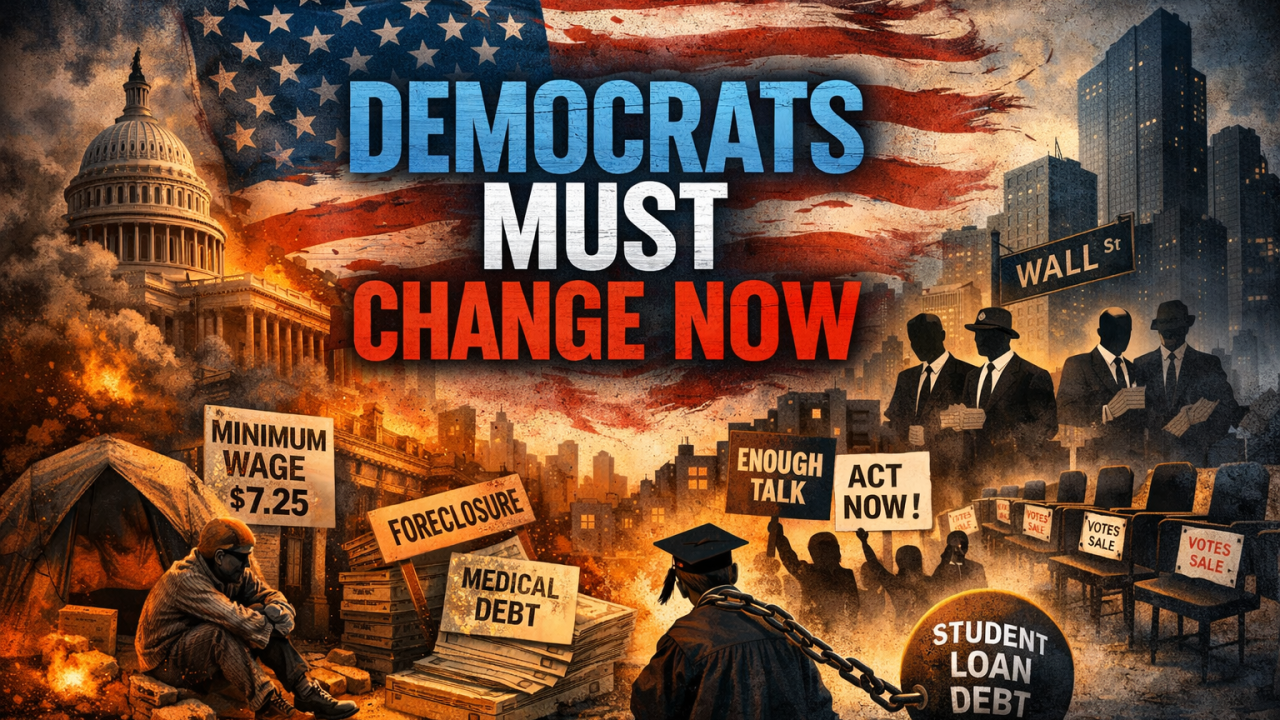
Democrats won the election and need to fulfill voters’ expectations. They must increase the minimum wage, provide a rebate for energy costs, and repeal cuts to the safety net. If Trump and Republicans refuse, make these issues in the 2028 election. Investigations and impeachments need to begin too.

SUMMARY: Democrats won resoundingly in last week’s elections and now they need to fulfill voters’ expectations. Democrats must quickly and concretely address the affordability crisis, for example, by increasing the minimum wage, providing a rebate for high energy costs through a windfall profits tax on the big oil companies, and repealing the cuts to the Affordable Care Act, Medicaid, and SNAP. If Trump vetoes these bills and congressional Republicans refuse to override his veto, hang these issues around their necks in the 2028 elections. Democrats should also immediately begin investigations, impeachments, and prosecutions of the corruption and lawlessness of the Trump regime.

(Note: If you find a post too long to read, please just skim the bolded portions. Thanks for reading my blog!)

(Note: Please follow me and see my blog posts on Bluesky at: @jalippitt.bsky.social. Thanks!)

(Note: For lots of good news see Jess Craven’s Chop Wood Carry Water blog’s most recent Sunday post here.)

Democrats won resoundingly in last week’s elections, but I don’t think most voters were voting for the Democratic brand. They were voting against the Trump regime and perhaps against the Republican brand. They were voting against the high cost of everyday necessities and the corruption of the Trump regime. They were voting against Republicans who have failed to oppose – and often abetted – the Trump regime’s corruption and unaffordability agenda.

Now, Democrats need to fulfill voters’ expectations. They need to concretely address the unaffordability of daily life. They need to tackle the corruption and lawlessness of the Trump regime. They need to do both things immediately when they take control of Congress on January 3, 2027.

Democrats must quickly and concretely address the affordability crisis. There are many ways to do this. Here are my suggestions:

  • Day one, increase the federal minimum wage from $7.25 to $17 over 4 years by passing the Raise the Wage Act. A case can be made for increasing it to $20 or even $25. The federal minimum wage hasn’t increased since 2009 and now has its lowest value since 1950. It’s the minimum wage in 20 states where there are roughly 55 million workers, which is about a third of the workforce. [1]
  • Day two, enact a windfall profits tax on the big oil companies and use the revenue to give a rebate to every American household to offset the increased cost of gas, diesel, and home heating oil. The big global fossil fuel companies are reporting skyrocketing profits, doubling from a year ago. Third quarter profits were $17.5 billion at ExxonMobil, $10.8 billion at Shell, and $10.4 billion at Chevron. Over the last six months, 50 large U.S. oil and gas companies had aggregate profits of $130 billion. [2]
  • Day three, repeal the cuts to the Affordable Care Act (ACA) subsidies and the other cuts to the ACA, Medicaid, and SNAP (aka food stamps). Many of these cuts are from the so-called One Big Beautiful Bill passed in July 2025 but that are going into effect now, purposefully scheduled to happen after the election.
  • Day four, repeal the tax cuts from 2017 and 2025 (in the so-called One Big Beautiful Bill) and enact a wealth tax.

If Trump vetoes these bills and congressional Republicans refuse to override his veto, hang these issues around their necks in the 2028 elections.

There are numerous other policy issues that need urgent attention from voting rights to climate change and clean energy to reforming ICE and immigration to strengthening Medicare and Social Security to reforming campaign finance, regulating AI, reducing military spending, and reducing the cost of the everyday needs of Americans, including food, housing, child care, education, and health care. Supporting workers and unionization should be an important overarching focus. And, of course, Democrats should quickly and forcefully work to end the wars in the Middle East.

Democrats should also immediately begin investigations, impeachments, and prosecutions (as well as other punishments) of the corruption and lawlessness of the Trump regime. There must be accountability for illegal actions. Accountability is fundamental to maintaining the rule of law and democracy. [3] Past failures to hold senior politicians and business executives accountable have paved the way for the blatant corruption of the Trump regime. These past failures to hold senior officials accountable include:

  • President Nixon after Watergate,
  • The perpetrators of the Iran-Contra scandal under President Reagan,
  • The perpetrators of torture and other misdeeds of the Iraq War under President G. W. Bush,
  • The Wall St. executives responsible for the 2008 financial collapse (by the Obama administration), and
  • Executives responsible for health care scandals (e.g., Purdue Pharma and Steward Health Care).

Democrats must end the justice system’s hands-off treatment of elites and prosecute senior politicians and corporate executives for illegal acts from which they have all too often walked away scot-free.

Congressional Democrats must be ready, willing, and able to take on these tasks and to take on the oligarchs loudly and unequivocally.

I urge you to contact your U.S. Representative and Senators who will be serving in the new Congress, both Democrats and Republicans, to ask them to support these actions. Even Republicans should listen to the voices of the voters, who spoke loudly and clearly last week saying they want a change in the behavior and policies of elected and appointed government officials.

You can find contact information for your current U.S. Representative at http://www.house.gov/representatives/find/ and for your current U.S. Senators at http://www.senate.gov/general/contact_information/senators_cfm.cfm. NOTE: If you have a newly elected member of Congress, you may have to contact them at their campaign website or personally until they are sworn in as a member of Congress.


[1]      Zipperer, B., 5/21/26, “Setting high standards for a federal minimum wage,” Economic Policy Institute (https://www.epi.org/publication/setting-high-standards-for-a-federal-minimum-wage-raising-the-wage-to-two-thirds-of-the-national-median-wage-would-lift-pay-for-nearly-40-million-workers/)

[2]      Corbett, J., 10/30/26, “As big oil reports billions in Q3 profits, climate groups say tax them to ‘protect communities’,” Common Dreams (https://www.commondreams.org/news/big-oil-profits-2026)

[3]      Cox Richardson, H., 11/8/26, “”Letters from an American blog,” (https://heathercoxrichardson.substack.com/p/november-8-2026) She traces the lack of accountability for politicians all the way back to the post-Civil War period.
TACKLING THE AFFORDABILITY CRISIS Part 3

The U.S. affordability crisis is caused by low pay, high prices, economic inequality, and public policies skewed to favor wealthy individuals and corporations. Here are some strategies for tackling the affordability crisis. THANK YOU to all of you who participated in or supported a No Kings rally!

The U.S. affordability crisis is caused by low pay, high prices, economic inequality, and public policies skewed to favor wealthy individuals and corporations. Here are some strategies for tackling the affordability crisis.

THANK YOU to all of you who participated in or supported a No Kings rally (pro-democracy and anti-Trump) on March 28 in one way or another. Protests are a critically important strategy for tackling affordability and saving our democracy.

(Note: If you find a post too long to read, please just skim the bolded portions. Thanks for reading my blog!)

(Note: Please follow me and get notices of my blog posts on Bluesky at: @jalippitt.bsky.social. Thanks!)

The U.S. affordability crisis will require multiple strategies to effectively remedy it. My previous post discussed some longer-term strategies and an earlier post some short-term strategies. Here are some additional longer-term strategies. Generally, they require action by the federal government and, therefore, aren’t likely to happen soon.

Here are some strategies for addressing high prices:

  • Implement a windfall profits tax. The federal government should enact a windfall profits tax to stop price gouging by monopolistic businesses and by ones taking advantage of unusual market conditions. A windfall profits tax would tax away excessive growth in profits and, therefore, discourage price gouging because increased profits would be significantly reduced. However, if businesses continue to charge high prices and generate big profits, the tax revenue from the windfall profits tax could be used to provide assistance to working families facing economic hardship due to those increased prices.

    With the spike in fossil fuel prices due to the Iran war, fossil fuel companies are likely to realize windfall profits. Other businesses may use the smoke screen of high fuel and energy prices as a pretext for raising prices beyond what’s justifiable and, therefore, generate windfall profits. The federal government should be prepared to tax those windfall profits and take other actions to keep prices down and protect consumers. [1]
  • Regulate surveillance pricing. With AI and high-powered computers, businesses gather extensive data on consumers and can then engage in sophisticated and opaque price manipulation to maximize what a consumer will pay (aka personalized or surveillance pricing). Sellers should be required to post prices clearly and provide the same prices to all consumers. This will prevent price gouging, discrimination, and bait and switch strategies that rip off consumers. Junk fees and other abusive pricing techniques should be banned.

    For example, Uber and Lyft shouldn’t be allowed to charge you more (as they do) when your phone’s battery is low and they know you are in a hurry to book your ride. And landlords shouldn’t be allowed to collude through a large database of rental properties and AI analysis to jack up rents.

Here are some strategies for addressing affordability in general:

  • Eliminate the poverty wage business model. At least 16 U.S. billionaires owe their wealth to running corporations that pay workers poverty wages so the workers have to rely on taxpayer-funded public assistance to survive. Eight of these billionaires are associated with Walmart, two each with Amazon and Tyson Foods, and one each with Best Buy, Chipotle, Home Depot, and Starbucks. Large numbers of employees at these firms rely on Medicaid for health care and SNAP for food assistance. [2] Increasing the minimum wage would be one step in ending this public subsidy of corporate profits and shareholder wealth.
  • Reform the U.S. campaign finance system. Government policies are skewed to benefit the wealthy because of the way we allow election campaigns to be financed. The unlimited spending and lack of disclosure of who is contributing large sums of money have produced politicians and policies that favor the wealthy and their large corporations. This results in lower wages for workers and higher profits through higher prices that benefit shareholders and corporate executives. (See this previous post for more detail and ways to address this problem.)
  • Reduce economic inequality. Reducing economic inequality would tackle the affordability crisis in multiple ways. Extreme inequality destabilizes democracy, the economy, and society. Shifting some of the tax burden from low- and middle-class households to the wealthy could both reduces taxes for households struggling with affordability and increase the ability of the government to provide supports for working families such as affordable child care, paid family leave, housing subsidies, affordable health care, and a safety net when people hit hard times including unemployment benefits and food assistance. [3] Reduced economic inequality would also reduce the premiumization of the economy that drives prices up. (See this previous post for more detail.)

    Many proposals to tax the wealthy are being considered at the state and local levels, [4] as well as at the federal level. At the federal level, the Billionaires Income Tax Act would tax the increase in value of assets (e.g., stocks) even if they aren’t sold. There are also two different wealth tax proposals, one from Senator Warren (D-MA) and Representative Jayapal (D-WA), the Ultra-Millionaire Tax Act, and another from Senator Sanders (I-VT) and Representative Khanna (D-CA), the Make Billionaires Pay Their Fair Share Act. There is also the Working Americans’ Tax Cut Act that would shift the income tax burden from low- and moderate-income households to those with incomes of over $1 million.

    Reduced inequality benefits democracy and, when coupled with campaign finance reform, would produce politicians and policies that are more responsive to the needs of every day Americans, thereby addressing the affordability crisis. “Highly concentrated wealth leads naturally to concentrated political power.” [5] As Supreme Court Justice Louis Brandeis wrote almost 100 years ago, “We may have democracy, or we may have wealth concentrated in the hands of a few, but we can’t have both.”

Every politician, at every level, local, state, and federal, who’s serious about addressing the affordability crisis should embrace these strategies. I encourage you to contact your U.S. Representative and Senators and ask them to endorse them. You can find contact information for your US Representative at  http://www.house.gov/representatives/find/ and for your US Senators at http://www.senate.gov/general/contact_information/senators_cfm.cfm.

For lots of good news, see Jess Craven’s Chop Wood Carry Water blog’s most recent good news Sunday post here.


[1]      Reed, B, 3/25/26, “Dems call for prosecution of corporations using Trump’s illegal Iran war as cover to hike prices,” Common Dreams (https://www.commondreams.org/news/iran-war-price-gouging)

[2]      Anderson, S., & James, R., 3/25/26, “Meet the 16 billionaires making bank by underpaying their workers,” Inequality.org (https://inequality.org/article/billionaires-low-wage-workers/)

[3]      Meyerson, H., 12/3/25, “The $79 trillion heist,” The American Prospect (https://prospect.org/2025/12/03/79-trillion-heist-worker-pay/)

[4]      Meyerson, H., 3/12/26, “Democrats get serious about taxing the rich,” The American Prospect (https://prospect.org/2026/03/12/democrats-get-serious-taxing-rich/)

[5]      Bivens, J., 11/17/25, “Raising taxes on the ultrarich,” page 5, Economic Policy Institute (https://www.epi.org/publication/raising-taxes-on-the-ultrarich-a-necessary-first-step-to-restore-faith-in-american-democracy-and-the-public-sector/)